






If you've ever tried watching an action movie on your TV's built-in speakers, you know the struggle. Explosions sound like firecrackers, dialogue gets lost in the mix, and you're constantly adjusting the volume. That's where 5.1 channel soundbar systems come to the rescue, transforming your living room into something closer to a real theater experience.
But with dozens of options flooding the market, choosing the right system can feel overwhelming. Today we're comparing two popular approaches: the Amazon Fire TV Soundbar Plus 5.1 Channel System and the JBL Bar 700 Dolby Atmos 5.1 Soundbar. These systems represent different philosophies—one prioritizes value and simplicity, while the other focuses on premium performance and wireless convenience.
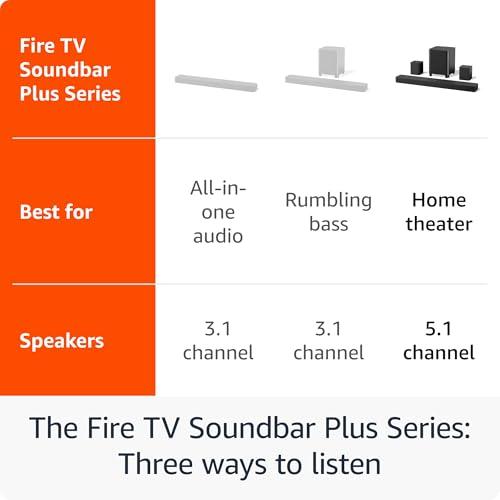
Before diving into specifics, let's clarify what makes a 5.1 system special. The "5.1" refers to six separate audio channels: left, center, right, two surround channels, and one subwoofer channel (the ".1"). This setup creates genuine surround sound by placing audio sources around your listening position, unlike basic soundbars that simulate surround effects through digital processing.
Modern soundbar systems have evolved significantly since their early 2010s origins. Today's systems support advanced audio formats like Dolby Atmos (which adds height information to create three-dimensional sound) and offer wireless connectivity that eliminates the cable mess of traditional home theater setups. The key considerations when shopping include audio performance, ease of setup, connectivity options, and overall value for your specific needs and budget.
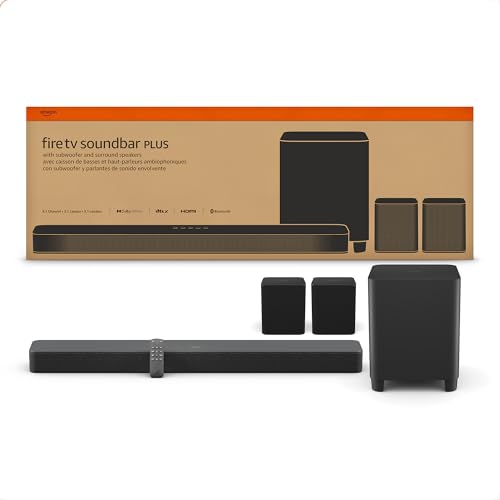
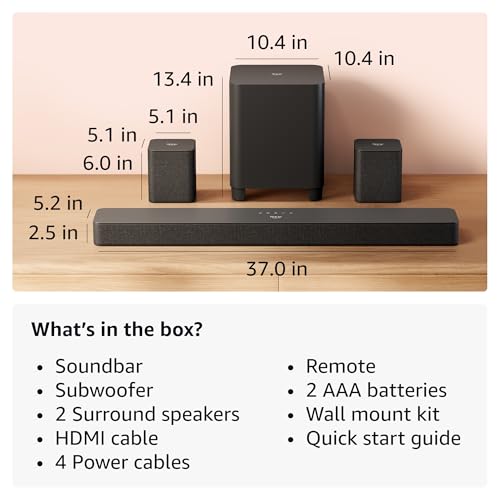
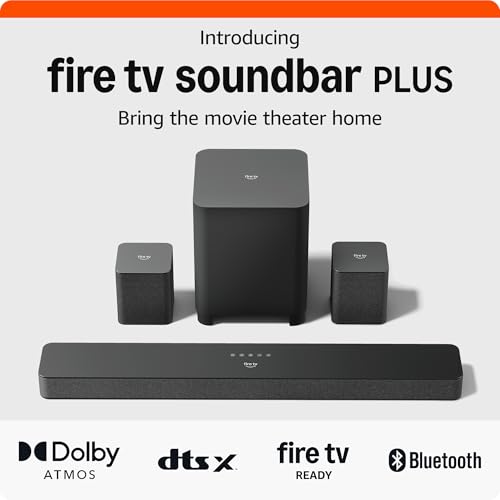
The Amazon Fire TV Soundbar Plus, released in 2023 as Amazon's successor to their original Fire TV Soundbar, takes a budget-focused approach. At the time of writing, it costs roughly 30% less than premium competitors while still delivering a complete 5.1 experience with dedicated rear speakers and a wireless subwoofer.
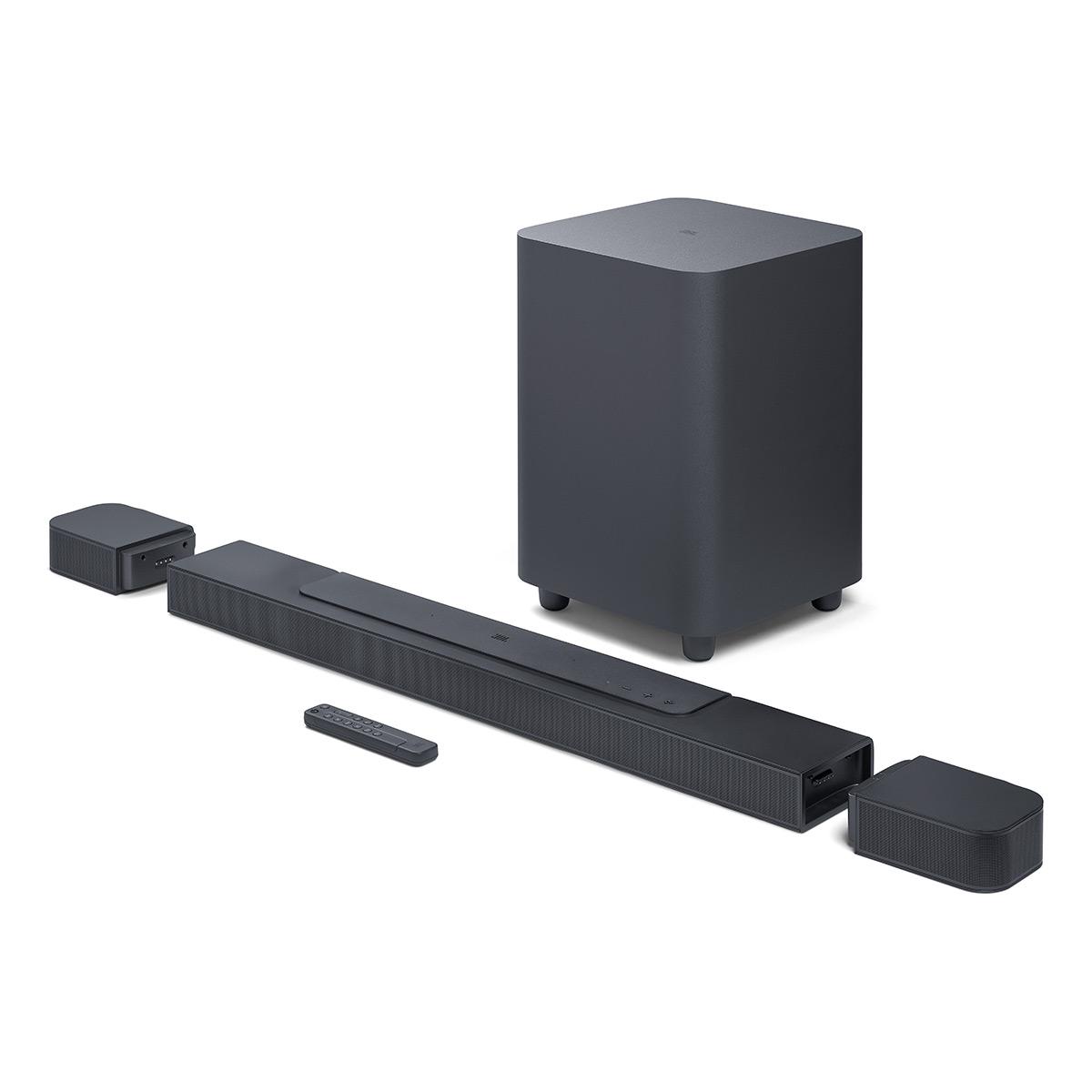
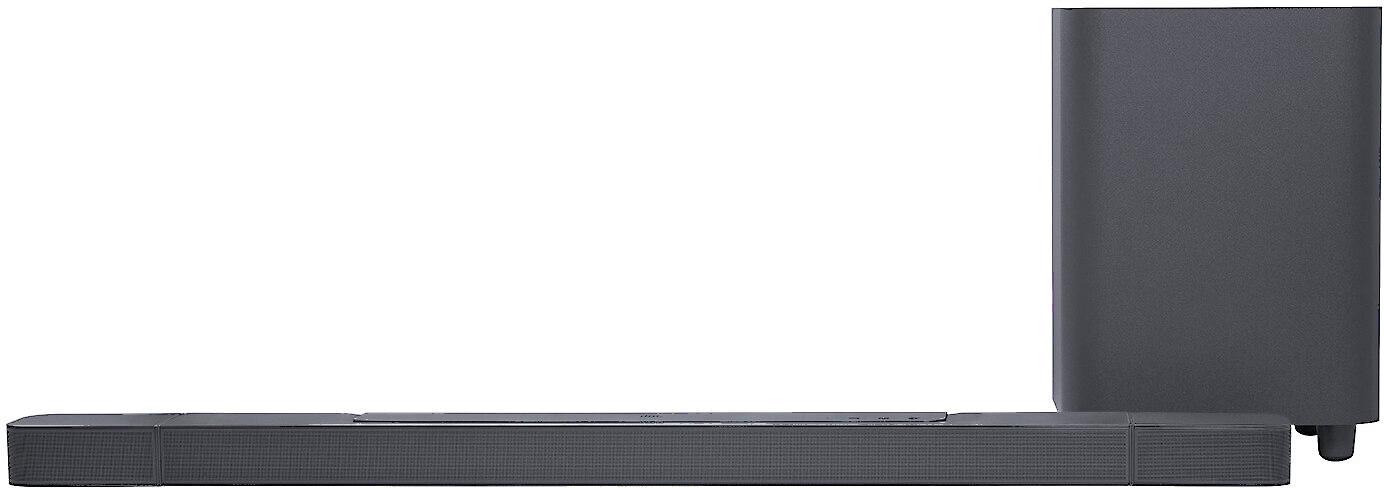
The JBL Bar 700, also launched in recent years, represents JBL's premium offering in the mid-range soundbar market. It costs significantly more but includes advanced features like battery-powered wireless surround speakers and comprehensive streaming capabilities.
The fundamental difference lies in their target audiences: Amazon aims for Fire TV users wanting affordable surround sound, while JBL targets audio enthusiasts willing to pay extra for convenience and performance.
The most obvious difference between these systems is raw power output. The JBL Bar 700 delivers 620 watts of total power, distributed across a 240-watt main soundbar, 300-watt 10-inch subwoofer, and two 40-watt surround speakers. Amazon doesn't specify exact power figures for their Fire TV Plus system, but based on our research into similar systems in this price range, it likely produces significantly less total output.
This power difference translates to real-world performance gaps. The JBL's larger 10-inch subwoofer creates deeper, more impactful bass that you'll feel during explosion scenes or when listening to music with strong low-end content. The Amazon system's smaller subwoofer still improves dramatically over TV speakers but won't rattle your chest during intense action sequences.
For dialogue clarity—arguably the most important aspect of any soundbar—both systems include dedicated center channels, which is crucial for clear speech reproduction. However, the JBL Bar 700 features PureVoice technology, which uses advanced digital processing to maintain dialogue intelligibility even when surround effects are at their loudest. This becomes particularly valuable during complex movie scenes where explosions, music, and dialogue compete for your attention.
The JBL Bar 700 covers a frequency range from 35Hz to 20kHz, meaning it reproduces very deep bass notes and crisp high frequencies. This wide range ensures that whether you're listening to the rumble of a spaceship engine or the delicate shimmer of cymbals in a jazz recording, you'll hear details that cheaper systems miss.
While Amazon doesn't publish specific frequency response data for their Fire TV Plus system, user reviews and expert evaluations suggest it delivers solid mid-range performance with adequate bass extension when the subwoofer is properly positioned. The system reportedly handles dialogue well and provides satisfying bass for its price point, though it can't match the JBL's deep-end extension or high-frequency detail.
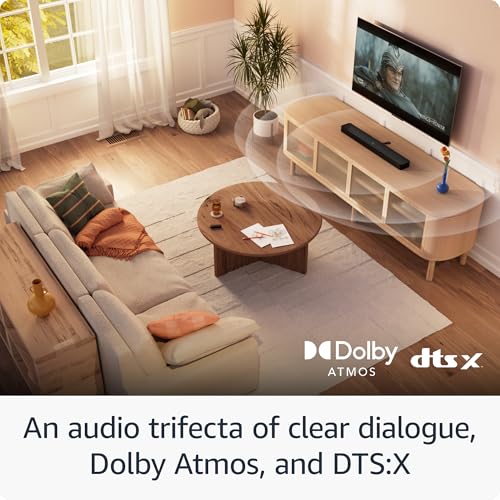
Both systems support Dolby Atmos, but their implementations differ significantly. Dolby Atmos adds height information to traditional surround sound, creating the impression that sounds are coming from above your head—think helicopters flying overhead or rain falling from the sky.
Neither system includes dedicated up-firing speakers (small drivers that bounce sound off your ceiling), so both rely on virtualization—digital processing that simulates height effects through psychoacoustic tricks. However, the JBL Bar 700 uses more sophisticated processing algorithms that create a more convincing three-dimensional soundstage.
In practice, this means the JBL delivers a more immersive Atmos experience, though both systems fall short of soundbars with actual height speakers. If Atmos performance is crucial to your decision, you might want to consider systems with dedicated up-firing drivers, though they typically cost significantly more.
Here's where the systems diverge dramatically. The JBL Bar 700 includes built-in Wi-Fi with support for AirPlay (for Apple devices), Chromecast (for Android and web-based streaming), and Alexa Multi-Room Music (for Amazon ecosystem integration). This connectivity allows you to stream music directly from your smartphone, tablet, or computer without needing additional devices.
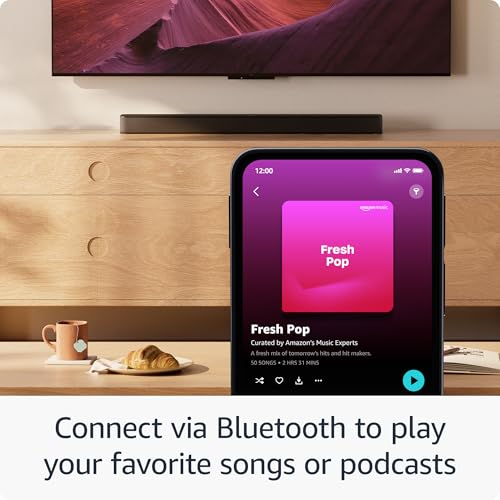
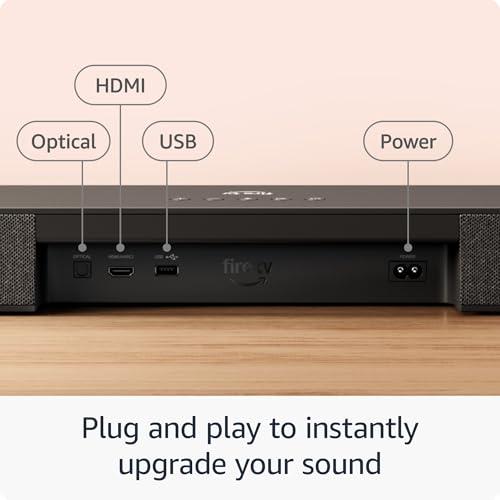
The Amazon Fire TV Plus takes a more basic approach, offering Bluetooth connectivity for phone streaming and USB input for local file playback, but lacks built-in Wi-Fi or advanced streaming features. Instead, it focuses on integration with Fire TV devices—when connected via HDMI, you can control the soundbar through your Fire TV's interface and remote.
Both systems include HDMI connectivity, but with important differences. The JBL Bar 700 features HDMI eARC (enhanced Audio Return Channel) with 4K Dolby Vision pass-through, ensuring that high-quality video signals from your Blu-ray player or gaming console maintain their full quality on their way to your TV.
The Amazon Fire TV Plus supports HDMI ARC and can handle lossless audio formats like Dolby TrueHD and DTS-HD MA—formats typically found on Blu-ray discs that offer superior sound quality compared to streaming audio. This format support is impressive for a budget-focused system and represents genuine value for movie enthusiasts.
Perhaps the most practical difference between these systems lies in their surround speaker implementation. The Amazon Fire TV Plus includes traditional wired satellite speakers that require cable runs from your TV area to your seating position. While this isn't unusual for budget systems, it does mean planning your room layout around speaker placement and dealing with visible cables unless you're willing to run them through walls.
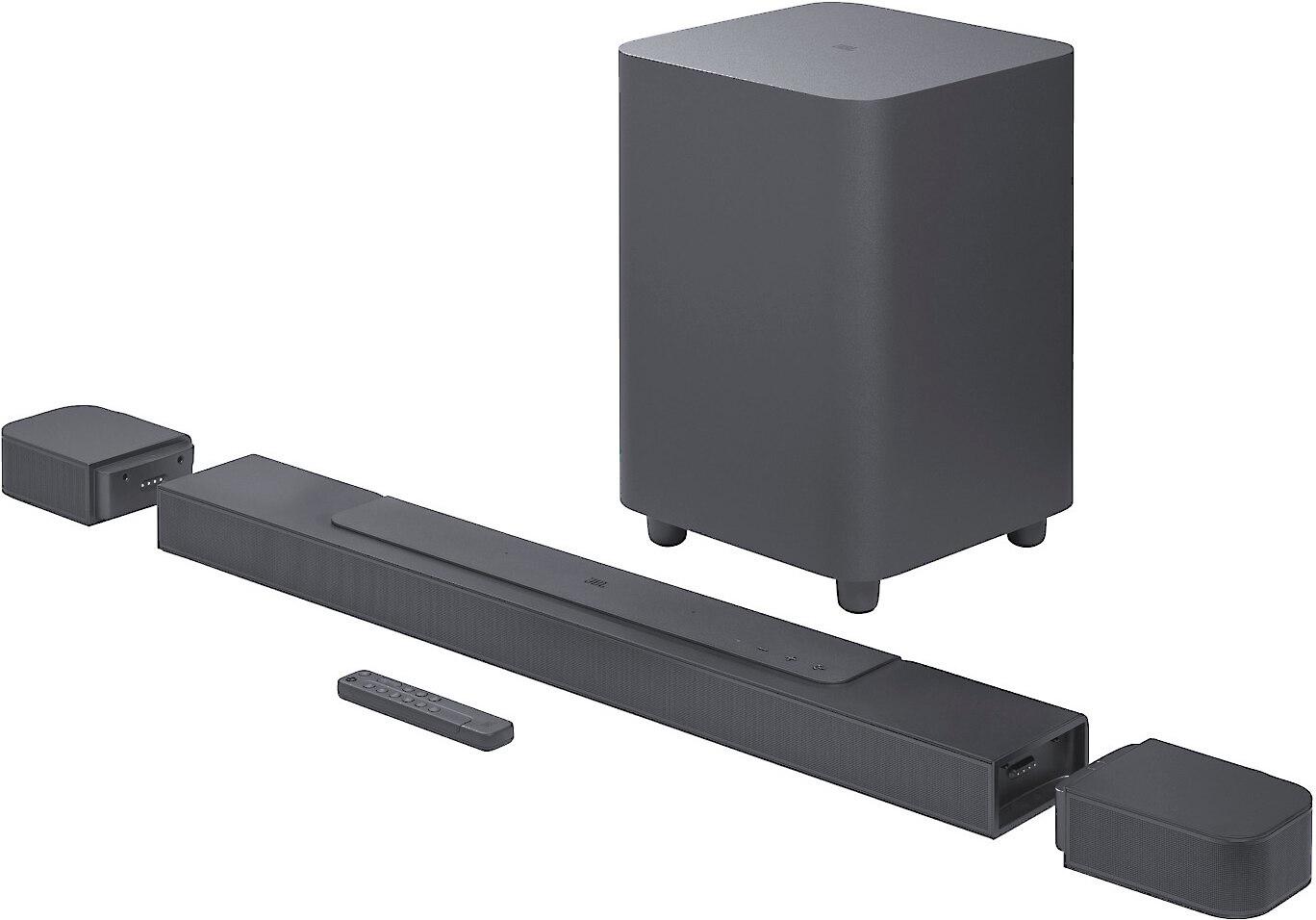
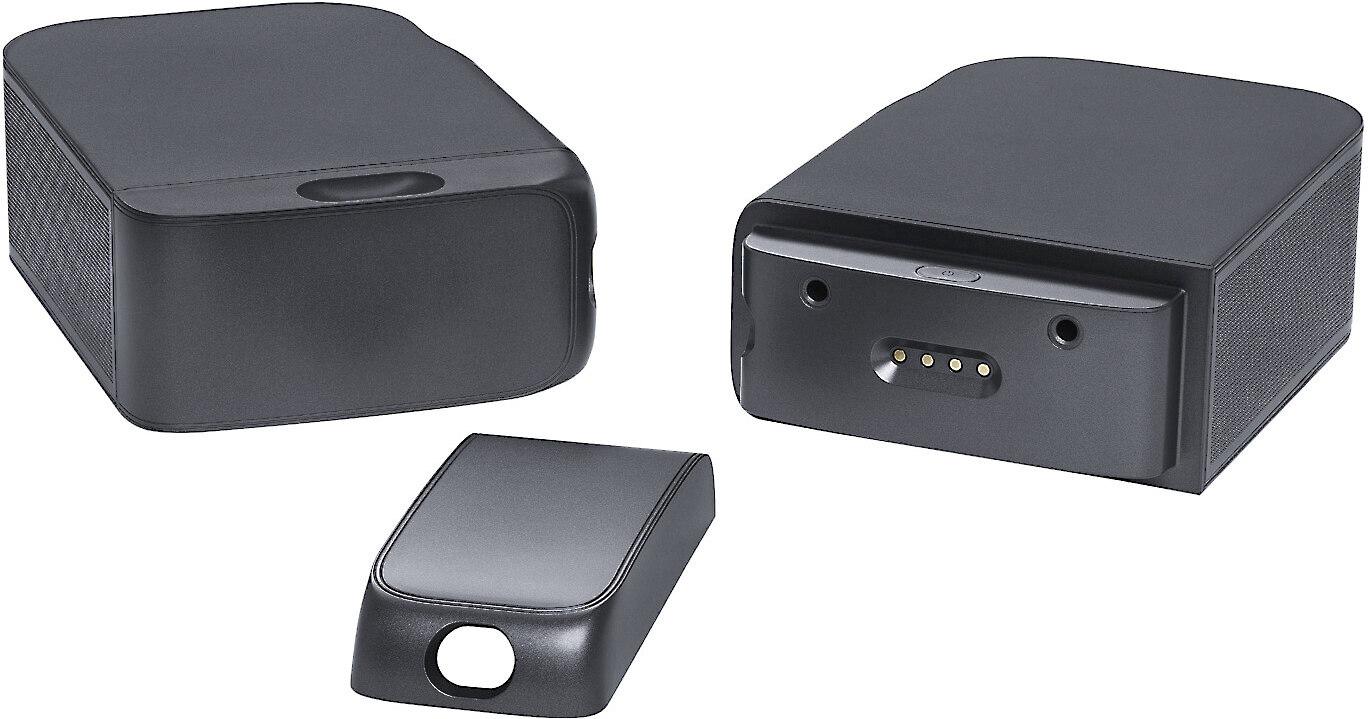
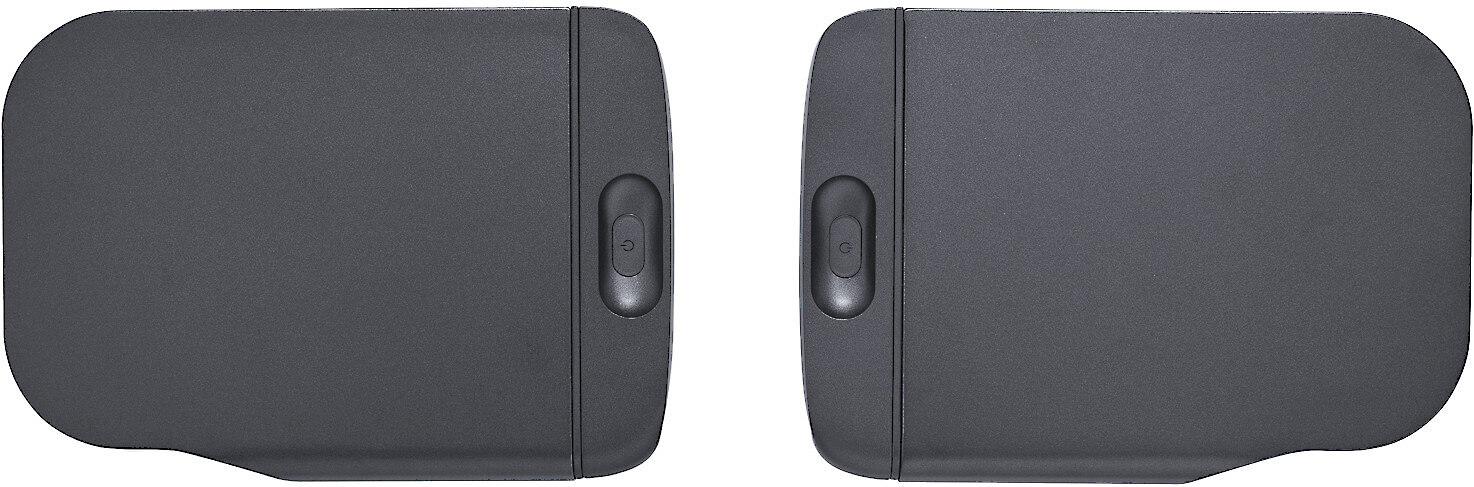
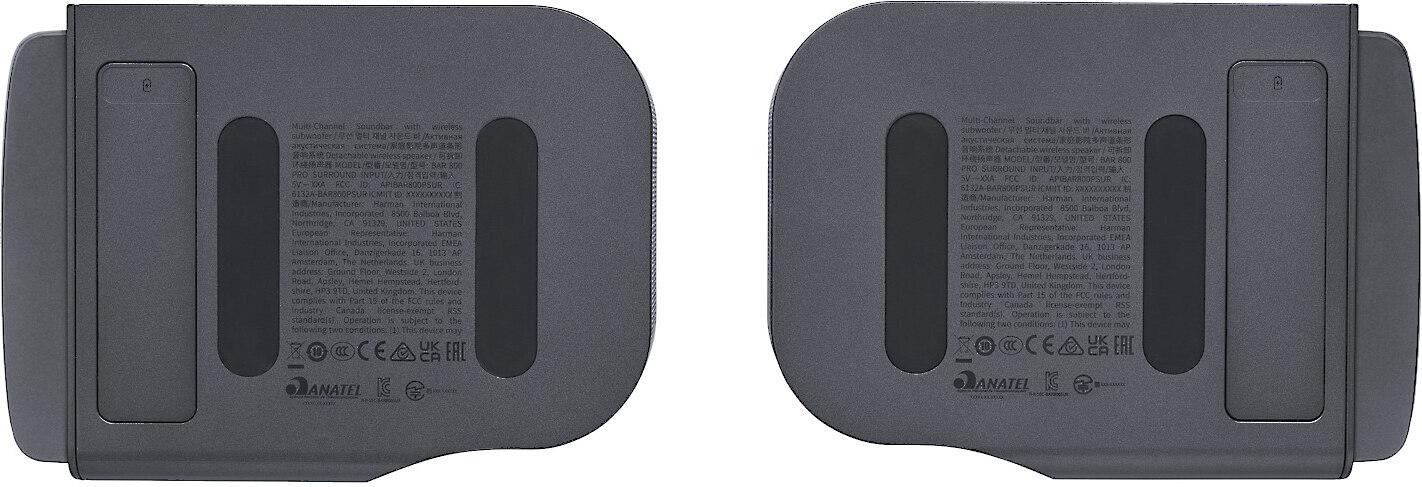
The JBL Bar 700 takes a different approach with detachable, battery-powered surround speakers. These speakers charge when connected to the main soundbar but can operate wirelessly for up to 10 hours once detached. This design eliminates cable management headaches and allows flexible speaker placement without worrying about power outlets or wire routing.
From a practical standpoint, the JBL's wireless approach offers significant advantages in most living situations. You can easily move the speakers for optimal placement during movie nights, then tuck them away when not needed. The Amazon system requires more permanent positioning but includes the advantage of never needing to remember to charge the speakers.
Both systems emphasize easy setup, but their approaches differ. The Amazon Fire TV Plus comes with all components pre-paired, meaning you simply plug everything in and power it on—no complicated pairing procedures or app downloads required. The included remote provides access to essential controls like bass, treble, and dialogue enhancement settings.
The JBL Bar 700 includes automatic sound calibration that uses built-in microphones to analyze your room's acoustics and adjust the speaker settings accordingly. This process takes a few minutes but can significantly improve performance by compensating for room size, furniture placement, and wall materials that affect sound reflection.
For day-to-day use, the Amazon system prioritizes simplicity. Physical controls on the soundbar handle basic functions, while the included remote manages audio settings. When connected to Fire TV devices, you can control volume and basic settings through your TV interface, streamlining the number of remotes you need.
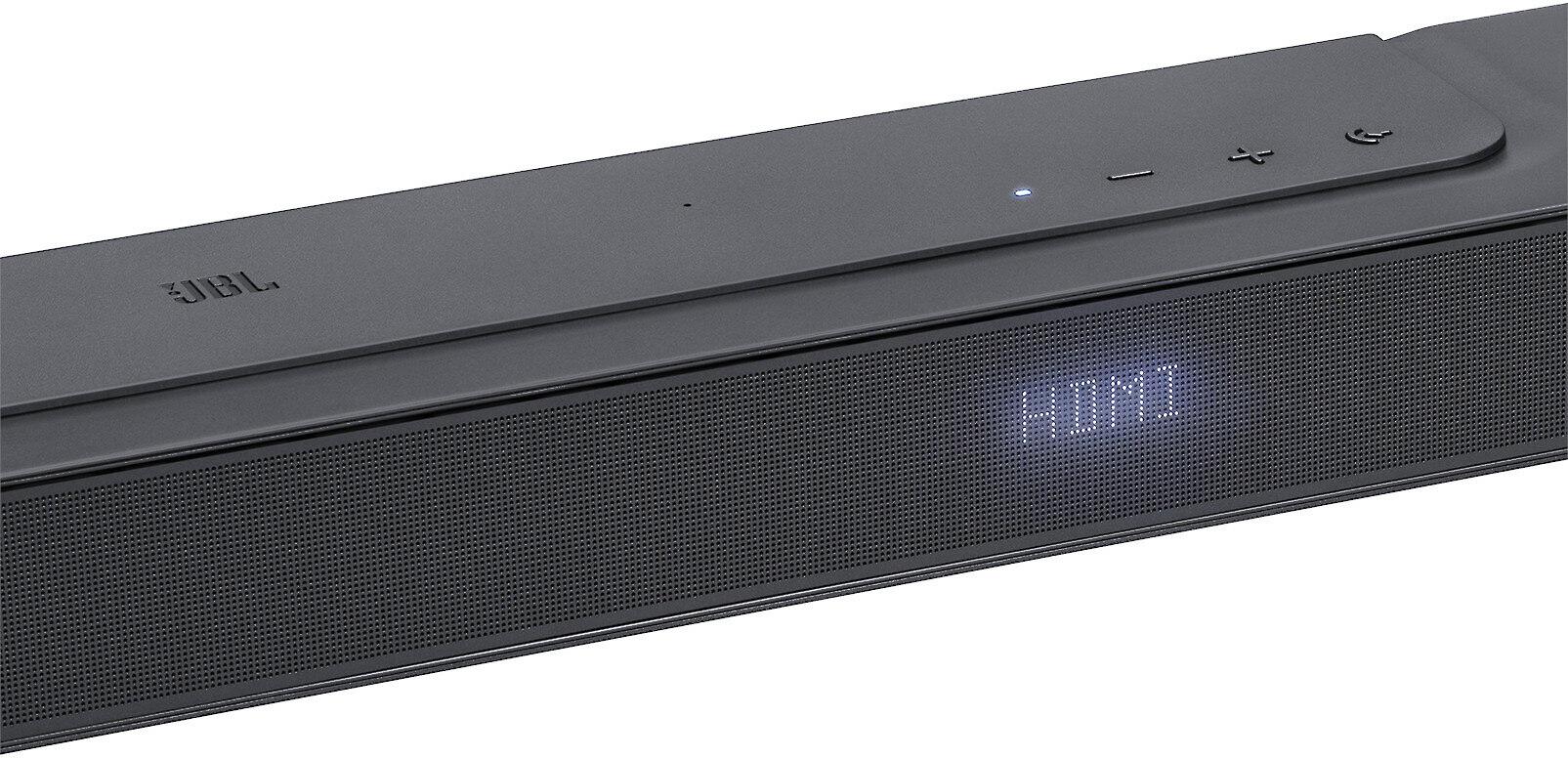
The JBL Bar 700 offers more control options through the JBL One app, which provides detailed equalizer settings, room correction features, and streaming service access. While this flexibility appeals to audio enthusiasts who want to fine-tune their experience, it might feel overwhelming for users who prefer simple operation.
At the time of writing, the Amazon Fire TV Plus costs significantly less than the JBL Bar 700—roughly a 30-40% price difference depending on sales and promotions. This price gap raises the crucial question: what do you get for that extra money, and is it worth it?
The Amazon system delivers solid value for budget-conscious buyers who want genuine 5.1 surround sound without premium pricing. It handles the basics well—clear dialogue, decent bass response, and adequate surround effects for small to medium rooms. The Fire TV integration adds convenience for Amazon ecosystem users, and the support for lossless audio formats provides genuine quality for movie enthusiasts.
However, that lower price comes with compromises. The wired surround speakers limit placement flexibility, the overall power output restricts performance in larger rooms, and the lack of advanced features may feel limiting as your needs evolve.
The JBL Bar 700 costs more but delivers proportionally greater value in several areas. The wireless surround speakers alone justify much of the price premium for many users, eliminating installation headaches and offering flexible placement. The significantly higher power output makes it suitable for larger rooms, while the extensive streaming features and app control provide long-term flexibility.
Your room size plays a crucial role in determining which system makes sense. The Amazon Fire TV Plus performs well in small to medium rooms (up to about 250 square feet) where its power output can adequately fill the space. In these environments, the system provides satisfying bass response and clear dialogue without feeling overwhelmed.
The JBL Bar 700 shines in medium to large rooms where its higher power output and superior bass extension become apparent. The 10-inch subwoofer moves more air than smaller units, creating bass you can feel rather than just hear. For open-concept living spaces or rooms larger than 300 square feet, the JBL's extra power becomes increasingly valuable.
Placement flexibility also matters. If your room layout makes running speaker wires challenging—perhaps due to furniture arrangement, room shape, or aesthetic preferences—the JBL's wireless surround speakers offer a clear advantage. Conversely, if you have a dedicated media room where permanent speaker placement isn't an issue, the Amazon system's wired approach works perfectly well.
You're working with a strict budget but still want genuine surround sound improvement over TV speakers. The system makes particular sense for Fire TV ecosystem users who value seamless integration and simple operation. It's ideal for smaller rooms, apartment living, or situations where running speaker wires isn't problematic.
The Amazon system also appeals to users who prioritize simplicity over features. If you want to plug it in, set basic levels, and forget about it, this approach works well. The support for lossless audio formats provides future-proofing for serious movie watching without premium pricing.
You value convenience and performance over cost savings. The wireless surround speakers alone make this system worth considering for many users, especially those in challenging room layouts where cable management would be difficult.
The JBL makes sense for audio enthusiasts who want room calibration, app control, and extensive streaming options. If you frequently stream music from various sources or want a system that can grow with changing technology, the JBL's comprehensive feature set provides better long-term value.
The system particularly excels for larger rooms or open-concept spaces where its higher power output becomes essential for filling the space with quality sound.
Both the Amazon Fire TV Plus and JBL Bar 700 succeed in their intended roles, but they target different user priorities and budgets. The Amazon system proves that you don't need to spend premium prices for genuine surround sound improvement, while the JBL demonstrates why wireless convenience and higher performance command price premiums.
Your decision should center on your specific situation: room size, budget flexibility, importance of wireless convenience, and desired feature set. The price difference between these systems represents a meaningful investment, but for many users, the JBL's advantages in power, convenience, and long-term flexibility justify the additional cost.
Consider your usage patterns, room characteristics, and technology preferences. If you primarily watch TV shows and occasional movies in a smaller space, the Amazon system provides excellent value. If you're building a more serious home theater setup or value cutting-edge features and maximum convenience, the JBL Bar 700 represents a solid investment in long-term audio satisfaction.
Either choice will dramatically improve your audio experience over built-in TV speakers—the question is simply how much improvement you want and what you're willing to pay for it.
| Amazon Fire TV Soundbar Plus 5.1 Channel System | JBL Bar 700 Dolby Atmos 5.1 Soundbar with Subwoofer |
|---|---|
| Total Power Output - Determines maximum volume and bass impact | |
| Not specified (likely ~300W based on size/price) | 620W (240W soundbar + 300W sub + 80W surrounds) |
| Subwoofer Size - Bigger drivers produce deeper, more impactful bass | |
| External wireless subwoofer (size not specified) | 10-inch wireless subwoofer (300W) |
| Surround Speaker Type - Affects placement flexibility and room aesthetics | |
| Wired satellite speakers (require cable runs) | Detachable battery-powered (up to 10 hours wireless) |
| Dolby Atmos Implementation - Creates overhead sound effects | |
| Virtualized (no up-firing drivers, basic processing) | Enhanced virtualization with superior 3D processing |
| HDMI Connectivity - Affects video quality and audio format support | |
| HDMI ARC with 4K pass-through | HDMI eARC with 4K Dolby Vision pass-through |
| Wireless Streaming - Determines music playback options | |
| Bluetooth only, USB playback | Built-in Wi-Fi: AirPlay, Chromecast, Alexa Multi-Room |
| Audio Format Support - Higher quality formats provide better sound | |
| Dolby TrueHD, DTS-HD MA, Dolby Atmos | Full format support plus streaming codecs |
| Control Options - Affects daily usability and customization | |
| Basic remote, Fire TV integration via HDMI | JBL One app, remote, voice assistant compatibility |
| Room Calibration - Optimizes sound for your specific space | |
| Manual adjustment only | Automatic calibration with built-in microphones |
| Dialogue Enhancement - Keeps speech clear during loud scenes | |
| Basic dialogue enhancement feature | PureVoice technology with advanced processing |
| Setup Complexity - Impacts installation time and effort | |
| Pre-paired components, simple plug-and-play | Auto-calibration setup, multiple pairing options |
| Best Room Size - Where each system performs optimally | |
| Small to medium rooms (up to 250 sq ft) | Medium to large rooms (250-400+ sq ft) |
| Target User - Who gets the most value from each system | |
| Budget-conscious Fire TV users wanting basic surround | Audio enthusiasts prioritizing wireless convenience and power |
The JBL Bar 700 delivers significantly better sound quality with 620W of total power compared to the Amazon Fire TV Soundbar Plus. The JBL features a larger 10-inch subwoofer for deeper bass, PureVoice dialogue enhancement technology, and superior frequency response (35Hz-20kHz). While the Amazon Fire TV system provides decent sound quality for its price range, the JBL Bar 700 offers more powerful, refined audio performance overall.
Yes, both the Amazon Fire TV Soundbar Plus and JBL Bar 700 support Dolby Atmos, but with different implementations. Neither system includes physical up-firing speakers, so both rely on virtualization to create height effects. However, the JBL Bar 700 uses more advanced processing algorithms to deliver a more convincing three-dimensional soundstage compared to the basic Atmos virtualization in the Amazon Fire TV system.
The Amazon Fire TV Soundbar Plus is generally easier to set up, featuring pre-paired components that work immediately after plugging in. The JBL Bar 700 includes automatic room calibration that takes a few minutes but optimizes performance for your specific space. While the Amazon system offers simpler plug-and-play setup, the JBL Bar 700 provides better long-term performance through its calibration process.
The Amazon Fire TV Soundbar Plus uses wired satellite speakers that require cable runs from your TV area to your seating position. The JBL Bar 700 features detachable battery-powered surround speakers that operate wirelessly for up to 10 hours. The wireless approach eliminates cable management issues and allows flexible speaker placement, making the JBL Bar 700 more convenient for most room layouts.
The JBL Bar 700 offers comprehensive wireless streaming with built-in Wi-Fi, supporting AirPlay, Chromecast, and Alexa Multi-Room Music. The Amazon Fire TV Soundbar Plus only supports basic Bluetooth streaming from phones and tablets, plus USB playback for local files. For extensive music streaming capabilities, the JBL Bar 700 provides significantly more options and convenience.
The JBL Bar 700 performs better in large rooms due to its 620W power output and 10-inch subwoofer that can fill bigger spaces with quality sound. The Amazon Fire TV Soundbar Plus is better suited for small to medium rooms up to about 250 square feet. For rooms larger than 300 square feet or open-concept spaces, the JBL Bar 700 delivers the power needed for satisfying performance.
Both soundbars work with gaming consoles and Blu-ray players, but with different capabilities. The JBL Bar 700 features HDMI eARC with 4K Dolby Vision pass-through, ensuring optimal video quality for gaming and movies. The Amazon Fire TV Soundbar Plus supports HDMI ARC and can handle lossless audio formats like Dolby TrueHD from Blu-ray discs. Both systems provide significant audio improvements for gaming and movie watching.
Value depends on your priorities and budget. The Amazon Fire TV Soundbar Plus offers excellent value for budget-conscious buyers wanting genuine 5.1 surround sound at a lower price point. The JBL Bar 700 costs more but provides proportionally greater value through wireless convenience, higher power output, and advanced features. The price difference is justified if you prioritize performance and convenience over cost savings.
The Amazon Fire TV Soundbar Plus integrates directly with Fire TV devices when connected via HDMI, allowing control through your Fire TV remote and on-screen interface. The JBL Bar 700 works with most TV remotes through HDMI-CEC but also offers control via the JBL One app and voice assistants. Both systems reduce remote clutter, but the Amazon Fire TV system provides more seamless integration specifically with Fire TV devices.
Dialogue clarity is crucial for enjoying TV shows and movies, and both systems address this need. The Amazon Fire TV Soundbar Plus includes a dedicated center channel and dialogue enhancement feature. The JBL Bar 700 features advanced PureVoice technology that maintains speech intelligibility even during loud action scenes. While both improve dialogue over TV speakers, the JBL Bar 700 provides superior voice processing technology.
The Amazon Fire TV Soundbar Plus may be better for apartment living due to its lower overall power output, which is less likely to disturb neighbors. However, the JBL Bar 700 offers better placement flexibility with wireless surround speakers, eliminating cable runs that might be challenging in rental properties. Both systems include night modes to reduce bass levels for late-night viewing without disturbing others.
Choose the Amazon Fire TV Soundbar Plus if you're building a budget-friendly home theater, primarily use Fire TV devices, and have a smaller dedicated space. Select the JBL Bar 700 for a more serious home theater setup where you want maximum performance, wireless convenience, and room-filling power. The JBL Bar 700 provides better long-term value for dedicated home theater use, while the Amazon Fire TV system offers solid performance at a more accessible price point.
We've done our best to create useful and informative comparisons to help you decide what product to buy. Our research uses advanced automated methods to create this comparison and perfection is not possible - please contact us for corrections or questions. These are the sites we've researched in the creation of this article: rtings.com - cordbusters.co.uk - techradar.com - developer.amazon.com - t3.com - hometechnologyreview.com - youtube.com - hometechnologyreview.com - whathifi.com - hometechnologyreview.com - hometechnologyreview.com - youm.design - hometechnologyreview.com - dolby.com - crutchfield.com - harmanaudio.com - target.com - jbl.com - walmart.com - dell.com - jbl.com

Privacy Policy
Terms and Conditions - Affiliate Policy
Home Security
© Copyright 2008-2026.
11816 Inwood Rd #1211, Dallas, TX 75244