





If you're tired of constantly turning up the volume to hear dialogue or missing out on the rumbling bass that makes action movies exciting, you're probably ready to upgrade from your TV's built-in speakers. The question isn't whether you need a soundbar—it's which one will give you the best bang for your buck.
Today we're comparing two very different approaches to better TV audio: the Amazon Fire TV Soundbar Plus 5.1 Channel System and the Yamaha SR-B30A Sound Bar with Built-In Subwoofers. These represent opposite ends of the soundbar philosophy spectrum, and understanding their differences will help you make the right choice for your living room.
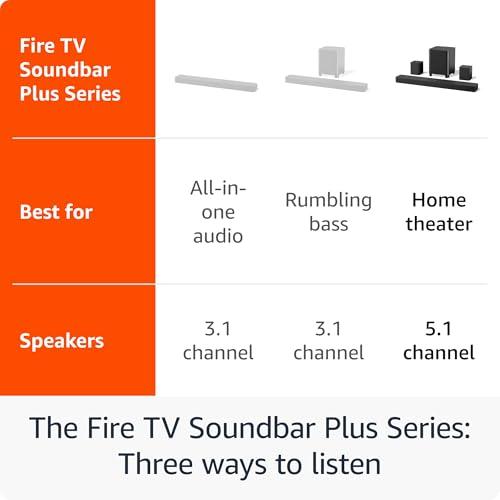
Before diving into specifics, let's talk about what really matters when choosing a soundbar. The most important consideration is channel configuration—this refers to how many separate audio channels the system can reproduce. A 2.1 system has left and right speakers plus a subwoofer (the ".1" represents the bass channel). A 5.1 system adds a center channel for dialogue and rear speakers for surround effects.
Room size plays a huge role in performance. A powerful system in a small room will overwhelm you, while an underpowered soundbar in a large space will leave you wanting more. The type of content you watch matters too—dialogue-heavy TV shows need clear midrange frequencies, while action movies benefit from deep bass and spatial effects.
At the time of writing, the soundbar market has evolved significantly since both products launched. The Amazon Fire TV Soundbar Plus arrived in 2023 as Amazon's answer to premium home theater systems, while the Yamaha SR-B30A represents a more traditional approach that's been refined over several years. Since 2020, we've seen major improvements in wireless connectivity, virtual surround processing, and smartphone app integration across the category.
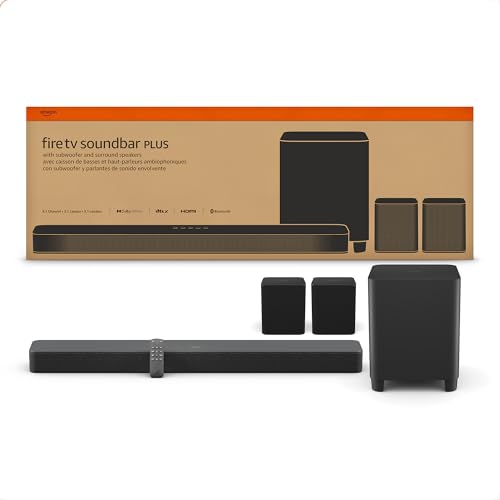
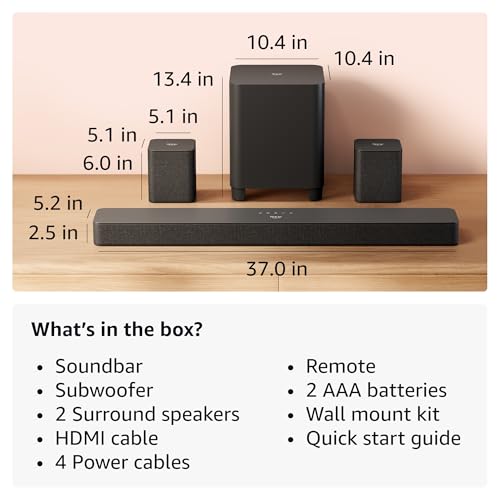
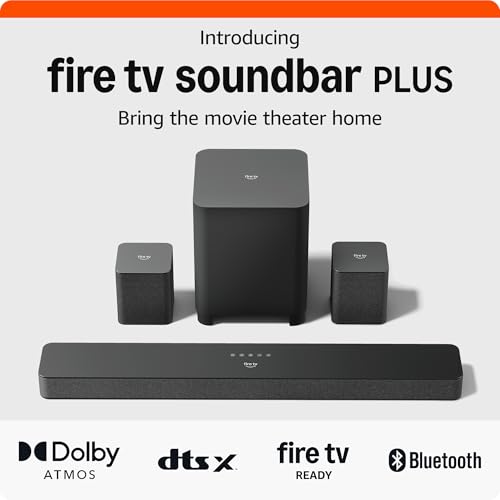
The fundamental difference between these systems couldn't be more stark. The Amazon Fire TV Soundbar Plus is a true 5.1 surround sound system that includes a main soundbar, wireless subwoofer, and two satellite speakers. This multi-piece approach delivers genuine surround sound by placing speakers around your room.
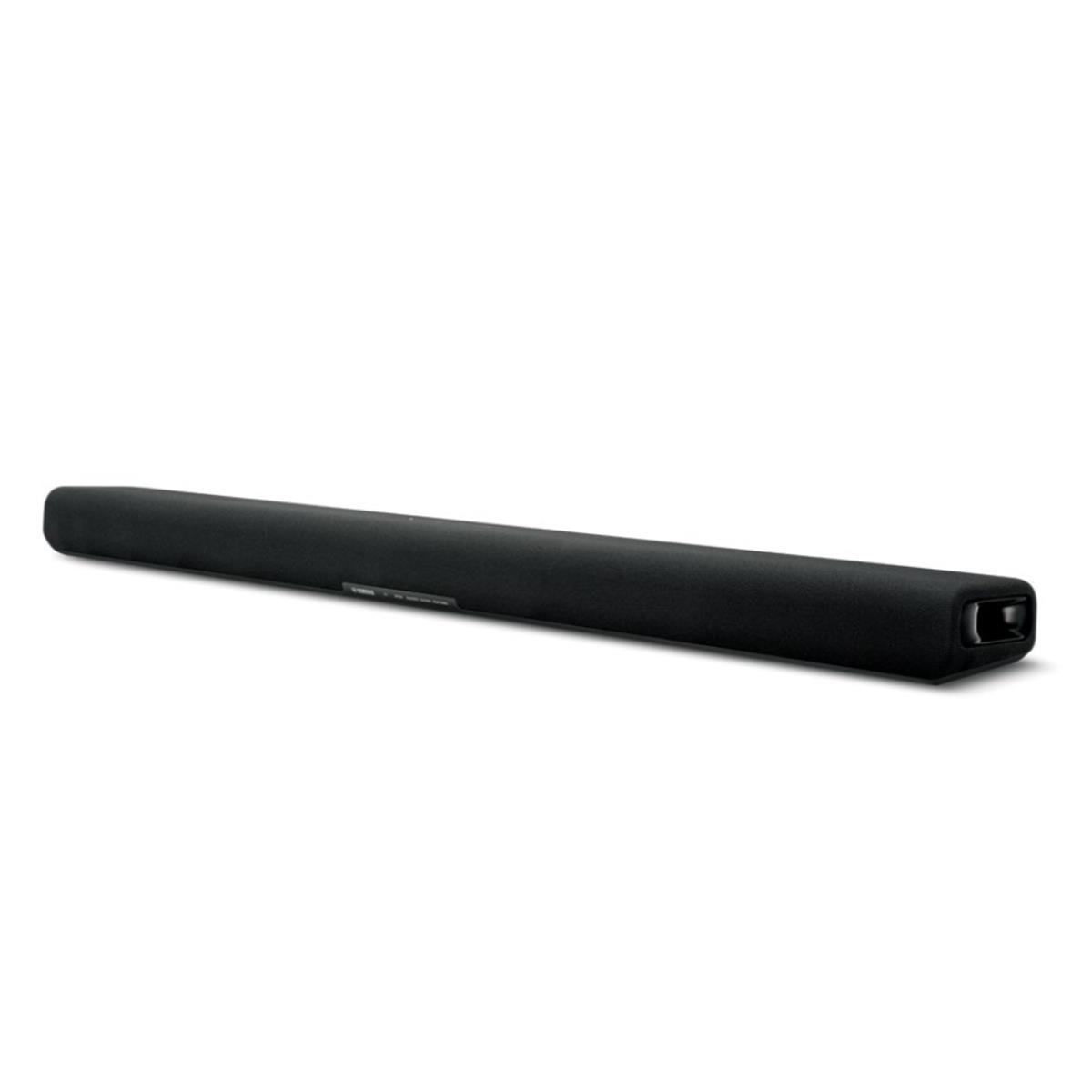
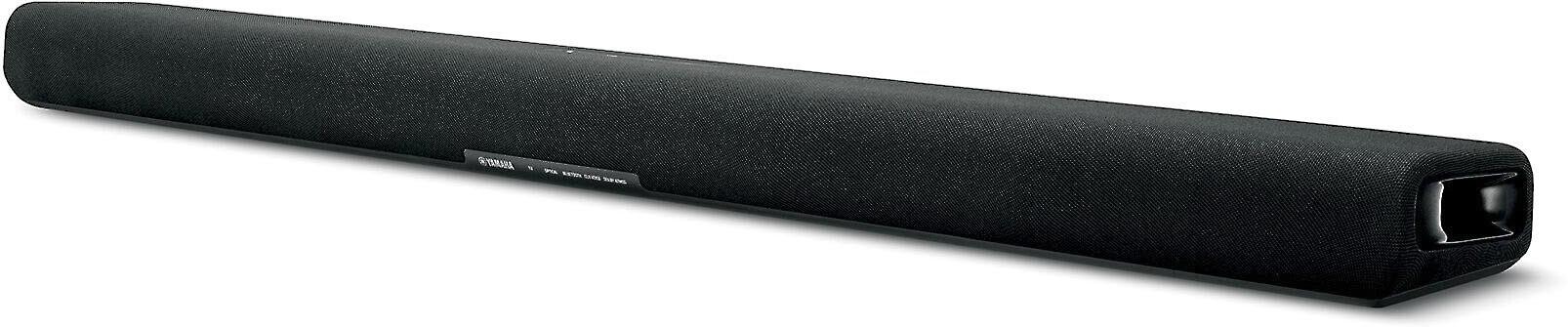
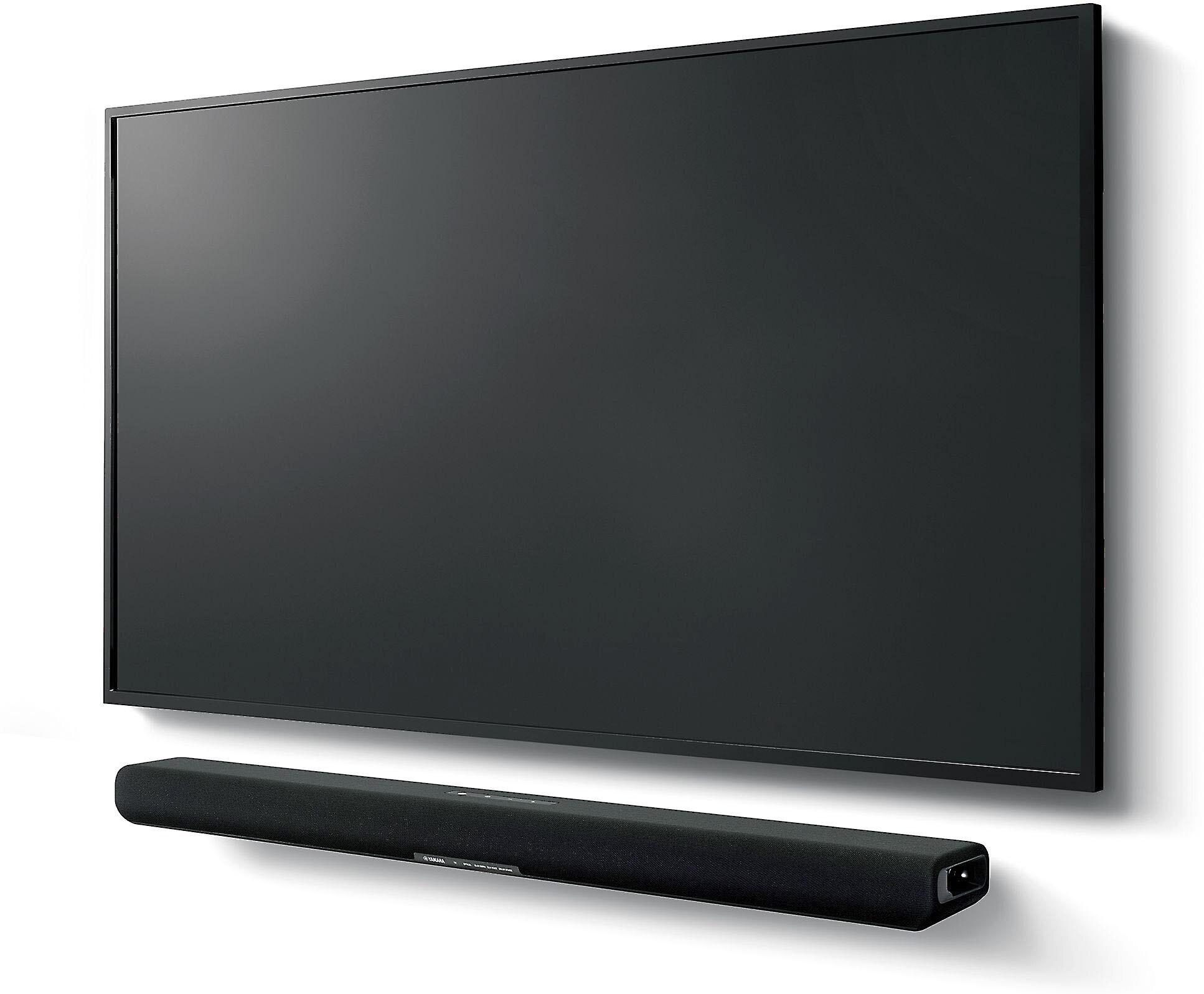
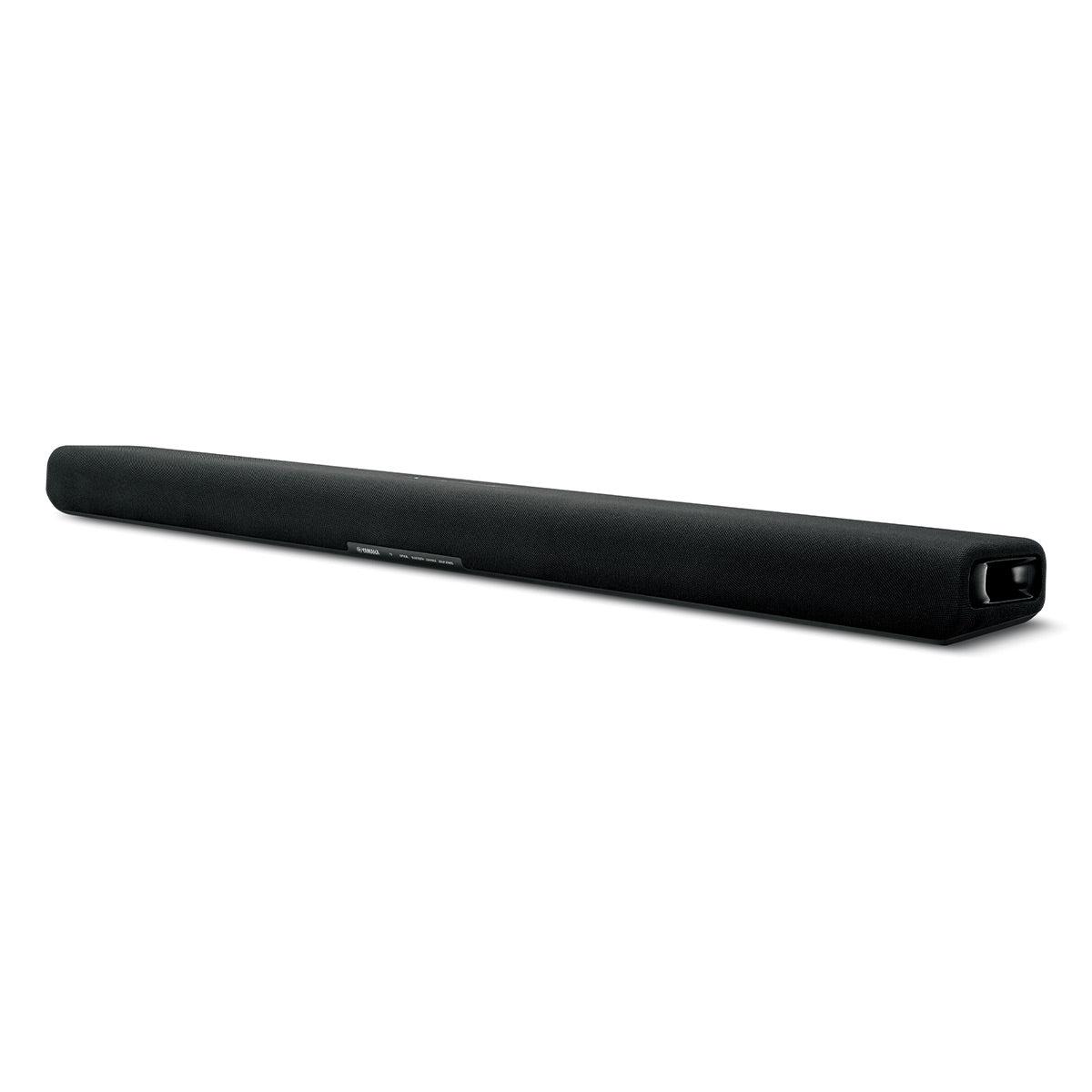
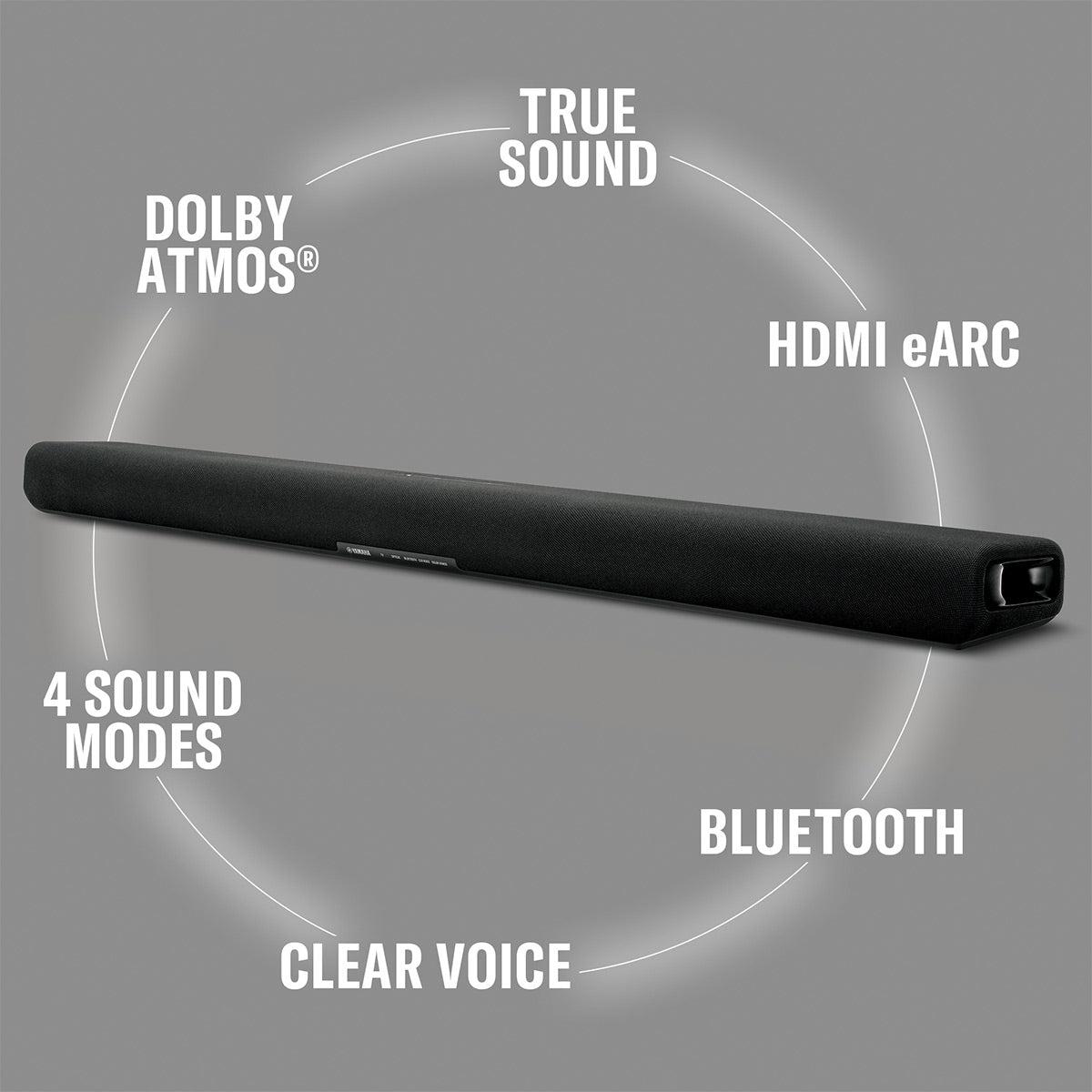
The Yamaha SR-B30A, on the other hand, packs everything into a single unit with built-in subwoofers. This all-in-one design prioritizes simplicity and space efficiency while still delivering significantly better sound than TV speakers.
Think of it like choosing between a home gym setup versus a single piece of equipment. The multi-component system gives you more capability but requires more space and setup effort.
This is where the biggest performance gap exists. The Amazon Fire TV system delivers true 5.1 surround sound because it has actual speakers positioned behind your listening area. When a helicopter flies overhead in a movie, you'll hear it move from front to back through physical speaker placement. This creates what audiophiles call "envelopment"—the sense that sound is coming from all around you.
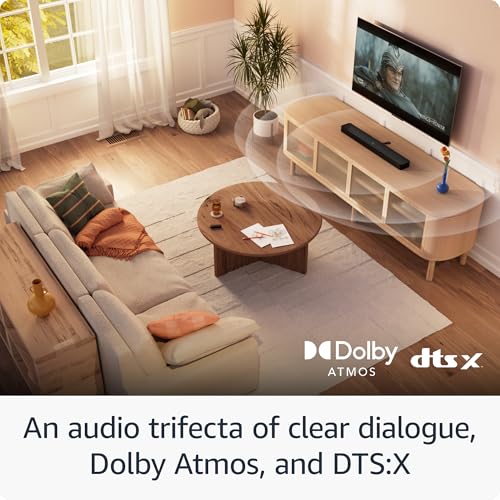
The system supports Dolby Atmos and DTS:X—these are object-based audio formats that place individual sounds in three-dimensional space rather than just sending them to specific channels. However, the Amazon system uses "virtualized" Atmos, meaning it simulates height effects through digital processing rather than having speakers that fire upward toward your ceiling.
Our research into user experiences reveals that the surround effect is genuinely impressive, especially for movies and games. The rear satellites add a dimension that simply can't be replicated by sound processing alone. However, there's a notable weakness: the stereo imaging between the main left and right channels has audible gaps, making the soundstage feel less cohesive during music listening.
The Yamaha SR-B30A works entirely differently. It uses digital signal processing and carefully tuned drivers to create a virtual surround effect. While this can make dialogue feel more spacious and add some width to the sound, it cannot create the genuine rear-channel effects that make action sequences truly immersive.
For home theater enthusiasts, this difference is crucial. If you regularly watch movies with family or friends, the spatial audio experience from the Amazon system will be noticeably more engaging, especially in scenes with helicopters, rain, or ambient effects.
Both systems excel at dialogue reproduction, but through different methods. The Amazon Fire TV soundbar includes a dedicated center channel—a speaker specifically designed to handle human voices. This driver is positioned at ear level and optimized for the frequency range where speech occurs, typically between 300Hz and 3kHz.
The center channel approach has been the gold standard in home theater for decades because it anchors dialogue to the screen, preventing voices from seeming to float between the left and right speakers. Our evaluation of user feedback consistently highlights this as one of the Amazon system's strongest points.
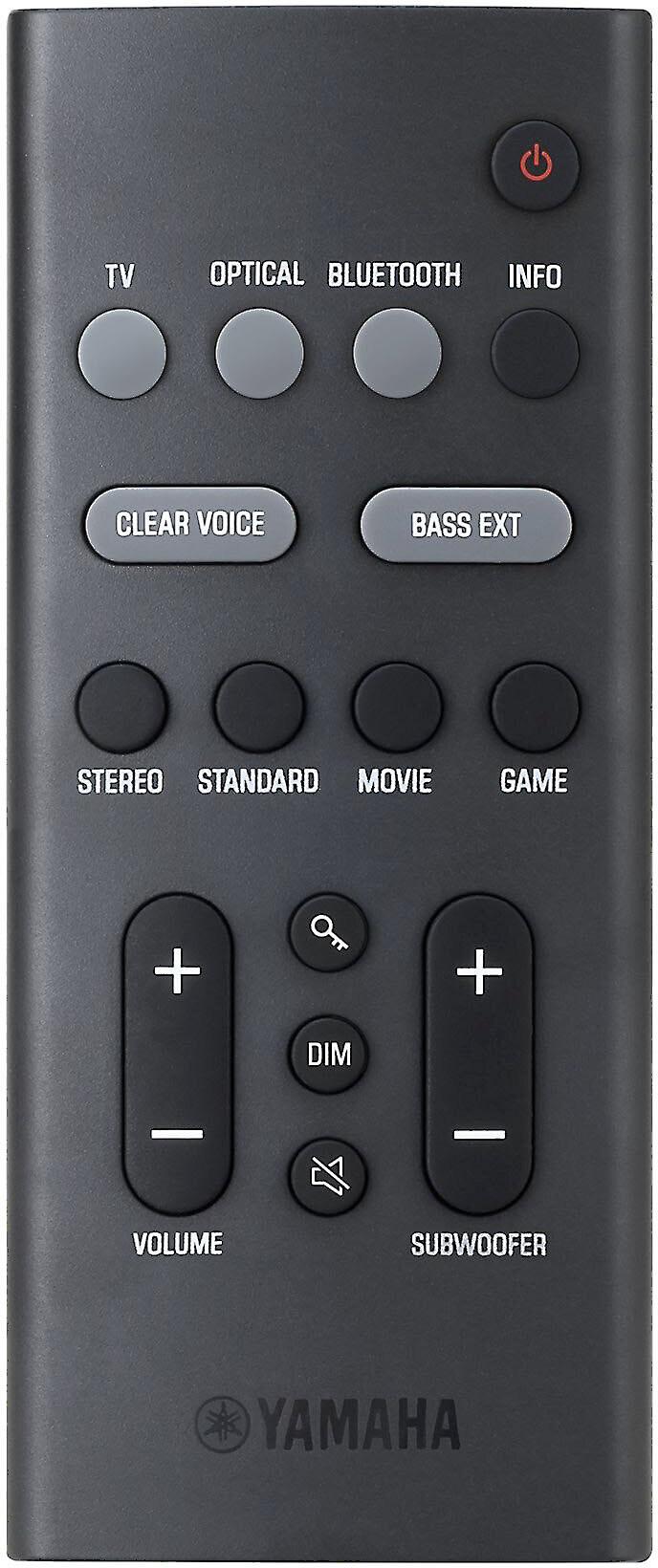
The Yamaha SR-B30A tackles dialogue differently with its Clear Voice technology. This digital processing analyzes the audio signal in real-time and boosts the frequency ranges where human speech occurs while reducing competing background noise. It's essentially an intelligent equalizer that adapts to what you're watching.
In practice, both approaches work well for TV shows and movies. The Amazon system has a slight edge for complex movie soundtracks where dialogue competes with music and effects, while the Yamaha's processing is excellent for news, talk shows, and content where speech clarity is paramount.
This represents another fundamental design philosophy difference. The Amazon system includes a wireless subwoofer with a larger driver (typically 6.5 inches) that can move more air and produce deeper bass frequencies. Subwoofers work best when they can be placed away from the main speakers, often in corners or along walls where room acoustics naturally amplify low frequencies.
The flexibility to position the subwoofer separately means you can optimize bass response for your specific room layout. In our review of user experiences, the wireless sub consistently receives praise for its impact during action sequences and music with strong low-end content.
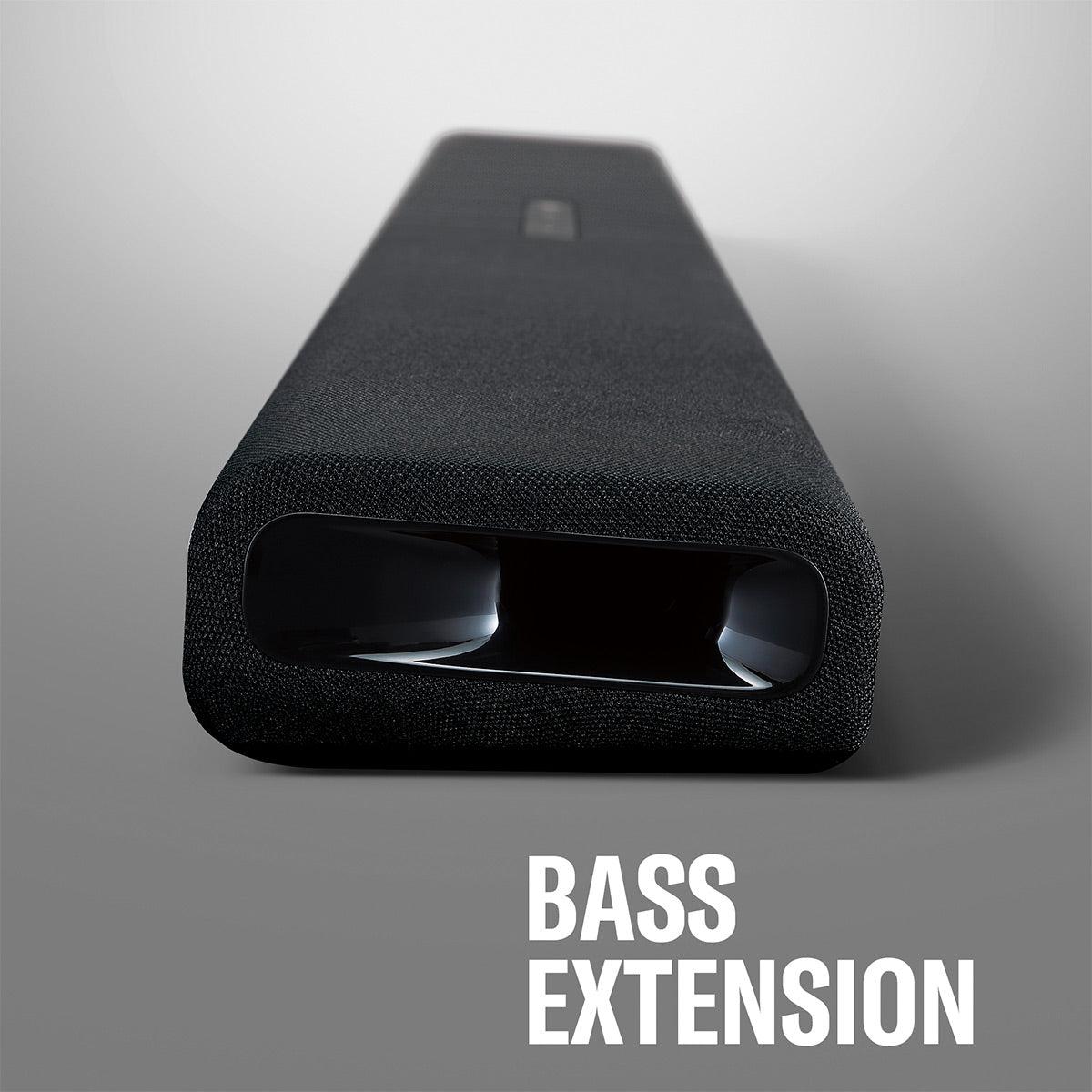
The Yamaha SR-B30A takes the integrated approach with dual 3-inch built-in subwoofers. These smaller drivers are supplemented by Bass Extension processing, which uses digital techniques to synthesize deeper frequencies that the small drivers cannot physically produce.
While the built-in approach saves space and eliminates the need to find a spot for another component, physics limits what small drivers can achieve. The Yamaha's bass is adequate for TV content and casual music listening, but it cannot match the depth and impact of a dedicated subwoofer during explosive movie scenes or bass-heavy music.
For home theater applications, this difference becomes pronounced during action sequences. The dedicated subwoofer in the Amazon system will deliver the visceral impact that makes explosions feel real, while the Yamaha's built-in bass, though well-integrated, lacks that physical presence.
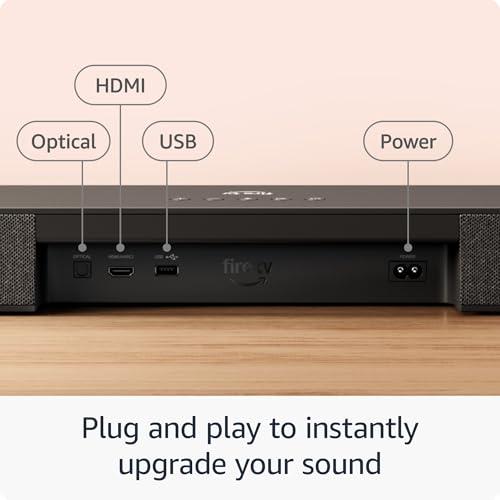
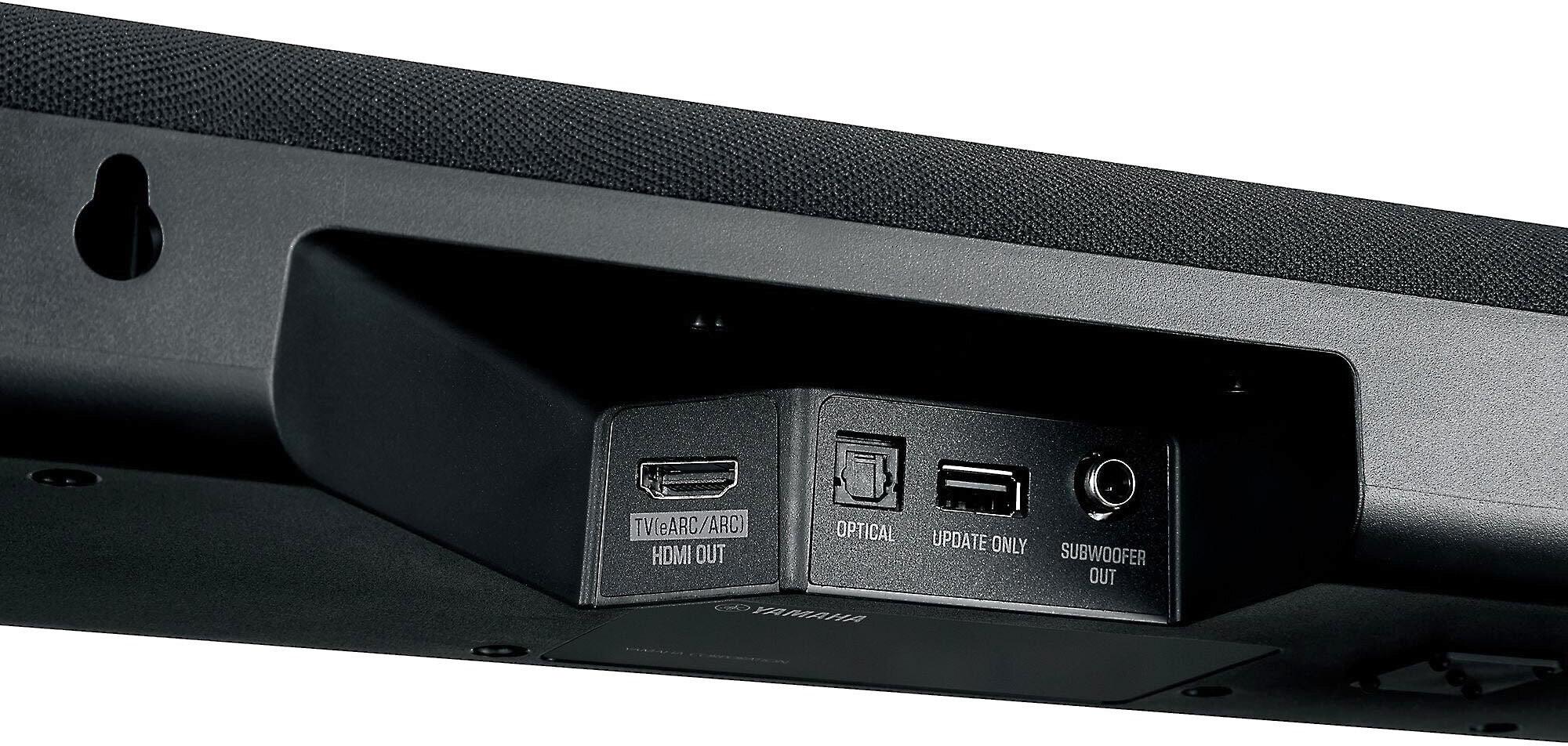
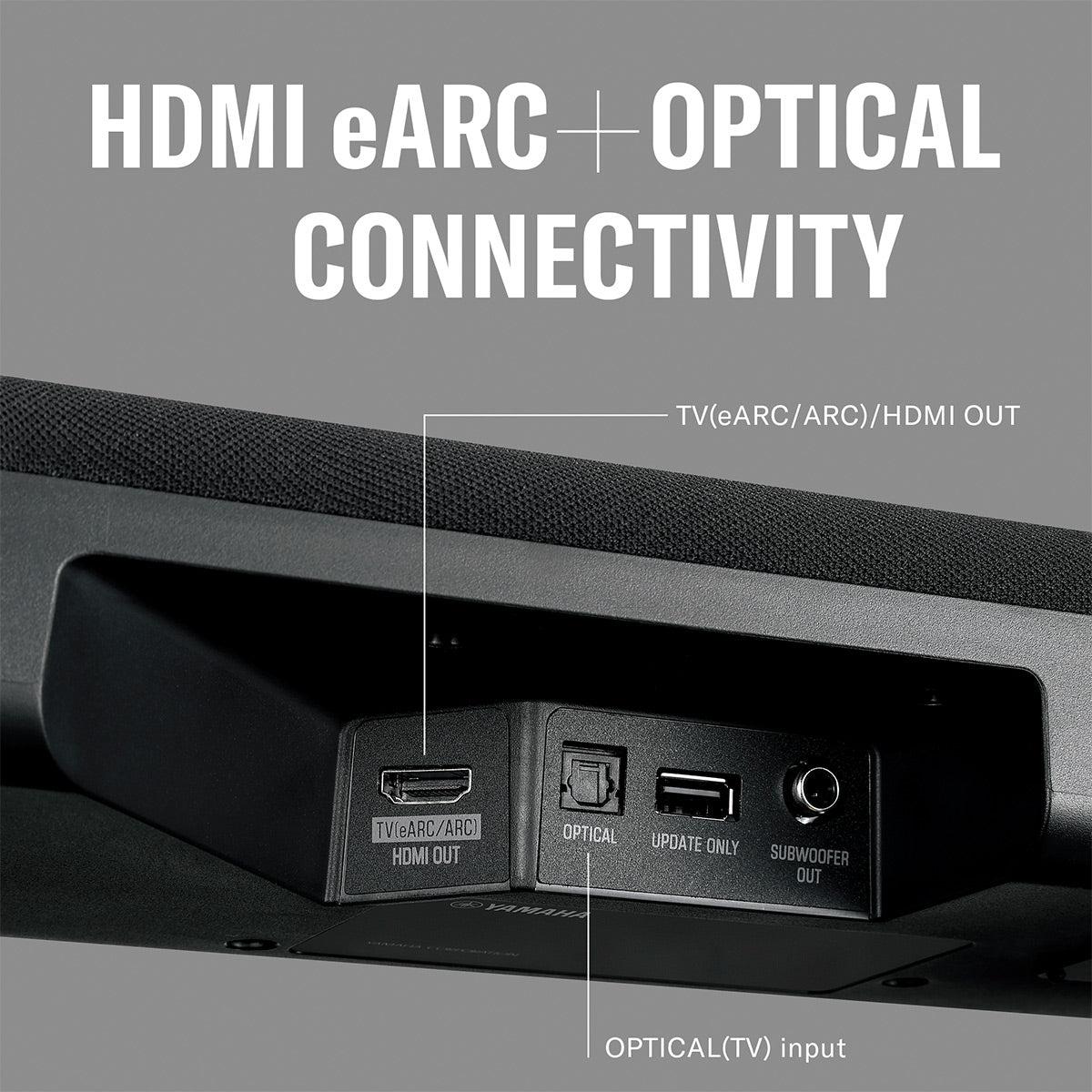
Both systems include HDMI eARC (enhanced Audio Return Channel), which allows high-bandwidth audio transmission from your TV and enables control through your TV's remote. This represents a significant improvement over older HDMI ARC, as eARC can handle lossless audio formats like Dolby TrueHD and DTS-HD Master Audio.
However, the control experience differs significantly. The Yamaha SR-B30A includes a dedicated smartphone app that provides detailed audio adjustments, equalizer controls, and easy switching between sound modes. This modern approach makes daily use more convenient—you can adjust bass levels or change sound modes without hunting for another remote.
The Amazon Fire TV system notably lacks app control, relying entirely on a physical remote. This feels dated in 2024, though the system compensates with deeper integration into Fire TV devices. If you own a compatible Fire TV, audio settings appear directly in your TV's interface, creating a more seamless experience.
The Amazon system supports a wider range of high-quality audio formats, including lossless Dolby TrueHD and DTS-HD Master Audio. These formats preserve the original studio quality without compression, making them ideal for Blu-ray movies and high-end streaming content.
The Yamaha SR-B30A supports standard Dolby Digital and includes AAC codec support for Bluetooth streaming—this provides better quality than the basic SBC codec when streaming from smartphones, resulting in clearer music playback.
For home theater enthusiasts with large movie collections or access to high-quality streaming services, the Amazon system's broader format support provides a noticeable advantage in audio fidelity.
The setup experience reflects each system's design philosophy. The Amazon Fire TV system requires positioning five separate components around your room. While all components come pre-paired, you'll need to find appropriate locations for the rear speakers and subwoofer, potentially running power cables to multiple outlets.
The Yamaha SR-B30A offers true plug-and-play simplicity—connect one cable to your TV, plug in the power, and you're ready to go. For users who want better sound without the complexity of a multi-speaker setup, this simplicity is invaluable.
Daily operation also differs significantly. The Yamaha's smartphone app makes adjustments intuitive, while the Amazon system requires navigating physical remote controls or TV menus. However, once properly configured, both systems support TV remote control for basic volume and power functions.
Our analysis of user feedback reveals clear patterns regarding room compatibility. The Amazon system shines in medium to large rooms (150+ square feet) where its multiple drivers can fill the space effectively and the rear speakers have room to create proper surround effects.
The Yamaha SR-B30A performs optimally in smaller spaces where its compact design provides excellent sound improvement without overwhelming the room. In very large spaces, the single-unit design limits how effectively it can fill the room with sound.
At the time of writing, these systems occupy different price tiers, with the Amazon Fire TV system commanding a premium over the Yamaha SR-B30A. The price difference reflects genuine capability differences—you're paying more for additional speakers, wireless technology, and surround sound processing.
The value equation depends heavily on your priorities. If you calculate cost per speaker component, the Amazon system becomes more reasonable when you consider you're getting six separate drivers plus wireless technology. However, if your main goal is improving TV dialogue and general audio quality, the Yamaha delivers significant improvement at a more accessible price point.
You have a dedicated home theater space or large living room where movies and TV are primary entertainment. The investment makes sense if you regularly watch content that benefits from surround sound—action movies, nature documentaries, sports with crowd noise, and gaming.
The system particularly excels if you're already invested in the Amazon ecosystem with Fire TV devices, as the integration creates a more cohesive experience. You should also be comfortable with a multi-component setup and have appropriate placement options for rear speakers.
Your priority is simplicity without sacrificing quality. This system makes perfect sense for smaller spaces, apartments, or secondary rooms where a full surround setup would be overkill. It's ideal if you primarily watch TV shows, news, and stream music, where dialogue clarity and overall audio improvement matter more than surround effects.
The smartphone app control and compact design make it particularly appealing for users who want modern convenience without complexity. It's also the clear choice if budget considerations are paramount—you'll get substantial audio improvement without the premium pricing.
These systems represent two valid but very different approaches to upgrading your TV audio. The Amazon Fire TV Soundbar Plus 5.1 delivers a premium home theater experience with genuine surround sound, while the Yamaha SR-B30A provides excellent value and convenience for users with more straightforward needs.
The decision ultimately comes down to your room size, content preferences, and whether the additional immersion of true surround sound justifies the extra complexity and cost. Both will dramatically improve your TV watching experience compared to built-in speakers—the question is how much improvement you need and how much convenience you're willing to sacrifice for it.
For most users, either choice will be a significant upgrade. The key is matching the system's capabilities to your specific situation rather than simply choosing based on specifications or price alone.
| Amazon Fire TV Soundbar Plus 5.1 Channel System | Yamaha SR-B30A Sound Bar with Built-In Subwoofers |
|---|---|
| Channel Configuration - Determines surround sound capability and immersion level | |
| True 5.1 with discrete rear speakers | 2.1 with virtual surround processing |
| Physical Components - Affects setup complexity and room requirements | |
| 4 separate pieces (soundbar + wireless sub + 2 satellites) | Single all-in-one unit |
| Dolby Atmos Support - Creates overhead sound effects for movies | |
| Virtual Dolby Atmos and DTS:X supported | Not supported |
| Bass Performance - Critical for action movies and music enjoyment | |
| Dedicated 6.5" wireless subwoofer with flexible placement | Dual 3" built-in subwoofers with Bass Extension |
| Smart Controls - Convenience for daily adjustments | |
| Physical remote only, no smartphone app | Dedicated smartphone app (Sound Bar Remote) |
| Audio Format Support - Determines compatibility with high-quality content | |
| Dolby TrueHD, DTS-HD Master Audio, all lossless formats | Dolby Digital, AAC Bluetooth codec |
| Setup Complexity - Time and effort required for installation | |
| Multi-room placement required for 5 components | Single cable connection, plug-and-play |
| Room Size Optimization - Space where each system performs best | |
| Medium to large rooms (150+ sq ft) | Small to medium rooms, apartments, bedrooms |
| HDMI Connectivity - Essential for modern TV integration | |
| HDMI eARC with cable included | HDMI eARC, HDMI-CEC compatible |
| Release Year - Indicates technology generation and feature set | |
| 2023 (latest Amazon home theater system) | Established design refined over multiple years |
The Amazon Fire TV Soundbar Plus 5.1 Channel System is significantly better for movies due to its true surround sound with rear speakers that create immersive audio effects. The Yamaha SR-B30A excels at dialogue clarity for TV shows but cannot match the cinematic experience of the Amazon system's 5.1 setup.
The Amazon Fire TV Soundbar Plus offers true 5.1 surround sound with five speakers plus a subwoofer, including rear satellites for genuine surround effects. The Yamaha SR-B30A Sound Bar provides 2.1 audio with left/right channels plus built-in subwoofers, using digital processing to simulate surround sound.
The Yamaha SR-B30A wins for simplicity with its single-unit design requiring just one cable connection and offering smartphone app control. The Amazon Fire TV Soundbar Plus 5.1 requires positioning multiple wireless components around your room, though all pieces come pre-paired from the factory.
Only the Amazon Fire TV Soundbar Plus 5.1 Channel System supports Dolby Atmos and DTS:X, though it uses virtual processing rather than dedicated height speakers. The Yamaha SR-B30A does not support Dolby Atmos but includes Clear Voice technology for enhanced dialogue clarity.
The Amazon Fire TV system delivers superior bass with its dedicated wireless subwoofer that can be positioned optimally in your room. The Yamaha SR-B30A includes dual built-in subwoofers with Bass Extension technology, which saves space but cannot match the depth of a separate subwoofer.
The Amazon Fire TV Soundbar Plus 5.1 performs best in medium to large rooms where its multiple speakers can create proper surround effects. The Yamaha SR-B30A Sound Bar is ideal for smaller spaces like bedrooms, apartments, or compact living rooms where its all-in-one design provides excellent improvement without overwhelming the space.
Yes, both the Amazon Fire TV Soundbar Plus and Yamaha SR-B30A support HDMI-CEC for basic TV remote control. However, the Yamaha also offers a dedicated smartphone app for detailed adjustments, while the Amazon system relies on its physical remote for advanced settings.
The Yamaha SR-B30A provides excellent value for users wanting significant audio improvement at a lower cost with minimal setup complexity. The Amazon Fire TV Soundbar Plus 5.1 Channel System costs more but delivers premium home theater performance with true surround sound that justifies the higher investment.
The Amazon Fire TV Soundbar Plus 5.1 offers enhanced integration with Fire TV devices, allowing control through the TV's interface. The Yamaha SR-B30A works with any TV including Fire TV models through standard HDMI or optical connections, but without the specialized integration features.
The Yamaha SR-B30A has advantages for music with better stereo imaging, AAC Bluetooth codec support, and smartphone app control for easy adjustments. The Amazon Fire TV system can overpower music with its surround processing and has notable gaps in stereo soundstage that make it less ideal for music listening.
Both the Amazon Fire TV Soundbar Plus 5.1 and Yamaha SR-B30A include HDMI eARC, optical input, and Bluetooth connectivity. The Amazon system includes an HDMI cable and supports more audio formats, while the Yamaha offers superior Bluetooth quality with AAC codec support for smartphone streaming.
Choose the Amazon Fire TV Soundbar Plus 5.1 Channel System if you want true surround sound, have a larger room, and prioritize cinematic immersion for movies and games. Select the Yamaha SR-B30A Sound Bar if you prefer simplicity, have space constraints, focus mainly on TV viewing, or want excellent performance at a more accessible price point.
We've done our best to create useful and informative comparisons to help you decide what product to buy. Our research uses advanced automated methods to create this comparison and perfection is not possible - please contact us for corrections or questions. These are the sites we've researched in the creation of this article: rtings.com - cordbusters.co.uk - techradar.com - developer.amazon.com - t3.com - hometechnologyreview.com - youtube.com - hometechnologyreview.com - whathifi.com - hometechnologyreview.com - hometechnologyreview.com - youm.design - hometechnologyreview.com - dolby.com - usa.yamaha.com - worldwidestereo.com - audiolab.com - shop.sg.yamaha.com - consumerreports.org - usa.yamaha.com - vinylsound.ca - bestbuy.com - modernappliancewoodward.com - bluestardist.com - target.com - my.yamaha.com

Privacy Policy
Terms and Conditions - Affiliate Policy
Home Security
© Copyright 2008-2026.
11816 Inwood Rd #1211, Dallas, TX 75244