







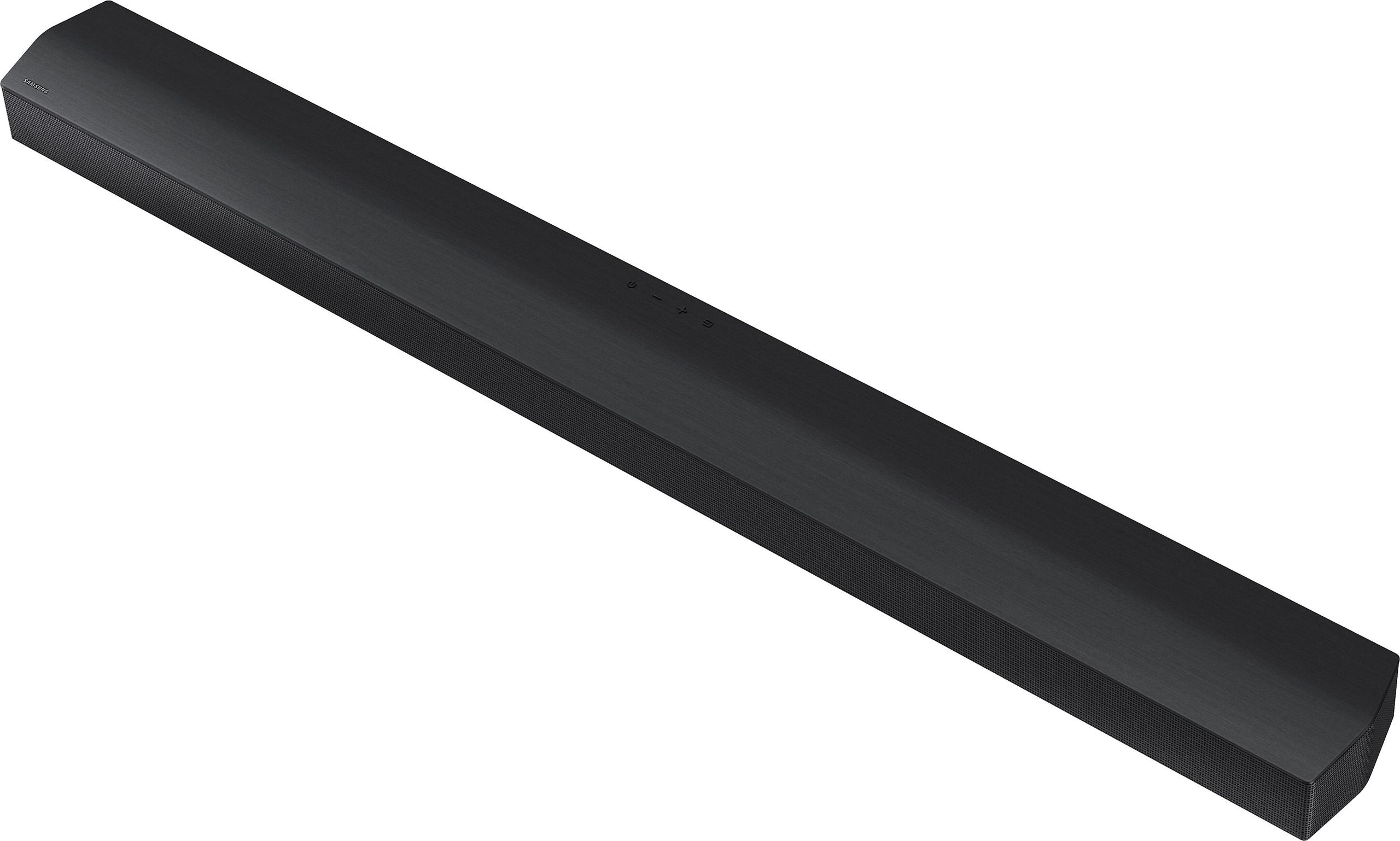
When your TV's built-in speakers leave you constantly reaching for the volume remote or asking "what did they say?" during movie nights, it's time to consider a soundbar upgrade. The 5.1-channel soundbar category has become the sweet spot for most homes, offering a significant audio improvement without the complexity of a full home theater system.
But with so many options available, choosing the right one can feel overwhelming. Today, we're diving deep into two popular contenders: the Amazon Fire TV Soundbar Plus 5.1 Channel System and the Samsung B-Series 5.1 Channel Soundbar with Subwoofer. While both promise 5.1-channel surround sound, they take dramatically different approaches to achieving it.
Before we dive into specifics, let's clarify what "5.1" actually means. The "5" represents five main audio channels: left front, center, right front, left surround, and right surround. The ".1" refers to a dedicated subwoofer channel for low-frequency effects (LFE) – those rumbling explosions and deep musical notes that regular speakers can't reproduce effectively.
This configuration creates a more immersive audio experience than your TV's built-in speakers by positioning sounds around your listening space. When a helicopter flies across the screen, you should hear it move from one side of your room to the other. When characters speak, their voices should come clearly from the center, not get lost in background music or sound effects.
The key considerations when shopping for any 5.1 soundbar system include audio quality across different types of content, how convincingly it creates that surround sound effect, connectivity options for your devices, ease of setup, and overall value for the investment.
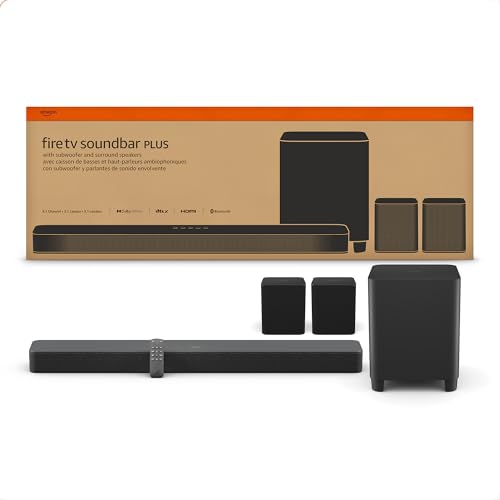
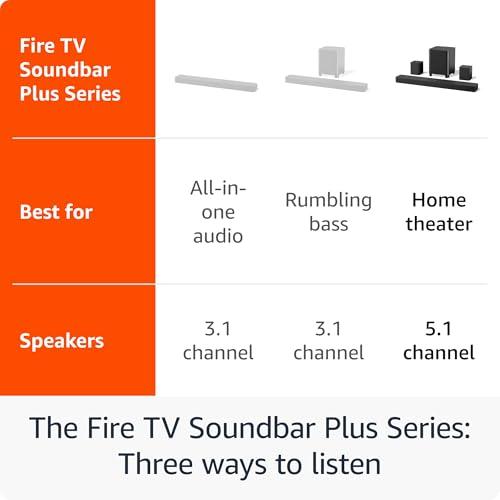
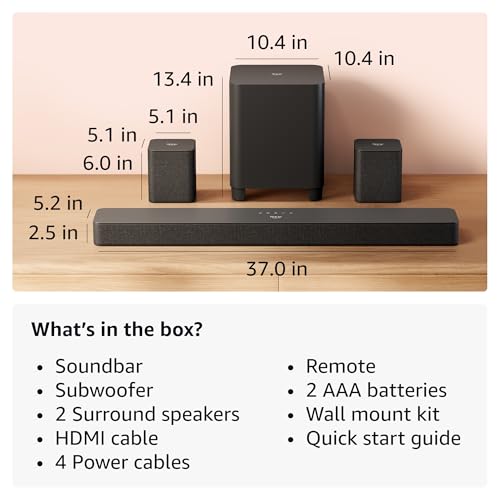
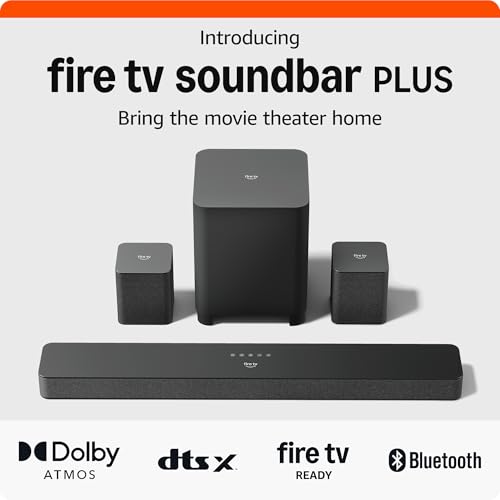
Here's where these two systems fundamentally differ. The Amazon Fire TV Soundbar Plus, released in 2023 as Amazon's premium soundbar offering, includes actual physical rear speakers that you place behind your seating area. This creates what's called "discrete" or "true" 5.1 surround sound because each channel has its own dedicated speaker.
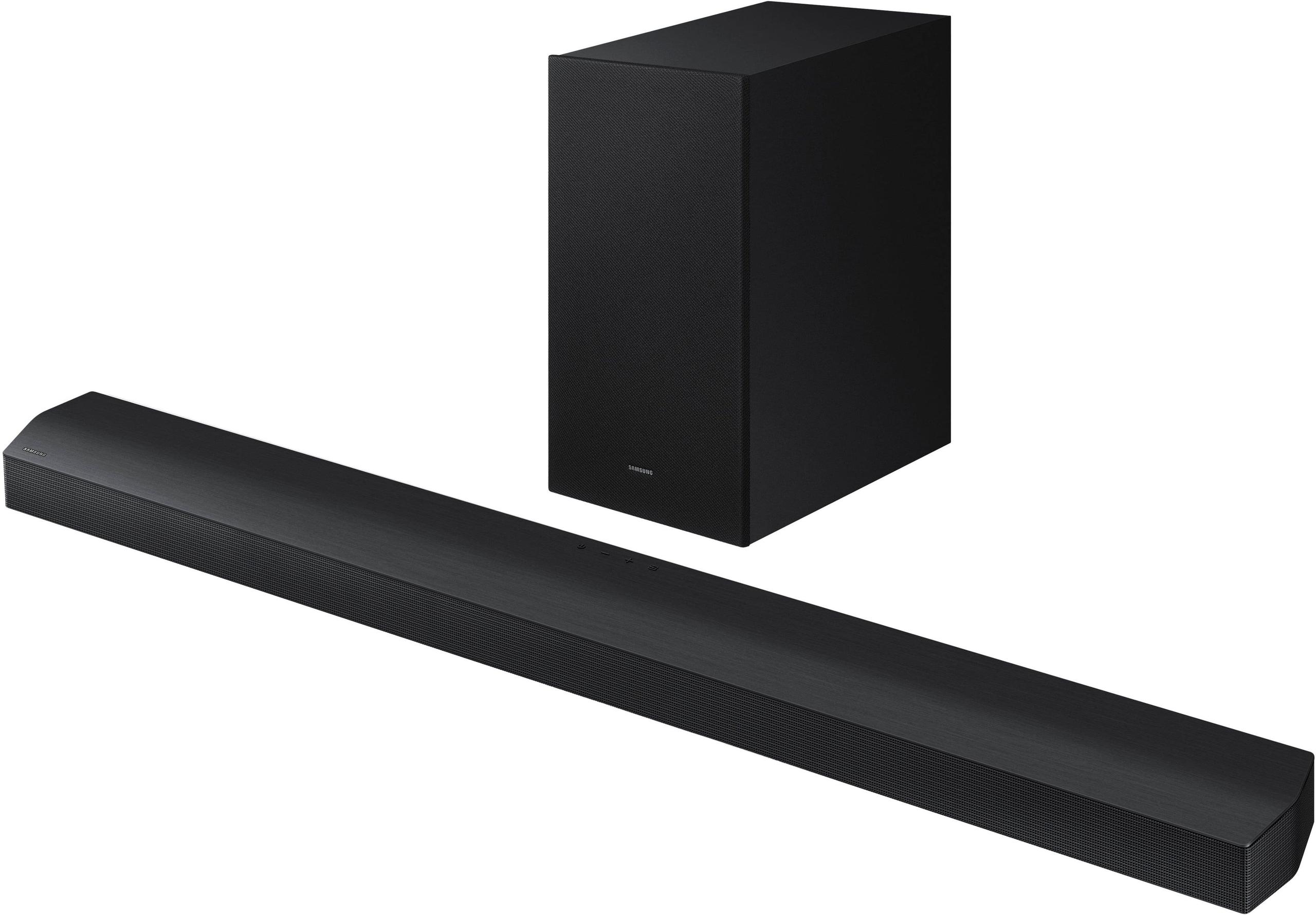
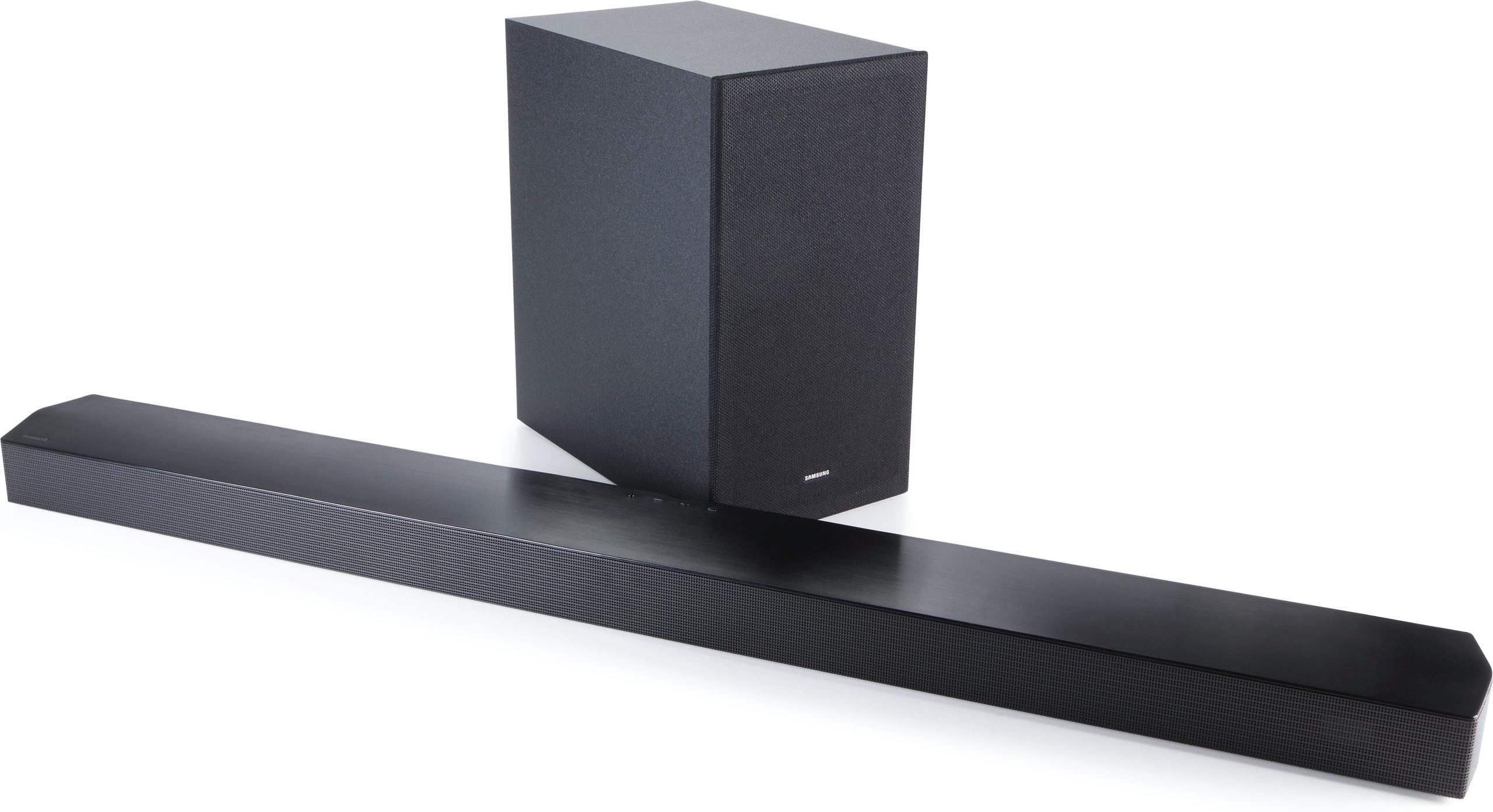
The Samsung B-Series, part of Samsung's 2024 refresh of their budget-friendly lineup, takes the virtual approach. It uses digital signal processing and strategically positioned speakers within the main soundbar to simulate surround effects. This technique, called "virtualization," tricks your brain into perceiving sounds coming from directions where there aren't actually speakers.
At the time of writing, the Amazon system commands a significant price premium – roughly 65-70% more than the Samsung option. This price difference reflects not just the inclusion of physical rear speakers, but also more advanced audio processing capabilities and premium format support.
Both systems recognize that clear dialogue is crucial for an enjoyable viewing experience, but they approach it differently. The Amazon Fire TV Soundbar Plus features a dedicated center channel speaker with adjustable dialogue enhancement. Based on our research into user feedback and professional reviews, this system excels at separating speech from background audio, making it particularly effective for dialogue-heavy content like dramas and documentaries.
The dialogue enhancement feature works by boosting specific frequency ranges where human speech occurs while applying compression to prevent distortion. Users consistently report being able to hear whispered conversations and accented dialogue more clearly than with their TV speakers or basic soundbars.
The Samsung B-Series employs its "Voice Enhance" mode, which uses adaptive EQ (equalization) to optimize vocal frequencies. Samsung's approach is more automated – the system analyzes incoming audio and adjusts itself rather than requiring manual tweaking. For Samsung TV owners, the Q-Symphony technology creates an even more impressive effect by coordinating the TV's built-in speakers with the soundbar, essentially creating additional center channel reinforcement.
However, some users note that the Amazon system can sound slightly thin in the lower midrange frequencies where deeper male voices reside, while the Samsung maintains a more balanced tonal signature across the frequency spectrum.
This is where the fundamental difference between these systems becomes most apparent. The Amazon Fire TV Soundbar Plus creates authentic surround sound positioning because it has actual speakers behind you. When a sound is mixed to come from the rear left channel, it physically originates from that location in your room.
Based on extensive user feedback, this translates to a genuinely immersive experience for movies and gaming. The rear satellites create what audio engineers call a "360-degree lateral soundstage" – you can pinpoint where sounds are coming from around you. This is particularly noticeable in action movies where bullets whiz past, or in games where enemy footsteps approach from behind.
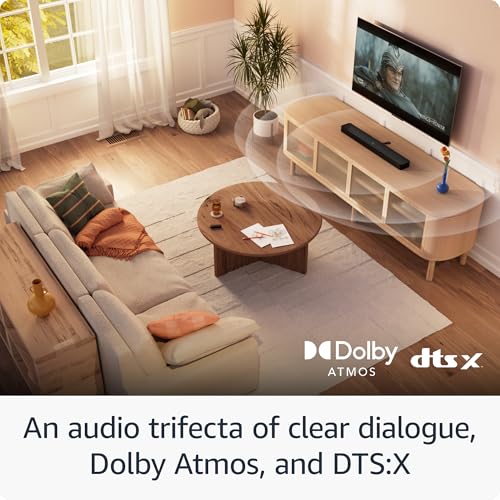
The limitation is that neither system includes up-firing drivers for height effects. Dolby Atmos and DTS:X content gets downmixed to the horizontal plane, so while you get excellent left-to-right and front-to-back positioning, overhead effects are only simulated.
The Samsung B-Series relies on psychoacoustic processing – essentially audio tricks that exploit how your brain processes sound reflections and timing differences. The built-in side speakers within the soundbar do create a wider soundstage than a basic 2.1 system, and DTS Virtual:X processing adds some convincing surround effects.
However, the consensus from both professional reviewers and users is clear: virtual surround, while impressive for its price point, simply cannot match the immersion of discrete rear speakers. The Samsung system works well for casual movie watching and creates a noticeable improvement over TV speakers, but serious home theater enthusiasts consistently prefer systems with physical rear channels.
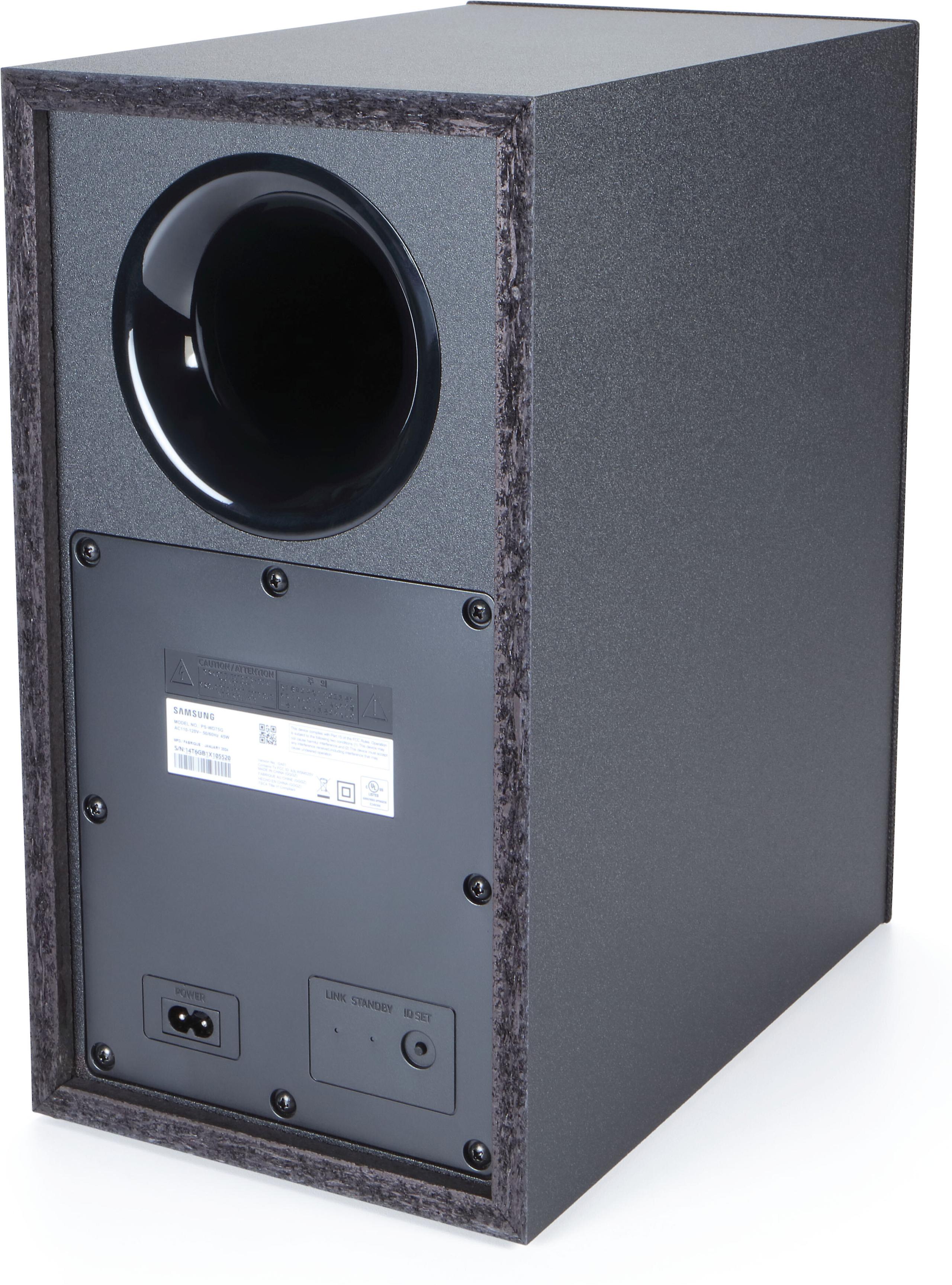
Both systems include wireless subwoofers, but their approaches and performance differ significantly. The Amazon Fire TV Soundbar Plus includes a larger external subwoofer that delivers substantial low-end impact. Users report impressive bass extension that adds real rumble to movie explosions and depth to music playback.
However, some reviews note that at higher volume levels, the bass can occasionally overpower dialogue during action-heavy scenes. The system includes bass adjustment controls to fine-tune this balance, but it requires some user intervention to optimize for different content types.
The Samsung B-Series takes a more integrated approach with its Bass Boost mode and smaller subwoofer design. The bass response is well-balanced with the rest of the frequency spectrum, rarely overwhelming other elements. While it doesn't deliver the same raw impact as the Amazon system's larger subwoofer, it provides adequate low-end extension for most listeners without dominating the soundstage.
This is where the Amazon Fire TV Soundbar Plus shows its premium positioning. It supports lossless audio formats including Dolby TrueHD and DTS-HD Master Audio – the highest quality soundtracks found on 4K Blu-ray discs. It also handles object-based formats like Dolby Atmos and DTS:X, even though height effects are virtualized rather than physically reproduced.
For users with extensive physical media collections or those who stream high-quality content from services like Apple TV+ or Netflix's premium tiers, this format support ensures you're getting the full audio experience the content creators intended.
The Samsung B-Series focuses on more common formats like Dolby Digital 5.1 and DTS, which cover the vast majority of streaming content and broadcast TV. While it supports DTS Virtual:X for enhanced surround effects, it doesn't decode lossless formats. For most users watching Netflix, Hulu, or cable TV, this limitation won't be noticeable, but it does represent less future-proofing for evolving audio standards.
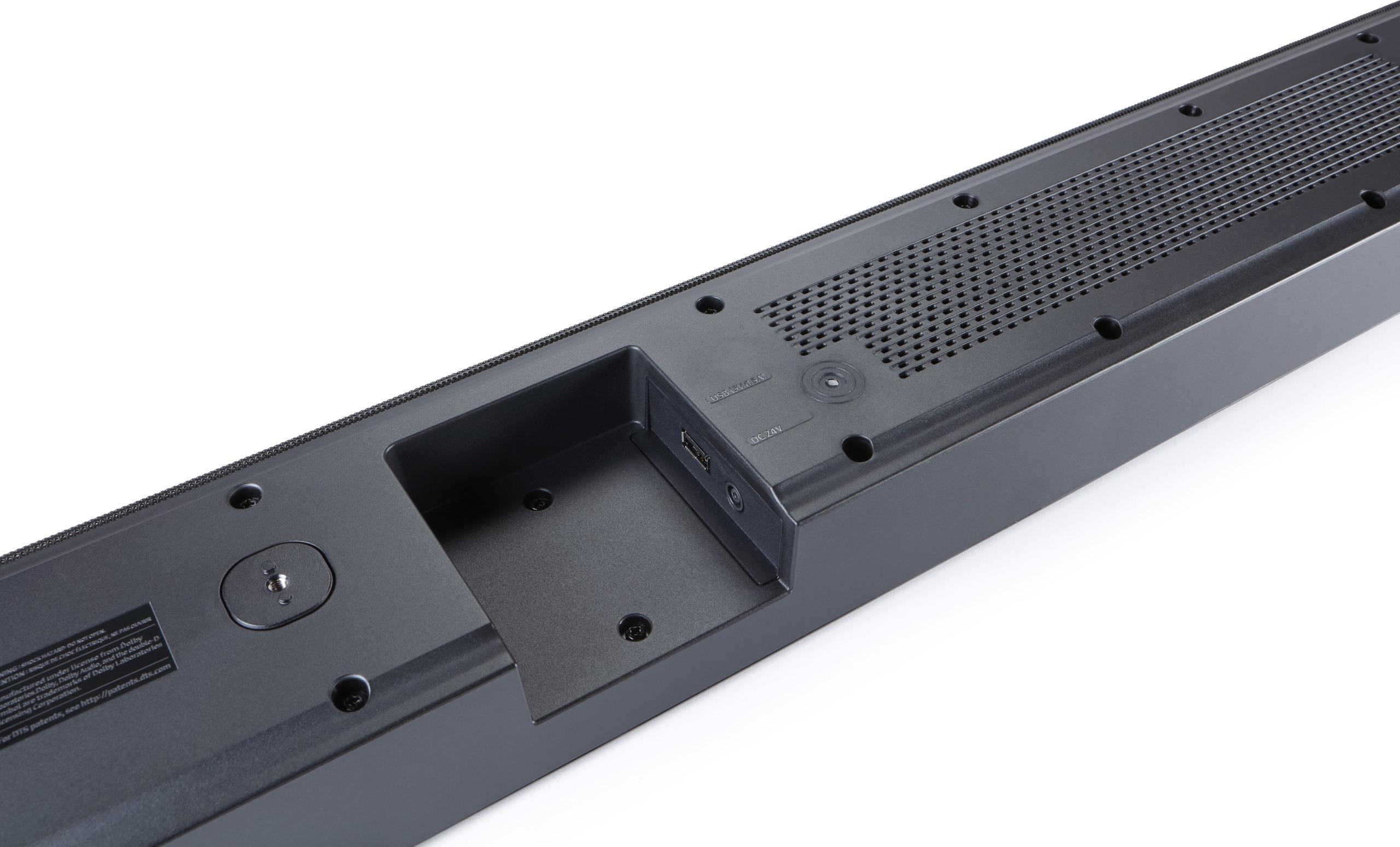
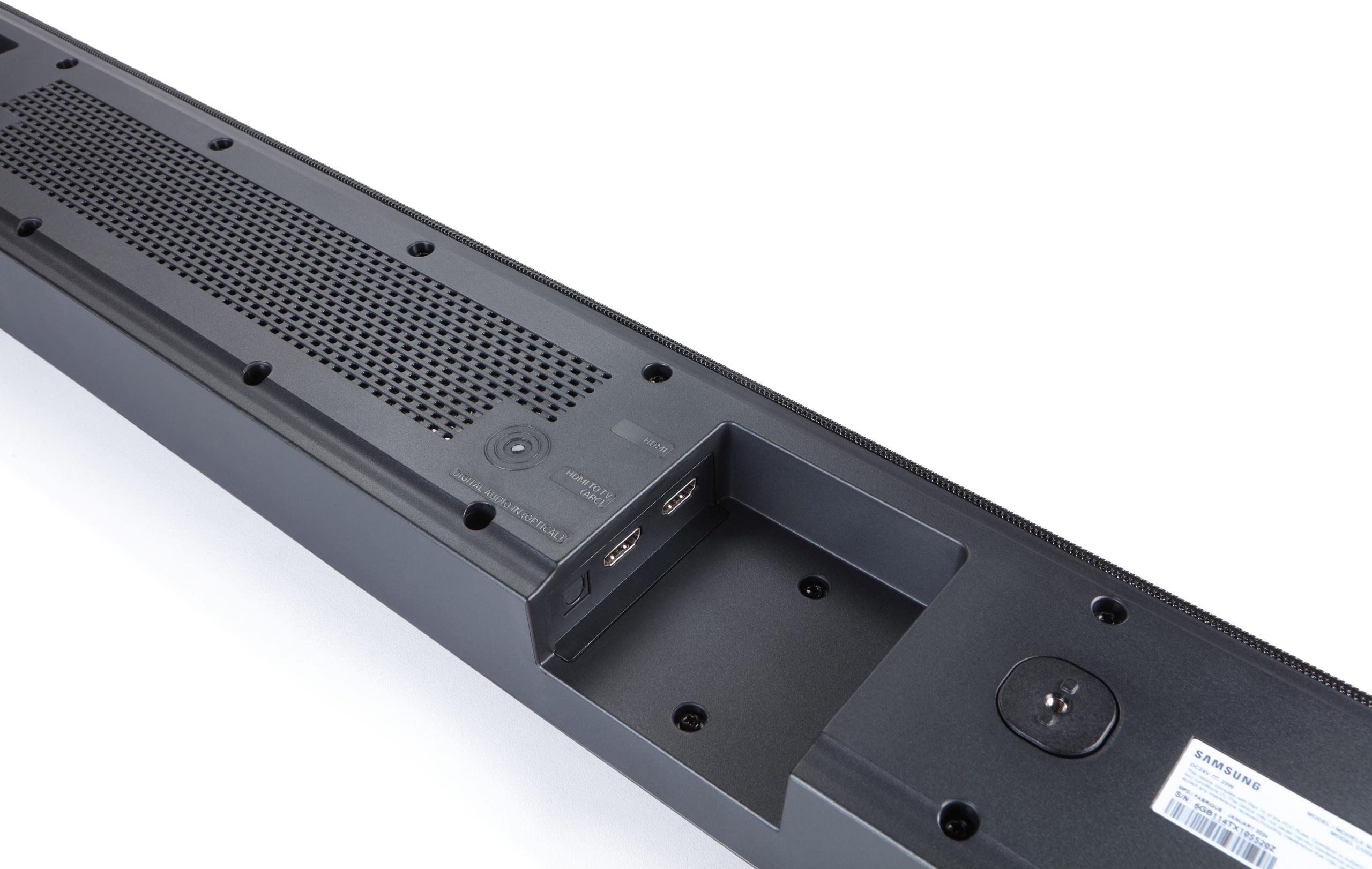
Here's where the Samsung B-Series demonstrates clear advantages. It includes a full HDMI input alongside HDMI output and ARC (Audio Return Channel) support. This means you can connect gaming consoles, streaming devices, or Blu-ray players directly to the soundbar, then send video to your TV through a single HDMI connection.
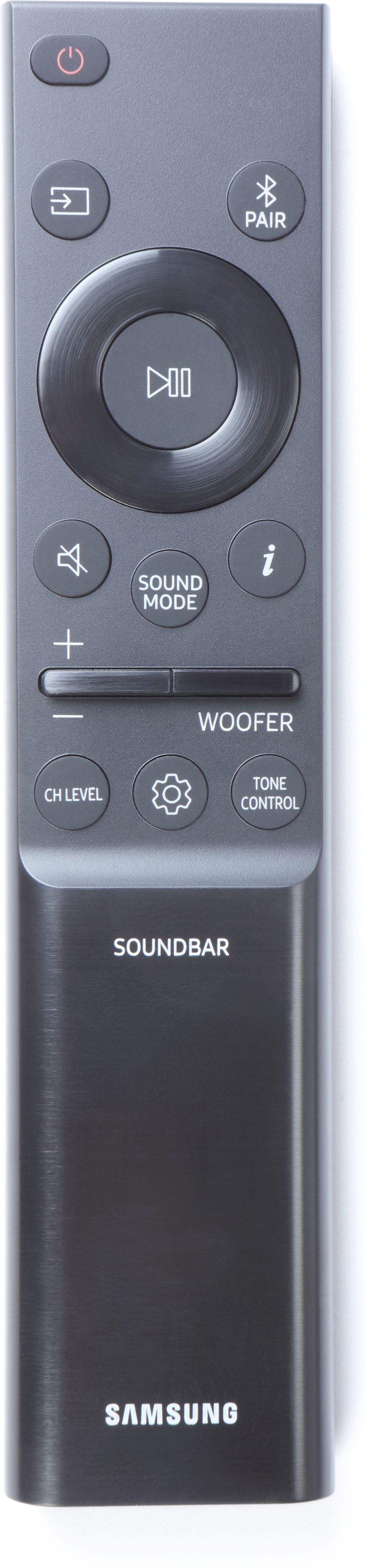
This connectivity flexibility is particularly valuable for gamers who want the soundbar's Game mode optimization for directional audio cues, or for users with older TVs that have limited HDMI ports. The HDMI CEC support also enables control through your TV's remote, streamlining the user experience.
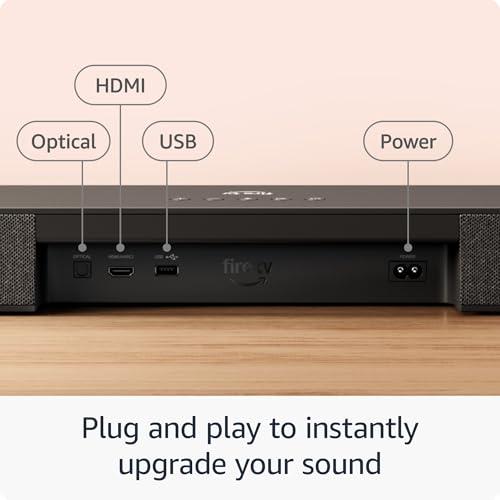
The Amazon Fire TV Soundbar Plus takes a more focused approach with HDMI eARC only – no HDMI input for connecting devices directly. This design works seamlessly if your TV has sufficient HDMI ports and supports ARC, but it can create connection challenges for users with multiple devices or older televisions.
However, the Amazon system shines for users already invested in the Fire TV ecosystem. It integrates seamlessly with Fire TV devices, allowing control through the Fire TV remote and access to audio settings through the TV's on-screen menus. This integration extends to automatic format detection and optimized processing for Fire TV content.
The Samsung B-Series offers the simpler setup experience. With just a soundbar and subwoofer to position, most users can have the system running within 15-20 minutes. The wireless subwoofer automatically pairs, and the various sound modes (Standard, Surround, Game Pro, Adaptive Sound) provide easy optimization for different content types.
Samsung's Adaptive Sound feature deserves special mention – it automatically analyzes incoming audio and adjusts the EQ in real-time. This means the system optimizes itself for dialogue-heavy TV shows, music, action movies, or sports broadcasts without manual intervention.
The Amazon Fire TV Soundbar Plus requires more consideration during setup due to the rear speakers. You'll need to find appropriate locations behind your seating area, ensure wireless connectivity is strong throughout your room, and potentially run extension cords for power. However, Amazon has simplified this process by pre-pairing all components – once positioned and powered on, they connect automatically.
The included remote provides access to EQ adjustments, dialogue enhancement levels, and sound mode selection. While setup takes longer initially, many users find the results justify the extra effort.
For dedicated home theater use, the Amazon Fire TV Soundbar Plus demonstrates clear advantages. The combination of discrete rear channels, premium format support, and robust bass response creates a more convincing cinematic experience. Movie soundtracks benefit significantly from true surround positioning, particularly for action films, sci-fi epics, and immersive documentaries.
The system's ability to decode lossless audio formats means that 4K Blu-ray collections sound noticeably better than on systems limited to compressed formats. For users who've invested in high-quality displays and source material, this audio format support helps maintain the premium experience throughout the signal chain.
Gaming also benefits substantially from discrete rear channels. Competitive gamers report improved spatial awareness in first-person shooters, while single-player adventure games feel more immersive with environmental audio positioned around the listening space.
The Samsung B-Series serves well for casual home theater use, particularly for users primarily consuming streaming content. The various sound modes optimize effectively for different genres, and the Night mode feature compresses dynamic range for apartment living or late-night viewing without disturbing others.
The Samsung B-Series represents excellent value for mainstream users seeking a significant upgrade from TV speakers without complexity or high cost. At the time of writing, it costs substantially less than the Amazon option while still providing meaningful improvements in dialogue clarity, bass response, and overall audio quality.
This system makes the most sense for Samsung TV owners who can leverage Q-Symphony integration, renters who prefer minimal setup complexity, users with space constraints that make rear speaker placement impractical, and budget-conscious buyers who primarily watch streaming content and broadcast TV.
The Amazon Fire TV Soundbar Plus justifies its premium pricing for users who prioritize authentic surround sound and have the room layout to accommodate rear speakers. The investment makes particular sense for Fire TV ecosystem users, serious movie enthusiasts with physical media collections, gamers seeking competitive audio advantages, and anyone planning to use the system as their primary entertainment audio solution for years to come.
Choose the Samsung B-Series if you want solid 5.1-channel performance with minimal setup complexity, need HDMI input connectivity for gaming consoles or other devices, own a Samsung TV and want Q-Symphony benefits, have space or neighbor constraints that make rear speakers impractical, or prioritize value over ultimate performance.
Choose the Amazon Fire TV Soundbar Plus if you want authentic surround sound positioning with physical rear speakers, use Fire TV devices and want seamless integration, watch premium content that benefits from lossless audio format support, have the room layout to accommodate rear speaker placement, or can justify the higher cost for superior audio performance.
Both systems represent solid choices within their respective market segments, but they serve different user priorities. The Samsung system democratizes 5.1-channel audio for mainstream users, while the Amazon system delivers premium performance for those willing to invest in the complete experience. Understanding which category fits your needs, room, and budget will guide you toward the right choice for your home entertainment setup.
| Amazon Fire TV Soundbar Plus 5.1 Channel System | Samsung B-Series 5.1 Channel Soundbar with Subwoofer |
|---|---|
| Surround Sound Configuration - Determines authenticity of surround effects | |
| True discrete 5.1 with physical rear satellite speakers | Virtual 5.1 with built-in side speakers, no rear satellites |
| Audio Format Support - Important for premium content and future-proofing | |
| Dolby Atmos, DTS:X, Dolby TrueHD, DTS-HD Master Audio (lossless) | Dolby Digital 5.1, DTS Virtual:X (compressed formats only) |
| HDMI Connectivity - Affects device connection flexibility | |
| HDMI eARC only (no input for connecting devices directly) | HDMI Input + Output + ARC (can connect consoles/devices directly) |
| TV Integration - Simplifies control and setup | |
| Fire TV optimization with seamless remote control integration | Q-Symphony with Samsung TVs, HDMI CEC universal remote support |
| Setup Complexity - Time and effort required for installation | |
| Requires positioning of wireless rear speakers around room | Simple soundbar + subwoofer placement, no additional speakers |
| Bluetooth Version - Affects wireless audio quality and connection stability | |
| Bluetooth 5.0 (newer standard, better range and quality) | Bluetooth 4.2 (older standard, adequate for most uses) |
| Subwoofer Size - Impacts bass depth and room-filling capability | |
| Larger external subwoofer for deeper bass impact | Compact subwoofer with integrated Bass Boost mode |
| Sound Customization - User control over audio characteristics | |
| Manual EQ controls, dialogue enhancement, bass/treble adjustment | Adaptive Sound auto-optimization, multiple preset sound modes |
| Release Year - Indicates technology generation and feature set | |
| 2023 (Amazon's premium soundbar debut) | 2024 (Samsung's budget-friendly refresh) |
| Ideal Room Size - Optimal performance coverage area | |
| Up to 250 sq ft with proper rear speaker positioning | Medium rooms without rear speaker placement requirements |
The key difference is how they create surround sound. The Amazon Fire TV Soundbar Plus 5.1 Channel System includes physical rear speakers that you place behind your seating area for true surround sound. The Samsung B-Series 5.1 Channel Soundbar uses virtual surround technology built into the main soundbar unit, with no separate rear speakers required.
The Samsung B-Series is better for small spaces since it only requires placing a soundbar and subwoofer without needing to position rear speakers around the room. The Amazon Fire TV Soundbar Plus needs space behind your seating for the satellite speakers, making it less suitable for cramped layouts.
No, the Samsung B-Series soundbar works with any TV that has HDMI or optical connections. However, Samsung TV owners get additional benefits like Q-Symphony technology, which coordinates the TV's speakers with the soundbar for enhanced audio performance.
Both systems offer good dialogue clarity, but they work differently. The Amazon Fire TV Soundbar Plus has adjustable dialogue enhancement and a dedicated center channel. The Samsung B-Series uses Voice Enhance mode with automatic optimization. Most users find both effective for hearing speech clearly over background audio.
Only the Samsung B-Series has an HDMI input port for connecting gaming consoles, streaming devices, or Blu-ray players directly. The Amazon Fire TV Soundbar Plus only has HDMI eARC output, so you'll need to connect devices to your TV instead of the soundbar.
The Amazon Fire TV Soundbar Plus 5.1 Channel System provides a more authentic home theater experience with physical rear speakers creating true surround sound positioning. It also supports premium audio formats like Dolby Atmos and lossless audio from 4K Blu-rays, making it better for serious movie enthusiasts.
The Samsung B-Series is much easier to set up – just position the soundbar and subwoofer, then connect to your TV. The Amazon Fire TV Soundbar Plus requires finding suitable locations for rear speakers behind your seating area and ensuring good wireless connectivity throughout the room.
The Samsung B-Series offers better value for most users, providing solid 5.1-channel performance at a lower price point. The Amazon Fire TV Soundbar Plus costs significantly more but delivers superior audio quality and authentic surround sound for those willing to pay the premium.
The Amazon Fire TV Soundbar Plus supports Dolby Atmos, DTS:X, and lossless audio formats, though height effects are virtualized. The Samsung B-Series focuses on standard formats like Dolby Digital 5.1 and DTS Virtual:X, which cover most streaming content but not premium lossless formats.
Both systems handle music well, but differently. The Amazon Fire TV Soundbar Plus provides better separation and staging for complex musical arrangements. The Samsung B-Series offers more balanced sound with its Adaptive Sound feature automatically optimizing for different music genres.
The Amazon Fire TV Soundbar Plus 5.1 Channel System comes complete with all speakers included and isn't designed for expansion. The Samsung B-Series can potentially be expanded with compatible Samsung wireless rear speakers sold separately, though it works well as-is for most users.
For streaming services, the Samsung B-Series provides excellent performance at a better value since most streaming content uses standard audio formats that both systems handle well. The Amazon Fire TV Soundbar Plus offers superior performance but may be overkill unless you also watch premium content or use Fire TV devices regularly.
We've done our best to create useful and informative comparisons to help you decide what product to buy. Our research uses advanced automated methods to create this comparison and perfection is not possible - please contact us for corrections or questions. These are the sites we've researched in the creation of this article: rtings.com - cordbusters.co.uk - techradar.com - developer.amazon.com - t3.com - hometechnologyreview.com - youtube.com - hometechnologyreview.com - whathifi.com - hometechnologyreview.com - hometechnologyreview.com - youm.design - hometechnologyreview.com - dolby.com - bestbuy.com - abt.com - avsforum.com - crutchfield.com - camelcamelcamel.com - samsung.com - samsung.com - samsung.com - images.samsung.com - samsung.com - avblinq.avbportal.com - samsung.com - samsung.com

Privacy Policy
Terms and Conditions - Affiliate Policy
Home Security
© Copyright 2008-2026.
11816 Inwood Rd #1211, Dallas, TX 75244