


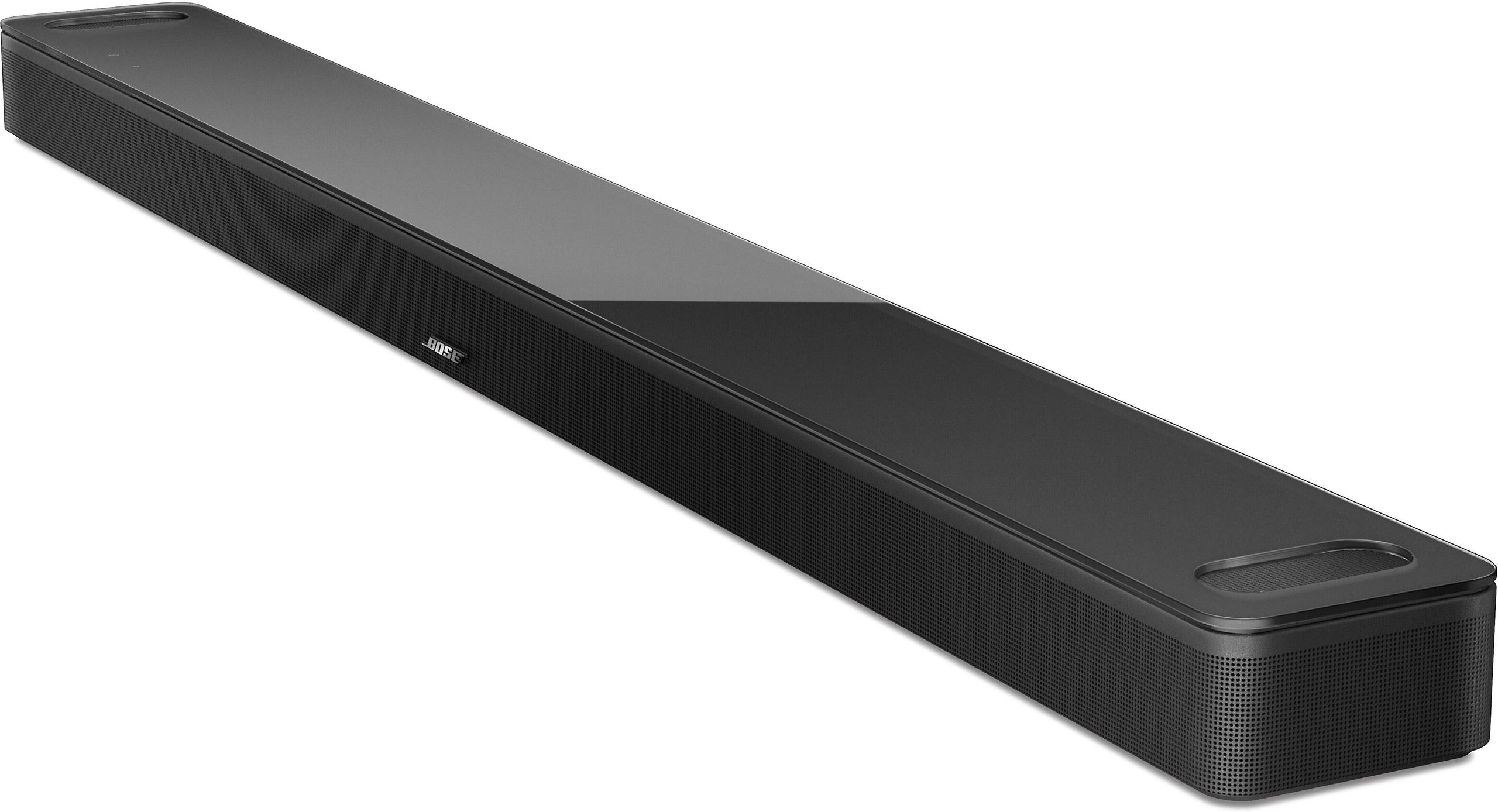
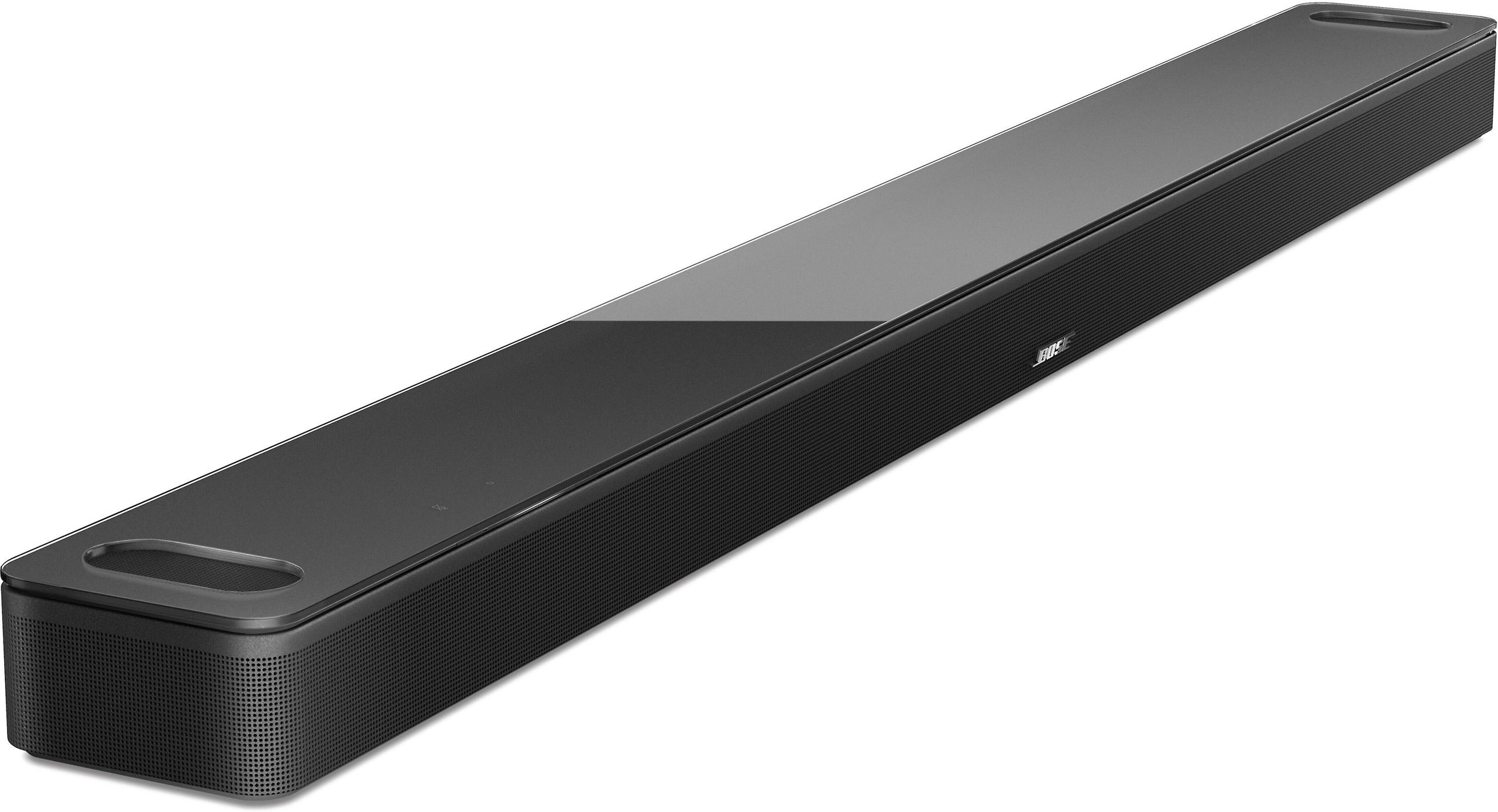

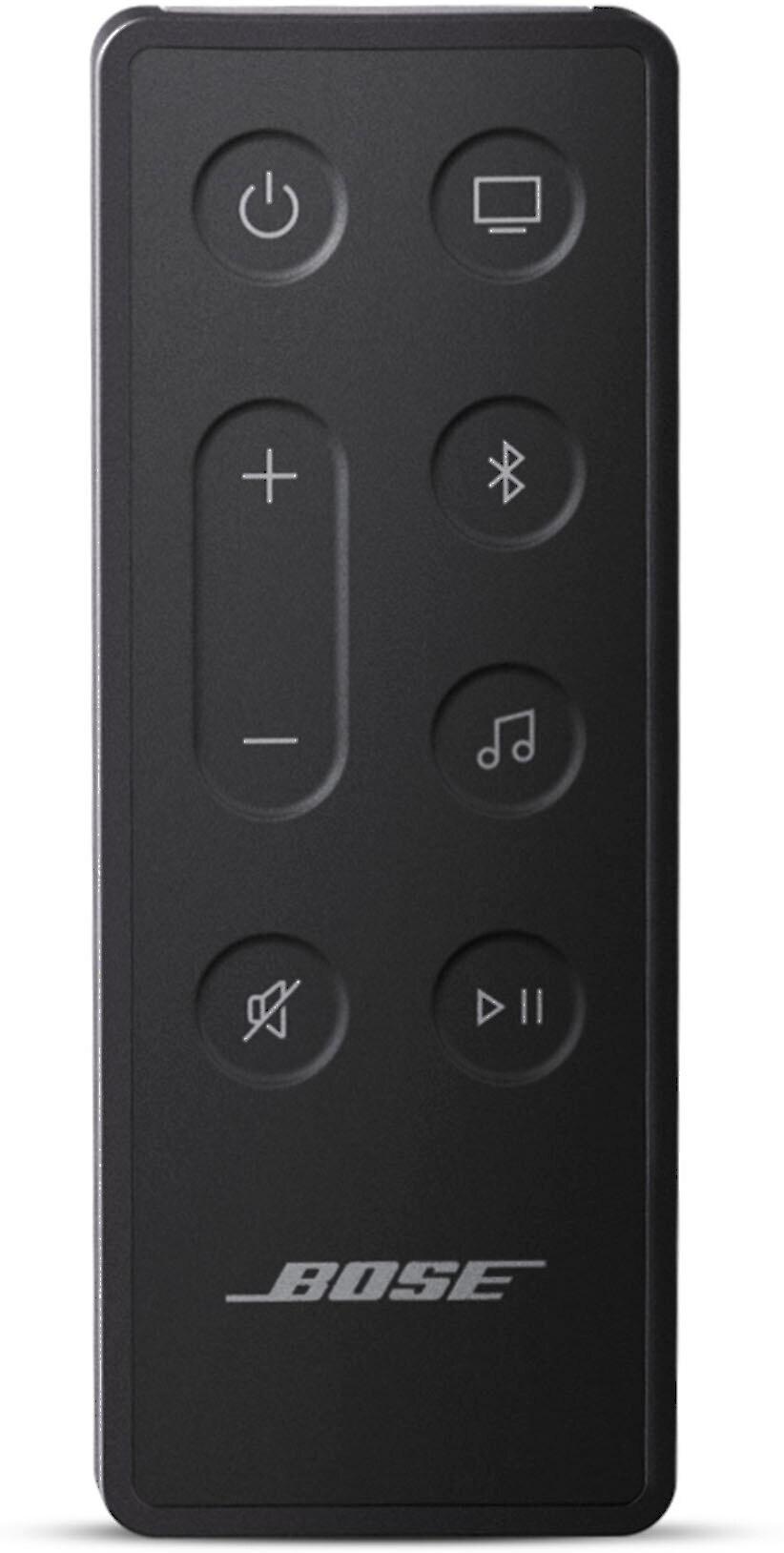
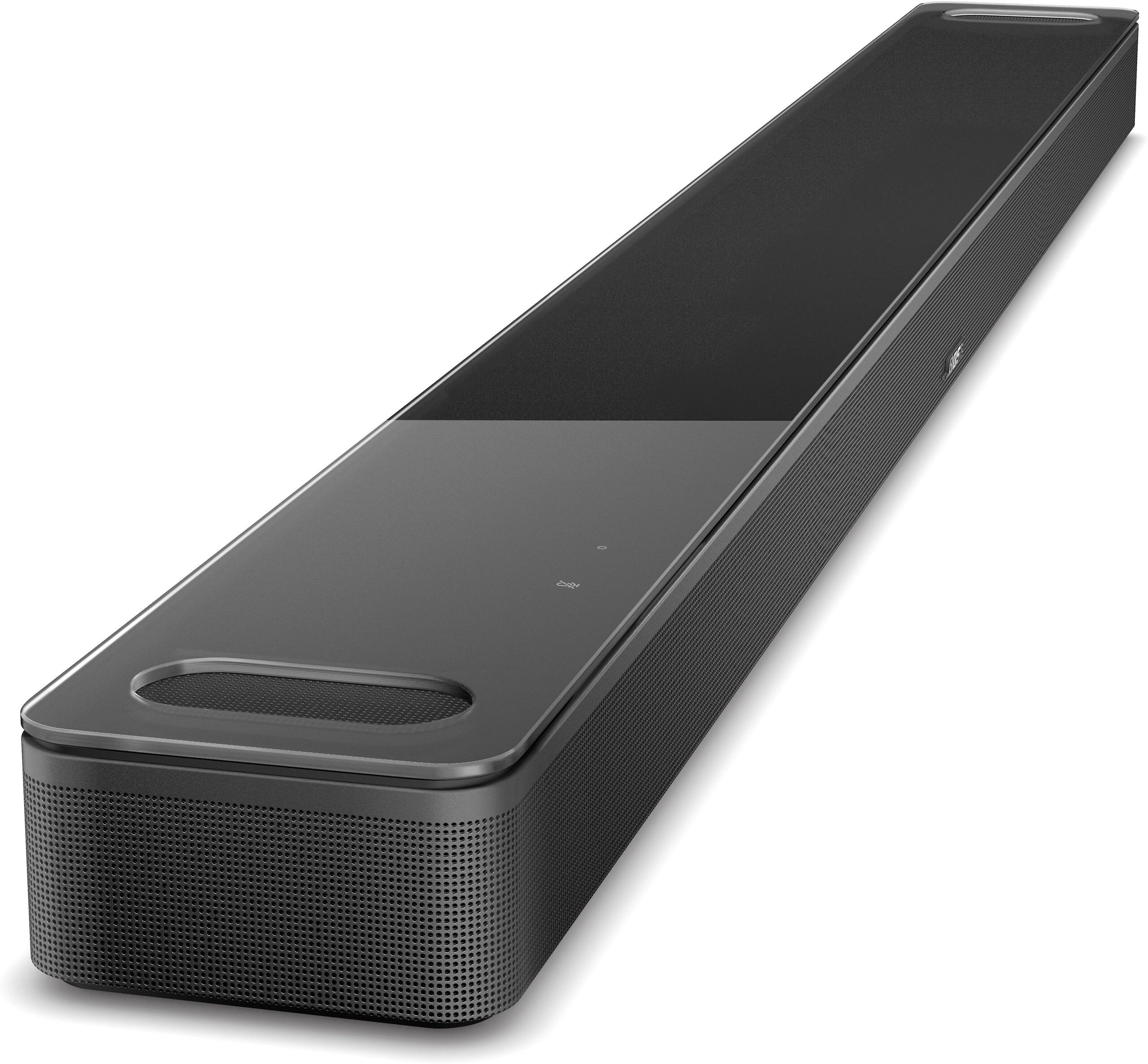
When your TV's built-in speakers make dialogue sound like it's coming from underwater and explosions feel more like gentle puffs, it's time to consider a soundbar upgrade. The market offers two distinct approaches: multi-piece systems that surround you with physical speakers, and sophisticated single-unit bars that use advanced processing to create virtual surround sound.
The Amazon Fire TV Soundbar Plus 5.1 Channel System and Bose Smart Ultra Soundbar represent these competing philosophies perfectly. Released in 2023, both products showcase how soundbar technology has evolved to address different user priorities—one emphasizing physical surround sound at an accessible price point, the other focusing on premium processing and smart home integration.
Today's soundbars have become remarkably sophisticated since the category emerged in the early 2000s. What started as simple stereo speakers designed to fit under TVs has evolved into complex audio systems incorporating wireless subwoofers, satellite speakers, and spatial audio processing that can simulate three-dimensional sound fields.
The most important performance metrics when evaluating soundbars include dialogue clarity (how well you can understand speech), soundstage width (how spread out the audio feels), bass extension (how low the frequencies go), and spatial accuracy (how convincingly the system places sounds around your room). Modern systems also need to handle various audio formats—from basic stereo TV shows to complex Dolby Atmos soundtracks that place audio objects in specific locations around a three-dimensional space.
Since 2023, we've seen manufacturers focus heavily on AI-driven dialogue enhancement and room correction technologies. These features use machine learning to automatically adjust audio characteristics based on content type and room acoustics, addressing the most common complaint about TV audio: unclear speech.
The fundamental difference between the Amazon Fire TV Plus and Bose Smart Ultra lies in their approach to creating immersive audio. Understanding this distinction is crucial for making the right choice.
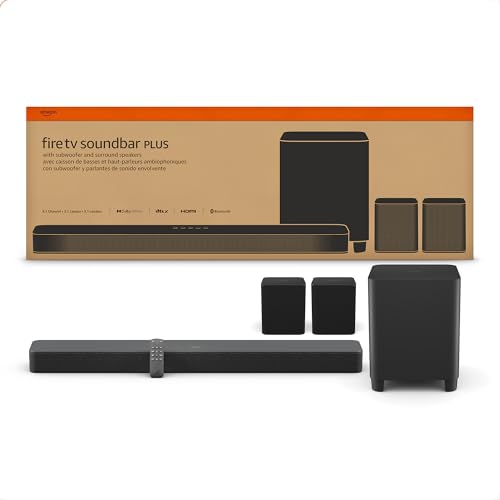
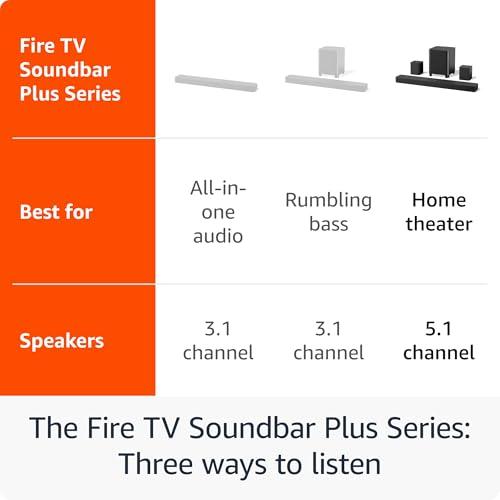
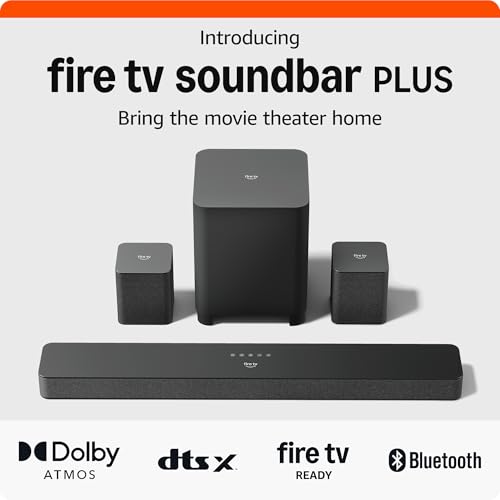
The Amazon system takes the traditional route with a true 5.1 configuration—a soundbar handling front left, center, and right channels, plus two wireless rear speakers and a subwoofer. This physical approach means sound literally comes from multiple directions. When a helicopter flies overhead in a movie, you hear it move from the front soundbar to the rear speakers behind your couch. It's straightforward and effective, though it requires placing speakers around your room.
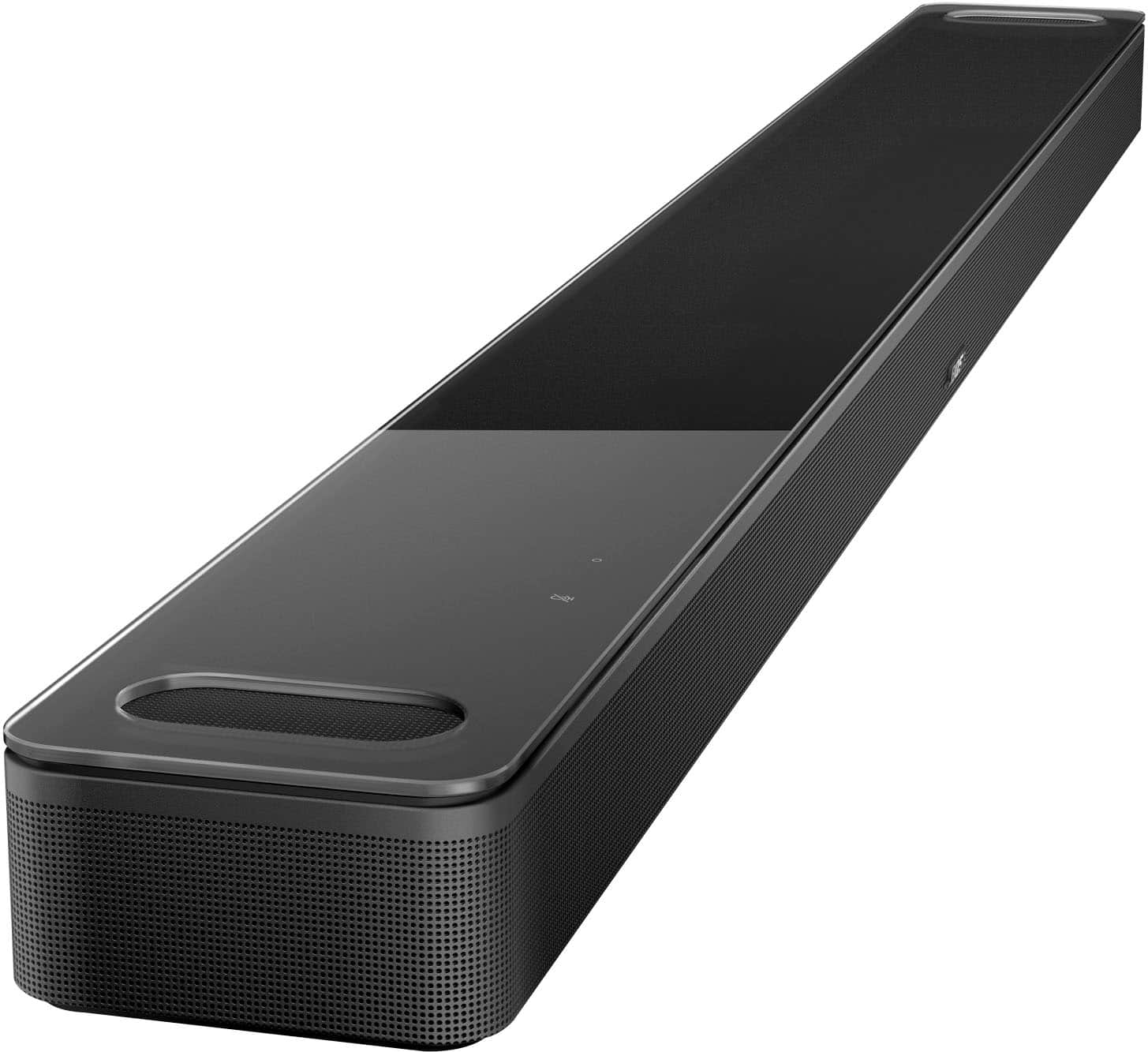
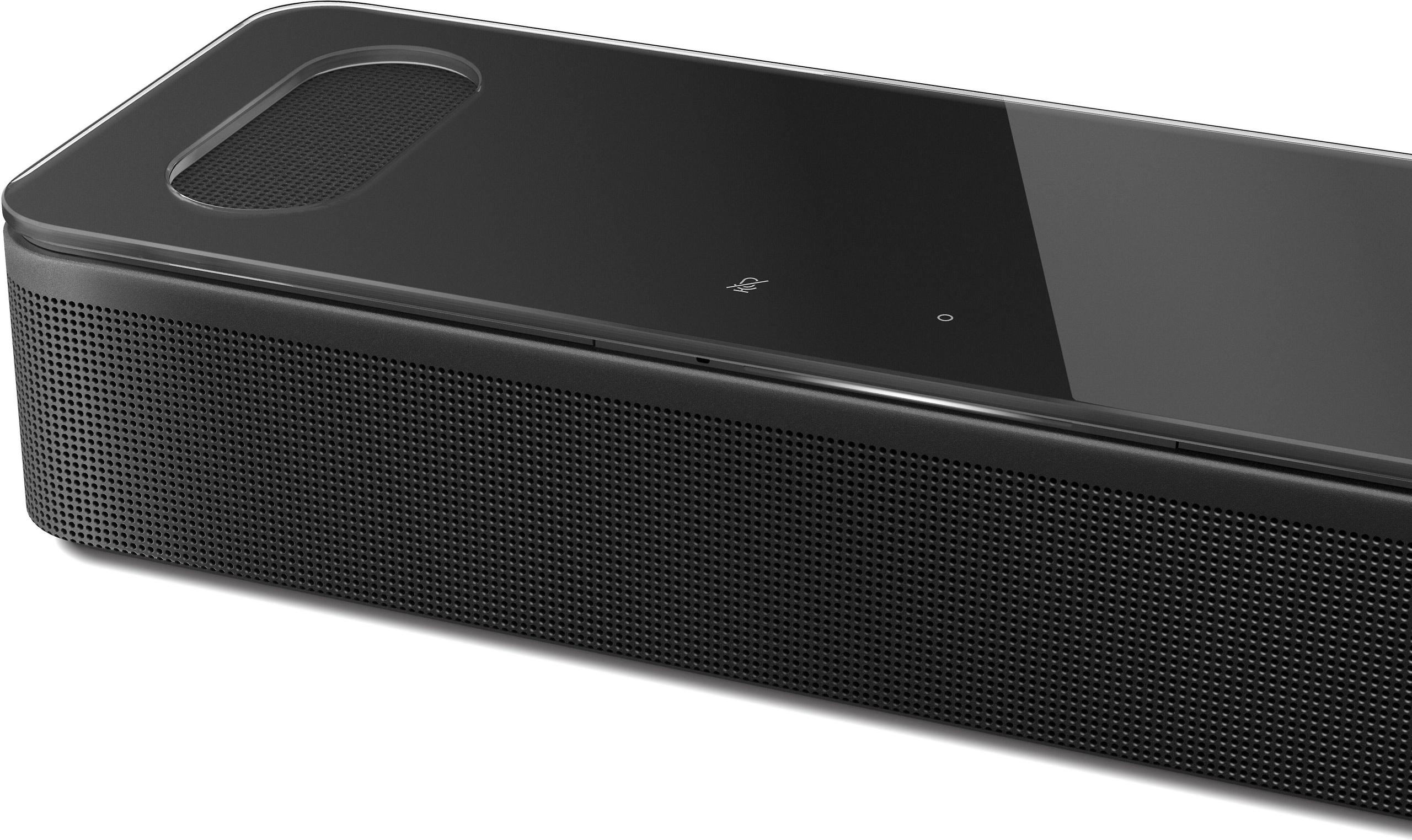
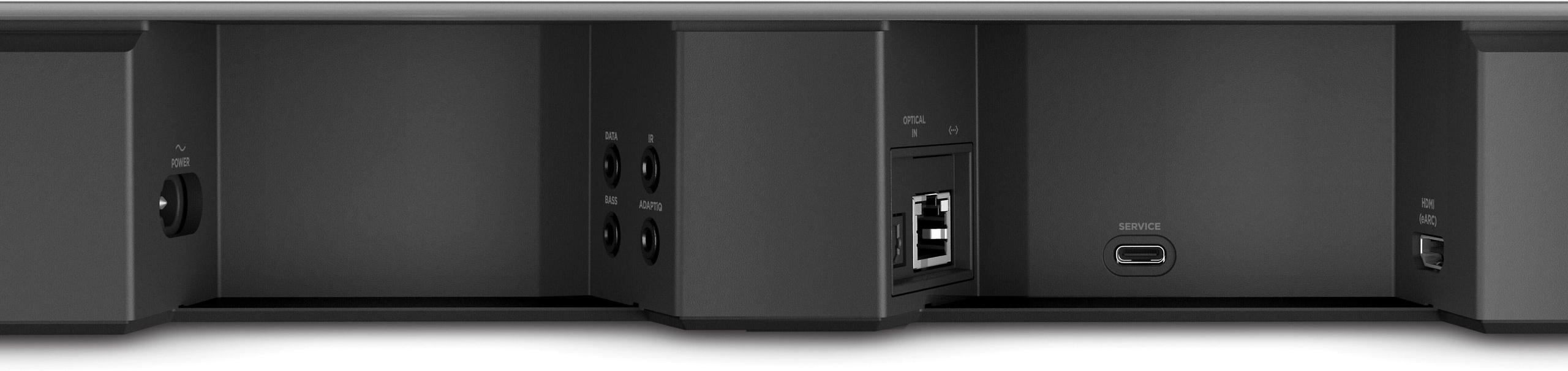
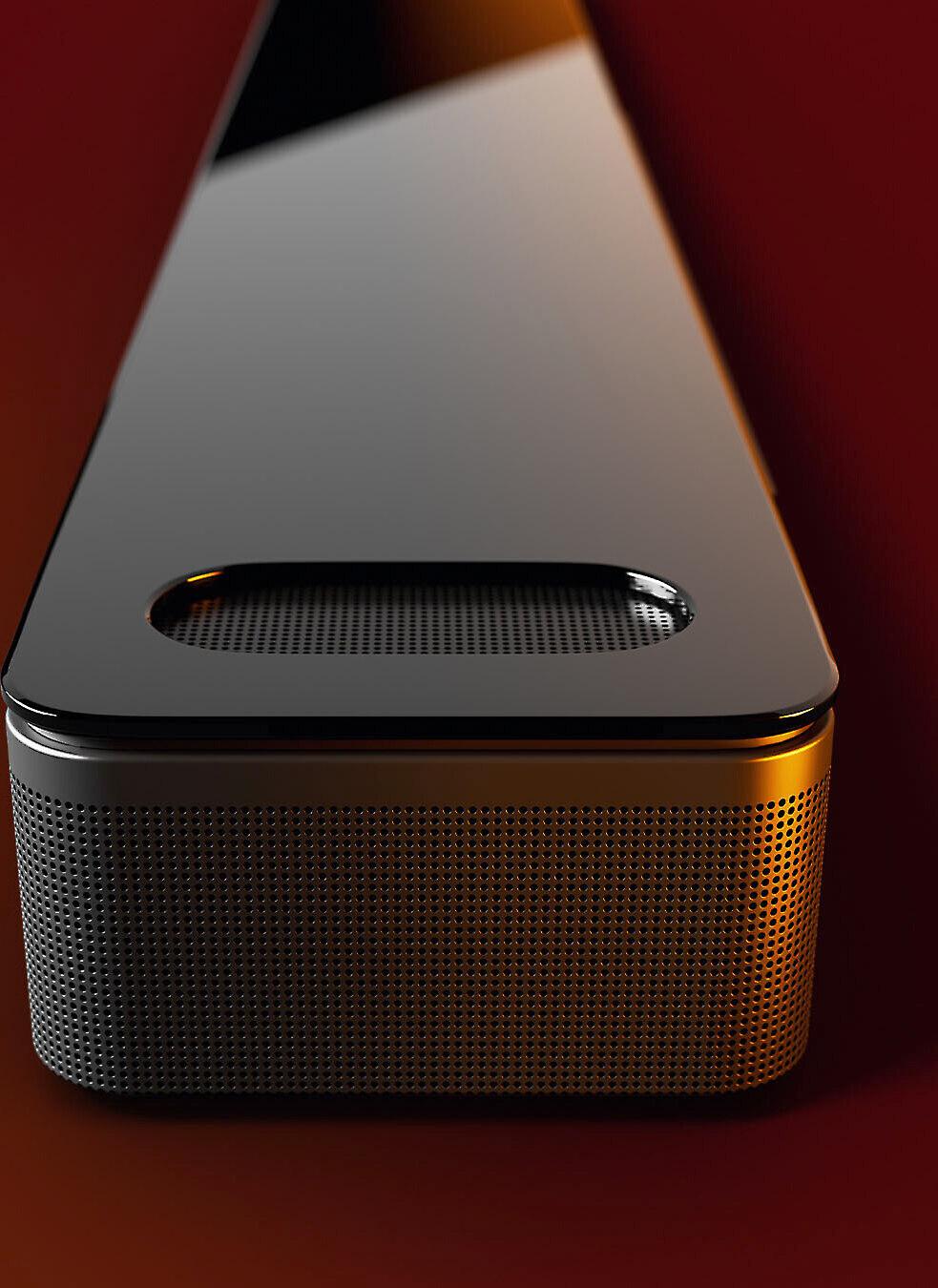
The Bose Smart Ultra uses what's called virtualized surround sound. Through advanced digital signal processing and carefully angled drivers, it creates the illusion of surround sound from a single unit. Bose's PhaseGuide technology bounces sound waves off your walls to create phantom audio sources where no speakers exist. When calibrated properly with their ADAPTiQ system (which uses a special microphone to measure your room's acoustic properties), the results can be surprisingly convincing.
Based on our research into professional reviews and user feedback, the audio quality differences between these systems reveal their distinct engineering priorities.
The Bose Smart Ultra demonstrates why the company has maintained its premium reputation since the 1960s. Reviews consistently praise its refined sound signature—balanced across frequencies without the harsh brightness or muddiness that plagues many soundbars. The AI Dialogue Mode represents a significant technological advancement, using machine learning trained on millions of audio clips to automatically enhance speech clarity without making voices sound unnatural or over-processed.
However, the Amazon Fire TV Plus takes a more straightforward approach that prioritizes impact over refinement. User reviews describe its sound as "excited"—meaning boosted bass and treble that makes action sequences feel more dramatic but can fatigue your ears during longer listening sessions. The dedicated center channel does provide clear dialogue, though it lacks the sophisticated processing of the Bose system.
The most significant audio quality difference emerges in stereo imaging—how convincingly the system creates a wide, seamless soundstage. Reviews note that the Amazon system suffers from obvious gaps between its left and right channels, making panning audio effects (like cars driving across the screen) sound choppy rather than smooth. The Bose, despite being a single unit, creates a more coherent soundstage through superior driver integration and processing.
This comparison highlights one of the most important decisions in soundbar shopping: integrated bass versus dedicated subwoofer. The Amazon Fire TV Plus includes a wireless subwoofer roughly the size of a small filing cabinet, while the Bose Smart Ultra relies on internal drivers for low frequencies.
The difference is dramatic. User reviews consistently praise the Amazon system's bass impact, describing explosions and music with satisfying punch that fills medium to large rooms. The dedicated subwoofer can reproduce frequencies down to around 40Hz—low enough for most movie soundtracks and music genres. However, some users report that at maximum volume, the bass can overpower dialogue, requiring careful adjustment of the system's balance controls.
The Bose, by contrast, struggles with deep bass reproduction according to multiple professional reviews. While it maintains better overall balance and won't boom your neighbors into calling the landlord, action movies and bass-heavy music genres feel restrained. Bose offers optional subwoofers for this system, but they cost several hundred dollars additional—a significant investment that changes the total cost calculation.
The 2020s have transformed soundbars from simple audio devices into smart home hubs, and this comparison perfectly illustrates the spectrum of approaches manufacturers take.
The Bose Smart Ultra embraces full smart functionality with built-in Amazon Alexa, Google Assistant compatibility, and Wi-Fi connectivity supporting AirPlay 2 and Spotify Connect. You can ask it to play music, control smart home devices, or even turn on your TV to specific channels using Voice4Video technology. The Bose Music app provides detailed control over EQ settings, room calibration, and multi-room audio setup with other Bose speakers throughout your home.
The Amazon Fire TV Plus takes a more limited approach despite its Fire TV branding. The system lacks built-in voice assistants, Wi-Fi connectivity, or a companion app. All adjustments must be made via the included remote control, which provides basic EQ presets (Movie, Music, Sports, Night) and dialogue enhancement controls. The Fire TV integration only works when connected to compatible Amazon streaming devices, allowing on-screen control through your TV interface.
This difference reflects distinct user philosophies. The Bose targets users who want their soundbar integrated into a broader smart home ecosystem, while the Amazon system focuses purely on audio performance without the complexity (or ongoing software updates) that come with connected devices.
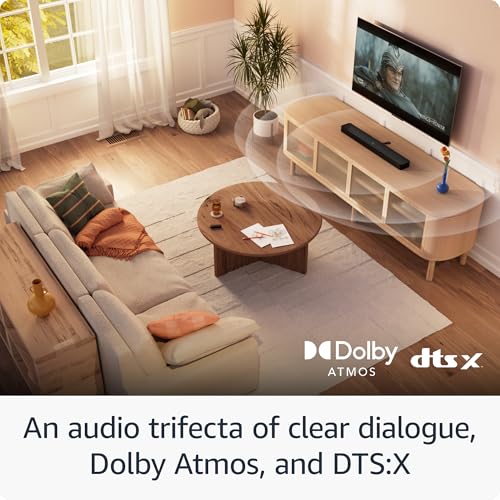
Both systems support Dolby Atmos, the spatial audio format that places sounds in three-dimensional space rather than just left and right channels. However, their implementation approaches reveal important limitations and strengths.
The Amazon Fire TV Plus handles Atmos through virtualization—it lacks the upward-firing drivers found in premium systems that physically bounce sound off your ceiling. Instead, it processes Atmos metadata and attempts to create height effects through the existing drivers. Reviews suggest the lateral surround experience (left-to-right and front-to-back) works well with the physical rear speakers, but overhead effects feel minimal.
The Bose Smart Ultra uses more sophisticated processing through its TrueSpace technology, which remixes non-Atmos content to add artificial height cues. Professional reviews indicate that while the system creates convincing spatial effects for a single-unit bar, it still can't match the immersion of systems with dedicated height channels or the lateral surround accuracy of the Amazon's physical rear speakers.
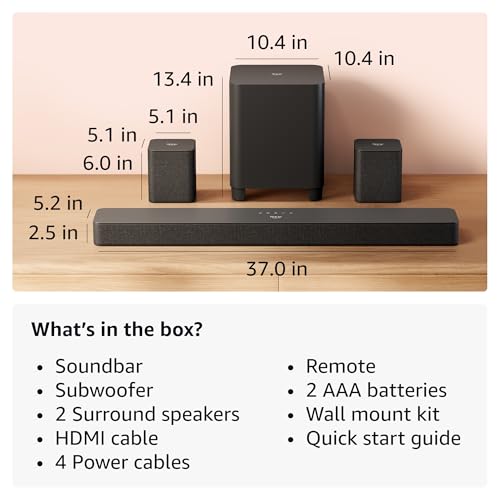
Your living space largely determines which approach works better. The Amazon Fire TV Plus requires strategic placement of three separate components. The soundbar measures nearly three feet wide and needs positioning below or near your TV. The subwoofer requires floor space—preferably in a corner for optimal bass coupling—while the rear speakers need placement behind your seating area with clear wireless signal paths.
This requirement makes the Amazon system challenging for apartments, small rooms, or spaces where furniture placement doesn't accommodate rear speakers. However, when properly positioned, the physical speaker arrangement creates genuine surround sound that single-unit systems struggle to match.
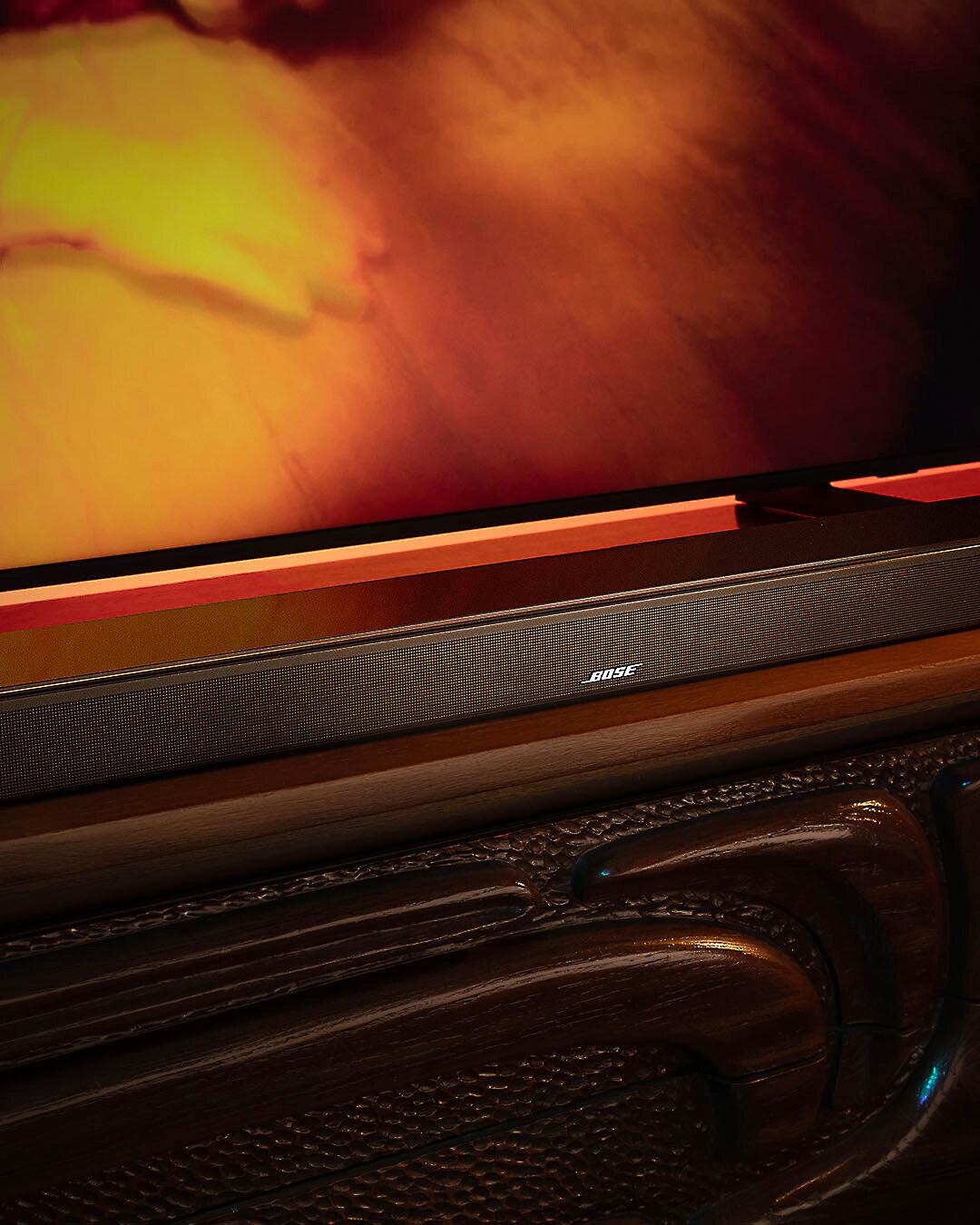
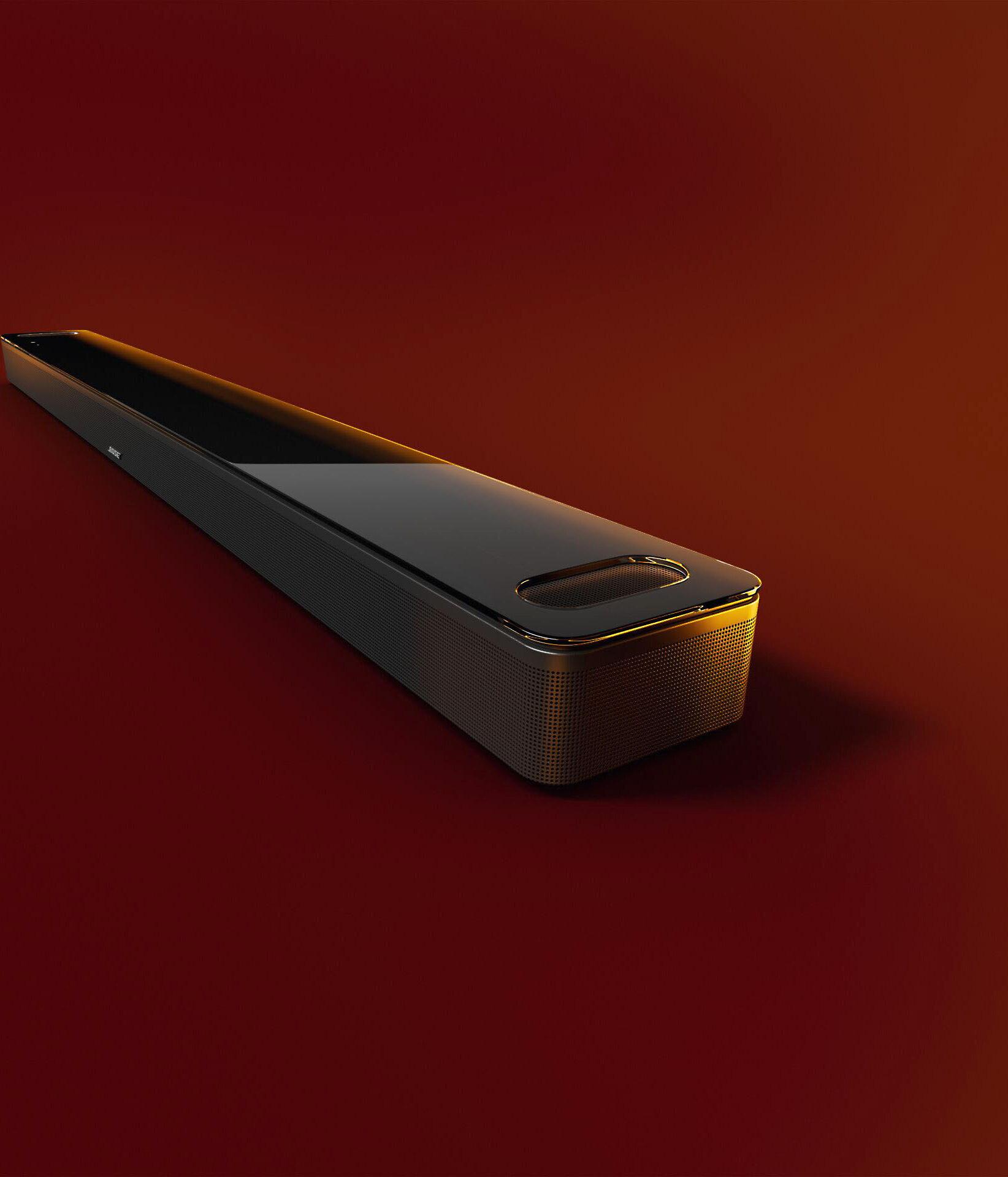
The Bose Smart Ultra offers maximum placement flexibility as a single 34.5-inch unit that fits under most TVs 50 inches or larger. Its ADAPTiQ room calibration system adjusts performance for various acoustic environments, from hard-surfaced modern apartments to carpeted family rooms with multiple seating areas. This adaptability makes it particularly suitable for renters or anyone who frequently rearranges their living space.
For dedicated home theater use, these systems reveal their target audiences clearly. The Amazon Fire TV Plus excels in scenarios where you're primarily watching movies and TV shows in a darkened room with fixed seating positions. The true 5.1 configuration creates proper surround sound placement that enhances the cinematic experience, while the powerful subwoofer handles the low-frequency effects that make action sequences feel impactful.
The Bose Smart Ultra better serves multi-purpose living spaces where the sound system needs to handle everything from morning news shows to evening movie nights to background music during dinner parties. Its sophisticated processing maintains dialogue clarity at lower volumes (important when others are sleeping), while the balanced sound signature works well for extended listening sessions.
Based on our research, home theater enthusiasts consistently prefer systems with physical subwoofers and rear speakers for the most immersive experience, giving the Amazon system an advantage in dedicated viewing rooms. However, the Bose wins for lifestyle integration and rooms where audio quality matters for various content types throughout the day.
At the time of writing, the Amazon Fire TV Soundbar Plus 5.1 represents exceptional value in the soundbar market. For roughly half the cost of the Bose Smart Ultra, you receive a complete 5.1 system including wireless subwoofer and rear speakers—components that typically cost hundreds of dollars when purchased separately from premium brands.
However, value calculations must consider total cost of ownership. The Bose may require an additional subwoofer purchase (costing several hundred dollars more) to match the Amazon system's bass performance, potentially doubling the investment. Conversely, the Amazon system includes everything needed for full surround sound out of the box.
The premium you pay for the Bose buys refinement, smart features, and sophisticated processing that create a more polished audio experience. Whether that's worth the additional cost depends on your priorities: pure performance per dollar favors the Amazon system, while overall user experience and integration capabilities justify the Bose premium for many users.
After analyzing professional reviews, user feedback, and technical specifications, clear usage scenarios emerge for each system.
Choose the Amazon Fire TV Soundbar Plus 5.1 if you have a dedicated home theater space where rear speaker placement won't interfere with traffic flow or furniture arrangement. This system excels for users who primarily watch movies and TV shows, appreciate strong bass impact, and want maximum audio performance for their budget. The Fire TV integration adds value if you're already invested in Amazon's streaming ecosystem.
The Bose Smart Ultra Soundbar suits users in space-constrained environments like apartments or open-concept living areas where multiple speakers aren't practical. Its sophisticated processing, smart home integration, and refined audio quality make it ideal for households that use their sound system for diverse content throughout the day. The premium price reflects genuine technological advantages in signal processing and user experience design.
Consider your room layout carefully—the Amazon system's true surround sound advantage disappears if you can't properly position the rear speakers. Similarly, the Bose system's processing sophistication won't compensate for missing bass impact if you regularly watch action movies or listen to bass-heavy music without adding a subwoofer.
Both systems represent solid choices within their respective approaches to soundbar design. The Amazon Fire TV Plus delivers maximum audio impact for your investment through physical speaker placement, while the Bose Smart Ultra prioritizes refinement, convenience, and smart functionality. Your choice ultimately depends on whether you prioritize raw performance per dollar or premium user experience and technological sophistication.
| Amazon Fire TV Soundbar Plus 5.1 Channel System | Bose Smart Ultra Soundbar with Dolby Atmos |
|---|---|
| Speaker Configuration - Determines true vs. virtual surround sound | |
| True 5.1 system: soundbar + wireless subwoofer + 2 rear speakers | Single soundbar with virtualized surround (5.1.2 processing) |
| Bass Performance - Critical for movie impact and music enjoyment | |
| Dedicated 10.4" wireless subwoofer included | No subwoofer (optional Bass Module 700 sold separately) |
| Smart Features - Affects daily usability and convenience | |
| Basic Fire TV integration, Bluetooth only, no Wi-Fi or voice control | Built-in Alexa, Google Assistant, Wi-Fi, AirPlay 2, Spotify Connect |
| Room Calibration - Optimizes sound for your specific space | |
| Manual EQ presets only (Movie, Music, Sports, Night) | ADAPTiQ automatic room calibration with included microphone |
| Dialogue Enhancement - Essential for clear speech | |
| Basic dialogue enhancement via remote control | AI Dialogue Mode with machine learning optimization |
| Physical Footprint - Important for room layout and WAF | |
| Requires placement of 4 separate components around room | Single 34.5" soundbar fits under most TVs |
| Dolby Atmos Implementation - Affects immersive audio quality | |
| Virtualized height effects (no up-firing drivers) | Virtualized with PhaseGuide and TrueSpace processing |
| App Control - Convenience for settings and multi-room | |
| No app support, remote control only | Full Bose Music app with detailed controls |
| Connectivity Options - Determines compatibility with devices | |
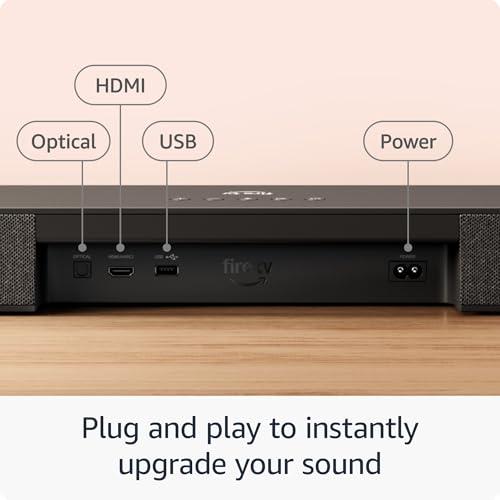
| HDMI eARC, optical, USB-A, Bluetooth 5.0 | HDMI eARC, optical, Wi-Fi, Bluetooth, AirPlay 2 |
| Build Quality - Affects longevity and premium feel | |
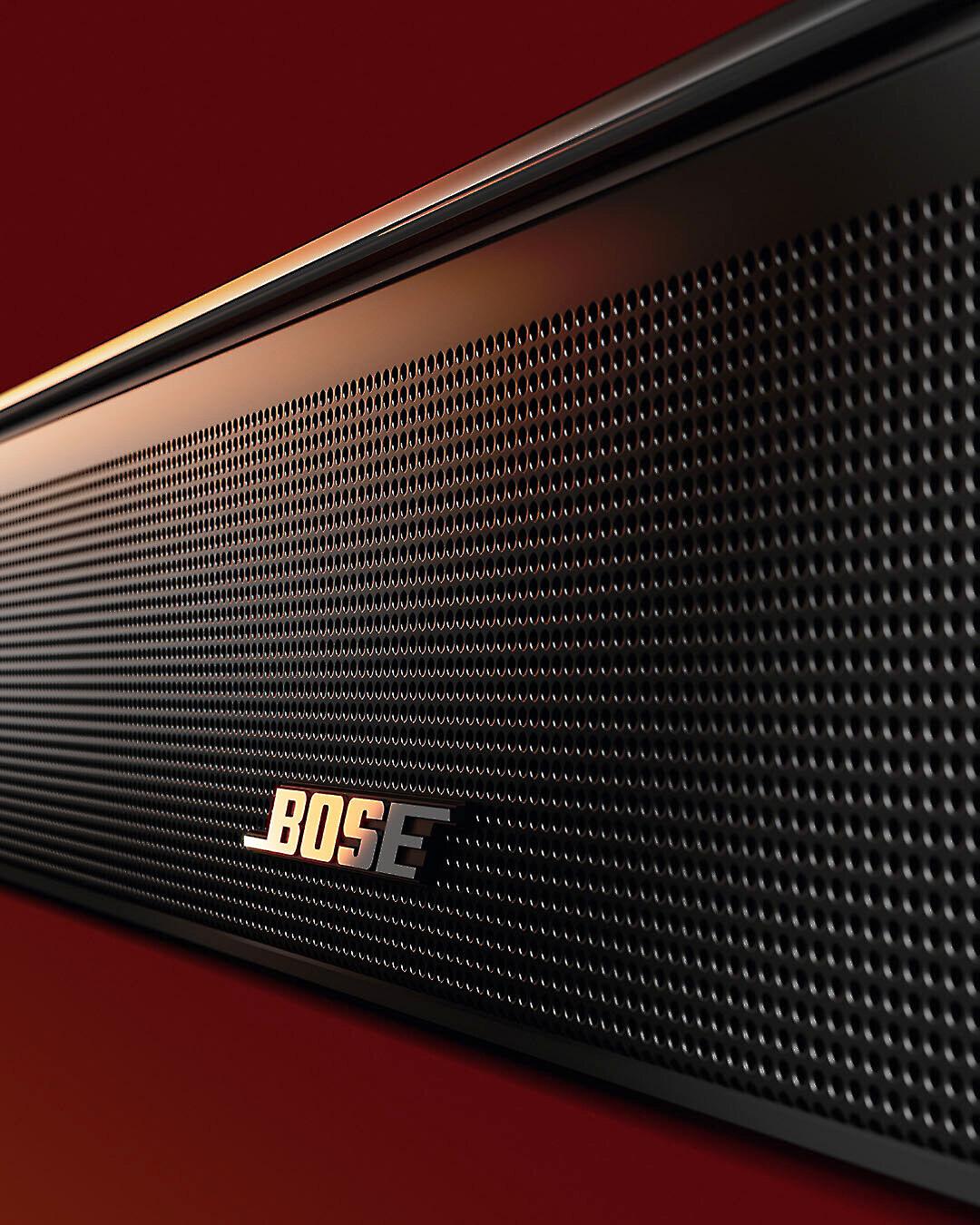
| Plastic construction with fabric grille, lightweight satellites | Premium materials with metal grille and tempered glass top |
| Value Proposition - Performance per dollar spent | |
| Complete 5.1 system at mid-range price point | Premium single-unit with advanced processing at flagship pricing |
| Best Use Case - Who should choose this option | |
| Home theaters with space for rear speakers, budget-conscious buyers | Apartments/condos, smart home users, audiophiles prioritizing refinement |
The Amazon Fire TV Soundbar Plus 5.1 Channel System is generally better for dedicated home theater setups because it provides true 5.1 surround sound with physical rear speakers and a powerful subwoofer. This creates genuine directional audio that places sounds around your room. The Bose Smart Ultra Soundbar uses advanced virtualization technology that works well but can't match the immersion of actual speakers positioned behind your seating area.
While not absolutely necessary, rear speakers significantly improve the surround sound experience. The Amazon Fire TV Soundbar Plus 5.1 includes wireless rear speakers that provide true lateral surround effects, making movies feel more immersive. The Bose Smart Ultra creates convincing virtual surround sound from a single unit, which is excellent for smaller rooms or apartments where rear speakers aren't practical.
The Amazon Fire TV Soundbar Plus 5.1 Channel System has superior bass performance due to its included wireless subwoofer. This dedicated bass driver delivers deep, impactful low frequencies essential for action movies and music. The Bose Smart Ultra Soundbar lacks a subwoofer and struggles with bass output, though Bose offers an optional subwoofer that can be purchased separately.
Only the Bose Smart Ultra Soundbar offers built-in voice control with Amazon Alexa and Google Assistant compatibility. You can ask it to play music, adjust volume, or control other smart home devices. The Amazon Fire TV Soundbar Plus 5.1 doesn't include voice assistants despite the "Fire TV" branding and must be controlled via the included remote or Fire TV interface when connected to compatible devices.
Both systems are relatively easy to set up, but in different ways. The Amazon Fire TV Plus 5.1 requires positioning multiple components around your room but comes pre-paired out of the box. The Bose Smart Ultra is simpler physically since it's just one unit, plus it includes ADAPTiQ room calibration that automatically optimizes sound for your specific space using an included microphone.
Yes, both the Amazon Fire TV Soundbar Plus 5.1 Channel System and Bose Smart Ultra Soundbar work with virtually all modern TVs through HDMI eARC or optical connections. Both include the necessary cables in the box. The Amazon system offers enhanced integration features when used with Fire TV streaming devices, while the Bose works seamlessly with any TV brand.
The Bose Smart Ultra Soundbar is ideal for apartments because it's a single compact unit that doesn't require rear speaker placement. Its advanced processing creates impressive virtual surround sound without disturbing neighbors or requiring complex room setup. The Amazon Fire TV Plus 5.1 needs space for multiple components and may not fit well in cramped living situations.
Both systems excel at dialogue clarity but use different approaches. The Bose Smart Ultra features AI Dialogue Mode that automatically enhances speech using machine learning, making voices clearer without sounding unnatural. The Amazon Fire TV Soundbar Plus 5.1 uses a dedicated center channel speaker for dialogue, which provides clear speech reproduction with manual enhancement controls.
The Bose Smart Ultra Soundbar offers extensive music streaming options including Wi-Fi connectivity, AirPlay 2, Spotify Connect, and Bluetooth. You can stream directly from apps or use voice commands. The Amazon Fire TV Plus 5.1 Channel System only supports Bluetooth streaming from phones and tablets, with no Wi-Fi or direct app connectivity.
The Amazon Fire TV Soundbar Plus 5.1 Channel System provides exceptional value by including a complete 5.1 surround system with subwoofer and rear speakers at a mid-range price point. The Bose Smart Ultra costs significantly more but offers premium audio processing, smart features, and build quality. Your choice depends on whether you prioritize raw performance per dollar or premium features and refinement.
Both the Amazon Fire TV Plus 5.1 and Bose Smart Ultra support Dolby Atmos, but neither has dedicated upward-firing drivers for true height effects. Instead, both use virtualization technology to simulate overhead audio. The Bose system generally provides more convincing Atmos effects through superior processing, while the Amazon system excels at lateral surround sound with its physical rear speakers.
For movies, the Amazon Fire TV Soundbar Plus 5.1 Channel System typically performs better due to its powerful subwoofer and true surround sound setup that enhances action sequences and creates immersive soundscapes. For music listening, the Bose Smart Ultra Soundbar offers more refined audio quality with better tonal balance and sophisticated processing, making it ideal for extended listening sessions across various music genres.
We've done our best to create useful and informative comparisons to help you decide what product to buy. Our research uses advanced automated methods to create this comparison and perfection is not possible - please contact us for corrections or questions. These are the sites we've researched in the creation of this article: rtings.com - cordbusters.co.uk - techradar.com - developer.amazon.com - t3.com - hometechnologyreview.com - youtube.com - hometechnologyreview.com - whathifi.com - hometechnologyreview.com - hometechnologyreview.com - youm.design - hometechnologyreview.com - dolby.com - techradar.com - bose.com - bestbuy.com - tomsguide.com - pcrichard.com - rtings.com - bose.com - boselatam.com - avsforum.com - bose.com

Privacy Policy
Terms and Conditions - Affiliate Policy
Home Security
© Copyright 2008-2026.
11816 Inwood Rd #1211, Dallas, TX 75244