

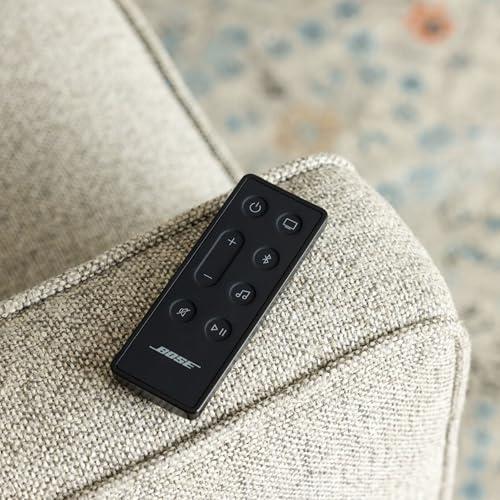
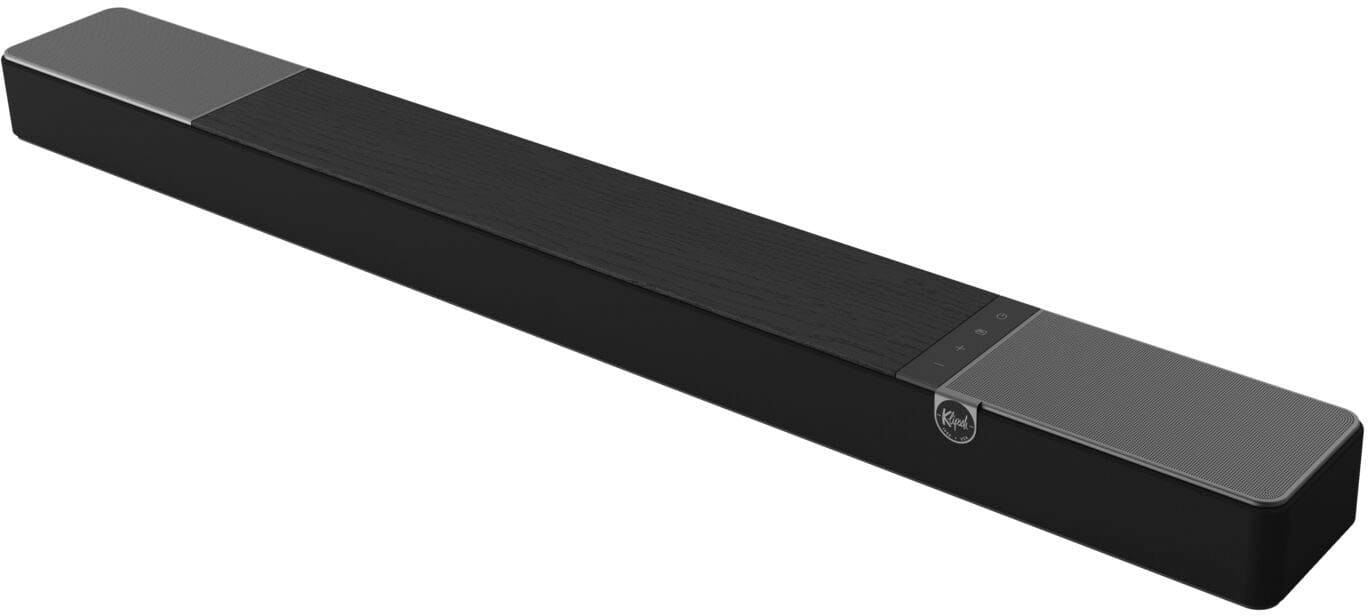
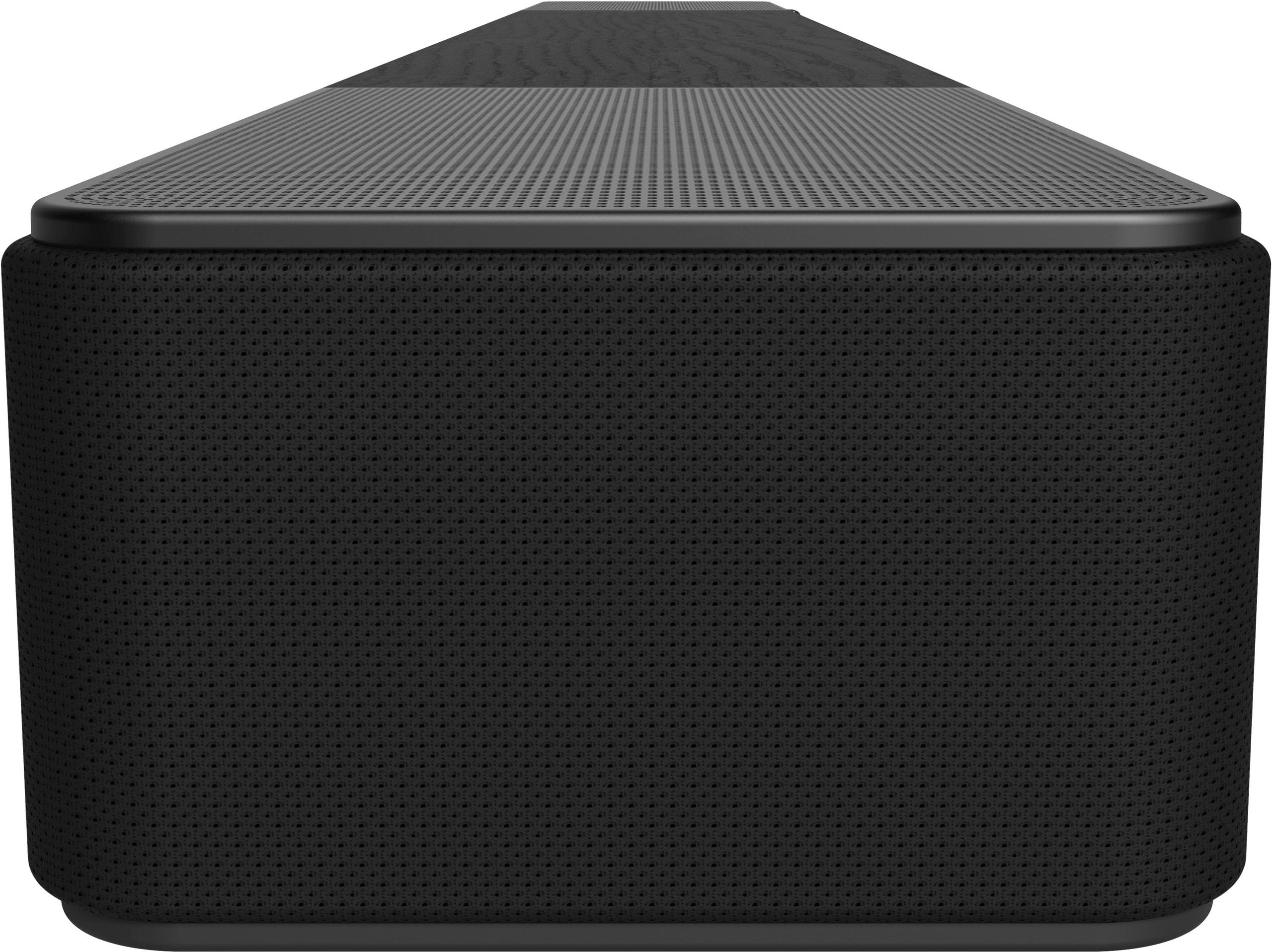
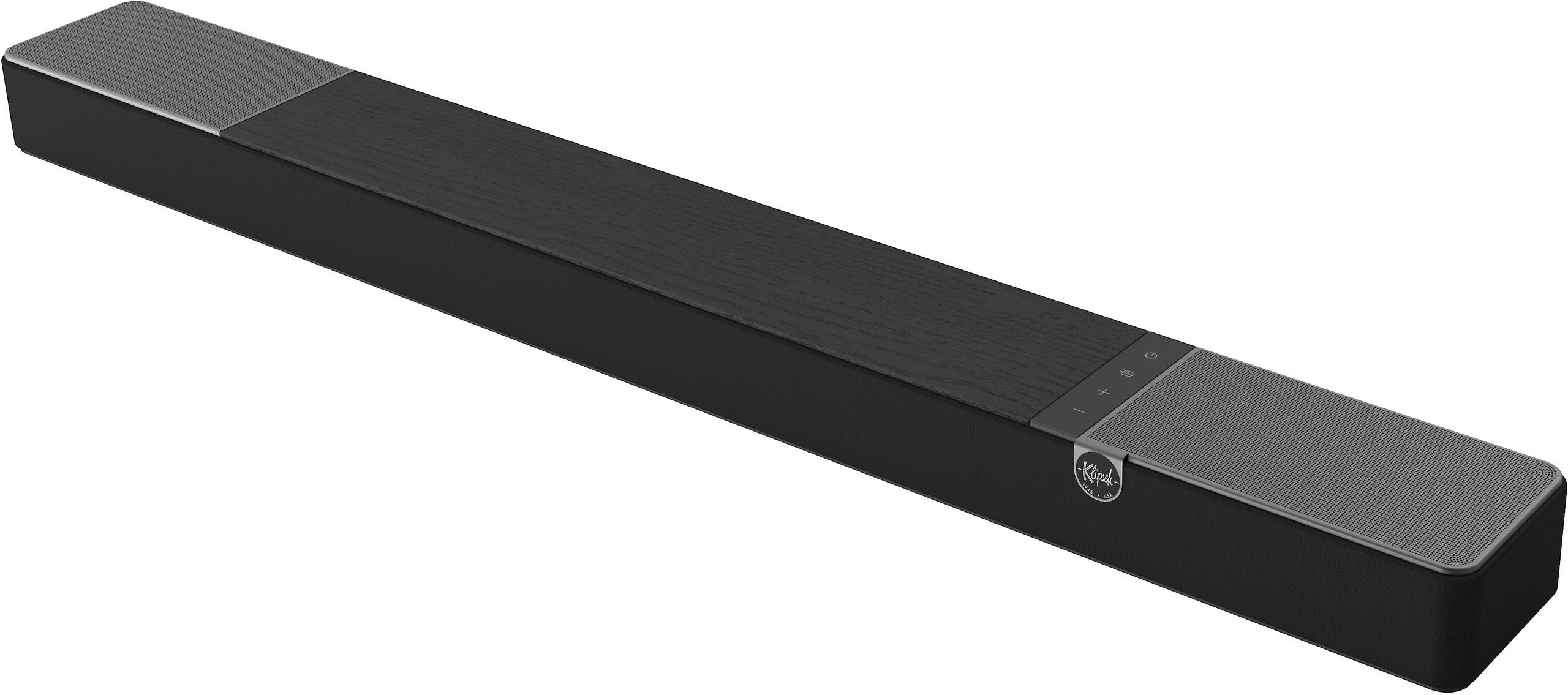

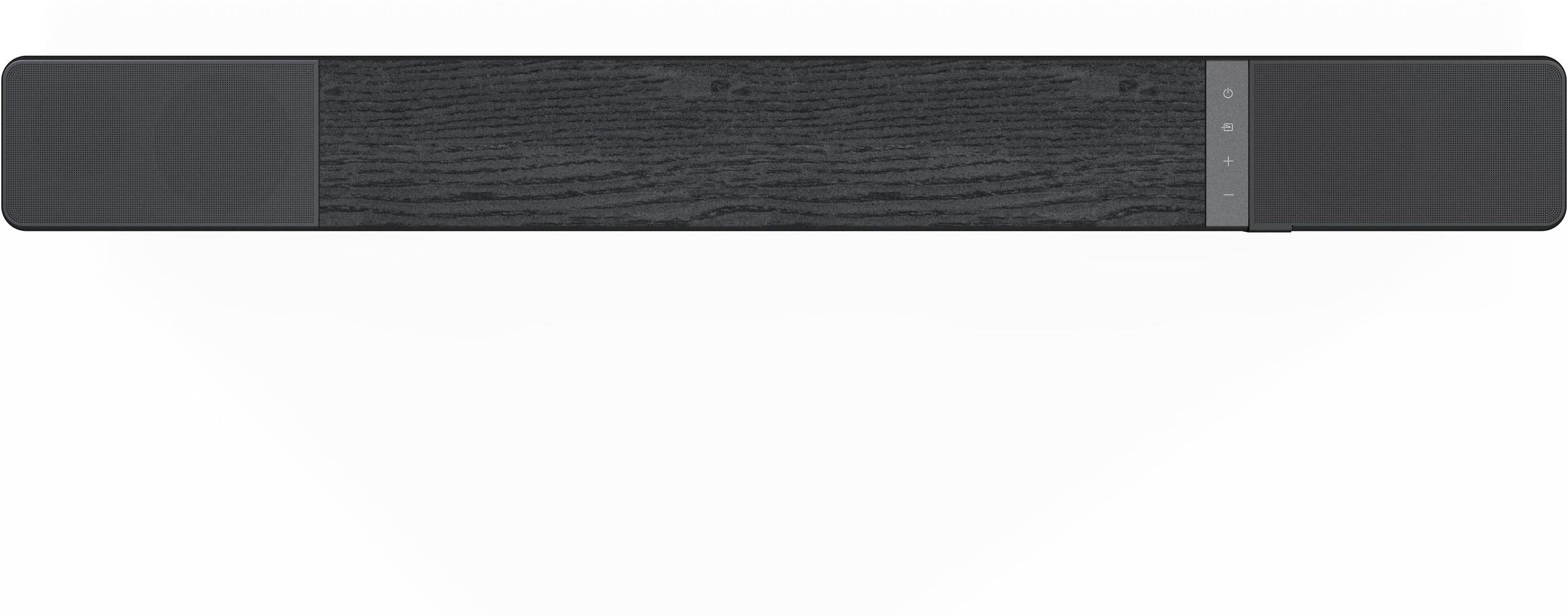
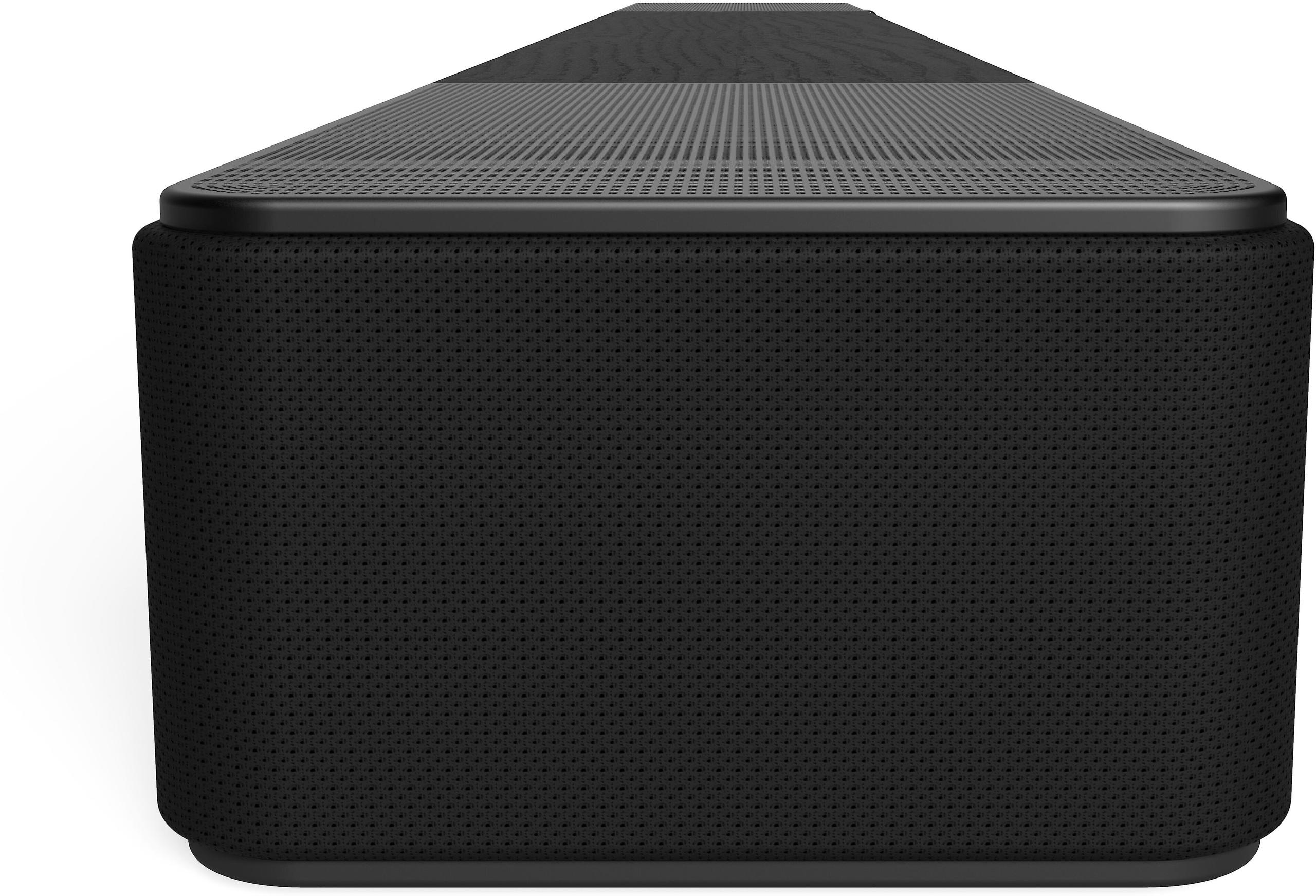

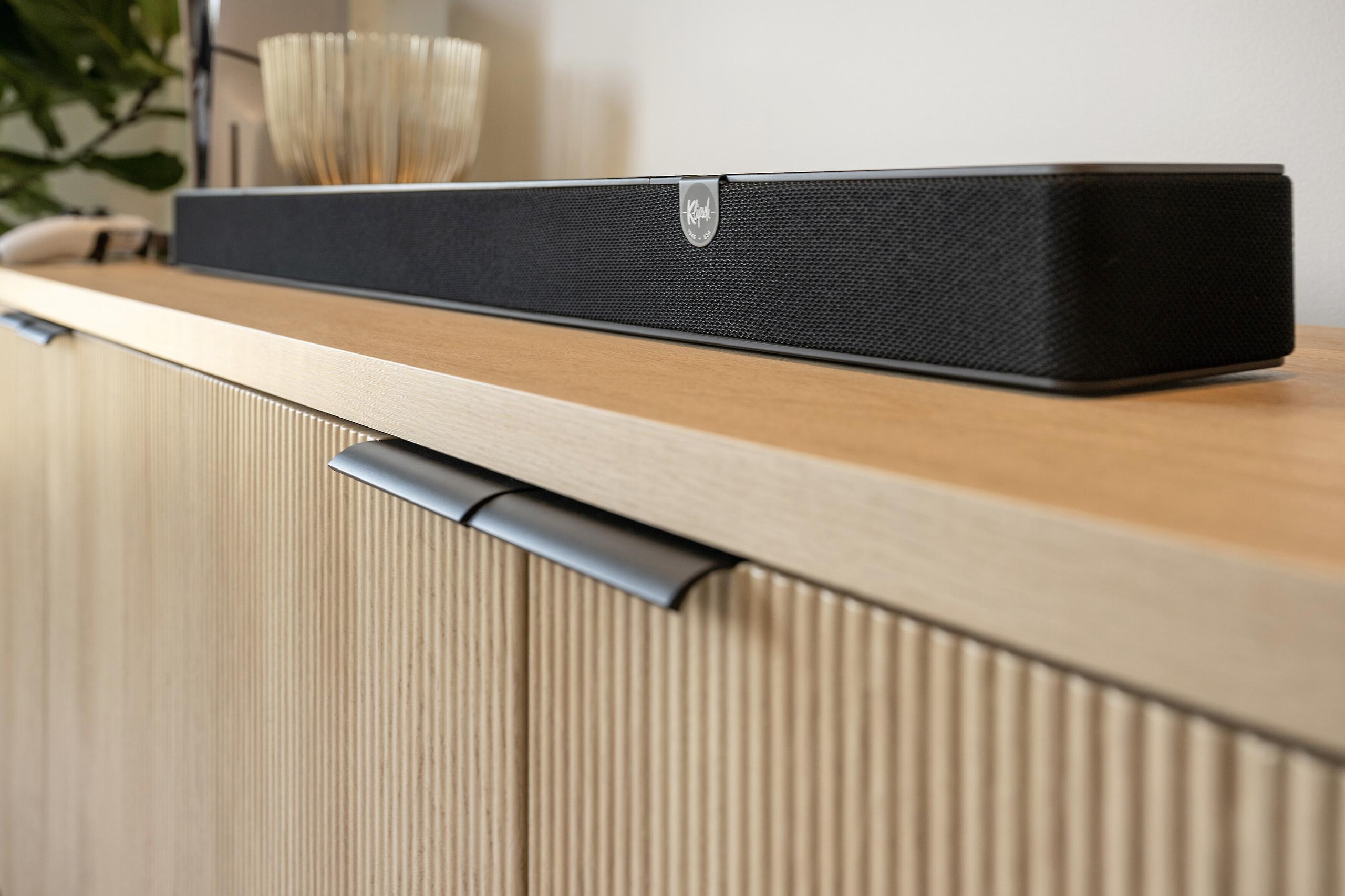
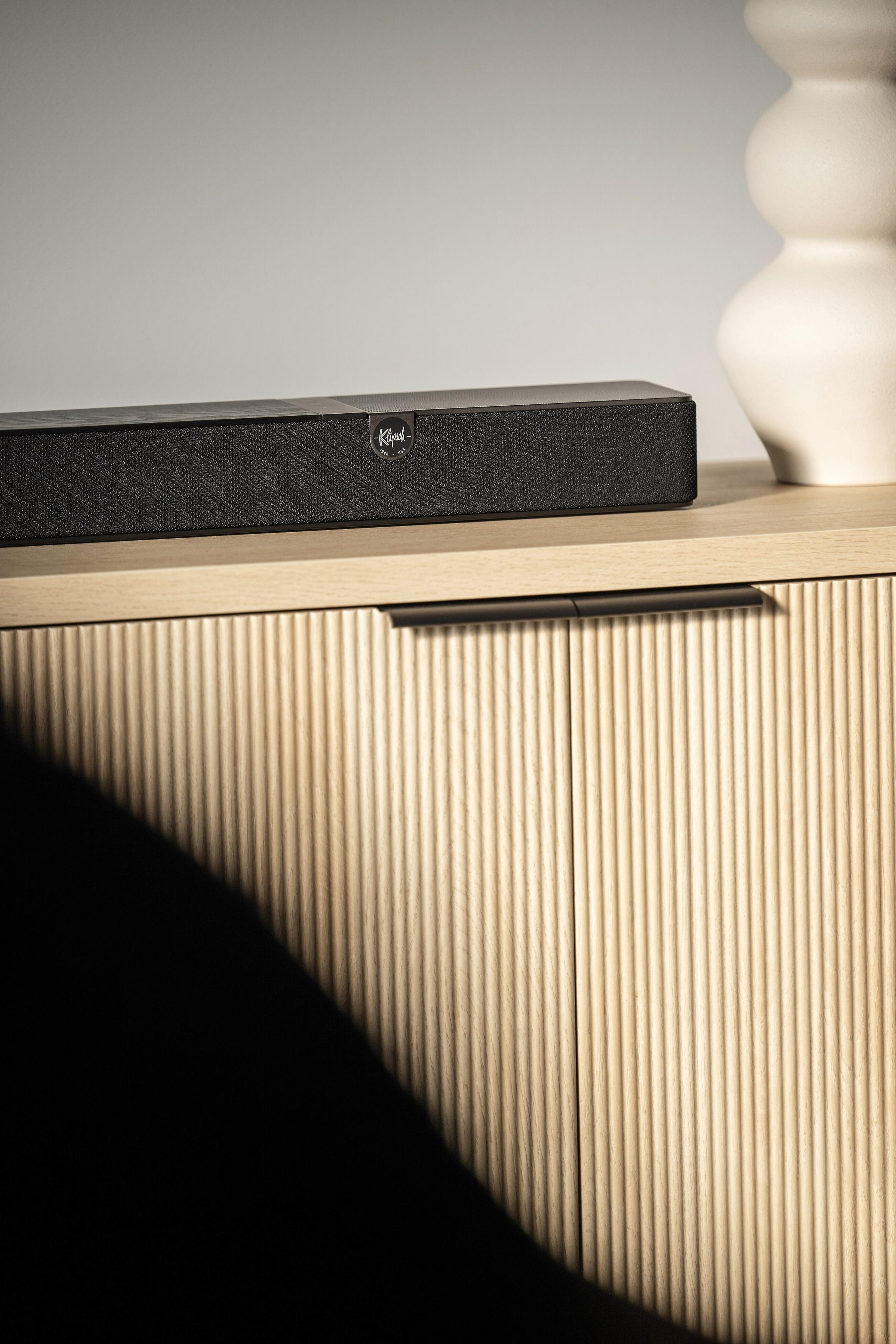

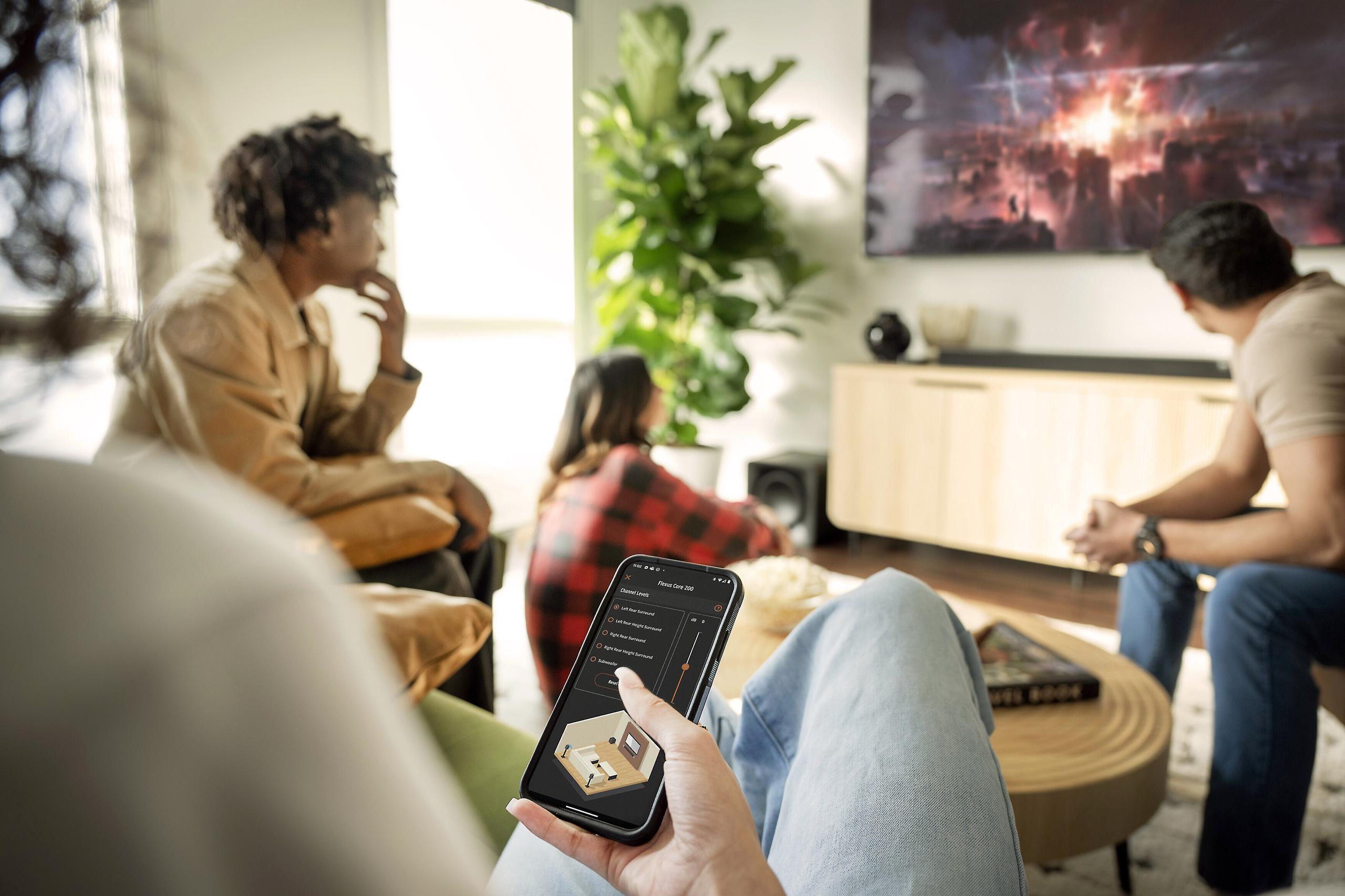
Shopping for a soundbar can feel overwhelming with dozens of brands promising theater-quality audio from a single sleek bar. Two standouts in the competitive mid-range market—the Bose Smart Soundbar 1100 and Klipsch Flexus Core 200—take notably different approaches to delivering immersive home theater sound. After researching extensive user feedback and professional reviews, we've found these represent two distinct philosophies: Bose's smart-first refinement versus Klipsch's power-focused approach.
Today's soundbars accomplish something that seemed impossible a decade ago: they create convincing surround sound from a single horizontal speaker. This magic happens through a combination of carefully angled drivers, digital signal processing, and acoustic tricks that bounce sound off your walls and ceiling.
The key breakthrough is Dolby Atmos, a technology that adds height information to audio tracks. Instead of just left, right, and center channels, Atmos-enabled soundbars like both the Bose Smart Soundbar 1100 and Klipsch Flexus Core 200 include up-firing drivers—speakers that point toward your ceiling to reflect overhead sound effects back down to your listening position. This creates the illusion that helicopters are flying above you or rain is falling from overhead.
Both soundbars launched in recent years (the Bose in 2023 and Klipsch in 2024), incorporating lessons learned from earlier soundbar generations. Modern mid-range models now include features that were previously exclusive to premium systems: built-in voice assistants, wireless connectivity, and sophisticated room-filling audio processing.
The Bose Smart Soundbar 1100 excels in an area many people don't realize they need until they experience it: crystal-clear dialogue. Bose includes what they call A.I. Dialogue Mode, which uses artificial intelligence to detect when characters are speaking and automatically adjusts the tonal balance to make voices more prominent. This isn't just a simple treble boost—it's smart processing that maintains the overall soundscape while ensuring you never miss crucial plot details.
The practical benefit is enormous. No more rewinding scenes because you couldn't catch what a character mumbled, and no more constantly adjusting volume as movies switch between quiet dialogue and explosive action sequences. The Bose also features a dedicated center channel tweeter (a specialized speaker designed for high frequencies) that's specifically tuned for vocal reproduction.
The Klipsch Flexus Core 200, meanwhile, takes a different approach with its horn-loaded tweeter. This is classic Klipsch technology—a cone-shaped acoustic lens that focuses high-frequency sound directly toward listeners. Horn loading makes dialogue crisp and forward-sounding, but it's less forgiving of poor audio mixing in movies or shows. You'll hear every detail, but sometimes that includes details you'd rather not notice, like background noise or recording imperfections.
This is where the two soundbars diverge most dramatically. The Klipsch Flexus Core 200 includes dual 4-inch built-in subwoofers—dedicated bass drivers that handle low-frequency effects independently. These aren't tiny drivers struggling to produce bass; they're proper subwoofers integrated into the soundbar chassis. The result is legitimate low-end extension down to 43Hz, which covers most of the rumble you feel during action sequences.
The Bose Smart Soundbar 1100, conversely, relies on QuietPort technology—specially designed vents that reduce turbulence and distortion when air moves through the soundbar's internal chambers. This creates surprisingly solid bass from a much more compact design, but physics ultimately limits what's possible. The Bose sounds tight and controlled, but it simply can't match the Klipsch's bass output without adding an optional subwoofer.
In practical terms, this means the Klipsch delivers room-shaking bass during Marvel movie explosions or the deep synthesizer notes in electronic music, while the Bose provides cleaner, more refined bass that doesn't overwhelm dialogue or subtler musical details.
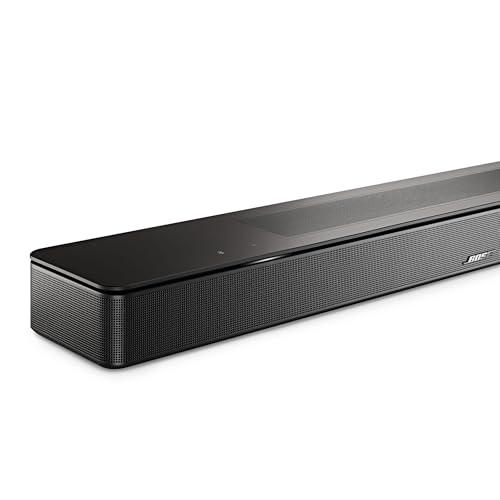
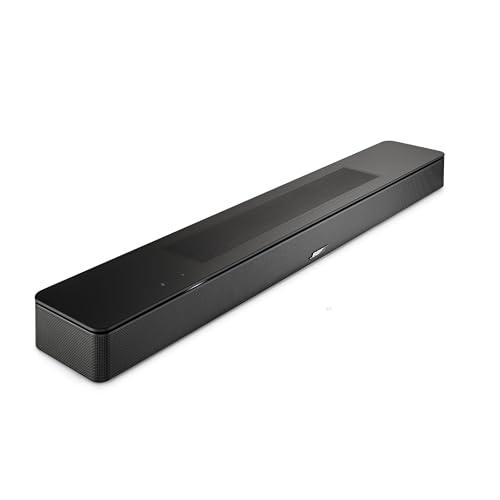
Both soundbars create impressive stereo width—the perception that sound extends well beyond the physical dimensions of the bar itself. The Bose achieves this through PhaseGuide technology, which uses precisely timed sound waves from multiple small drivers to create acoustic beams that bounce off side walls. This creates convincing left-right separation and makes the soundstage feel much wider than the soundbar's 27-inch length.
The Klipsch, with its 44-inch width, has a natural advantage in soundstage width simply due to physics—more physical separation between drivers creates better stereo imaging. However, it relies more on traditional acoustic engineering rather than Bose's advanced digital signal processing tricks.
For Dolby Atmos height effects, both soundbars include up-firing drivers, but they implement them differently. The Bose uses smaller drivers with sophisticated processing to create height effects that blend seamlessly with the main soundfield. The Klipsch uses larger 2.25-inch full-range drivers that create more distinct overhead effects, though sometimes at the expense of overall cohesion.
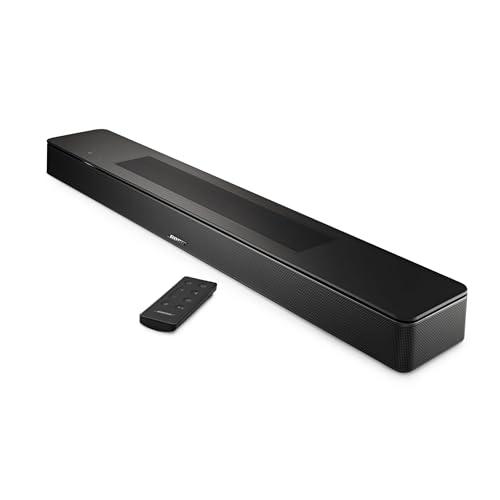
The Bose Smart Soundbar 1100 includes built-in Amazon Alexa, complete with a noise-rejecting microphone array that can hear your voice commands even when the soundbar is playing loudly. More importantly, it supports Voice4Video, which extends Alexa's capabilities to control your TV and cable box through voice commands—something most smart speakers can't do.
This integration feels genuinely useful in daily life. You can say "Alexa, turn on Netflix" and the soundbar will power on your TV, switch to the correct input, and launch the Netflix app. The Bose also supports Google Assistant when paired with compatible devices and works with Apple AirPlay 2, Spotify Connect, and Chromecast for seamless music streaming.
The Klipsch Flexus Core 200 takes a more traditional approach, focusing on audio performance over smart features. It includes Bluetooth connectivity and HDMI-CEC (which allows basic TV control through HDMI), but it doesn't have built-in voice assistants. Instead, Klipsch invested in the Connect Plus app, which provides extensive equalization controls and multiple listening modes.
Modern soundbars need to handle various audio sources, and both products offer different solutions. The Bose excels in wireless connectivity with Wi-Fi, Bluetooth, and support for virtually every major streaming protocol. It can stream directly from services like Spotify, Amazon Music, and Pandora without requiring your phone or TV to be involved.
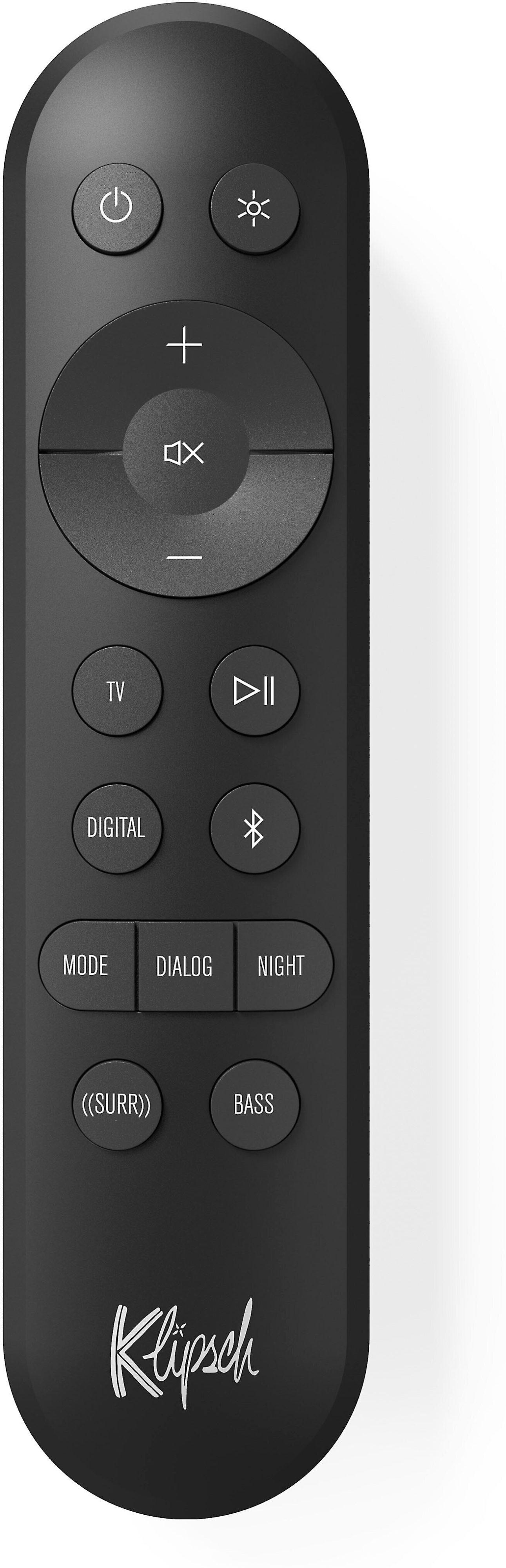
The Klipsch focuses on core connectivity with HDMI eARC (enhanced Audio Return Channel), optical digital input, and USB-C. While it has fewer wireless streaming options, it includes practical features like a backlit remote control—surprisingly helpful during movie nights when the lights are dimmed.
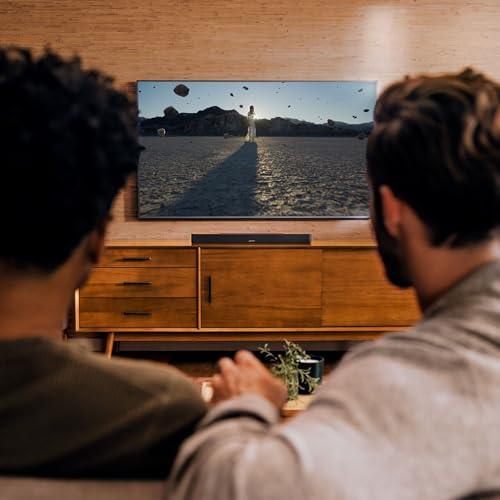
The Bose Smart Soundbar 1100 works best in small to medium rooms, roughly 10 feet by 12 feet according to Bose's recommendations. Its compact 27-inch width fits under most TVs without overwhelming smaller entertainment centers, and its refined sound signature doesn't become fatiguing during long viewing sessions.
However, in larger spaces—family rooms over 300 square feet or open-concept living areas—the Bose may struggle to fill the room with adequate bass and overall volume. Its 6.9-pound weight reflects its compact internal components, which prioritize efficiency over raw power output.
The Klipsch Flexus Core 200, with its 185 watts RMS and larger driver complement, handles bigger rooms more confidently. At 44 inches wide, it provides better soundstage width naturally, and its dual built-in subwoofers maintain bass impact even at higher volumes needed for larger spaces.
Professional reviews consistently note that the Bose maintains its refined character at moderate volumes but can sound slightly strained when pushed to maximum levels. This isn't necessarily a dealbreaker—most people rarely listen at peak volumes—but it suggests the Bose is optimized for typical TV viewing rather than party-level playback.
The Klipsch, with Klipsch's heritage in high-efficiency speaker design, handles demanding passages more comfortably. However, some reviews mention a subtle brittleness at very high volumes, where the sound becomes thinner and less refined than at moderate levels.
Both soundbars support expansion, but through different approaches. The Bose Smart Soundbar 1100 can be paired with optional Bass Module 500 or 700 subwoofers and Bose Surround Speakers for true 5.1 surround sound. More uniquely, it supports SimpleSync technology, which pairs with Bose Ultra Open Earbuds to create personal surround sound—an innovative solution for late-night viewing when you can't disturb others.
The Klipsch Flexus Core 200 uses Klipsch Transport wireless technology to connect with matching Flexus Sub 100 subwoofers and Flexus Surr 100 surround speakers. The system can support up to three total subwoofers, creating a genuinely powerful home theater setup. This modular approach lets you start with just the soundbar and add components as your budget and needs evolve.
The Bose benefits from Bose's established ecosystem and track record of long-term software support. However, its compact design may limit future upgrade potential—you're essentially locked into Bose's specific expansion options.
The Klipsch, being newer to the market, represents more of an unknown regarding long-term support, but its modular design philosophy and traditional audio connections suggest better flexibility for future expansion or integration with other brands.
At the time of writing, both soundbars occupy similar price ranges in the mid-range market, with the Klipsch typically commanding a slight price advantage. However, value extends beyond initial cost to include performance per dollar and long-term utility.
The Bose Smart Soundbar 1100 justifies its premium through smart features, brand reputation, and specialized technologies like A.I. Dialogue Mode and PhaseGuide processing. If you value convenient voice control, comprehensive streaming options, and refined sound quality, the additional cost makes sense.
The Klipsch Flexus Core 200 offers superior bass performance and power output at a lower entry price, making it exceptional value for users who prioritize audio impact over smart features. The built-in subwoofers alone represent significant savings compared to buying a separate subwoofer.
Consider expansion costs when evaluating value. Adding a Bose Bass Module can increase your total investment significantly, while the Klipsch provides substantial bass performance from day one. However, the Bose offers unique features like SimpleSync earbuds pairing that have no direct equivalent in other systems.
You primarily watch dialogue-heavy content like dramas, documentaries, or news programs where vocal clarity is paramount. The A.I. Dialogue Mode alone makes difficult-to-understand shows significantly more enjoyable.
Your room is smaller (under 200 square feet) where the Bose compact design and refined sound signature work best. The smart features genuinely add daily convenience if you're already invested in voice assistant ecosystems.
You value future-proofing through comprehensive streaming support and prefer the peace of mind that comes with Bose's established customer support and product longevity track record.
You enjoy action movies, gaming, or music genres that benefit from strong bass response. The dual built-in subwoofers provide cinematic impact that the Bose simply cannot match without additional components.
Your listening space is larger (over 250 square feet) where you need more power output and physical soundstage width to fill the room effectively.
You prefer to invest in audio performance over smart features and appreciate having physical controls and traditional connectivity options as primary interaction methods.
You're building a dedicated home theater system and want the flexibility to add powerful expansion components over time through the Flexus ecosystem.
Both the Bose Smart Soundbar 1100 and Klipsch Flexus Core 200 succeed brilliantly at their intended purposes, but they serve different types of users and listening environments. The Bose represents the evolution of soundbars as smart home devices that happen to excel at audio, while the Klipsch focuses on traditional audio excellence with modern convenience features layered on top.
Your choice ultimately depends on whether you prioritize convenience and refinement (Bose) or power and expandability (Klipsch). Neither approach is wrong—they're simply different solutions to the challenge of bringing great audio to modern living spaces.
Most buyers will be happy with either choice, but understanding these fundamental differences ensures you'll pick the soundbar that matches your specific needs, room, and listening preferences rather than just following brand loyalty or sale prices.
| Bose Smart Soundbar 1100 | Klipsch Flexus Core 200 |
|---|---|
| Channel Configuration - Determines surround sound capability and bass performance | |
| 3.0.2 (no dedicated subwoofer channel) | 3.1.2 (includes dedicated subwoofer channel) |
| Physical Dimensions - Critical for TV compatibility and room aesthetics | |
| 27.3" W x 2.2" H x 4.6" D (compact, fits under most TVs) | 44" W x 3.1" H x 4.9" D (wider footprint, better soundstage) |
| Built-in Bass Drivers - Eliminates need for separate subwoofer | |
| None (relies on full-range drivers with QuietPort vents) | Dual 4" dedicated subwoofers (significant bass advantage) |
| Total System Power - Determines maximum volume and dynamic range | |
| Not specified by manufacturer | 185W RMS (handles larger rooms confidently) |
| Voice Assistant Integration - Hands-free control convenience | |
| Built-in Amazon Alexa with Voice4Video TV control | None (app and remote control only) |
| Wireless Streaming Options - Affects daily usability and convenience | |
| Wi-Fi, AirPlay 2, Chromecast, Spotify Connect, multiple services | Bluetooth, USB-C (more limited wireless options) |
| Dolby Atmos Implementation - Creates overhead sound effects | |
| 2 up-firing drivers with TrueSpace upmixing technology | 2 discrete 2.25" full-range elevation drivers |
| Dialogue Enhancement Technology - Critical for TV and movie clarity | |
| A.I. Dialogue Mode with automatic vocal balance adjustment | Horn-loaded tweeter for crisp dialogue (manual adjustment) |
| System Expandability - Future upgrade potential and flexibility | |
| Bose Bass Modules, Surround Speakers, SimpleSync earbuds | Klipsch Flexus Sub and Surr modules via Transport wireless |
| Smart Home Ecosystem - Integration with existing devices | |
| Extensive (Alexa, Google Assistant, Bose multiroom audio) | Limited (HDMI-CEC, basic app control) |
| Room Size Optimization - Manufacturer recommendations for best performance | |
| Small to medium rooms (10' x 12' suggested) | Medium to large rooms (185W handles bigger spaces) |
| Connectivity Ports - Determines device compatibility | |
| HDMI eARC, Optical, 3.5mm subwoofer out | HDMI eARC, Optical, USB-C, RCA subwoofer out |
| Audio Format Support - Compatibility with different content types | |
| Dolby Atmos, Digital, Digital Plus, TrueHD (no DTS) | Dolby Atmos support (DTS compatibility not specified) |
| Weight and Build - Indicates internal component quality and installation ease | |
| 6.9 lbs (lightweight, easy mounting) | Weight not specified (larger chassis suggests heavier build) |
The Klipsch Flexus Core 200 delivers significantly better bass performance with its dual 4-inch built-in subwoofers. The Bose Smart Soundbar 1100 relies on QuietPort technology for bass, which sounds refined but lacks the deep low-end impact that the Klipsch provides without needing an additional subwoofer.
Yes, both the Bose Smart Soundbar 1100 and Klipsch Flexus Core 200 support Dolby Atmos. The Bose uses two up-firing drivers with TrueSpace technology to create height effects, while the Klipsch employs two 2.25-inch discrete elevation drivers for overhead sound placement.
The Bose Smart Soundbar 1100 excels at dialogue clarity with its A.I. Dialogue Mode that automatically enhances vocal intelligibility without sacrificing overall sound balance. The Klipsch Flexus Core 200 offers crisp dialogue through its horn-loaded tweeter, but requires manual adjustment and can be less forgiving of poor audio mixing.
The Bose Smart Soundbar 1100 measures 27.3 inches wide and fits under most TVs, while the Klipsch Flexus Core 200 is significantly larger at 44 inches wide. The Klipsch provides better soundstage width but requires more shelf space than the compact Bose.
The Bose Smart Soundbar 1100 offers superior smart features with built-in Amazon Alexa, Voice4Video TV control, and extensive streaming options including AirPlay 2 and Chromecast. The Klipsch Flexus Core 200 focuses on audio performance over smart features, offering basic Bluetooth connectivity and app control without built-in voice assistants.
Both soundbars support expansion but through different systems. The Bose Smart Soundbar 1100 can add Bose Bass Modules and Surround Speakers, plus unique SimpleSync pairing with Bose earbuds. The Klipsch Flexus Core 200 uses Klipsch Transport technology to connect with Flexus subwoofers and surround speakers, supporting up to three total subwoofers.
The Klipsch Flexus Core 200 handles larger rooms better with its 185W RMS power output and wider 44-inch design. The Bose Smart Soundbar 1100 is optimized for small to medium rooms (10' x 12') and may struggle to fill larger spaces with adequate volume and bass impact.
Both soundbars perform well with music but have different strengths. The Klipsch Flexus Core 200 excels with bass-heavy genres like rock and electronic music due to its built-in subwoofers. The Bose Smart Soundbar 1100 offers more refined, balanced sound that works well across all music genres, with excellent streaming integration for music services.
The Klipsch Flexus Core 200 typically offers better value for pure audio performance, delivering built-in subwoofer bass at a competitive price point. The Bose Smart Soundbar 1100 justifies its premium through advanced smart features, dialogue enhancement technology, and comprehensive streaming capabilities that add daily convenience value.
The Bose Smart Soundbar 1100 offers HDMI eARC, optical input, and extensive wireless options including Wi-Fi and multiple streaming protocols. The Klipsch Flexus Core 200 provides HDMI eARC, optical, USB-C, and RCA subwoofer output, focusing on core connectivity rather than wireless streaming variety.
The Bose Smart Soundbar 1100 offers easier daily use with voice control, automatic dialogue enhancement, and seamless streaming integration through the Bose Music app. The Klipsch Flexus Core 200 provides straightforward setup with traditional controls and a backlit remote, appealing to users who prefer physical controls over smart features.
Both work well for home theater but serve different needs. The Bose Smart Soundbar 1100 excels for dialogue-heavy content and integrates well with smart home systems, while the Klipsch Flexus Core 200 delivers more impactful bass for action movies and can expand into a powerful modular surround system with additional Klipsch components.
We've done our best to create useful and informative comparisons to help you decide what product to buy. Our research uses advanced automated methods to create this comparison and perfection is not possible - please contact us for corrections or questions. These are the sites we've researched in the creation of this article: bestbuy.com - rtings.com - rtings.com - youtube.com - staples.com - youtube.com - soundguys.com - businessinsider.com - youtube.com - rtings.com - crutchfield.com - youtube.com - youtube.com - smart.dhgate.com - dolby.com - bose.com - assets.bose.com - bose.com - connection.com - bestbuy.com - cdw.com - dell.com - device.report - soundandvision.com - avnirvana.com - avsforum.com - cnet.com - klipsch.com - klipsch.com - youtube.com - assets.klipsch.com - klipsch.com - worldwidestereo.com - klipsch.com - crutchfield.com - digitaltrends.com

Privacy Policy
Terms and Conditions - Affiliate Policy
Home Security
© Copyright 2008-2026.
11816 Inwood Rd #1211, Dallas, TX 75244