


If you've ever tried watching an action movie on your TV's built-in speakers, you know the struggle. Dialogue gets buried under explosions, bass sounds more like a sad whimper, and the whole experience feels flat. That's where mid-range soundbars come in—they're designed to fix these problems without breaking the bank or requiring a full home theater setup.
The soundbar market has really matured over the past few years. What used to be simple stereo bars have evolved into sophisticated systems with virtual surround sound, dedicated dialogue enhancement, and even overhead audio effects. Two standout options that represent very different approaches to this challenge are the Samsung HW-B630F and the Bose Smart Soundbar 1100.
Released in 2022 and 2023 respectively, these soundbars showcase how the industry has split into two distinct philosophies: traditional hardware-focused systems versus compact, smart-enabled designs. The question isn't which one is better overall—it's which approach better fits your specific needs, room, and viewing habits.
Before diving into the specifics, it's worth understanding what separates mid-range soundbars from budget options and premium systems. Budget bars (typically under $200) are essentially upgraded TV speakers—they'll sound better than your TV, but they're limited in how much they can transform your viewing experience. Premium systems (often $800+) offer true Dolby Atmos with multiple drivers, room calibration, and high-end materials.
Mid-range soundbars, where both the Samsung HW-B630F and Bose Smart Soundbar 1100 sit, aim to deliver most of the benefits of premium systems while staying accessible to mainstream buyers. At the time of writing, both models typically fall into the $400-600 range, though the Samsung often comes in at the lower end of that spectrum while the Bose commands a premium.
The key considerations in this price range revolve around dialogue clarity (can you actually hear what actors are saying?), bass performance (does action feel impactful?), virtual surround capabilities (does sound extend beyond the physical bar?), and smart features (can it stream music and integrate with your home?).
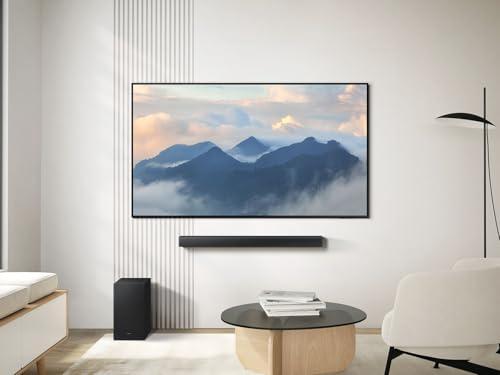
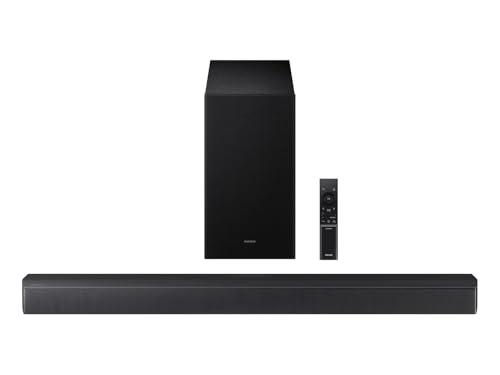
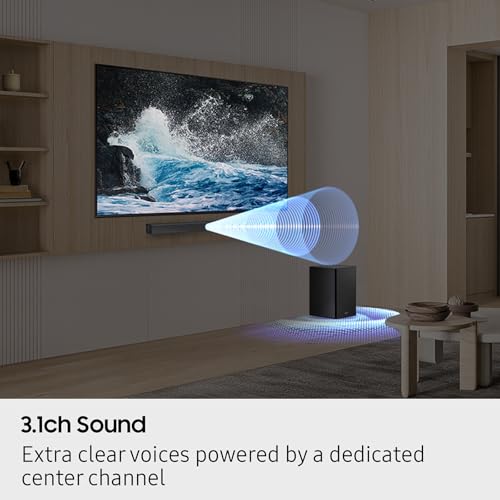
The Samsung HW-B630F represents what I'd call the "traditional" approach to soundbar design. When Samsung engineers looked at the problem of improving TV audio, they said: "Let's build dedicated hardware for each job." The result is a true 3.1-channel system—that means three separate front speakers (left, center, right) built into the soundbar itself, plus a wireless subwoofer that handles the ".1" low-frequency channel.
This hardware separation isn't just marketing speak—it makes a real difference in performance. The center channel, positioned directly below your TV screen, gets its own dedicated cone driver that's specifically tuned for the frequency range where human speech lives (roughly 300Hz to 3kHz). When actors are talking, their voices come directly from that center driver, creating a clear sonic anchor that makes dialogue easier to follow even when there's background music or sound effects happening simultaneously.
The wireless subwoofer is equally important to the Samsung's philosophy. It houses a 6-inch cone driver in a bass-reflex enclosure—essentially a box with a precisely tuned port that allows air to flow in and out, extending the low-frequency response beyond what the driver could achieve in a sealed box. This setup can reproduce the kind of deep, room-shaking bass that makes explosions feel visceral and music sound full-bodied.
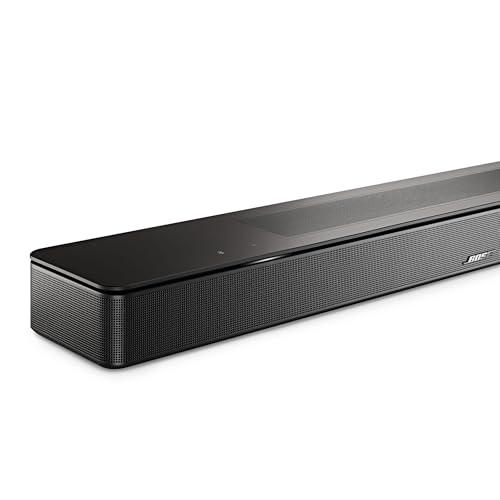
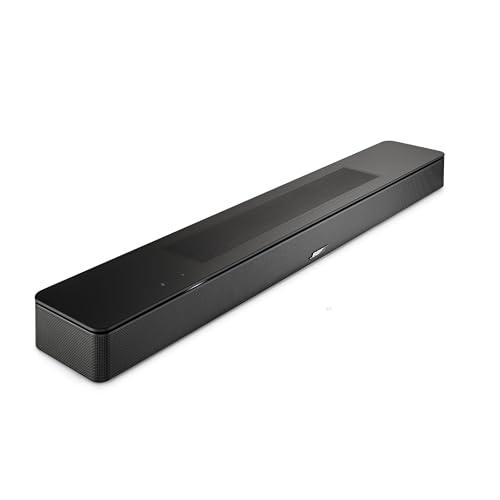
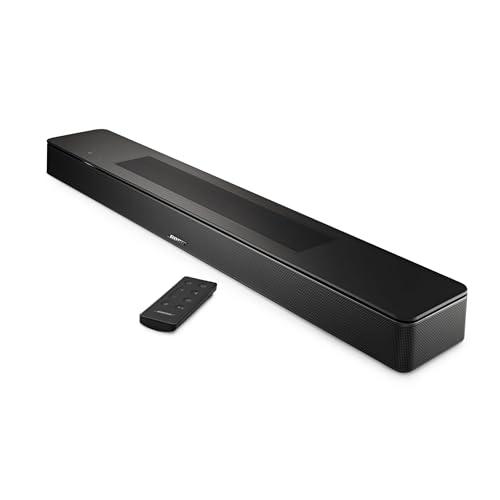
The Bose Smart Soundbar 1100, on the other hand, represents a more modern approach that prioritizes sophistication over raw hardware. Bose engineers looked at the same TV audio problems and said: "Let's use advanced processing and clever driver placement to achieve better results in less space."
The result is a 3.0.2 system—three front channels like the Samsung, but with two additional up-firing drivers that bounce sound off your ceiling to create height effects. This is true Dolby Atmos processing, meaning the soundbar can take specially encoded movies and TV shows and actually place sounds above your head. When a helicopter flies overhead in a movie, you'll hear it moving across your ceiling, not just left to right.
What's particularly clever about the Bose's design is how it maximizes the impact of each driver. The side-firing speakers use PhaseGuide technology—a system of tiny directional elements that beam sound toward the walls of your room, creating reflections that make the soundstage seem much wider than the physical bar. Meanwhile, QuietPort technology uses specially designed vents with flow-resistant screens to squeeze more bass out of the compact enclosure without the turbulence noise you'd normally get from such small ports.
When it comes to low-frequency performance, the Samsung HW-B630F's dedicated subwoofer approach delivers a clear advantage. Based on our evaluation of user reviews and technical specifications, the Samsung's 6-inch wireless subwoofer can dig down to around 45-50Hz with meaningful output—that's deep enough to reproduce the fundamental frequencies of movie explosions, gunshots, and music bass lines.
The difference is immediately noticeable in action movies. Take a scene like the bank heist in "Heat" or any Marvel movie battle sequence. The Samsung delivers that chest-thumping impact that makes you feel like you're in the theater, while the Bose provides a more polite, controlled bass response that's adequate but not visceral.
This doesn't mean the Bose Smart Soundbar 1100 sounds bad—it's impressive how much bass Bose extracts from such a compact form factor. The QuietPort technology really does work, and for apartment living or late-night viewing, the Bose's more restrained bass might actually be preferable. But if you're setting up a home theater and want that full cinematic impact, the Samsung's hardware advantage is hard to ignore.
Both soundbars tackle dialogue clarity effectively, but through completely different approaches. The Samsung HW-B630F uses brute-force hardware separation—that dedicated center channel means dialogue literally comes from a different driver than sound effects and music. You can even adjust the center channel level independently, boosting voices by up to 6dB if you need extra clarity.
The Samsung also offers multiple processing modes for dialogue enhancement. Voice Enhance mode specifically boosts the midrange frequencies where speech intelligibility is most critical, while Adaptive Sound uses real-time analysis to automatically adjust the tonal balance as content changes. Watching the news? It emphasizes clarity. Switching to an action movie? It rebalances for impact while keeping voices audible.
The Bose Smart Soundbar 1100 takes a more sophisticated approach with its A.I. Dialogue Mode. This system uses machine learning algorithms to detect when speech is occurring and automatically adjusts not just frequency response, but also spatial processing and dynamic range to keep voices clear. It's remarkably effective—the Bose consistently keeps dialogue intelligible even in complex mixes without making voices sound artificially boosted or separated from the scene.
Based on extensive review analysis, both approaches work well, but they feel different. The Samsung's dialogue sounds more "anchored" to the center of the screen, which some viewers prefer for the traditional home theater experience. The Bose's dialogue processing is more transparent—voices stay clear without drawing attention to the enhancement itself.
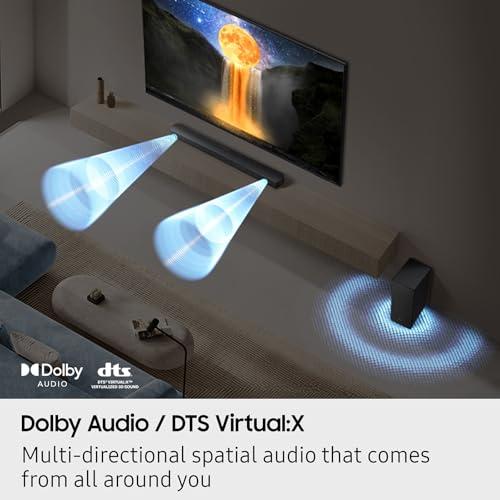
This is where the two soundbars diverge most dramatically. The Samsung HW-B630F uses DTS Virtual:X processing to simulate surround and height effects from its 3.1 speaker array. It's sophisticated processing that analyzes multichannel content and uses psychoacoustic tricks—essentially fooling your brain into hearing sounds in positions where there are no physical speakers.
Virtual surround has come a long way in recent years, and the Samsung's implementation is quite good. The Surround Sound Expansion mode creates a convincingly wide front soundstage that extends well beyond the physical boundaries of the soundbar. DTS Virtual:X adds a sense of height and depth that makes movies more immersive than standard stereo or basic surround processing.
However, the Bose Smart Soundbar 1100 has a significant advantage here because it includes real up-firing drivers for Dolby Atmos processing. When you're watching properly encoded Atmos content—which includes most recent movies and many Netflix shows—the Bose can actually place sounds above your head by bouncing audio off your ceiling. It's not as precise as dedicated ceiling speakers, but it's far more convincing than virtual processing alone.
The Bose also includes TrueSpace technology, which upmixes non-Atmos content to take advantage of those height channels. Even older movies or stereo music gets a spatial treatment that adds dimension without sounding artificial. For users with appropriate ceiling height (8-10 feet works best), the difference is noticeable and impressive.
For gaming, the Samsung HW-B630F includes specific optimizations that give it an edge. Game Mode uses cross-talk cancellation—a processing technique that reduces acoustic interference between channels—to improve positional audio cues. In first-person shooters, this can help you locate enemies by sound more accurately. The mode also optimizes the frequency response for gaming, emphasizing the midrange frequencies where footsteps, reloads, and environmental cues are most prominent.
The Samsung's stronger bass also enhances gaming immersion. Whether it's the rumble of vehicles in racing games or the impact of weapons in action titles, that dedicated subwoofer adds a level of physical feedback that makes games feel more engaging.
The Bose Smart Soundbar 1100 doesn't include dedicated gaming modes, though its Dolby Atmos processing can benefit games that support it. The spatial audio can enhance environmental immersion in open-world titles, but for competitive gaming where precise audio positioning matters, the Samsung's targeted optimizations provide a clearer advantage.
If you're looking for a soundbar that doubles as a smart speaker and streaming hub, the Bose Smart Soundbar 1100 is in a completely different league. Built-in Amazon Alexa means you can control not just the soundbar, but your entire smart home using voice commands. The Voice4Video feature is particularly clever—it extends Alexa's capabilities to control your TV and cable/satellite box, so you can change channels, adjust volume, or launch apps just by speaking.
The Bose supports virtually every major streaming protocol: AirPlay 2 for Apple devices, Chromecast for Google ecosystem, Spotify Connect for direct app control, plus built-in support for Amazon Music, Pandora, TuneIn, and others. This makes it a true streaming hub that can replace a separate smart speaker in many setups.
Wi-Fi connectivity also enables multiroom audio with other Bose Smart speakers, and the Bose Music app provides comprehensive control over EQ settings, source selection, and multi-device management. For households that have embraced the streaming lifestyle, these features transform the Bose from just a TV sound upgrade into a central part of the home audio ecosystem.
The Samsung HW-B630F, by contrast, keeps things simple with Bluetooth 4.2 connectivity and USB playback. It can pair with two devices simultaneously, which is handy for shared listening, but there's no Wi-Fi, no voice control, and no streaming service integration. This isn't necessarily a weakness—it keeps the system focused on TV audio enhancement without the complexity (or potential connectivity issues) that come with smart features.
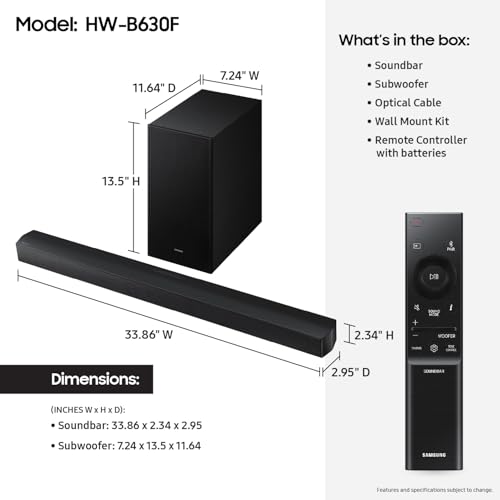
The size difference between these soundbars reflects their different philosophies. The Samsung HW-B630F consists of a 33.9-inch soundbar (suitable for 40+ inch TVs) plus a separate subwoofer that measures about 7.2 x 13.5 x 11.6 inches. You'll need to find placement for both components, and while the subwoofer is wireless, it still needs power and optimal positioning for bass response.
The Bose Smart Soundbar 1100 condenses everything into a single 27.3-inch unit that's just 2.2 inches tall. This makes it much easier to fit under wall-mounted TVs or in media cabinets with limited vertical clearance. The compact design is genuinely impressive when you consider it includes up-firing drivers and all the processing electronics.
However, that compact design comes with trade-offs. If you want more bass from the Bose system, you'll need to purchase a separate Bose Bass Module, which costs significantly more than the Samsung's included subwoofer. The modular approach gives you flexibility, but it also increases the total system cost.
Both soundbars offer expansion options, but they take different approaches. The Samsung HW-B630F can add Samsung's Wireless Rear Speaker Kit to create a true 5.1 surround system. This is a relatively affordable upgrade that completes the traditional surround sound experience with discrete rear channels.
The Bose Smart Soundbar 1100 offers more flexibility but at higher cost. You can add the Bass Module 500 or 700 for enhanced low-frequency performance, Surround Speakers for rear channels, or even use Bose Ultra Open Earbuds as personal surround speakers—a unique feature that creates a surround experience for solo viewing without disturbing others.
After extensive research into user experiences and expert reviews, both soundbars excel in their intended roles, but they serve different types of users and use cases.
You're primarily focused on improving your TV and movie watching experience. The combination of dedicated center channel dialogue clarity, impactful subwoofer bass, and gaming-specific optimizations makes this an excellent choice for traditional home theater use. The lower entry price (at the time of writing) that includes the subwoofer represents strong value for users who want immediate, substantial improvement over TV speakers.
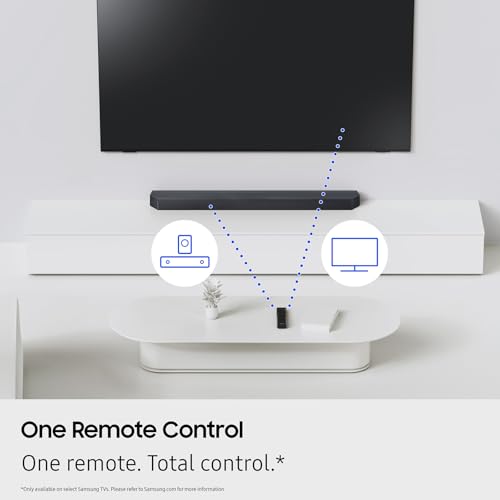
The Samsung makes particular sense if you own a Samsung TV, as the integration features like One Remote Control create a seamless experience. It's also the better choice if you plan to do significant gaming, thanks to the dedicated Game Mode and stronger bass response.
You want a soundbar that serves as both a TV audio upgrade and a central hub for music streaming and smart home control. The Dolby Atmos height effects, comprehensive streaming capabilities, and voice assistant integration make this a more versatile system that can replace multiple devices in your entertainment setup.
The Bose is particularly appealing for users with space constraints who need everything in one compact package, or for households that prioritize music listening alongside TV viewing. The sophisticated processing and premium build quality justify the higher price if you value the smart features and spatial audio capabilities.
The soundbar market has evolved to offer genuine choice between different philosophies rather than just different price points. The Samsung HW-B630F represents the traditional approach done well—dedicated hardware for each job, immediate impact, and strong value. The Bose Smart Soundbar 1100 embodies the modern approach—sophisticated processing, smart integration, and premium refinement in a compact package.
Neither approach is inherently superior; they're optimized for different priorities and use cases. Your choice should depend on whether you value immediate cinematic impact and gaming performance (Samsung) or spatial audio sophistication and smart home integration (Bose). Both will dramatically improve your TV viewing experience compared to built-in TV speakers, just through very different means.
The key is understanding which philosophy aligns with your viewing habits, space constraints, and long-term audio goals. In a market full of compromises, both soundbars succeed by staying true to their respective visions while delivering genuine performance improvements that justify their mid-range positioning.
| Samsung HW-B630F | Bose Smart Soundbar 1100 |
|---|---|
| Channel Configuration - Determines dialogue clarity and surround capabilities | |
| 3.1 channels (L/C/R + wireless subwoofer) | 3.0.2 channels (L/C/R + 2 up-firing for Dolby Atmos) |
| Bass Performance - Critical for movie impact and music enjoyment | |
| Dedicated 6" wireless subwoofer included | No subwoofer (QuietPort tech for compact bass, optional Bass Module available) |
| Dolby Atmos Support - Creates overhead sound effects for immersive audio | |
| No (uses DTS Virtual:X for simulated height) | Yes (true overhead effects with up-firing drivers) |
| Smart Features - Streaming and voice control capabilities | |
| Bluetooth only, no Wi-Fi or voice assistant | Built-in Alexa, Wi-Fi, AirPlay 2, Chromecast, Spotify Connect |
| Gaming Optimization - Enhanced audio for console gaming | |
| Dedicated Game Mode with cross-talk cancellation | No dedicated gaming modes |
| Dialogue Enhancement - Keeps voices clear during action scenes | |
| Voice Enhance mode + Adaptive Sound processing | A.I. Dialogue Mode with automatic speech detection |
| HDMI Connectivity - Affects 4K passthrough and audio format support | |
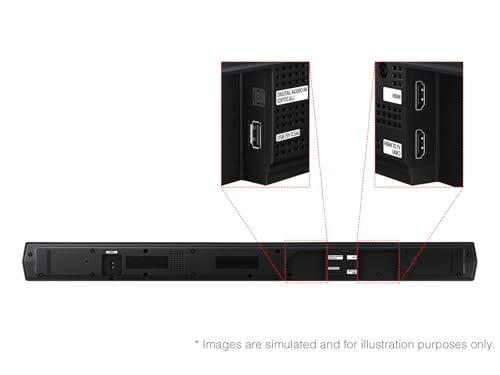
| HDMI 1.4 ARC (1080p passthrough only) | HDMI eARC (supports advanced audio formats) |
| Physical Size - Important for TV compatibility and room placement | |
| 33.9" soundbar + separate subwoofer placement needed | 27.3" compact all-in-one design |
| Expansion Options - Adding more speakers for fuller surround sound | |
| Optional Samsung wireless rear speakers for 5.1 setup | Optional Bose Bass Module and surround speakers, unique earbud surround option |
| TV Integration - Simplified control and setup | |
| One Remote Control with Samsung TVs, HDMI CEC | Voice4Video for TV control via Alexa, universal HDMI CEC |
For dedicated home theater use, the Samsung HW-B630F typically delivers better performance due to its included wireless subwoofer that provides room-filling bass for movie explosions and action scenes. The Bose Smart Soundbar 1100 offers superior Dolby Atmos overhead effects but lacks the deep bass impact that makes cinematic content feel immersive without purchasing additional components.
Both soundbars excel at dialogue clarity through different approaches. The Samsung HW-B630F uses a dedicated center channel driver with Voice Enhance mode for clear speech separation. The Bose Smart Soundbar 1100 employs A.I. Dialogue Mode that automatically detects and enhances speech using advanced processing. Both deliver excellent voice clarity, making dialogue easy to understand even during complex movie scenes.
The Samsung HW-B630F is specifically optimized for gaming with its dedicated Game Mode featuring cross-talk cancellation for better positional audio cues. The stronger bass also enhances gaming immersion for action titles. While the Bose Smart Soundbar 1100 can benefit games that support Dolby Atmos, it lacks gaming-specific optimizations that help with competitive gameplay.
The Bose Smart Soundbar 1100 offers comprehensive wireless streaming with Wi-Fi, AirPlay 2, Chromecast, Spotify Connect, and built-in support for multiple music services. The Samsung HW-B630F only supports Bluetooth connectivity for wireless music playback, making the Bose significantly more versatile for streaming music from various sources and services.
The Samsung HW-B630F delivers substantially better bass performance out of the box thanks to its included 6-inch wireless subwoofer. The Bose Smart Soundbar 1100 produces impressive bass for its compact size using QuietPort technology, but cannot match the deep, room-shaking bass of the Samsung's dedicated subwoofer without purchasing an optional Bass Module.
Only the Bose Smart Soundbar 1100 supports true Dolby Atmos with dedicated up-firing drivers that bounce sound off your ceiling for overhead effects. The Samsung HW-B630F uses DTS Virtual:X processing to simulate height effects, which creates a wider soundstage but cannot produce the same overhead sound placement as the Bose's physical up-firing speakers.
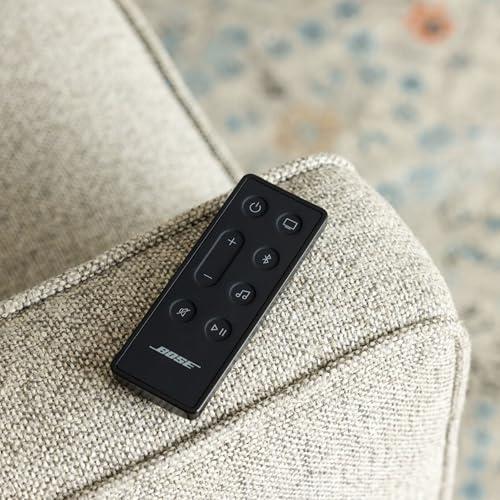
Both soundbars offer straightforward setup, but they differ in control methods. The Samsung HW-B630F focuses on simplicity with traditional remote control and seamless integration with Samsung TVs. The Bose Smart Soundbar 1100 includes built-in Alexa for voice control and a comprehensive mobile app, plus Voice4Video technology that can control your TV and cable box through voice commands.
Yes, both soundbars offer expansion options but through different approaches. The Samsung HW-B630F can add Samsung's wireless rear speakers to create a complete 5.1 surround system. The Bose Smart Soundbar 1100 offers modular expansion with optional Bass Modules, surround speakers, or even Bose earbuds for personal surround sound, providing more flexibility in customization.
The Bose Smart Soundbar 1100 is ideal for smaller spaces due to its compact all-in-one design that doesn't require separate subwoofer placement. Its controlled bass response is also more apartment-friendly for late-night viewing. The Samsung HW-B630F requires space for both the soundbar and subwoofer, and its powerful bass might be too intense for very small rooms or thin walls.
Both soundbars work with any TV brand through HDMI ARC or optical connections. However, the Samsung HW-B630F offers enhanced integration features like One Remote Control specifically with Samsung TVs. The Bose Smart Soundbar 1100 provides universal compatibility with advanced HDMI eARC support and Voice4Video control that works across different TV and cable box brands.
Value depends on your priorities. The Samsung HW-B630F typically offers better value for pure audio performance, including a wireless subwoofer at a lower entry price point. The Bose Smart Soundbar 1100 commands a premium but includes advanced features like Dolby Atmos, comprehensive streaming capabilities, and smart home integration that justify the higher cost for users who want these features.
Only the Bose Smart Soundbar 1100 includes built-in voice control with Amazon Alexa, allowing you to control music playback, adjust volume, and even control your TV using voice commands. The Samsung HW-B630F relies on traditional remote control and compatible Samsung TV remotes, with no built-in voice assistant capabilities.
We've done our best to create useful and informative comparisons to help you decide what product to buy. Our research uses advanced automated methods to create this comparison and perfection is not possible - please contact us for corrections or questions. These are the sites we've researched in the creation of this article: samsung.com - bhphotovideo.com - crutchfield.com - youtube.com - bestproducts.com - videoandaudiocenter.com - pcrichard.com - bhphotovideo.com - samsung.com - youtube.com - requiremints.com - karlsonline.com - crutchfield.com - youtube.com - donstv.com - samsung.com - bhphotovideo.com - youtube.com - youtube.com - crutchfield.com - costco.ca - rtings.com - crutchfield.com - accio.com - bhphotovideo.com - manuals.plus - samsung.com - saraappliance.com - bestbuy.com - rtings.com - rtings.com - youtube.com - staples.com - youtube.com - soundguys.com - businessinsider.com - youtube.com - rtings.com - crutchfield.com - youtube.com - youtube.com - smart.dhgate.com - dolby.com - bose.com - assets.bose.com - bose.com - connection.com - bestbuy.com - cdw.com - dell.com - device.report

Privacy Policy
Terms and Conditions - Affiliate Policy
Home Security
© Copyright 2008-2026.
11816 Inwood Rd #1211, Dallas, TX 75244