

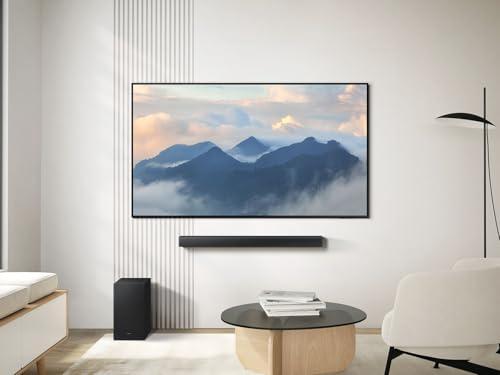
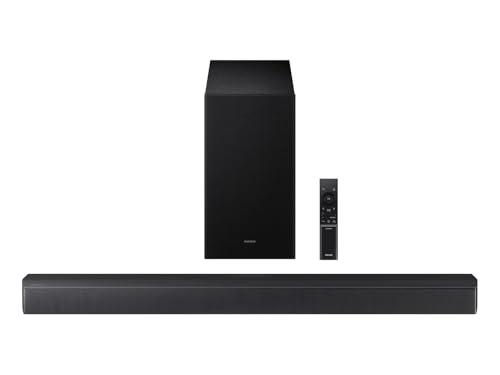



If you've ever tried watching a movie on a modern flat-screen TV, you've probably noticed something: the dialogue gets drowned out by explosions, the bass sounds tinny, and everyone ends up reaching for the remote to constantly adjust the volume. That's because today's ultra-thin TVs simply don't have room for decent speakers. Enter soundbars—the most popular solution for upgrading your TV's audio without the complexity of a full surround sound system.
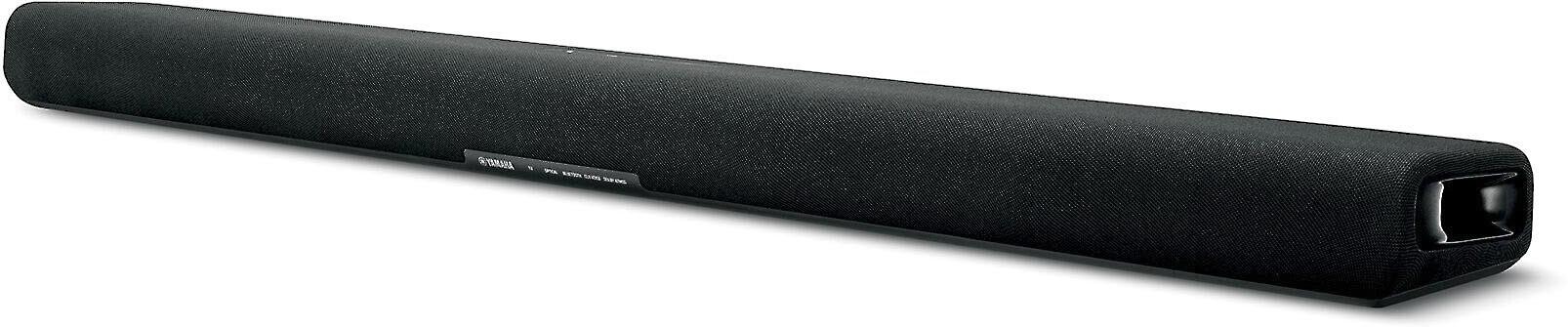
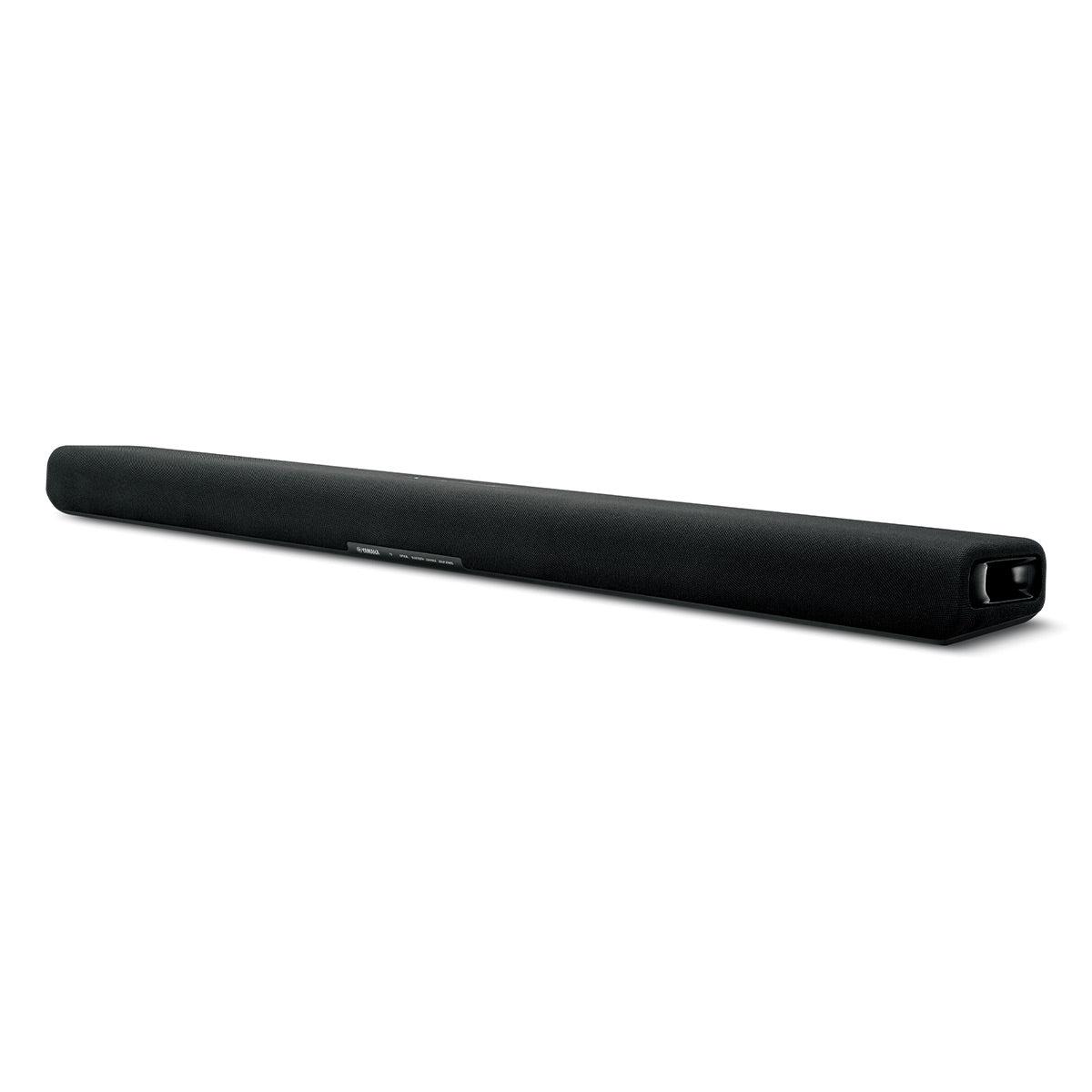
But here's where things get interesting. The soundbar market has split into two distinct philosophies, and our comparison today perfectly illustrates this divide. The Samsung HW-B630F B-Series 3.1ch Soundbar System represents the traditional approach: a dedicated soundbar paired with a separate wireless subwoofer. Meanwhile, the Yamaha SR-B30A Sound Bar with Built-In Subwoofers pioneered something entirely different—cramming everything, including dual subwoofers, into a single sleek unit.
When shopping for a soundbar in 2024, you're essentially choosing between convenience and performance. Traditional soundbars like the Samsung HW-B630F follow the time-tested formula of spreading the audio workload across multiple components. You get a main soundbar that handles mid-range and high frequencies, plus a separate subwoofer dedicated entirely to bass. This approach has dominated home theater for decades because it works—bass waves are long and need substantial drivers and cabinet space to reproduce properly.
The Yamaha SR-B30A, released in 2023, challenged this conventional wisdom. Yamaha's engineers asked a simple question: what if we could fit everything into one unit without sacrificing too much performance? The result was their innovative dual built-in subwoofer design, targeting users who want better TV sound but can't (or won't) deal with multiple components.
Both approaches have merit, but they serve different needs and priorities. Your choice depends on whether you value maximum audio performance or maximum convenience—and understanding the tradeoffs is crucial for making the right decision.
The most fundamental difference between these soundbars lies in their audio configuration, which determines how they reproduce sound across the frequency spectrum.
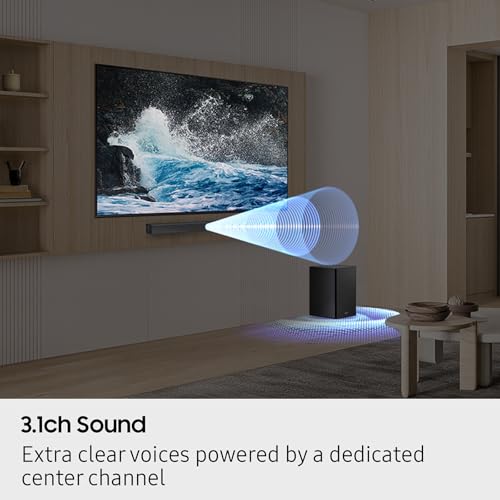
The Samsung HW-B630F uses a true 3.1-channel system. The "3.1" designation means three main channels (left, center, right) plus one subwoofer channel (the ".1"). That dedicated center channel is crucial—it's specifically tuned to handle dialogue and central audio elements, ensuring voices stay locked to the screen even when explosions and music compete for your attention.
In contrast, the Yamaha SR-B30A employs what's technically a 2.0 configuration with built-in bass reinforcement. It uses stereo imaging—clever audio processing that tricks your brain into perceiving sound coming from the center—rather than a physical center speaker. While this works reasonably well for many listeners, it can't match the precision of a dedicated center channel, especially in complex movie soundtracks.
This difference becomes most apparent during dialogue-heavy scenes in movies or TV shows. The Samsung's dedicated center channel means voices remain clear and localized to the screen, even when sitting off to the side of your viewing position. The Yamaha relies on your brain to fill in the gaps, which works better when you're sitting directly in front of the soundbar.
Bass reproduction reveals the starkest contrast between these two approaches. The Samsung HW-B630F includes a separate wireless subwoofer with a 6-inch driver housed in a bass-reflex cabinet. This design allows the subwoofer to move substantial amounts of air, creating the room-shaking impact that makes action movies and gaming sessions genuinely exciting.
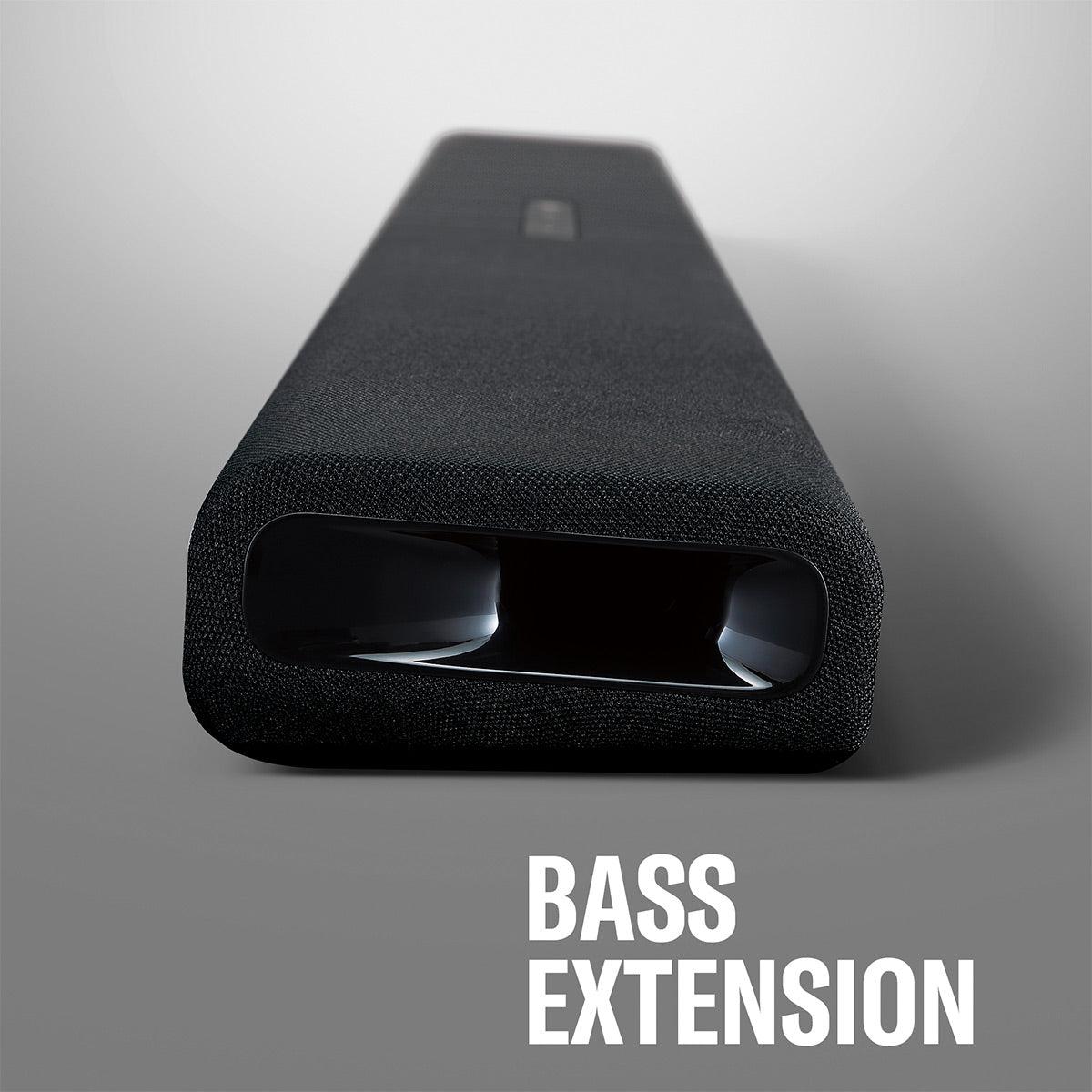
The Yamaha SR-B30A takes a radically different approach with dual 3-inch subwoofers built directly into the soundbar. While 3-inch drivers can't match the sheer output of a 6-inch unit, Yamaha compensated with clever engineering. They use two drivers working in tandem, plus a ported design that extends low-frequency response. The result is surprisingly effective bass for such a compact form factor.
In practical terms, the Samsung will deliver more visceral impact during explosive movie scenes and deeper bass extension for music listening. The Yamaha provides controlled, tight bass that won't rattle your walls—perfect for apartment living or late-night viewing without disturbing neighbors.
From our research into user experiences, the Samsung's separate subwoofer consistently receives praise for its room-filling presence, while the Yamaha's built-in bass gets kudos for being "just right" in smaller spaces. If you're in a larger living room and want maximum impact, the Samsung approach wins. If you're in a smaller space or need to be mindful of noise levels, Yamaha's solution is more practical.
Both soundbars pack sophisticated digital signal processing (DSP)—computer algorithms that analyze and enhance audio in real-time. However, they focus on different strengths.
The Samsung HW-B630F includes an impressive suite of audio enhancement features. Its Adaptive Sound technology automatically analyzes incoming audio and optimizes the EQ (equalization—the balance of bass, midrange, and treble) based on content type. When you switch from a dialogue-heavy drama to an action movie, the soundbar adjusts its processing accordingly.
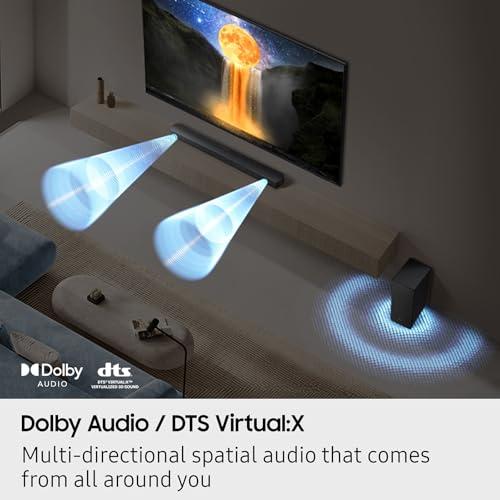
Samsung's DTS Virtual:X deserves special mention. This technology creates the illusion of sound coming from above and around you, even though all the speakers are positioned in front. While it can't match true overhead speakers, DTS Virtual:X provides a noticeably wider and taller soundstage than basic stereo processing. The effect is particularly impressive during helicopter scenes or thunderstorms.
The Samsung also includes a dedicated Game Mode with cross-talk cancellation—a feature that reduces audio interference between channels to help gamers pinpoint the direction of footsteps or gunfire. For competitive gaming, this spatial awareness can provide a genuine advantage.
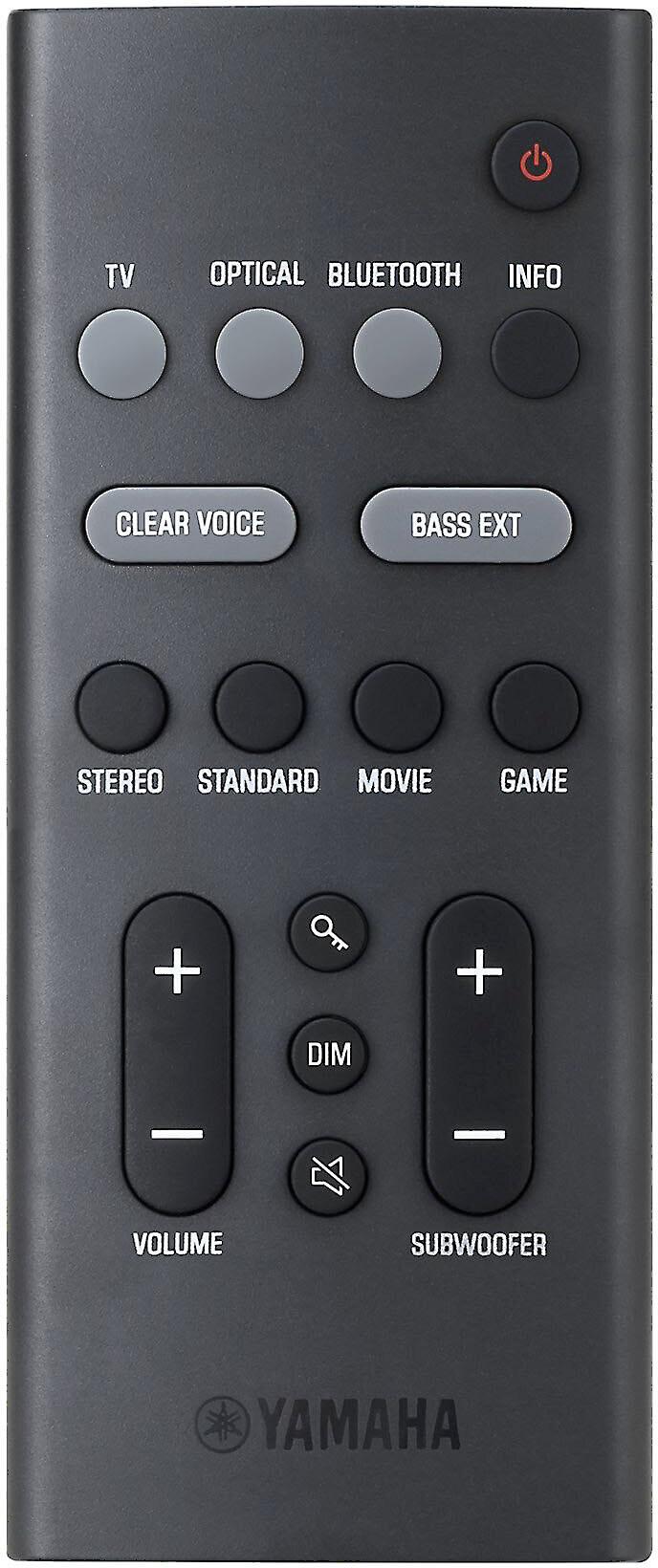
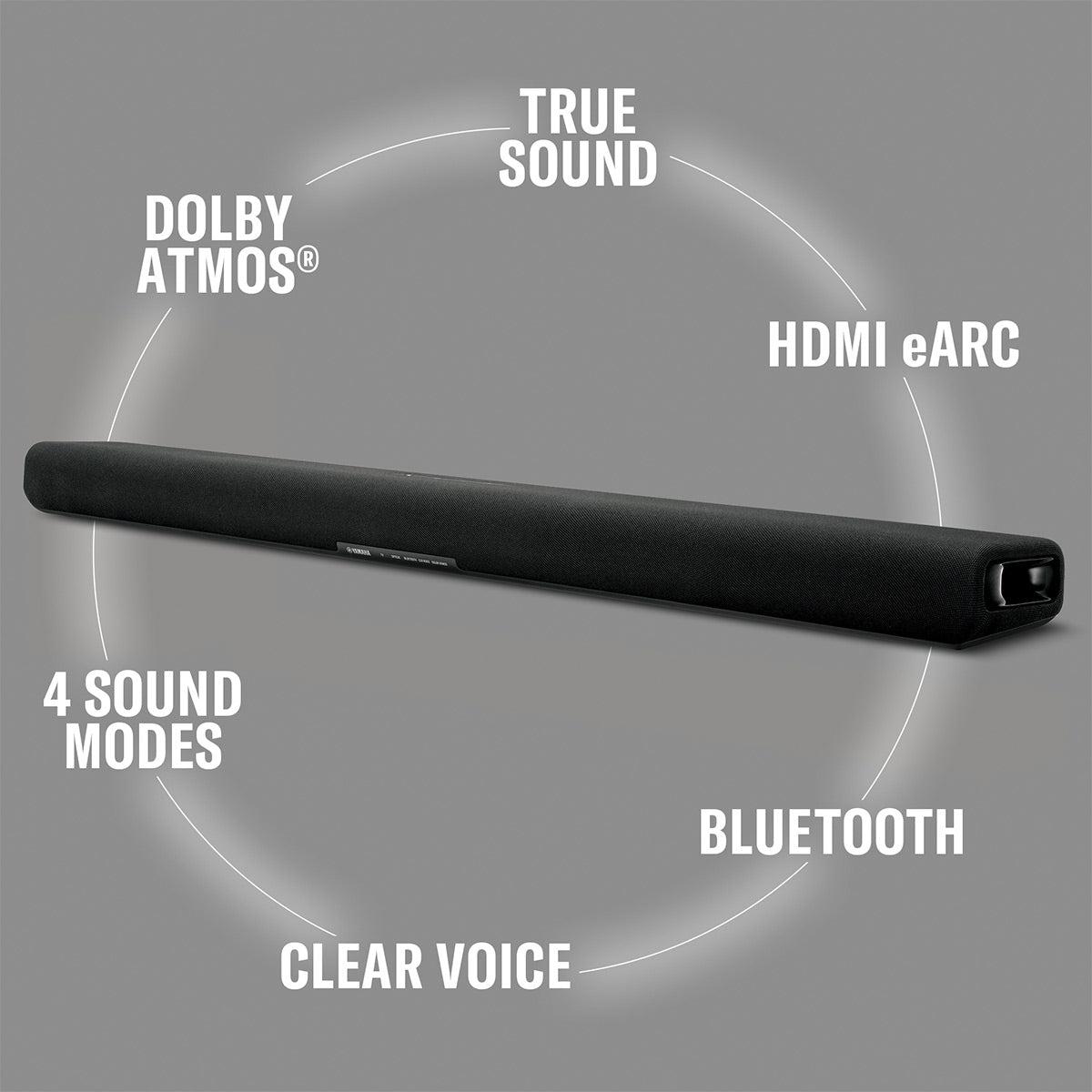
The Yamaha SR-B30A takes a more focused approach with its Clear Voice technology, which specifically targets dialogue enhancement. Rather than broad-spectrum processing, Clear Voice identifies and amplifies the frequency ranges where human speech occurs, making it easier to follow conversations without turning up the overall volume.
Yamaha also includes virtual Dolby Atmos processing, which attempts to create overhead effects from the soundbar's forward-firing speakers. While impressive for such a compact unit, it's less convincing than Samsung's more comprehensive virtual surround implementation.
Modern soundbars need to work seamlessly with today's streaming-heavy entertainment setups, and both models handle the basics well while differing in some key areas.
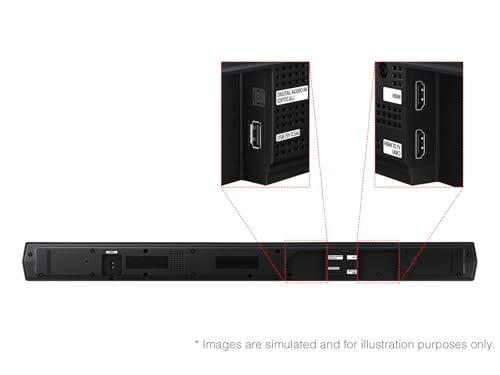
The Samsung HW-B630F includes HDMI ARC (Audio Return Channel) connectivity, which allows your TV to send audio back to the soundbar through the same HDMI cable that receives video. However, it uses the older HDMI 1.4 standard rather than the newer eARC (enhanced Audio Return Channel), which means it can't handle uncompressed high-resolution audio formats like those found on 4K Blu-rays.
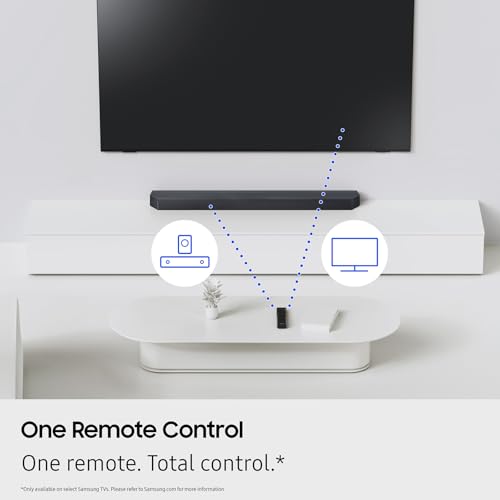
Where Samsung excels is in ecosystem integration. If you own a Samsung TV, the One Remote Control feature lets you control the soundbar using your TV's remote—no juggling multiple controllers. The soundbar also supports Bluetooth Multi Connection, allowing you to pair two devices simultaneously and switch between them seamlessly.
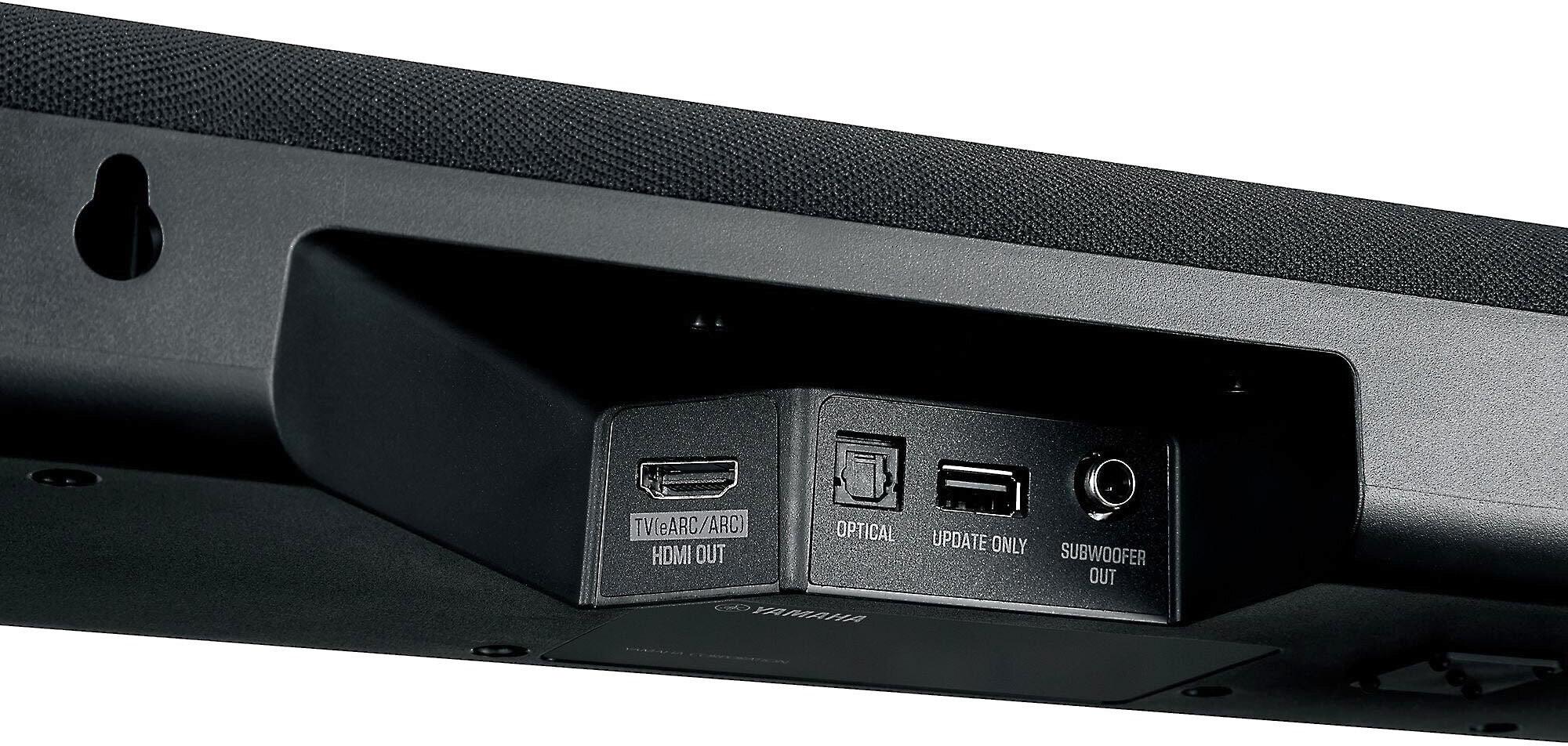
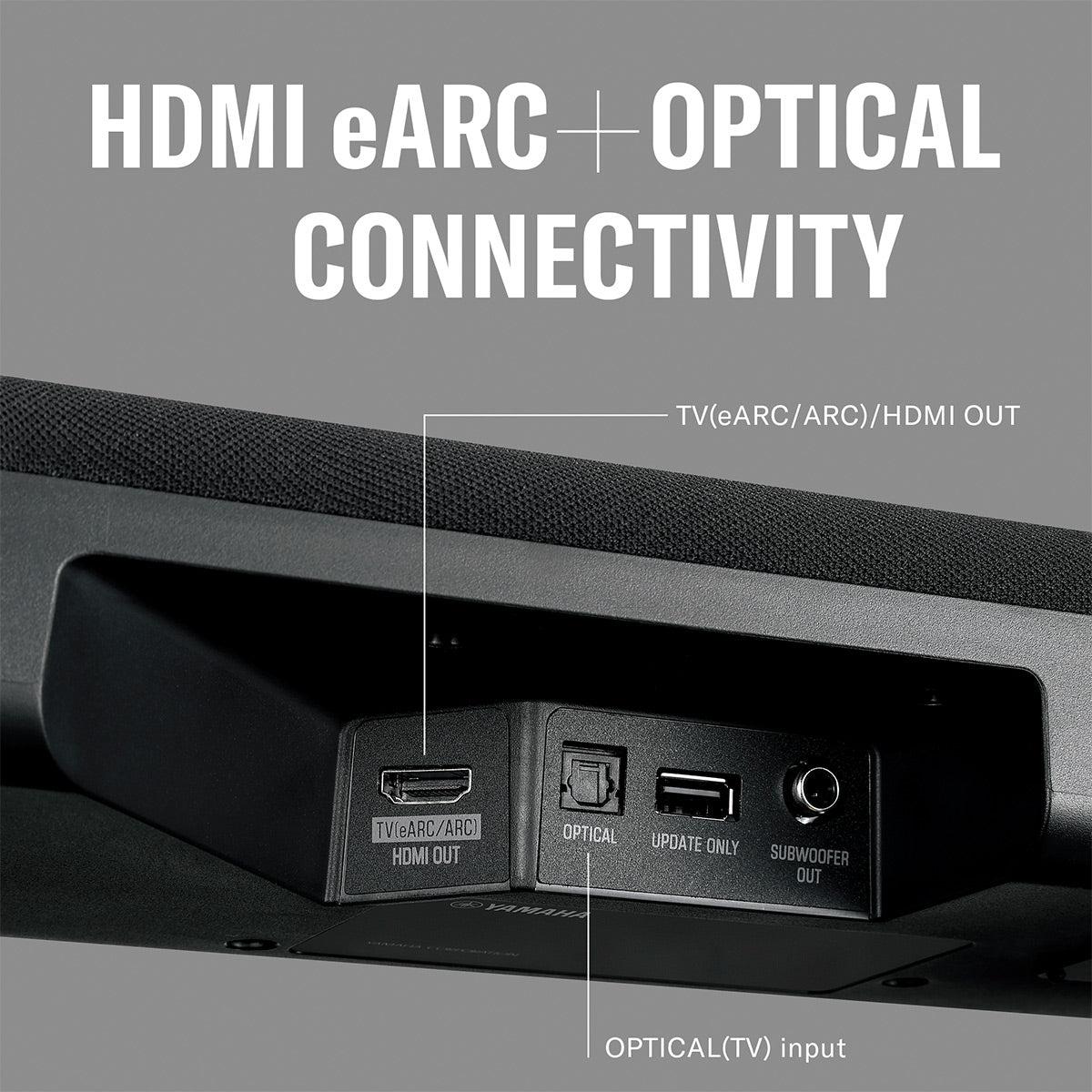
The Yamaha SR-B30A includes the more modern HDMI eARC standard, which supports higher bandwidth audio formats. This future-proofs the soundbar for high-resolution streaming content and provides better compatibility with premium audio formats.
Both soundbars offer Bluetooth connectivity for music streaming, but neither includes Wi-Fi or smart streaming features like AirPlay or Chromecast. They're designed primarily as TV audio enhancers rather than standalone music systems.
This is where the philosophical differences between these soundbars become most apparent in daily use.
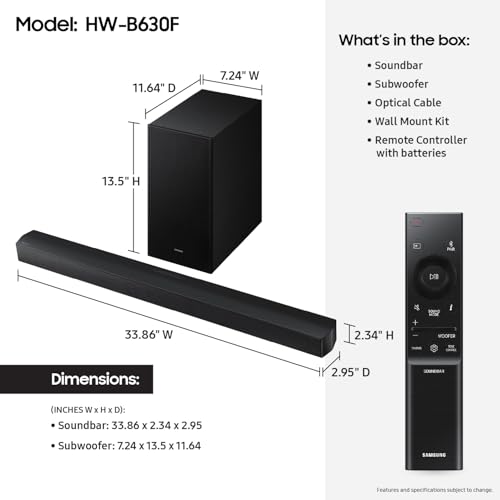
The Samsung HW-B630F requires placing two components: the soundbar itself and the wireless subwoofer. While the subwoofer connects wirelessly, you still need to find appropriate placement for both units. The subwoofer offers flexibility—you can place it across the room if needed—but it also means dedicating floor space and managing two power cables.
Setup complexity increases with more customization options. The Samsung offers multiple sound modes (Standard, Game, Surround Sound Expansion, Night Mode), plus independent level controls for the center channel, subwoofer, and tone adjustments. This flexibility is powerful but can overwhelm users who just want plug-and-play simplicity.
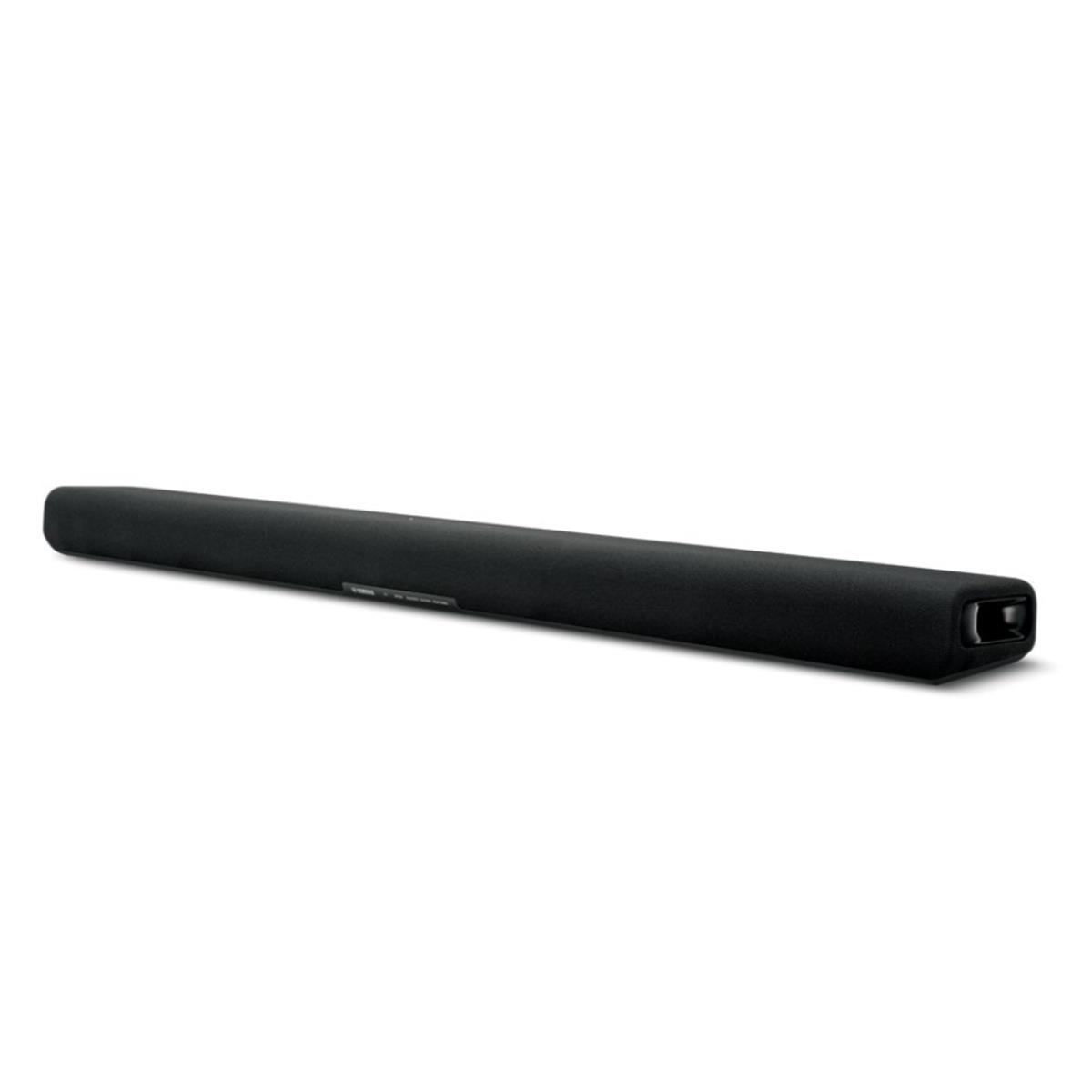
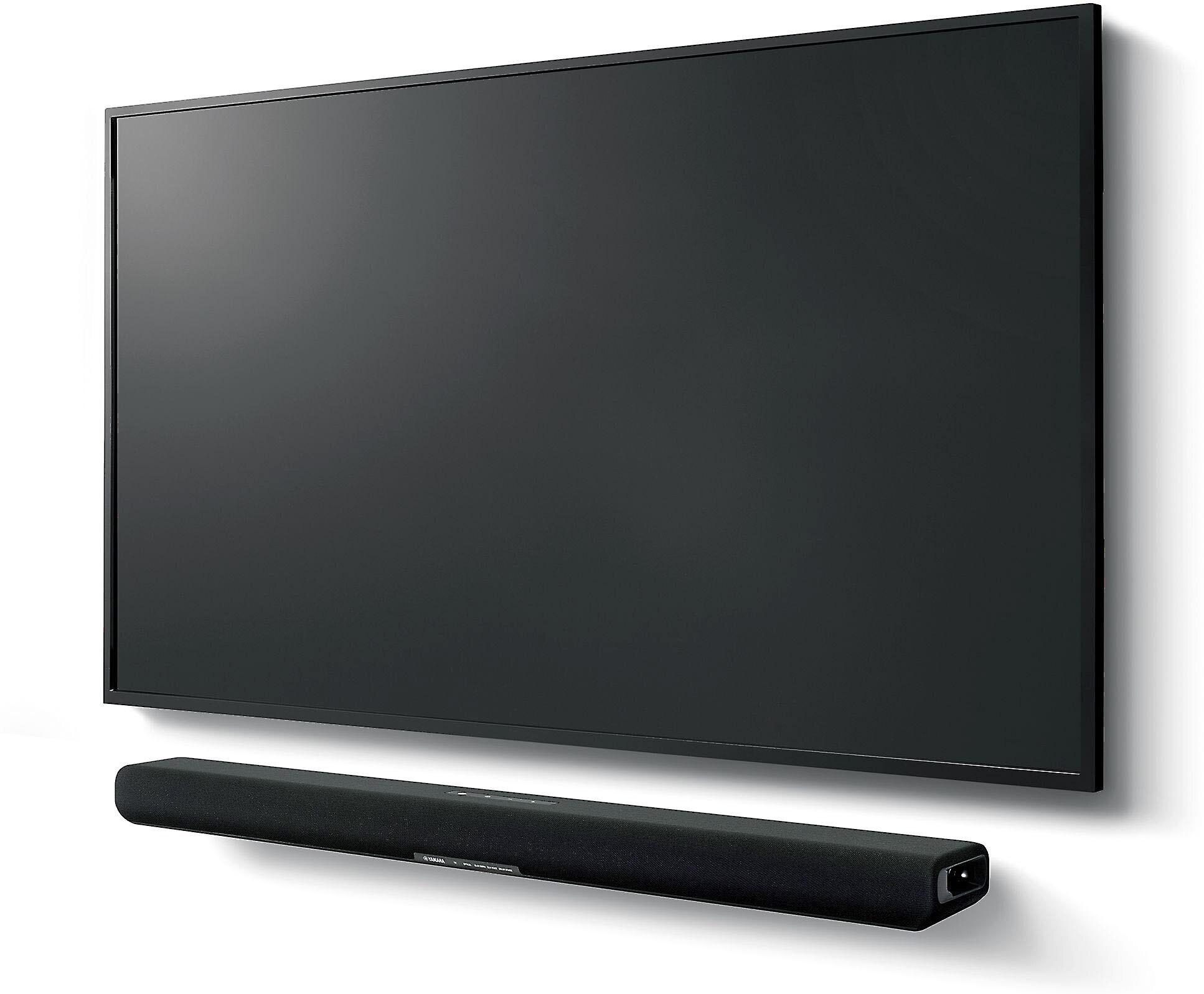
The Yamaha SR-B30A epitomizes the "keep it simple" philosophy. One unit, one power cable, minimal setup. Its ultra-slim profile (just 2.6 inches tall) means it won't block TV sensors or intrude visually. The built-in keyholes make wall mounting straightforward without additional brackets.
From user feedback we've analyzed, the Yamaha consistently receives praise for its setup simplicity, while the Samsung gets appreciation from users who want to fine-tune their audio experience. Your preference depends on whether you enjoy tweaking settings or just want immediate improvement.
For dedicated movie watching, the Samsung HW-B630F has clear advantages. The dedicated center channel ensures dialogue remains intelligible during complex action sequences, while the separate subwoofer provides the visceral impact that makes blockbusters exciting. Its DTS Virtual:X processing creates a more convincing surround experience, particularly noticeable during scenes with environmental effects like rain, helicopters, or crowd noise.
Gamers should strongly consider the Samsung for its dedicated Game Mode. The cross-talk cancellation and enhanced directional processing help with competitive gaming, where pinpointing enemy positions through audio cues can mean the difference between victory and defeat. The stronger bass also adds impact to explosions and environmental effects.
Both soundbars handle music reasonably well, though neither is primarily designed for critical music listening. The Samsung offers more customization through its tone controls and sound modes. The Yamaha provides cleaner, more controlled reproduction that many find less fatiguing for extended listening sessions.
The Yamaha SR-B30A shines in space-constrained environments. Its built-in subwoofers provide adequate bass without the room-shaking output that might upset neighbors. The single-unit design eliminates placement challenges in small rooms where finding space for a separate subwoofer can be problematic.
At the time of writing, both soundbars occupy similar price points in the entry-to-mid-range segment, making value comparison straightforward.
The Samsung HW-B630F offers more raw performance per dollar, particularly in bass output and dialogue clarity. Its expandability to a 5.1 system through optional wireless rear speakers provides a potential upgrade path. For Samsung TV owners, the ecosystem integration adds significant convenience value.
The Yamaha SR-B30A commands a slight premium for its innovative design and space-saving benefits. You're paying for convenience and aesthetic cleanliness rather than maximum performance. In smaller living situations, this convenience has genuine value that justifies the cost.
The soundbar market has evolved rapidly since both products launched. The Samsung HW-B630F, released as part of Samsung's 2025 B-Series lineup, represents the mature evolution of traditional soundbar design. Samsung has refined the wireless connectivity, processing algorithms, and integration features based on years of user feedback.
The Yamaha SR-B30A, launched in 2023, pioneered the built-in dual subwoofer approach that other manufacturers have since begun adopting. This design philosophy addresses real-world user concerns about space and complexity that traditional soundbars haven't solved.
Both approaches will likely coexist, serving different market segments. As TVs continue getting thinner and room layouts more constrained, space-efficient designs like Yamaha's will gain importance. Meanwhile, performance-focused users will continue appreciating the acoustic advantages of dedicated subwoofers.
After extensive research into user experiences and professional reviews, the choice between these soundbars comes down to your priorities and living situation.
Choose the Samsung HW-B630F if you want maximum audio performance from your investment. The dedicated center channel provides superior dialogue clarity that becomes increasingly important as streaming content gets more complex audio mixes. The separate subwoofer delivers genuine home theater impact that built-in solutions can't match. If you own a Samsung TV, the ecosystem integration makes this an easy recommendation. The expandability to 5.1 surround also provides a future upgrade path without starting over.
Choose the Yamaha SR-B30A if convenience and space efficiency outweigh maximum performance. Its single-unit design eliminates the compromises and complications of multi-component setups. The built-in subwoofers provide surprisingly effective bass for the form factor, and the controlled output won't overwhelm smaller spaces or disturb neighbors. If you value clean aesthetics and plug-and-play simplicity, this innovative approach delivers excellent results.
Both soundbars represent significant upgrades over TV speakers and will satisfy most users' needs for better audio. The Samsung appeals to audio enthusiasts and home theater fans who want traditional performance advantages. The Yamaha targets modern lifestyles where space, simplicity, and discretion matter more than maximum output.
Your decision ultimately depends on whether you prioritize performance (Samsung) or convenience (Yamaha). Either choice will transform your TV watching experience—they just do it in fundamentally different ways.
| Samsung HW-B630F B-Series 3.1ch Soundbar System | Yamaha SR-B30A Sound Bar with Built-In Subwoofers |
|---|---|
| Audio Configuration - Determines dialogue clarity and soundstage width | |
| True 3.1-channel with dedicated center speaker | 2.0-channel with virtual center imaging |
| Bass System - Affects room impact and placement flexibility | |
| Separate wireless 6" subwoofer (bass-reflex design) | Dual 3" built-in subwoofers with ported design |
| Physical Setup - Impacts room aesthetics and placement options | |
| Two-component system (soundbar + wireless sub) | Single all-in-one unit design |
| Dimensions - Critical for TV stand compatibility and visual impact | |
| Soundbar: 33.9" W × 2.3" H × 3.0" D, Sub: 7.2" × 13.5" × 11.6" | Single unit: 35.9" W × 2.6" H × 5.3" D |
| Audio Processing - Enhances immersion and spatial effects | |
| DTS Virtual:X, Adaptive Sound, Game Mode with cross-talk cancellation | Virtual Dolby Atmos, Clear Voice technology |
| HDMI Standard - Affects compatibility with high-resolution audio | |
| HDMI 1.4 ARC (no eARC support) | HDMI eARC (supports higher bandwidth audio) |
| Smart TV Integration - Simplifies daily use and remote control | |
| One Remote Control with Samsung TVs, HDMI-CEC | Basic HDMI-CEC, Yamaha Sound Bar Remote app |
| Bluetooth Features - Impacts multi-device connectivity | |
| Multi Connection (two devices simultaneously), Bluetooth 4.2 | Standard single connection, Bluetooth 5.1 |
| Sound Modes - Optimizes audio for different content types | |
| 7 modes: Standard, Adaptive Sound, Game, Surround Expansion, Bass Boost, Voice Enhance, Night | 4 modes: Stereo, Standard, Game, Movie |
| Expandability - Future upgrade potential | |
| Wireless Surround Kit compatible (upgrade to 5.1) | Fixed configuration (no expansion options) |
| Power Output - Affects maximum volume and dynamic range | |
| Higher total output (exact specs not disclosed) | 120W total (30W × 2 + 60W subwoofer) |
| Best For - Target user scenarios | |
| Samsung TV owners, larger rooms, maximum dialogue clarity | Small spaces, apartments, minimal setup complexity |
The Samsung HW-B630F B-Series 3.1ch Soundbar System is significantly better for dialogue clarity thanks to its dedicated center channel speaker. This physical center speaker is specifically tuned to handle voices and keeps dialogue anchored to the screen, even during complex movie scenes. The Yamaha SR-B30A Sound Bar with Built-In Subwoofers relies on virtual center imaging, which works adequately but can't match the precision of a dedicated center channel.
Only the Samsung HW-B630F requires space for a separate wireless subwoofer, which needs floor placement and its own power outlet. The Yamaha SR-B30A features dual built-in subwoofers integrated directly into the soundbar, making it a true all-in-one solution that requires no additional components or floor space.
The Samsung HW-B630F delivers more powerful bass with its dedicated 6-inch wireless subwoofer, providing room-shaking impact ideal for action movies and gaming. The Yamaha SR-B30A offers controlled, apartment-friendly bass from its dual 3-inch built-in subwoofers—adequate for most content but less impactful than a dedicated subwoofer system.
The Yamaha SR-B30A Sound Bar with Built-In Subwoofers is much easier to set up, requiring only one power cable and one HDMI connection. The Samsung HW-B630F requires placement of two components (soundbar and subwoofer) with separate power connections, though the subwoofer connects wirelessly to the main unit.
The Samsung HW-B630F B-Series 3.1ch Soundbar System offers superior integration with Samsung TVs through One Remote Control functionality, allowing you to control the soundbar using your Samsung TV remote. The Yamaha SR-B30A works with Samsung TVs but lacks this seamless ecosystem integration.
The Samsung HW-B630F is better for gaming with its dedicated Game Mode featuring cross-talk cancellation, which helps pinpoint directional audio cues like footsteps or gunfire. The stronger bass also adds more impact to gaming sound effects. The Yamaha SR-B30A has a basic game mode but lacks advanced gaming-specific audio processing.
The Yamaha SR-B30A Sound Bar with Built-In Subwoofers is ideal for small spaces with its compact all-in-one design and ultra-slim 2.6-inch height profile. The Samsung HW-B630F requires additional floor space for its wireless subwoofer, which can be challenging in apartments or small rooms.
The Samsung HW-B630F B-Series 3.1ch Soundbar System provides more audio customization with seven different sound modes, independent level controls for center channel and subwoofer, and detailed EQ adjustments. The Yamaha SR-B30A offers four sound modes and basic controls, focusing more on simplicity than extensive customization.
The Yamaha SR-B30A Sound Bar with Built-In Subwoofers supports higher quality audio through its HDMI eARC connection, which handles higher bandwidth audio formats. The Samsung HW-B630F uses older HDMI ARC technology, limiting it to compressed audio formats from your TV.
Only the Samsung HW-B630F B-Series 3.1ch Soundbar System can be expanded with optional wireless rear speakers to create a 5.1 surround system. The Yamaha SR-B30A has a fixed configuration with no expansion options available.
The Yamaha SR-B30A Sound Bar with Built-In Subwoofers is better for apartments due to its controlled bass output that won't disturb neighbors, single-unit design, and compact footprint. The Samsung HW-B630F produces more powerful bass that might be too intense for thin apartment walls.
Both soundbars offer good value in different ways. The Samsung HW-B630F provides better audio performance per dollar with superior dialogue clarity and bass impact. The Yamaha SR-B30A offers convenience value with its space-saving design and setup simplicity, making it worth the premium for users prioritizing ease of use over maximum performance.
We've done our best to create useful and informative comparisons to help you decide what product to buy. Our research uses advanced automated methods to create this comparison and perfection is not possible - please contact us for corrections or questions. These are the sites we've researched in the creation of this article: samsung.com - bhphotovideo.com - crutchfield.com - youtube.com - bestproducts.com - videoandaudiocenter.com - pcrichard.com - bhphotovideo.com - samsung.com - youtube.com - requiremints.com - karlsonline.com - crutchfield.com - youtube.com - donstv.com - samsung.com - bhphotovideo.com - youtube.com - youtube.com - crutchfield.com - costco.ca - rtings.com - crutchfield.com - accio.com - bhphotovideo.com - manuals.plus - samsung.com - saraappliance.com - usa.yamaha.com - worldwidestereo.com - audiolab.com - shop.sg.yamaha.com - consumerreports.org - usa.yamaha.com - vinylsound.ca - bestbuy.com - modernappliancewoodward.com - bluestardist.com - target.com - my.yamaha.com

Privacy Policy
Terms and Conditions - Affiliate Policy
Home Security
© Copyright 2008-2026.
11816 Inwood Rd #1211, Dallas, TX 75244