

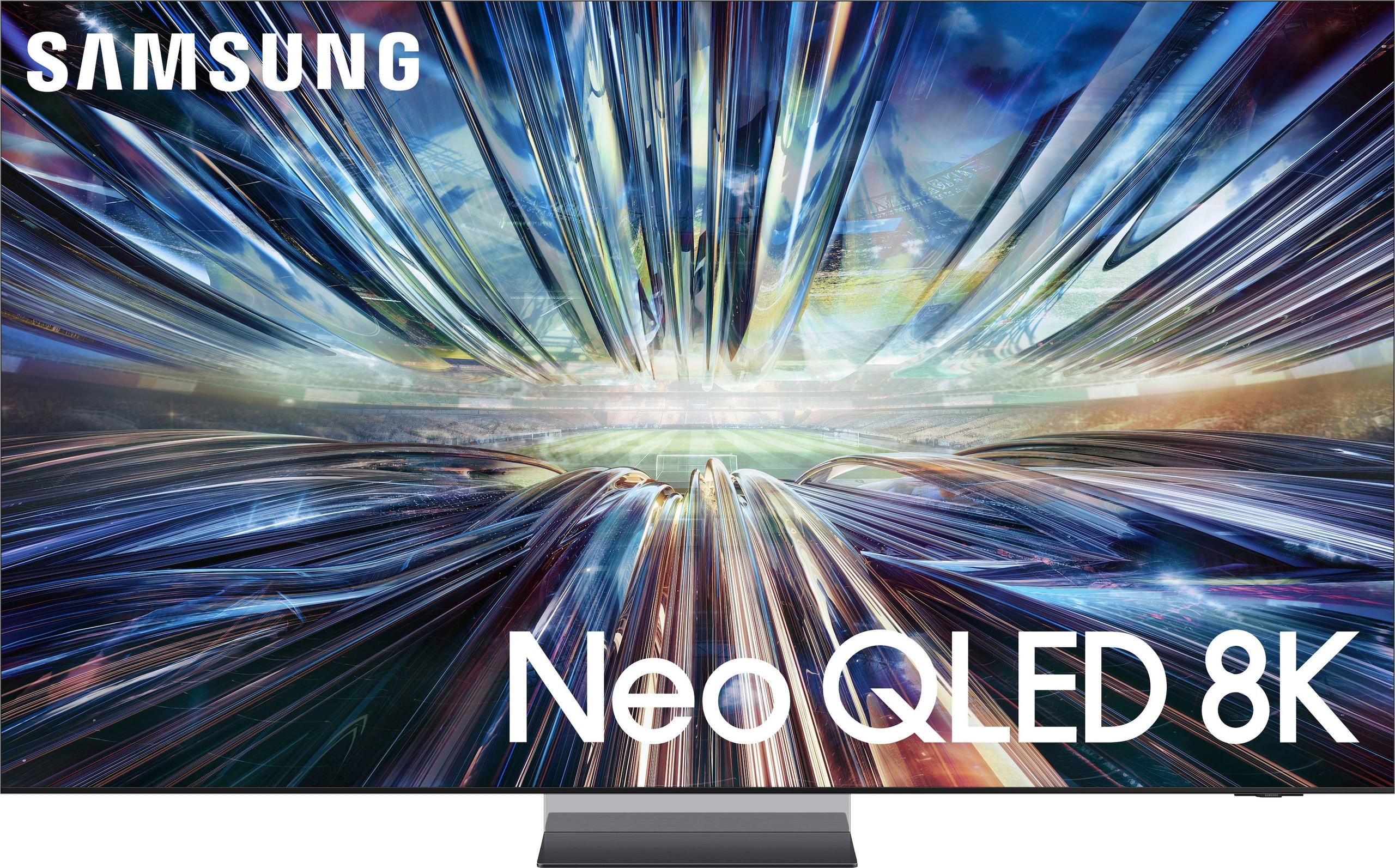
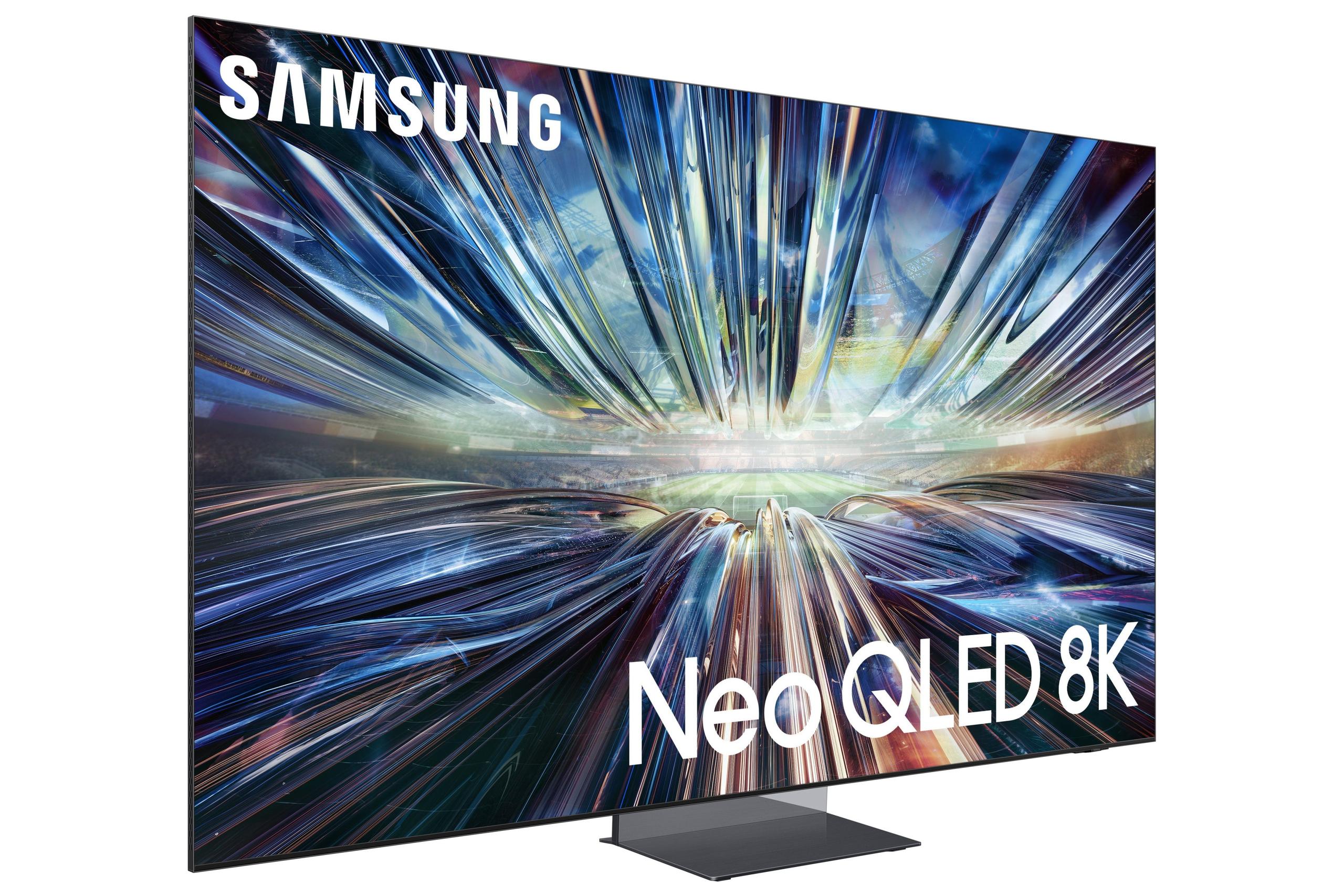
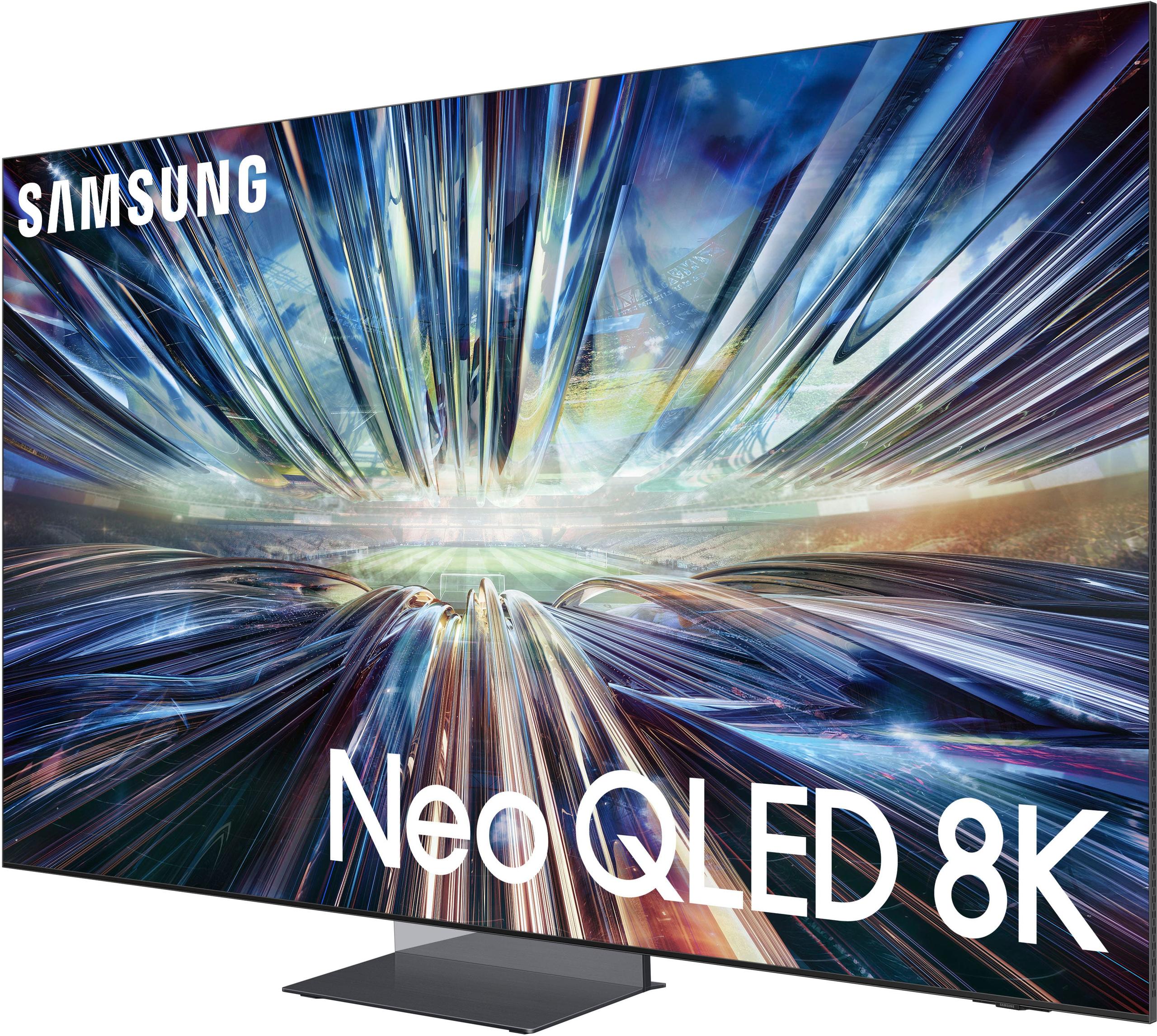
When shopping for a new TV, Samsung offers options across every price range, but few comparisons highlight the dramatic differences between budget and premium models quite like the Samsung 65-Inch Crystal UHD U8000F and the Samsung QN900D Series 65" Neo QLED 8K Smart TV. These two TVs represent opposite ends of Samsung's lineup, and understanding their differences helps illustrate what you're actually paying for when you move up the TV food chain.
The modern TV landscape has become incredibly complex. At its core, every TV needs to handle three main jobs: display a great picture, provide smart features for streaming, and offer good value for your money. But how manufacturers achieve these goals varies wildly between budget and premium models.
The most important performance metrics to consider are brightness (measured in nits), contrast ratio (how deep blacks can get compared to bright whites), color accuracy, motion handling, and input lag for gaming. These technical specifications directly translate to real-world viewing experiences – a TV with poor contrast makes dark movie scenes look gray and washed out, while low brightness means you can't enjoy HDR content properly.
Samsung released the U8000F in 2025 as their entry-level offering, replacing the discontinued CU7000 series. This timing is significant because it shows Samsung's continued commitment to the budget market, even as they push premium features in their higher-end models.
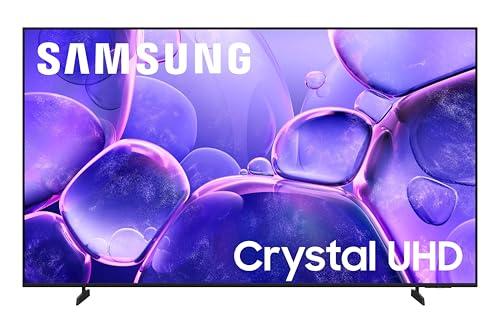
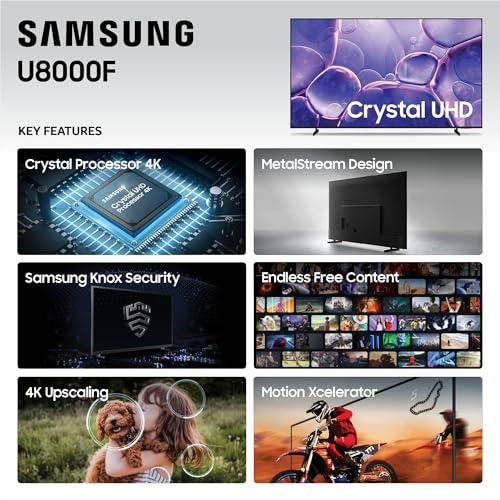
The U8000F uses what Samsung calls Crystal UHD technology – essentially a standard LCD panel with LED backlighting and a basic processor. The "Crystal" name refers to Samsung's color enhancement processing, but don't let marketing terms fool you. This TV lacks quantum dots (microscopic particles that dramatically improve color reproduction) and has zero local dimming zones.
Local dimming is crucial to understand here. Imagine trying to light a large room with just one ceiling light versus having individual lamps you can control in different areas. TVs without local dimming are like that single ceiling light – they can't make one part of the screen darker while keeping another part bright. This severely limits contrast, making dark scenes in movies look gray rather than truly black.
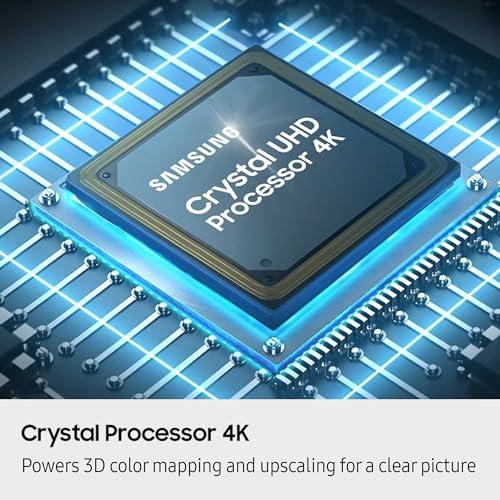
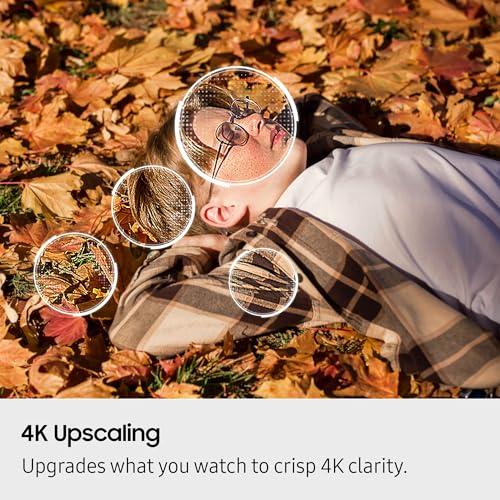
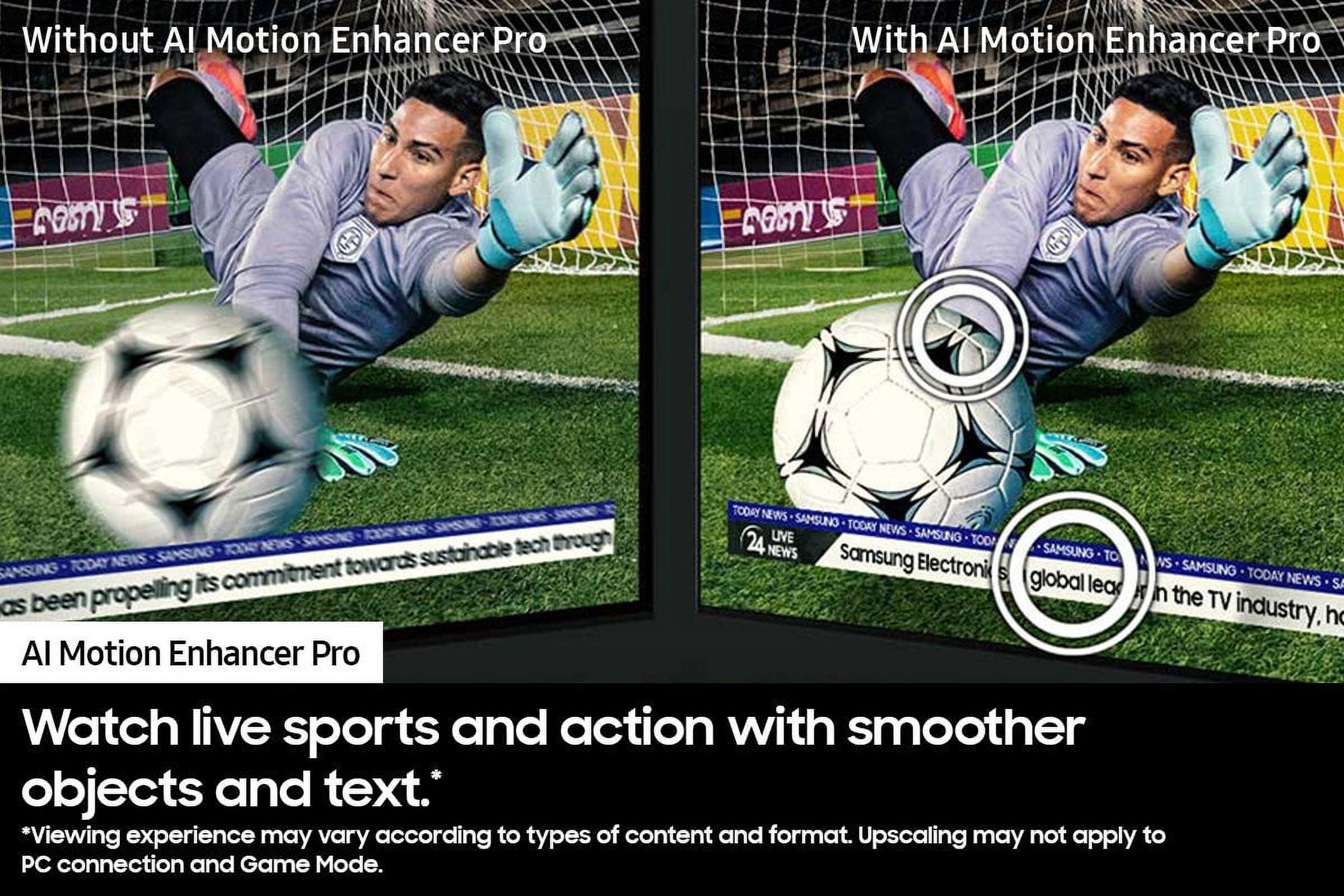
The processing power in the U8000F handles basic 4K upscaling reasonably well for standard content, but it's essentially a one-trick pony. The Crystal Processor 4K can take lower-resolution content and make it look sharper on the 4K screen, but it doesn't have the computational power for advanced features like AI-enhanced motion or automatic HDR conversion.
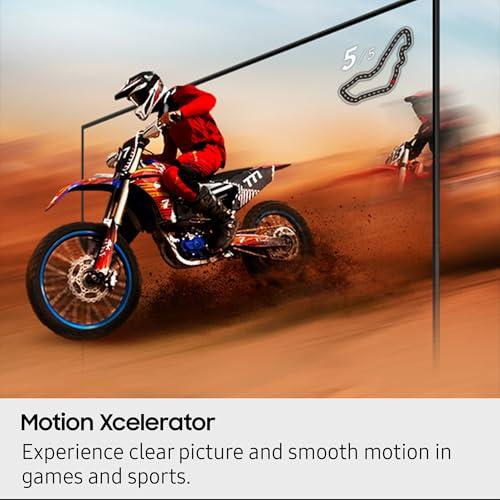
For gaming, the U8000F supports a 60Hz refresh rate, which means it can display 60 frames per second. While this meets the minimum for modern gaming, it's becoming increasingly limiting as new consoles and PC games push higher frame rates for smoother motion.
The QN900D launched in 2024 as Samsung's flagship 8K model, representing the pinnacle of their display technology. The timing here matters too – 2024 marked significant advances in AI processing and Mini LED technology, which Samsung has packed into this model.
This TV uses Neo QLED technology, which combines quantum dots with Mini LED backlighting. Mini LEDs are incredibly small – about 1/40th the size of traditional LEDs – allowing thousands more to fit behind the screen. This enables precise local dimming with hundreds of individual zones that can brighten or dim independently.
The quantum dot layer adds another performance boost. These microscopic crystals, when hit by the LED backlight, produce incredibly pure colors across a much wider spectrum than traditional TVs. The result is colors that actually match what directors intended, rather than the somewhat muted tones you get from budget displays.
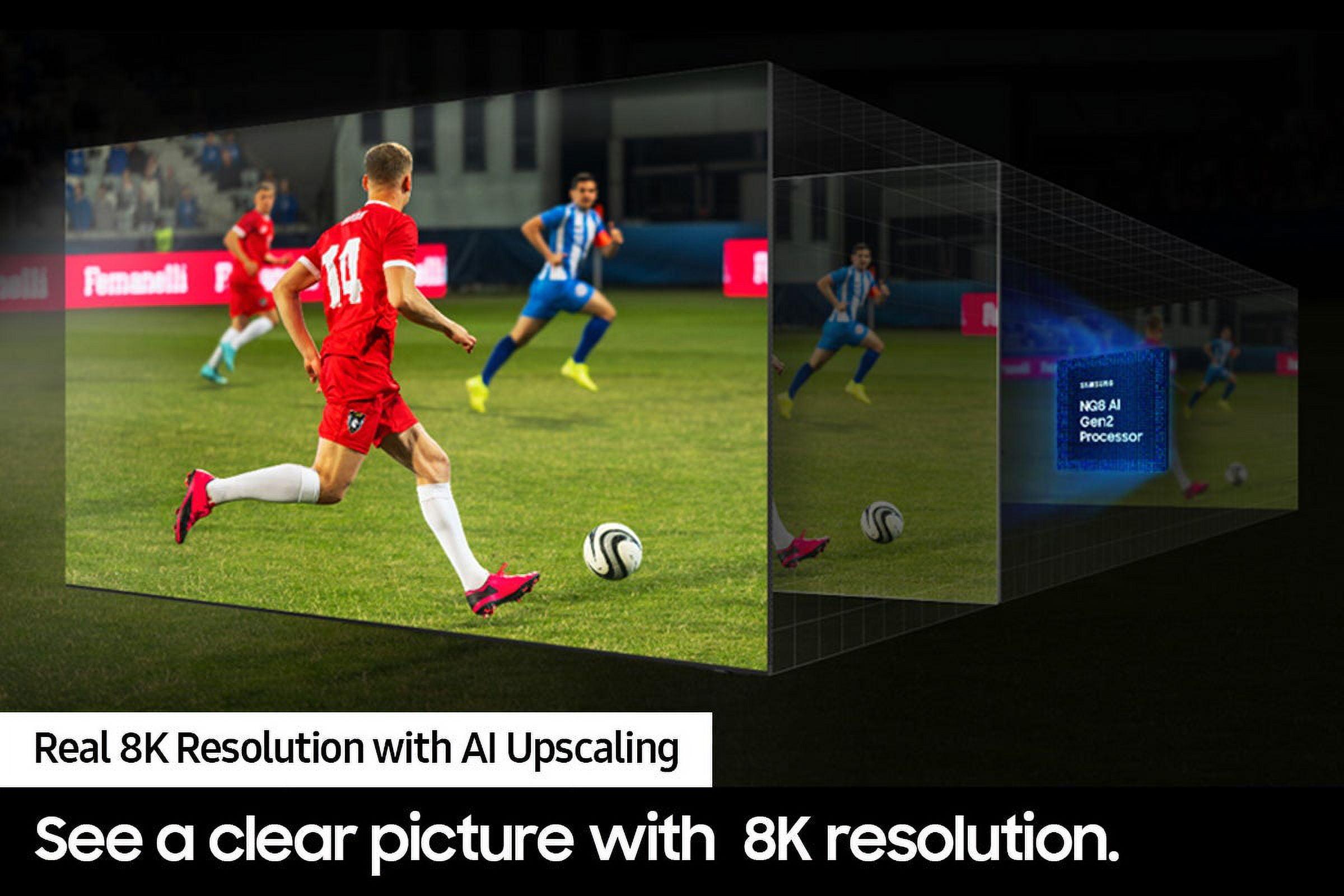
But the real star of the QN900D is the NQ8 AI Gen3 Processor. This isn't marketing fluff – it's a genuinely powerful chip with 512 neural networks that can analyze content in real-time. It identifies objects, enhances textures, reduces noise, and even converts standard dynamic range content to look more like HDR. The processor is reportedly twice as fast as Samsung's 4K TV processors, and that performance difference is noticeable when switching between sources or navigating menus.
For 8K resolution, we're talking about 33 million pixels compared to the U8000F's 8 million. While native 8K content remains rare, the AI upscaling genuinely transforms 4K and even 1080p content into something that approaches 8K quality. Based on our research into user experiences, this upscaling is surprisingly effective and represents a meaningful viewing improvement over standard 4K displays.
The picture quality differences between these models are staggering. The U8000F produces adequate images for casual viewing, but it struggles with the basics that make modern content shine.
Brightness is the most obvious limitation. While Samsung doesn't publish exact figures, the U8000F appears to peak around 300-400 nits based on user reports and expert measurements. To put this in perspective, a sunny day produces about 100,000 nits, while indoor lighting typically ranges from 100-500 nits. For HDR content to look impactful, you need at least 600-1000 nits, with premium displays reaching much higher.
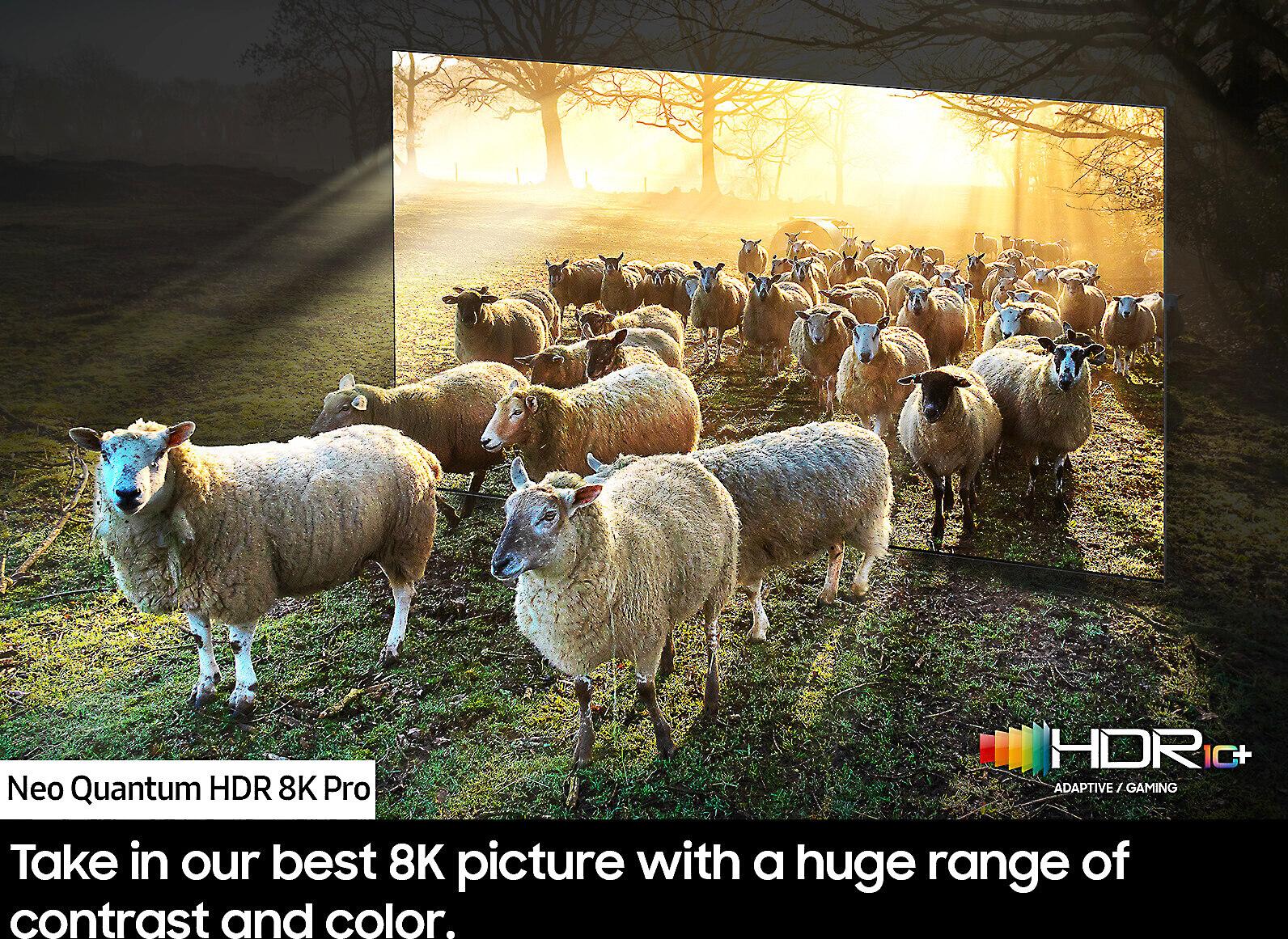
The QN900D reportedly exceeds 2,300 nits peak brightness, placing it among the brightest consumer TVs available. This isn't just about showing off – that extra brightness means HDR highlights actually pop. When a lightsaber ignites in Star Wars or sunlight streams through a window in a nature documentary, you see the dramatic difference that proper brightness makes.
Contrast tells a similar story. The U8000F without local dimming might achieve a 3000:1 contrast ratio in ideal conditions. The QN900D with its advanced local dimming can approach 1,000,000:1 in the best sections of the screen. This translates to truly black space scenes and shadow details you simply cannot see on budget displays.
Color performance also diverges dramatically. The U8000F covers perhaps 70-80% of the DCI-P3 color space (the standard for modern content), while the QN900D likely exceeds 95% coverage with better accuracy. Colors look more saturated, natural skin tones appear correct, and the overall image has a richness that budget TVs cannot match.
Gaming highlights another massive performance gap. The U8000F supports basic gaming with reasonable input lag (the delay between pressing a controller button and seeing the action on screen), but its 60Hz refresh rate feels increasingly dated.
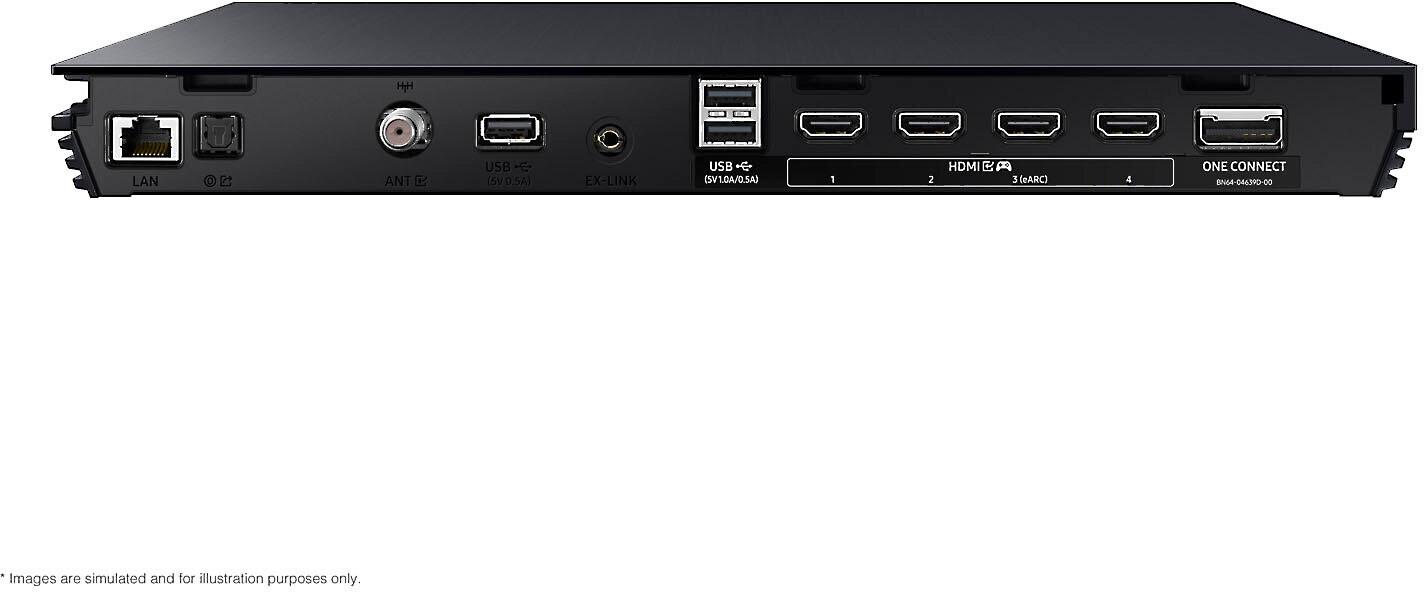
Modern gaming benefits enormously from higher refresh rates. The QN900D supports 4K gaming at up to 240Hz and 8K at 60Hz across all four HDMI ports. This means incredibly smooth motion in fast-paced games, reduced screen tearing, and support for Variable Refresh Rate (VRR) technology that synchronizes the display with your gaming system's output.
Input lag measurements show the QN900D achieving around 5.1ms in game mode – essentially imperceptible delay that competitive gamers demand. The U8000F manages acceptable but not exceptional input lag, suitable for casual gaming but not ideal for competitive play.
For anyone building a home theater around gaming, the QN900D provides a future-proof foundation that will handle whatever new consoles and graphics cards throw at it.
Both TVs run Samsung's Tizen operating system, but the experience differs significantly due to processing power. The U8000F handles basic streaming apps adequately, though you might notice occasional stuttering when navigating complex menus or switching between apps quickly.
The QN900D's more powerful processor makes every interaction feel snappier. Apps load faster, 4K streaming starts more quickly, and the overall experience feels more refined. The advanced processor also enables features like automatic content recognition and optimization that simply aren't possible with weaker hardware.
Voice control works on both models, but the QN900D responds more quickly and accurately to commands. This might seem minor, but daily usability differences accumulate over years of ownership.
TV audio often gets overlooked, but the differences here matter for daily enjoyment. The U8000F includes basic 20-watt speakers with Samsung's Object Tracking Sound Lite, which creates some directional audio effects but lacks power and depth.
The QN900D features a 90-watt, 6.2.4-channel speaker system with True Dolby Atmos support. This creates genuine surround sound effects with audio that appears to come from above and around you. While dedicated soundbars still outperform TV speakers, the QN900D's audio is actually usable for movies and shows without additional equipment.
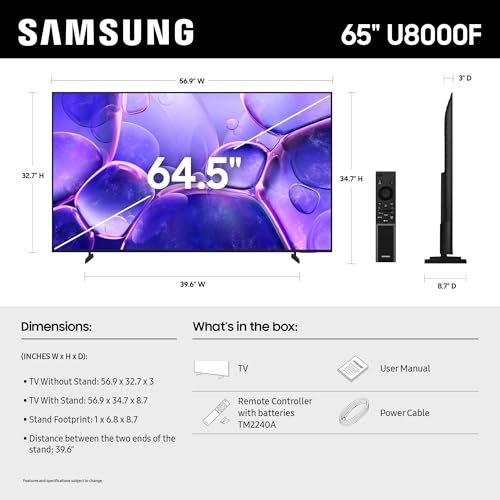
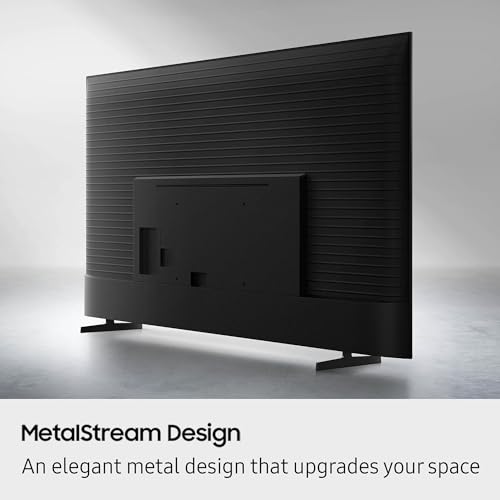
The U8000F looks fine – Samsung has improved their budget TV aesthetics with the MetalStream Design that's less obviously cheap than previous generations. But it's still clearly a budget product with thicker bezels and basic construction.
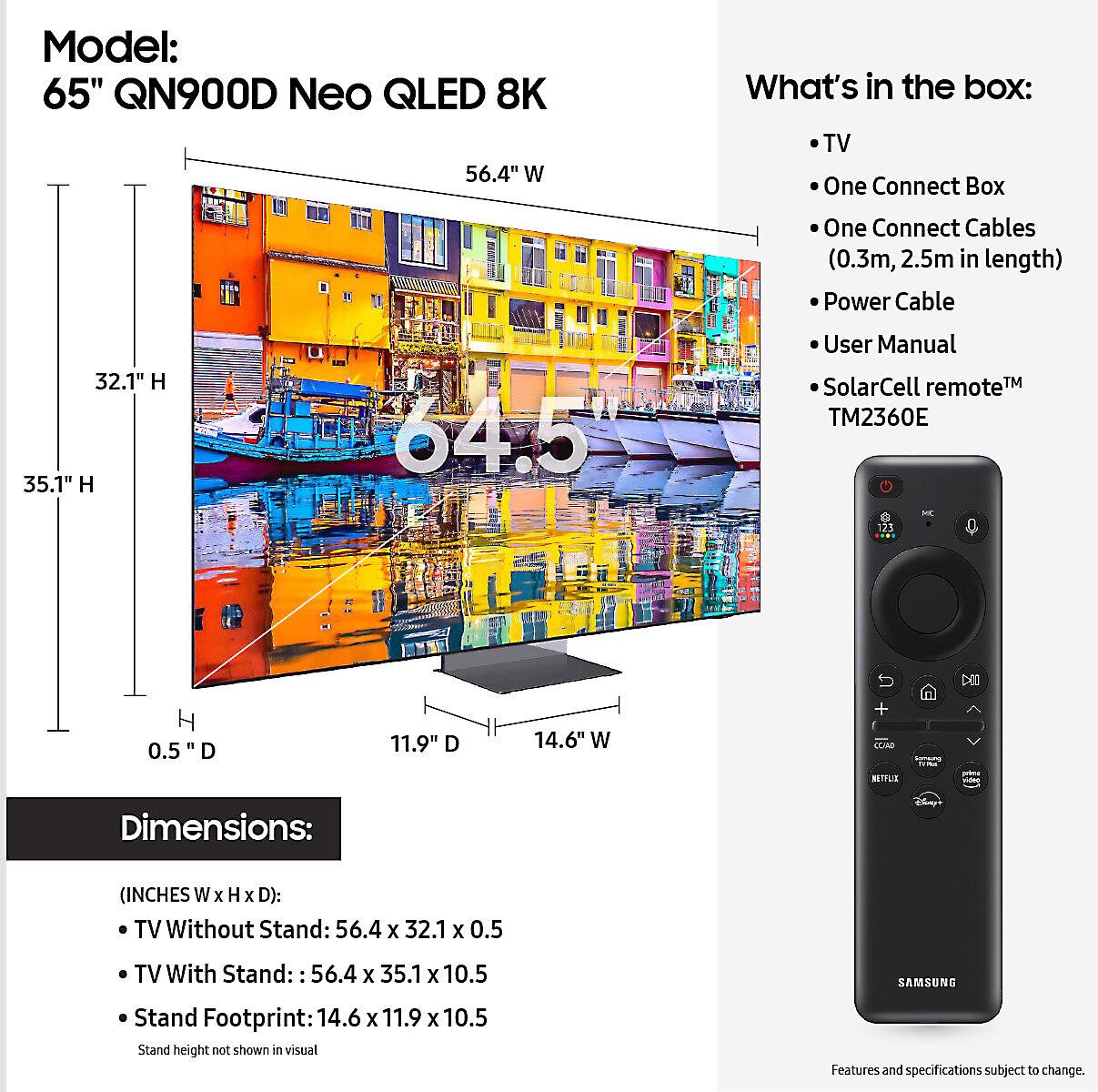
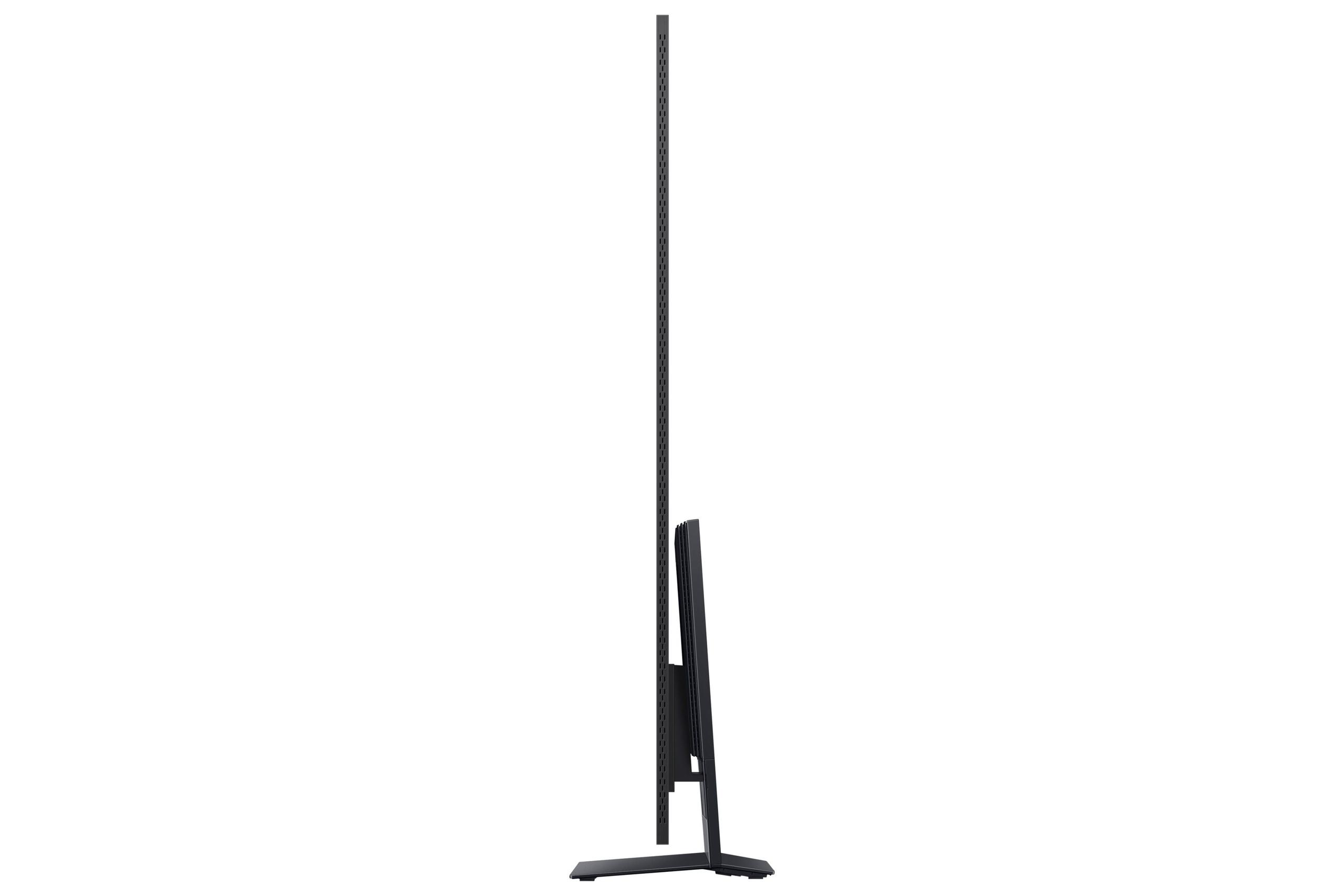
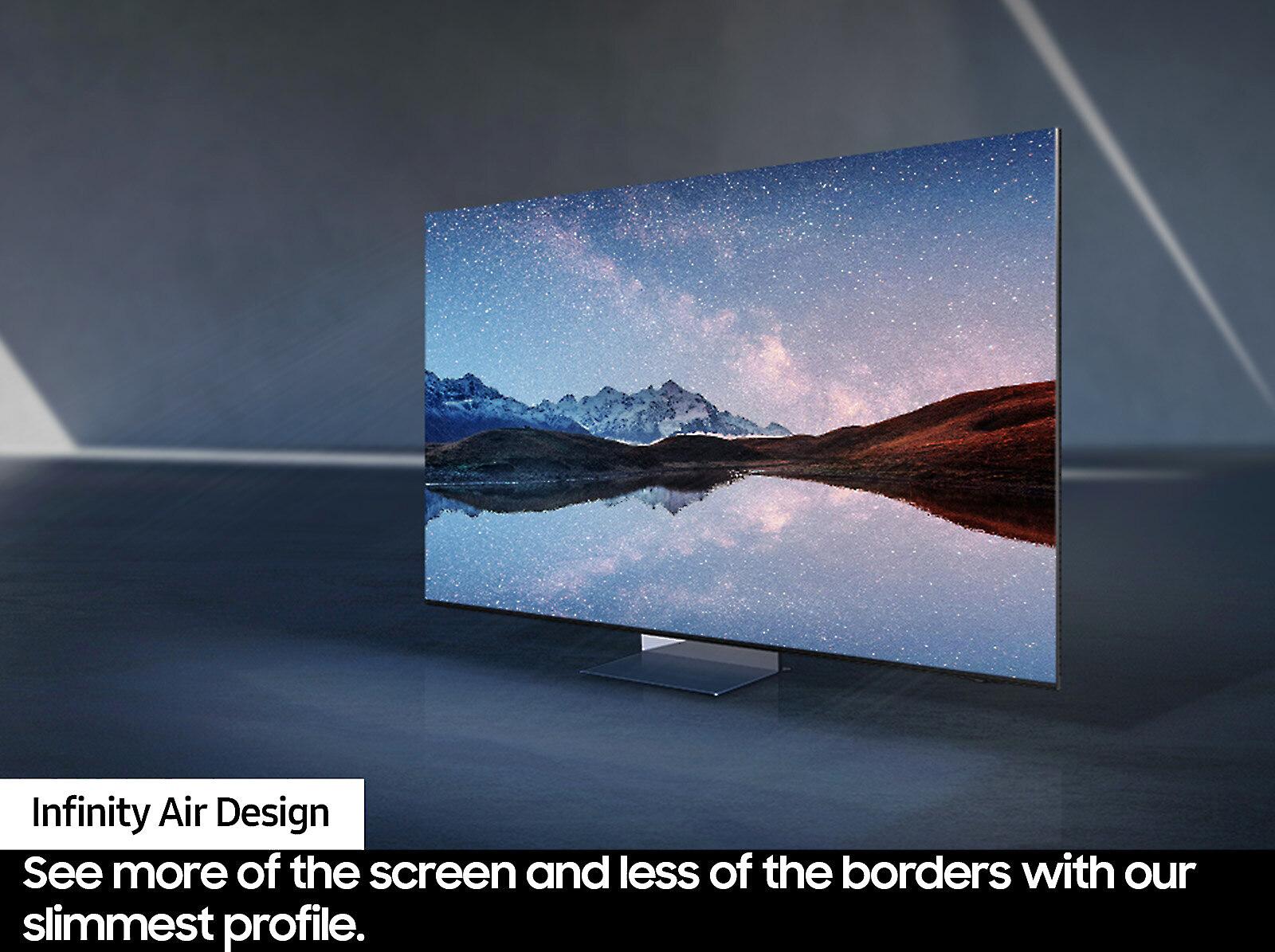
The QN900D showcases Samsung's Infinity Air Design with an almost impossibly thin profile (12.9mm) and nearly invisible bezels that make the screen appear to float. The One Connect Box external hub keeps all cables organized and hidden, creating a clean, premium appearance that justifies its flagship positioning.
At the time of writing, the U8000F represents Samsung's entry-level pricing tier, while the QN900D sits firmly in premium territory, often costing three to four times as much. The question becomes whether that performance difference justifies the price premium.
For the U8000F, the value proposition is questionable even within the budget segment. Competitors like TCL, Hisense, and Roku often provide better picture quality features like quantum dots or basic local dimming at similar price points. The Samsung brand name and Tizen interface are the main differentiators here.
The QN900D offers exceptional value within the premium TV market, delivering flagship performance with genuine 8K capability and advanced gaming features. While expensive, it provides technology that will remain relevant for many years.
For dedicated home theater use, these TVs serve completely different purposes. The U8000F works fine for casual movie watching in well-lit rooms with standard HD or 4K content, but it cannot deliver the dramatic impact that makes home theater compelling.
The QN900D excels in home theater applications. Its exceptional brightness works in any lighting condition, the advanced processing enhances all content types, and the premium audio eliminates the immediate need for external speakers. For movie enthusiasts, this TV can genuinely rival commercial cinema experiences.
Choose the Samsung U8000F if you need a functional smart TV for basic viewing, your budget is extremely limited, and picture quality isn't a priority. It's adequate for bedrooms, kitchens, or secondary viewing areas where you primarily watch standard content and don't need premium features.
However, even within budget constraints, consider alternatives from other manufacturers that offer better picture quality features at similar prices. The Samsung brand and Tizen interface are nice, but not worth sacrificing significant picture quality.
Choose the Samsung QN900D if you want premium picture quality, plan to use the TV for gaming, have a bright room requiring exceptional brightness, or want future-proof 8K capability. This TV justifies its premium pricing with genuinely advanced technology that enhances any content type.
The performance gap between these models is so substantial that they really serve different markets entirely. If the U8000F fits your budget but picture quality matters, consider Samsung's mid-range QLED models or competitor options with local dimming. If the QN900D exceeds your needs, Samsung's 4K Neo QLED series provides excellent performance at lower cost.
The choice ultimately depends on how much TV performance matters to your daily enjoyment and whether you're building a display that needs to remain impressive for years to come.
| Samsung 65-Inch Crystal UHD U8000F | Samsung QN900D Series 65" Neo QLED 8K Smart TV |
|---|---|
| Resolution - Higher resolution provides sharper detail, but content availability matters | |
| 4K (3840 x 2160) - Standard for all current content | 8K (7680 x 4320) - Future-proof with AI upscaling for all content |
| Display Technology - Determines contrast, color quality, and overall picture performance | |
| Standard LCD with LED backlight, no quantum dots | Neo QLED with Mini LED backlight and quantum dots |
| Local Dimming - Critical for deep blacks and realistic contrast in dark scenes | |
| None - entire screen brightness controlled together | Quantum Matrix Technology Pro with hundreds of dimming zones |
| Peak Brightness - Essential for HDR impact and bright room viewing | |
| Very low (~300-400 nits) - HDR barely visible | Exceptional (2300+ nits) - stunning HDR and anti-glare |
| Processor - Affects interface speed, upscaling quality, and smart features | |
| Basic Crystal Processor 4K | Advanced NQ8 AI Gen3 with 512 neural networks |
| Gaming Performance - Refresh rate and input lag determine gaming quality | |
| 60Hz refresh rate, basic VRR support | 4K@240Hz, 8K@60Hz, 5.1ms input lag, full VRR |
| Audio System - Built-in sound quality affects need for external speakers | |
| 20W 2-channel speakers with OTS Lite | 90W 6.2.4CH with True Dolby Atmos and Object Tracking Sound |
| HDMI Connectivity - More ports and newer standards support more devices | |
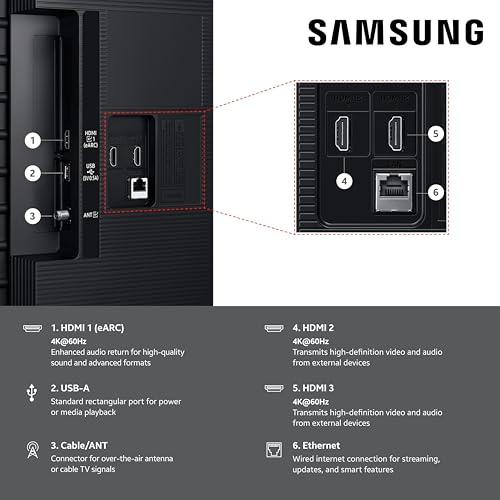
| 3 HDMI 2.0 ports, limited bandwidth | 4 HDMI 2.1 ports via One Connect Box, full bandwidth |
| Design Quality - Build materials and aesthetics affect long-term satisfaction | |
| Standard budget construction with MetalStream improvements | Premium Infinity Air Design with 12.9mm ultra-slim profile |
| Smart TV Features - Processing power enables advanced AI and interface smoothness | |
| Basic Tizen OS, adequate streaming performance | Advanced Tizen with AI optimization, faster app loading |
| Best For - Target user and primary use cases | |
| Casual viewing, extremely budget-conscious buyers | Premium home theater, gaming enthusiasts, bright rooms |
| Value Consideration - Performance per dollar at time of writing | |
| Entry-level pricing but competitors offer better features | Premium pricing justified by flagship technology and future-proofing |
The Samsung U8000F is an entry-level 4K TV with basic LCD technology, while the Samsung QN900D is a premium 8K TV with advanced Neo QLED Mini LED technology. The QN900D offers dramatically better brightness, contrast, and color quality thanks to quantum dots and local dimming zones that the U8000F lacks entirely.
The Samsung QN900D is significantly better for bright rooms, achieving over 2,300 nits peak brightness with anti-reflection coating. The Samsung U8000F has very low brightness and poor reflection handling, making it difficult to see clearly in well-lit environments.
The Samsung QN900D is excellent for gaming with 4K@240Hz support, 8K@60Hz capability, and extremely low 5.1ms input lag across all HDMI 2.1 ports. The Samsung U8000F is limited to 60Hz refresh rate and basic gaming features, making it adequate only for casual gaming.
The Samsung QN900D delivers vastly superior movie picture quality with its Mini LED local dimming, quantum dot colors, and HDR brightness that makes dark scenes truly black and bright scenes impactful. The U8000F lacks local dimming and sufficient brightness for proper HDR, resulting in washed-out dark scenes.
While 4K content dominates today's streaming services, the Samsung QN900D's 8K resolution combined with AI upscaling noticeably improves all content types. The Samsung U8000F offers standard 4K that meets current needs but won't benefit from future 8K adoption.
The Samsung U8000F offers basic functionality at entry-level pricing but competitors often provide better features for similar cost. The Samsung QN900D provides exceptional value within the premium segment, delivering flagship performance that justifies its higher investment.
Both TVs run Samsung's Tizen OS, but the Samsung QN900D offers much faster performance thanks to its advanced NQ8 AI Gen3 processor. The Samsung U8000F handles basic streaming adequately but may experience slower app loading and menu navigation.
The Samsung QN900D excels in home theater applications with its exceptional brightness for any lighting condition, advanced local dimming for cinematic contrast, and premium 90W Dolby Atmos audio system. The Samsung U8000F works for casual viewing but cannot deliver the dramatic impact expected from dedicated home theater setups.
The Samsung QN900D features a powerful 90W 6.2.4-channel speaker system with True Dolby Atmos and Object Tracking Sound for immersive audio. The Samsung U8000F has basic 20W speakers that lack depth and require external audio equipment for satisfying movie experiences.
The Samsung QN900D provides four HDMI 2.1 ports through its One Connect Box, supporting full bandwidth for multiple gaming consoles and streaming devices. The Samsung U8000F has three HDMI 2.0 ports with limited bandwidth that may restrict future device compatibility.
The Samsung QN900D offers better longevity with 8K future-proofing, advanced processing that will handle evolving content standards, and premium build quality. The Samsung U8000F meets current basic needs but has limited upgrade potential as display technology advances.
Choose the Samsung U8000F only if budget is extremely limited and picture quality isn't important for your viewing habits. Most buyers should consider the Samsung QN900D or Samsung's mid-range QLED models that offer better long-term satisfaction and performance that justifies the investment.
We've done our best to create useful and informative comparisons to help you decide what product to buy. Our research uses advanced automated methods to create this comparison and perfection is not possible - please contact us for corrections or questions. These are the sites we've researched in the creation of this article: bestbuy.com - youtube.com - youtube.com - rtings.com - youtube.com - samsung.com - hometechnologyreview.com - rtings.com - samsung.com - displayspecifications.com - samsung.com - displayspecifications.com - walmart.com - billsmith.com - dentonstv.com - samsung.com - samsung.com - samsung.com - youtube.com - bestbuy.com - bestbuy.com - youtube.com - samsung.com - donstv.com - rtings.com - videoandaudiocenter.com - bestbuy.com - avsforum.com - bestbuy.com - walts.com - images.samsung.com - samsung.com - merlinstv.com - samsung.com - avsforum.com - samsung.com

Privacy Policy
Terms and Conditions - Affiliate Policy
Home Security
© Copyright 2008-2026.
11816 Inwood Rd #1211, Dallas, TX 75244