

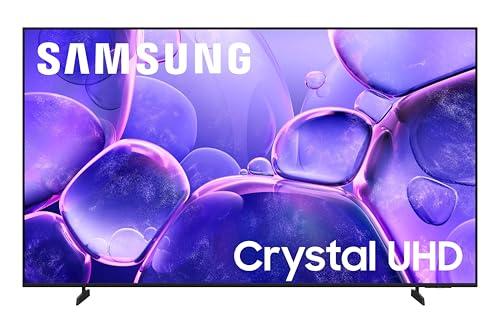
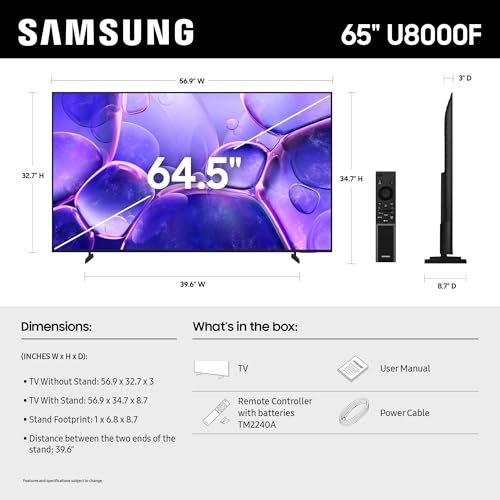
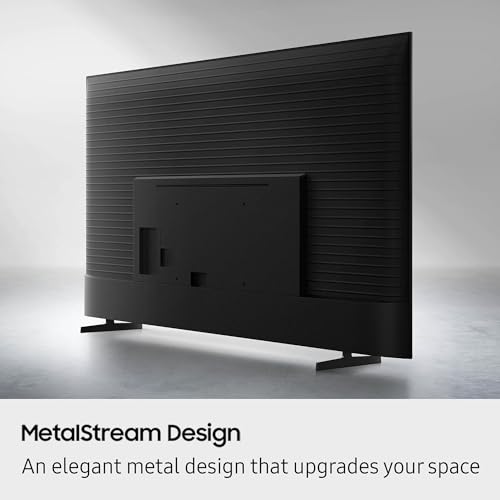

Shopping for a 65-inch 4K TV can feel overwhelming, especially when you're comparing options from different price tiers. The Samsung 65-Inch Crystal UHD U8000F and Sony BRAVIA 7 represent two distinct approaches to delivering 4K entertainment – one prioritizing affordability with solid performance, the other pushing picture quality boundaries at a premium price point.
Both TVs were released in the mid-2020s during a period of rapid advancement in display technology. The Samsung U8000F emerged in 2025 as Samsung's response to growing demand for affordable large-screen TVs with smart features, while the Sony BRAVIA 7 launched in 2024 as part of Sony's push to make Mini LED technology more accessible to mainstream buyers.
Before diving into specifics, let's establish what separates good TVs from great ones. The most critical factors are picture quality (how bright, colorful, and detailed the image appears), smart platform experience (how easy it is to find and stream content), gaming performance (input lag and refresh rates), and overall value (what you get for your money).
Picture quality depends heavily on three technical elements: peak brightness (measured in nits – think of it as how bright the TV can get), contrast ratio (the difference between the darkest blacks and brightest whites), and color accuracy (how realistic colors appear). These specs determine whether you'll see detail in dark movie scenes or if HDR content will actually look impressive.
Gaming has become increasingly important as modern consoles push 4K at 120 frames per second. Input lag (the delay between pressing a button and seeing the result) and refresh rate (how many times per second the screen updates) directly impact your gaming experience, especially in competitive titles.
The fundamental difference between the Samsung U8000F and Sony BRAVIA 7 lies in their display technology – and this impacts everything else about their performance.
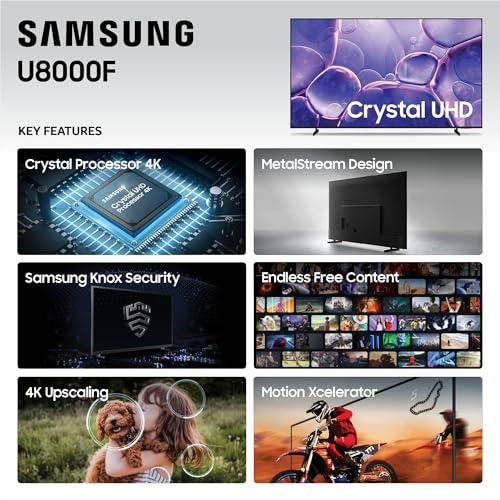
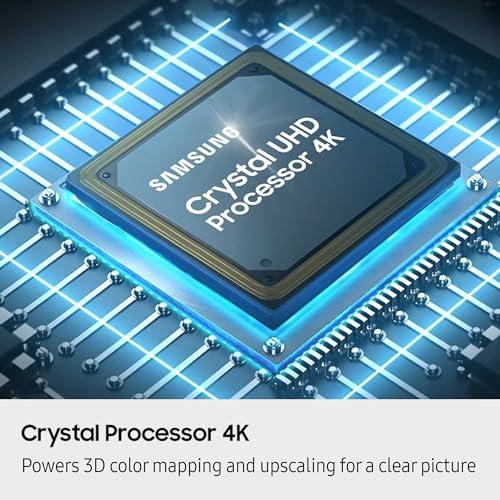
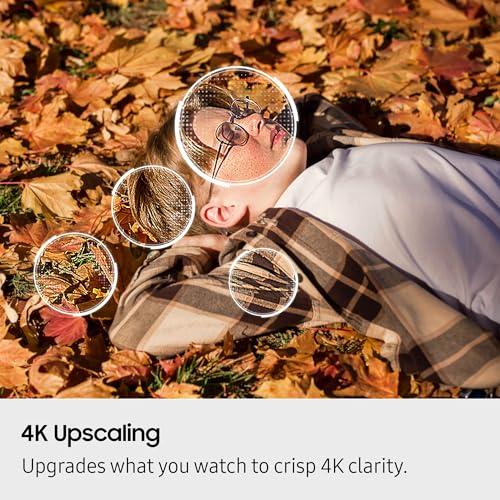
The Samsung U8000F uses traditional LED backlighting, where a grid of LEDs behind the screen illuminates the entire display. Samsung's Crystal Processor 4K handles the heavy lifting, using algorithms to upscale lower-resolution content and enhance colors through what they call "3D color mapping" – essentially analyzing each scene to make colors more vibrant and natural-looking.
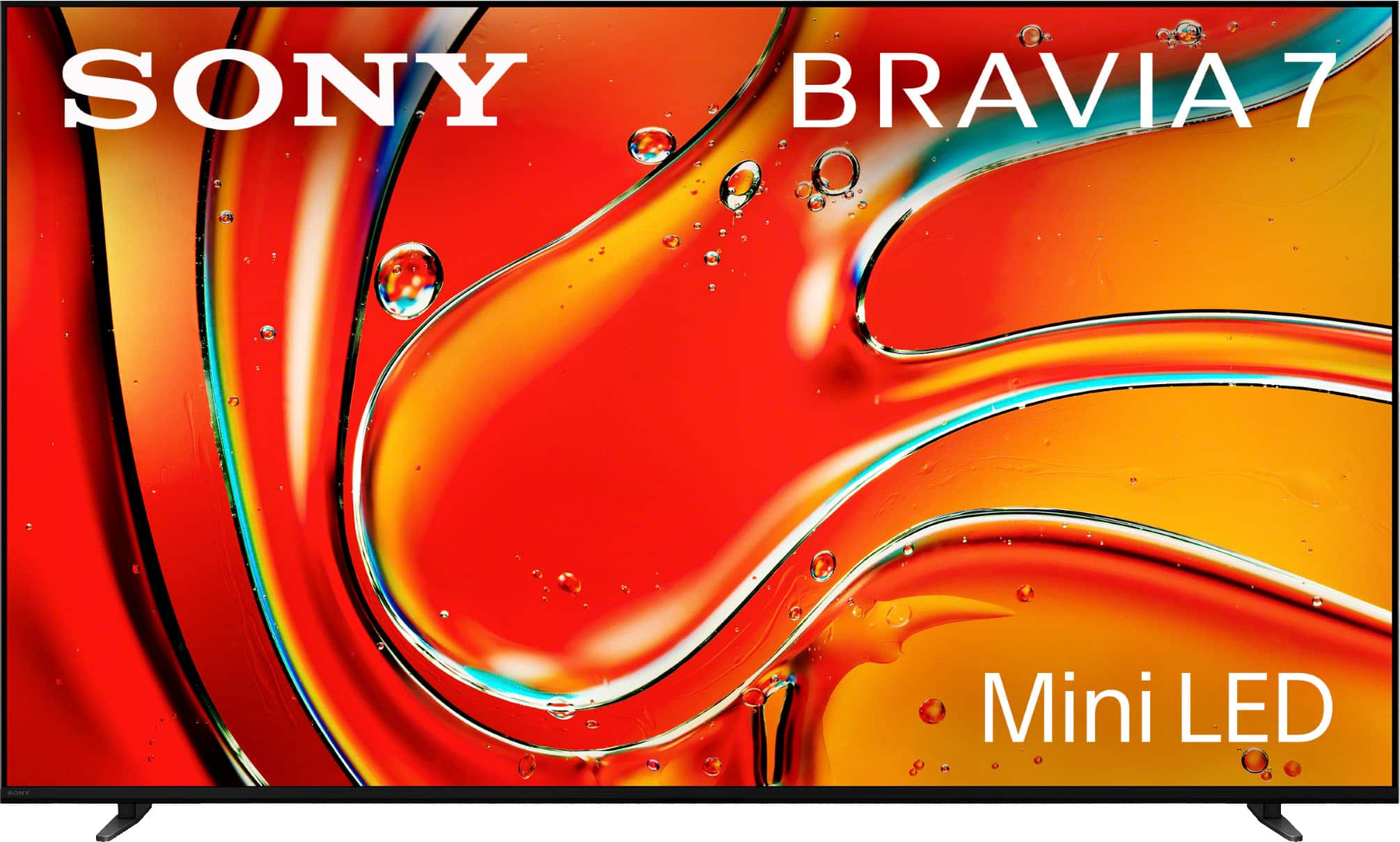
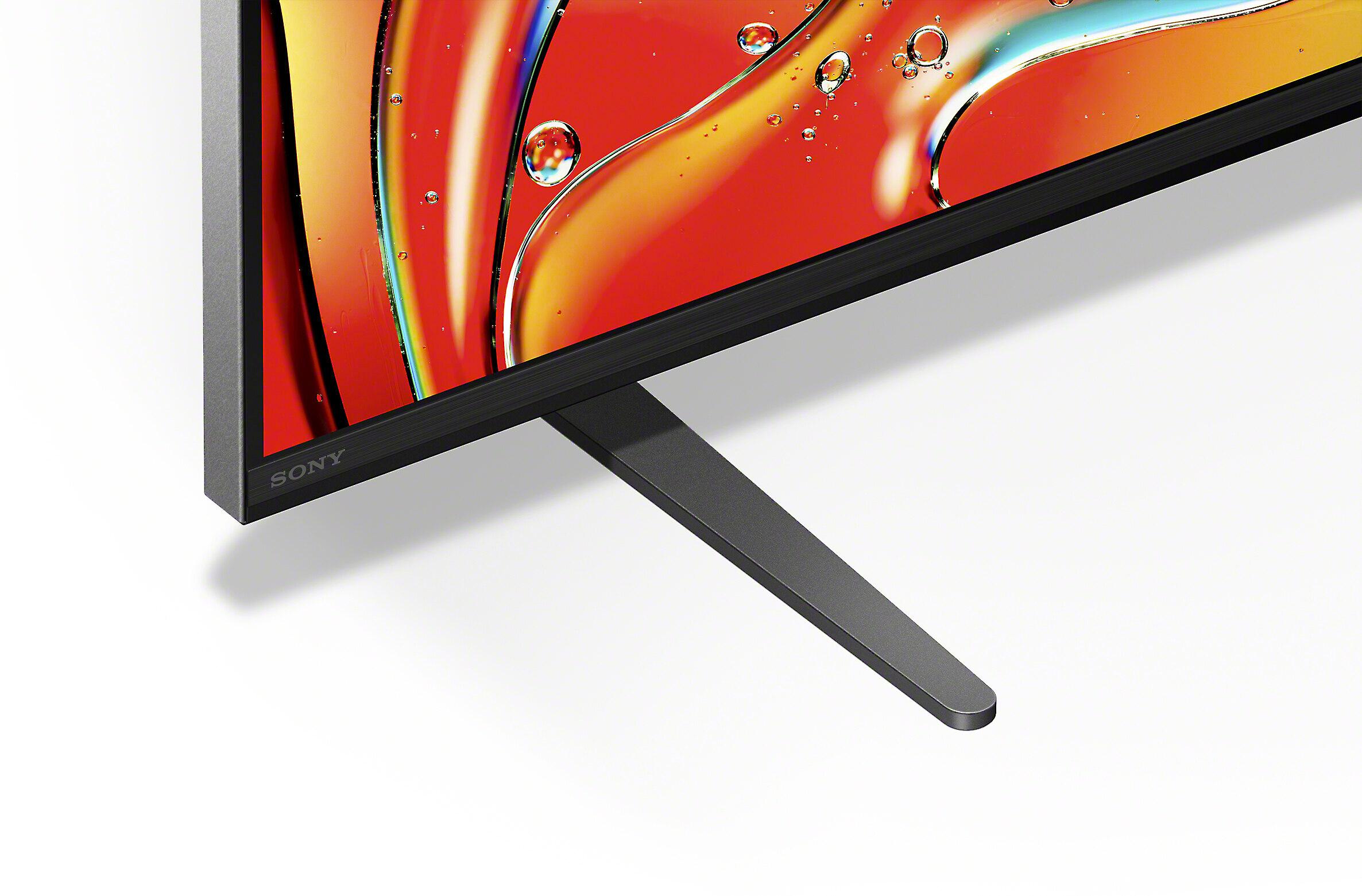
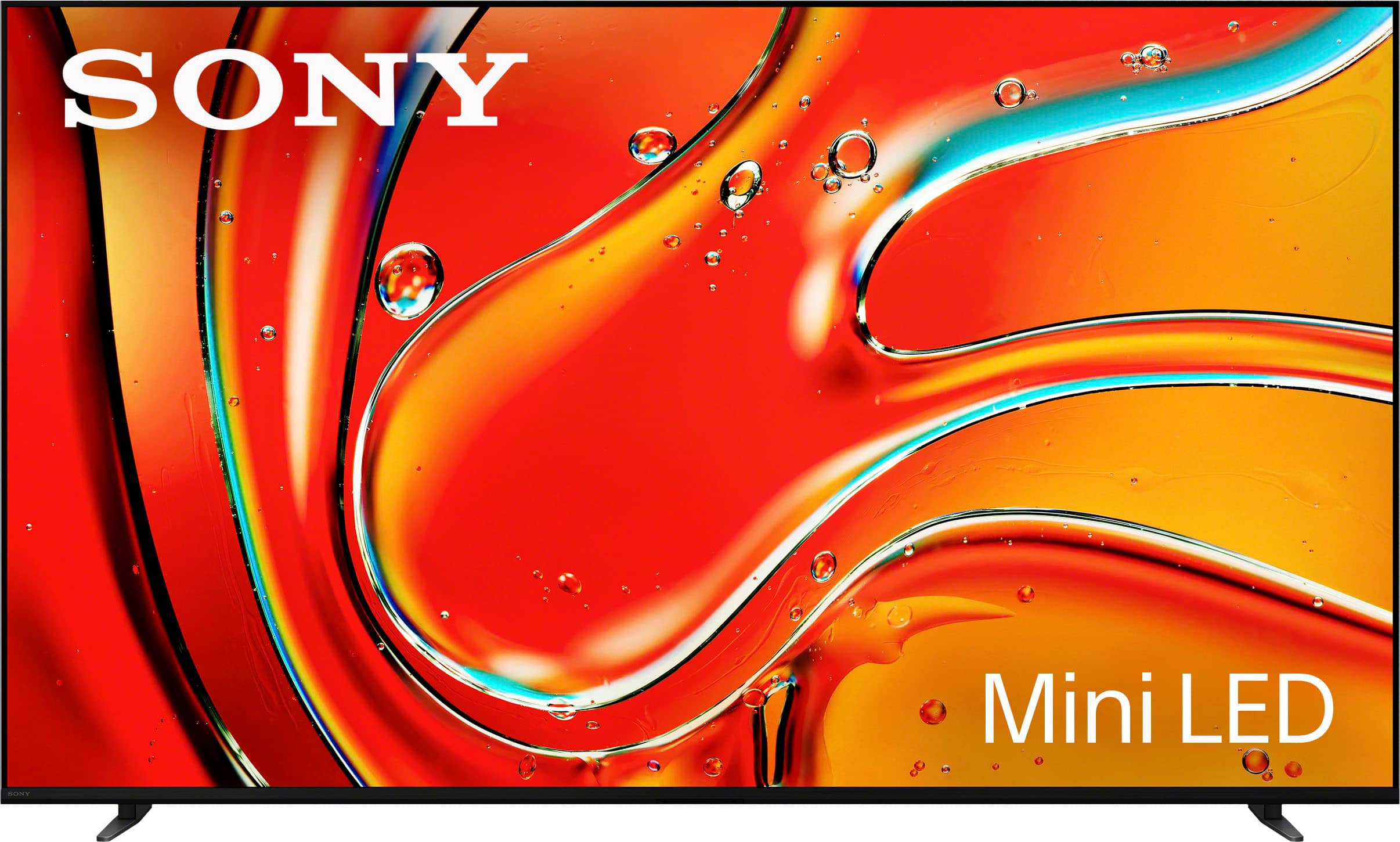
Meanwhile, the Sony BRAVIA 7 employs Mini LED technology, which sounds similar but represents a massive leap forward. Instead of a few dozen LEDs, Mini LED uses thousands of tiny LEDs that can be controlled individually through Sony's XR Backlight Master Drive. Think of it like the difference between lighting a room with one ceiling fixture versus having precise control over hundreds of small lights throughout the space.
This distinction matters because it directly affects contrast – the Sony BRAVIA 7 can make specific areas of the screen darker while keeping others bright, creating more realistic shadows and highlights. The Samsung U8000F must compromise, brightening or dimming larger sections of the screen together.
Peak brightness represents one of the most significant performance gaps between these models. Our research indicates the Samsung U8000F reaches approximately 400-450 nits at maximum brightness – adequate for normal viewing but limiting for HDR content, which relies on bright highlights to create that "wow" factor.
The Sony BRAVIA 7, by contrast, exceeds 1,200 nits thanks to its Mini LED array. This isn't just a numbers game – it translates to HDR content that actually looks impressive, with bright scenes that don't appear washed out and subtle details visible in both shadows and highlights.
For context, most content creators master HDR assuming displays can hit 1,000+ nits. Watching the same HDR movie on both TVs would reveal noticeably more detail and impact on the Sony BRAVIA 7, particularly in scenes with mixed lighting like sunlight streaming through windows or explosions in dark environments.
Both TVs handle color differently, reflecting their market positioning. The Samsung U8000F focuses on producing natural, pleasant colors that look good with minimal adjustment. Samsung's Crystal Processor does an admirable job with color mapping, and most viewers will find the out-of-box experience satisfying for streaming content and basic viewing.
The Sony BRAVIA 7 takes a more sophisticated approach with XR Triluminos Pro technology, which extends the color gamut (the range of colors the TV can display) significantly. Combined with the XR Processor's real-time analysis, it can reproduce colors that simply aren't possible on traditional LED displays. This becomes particularly noticeable with animated content, nature documentaries, and films shot with wide color gamuts.
This represents perhaps the largest performance difference. The Samsung U8000F relies on basic UHD Dimming, which divides the screen into zones but can't achieve true blacks. Dark scenes often appear gray rather than deep black, and bright objects can create a "blooming" effect where light spills into surrounding dark areas.
The Sony BRAVIA 7's full-array local dimming with Mini LED technology nearly eliminates these issues. It can turn off LEDs in specific areas while keeping others bright, achieving contrast ratios that approach OLED territory without OLED's brightness limitations. For movie enthusiasts, this creates a more cinematic experience with properly rendered shadow detail.
Gaming capabilities reveal another significant divide between these models, though both serve different gaming audiences effectively.
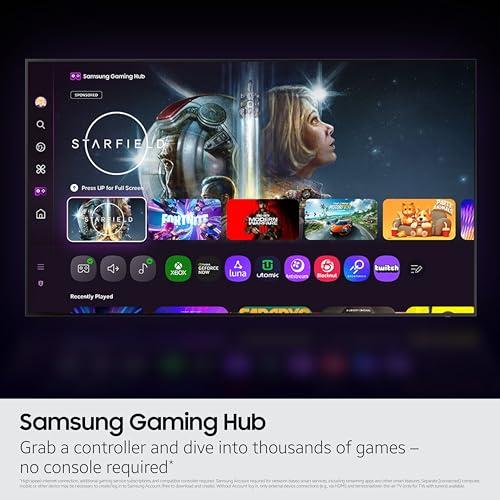
The Samsung U8000F operates at a 60Hz refresh rate with Motion Xcelerator technology designed to reduce motion blur. It includes ALLM (Auto Low Latency Mode), which automatically switches to a low-input-lag gaming mode when it detects a console. For casual gamers playing story-driven titles or older games, the performance is perfectly adequate. The Game Hub integration also provides cloud gaming options without requiring additional hardware.
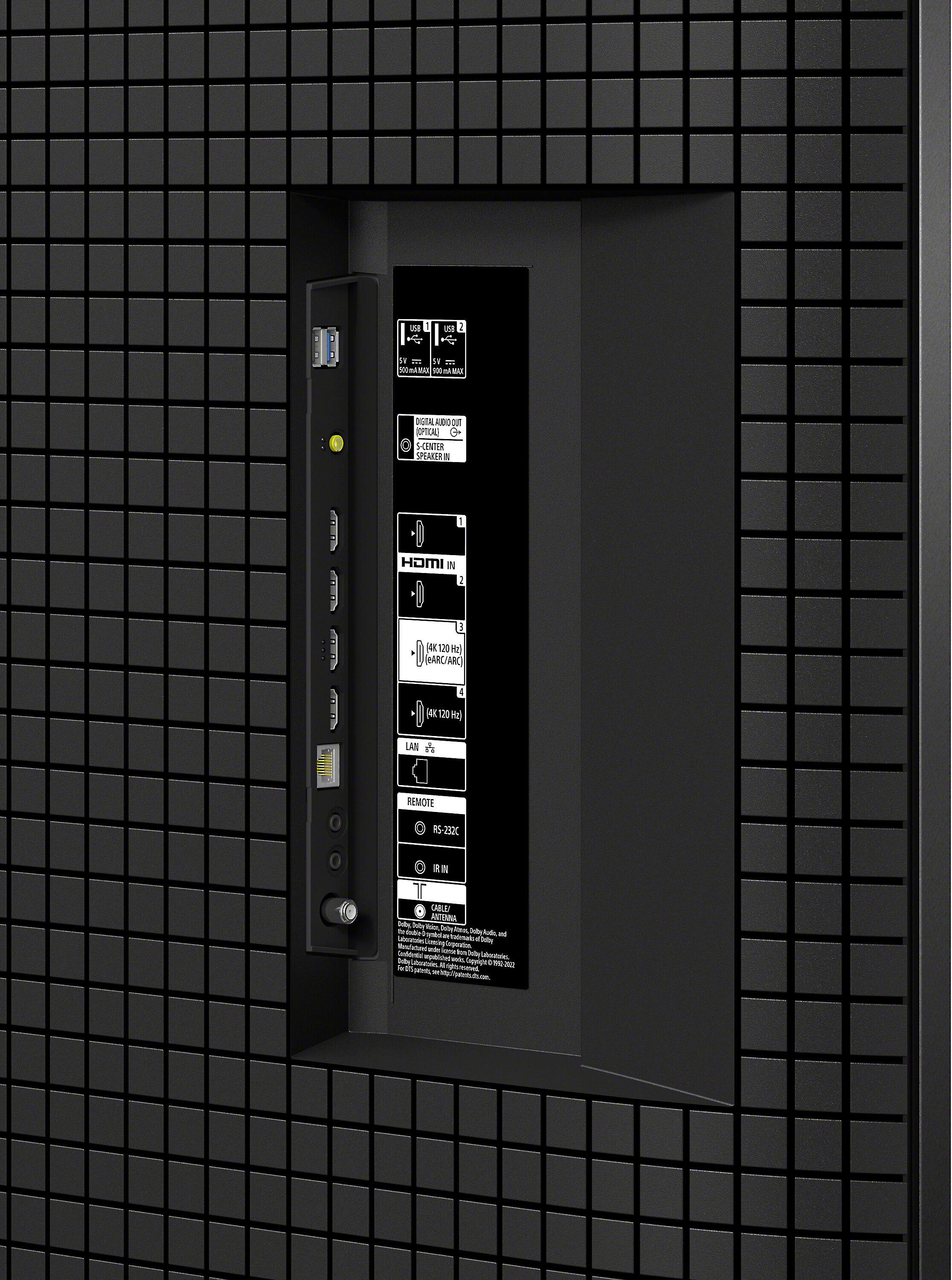
However, the Sony BRAVIA 7 serves serious gamers better with its 120Hz refresh rate and support for 4K gaming at 120 frames per second. Two HDMI ports support the full HDMI 2.1 specification, enabling features like VRR (Variable Refresh Rate), which synchronizes the TV's refresh rate with your console's frame rate to eliminate screen tearing.
There's an important caveat with the Sony BRAVIA 7: one HDMI 2.1 port serves double duty as the eARC (enhanced Audio Return Channel) connection for soundbars, leaving only one port available for high-refresh gaming. If you plan to connect multiple next-generation consoles, this limitation could prove frustrating.
Input lag – the delay between controller input and on-screen response – measures under 8.5 milliseconds on the Sony BRAVIA 7 in gaming mode, competitive with dedicated gaming monitors. The Samsung U8000F also achieves respectable input lag, though not quite as low.
Both TVs offer comprehensive smart platform experiences, though with different approaches and strengths.
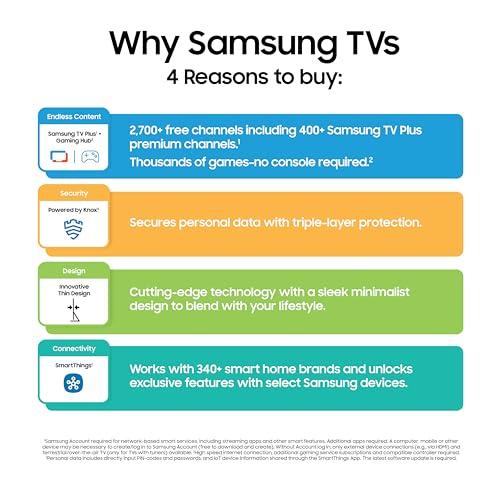
The Samsung U8000F runs Tizen OS with Samsung's One UI interface, providing access to major streaming services plus Samsung TV Plus – a collection of over 2,700 free channels including premium content. The interface feels responsive and intuitive, with quick app loading and smooth navigation. Samsung Knox Security provides what the company describes as "triple-layer protection," securing not just the TV but connected smart home devices.
Voice control comes through Bixby built-in, though Alexa integration requires a separate Echo device. The SmartThings Hub functionality allows the TV to serve as a control center for compatible smart home devices, adding utility beyond entertainment.
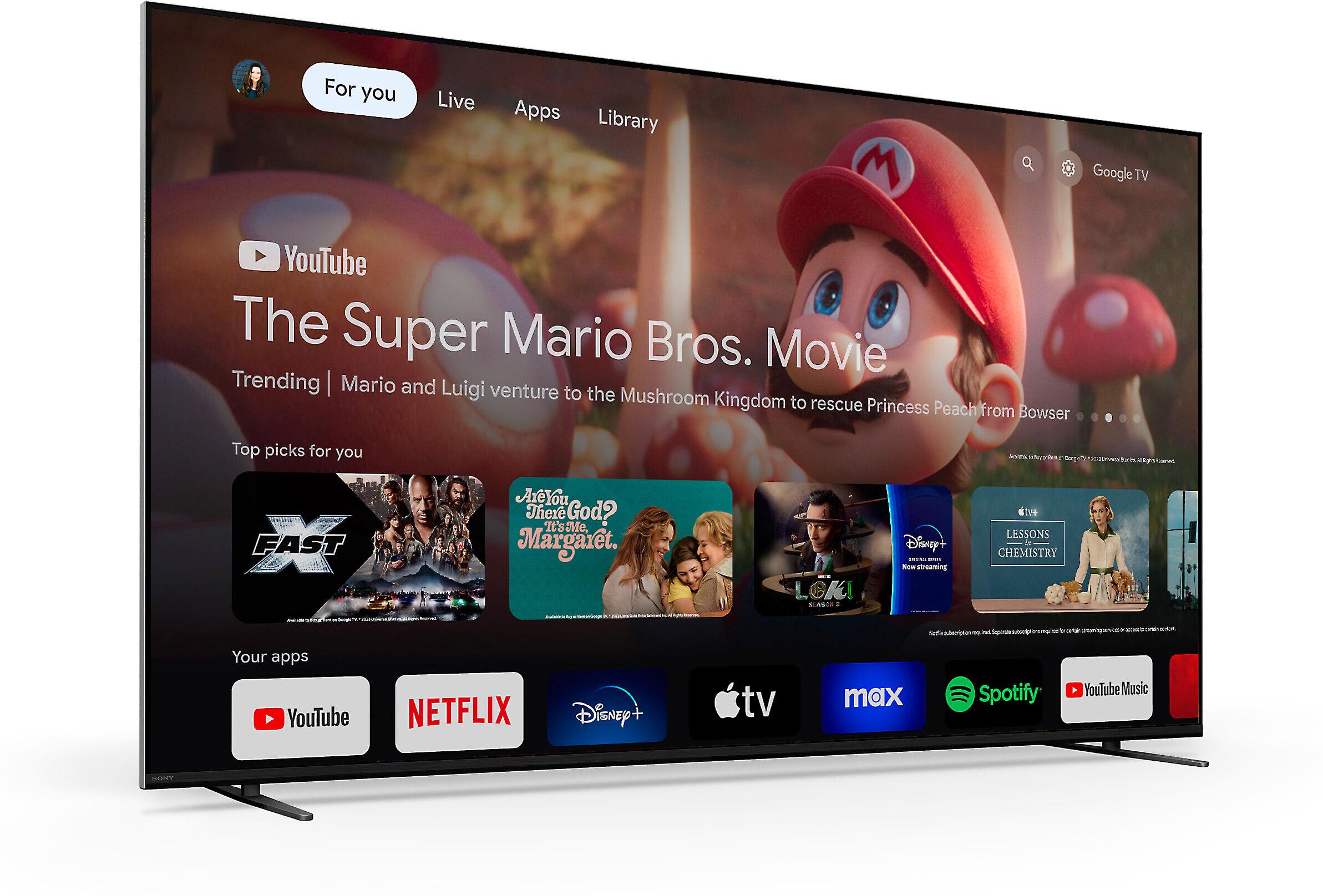
The Sony BRAVIA 7 leverages Google TV, which provides arguably the most comprehensive app ecosystem through the Google Play Store. Google Assistant integration works hands-free, and the TV supports both Chromecast and AirPlay 2 for seamless content sharing from phones and tablets.
A notable perk: Sony includes two years of Sony Pictures Core streaming service with 15 movie credits, providing access to high-bitrate versions of Sony films with specially calibrated picture modes that optimize the display for each title.
Audio represents an area where both TVs reveal their limitations, though the Sony BRAVIA 7 performs better overall.
The Samsung U8000F includes 20-watt speakers with OTS Lite (Object Tracking Sound Lite), which attempts to create directional audio effects. While clear for dialogue, the system lacks depth and power for movie soundtracks or music. Q-Symphony technology allows compatible Samsung soundbars to work in harmony with the TV speakers, potentially improving the experience.
The Sony BRAVIA 7 supports Dolby Atmos and DTS:X for immersive audio when connected to compatible sound systems. The Acoustic Center Sync feature with Sony soundbars creates a dedicated center channel effect, and Voice Zoom 3 technology can isolate and enhance dialogue – particularly useful for viewers who struggle with movie dialogue clarity.
Both TVs benefit significantly from external audio solutions, but the Sony BRAVIA 7's advanced audio processing provides more sophisticated options for home theater integration.
For dedicated home theater setups, the differences between these models become more pronounced.
The Samsung U8000F works adequately in controlled lighting environments – darker rooms where its contrast limitations become less noticeable. It supports HDR10 and HDR10+, covering most streaming content, though it lacks Dolby Vision support found on many premium services.
The Sony BRAVIA 7 excels in home theater applications thanks to its high peak brightness, superior contrast, and comprehensive HDR support including Dolby Vision. The Mini LED technology prevents the light pollution issues that can plague traditional LED displays in dark rooms. IMAX Enhanced certification ensures optimized performance with specially mastered content.
Viewing angles represent another consideration. The Samsung U8000F experiences color and brightness degradation when viewed from the side, making it less ideal for wide seating arrangements. The Sony BRAVIA 7 maintains better consistency across viewing angles, though still not matching OLED performance in this regard.
At the time of writing, these TVs occupy distinctly different value propositions that reflect their intended audiences.
The Samsung U8000F represents exceptional value for budget-conscious buyers seeking a large 4K display with comprehensive smart features. While it makes compromises in picture quality and gaming performance, it delivers solid overall performance at a price point that makes 65-inch 4K accessible to more households.
The Sony BRAVIA 7 costs significantly more but justifies the premium through advanced display technology that approaches flagship performance. For the price difference, you receive dramatically better HDR performance, gaming capabilities that support next-generation consoles, and picture quality that enhances both streaming content and physical media.
You're working with a limited budget but want a large, capable 4K TV for family viewing. It's ideal for households that primarily stream content in moderately lit rooms and don't require cutting-edge gaming features. The comprehensive smart platform and security features make it particularly appealing for families with children or those invested in Samsung's ecosystem.
The TV works best for casual viewers who prioritize screen size and basic smart functionality over absolute picture quality. If you're upgrading from a much older TV, the Samsung U8000F will feel like a significant improvement without requiring a premium investment.
Picture quality ranks as your top priority, and you're willing to invest in a premium viewing experience. It's the clear choice for movie enthusiasts, gamers with next-generation consoles, and anyone planning to use the TV in a bright room where the superior brightness becomes essential.
The Sony BRAVIA 7 also makes sense for home theater enthusiasts who want a display that can properly render HDR content and serve as the centerpiece of a high-quality audio-visual setup. If you're someone who notices and appreciates display quality differences, the premium is worthwhile.
These TVs serve different markets effectively, and neither is objectively "better" – they're optimized for different priorities and budgets.
The Samsung U8000F delivers impressive value by providing solid 4K performance, comprehensive smart features, and reliable operation at an accessible price point. Its limitations in brightness and gaming primarily matter to enthusiasts rather than general viewers.
The Sony BRAVIA 7 justifies its premium pricing through significantly superior display technology that transforms the viewing experience for HDR content, gaming, and movie watching. The Mini LED implementation brings flagship-level performance to a more accessible price tier than Sony's top models.
Your choice should align with your priorities: if budget and basic functionality matter most, the Samsung U8000F provides excellent value. If picture quality and modern features justify the investment, the Sony BRAVIA 7 delivers a noticeably superior experience that becomes more apparent with daily use.
Consider your viewing habits, room lighting, and whether you'll utilize advanced gaming features. Both TVs will serve their intended audiences well, but the performance differences are real and meaningful for users who prioritize display quality.
| Samsung 65-Inch Crystal UHD U8000F | Sony BRAVIA 7 65" 4K UHD Smart Google TV |
|---|---|
| Display Technology - Determines picture quality and price tier | |
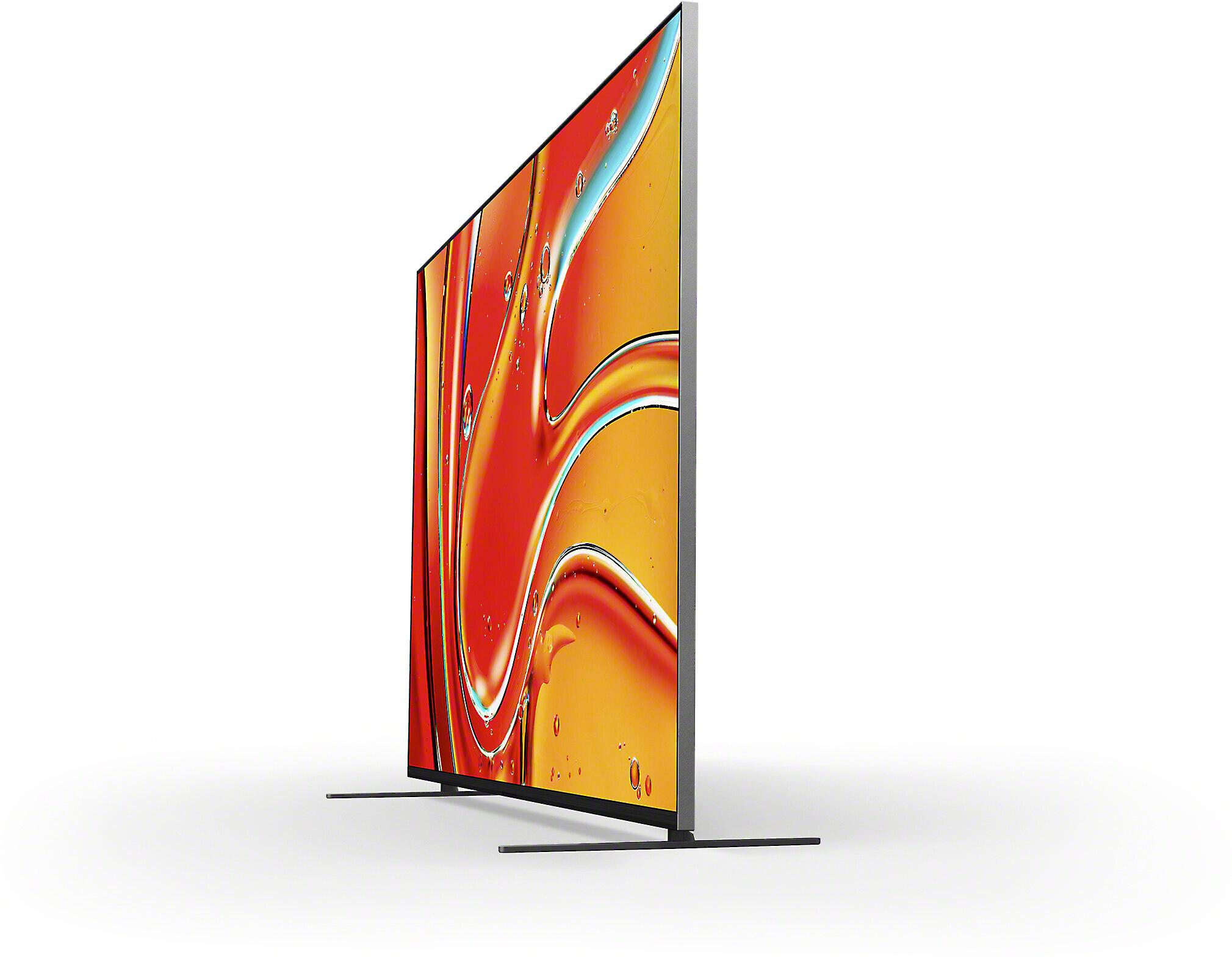
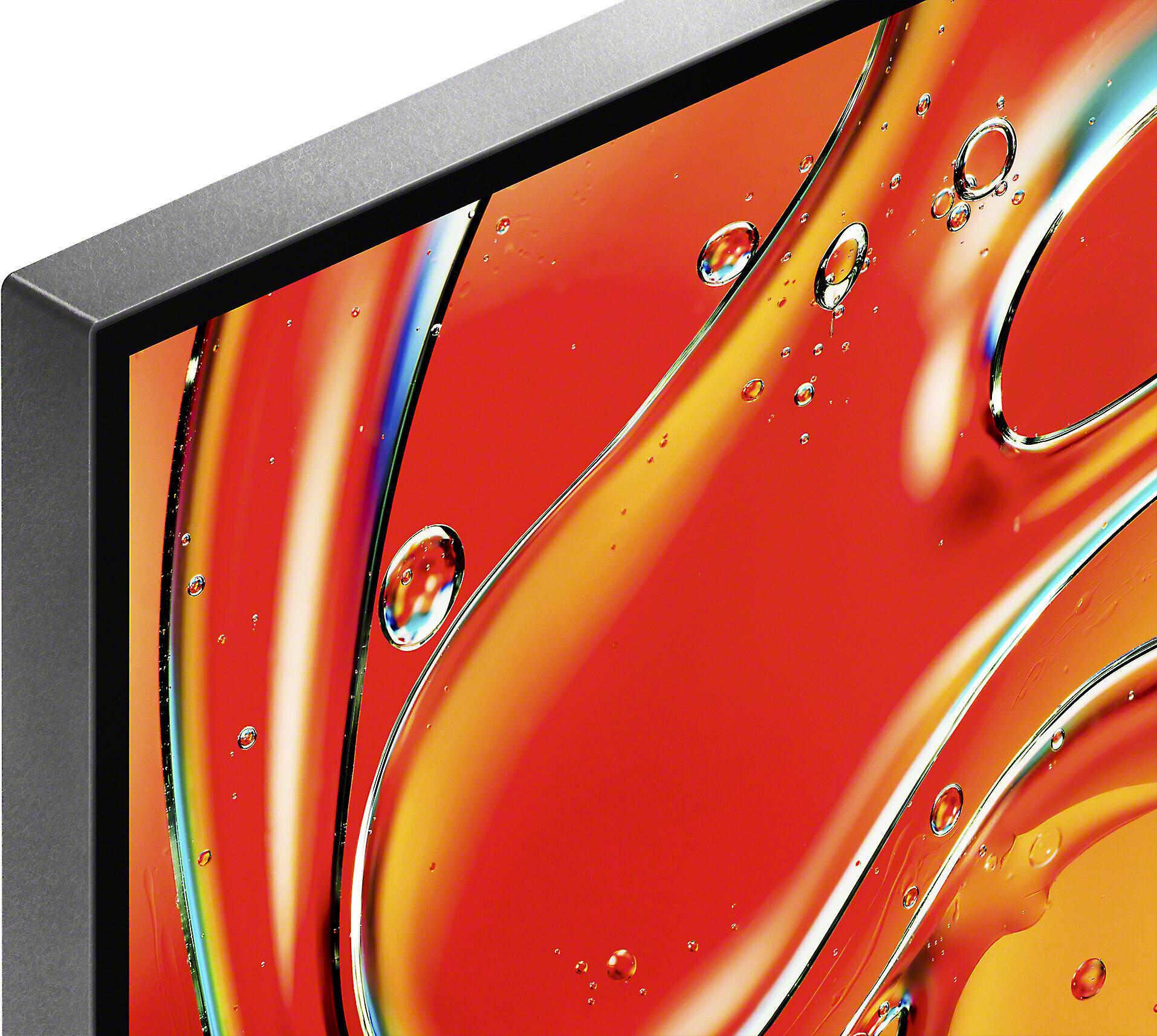
| Traditional LED with Crystal Processor 4K | Mini LED QLED with XR Backlight Master Drive |
| Peak Brightness - Critical for HDR impact and bright room viewing | |
| ~400-450 nits (struggles in bright rooms, limited HDR) | 1,200+ nits (excellent HDR performance, any lighting) |
| Refresh Rate - Essential for gaming and sports | |
| 60Hz with Motion Xcelerator | 120Hz with XR Motion Clarity |
| Local Dimming - Controls contrast and black levels | |
| Basic UHD Dimming (limited zones) | Full Array Local Dimming (thousands of Mini LED zones) |
| Gaming Features - Modern console compatibility | |
| ALLM, 4K @ 60Hz max, Game Hub cloud gaming | ALLM, VRR, 4K @ 120Hz on 2 ports, <8.5ms input lag |
| HDR Support - Premium content compatibility | |
| HDR10, HDR10+ (no Dolby Vision) | HDR10, HDR10+, Dolby Vision, IMAX Enhanced |
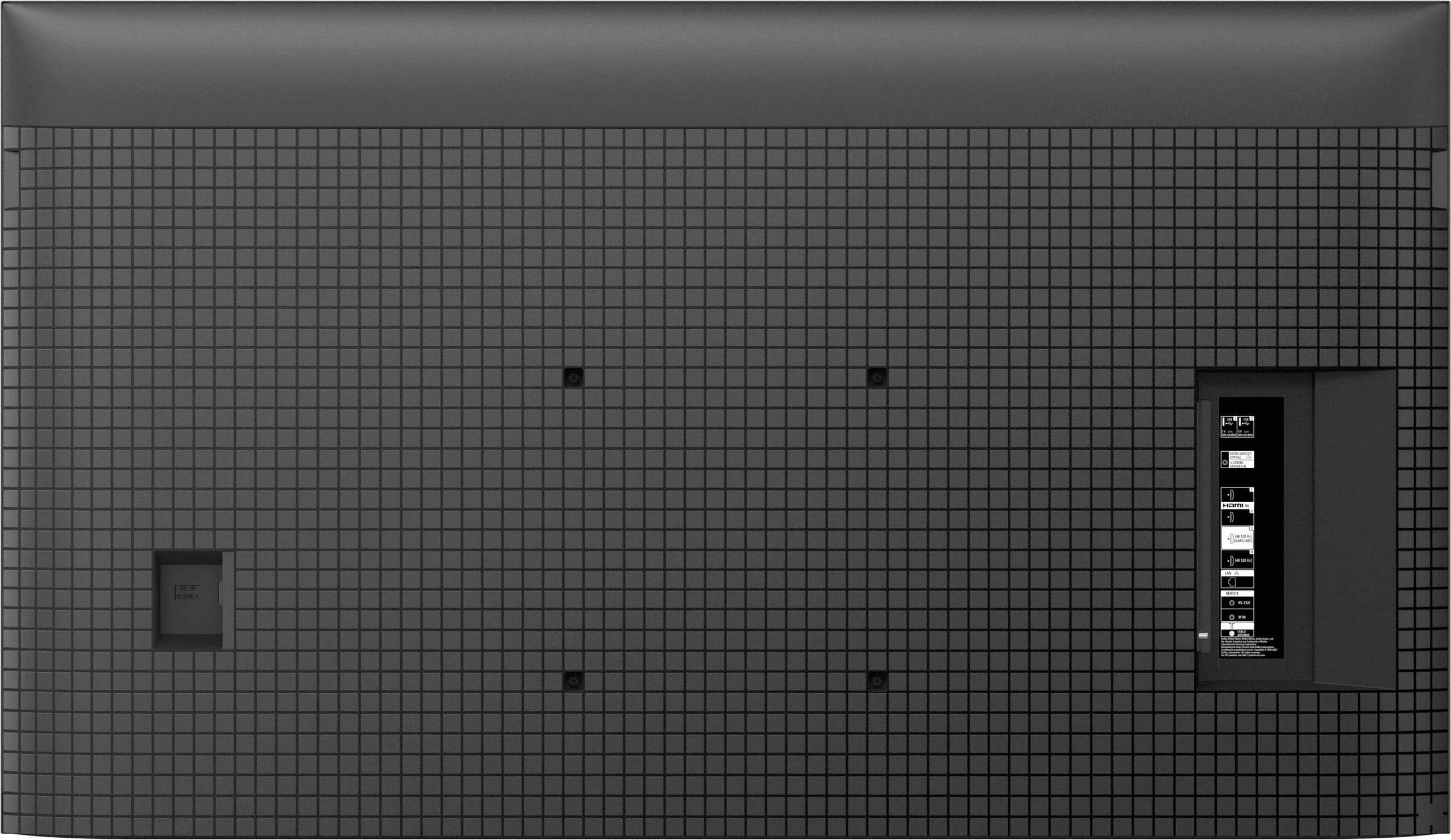
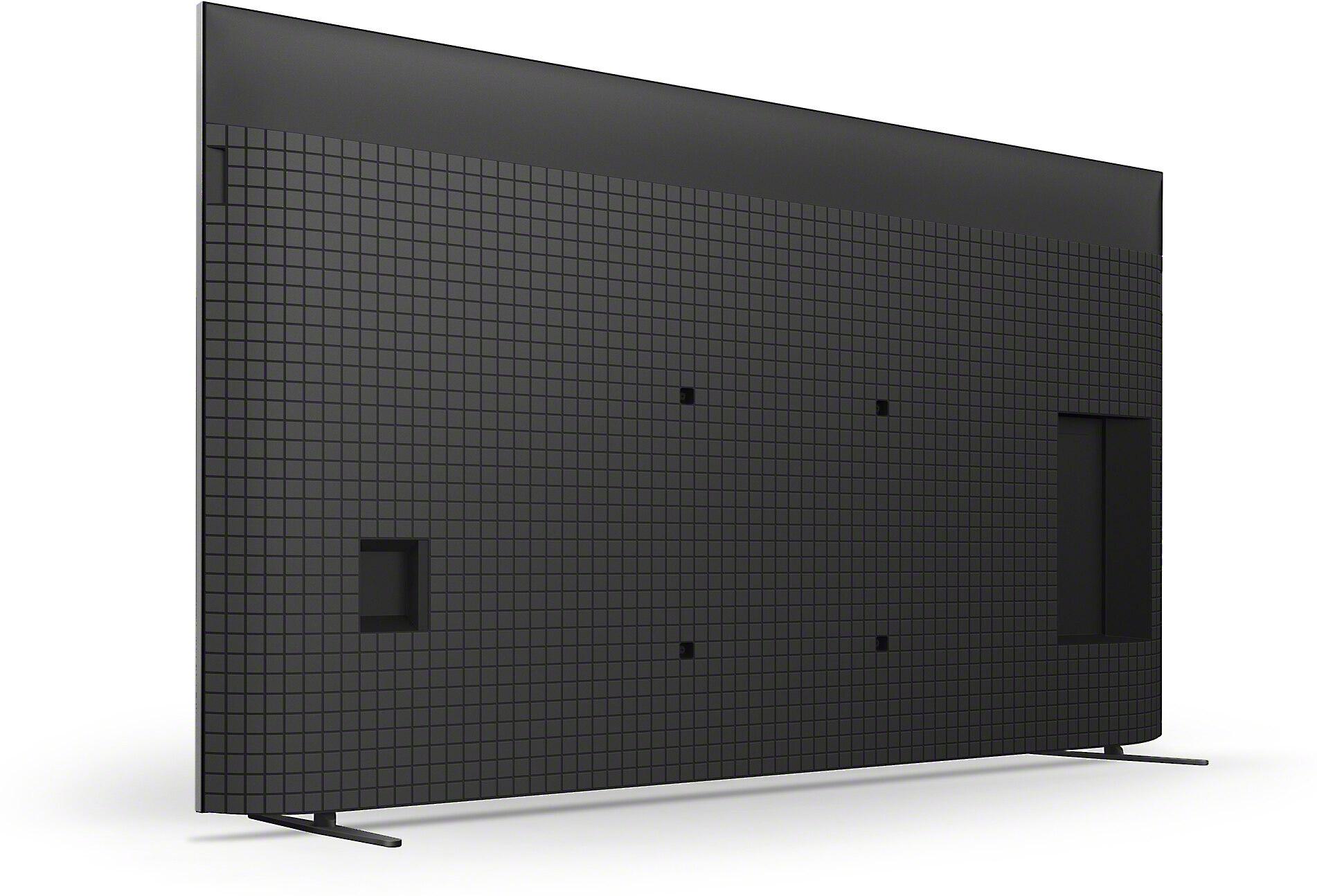
| HDMI Ports - Connection flexibility | |
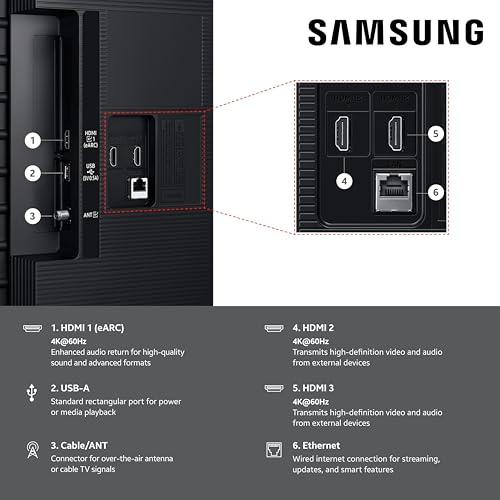
| 3 HDMI 2.0 ports (4K @ 60Hz limit) | 4 HDMI ports (2x HDMI 2.1 for 4K @ 120Hz) |
| Smart Platform - App ecosystem and voice control | |
| Tizen OS, Samsung TV Plus (2,700+ free channels), Bixby | Google TV, extensive app store, hands-free Google Assistant |
| Audio Technology - Built-in sound quality | |
| 20W 2CH, OTS Lite, Q-Symphony soundbar integration | Dolby Atmos, DTS:X, Acoustic Center Sync with Sony speakers |
| Security Features - Smart TV protection | |
| Samsung Knox Security (triple-layer protection) | Standard Google TV security |
| Premium Inclusions - Added value | |
| Samsung TV Plus free content | 2 years Sony Pictures Core + 15 movie credits |
| Target Market - Who should consider each | |
| Budget-conscious families wanting large 4K with smart features | Picture quality enthusiasts and serious gamers willing to pay premium |
The Sony BRAVIA 7 delivers significantly better picture quality thanks to its Mini LED QLED technology with over 1,200 nits peak brightness and full-array local dimming. The Samsung U8000F offers good color accuracy and upscaling but is limited by lower brightness (~400 nits) and basic contrast control. For HDR content and bright room viewing, the Sony BRAVIA 7 provides a noticeably superior experience.
The Sony BRAVIA 7 is better for serious gaming with 120Hz refresh rate, VRR support, and 4K gaming at 120fps on two HDMI 2.1 ports. The Samsung U8000F works well for casual gaming with 60Hz, ALLM support, and Game Hub cloud gaming features. If you have next-gen consoles like PS5 or Xbox Series X, the Sony BRAVIA 7 unlocks their full potential.
Both platforms are excellent but serve different preferences. The Samsung U8000F runs Tizen OS with Samsung TV Plus offering 2,700+ free channels and Samsung Knox security. The Sony BRAVIA 7 uses Google TV with extensive app selection, hands-free Google Assistant, and Chromecast built-in. Google TV generally offers more app compatibility, while Tizen provides more free content.
The core difference is display technology and market positioning. The Samsung U8000F uses traditional LED backlighting targeting budget-conscious buyers, while the Sony BRAVIA 7 features premium Mini LED QLED technology for picture quality enthusiasts. This translates to major differences in brightness, contrast, gaming features, and overall performance.
The Sony BRAVIA 7 excels in home theater applications with its high brightness, superior contrast, Dolby Vision support, and comprehensive audio features including Dolby Atmos. The Samsung U8000F works adequately in controlled lighting but struggles with HDR impact and lacks Dolby Vision. For dedicated home theater use, the Sony BRAVIA 7 provides a more cinematic experience.
The Sony BRAVIA 7 performs much better in bright rooms thanks to its 1,200+ nits peak brightness and superior anti-reflective properties. The Samsung U8000F with its ~400 nits brightness can appear washed out in well-lit spaces. If your TV will be in a living room with lots of natural light, the Sony BRAVIA 7 maintains picture quality much better.
Yes, both support HDR but with different capabilities. The Samsung U8000F supports HDR10 and HDR10+ but lacks Dolby Vision. The Sony BRAVIA 7 supports HDR10, HDR10+, Dolby Vision, and IMAX Enhanced. More importantly, the Sony BRAVIA 7 has the brightness needed to make HDR content actually look impressive, while the Samsung U8000F struggles with HDR impact.
The Sony BRAVIA 7 offers superior audio with Dolby Atmos support, DTS:X compatibility, and advanced features like Voice Zoom 3 for dialogue enhancement. The Samsung U8000F has decent 20W speakers with OTS Lite but lacks the processing power for premium audio formats. Both TVs benefit from external soundbars, but the Sony BRAVIA 7 provides better integration options.
The Samsung U8000F has 3 HDMI 2.0 ports limited to 4K at 60Hz. The Sony BRAVIA 7 offers 4 HDMI ports with 2 HDMI 2.1 connections supporting 4K at 120Hz for next-gen gaming. However, one HDMI 2.1 port on the Sony BRAVIA 7 doubles as eARC for soundbars, leaving one available for high-refresh gaming.
Value depends on your priorities and budget. The Samsung U8000F provides excellent value for budget-conscious buyers wanting a large 4K display with solid smart features. The Sony BRAVIA 7 justifies its premium through significantly better picture quality, gaming capabilities, and home theater performance. The Samsung U8000F wins on affordability, while the Sony BRAVIA 7 delivers premium performance.
Both TVs excel at streaming popular services. The Samsung U8000F provides smooth streaming with good upscaling and natural colors perfect for binge-watching. The Sony BRAVIA 7 enhances the experience with studio-calibrated modes for Netflix, superior HDR performance, and Google TV's excellent content discovery. Both support all major streaming apps without issues.
For most families, the Samsung U8000F provides excellent value with its large screen, comprehensive smart features, parental controls through Samsung Knox, and good overall performance for daily viewing. However, if your family room has bright lighting or you prioritize picture quality for movie nights, the Sony BRAVIA 7 offers a more premium experience that will impress guests and enhance your viewing enjoyment.
We've done our best to create useful and informative comparisons to help you decide what product to buy. Our research uses advanced automated methods to create this comparison and perfection is not possible - please contact us for corrections or questions. These are the sites we've researched in the creation of this article: bestbuy.com - youtube.com - youtube.com - rtings.com - youtube.com - samsung.com - hometechnologyreview.com - rtings.com - samsung.com - displayspecifications.com - samsung.com - displayspecifications.com - walmart.com - billsmith.com - dentonstv.com - samsung.com - samsung.com - samsung.com - youtube.com - bestbuy.com - bestbuy.com - youtube.com - samsung.com - donstv.com - bestbuy.com - bestbuy.com - avsforum.com - avsforum.com - crutchfield.com - sony.com - rtings.com - schaeferstv.com - youtube.com - displayspecifications.com

Privacy Policy
Terms and Conditions - Affiliate Policy
Home Security
© Copyright 2008-2026.
11816 Inwood Rd #1211, Dallas, TX 75244