

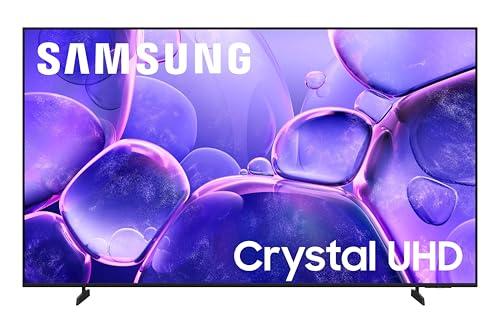

Shopping for a new TV can feel overwhelming, especially when faced with Samsung's massive 2025 lineup. At opposite ends of their range sit two compelling but very different options: the budget-friendly Samsung 65-Inch Crystal UHD U8000F and the flagship Samsung Neo QLED QN990F. These TVs represent completely different philosophies—one prioritizes value and reliability, while the other pushes technological boundaries regardless of cost.
The TV market has evolved dramatically in recent years. What used to be simple decisions between screen sizes now involve complex considerations about display technology, smart features, gaming capabilities, and resolution standards. Understanding these differences is crucial because the gap between entry-level and premium TVs has never been wider.
Modern TVs fall into distinct categories based on their display technology and target audience. Entry-level models like the Crystal UHD U8000F use standard LED backlights—essentially rows of LEDs behind the entire screen that illuminate liquid crystal pixels. These TVs focus on delivering solid 4K performance at accessible prices.
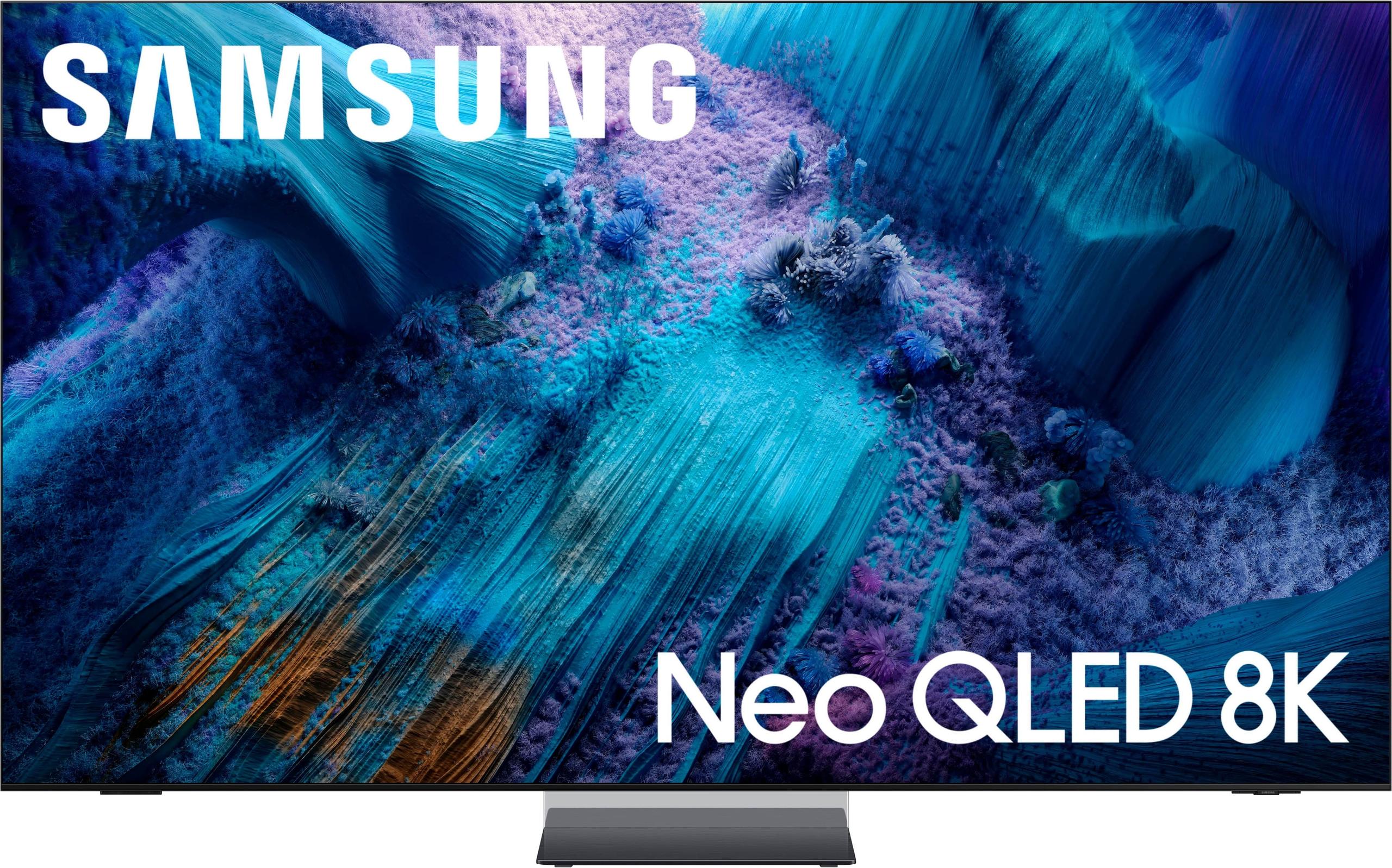
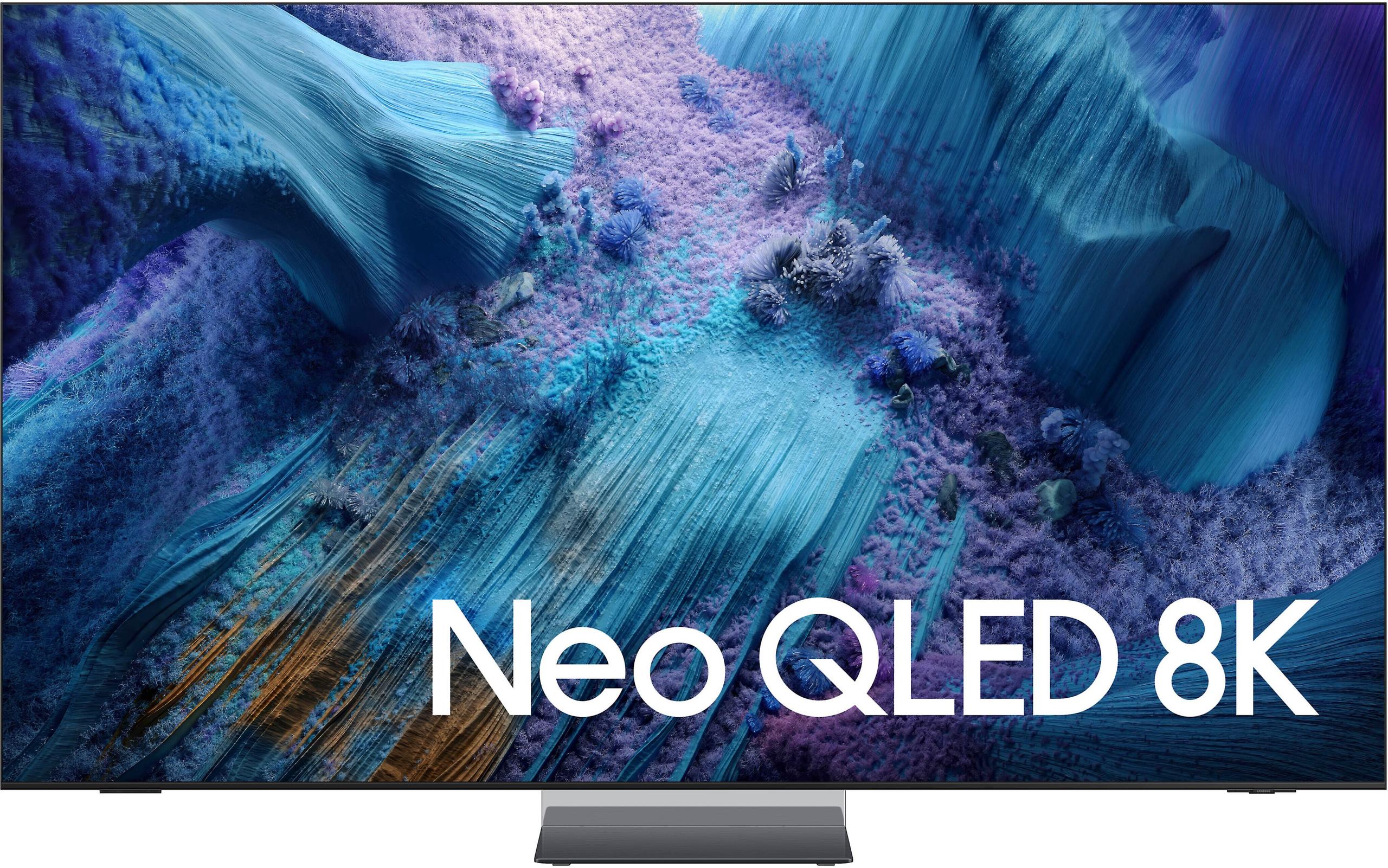
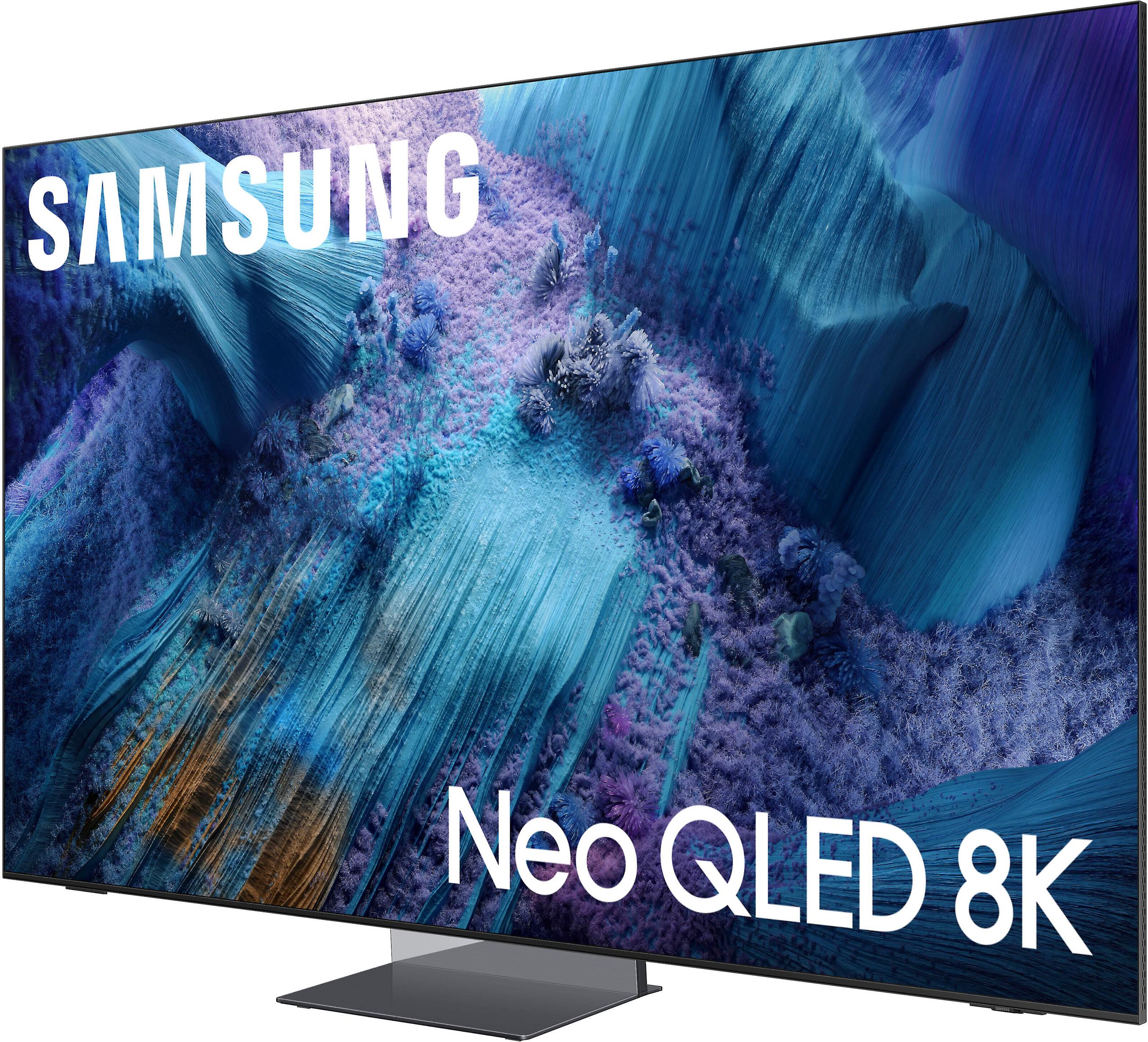
Premium models like the Neo QLED QN990F employ Mini LED technology, which uses thousands of tiny LEDs that can be controlled in zones across the screen. This allows different areas to be brightened or dimmed independently, creating much better contrast between dark and bright scenes. Think of it like the difference between a flashlight illuminating your entire room versus having dozens of small, controllable lights positioned strategically throughout.
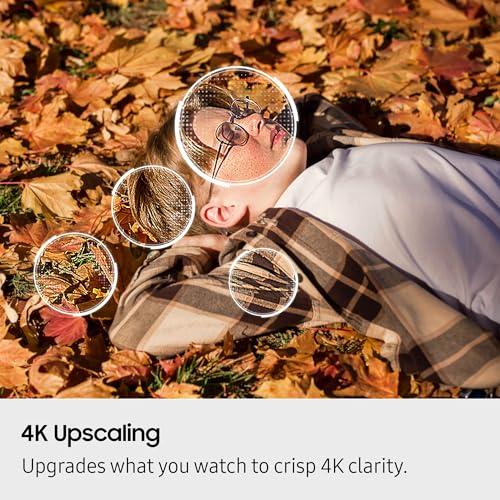
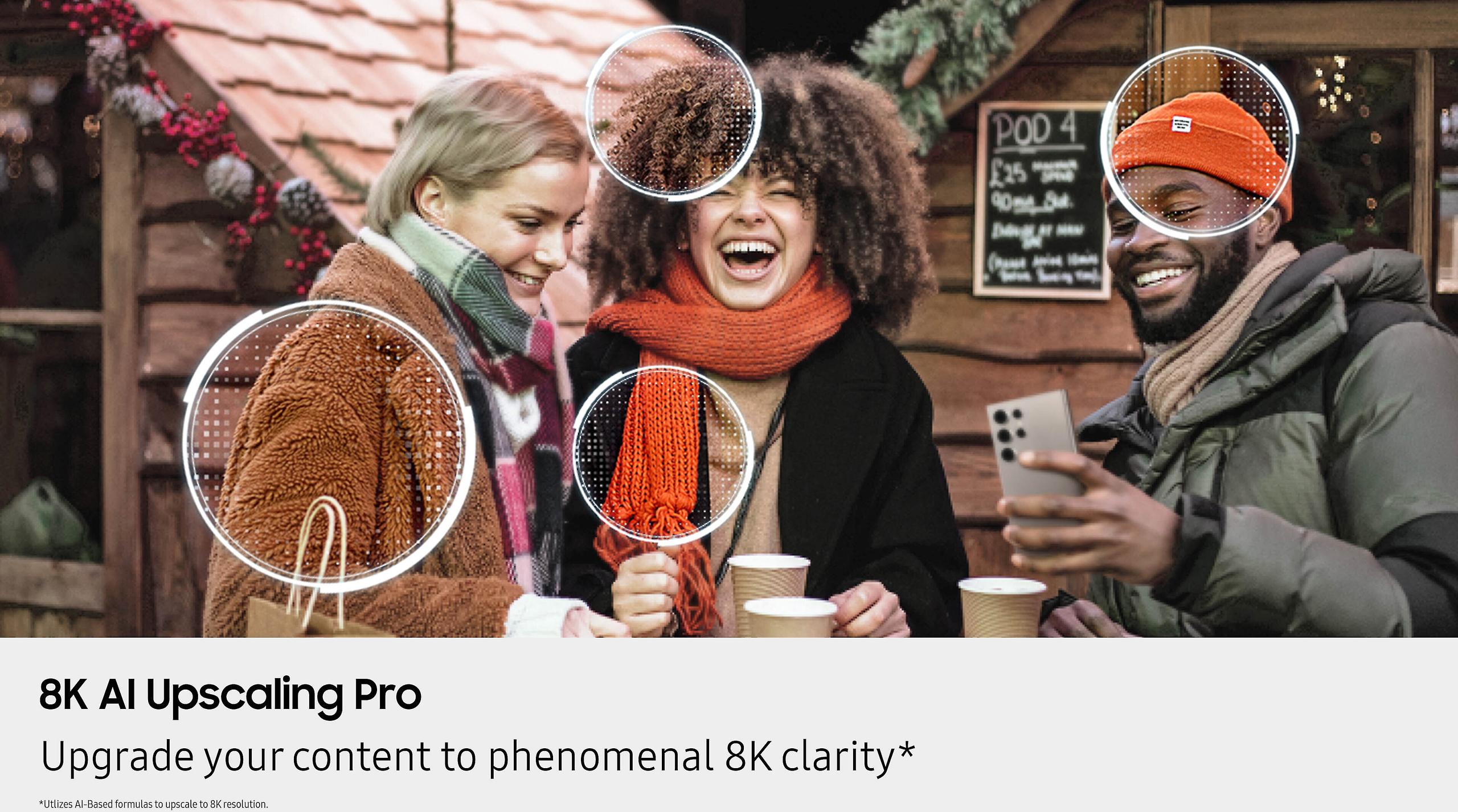
The resolution difference is equally significant. While 4K has become the standard with over 8 million pixels, 8K quadruples that to more than 33 million pixels. However, there's a catch—virtually no native 8K content exists for consumers yet, making the processor's upscaling abilities (converting lower-resolution content to look good at 8K) critically important.
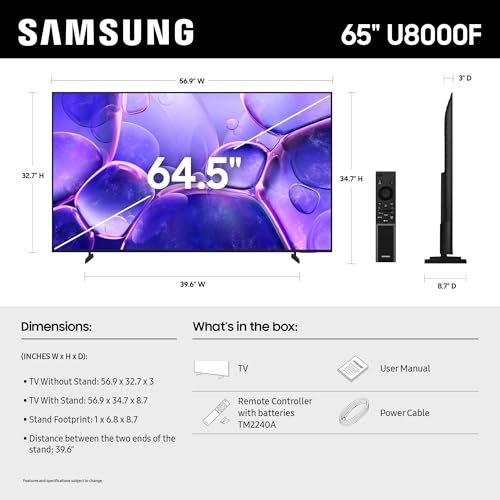
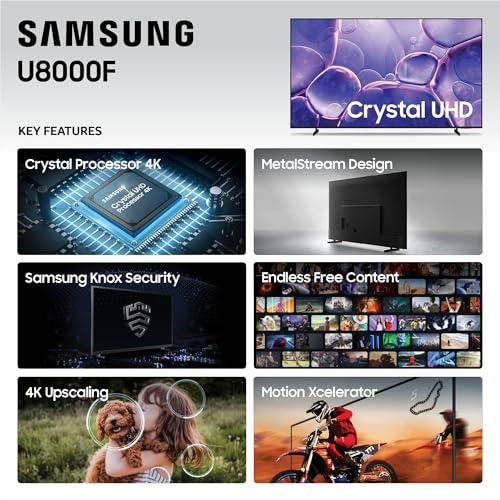
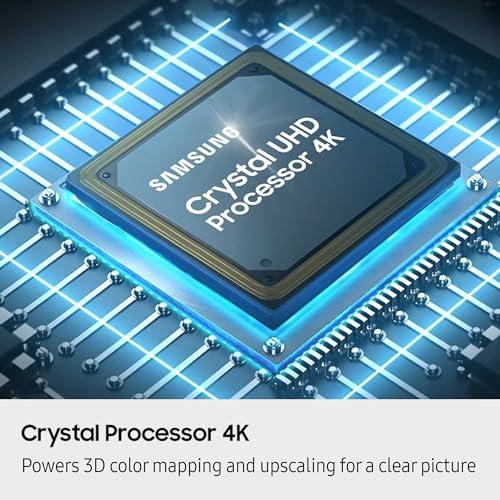
The Samsung Crystal UHD U8000F, released in 2025, represents Samsung's refined approach to budget-friendly TVs. It features their Crystal Processor 4K, which handles upscaling and color processing, plus their new MetalStream Design that gives it a more premium appearance than previous budget models. At 60Hz refresh rate, it covers the basics well without unnecessary complexity.
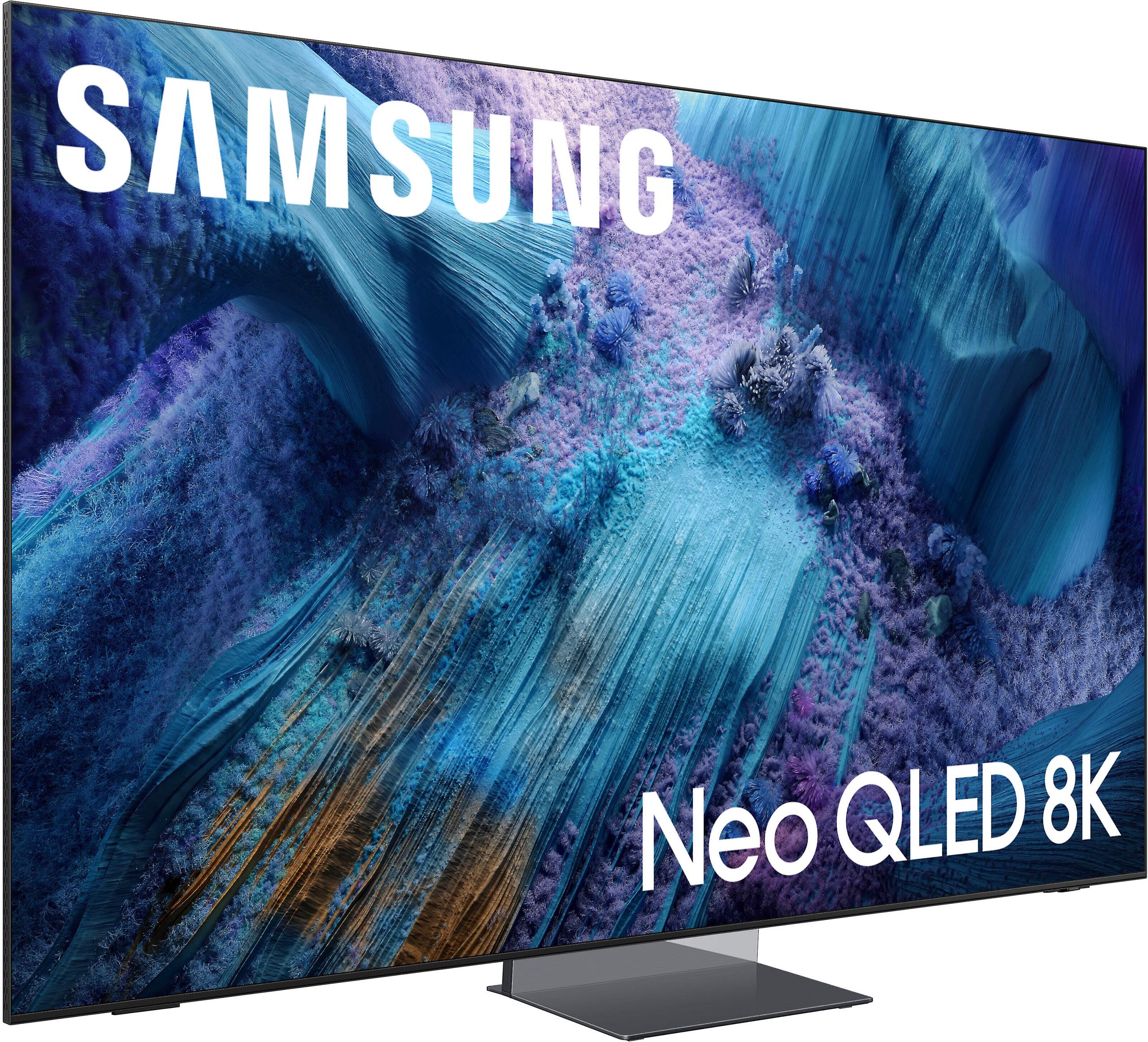
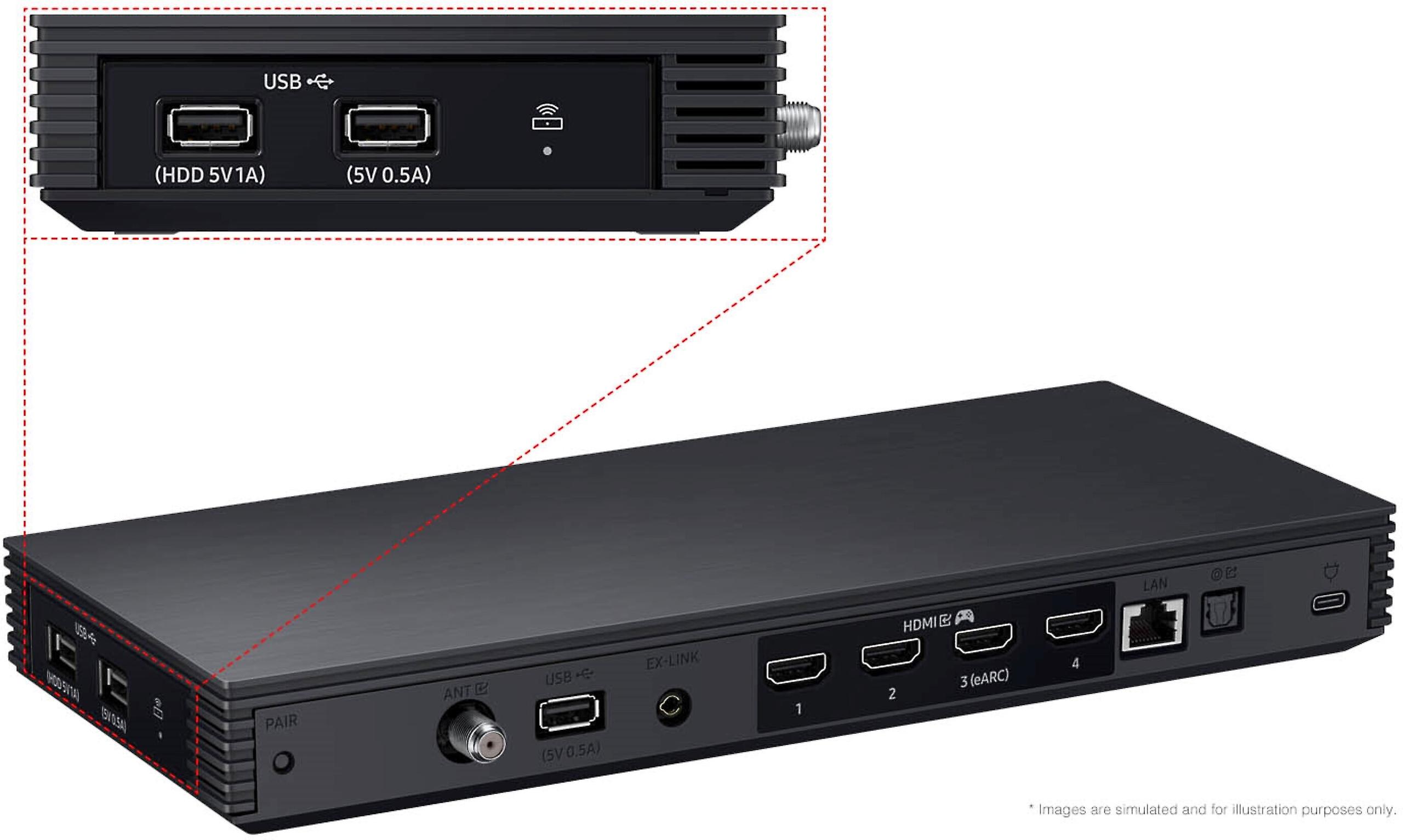
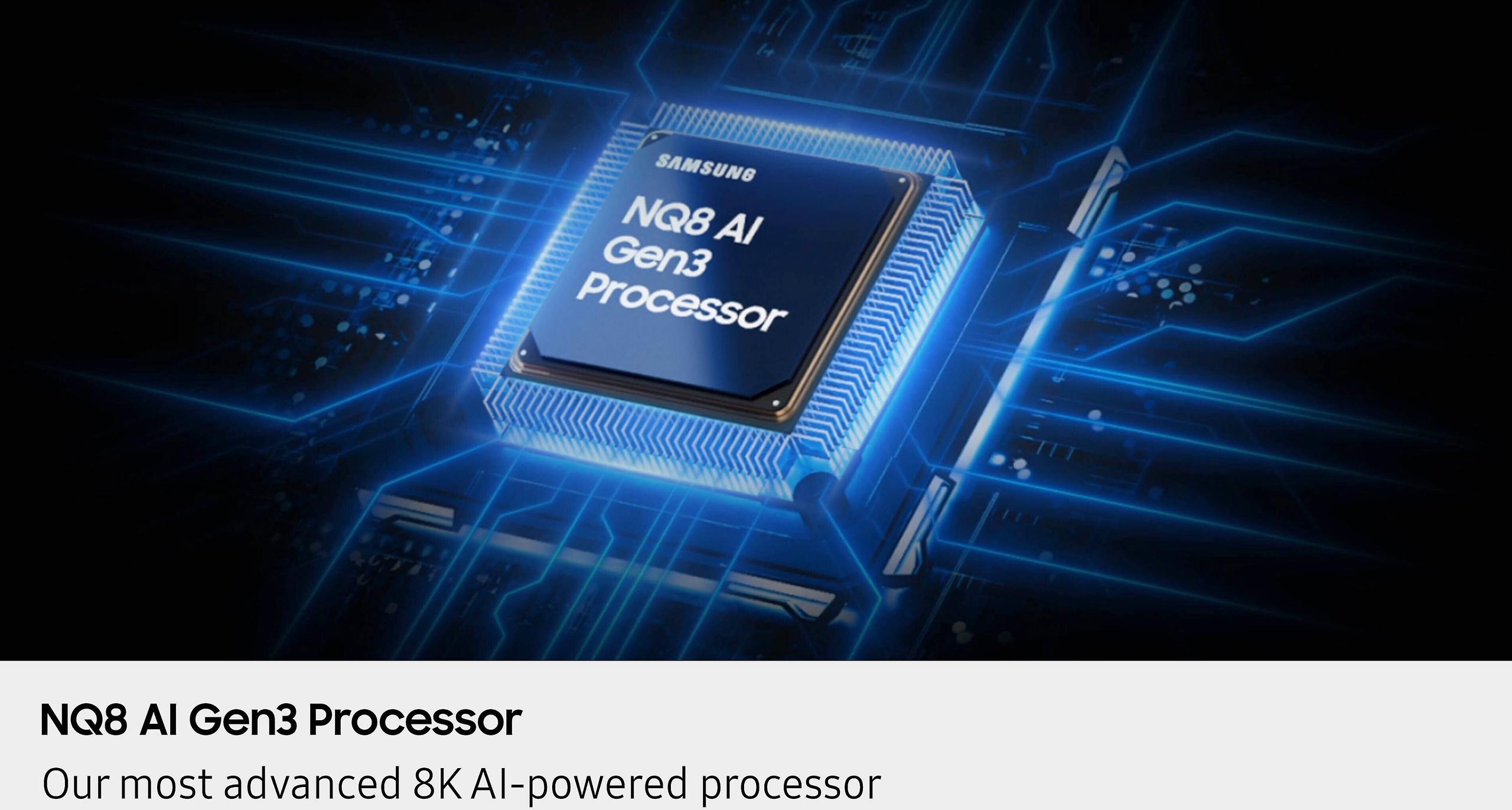
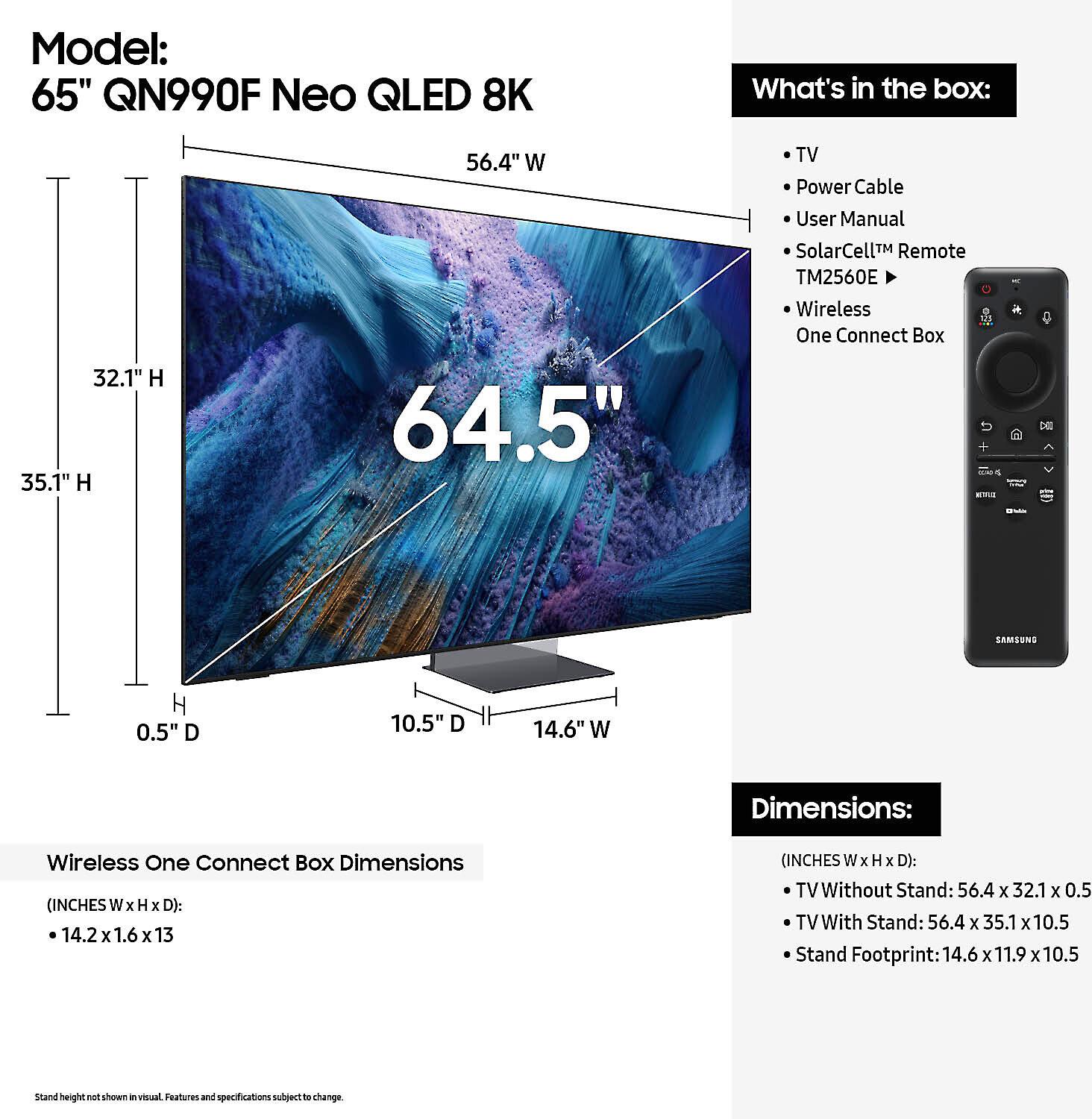
The Samsung Neo QLED QN990F, also from 2025, showcases Samsung's latest flagship technology. Its NQ8 AI Gen3 Processor uses 768 neural networks—essentially AI-powered algorithms that analyze and enhance every frame in real-time. The Quantum Matrix Mini LED backlight provides precise control over brightness and darkness, while the innovative Wireless One Connect box eliminates cable clutter by wirelessly connecting all your devices.
Both run Samsung's Tizen operating system, but the similarities largely end there. These TVs target completely different users and use cases.
Picture quality differences between these TVs are substantial, starting with brightness. The Crystal UHD U8000F produces modest brightness levels suitable for moderately lit rooms. If you have large windows or bright overhead lighting, you'll notice the picture can appear washed out during daytime viewing. This is typical for budget LED TVs—they prioritize cost savings over raw brightness.
The Neo QLED QN990F delivers exceptional brightness, measuring around 560 cd/m² in testing scenarios. This technical measurement might sound abstract, but practically it means the TV can maintain vivid, punchy colors even in bright living rooms with lots of ambient light. The difference is immediately noticeable when comparing them side-by-side.
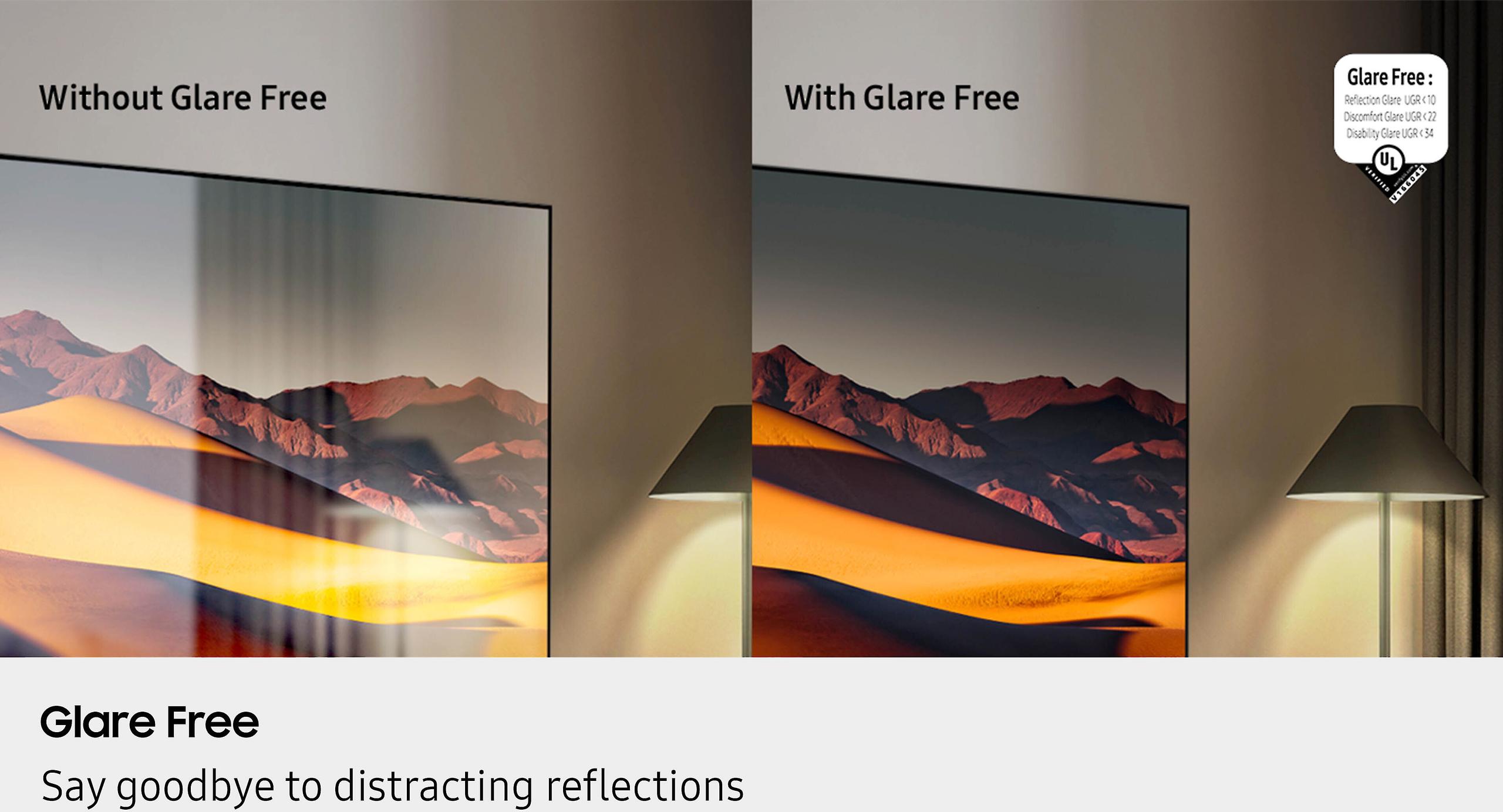
Interestingly, the QN990F features a matte anti-reflective coating that virtually eliminates direct reflections—you won't see yourself or lamps reflected in the screen. However, this coating comes with a trade-off: in bright rooms, black levels appear more gray and colors lose some vibrancy. It's excellent for bright rooms but doesn't look as dramatic in darkened spaces.
Contrast—the difference between the darkest blacks and brightest whites—significantly impacts picture quality. The U8000F uses a standard LED backlight without local dimming, meaning the entire backlight illuminates uniformly. Dark movie scenes appear more gray than true black, reducing that cinematic feel.
The QN990F excels here with approximately 1,920 dimming zones across its Mini LED backlight. When watching dark scenes, zones can dim or turn off entirely while keeping bright elements properly illuminated. This creates much deeper blacks with minimal "blooming"—the halo effect around bright objects against dark backgrounds.
In practice, this means watching movies like "Dune" or "Blade Runner 2049" feels more immersive on the QN990F, with space scenes showing true blacks dotted with brilliant stars, while the U8000F makes space appear more grayish.
High Dynamic Range (HDR) expands the range between bright and dark elements beyond what standard TV can display. Both TVs support HDR10+, Samsung's preferred HDR format, but their performance differs dramatically.
The U8000F handles HDR content adequately but without the brightness to make highlights truly pop. Sunrise scenes or explosions won't have that eye-catching intensity that makes HDR worthwhile. It's functional HDR rather than impressive HDR.
The QN990F delivers impactful HDR with brilliant highlights and maintained shadow detail. However, our research reveals disappointing accuracy out-of-the-box—colors and brightness don't match content creators' intentions without calibration. This is puzzling for a flagship model and suggests Samsung prioritized wow-factor over accuracy.
The processing difference between these TVs is substantial. The U8000F uses Samsung's Crystal Processor 4K, which competently upscales lower-resolution content to 4K and provides good color accuracy for standard definition content.
The QN990F employs the much more powerful NQ8 AI Gen3 Processor with 768 neural networks. This sounds like marketing speak, but it translates to significantly better upscaling performance. Since you'll be watching mostly 4K content upscaled to 8K, this processor's ability to add detail and reduce artifacts becomes crucial.
In testing scenarios, the QN990F excels at sharpness processing, making upscaled content appear more detailed and refined. However, it struggles with low-quality streaming content, showing pixelization and compression artifacts more prominently than expected. This creates an interesting paradox—it makes good content look fantastic but reveals flaws in poor-quality sources.
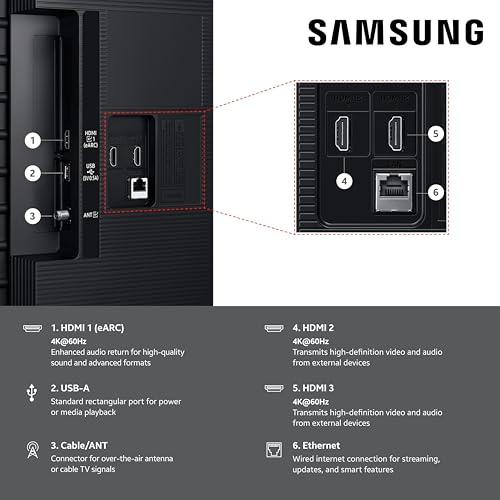
Gaming capabilities represent another major divide between these models. The U8000F supports Variable Refresh Rate (VRR) and Auto Low Latency Mode (ALLM), but its 60Hz refresh rate limits gaming performance. It's adequate for casual gaming on PlayStation 5 or Xbox Series X, but won't deliver the smoothest possible experience for fast-paced games.
The QN990F theoretically excels at gaming with 4K at 240Hz support and four full HDMI 2.1 ports. However, there's a significant caveat: the innovative Wireless One Connect box adds considerable input lag—54.1 milliseconds at 8K 120Hz, making competitive gaming nearly impossible.
Fortunately, the QN990F includes a direct connection option bypassing the wireless box, achieving excellent 4-millisecond input lag at 4K 240Hz. This means serious gamers need to plan their setup carefully, potentially sacrificing the clean aesthetic of wireless connectivity for optimal performance.
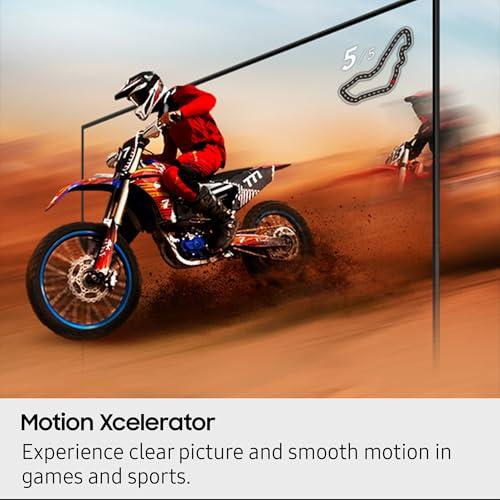
Motion handling presents challenges for both models. The U8000F shows poor motion clarity with noticeable blur during fast scenes. The QN990F includes Motion Xcelerator 240Hz technology but still exhibits sluggish pixel transitions, creating blur behind fast-moving objects even at maximum refresh rates.
Audio represents a clear differentiation point. The U8000F includes basic 20W stereo speakers that provide clear dialogue but lack depth and power. For most users, pairing it with a soundbar becomes essential for an engaging experience.
The QN990F features a sophisticated 90W 6.2.2 channel system with Object Tracking Sound Pro and Dolby Atmos support. This creates genuinely immersive audio where sound follows on-screen action—footsteps move across the room, helicopters fly overhead. It's one of the few TVs that doesn't desperately need external audio equipment, though audiophiles will still prefer dedicated systems.
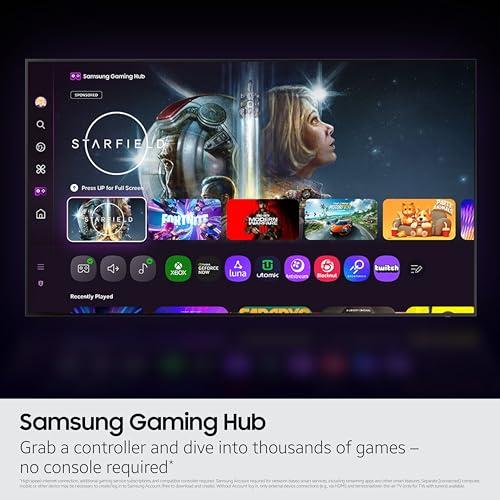
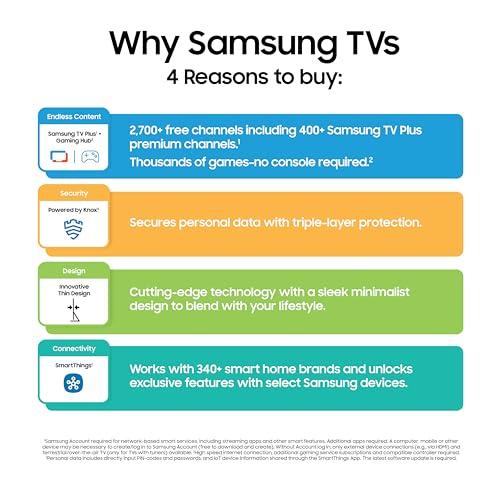
Both TVs run Samsung's Tizen operating system with similar core functionality—streaming apps, voice control, and casting capabilities. The QN990F adds Samsung Vision AI, which adaptively optimizes picture and sound settings based on content and viewing environment.
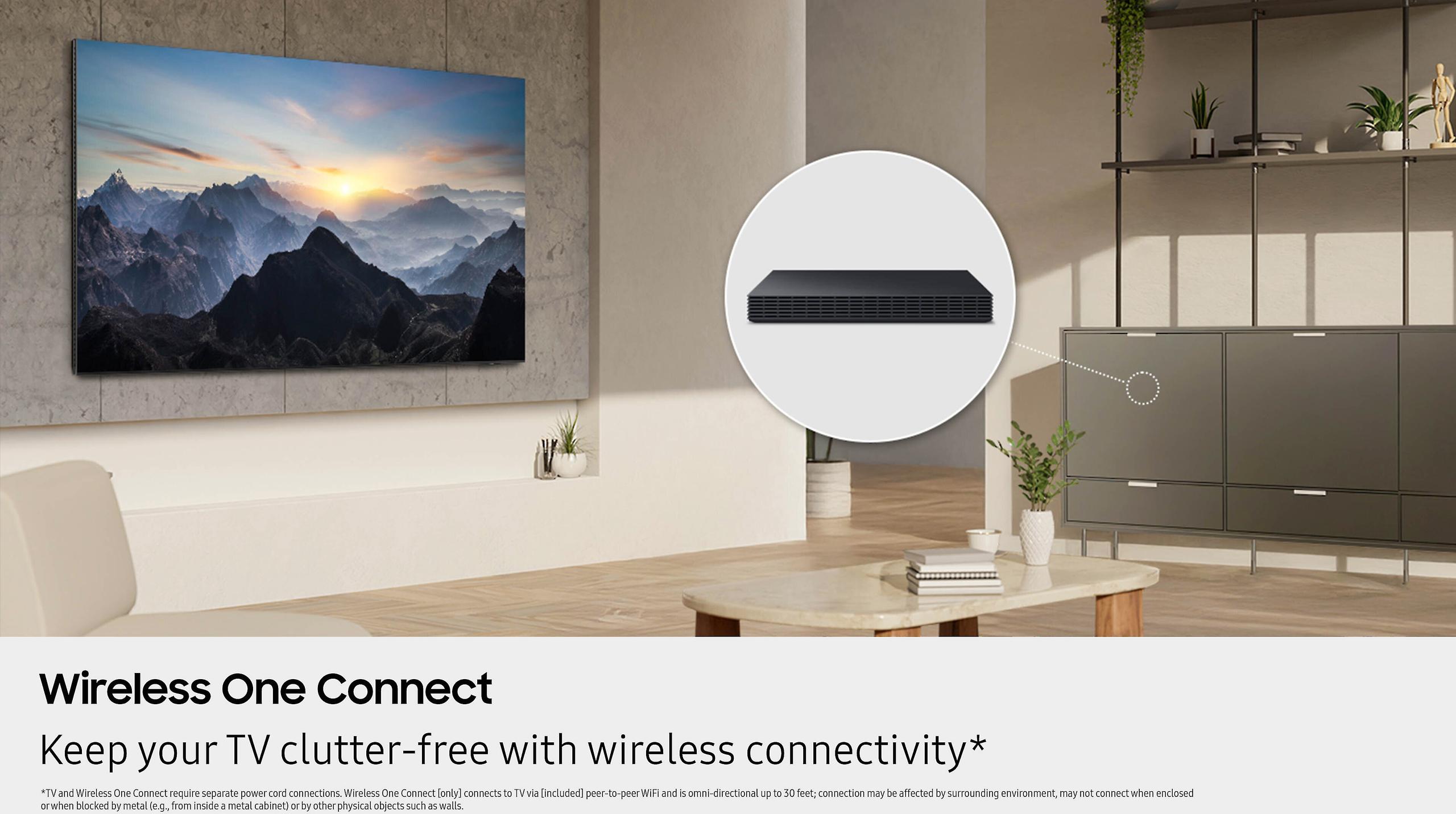
The standout feature of the QN990F is its Wireless One Connect box. Instead of plugging devices directly into the TV, everything connects to a separate wireless hub that communicates with the TV from up to 30 feet away. This enables incredibly clean installations with only a power cable running to the TV itself.
This innovation appeals to home theater enthusiasts who prioritize aesthetics, but it introduces the gaming latency issues mentioned earlier. It's a trade-off between visual simplicity and performance optimization.
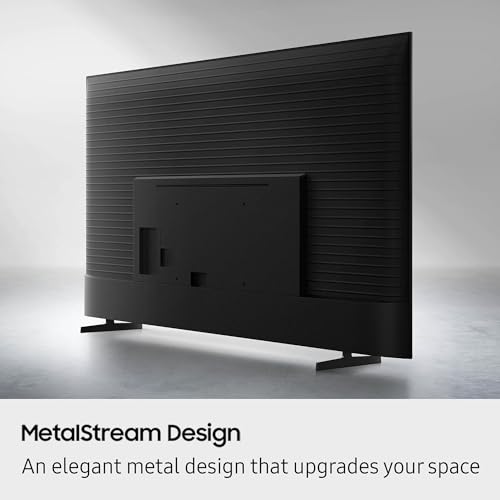
The U8000F adopts a practical design approach with its new MetalStream construction, featuring a metal back cover instead of all-plastic construction. It looks significantly more premium than previous budget models while maintaining cost-effectiveness.
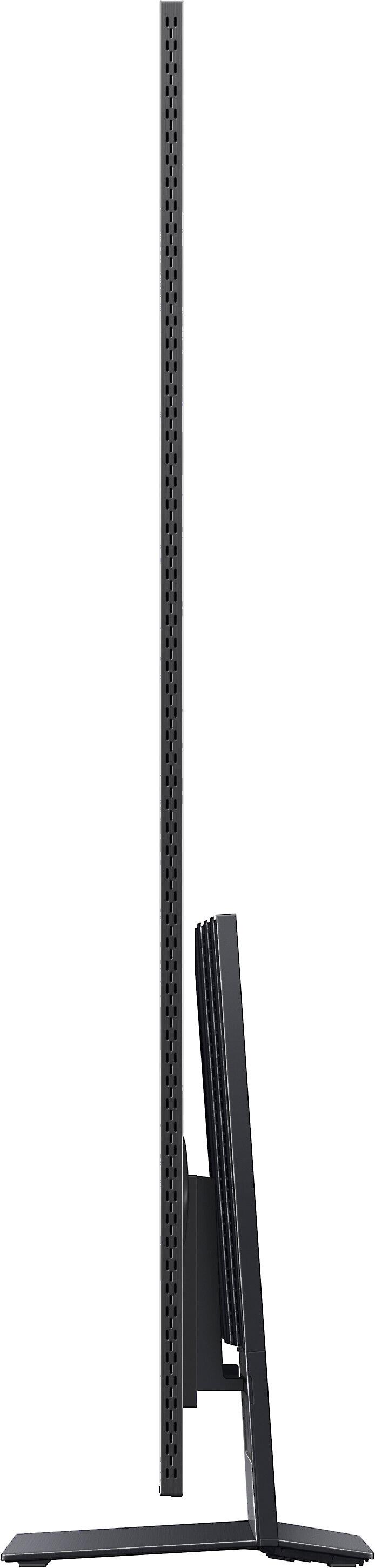
The QN990F pushes design boundaries with its nearly edgeless display and premium metal frame. Combined with the Wireless One Connect system, it creates a minimalist aesthetic that works beautifully in modern living spaces.
At the time of writing, these TVs occupy completely different price tiers, with the U8000F positioned as an affordable 4K option and the QN990F commanding flagship pricing. The value equation depends entirely on your priorities and budget.
The U8000F offers excellent value for budget-conscious buyers who want reliable 4K performance without premium features. It handles streaming content well, provides decent smart TV functionality, and offers good color accuracy out of the box. For most viewers who primarily watch Netflix, Disney+, and broadcast TV, it delivers everything needed at a reasonable price.
The QN990F presents a more complex value proposition. You're paying premium prices for cutting-edge technology that's arguably ahead of its time. With virtually no native 8K content available, you're betting on future content availability and paying for superior processing and display technology today.
For dedicated home theater setups, these TVs serve different purposes. The U8000F works well in basement or dedicated rooms with controlled lighting, though its limited brightness and contrast won't deliver that cinematic punch that movie enthusiasts crave.
The QN990F excels in home theaters with its superior contrast, brightness, and built-in premium audio. The Wireless One Connect system also simplifies installations in finished spaces where running cables is challenging. However, the out-of-the-box calibration issues mean serious home theater enthusiasts will want professional calibration to achieve optimal performance.
Choose the Samsung Crystal UHD U8000F if you want a reliable, well-built 4K TV without breaking the budget. It's perfect for families who primarily stream content, watch broadcast TV, and occasionally game. The improved design and solid performance make it an excellent value proposition for most living rooms.
The Samsung Neo QLED QN990F suits enthusiasts who want the absolute latest display technology and don't mind paying premium prices. It's ideal for bright living rooms where its exceptional brightness shines, early adopters who want 8K future-proofing, and users who value the cleanest possible aesthetic with wireless connectivity.
However, consider alternatives if you need Dolby Vision support (both models only support HDR10+), have extensive 4K Blu-ray collections with DTS audio (the QN990F cannot passthrough DTS), or want OLED-style contrast at lower prices.
The choice between these TVs ultimately comes down to budget and priorities. The U8000F delivers everything most people need from a modern TV at an accessible price point. The QN990F represents the bleeding edge of display technology but asks users to pay today for capabilities that may not be fully utilized for years.
For most buyers, the Crystal UHD U8000F provides the better value proposition, offering solid 4K performance and modern features without unnecessary complexity. The Neo QLED QN990F serves the enthusiast market willing to pay premium prices for the absolute best technology available, even if much of its potential remains untapped by current content limitations.
The TV market will continue evolving, but these models represent Samsung's current philosophy clearly: reliable performance for the masses versus cutting-edge technology for enthusiasts. Choose based on your budget, viewing habits, and willingness to pay for future-proofing that may take years to fully realize.
| Samsung 65-Inch Crystal UHD U8000F 4K Smart TV 2025 | Samsung 65" Neo QLED QN990F 8K Smart TV 2025 |
|---|---|
| Resolution - Higher resolution means sharper detail, but content availability varies | |
| 4K (3840 x 2160) - Matches all current streaming content | 8K (7680 x 4320) - Future-proofed but requires upscaling for all current content |
| Display Technology - Determines contrast, brightness, and overall picture quality | |
| Standard LED backlight without local dimming | Mini LED with ~1,920 dimming zones for superior contrast |
| Refresh Rate - Critical for smooth gaming and sports viewing | |
| 60Hz maximum (adequate for casual use) | Up to 240Hz at 4K (excellent for competitive gaming) |
| Peak Brightness - Essential for bright room viewing and impactful HDR | |
| Limited brightness, struggles in bright rooms | Excellent ~560 cd/m² brightness, overcomes ambient light |
| Processor - Affects upscaling quality and smart TV responsiveness | |
| Crystal Processor 4K (good 4K upscaling) | NQ8 AI Gen3 with 768 neural networks (exceptional upscaling) |
| Gaming Features - Determines compatibility with modern consoles | |
| Basic VRR/ALLM, 3 HDMI ports | 4K@240Hz support, 4 HDMI 2.1 ports, but Wireless One Connect adds latency |
| Built-in Audio - Affects whether you need external speakers | |
| Basic 20W stereo (soundbar recommended) | Premium 90W 6.2.2 system with Dolby Atmos (no soundbar needed) |
| Screen Coating - Impacts viewing in bright environments | |
| Standard glossy coating (shows reflections) | Matte anti-reflective coating (eliminates glare but raises blacks) |
| Connectivity Innovation - Affects installation flexibility and aesthetics | |
| Traditional ports on TV | Wireless One Connect box for cable-free setup |
| HDR Support - Enhances contrast and color in compatible content | |
| HDR10+ with modest impact due to brightness limitations | HDR10+ with excellent peak brightness but poor out-of-box accuracy |
| Target Audience - Helps determine if the TV matches your needs | |
| Budget-conscious viewers wanting reliable 4K performance | Premium enthusiasts seeking cutting-edge technology |
| Value Proposition - Cost vs benefit analysis | |
| Excellent value for essential 4K features | Questionable value due to limited 8K content and premium pricing |
The Samsung Neo QLED QN990F delivers significantly better picture quality with its Mini LED technology and superior brightness levels. It can handle bright rooms much better and provides deeper blacks with its 1,920 dimming zones. The Samsung Crystal UHD U8000F offers good picture quality for the price but struggles with brightness and contrast in comparison.
Currently, 8K isn't worth the premium for most buyers since virtually no native 8K content exists. The Samsung Neo QLED QN990F excels at upscaling 4K content to 8K, but you're paying significantly more for future-proofing that may take years to materialize. The Samsung Crystal UHD U8000F handles all current 4K content perfectly fine.
For competitive gaming, the Samsung Neo QLED QN990F is superior with 4K at 240Hz support and low input lag when connected directly to the TV. However, using its Wireless One Connect box adds significant latency. The Samsung Crystal UHD U8000F is adequate for casual gaming but limited to 60Hz refresh rates.
The Samsung Crystal UHD U8000F definitely benefits from a soundbar due to its basic 20W stereo speakers. The Samsung Neo QLED QN990F includes a premium 90W 6.2.2 channel system with Dolby Atmos that provides genuinely immersive audio without requiring external speakers.
The Samsung Neo QLED QN990F is specifically designed for bright rooms with exceptional brightness and anti-reflective coating that eliminates glare. The Samsung Crystal UHD U8000F can appear washed out in bright environments due to its limited brightness capabilities.
Both TVs run Samsung's Tizen operating system with similar core features like streaming apps and voice control. The Samsung Neo QLED QN990F adds Samsung Vision AI for adaptive optimization, while the Samsung Crystal UHD U8000F provides all essential smart TV functionality without extra complexity.
The Samsung Crystal UHD U8000F offers excellent value for budget-conscious buyers who want reliable 4K performance without premium features. The Samsung Neo QLED QN990F provides cutting-edge technology but at a significant premium that's hard to justify given limited 8K content availability.
For dedicated home theaters, the Samsung Neo QLED QN990F excels with superior contrast, brightness, and premium built-in audio. The Wireless One Connect system also simplifies installations. The Samsung Crystal UHD U8000F works well in controlled lighting but lacks the cinematic impact of the premium model.
Both TVs have motion handling limitations. The Samsung Crystal UHD U8000F shows noticeable blur during fast scenes, while the Samsung Neo QLED QN990F includes Motion Xcelerator 240Hz but still exhibits some blur behind fast-moving objects despite its higher refresh rate capabilities.
The Samsung Crystal UHD U8000F features improved MetalStream Design with a metal back cover, making it more premium than previous budget models. The Samsung Neo QLED QN990F offers a nearly edgeless design with premium materials and the innovative Wireless One Connect system for cable-free installations.
Both TVs handle streaming content well, but the Samsung Neo QLED QN990F provides a more impressive viewing experience with better brightness and contrast. The Samsung Crystal UHD U8000F delivers perfectly adequate streaming performance for most viewers at a much more accessible price point.
The Samsung Crystal UHD U8000F provides sufficient future-proofing for most users since 4K content will remain the standard for years. The Samsung Neo QLED QN990F offers 8K future-proofing for early adopters willing to pay premium prices, but the benefit won't be realized until 8K content becomes widely available.
We've done our best to create useful and informative comparisons to help you decide what product to buy. Our research uses advanced automated methods to create this comparison and perfection is not possible - please contact us for corrections or questions. These are the sites we've researched in the creation of this article: bestbuy.com - youtube.com - youtube.com - rtings.com - youtube.com - samsung.com - hometechnologyreview.com - rtings.com - samsung.com - displayspecifications.com - samsung.com - displayspecifications.com - walmart.com - billsmith.com - dentonstv.com - samsung.com - samsung.com - samsung.com - youtube.com - bestbuy.com - bestbuy.com - youtube.com - samsung.com - donstv.com - samsung.com - abt.com - bestbuy.com - pcnation.com - samsung.com - videoandaudiocenter.com - exertisalmo.com - displayspecifications.com - theapplianceplug.com - news.samsung.com

Privacy Policy
Terms and Conditions - Affiliate Policy
Home Security
© Copyright 2008-2026.
11816 Inwood Rd #1211, Dallas, TX 75244