



Choosing a 65-inch 4K TV in today's market means navigating a landscape that spans from surprisingly capable budget models to feature-packed flagships that cost five times more. The fundamental question isn't just "which TV is better?" but rather "which TV delivers the right balance of performance and value for your specific needs?"
The 4K television market has matured significantly over the past few years, with even entry-level models now offering decent picture quality that would have been considered premium just a decade ago. However, the gap between budget and flagship TVs has actually widened in terms of advanced features like local dimming (where different sections of the backlight can be controlled independently), quantum dot color technology, and high refresh rate gaming capabilities.
When evaluating any TV, the most critical factors are picture quality (how bright, colorful, and contrasted the image appears), smart TV functionality (how well the interface works and what streaming services are available), gaming performance (input lag and refresh rate capabilities), and overall value proposition. These become especially important when comparing products from completely different price tiers.
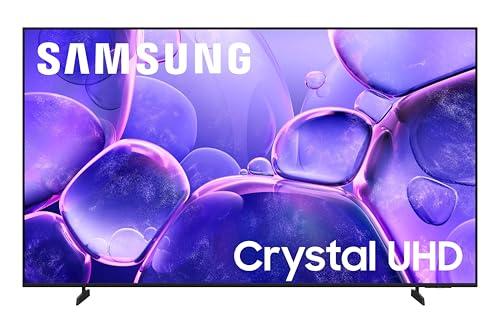
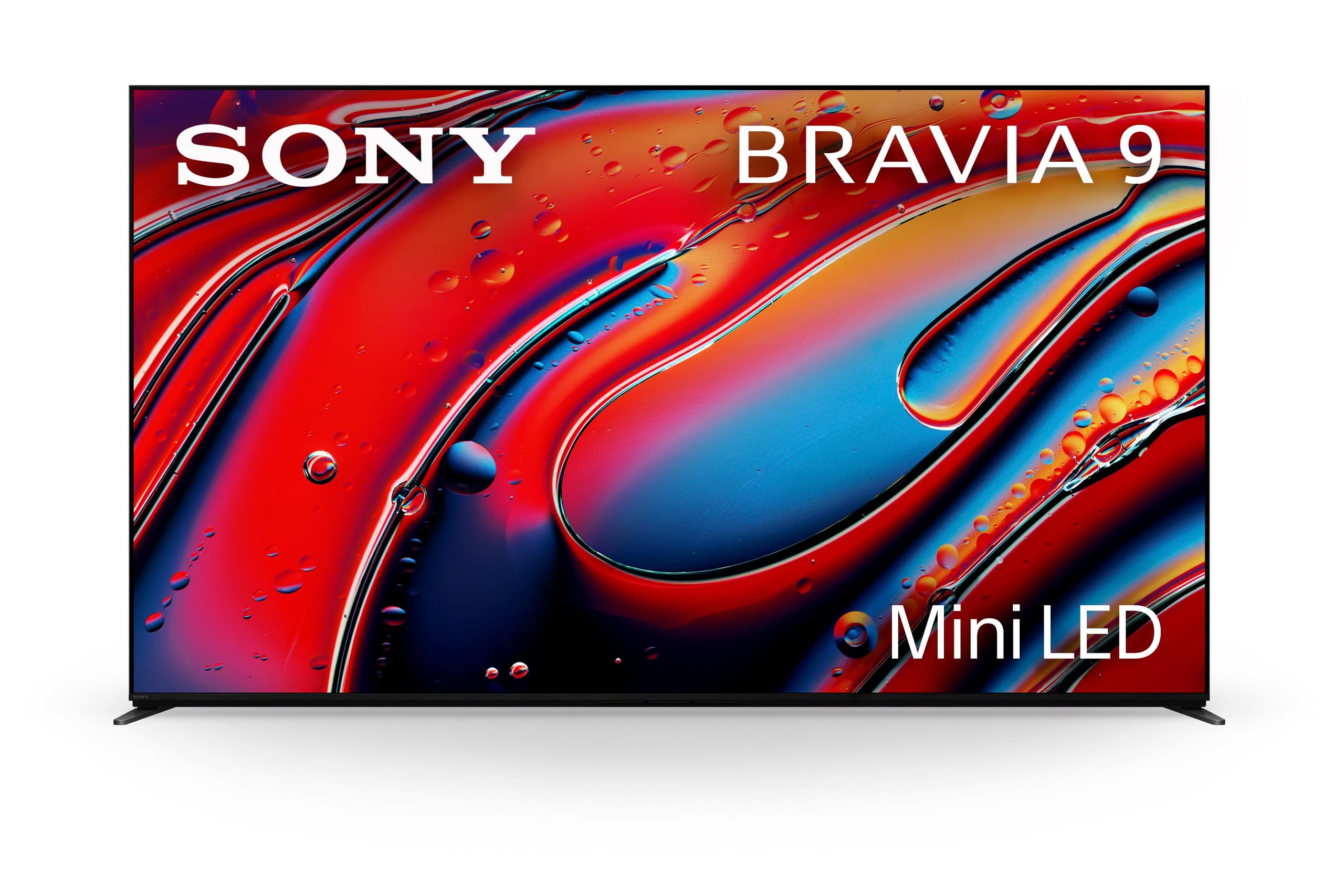
Today we're examining two 65-inch TVs that represent opposite ends of this spectrum: the Samsung U8000F, Samsung's 2025 entry-level offering, and the Sony BRAVIA 9, Sony's 2024 flagship Mini LED television. These models showcase fundamentally different approaches to TV technology and target completely different buyers.
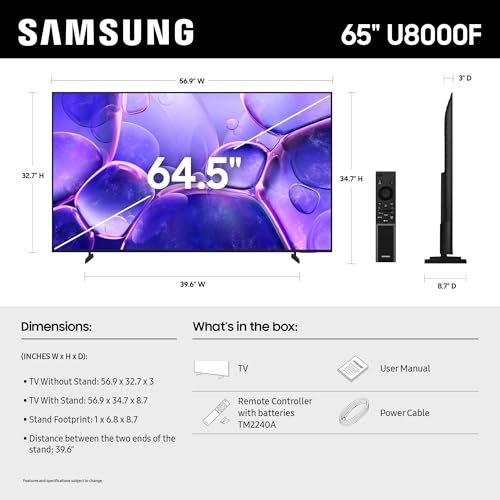
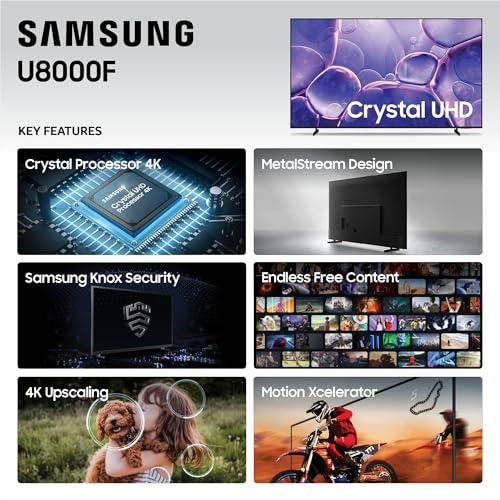
The Samsung U8000F launched in 2025 as Samsung's replacement for the popular DU8000 series, maintaining the company's focus on delivering solid 4K performance at accessible prices. Samsung has refined their entry-level approach over the years, improving smart TV features and design while keeping costs low through simpler display technology.
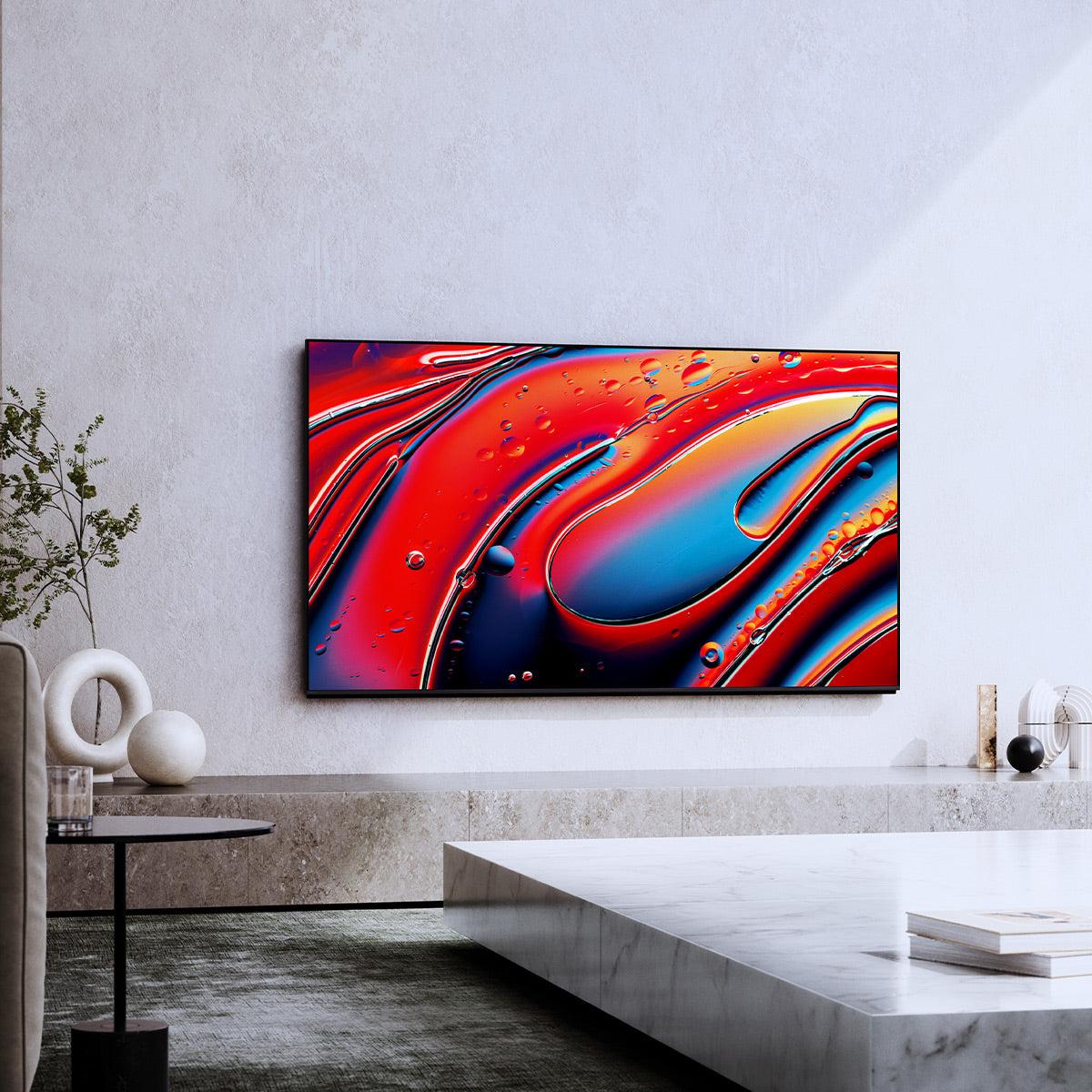
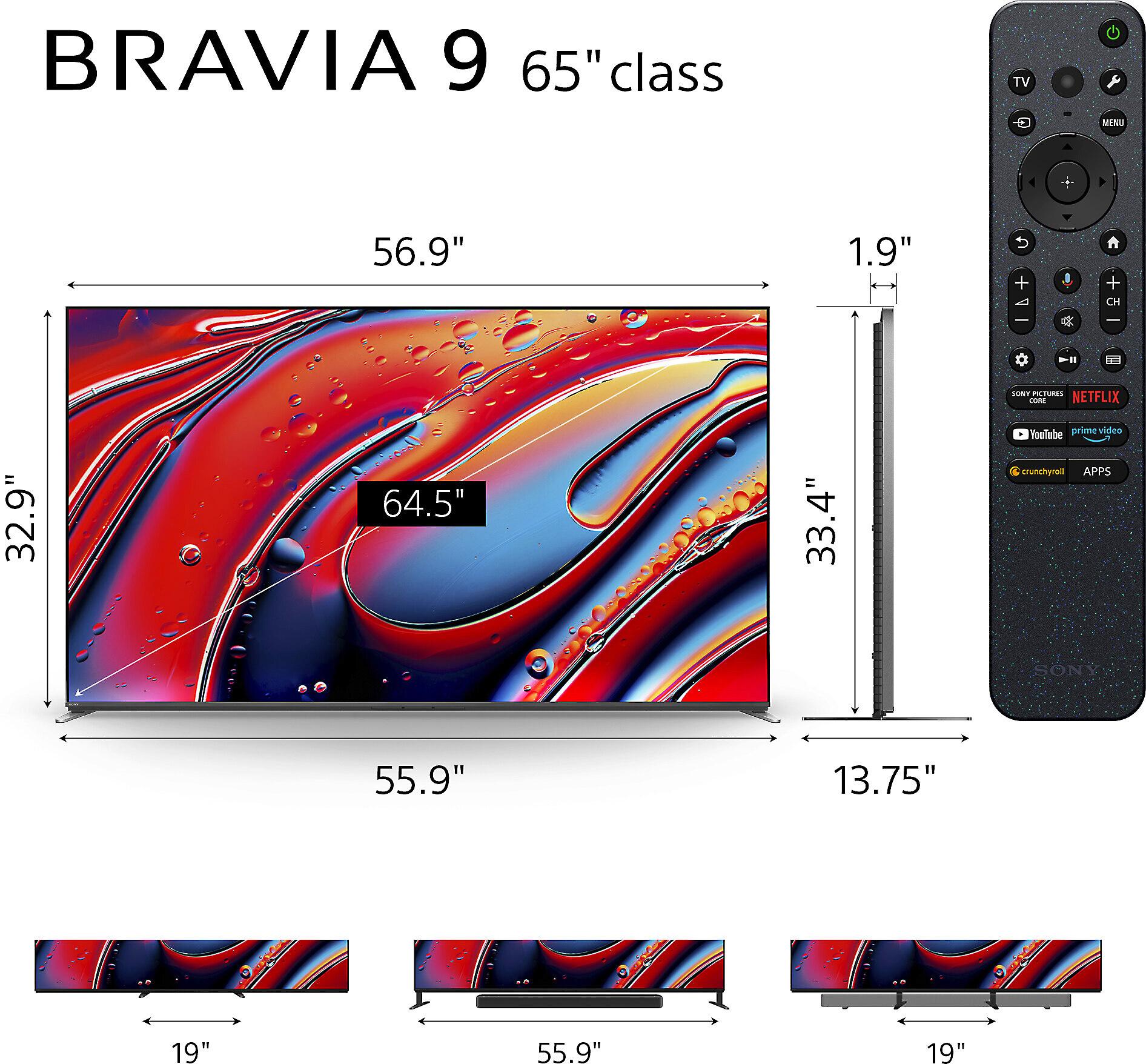
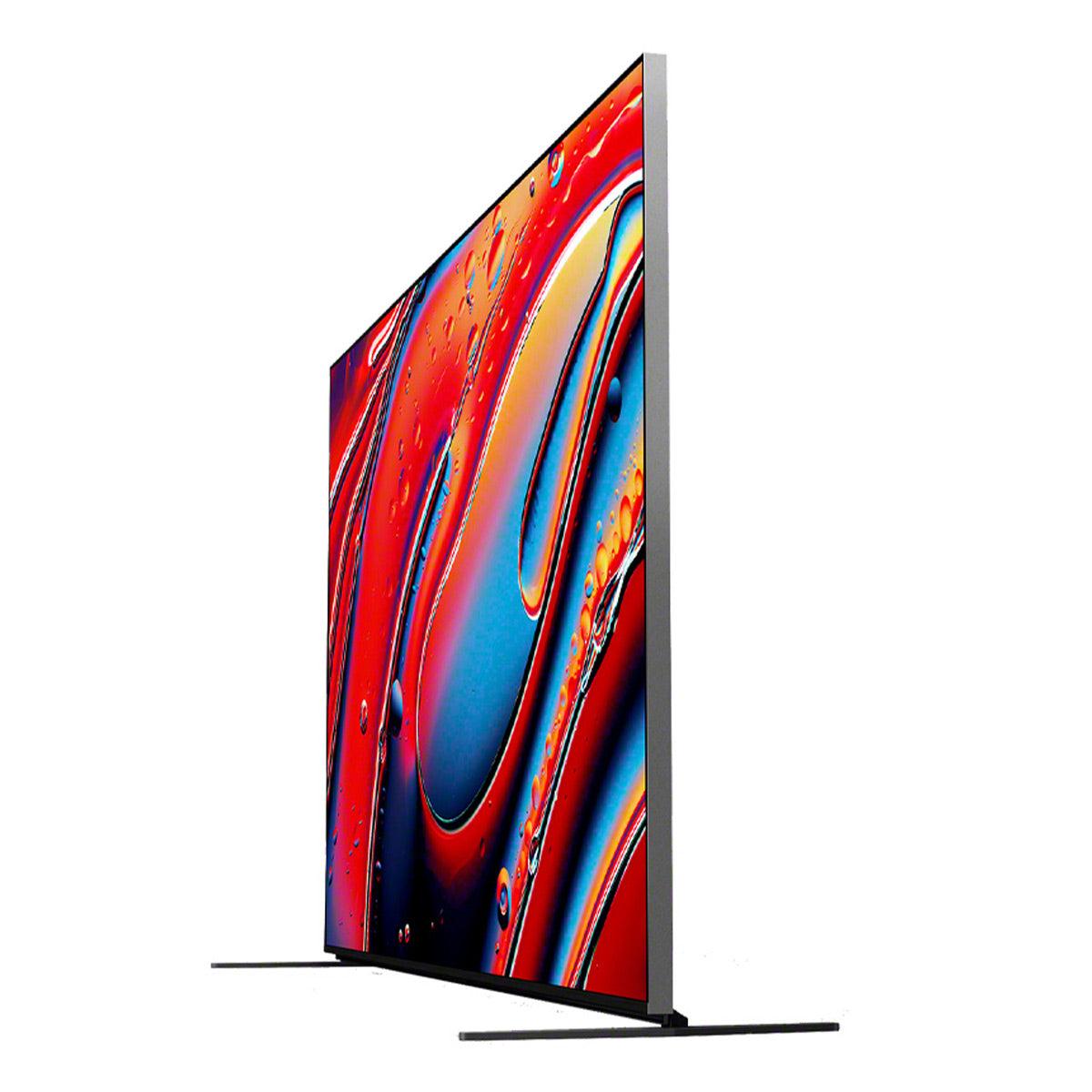
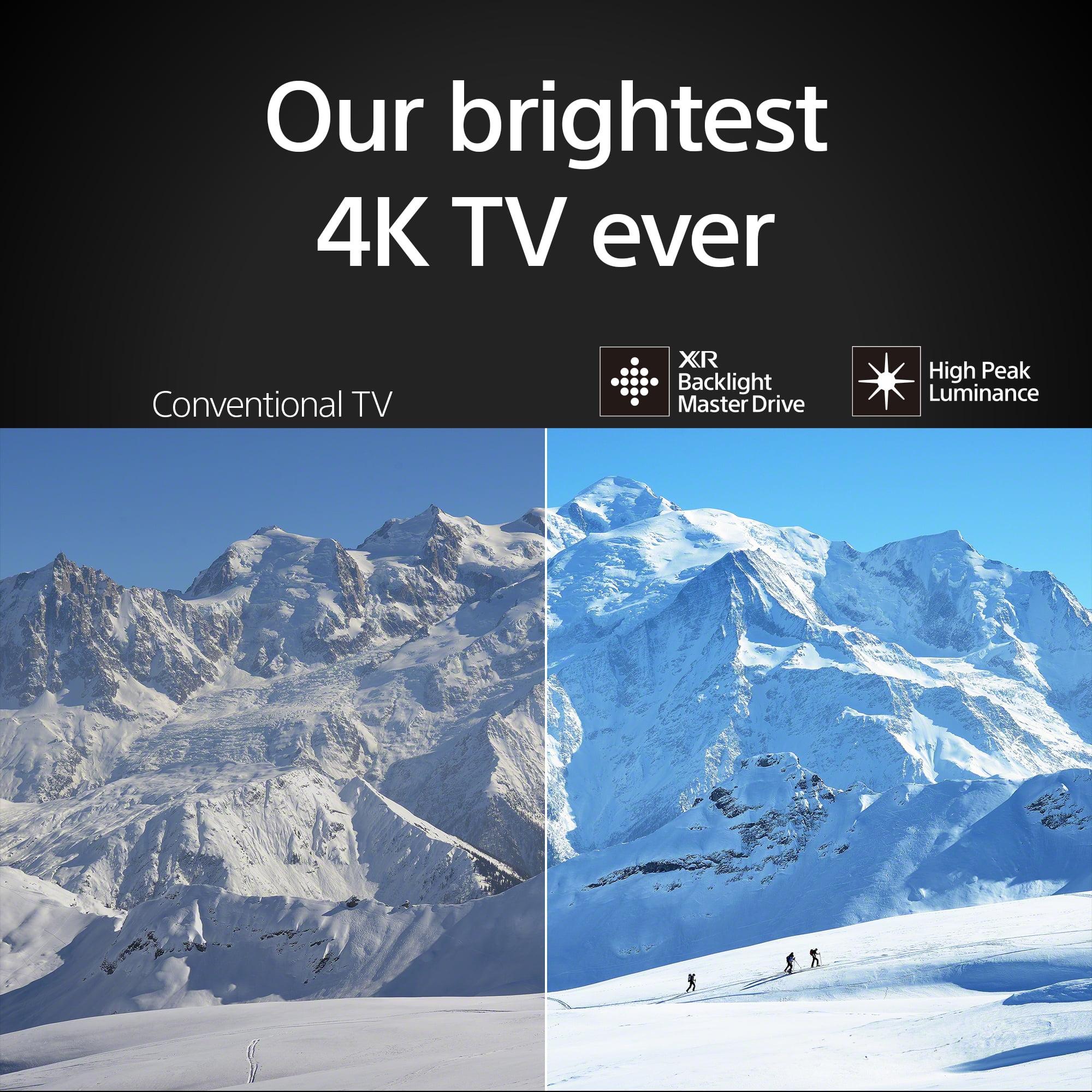
The Sony BRAVIA 9, released in 2024, represents Sony's return to flagship territory after focusing primarily on OLED technology in recent years. This model marked Sony's most significant investment in Mini LED technology, incorporating lessons learned from their professional monitor division to create what they claim is their brightest 4K TV ever.
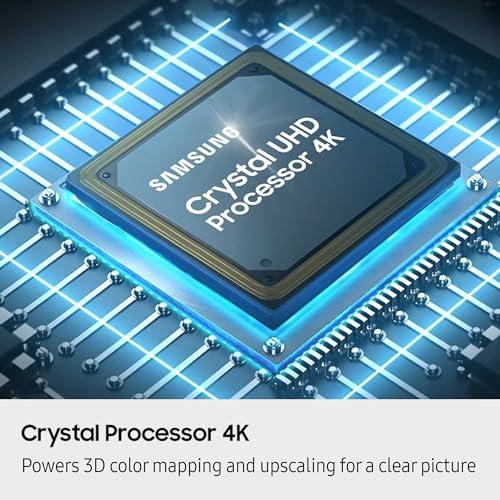
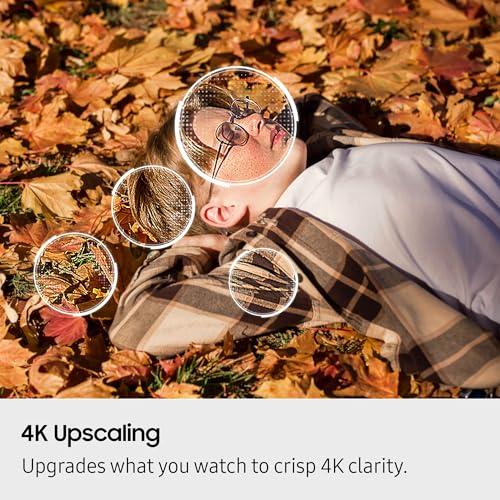
The technology gap between these models is substantial. The Samsung U8000F uses traditional LED backlighting with Samsung's Crystal Processor 4K for image processing and upscaling (converting lower-resolution content to look better on a 4K screen). The Sony BRAVIA 9 employs advanced Mini LED technology with thousands of tiny LEDs controlled by Sony's XR Processor, plus quantum dot technology for enhanced color reproduction.
Picture quality represents the most significant difference between these TVs, and it starts with brightness capability. The Samsung U8000F delivers adequate brightness for most viewing environments, particularly in darker rooms or spaces with controlled lighting. However, it lacks local dimming technology, meaning the entire screen's backlight operates uniformly. This limitation becomes apparent when watching content with both very bright and very dark elements simultaneously – the TV can't independently control different areas of the screen.
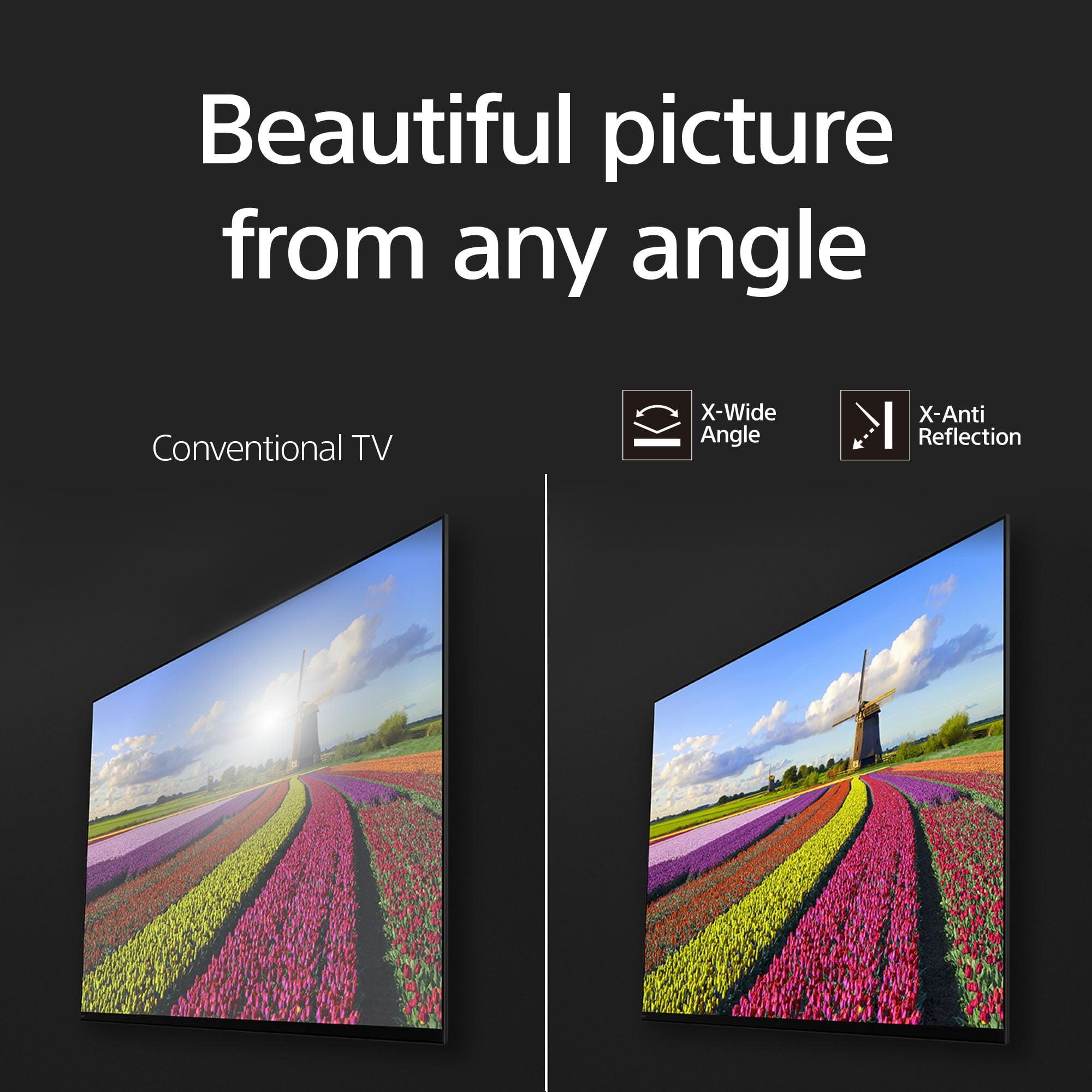
The Sony BRAVIA 9 takes a completely different approach with its Mini LED backlighting system. Mini LEDs are significantly smaller than traditional LEDs, allowing TV manufacturers to pack thousands of them behind the screen. Sony's implementation includes precise control systems that can independently adjust brightness in different screen zones, creating deeper blacks and brighter highlights within the same image. This translates to more realistic contrast that closely matches what directors intended when creating their content.
From our research of professional reviews and user experiences, the brightness difference is dramatic. The Samsung U8000F performs adequately in darker viewing environments but struggles in brightly lit living rooms where ambient light can wash out the image. The Sony BRAVIA 9, conversely, excels in bright rooms and can deliver HDR (High Dynamic Range) content with the impact it was designed to have.
Color reproduction reveals another significant gap between these models. The Samsung U8000F uses Samsung's Crystal Processor 4K to enhance colors and includes support for HDR10+ (a dynamic HDR format that adjusts brightness and color on a scene-by-scene basis). While the results are generally pleasing, the TV's limited brightness capability means HDR content doesn't deliver the full impact of expanded dynamic range.
The Sony BRAVIA 9 incorporates quantum dot technology, which uses microscopic particles to produce more accurate and saturated colors. Combined with support for Dolby Vision (a premium HDR format with even more sophisticated metadata than HDR10+), the TV can display over a billion different color shades with professional-grade accuracy. Sony specifically calibrated this TV to match their professional mastering monitors used in movie post-production, ensuring content appears as filmmakers intended.
User reviews consistently praise the Sony BRAVIA 9 for natural skin tones and vibrant yet realistic colors, while the Samsung U8000F occasionally exhibits a slight blue tint that may require calibration adjustment depending on your preferences.
Motion clarity becomes crucial for sports viewing and action movies. The Samsung U8000F features a 60Hz native refresh rate with Samsung's Motion Xcelerator technology designed to reduce blur during fast-moving scenes. While this performs adequately for most content, particularly considering the TV's entry-level positioning, it has inherent limitations for fast-paced sports or action sequences.
The Sony BRAVIA 9 offers a true 120Hz native refresh rate combined with Sony's XR Motion Clarity processing. This higher refresh rate means the TV can display 120 unique frames per second rather than 60, resulting in smoother motion reproduction. The difference is immediately noticeable when watching sports, with player movements appearing more fluid and natural.
Based on professional testing and user feedback, the motion handling difference is significant enough to matter for sports enthusiasts or anyone who frequently watches action-heavy content.
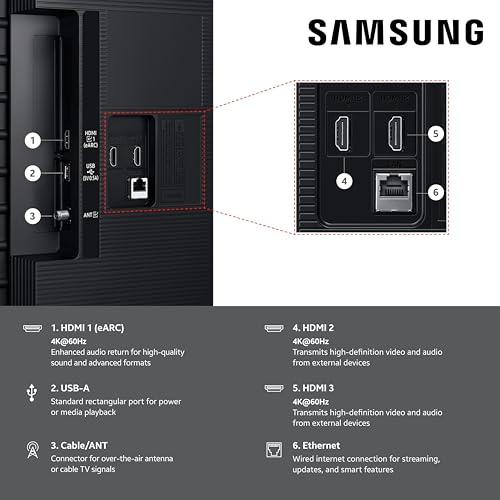
Gaming capabilities have become increasingly important as PlayStation 5 and Xbox Series X consoles push 4K resolution at higher frame rates. The Samsung U8000F provides basic gaming functionality with Auto Low Latency Mode (ALLM), which automatically reduces input lag when a gaming console is detected. However, its HDMI 2.0 ports and 60Hz limitation mean it cannot take advantage of next-generation console capabilities.
The Sony BRAVIA 9 offers comprehensive gaming features including two HDMI 2.1 ports capable of 4K resolution at 120 frames per second, Variable Refresh Rate (VRR) to eliminate screen tearing, and optimized settings for PlayStation 5. These features provide noticeably smoother gameplay and reduced input lag for competitive gaming.
For casual gaming or older consoles, the Samsung U8000F performs adequately. However, anyone with current-generation consoles or serious gaming interests will find the Sony BRAVIA 9 significantly more capable.
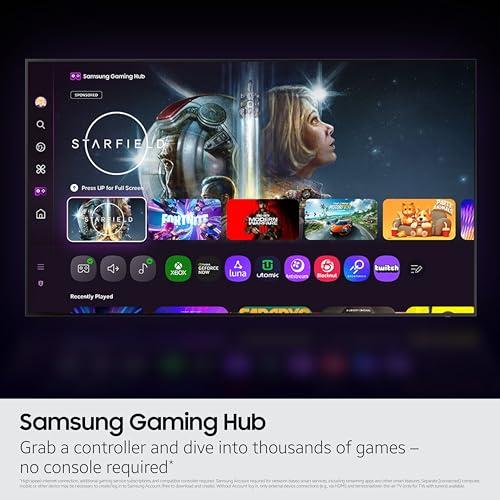
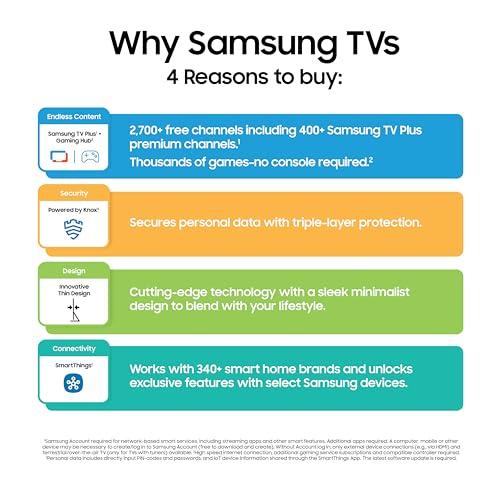
Both TVs offer comprehensive smart TV functionality, but with different approaches. The Samsung U8000F runs Samsung's Tizen operating system with their updated One UI interface, which user reviews describe as intuitive and responsive. Samsung TV Plus provides access to numerous free streaming channels, and the TV integrates well with Samsung's SmartThings ecosystem for smart home control.
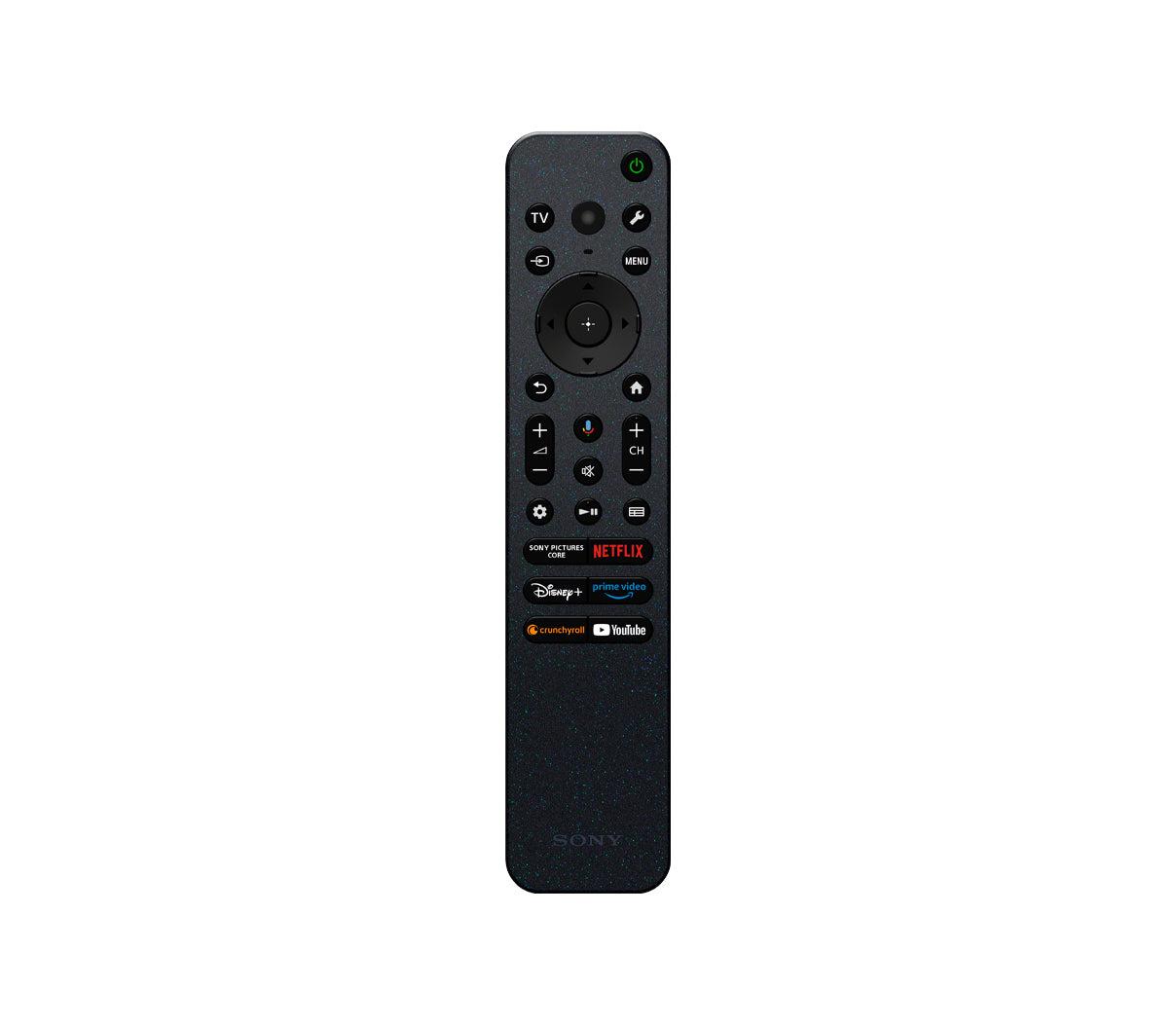
The Sony BRAVIA 9 uses Google TV, which many users prefer for its cleaner interface and integrated Google Assistant functionality. The platform includes Chromecast built-in and Apple AirPlay 2 support, making it easy to stream content from mobile devices. Professional reviews consistently praise Google TV for its recommendation system and lack of intrusive advertisements compared to some competitors.
Both smart TV platforms support all major streaming services and receive regular updates. The choice often comes down to personal preference and existing ecosystem investments.
Audio performance represents another clear differentiation point. The Samsung U8000F includes a basic 20-watt, two-channel speaker system with Object Tracking Sound Lite, which attempts to match audio positioning with on-screen action. While adequate for casual viewing, the audio lacks depth and power that most users expect from a large-screen TV.
The Sony BRAVIA 9 features a substantially more sophisticated 70-watt, 2.2.2 channel system with up-firing drivers designed to create height effects for Dolby Atmos content. The Acoustic Multi-Audio+ system includes speakers positioned throughout the TV frame to create more immersive sound staging. User reviews consistently mention that the Sony BRAVIA 9 delivers surprisingly good built-in audio that reduces the immediate need for a separate soundbar.
However, both TVs benefit from external audio systems for serious home theater applications. The Sony BRAVIA 9 includes advanced features like Acoustic Center Sync, which allows the TV to function as a center channel when paired with compatible Sony soundbars.
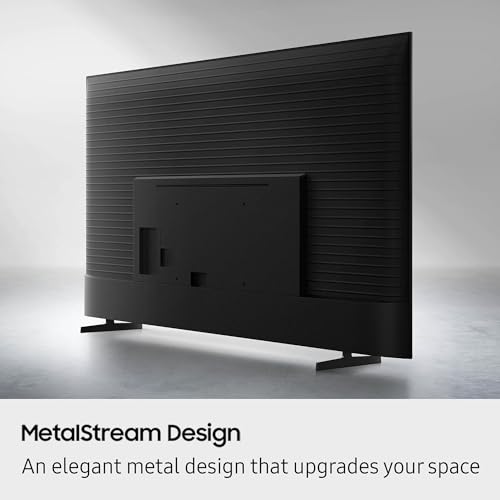
Both TVs feature modern, slim-bezel designs suitable for wall mounting or tabletop placement. The Samsung U8000F incorporates Samsung's MetalStream Design with an updated metal back panel, representing an improvement over previous all-plastic entry-level models. The overall construction feels solid for its price point.
The Sony BRAVIA 9 exhibits premium build quality with a substantial feel that reflects its advanced internal components. The TV is significantly heavier due to its more complex backlighting system and processing hardware, which some users appreciate as an indicator of quality construction.
Both models support standard VESA wall mounting, though the Sony BRAVIA 9 requires more robust mounting hardware due to its increased weight.
At the time of writing, these TVs occupy completely different market segments with price differences of several thousand dollars. The Samsung U8000F targets budget-conscious consumers seeking reliable 4K functionality without premium features, typically priced in the entry-level category for 65-inch TVs.
The Sony BRAVIA 9 commands flagship pricing reflective of its advanced Mini LED technology, premium processing capabilities, and comprehensive feature set. While expensive, professional reviews suggest the TV delivers performance that justifies its premium positioning for buyers prioritizing picture quality.
The value calculation depends entirely on your priorities and budget. The Samsung U8000F delivers impressive functionality for its price point, making 4K television accessible to budget-conscious buyers. The Sony BRAVIA 9 provides flagship-level performance with technology that remains competitive for years, justifying its premium cost for enthusiasts.
For dedicated home theater applications, the performance differences become more pronounced. The Samsung U8000F works adequately in darker theater environments where its brightness limitations are less apparent, but lacks the contrast control and color accuracy serious enthusiasts typically prefer.
The Sony BRAVIA 9 excels in home theater applications with its professional-grade color calibration, advanced local dimming, and superior HDR performance. The TV's ability to display deep blacks alongside bright highlights creates the cinematic experience that home theater enthusiasts seek.
However, both TVs benefit from external audio systems in dedicated theater setups. The Sony BRAVIA 9 offers more sophisticated integration options with compatible soundbars and receivers.
The decision between these TVs should align with your viewing habits, budget, and performance expectations. Choose the Samsung U8000F if you need reliable 4K functionality at an accessible price point, primarily watch streaming content in controlled lighting conditions, and don't require advanced gaming features. This TV excels as a secondary television or for budget-conscious buyers who want solid performance without premium features.
Select the Sony BRAVIA 9 if you can invest in premium television technology, frequently watch HDR movies and high-quality content, have a bright living room requiring exceptional brightness, game on current-generation consoles, or want a TV that remains competitive for many years. This model justifies its premium pricing with flagship-level performance and advanced features.
The reality is these TVs serve fundamentally different markets. The Samsung U8000F democratizes 4K technology for budget-conscious buyers, while the Sony BRAVIA 9 pushes technological boundaries for enthusiasts willing to invest in premium performance. Both succeed in their respective segments, making the choice dependent on your specific needs and budget rather than one being universally superior to the other.
At the time of writing, both TVs represent strong value propositions within their respective price tiers, offering different paths to 4K television ownership based on your priorities and financial considerations.
| Samsung 65-Inch Crystal UHD U8000F 4K Smart TV 2025 | Sony BRAVIA 9 65" 4K UHD Mini LED QLED Smart Google TV |
|---|---|
| Display Technology - Determines contrast, brightness, and overall picture quality | |
| Basic LED backlighting with no local dimming | Mini LED with thousands of individually controlled LEDs plus quantum dot technology |
| Peak Brightness - Critical for HDR content and bright room viewing | |
| Moderate brightness suitable for darker rooms | Sony's brightest 4K TV ever, exceptional for bright living rooms |
| Refresh Rate - Impacts motion smoothness for sports and gaming | |
| 60Hz native (adequate for casual viewing) | 120Hz native (superior for sports and action content) |
| HDR Support - Enhances color and contrast in compatible content | |
| HDR10+ support with limited brightness impact | Dolby Vision + HDR10 with professional-grade color accuracy |
| Gaming Features - Important for console gaming performance | |
| HDMI 2.0, ALLM support, 60Hz limitation | Two HDMI 2.1 ports, VRR, ALLM, 4K@120Hz support |
| Processor - Affects upscaling quality and smart TV responsiveness | |
| Crystal Processor 4K (basic upscaling) | XR Processor (advanced AI-enhanced processing) |
| Smart TV Platform - Determines interface quality and app selection | |
| Tizen OS with Samsung TV Plus free channels | Google TV with integrated Google Assistant |
| Audio System - Built-in sound quality and power | |
| 20W 2-channel speakers with Object Tracking Sound Lite | 70W 2.2.2 channel system with up-firing drivers and Dolby Atmos |
| Local Dimming - Controls contrast by dimming screen zones independently | |
| None (uniform backlighting across entire screen) | Advanced Mini LED dimming with thousands of zones |
| Color Technology - Affects color accuracy and vibrancy | |
| Standard LED color reproduction | Quantum dot technology with XR Triluminos Pro |
| Target Market - Who this TV is designed for | |
| Budget-conscious buyers seeking basic 4K functionality | Home theater enthusiasts and serious gamers willing to invest in premium performance |
| Best Use Cases - Where each TV excels | |
| Casual viewing, secondary TVs, controlled lighting environments | Bright rooms, HDR movies, current-gen console gaming, future-proof investment |
The Sony BRAVIA 9 delivers significantly better picture quality with its Mini LED technology, quantum dot color enhancement, and thousands of individually controlled backlighting zones. The Samsung U8000F offers decent picture quality for its price range but lacks local dimming and advanced color technology, making it better suited for darker viewing environments.
The Sony BRAVIA 9 uses Mini LED technology with thousands of tiny LEDs that can be controlled independently, creating better contrast and deeper blacks. The Samsung U8000F uses standard LED backlighting without local dimming, meaning the entire screen brightens or dims uniformly, which limits contrast performance.
The Sony BRAVIA 9 is superior for gaming with two HDMI 2.1 ports supporting 4K at 120Hz, Variable Refresh Rate (VRR), and Auto Low Latency Mode. The Samsung U8000F only supports 60Hz refresh rates and HDMI 2.0, making it suitable for casual gaming but not optimal for PlayStation 5 or Xbox Series X.
The Sony BRAVIA 9 excels in bright rooms as Sony's brightest 4K TV with exceptional peak brightness capabilities. The Samsung U8000F performs best in darker or controlled lighting environments, as its limited brightness can be overwhelmed by ambient light in bright living rooms.
Both offer excellent smart TV experiences, but with different strengths. The Sony BRAVIA 9 uses Google TV with integrated Google Assistant and fewer ads, while the Samsung U8000F features Samsung's Tizen OS with Samsung TV Plus free streaming channels and SmartThings integration.
The Sony BRAVIA 9 features a premium 70W 2.2.2 channel system with up-firing drivers and Dolby Atmos support, delivering impressive built-in audio. The Samsung U8000F includes basic 20W 2-channel speakers that are adequate for casual viewing but may benefit from a soundbar for enhanced audio.
The Sony BRAVIA 9 provides superior HDR performance with Dolby Vision support, professional-grade color accuracy, and the brightness needed to showcase HDR content effectively. The Samsung U8000F supports HDR10+ but lacks the brightness and contrast capabilities to fully deliver impactful HDR experiences.
The Sony BRAVIA 9 excels in home theater applications with its cinema-grade color calibration, advanced local dimming, and superior contrast control that matches professional mastering monitors. The Samsung U8000F works adequately in darker theater rooms but lacks the contrast and color accuracy serious home theater enthusiasts typically prefer.
The Sony BRAVIA 9 offers superior motion handling with its true 120Hz refresh rate and XR Motion Clarity processing, making sports and action content appear smoother and more fluid. The Samsung U8000F provides adequate motion performance for its 60Hz panel but has inherent limitations for fast-paced content.
Both TVs offer solid construction, but the Sony BRAVIA 9 features premium build quality with substantial materials reflecting its advanced internal components. The Samsung U8000F includes Samsung's improved MetalStream Design with a metal back panel, representing good build quality for its entry-level positioning.
Value depends on your needs and budget. The Samsung U8000F offers excellent value for budget-conscious buyers seeking reliable 4K functionality without premium features. The Sony BRAVIA 9 provides strong value for enthusiasts willing to invest in flagship-level performance and future-proof technology.
Choose the Samsung U8000F if you need basic 4K functionality at an accessible price for casual viewing in controlled lighting. Select the Sony BRAVIA 9 if you want flagship performance, frequently watch HDR content, have a bright room, game on current consoles, or prioritize long-term picture quality investment.
We've done our best to create useful and informative comparisons to help you decide what product to buy. Our research uses advanced automated methods to create this comparison and perfection is not possible - please contact us for corrections or questions. These are the sites we've researched in the creation of this article: bestbuy.com - youtube.com - youtube.com - rtings.com - youtube.com - samsung.com - hometechnologyreview.com - rtings.com - samsung.com - displayspecifications.com - samsung.com - displayspecifications.com - walmart.com - billsmith.com - dentonstv.com - samsung.com - samsung.com - samsung.com - youtube.com - bestbuy.com - bestbuy.com - youtube.com - samsung.com - donstv.com - bestbuy.com - bestbuy.com - youtube.com - whathifi.com - crutchfield.com - rtings.com - pcrichard.com - merlinstv.com - youtube.com - sony.ca - electronics.sony.com

Privacy Policy
Terms and Conditions - Affiliate Policy
Home Security
© Copyright 2008-2026.
11816 Inwood Rd #1211, Dallas, TX 75244