










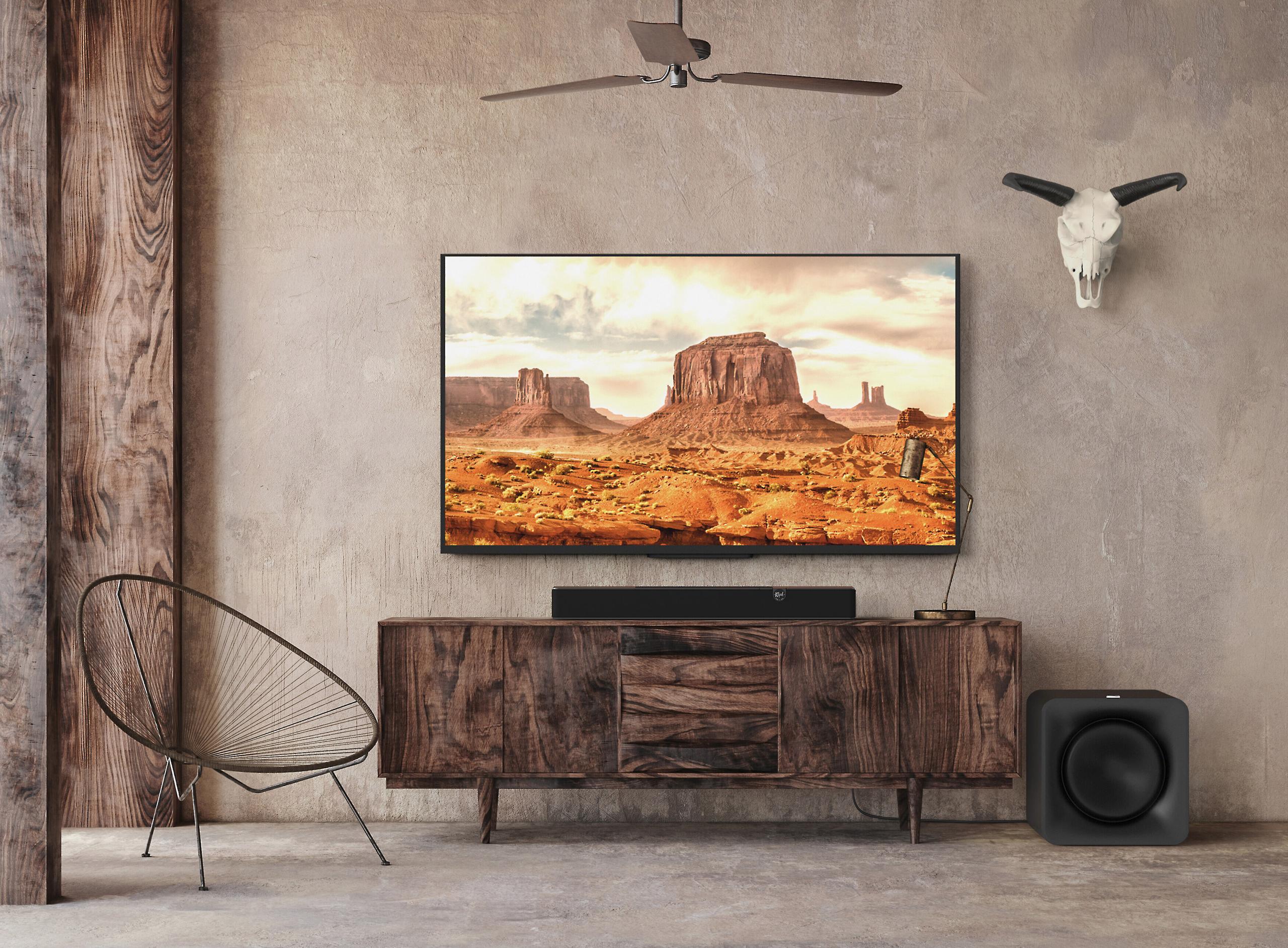
When you're trying to upgrade from your TV's built-in speakers (which, let's be honest, usually sound like they're coming from inside a tin can), you'll quickly discover that the soundbar world offers two completely different philosophies. There's the "give me everything right now" approach with true surround systems, and the "start simple and grow" method with expandable all-in-one units.
The VIZIO 5.1 Soundbar SE and Klipsch Flexus Core 100 represent these opposing approaches perfectly. One throws the whole surround sound kitchen sink at you for less money, while the other focuses on premium simplicity with room to expand. At the time of writing, the price difference between these systems is surprisingly small, but their capabilities and philosophies couldn't be more different.
Before diving into specifics, let's clear up what makes a soundbar system tick. The numbers you see – like "5.1" or "2.1" – tell you how many audio channels the system can produce. The first number represents full-range speakers (handling everything from dialogue to music), while the number after the decimal point indicates dedicated subwoofers for bass. A 5.1 system has five main speakers plus one subwoofer, creating true surround sound. A 2.1 system has two main speakers and one subwoofer, relying on audio processing tricks to simulate surround effects.
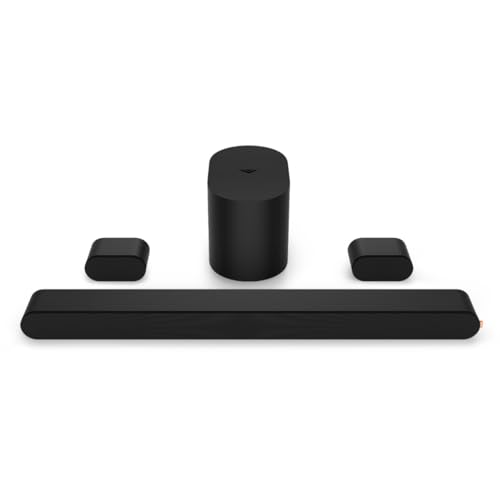
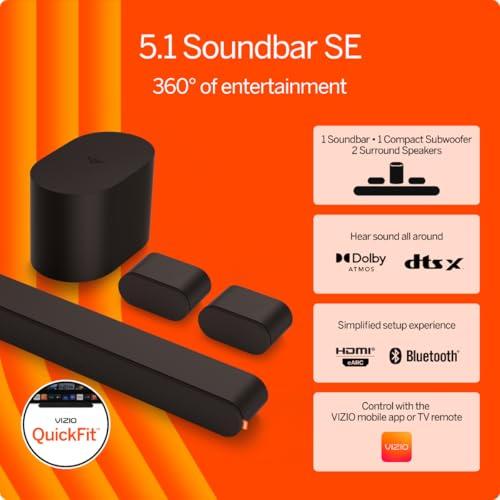
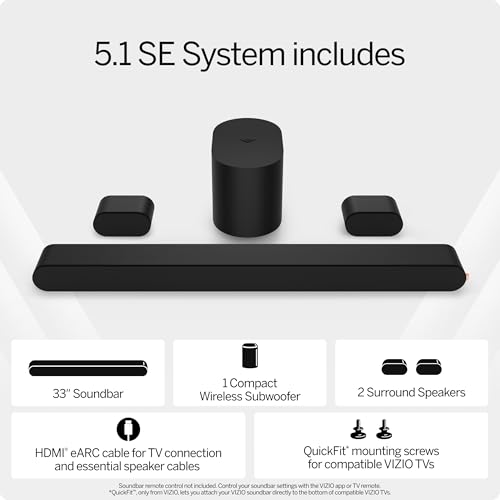
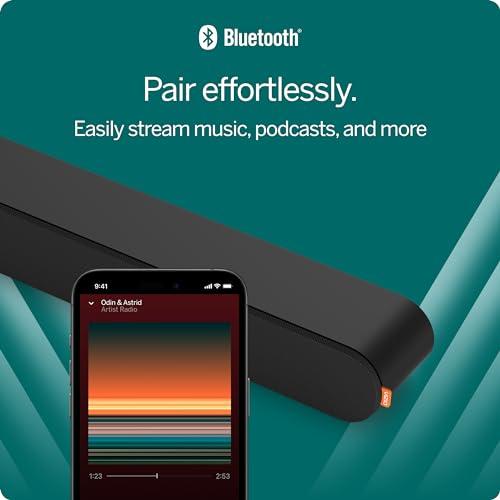
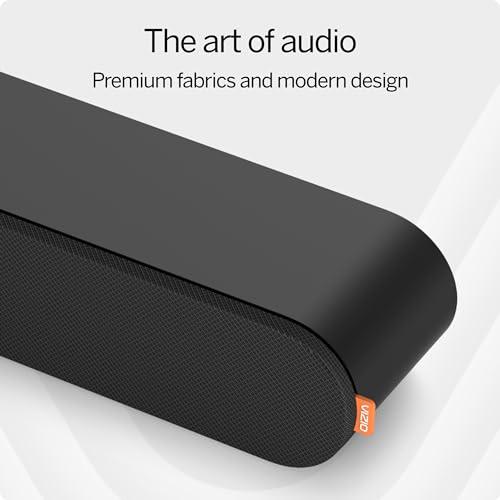
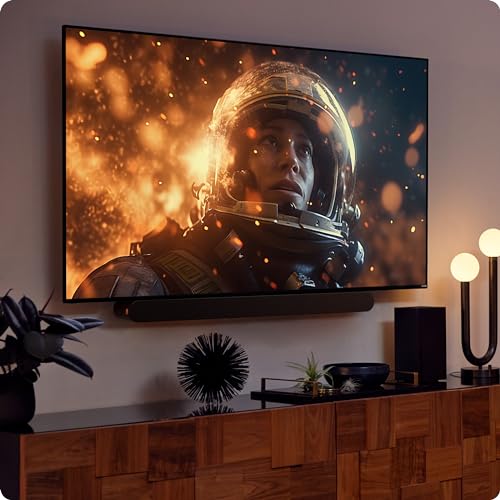
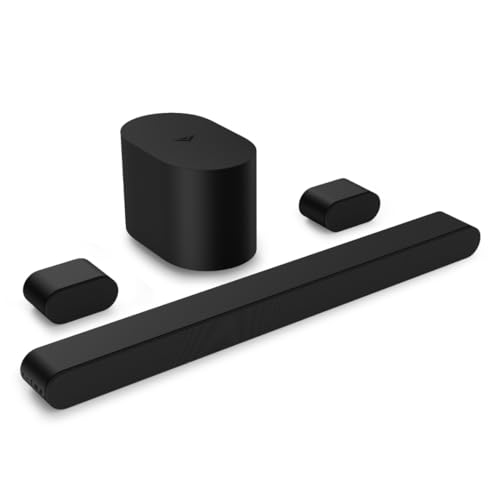
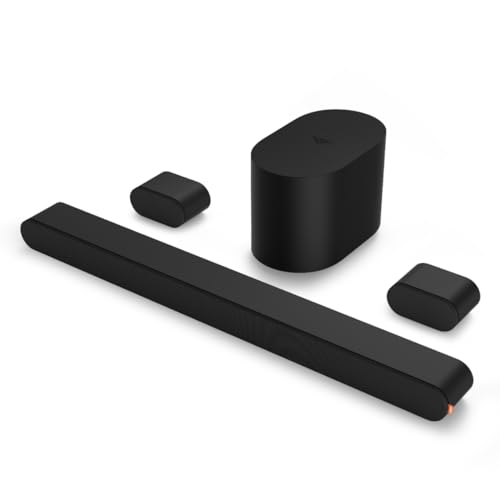
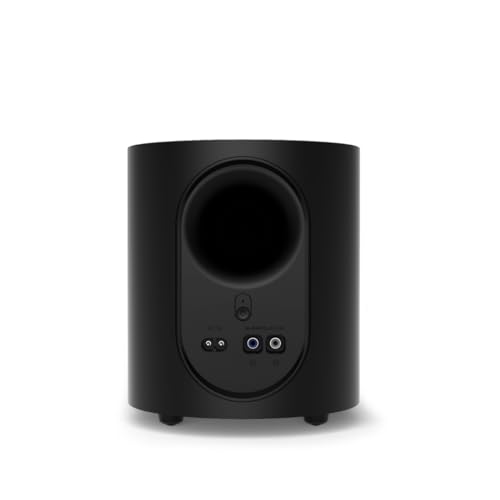
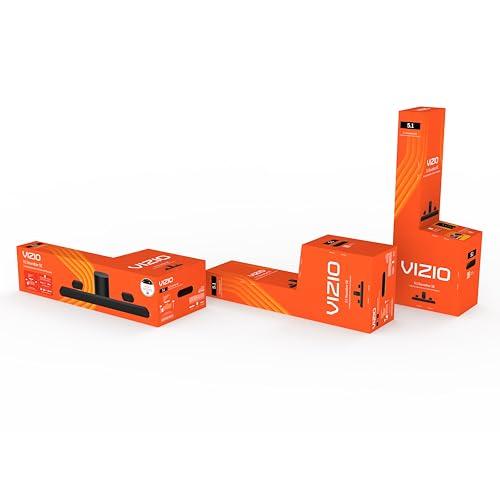
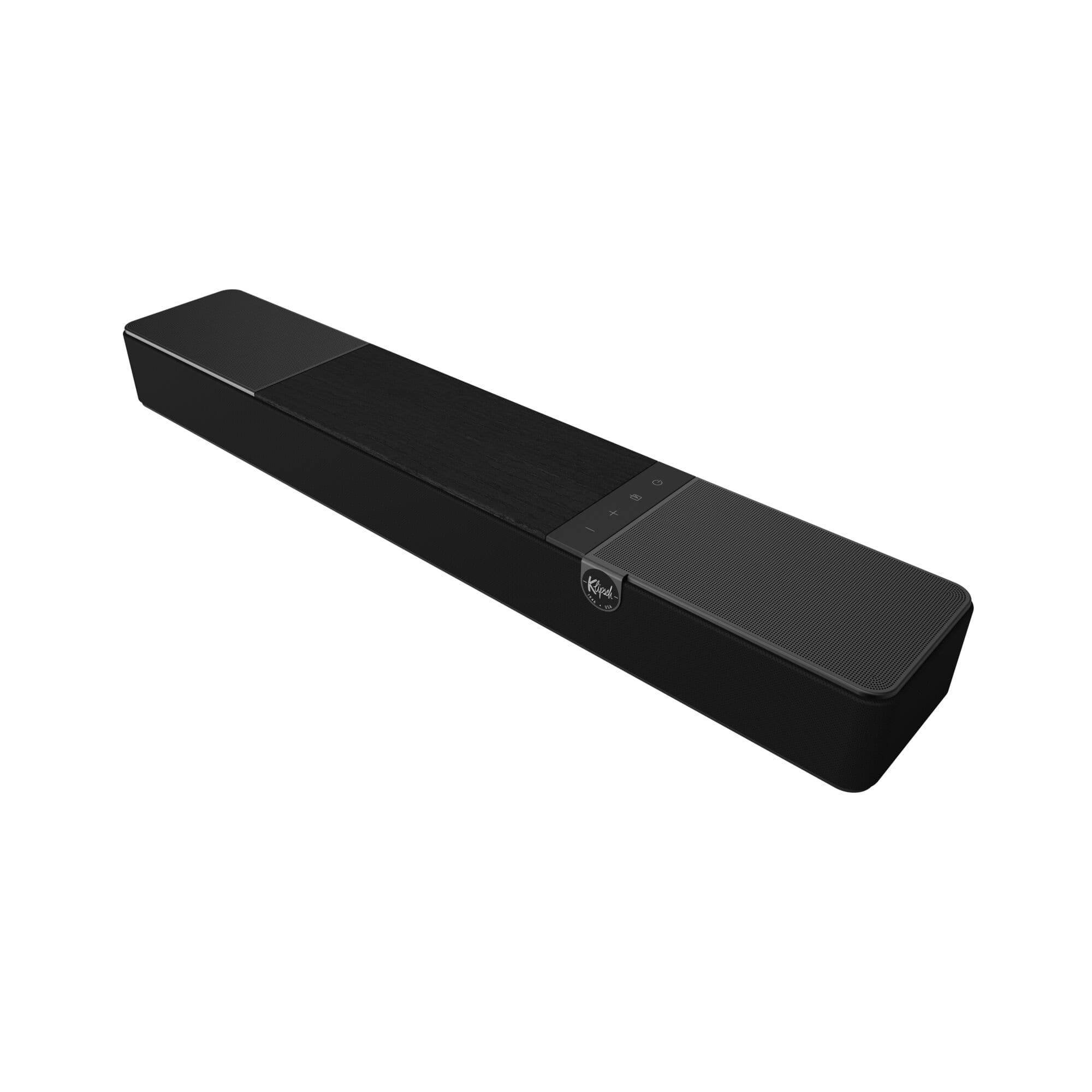
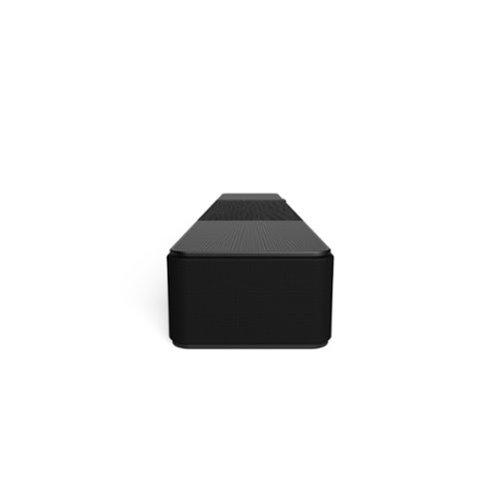
The VIZIO 5.1 SE gives you actual speakers placed around your room – a 33-inch main soundbar, a wireless subwoofer you can hide anywhere, and two rear speakers that create genuine behind-you effects. The Klipsch Core 100 takes a different approach entirely, packing everything into a single 28-inch bar with dual built-in subwoofers and using psychoacoustic processing (basically audio wizardry that tricks your brain into hearing sounds from directions they're not actually coming from) to create virtual surround effects.
Having lived with both true surround and virtualized systems, I can tell you there's no substitute for actual speakers behind you when a helicopter flies overhead in a movie or when someone's sneaking up on you in a video game. The VIZIO 5.1 SE, released in 2022, delivers this authentic spatial experience at a price point that would have been unthinkable just a few years ago.
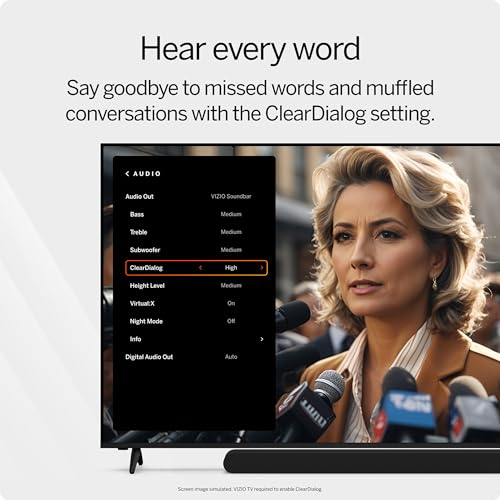
The system's 33-inch soundbar houses three full-range drivers that handle left, right, and center channels. The center channel is crucial here – it's dedicated entirely to dialogue, ensuring voices remain crystal clear even when explosions are shaking your windows. The two included surround speakers each contain a full-range driver, and while they're not going to compete with massive tower speakers, they're positioned precisely where they need to be to create that enveloping sound field.
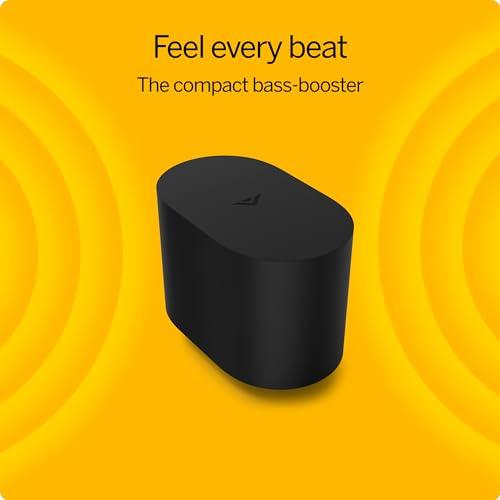
The wireless subwoofer deserves special mention because it can reach down to 50Hz – that's deep enough to feel the rumble of a T-rex in Jurassic Park or the chest-thumping bass drops in your favorite action sequences. More importantly, because it's wireless and separate, you can position it optimally in your room. Subwoofer placement makes a huge difference in how bass sounds, and having that flexibility is a genuine advantage.
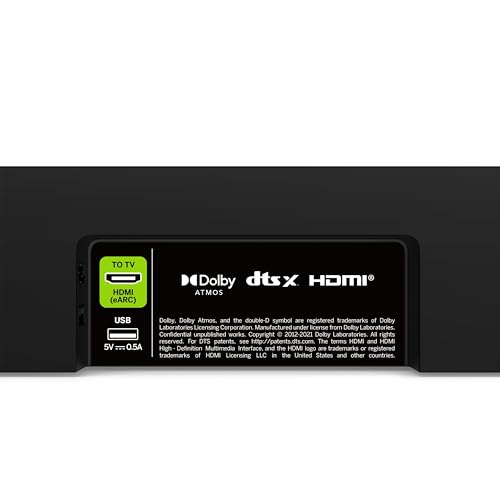
What really sets the VIZIO system apart is its dual format support. Beyond Dolby Atmos (which creates that overhead, three-dimensional sound experience), it also supports DTS:X. Think of these as different languages for immersive audio – having both means you'll get the best possible sound regardless of whether you're watching Netflix, gaming on your PlayStation, or playing a 4K Blu-ray.
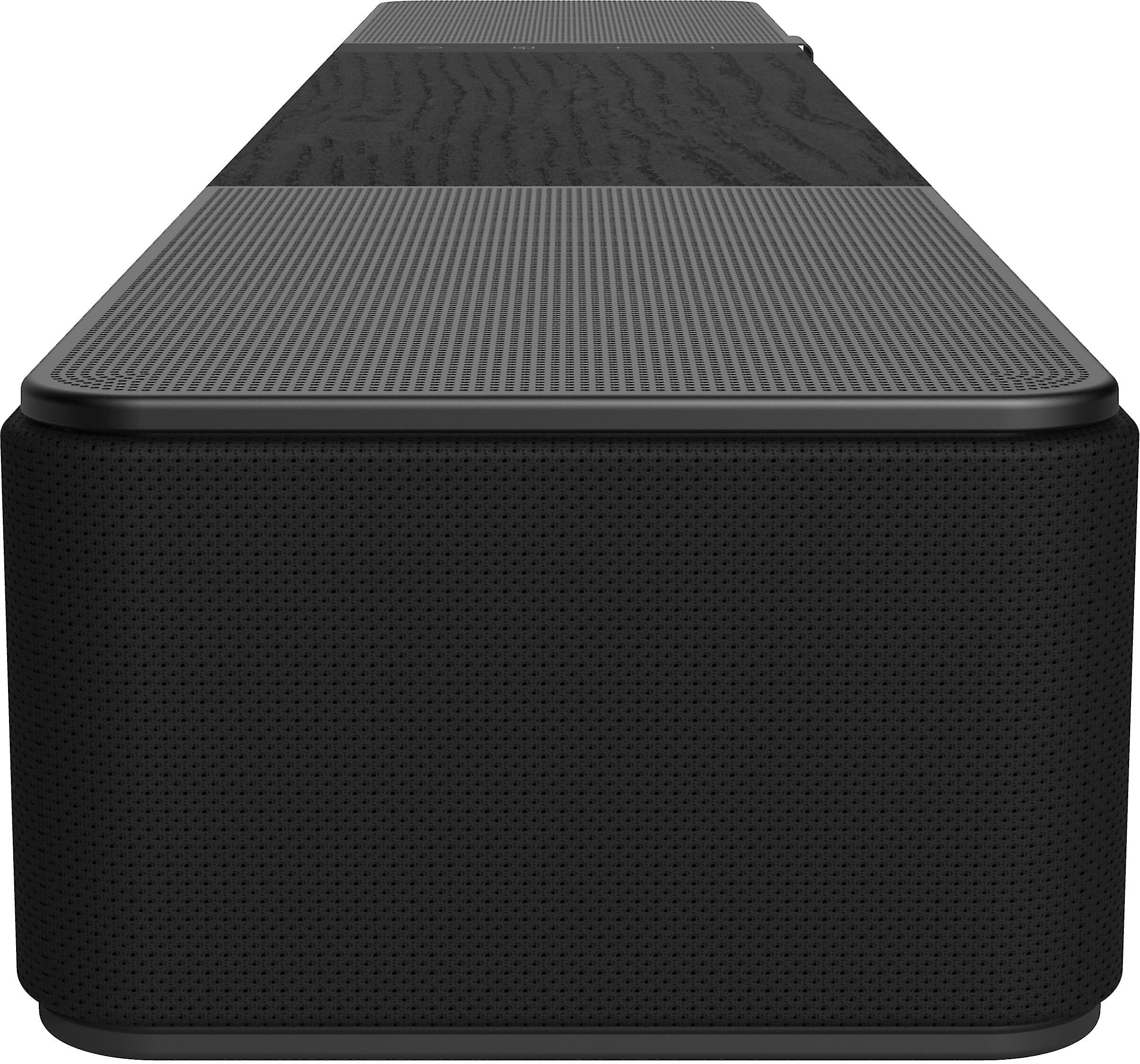
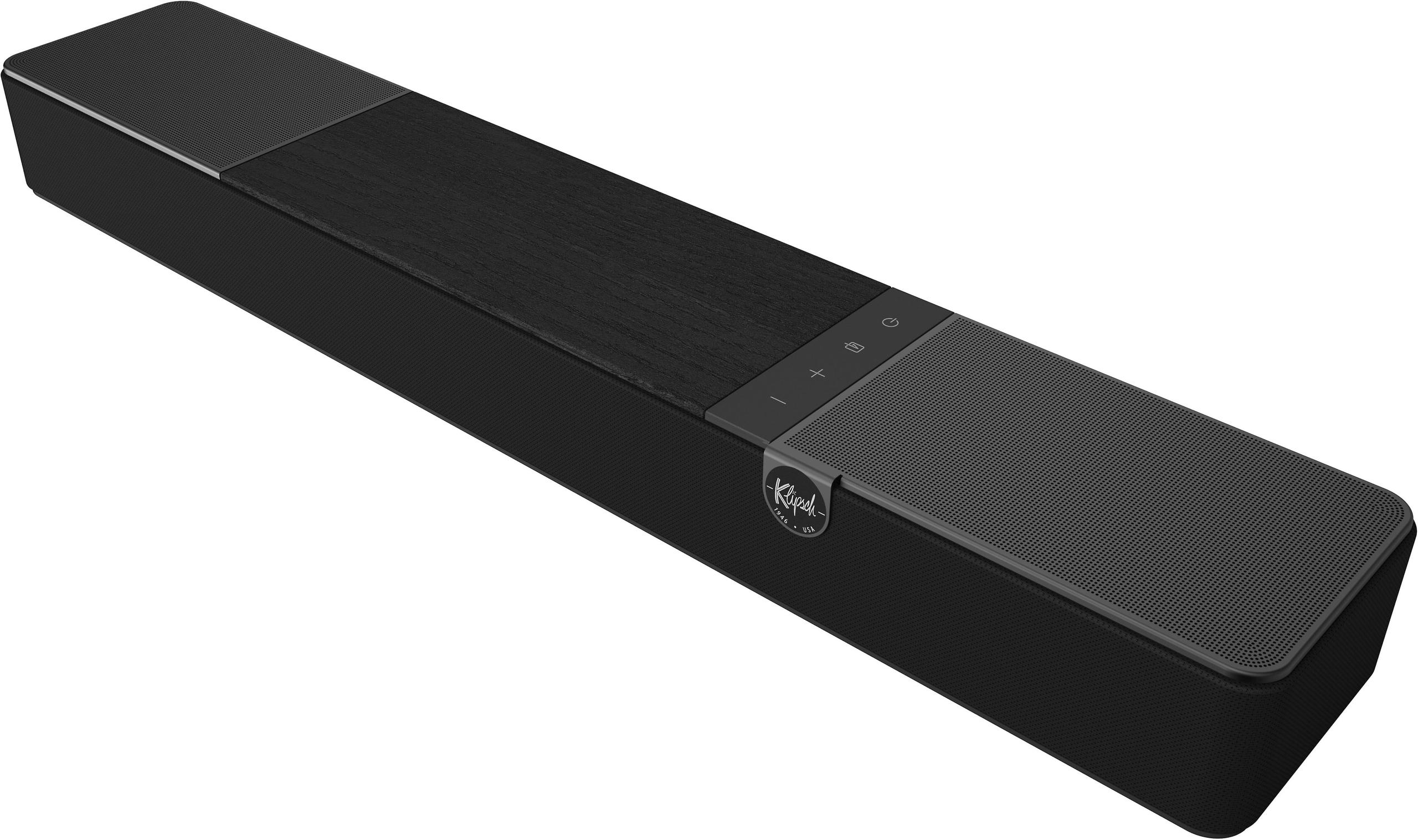
The Klipsch Flexus Core 100, also from 2022, represents a completely different philosophy. Klipsch, a company that's been making speakers since 1946, partnered with Onkyo (known for their audio engineering expertise) to create something that sounds much bigger than its 28-inch frame suggests.
The key innovation here is the dual 4-inch subwoofers built directly into the soundbar. This is genuinely clever engineering – instead of one large subwoofer that you need to find space for, Klipsch uses two smaller ones that work together to create surprisingly deep bass. The frequency response extends down to 45Hz, which isn't quite as deep as the VIZIO's dedicated subwoofer, but it's impressive for built-in drivers.
The main drivers are where Klipsch's heritage shines through. Those 2.25-inch aluminum cone drivers are precisely tuned using Klipsch's decades of acoustic knowledge. Aluminum is an interesting choice here – it's lighter than paper or plastic, allowing for quicker response to audio signals, which translates to clearer, more detailed sound reproduction.
The Klipsch system uses Transport Technology, which is their proprietary wireless protocol operating on a 2.4GHz frequency. This isn't just marketing speak – it's what allows the system to connect instantly with additional Flexus components without the pairing headaches you might experience with Bluetooth devices.
Here's where things get interesting from a technical standpoint. The VIZIO's approach with a separate wireless subwoofer offers several advantages. First, you can position it where it sounds best in your room – usually in a corner or along a wall where room boundaries amplify the bass response. Second, a larger dedicated driver (typically 6-8 inches in most soundbar subwoofers) can move more air and create deeper, more impactful bass.
However, the Klipsch's dual built-in approach solves real-world problems that many people face. No separate subwoofer means no additional power cord, no finding the perfect spot in your room, and no explaining to your family why there's a large black box in the corner. The dual 4-inch drivers work together to create what acousticians call "bass coupling" – essentially, two smaller drivers can approximate the output of one larger driver when properly engineered.
In practical terms, the VIZIO system will likely give you deeper, more room-filling bass, especially in larger spaces. The Klipsch system provides excellent bass for its form factor and eliminates common subwoofer placement issues, making it ideal for apartments or situations where aesthetics matter as much as sound quality.
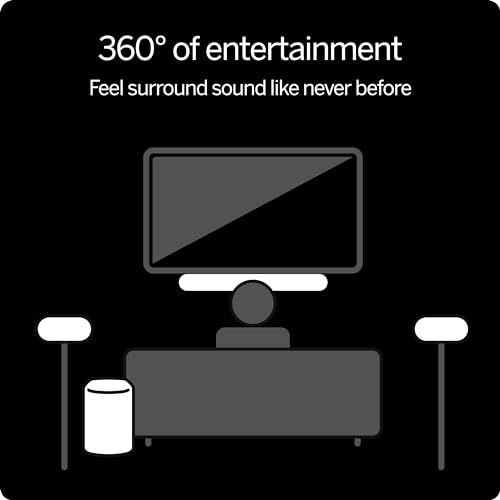
This is where the fundamental difference between these systems becomes most apparent. The VIZIO 5.1 SE creates true surround sound by placing actual speakers behind your listening position. When a car races from left to right across your screen, you hear it move from the front left speaker, across the center, to the front right, and then to the rear right speaker. This creates a complete 360-degree sound field that mirrors what you'd experience in a movie theater.
The Klipsch Core 100 uses advanced digital signal processing to create virtual surround effects. It analyzes incoming audio signals and uses phase adjustments, timing delays, and frequency filtering to trick your brain into perceiving sounds as coming from locations where there are no actual speakers. Modern virtualization has come a long way – it can create convincing width and even some sense of depth – but it can't replicate the precision and impact of physical speakers positioned around your room.
For certain content types, this difference matters more than others. Action movies with lots of directional effects, video games where spatial awareness is crucial, and concert recordings all benefit significantly from true surround sound. For casual TV watching, news, or even many Netflix shows, the Klipsch's virtualized approach provides a satisfying upgrade over TV speakers without the complexity.
Both systems support Dolby Atmos, but they implement it differently. Dolby Atmos adds a height dimension to surround sound, making audio feel like it's coming from above you as well as around you. Think helicopters flying overhead, rain falling from the sky, or ceiling debris crashing down in an action sequence.
The VIZIO system processes Atmos signals and uses its multiple speakers to create the best possible approximation of height effects. While neither the main bar nor the surround speakers have dedicated upward-firing drivers (those would bounce sound off your ceiling), the system's multiple listening positions help create a more convincing three-dimensional sound field.
The Klipsch system focuses its Atmos processing through its single soundbar, using psychoacoustic techniques to simulate height. In both cases, you're getting Atmos processing rather than true Atmos reproduction, but the VIZIO's multiple speaker approach generally provides more convincing results.
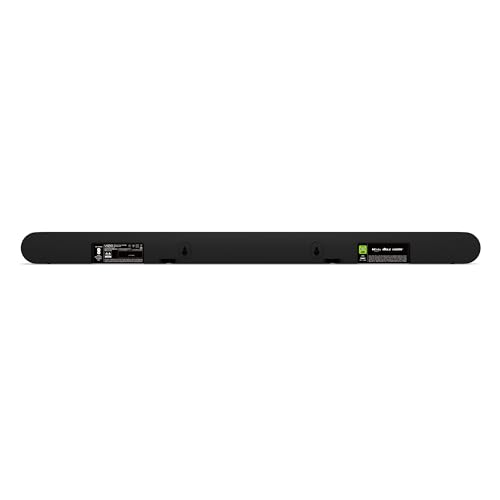
Installation complexity is where these systems diverge dramatically. The VIZIO 5.1 SE requires positioning five separate components around your room. The main soundbar connects to your TV via HDMI eARC (Enhanced Audio Return Channel – this carries high-quality audio back from your TV to the soundbar in a single cable). The surround speakers are wireless, which eliminates long speaker wire runs, but you still need to position them properly and plug them into power outlets.
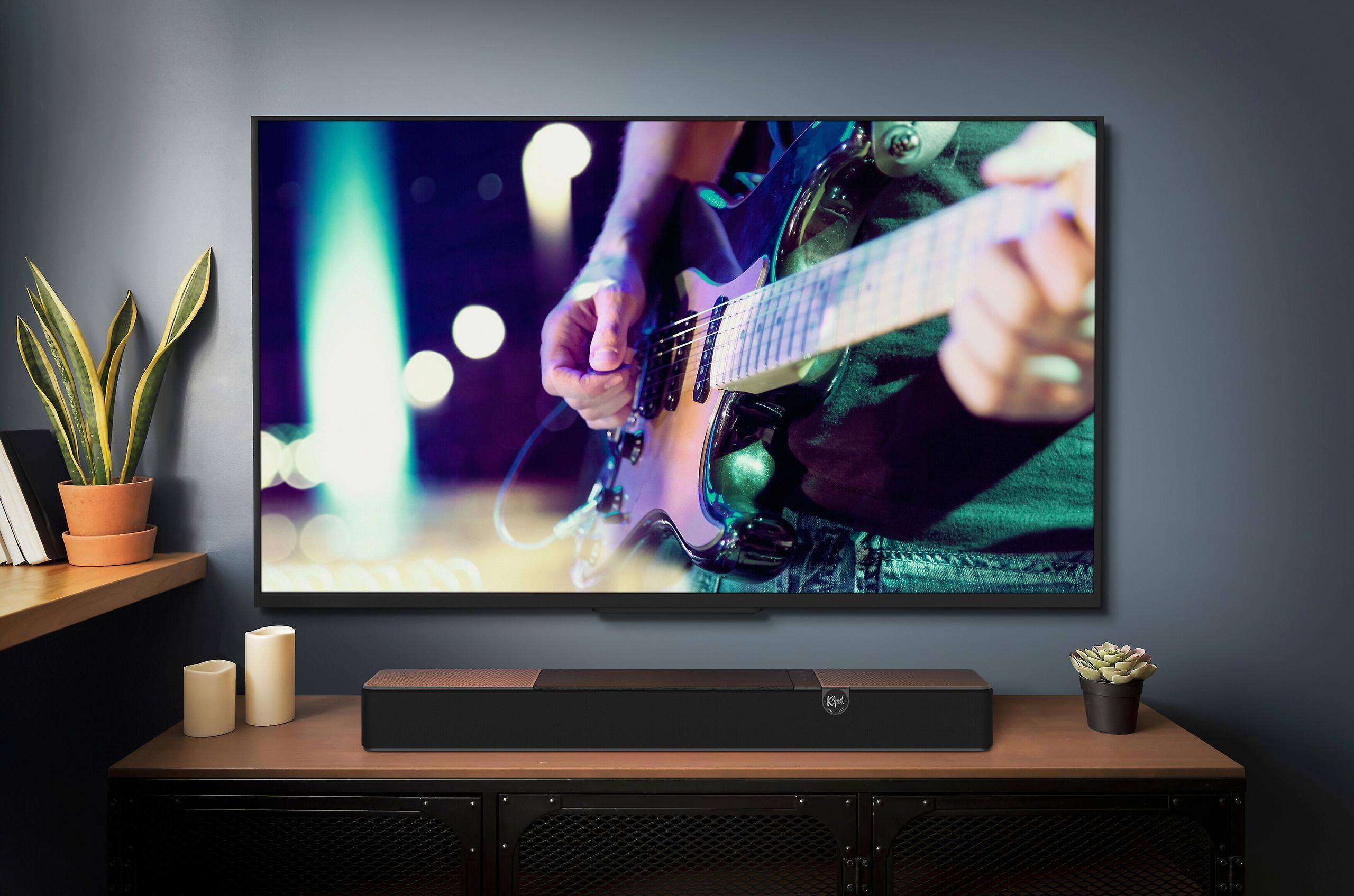
The Klipsch Core 100 is genuinely plug-and-play. One soundbar, one power cable, one HDMI connection, and you're done. The included wall-mounting brackets are slim and unobtrusive, and the system's compact dimensions make it suitable for smaller TVs and tighter spaces.
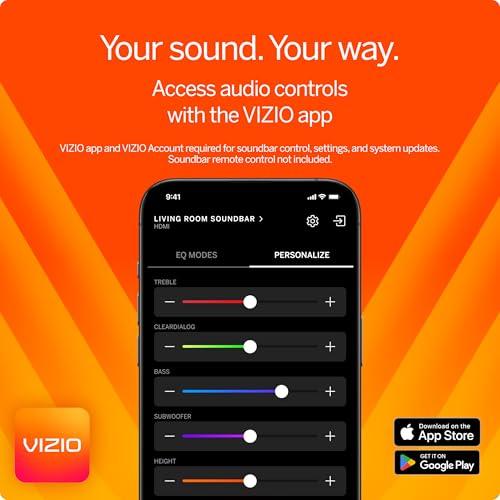
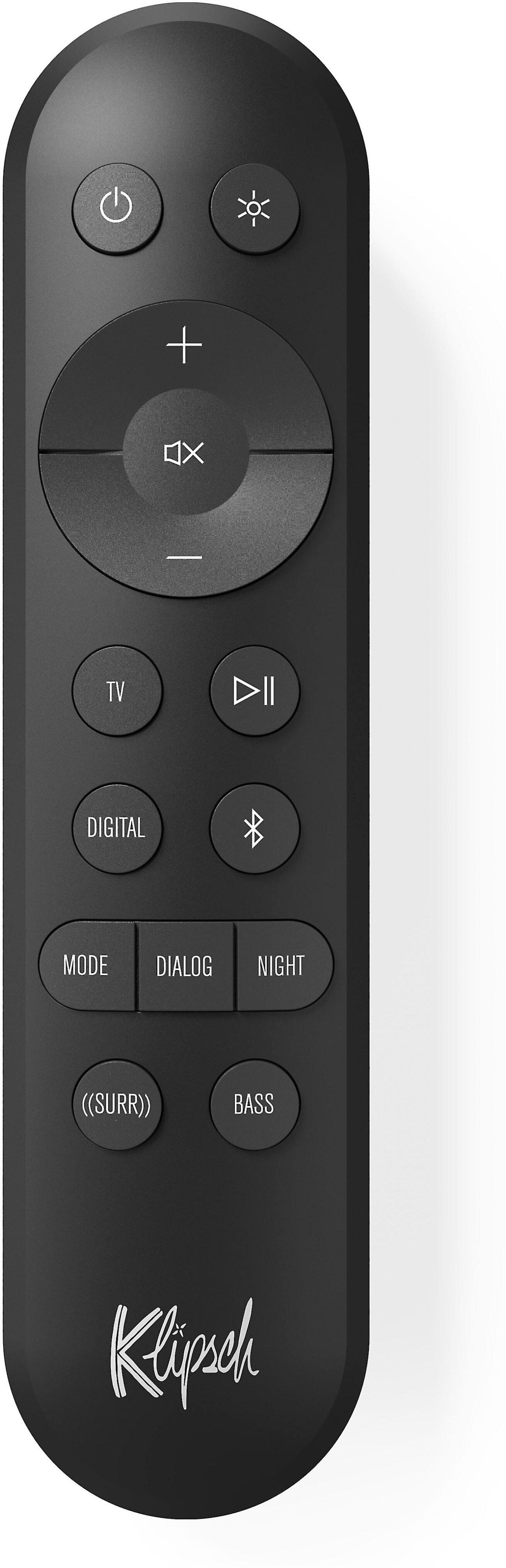
Control interfaces reveal each company's approach. The VIZIO system relies heavily on the VIZIO mobile app for advanced settings, with the physical remote sold separately (though your TV remote can control volume via HDMI eARC). The Klipsch system includes a backlit remote control and also offers app control for detailed adjustments.
The VIZIO 5.1 SE is what it is – a complete system that doesn't expand beyond its included components. You get excellent value and full surround sound immediately, but there's no upgrade path beyond replacing the entire system.
The Klipsch Core 100 is designed as the foundation of a modular system. Using Transport Technology, you can add Flexus Surround speakers to create true rear effects, or add a Flexus Subwoofer for deeper bass. This modularity comes at a cost – building out a complete system comparable to what the VIZIO provides out of the box would require additional investment, but it allows you to spread that cost over time and only add components as your needs or space situation changes.
When evaluating these systems, focus on metrics that translate to real-world performance. Maximum output capability matters for room filling – the VIZIO system can reach 96dB, which is loud enough to fill medium to large rooms without distortion. Frequency response tells you how deep the bass goes and how clear the highs are – both systems extend well into useful bass territory and up to 20kHz for crisp highs.
But the most important metric might be dynamic range – how well the system handles the difference between whisper-quiet dialogue and explosive action sequences. Both systems excel here, though through different approaches. The VIZIO's multiple speakers distribute the workload, while the Klipsch's premium drivers handle wide dynamic swings with finesse.
For dedicated home theater use, room size and seating arrangement become crucial factors. The VIZIO 5.1 SE works best in rooms where you can position the surround speakers properly – ideally slightly behind and to the sides of your primary seating area. If you're dealing with a long, narrow room or awkward furniture placement, achieving optimal surround speaker positioning might be challenging.
The Klipsch Core 100 works well in challenging room layouts because it doesn't require additional speaker placement. However, its single-point sound source means the sweet spot for optimal listening is more focused – perfect for a centered couch, but potentially less satisfying for wide seating arrangements.
Choose the VIZIO 5.1 Soundbar SE if you want maximum performance per dollar and can accommodate multiple speakers. It's ideal for medium to large rooms, movie enthusiasts who want authentic surround sound, and anyone who primarily watches content with diverse audio formats. The system particularly excels with action movies, gaming, and any content where spatial audio effects enhance the experience.
Choose the Klipsch Flexus Core 100 if convenience, aesthetics, and future flexibility matter as much as immediate performance. It's perfect for smaller rooms, apartments where multiple speakers aren't practical, or situations where you want to start simple and expand gradually. The premium build quality and brand heritage justify the higher initial investment, especially if you value the option to expand your system over time.
At the time of writing, both systems represent excellent value in their respective categories, but they serve different priorities. The VIZIO 5.1 SE delivers authentic surround sound at a price point that makes it accessible to almost anyone looking to upgrade their TV audio significantly. The Klipsch Flexus Core 100 offers premium engineering and thoughtful design for those who want high-quality sound without the complexity of multiple components.
Your choice ultimately depends on whether you prioritize immediate maximum performance or prefer a premium, expandable foundation that can grow with your needs. Either way, you're getting a significant upgrade over built-in TV speakers that will transform your home entertainment experience.
| VIZIO 5.1 Soundbar SE | Klipsch Flexus Core 100 |
|---|---|
| Channel Configuration - Determines authentic vs virtual surround sound | |
| True 5.1 with physical surround speakers | 2.1 with virtualized surround processing |
| Audio Format Support - Affects compatibility with streaming and disc content | |
| Dolby Atmos + DTS:X | Dolby Atmos only |
| Bass Solution - Impacts placement flexibility and deep bass response | |
| Dedicated wireless subwoofer (50Hz extension) | Dual built-in 4" subwoofers (45Hz extension) |
| Soundbar Dimensions - Affects TV compatibility and room aesthetics | |
| 33" x 2.32" x 3.23" | 28" x 3" x 5" |
| System Components - Determines setup complexity and space requirements | |
| Main bar + wireless subwoofer + 2 surround speakers | Single soundbar unit only |
| Maximum Output - Critical for room-filling volume without distortion | |
| 96dB SPL | 100W RMS system power |
| Connectivity Options - Affects source device compatibility | |
| HDMI eARC, Bluetooth, app control | HDMI eARC, Bluetooth, USB-C, Digital Optical |
| Expandability - Future upgrade potential without replacing entire system | |
| Fixed system (no expansion options) | Modular system via Transport Technology |
| Remote Control - Impacts daily usability and convenience | |
| Sold separately (app/TV remote control available) | Backlit remote included |
| Installation Requirements - Affects feasibility in different room layouts | |
| Requires positioning 4 separate components | Single unit wall-mount or tabletop placement |
| Driver Materials - Influences sound quality and durability | |
| Standard cone drivers | Premium aluminum cone drivers with Klipsch tuning |
| Mounting Solutions - TV integration and aesthetic options | |
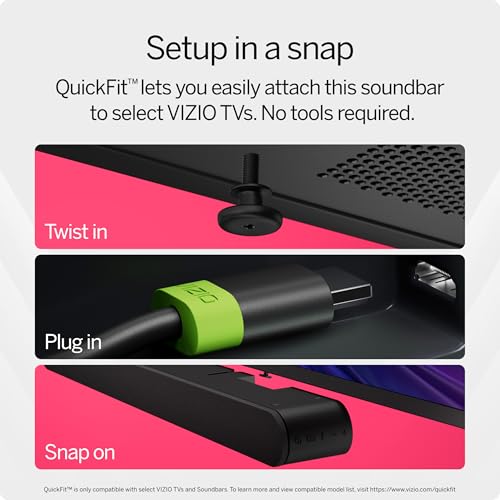
| QuickFit system for compatible VIZIO TVs | Universal slim-depth wall brackets included |
The VIZIO 5.1 Soundbar SE is better for movies and TV shows because it provides true 5.1 surround sound with physical speakers positioned around your room. This creates authentic directional effects where you can hear helicopters flying overhead or footsteps behind you. The Klipsch Flexus Core 100 uses virtualized surround sound, which sounds good but can't match the immersive experience of actual surround speakers.
The VIZIO 5.1 Soundbar SE includes a wireless subwoofer as part of the system, giving you deep bass without buying anything extra. The Klipsch Flexus Core 100 has dual built-in subwoofers, so no separate subwoofer is required, though you can add a Klipsch Flexus Subwoofer later if you want even deeper bass.
The Klipsch Flexus Core 100 is much easier to set up since it's just one soundbar unit that you connect to your TV. The VIZIO 5.1 Soundbar SE requires positioning a main soundbar, wireless subwoofer, and two surround speakers around your room, making setup more complex but delivering better surround sound.
Yes, both soundbars can be wall mounted. The Klipsch Flexus Core 100 includes slim wall brackets for clean installation. The VIZIO 5.1 Soundbar SE can also be wall mounted, and it features QuickFit technology for easy attachment to compatible VIZIO TVs.
The Klipsch Flexus Core 100 is better for small rooms and apartments because it's a single compact unit with no additional speakers to place around the room. The VIZIO 5.1 Soundbar SE requires space for surround speakers and a subwoofer, which can be challenging in smaller living spaces.
Both soundbars support Dolby Atmos for immersive audio. The VIZIO 5.1 Soundbar SE also supports DTS:X format, giving you broader compatibility with different streaming services and disc content. The Klipsch Flexus Core 100 focuses specifically on Dolby Atmos processing.
The VIZIO 5.1 Soundbar SE typically offers better value because you get a complete 5.1 surround sound system with dedicated speakers and subwoofer at a competitive price point. The Klipsch Flexus Core 100 costs more initially but offers premium build quality and the ability to expand the system over time.
The Klipsch Flexus Core 100 is designed for expansion using Transport Technology, allowing you to add surround speakers and an additional subwoofer later. The VIZIO 5.1 Soundbar SE is a complete fixed system that cannot be expanded beyond its included components.
The VIZIO 5.1 Soundbar SE is better for gaming because the physical surround speakers provide precise directional audio, helping you locate enemies and environmental sounds. This spatial awareness can improve your gaming performance, especially in competitive shooters and immersive RPGs.
The VIZIO 5.1 Soundbar SE typically delivers deeper bass with its dedicated wireless subwoofer that can be positioned optimally in your room. The Klipsch Flexus Core 100 provides impressive bass for a single-unit design with its dual built-in subwoofers, but may not reach as deep or impactful as a dedicated subwoofer.
The Klipsch Flexus Core 100 requires significantly less space since it's just one 28-inch soundbar with no additional components. The VIZIO 5.1 Soundbar SE needs space for a 33-inch main bar, plus room for two surround speakers and a wireless subwoofer positioned around your seating area.
Both soundbars can be controlled with your TV remote when connected via HDMI eARC. The VIZIO 5.1 Soundbar SE relies primarily on app control or your TV remote, with the physical remote sold separately. The Klipsch Flexus Core 100 includes a backlit remote control and also offers app-based control for advanced settings.
We've done our best to create useful and informative comparisons to help you decide what product to buy. Our research uses advanced automated methods to create this comparison and perfection is not possible - please contact us for corrections or questions. These are the sites we've researched in the creation of this article: bestbuy.com - vizio.com - rtings.com - vizio.com - vizio.com - vizio.com - youtube.com - vizio.com - vizio.com - cnet.com - samsclub.com - walmart.com - nfm.com - finelinesdesignstudio.com - dugoutnorthbrook.com - bestbuy.com - cnet.com - klipsch.com - klipsch.com - bestbuy.com - sweetwater.com - assets.onkyo-av.com - youtube.com - worldwidestereo.com - avnirvana.com - target.com

Privacy Policy
Terms and Conditions - Affiliate Policy
Home Security
© Copyright 2008-2026.
11816 Inwood Rd #1211, Dallas, TX 75244