

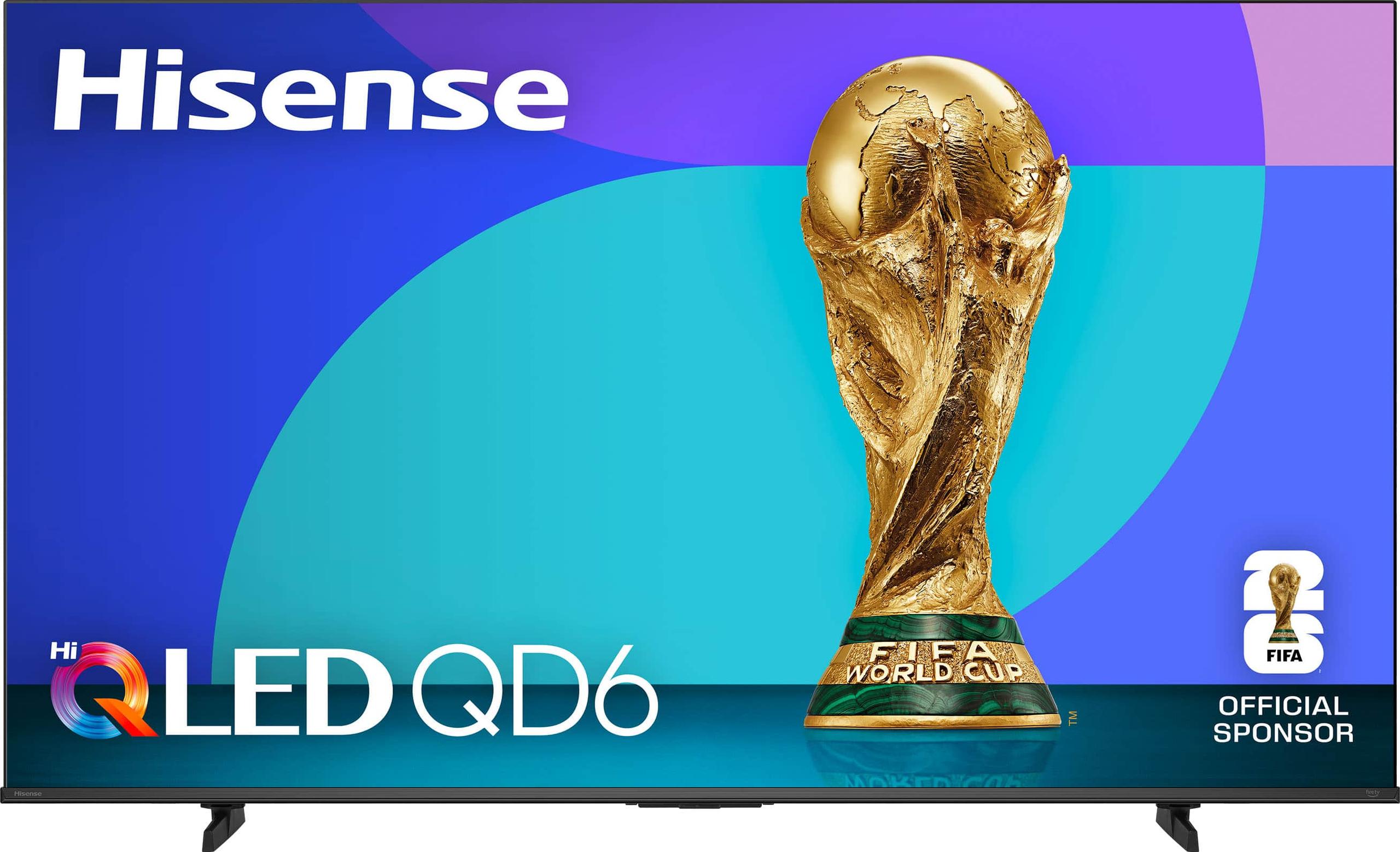
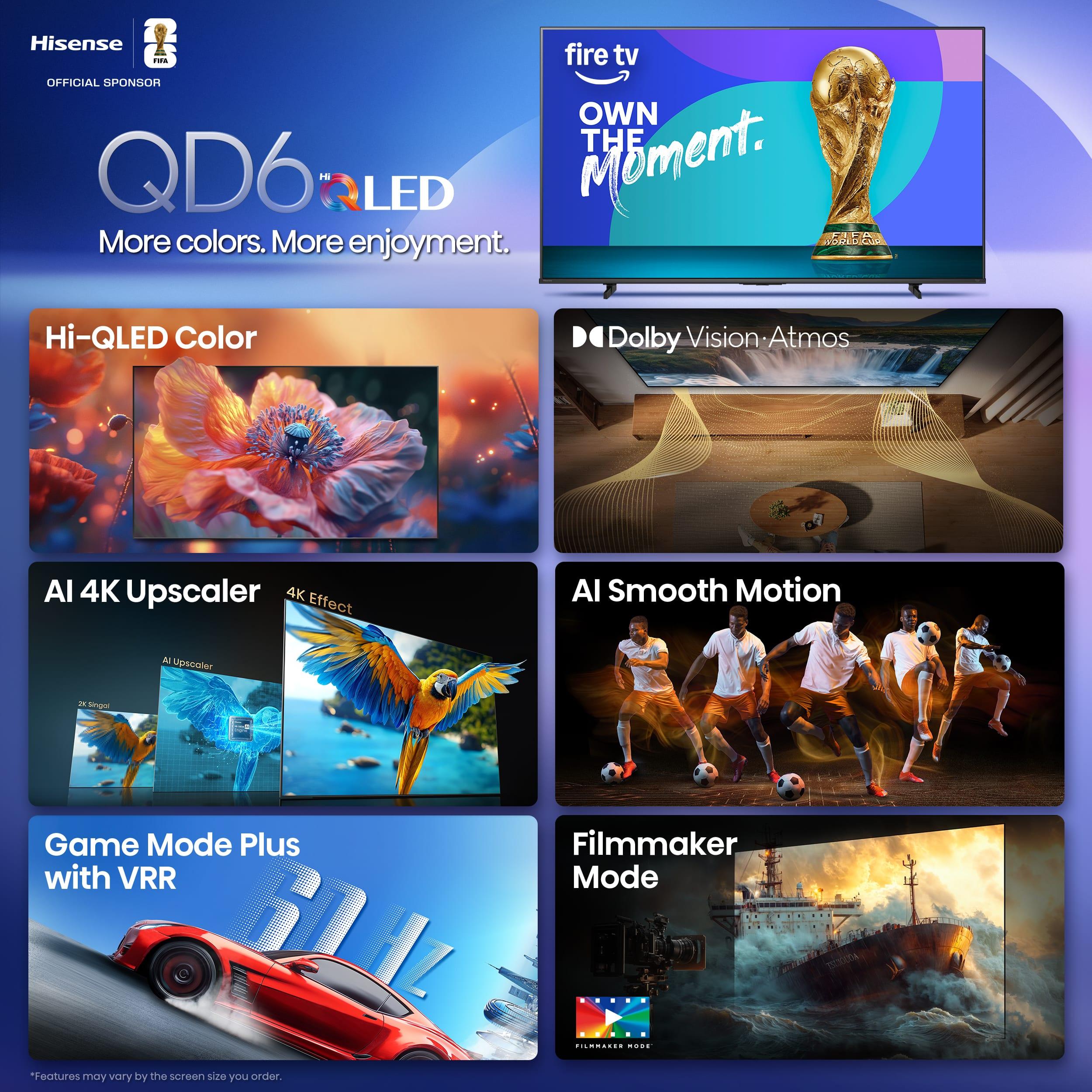
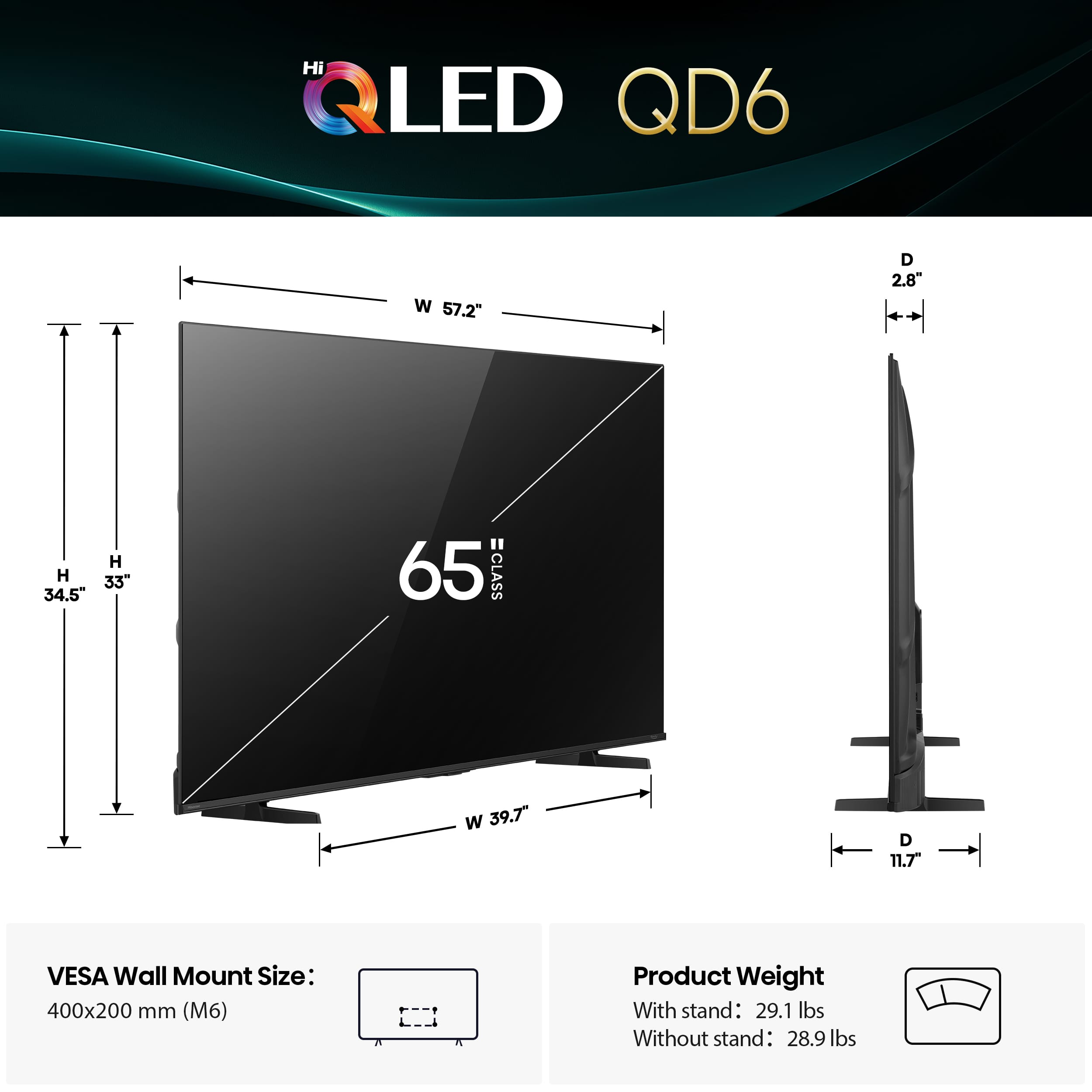



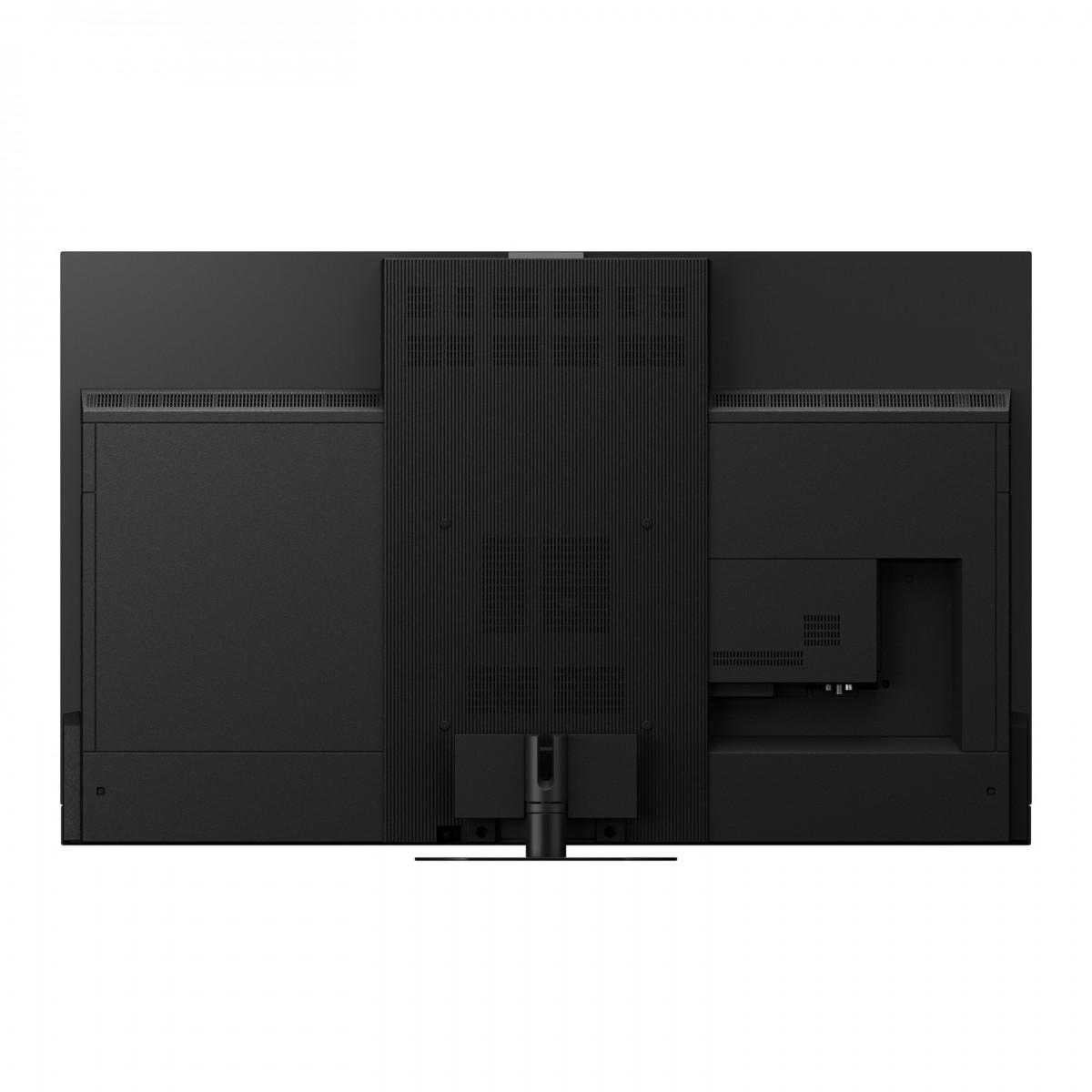
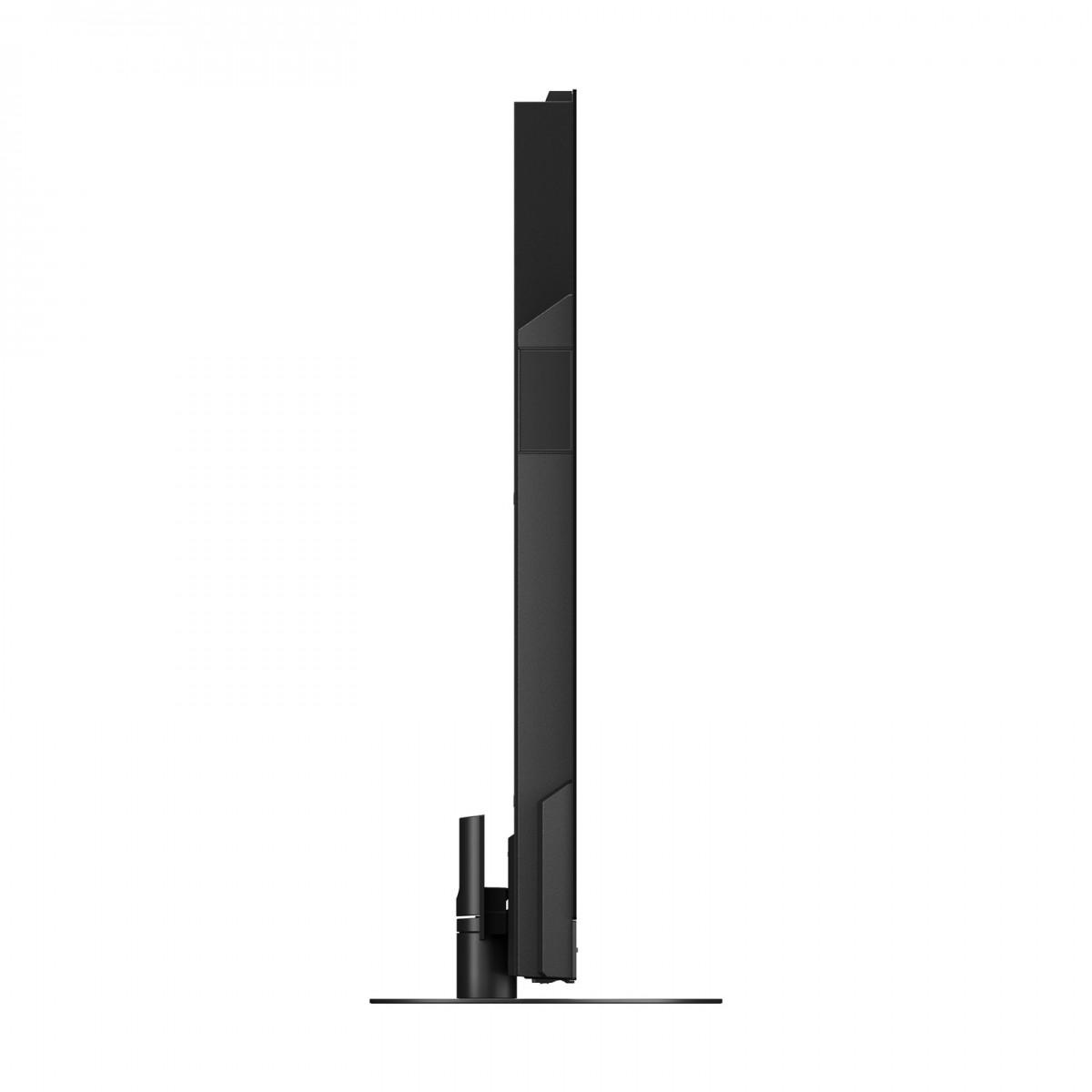
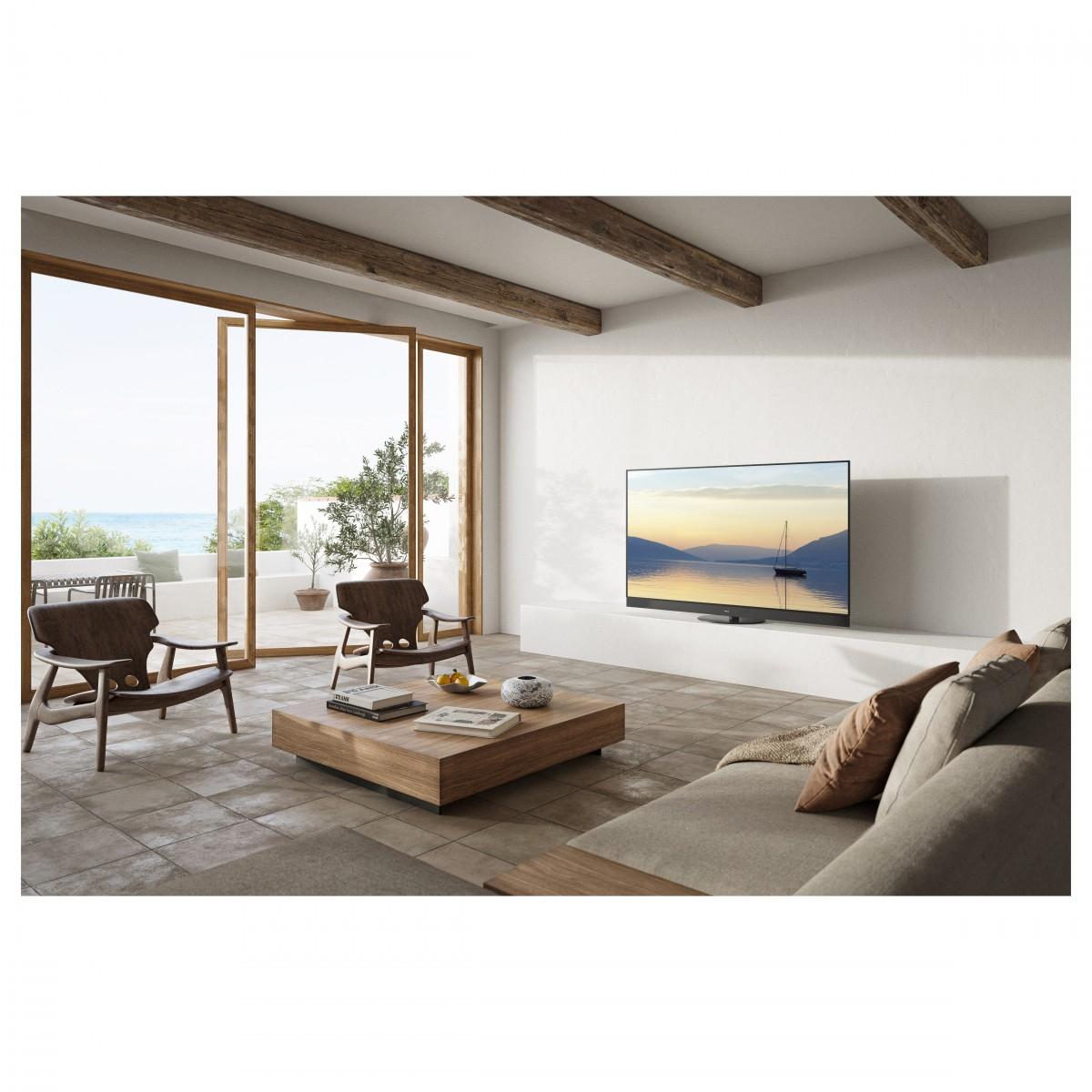
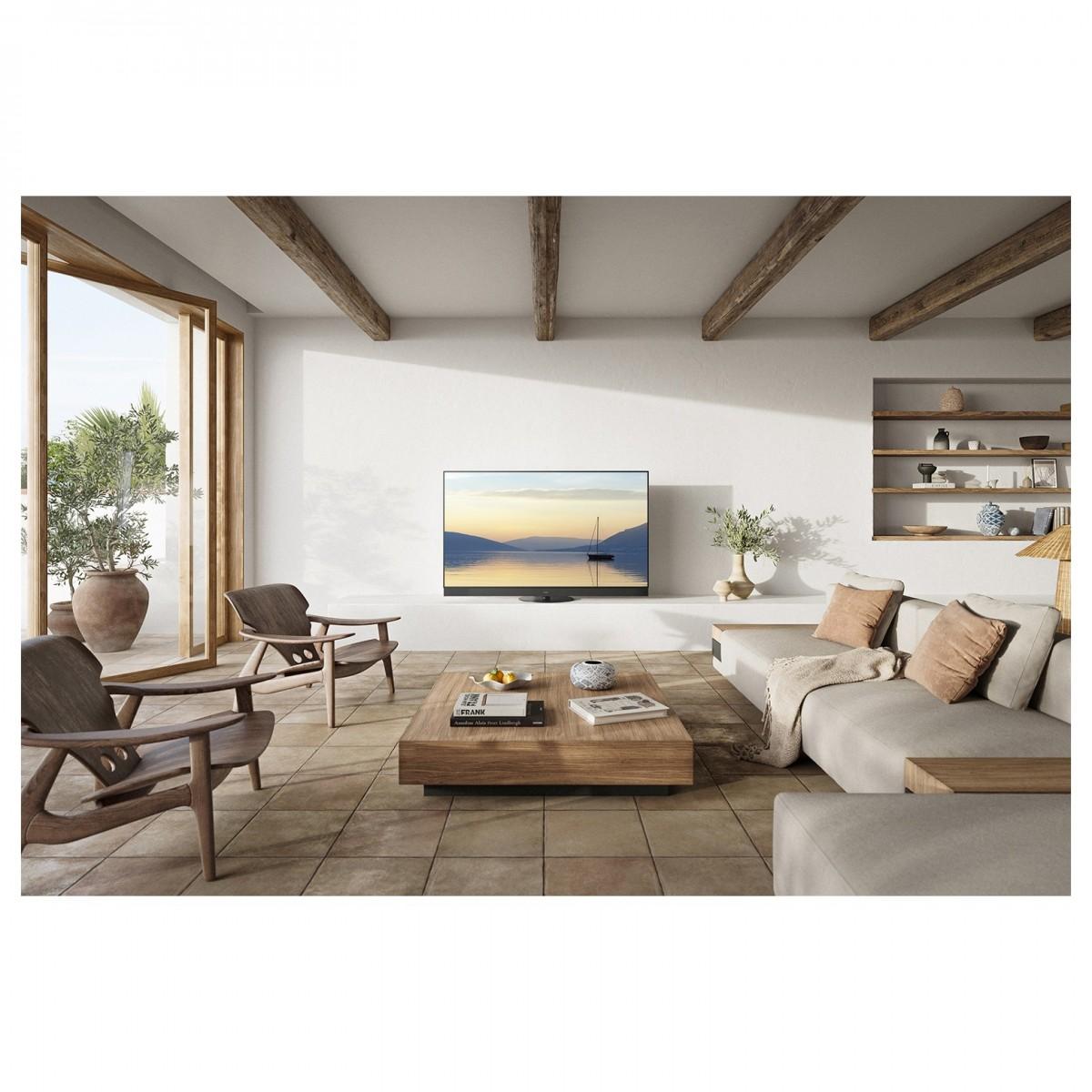
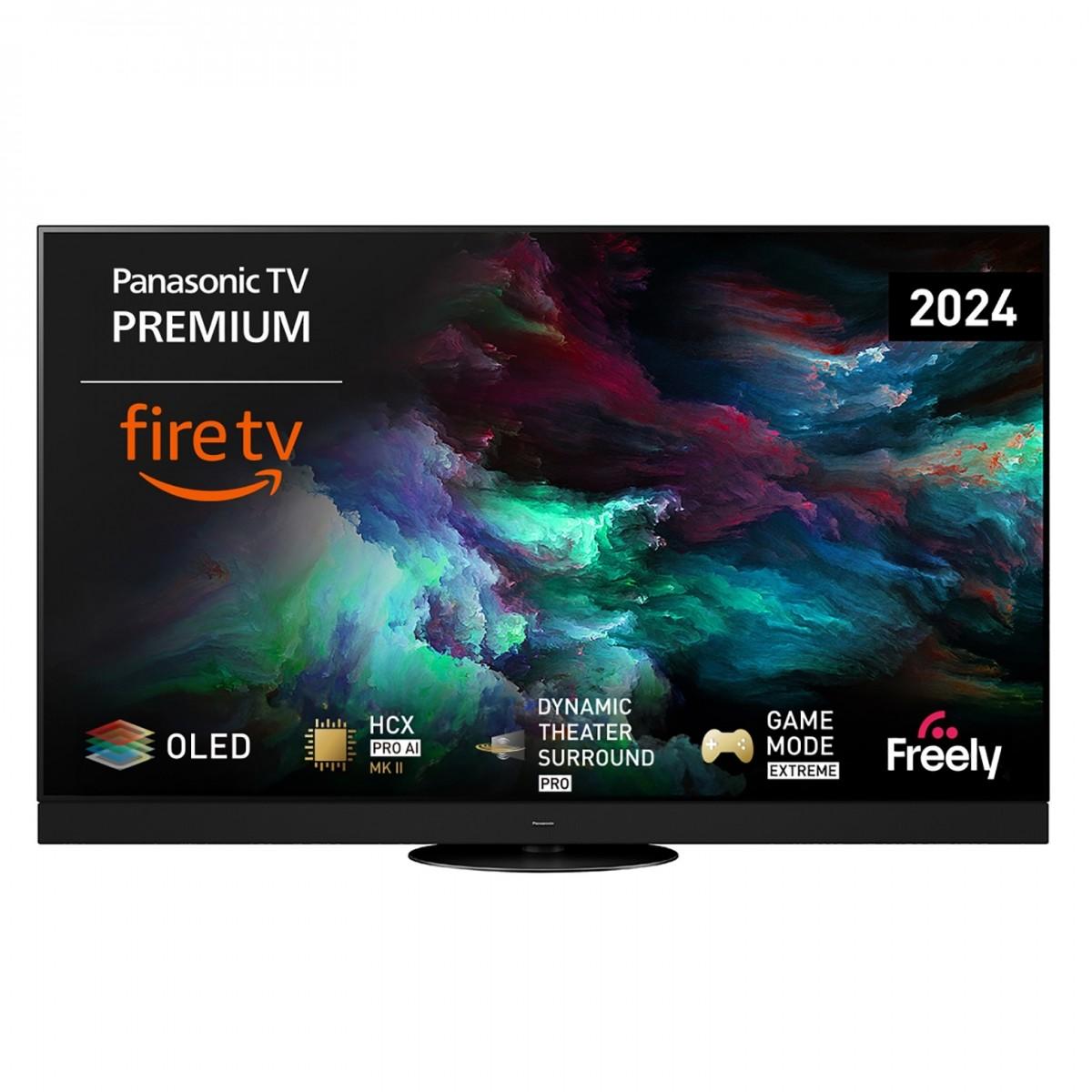
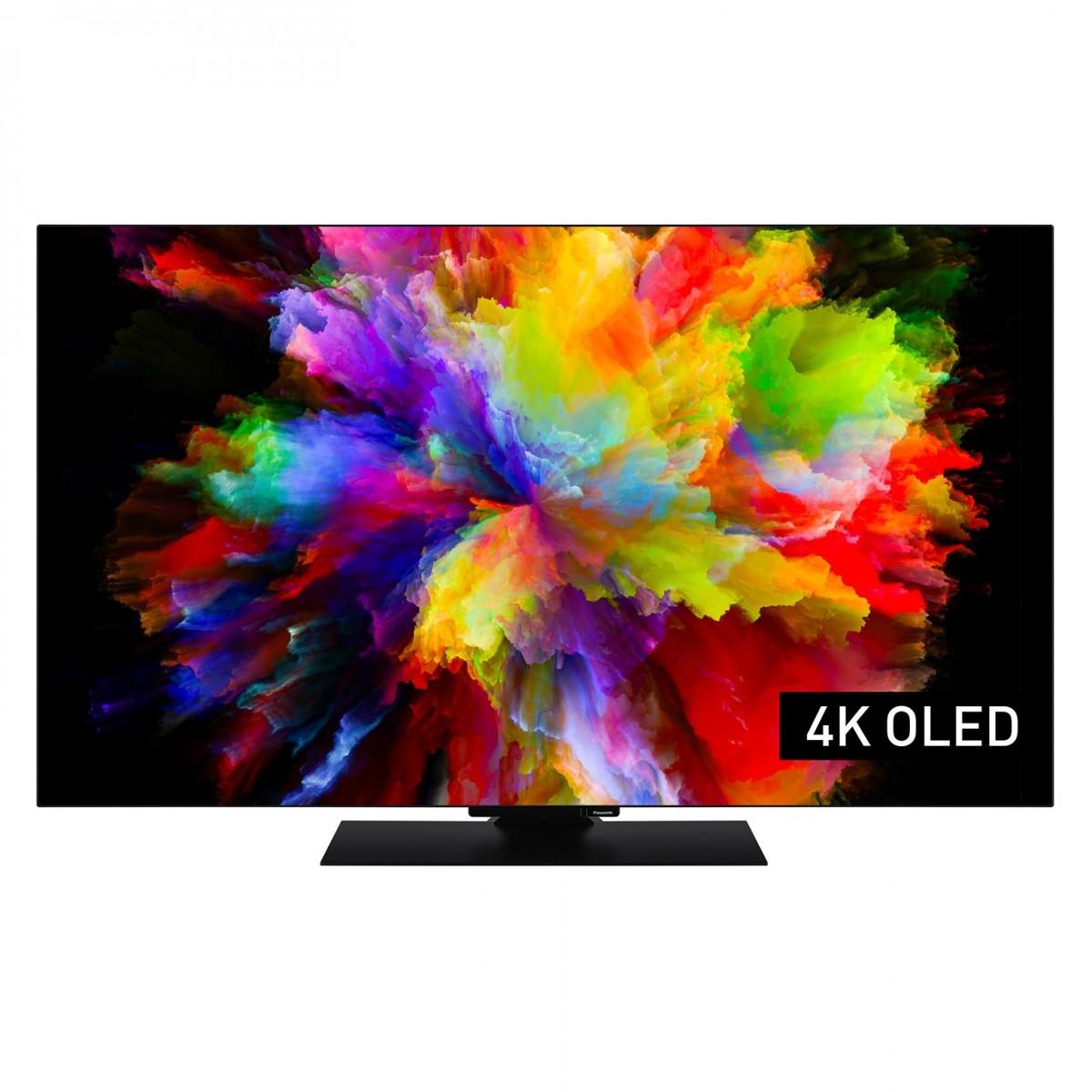
When you're shopping for a 65-inch TV, you're making a decision that will shape your home entertainment for years to come. Two TVs that perfectly illustrate the spectrum of options are the Hisense 65" QD6 Series and the Panasonic Z95A 65". Released in 2025 and 2024 respectively, these TVs represent fundamentally different approaches to picture quality and value.
The TV market has evolved dramatically in recent years. What used to be a simple choice between LCD and plasma has expanded into a complex landscape of display technologies. QLED (Quantum Dot LED) displays like the Hisense QD6 use tiny nanocrystals to enhance color reproduction, while OLED (Organic Light-Emitting Diode) TVs like the Panasonic Z95A can turn individual pixels completely on or off.
Understanding these technologies is crucial because they determine everything from how dark your black levels can get to how bright your HDR highlights will appear. At the time of writing, the Hisense QD6 represents exceptional value in the sub-$700 category, while the Panasonic Z95A sits in the premium segment at roughly 2.5 times the price.
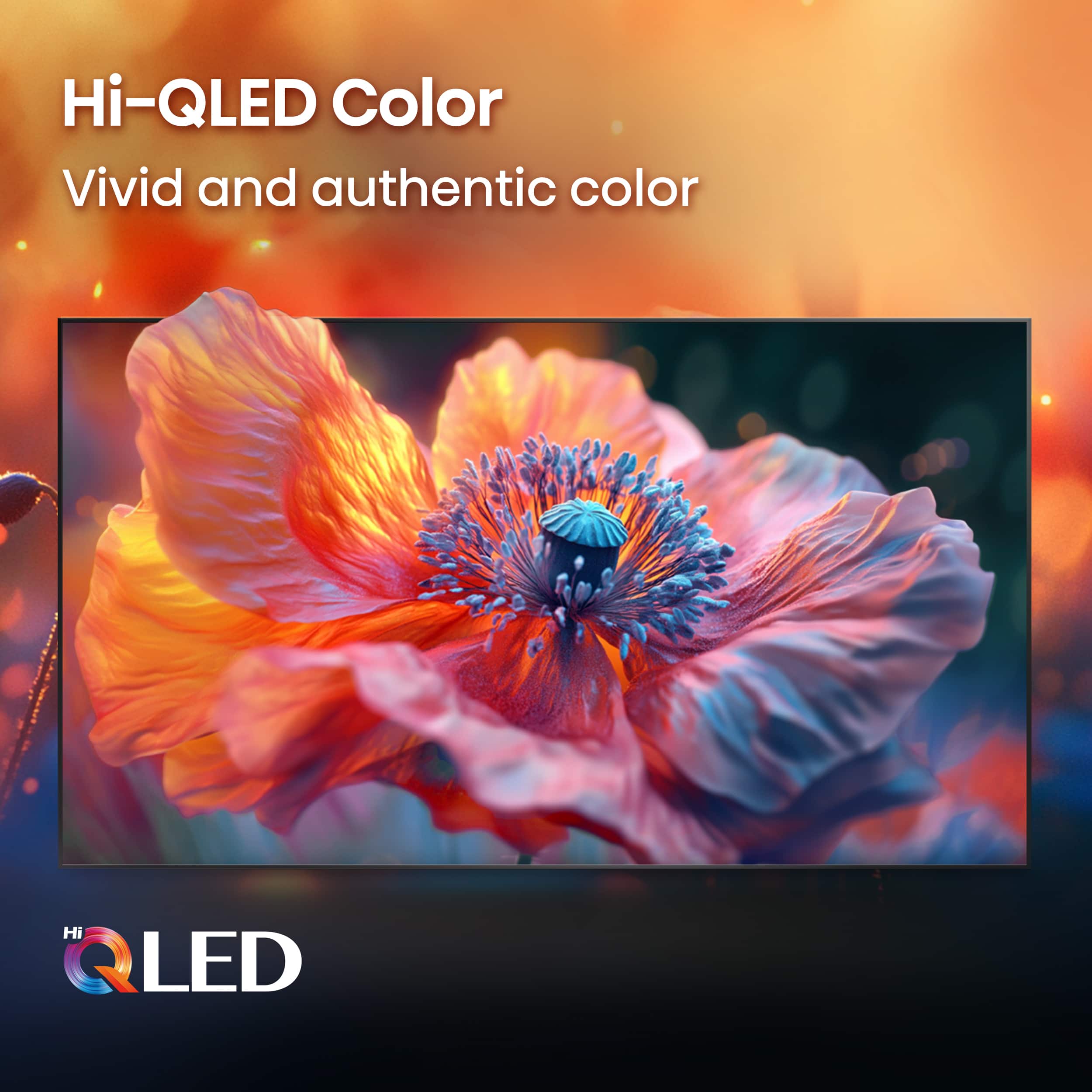
The most fundamental difference between these TVs lies in how they create images. The Hisense QD6 uses what's called a full-array LED backlight with quantum dots. Think of it like having a grid of LED lights behind the screen, with a special layer of quantum dots that can produce more pure colors when light hits them. This setup can create vibrant, saturated colors that pop off the screen.
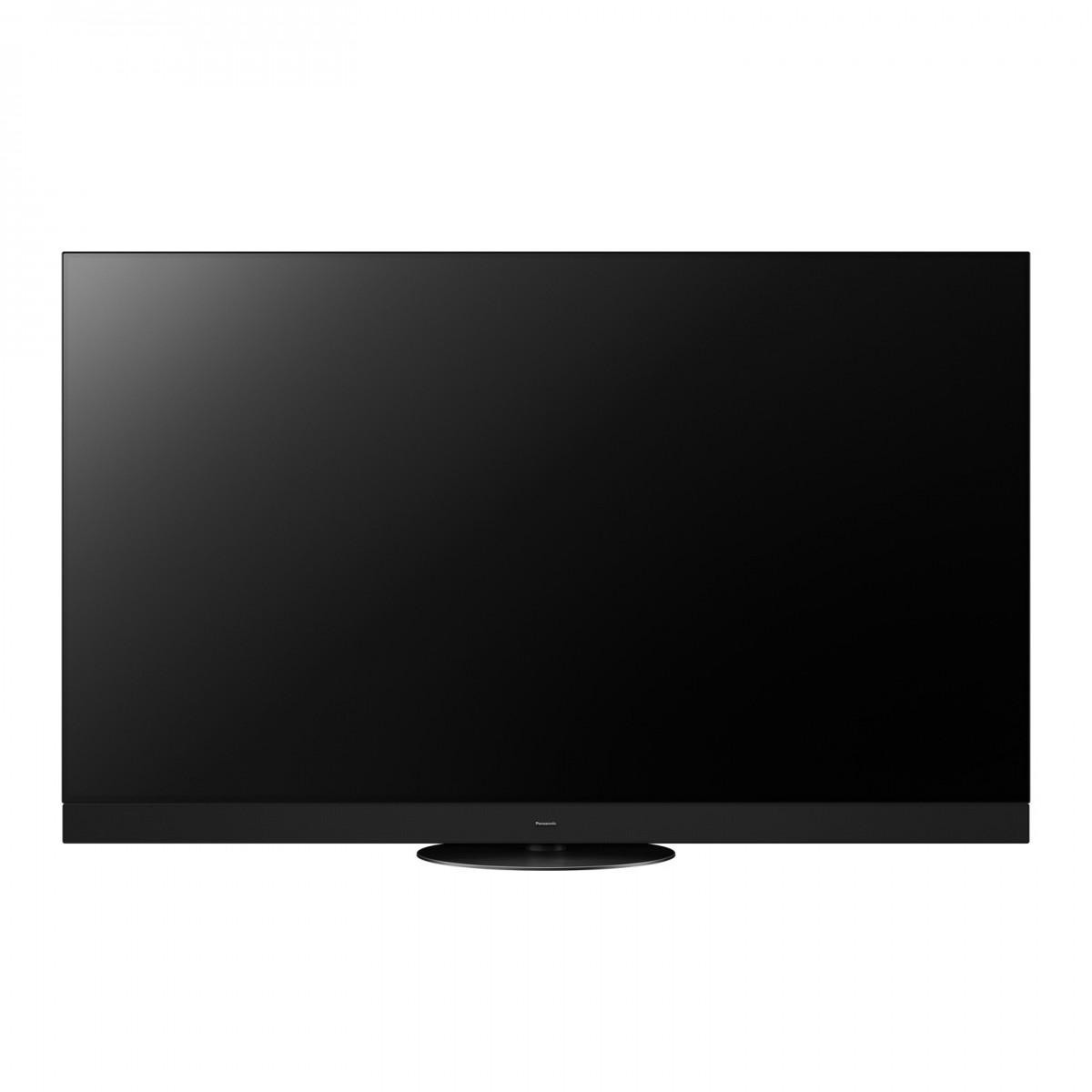
The Panasonic Z95A takes a completely different approach with OLED technology. Each pixel generates its own light using organic compounds that glow when electricity passes through them. This means when you want pure black, those pixels simply turn off completely – no backlight bleeding through, no gray blacks, just perfect darkness.
This difference ripples through every aspect of performance. The quantum dot technology in the Hisense QD6 can produce bright, vivid colors, but it relies on a backlight that's always somewhat "on," even during dark scenes. The OLED in the Panasonic Z95A can achieve infinite contrast ratios because it can display true blacks right next to bright whites within the same frame.
Here's where the technology differences become immediately apparent. When you're watching a movie like "Blade Runner 2049" or "Dune," scenes with deep shadows and bright highlights reveal everything about a TV's capabilities.
The Panasonic Z95A delivers what can only be described as perfect blacks. When a pixel needs to be black, it simply turns off. This creates an infinite contrast ratio – the mathematical difference between the brightest white and deepest black the TV can produce. In practical terms, this means space scenes look like actual space, with stars popping against the void, and shadow details remain visible without washing out.
The Hisense QD6 faces inherent limitations from its LED backlight design. While its VA panel (Vertical Alignment – a type of LCD technology known for better contrast than IPS panels) produces respectable blacks when the entire screen is dark, problems arise with mixed content. When bright objects appear on screen, the entire backlight must stay lit, causing what's called "black level lifting." Dark areas of the screen become grayish, reducing the sense of depth and immersion.
This limitation becomes particularly noticeable during movie night. HDR content, which is designed to showcase bright highlights against dark backgrounds, loses much of its impact on the Hisense QD6 because those dramatic contrasts get compressed.
HDR (High Dynamic Range) represents one of the most significant advances in TV technology in the past decade. Instead of the limited brightness range of traditional content, HDR can display everything from candlelight to sunlight with realistic intensity.
Both TVs support multiple HDR formats, including Dolby Vision, HDR10+, and standard HDR10, but they handle this content very differently. The Panasonic Z95A includes Dolby Vision IQ, which uses an ambient light sensor to automatically adjust the HDR mapping based on your room's lighting. This means the TV adapts whether you're watching in a dark basement or bright living room.
Peak brightness matters enormously for HDR impact. The Hisense QD6 reaches approximately 385 nits (a measure of brightness), which sounds reasonable but falls short of what modern HDR content demands. Sun reflections on water, explosions, or bright outdoor scenes appear flat and uninspiring. The Panasonic Z95A achieves around 450 nits, but more importantly, its perfect blacks make those bright highlights appear dramatically more impactful.
The difference becomes stark with content like nature documentaries or action movies. On the Panasonic Z95A, a lightning bolt against a dark sky has genuine punch. On the Hisense QD6, the same scene appears more like watching through a gray filter.
Both TVs cover approximately 90% of the DCI-P3 color space, which is the standard used for modern HDR content. However, color volume – how accurately those colors appear at different brightness levels – tells a more complete story.
The Hisense QD6 produces vibrant, saturated colors that immediately catch the eye. Its quantum dot technology excels at pure, primary colors – reds, greens, and blues that appear almost neon-bright. For animated content or sports, this creates an engaging, punchy image that many viewers prefer.
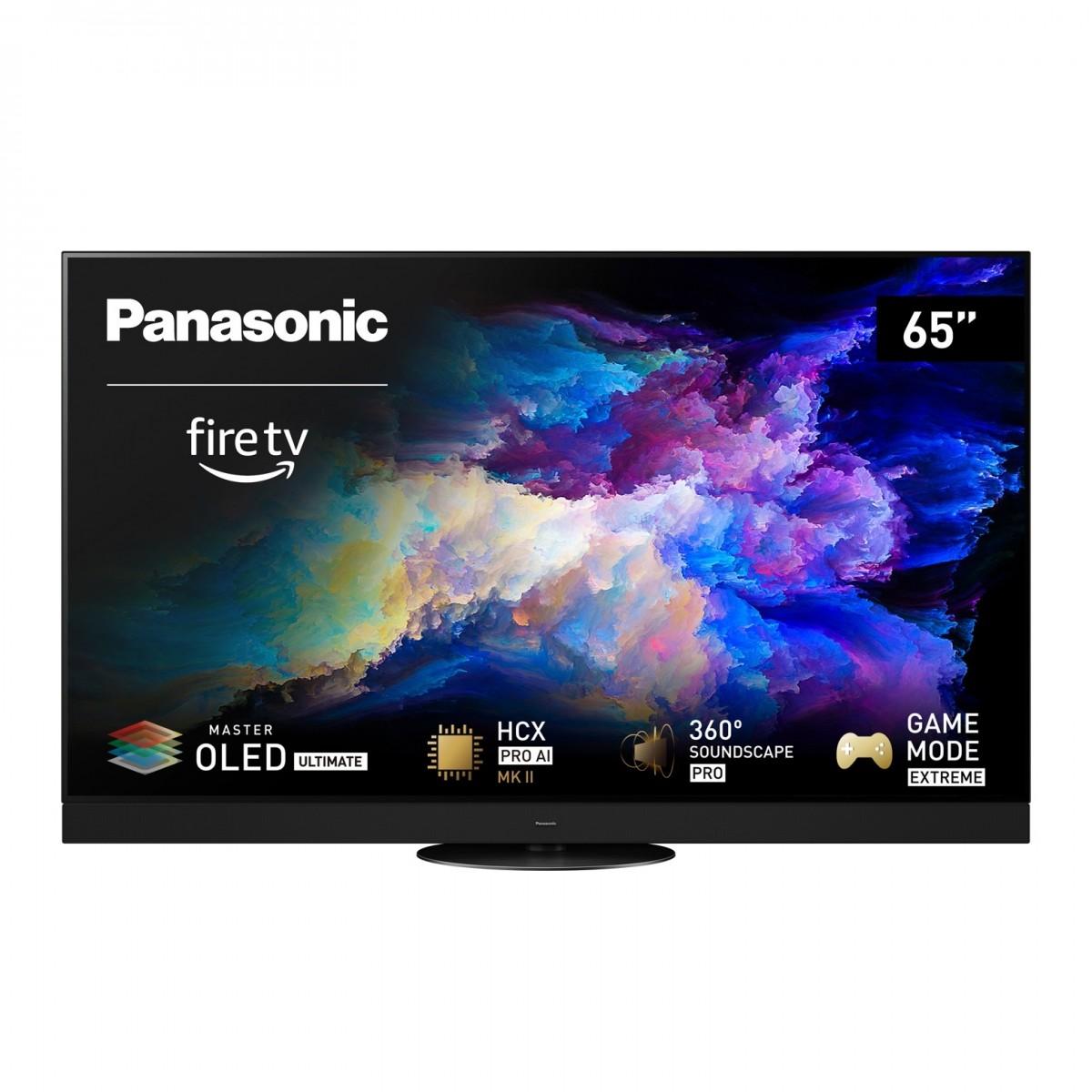
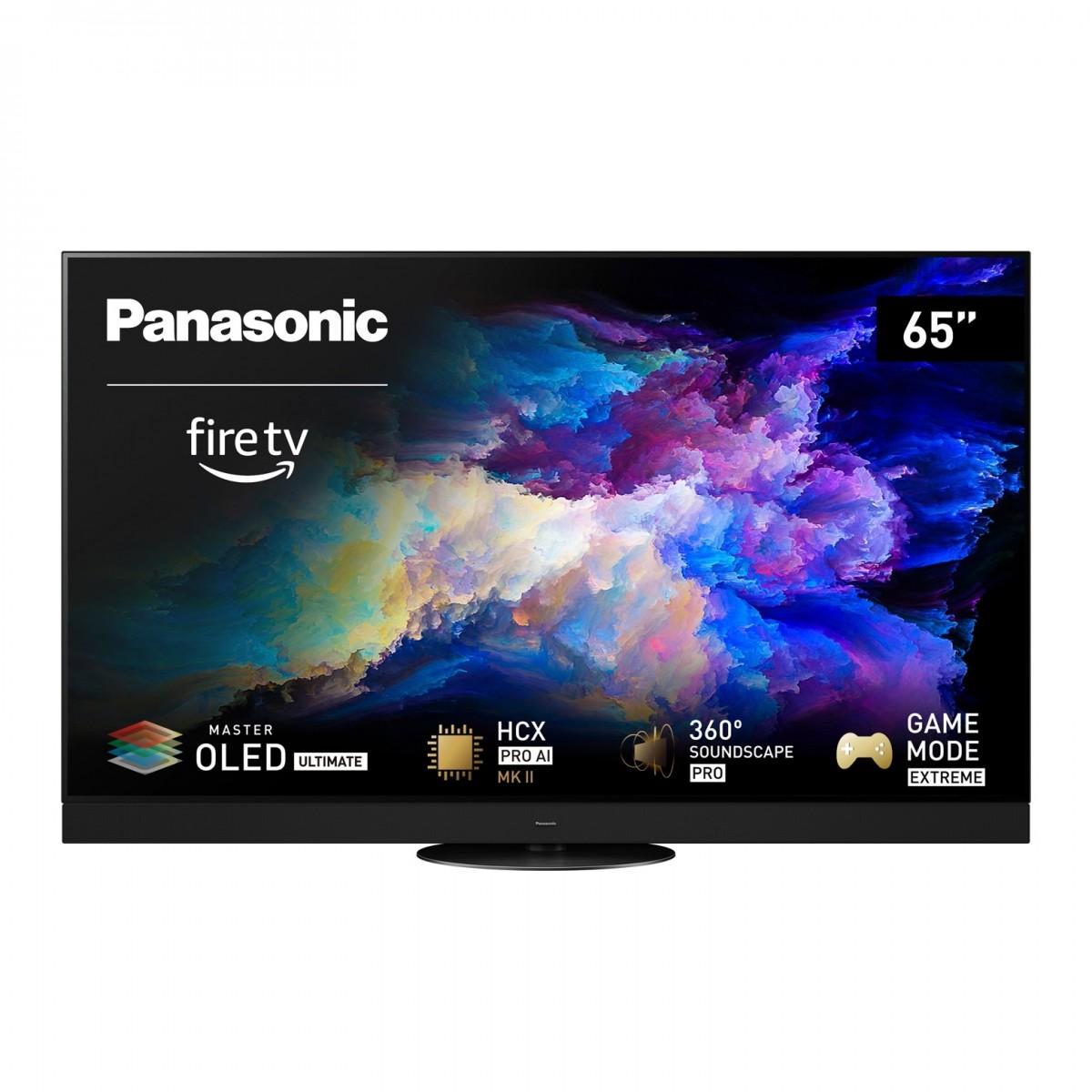
The Panasonic Z95A takes a more nuanced approach with its HCX Pro AI Processor MKII. This advanced chip analyzes incoming content and automatically adjusts color reproduction based on what you're watching. Sports get enhanced saturation and sharpness, while movies receive more natural, filmmaker-intended colors. The processor can distinguish between a nature documentary that benefits from vivid greens and a period drama that requires subtle, natural skin tones.
From our research into professional reviews and user feedback, the Panasonic Z95A consistently receives praise for color accuracy that doesn't require extensive tweaking. The Hisense QD6, while impressive out of the box, sometimes oversaturates certain colors, particularly reds, which can make skin tones appear unnatural in some content.
The gaming landscape has transformed dramatically since the introduction of PlayStation 5 and Xbox Series X consoles. These systems can output 4K resolution at refresh rates up to 120Hz, with variable refresh rate technology to eliminate screen tearing.
The Panasonic Z95A supports up to 144Hz refresh rate, meaning it can display 144 unique frames every second. For competitive gaming, this translates to smoother motion, reduced input lag, and more responsive controls. The OLED technology also provides near-instantaneous pixel response times, eliminating motion blur even during fast-paced action sequences.
The Hisense QD6 operates at 60Hz native refresh rate, though it includes Motion Rate 120 processing that interpolates additional frames. While this can smooth out movie content, it introduces input lag for gaming and can create artifacts around moving objects. For casual gaming, this limitation might not matter, but serious gamers will notice the difference immediately.
Modern gaming requires more than just high refresh rates. Variable Refresh Rate (VRR) technology synchronizes the TV's refresh rate with the console's output, eliminating screen tearing when frame rates fluctuate. Both TVs include VRR, but the implementation differs significantly.
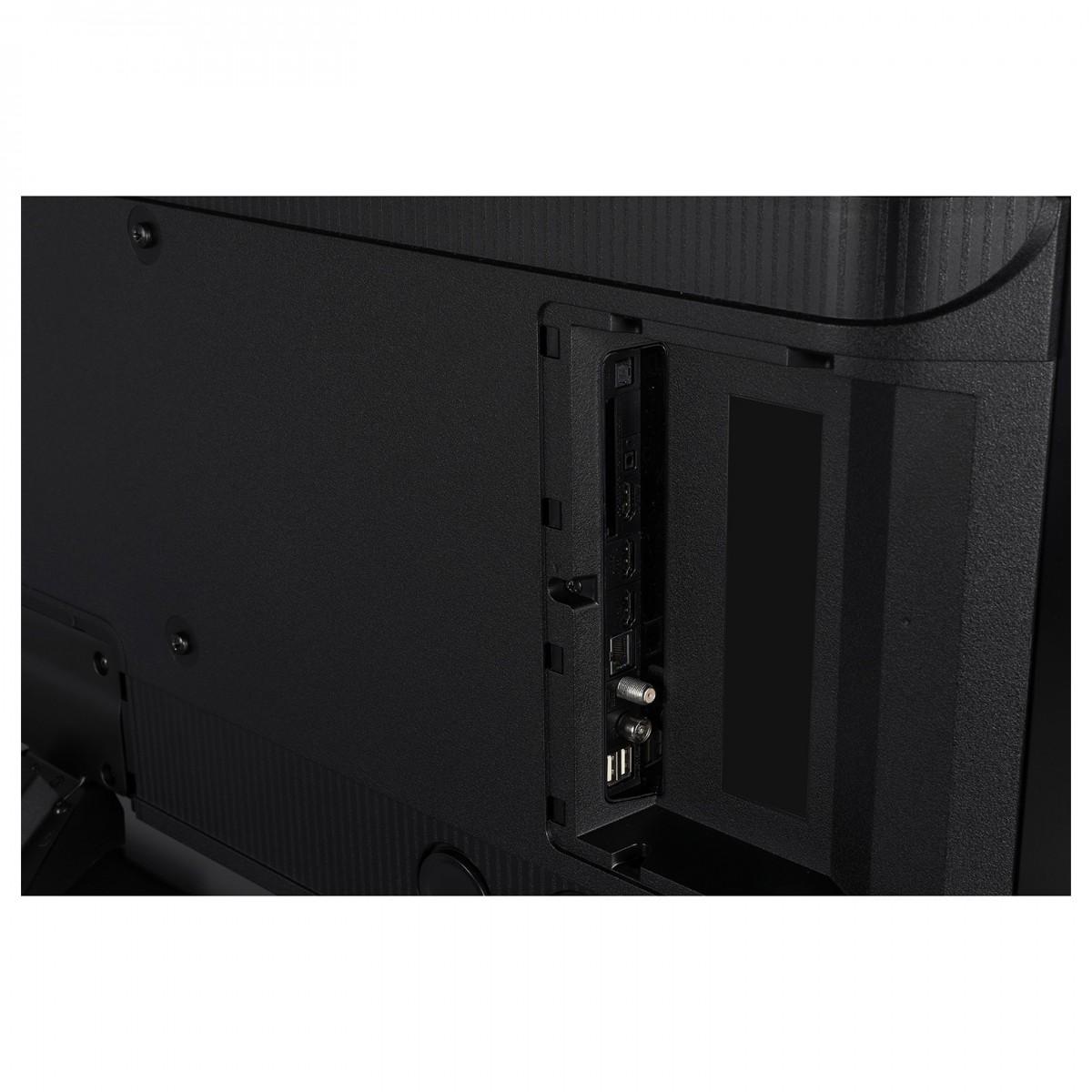
The Panasonic Z95A includes two HDMI 2.1 ports capable of handling 4K at 144Hz with full VRR support. It also supports both AMD FreeSync Premium and NVIDIA G-SYNC compatibility, making it excellent for PC gaming. The TV's "Game Mode Extreme" automatically optimizes all settings when it detects game consoles.
The Hisense QD6 includes VRR but only through HDMI 2.0 ports, limiting it to 4K at 60Hz. While functional for current gaming, this creates a ceiling for future console updates or PC gaming. The TV also includes Auto Low Latency Mode (ALLM), which automatically switches to game mode when it detects a console.
Based on user reports and expert testing, input lag on both TVs falls into acceptable ranges for gaming, with the Hisense QD6 achieving around 10.2ms and the Panasonic Z95A delivering competitive performance.
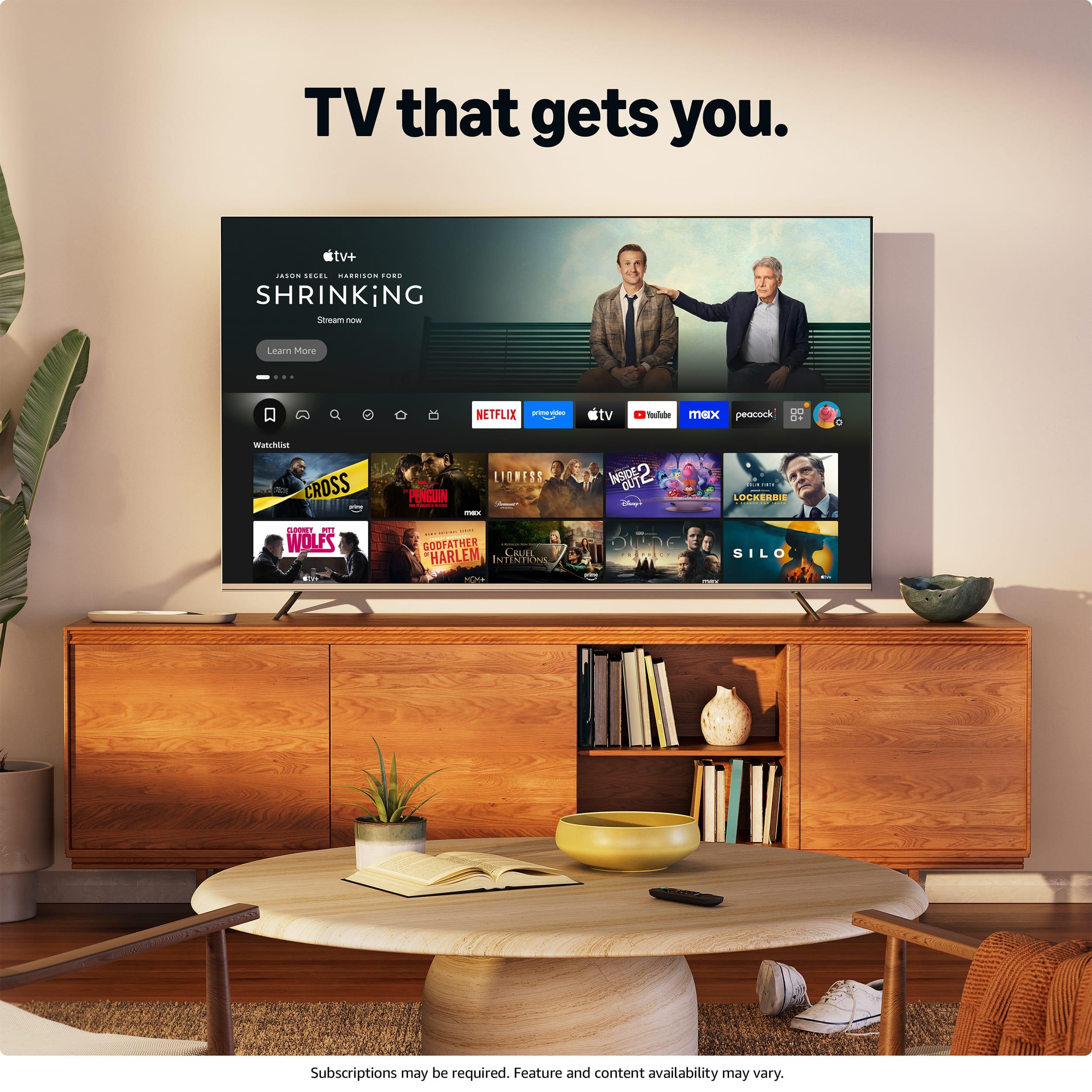
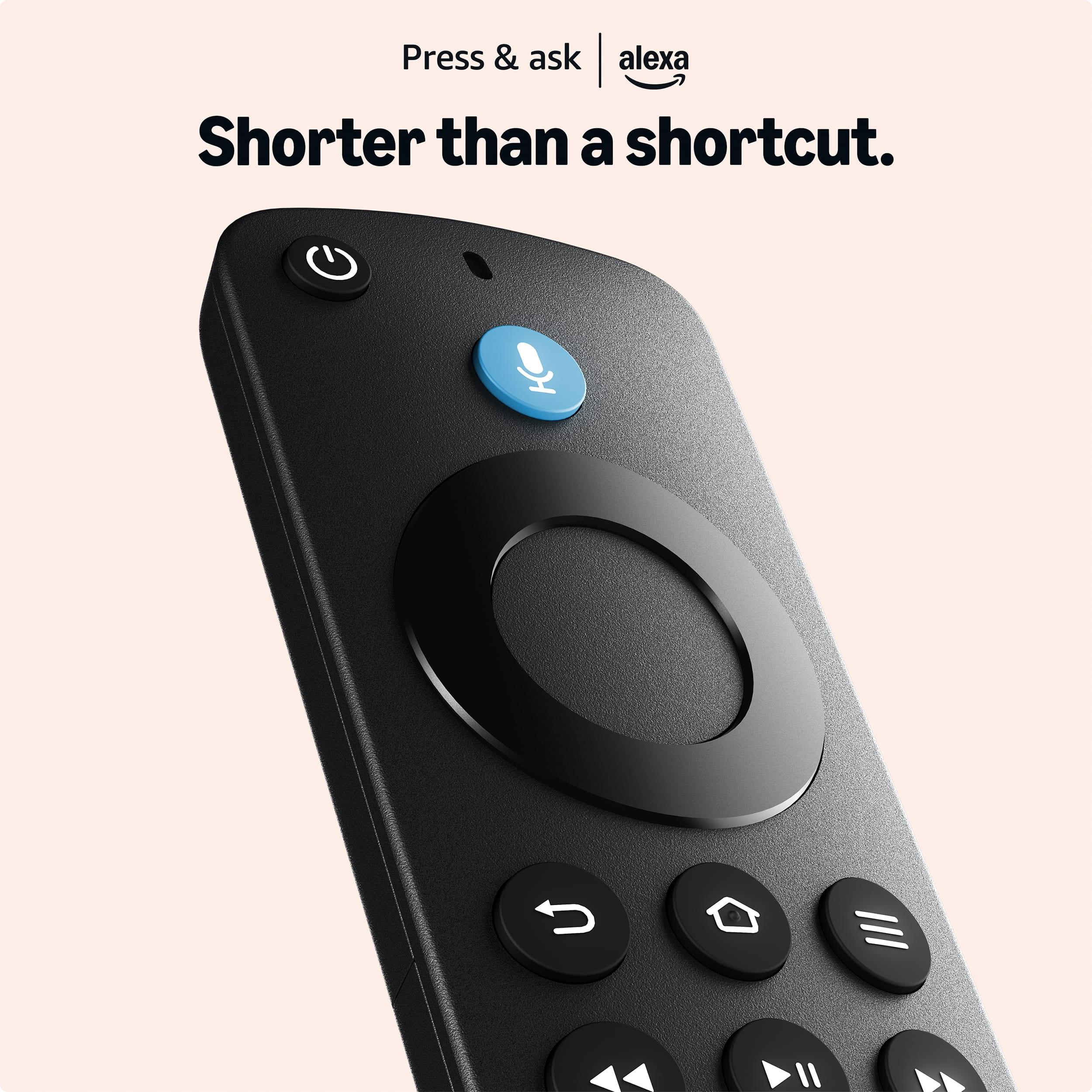
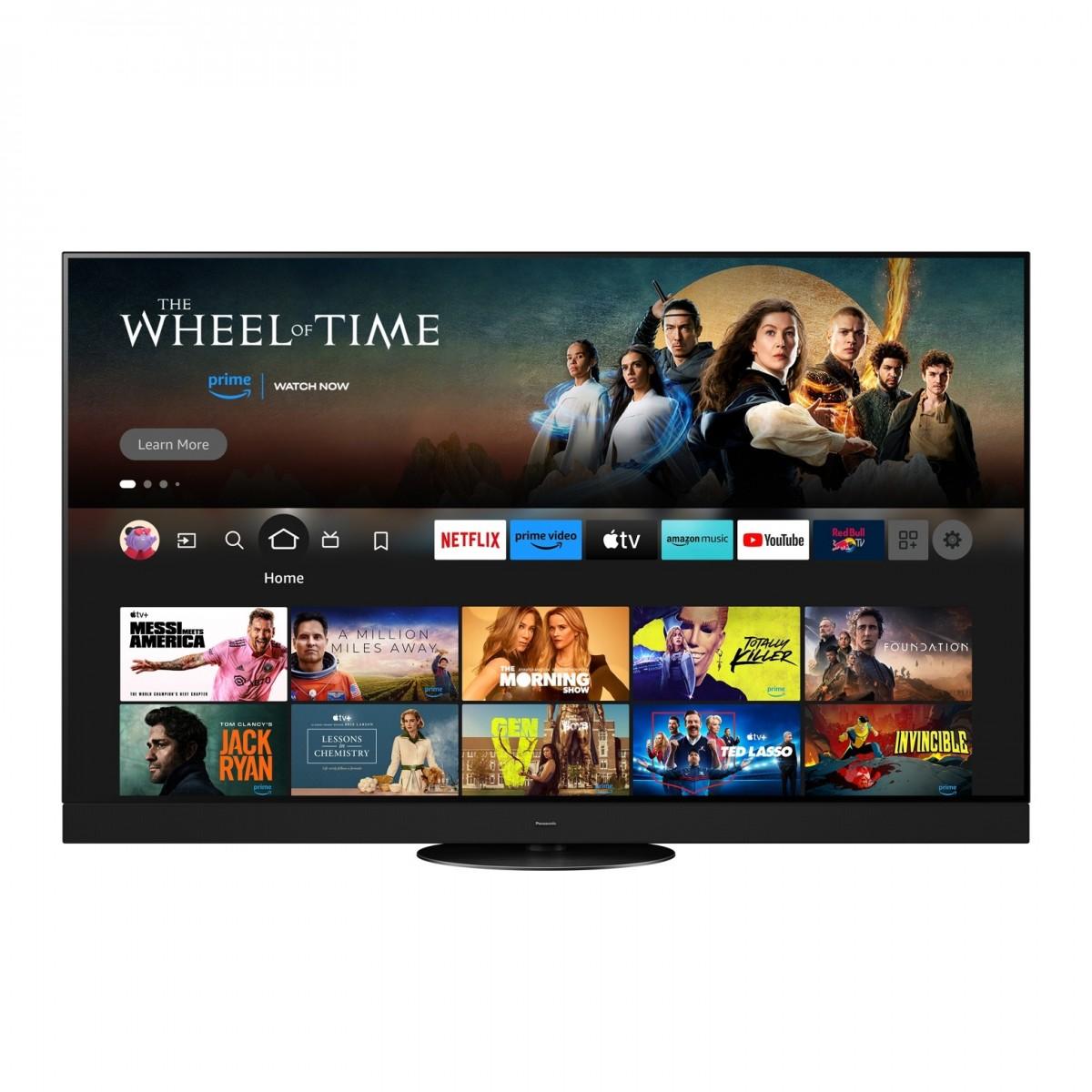
Both TVs run Amazon Fire TV, which provides identical app selection and interface. This includes major streaming services like Netflix, Disney+, Prime Video, and hundreds of others. Fire TV also integrates with Alexa for voice control and smart home integration.
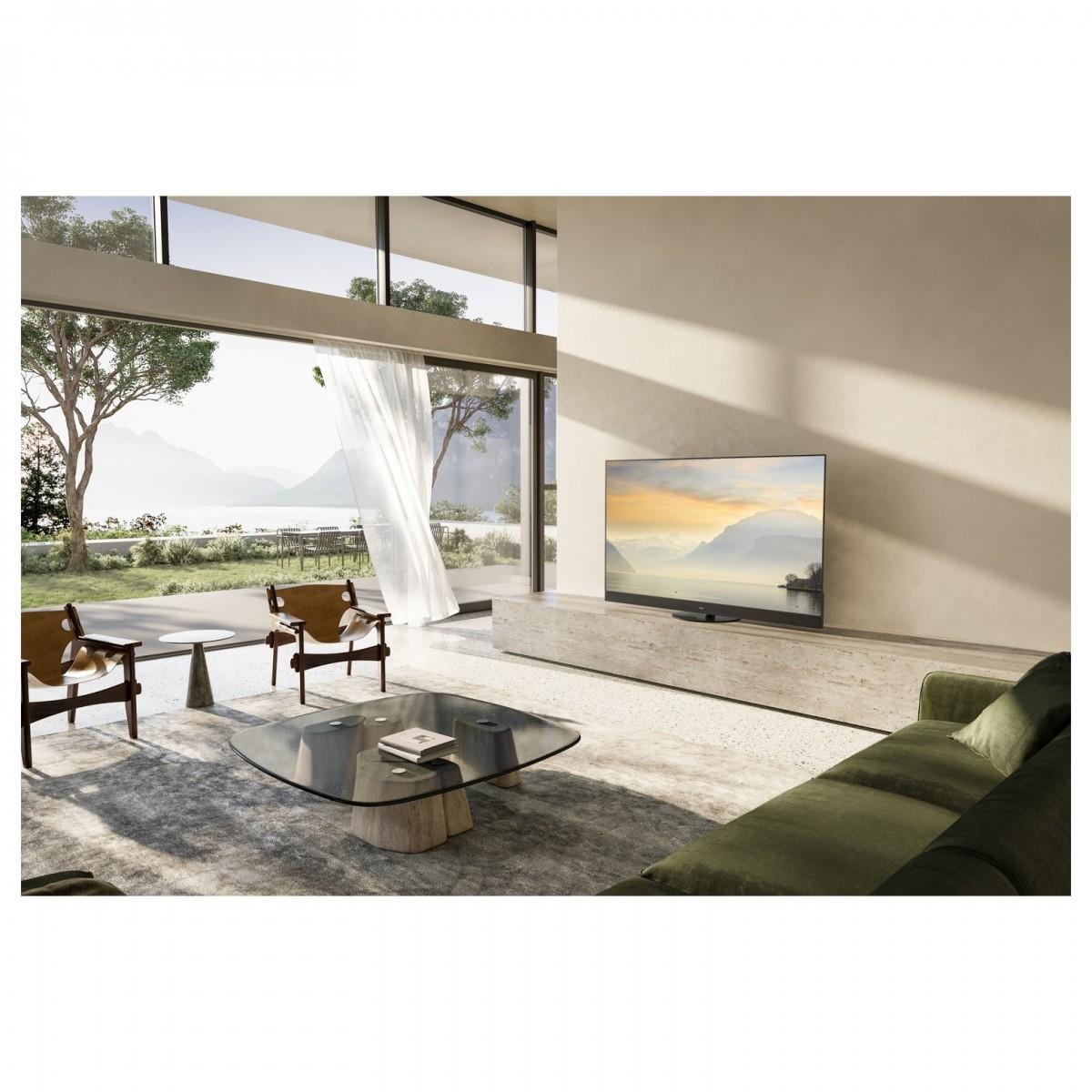
The Panasonic Z95A adds what Panasonic calls "Ambient Experience," which displays artwork, photos, or information when the TV isn't actively being used. While not essential, it transforms the TV from a black rectangle into a more integrated piece of home decor.
User feedback suggests both platforms perform adequately, though some owners of the Hisense QD6 report occasional menu lag, particularly when switching between apps quickly. The Panasonic Z95A generally receives praise for smooth operation, likely due to its more powerful processing hardware.
TV audio has improved significantly in recent years, but the difference between budget and premium implementations remains substantial.
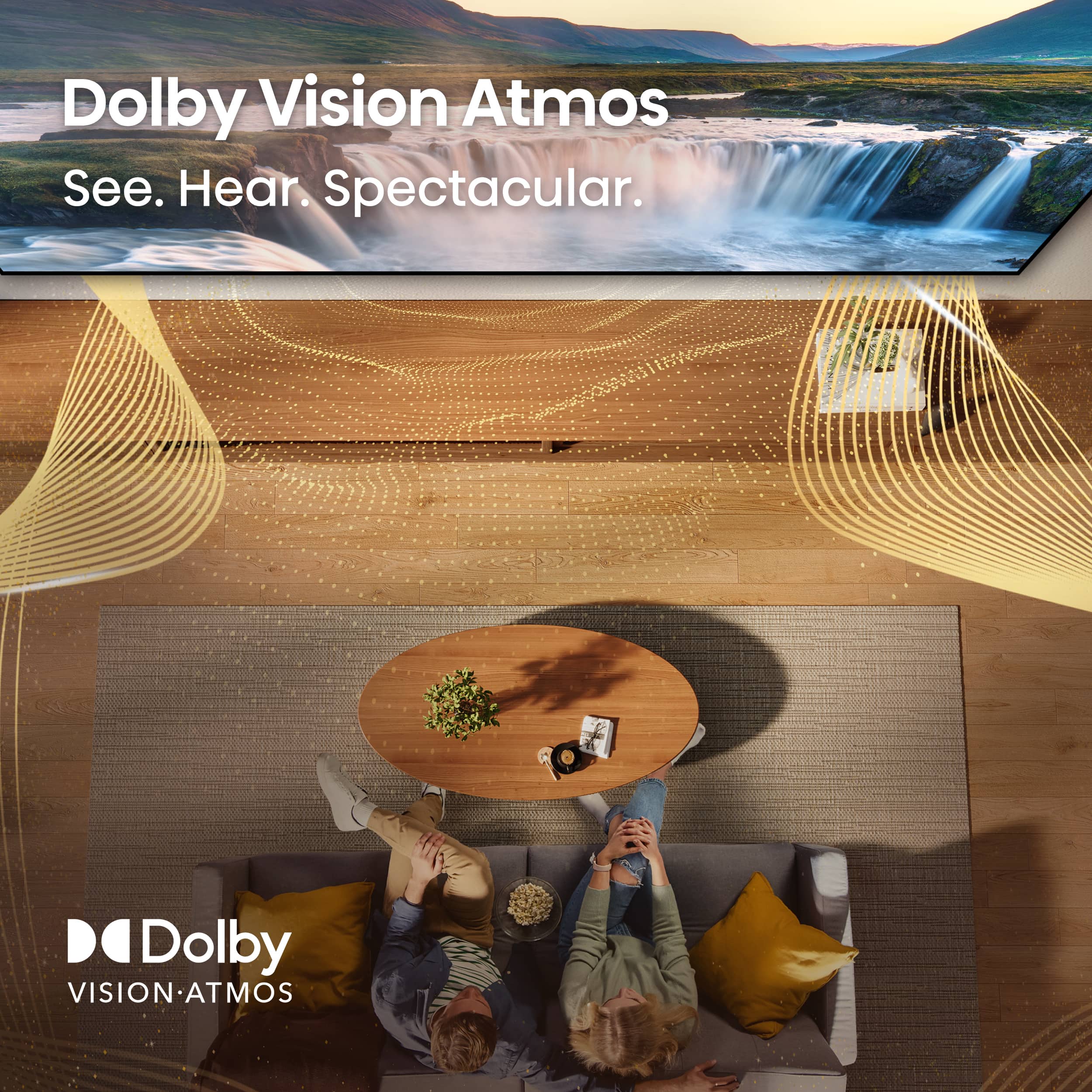
The Hisense QD6 includes basic Dolby Atmos support through its built-in speakers, which can decode and play back height information from compatible content. However, the physical speakers themselves are fairly standard, providing adequate dialogue clarity but lacking the power or positioning for truly immersive audio.
The Panasonic Z95A features what Panasonic calls "360 Soundscape Pro" – a 170-watt system with front-firing, upward-firing, and side-firing speakers tuned by Technics. This creates genuine surround sound effects without additional speakers. While it can't match a dedicated sound system, it's impressive enough that many owners report satisfaction without purchasing additional audio equipment.
For home theater enthusiasts, this difference matters significantly. The Panasonic Z95A can handle movie soundtracks with genuine impact, while the Hisense QD6 almost certainly requires a soundbar or external speakers for satisfying audio performance.
Your room's lighting conditions dramatically affect which TV will work better. This isn't just about brightness – it's about how different display technologies interact with ambient light.
Neither TV excels in very bright rooms, but for different reasons. The Hisense QD6 can produce adequate brightness for moderately lit spaces, but its glossy screen creates intense reflections when direct sunlight hits it. The VA panel maintains better colors under ambient light compared to IPS displays, but the overall viewing experience diminishes significantly with bright overhead lighting.
The Panasonic Z95A faces the classic OLED challenge: excellent performance in controlled lighting, but struggles with reflections and maintaining contrast in bright environments. However, its higher peak brightness helps somewhat, and the superior contrast means colors don't wash out as quickly as they might on lesser displays.
Here's where the technology differences become most apparent. In a dark room, the Panasonic Z95A creates what can only be described as a reference-level viewing experience. Perfect blacks, bright highlights, and accurate colors combine to create images that approach what you'd see in a commercial theater.
The Hisense QD6 performs respectably in dark rooms, but the black level lifting becomes more noticeable. Dark movie scenes appear grayish rather than truly dark, reducing the cinematic impact significantly.
At the time of writing, the price difference between these TVs represents a significant decision point. The Hisense QD6 typically costs less than half what you'd pay for the Panasonic Z95A, making the value equation complex.
The Hisense QD6 delivers functional 4K viewing with decent color reproduction and modern smart TV features. For viewers who primarily watch streaming content in moderately lit rooms and aren't particular about reference-level picture quality, it provides substantial functionality at an accessible price point.
The quantum dot enhancement does create more vibrant colors than standard LED TVs, and the Fire TV platform ensures access to all major content. Gaming works adequately for casual users, and the AI upscaling helps improve lower-resolution content.
The Panasonic Z95A represents what happens when manufacturers focus on picture quality without major compromises. Every aspect of the viewing experience improves dramatically – contrast, color accuracy, motion handling, gaming features, and audio quality.
For home theater enthusiasts, the difference isn't subtle. This TV can display content the way filmmakers intended, with perfect blacks, accurate colors, and HDR performance that actually makes a difference. The gaming features ensure compatibility with future console generations, and the audio system reduces the need for immediate upgrades.
The decision between these TVs ultimately depends on your priorities, usage patterns, and budget constraints.
Choose the Hisense QD6 if you need a large-screen TV with modern features at an accessible price point. It works well for casual viewing, provides decent picture quality for the price, and includes all the smart features you'd expect from a modern TV. This makes sense for secondary TVs, rental properties, or situations where budget constraints are paramount.
However, understand the limitations. Picture quality improvements over the next few years will likely make the performance gaps more noticeable, and the gaming features may feel dated sooner than expected.
Choose the Panasonic Z95A if picture quality matters significantly to you and you can justify the premium price. This TV excels at everything the Hisense QD6 does adequately, and provides capabilities that budget TVs simply cannot match. For dedicated home theaters, serious gaming, or situations where the TV serves as the primary entertainment hub, the performance advantages justify the cost.
The Panasonic Z95A also represents better long-term value despite its higher upfront cost. The superior picture processing, gaming features, and build quality suggest it will remain satisfying longer than budget alternatives.
Consider your viewing habits carefully. If you primarily watch TV during the day with ambient lighting, neither TV will perform at its best. If you frequently watch movies in dark rooms or care about gaming performance, the technology differences become much more significant.
The TV market continues evolving rapidly, with new features and improvements arriving annually. Both TVs represent solid choices within their respective categories, but the fundamental differences in display technology create performance gaps that price alone cannot bridge.
| Hisense 65" QD6 Series Hi-QLED Fire TV (2025) | Panasonic Z95A 65" OLED 4K Ultra HD Smart TV |
|---|---|
| Display Technology - Fundamentally determines picture quality capabilities | |
| Full-array LED with quantum dots (Hi-QLED) | OLED with Micro Lens Array |
| Peak Brightness - Critical for HDR impact and bright room viewing | |
| ~385 cd/m² (adequate for moderate lighting) | ~450 cd/m² (better HDR highlights) |
| Black Levels - Essential for contrast and cinematic experience | |
| Decent blacks that lift with bright content (no local dimming) | Perfect blacks with infinite contrast ratio |
| Refresh Rate - Determines gaming smoothness and motion clarity | |
| 60Hz native (Motion Rate 120 with interpolation) | 144Hz native (true high refresh rate) |
| HDMI Gaming Features - Future-proofing for next-gen consoles | |
| HDMI 2.0 only, VRR at 60Hz, ALLM | Two HDMI 2.1 ports, 4K@144Hz, VRR, FreeSync Premium, G-SYNC |
| HDR Format Support - Determines compatibility with premium content | |
| Dolby Vision, HDR10+, HDR10, HLG | Dolby Vision IQ with ambient adjustment, HDR10+ Adaptive, HDR10, HLG |
| Color Gamut Coverage - Affects color vibrancy and accuracy | |
| 90% DCI-P3 (vibrant quantum dot colors) | 90% DCI-P3 (filmmaker-accurate processing) |
| Audio System - Built-in sound quality and immersion | |
| Basic Dolby Atmos support, standard speakers | 360 Soundscape Pro, 170W system with Technics tuning |
| Smart Platform - User interface and app ecosystem | |
| Fire TV with Alexa Built-in | Fire TV with Alexa Built-in plus Ambient Experience |
| Picture Processor - Affects upscaling and image optimization | |
| AI 4K Upscaler with basic processing | HCX Pro AI Processor MKII with content-aware adjustments |
| Input Lag - Gaming responsiveness | |
| ~10.2ms (excellent for casual gaming) | Competitive low latency with Game Mode Extreme |
| Viewing Angle - Performance when not seated directly in front | |
| VA panel with narrow viewing angles | Wide OLED viewing angles |
| Room Lighting Suitability - Where each TV performs best | |
| Moderate lighting, struggles with bright rooms and reflections | Excellent in dark rooms, challenges with bright ambient light |
| Motion Handling - Sports and action content clarity | |
| Sluggish response times, motion blur in fast scenes | Near-instantaneous OLED response, crisp motion |
| Price Category - Value positioning in the market | |
| Budget-friendly premium TV option | Premium flagship with proportional features |
The Panasonic Z95A 65" OLED delivers significantly better picture quality for movies and shows. Its OLED technology produces perfect blacks and infinite contrast, making dark scenes appear truly cinematic. The Hisense 65" QD6 Series offers decent picture quality with vibrant colors, but suffers from black level lifting that reduces contrast in mixed content. For home theater viewing, the Panasonic Z95A provides a reference-level experience that the budget-friendly Hisense QD6 cannot match.
The Panasonic Z95A 65" OLED is superior for next-gen gaming. It features 144Hz refresh rate, two HDMI 2.1 ports supporting 4K@144Hz, and compatibility with both AMD FreeSync Premium and NVIDIA G-SYNC. The Hisense 65" QD6 Series is limited to 60Hz gaming through HDMI 2.0 ports, though it includes VRR and ALLM for smooth gameplay within those constraints. Serious gamers will appreciate the future-proofing capabilities of the Panasonic Z95A.
QLED technology in the Hisense 65" QD6 Series uses quantum dots with LED backlighting to enhance colors, while OLED in the Panasonic Z95A allows individual pixels to turn completely on or off. This means the Panasonic Z95A can display perfect blacks and infinite contrast, while the Hisense QD6 relies on backlighting that can cause black levels to appear grayish. OLED generally provides superior contrast and viewing angles.
Neither TV excels in very bright rooms, but the Hisense 65" QD6 Series may perform slightly better due to its LED backlight technology. However, both TVs struggle with reflections from direct sunlight. The Panasonic Z95A 65" OLED performs best in controlled lighting environments where its superior contrast can shine. For rooms with significant ambient light, consider room darkening solutions regardless of which TV you choose.
Yes, both the Hisense 65" QD6 Series and Panasonic Z95A 65" OLED run Amazon Fire TV with identical app selection including Netflix, Disney+, Prime Video, and hundreds of others. Both include Alexa voice control and smart home integration. The Panasonic Z95A adds Ambient Experience features for displaying artwork when not in use, but core streaming functionality is essentially identical between both TVs.
The Panasonic Z95A 65" OLED has significantly superior built-in audio with its 360 Soundscape Pro system featuring 170 watts and speakers tuned by Technics. It creates genuine surround sound effects without additional equipment. The Hisense 65" QD6 Series includes basic Dolby Atmos support but with standard speakers that lack power and positioning. Most Hisense QD6 owners will want to add a soundbar, while many Panasonic Z95A users find the built-in audio satisfactory.
HDR content looks dramatically better on the Panasonic Z95A 65" OLED due to its perfect blacks and superior contrast. Bright highlights pop against dark backgrounds, creating the intended HDR impact. The Hisense 65" QD6 Series struggles with HDR due to limited peak brightness and black level lifting, making bright scenes appear flat and uninspiring. The Panasonic Z95A also includes advanced HDR processing like Dolby Vision IQ that automatically adjusts based on room lighting.
This depends on your priorities and budget. The Hisense 65" QD6 Series offers excellent value for budget-conscious buyers, providing 65-inch 4K viewing with decent picture quality and modern smart features. The Panasonic Z95A 65" OLED costs significantly more but delivers premium performance across all categories. For casual viewing, the Hisense QD6 provides solid value, while the Panasonic Z95A justifies its premium price for enthusiasts who prioritize picture quality.
Yes, both the Hisense 65" QD6 Series and Panasonic Z95A 65" OLED display 4K content from Netflix, Amazon Prime Video, Disney+, and other streaming services. Both include AI upscaling to improve lower-resolution content to near-4K quality. The Panasonic Z95A has more advanced processing that can optimize different content types automatically, while the Hisense QD6 provides adequate upscaling performance for the price point.
The Panasonic Z95A 65" OLED is ideal for dedicated home theater rooms. Its perfect blacks, infinite contrast, and accurate colors create a cinema-like experience in dark environments. The superior built-in audio reduces the immediate need for additional equipment. The Hisense 65" QD6 Series works adequately for home theater use but cannot match the contrast performance and will likely require audio upgrades. For serious home theater enthusiasts, the Panasonic Z95A is worth the investment.
Sports and fast motion content look significantly better on the Panasonic Z95A 65" OLED due to its 144Hz refresh rate and near-instantaneous pixel response times. The Hisense 65" QD6 Series operates at 60Hz with slower response times, causing motion blur during fast action sequences. While the Hisense QD6 includes motion interpolation, it introduces artifacts and isn't ideal for sports viewing. The Panasonic Z95A delivers crisp, clear motion for sports enthusiasts.
The Panasonic Z95A 65" OLED offers better long-term value and future-proofing with its HDMI 2.1 ports, 144Hz capability, and advanced processing that can adapt to new content types. The Hisense 65" QD6 Series may feel dated sooner due to its HDMI 2.0 limitation and 60Hz refresh rate as gaming and content standards evolve. While both TVs should provide years of service, the Panasonic Z95A includes features that will remain relevant longer, justifying its higher upfront investment for many buyers.
We've done our best to create useful and informative comparisons to help you decide what product to buy. Our research uses advanced automated methods to create this comparison and perfection is not possible - please contact us for corrections or questions. These are the sites we've researched in the creation of this article: pcvarge.com - bestbuy.com - rtings.com - youtube.com - rtings.com - youtube.com - consumerreports.org - leaseville.com - hisense-usa.com - device.report - hisense-usa.com - youtube.com - flatpanelshd.com - displayspecifications.com - retailspecs.com - youtube.com - youtube.com - whathifi.com - tomsguide.com - shop.panasonic.com - store.in.panasonic.com - rtings.com - applianceplus.co.nz - rtings.com - store.in.panasonic.com - samsung.com

Privacy Policy
Terms and Conditions - Affiliate Policy
Home Security
© Copyright 2008-2026.
11816 Inwood Rd #1211, Dallas, TX 75244