






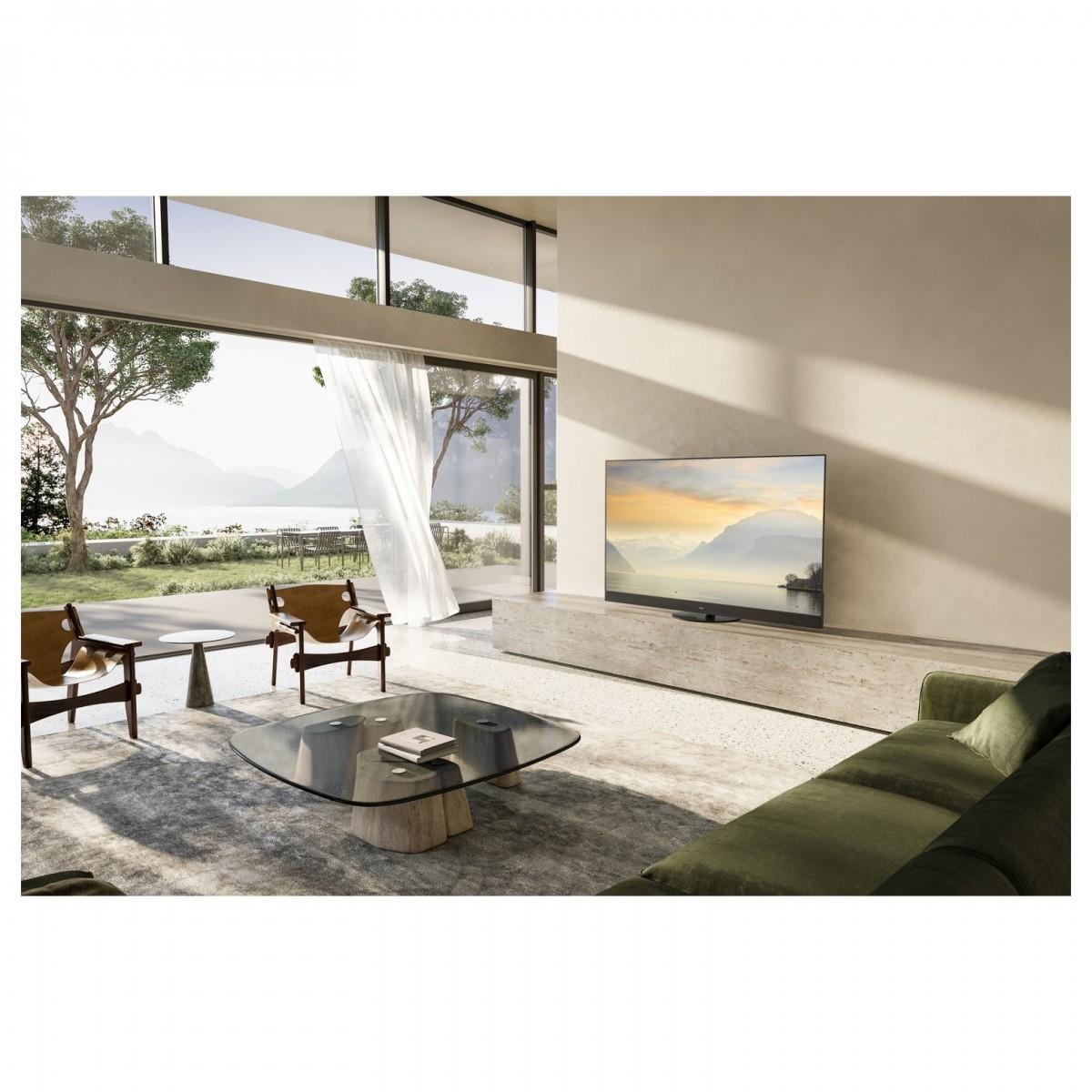
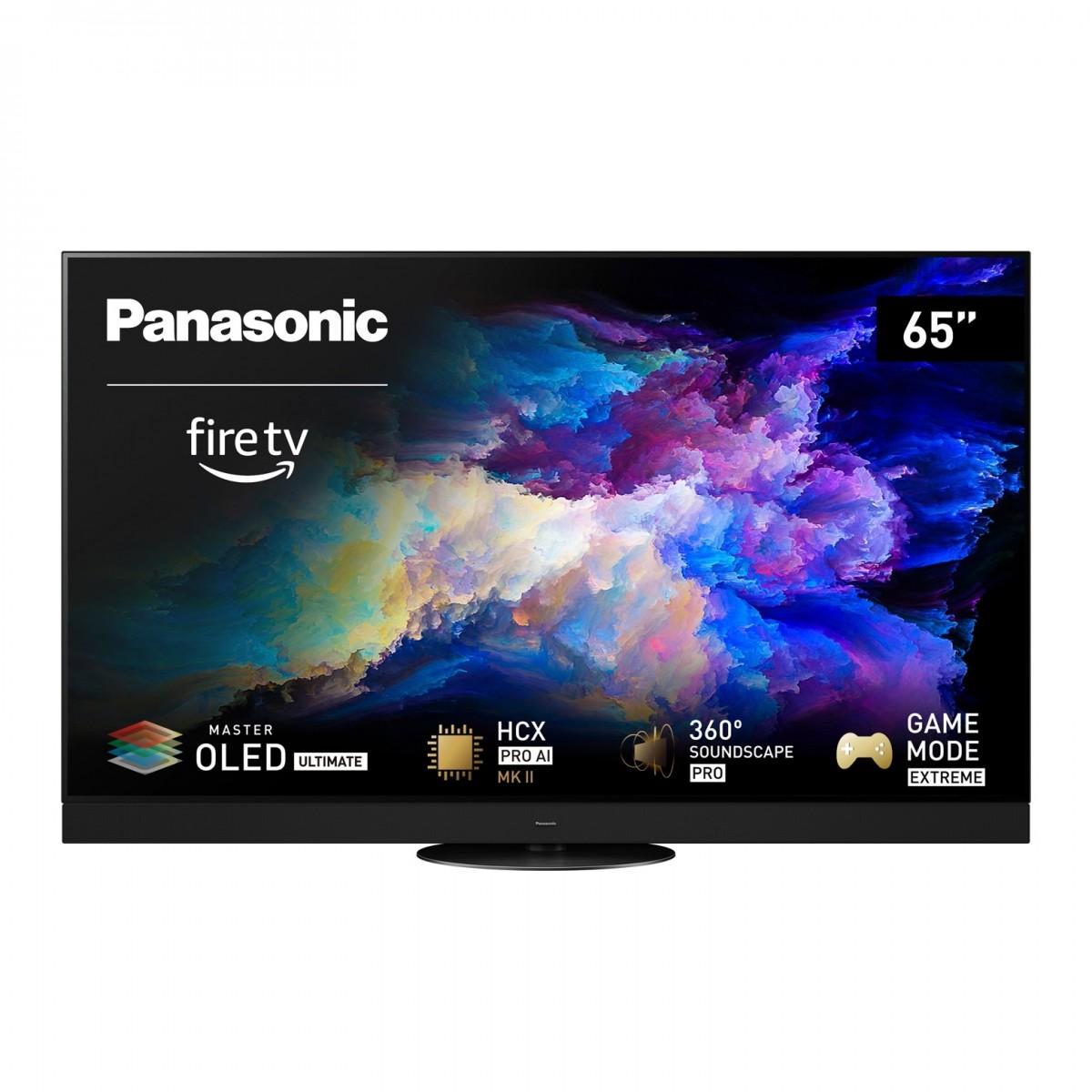
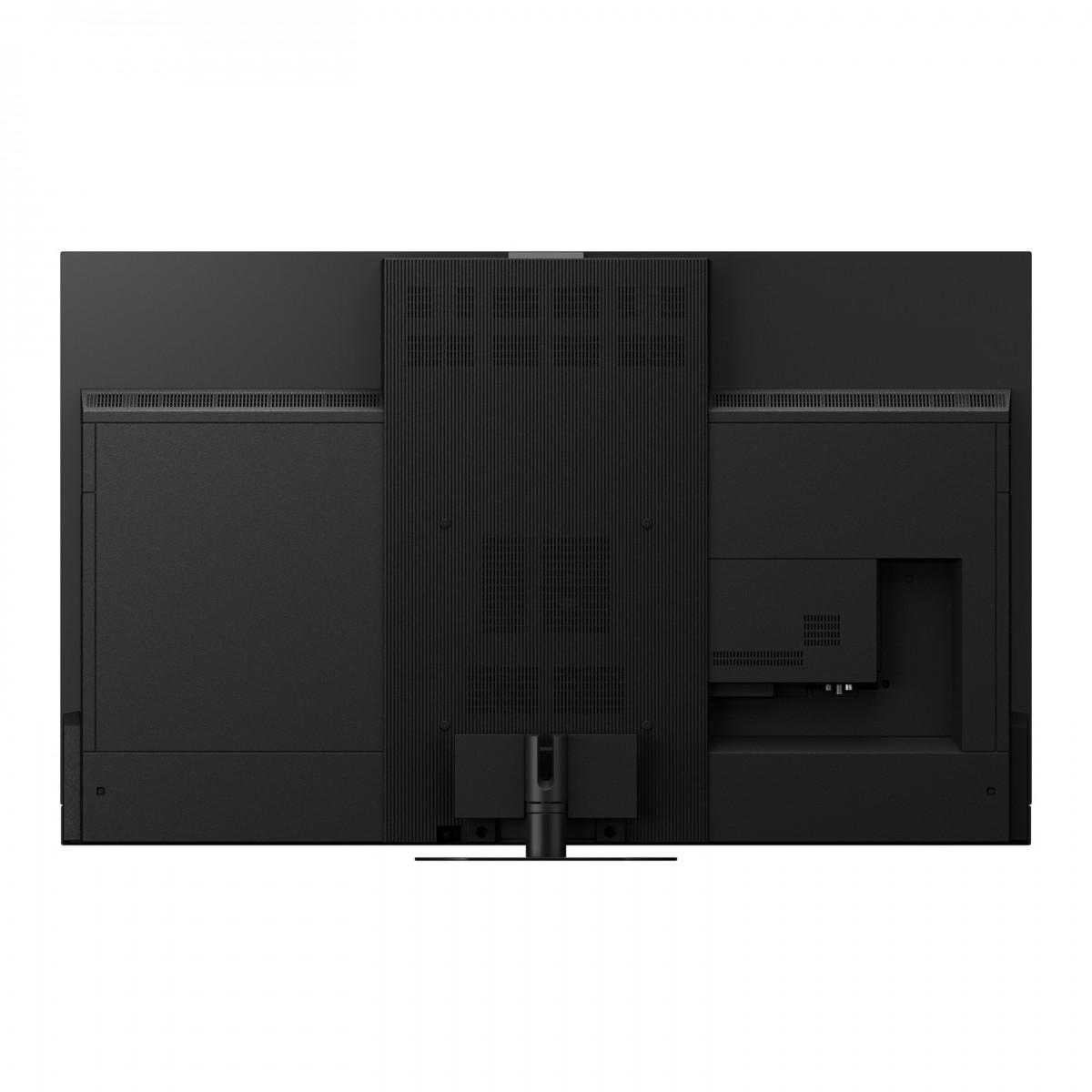
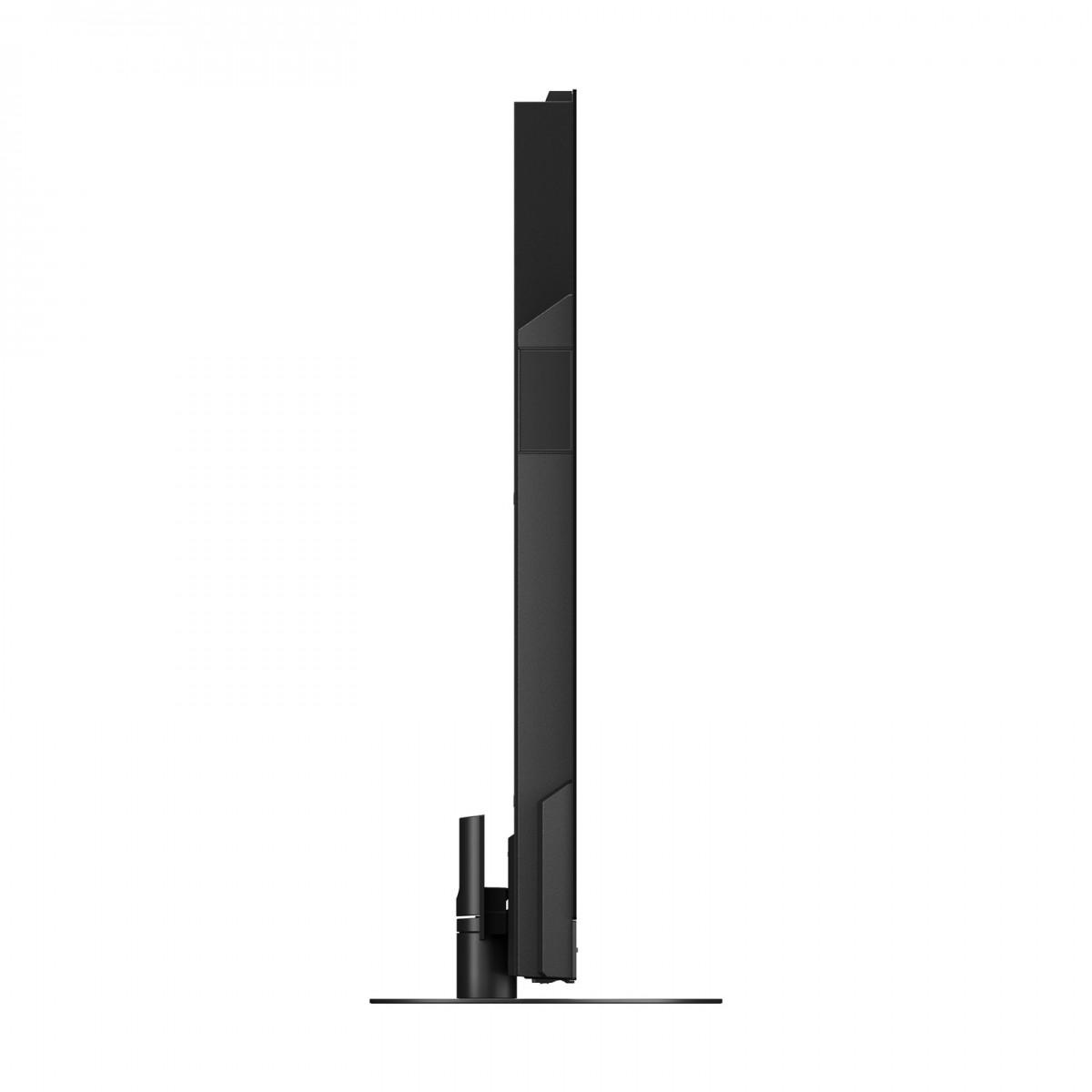
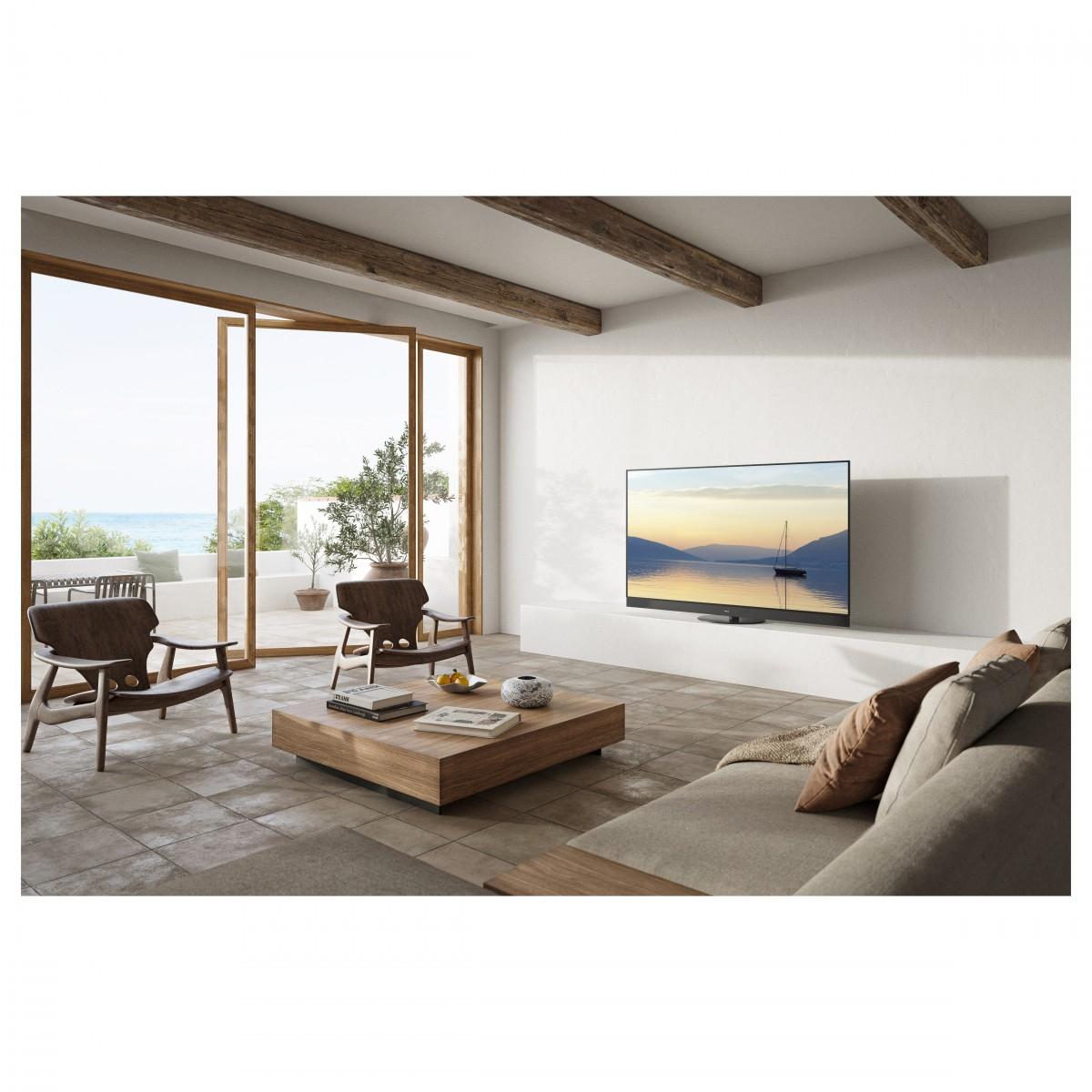
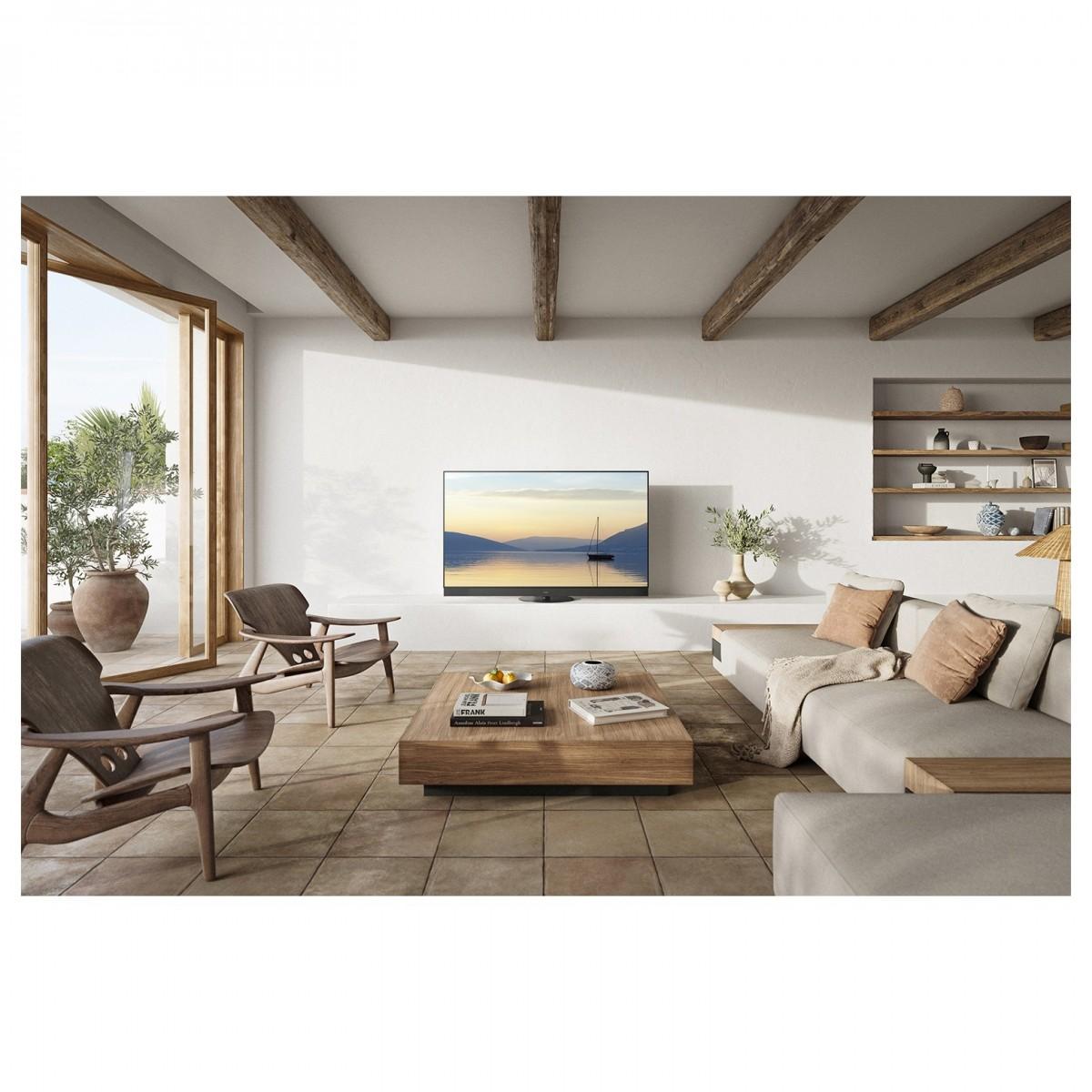
When you're spending serious money on a premium 65-inch TV, you want to make sure you're getting exactly what you need. The television landscape in 2025 offers two compelling but very different approaches to premium viewing: the Panasonic Z95A OLED and the Samsung Frame Pro Neo QLED. Both represent the pinnacle of their respective technologies, but they serve fundamentally different purposes and excel in different areas.
Understanding which one makes sense for your home requires diving deep into what makes each special, and more importantly, what trade-offs you're willing to make.
The premium TV market has crystallized around two main display technologies, each with distinct advantages. OLED (Organic Light Emitting Diode) technology allows individual pixels to turn completely on or off, creating perfect blacks and infinite contrast ratios. Think of it like having millions of tiny light bulbs that can shut off completely when displaying black content.
Neo QLED, on the other hand, uses thousands of tiny LED lights (called Mini LEDs) behind a traditional LCD panel, combined with Quantum Dot technology that enhances color reproduction. While these Mini LEDs can't turn off completely like OLED pixels, they can dim independently in zones, creating much deeper blacks than regular LED TVs while achieving significantly higher peak brightness.
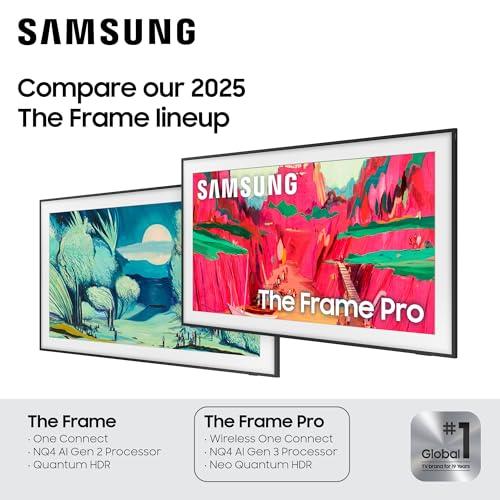
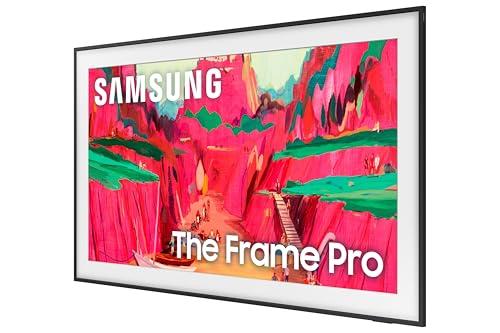
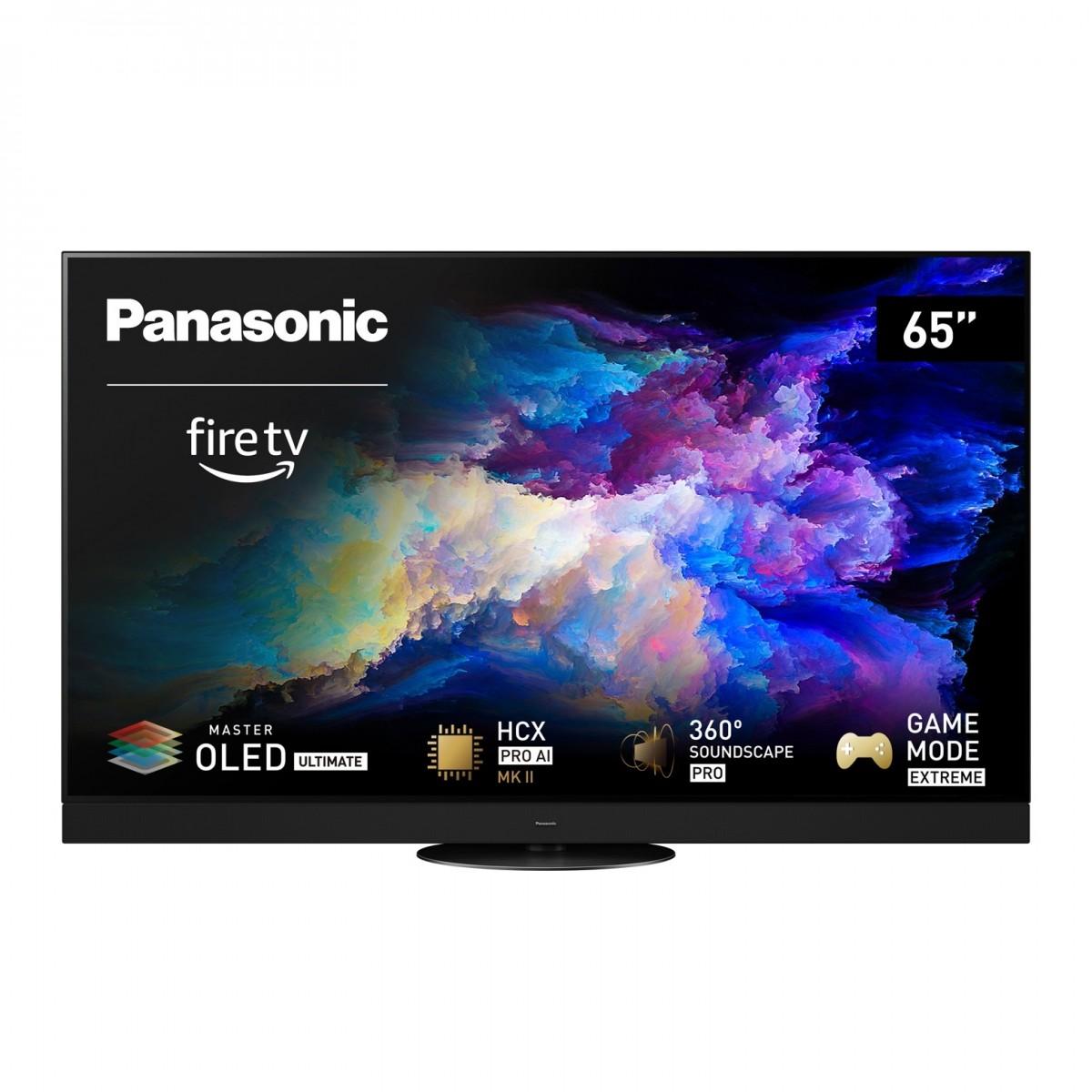
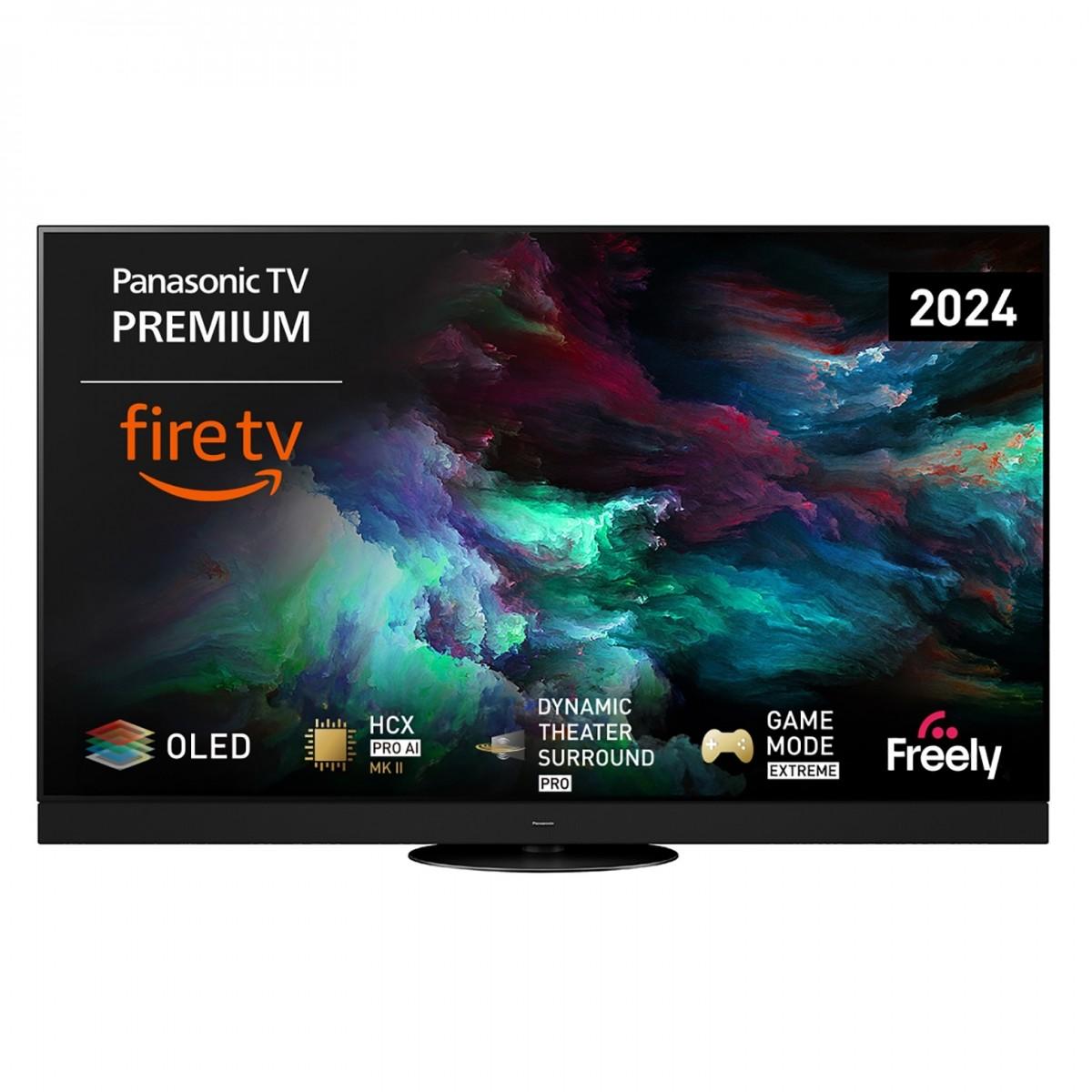
The Panasonic Z95A launched in 2024 as Panasonic's flagship OLED, incorporating their latest Micro Lens Array technology—a breakthrough that addresses OLED's traditional weakness in bright rooms by boosting brightness by about 20% without sacrificing the perfect blacks that make OLED special. The Samsung Frame Pro, released in 2025, represents Samsung's most ambitious attempt to blend high-performance Neo QLED technology with lifestyle design, introducing wireless connectivity that eliminates cable clutter entirely.
When evaluating TV performance, contrast ratio—the difference between the brightest whites and darkest blacks—arguably matters more than any other single factor. This is where the fundamental difference between these technologies becomes crystal clear.
The Panasonic Z95A delivers true black levels that simply cannot be matched by any backlit display. When a scene calls for deep shadows or a starfield against black space, OLED pixels turn completely off, creating actual black rather than just very dark gray. This creates an almost three-dimensional depth to images that's immediately apparent when comparing side-by-side with other technologies.
The Samsung Frame Pro, despite its advanced Mini LED backlighting system, cannot achieve true blacks. However, its Quantum Matrix Technology does provide excellent contrast for a backlit display, with much better black levels than traditional LED TVs. The local dimming system can dim specific zones to near-black levels, though some light bleed between zones is inevitable.
For movie watching, especially in dimmed or dark rooms, this difference is significant. Dark scenes in films like "Dune" or "Blade Runner 2049" showcase OLED's advantage beautifully, with shadow details that remain visible while blacks stay truly black.
Peak brightness tells a different story. The Samsung Frame Pro can reach over 1,000 nits of brightness in HDR content, making bright scenes and highlights genuinely impactful. This high brightness capability means HDR (High Dynamic Range) content—which is designed to use a much wider range from dark to bright than standard video—displays with the punch and intensity filmmakers intended.
The Panasonic Z95A, even with its Micro Lens Array enhancement, typically peaks around 600-800 nits. While this represents a significant improvement over older OLED panels, it's still noticeably dimmer than the Samsung when displaying bright HDR content like sun-drenched landscapes or explosive action sequences.
This brightness difference becomes crucial in bright viewing environments. If your TV faces windows or you typically watch with room lights on, the Samsung's higher brightness helps overcome ambient light and maintain image quality. The Panasonic, despite its excellent anti-reflective coating, can appear somewhat washed out in very bright conditions.
Both TVs excel at color reproduction but take different approaches. The Panasonic Z95A emphasizes color accuracy and naturalness through its Hexa Chroma Drive system. Colors appear lifelike and properly saturated without the over-enhancement that can make images look artificial. This approach particularly benefits skin tones and natural environments, making it excellent for movies and documentaries.
The Samsung Frame Pro uses Quantum Dot technology to achieve wider color coverage—about 93% of the UHDA-P3 color space compared to the Panasonic's slightly narrower but more accurate coverage. Samsung's colors tend to appear more vibrant and punchy, which many viewers prefer for sports, animation, and bright content, though some might find them oversaturated for movies.
Gaming performance has become increasingly important as consoles like PlayStation 5 and Xbox Series X push high frame rates and variable refresh rate technology. Here, the differences between these TVs are stark and decisive.
The Panasonic Z95A delivers exceptional gaming performance with input lag measuring around 12.8 milliseconds in Game Mode. Input lag represents the delay between when your controller sends a signal and when the action appears on screen—lower numbers mean more responsive gameplay. For context, anything under 20ms is considered excellent for gaming, while above 30ms becomes noticeably laggy for fast-paced games.
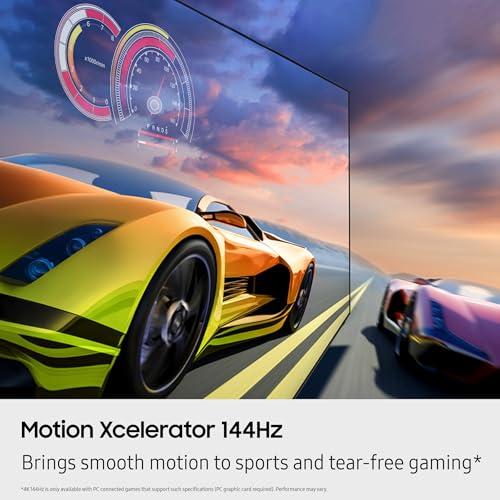
The TV supports all the important gaming features: 144Hz refresh rate for smooth motion, Variable Refresh Rate (VRR) to eliminate screen tearing, and Auto Low Latency Mode (ALLM) that automatically switches to the lowest lag setting when it detects a game console.
The Samsung Frame Pro, surprisingly given Samsung's typically excellent gaming performance, measures over 30ms input lag—significantly higher than most gaming-focused displays. This makes it less suitable for competitive gaming or fast-paced action games where responsiveness matters. While it supports similar gaming features like 144Hz and VRR, the high input lag undermines these advantages.
For serious gamers, this difference is a deal-breaker favoring the Panasonic Z95A. Casual gamers might find the Samsung acceptable, but anyone who plays competitive games or fast-paced action titles will notice and be frustrated by the lag.
Both TVs feature advanced AI processors that analyze incoming content and optimize picture settings automatically, but they take different approaches to smart features.
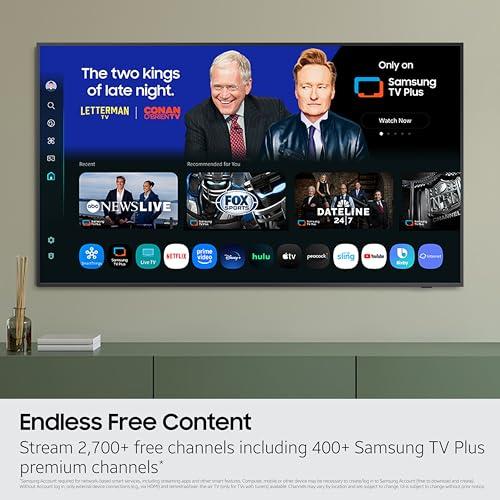
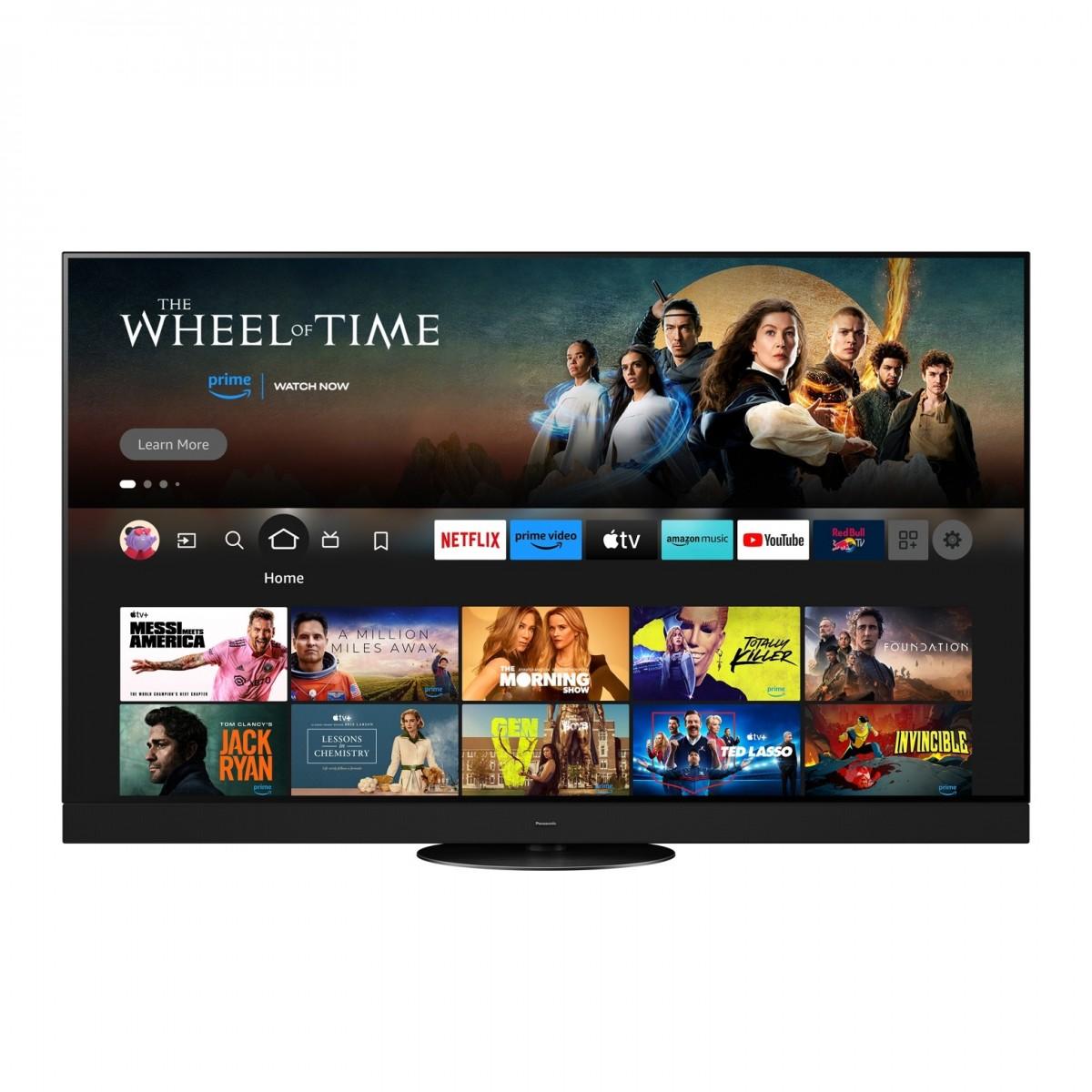
The Panasonic Z95A uses Amazon Fire TV as its smart platform, providing a content-forward interface that merges streaming services with live TV in an intuitive way. The HCX Pro AI Processor MKII continuously analyzes the signal type—whether it's a movie, sports, or game—and adjusts processing accordingly. This "Auto AI" feature genuinely improves image quality across different content types without requiring manual adjustment.
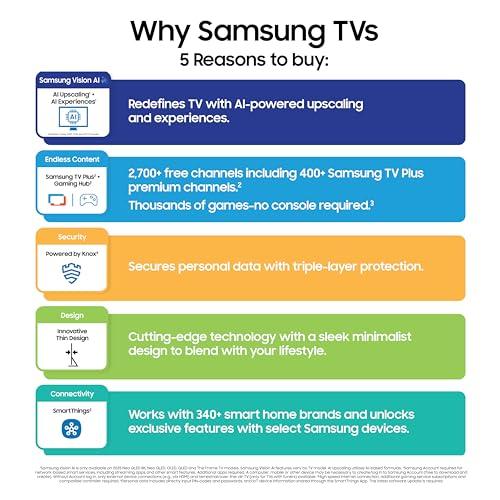
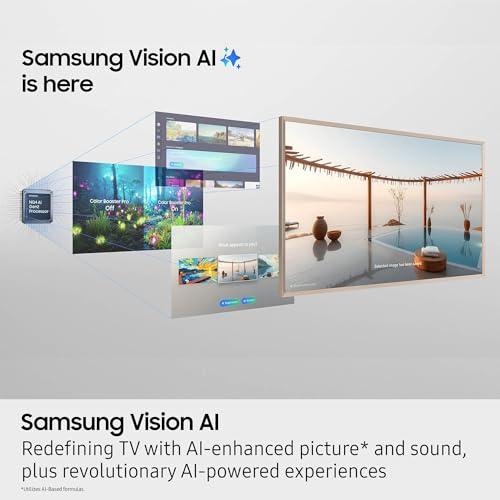
The Samsung Frame Pro runs Samsung's Tizen operating system with the NQ4 AI Gen3 processor. While Tizen offers broader app compatibility and Samsung's ecosystem integration, the real standout feature is Samsung Vision AI—a newer system that learns viewing habits and can make intelligent suggestions about content and settings.
Both support voice control through Alexa and Google Assistant, though the Samsung also includes Samsung's Bixby assistant for deeper integration with Samsung smart home devices.
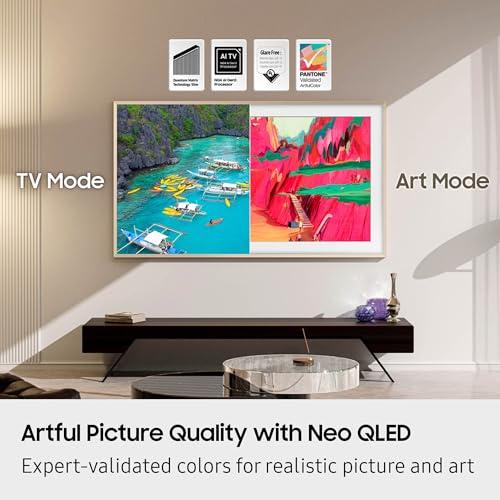
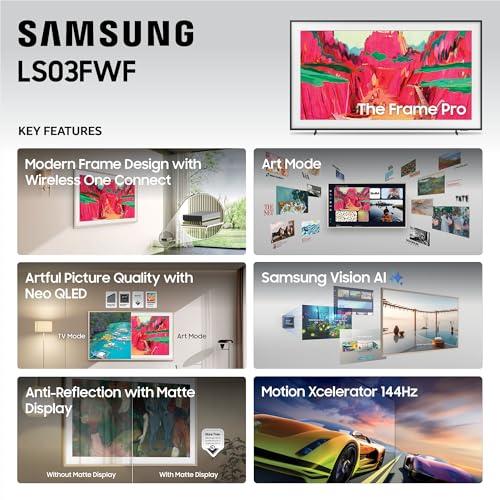
Here's where the Samsung Frame Pro truly differentiates itself from every other TV on the market, including the Panasonic Z95A. When turned off, the Frame Pro doesn't look like a TV at all—it displays artwork through its Art Mode, transforming into what appears to be a framed painting or photograph.
This isn't just a gimmick. Samsung has partnered with major museums and galleries to offer over 3,000 curated artworks through their Art Store. The matte anti-glare screen coating, which also helps with bright room viewing, makes displayed art look remarkably like actual prints or paintings rather than digital displays.
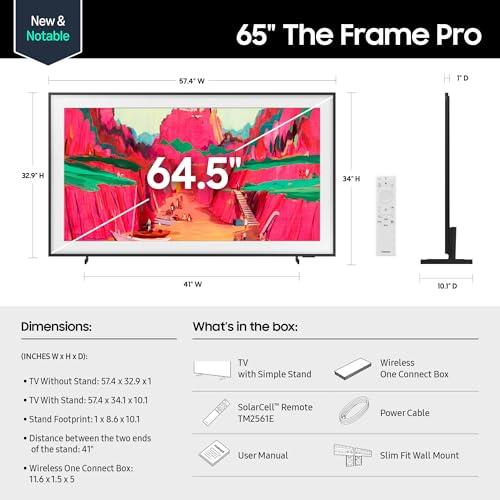
The customizable bezels allow you to match the TV to your decor style, whether you prefer modern black, classic wood tones, or bold colors. For design-conscious homeowners who want technology to blend seamlessly into their living spaces, this feature alone might justify the premium price.
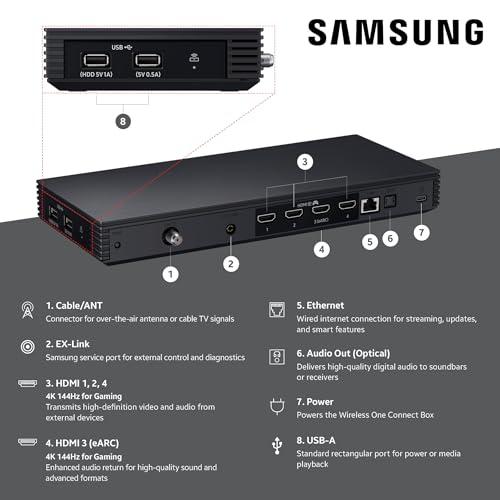
Perhaps even more impressive is the Wireless One Connect Box—a genuinely innovative feature that transmits all video and audio signals wirelessly to the TV from up to 10 meters away. This means you can hide all your cable boxes, gaming consoles, and streaming devices in a cabinet or another room entirely, leaving only a thin TV on your wall with no visible cables whatsoever.
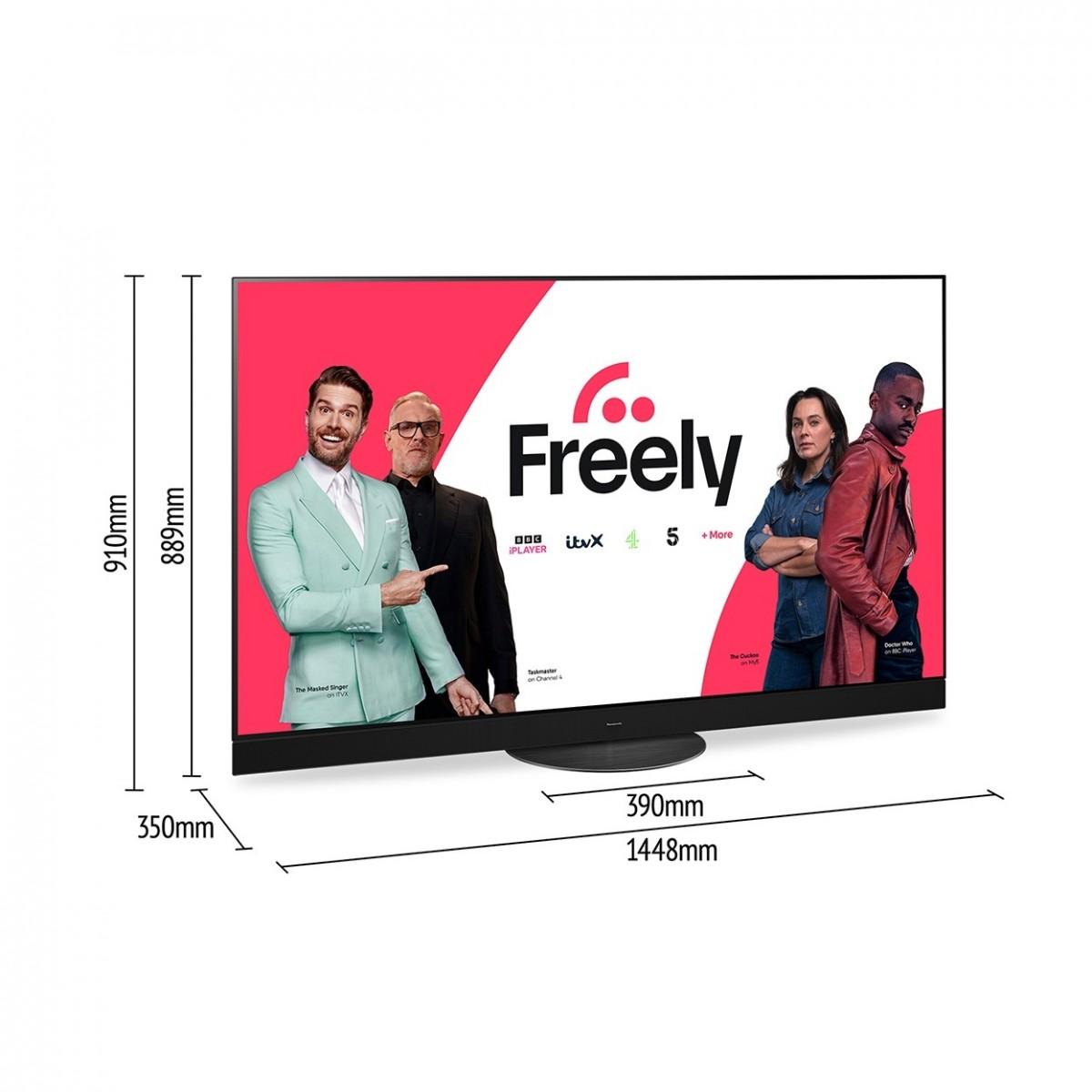
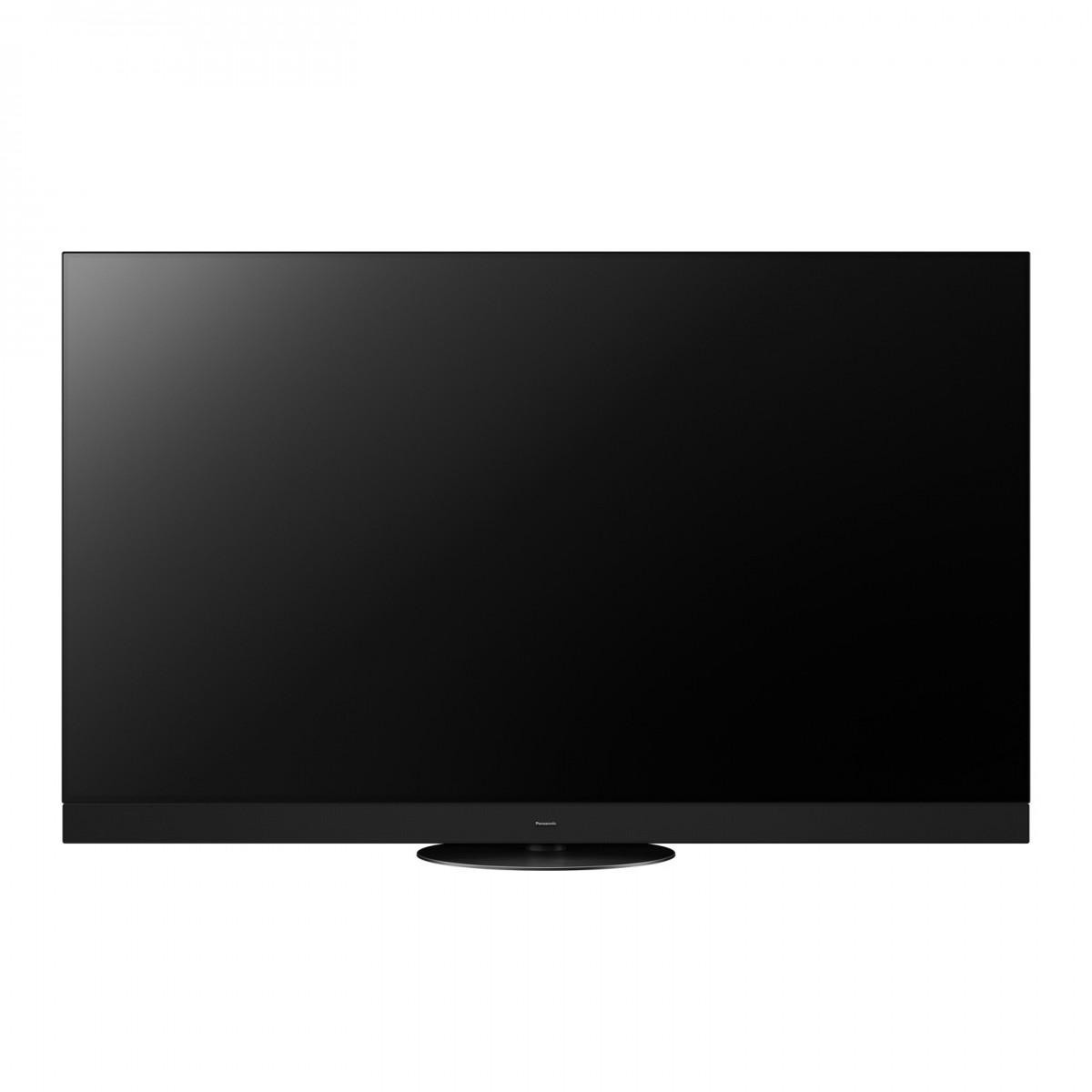
The Panasonic Z95A offers none of these lifestyle features. It's a traditional premium TV that excels at being a TV but makes no attempt to blend into your decor when not in use.
Both TVs include respectable built-in audio systems, though neither replaces a dedicated sound system for serious home theater setups.
The Panasonic Z95A features a 20-watt system with Dolby Atmos support and comprehensive audio codec compatibility, including DTS formats that many streaming services and Blu-ray discs use. The sound quality is clear and well-balanced for a built-in system.
The Samsung Frame Pro includes a more powerful 40-watt system with Object Tracking Sound technology that tries to match audio movement to visual action on screen. It also supports Dolby Atmos and Samsung's Q-Symphony feature, which can coordinate with compatible Samsung soundbars for a more immersive experience.
However, both TVs benefit significantly from external audio systems. If you're investing in a premium TV, budget for at least a quality soundbar to match the improved picture quality with equally impressive sound.
For dedicated home theater setups, several factors become particularly important. The Panasonic Z95A edges ahead in most home theater scenarios due to its superior contrast performance and comprehensive HDR support, including Dolby Vision—a premium HDR format used by Netflix, Disney+, and Ultra HD Blu-rays.
The perfect blacks of OLED technology create the cinematic experience that filmmakers intend, especially in properly darkened viewing rooms. The accurate color reproduction ensures skin tones and environments look natural rather than artificially enhanced.
However, the Samsung Frame Pro shouldn't be dismissed for home theater use. Its higher brightness makes HDR content more impactful, and the matte screen coating can be advantageous if you can't achieve complete light control in your viewing room.
The lack of Dolby Vision support on the Samsung is disappointing for home theater enthusiasts, as this format provides scene-by-scene optimization that can noticeably improve dark detail and color accuracy in supported content.
At the time of writing, both TVs command premium prices in the $1,900-2,000 range, making value comparison crucial. The question becomes: what are you actually paying for?
With the Panasonic Z95A, you're paying for pure TV performance. Every dollar goes toward picture quality, processing power, gaming features, and comprehensive format support. If your primary concern is having the best possible viewing experience for movies, TV shows, and games, the Panasonic delivers exceptional value for a premium OLED.
The Samsung Frame Pro asks you to pay extra for lifestyle integration features that go beyond traditional TV functionality. The Art Mode, wireless connectivity, and design customization represent genuine innovations that solve real problems for design-conscious consumers. However, you're essentially paying TV prices for both a high-performance display and a digital art frame.
Neither approach is inherently better—it depends entirely on your priorities and how you plan to use the TV in your living space.
The Panasonic Z95A makes the most sense for:
The Samsung Frame Pro is ideal for:
Both the Panasonic Z95A and Samsung Frame Pro represent excellent examples of their respective approaches to premium television technology. The Panasonic delivers superior traditional TV performance with perfect blacks, excellent gaming features, and comprehensive format support. The Samsung offers unique lifestyle integration that transforms how a TV fits into your living space, though with some performance compromises.
Your choice should ultimately depend on whether you view your TV primarily as an entertainment device or as a piece of furniture that needs to serve multiple purposes. Both philosophies have merit, and both products execute their respective visions exceptionally well.
For pure performance per dollar, especially for movie watching and gaming, the Panasonic Z95A provides better value. For lifestyle integration and bright room viewing, the Samsung Frame Pro offers features you simply cannot get anywhere else.
Either way, you're getting a premium television that will deliver years of excellent performance—just optimized for different priorities and use cases.
| Panasonic Z95A 65" OLED | Samsung Frame Pro 65" Neo QLED |
|---|---|
| Display Technology - Fundamental difference affecting all picture quality aspects | |
| OLED with Micro Lens Array (perfect blacks, infinite contrast) | Neo QLED Mini LED (higher brightness, good contrast but not perfect blacks) |
| Peak Brightness - Critical for HDR impact and bright room viewing | |
| ~600-800 nits (good for dark/dim rooms, limited in bright spaces) | 1,000+ nits (excellent for any lighting condition, superior HDR punch) |
| Gaming Input Lag - Essential for responsive gameplay | |
| 12.8ms (excellent for competitive gaming and fast-paced games) | 30+ms (acceptable for casual gaming, poor for competitive play) |
| HDR Format Support - Affects compatibility with premium streaming content | |
| HDR10, HDR10+, Dolby Vision, HLG (comprehensive support) | HDR10, HDR10+ only (missing Dolby Vision used by Netflix, Disney+) |
| Smart Platform - Daily interface experience | |
| Amazon Fire TV built-in with Alexa integration | Samsung Tizen with broader app selection and Samsung ecosystem |
| Lifestyle Features - Beyond traditional TV functionality | |
| None (traditional premium TV focused purely on performance) | Art Mode with 3,000+ artworks, customizable bezels, wireless One Connect Box |
| Audio System - Built-in sound quality | |
| 20W with Dolby Atmos and DTS codec support | 40W with Object Tracking Sound and Q-Symphony compatibility |
| Gaming Features - Console compatibility and performance | |
| 144Hz, VRR, ALLM, 4K/120Hz with low input lag | 144Hz, VRR support but compromised by high input lag |
| Room Lighting Suitability - Where each performs best | |
| Optimal in dark/dim rooms, can wash out in bright spaces | Excellent in bright rooms thanks to high brightness and matte screen |
| Design Integration - How it fits into your living space | |
| Standard TV appearance when off | Transforms into art display when off, eliminates cable clutter with wireless connectivity |
The Panasonic Z95A OLED delivers superior picture quality for movies due to its perfect black levels and infinite contrast ratio. OLED technology allows individual pixels to turn completely off, creating true blacks that make dark movie scenes appear more realistic and three-dimensional. The Samsung Frame Pro offers excellent picture quality with higher peak brightness, but cannot achieve the same deep blacks that enhance the cinematic experience.
The Panasonic Z95A uses OLED technology where each pixel creates its own light and can turn completely off for perfect blacks. The Samsung Frame Pro Neo QLED uses Mini LED backlighting with thousands of tiny LEDs behind an LCD panel, providing higher brightness but unable to achieve true black levels. OLED excels in dark rooms while Neo QLED performs better in bright environments.
The Panasonic Z95A OLED is significantly better for gaming with input lag of just 12.8ms, making it excellent for competitive gaming and fast-paced action games. The Samsung Frame Pro has input lag over 30ms, which creates noticeable delay that can hurt gaming performance, especially in competitive scenarios where responsiveness matters most.
Only the Samsung Frame Pro features Art Mode, which transforms the TV into a digital art display when not in use, showing over 3,000 curated artworks from Samsung's Art Store. The Panasonic Z95A is a traditional TV that appears as a black screen when turned off, offering no artwork display capabilities.
The Samsung Frame Pro performs much better in bright rooms due to its higher peak brightness of over 1,000 nits and matte anti-glare screen coating. The Panasonic Z95A OLED typically reaches 600-800 nits and can appear washed out in very bright environments, though it includes anti-reflective coating to help reduce glare.
The Panasonic Z95A supports all major HDR formats including HDR10, HDR10+, Dolby Vision, and HLG, providing comprehensive compatibility with streaming services and Blu-ray discs. The Samsung Frame Pro supports HDR10 and HDR10+ but notably lacks Dolby Vision support, which is used by Netflix, Disney+, and many Ultra HD Blu-rays.
The Samsung Frame Pro features a more powerful 40W audio system with Object Tracking Sound technology, while the Panasonic Z95A includes a 20W system with comprehensive codec support including DTS. Both support Dolby Atmos, but neither replaces the need for a dedicated sound system in serious home theater setups.
The Samsung Frame Pro features a revolutionary Wireless One Connect Box that transmits video and audio wirelessly up to 10 meters away, completely eliminating visible cables for a clean wall-mounted installation. The Panasonic Z95A OLED uses traditional wired connections and doesn't offer wireless connectivity options for hiding components.
The Panasonic Z95A OLED is superior for dedicated home theater rooms due to its perfect blacks, comprehensive HDR support including Dolby Vision, and excellent performance in controlled lighting environments. The contrast and color accuracy create the cinematic experience filmmakers intended, making it ideal for serious movie watching in darkened rooms.
Both TVs handle sports well, but the Samsung Frame Pro has advantages for bright room sports viewing due to its higher brightness and anti-glare coating. The Panasonic Z95A offers more natural color reproduction and better motion handling, but may appear less vibrant in bright viewing conditions typical of daytime sports watching.
The Panasonic Z95A uses Amazon Fire TV with hands-free Alexa integration and a content-focused interface, while the Samsung Frame Pro runs Tizen OS with broader app compatibility and Samsung ecosystem integration. Both offer comprehensive streaming app support, but Samsung provides more customization options and smart home integration capabilities.
The Panasonic Z95A OLED offers better value for pure TV performance with superior picture quality, gaming features, and comprehensive format support. The Samsung Frame Pro provides unique lifestyle value with its art display capabilities and wireless connectivity, justifying its premium for buyers who prioritize design integration and bright room performance over traditional TV metrics.
We've done our best to create useful and informative comparisons to help you decide what product to buy. Our research uses advanced automated methods to create this comparison and perfection is not possible - please contact us for corrections or questions. These are the sites we've researched in the creation of this article: youtube.com - youtube.com - whathifi.com - tomsguide.com - shop.panasonic.com - store.in.panasonic.com - rtings.com - applianceplus.co.nz - rtings.com - store.in.panasonic.com - samsung.com - tomsguide.com - youtube.com - smarthomesounds.co.uk - images.samsung.com - rtings.com - samsung.com - bestbuy.com - bestbuy.com - businessinsider.com - dentonstv.com - samsung.com - flatpanelshd.com - samsung.com - jefflynch.com - youtube.com - costco.com

Privacy Policy
Terms and Conditions - Affiliate Policy
Home Security
© Copyright 2008-2026.
11816 Inwood Rd #1211, Dallas, TX 75244