

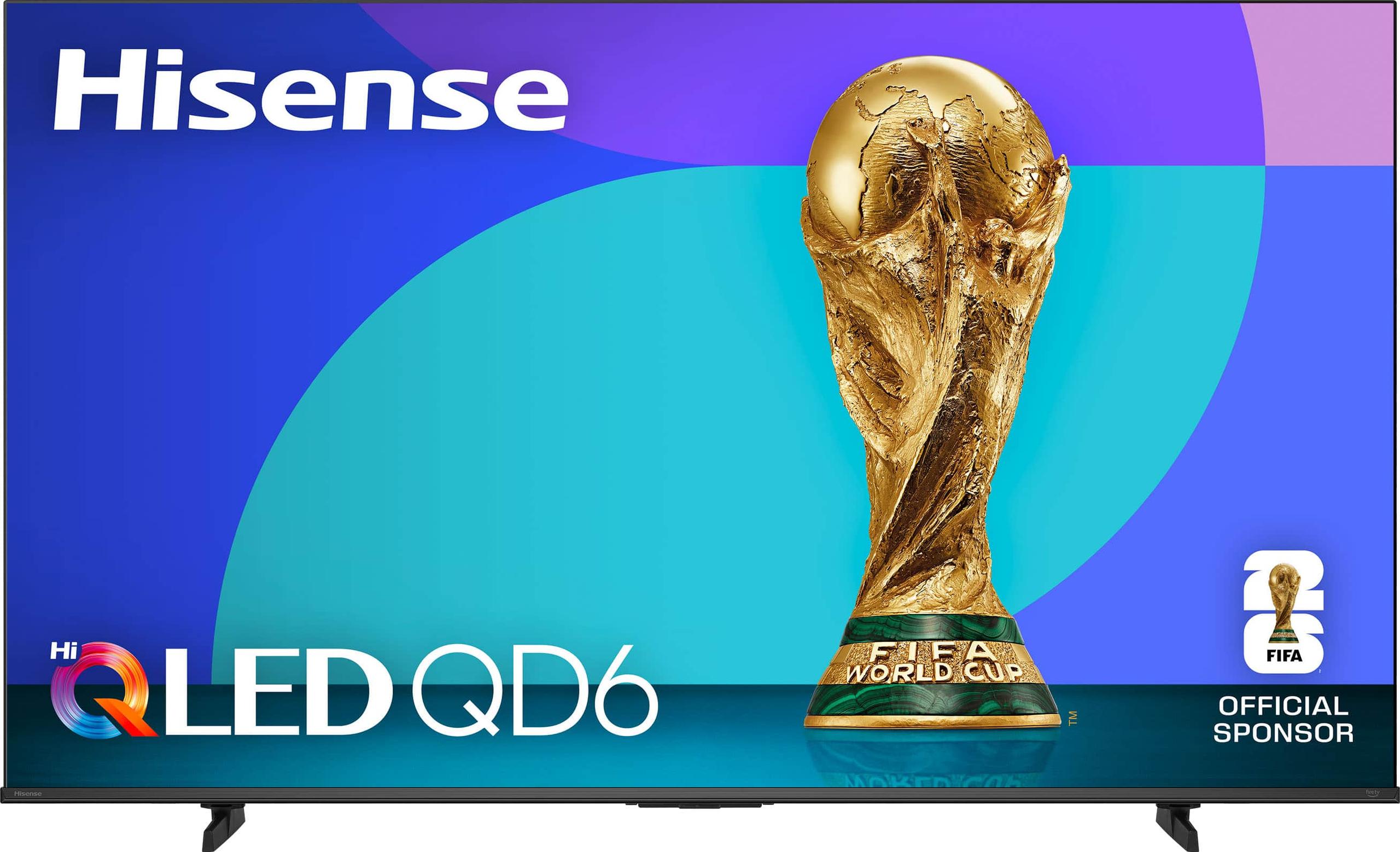
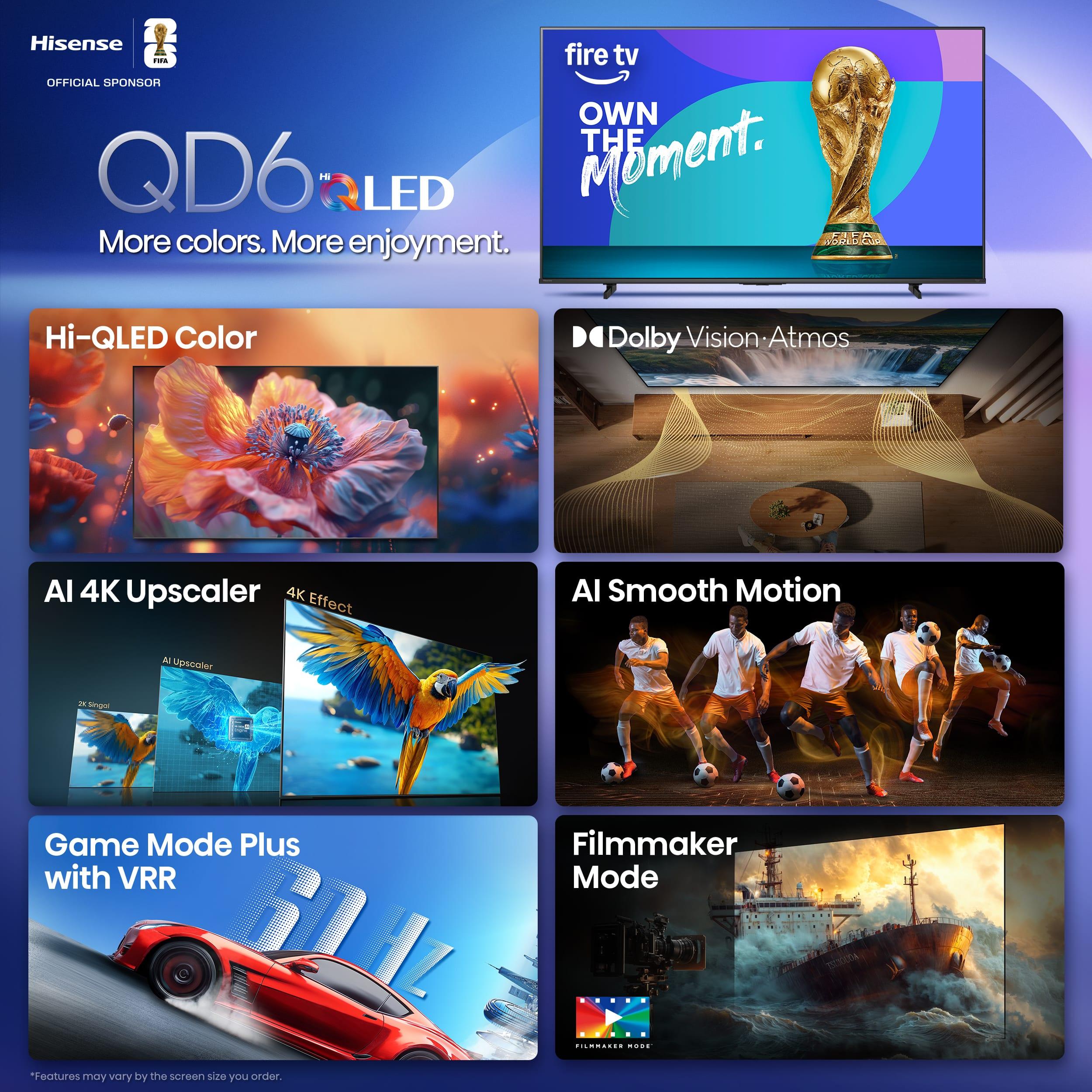

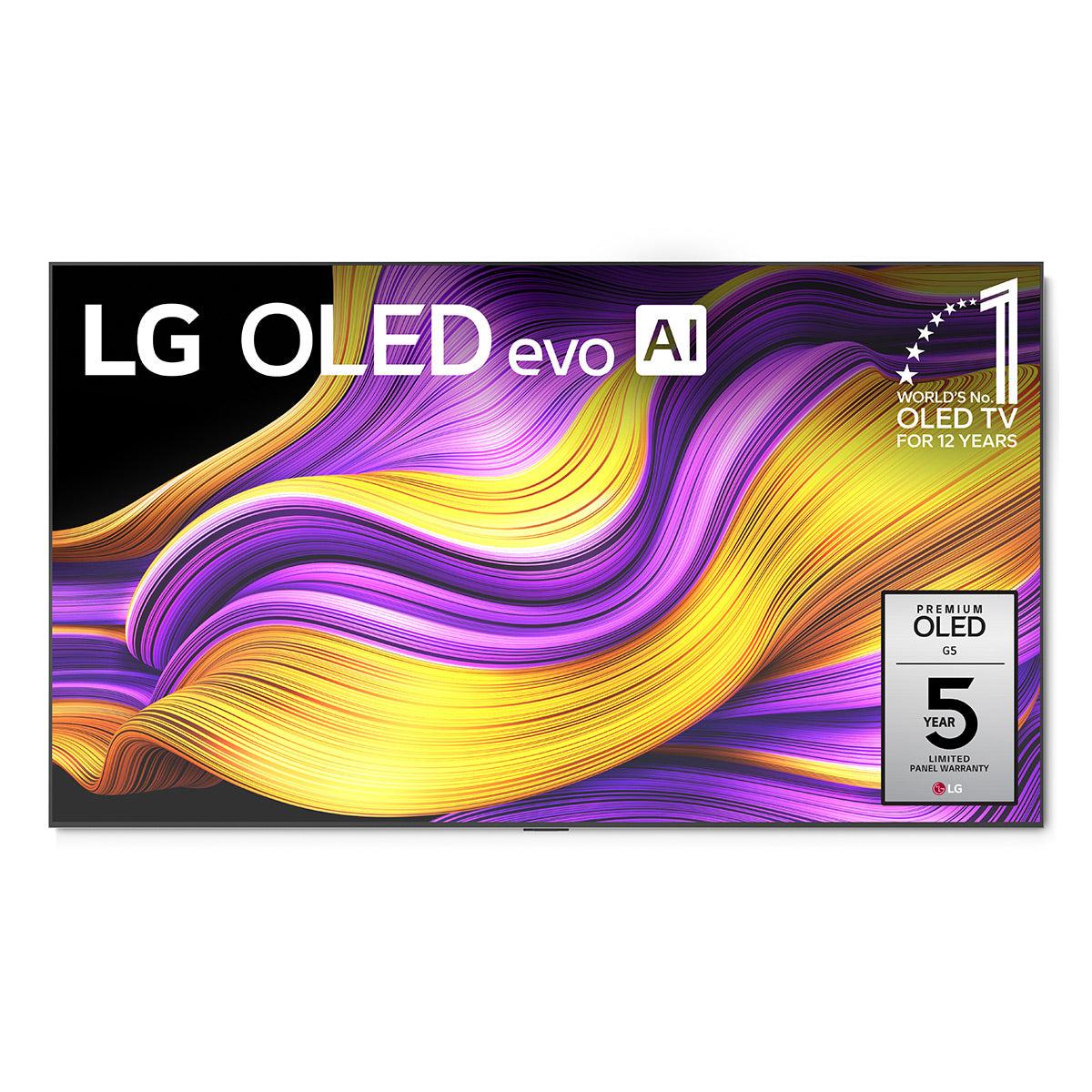
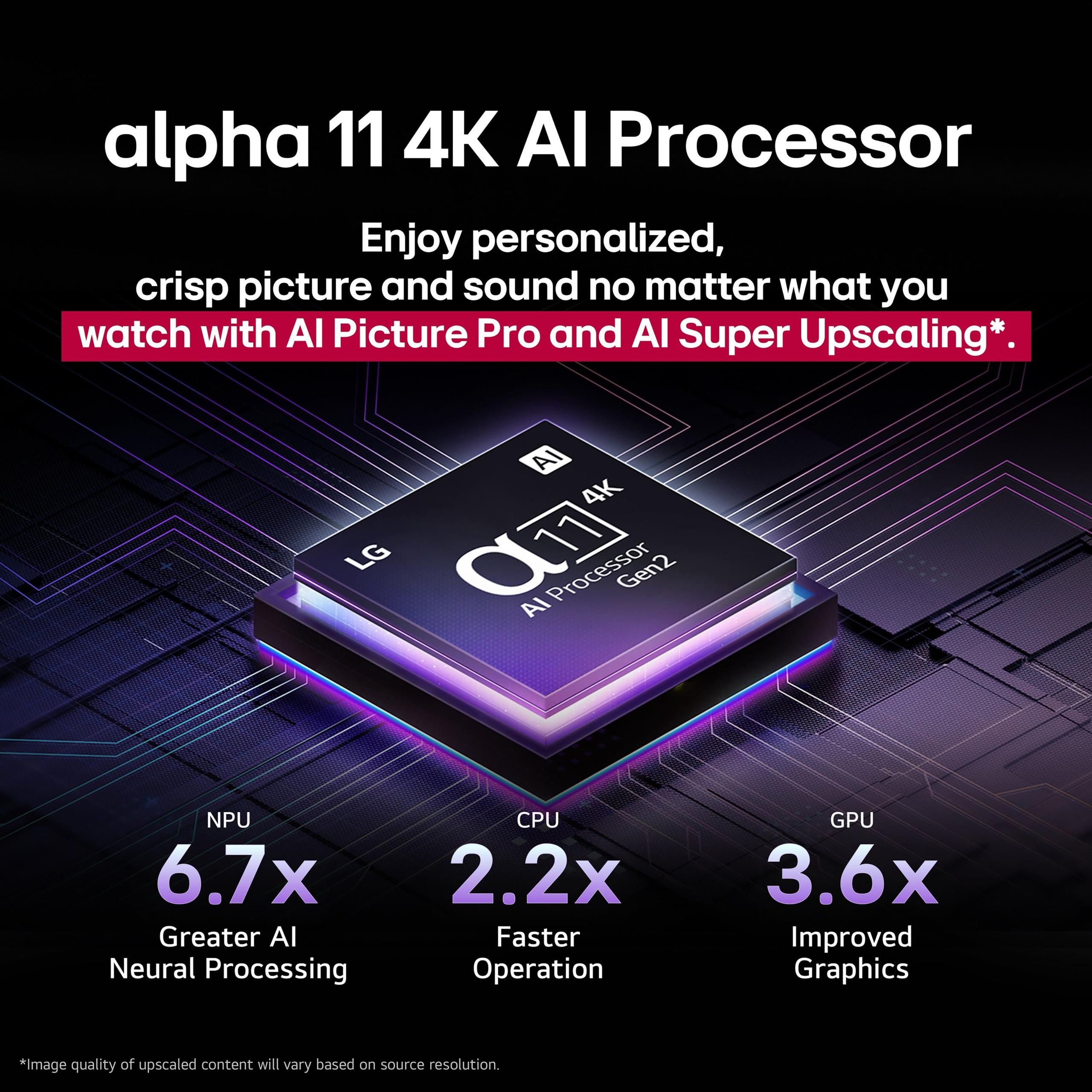
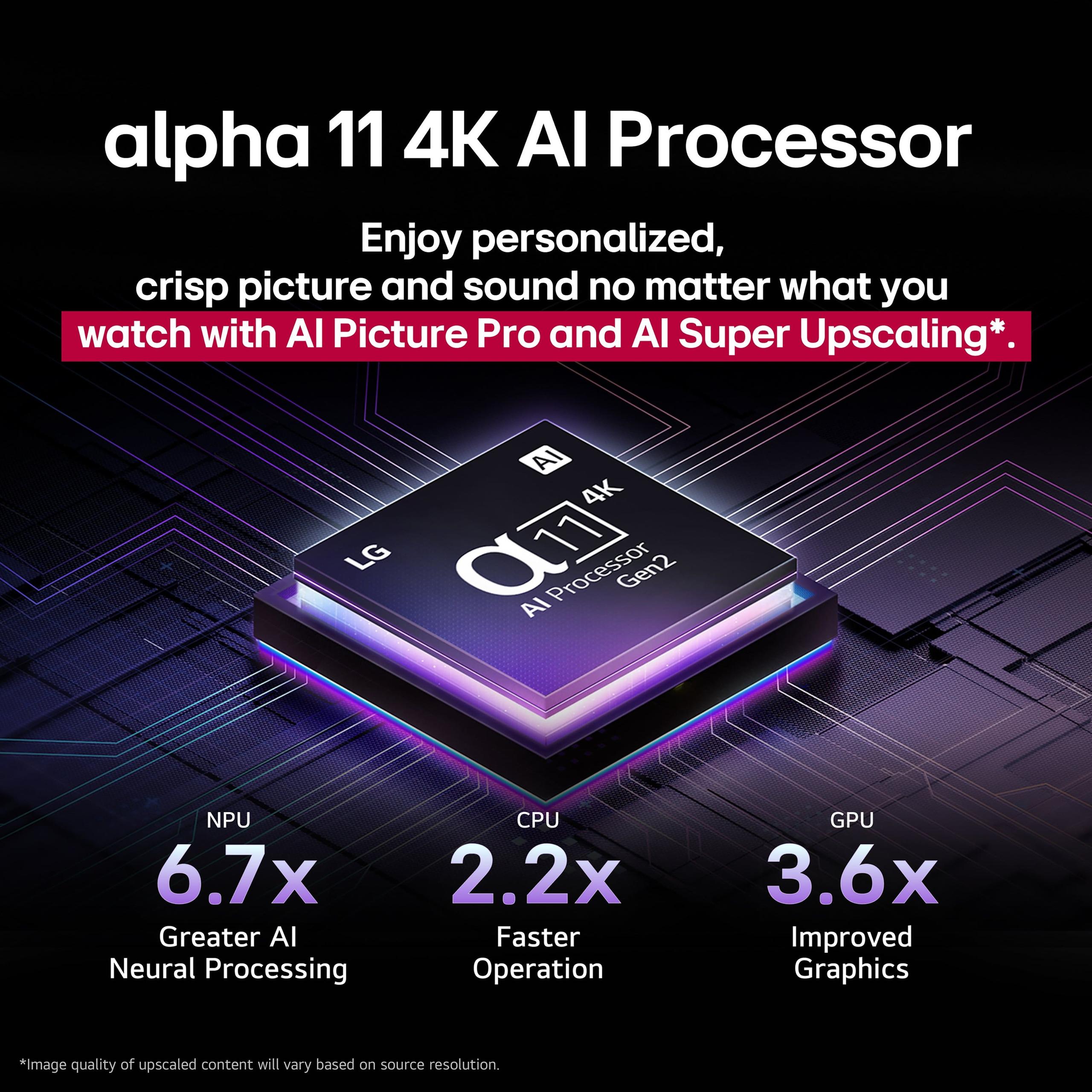
Choosing between a budget TV and a flagship model can feel overwhelming, especially when you're looking at 65-inch displays that seem similar on the surface. The Hisense 65" QD6 Series Hi-QLED Fire TV and LG OLED evo G5 65" 4K Smart TV represent two completely different approaches to television technology—and at the time of writing, they're separated by thousands of dollars in price.
This comparison isn't just about expensive versus cheap. These TVs use fundamentally different display technologies that affect everything from how dark your living room needs to be for good picture quality to whether you can enjoy the latest gaming features. Understanding these differences will help you decide which approach makes sense for your home and budget.
Before diving into specifics, it's worth understanding what separates modern TVs. The biggest factor is display technology—essentially, how the TV creates light and color on your screen.
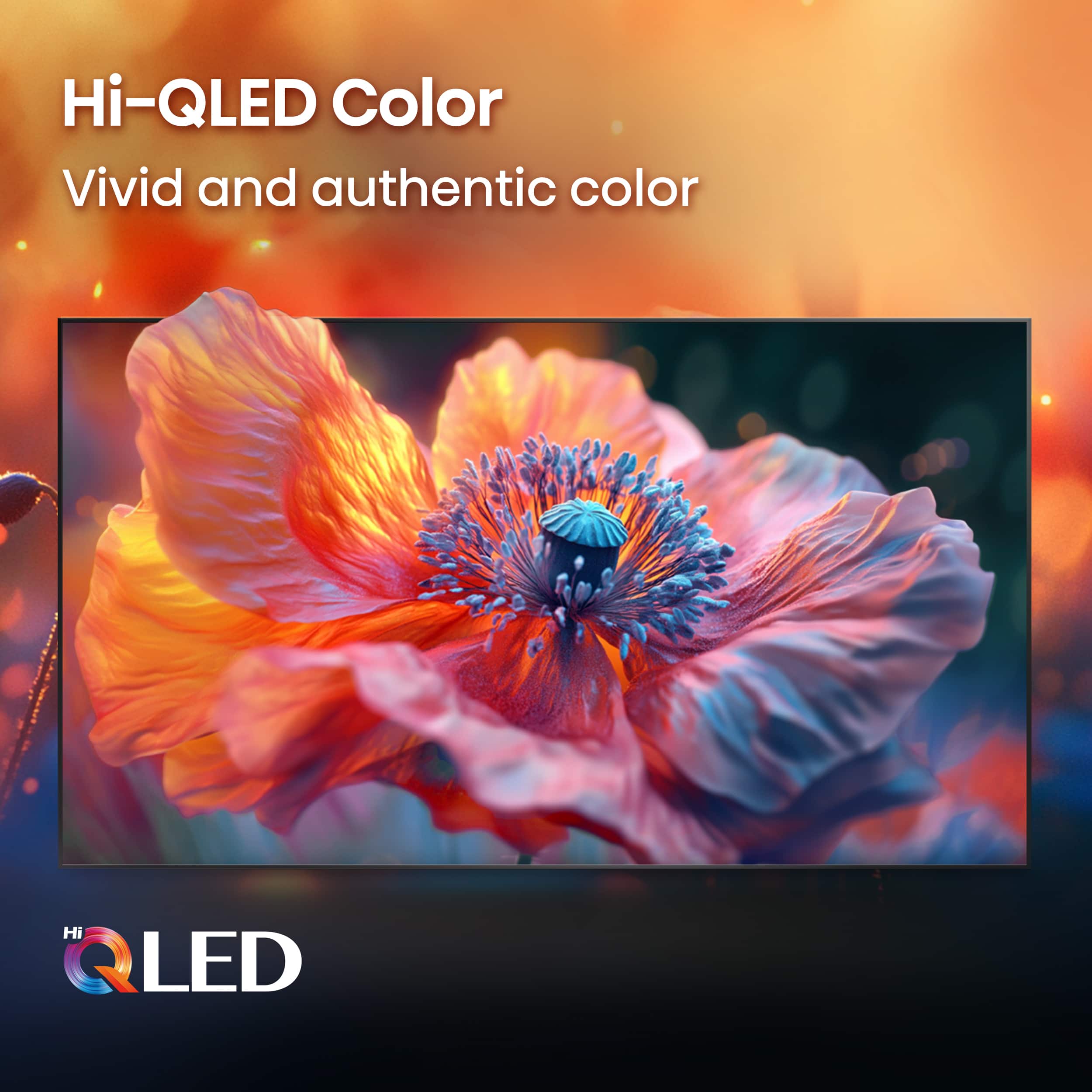
Traditional LED TVs like the Hisense QD6 use an LED backlight that shines through liquid crystal panels to create the image. Quantum dots (the "Q" in QLED) are tiny particles that enhance color reproduction when hit by this backlight, making colors more vivid and accurate than standard LED displays. The trade-off is that these TVs struggle with deep blacks because the backlight is always on—when a scene calls for pure black, you're still seeing some light bleeding through.
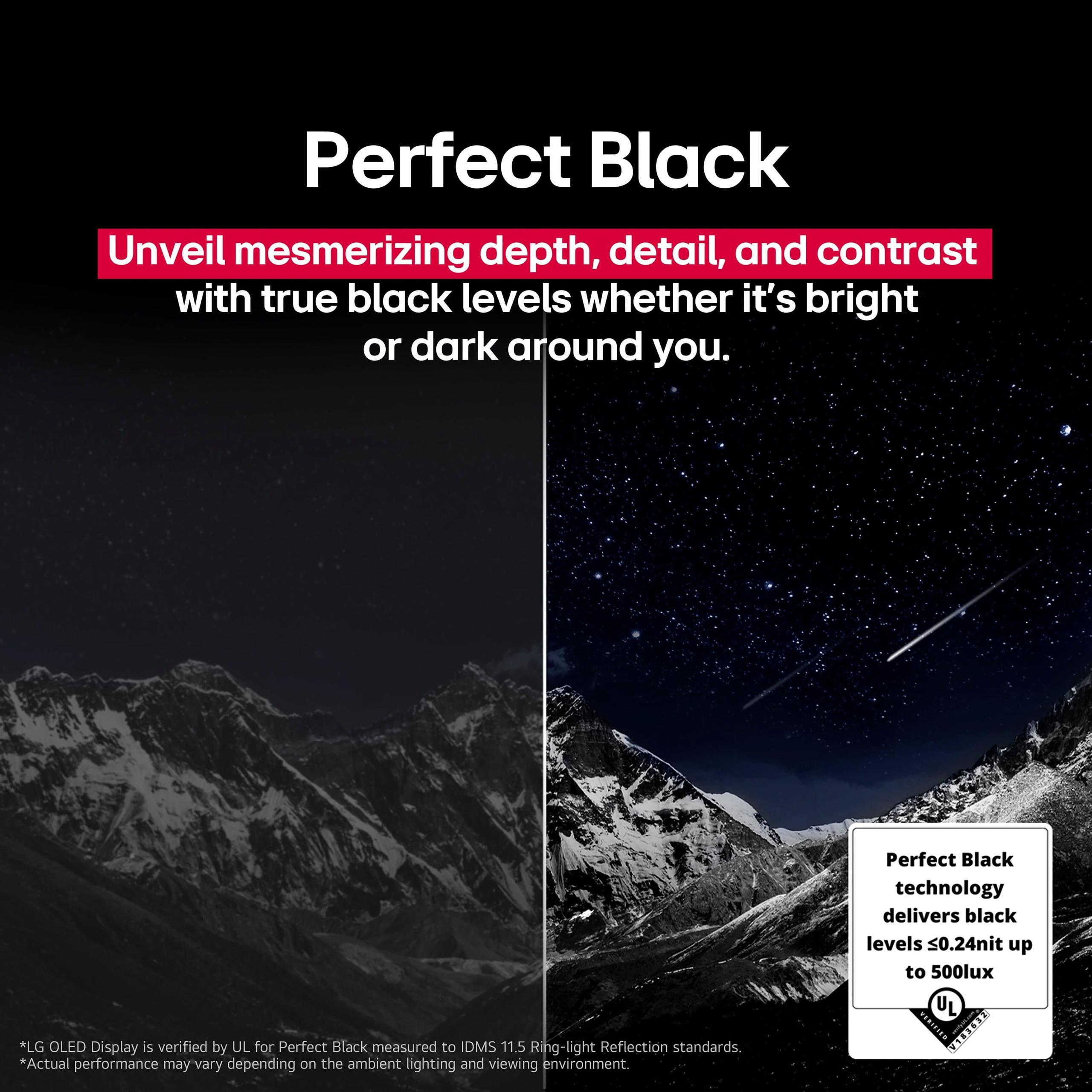
OLED technology in the LG G5 works completely differently. Each pixel generates its own light, which means when a pixel needs to be black, it simply turns off completely. This creates perfect blacks and infinite contrast, but OLED panels have traditionally been dimmer than LED displays, making them less suitable for bright rooms.
The 2025 TV landscape has shifted dramatically. LG's new OLED panels have become significantly brighter while maintaining their perfect blacks, while budget QLED TVs have improved color accuracy and smart features considerably.
Brightness and Contrast Performance
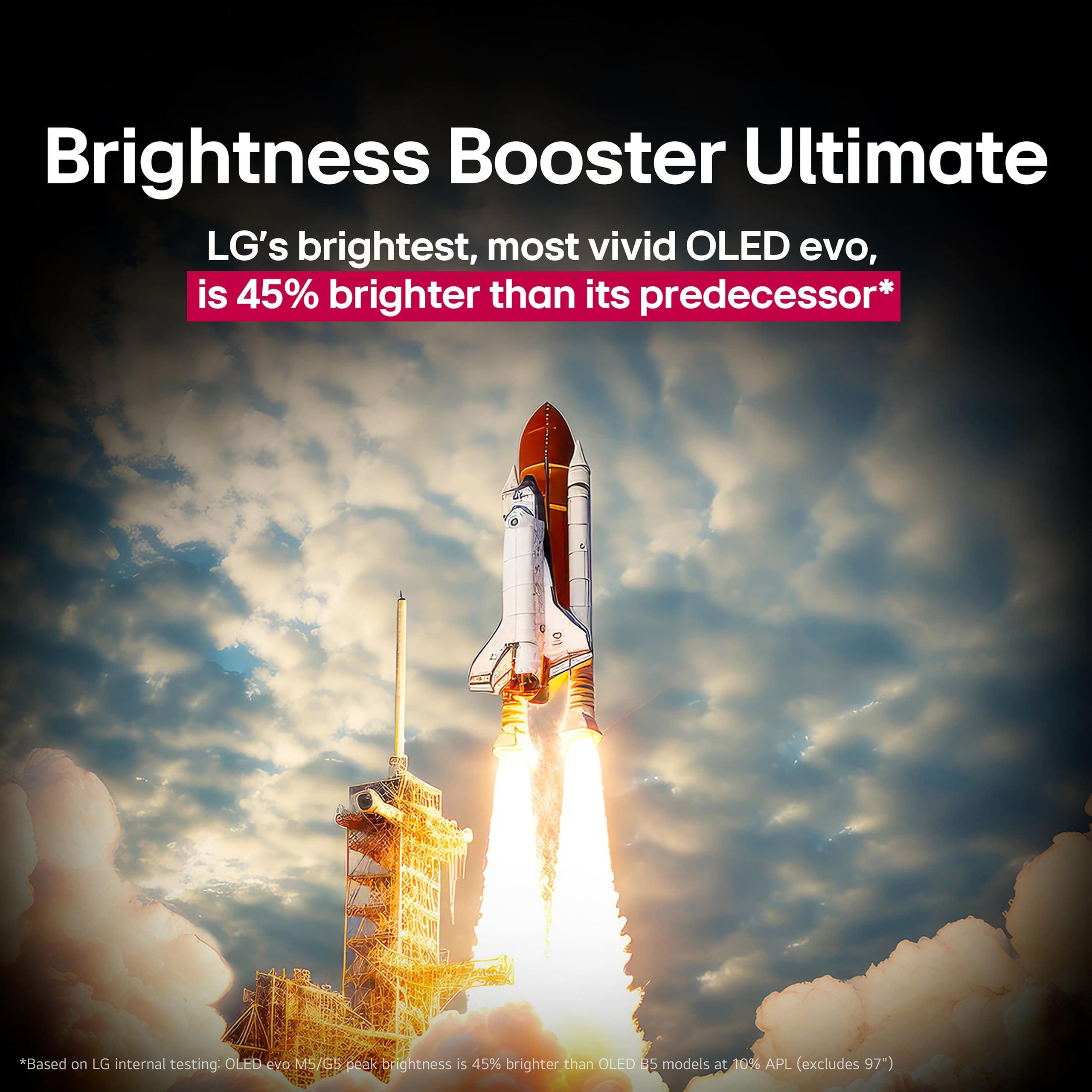
The LG G5 represents a breakthrough moment for OLED technology. LG's new 4-stack tandem RGB OLED panel delivers up to 45% more brightness than previous generations, finally making OLED competitive in bright rooms. This isn't just marketing speak—this technology stacks multiple OLED layers to achieve higher peak brightness while maintaining the perfect blacks that make OLED special.
The Hisense QD6, with its peak brightness of around 385 cd/m², performs well in moderately lit rooms but struggles when competing with bright sunlight or overhead lighting. Without local dimming (a feature that dims specific zones of the backlight), bright elements in dark scenes cause the entire image to wash out slightly. You'll notice this watching a movie with a bright explosion in a dark scene—the blacks will look gray instead of true black.
For home theater use, this difference is dramatic. The LG G5 maintains deep blacks even when displaying bright highlights, creating that three-dimensional, immersive quality that makes you feel like you're looking through a window rather than at a screen. The Hisense QD6 delivers good contrast for its price range, but it can't match the infinite contrast ratio that comes with self-lit pixels.
Color Reproduction and HDR Impact
Both TVs support modern HDR formats including Dolby Vision, which adjusts brightness and color scene-by-scene for more realistic images. However, their ability to display HDR content differs significantly.
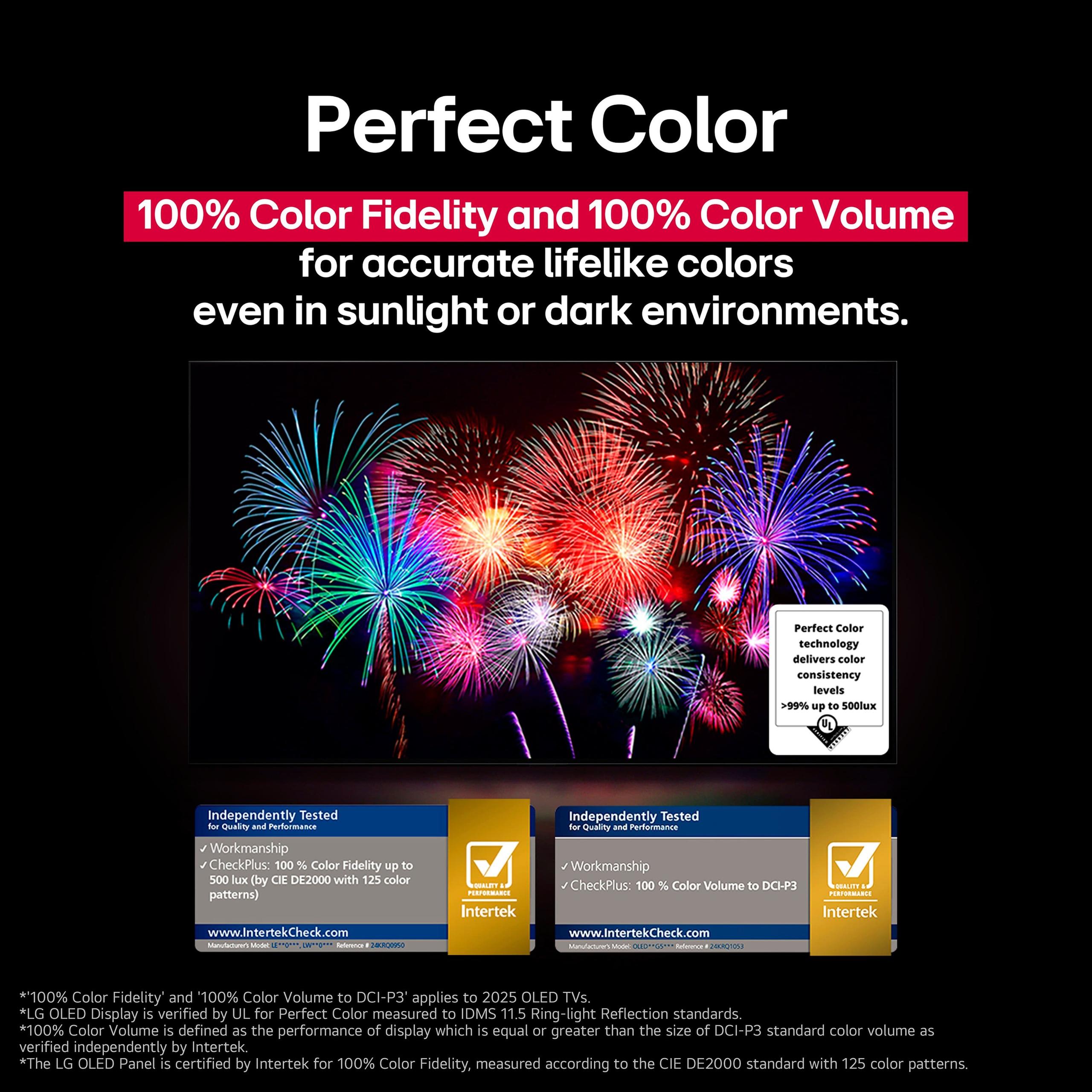
The Hisense QD6 covers about 90% of the DCI-P3 color space thanks to its quantum dot layer—impressive for a budget TV and sufficient for vibrant, engaging content. However, its limited peak brightness means HDR highlights often appear dull and flat compared to what content creators intended.
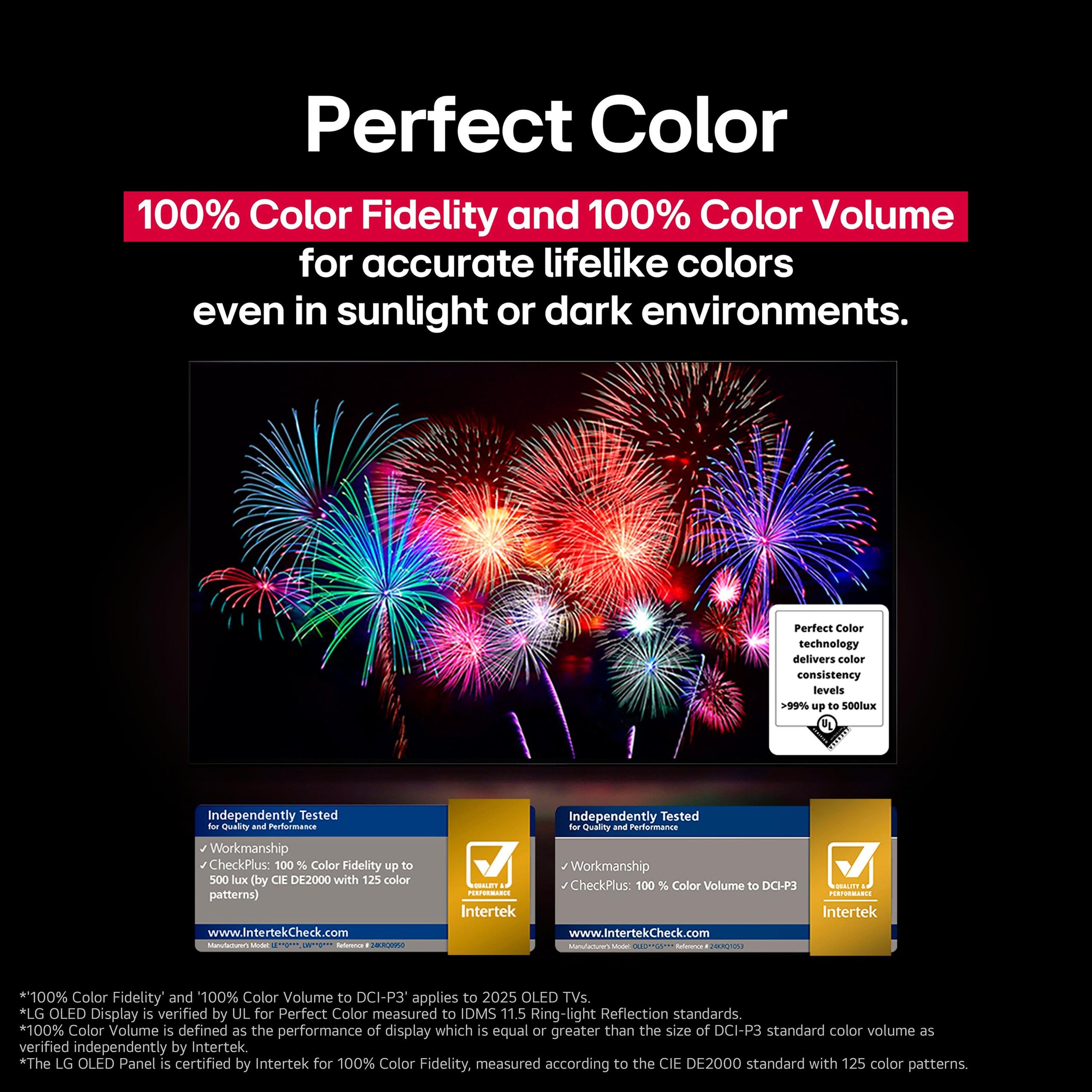
The LG G5 not only covers a wider color gamut but maintains color accuracy across all brightness levels. This means bright colors stay pure and saturated while dark colors retain their depth—a capability called color volume that's crucial for realistic HDR performance.
Think of watching a sunset scene: the Hisense QD6 will show you a pleasant sunset, but the LG G5 will make you feel like you're actually watching the sun set, with brilliant highlights that don't wash out the surrounding details.
Motion Handling and Sports Performance
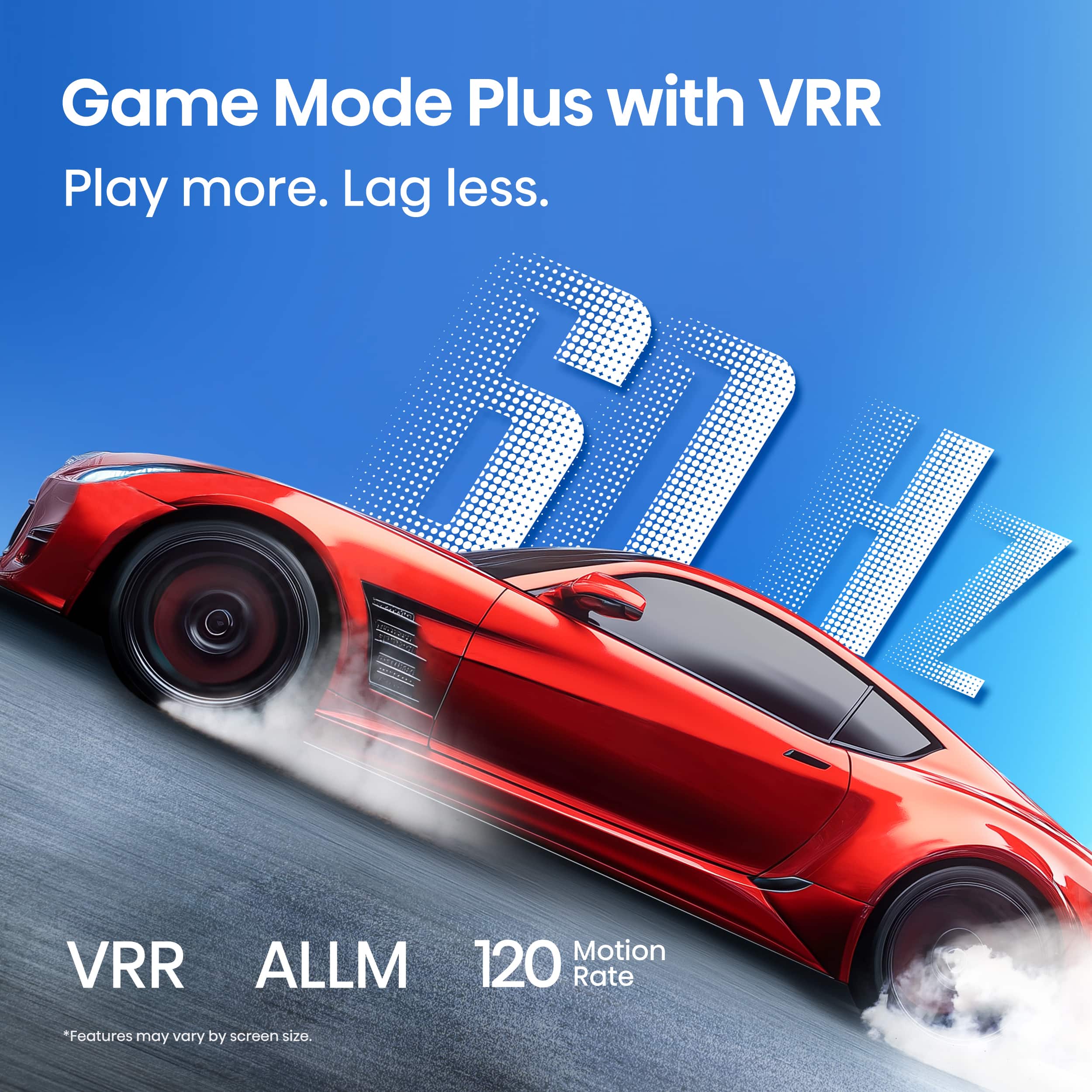
Motion performance reveals another significant gap between these displays. The Hisense QD6 uses a 60Hz panel with motion interpolation (Motion Rate 120) to smooth fast action, but it struggles with dark transitions and can create blur trails behind moving objects. For casual sports viewing, it's adequate, but serious sports fans will notice the limitations.
The LG G5 handles motion exceptionally well with its faster pixel response times and support for up to 165Hz refresh rates. Sports and action movies look crisp and clear without the soap opera effect that often plagues motion smoothing on budget TVs.
Gaming capabilities highlight the generational gap between these TVs more than any other feature.
Refresh Rates and Input Lag
The Hisense QD6 offers respectable gaming performance for a budget TV, with very low input lag around 10.2 milliseconds and support for Variable Refresh Rate (VRR) and Auto Low Latency Mode (ALLM). However, its 60Hz limitation means frame rate drops can cause screen tearing, and the TV's HDMI 2.0 ports can't handle the bandwidth needed for 4K gaming above 60fps.
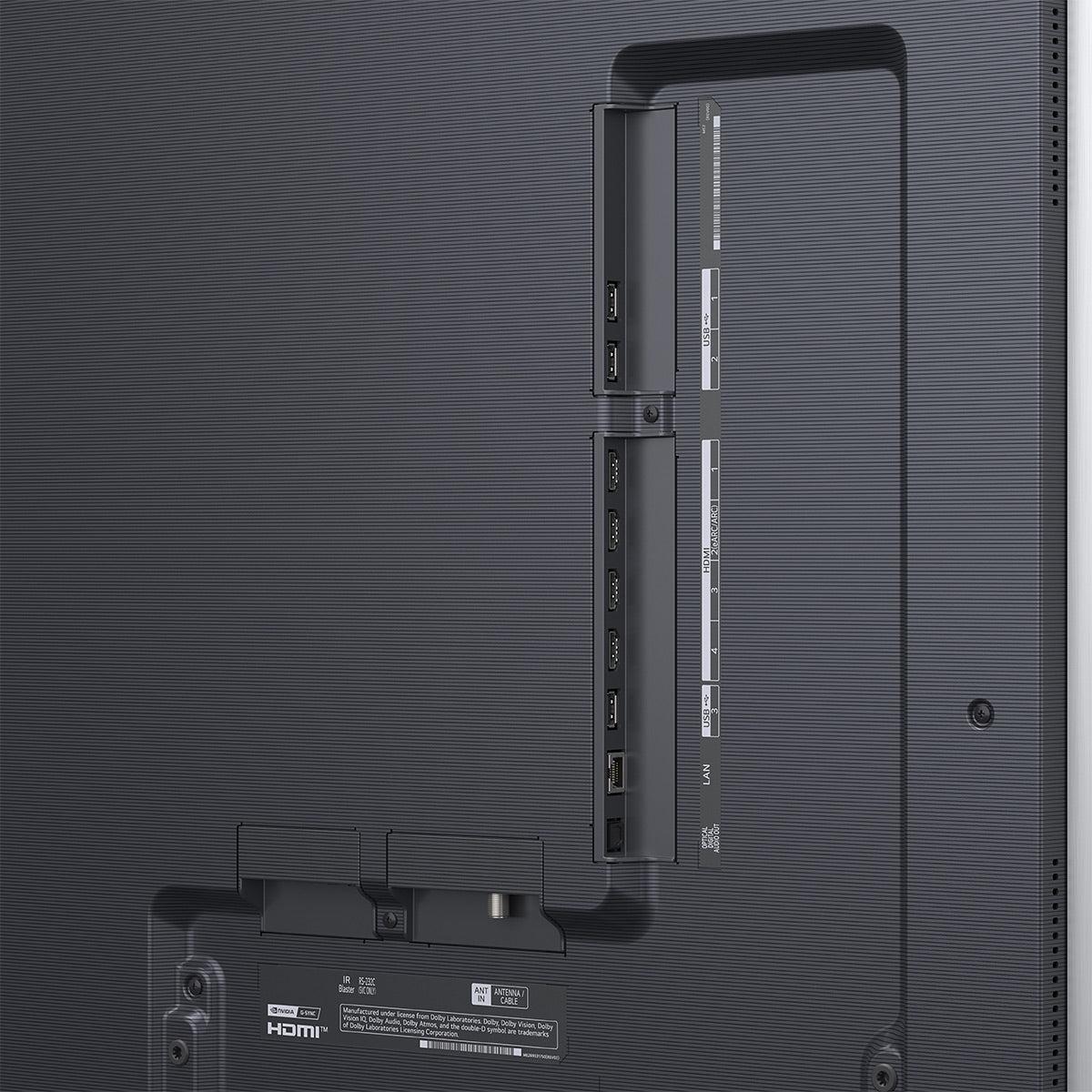
The LG G5 represents the current pinnacle of gaming displays. All four HDMI ports support full HDMI 2.1 bandwidth, enabling 4K gaming at up to 165Hz. It supports G-SYNC and FreeSync compatibility, Quick Media Switching (QMS) to eliminate black screens when switching between different frame rates, and maintains low input lag even at high refresh rates.
For console gamers with PlayStation 5 or Xbox Series X, the differences matter less since these consoles typically output 60fps or 120fps. However, PC gamers with powerful graphics cards will appreciate the LG G5's ability to display 4K content at ultra-high frame rates smoothly.
Gaming-Specific Features
Both TVs include Game Mode to reduce input lag, but the LG G5 goes further with advanced gaming features like QMS-VRR that seamlessly switches between different refresh rates without interruption. This is particularly useful when switching between 60fps menu screens and 120fps gameplay.
The Hisense QD6 handles competitive gaming adequately—its low input lag means your controller inputs register quickly. However, the motion blur and screen tearing at higher frame rates make it less ideal for fast-paced competitive gaming where every frame matters.
Interface and Performance
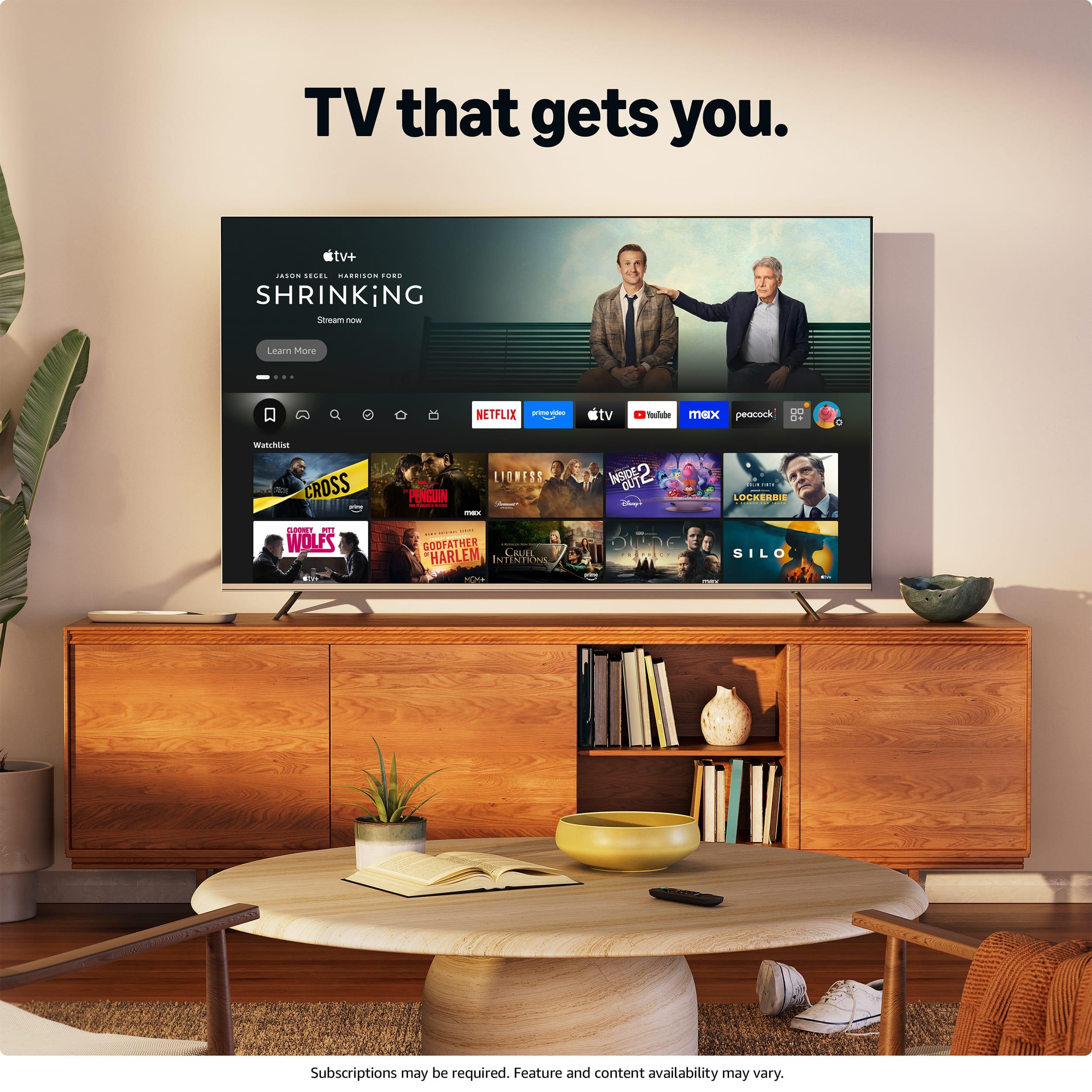
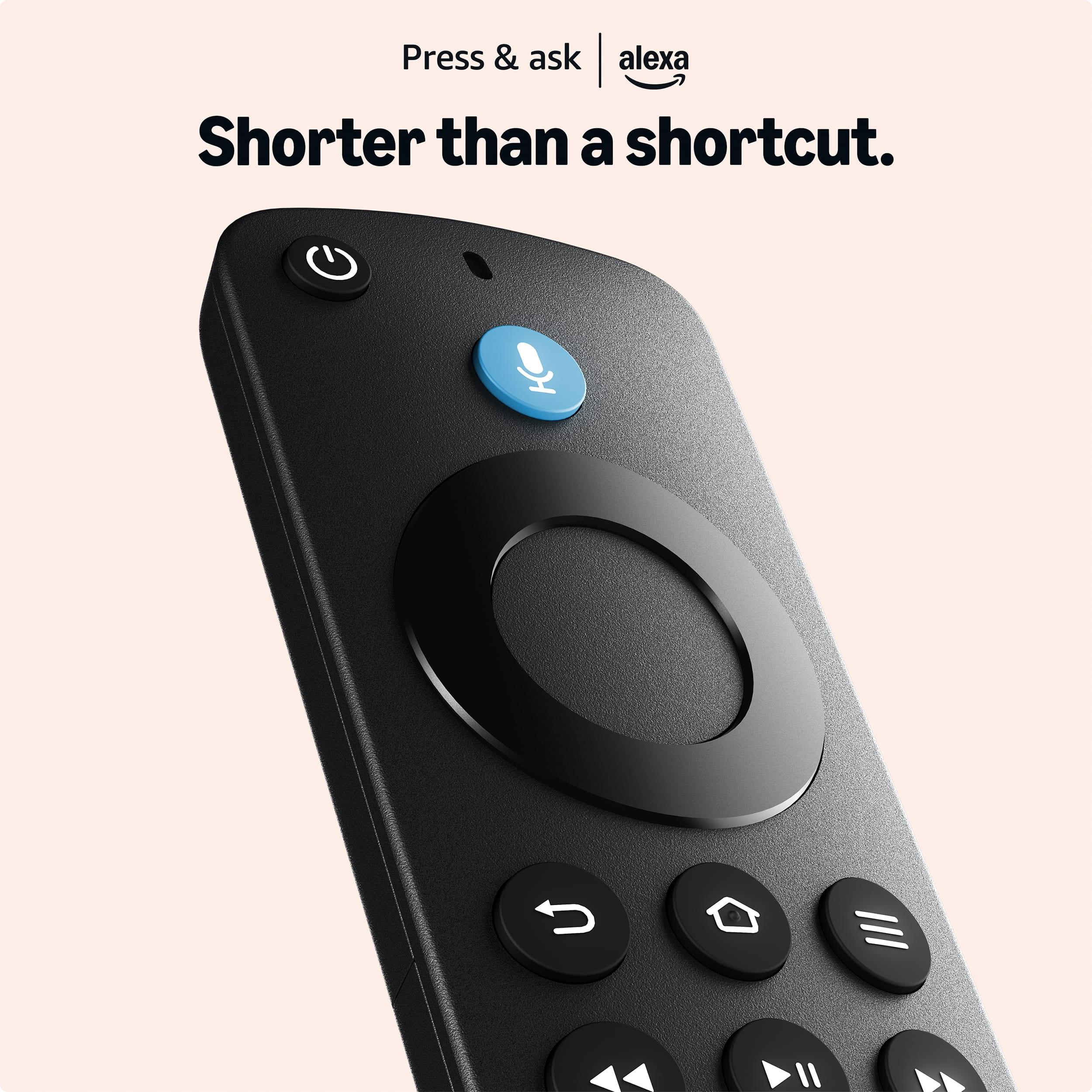
The Hisense QD6 runs Amazon's Fire TV platform, which provides a familiar interface for Amazon ecosystem users. The platform offers robust app selection and good voice control integration through Alexa. However, some users report occasional menu lag, and the TV might benefit from external streaming devices for the smoothest experience.
The LG G5 features webOS 25, LG's latest smart TV platform enhanced with AI features. The interface includes Quick Cards for organizing favorite apps and personalized recommendations that improve over time. LG's commitment to five years of software updates means the TV will continue receiving new features and security updates well into the future.
For smart home integration, both platforms work well, though Fire TV naturally integrates better with Amazon devices while webOS offers broader compatibility with various smart home systems.
Neither TV will replace a dedicated sound system, but their approaches differ significantly.
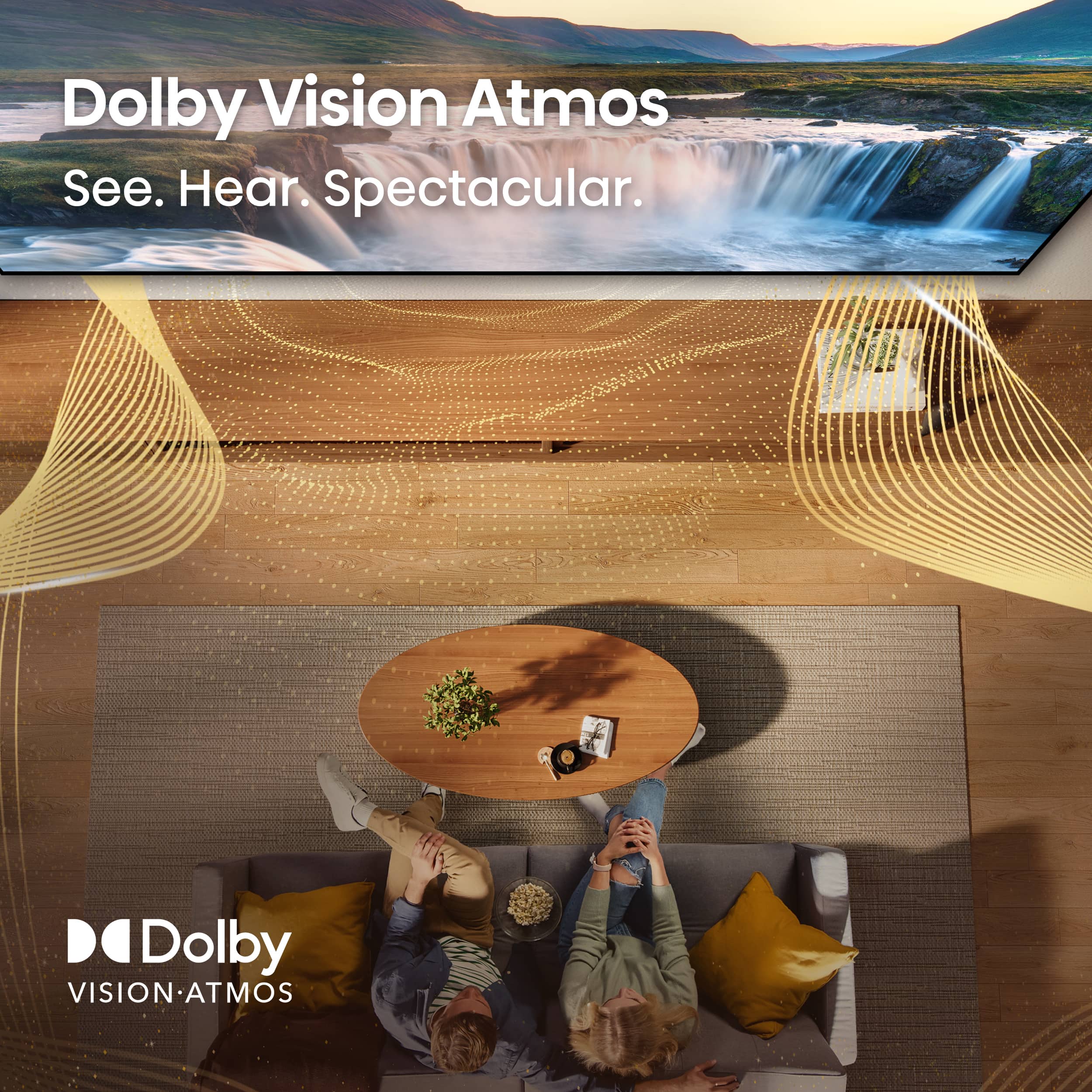
The Hisense QD6 includes basic Dolby Atmos support with standard built-in speakers. Audio quality is typical for budget TVs—clear dialogue and decent soundstage, but limited bass and overall power.
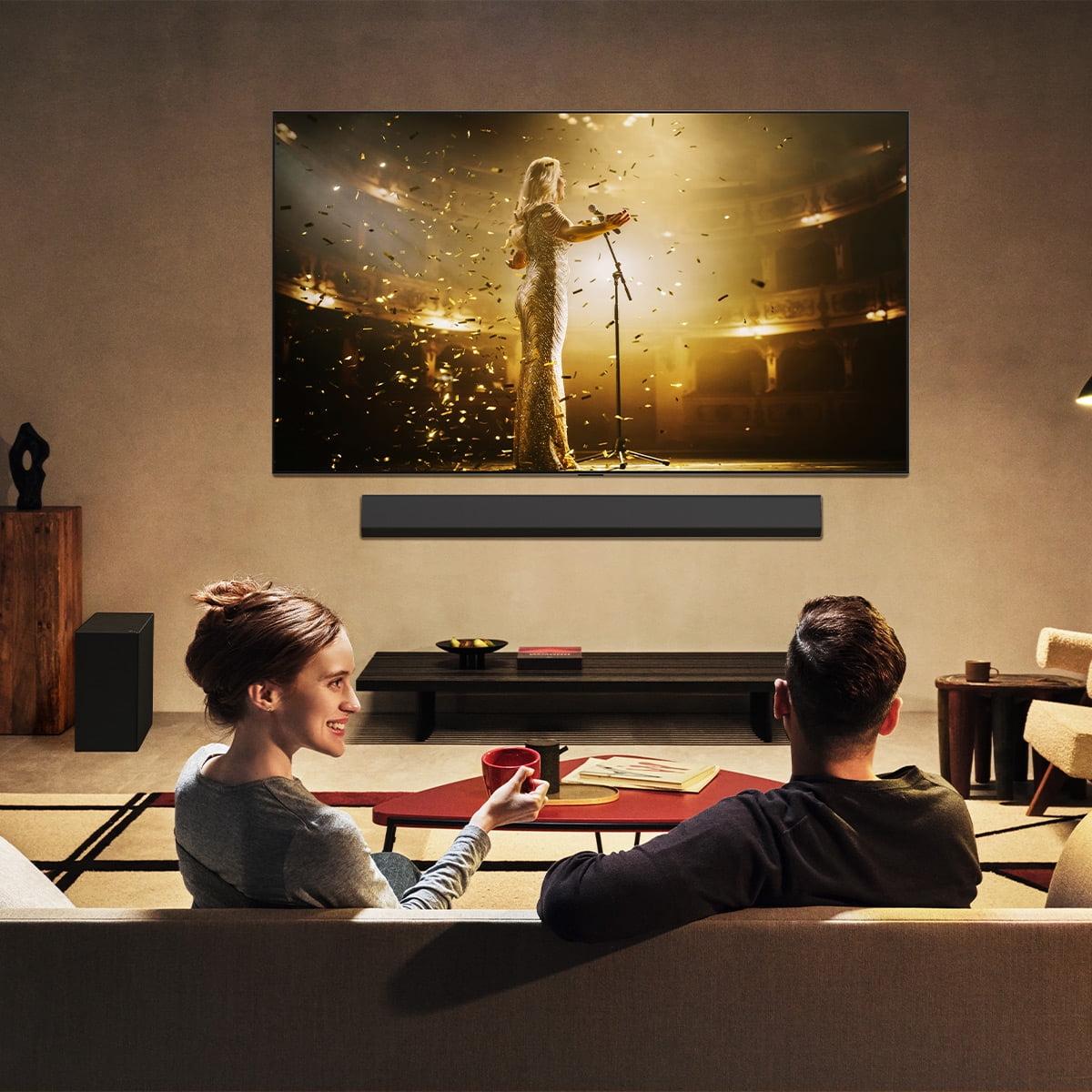
The LG G5 offers enhanced audio processing and WOW Orchestra compatibility with LG soundbars, creating a more cohesive audio system. While still limited by the physics of thin TV speakers, the audio quality is noticeably better than budget alternatives.
For serious home theater use, both TVs benefit significantly from external audio systems. The LG G5's eARC support on all HDMI ports provides more flexibility for connecting high-end audio equipment.
The physical differences between these TVs reflect their market positioning clearly.
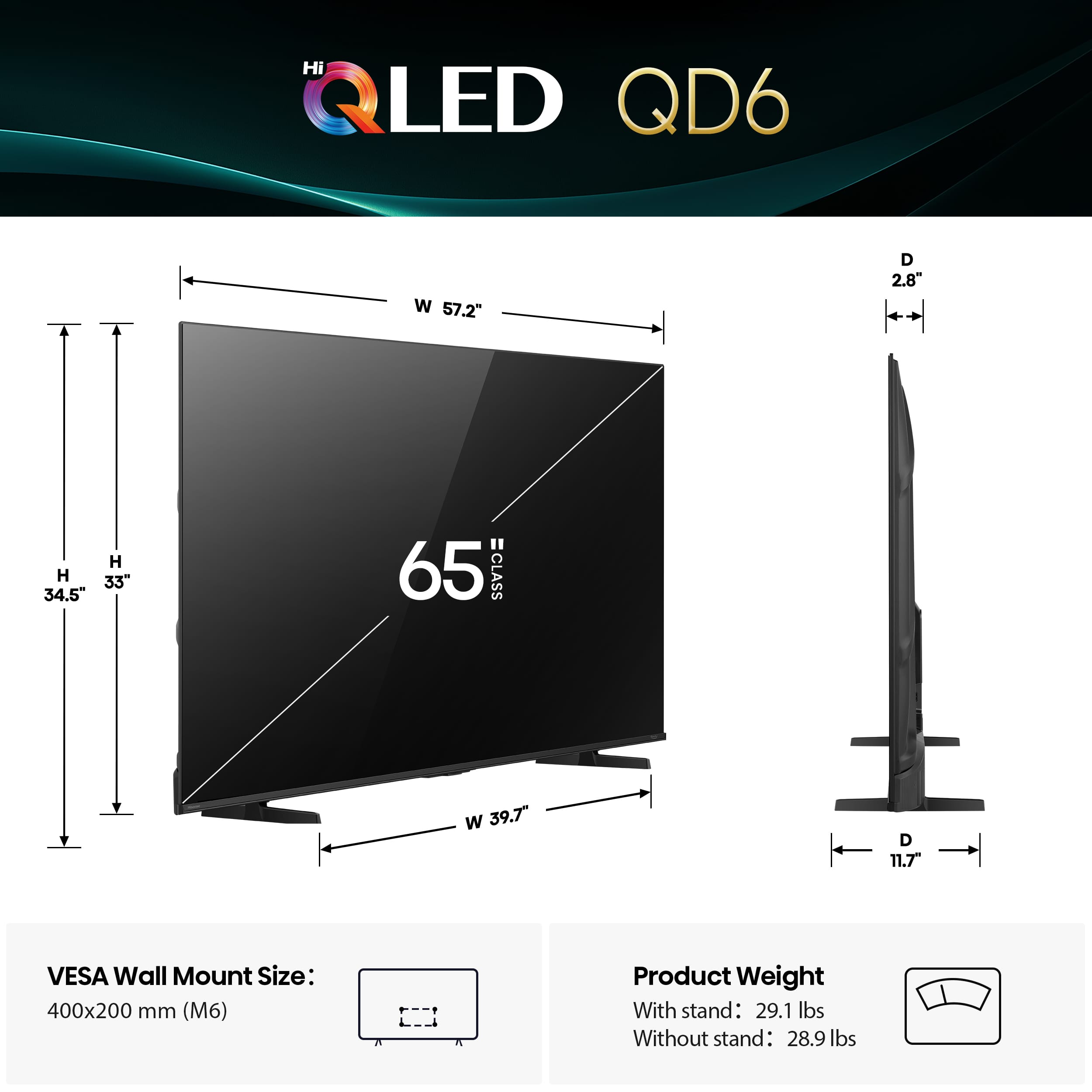
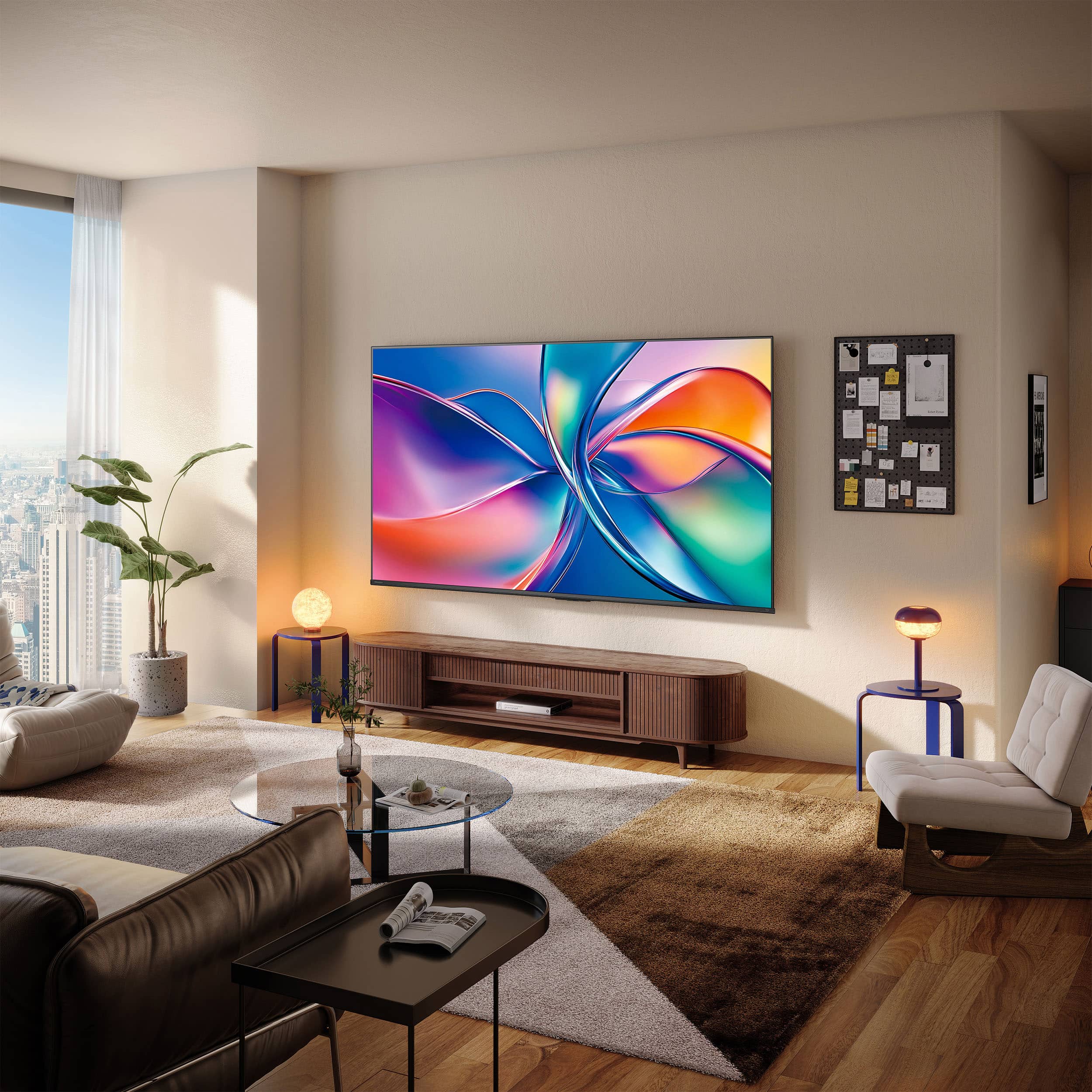
The Hisense QD6 features a traditional LED TV design with a thicker profile due to its backlight system. The build quality feels solid for the price range, with a straightforward setup process and wide-set feet that accommodate most entertainment centers without requiring a wall mount.
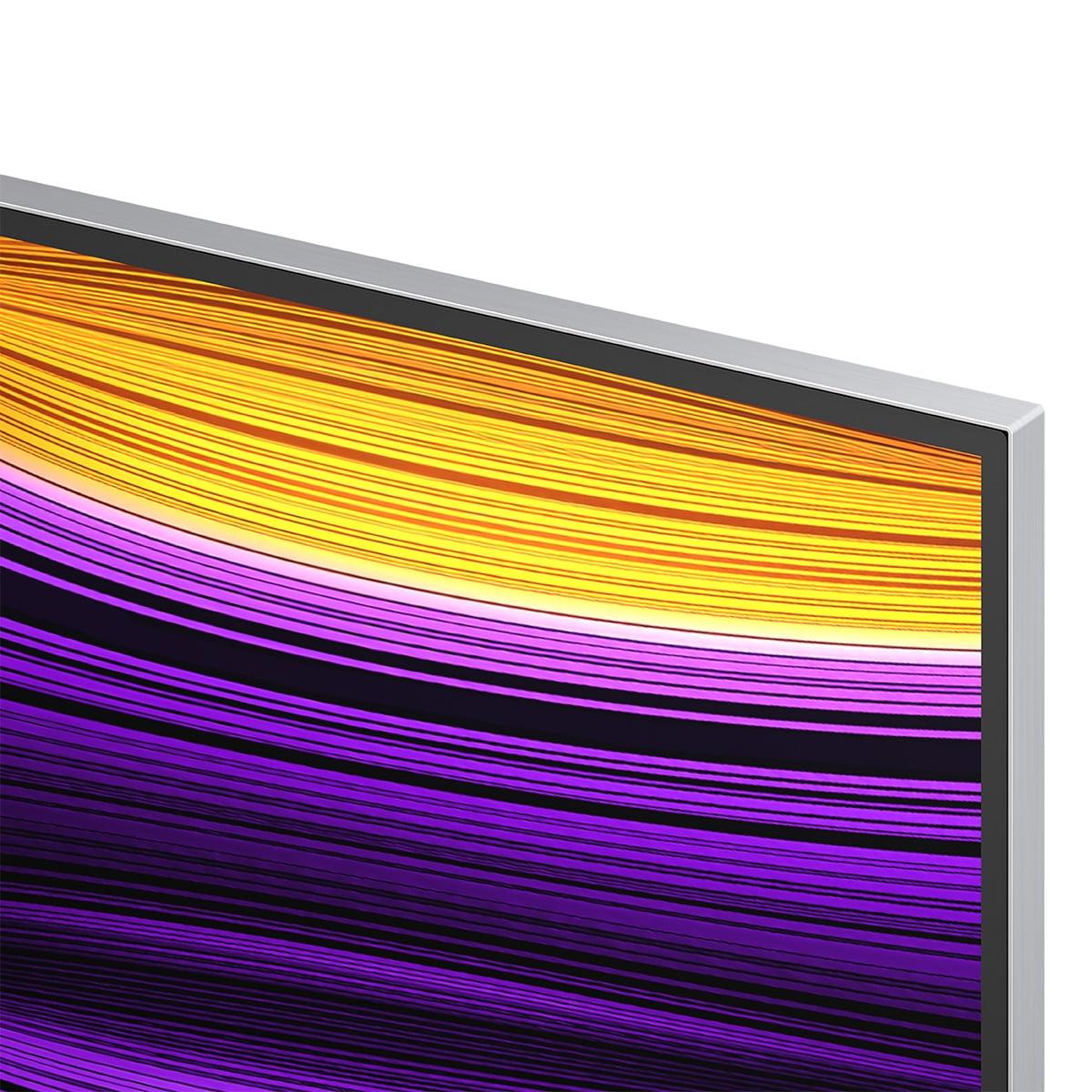
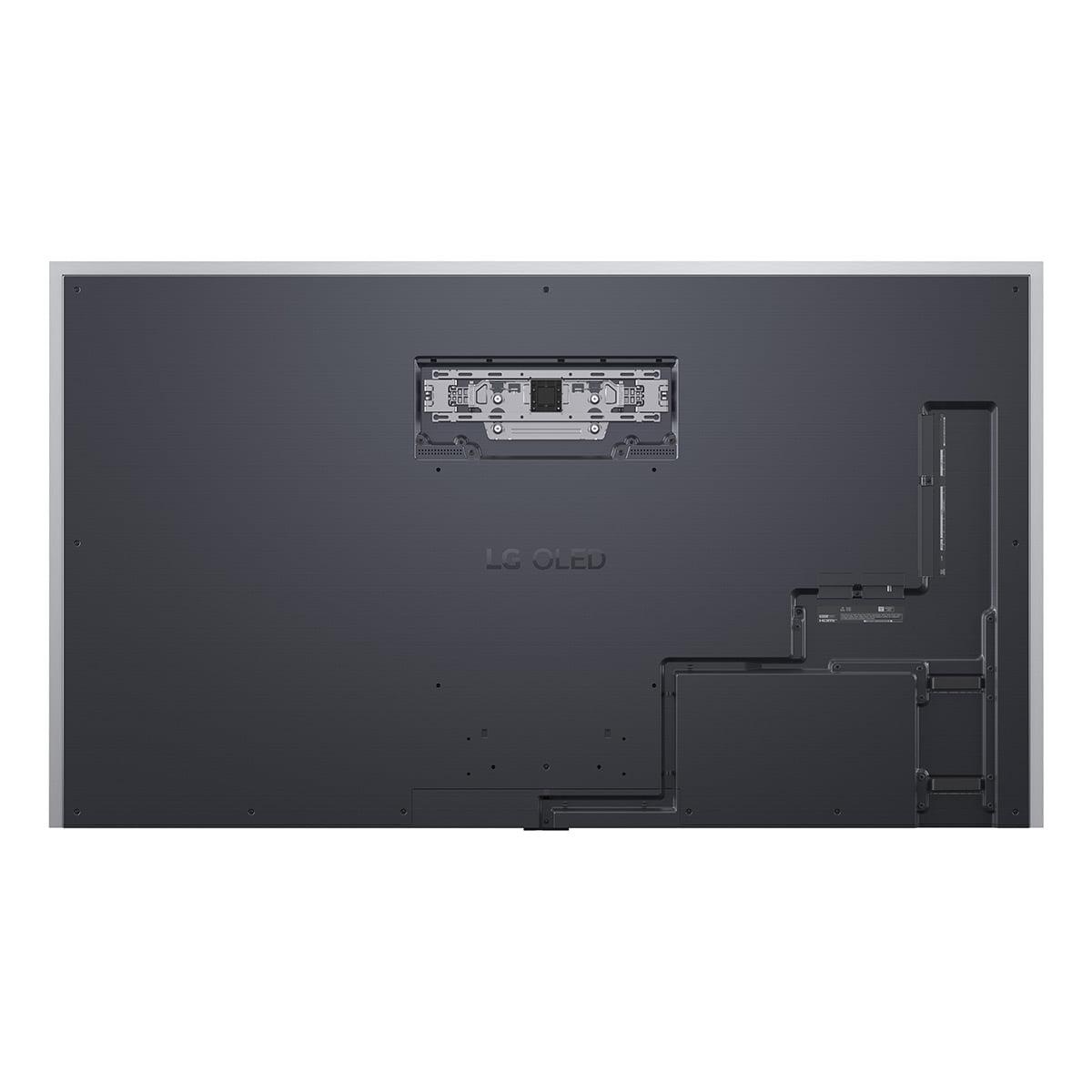
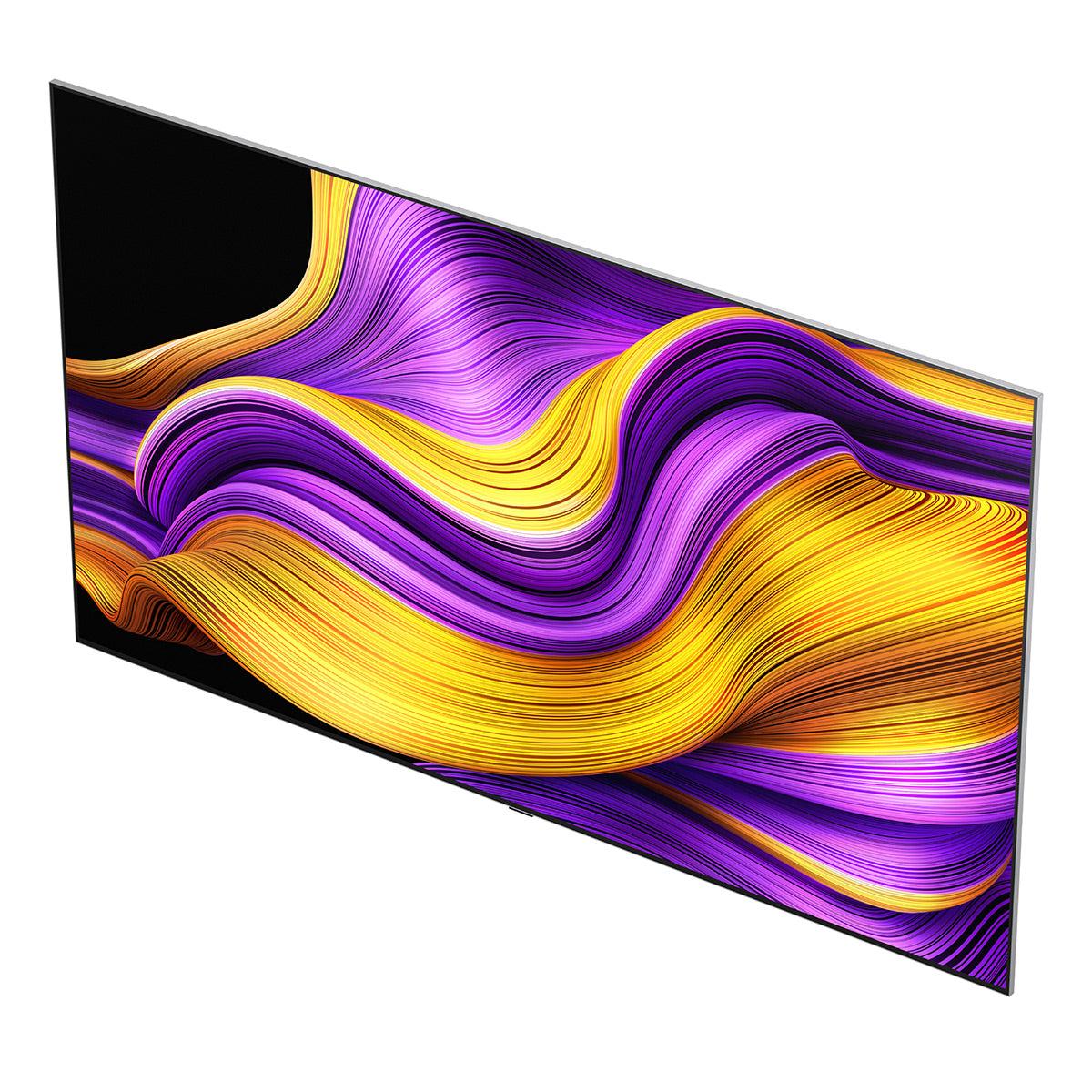
The LG G5 showcases LG's "One Wall Design," mounting nearly flush against the wall for a gallery-like appearance. When not displaying content, it can show artwork or personal photos, functioning as a digital art piece. The premium build quality is immediately apparent, from the materials used to the attention to detail in cable management.
At the time of writing, these TVs occupy completely different price segments, making the value comparison more about understanding what you're getting for your money rather than which offers better bang for your buck.
Budget Champion: Hisense QD6
The Hisense QD6 delivers impressive performance for its price point. You're getting quantum dot color enhancement, 4K HDR support, decent gaming features, and a reliable smart TV platform. For viewers primarily watching streaming content in moderate lighting conditions, it provides a genuinely satisfying experience that would have cost significantly more just a few years ago.
The compromises are real but predictable: limited brightness for bright rooms, basic motion handling, and 60Hz gaming limitations. However, these trade-offs are reasonable given the dramatic price difference.
Premium Performance: LG G5
The LG G5 justifies its premium pricing with cutting-edge display technology, future-proof gaming features, and build quality that doubles as room decor. The new OLED panel represents a genuine technological breakthrough, finally solving OLED's traditional brightness limitations while maintaining perfect blacks.
This TV is designed for enthusiasts who want the best possible viewing experience and can appreciate the differences that come with flagship technology.
Choose the Hisense QD6 if you:
The Hisense QD6 excels as a primary family TV that delivers impressive picture quality for everyday viewing without breaking the budget. It's particularly well-suited for viewers upgrading from older 1080p TVs who want modern features like 4K and HDR without paying flagship prices.
Choose the LG G5 if you:
The LG G5 is ideal for serious home theater enthusiasts and gamers who want a display that won't need upgrading for many years. It's particularly compelling for viewers who watch a lot of HDR content and can appreciate the difference that perfect blacks and high brightness bring to the viewing experience.
The Bottom Line
These TVs succeed in their respective market segments for good reasons. The Hisense QD6 proves that budget TVs have improved dramatically, offering features that were premium just a few years ago. The LG G5 demonstrates what's possible when manufacturers push display technology forward without compromise.
Your choice should depend primarily on budget, viewing environment, and how much you value cutting-edge display technology. Both represent solid values within their price ranges, but they're designed for completely different users and use cases. Understanding which category you fall into will make the decision much clearer.
| Hisense 65" QD6 Series Hi-QLED Fire TV (2025) | LG OLED evo G5 65" 4K Smart TV 2025 |
|---|---|
| Display Technology - Fundamentally affects picture quality and performance | |
| VA LED panel with quantum dots, direct backlight, no local dimming | 4-stack tandem RGB OLED with 8.3 million self-lit pixels |
| Peak Brightness - Critical for HDR impact and bright room viewing | |
| ~385 cd/m² (moderate lighting only, HDR highlights appear dim) | Up to 45% brighter than previous OLEDs (rivals Mini-LED while maintaining perfect blacks) |
| Contrast Ratio - Determines black levels and image depth | |
| Good native contrast, but bright scenes lift blacks across entire screen | Infinite contrast with perfect blacks, no blooming or compromise |
| Refresh Rate & Gaming - Essential for smooth motion and high-frame gaming | |
| 60Hz native, 4K@60Hz max, VRR/ALLM support, HDMI 2.0 ports | Up to 165Hz native, 4K@165Hz on all four HDMI 2.1 ports, full gaming suite |
| Color Performance - Affects vibrancy and accuracy of all content | |
| 90% DCI-P3 coverage with quantum dots (impressive for budget) | Enhanced color gamut with new panel, superior accuracy across all brightness levels |
| HDR Support - Modern content requires strong HDR for best experience | |
| Dolby Vision, HDR10+, HDR10, HLG (limited by low peak brightness) | Dolby Vision, HDR10 Pro (dramatic HDR impact with high brightness) |
| Smart Platform - Daily interface and long-term software support | |
| Fire TV OS with Alexa integration (occasional lag reported) | webOS 25 with AI features, 5-year update guarantee |
| Input Lag - Critical for competitive gaming responsiveness | |
| 10.2ms (excellent for 60Hz gaming) | Low lag maintained even at 165Hz (premium gaming experience) |
| Motion Handling - Important for sports and action content | |
| Sluggish with dark transitions, Motion Rate 120 via interpolation | Excellent pixel response, crisp motion up to 165Hz |
| Design & Build - Affects room aesthetics and installation options | |
| Traditional thick LED design, wide-set feet, functional build | Ultra-slim "One Wall Design," gallery-like flush mounting, premium materials |
| Target Value Proposition - Who should consider each option | |
| Exceptional budget value with quantum dot colors and modern features | Premium flagship with cutting-edge OLED tech and future-proof gaming |
The LG OLED evo G5 is significantly better for bright rooms thanks to its new 4-stack tandem OLED panel that delivers up to 45% more brightness than previous OLEDs while maintaining perfect blacks. The Hisense QD6 peaks at around 385 cd/m² which is adequate for moderate lighting but struggles in well-lit spaces where HDR content appears dim and washed out.
The LG G5 uses OLED technology where each pixel creates its own light and can turn completely off for perfect blacks and infinite contrast. The Hisense QD6 uses QLED technology with an LED backlight shining through quantum dots for enhanced colors, but it can't achieve true blacks since the backlight is always on, causing some light bleed in dark scenes.
The LG OLED evo G5 is superior for gaming with support for 4K at 165Hz on all four HDMI 2.1 ports, plus VRR, G-SYNC, FreeSync, and ultra-low input lag. The Hisense QD6 offers decent gaming with VRR and ALLM support but is limited to 60Hz and has HDMI 2.0 ports, making it adequate for casual gaming but not ideal for high-end PC gaming or competitive play.
The Hisense QD6 runs Fire TV OS with strong Amazon Alexa integration and a familiar interface, though some users report occasional menu lag. The LG G5 features webOS 25 with AI-enhanced personalization, Quick Cards organization, and a 5-year software update guarantee, providing a more premium and future-proof smart TV experience.
The LG OLED evo G5 delivers superior movie picture quality with perfect blacks, infinite contrast, wider color gamut, and dramatic HDR impact that makes content look exactly as filmmakers intended. The Hisense QD6 provides good picture quality for its price range with quantum dot colors covering 90% DCI-P3, but lacks the contrast and brightness needed for premium cinematic experiences.
The LG G5 features premium build quality with its ultra-slim "One Wall Design" that mounts flush to the wall like artwork, plus an art mode for displaying photos when not in use. The Hisense QD6 has a traditional thicker LED TV design with wide-set feet and solid but basic construction focused on functionality rather than aesthetics.
The Hisense QD6 offers exceptional value for budget-conscious buyers, delivering quantum dot colors, 4K HDR, and modern smart features at a fraction of the cost. The LG OLED evo G5 provides premium value for enthusiasts willing to invest in cutting-edge display technology, future-proof gaming features, and flagship performance that justifies its higher price point.
The LG G5 is much better for sports with excellent motion handling, fast pixel response times, and up to 165Hz support that keeps fast action crisp and clear. The Hisense QD6 struggles with sports due to sluggish motion handling, blur trails behind moving objects, and poor gray uniformity that can make playing fields look patchy, especially problematic for group viewing.
The LG OLED evo G5 excels at HDR with high peak brightness, perfect blacks, and wide color volume that makes HDR highlights pop while maintaining shadow detail. The Hisense QD6 supports all major HDR formats including Dolby Vision but its limited 385 cd/m² peak brightness means HDR content often appears dull and flat compared to what content creators intended.
The LG G5 is ideal for dedicated home theaters with its perfect blacks, infinite contrast, dramatic HDR performance, and premium audio processing that creates an immersive cinematic experience. The Hisense QD6 works adequately in home theaters but the lack of local dimming causes black levels to wash out during bright scenes, reducing the theatrical impact that serious movie enthusiasts expect.
Both TVs support Dolby Atmos, but the LG OLED evo G5 offers enhanced audio processing and WOW Orchestra compatibility with LG soundbars for a more cohesive sound system. The Hisense QD6 provides basic audio quality typical of budget TVs with clear dialogue but limited bass and overall power, making external audio systems more necessary for quality sound.
Choose the Hisense QD6 if you want excellent value in a large 65" TV for casual viewing, streaming content, and moderate gaming without breaking the budget. Choose the LG OLED evo G5 if you're a serious enthusiast who wants the absolute best picture quality, advanced gaming features, premium build quality, and can appreciate cutting-edge display technology that won't need upgrading for years.
We've done our best to create useful and informative comparisons to help you decide what product to buy. Our research uses advanced automated methods to create this comparison and perfection is not possible - please contact us for corrections or questions. These are the sites we've researched in the creation of this article: pcvarge.com - bestbuy.com - rtings.com - youtube.com - rtings.com - youtube.com - consumerreports.org - leaseville.com - hisense-usa.com - device.report - hisense-usa.com - youtube.com - flatpanelshd.com - displayspecifications.com - retailspecs.com - bestbuy.com - techradar.com - rtings.com - youtube.com - youtube.com - rtings.com - bestbuy.com - youtube.com - valueelectronics.com - lg.com - audio-videoplus.com - lg.com - lg.com - lg.com

Privacy Policy
Terms and Conditions - Affiliate Policy
Home Security
© Copyright 2008-2026.
11816 Inwood Rd #1211, Dallas, TX 75244