

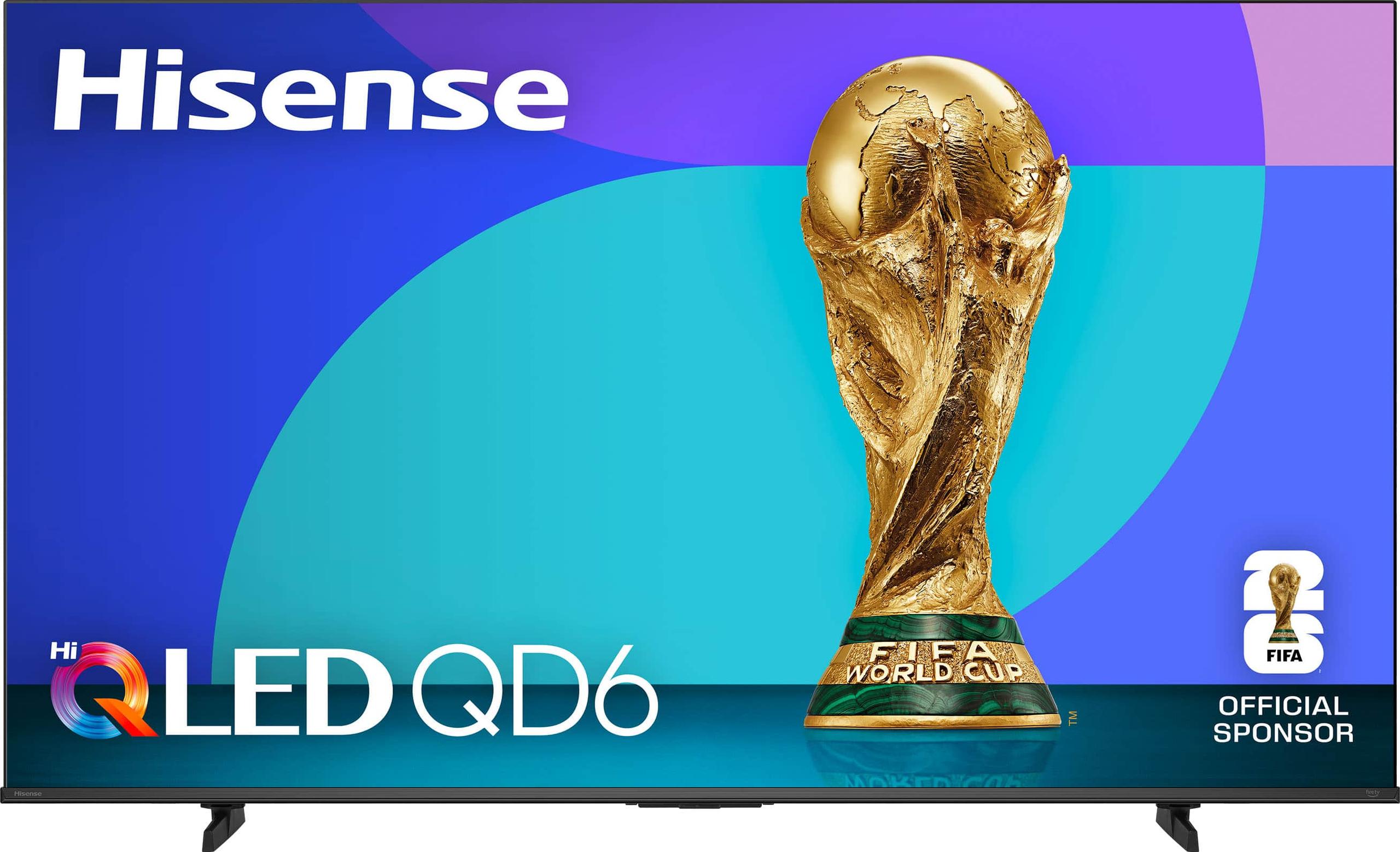
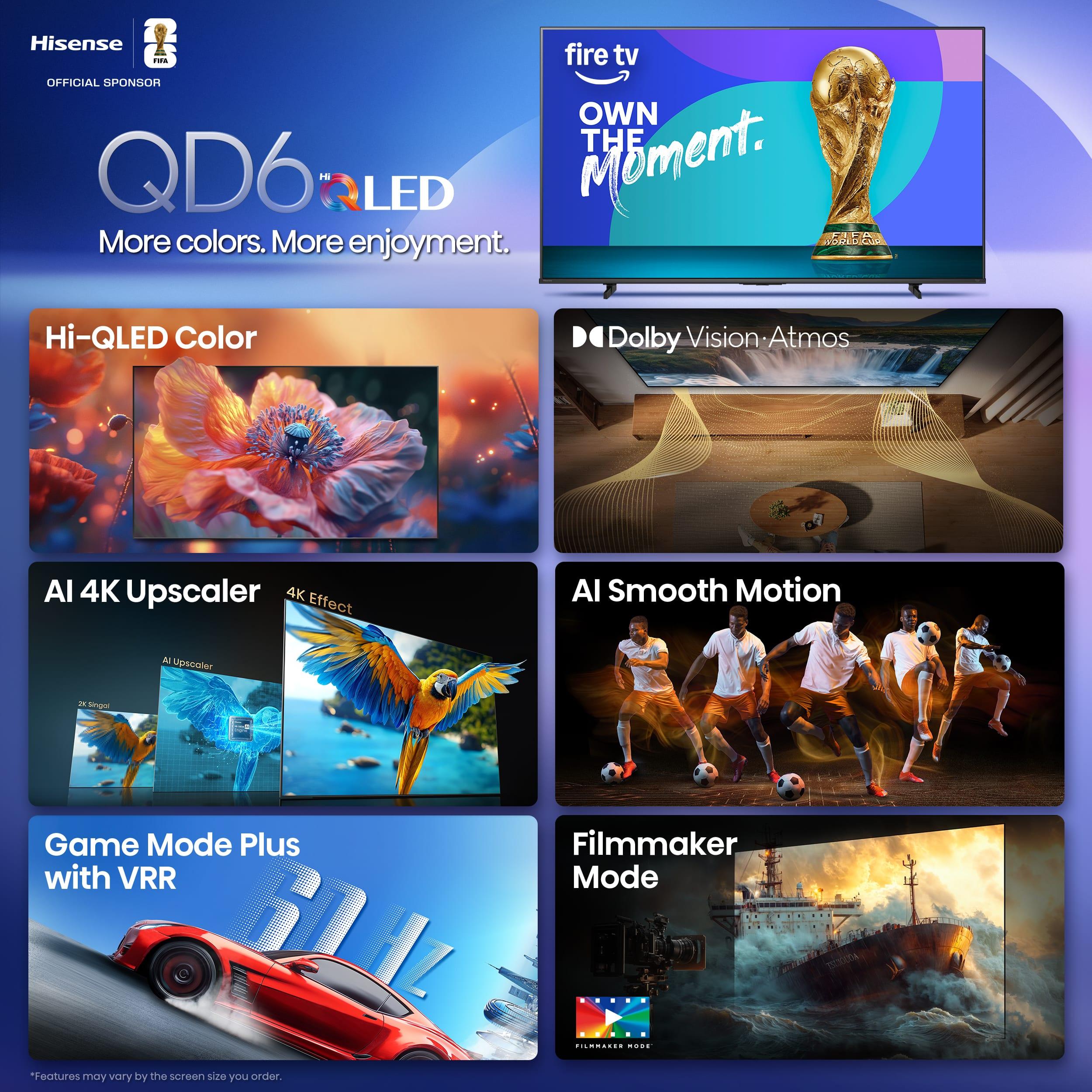
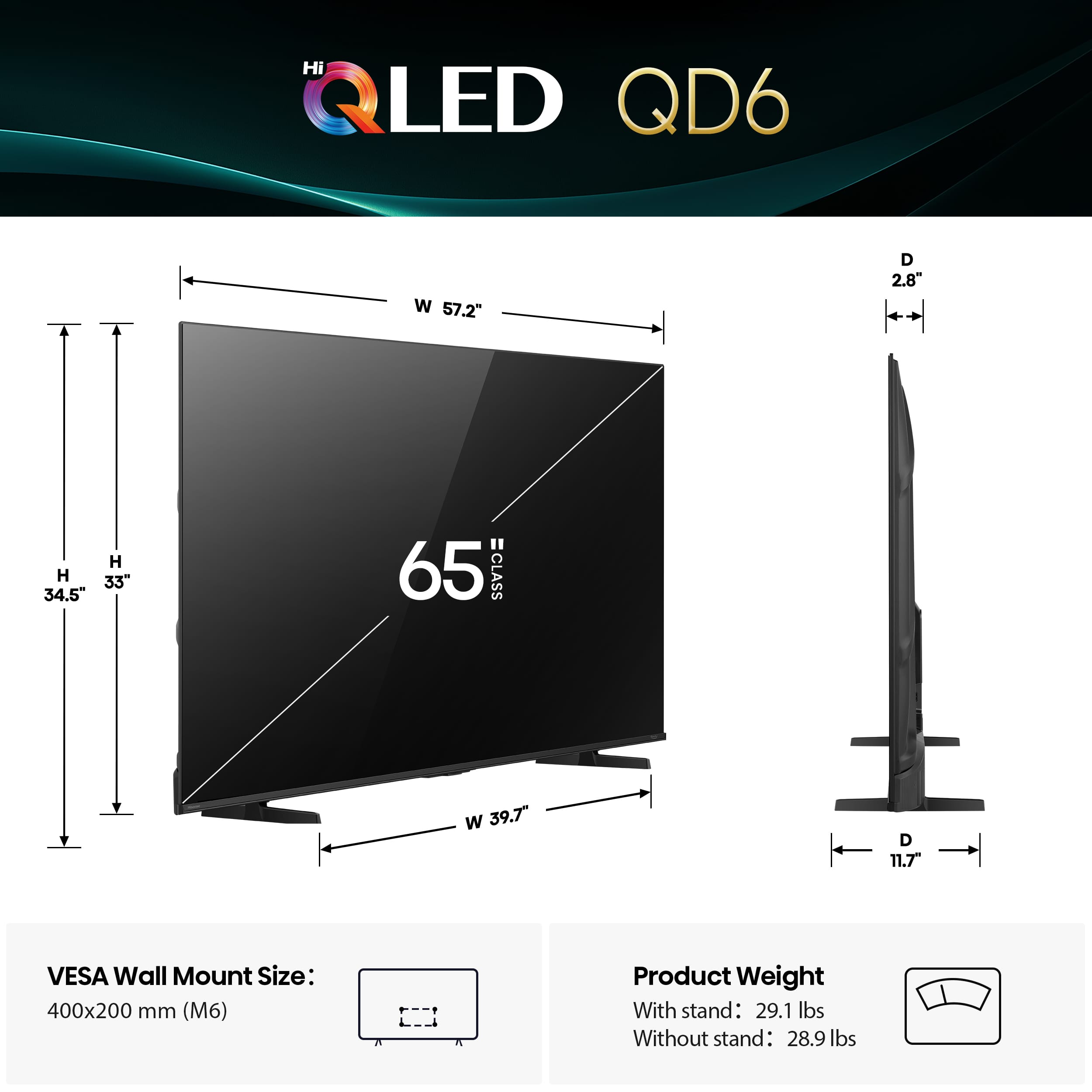
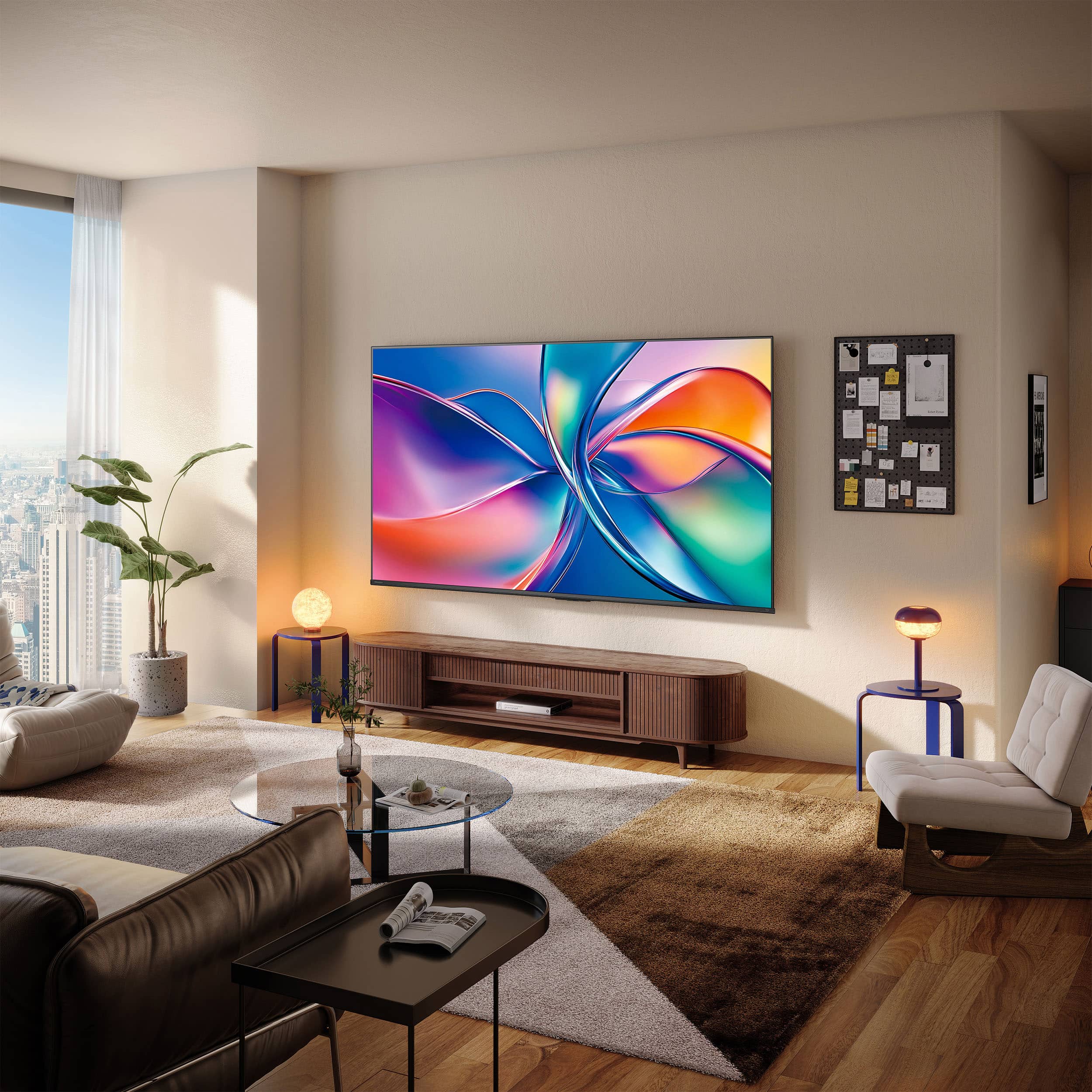
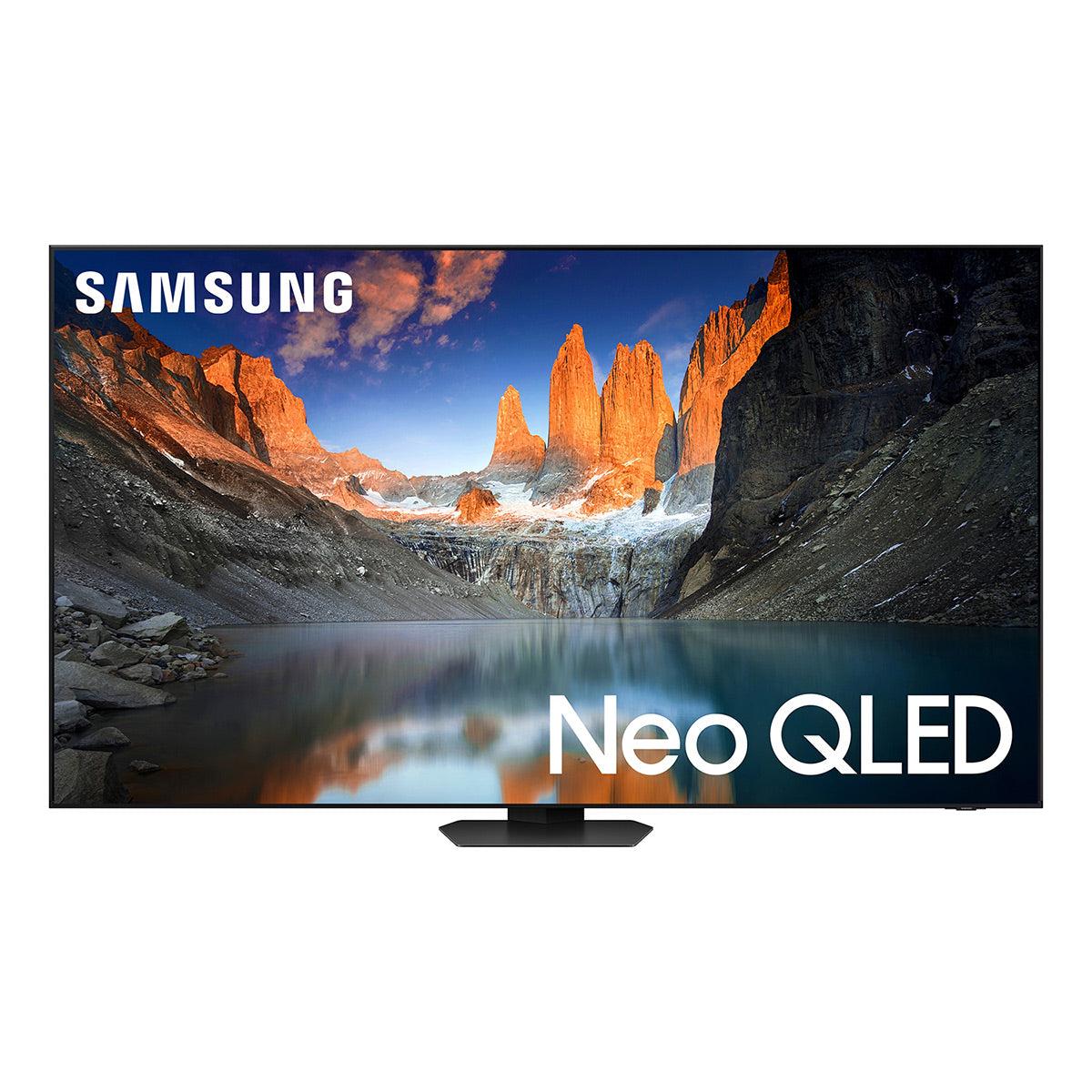
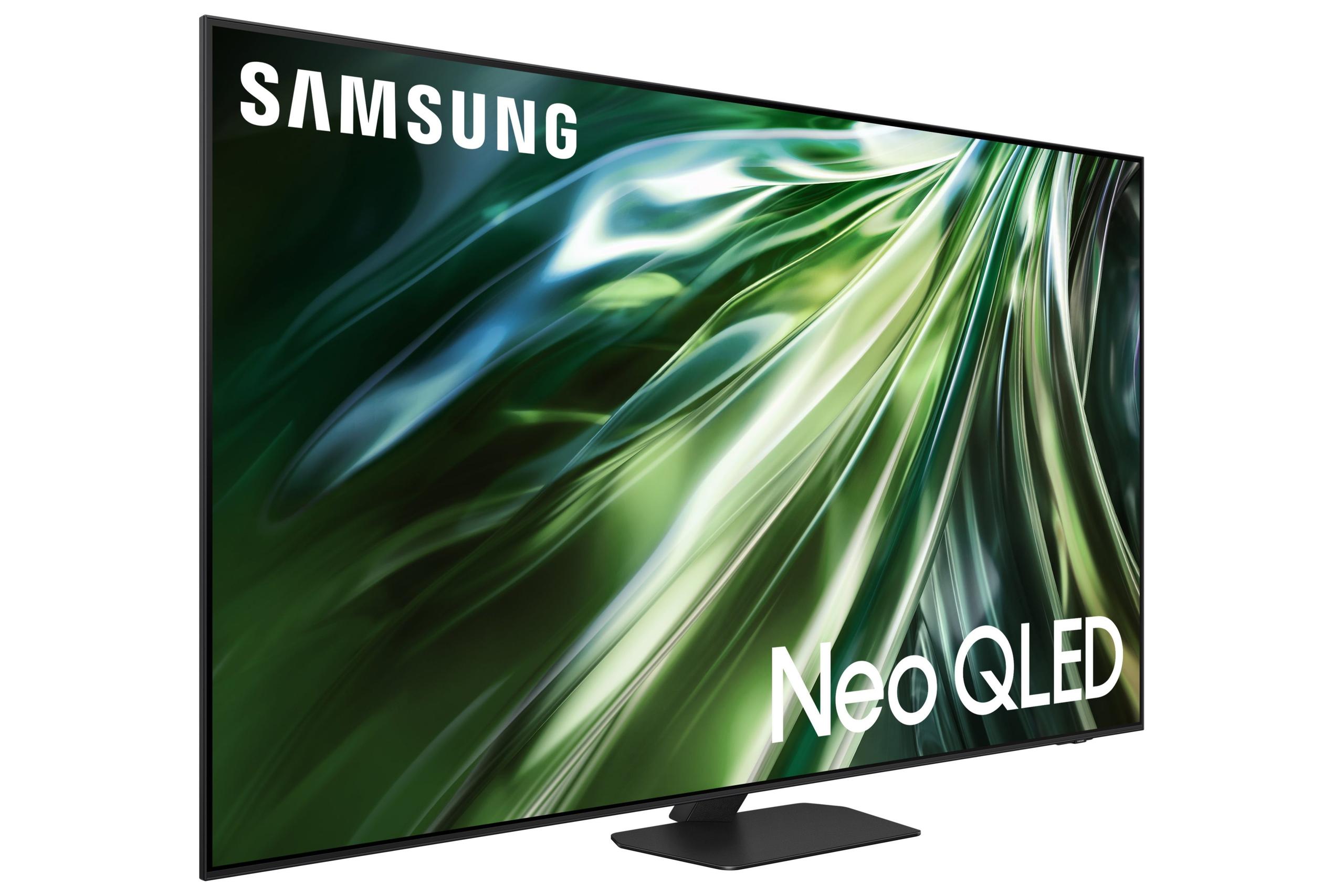
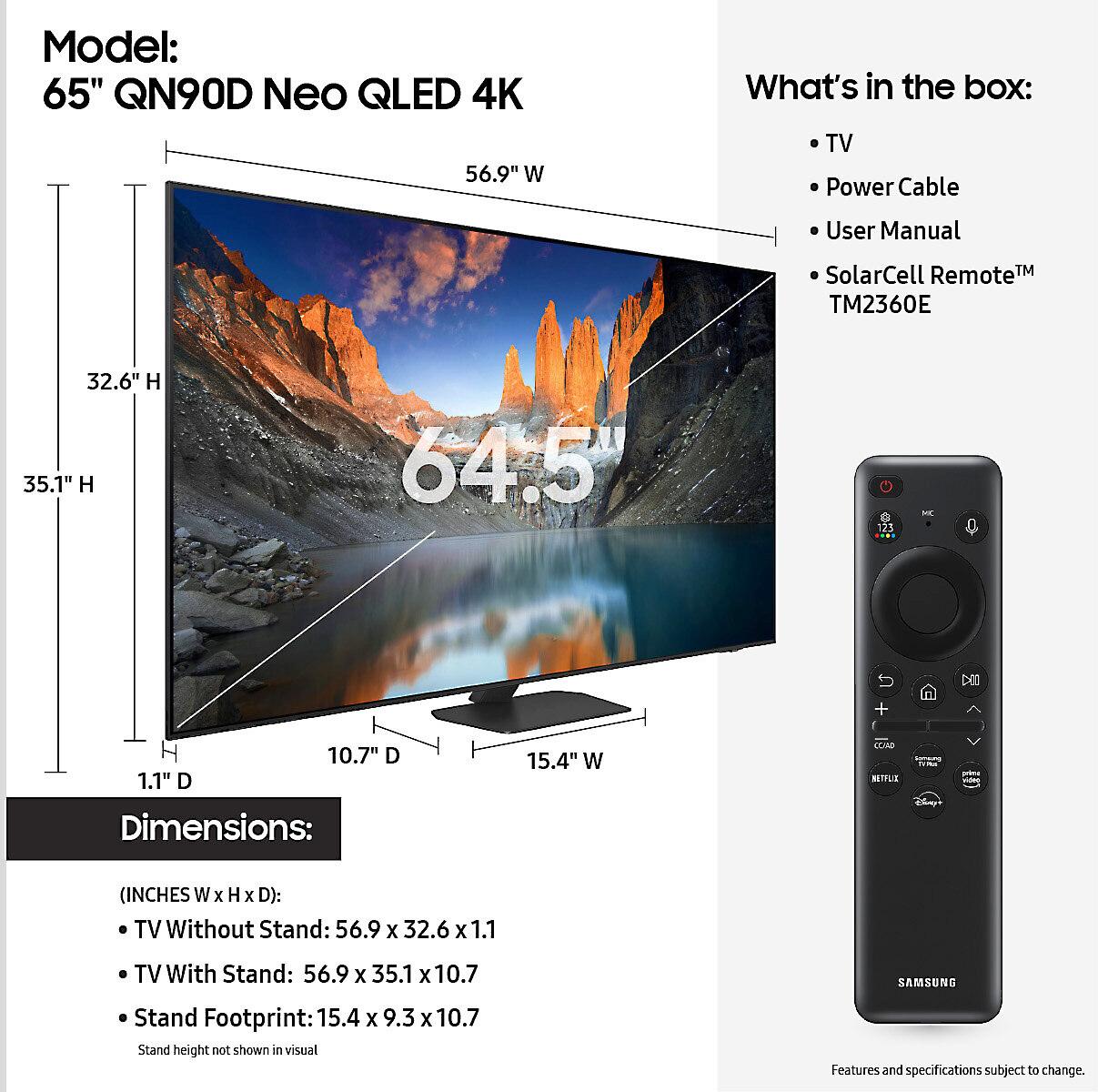
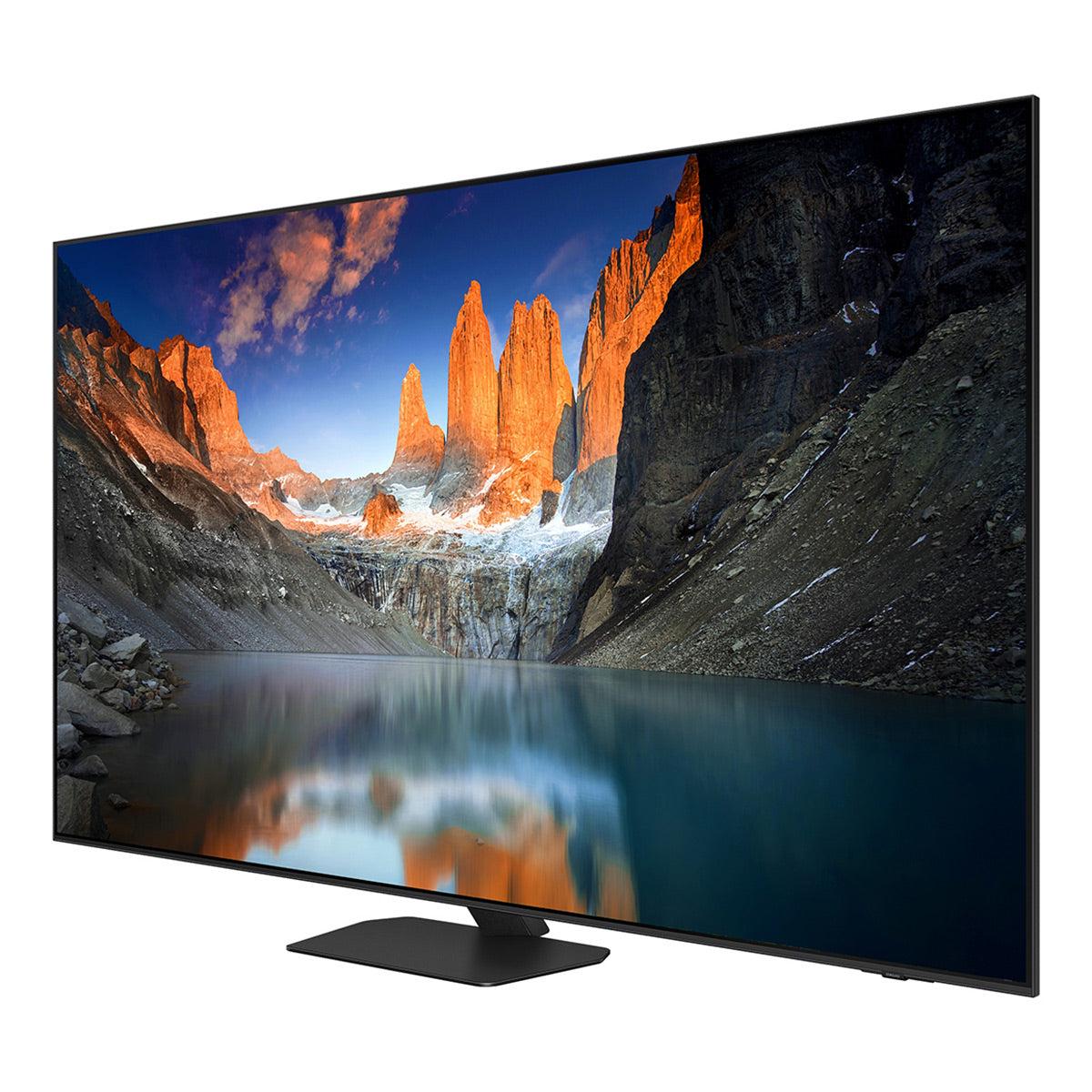
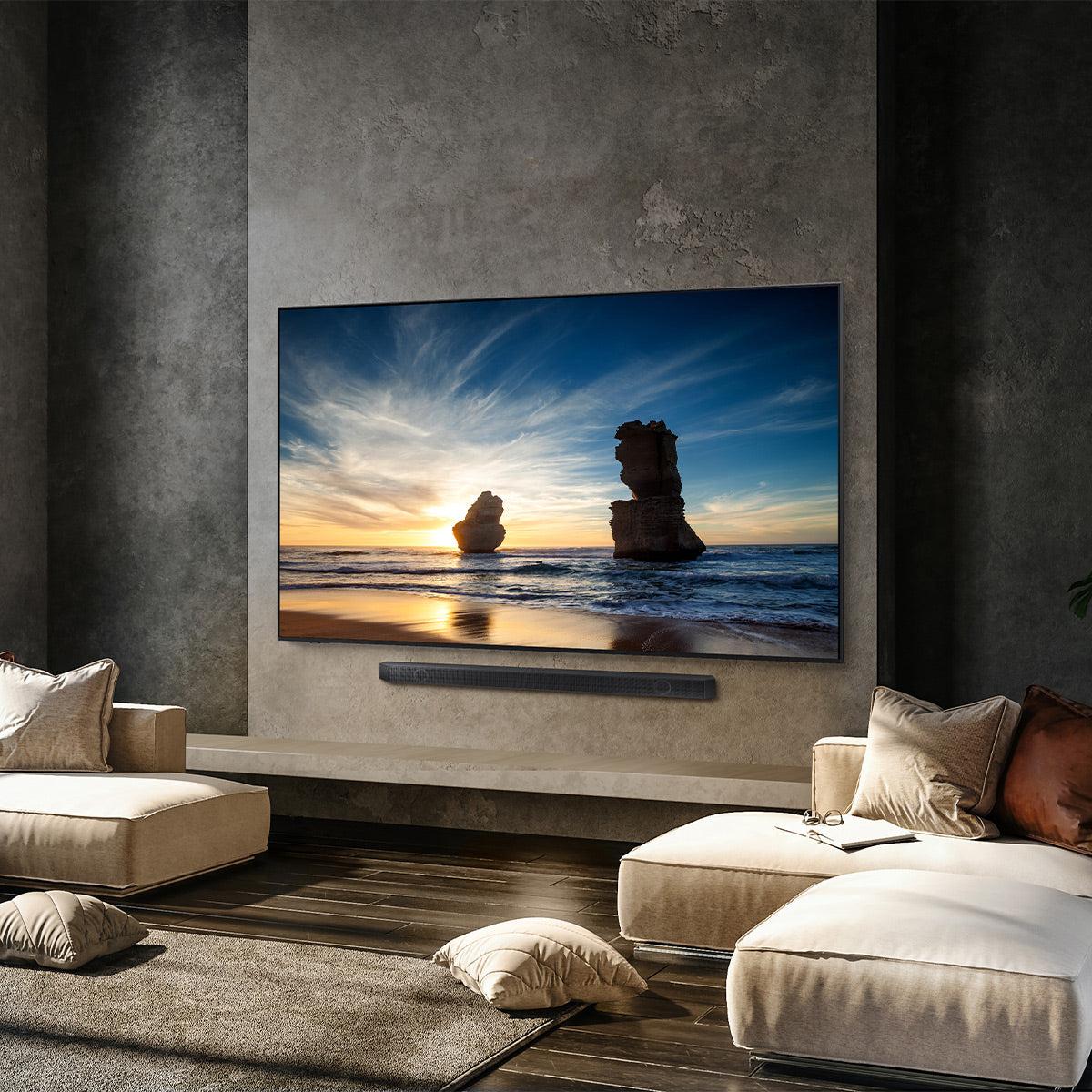
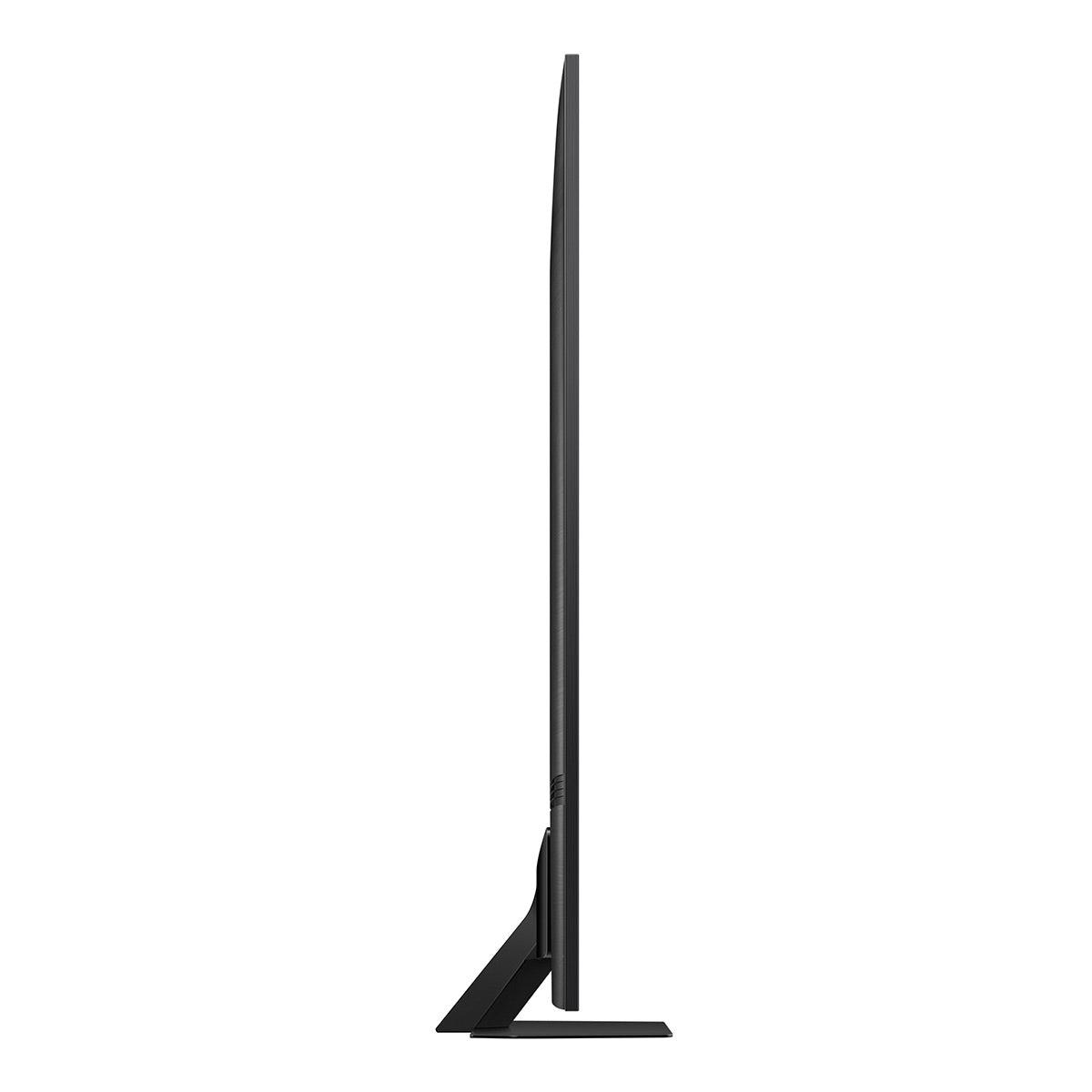
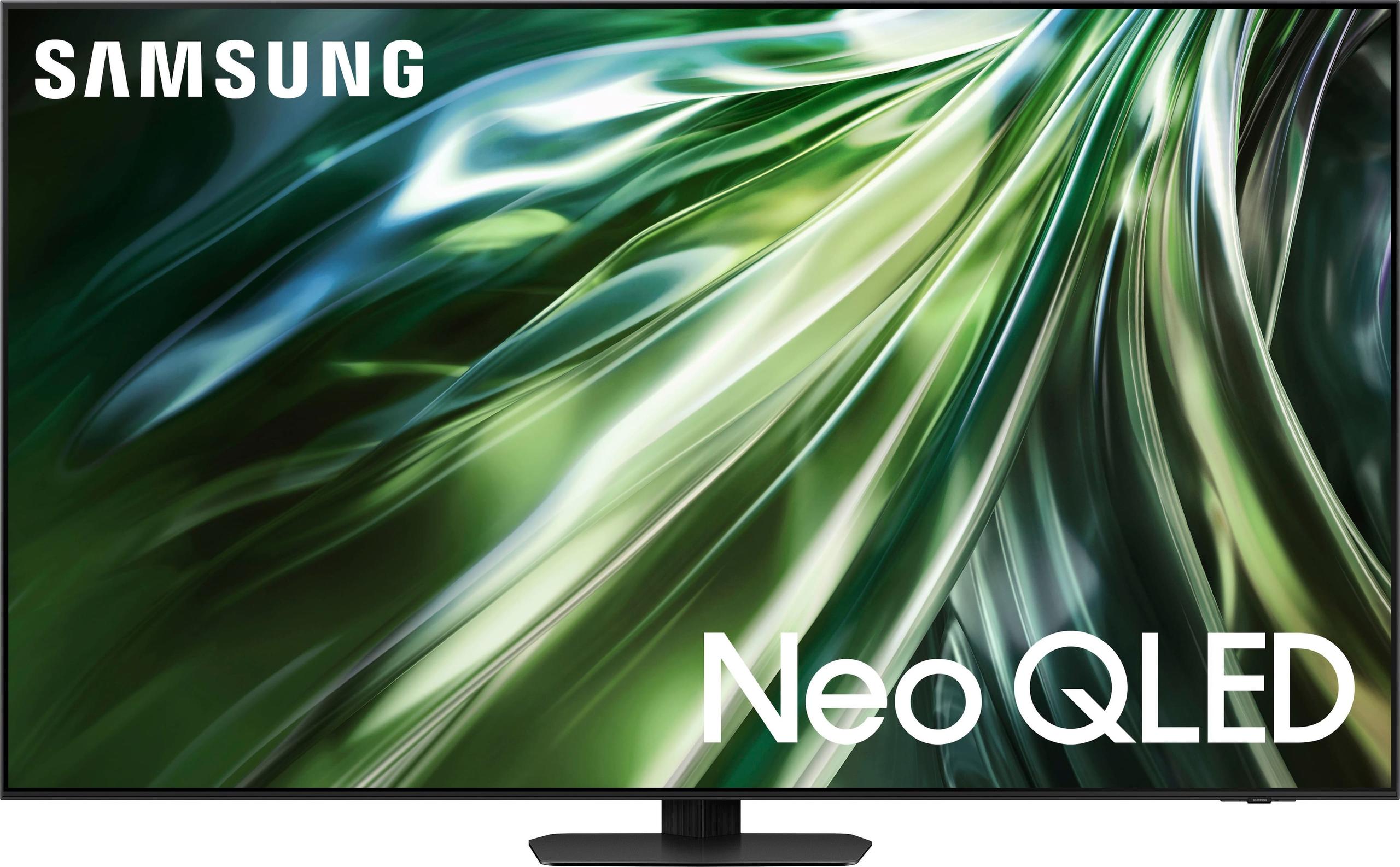

When shopping for a 65-inch TV, you'll quickly discover there's a massive gap between what $400 and $1,800 can buy you. At the time of writing, the Hisense 65" QD6 Series Hi-QLED Fire TV represents exceptional budget value, while the Samsung 65" QN90D Series Neo QLED targets the premium market. Both use quantum dot technology to enhance colors, but their approaches to backlighting, processing power, and overall performance couldn't be more different.
Understanding this comparison helps illustrate the broader TV market landscape. Budget TVs have dramatically improved in recent years, but premium models still offer significant advantages in specific areas. The question isn't just about spending more money—it's about understanding where that extra investment actually matters for your viewing experience.
Both the Hisense QD6 and Samsung QN90D use quantum dot technology, which sounds complicated but is actually pretty straightforward. Quantum dots are microscopic particles that glow when hit by light, producing more pure and vibrant colors than traditional LED backlights. Think of them as tiny color enhancers that make reds redder and blues bluer without looking artificial.
The 2025 Hisense QD6 represents the latest in budget quantum dot implementation, showing how this premium technology has trickled down to affordable price points. The 2024 Samsung QN90D uses what Samsung calls "Neo QLED," which combines quantum dots with Mini-LED backlighting—a more sophisticated approach we'll explore in detail.
Both TVs support HDR (High Dynamic Range), which dramatically expands the range between the darkest blacks and brightest whites your TV can display. However, having HDR support and delivering great HDR performance are two completely different things, as we'll see.
The most significant difference between these TVs lies in their backlighting technology, which directly impacts picture quality in ways that matter every time you turn on the TV.
The Samsung QN90D uses Mini-LED backlighting with full-array local dimming. Mini-LEDs are exactly what they sound like—much smaller versions of traditional LED lights. Instead of having a few dozen LED zones across the back of the TV, Mini-LED allows for hundreds or even thousands of dimming zones. Each zone can brighten or dim independently, creating what's called "local dimming."
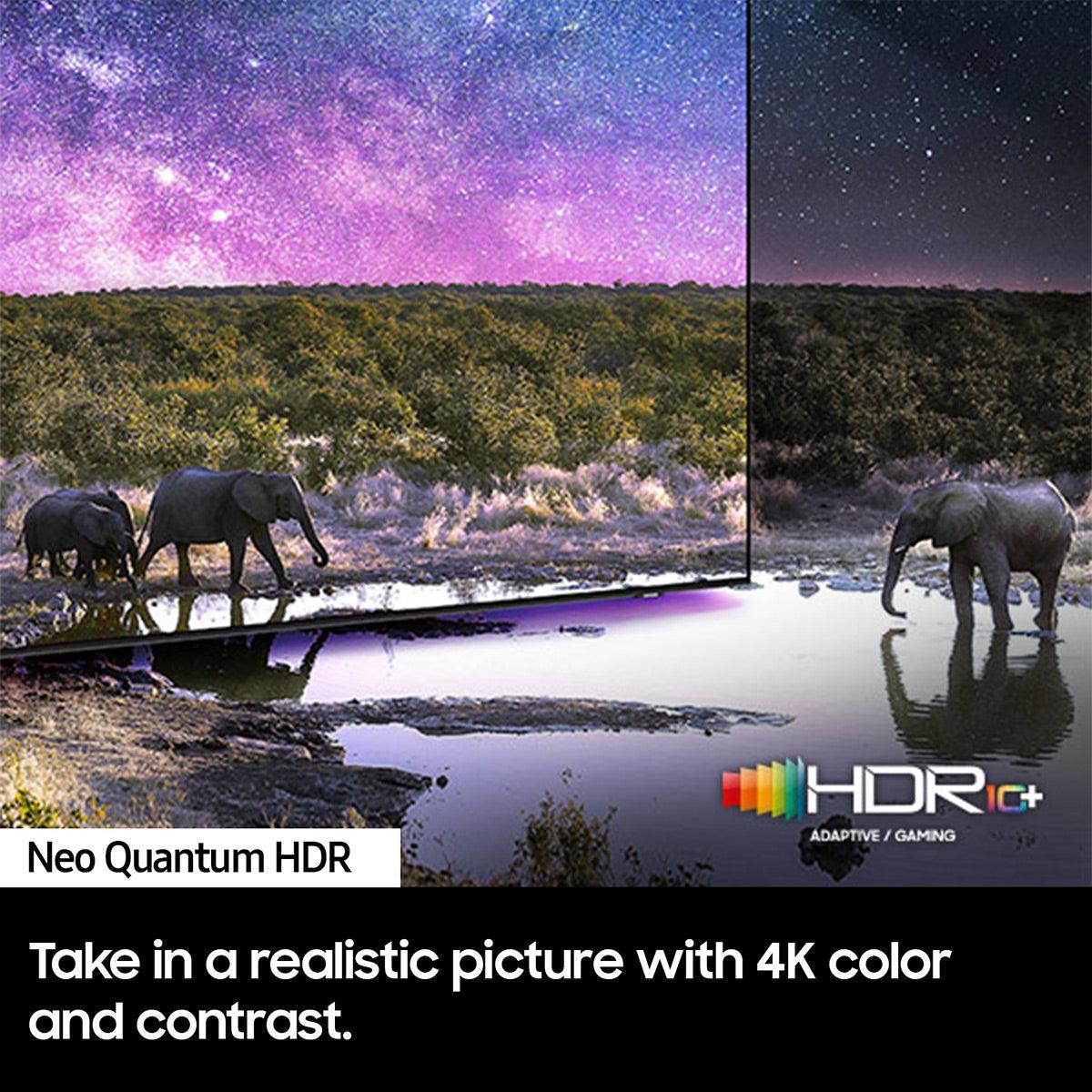
This technology enables the Samsung to display a bright sunburst in one corner of the screen while keeping a starfield genuinely black in the opposite corner. When you're watching a movie with mixed bright and dark elements—like a character with a flashlight in a dark cave—the Samsung QN90D can make the flashlight beam brilliant while keeping the surrounding darkness truly black.
The practical result is peak brightness around 2,000 nits (a measurement of brightness intensity), which makes HDR content look genuinely impressive. When the sun reflects off water or a car windshield in a movie, you'll actually squint slightly—just like in real life.
The Hisense QD6 uses standard direct LED backlighting without local dimming zones. This means the entire backlight system brightens or dims together. While this approach keeps costs down and still delivers quantum dot color enhancement, it can't achieve the precise contrast control of Mini-LED systems.
Peak brightness reaches approximately 385 nits, which is adequate for most viewing conditions but won't deliver the same HDR impact. When bright highlights appear on screen, they tend to "lift" the black levels across the entire panel, making dark scenes appear grayish rather than truly black.
However, the Hisense QD6 benefits from a VA-style panel (Vertical Alignment), which naturally provides better contrast than IPS panels. In moderately lit rooms, this combination delivers surprisingly satisfying picture quality, especially considering the price difference.
Your viewing environment plays a huge role in determining which TV will perform better for your specific situation.
The Samsung QN90D's high peak brightness makes it exceptional for bright living rooms with large windows or rooms where you can't control ambient lighting. The TV maintains color saturation and contrast even when competing with sunlight or bright overhead lighting.
This advantage extends beyond just bright scenes. The TV's ability to produce intense highlights while maintaining deep blacks means that mixed lighting scenes—common in modern movies and TV shows—look more realistic and engaging. The difference is particularly noticeable in content like nature documentaries, sports broadcasts, or action movies with varied lighting conditions.
The Hisense QD6 performs best in controlled lighting environments. During evening viewing sessions or in rooms where you can dim the lights, the picture quality difference between the two TVs narrows considerably. The quantum dot color enhancement still provides vibrant, engaging colors that look impressive compared to standard LED TVs.
For dedicated movie watching or gaming sessions where you can control the lighting, the Hisense QD6 delivers a thoroughly enjoyable experience that punches well above its price point.
Gaming capabilities represent one of the most significant performance gaps between these TVs, particularly if you own or plan to purchase next-generation gaming consoles.
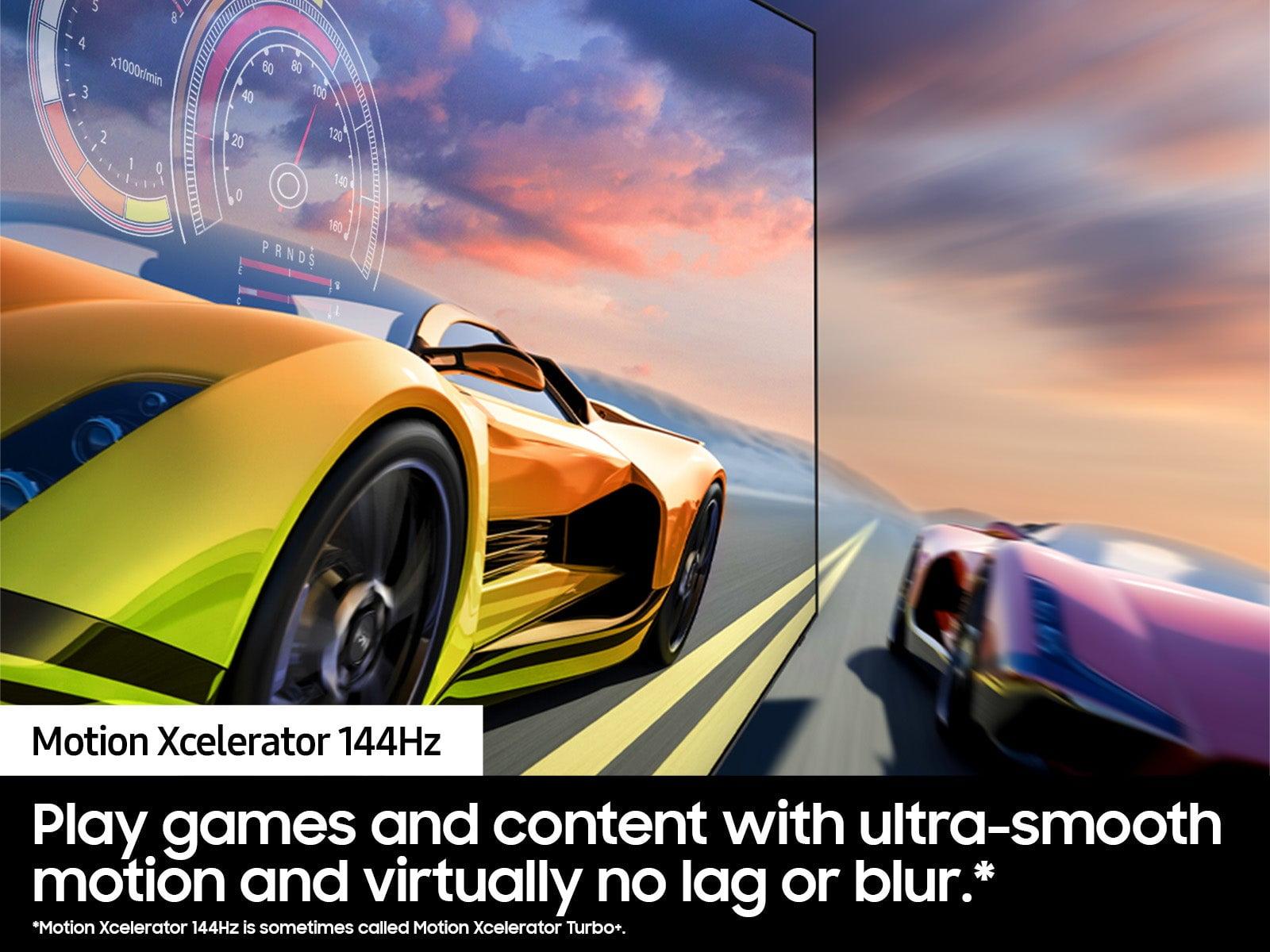
The Samsung QN90D essentially functions as a large gaming monitor, supporting 144Hz refresh rates with input lag under 10 milliseconds. Input lag measures the delay between pressing a controller button and seeing the action on screen—crucial for competitive gaming where split-second reactions matter.
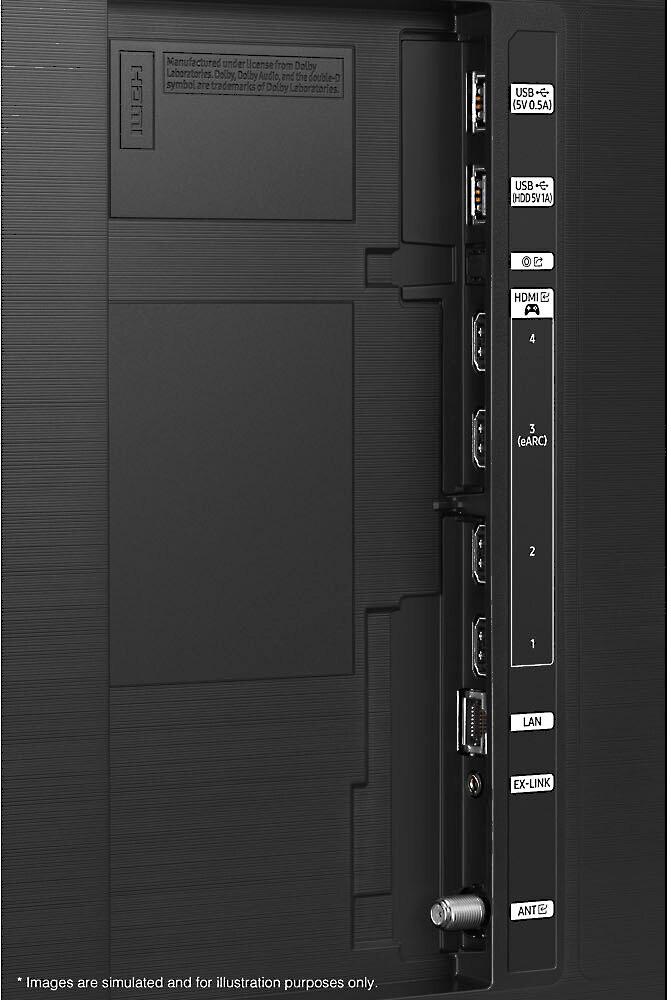
The TV includes four HDMI 2.1 ports, which support 4K resolution at 120Hz refresh rates. This means you can connect multiple gaming devices (PlayStation 5, Xbox Series X, high-end PC) simultaneously without switching cables or compromising on performance.
FreeSync Premium Pro support eliminates screen tearing, a visual artifact that occurs when the TV's refresh rate doesn't match the game's frame rate. The result is buttery-smooth gameplay that rivals dedicated gaming monitors.
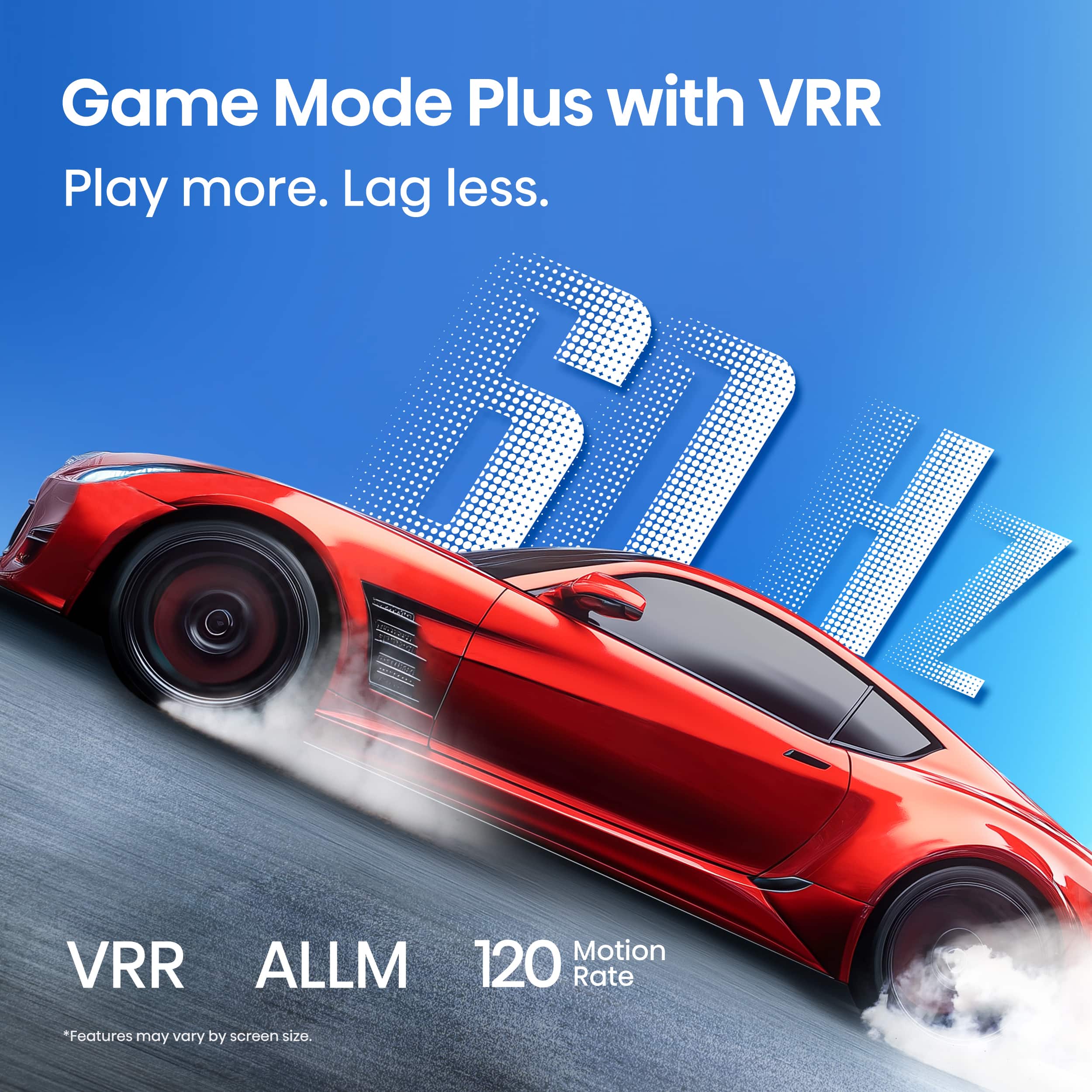
The Hisense QD6 includes Variable Refresh Rate (VRR) and Auto Low Latency Mode (ALLM), which are essential gaming features. However, it's limited to 60Hz refresh rates and uses HDMI 2.0 ports rather than the newer HDMI 2.1 standard.
For casual gaming, these limitations aren't necessarily problematic. Many games still run at 60 frames per second, and the 10.2-millisecond input lag is acceptable for most players. However, when frame rates drop below 60fps, the lack of higher refresh rate support can cause visible screen tearing.
The TV works fine for single-console gaming setups, but serious gamers with multiple devices or those who prioritize cutting-edge performance will find the limitations frustrating.
Both TVs use quantum dot technology, but their HDR performance differs dramatically due to brightness capabilities and processing power.
HDR content is mastered for displays capable of 1,000 to 4,000 nits of brightness. The Samsung QN90D's ability to reach over 2,000 nits means it can display HDR content much closer to the creator's original intent. Bright highlights like explosions, sunlight, or neon signs appear with genuine impact.
The Hisense QD6's lower peak brightness means HDR content gets "tone mapped" down to fit the display's capabilities. While the TV includes excellent processing to handle this conversion smoothly, you're still missing the full HDR experience.
Interestingly, the Hisense QD6 supports more HDR formats than the Samsung. It includes Dolby Vision support, which is increasingly common on Netflix, Disney+, and other streaming services. Dolby Vision uses dynamic metadata that adjusts HDR settings scene-by-scene for optimal picture quality.
The Samsung QN90D lacks Dolby Vision support, focusing instead on HDR10 and HDR10+. While this isn't a deal-breaker, it means you'll miss out on the enhanced experience when streaming Dolby Vision content.
Both TVs cover approximately 90% of the DCI-P3 color gamut used for HDR content, but the Samsung maintains color saturation better at high brightness levels—a metric called "color volume." Colors remain vivid and accurate even in bright scenes, while the Hisense may show slight desaturation when brightness peaks.
For color accuracy, the Samsung QN90D tends toward more natural, film-accurate colors out of the box. The Hisense QD6 produces slightly more saturated colors that many viewers prefer for casual content, though they may appear less natural in critically acclaimed films.
The smart TV experience has become increasingly important as streaming dominates content consumption.
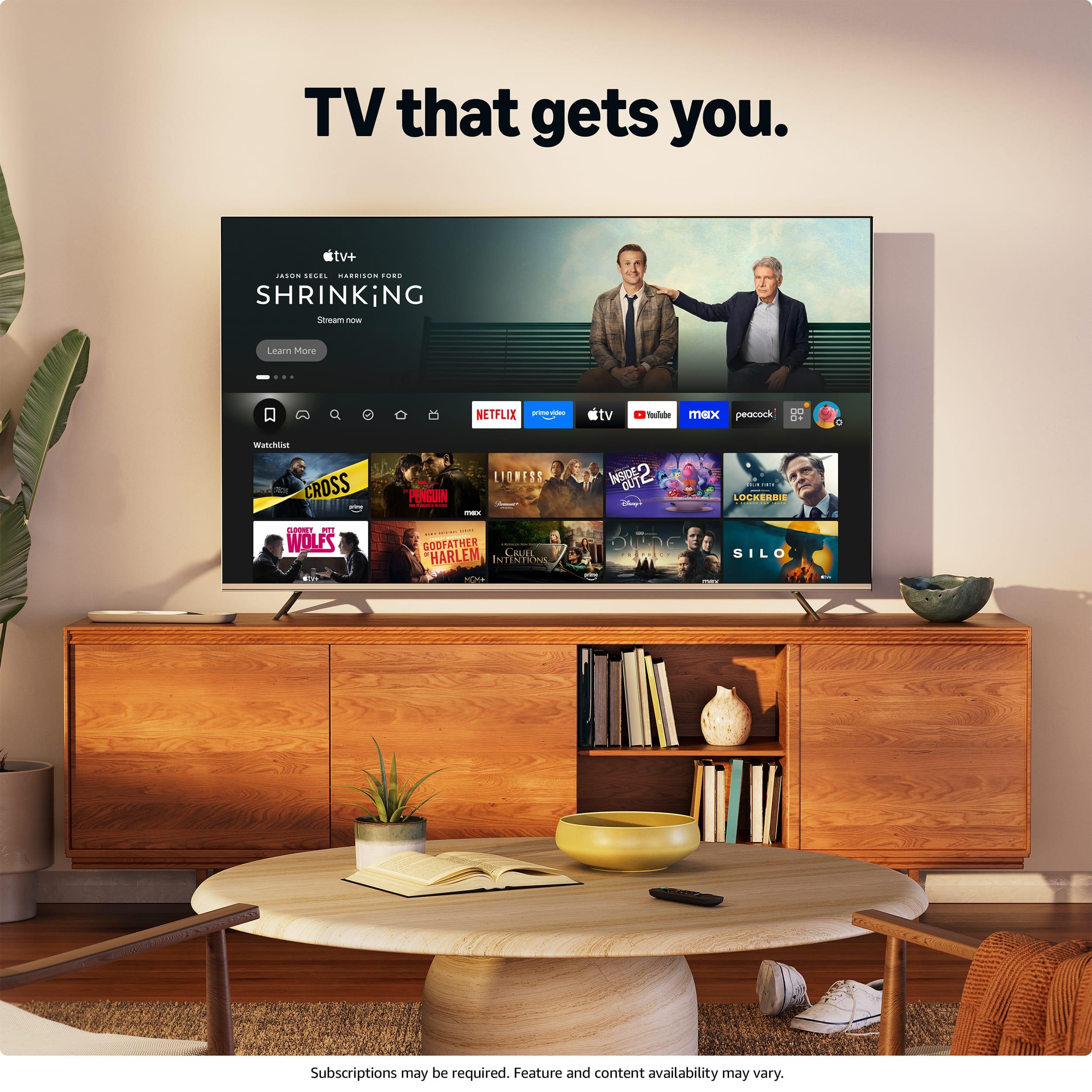
The Hisense QD6 runs Amazon's Fire TV platform, which provides excellent integration with Amazon's ecosystem. The interface is clean, streaming-focused, and includes robust Alexa voice control. App loading is generally smooth, though you might notice occasional lag with more demanding applications.
The Samsung QN90D uses Samsung's Tizen operating system, which has improved significantly in recent years. The interface is more polished and responsive, thanks to more powerful processing hardware. Samsung typically provides software updates for 4-5 years, offering better long-term support than many competitors.
Both platforms include the major streaming apps, but Fire TV's Amazon integration might appeal to Prime Video users, while Tizen offers broader compatibility and generally smoother performance.
While both TVs benefit from external sound systems, their built-in audio capabilities differ noticeably.
The Samsung QN90D includes a 60-watt, 4.2.2-channel system with Object Tracking Sound+. This technology attempts to move sound across the screen to match on-screen action—when a car drives from left to right, the audio follows. It's not a replacement for a dedicated sound system, but it's noticeably more engaging than standard TV speakers.
The Hisense QD6 includes basic speakers with Dolby Atmos processing support. While adequate for casual viewing, the audio lacks the spatial effects and overall impact of the Samsung's system.
Premium TVs typically offer superior build quality, and that pattern holds here.
The Samsung QN90D features better panel uniformity, meaning the picture looks consistent across the entire screen without noticeable brightness variations or color tinting. The wider viewing angles maintain color accuracy even when viewed from the side—important for larger rooms or multiple seating positions.
The Hisense QD6 shows typical budget TV characteristics with narrower viewing angles and potential uniformity variations, though these issues aren't severe enough to impact normal viewing significantly.
Samsung's longer software support timeline and more extensive service network also suggest better long-term ownership experience, though Hisense has improved its support infrastructure in recent years.
For dedicated home theater setups, the performance differences become more pronounced.
The Samsung QN90D excels in home theater environments where precise contrast control, bright highlights, and accurate colors matter most. The Mini-LED backlighting creates the dramatic dark-to-bright transitions that make movies engaging, while the high peak brightness ensures HDR content displays with proper impact.
However, the lack of Dolby Vision support is more noticeable in home theater settings where you're likely consuming premium streaming content that uses this format.
The Hisense QD6 can work in home theater setups, particularly if you can control ambient lighting completely. The Dolby Vision support actually becomes an advantage here, providing better compatibility with streaming content. However, the limited contrast control and lower brightness mean you're not getting the full cinematic experience that premium content offers.
Based on our research into user reviews and expert evaluations, the decision largely comes down to your viewing environment, gaming priorities, and budget flexibility.
You're looking for maximum screen size within a tight budget and primarily watch content in controlled lighting conditions. The TV excels for evening viewing sessions, streaming-focused usage, and casual gaming. The Dolby Vision support makes it particularly appealing for Netflix and Disney+ content.
This TV makes sense for bedrooms, basement setups, or any environment where you can control ambient lighting. It's also ideal if you're upgrading from an older TV and want modern smart features without premium pricing.
Your viewing room has significant ambient lighting, you're a serious gamer, or you prioritize the best possible picture quality for movies and premium content. The TV justifies its premium pricing in bright living rooms, open-concept homes, or dedicated home theater spaces where performance matters more than cost.
This TV is worth the investment if you own next-generation gaming consoles, frequently watch HDR content, or plan to keep the TV for many years where the superior build quality and longer support timeline matter.
At the time of writing, the Hisense QD6 delivers approximately 90% of premium TV performance at roughly 25% of the premium cost. For most viewers in moderate viewing environments, this represents exceptional value.
The Samsung QN90D's premium pricing reflects genuine technical advantages in backlighting, processing power, and build quality. Whether these advantages justify the cost depends entirely on your specific viewing conditions and performance priorities.
The TV market has reached a point where budget options offer genuinely good performance, making premium models harder to justify unless their specific advantages align with your needs. Both TVs represent solid choices within their respective price segments, but understanding their fundamental differences ensures you'll choose the one that best fits your viewing experience priorities.
| Hisense 65" QD6 Series Hi-QLED Fire TV | Samsung 65" QN90D Series Neo QLED |
|---|---|
| Peak Brightness - Critical for HDR impact and bright room viewing | |
| 385 nits (good for controlled lighting) | 2,000+ nits (excellent for any lighting condition) |
| Backlight Technology - Determines contrast quality and black levels | |
| Direct LED without local dimming (budget approach) | Mini-LED with full-array local dimming (premium precision) |
| Gaming Refresh Rate - Essential for next-gen console performance | |
| 60Hz native (Motion Rate 120 with interpolation) | 120Hz native (supports 4K@144Hz for PC gaming) |
| HDMI Ports - Affects gaming device connectivity | |
| 4x HDMI 2.0 (no 4K@120Hz support) | 4x HDMI 2.1 (full next-gen console compatibility) |
| Input Lag - Lower is better for responsive gaming | |
| 10.2ms (acceptable for casual gaming) | Under 10ms (competitive gaming performance) |
| HDR Format Support - Affects streaming compatibility | |
| Dolby Vision, HDR10+, HDR10, HLG (excellent streaming support) | HDR10+, HDR10, HLG (no Dolby Vision support) |
| Smart Platform - Daily user experience and long-term support | |
| Fire TV (Amazon ecosystem, clean interface) | Tizen OS (more powerful processor, 4-5 year updates) |
| Color Technology - Visual vibrancy and accuracy | |
| Hi-QLED quantum dots, 90% DCI-P3 coverage | Neo QLED quantum dots with enhanced color volume |
| Audio System - Built-in sound quality | |
| Basic speakers with Dolby Atmos processing | 60W 4.2.2CH with Object Tracking Sound+ |
| Viewing Angles - Important for group viewing | |
| Standard LCD limitations (color shift off-center) | Wide viewing angles maintain color accuracy |
| Release Year - Technology generation and feature set | |
| 2025 model (latest budget quantum dot tech) | 2024 model (current premium Mini-LED standard) |
| Ideal Room Type - Where each TV performs best | |
| Controlled lighting, evening viewing, bedrooms | Bright living rooms, home theaters, gaming setups |
The biggest difference is backlighting technology. The Hisense 65" QD6 Series uses standard LED backlighting without local dimming, while the Samsung 65" QN90D Series features Mini-LED backlighting with full-array local dimming. This gives the Samsung dramatically better contrast control, deeper blacks, and brighter highlights for HDR content.
The Samsung 65" QN90D Series is significantly better for bright rooms, reaching over 2,000 nits peak brightness compared to the Hisense QD6's 385 nits. The Samsung maintains color saturation and contrast even with windows or overhead lighting, while the Hisense performs best in controlled lighting environments.
The Samsung QN90D offers superior gaming performance with 120Hz refresh rates, four HDMI 2.1 ports, and sub-10ms input lag. The Hisense QD6 provides adequate gaming with VRR and ALLM support but is limited to 60Hz and HDMI 2.0 ports, making it suitable for casual gaming but not optimal for next-gen consoles.
Both TVs offer excellent smart features but with different approaches. The Hisense QD6 runs Fire TV with strong Amazon ecosystem integration, while the Samsung QN90D uses Tizen OS with more powerful processing and typically longer software support (4-5 years of updates).
The Hisense QD6 supports more HDR formats including Dolby Vision, HDR10+, HDR10, and HLG. The Samsung QN90D lacks Dolby Vision support but handles HDR10+ and HDR10 exceptionally well due to its higher peak brightness capability.
The Samsung QN90D excels in home theater environments with its precise contrast control, high peak brightness, and wide viewing angles. However, the Hisense QD6's Dolby Vision support provides better streaming compatibility for premium content, making it a decent budget home theater option in controlled lighting.
The Samsung QN90D delivers superior picture quality with Mini-LED technology providing precise brightness control and deeper blacks. The Hisense QD6 offers impressive quantum dot colors and good contrast from its VA panel, but can't match the Samsung's contrast precision or HDR impact.
The Hisense QD6 provides exceptional value, delivering approximately 90% of premium TV performance at a fraction of the cost. The Samsung QN90D justifies its premium pricing with superior technology, but the value proposition depends on whether you need its specific advantages like bright room performance and advanced gaming features.
Yes, the Samsung QN90D offers significantly wider viewing angles that maintain color accuracy even from side positions, making it better for group viewing. The Hisense QD6 shows typical LCD limitations with color shifting when viewed off-center.
Both TVs excel at streaming but in different ways. The Hisense QD6 offers better format compatibility with Dolby Vision support for Netflix and Disney+, plus seamless Amazon Prime integration. The Samsung QN90D provides a more responsive interface and better overall streaming performance due to more powerful processing.
The Samsung QN90D features a superior 60W 4.2.2-channel system with Object Tracking Sound+ that moves audio across the screen. The Hisense QD6 includes basic speakers with Dolby Atmos processing support that's adequate for casual viewing but lacks the Samsung's spatial audio effects.
Choose the Hisense QD6 if you have a controlled lighting environment, prioritize streaming compatibility, and want maximum value for casual viewing and gaming. Select the Samsung QN90D if you have a bright room, are a serious gamer, want the best possible picture quality, or are setting up a dedicated home theater where performance matters more than cost.
We've done our best to create useful and informative comparisons to help you decide what product to buy. Our research uses advanced automated methods to create this comparison and perfection is not possible - please contact us for corrections or questions. These are the sites we've researched in the creation of this article: pcvarge.com - bestbuy.com - rtings.com - youtube.com - rtings.com - youtube.com - consumerreports.org - leaseville.com - hisense-usa.com - device.report - hisense-usa.com - youtube.com - flatpanelshd.com - displayspecifications.com - retailspecs.com - tomsguide.com - abt.com - youtube.com - youtube.com - rtings.com - samsung.com - samsung.com - standardtvandappliance.com - gerhardsappliance.com - bestbuy.com - image-us.samsung.com - youtube.com - images.samsung.com

Privacy Policy
Terms and Conditions - Affiliate Policy
Home Security
© Copyright 2008-2026.
11816 Inwood Rd #1211, Dallas, TX 75244