

















When your TV's built-in speakers sound like they're coming from inside a tin can, it's time to consider a premium soundbar. These sleek audio solutions have become the go-to choice for improving home entertainment audio without the complexity of traditional surround sound systems. Today, we're diving deep into two compelling options: the Bose Smart Soundbar 1100 and the Sonos Arc, both representing different philosophies in premium soundbar design.
Before we dig into the specifics, let's establish what separates premium soundbars from their budget counterparts. These higher-end models typically offer Dolby Atmos support (which creates overhead sound effects by bouncing audio off your ceiling), sophisticated digital signal processing (DSP) that optimizes sound quality, robust wireless connectivity, voice assistant integration, and the ability to expand your system with additional speakers over time.
The key considerations when choosing between premium soundbars boil down to audio performance, smart features, expandability, and value proposition. Room size plays a crucial role too – a soundbar that excels in a cozy apartment might feel underwhelming in a spacious living room.
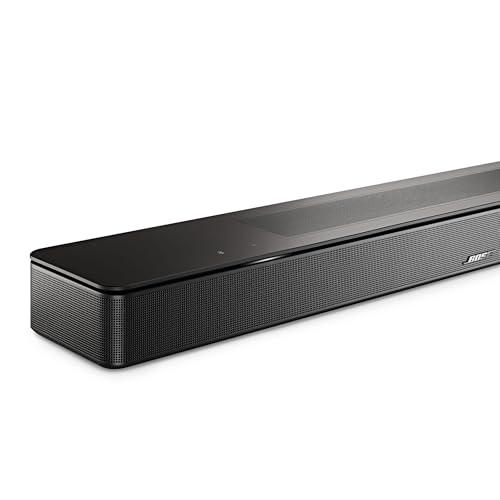
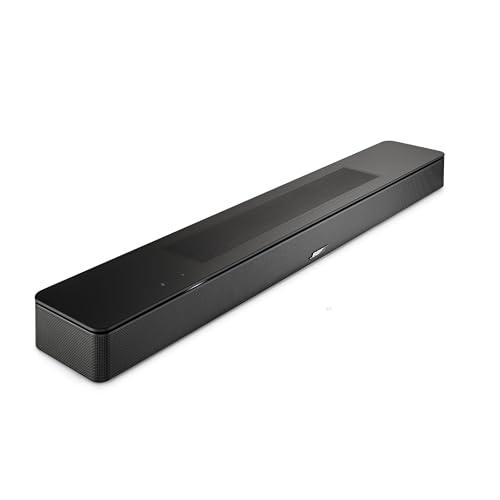
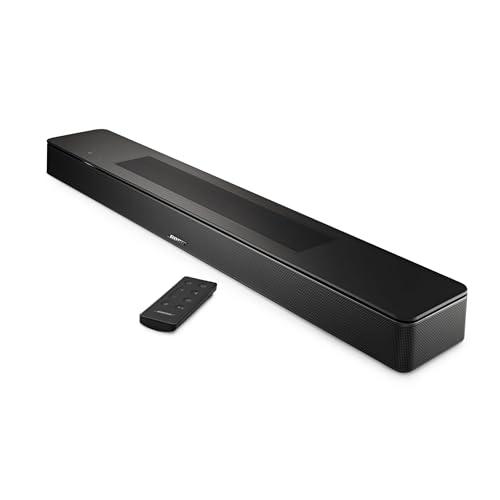
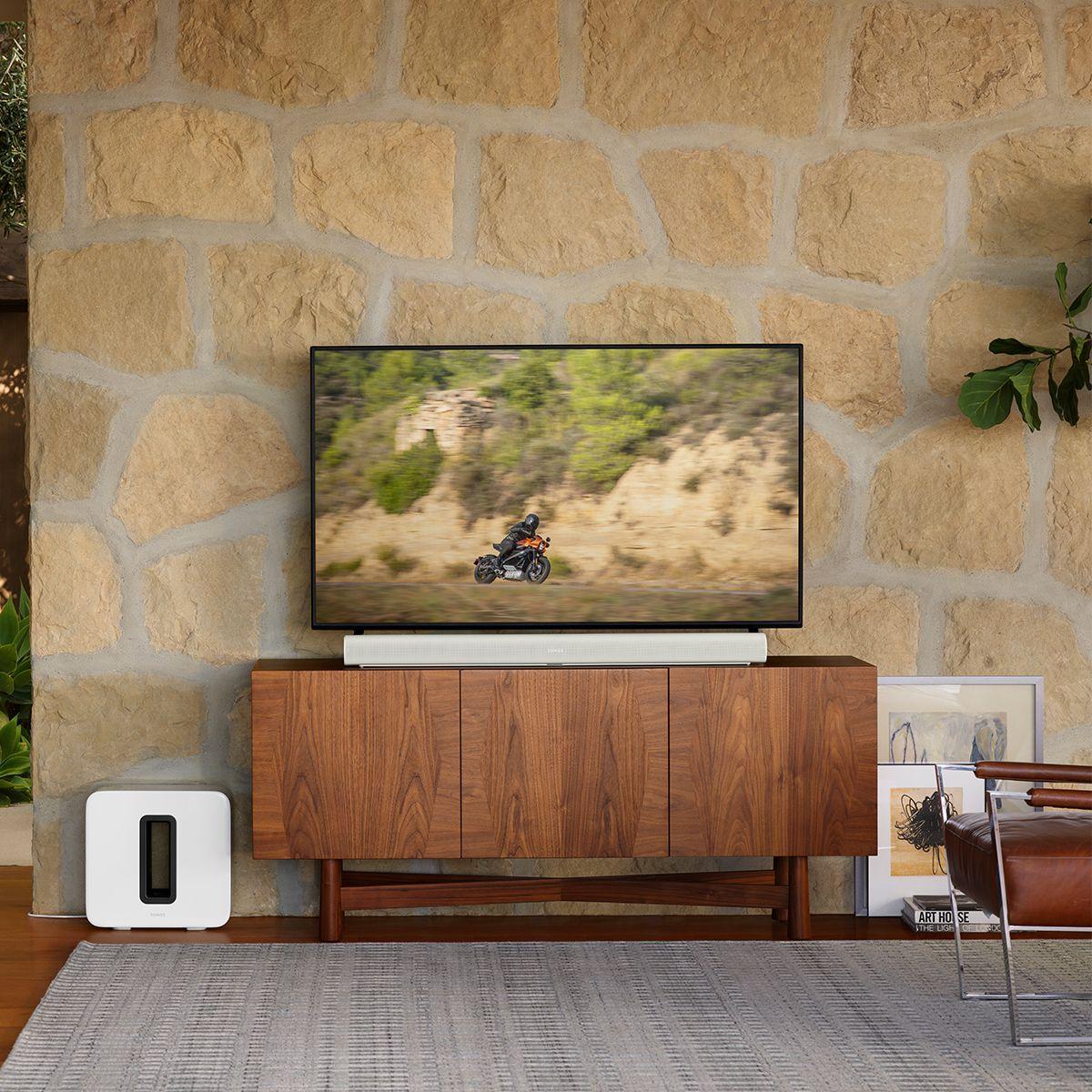
The Bose Smart Soundbar 1100, released in 2023, embodies Bose's "less is more" philosophy. Measuring just 27.3 inches wide and weighing under 7 pounds, it's designed for people who want premium audio performance without dominating their entertainment center. This compact approach makes sense when you consider that many people are mounting 43-50 inch TVs in smaller spaces where a massive soundbar would look disproportionate.
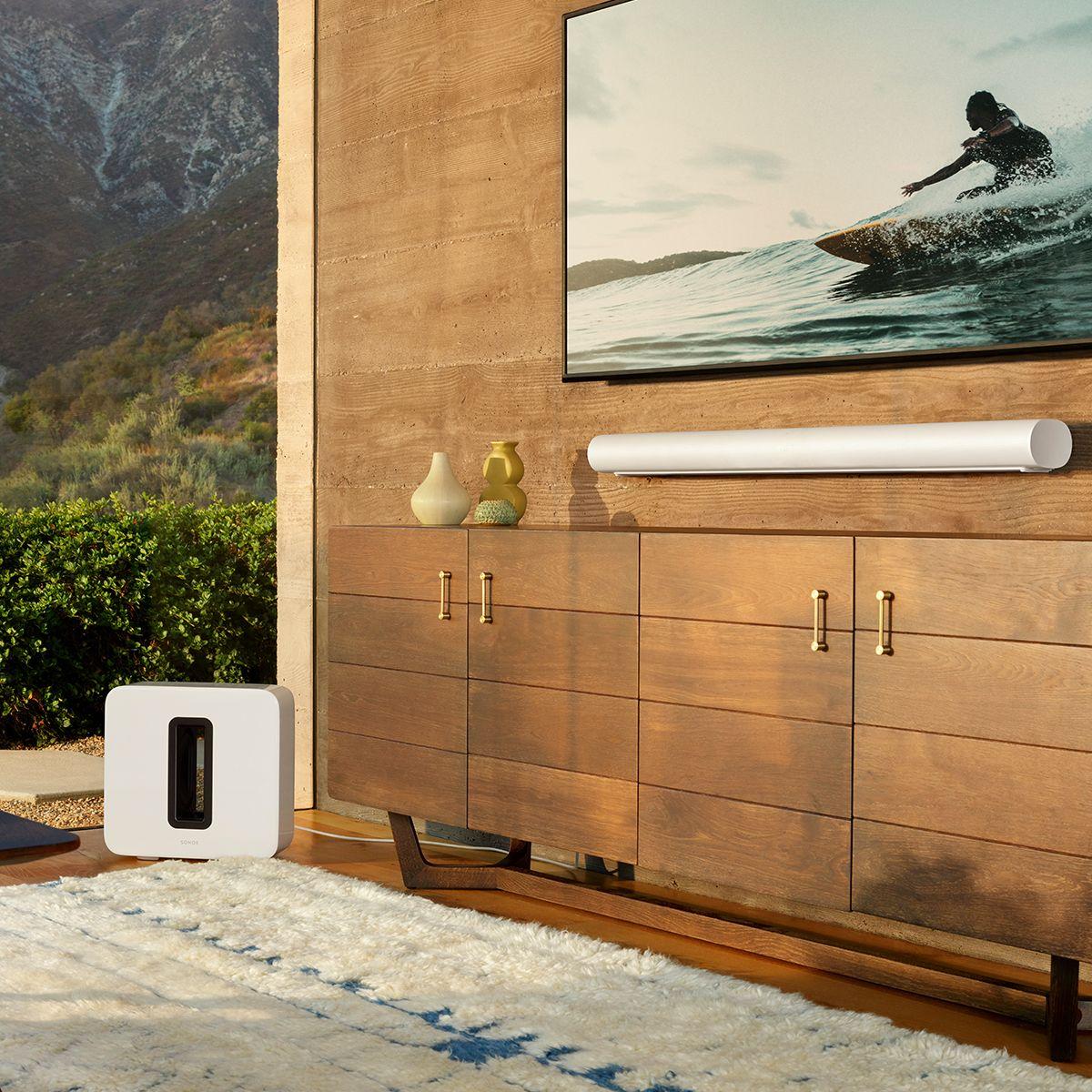
The Sonos Arc, launched in 2020, takes the opposite approach. At nearly 45 inches wide and weighing almost 14 pounds, it's engineered to fill larger rooms with sound. Sonos designed this soundbar for TVs 55 inches and larger, where its substantial presence feels proportional to the display.
This size difference isn't just aesthetic – it has real performance implications. The Arc's larger cabinet allows for more drivers (11 vs. 5 plus a tweeter) and greater internal air volume, which typically translates to better bass response and overall dynamic range.
When we analyze the consensus from expert reviews and user feedback, a clear performance picture emerges. The Bose Smart Soundbar 1100 excels at what Bose has always done best: crystal-clear dialogue reproduction. The company's AI Dialogue Mode uses machine learning to automatically detect when people are speaking and adjusts the frequency response to make voices more intelligible. This isn't just a simple treble boost – it's sophisticated processing that maintains the natural sound of voices while cutting through background noise and music.
The soundbar's PhaseGuide technology is particularly clever. Instead of just firing sound forward, it uses precisely angled drivers to create beams of multi-directional audio that bounce off your room's walls. This creates a wider soundstage than you'd expect from such a compact unit, making it feel like sound is coming from beyond the physical boundaries of the bar itself.
The Sonos Arc takes a different approach to sound quality, prioritizing overall richness and immersion. With its 11-driver array – including three silk-dome tweeters and eight elliptical woofers – it produces a fuller, more enveloping sound signature. Reviews consistently praise its ability to handle complex movie soundtracks without compression or distortion, even at high volumes.
Where the Arc really shines is in its midrange reproduction. Those eight elliptical woofers aren't just for bass – they handle the critical midrange frequencies where most musical instruments and vocal harmonics live. This gives music playback a warmth and body that many soundbars struggle to achieve.
Both soundbars support Dolby Atmos, but their implementations reveal their different target audiences. Dolby Atmos works by encoding height information into audio tracks, which compatible speakers then reproduce by firing sound upward to bounce off your ceiling, creating the illusion of overhead effects.
The Bose Smart Soundbar 1100 uses two dedicated up-firing drivers combined with its TrueSpace technology. TrueSpace is particularly noteworthy because it doesn't just handle native Atmos content – it analyzes regular stereo and 5.1 surround tracks and intelligently upmixes them to create height effects. In smaller rooms with 8-10 foot ceilings, this system performs admirably, creating convincing overhead effects during helicopter flyovers or rain scenes.
However, the Sonos Arc simply has more ammunition for Atmos reproduction. Its larger driver array and more sophisticated acoustic design create more convincing height effects, particularly in larger rooms. The Arc's up-firing drivers are precisely angled and calibrated to work with its forward and side-firing speakers, creating a more cohesive three-dimensional soundfield.
The Arc also benefits from Sonos's Trueplay room correction technology (available on iOS devices), which uses your phone's microphone to analyze your room's acoustics and adjust the soundbar's output accordingly. This automated calibration can make a significant difference in Atmos performance, especially in rooms with challenging acoustics.
This is where the size difference between these soundbars becomes most apparent. The Bose Smart Soundbar 1100 uses QuietPort technology – essentially sophisticated port tuning that reduces air turbulence – to extract surprisingly deep bass from its compact cabinet. For a soundbar of its size, the bass response is impressive and will satisfy many users for TV dialogue and even music listening.
However, action movies and bass-heavy music reveal its limitations. The laws of physics are unforgiving here: small cabinets simply can't move as much air as larger ones. While the Bose handles midbass (the punch in explosions and drum hits) reasonably well, it can't reproduce the deep, room-shaking bass that makes movie soundtracks truly immersive.
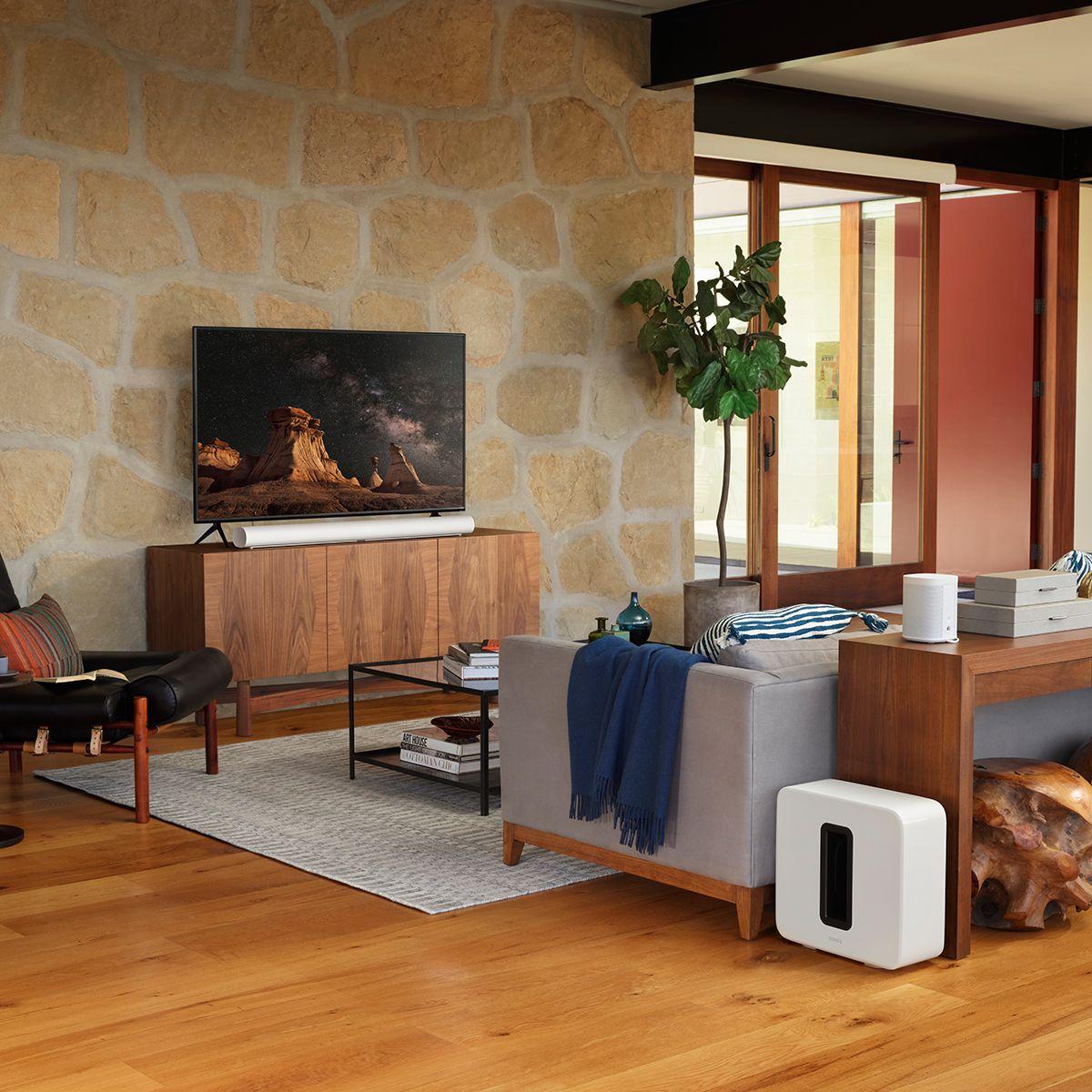
The Sonos Arc, with its larger cabinet and eight dedicated woofers, delivers noticeably more substantial bass response. It can reproduce lower frequencies with more authority and impact, making action sequences more engaging and music more full-bodied. That said, even the Arc benefits significantly from adding a dedicated subwoofer for true deep bass extension.
Both soundbars are designed with subwoofer expansion in mind, but there's a crucial difference in approach. The Bose system uses a proprietary 3.5mm connection for its Bass Modules, while the Sonos Arc connects wirelessly to the Sonos Sub. The wireless approach is more convenient and flexible for room placement.
Both soundbars embrace the smart home revolution, but with different strengths. The Bose Smart Soundbar 1100 comes with Amazon Alexa built-in and includes Bose's Voice4Video technology. This feature is genuinely useful – you can control your TV, cable box, and streaming devices through voice commands, not just the soundbar itself. Saying "Alexa, turn on Netflix" or "Alexa, change to channel 7" works reliably once set up properly.
The Sonos Arc takes a more platform-agnostic approach, supporting Amazon Alexa, Google Assistant, and Sonos's own voice control system. This flexibility is valuable if you're not fully committed to one smart home ecosystem or if you prefer Sonos Voice Control for privacy reasons (it processes commands locally rather than sending them to cloud servers).
Here's where the products' release timing becomes relevant. The Bose Smart Soundbar 1100, being newer (2023), includes Bluetooth 5.0 connectivity alongside Wi-Fi. This might seem minor, but Bluetooth remains the quickest way to play music from your phone, and many users appreciate having this option.
The Sonos Arc, reflecting Sonos's traditional Wi-Fi-only approach, lacks Bluetooth but offers superior integration with streaming services. Sonos supports over 100 music services directly, meaning you can control Spotify, Apple Music, or Tidal through the Sonos app without involving your phone as a middleman. This approach tends to be more reliable for whole-home audio systems and doesn't drain your phone's battery.
Both soundbars support Apple AirPlay 2 and Google Chromecast, ensuring compatibility with modern streaming workflows regardless of your device preferences.
The expandability question reveals fundamentally different philosophies. The Bose Smart Soundbar 1100 can grow into a respectable 5.1.2 system with the addition of wireless rear speakers and a subwoofer. Bose's unique Personal Surround feature lets you pair Ultra Open Earbuds as rear channels for private surround sound – a clever solution for apartment dwellers or late-night viewing.
However, the Sonos Arc opens the door to something much more ambitious: a true whole-home audio ecosystem. Any Sonos speaker can serve as rear surrounds, and the system scales from a single soundbar to a multi-room setup spanning your entire home. This flexibility has made Sonos the preferred choice for audio enthusiasts who start with one room and gradually expand throughout their living space.
The Sonos ecosystem's maturity shows in details like music handoff between rooms and the ability to group any combination of Sonos speakers for synchronized playback. At the time of writing, this ecosystem approach represents one of Sonos's strongest competitive advantages.
For dedicated home theater use, both soundbars perform admirably but serve different needs. The Bose Smart Soundbar 1100 excels in smaller dedicated spaces or bedrooms where dialogue clarity is paramount. Its AI Dialogue Mode proves particularly valuable for late-night viewing when you need to keep volumes moderate but still catch every word.
The Sonos Arc is better suited for larger family rooms where you're more likely to watch action movies and want an immersive experience. Its superior bass response and more convincing Atmos effects make blockbuster movies more engaging, while its room correction technology helps optimize performance in challenging acoustic environments.
Both soundbars handle gaming well, with low latency and clear audio cues that enhance the gaming experience. However, the Arc's fuller frequency response gives explosions and environmental audio more impact.
At the time of writing, these soundbars occupy different price tiers, with the Bose Smart Soundbar 1100 positioned as a premium compact solution and the Sonos Arc commanding a higher price for its larger scale and ecosystem integration.
The Bose offers exceptional value for users who prioritize dialogue clarity and compact design over raw audio power. Its performance-per-cubic-inch is remarkable, and the included features like AI Dialogue Mode and Voice4Video add genuine utility. For smaller rooms and moderate listening levels, it delivers premium sound quality without requiring additional components.
The Sonos Arc justifies its premium positioning through superior overall audio performance, more convincing Atmos effects, and access to the industry's most mature wireless audio ecosystem. If you're likely to expand your system over time or want the best possible sound quality from a standalone soundbar, the investment makes sense.
Choose the Bose Smart Soundbar 1100 if you have a smaller TV (50 inches or less) in a compact room, prioritize dialogue clarity above all else, want the most discreet premium soundbar solution, or prefer direct Bluetooth connectivity for quick music streaming. Its AI Dialogue Mode alone makes it worth considering for anyone who struggles to hear dialogue in modern movies and TV shows.
Choose the Sonos Arc if you have a larger TV (55 inches or more) in a spacious room, want the best overall audio performance and most convincing Atmos experience, plan to build a whole-home audio system eventually, or value extensive streaming service integration over direct Bluetooth connectivity.
The bottom line is that both soundbars excel in their intended roles. The Bose Smart Soundbar 1100 proves that compact doesn't mean compromised, delivering remarkable dialogue clarity and spatial audio in a package that fits anywhere. The Sonos Arc demonstrates why size matters in audio, offering superior overall performance and the foundation for a comprehensive audio ecosystem.
Your room dimensions, TV size, and long-term audio aspirations should ultimately guide your choice. Both represent excellent investments in your home entertainment experience – they just serve different visions of what that experience should be.
| Bose Smart Soundbar 1100 | Sonos Arc |
|---|---|
| Dimensions & Room Compatibility - Size determines which TV and room work best | |
| 27.3" × 2.2" × 4.6" (6.9 lbs) - Perfect for TVs under 50" | 45" × 3.4" × 4.6" (13.8 lbs) - Designed for TVs 55" and larger |
| Driver Configuration - More drivers typically mean fuller, more detailed sound | |
| 5 speakers + 1 center tweeter in 3.0.2 setup | 11 drivers (3 tweeters, 8 woofers) in 5.0.2 setup |
| Dolby Atmos Implementation - Height effects quality varies significantly between models | |
| True up-firing drivers with TrueSpace upmixing technology | Advanced up-firing array with precise angling for larger rooms |
| Voice Assistant Integration - Convenience features that actually get used daily | |
| Amazon Alexa built-in with Voice4Video TV control | Alexa, Google Assistant, and Sonos Voice Control options |
| Wireless Connectivity - Different approaches to streaming and device compatibility | |
| Bluetooth 5.0, Wi-Fi, AirPlay 2, Chromecast, Spotify Connect | Wi-Fi only (no Bluetooth), AirPlay 2, 100+ streaming services |
| Bass Performance - Critical for action movies and music enjoyment | |
| Respectable bass for size using QuietPort technology | Deeper, more impactful bass from larger woofer array |
| Dialogue Clarity - Essential for modern movies with complex soundtracks | |
| AI Dialogue Mode automatically optimizes voice frequencies | Speech Enhancement feature boosts dialogue when needed |
| Room Calibration - Automatic tuning can dramatically improve sound quality | |
| Wall EQ preset only | Trueplay room correction (iOS devices required) |
| Subwoofer Expansion - How you add deep bass when the built-in bass isn't enough | |
| Wired connection to Bose Bass Modules | Wireless connection to Sonos Sub |
| Ecosystem Expandability - Long-term system building potential | |
| Limited to Bose Smart Family products | Full Sonos multiroom ecosystem with mix-and-match speakers |
| Unique Features - Distinctive capabilities that set each model apart | |
| Personal Surround with Ultra Open Earbuds, PhaseGuide technology | Trueplay calibration, mature whole-home audio integration |
The Bose Smart Soundbar 1100 is specifically designed for smaller spaces and TVs under 50 inches. At just 27.3 inches wide, it provides excellent sound quality without overwhelming compact entertainment centers. The Sonos Arc, at 45 inches wide, is engineered for larger TVs (55+ inches) and spacious rooms where its size feels proportional.
Yes, both the Bose Smart Soundbar 1100 and Sonos Arc support Dolby Atmos with dedicated up-firing drivers. However, the Sonos Arc delivers more convincing overhead effects due to its larger driver array and advanced acoustic design, especially in larger rooms with higher ceilings.
The Bose Smart Soundbar 1100 excels at dialogue clarity with its AI Dialogue Mode that automatically detects speech and optimizes voice frequencies. While the Sonos Arc offers Speech Enhancement features, Bose's specialized focus on vocal intelligibility gives it an edge for dialogue-heavy content.
Yes, both soundbars support subwoofer expansion, but with different connection methods. The Bose Smart Soundbar 1100 uses a wired connection to compatible Bose Bass Modules, while the Sonos Arc connects wirelessly to the Sonos Sub, offering more flexible placement options.
The Sonos Arc generally provides superior music performance with its 11-driver array producing richer, more full-bodied sound. It also supports over 100 streaming services directly. The Bose Smart Soundbar 1100 includes Bluetooth connectivity for quick phone streaming, which the Sonos Arc lacks.
Both soundbars include voice assistant support. The Bose Smart Soundbar 1100 has Amazon Alexa built-in with Voice4Video for TV control. The Sonos Arc supports Amazon Alexa, Google Assistant, and Sonos's own voice control system, offering more platform flexibility.
The Sonos Arc offers superior expandability as part of the comprehensive Sonos ecosystem, allowing you to add any Sonos speakers as surrounds and build a whole-home audio system. The Bose Smart Soundbar 1100 can expand with dedicated Bose surround speakers but has more limited ecosystem options.
The Sonos Arc delivers deeper, more impactful bass and overall richer sound due to its larger cabinet and eight dedicated woofers. The Bose Smart Soundbar 1100 produces impressive bass for its compact size using QuietPort technology, but physics limits what's possible in such a small enclosure.
For home theater use, the Sonos Arc typically provides a more immersive experience with superior bass response and more convincing Atmos effects in larger rooms. The Bose Smart Soundbar 1100 excels in smaller home theater setups where dialogue clarity is prioritized over raw audio power.
The Bose Smart Soundbar 1100 supports both Bluetooth 5.0 and Wi-Fi streaming, including AirPlay 2 and Chromecast. The Sonos Arc uses Wi-Fi only (no Bluetooth) but supports AirPlay 2, Chromecast, and extensive direct streaming service integration through the Sonos app.
Value depends on your needs and room size. The Bose Smart Soundbar 1100 offers excellent performance-per-dollar for compact spaces with features like AI Dialogue Mode. The Sonos Arc justifies its premium positioning with superior overall audio quality and comprehensive ecosystem integration for long-term system building.
Both the Bose Smart Soundbar 1100 and Sonos Arc can be wall-mounted, though the Bose requires an optional bracket while the Sonos has integrated mounting points. Setup is straightforward for both, with the Sonos Arc offering additional Trueplay room calibration through iOS devices for optimized sound.
We've done our best to create useful and informative comparisons to help you decide what product to buy. Our research uses advanced automated methods to create this comparison and perfection is not possible - please contact us for corrections or questions. These are the sites we've researched in the creation of this article: bestbuy.com - rtings.com - rtings.com - youtube.com - staples.com - youtube.com - soundguys.com - businessinsider.com - youtube.com - rtings.com - crutchfield.com - youtube.com - youtube.com - smart.dhgate.com - dolby.com - bose.com - assets.bose.com - bose.com - connection.com - bestbuy.com - cdw.com - dell.com - device.report - whathifi.com - soundandvision.com - en.community.sonos.com - cnet.com - worldwidestereo.com - abt.com - creativeaudio.net - target.com - sonos.com - worldwidestereo.com - businessinsider.com - en.community.sonos.com - youtube.com

Privacy Policy
Terms and Conditions - Affiliate Policy
Home Security
© Copyright 2008-2026.
11816 Inwood Rd #1211, Dallas, TX 75244