


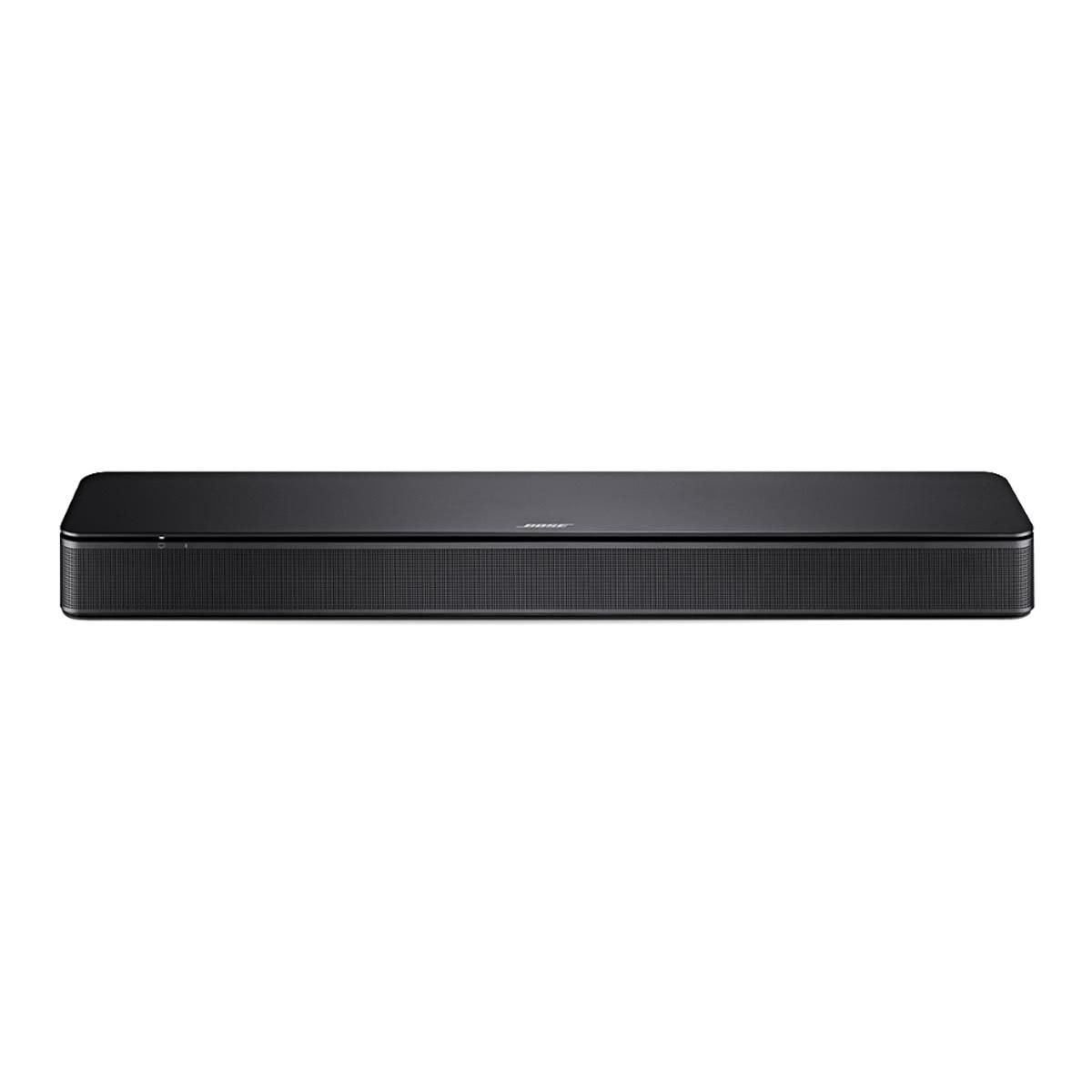
When your TV's built-in speakers sound like they're coming from inside a tin can, it's time to consider a soundbar. But the soundbar market is vast, stretching from basic $200 stereo bars to premium $2,000+ Dolby Atmos systems. Today we're comparing two products that represent opposite ends of this spectrum: the flagship Devialet Dione and the entry-level Bose TV Speaker.
Before diving into these specific products, let's establish what separates a basic soundbar from a premium one. The most fundamental difference is channel configuration—essentially, how many separate audio streams the soundbar can handle. A basic stereo soundbar plays two channels (left and right), while advanced systems can handle 5.1 or even 5.1.2 configurations. That last number refers to height channels for Dolby Atmos, which creates sound that appears to come from above you.
Bass performance is another critical factor. Many budget soundbars struggle with low frequencies, requiring a separate subwoofer to deliver meaningful impact. Premium models often integrate powerful bass drivers directly into the main unit. Finally, there's the processing power—advanced soundbars use sophisticated algorithms to create virtual surround sound, automatically tune themselves to your room, and enhance dialogue clarity.
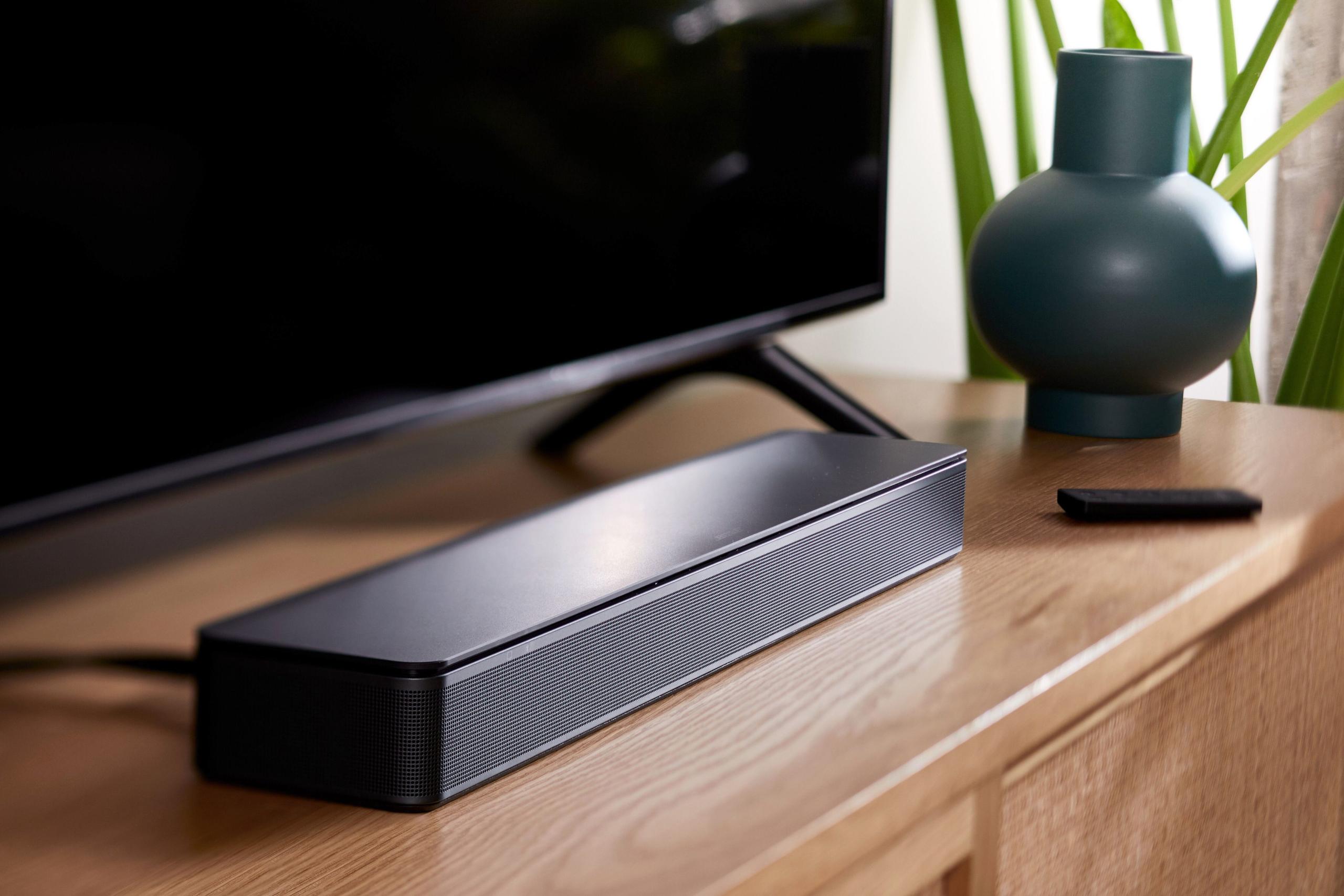
The Bose TV Speaker launched in 2018 as Bose's answer to the growing demand for simple, affordable TV audio solutions. At the time, most soundbars were either expensive or complicated—Bose aimed to change that with a plug-and-play design that anyone could set up in minutes.
The Devialet Dione, arriving three years later in 2021, represented something entirely different: Devialet's first venture into soundbars after establishing themselves as makers of ultra-premium speakers. They weren't interested in competing on price—instead, they wanted to prove that a single soundbar could deliver audiophile-quality sound without compromising.
Since these releases, the soundbar market has evolved significantly. Budget models now commonly include basic Dolby Atmos support, while premium models have pushed deeper into room correction and wireless connectivity. However, both products remain relevant in their respective categories.
The performance gap between these soundbars is immediately apparent when you understand their driver configurations. The Devialet Dione packs 17 individual drivers—that's more than some full home theater systems. Nine of these are full-range aluminum drivers handling midrange and treble, while eight dedicated subwoofers tackle the low end. Each driver gets its own amplification channel, allowing for precise control that's simply impossible with fewer, shared amplifiers.
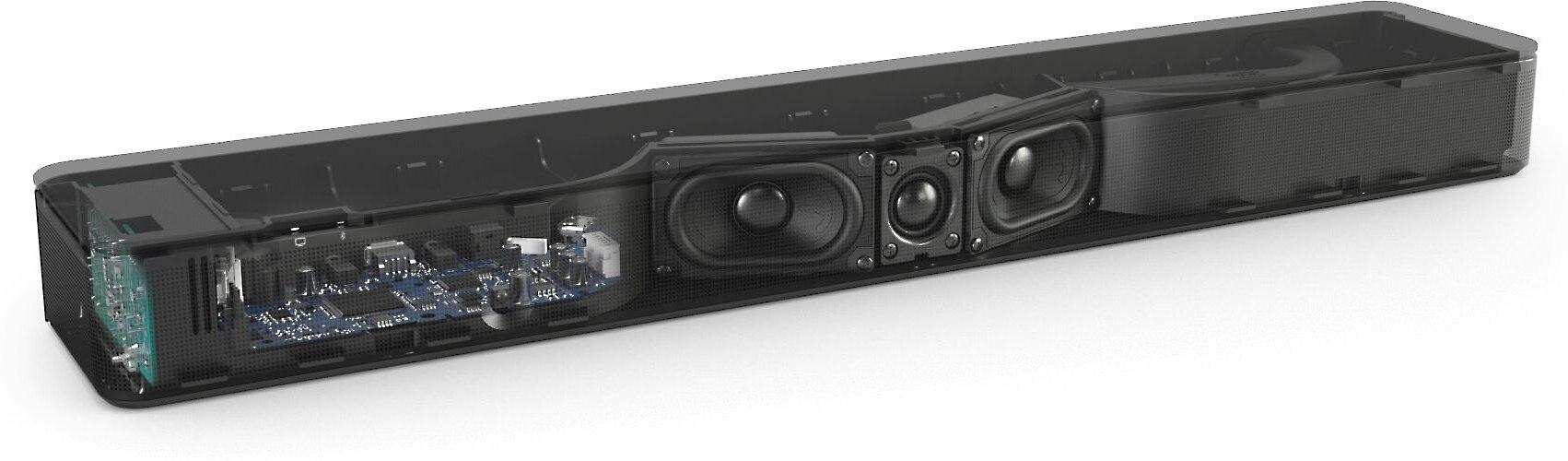
In contrast, the Bose TV Speaker uses just two full-range drivers with passive radiators (essentially speakers without magnets that vibrate in response to air movement from active drivers). This simpler approach keeps costs down but limits dynamic range and detail retrieval.
Based on our research into professional reviews and user feedback, the difference in clarity is substantial. The Devialet Dione delivers what reviewers consistently describe as "audiophile-grade" sound with exceptional tonal transparency—meaning you hear exactly what was recorded without the soundbar adding its own coloration. The Bose TV Speaker, while clear and balanced for its price range, simply can't match this level of precision.
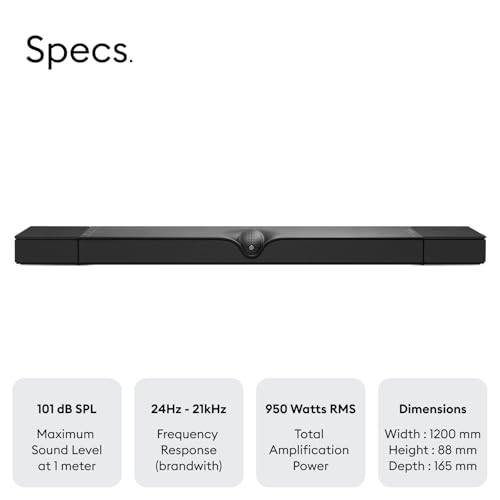
Here's where the architectural differences become most apparent. The Devialet Dione integrates eight long-throw subwoofers in what's called a "push-push" configuration—opposing drivers that cancel out cabinet vibrations while maximizing bass output. This allows it to reach down to 24Hz, which is genuinely deep bass territory typically requiring a separate subwoofer.
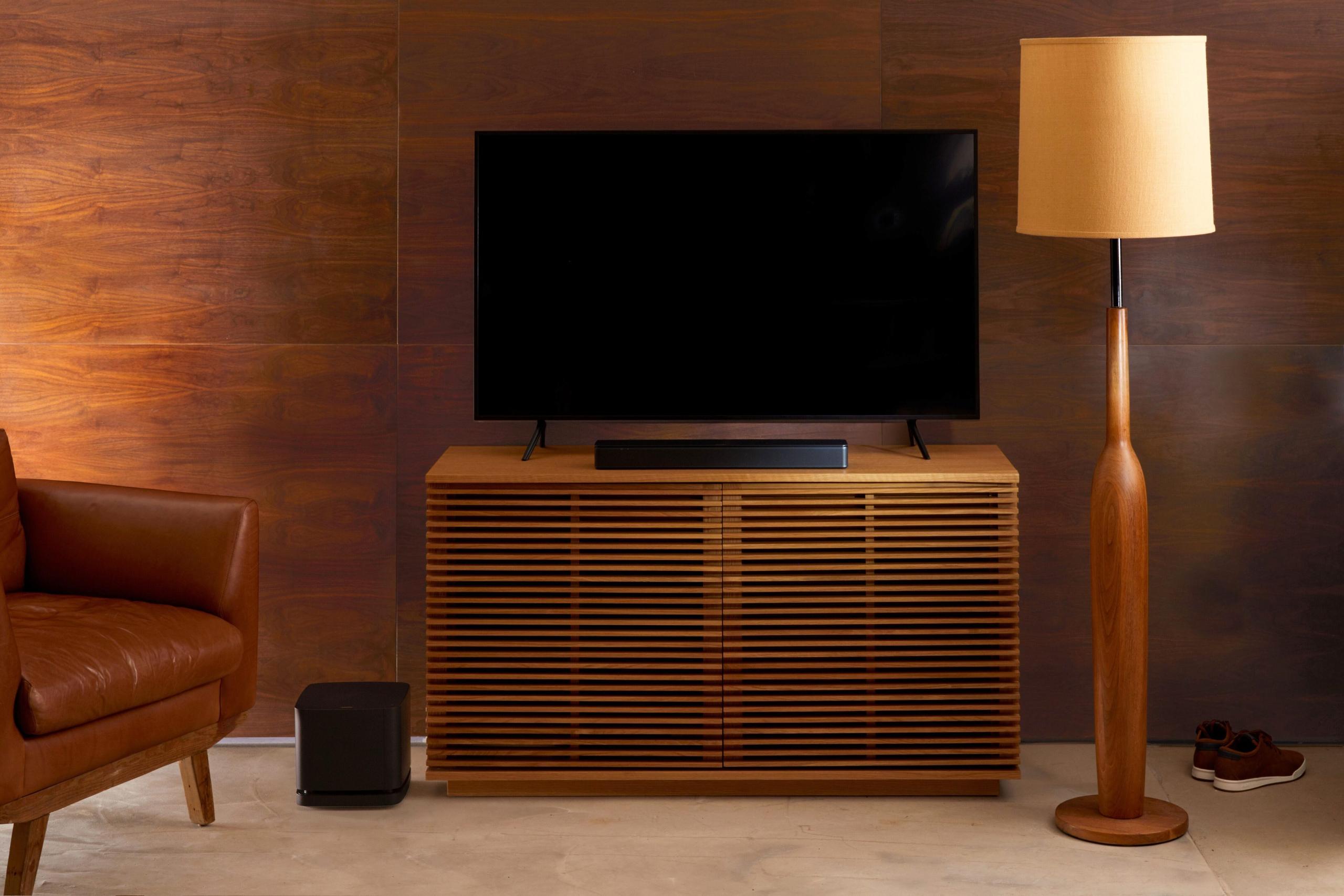
The Bose TV Speaker takes a different approach entirely. It relies on passive radiators and port tuning to enhance its modest bass capabilities, but physics ultimately limits what's possible from such a compact enclosure. For meaningful low-end impact, Bose expects you'll add their separate Bass Module, which connects via a 3.5mm cable.
In practical terms, this means the Devialet Dione delivers the kind of bass that makes action movies truly immersive—the rumble of explosions, the depth of musical scores, the impact that makes you feel like you're in a theater. The Bose TV Speaker provides adequate bass for dialogue and lighter content but will leave action movie fans wanting more without that additional subwoofer.
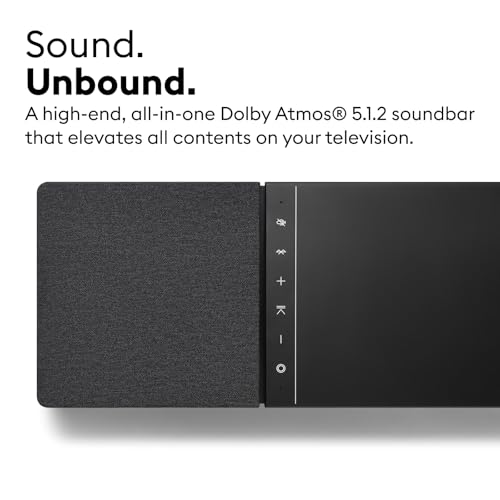
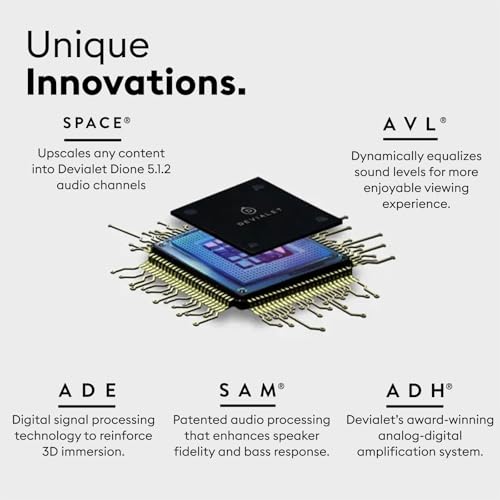
This is perhaps the most dramatic difference between these products. The Devialet Dione is a true 5.1.2 Dolby Atmos system, meaning it can create seven distinct audio channels including two height channels that make sound appear to come from above. It achieves this through a combination of direct-firing, side-firing, and up-firing drivers, plus sophisticated processing called ADE (Advanced Dimensional Experience) that uses beamforming to bounce sound off your walls and ceiling.
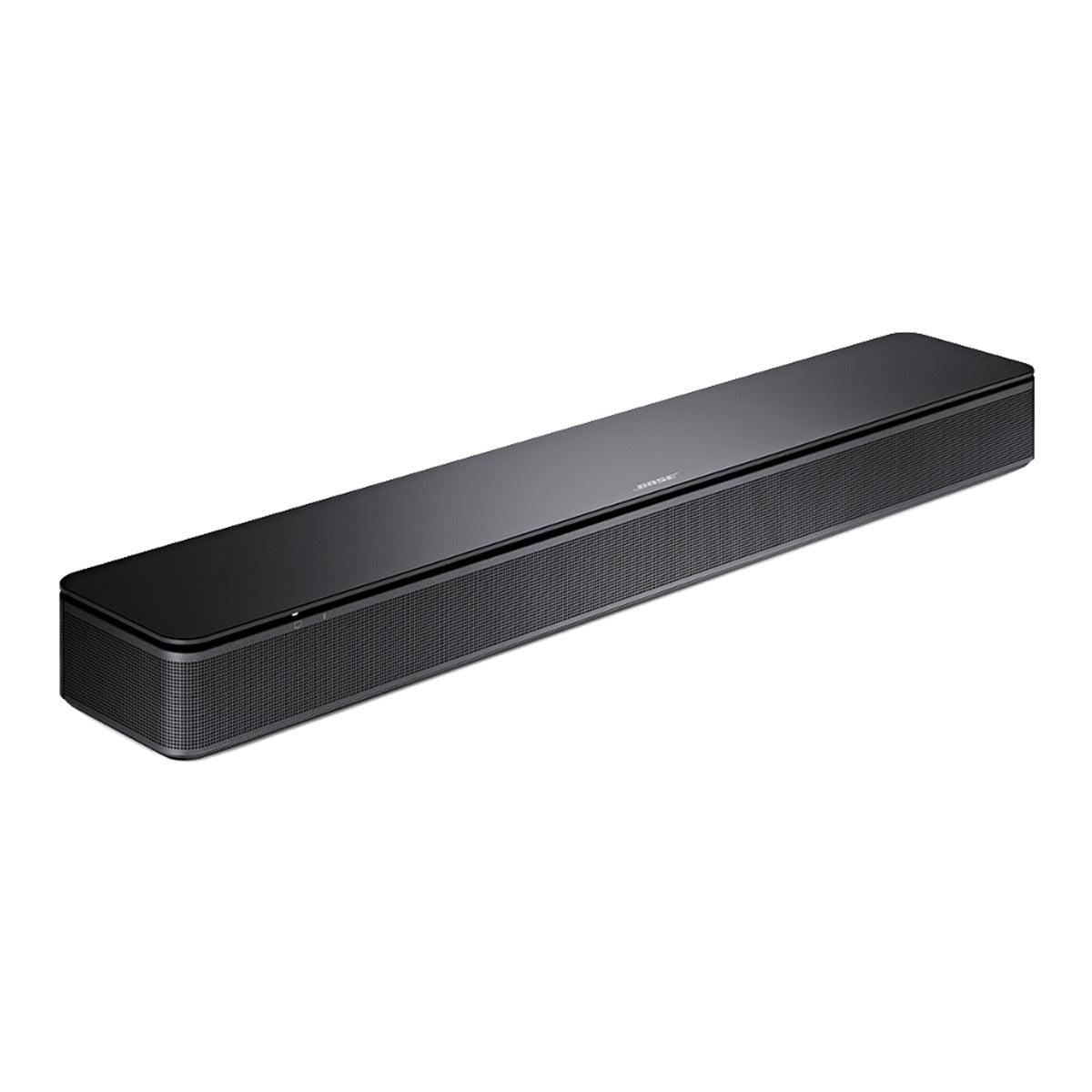
The Bose TV Speaker is strictly a 2.0 stereo system. There's no surround processing, no height channels, no Dolby Atmos support. What you get is left and right channels, period. For many viewers focused primarily on dialogue clarity for TV shows and news, this is perfectly adequate. But for movies and gaming, the difference in immersion is night and day.
The Devialet Dione's SPACE technology deserves special mention here. This proprietary processing can take regular stereo content and upmix it into a convincing 5.1.2 presentation, creating width, depth, and height from sources that weren't originally recorded that way. It's not magic—it can't create detail that wasn't there—but it does make stereo content significantly more engaging.
The Devialet Dione showcases several technologies you won't find in budget soundbars. SAM (Speaker Active Matching) continuously monitors each driver and prevents distortion by limiting excursion in real-time while maximizing performance. AVL (Adaptive Volume Level) analyzes content to boost dialogue and reduce excessive bass during speech-heavy scenes automatically.
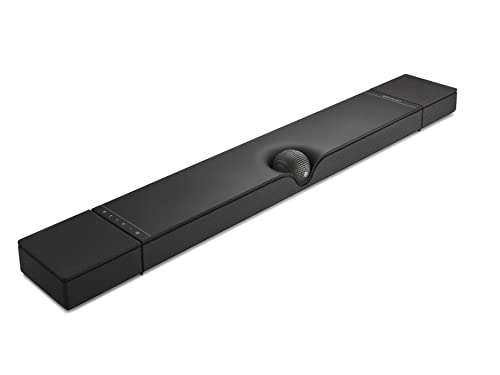
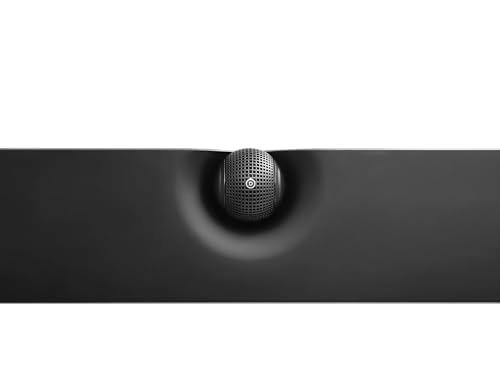
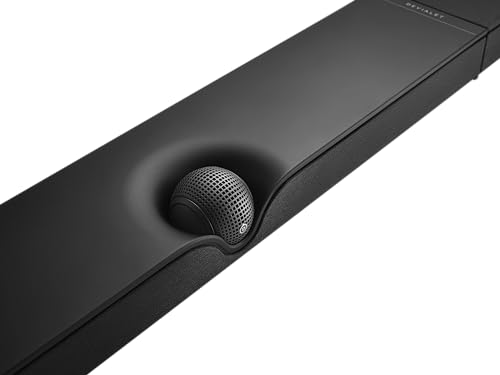
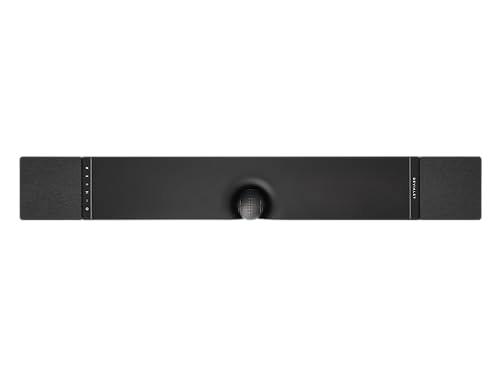
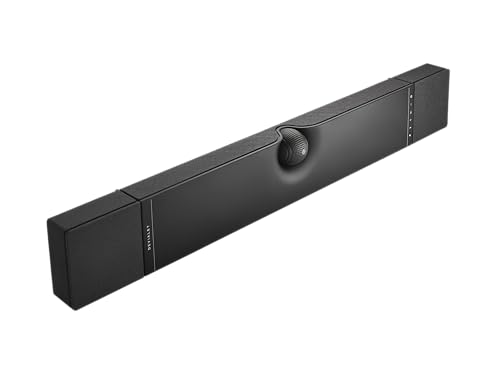
Perhaps most interesting is the rotating ORB center channel. This spherical speaker housing can mechanically rotate up to 90 degrees, ensuring it always faces the listening position whether you mount the soundbar on a wall or place it on furniture. It's both a functional innovation and a striking design element that makes the Devialet Dione instantly recognizable.
The Bose TV Speaker keeps things much simpler with basic dialogue enhancement and straightforward Bluetooth connectivity. There's no room correction, no automatic adaptation—just reliable, predictable performance that works the same way regardless of placement.
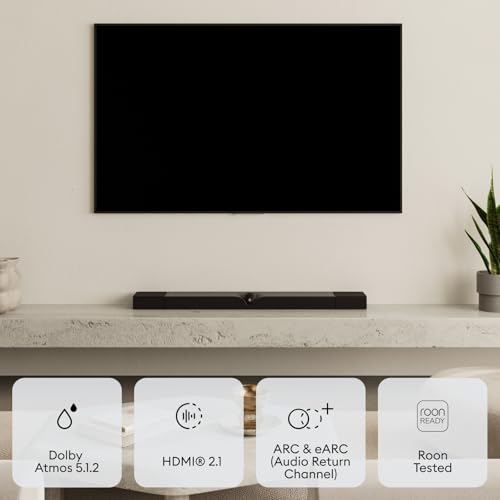
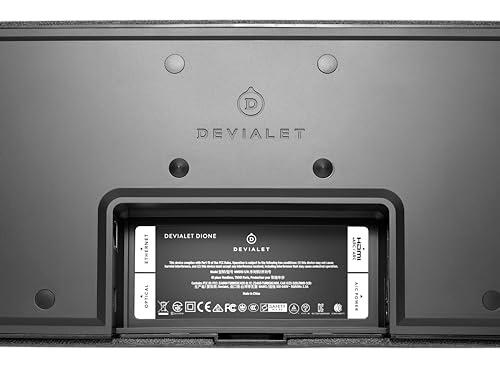
Here's where things get interesting from a value perspective. The Devialet Dione, despite its premium pricing, actually offers fewer connection options than the budget Bose TV Speaker. The Dione provides HDMI 2.1 eARC, optical digital, Bluetooth 5.0, AirPlay 2, and Spotify Connect. That covers most modern use cases but notably lacks any analog input.
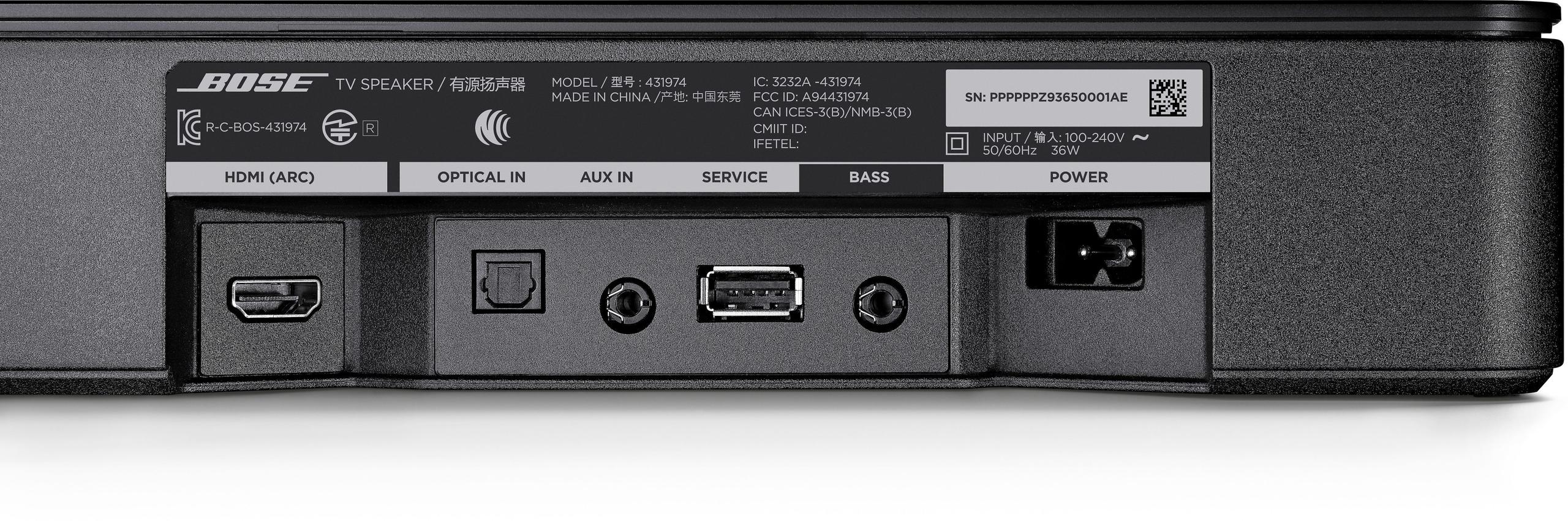
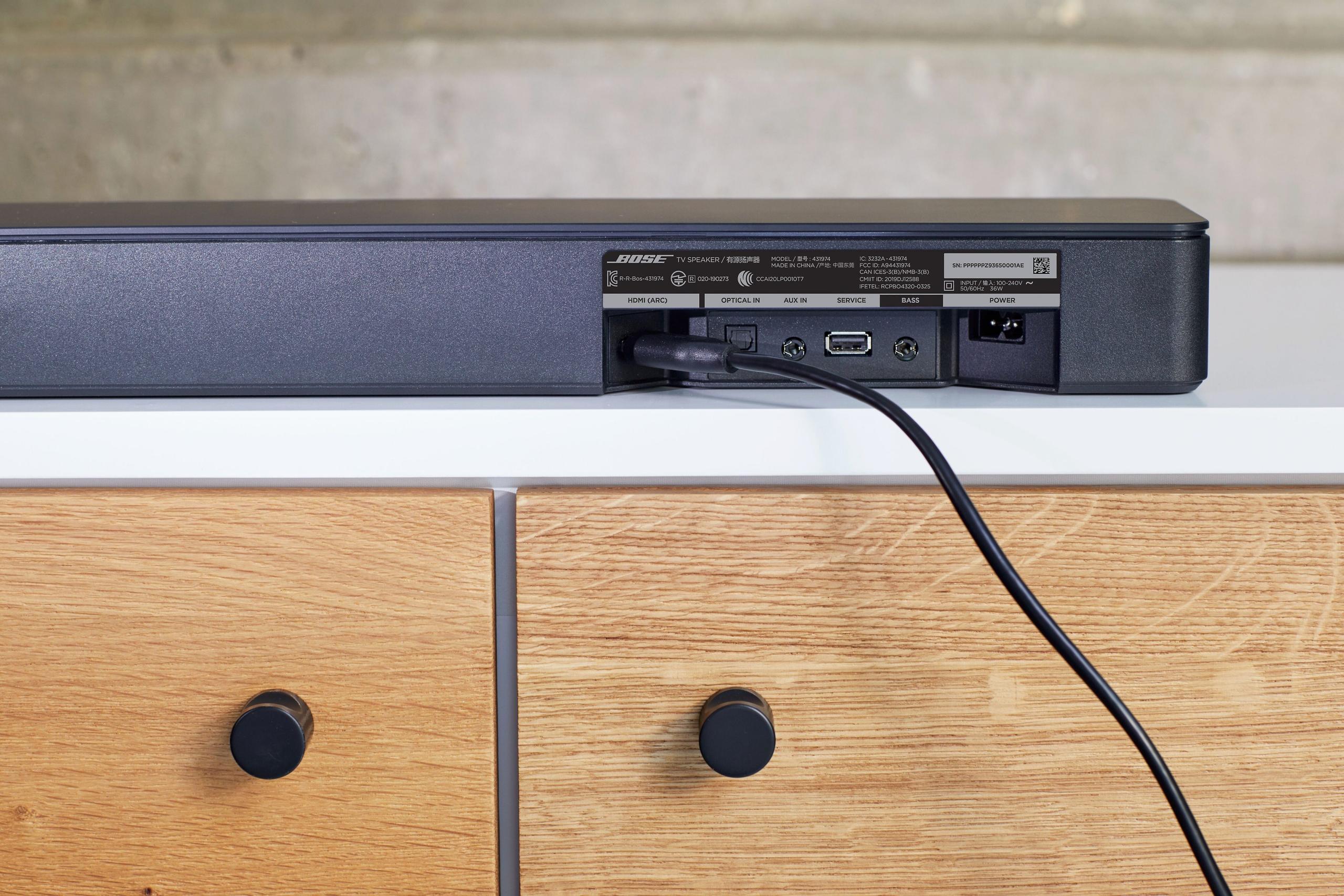
The Bose TV Speaker includes HDMI ARC, optical digital, Bluetooth, and crucially, a 3.5mm auxiliary input. This extra connectivity proves valuable for older devices or situations where wireless isn't practical. It also supports DTS audio formats, which the Devialet Dione surprisingly doesn't—a significant oversight at its price point that affects owners with DTS-encoded Blu-rays or streaming content.
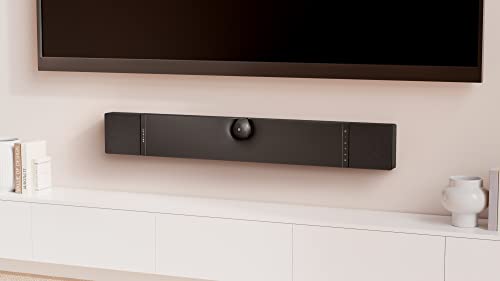
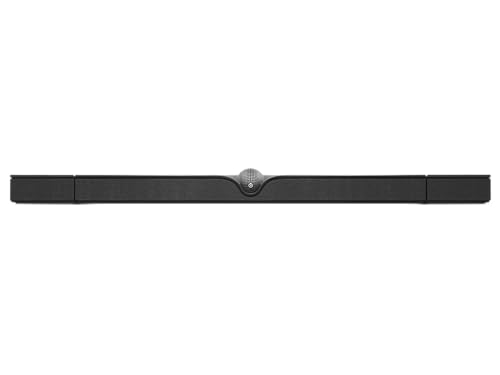
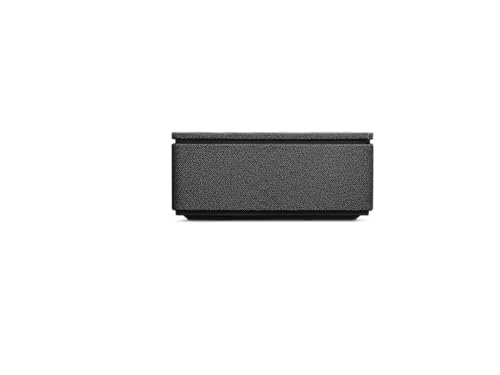
The physical presence of these soundbars reflects their different design philosophies entirely. The Devialet Dione makes a statement—it's nearly four feet wide and weighs 26 pounds, with a distinctive industrial aesthetic dominated by that rotating ORB sphere. You don't hide this soundbar; it becomes a focal point of your entertainment setup.
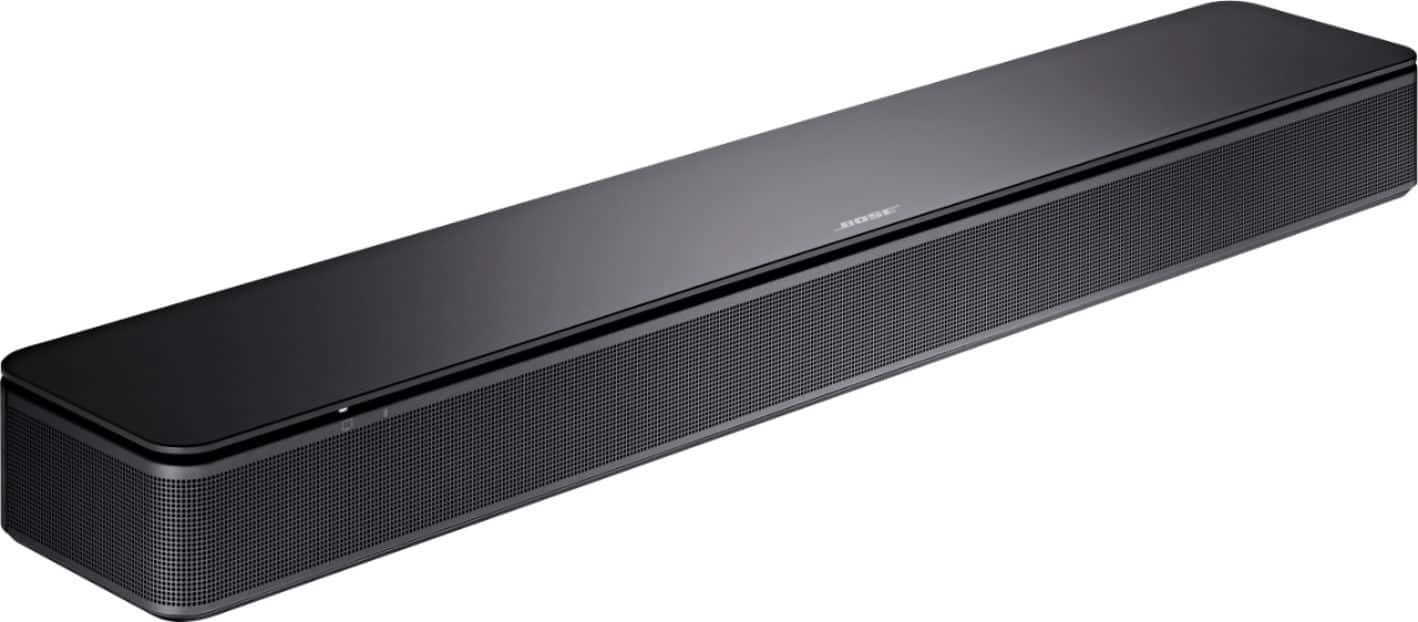
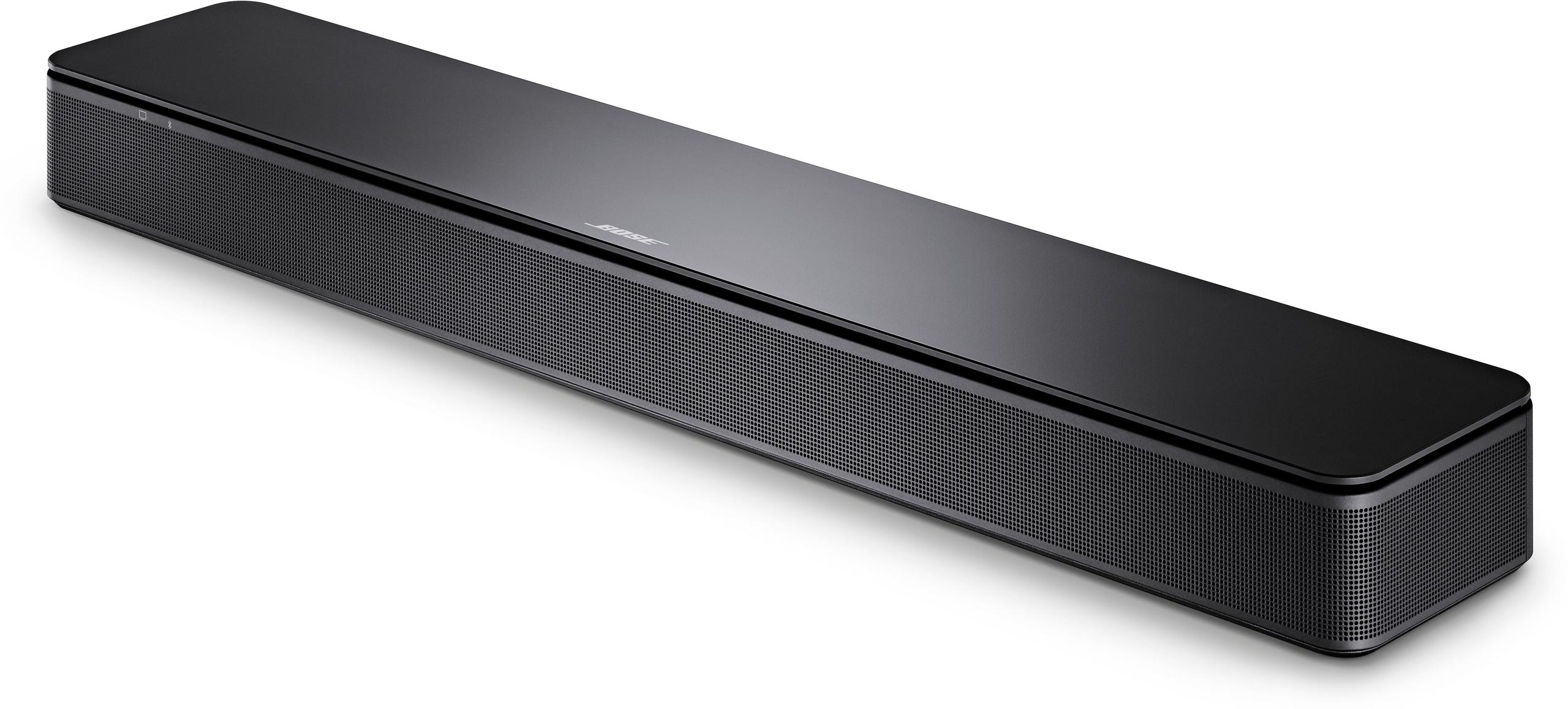
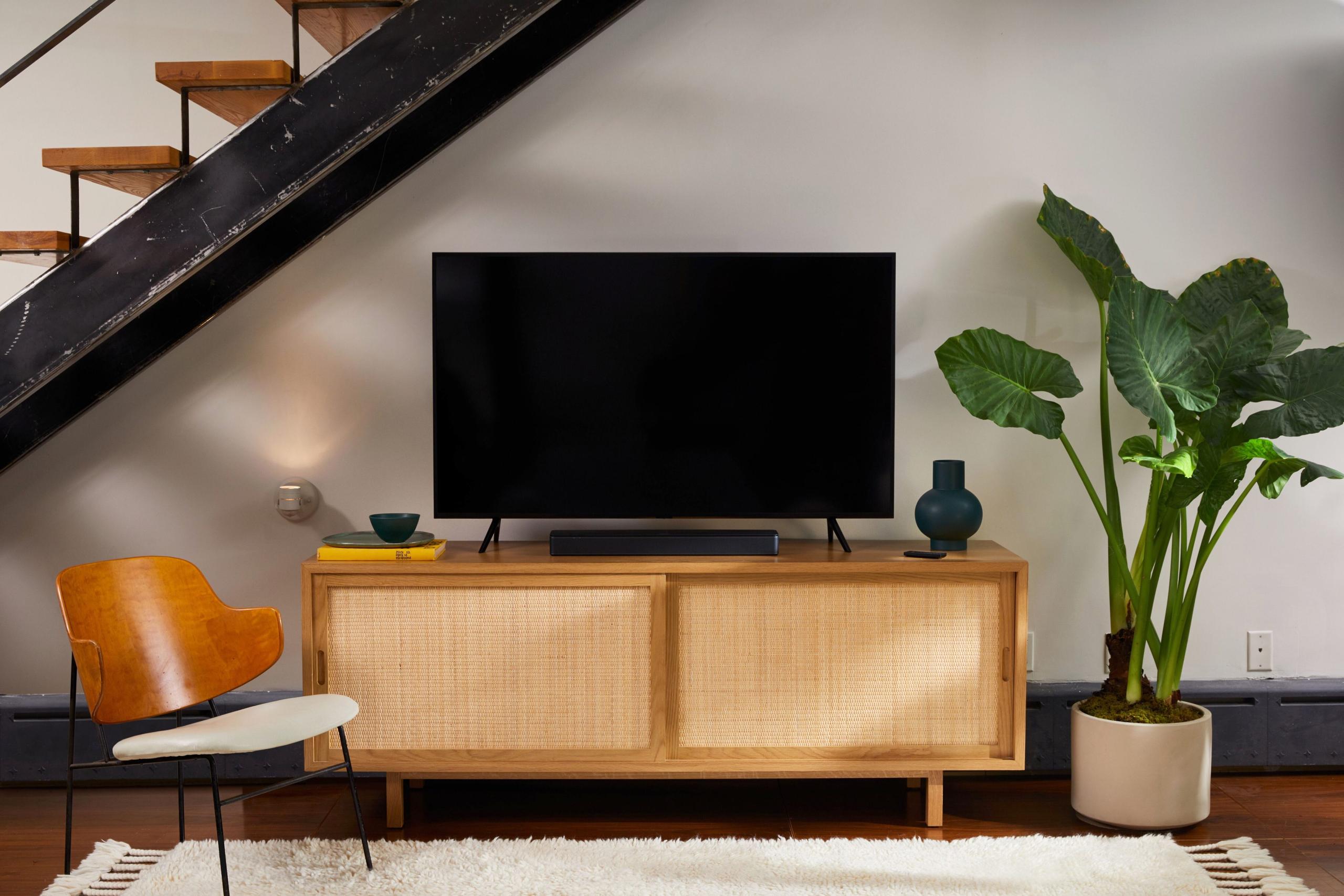
The Bose TV Speaker takes the opposite approach, designed to blend in rather than stand out. At just 23 inches wide and 4 pounds, it fits under most TVs without drawing attention to itself. For many living situations—apartments, bedrooms, or spaces where minimalism is preferred—this discretion is actually an advantage.
Both offer wall-mounting options, but the experience differs significantly. The Devialet Dione automatically detects its orientation and adjusts its acoustic output accordingly, while the Bose TV Speaker simply mounts like any basic soundbar.
At the time of writing, these products inhabit completely different price tiers, with the Devialet Dione costing roughly six to eight times more than the Bose TV Speaker. This isn't just premium pricing—it reflects fundamentally different approaches to audio engineering and target markets.
The Devialet Dione justifies its premium through genuine technical innovation, exceptional build quality, and performance that approaches what you'd expect from a multi-component home theater system. However, it's worth noting that at this price point, some competitors offer more connectivity options or expandability.
The Bose TV Speaker represents excellent value for buyers seeking meaningful TV audio improvement without major investment or complexity. While it can't match premium performance, it delivers on its core promise of clearer dialogue and better overall sound than TV speakers.
For dedicated home theater use, the choice becomes more nuanced. The Devialet Dione offers genuine cinematic performance with its true Dolby Atmos support, deep bass extension, and powerful amplification that can fill large rooms. It's particularly impressive for action movies, where its bass performance and spatial audio create genuine immersion.
However, serious home theater enthusiasts might find its lack of expandability limiting. You can't add wireless rear speakers or upgrade the subwoofer—what you buy is what you get forever. Some might prefer a more modular approach that allows system growth over time.
The Bose TV Speaker works well for casual movie watching in smaller spaces, especially when paired with the optional Bass Module. It won't provide the visceral impact of premium systems, but it makes dialogue clear and adds enough enhancement to improve the viewing experience meaningfully.
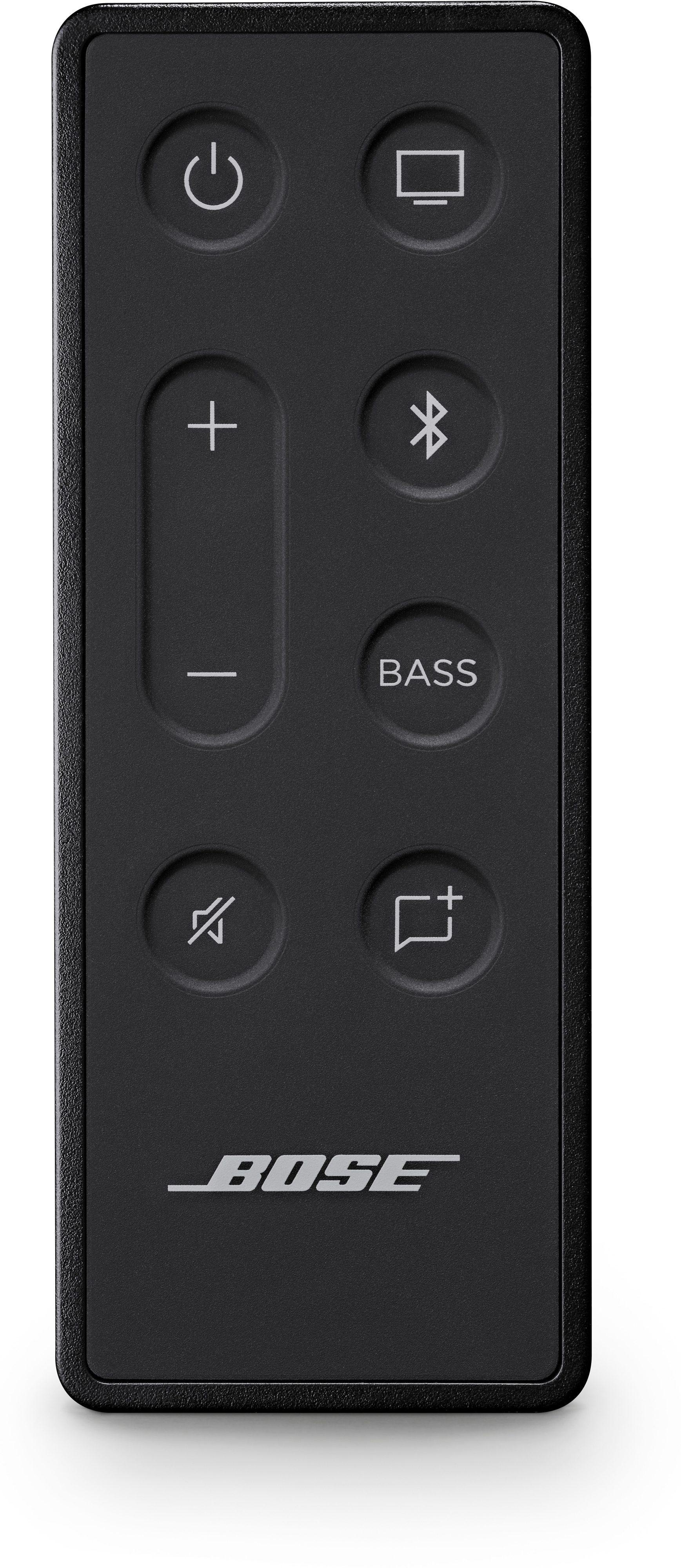
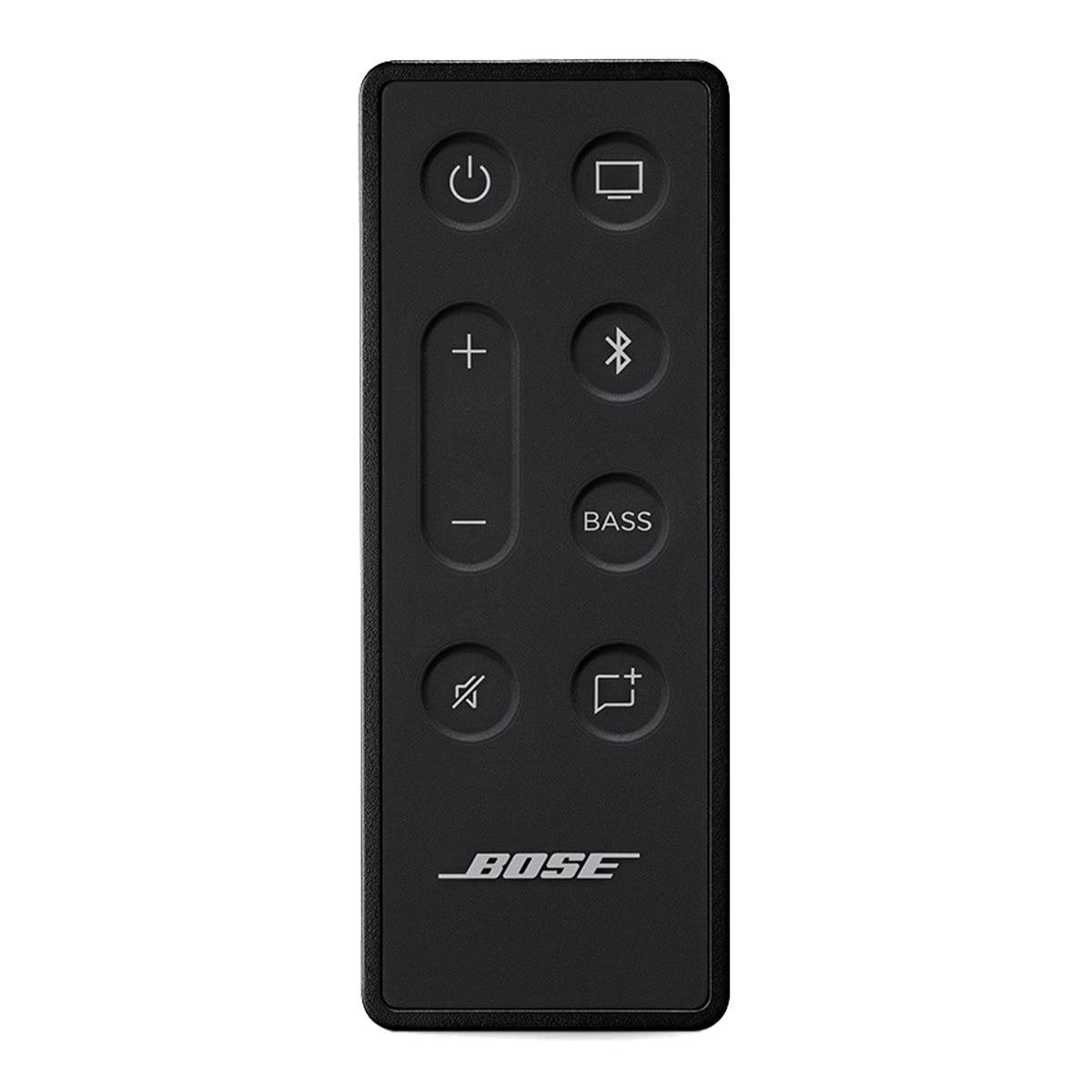
The Bose TV Speaker wins decisively on simplicity. Connect one cable, power it on, and you're done. It includes a physical remote and works immediately without any app downloads or calibration procedures. For users who want better TV sound without complications, this straightforward approach is genuinely valuable.
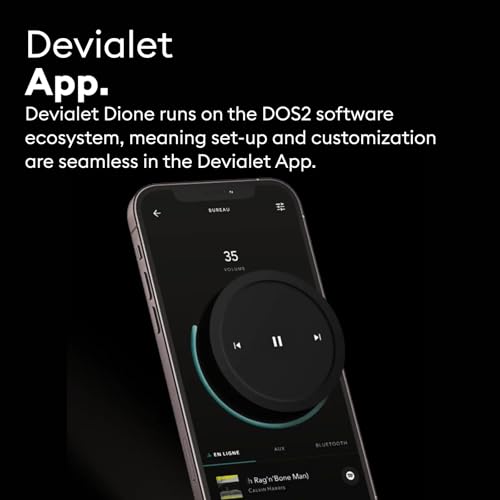
The Devialet Dione requires more involvement but rewards it with superior performance. Initial setup involves the Devialet app, automatic room calibration, and some tweaking of settings. There's no physical remote—you control it through your TV remote (via CEC) or the smartphone app. While this keeps the aesthetic clean, some users prefer dedicated physical controls.
The Devialet Dione makes sense for listeners who prioritize audio quality above all else and have the budget to match their enthusiasm. It's ideal for large living rooms where its powerful output and wide soundstage can be fully appreciated. Music lovers will particularly appreciate its ability to handle both cinematic content and stereo music with equal competence.
It's also perfect for minimalists who want flagship performance without multiple components cluttering their entertainment center. The all-in-one design eliminates the complexity of matching components while delivering genuine high-end performance.
The Bose TV Speaker serves a different but equally valid purpose. It's perfect for bedrooms, apartments, or any situation where budget, space, or simplicity are primary concerns. It's also ideal for users who need that 3.5mm input for older devices or who prefer having a physical remote.
Renters or anyone in temporary living situations benefit from its lighter investment and easier portability. The option to add a subwoofer later provides an upgrade path that doesn't require replacing the entire system.
These soundbars represent different philosophies rather than direct competitors. The Devialet Dione pushes the boundaries of what's possible from a single-unit soundbar, delivering performance that justifies its premium pricing for those who value exceptional audio quality. The Bose TV Speaker focuses on solving the fundamental problem of poor TV audio in the most accessible way possible.
Neither is objectively "better"—they're optimized for different needs, budgets, and listening priorities. The key is honestly assessing what you need from a soundbar and choosing accordingly. If audio quality is your primary concern and budget is secondary, the Devialet Dione delivers transformational performance. If you want meaningful improvement without major investment or complexity, the Bose TV Speaker provides exactly that.
The soundbar market offers options for every need and budget. Understanding where your priorities lie—and what trade-offs you're willing to accept—will guide you to the right choice for your specific situation.
| Devialet Dione Soundbar | Bose TV Speaker Soundbar |
|---|---|
| Audio Channels - Determines surround sound capability and immersion | |
| True 5.1.2 Dolby Atmos with height channels | 2.0 stereo only (no surround or Atmos) |
| Driver Count - More drivers typically mean better sound separation and power | |
| 17 total drivers (9 full-range + 8 subwoofers) | 2 full-range drivers with passive radiators |
| Bass Extension - Lower numbers mean deeper, more impactful bass | |
| 24Hz (theater-quality bass, no subwoofer needed) | Limited bass extension (requires separate Bass Module for impact) |
| Total Power Output - Higher wattage fills larger rooms and provides more dynamic range | |
| 950W RMS (can reach 101dB SPL) | Modest power output (adequate for small-medium rooms) |
| Size and Weight - Consider your available space and mounting requirements | |
| 47" wide, 26 lbs (premium build, requires substantial space) | 23" wide, 4 lbs (compact, fits under most TVs) |
| Advanced Processing - Smart features that adapt sound to your room and content | |
| Room calibration, adaptive volume, spatial upmixing, rotating center channel | Basic dialogue enhancement only |
| Connectivity Options - More inputs provide flexibility for different devices | |
| HDMI 2.1 eARC, optical, Bluetooth 5.0, AirPlay 2, Spotify Connect | HDMI ARC, optical, Bluetooth, 3.5mm aux input |
| Audio Format Support - Compatibility with different movie and music sources | |
| Dolby Atmos, Dolby Digital (no DTS support) | Dolby Digital, DTS formats, PCM |
| Setup Complexity - Consider your comfort level with technology | |
| App-based setup with room calibration (no physical remote) | Plug-and-play with included remote |
| Expandability - Future upgrade options | |
| All-in-one design (cannot add components) | Can add optional Bass Module via wired connection |
| Price Category - Budget tier determines feature expectations | |
| Premium flagship pricing (high-end market) | Budget-friendly entry-level pricing |
The Devialet Dione Soundbar is significantly better for movies and home theater use. It features true 5.1.2 Dolby Atmos with height channels that create immersive surround sound, while the Bose TV Speaker Soundbar only offers basic 2.0 stereo. The Devialet Dione also delivers theater-quality bass down to 24Hz without needing a separate subwoofer, making action movies much more impactful.
The Devialet Dione Soundbar includes 8 built-in subwoofers and doesn't require any additional bass module. The Bose TV Speaker Soundbar has limited bass on its own and benefits significantly from adding Bose's optional Bass Module for meaningful low-frequency impact during movies or music.
The Bose TV Speaker Soundbar is much easier to set up with simple plug-and-play installation and an included physical remote. The Devialet Dione Soundbar requires app-based setup, room calibration, and relies on your TV remote or smartphone app for control, making it more complex but ultimately more optimized for your specific room.
The Devialet Dione Soundbar delivers audiophile-grade sound quality with 17 individual drivers and advanced processing technologies, while the Bose TV Speaker provides clear, balanced audio that's good for TV dialogue but lacks the detail and dynamic range of premium systems. The difference in clarity and precision is substantial.
The Devialet Dione Soundbar excels at music with AirPlay 2, Spotify Connect, and spatial processing that can enhance stereo content. The Bose TV Speaker Soundbar offers basic Bluetooth streaming and handles music adequately for casual listening, but the Devialet Dione provides a much more engaging musical experience.
Yes, both soundbars can be wall-mounted. The Devialet Dione Soundbar features a unique rotating center channel that automatically adjusts when wall-mounted, while the Bose TV Speaker Soundbar offers standard wall-mounting with optional brackets. The Devialet Dione is much larger and heavier, requiring more robust mounting.
The Bose TV Speaker Soundbar is designed for small spaces at just 23 inches wide and 4 pounds, fitting easily under most TVs. The Devialet Dione Soundbar is nearly 47 inches wide and weighs 26 pounds, requiring substantial space and becoming a focal point rather than blending in.
Only the Devialet Dione Soundbar supports true Dolby Atmos with dedicated height channels for three-dimensional sound. The Bose TV Speaker Soundbar does not support Dolby Atmos or any surround sound formats, providing only basic stereo audio.
This depends on your budget and needs. The Bose TV Speaker Soundbar offers excellent value for basic TV audio improvement at an entry-level price point. The Devialet Dione Soundbar provides exceptional performance that justifies its premium pricing for those prioritizing audio quality, but represents a significant investment.
The Devialet Dione Soundbar offers HDMI 2.1 eARC, optical, Bluetooth 5.0, AirPlay 2, and Spotify Connect but lacks analog inputs. The Bose TV Speaker Soundbar provides HDMI ARC, optical, Bluetooth, and a 3.5mm auxiliary input, offering more connection flexibility for older devices.
The Devialet Dione Soundbar is an all-in-one system that cannot be expanded with additional speakers or subwoofers. The Bose TV Speaker Soundbar can be enhanced by adding Bose's Bass Module via a wired connection, providing an upgrade path for better bass performance.
The Devialet Dione Soundbar is specifically designed for large rooms with 950W of power and the ability to reach 101dB SPL, easily filling spacious areas with immersive sound. The Bose TV Speaker works well in small to medium rooms but lacks the power and bass extension needed for large spaces.
We've done our best to create useful and informative comparisons to help you decide what product to buy. Our research uses advanced automated methods to create this comparison and perfection is not possible - please contact us for corrections or questions. These are the sites we've researched in the creation of this article: rtings.com - crutchfield.com - devialet.com - ooberpad.com - bhphotovideo.com - kjwestone.co.uk - whathifi.com - devialet.com - devialet.com - sound-advice.online - kjwestone.co.uk - device.report - tmraudio.com - devialet.com - devialetchat.com - projectorscreen.com - soundandvision.com - bestbuy.com - youtube.com - av.com - audiofi.ca - devialet.com - blog.son-video.com - audioconnection.com.au - baybloorradio.com - cdn.abicart.com - smarthomesounds.co.uk - e-piphany.co.za - cloneyaudio.com - devialet.com - catalog.asbis.ee - av.com - soundandvision.com - youtube.com - comparisontabl.es - bestbuy.com - projectorscreen.com - forums.audioholics.com - digitaltrends.com - abt.com - crutchfield.com - staples.com - bestbuy.com - pcrichard.com - visions.ca - bose.com - assets.bose.com

Privacy Policy
Terms and Conditions - Affiliate Policy
Home Security
© Copyright 2008-2026.
11816 Inwood Rd #1211, Dallas, TX 75244