

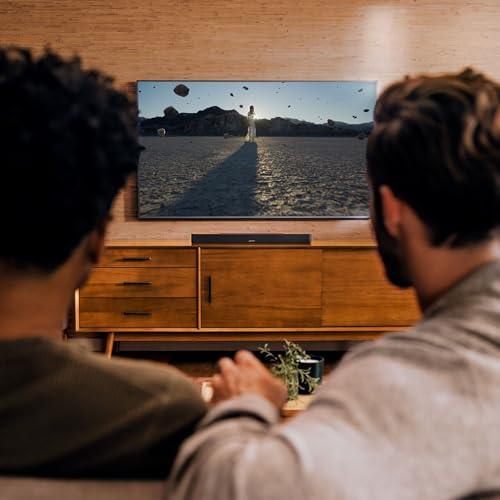

If you've ever struggled to hear dialogue while watching TV or found yourself constantly adjusting the volume throughout a movie, you're not alone. Modern TVs, despite their impressive picture quality, often suffer from terrible built-in speakers. They're thin, tinny, and completely inadequate for delivering the rich audio experience that modern content deserves. This is where soundbars come in – they're the most practical solution for dramatically improving your TV's audio without the complexity and cost of a full surround sound system.
Bose has been a leader in audio technology for decades, and their soundbar lineup reflects this expertise. Today, we're comparing two very different approaches to solving your TV audio problems: the feature-rich Bose Smart Soundbar and the streamlined Bose TV Speaker. These products represent different philosophies – one prioritizes advanced features and immersive sound, while the other focuses on simplicity and value. Understanding which approach suits your needs will help you make the right choice for your home entertainment setup.
Before diving into the specifics, it's important to understand what separates good soundbars from great ones. The most critical factors are dialogue clarity, soundstage width (how spread out the audio feels), bass response, and overall tonal balance. A quality soundbar should make speech clearly audible without overwhelming other sounds, create a sense that audio is coming from beyond the physical boundaries of the speaker, and provide enough low-frequency response to add weight to explosions, music, and ambient sounds.
Secondary considerations include connectivity options, smart features, and expandability. Modern soundbars often serve double duty as both TV speakers and music streaming devices, so wireless connectivity and voice control capabilities have become increasingly important. The ability to add a subwoofer or rear speakers later can also extend a soundbar's usefulness as your needs evolve.
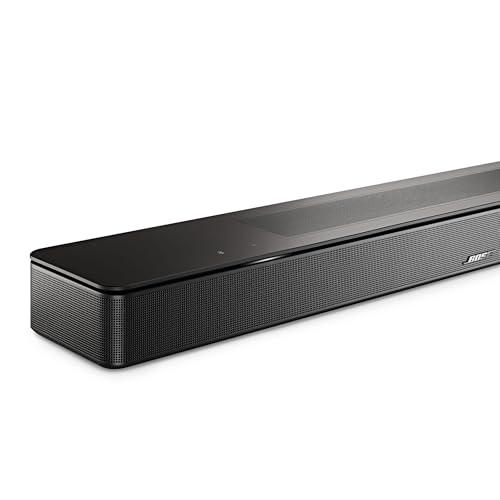
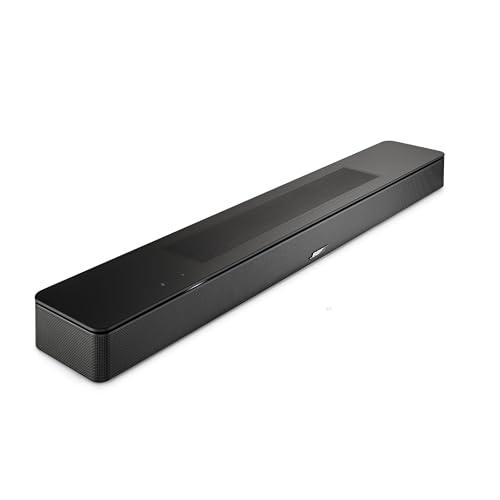
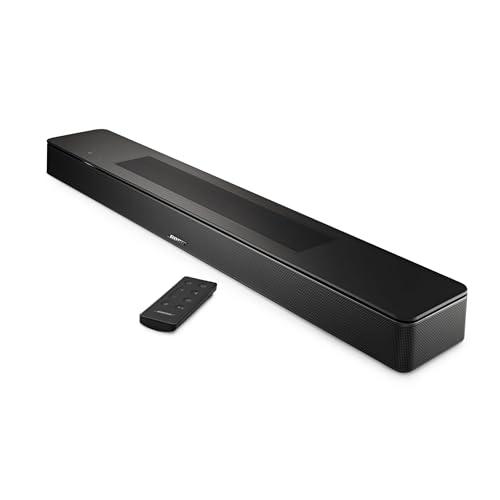
The Bose Smart Soundbar, released in 2024, represents the company's mid-tier offering that packs premium features into a compact form factor. At roughly twice the price of its simpler sibling, it includes Dolby Atmos support, built-in voice assistants, and extensive wireless connectivity options. This soundbar measures about 27 inches wide and includes five speakers plus a dedicated center tweeter, along with specialized up-firing drivers that bounce sound off your ceiling to create overhead effects.
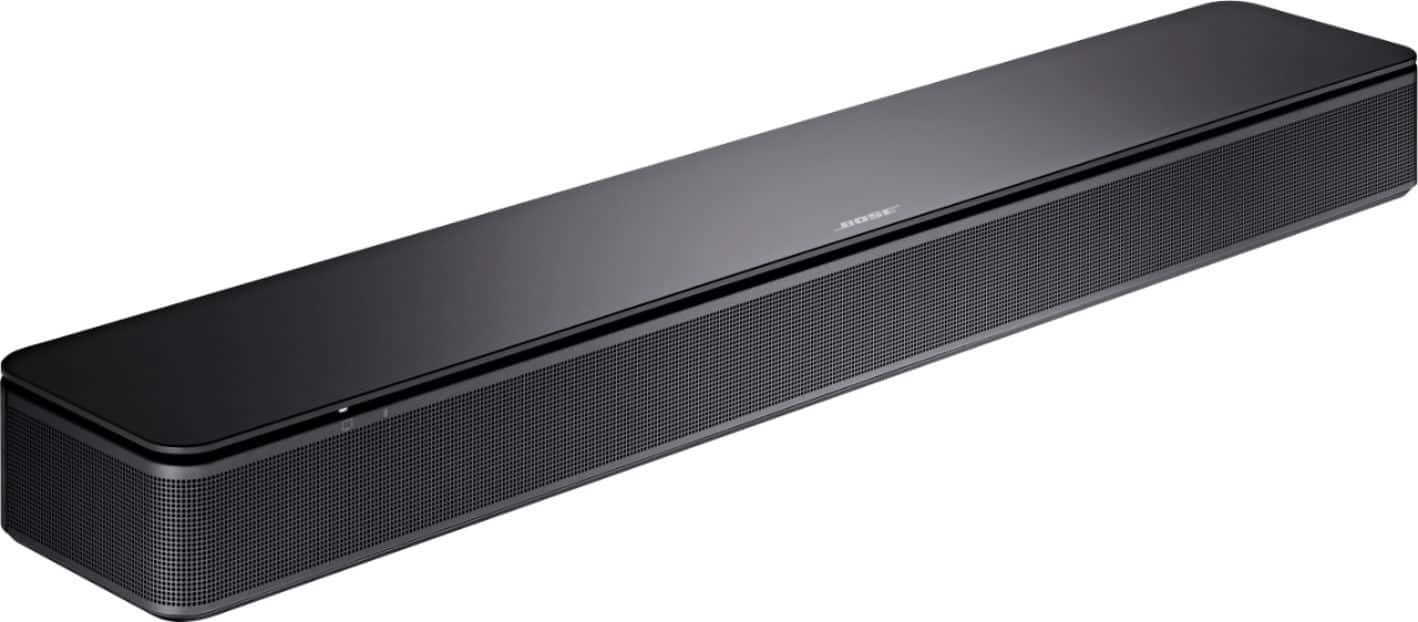
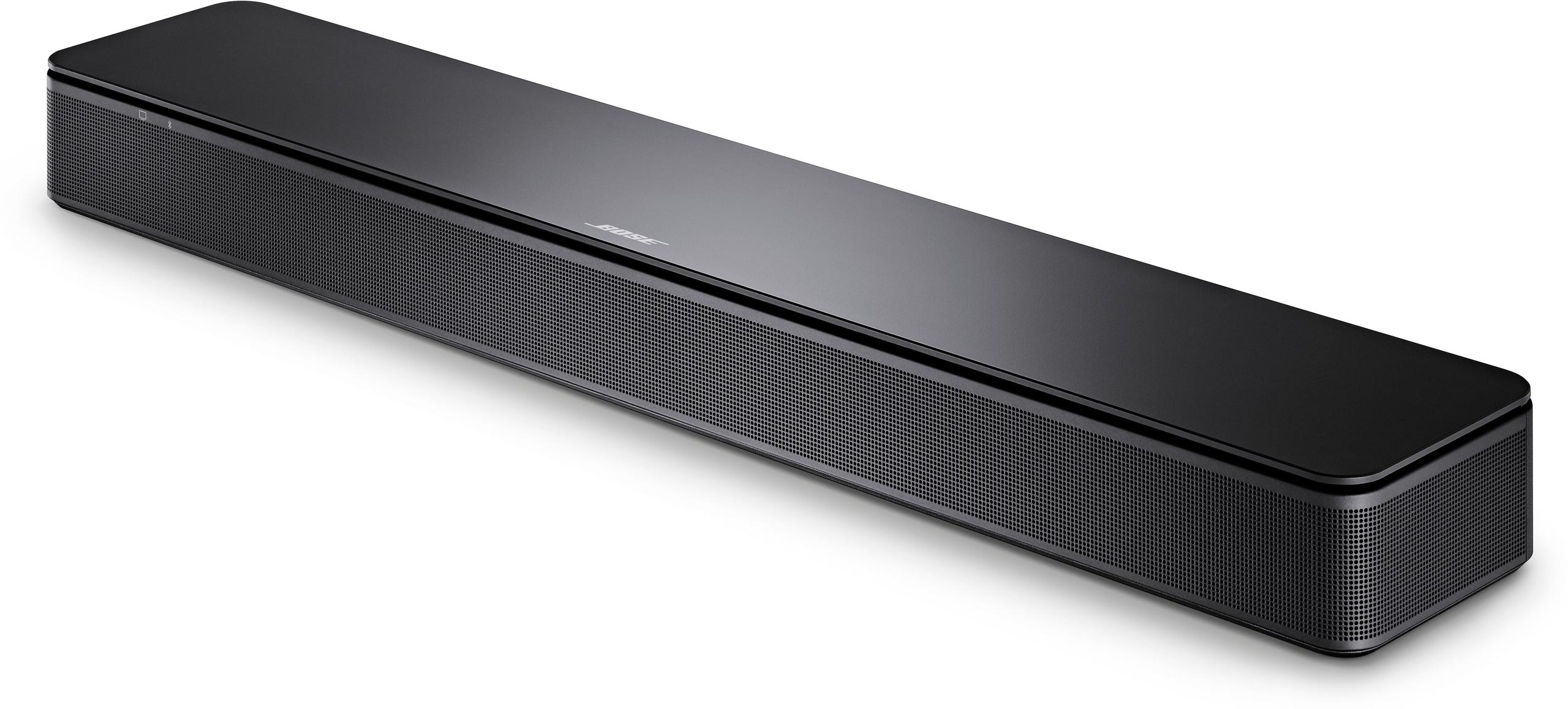
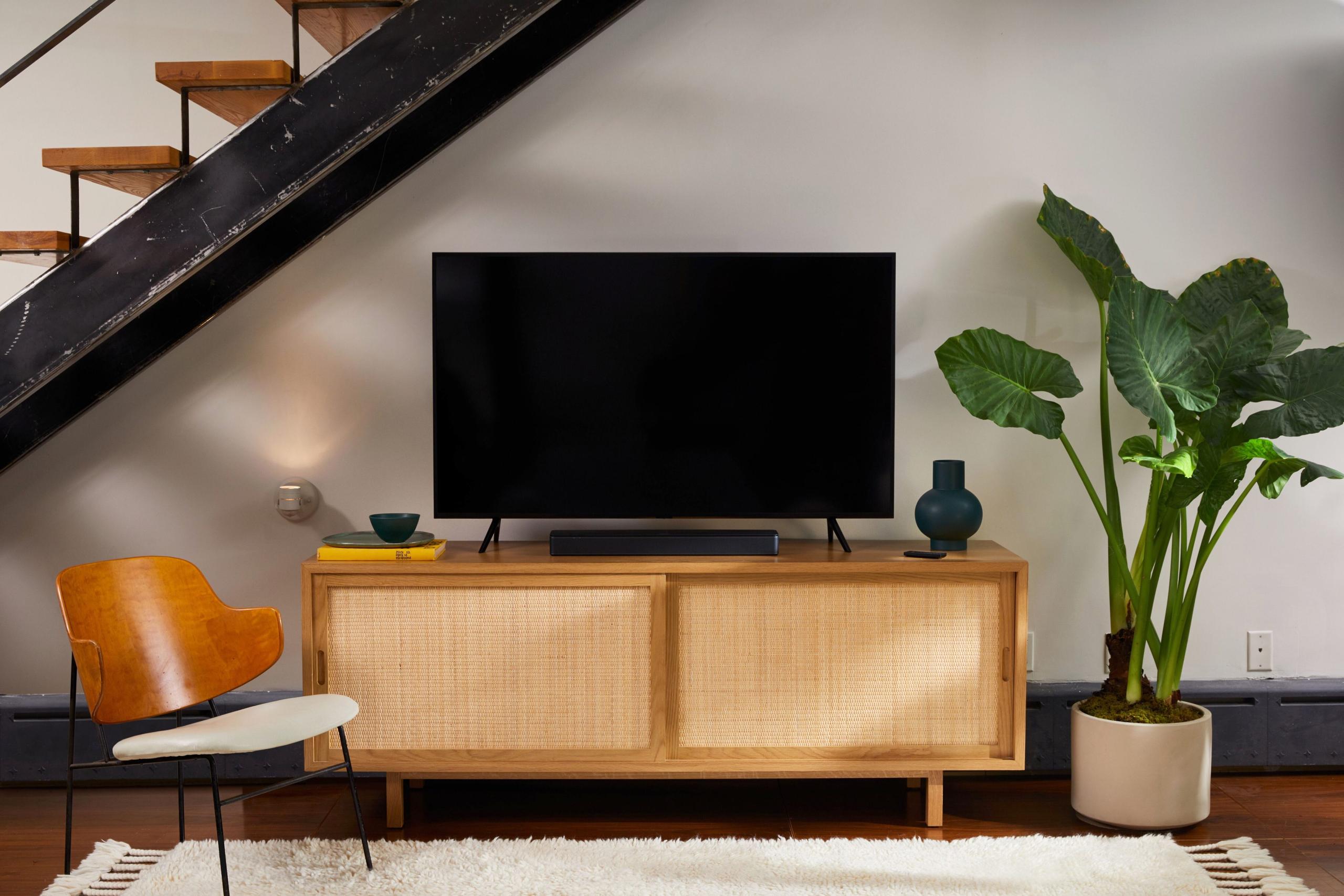
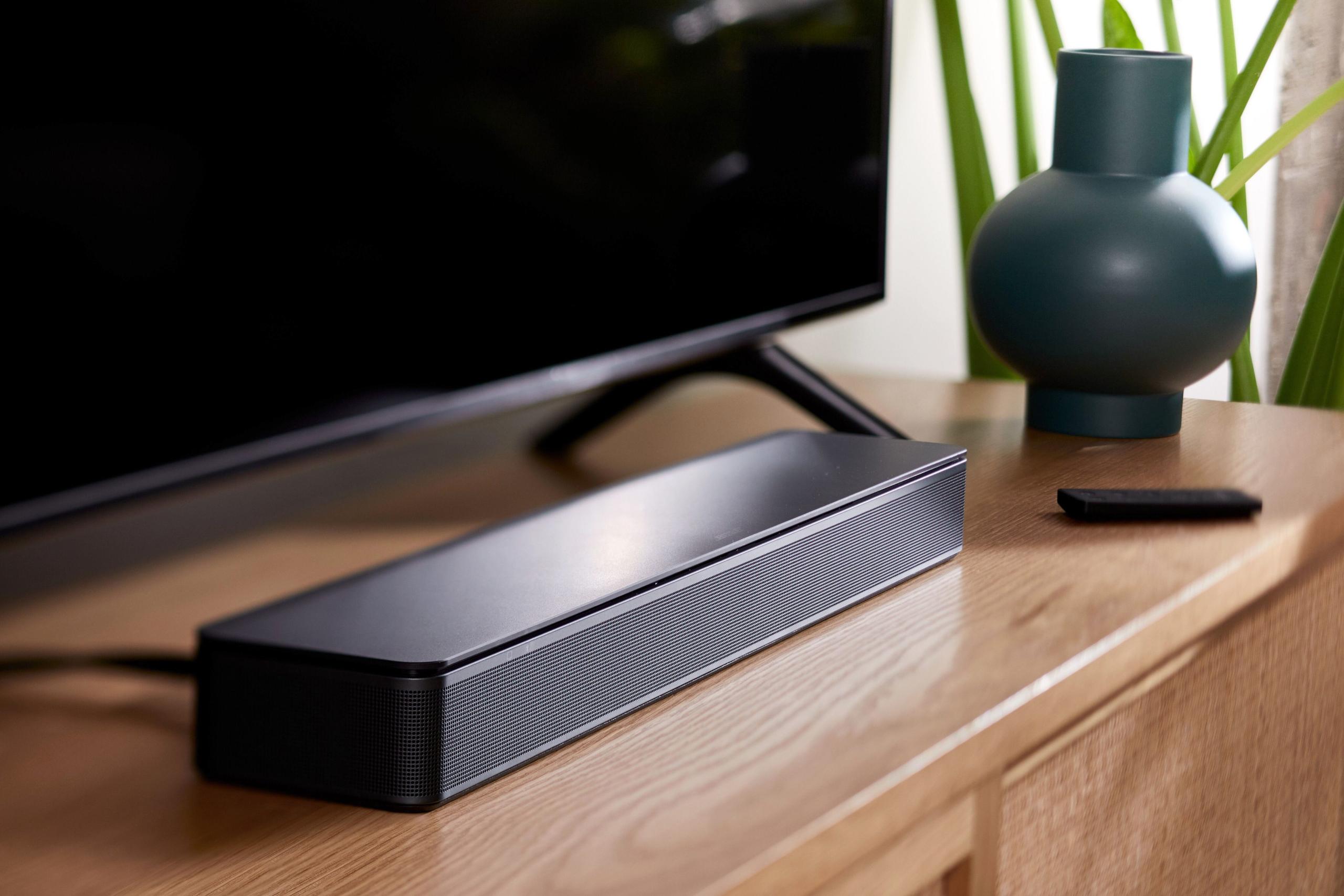
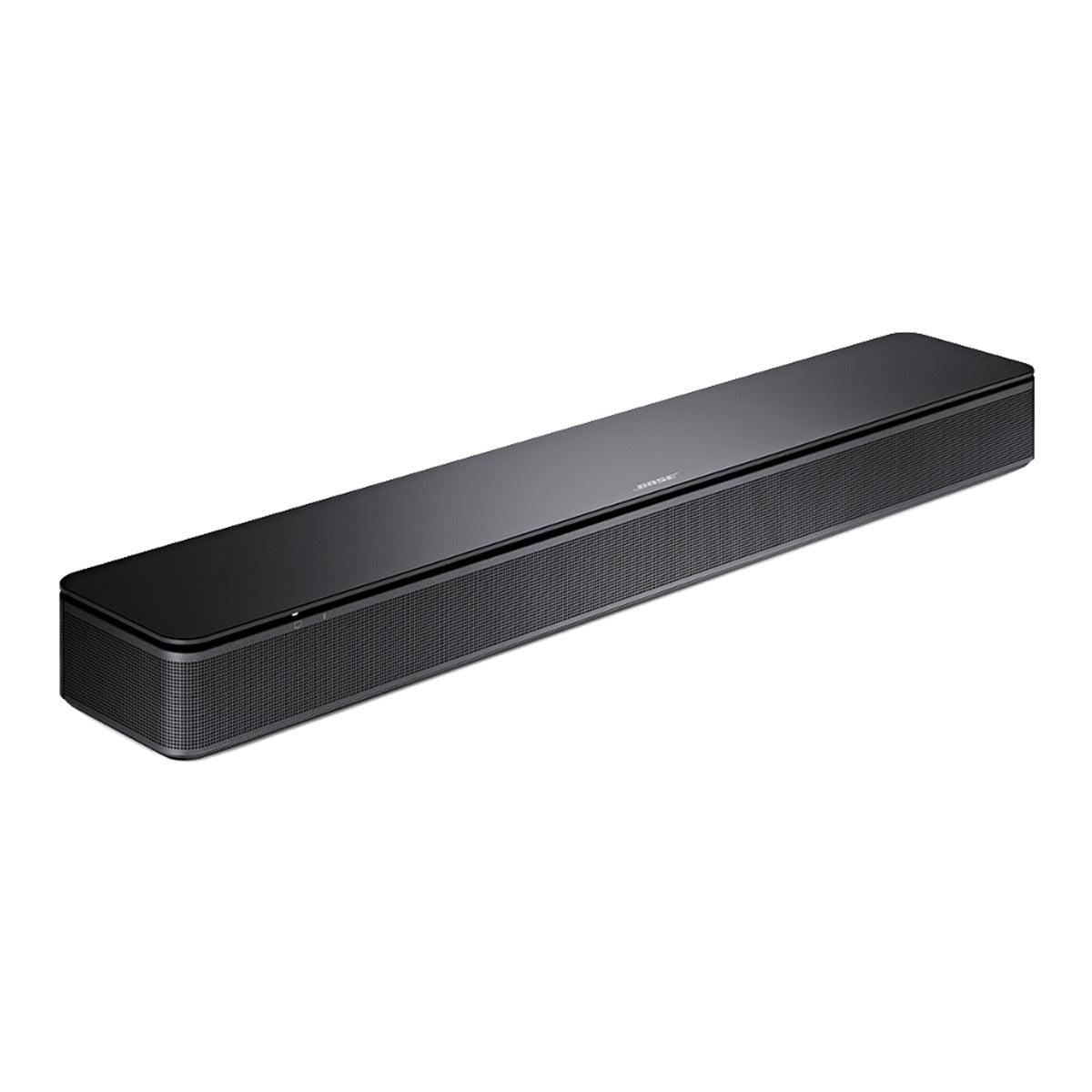
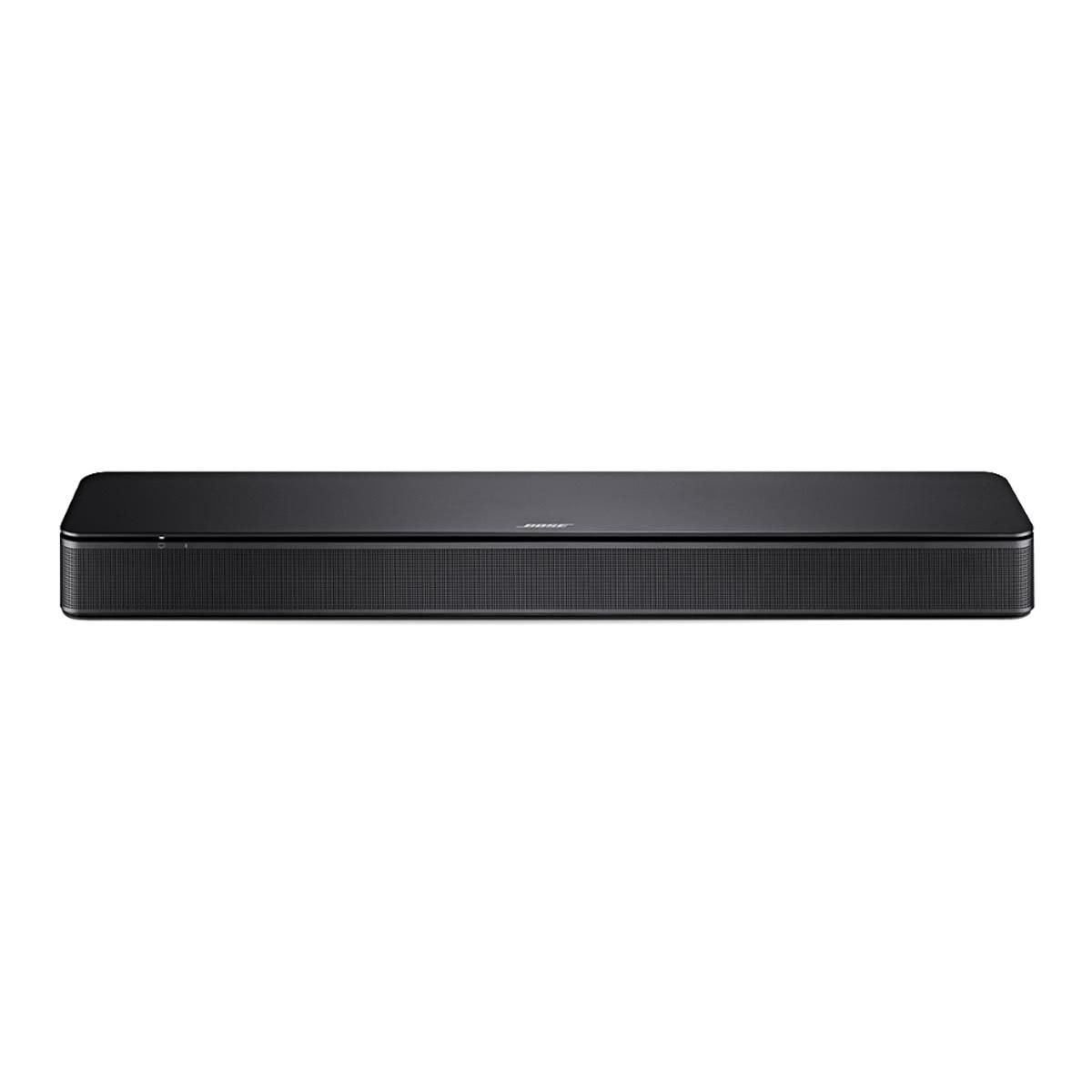
The Bose TV Speaker, which debuted in 2020, takes a fundamentally different approach. This budget-friendly option focuses exclusively on improving TV audio quality without any of the bells and whistles that complicate setup or increase cost. At just 23 inches wide and weighing under 5 pounds, it's designed to deliver clear, balanced sound with minimal fuss. Despite its lower price point (roughly half that of the Smart Soundbar at the time of writing), it still incorporates Bose's decades of acoustic engineering expertise.
The most significant performance difference between these soundbars lies in their approach to creating an immersive listening experience. The Bose Smart Soundbar supports Dolby Atmos, a relatively new audio technology that adds height information to soundtracks. Traditional surround sound moves audio left, right, front, and back, but Dolby Atmos also moves it up and down. This creates a three-dimensional "bubble" of sound around your listening position.
The Smart Soundbar achieves this through two up-firing speakers that bounce audio off your ceiling. When properly set up in a room with at least 8-foot ceilings, these reflected sounds create the illusion that helicopters are flying overhead or rain is falling from above. For content that doesn't include Dolby Atmos encoding, Bose's proprietary TrueSpace technology analyzes the audio and creates artificial height effects, essentially upgrading older movies and shows to feel more immersive.
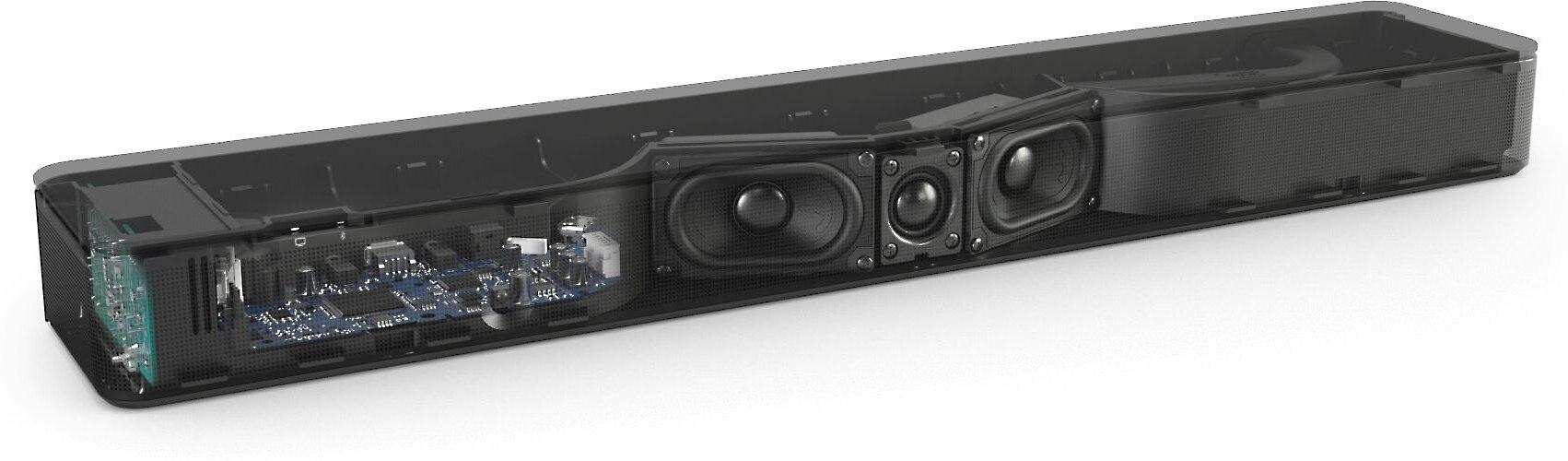
In contrast, the Bose TV Speaker focuses on excellent two-channel stereo reproduction. While it can't create overhead effects, its two angled full-range drivers and dedicated center tweeter work together to create a surprisingly wide soundstage for such a compact device. The angled drivers help spread sound beyond the physical boundaries of the speaker, making dialogue and effects feel more spacious than you'd expect from a 23-inch bar.
Both soundbars excel at dialogue clarity, but they achieve it through different methods. The Bose Smart Soundbar uses what Bose calls A.I. Dialogue Mode – a sophisticated system that continuously analyzes whatever you're watching and automatically adjusts the tonal balance when it detects speech. This happens in real-time without any user intervention, maintaining clear vocals while preserving the impact of explosions, music, and other audio elements.
The technology works by identifying the frequency patterns typical of human speech and subtly boosting those ranges while keeping everything else balanced. This is particularly effective during complex scenes where dialogue competes with background music or sound effects. The system is intelligent enough to distinguish between a character speaking and, say, a singer performing in the same scene, treating each appropriately.
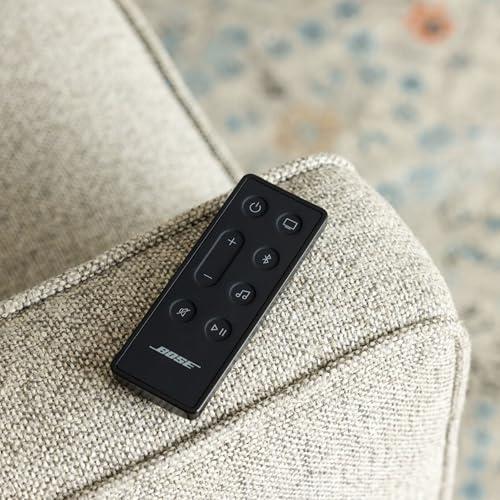
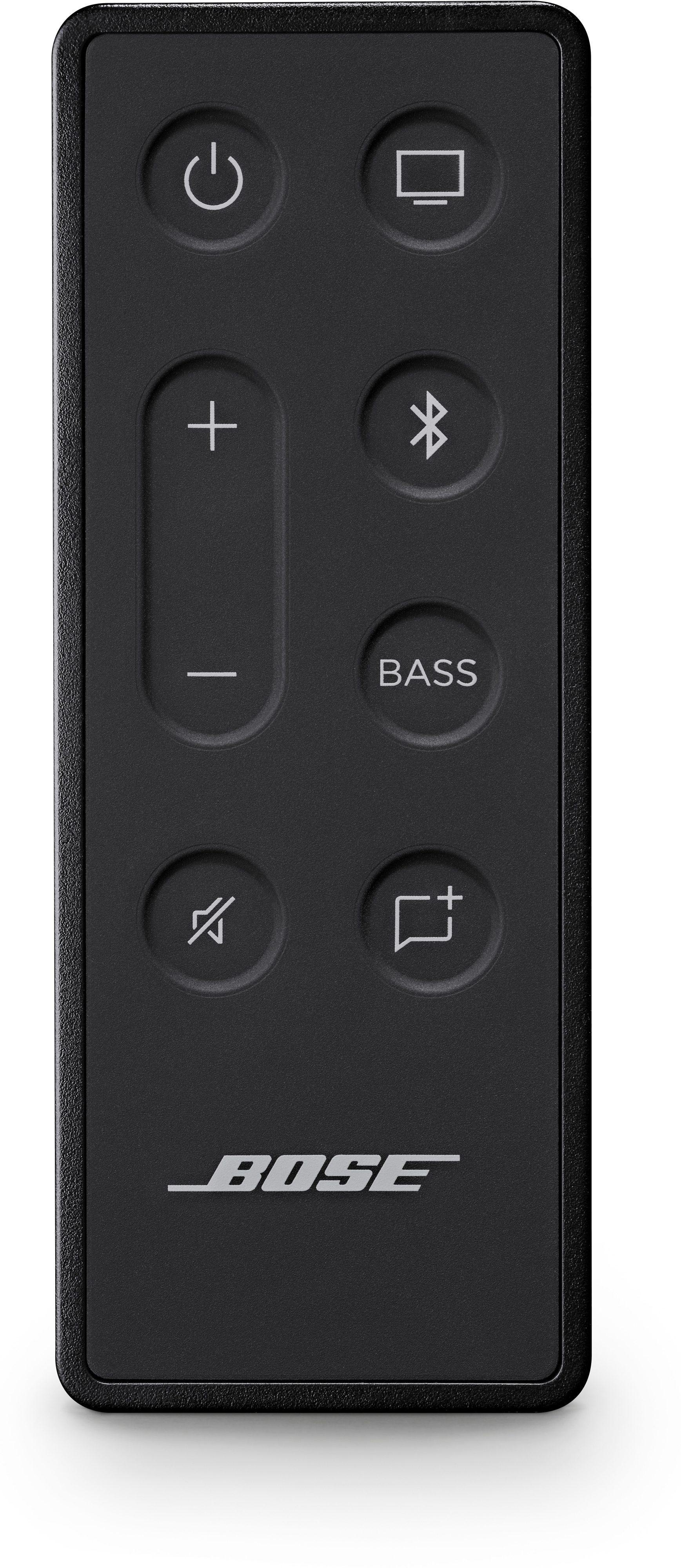
The Bose TV Speaker takes a more straightforward approach with its manual Dialogue Mode. Press a button on the remote, and the soundbar emphasizes the frequency ranges where most speech occurs. While less sophisticated than the Smart Soundbar's automatic system, this manual approach is highly effective and gives users direct control over when the enhancement is active. The dedicated center tweeter – a small, specialized speaker designed specifically for handling vocal frequencies – ensures that this dialogue enhancement sounds natural rather than harsh or artificial.
Despite their similar dimensions, these soundbars produce noticeably different bass characteristics. The Bose Smart Soundbar incorporates Bose's QuietPort technology, which uses specially designed acoustic ports (openings that help tune the speaker's bass response) to reduce turbulence and distortion. This allows the soundbar to produce deeper, cleaner bass without the rattling or "chuffing" sounds that plague many compact speakers when pushed hard.
The Smart Soundbar also benefits from its larger internal volume and more sophisticated driver arrangement. With five speakers working together, it can move more air and create more impactful low-frequency effects. During action sequences, explosions feel more substantial, and music maintains better balance between highs, mids, and lows.
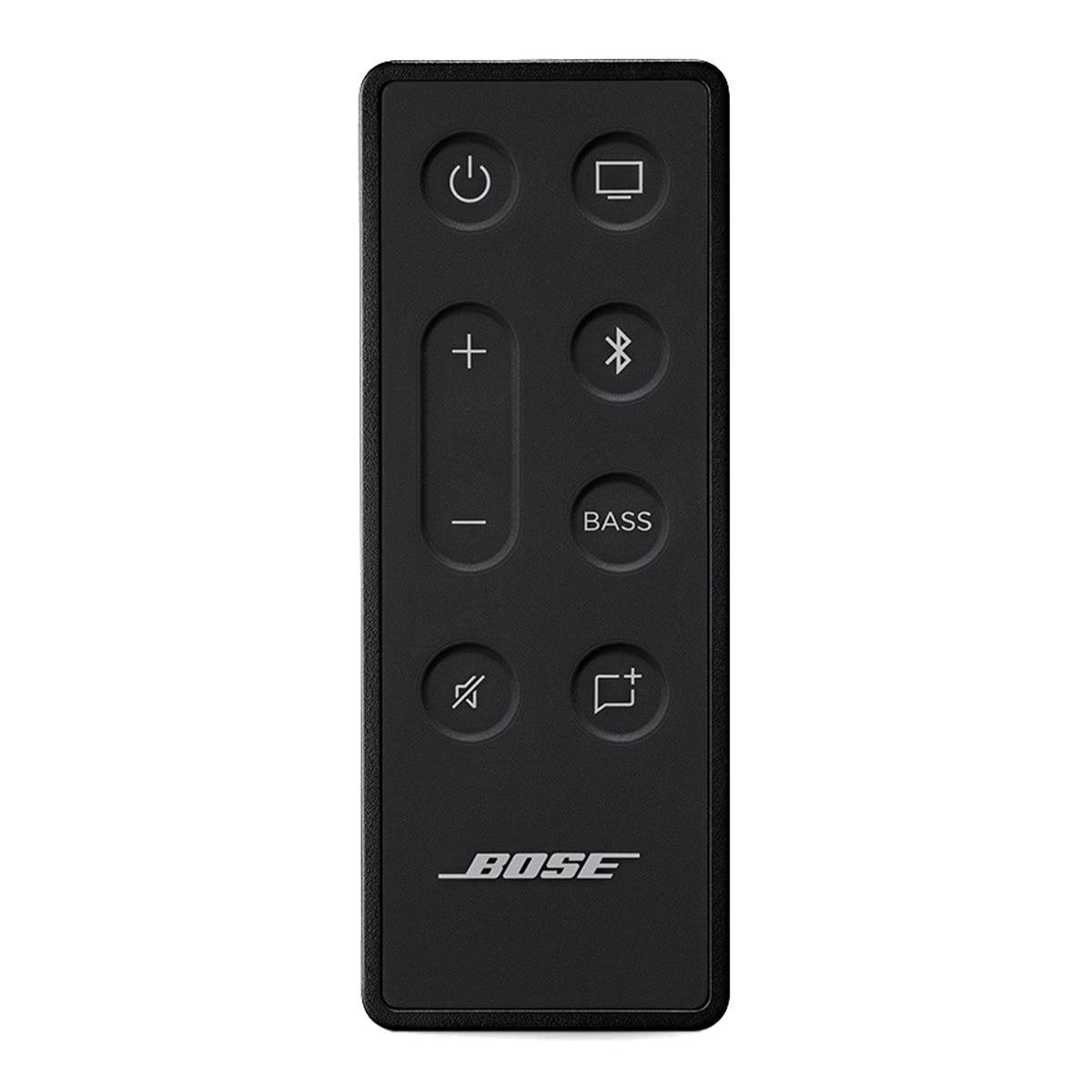
The Bose TV Speaker, while smaller and simpler, still produces impressive bass for its category. Its ported design helps extend low-frequency response beyond what you'd expect from such a compact enclosure. The included remote features a dedicated bass boost button that adds extra emphasis to low frequencies – particularly useful for movies with subdued mixing or when you want extra punch for music listening.
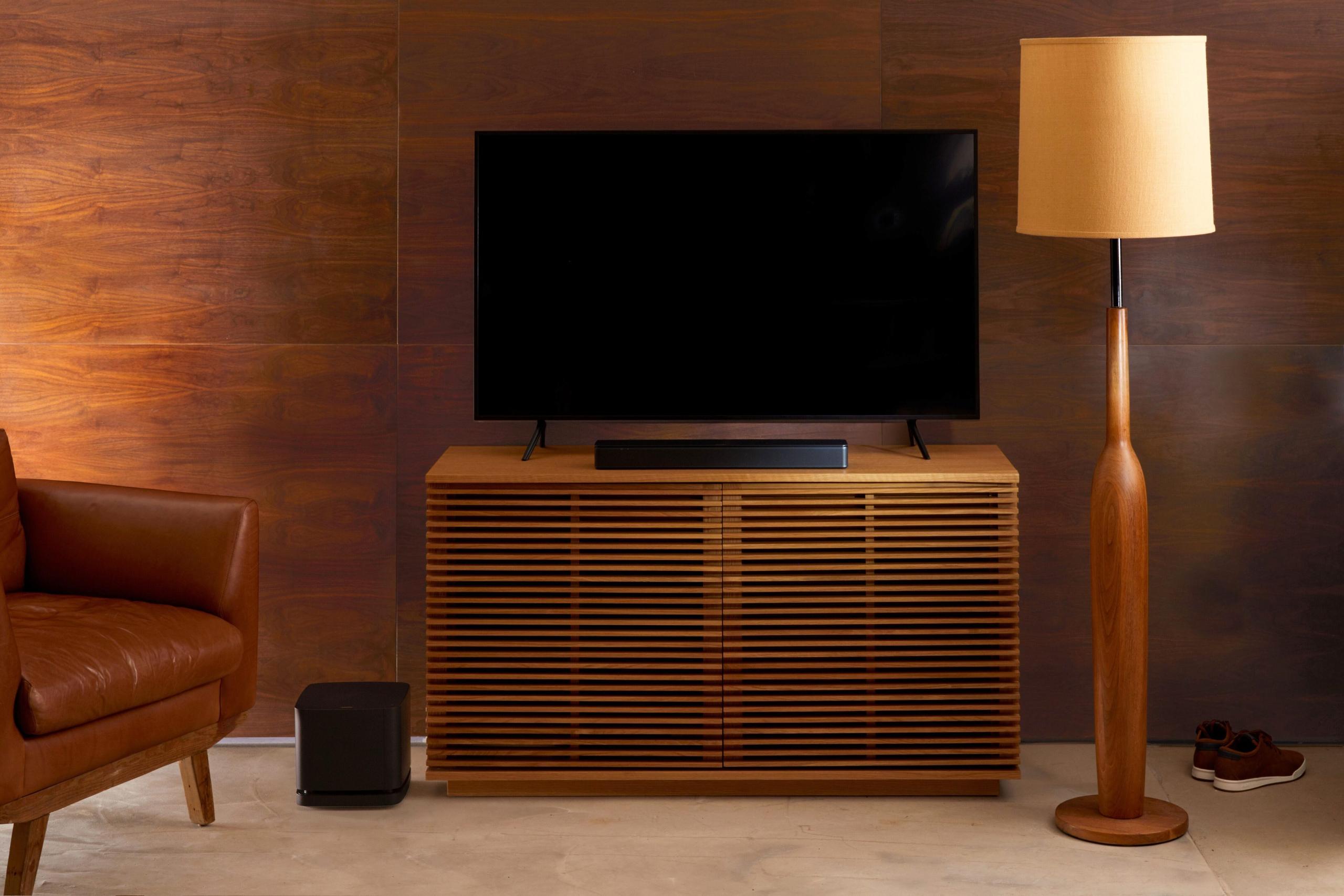
However, neither soundbar includes a dedicated subwoofer, which means truly deep bass (below about 60Hz) is limited. Both can connect to optional Bose subwoofers, though the Smart Soundbar uses a proprietary wireless connection while the TV Speaker requires a wired connection.
The Bose Smart Soundbar includes built-in Amazon Alexa, transforming it into a capable smart home hub. You can ask it to play music, control smart lights, check the weather, or even order products online – all without picking up a remote. More impressively, Bose's Voice4Video technology extends Alexa's capabilities to control your TV and cable or streaming box using voice commands. This means you can say "Alexa, turn to ESPN" or "Alexa, pause the movie," and the soundbar will communicate with your entertainment devices to execute these commands.
The Smart Soundbar also works with Google Assistant when connected to compatible devices, providing flexibility for users invested in either ecosystem. A noise-rejecting microphone array ensures accurate voice recognition even when the soundbar is playing loudly – a common problem with smart speakers that forces users to shout over their own audio.
The Bose TV Speaker deliberately omits all smart features. There's no voice control, no smart home integration, and no wireless streaming beyond basic Bluetooth connectivity. For some users, this simplicity is actually a feature – there are no privacy concerns about always-listening microphones, no complex setup procedures, and no worries about software updates changing functionality.
Modern soundbars often serve double duty as music speakers, and the Bose Smart Soundbar excels in this role. It supports Wi-Fi streaming via Apple AirPlay 2, Google Chromecast, and Spotify Connect, plus direct access to services like Amazon Music, Pandora, and SiriusXM. The Bluetooth 5.0 connection provides a 30-foot range with improved stability compared to older Bluetooth versions.
Perhaps most importantly, the Smart Soundbar can integrate with other Bose Smart speakers throughout your home, creating a multiroom audio system. You can group it with speakers in other rooms for synchronized music playback or use it independently while others play different content.
The Bose TV Speaker limits its wireless capabilities to Bluetooth 4.2, which is adequate for streaming music from phones or tablets but lacks the range and stability of newer Bluetooth versions. There's no Wi-Fi connectivity, which means no direct access to streaming services – you'll need to use your phone or another device as a source.
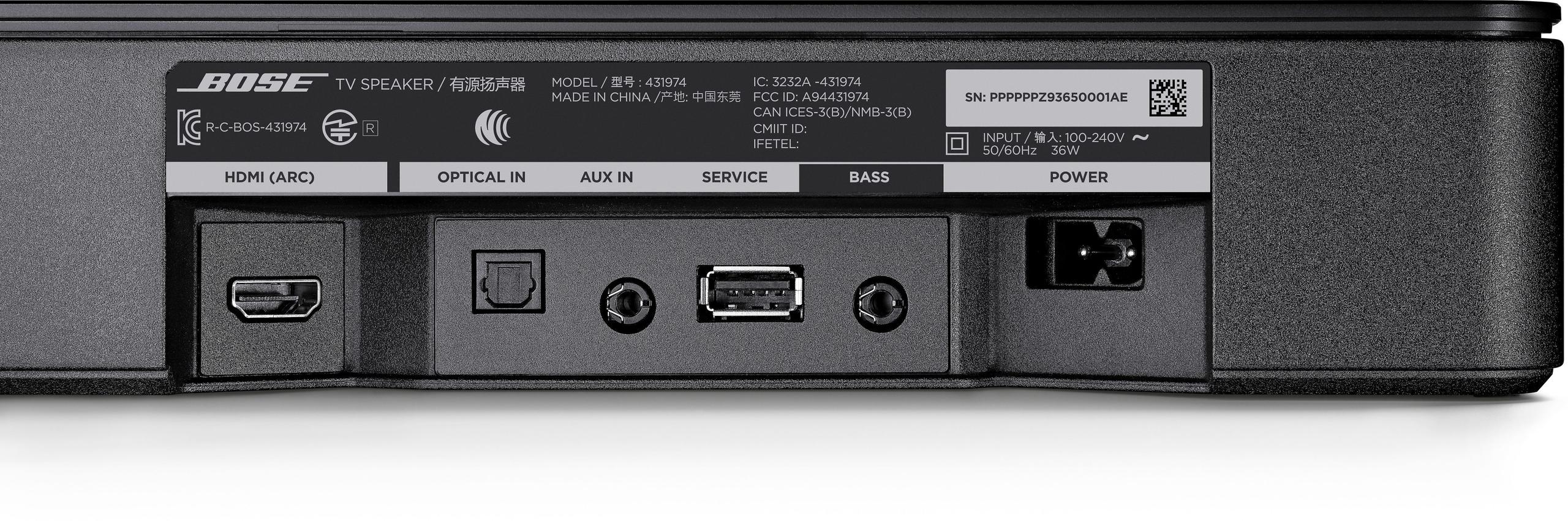
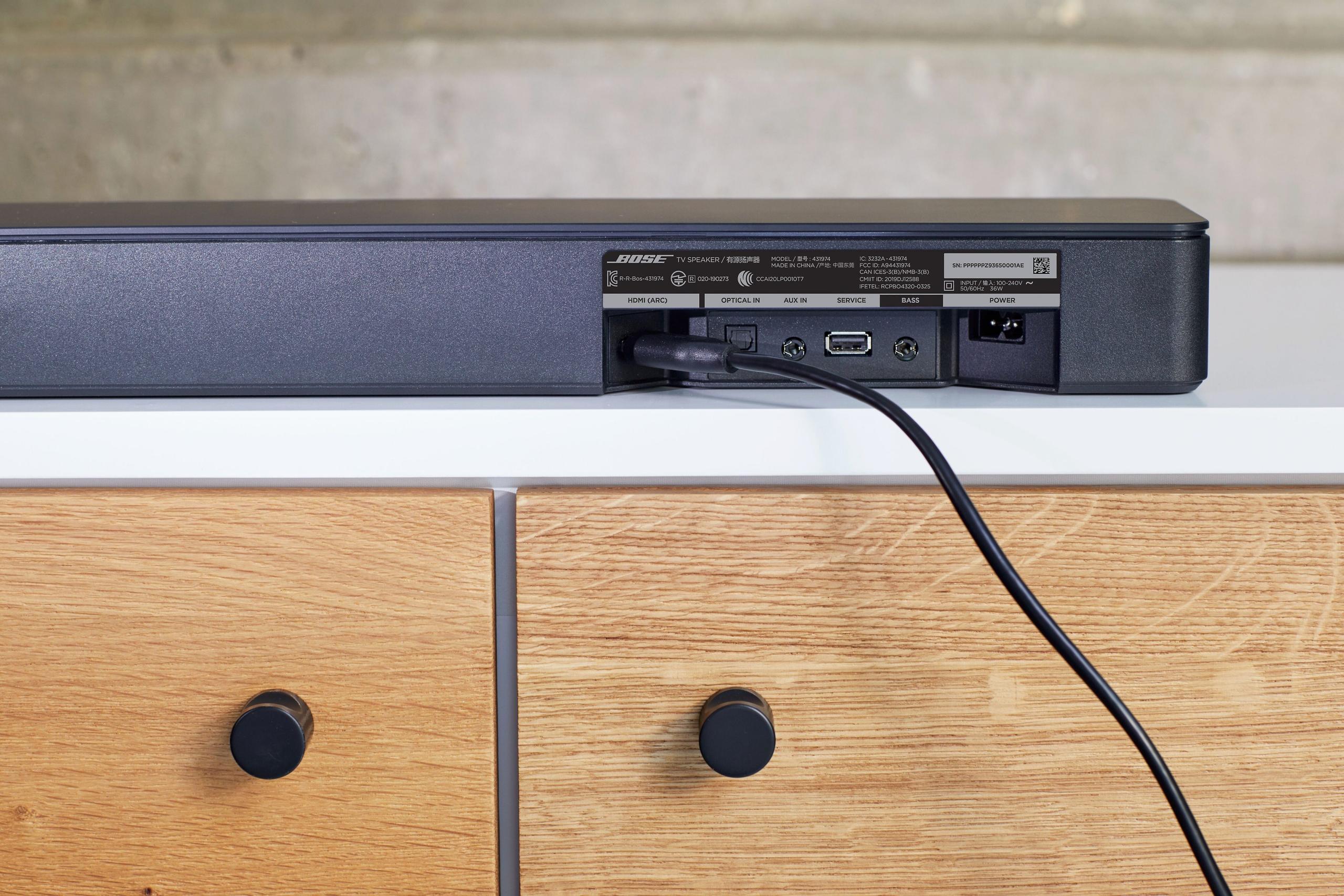
However, the TV Speaker does offer more physical connection options, including a 3.5mm analog input alongside the standard HDMI ARC and optical digital inputs. This makes it compatible with older devices that might not have digital audio outputs.
Setting up the Bose Smart Soundbar involves downloading the Bose Music app and following guided setup instructions. The app walks you through connecting to Wi-Fi, linking streaming accounts, and configuring voice assistants. While not overly complex, the process takes 15-20 minutes and requires a smartphone or tablet. Once configured, the app provides access to detailed sound customization options, equalizer settings, and the ability to create user profiles for different family members.
The Bose TV Speaker prioritizes simplicity above all else. Setup typically involves connecting a single cable (optical or HDMI) between the soundbar and TV, then powering it on. There's no app to download, no accounts to create, and no Wi-Fi passwords to enter. Most users can go from unboxing to watching improved TV audio in under five minutes.
Both soundbars support HDMI CEC, which allows them to automatically power on when your TV turns on and lets you control volume using your TV's remote. However, the Smart Soundbar's implementation is more sophisticated, with better compatibility across different TV brands and more seamless operation.
The Bose Smart Soundbar works best in medium to large rooms, roughly 200 square feet or larger. Its Dolby Atmos capabilities require adequate ceiling height (at least 8 feet) and preferably a relatively rectangular room shape for optimal sound reflection. The wider soundstage and more powerful drivers make it suitable for seating distances of 8-12 feet or more.
The Bose TV Speaker is optimized for smaller spaces – bedrooms, apartments, or cozy family rooms under 200 square feet. Its focused sound projection works best when you're seated relatively close to the TV, typically within 6-8 feet. The compact size also makes it ideal for situations where a larger soundbar would overwhelm the space or interfere with the TV's design.
Both soundbars can be wall-mounted, though mounting hardware is sold separately. The TV Speaker's lighter weight (4.3 pounds vs. 6.9 pounds) makes it easier to mount securely on different wall types.
One significant advantage of the Bose Smart Soundbar is its expansion potential. You can add wireless Bose Bass Modules (subwoofers) and Bose Surround Speakers to create a full 5.1 surround sound system. All connections are wireless, maintaining a clean installation without additional cables. Bose's proprietary wireless technology ensures stable connections without the dropouts that plague some third-party wireless audio systems.
Uniquely, the Smart Soundbar also supports "personal surround sound" when paired with Bose Ultra Open Earbuds. This innovative feature lets you wear the earbuds as rear surround speakers for late-night viewing without disturbing others – an ingenious solution for apartment dwellers or families with different schedules.
The Bose TV Speaker offers more limited expansion options. You can add a Bose Bass Module, but it requires a wired connection using either a proprietary cable or standard 3.5mm connection. There's no option for rear surround speakers, keeping the system permanently in stereo configuration.
At the time of writing, the Bose Smart Soundbar costs roughly twice as much as the Bose TV Speaker, which immediately raises questions about value. Based on our research into user experiences and expert reviews, the Smart Soundbar justifies its higher price through significantly more sophisticated audio processing, extensive smart features, and superior build quality.
The Dolby Atmos implementation, while not as enveloping as dedicated ceiling speakers, provides a genuinely noticeable improvement in immersion for compatible content. The A.I. Dialogue Mode works as advertised, automatically maintaining clear speech without constant manual adjustment. Most importantly, the Smart Soundbar scales well with room size and can handle demanding content at higher volumes without distortion.
The Bose TV Speaker represents exceptional value in the entry-level soundbar category. Users consistently report dramatic improvements over built-in TV speakers, with particular praise for dialogue clarity and surprisingly full bass response. The manual dialogue mode is highly effective, and the bass boost function adds welcome flexibility.
However, the TV Speaker's limitations become apparent in larger rooms or when used for music listening. Its power output and soundstage width are optimized for close-proximity TV viewing, and it can sound strained when pushed to higher volumes in bigger spaces.
The Bose Smart Soundbar makes sense for users who want a premium audio experience with room to grow. If you're planning a dedicated home theater setup, frequently watch action movies or content with immersive soundtracks, or value smart home integration, the additional cost is justified. The Dolby Atmos support alone makes it worthwhile for anyone with a substantial movie collection or streaming subscriptions that offer Atmos content.
This soundbar also suits users who listen to music frequently and want high-quality wireless streaming options. The ability to integrate with other Bose speakers for multiroom audio adds long-term value that extends beyond TV watching.
The Bose TV Speaker is ideal for users who primarily want better TV audio without complexity or high cost. If your main complaints are unclear dialogue and weak bass from your TV's built-in speakers, this soundbar addresses both issues effectively. It's perfect for bedrooms, apartments, or secondary viewing areas where advanced features aren't necessary.
The TV Speaker also suits users who prefer straightforward operation without smart features, app requirements, or voice control. Some people find always-listening microphones concerning, and others simply prefer physical controls over smartphone apps.
Both soundbars represent solid engineering from a respected audio company, but they target fundamentally different user needs. The Bose Smart Soundbar is an investment in a comprehensive audio upgrade that can evolve with your needs and integrate into a modern smart home ecosystem. The Bose TV Speaker is a focused solution that dramatically improves TV audio quality at an accessible price point.
Consider your room size, budget, and long-term plans. If you're satisfied with basic TV audio improvement and prefer simplicity, the TV Speaker delivers excellent value. If you want cutting-edge features, immersive audio capabilities, and the flexibility to expand your system later, the Smart Soundbar justifies its higher cost through superior performance and versatility.
Either choice will provide a significant upgrade over typical TV speakers, but understanding these fundamental differences ensures you'll pick the right tool for your specific audio needs and preferences.
| Bose Smart Soundbar | Bose TV Speaker |
|---|---|
| Audio Channels - Determines surround sound capabilities | |
| 3.0.2 with Dolby Atmos (overhead effects) | 2.1 stereo (focused left/right sound) |
| Speaker Configuration - More drivers typically mean fuller sound | |
| 5 speakers + center tweeter with up-firing drivers | 2 full-range drivers + center tweeter |
| Dolby Atmos Support - Creates overhead sound effects for movies | |
| Yes, with dedicated up-firing speakers | No, stereo sound only |
| Voice Control - Hands-free operation and smart home integration | |
| Built-in Alexa + Google Assistant compatibility | None (remote control only) |
| Wireless Streaming - Access to music services without phone | |
| Wi-Fi, AirPlay 2, Chromecast, Spotify Connect | Bluetooth 4.2 only |
| Dialogue Enhancement - Critical for clear speech in movies/TV | |
| AI-powered automatic adjustment | Manual dialogue mode button |
| Dimensions - Important for TV compatibility and room aesthetics | |
| 27.3" W × 2.2" H × 4.6" D (6.9 lbs) | 23.4" W × 2.2" H × 4" D (4.3 lbs) |
| Subwoofer Expandability - Adds deep bass for action movies | |
| Wireless connection to Bose Smart Soundbar Bass Modules | Wired connection required to Bass Modules |
| Surround Speaker Expansion - Creates true surround sound | |
| Wireless rear speakers available | No surround speaker option |
| Setup Complexity - Time investment vs. advanced features | |
| App-based setup with Wi-Fi configuration | Single cable connection, no app needed |
| Optimal Room Size - Performance scales with space | |
| Medium to large rooms (200+ sq ft) | Small to medium rooms (under 200 sq ft) |
| Smart Home Integration - Works with existing connected devices | |
| Full Alexa ecosystem + multiroom audio | None |
| Audio Inputs - Compatibility with different devices | |
| HDMI eARC, Optical, 3.5mm IR blaster | HDMI ARC, Optical, 3.5mm analog input |
The Bose Smart Soundbar is better for most people who want a significant audio upgrade with modern features. It offers Dolby Atmos for immersive sound, built-in voice control, and wireless streaming capabilities that work well in medium to large rooms. However, the Bose TV Speaker is the better choice if you prioritize simplicity and value, especially for smaller rooms or basic TV audio improvement.
The primary difference is complexity and features. The Bose Smart Soundbar includes Dolby Atmos with overhead sound effects, built-in Alexa voice control, Wi-Fi streaming, and can expand into a full surround system. The Bose TV Speaker focuses solely on improving TV dialogue and basic stereo sound without smart features or advanced connectivity.
Both excel at dialogue clarity, but they achieve it differently. The Bose Smart Soundbar uses AI-powered automatic dialogue enhancement that continuously adjusts speech frequencies in real-time. The Bose TV Speaker offers manual dialogue mode that you control with a button press. Both are highly effective, with the Smart Soundbar being more convenient and the TV Speaker giving you direct control.
Yes, both soundbars support adding Bose Bass Modules for deeper bass. The Bose Smart Soundbar connects wirelessly to compatible subwoofers, making installation cleaner with no additional cables. The Bose TV Speaker requires a wired connection to the subwoofer, which works well but involves running a cable between the units.
The Bose TV Speaker is specifically designed for smaller spaces under 200 square feet. Its compact size, focused sound projection, and lighter weight make it ideal for bedrooms, apartments, or cozy family rooms. The Bose Smart Soundbar is better suited for medium to large rooms where its wider soundstage and Dolby Atmos effects can be fully appreciated.
Only the Bose Smart Soundbar includes built-in Amazon Alexa and works with Google Assistant. You can control music, smart home devices, and even your TV using voice commands. The Bose TV Speaker has no voice control capabilities and operates exclusively through its included remote control.
The Bose Smart Soundbar offers extensive wireless streaming including Wi-Fi, Apple AirPlay 2, Google Chromecast, and Spotify Connect, plus direct access to services like Amazon Music and Pandora. The Bose TV Speaker only supports basic Bluetooth 4.2 connectivity for streaming music from phones or tablets.
The Bose Smart Soundbar supports Dolby Atmos with up-firing speakers that bounce sound off your ceiling for overhead effects, and can expand with wireless rear speakers for true surround sound. The Bose TV Speaker produces excellent stereo sound with a wide soundstage but cannot create surround or overhead effects, and doesn't support rear speaker expansion.
The Bose TV Speaker is significantly easier to set up, typically requiring just connecting one cable between the soundbar and TV. Most users complete setup in under 5 minutes with no apps or Wi-Fi configuration needed. The Bose Smart Soundbar requires app-based setup, Wi-Fi configuration, and linking streaming accounts, taking 15-20 minutes but offering much more functionality.
The Bose Smart Soundbar delivers more immersive, room-filling sound with five speakers plus a tweeter, Dolby Atmos support, and sophisticated audio processing. It handles complex movie soundtracks and music better, especially at higher volumes. The Bose TV Speaker produces excellent stereo sound with impressive bass for its size, but is optimized for dialogue clarity and close-proximity listening rather than immersive effects.
This depends on your needs. The Bose TV Speaker offers exceptional value for users who primarily want clearer TV dialogue and better basic sound quality at an affordable price. The Bose Smart Soundbar provides better long-term value for users who want premium features, smart home integration, and the ability to expand into a full surround system, justifying its higher cost through superior capabilities and versatility.
The Bose Smart Soundbar is well-suited for home theater use with its Dolby Atmos support, ability to add wireless subwoofers and rear speakers, and powerful performance in larger rooms. The Bose TV Speaker works better as a basic TV audio upgrade rather than a dedicated home theater solution, since it lacks surround sound capabilities and is optimized for smaller spaces and simpler setups.
We've done our best to create useful and informative comparisons to help you decide what product to buy. Our research uses advanced automated methods to create this comparison and perfection is not possible - please contact us for corrections or questions. These are the sites we've researched in the creation of this article: bestbuy.com - rtings.com - rtings.com - youtube.com - staples.com - youtube.com - soundguys.com - businessinsider.com - youtube.com - rtings.com - crutchfield.com - youtube.com - youtube.com - smart.dhgate.com - dolby.com - bose.com - assets.bose.com - bose.com - connection.com - bestbuy.com - cdw.com - dell.com - device.report - bestbuy.com - projectorscreen.com - forums.audioholics.com - digitaltrends.com - abt.com - crutchfield.com - staples.com - bestbuy.com - pcrichard.com - visions.ca - bose.com - assets.bose.com

Privacy Policy
Terms and Conditions - Affiliate Policy
Home Security
© Copyright 2008-2026.
11816 Inwood Rd #1211, Dallas, TX 75244