

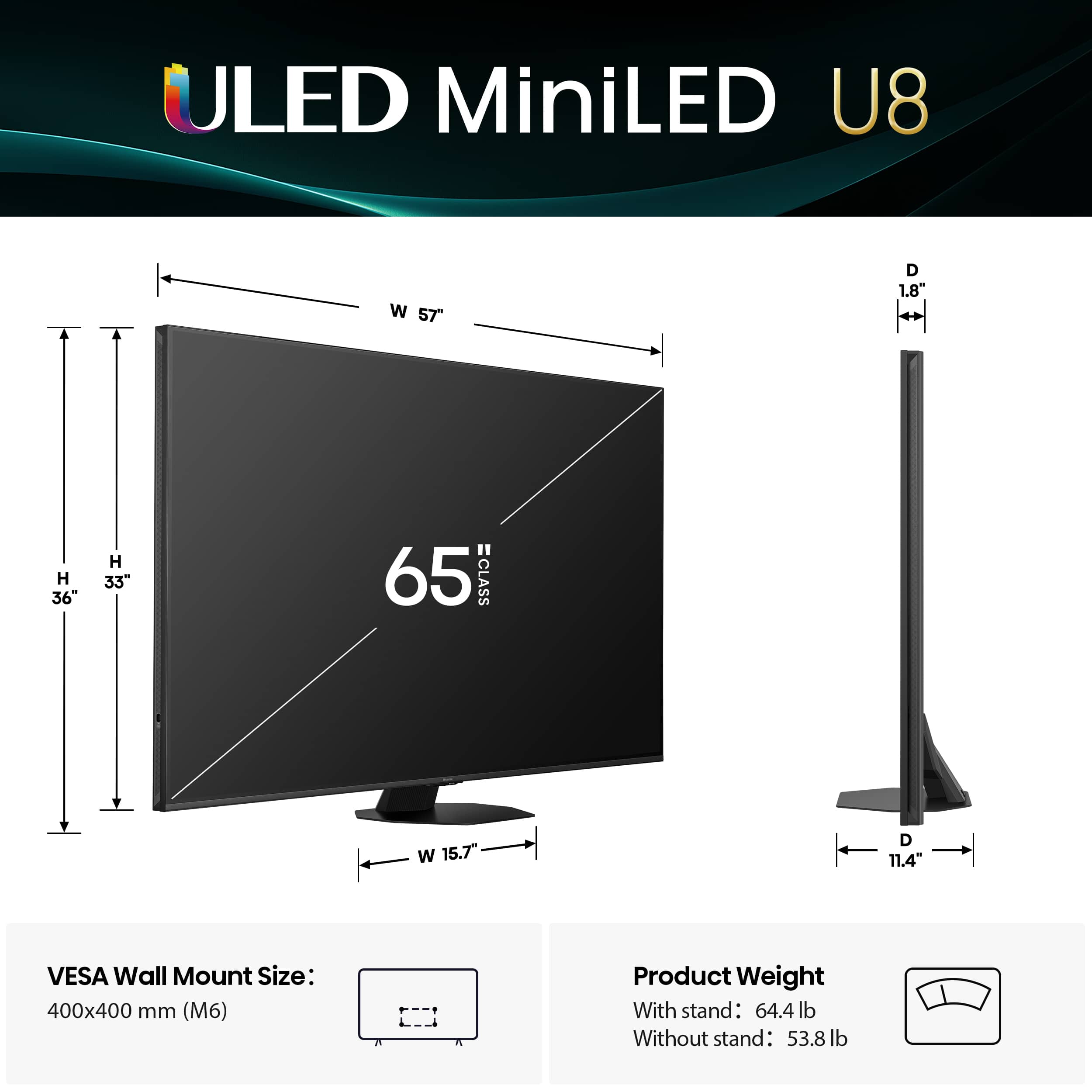
When you're shopping for a large TV in 2024, the 65-inch size has become the sweet spot for most living rooms. It's big enough to create that cinematic experience without overwhelming smaller spaces, and prices have dropped significantly since these sizes first hit the market. But choosing the right 65-inch TV means navigating a complex landscape of display technologies, smart platforms, and gaming features that didn't exist just a few years ago.
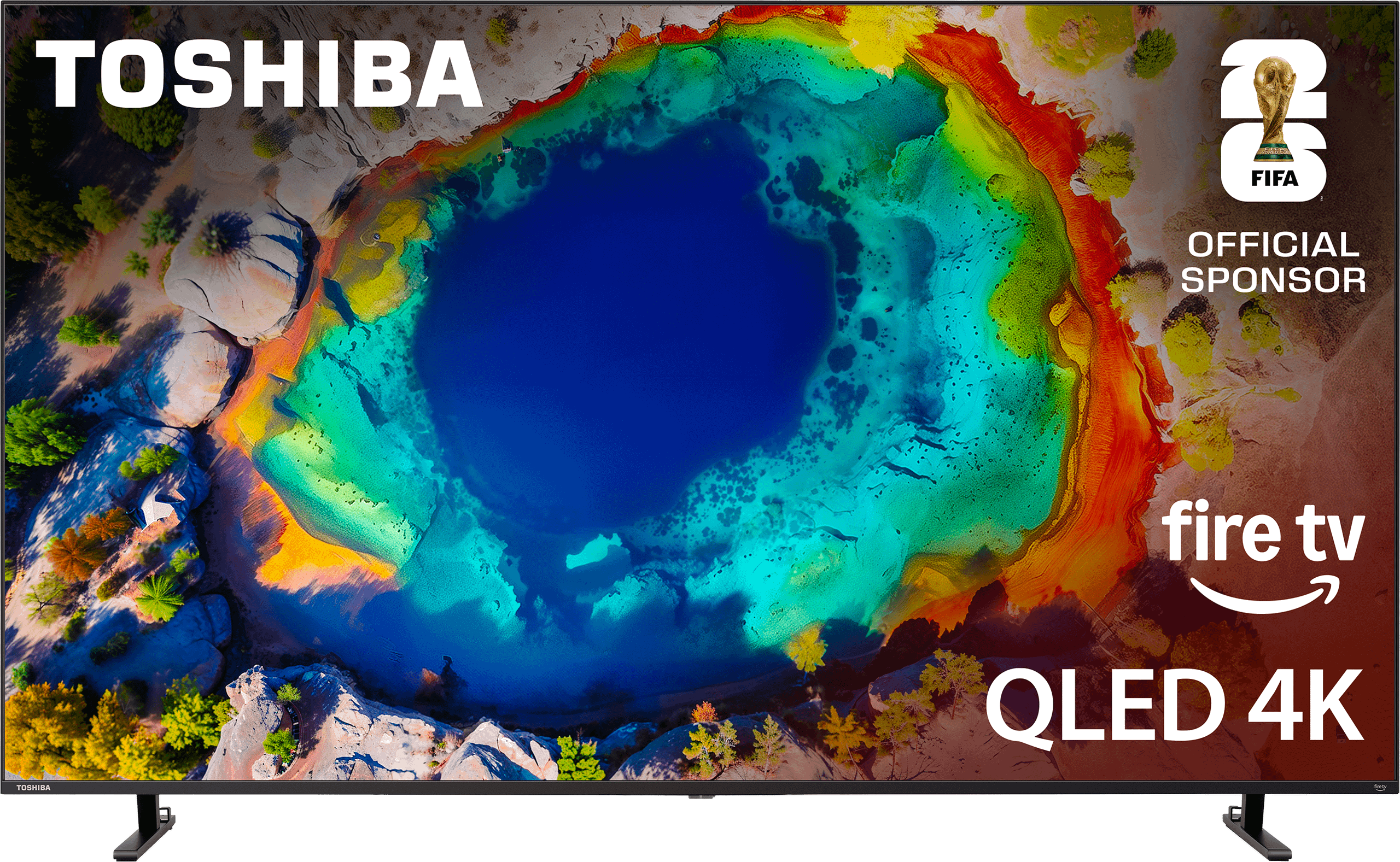
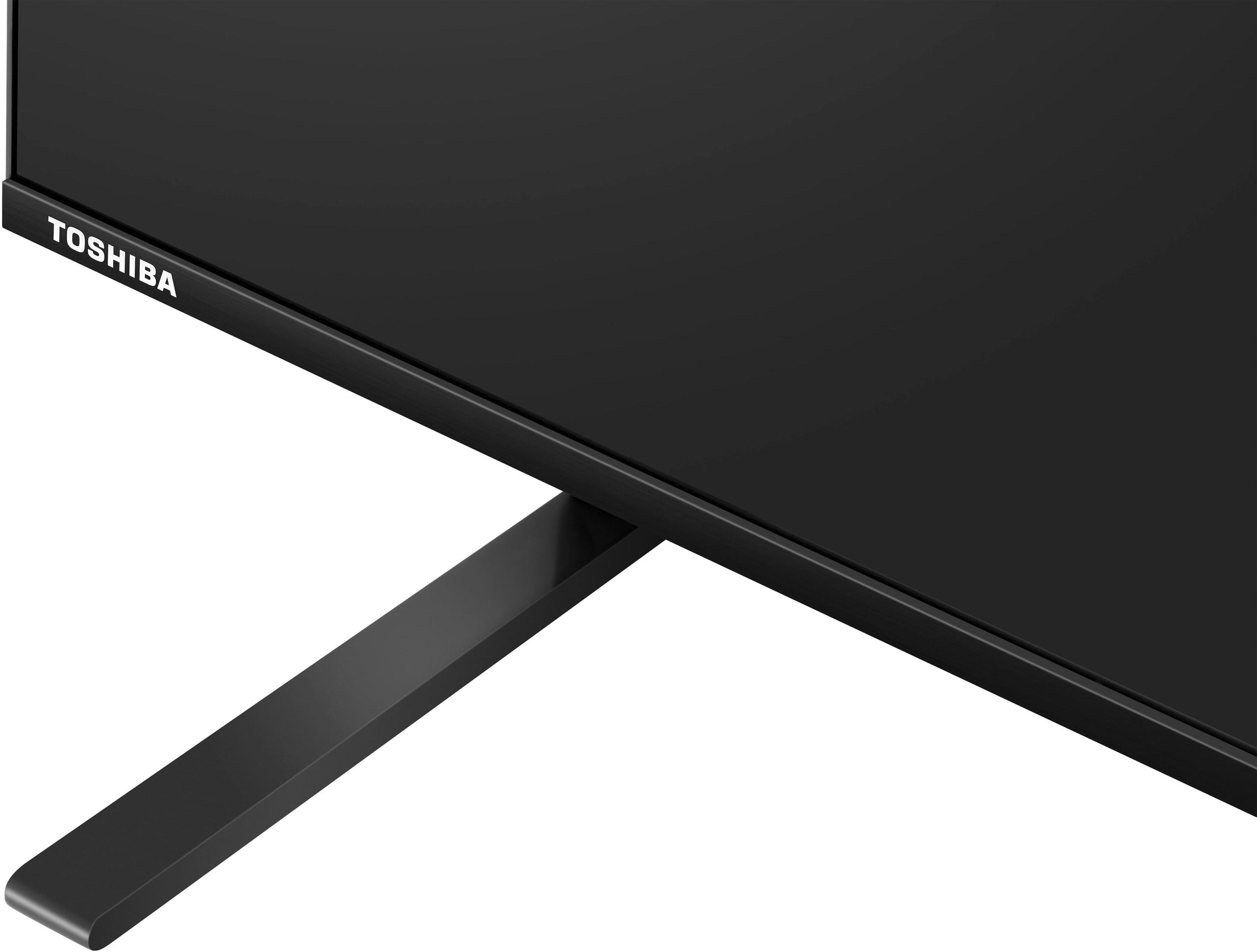
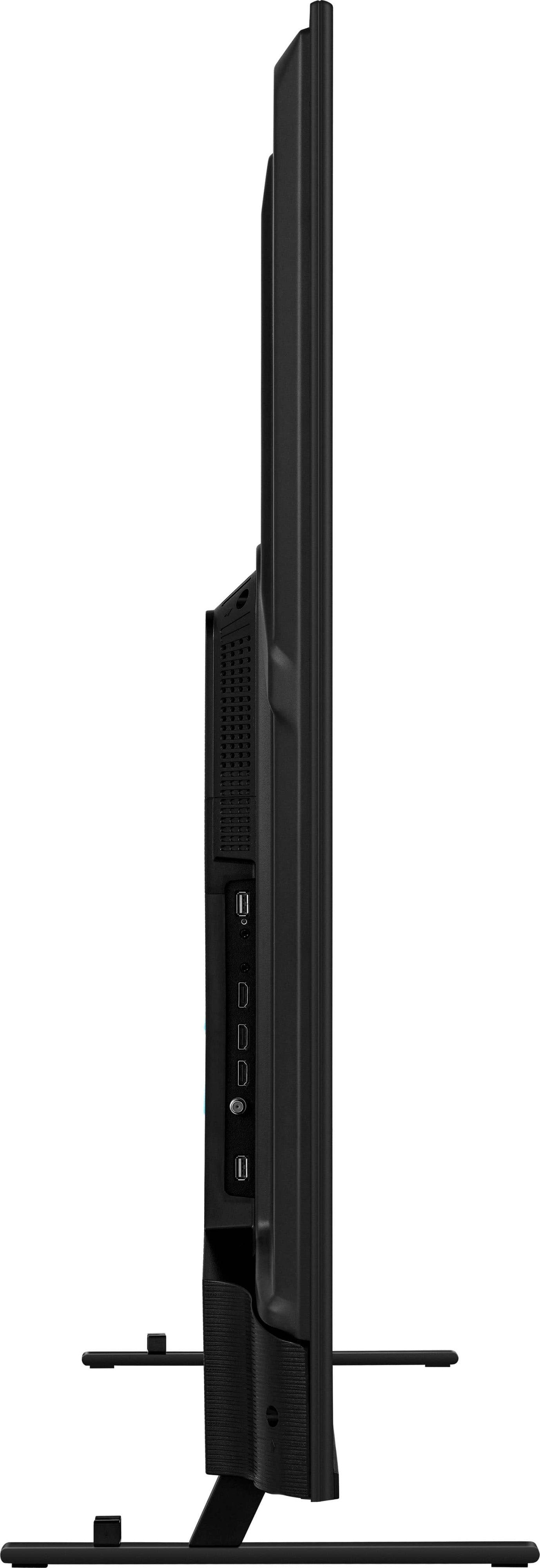
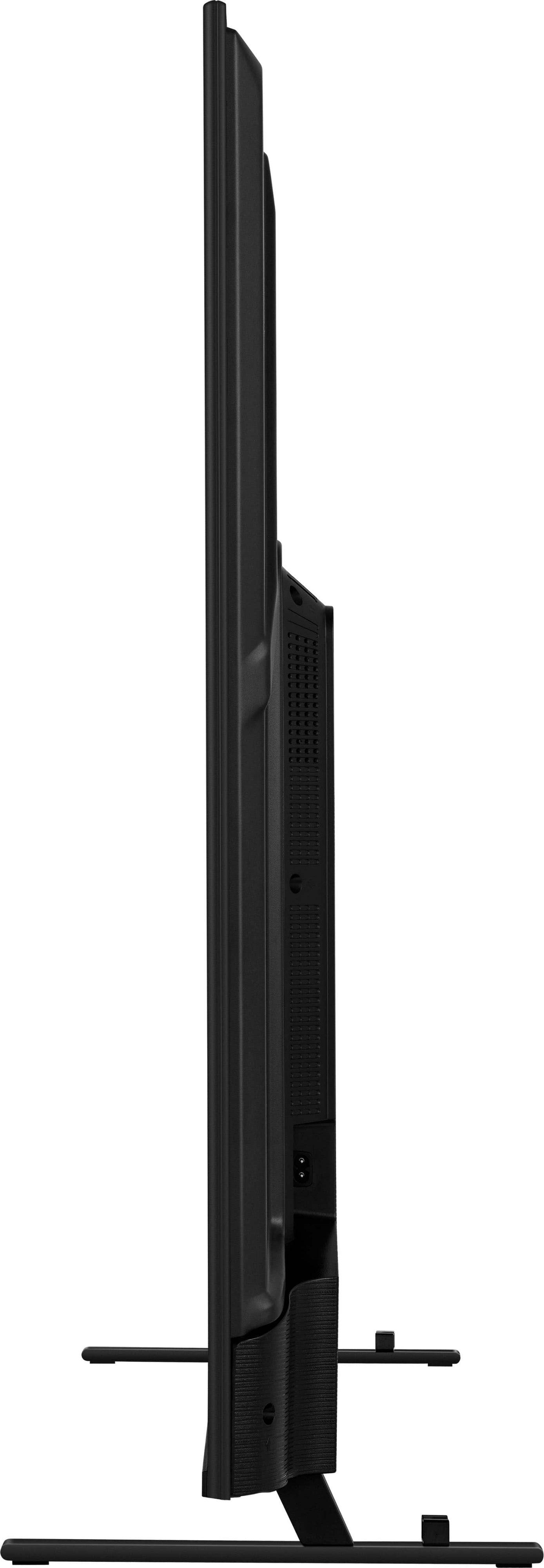
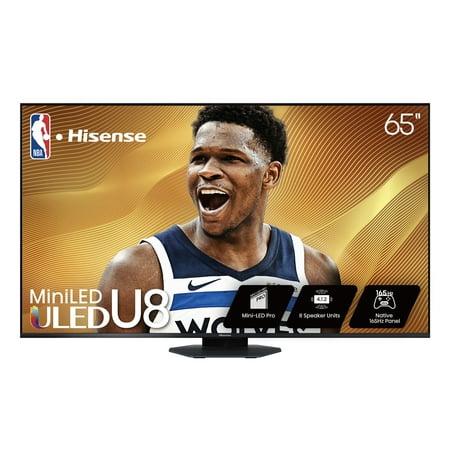
Today we're comparing two very different approaches to the premium 65-inch market: the Toshiba 65" M550 Series QLED Fire TV and the Hisense 65" U8 Series Mini-LED ULED 4K Google TV. These TVs represent fundamentally different philosophies—one prioritizes value and basic 4K quality, while the other pushes premium features at a higher price point.
The premium smart TV category sits in an interesting middle ground. You're getting advanced display technologies like quantum dots and local dimming—features that were exclusive to flagship models just a few years ago—but without the premium pricing of OLED displays. This segment has exploded since 2020, when consumers stuck at home during the pandemic began investing more seriously in their entertainment setups.
What matters most when comparing TVs in this category? Peak brightness determines how well HDR (High Dynamic Range) content looks—that's the technology that makes highlights sparkle and shadows retain detail. Local dimming zones control how precisely the TV can brighten or darken different areas of the screen simultaneously. Gaming features like high refresh rates and variable refresh rate (VRR) support have become crucial as PlayStation 5 and Xbox Series X pushed gaming into mainstream TV conversations. Finally, the smart TV platform affects your daily experience more than most people realize.
The core difference between the Toshiba M550 and Hisense U8 lies in their backlighting approaches, and this affects everything else about these TVs.
The Toshiba M550 uses traditional QLED technology with full-array local dimming. QLED stands for Quantum Dot LED—tiny particles that convert blue LED light into precise red and green wavelengths, creating more accurate colors than standard LEDs. The M550 has 48 local dimming zones, meaning the backlight is divided into 48 sections that can brighten or dim independently. When a scene shows a bright moon against a dark sky, ideally only the zones behind the moon light up while the rest stay dark.
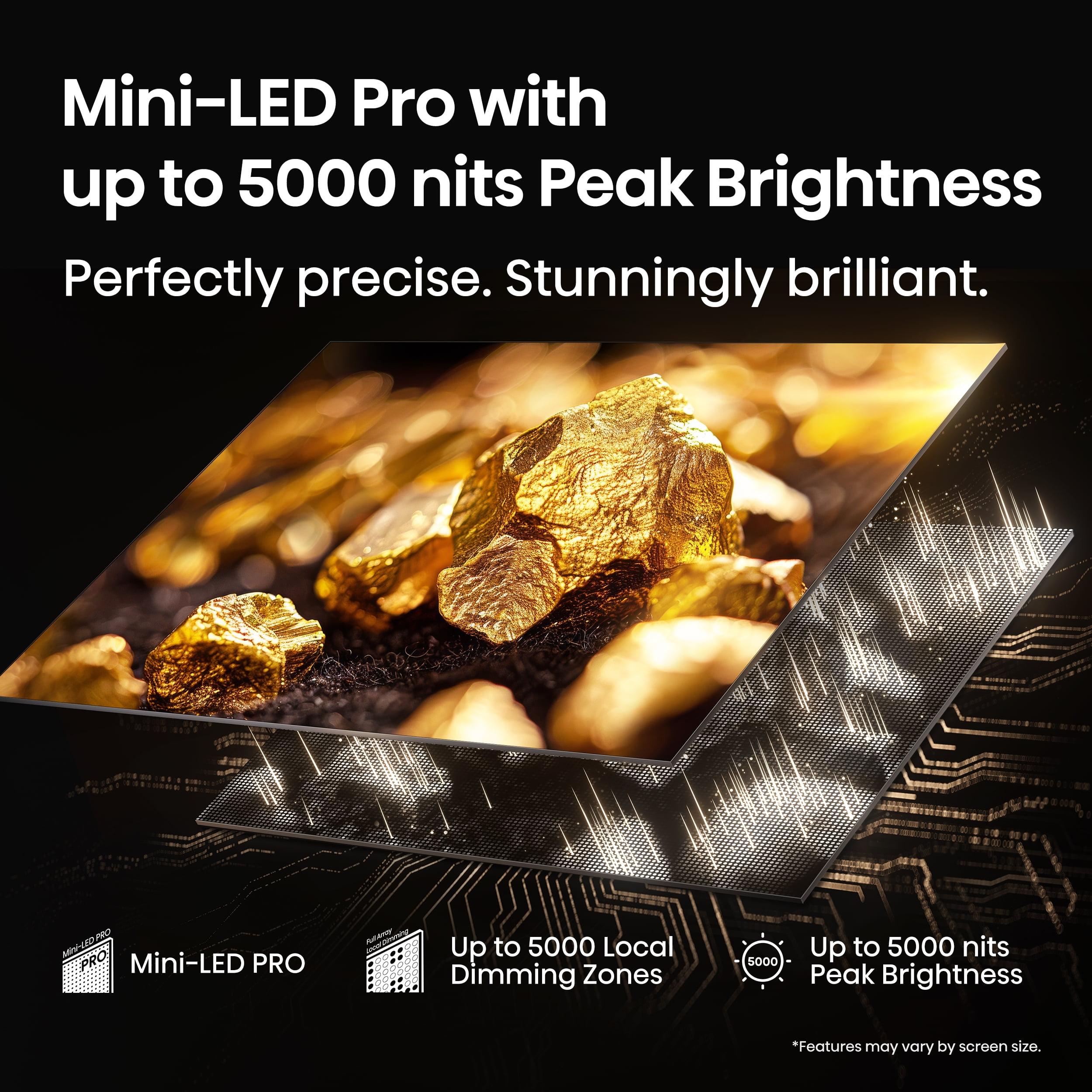
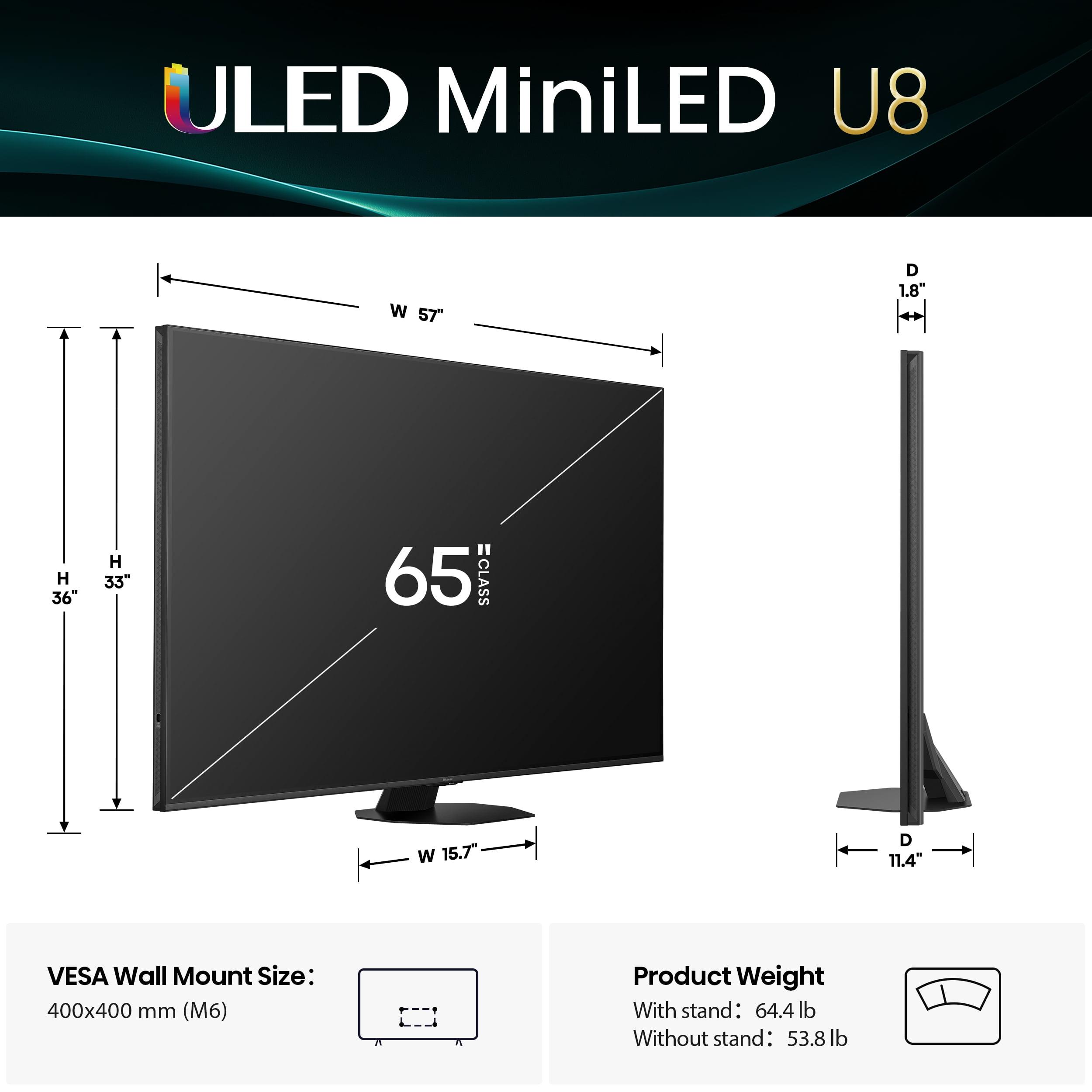
The Hisense U8 takes this concept much further with Mini-LED technology. Instead of regular LEDs, it uses thousands of LEDs that are much smaller—about 1/40th the size of traditional LEDs. This allows for over 2000 local dimming zones compared to the Toshiba's 48. The result is dramatically more precise control over light and dark areas. Think of it like the difference between painting with a house brush versus a fine art brush.
This technology gap, which emerged prominently in 2021-2022, means the Hisense U8 can achieve much deeper blacks with less "blooming"—that distracting halo effect around bright objects in dark scenes. It also reaches peak brightness levels of 3000-5000 nits compared to the Toshiba M550's approximately 600 nits. To put this in perspective, a typical living room might have 100-200 nits of ambient light, so the Hisense can overpower room lighting in ways the Toshiba cannot.
Based on our evaluation of professional reviews and user feedback, the picture quality difference between these TVs is substantial enough to affect your viewing experience daily.
The Toshiba M550 delivers solid 4K picture quality that most viewers will find satisfying for streaming content and cable TV. Colors appear vibrant thanks to the quantum dot technology, and the 48-zone local dimming provides decent contrast. However, professional reviews consistently note limitations in HDR performance. When watching HDR movies on Netflix or Disney+, bright highlights don't truly sparkle because the TV lacks the brightness headroom, and dark scenes can appear washed out due to limited local dimming precision.
The Hisense U8 operates in a different league entirely. The Mini-LED backlighting creates contrast ratios that approach OLED territory—those premium TVs that cost significantly more. HDR content displays with the dramatic impact that filmmakers intended. Bright explosions in action movies genuinely pop off the screen, while shadow details in dark scenes remain visible without the entire screen becoming gray and muddy.
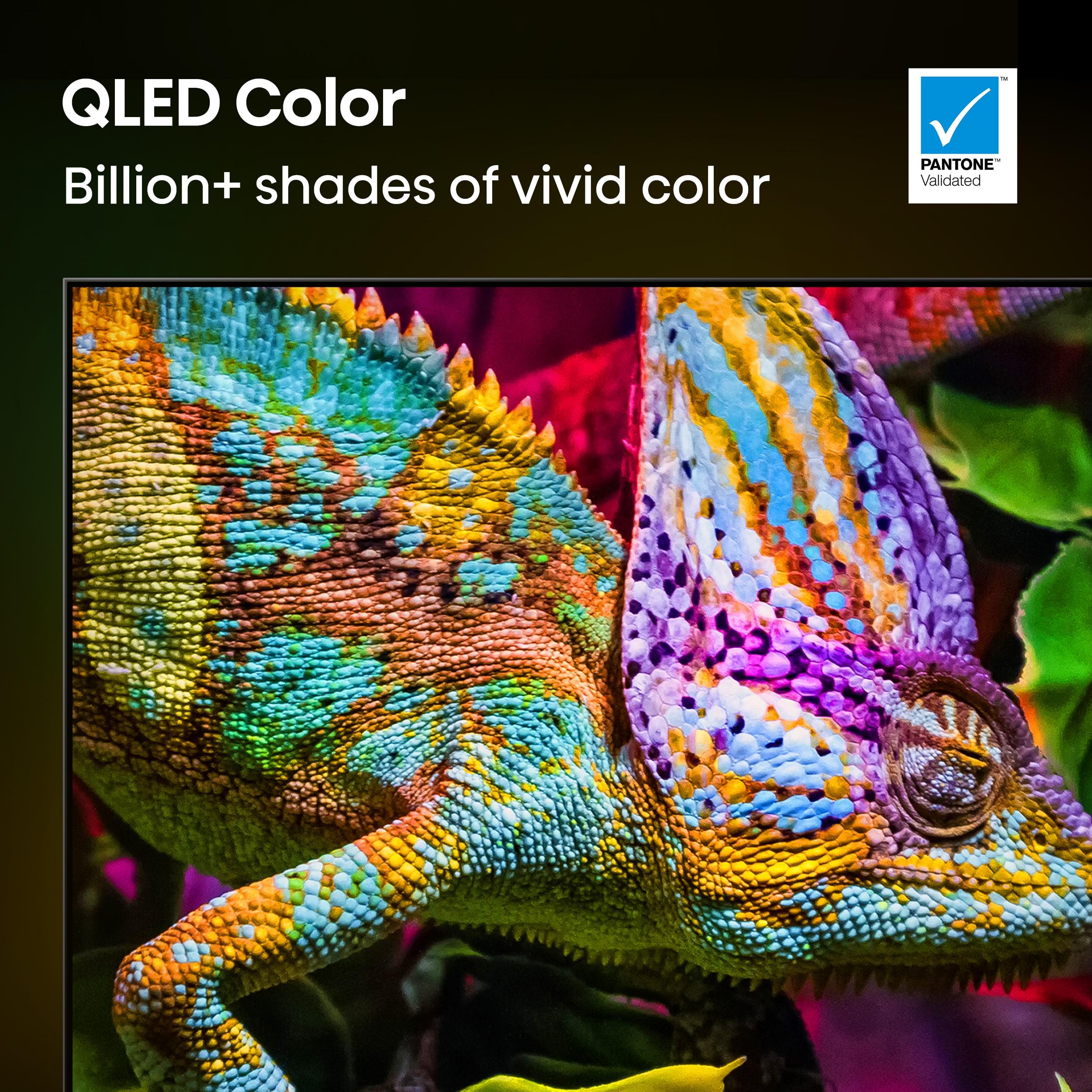
Color accuracy is another differentiator. While both TVs use quantum dot technology, the Hisense U8 includes Pantone color validation and more sophisticated AI processing. This means colors look more natural across different types of content, from the warm tones of a cooking show to the vibrant greens of a nature documentary.
One area where the Toshiba M550 struggles, according to multiple professional reviews, is motion handling during action scenes. Fast camera movements and busy scenes can appear jerky or develop ghosting artifacts. The Hisense U8 handles motion much more smoothly thanks to its superior processing power and 144Hz panel technology.
The gaming performance difference between these TVs reflects the rapid evolution of console gaming since 2020. The Toshiba M550 was designed when 60Hz gaming was standard, while the Hisense U8 embraces the 120Hz+ gaming era ushered in by the PlayStation 5 and Xbox Series X.
The Toshiba M550 offers basic gaming functionality with a 60Hz refresh rate and game mode that reduces input lag to acceptable levels for casual gaming. If you primarily play single-player adventures or turn-based games, you'll have a perfectly fine experience. However, the TV lacks VRR (Variable Refresh Rate) support, which means you might notice screen tearing during fast movement in games—that jarring horizontal line that appears when the game's frame rate doesn't match the TV's refresh rate.
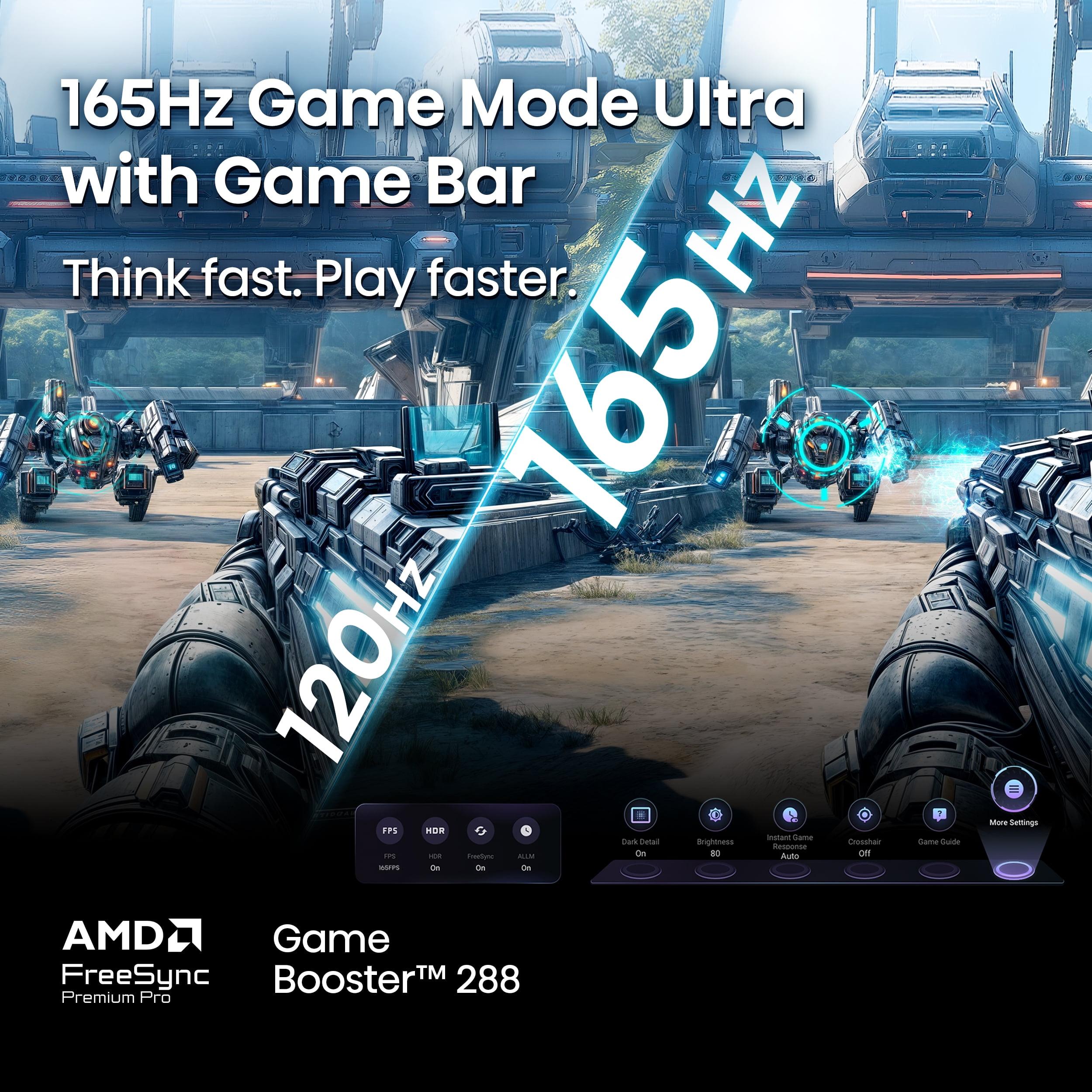
The Hisense U8 transforms gaming into something closer to what you'd experience on a dedicated gaming monitor. The 144Hz native refresh rate supports high frame rate gaming, while VRR technology eliminates screen tearing by synchronizing the TV's refresh rate with your console's output. AMD FreeSync Premium Pro support extends this compatibility to PC gaming. The dedicated Game Bar interface lets you monitor frame rates and adjust settings without leaving your game.
For competitive gaming—first-person shooters, racing games, or fighting games where split-second timing matters—the Hisense U8 provides a significant advantage. Input lag is measurably lower, and the higher refresh rate makes fast movement appear smoother and more predictable.
The choice between Fire TV and Google TV represents more than just interface preferences—it affects your daily interaction with the TV and integration with other devices.
The Toshiba M550 runs Amazon's Fire TV platform, which prioritizes Amazon's content ecosystem. If you're already an Amazon Prime subscriber and use Alexa devices throughout your home, this integration feels natural. The interface prominently features Amazon Prime Video content alongside other streaming services. However, based on user reviews we've analyzed, the Fire TV implementation on this model suffers from performance issues. The TV's processor appears underpowered for the software, leading to slow response times and occasional freezing that can be frustrating during daily use.
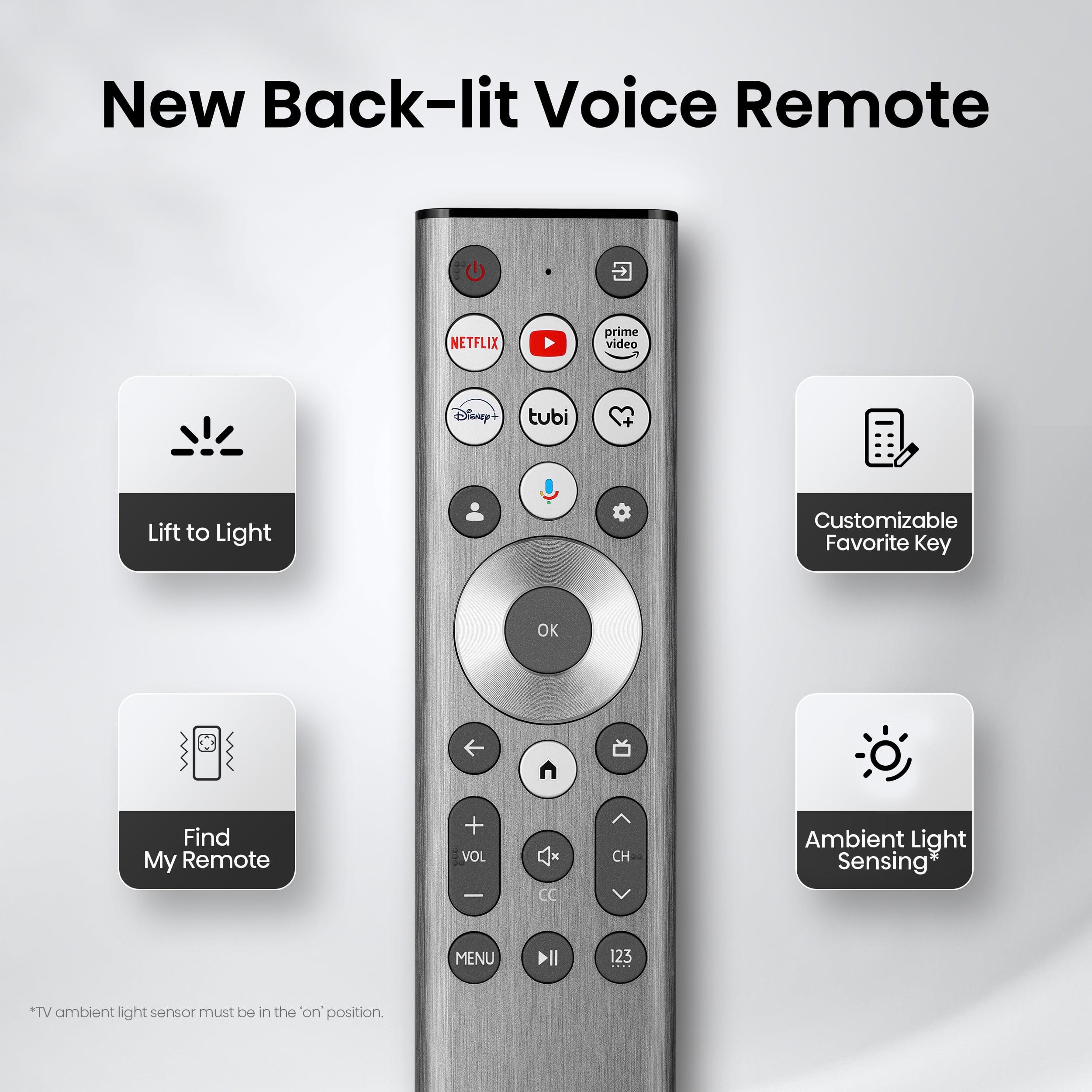
The Hisense U8 uses Google TV, which evolved from Android TV to become more user-friendly and content-focused. Google TV excels at aggregating content across different streaming services—it can show you all available Marvel movies regardless of whether they're on Netflix, Disney+, or available for rent. The universal search function works particularly well, and the integration with Google Assistant and Google Home devices is seamless if you're already in that ecosystem.
From a performance standpoint, the Hisense U8 handles the smart TV functions much more smoothly. Apps load faster, navigation feels responsive, and the overall experience is more polished. This might seem like a minor consideration, but when you're using these features daily, the difference in responsiveness becomes significant.
TV audio has improved dramatically across the board in recent years, but these two models approach sound very differently.
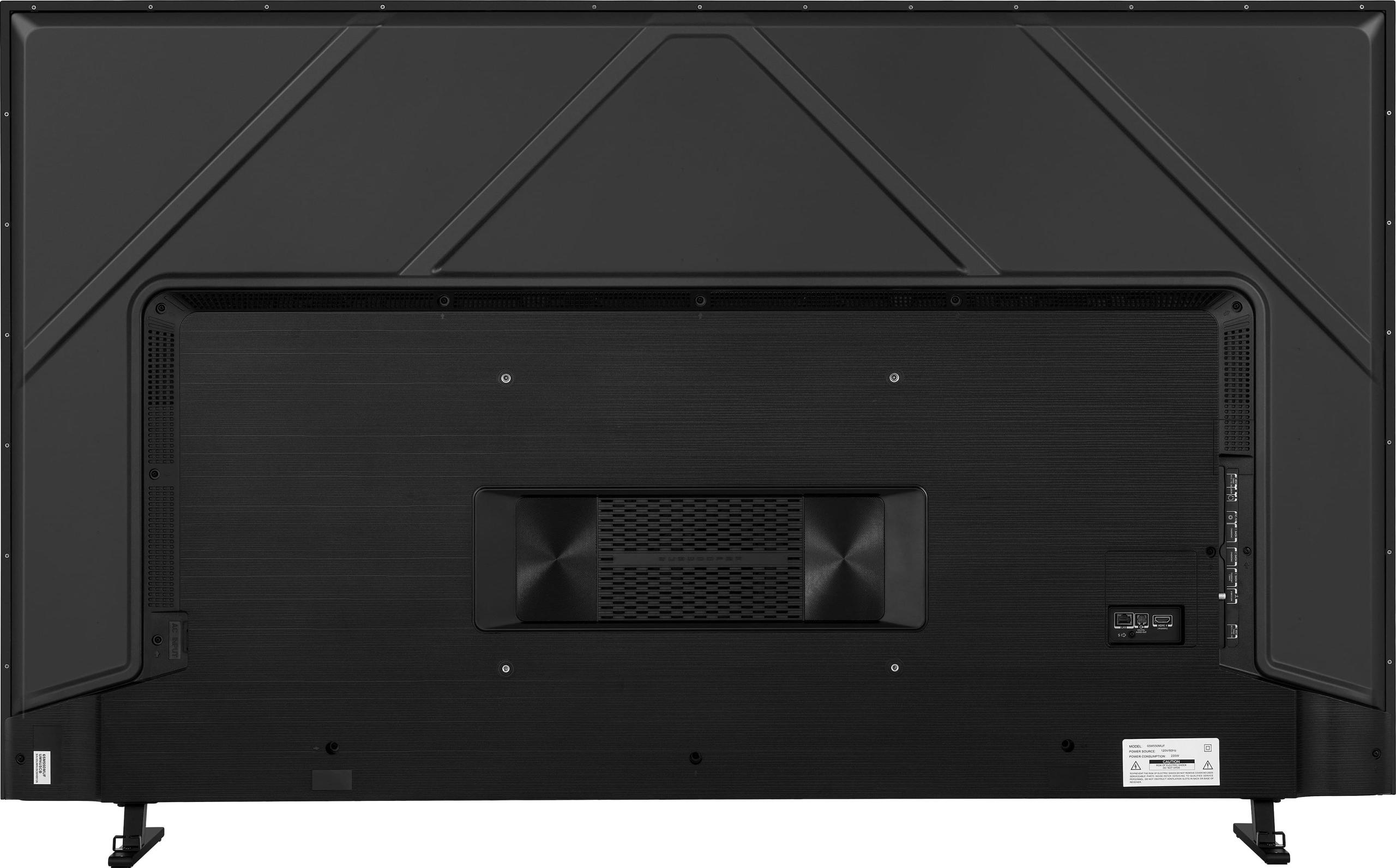
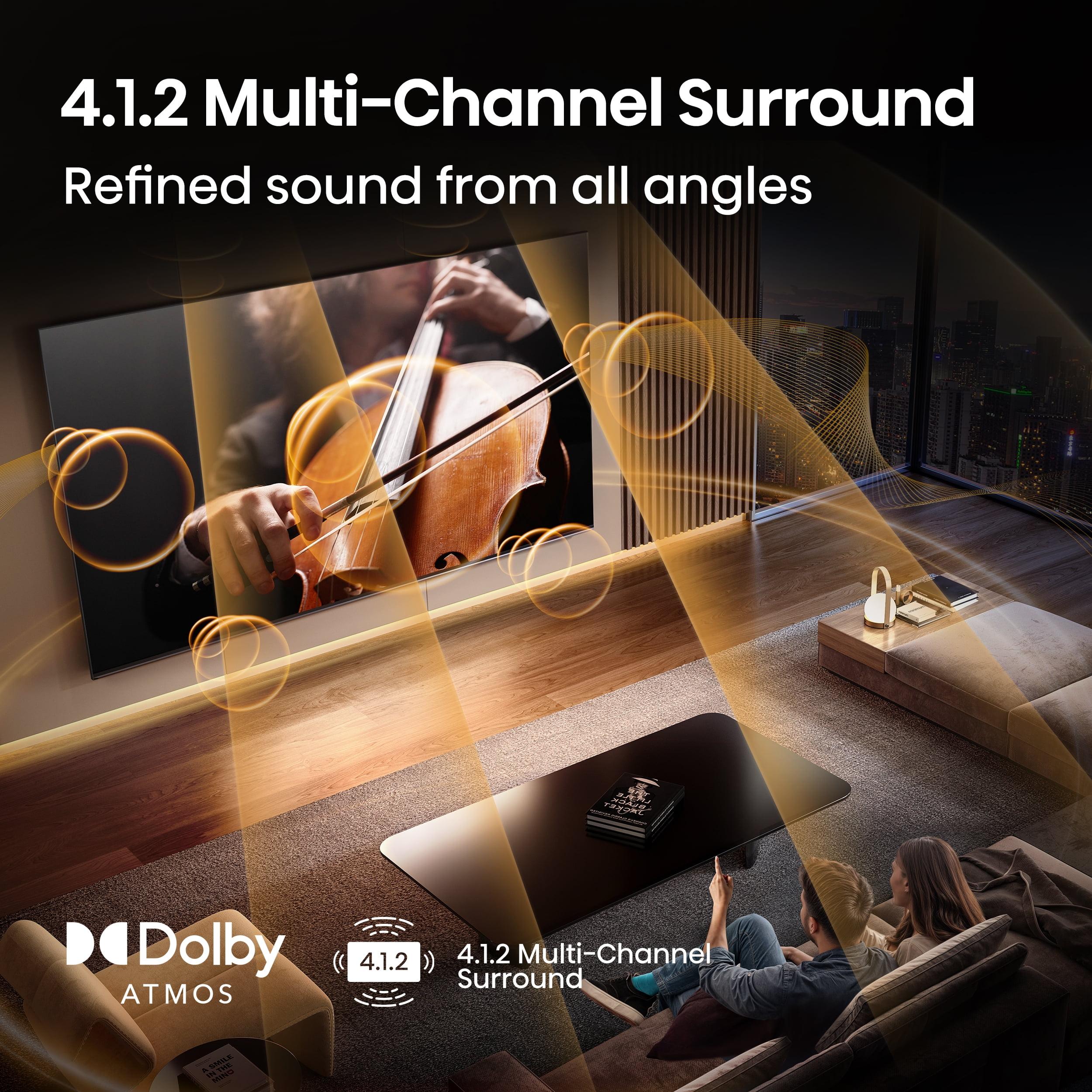
The Toshiba M550 includes a 2.1 channel system with 40 watts of power and basic Dolby Atmos support. The sound is adequate for casual viewing—dialogue comes through clearly, and there's enough bass response for most content. However, professional reviews note that the audio lacks the depth and immersion that modern content deserves, particularly when watching action movies or concerts.
The Hisense U8 takes audio seriously with a 50-watt 2.1.2 multi-channel system that includes dedicated upward-firing speakers for true Dolby Atmos effects. This means sound can appear to come from above you, creating a more three-dimensional audio experience. The built-in subwoofer provides genuine low-frequency impact that you'll feel during explosion scenes or musical performances.
Having experienced both types of TV audio systems, the difference is immediately noticeable. The Hisense U8 often eliminates the need for a separate soundbar, which can save you both money and setup complexity. While serious audiophiles will still prefer dedicated audio equipment, the built-in sound is impressive enough for most home theater setups.
At the time of writing, these TVs target completely different budget ranges, and understanding the value proposition of each helps clarify which makes sense for your situation.
The Toshiba M550 represents exceptional value for buyers prioritizing screen size over premium features. You're getting a 65-inch 4K QLED display with smart TV functionality at a price point that was unimaginable just a few years ago. For families who primarily watch streaming content, cable TV, and occasional movies, the picture quality is genuinely satisfying. The limitations we've discussed—processing lag, motion handling issues, limited gaming features—won't significantly impact casual viewing experiences.
The Hisense U8 costs significantly more but delivers performance that competes with TVs priced even higher. You're getting Mini-LED display technology, advanced gaming features, superior audio, and a more responsive smart TV experience. For the target audience—gaming enthusiasts, sports fans, and home theater aficionados—the additional cost translates to daily improvements in viewing experience.
If you're building a dedicated home theater or treating your living room as a primary entertainment space, several factors favor the Hisense U8.
The higher peak brightness means HDR content displays with the dramatic impact that creates that "wow" moment when showing off your setup to friends and family. The superior local dimming creates the deep blacks essential for cinematic experiences, particularly when watching movies in a darkened room. The advanced motion processing eliminates the soap opera effect and judder that can distract from movie immersion.
The Toshiba M550 can certainly anchor a home theater setup, but you'll likely want to invest in a soundbar and accept that the HDR experience won't be as impactful. For more casual home theater setups where the TV is primarily background entertainment, these limitations are less significant.
Choose the Toshiba M550 if you're primarily focused on getting a large 4K screen at an accessible price point. This TV excels for families who watch a mix of streaming content, cable television, and occasional movies. If gaming isn't a priority and you don't have a bright living room that requires high peak brightness, the M550 provides solid performance that most viewers will find satisfying. The Fire TV platform works well if you're already integrated into Amazon's ecosystem.
Choose the Hisense U8 if you want a TV that can handle anything you throw at it. The superior gaming features make it ideal for PlayStation 5 or Xbox Series X owners who want to experience next-generation gaming properly. The dramatically better HDR performance transforms movie watching, particularly for action films and nature documentaries. If you have a bright living room or watch a lot of sports, the higher peak brightness and better motion handling justify the additional investment.
The performance gap between these TVs is significant enough that if budget allows, the Hisense U8 provides substantially more capability for the money. However, the Toshiba M550 serves its intended market well—buyers who want solid 4K performance without paying premium prices.
Both TVs reflect how much the TV market has evolved since 2020. Features that were exclusive to flagship models are now available at mainstream prices, and the overall quality of displays has improved dramatically across all price ranges. Whatever you choose, you're getting significantly more TV than the same money would have bought just a few years ago.
| Toshiba 65" M550 Series QLED Fire TV | Hisense 65" U8 Series Mini-LED ULED 4K Google TV |
|---|---|
| Display Technology - Core difference affecting picture quality and price | |
| Traditional QLED with 48 local dimming zones | Mini-LED Pro+ with 2000+ local dimming zones |
| Peak Brightness - Critical for HDR content and bright room viewing | |
| ~600 nits (adequate for controlled lighting) | 3000-5000 nits (excellent for any room lighting) |
| Gaming Refresh Rate - Essential for next-gen console gaming | |
| 60Hz native (basic gaming only) | 144Hz native with VRR 48-144Hz (premium gaming experience) |
| Gaming Features - Determines compatibility with PS5/Xbox Series X | |
| Basic Game Mode Plus | AMD FreeSync Premium Pro, ALLM, Dolby Vision Gaming |
| Audio System - Affects whether you need a separate soundbar | |
| 40W 2.1 channel with basic Dolby Atmos | 50W 2.1.2 channel with true Dolby Atmos and subwoofer |
| Smart TV Platform - Your daily interface experience | |
| Fire TV with Alexa (slower performance reported) | Google TV with Google Assistant (faster, more responsive) |
| Motion Handling - Important for sports and action content | |
| 60Hz with basic motion processing (struggles with fast scenes) | 144Hz with advanced motion processing (smooth action) |
| HDR Performance - How dramatic movies and shows will look | |
| Dolby Vision, HDR10+ (limited by brightness) | Dolby Vision, HDR10+ with AI enhancement (cinema-quality) |
| Anti-Glare Technology - Reduces reflections in bright rooms | |
| Standard QLED panel | Anti-Glare Low Reflection Pro coating |
| Connectivity - Future-proofing for new devices | |
| HDMI 2.0 ports, Wi-Fi 6 | Full HDMI 2.1 bandwidth, Wi-Fi 6E, USB-C charging |
| Warranty Coverage - Peace of mind for your investment | |
| 1 year standard warranty | 2 years (double industry standard) |
| Target Buyer - Who each TV is designed for | |
| Budget-conscious families seeking basic 4K quality | Gamers and home theater enthusiasts wanting premium features |
The Hisense 65" U8 Series Mini-LED ULED 4K Google TV delivers significantly better picture quality for movies. It features Mini-LED technology with over 2000 local dimming zones compared to the Toshiba 65" M550 Series QLED Fire TV's 48 zones, resulting in deeper blacks and more precise contrast. The Hisense also reaches 3000-5000 nits peak brightness versus the Toshiba's ~600 nits, making HDR movies appear more dramatic and lifelike.
The Hisense U8 Series is far superior for next-gen gaming. It offers 144Hz native refresh rate with Variable Refresh Rate (VRR) support, AMD FreeSync Premium Pro, and Auto Low Latency Mode. The Toshiba M550 is limited to 60Hz with basic game mode, lacking the advanced gaming features that unlock the full potential of PlayStation 5 and Xbox Series X consoles.
The Toshiba M550 runs Amazon Fire TV with Alexa integration, which works well if you're already in Amazon's ecosystem but can be slow to respond. The Hisense U8 uses Google TV, which offers better universal search across streaming services, faster performance, and seamless integration with Google Assistant and smart home devices.
The Toshiba M550 offers exceptional value for budget-conscious buyers who want a large 4K QLED display without premium features. The Hisense U8 costs significantly more but provides premium performance that competes with even higher-priced TVs, making it better value for users who want advanced gaming, superior HDR, and home theater capabilities.
The Hisense U8 Series has a much better audio system with 50W 2.1.2 channel speakers, true Dolby Atmos with upward-firing drivers, and a built-in subwoofer. The Toshiba M550 features a basic 40W 2.1 system that's adequate for casual viewing but may require a soundbar for immersive movie experiences.
The Hisense U8 excels in bright rooms with its 3000-5000 nits peak brightness and Anti-Glare Low Reflection Pro coating that reduces reflections. The Toshiba M550 with its ~600 nits brightness may struggle with glare and appear washed out in very bright living spaces.
The key gaming difference is refresh rate and features. The Hisense U8 offers 144Hz gaming with VRR, FreeSync Premium Pro, and dedicated gaming interface, while the Toshiba M550 is limited to 60Hz with basic game mode. This makes the Hisense ideal for competitive gaming and the Toshiba suitable only for casual gaming.
The Hisense U8 Series provides superior motion handling with its 144Hz panel and advanced motion processing, making fast-paced sports appear smooth and clear. The Toshiba M550 with 60Hz can struggle with motion blur during quick camera movements and fast action sequences.
The Hisense U8 includes a 2-year warranty, which is double the industry standard and provides better long-term protection. The Toshiba M550 comes with a standard 1-year warranty covering parts and labor.
For dedicated home theater use, the Hisense U8 Series is the clear choice. Its Mini-LED technology creates cinema-quality contrast, the high peak brightness makes HDR content spectacular, and the built-in Dolby Atmos system often eliminates the need for additional speakers. The Toshiba M550 can work in a home theater but will require additional audio equipment and won't deliver the same HDR impact.
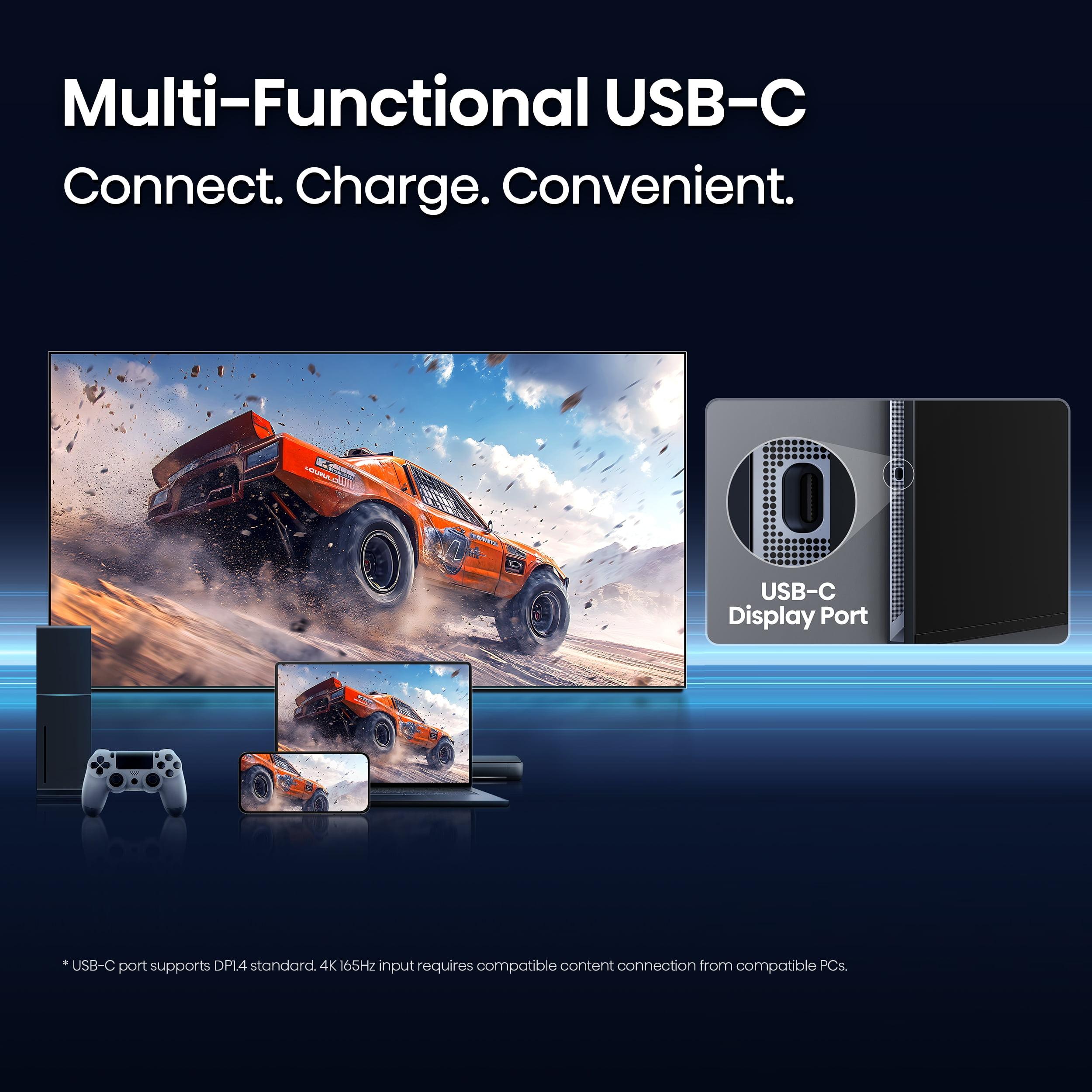
The Hisense U8 offers more future-proof connectivity with full HDMI 2.1 bandwidth, Wi-Fi 6E, and USB-C charging capability. The Toshiba M550 has HDMI 2.0 ports and Wi-Fi 6, which are adequate for current devices but may limit compatibility with future high-bandwidth devices.
For casual streaming, the Toshiba M550 provides solid 4K quality at a budget-friendly price and works well with popular streaming apps through Fire TV. However, if you watch a lot of HDR content on Netflix, Disney+, or other premium services, the Hisense U8 will deliver a dramatically better viewing experience with its superior brightness and contrast capabilities.
We've done our best to create useful and informative comparisons to help you decide what product to buy. Our research uses advanced automated methods to create this comparison and perfection is not possible - please contact us for corrections or questions. These are the sites we've researched in the creation of this article: bestbuy.com - bestbuy.com - consumerreports.org - youtube.com - pcvarge.com - tomsguide.com - youtube.com - bestbuy.com - toshibatv-usa.com - marketplace-staging.paytomorrow.com - toshibatv-usa.com - productabout.com - leaseville.com - youtube.com - toshibatv-usa.com - bestbuy.com - hisense-usa.com - rtings.com - bestbuy.com - rtings.com - hisense-usa.com - youtube.com - hisense-usa.com - avsforum.com - hisense-usa.com - hisense-usa.com - rtings.com - avsforum.com - hisense-usa.com - prnewswire.com - hisense-usa.com - bestbuy.com - youtube.com - hisense-usa.com

Privacy Policy
Terms and Conditions - Affiliate Policy
Home Security
© Copyright 2008-2026.
11816 Inwood Rd #1211, Dallas, TX 75244