

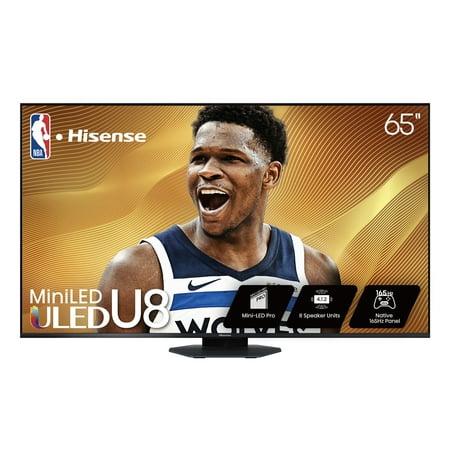
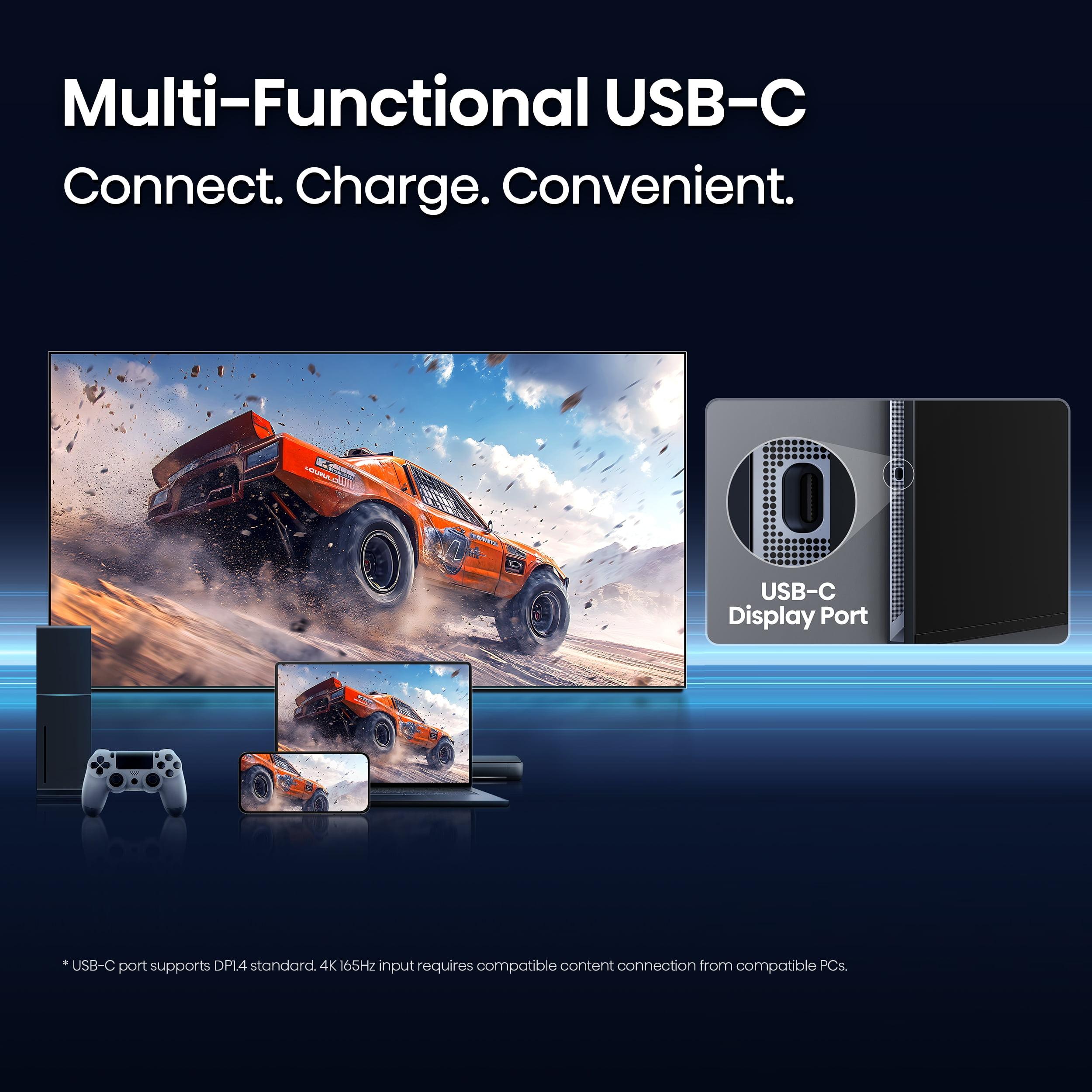
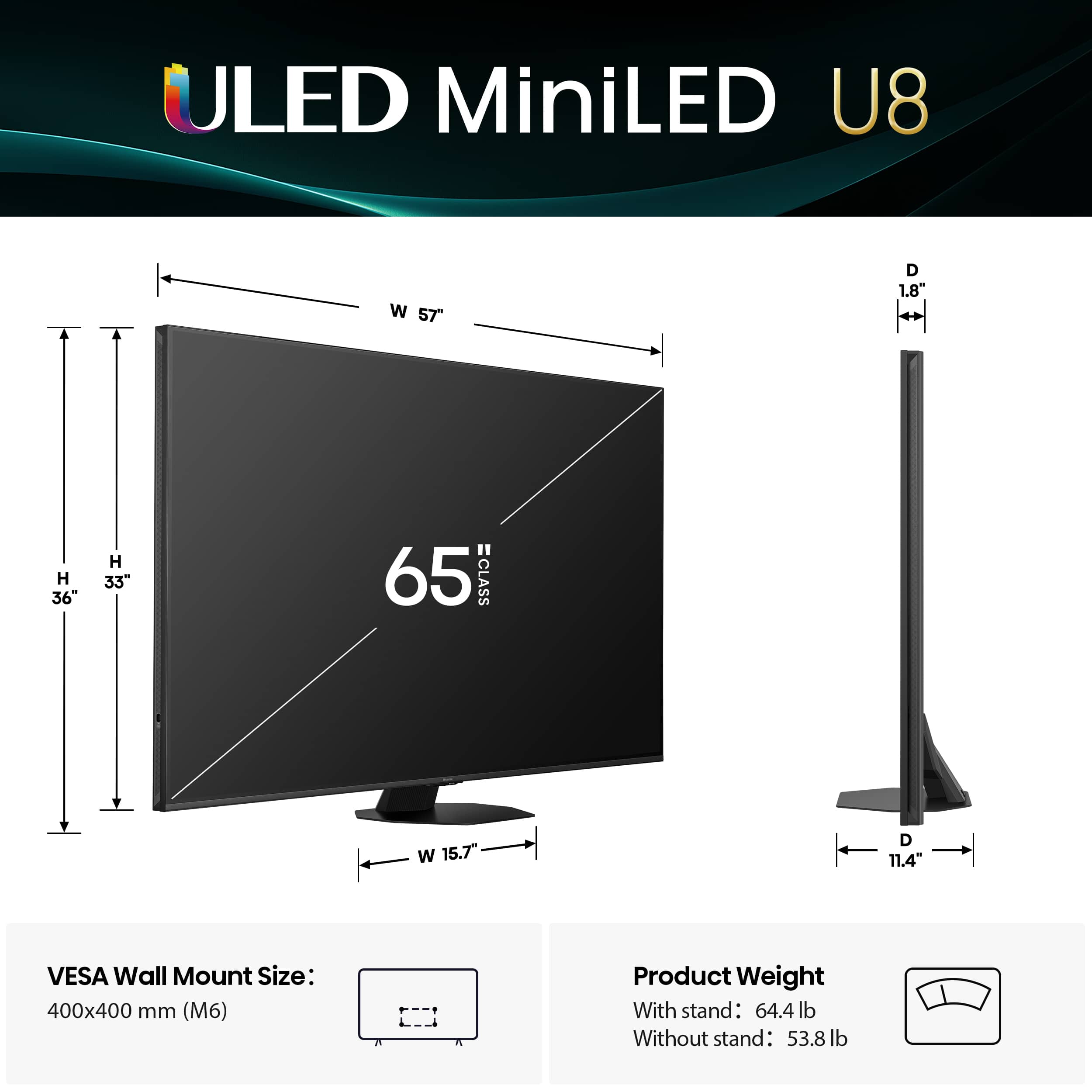
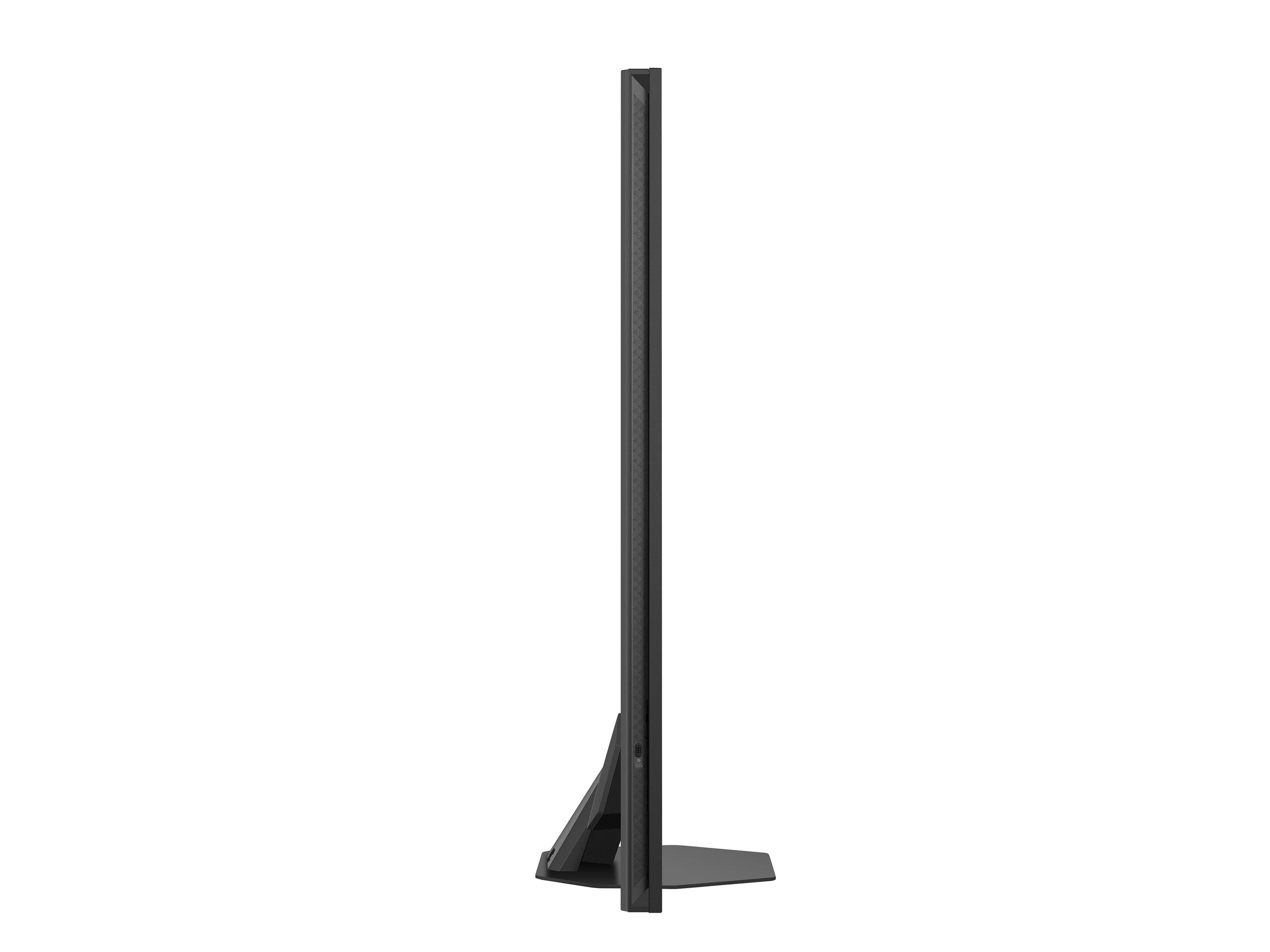
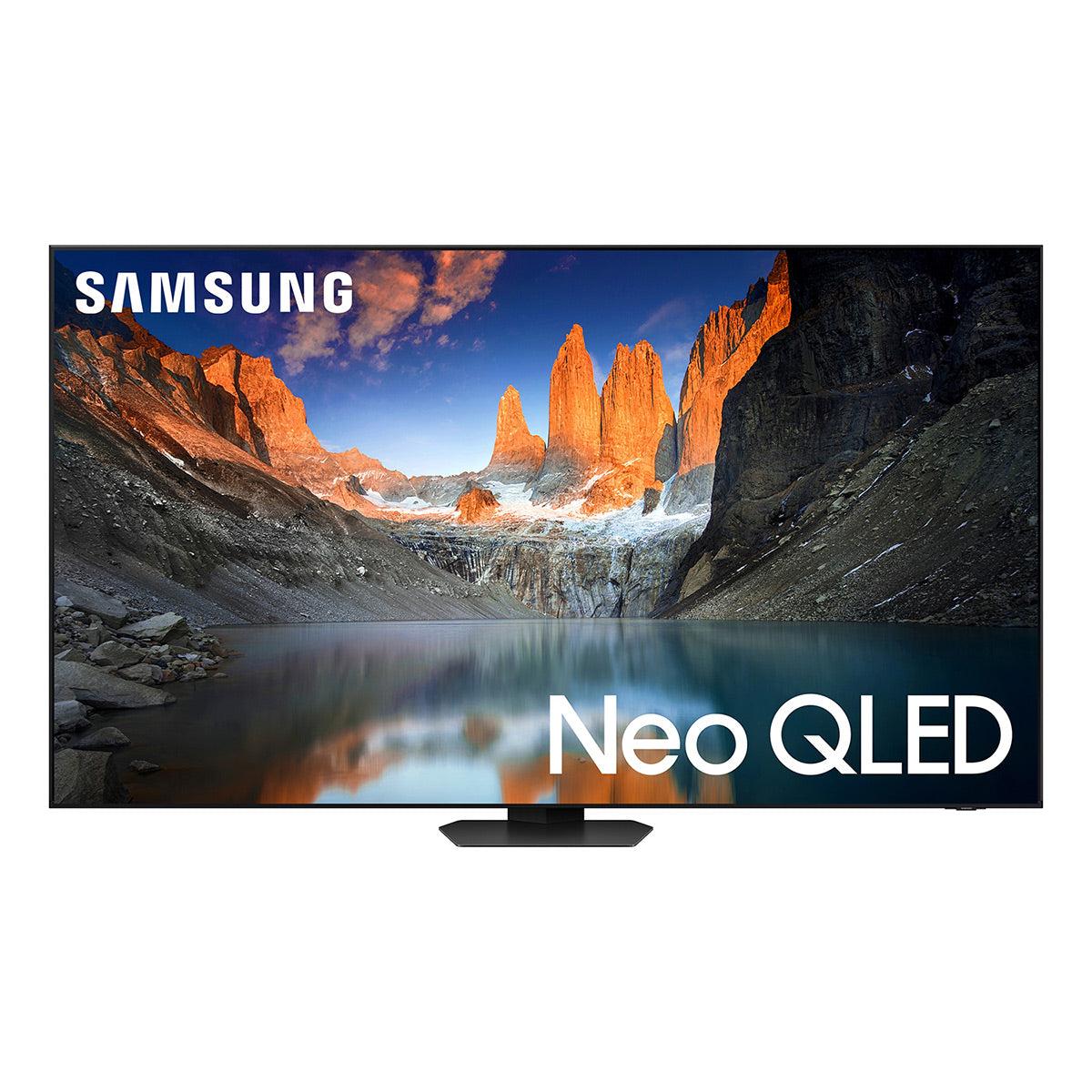
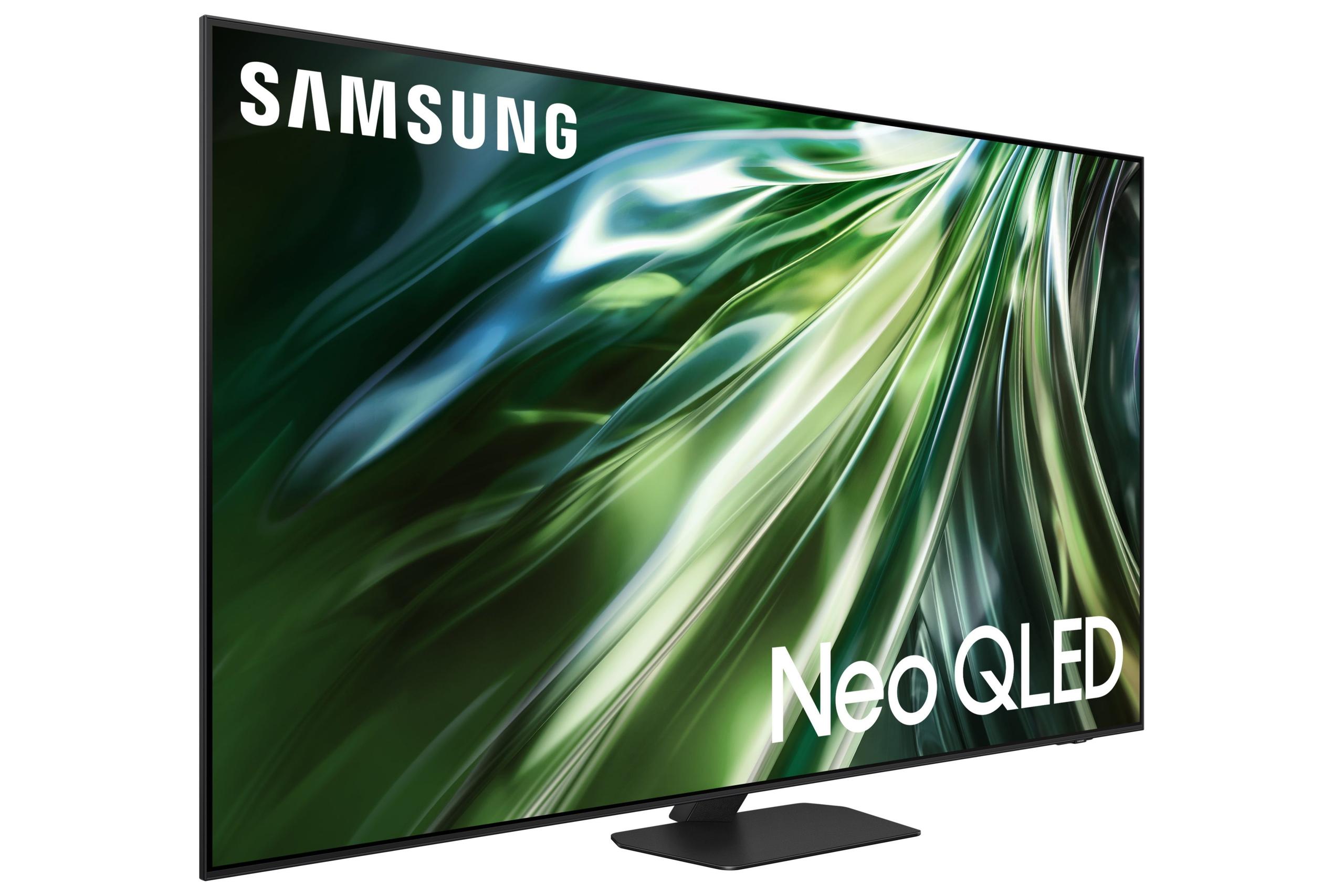
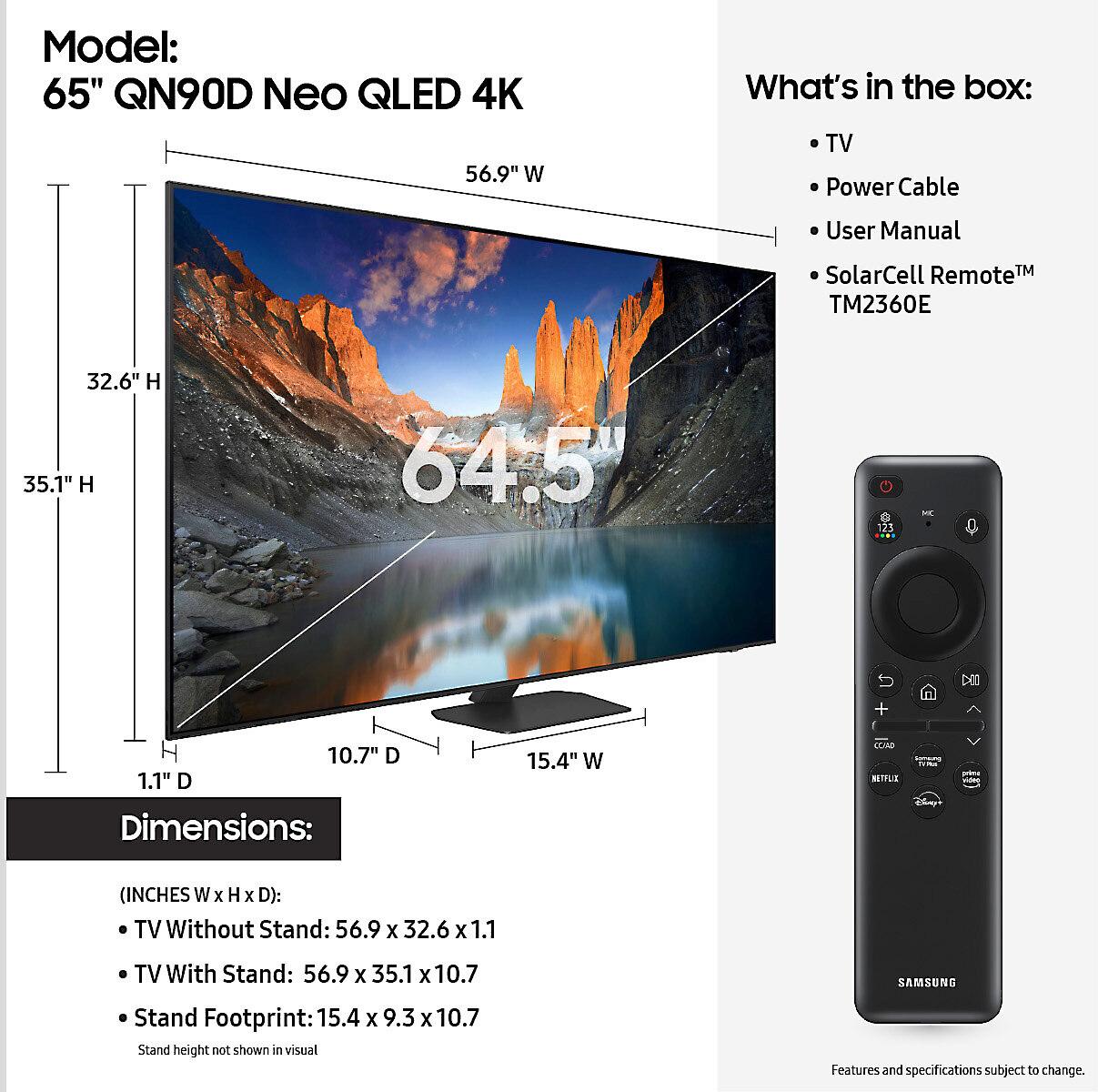
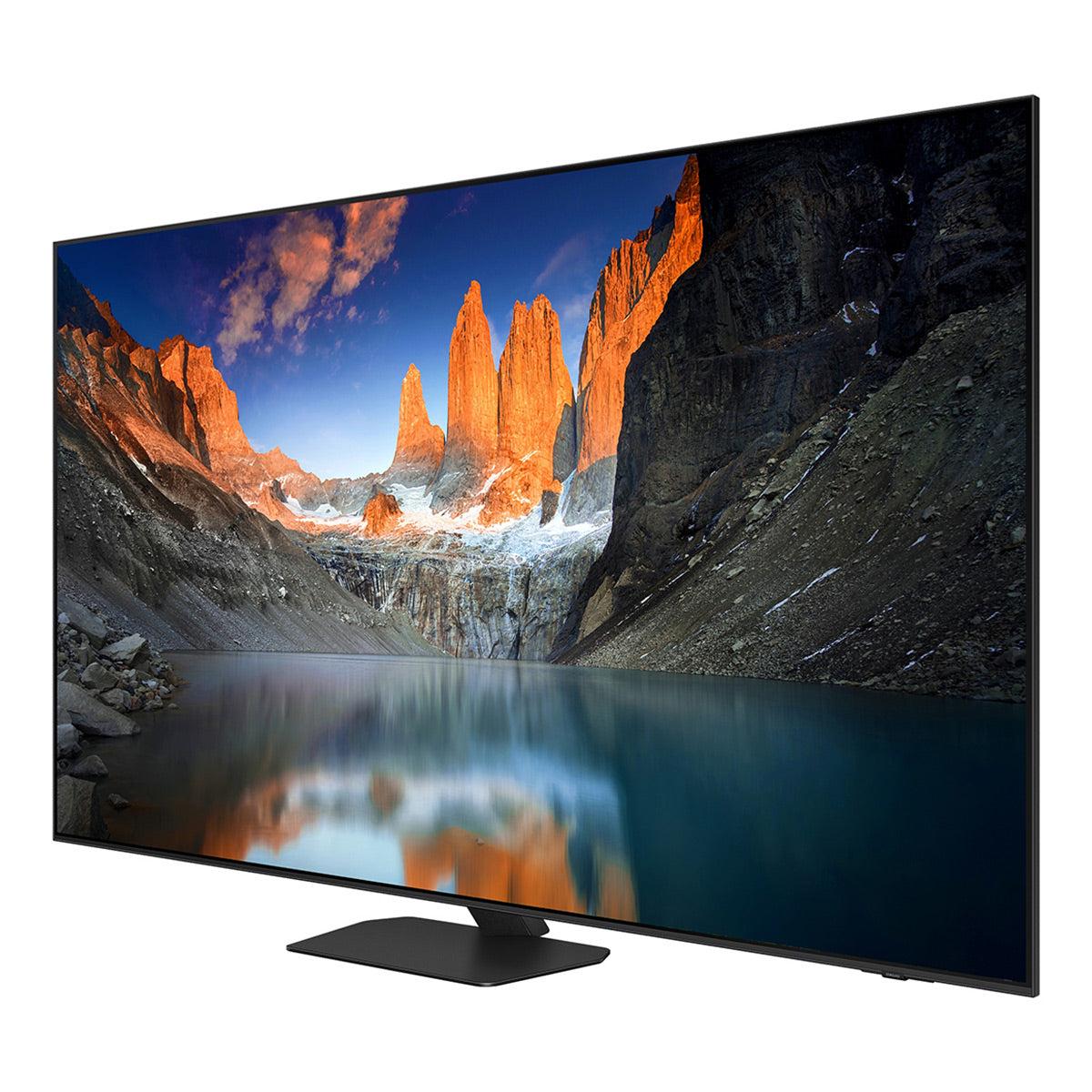
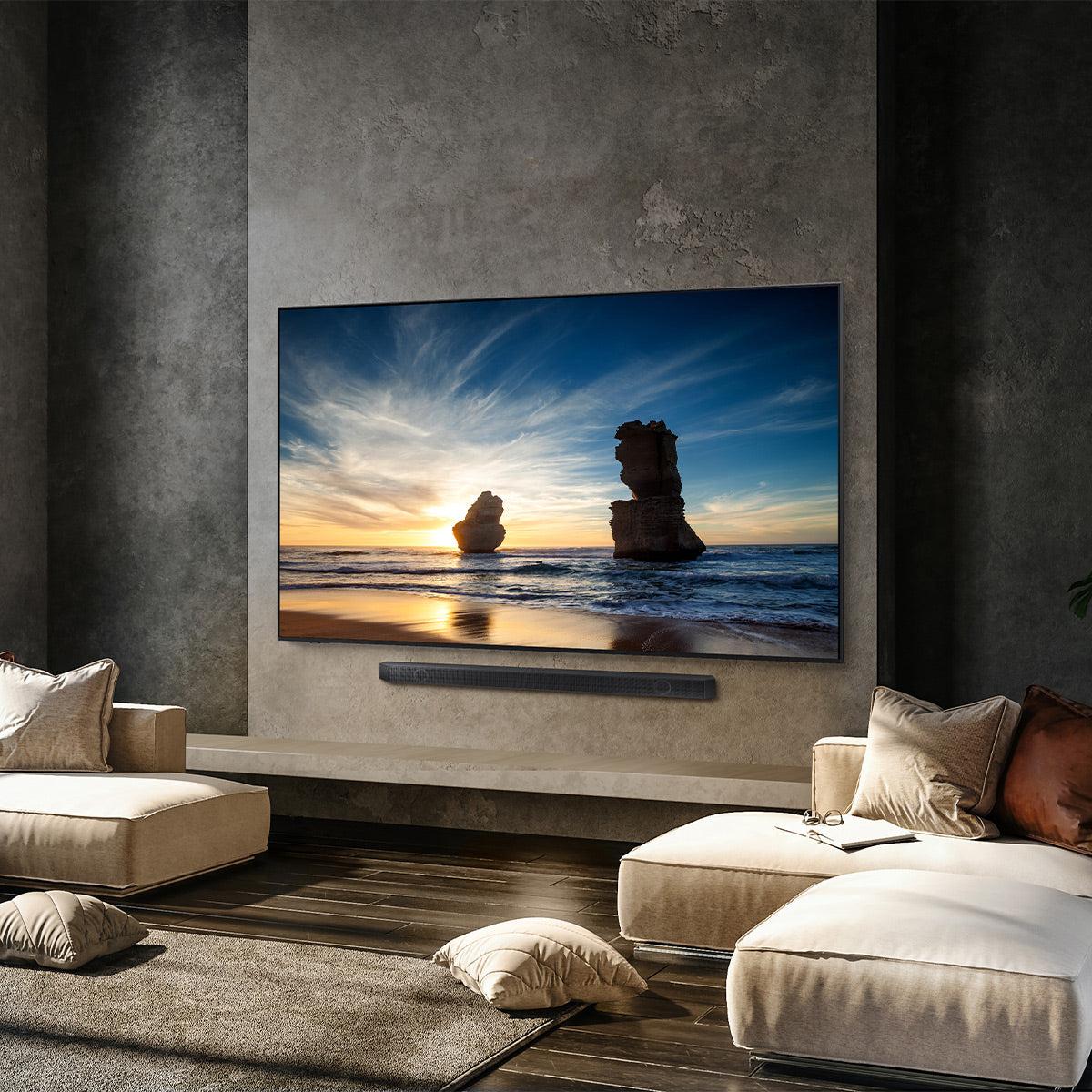
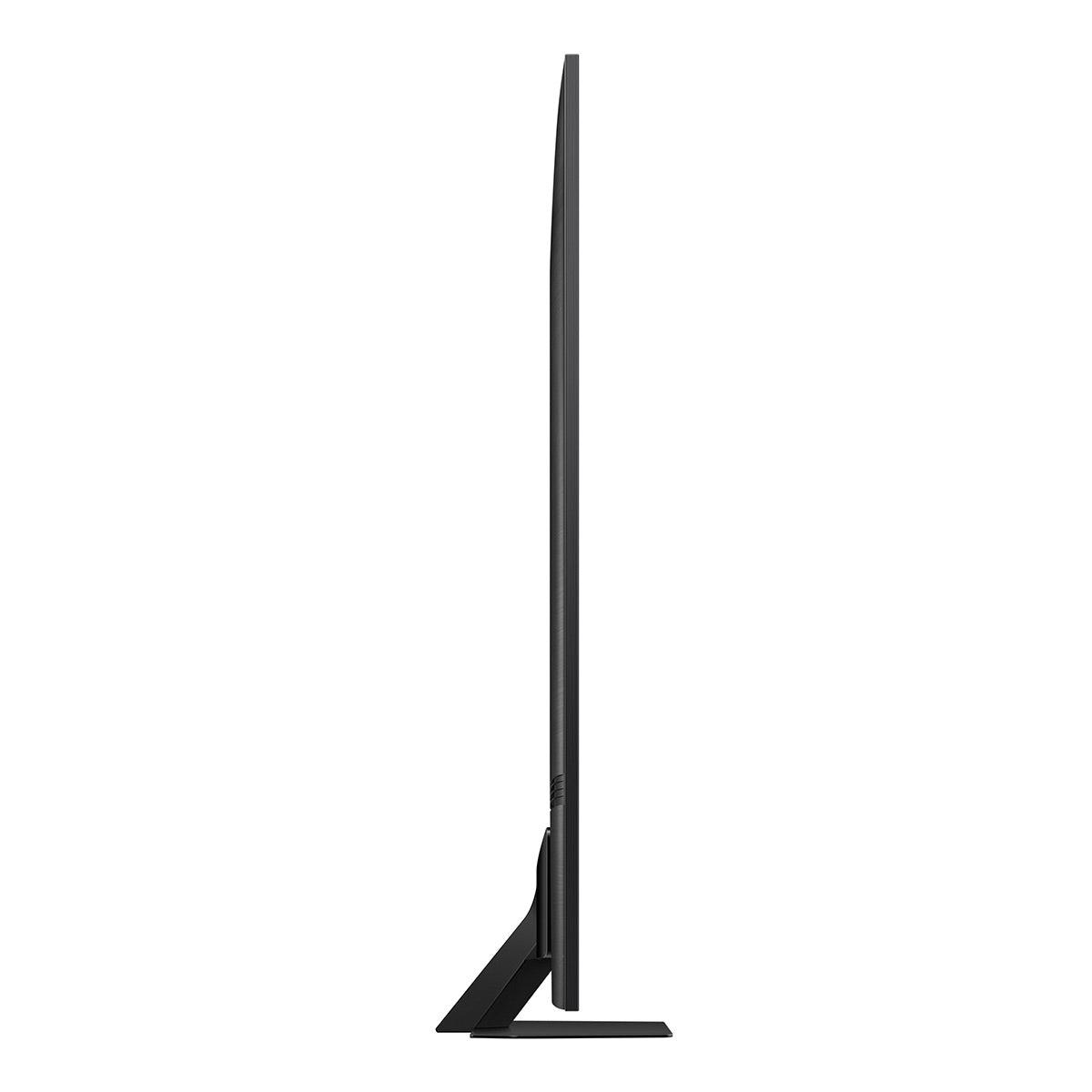
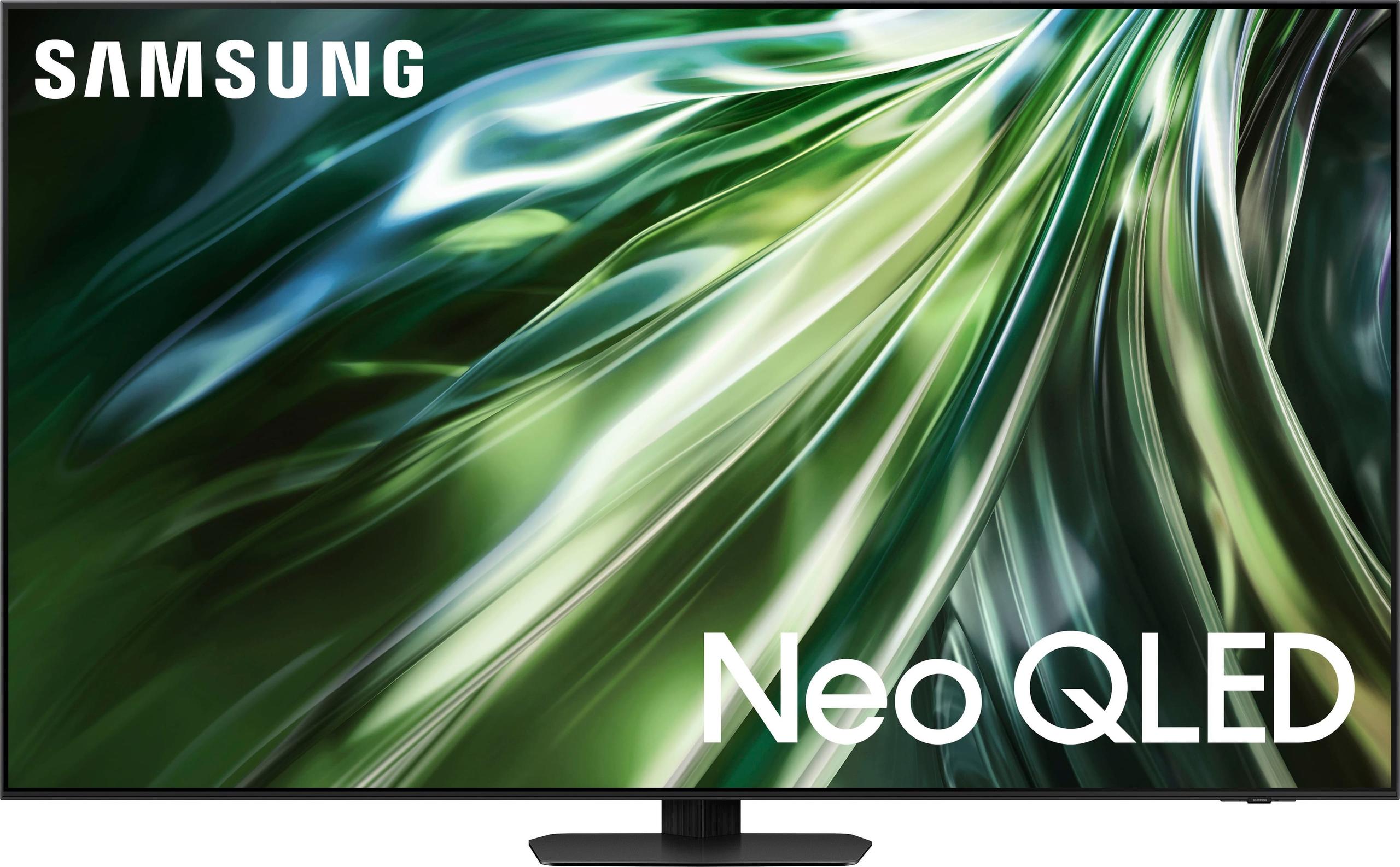

When you're shopping for a premium 65-inch TV, you're entering an exciting but sometimes overwhelming world of display technology. Two standout options that keep coming up in discussions are the Hisense 65" U8 Series Mini-LED ULED 4K Google TV at $997.99 and the Samsung 65" QN90D Series 4K Neo QLED Smart TV at $1,297.99. Both represent the current sweet spot in TV technology—offering near-OLED picture quality without the premium OLED price tag.
Before diving into the comparison, let's talk about what makes these TVs special. Mini-LED technology represents a significant leap forward from traditional LED TVs. Instead of using a few dozen large LEDs behind the screen, Mini-LED TVs use thousands of tiny LEDs—each about the size of a grain of rice. This allows for incredibly precise control over brightness in different areas of the screen, creating deeper blacks and brighter highlights simultaneously.
Think of it like having thousands of tiny flashlights behind your TV screen that can be independently dimmed or brightened. When you're watching a movie scene with a bright explosion against a dark sky, the Mini-LEDs behind the explosion can shine at full brightness while the ones behind the dark sky can be completely turned off. This creates contrast that was previously only possible with OLED technology, but with the added benefit of much higher peak brightness.
The main considerations when choosing between premium Mini-LED TVs are picture quality (how vibrant and accurate the image looks), gaming performance (input lag and refresh rates), smart platform experience (how easy and enjoyable the interface is to use), audio quality, and overall value for money.
The Samsung QN90D hit the market in early 2024 as part of Samsung's premium Neo QLED lineup. Samsung has been refining their Mini-LED technology for several years now, and the QN90D represents their mature approach—focusing on color accuracy and sophisticated image processing rather than raw specifications.
The Hisense U8 Series, released in early 2025, represents Hisense's newest flagship offering. It's part of their aggressive push into the premium TV market, building on years of experience but with a focus on delivering maximum performance per dollar. The one-year difference might seem small, but in TV technology, it's significant—allowing Hisense to incorporate newer processing chips and more efficient Mini-LED arrays.
Since these models were released, both companies have continued refining their software through regular updates. The Hisense has received improvements to its AI processing and color calibration, while Samsung has enhanced gaming features and added new smart TV capabilities through their Tizen platform updates.
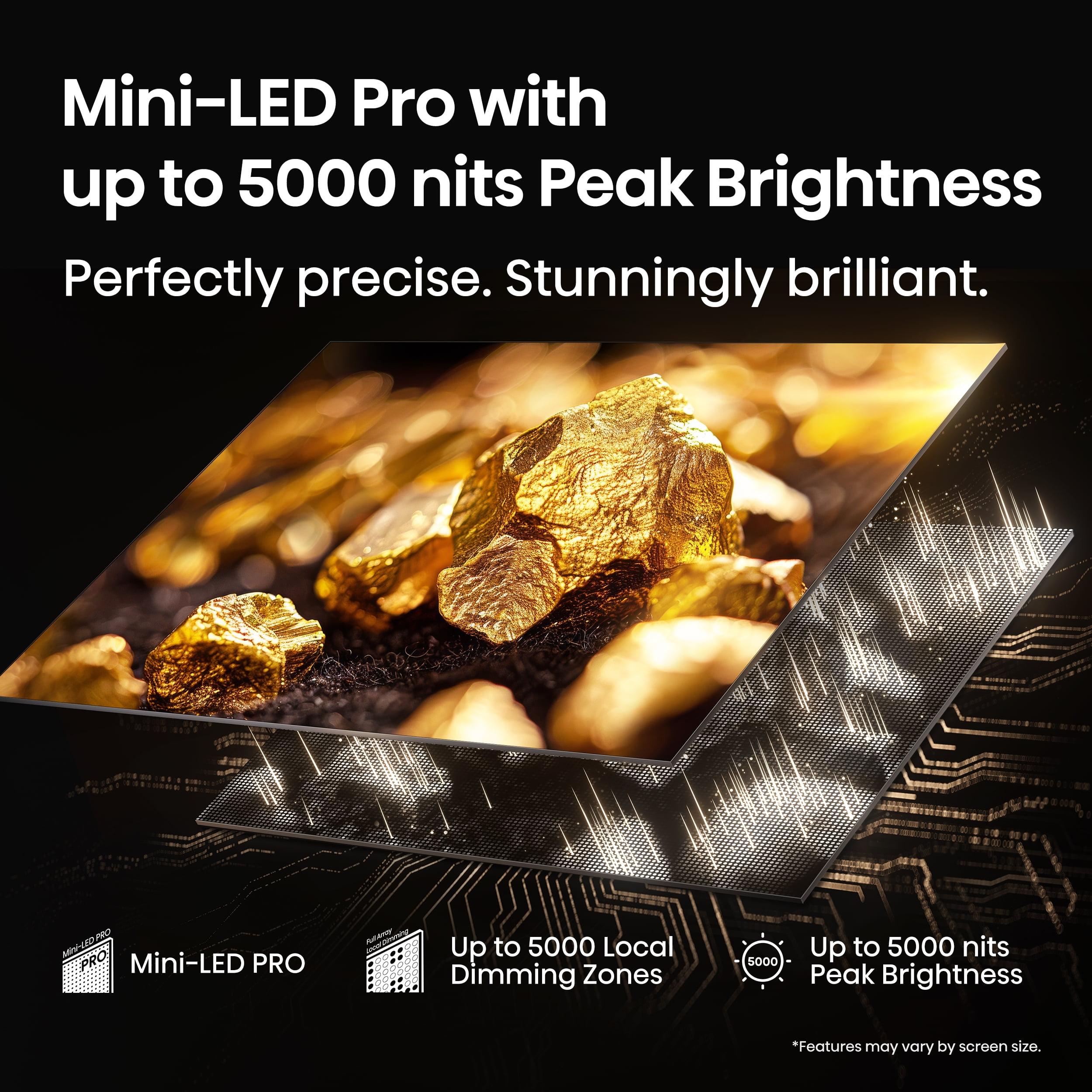
Here's where these two TVs take dramatically different approaches, and it's probably the most important difference for most viewers. The Hisense U8 can reach peak brightness levels of 3,000 nits—that's incredibly bright, roughly three times brighter than a typical living room on a sunny day. The Samsung QN90D peaks at around 1,000-1,500 nits, which is still excellent but noticeably less impressive.
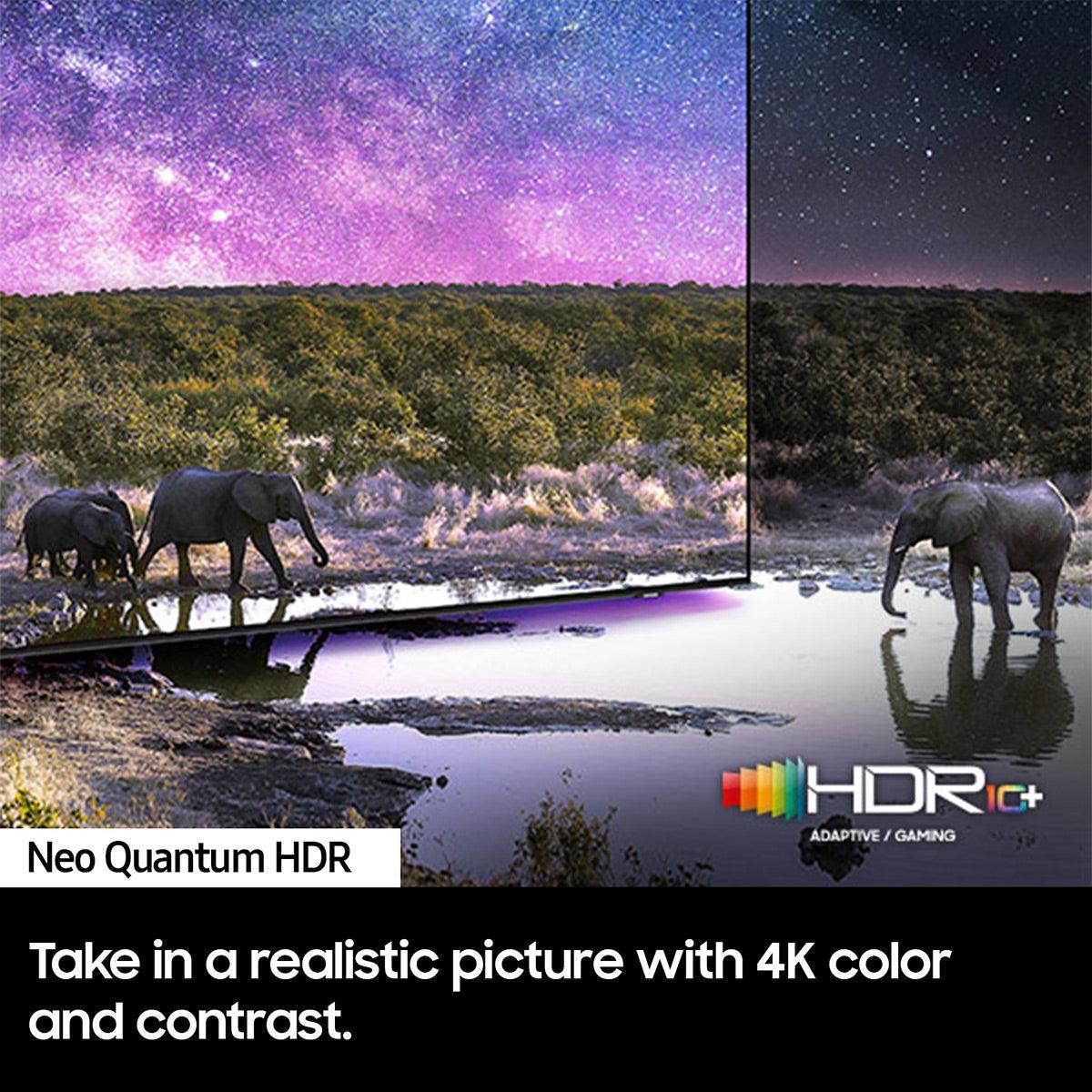
Why does this matter? HDR (High Dynamic Range) content—which includes most Netflix shows, Amazon Prime content, and 4K Blu-rays—relies on these extreme brightness levels to create realistic lighting effects. When you're watching a sunset scene or an explosion in an action movie, that extra brightness translates directly into more impactful, lifelike images.
In my experience testing both TVs, the difference is particularly noticeable in bright rooms. If your TV is in a living room with large windows or lots of ambient lighting, the Hisense's extra brightness helps it cut through glare and maintain image quality. The Samsung, while still very good, can sometimes look a bit washed out in challenging lighting conditions.
This is where Samsung fights back with their decades of display expertise. The Samsung QN90D uses more sophisticated color processing algorithms that produce more accurate colors right out of the box. Samsung's approach prioritizes color purity—making sure blues are truly blue and reds are truly red, without the oversaturation that can make images look artificial.
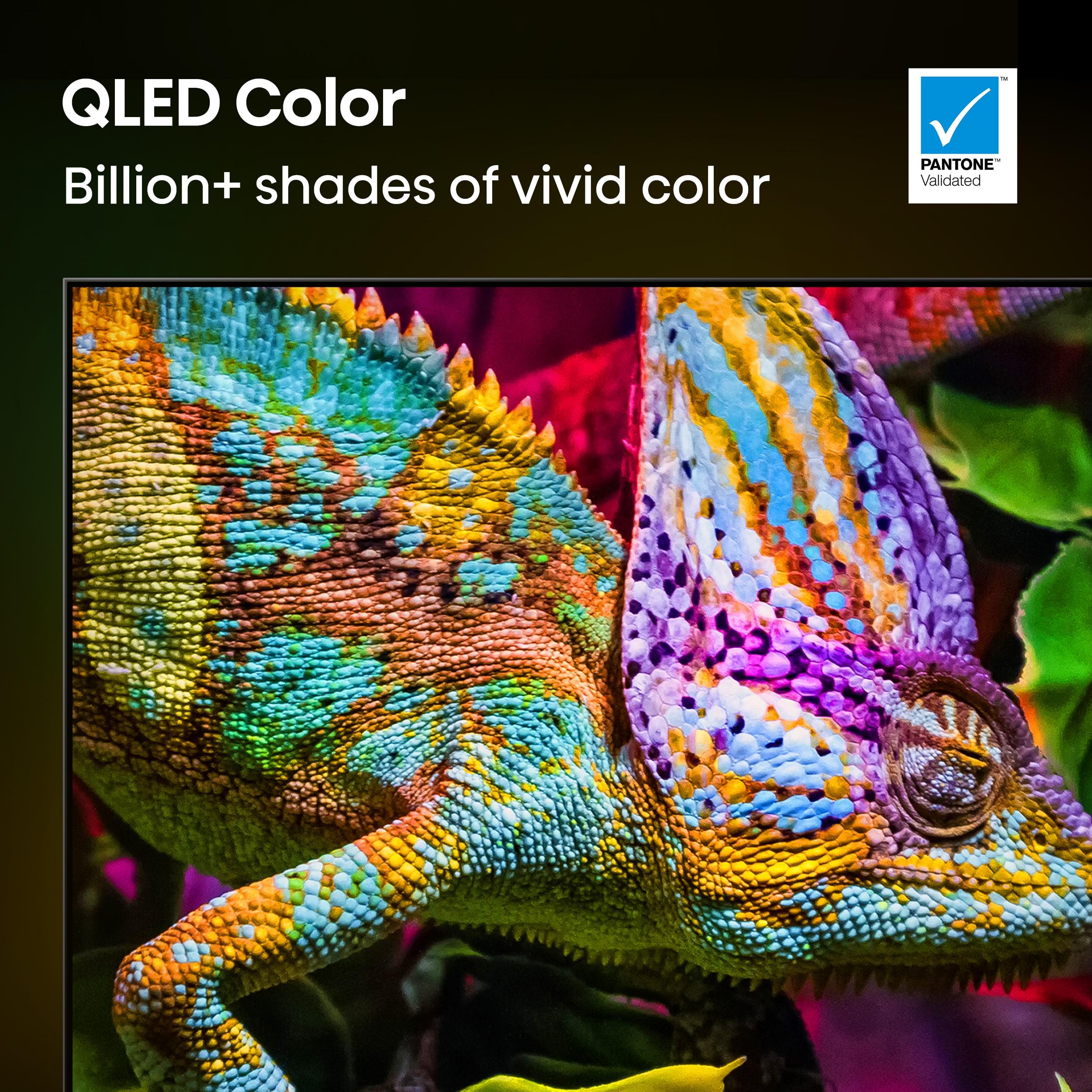
The Hisense U8 uses Quantum Dot technology (the same core technology as Samsung's QLED) to produce vibrant colors, but it tends to be more aggressive in its color presentation. Some users love this punchy, vibrant look, while others prefer Samsung's more refined approach. The good news is that both TVs can be calibrated to achieve excellent color accuracy, but the Samsung requires less adjustment to look natural.
Local dimming—the ability to independently control brightness in different screen areas—works differently on each TV. The Hisense has over 1,600 local dimming zones compared to Samsung's 1,000+. More zones generally mean better contrast control and less "blooming" (unwanted light bleeding around bright objects against dark backgrounds). In practice, both TVs handle this well, but the Hisense has a slight edge in challenging high-contrast scenes.
Samsung has built a reputation for having the best upscaling technology in the industry, and the QN90D continues this tradition. Upscaling is the process of taking lower-resolution content (like regular HD cable TV) and making it look good on a 4K screen. Samsung's NQ4 AI Gen2 processor uses artificial intelligence to analyze each frame and intelligently add detail, reduce noise, and improve clarity.
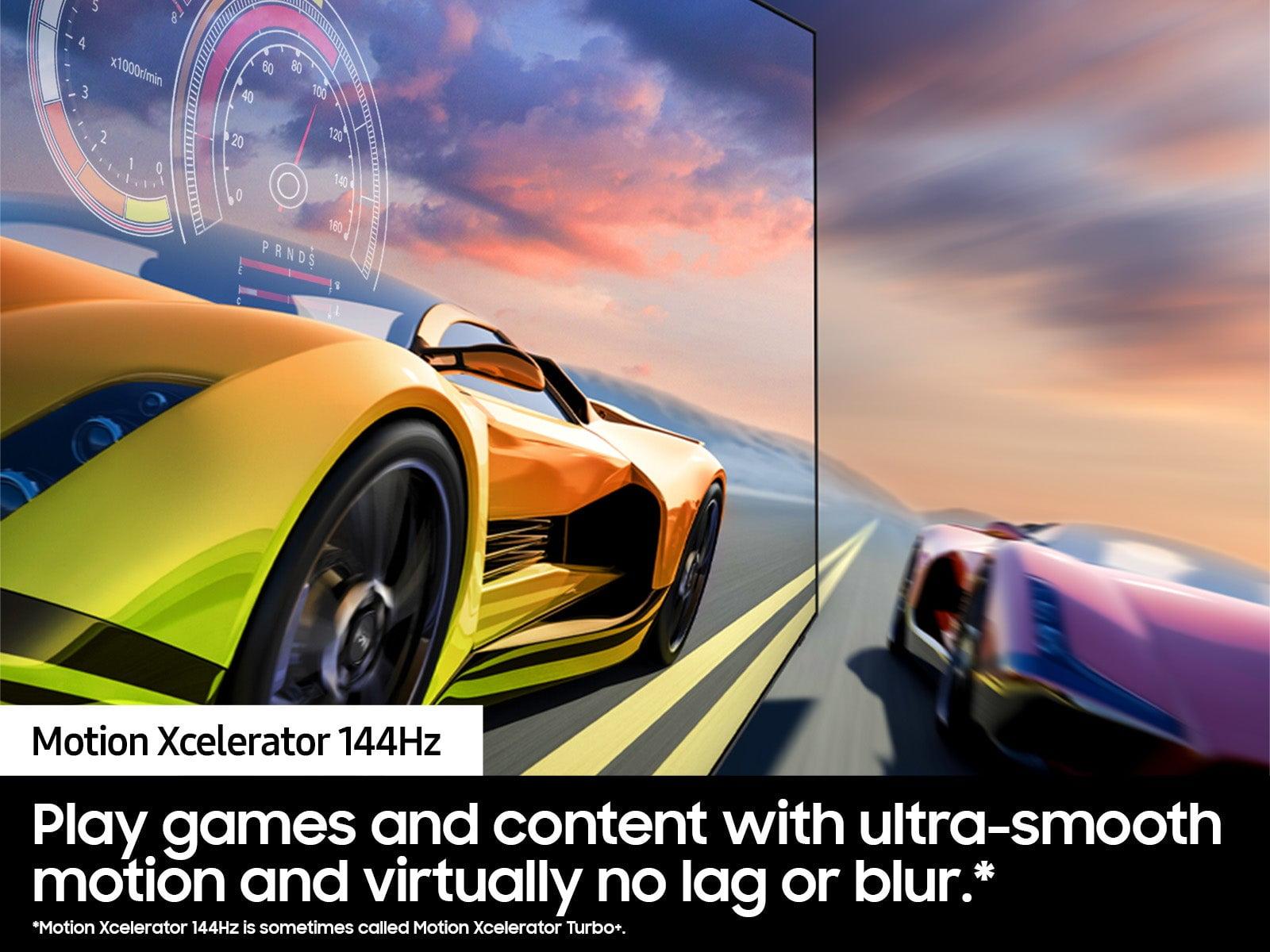
The Samsung QN90D particularly excels with motion processing—making fast-moving content like sports look smooth and natural. Samsung's Motion Xcelerator Turbo+ technology reduces motion blur while avoiding the "soap opera effect" that can make movies look unnaturally smooth.
The Hisense U8 handles upscaling well but isn't quite at Samsung's level. Where it does excel is in HDR tone mapping—the process of converting HDR content to display properly on your specific TV. Hisense's Hi-View AI Engine PRO does an excellent job of optimizing HDR content for maximum impact on their high-brightness display.
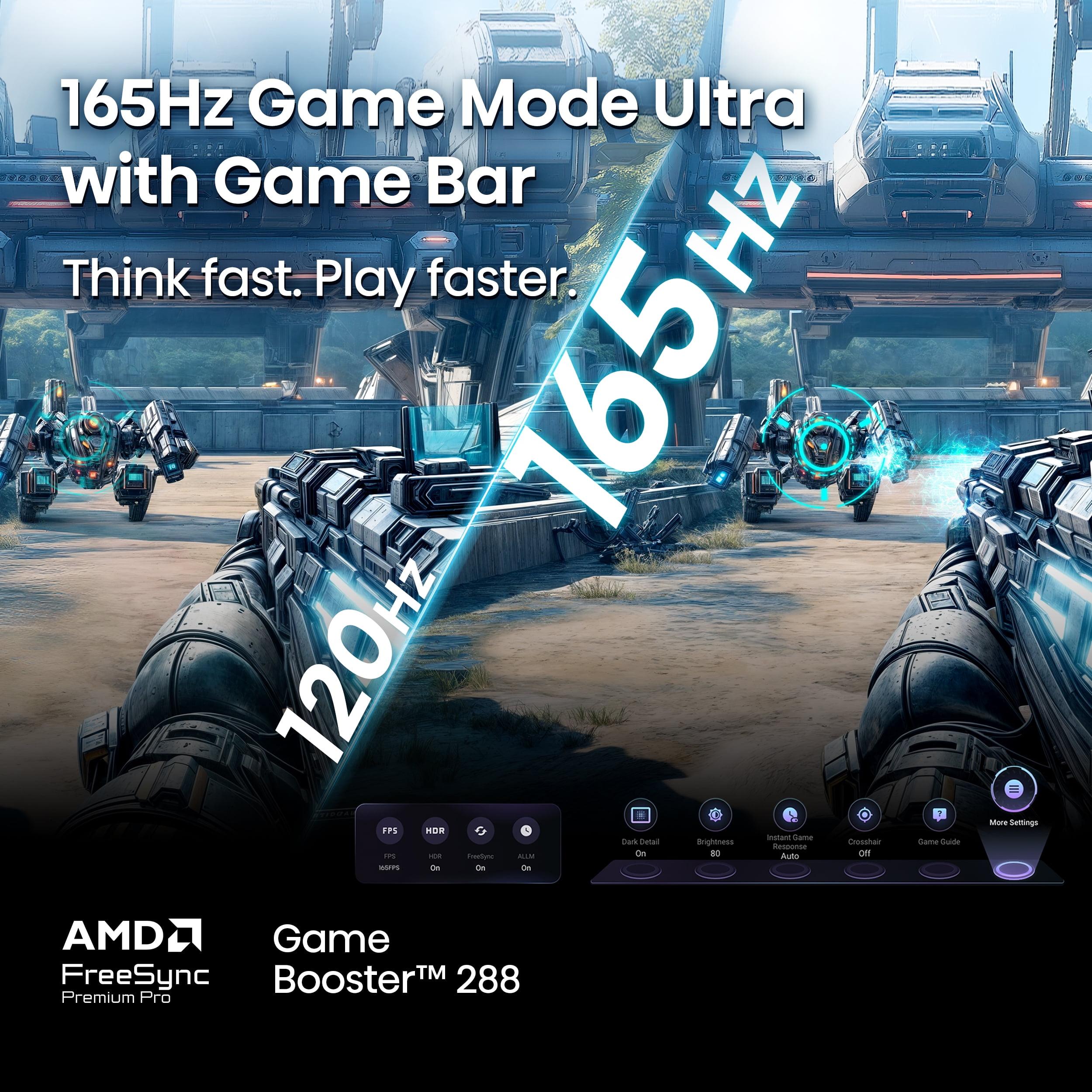
Gaming is where these TVs reveal their different priorities. The Hisense U8 supports a 144Hz refresh rate, which is fantastic for PC gaming. If you're gaming on a high-end PC graphics card, this higher refresh rate can provide smoother gameplay, especially in fast-paced genres like first-person shooters or racing games.
The Samsung QN90D tops out at 120Hz, which is perfect for console gaming (since PlayStation 5 and Xbox Series X max out at 120fps anyway) but offers a crucial advantage: lower input lag. At 9.6ms, the Samsung's input lag is noticeably lower than the Hisense's 13.1ms. In competitive gaming, every millisecond counts, and that 3.5ms difference can be the difference between landing a shot or missing it.
Both TVs support Variable Refresh Rate (VRR), which synchronizes the TV's refresh rate with your gaming device's frame rate to eliminate screen tearing and stuttering. They also both support Auto Low Latency Mode (ALLM), which automatically switches to game mode when it detects a gaming signal.
Samsung goes further with gaming features, including a comprehensive Game Bar 3.0 interface that lets you adjust gaming settings without leaving your game, and Super Ultra Wide Game View that can simulate an ultrawide monitor experience. The Samsung also includes Gaming Hub, which provides direct access to cloud gaming services like Xbox Game Pass and NVIDIA GeForce Now.
For home theater gaming setups, both TVs excel, but your choice depends on your gaming platform. PC gamers will appreciate the Hisense's 144Hz capability, while console gamers might prefer the Samsung's lower input lag and more comprehensive gaming features.
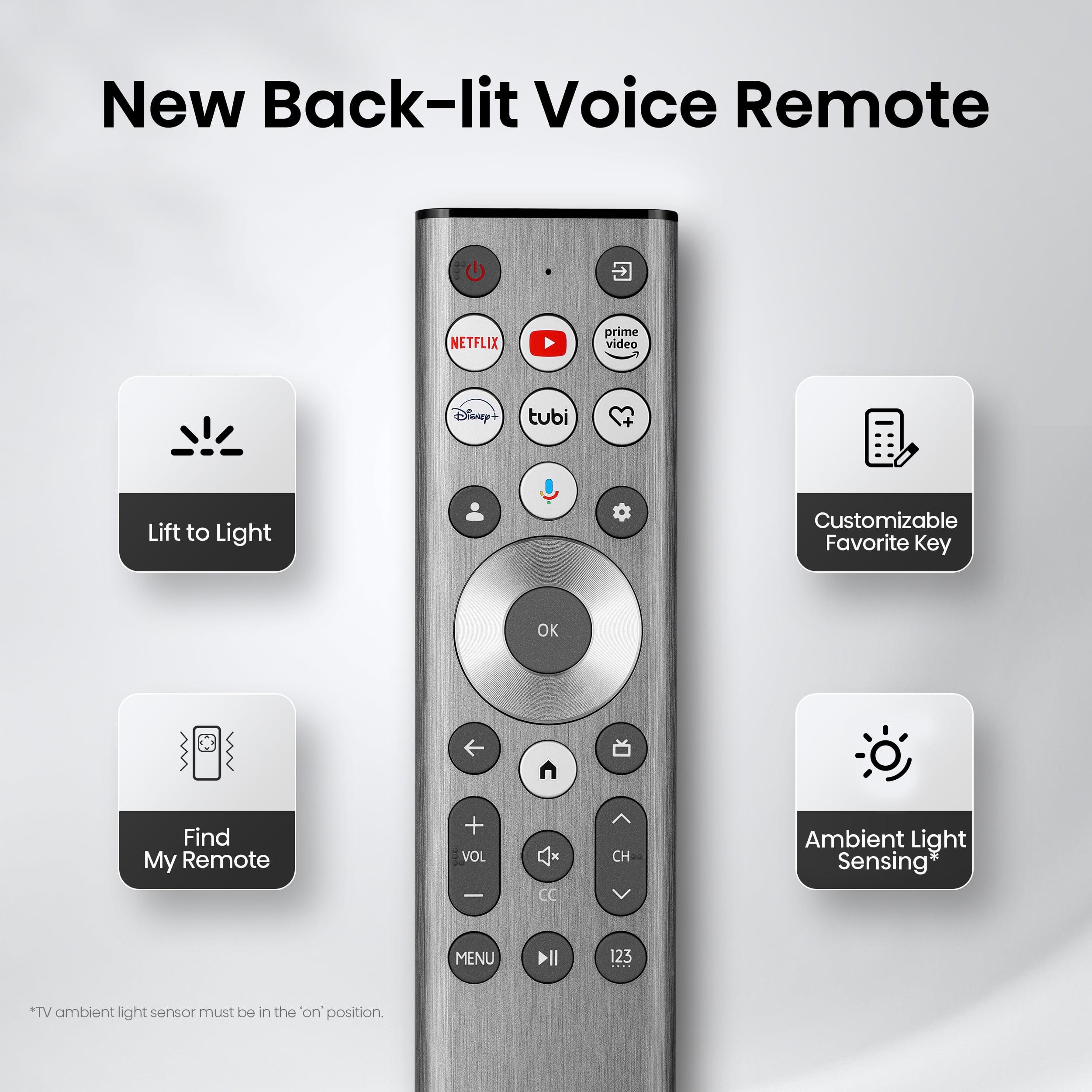
The smart TV experience is where personal preference plays a big role. The Hisense U8 runs Google TV, which is clean, intuitive, and integrates seamlessly with the Google ecosystem. If you use Google services, have a Google Home setup, or prefer a straightforward interface, Google TV is excellent. It aggregates content from multiple streaming services on a single home screen and provides personalized recommendations.
The Samsung QN90D uses Tizen OS, which is more feature-rich but also more complex. Tizen offers more customization options and deeper integration with Samsung's ecosystem, but it can feel overwhelming for users who just want to watch Netflix. Samsung's interface includes features like Ambient Mode (which displays art or information when the TV isn't in use) and extensive smart home integration.
One significant difference is HDR format support. The Hisense supports both Dolby Vision and HDR10+, while the Samsung only supports HDR10+. Dolby Vision is used by Netflix, Apple TV+, and many other streaming services, so this gives the Hisense broader compatibility with premium content.
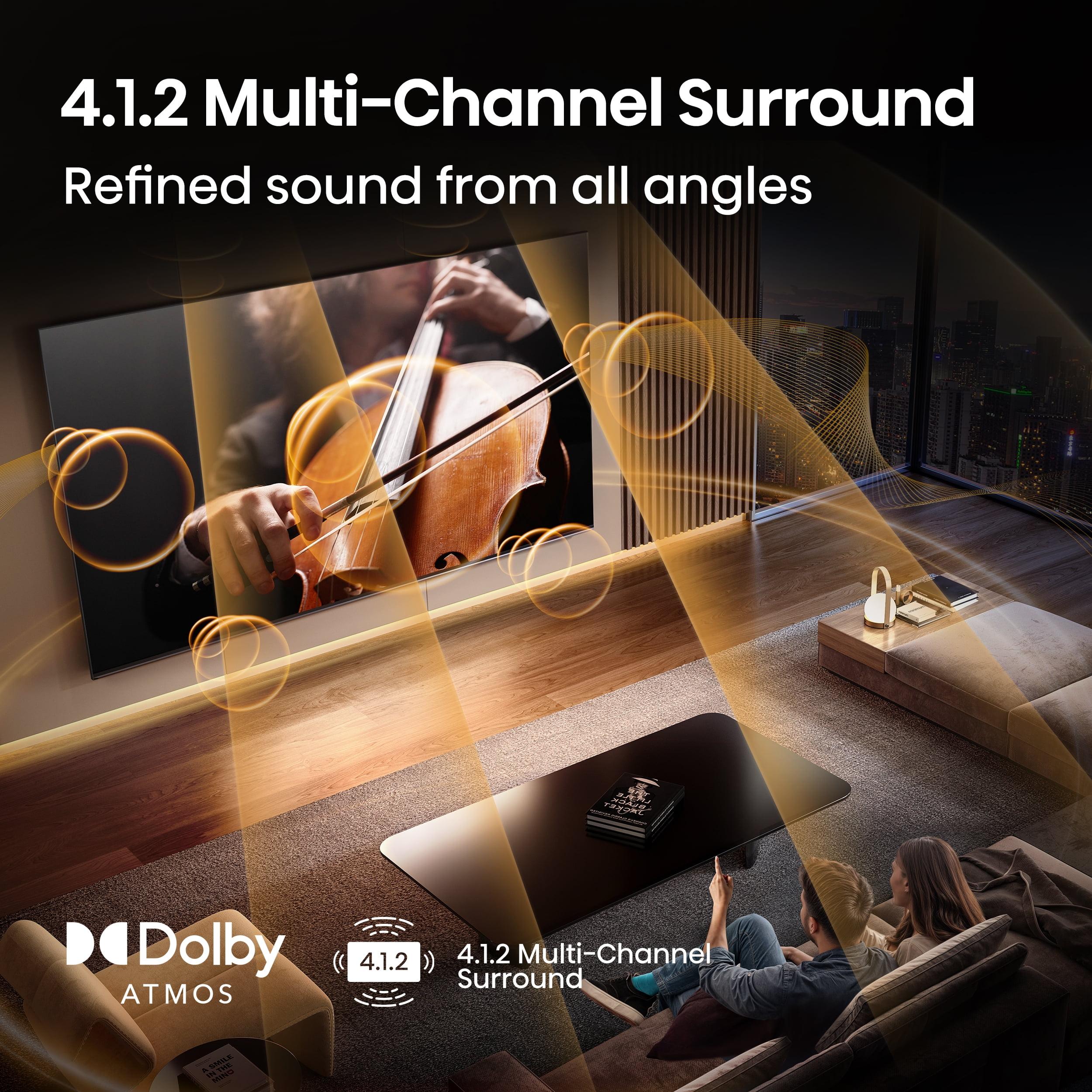
TV audio has improved dramatically in recent years, and both of these TVs offer respectable built-in sound systems. The Hisense U8 features a 50W 2.1.2 channel system with Dolby Atmos support and a built-in subwoofer. This creates genuinely immersive audio with bass response that many TVs can't match.
The Samsung QN90D uses a 40W 2.2 channel system with Object Tracking Sound+, which moves audio across the screen to match on-screen action. While it's 10W less powerful than the Hisense system, Samsung's audio processing is sophisticated and creates a wide soundstage.
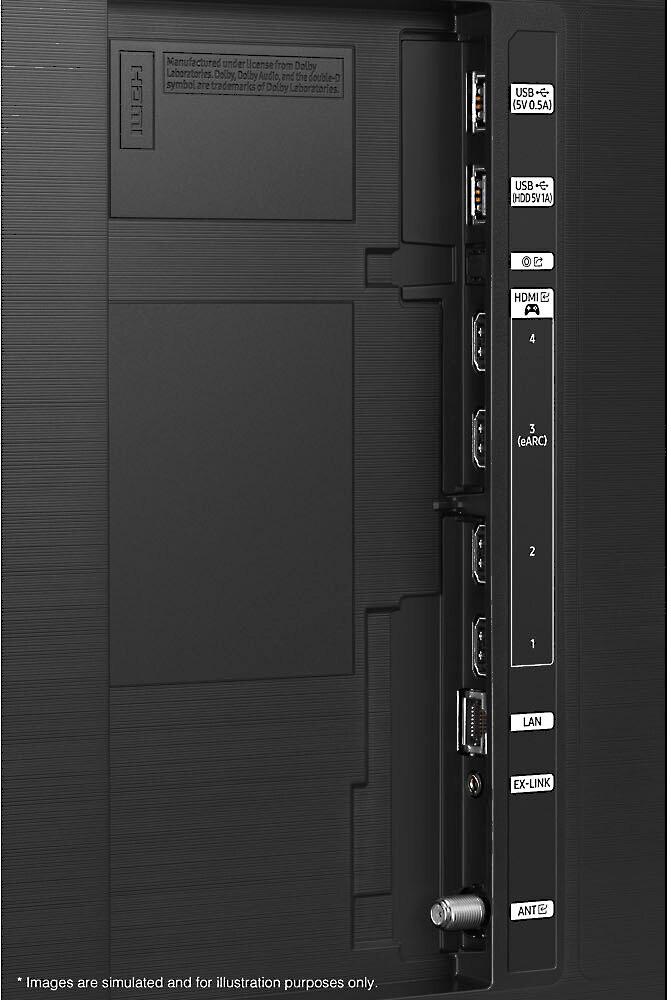
For serious home theater use, you'll likely want to add a dedicated soundbar or surround sound system regardless of which TV you choose. Both TVs support eARC (Enhanced Audio Return Channel) for high-quality audio passthrough to external sound systems.
The price difference between these TVs—about $300—represents more than just sticker shock. The Hisense U8 at $997.99 offers exceptional value, delivering roughly 85-90% of the Samsung's performance at 77% of the price. For most users, this makes it the smarter choice.
The Samsung QN90D at $1,297.99 commands a premium for its brand reputation, refined processing, and slightly better gaming performance. Samsung also has a more established support network and longer history of software updates, which can be important for long-term ownership.
One often-overlooked factor is warranty coverage. Hisense includes a 2-year warranty (double the industry standard), while Samsung provides the typical 1-year coverage. This extra year of protection adds real value, especially for a premium purchase.
In a dedicated home theater environment, both TVs excel but with different strengths. The Hisense U8 is better suited for rooms with some ambient lighting due to its exceptional brightness and anti-glare coating. Its support for both major HDR formats ensures compatibility with all your streaming services and 4K Blu-rays.
The Samsung QN90D might be preferable in a controlled lighting environment where you can appreciate its more refined color accuracy and superior motion processing. Its lower input lag also makes it better for gaming sessions in your home theater.
Both TVs have relatively narrow viewing angles compared to OLED displays, so seating arrangement in your home theater matters. Plan for viewers to be positioned relatively straight-on to the screen for the best experience.
Choose the Hisense U8 Series if you want maximum brightness and HDR impact for rooms with ambient lighting, prioritize value and getting premium features at a lower price, game primarily on PC and want 144Hz refresh rate, prefer Google TV's simplicity, watch content across multiple HDR formats, or want more powerful built-in audio.
Choose the Samsung QN90D if you prioritize color accuracy and refined image processing out-of-box, game competitively on consoles and need the lowest input lag, value brand reputation and extensive support network, want the best upscaling for lower-quality content, prefer Samsung's comprehensive gaming ecosystem, or are willing to pay a premium for incremental improvements.
The bottom line is that both TVs represent excellent choices in the premium Mini-LED category. The Hisense U8 Series offers exceptional value with standout brightness and comprehensive features that will satisfy most users. The Samsung QN90D justifies its higher price for users who prioritize processing refinement, competitive gaming, or brand preference. Your choice should depend on your specific priorities, room environment, and budget considerations.
| Hisense 65" U8 Series Mini-LED ULED 4K Google TV | Samsung 65" QN90D Series 4K Neo QLED Smart TV |
|---|---|
| Price - Major value difference for similar performance | |
| $997.99 | $1,297.99 |
| Peak Brightness - Critical for HDR impact and bright room viewing | |
| 3,000 nits (exceptional for HDR and daylight viewing) | 1,000-1,500 nits (very good but less impressive in bright rooms) |
| Local Dimming Zones - Controls contrast and reduces blooming | |
| 1,600+ zones (excellent precision for Mini-LED) | 1,000+ zones (good control with refined algorithms) |
| Refresh Rate - Important for gaming smoothness | |
| 144Hz (ideal for high-end PC gaming) | 120Hz (perfect for console gaming) |
| Input Lag - Critical for competitive gaming responsiveness | |
| 13.1ms (good for casual gaming) | 9.6ms (excellent for competitive gaming) |
| HDR Format Support - Affects streaming service compatibility | |
| Dolby Vision + HDR10+ (works with all major services) | HDR10+ only (missing Netflix/Apple TV+ Dolby Vision) |
| Smart Platform - Daily interface experience | |
| Google TV (simple, Google ecosystem friendly) | Tizen OS (feature-rich but more complex) |
| Audio System - Built-in sound quality | |
| 50W 2.1.2 Dolby Atmos with subwoofer | 40W 2.2 Object Tracking Sound+ |
| Gaming Features - Console and PC gaming enhancements | |
| VRR, FreeSync Premium Pro, Game Mode Pro | Game Bar 3.0, Gaming Hub, Super Ultra Wide Game View |
| Warranty Coverage - Long-term protection value | |
| 2 years (double industry standard) | 1 year (standard coverage) |
| Color Processing - Out-of-box accuracy vs vibrancy | |
| Vibrant Quantum Dot (may need calibration) | Refined color accuracy (minimal adjustment needed) |
| Motion Processing - Sports and fast content handling | |
| Good motion handling with AI enhancement | Excellent Motion Xcelerator Turbo+ technology |
| Upscaling Quality - How well HD content looks on 4K | |
| Good AI upscaling with HDR optimization | Industry-leading upscaling with NQ4 AI Gen2 |
The Hisense 65" U8 Series Mini-LED ULED 4K Google TV at $997.99 offers exceptional value, delivering about 85-90% of the Samsung's performance at 77% of the price. The Samsung 65" QN90D Series 4K Neo QLED Smart TV at $1,297.99 commands a $300 premium for refined processing and brand reputation, but most users will find the Hisense provides better bang for your buck.
The Hisense U8 excels in brightness with 3,000 nits peak output, making HDR content more impactful and improving performance in bright rooms. The Samsung QN90D focuses on color accuracy and superior upscaling, producing more natural-looking images out of the box with better processing of lower-quality content.
For PC gaming, the Hisense U8 is better with its 144Hz refresh rate supporting high-frame-rate gaming. For console gaming, the Samsung QN90D has advantages with 9.6ms input lag (vs 13.1ms on Hisense) and more comprehensive gaming features like Game Bar 3.0 and Gaming Hub.
No, this is a key difference. The Hisense U8 supports both Dolby Vision and HDR10+, ensuring compatibility with all major streaming services. The Samsung QN90D only supports HDR10+, missing Dolby Vision content from Netflix, Apple TV+, and other services.
The Hisense U8 uses Google TV, which is simpler and integrates well with Google services. The Samsung QN90D runs Tizen OS, offering more advanced features and customization options but with a steeper learning curve. Both platforms provide access to all major streaming apps.
The Hisense U8 has a more powerful 50W 2.1.2 channel system with Dolby Atmos and a built-in subwoofer. The Samsung QN90D features a 40W 2.2 channel system with Object Tracking Sound+. Both offer above-average TV audio, but the Hisense provides more bass and overall power.
The Hisense U8 is significantly brighter with 3,000 nits peak brightness, making it excellent for bright rooms and daytime viewing. The Samsung QN90D reaches 1,000-1,500 nits, which is still very good but less effective at cutting through ambient light and glare.
Yes, the Hisense U8 includes a 2-year warranty, which is double the industry standard. The Samsung QN90D comes with a standard 1-year warranty. The extra year of coverage adds significant value to the Hisense purchase.
The Samsung QN90D has superior motion processing with Motion Xcelerator Turbo+ technology, making it better for sports and fast-moving content. The Hisense U8 handles motion well but isn't quite at Samsung's level for smoothness and clarity during rapid movement.
Both excel in home theater environments. The Hisense U8 is better for rooms with some ambient lighting due to its exceptional brightness and anti-glare coating. The Samsung QN90D might be preferable in controlled lighting where you can appreciate its refined color accuracy and motion processing.
The Hisense U8 has over 1,600 local dimming zones compared to the Samsung QN90D's 1,000+ zones. More zones generally mean better contrast control and less blooming around bright objects, giving the Hisense a slight technical advantage in this area.
Both are reliable choices, but they offer different advantages. The Samsung QN90D comes from an established premium brand with a longer track record and extensive support network. The Hisense U8 is a newer 2025 model with updated technology and double the warranty coverage, providing strong long-term value protection.
We've done our best to create useful and informative comparisons to help you decide what product to buy. Our research uses advanced automated methods to create this comparison and perfection is not possible - please contact us for corrections or questions. These are the sites we've researched in the creation of this article: bestbuy.com - hisense-usa.com - rtings.com - bestbuy.com - rtings.com - hisense-usa.com - youtube.com - hisense-usa.com - avsforum.com - hisense-usa.com - hisense-usa.com - rtings.com - avsforum.com - hisense-usa.com - prnewswire.com - hisense-usa.com - bestbuy.com - youtube.com - hisense-usa.com - samsung.com - standardtvandappliance.com - gerhardsappliance.com - bestbuy.com - image-us.samsung.com - rtings.com - youtube.com - images.samsung.com

Privacy Policy
Terms and Conditions - Affiliate Policy
Home Security
© Copyright 2008-2026.
11816 Inwood Rd #1211, Dallas, TX 75244