

When it comes to buying a 65-inch TV, you're looking at the sweet spot for home entertainment. It's large enough to create that cinematic experience most of us crave, but not so massive that it dominates smaller living rooms. The challenge? The market offers everything from surprisingly capable budget models to premium displays that cost more than some people's cars.
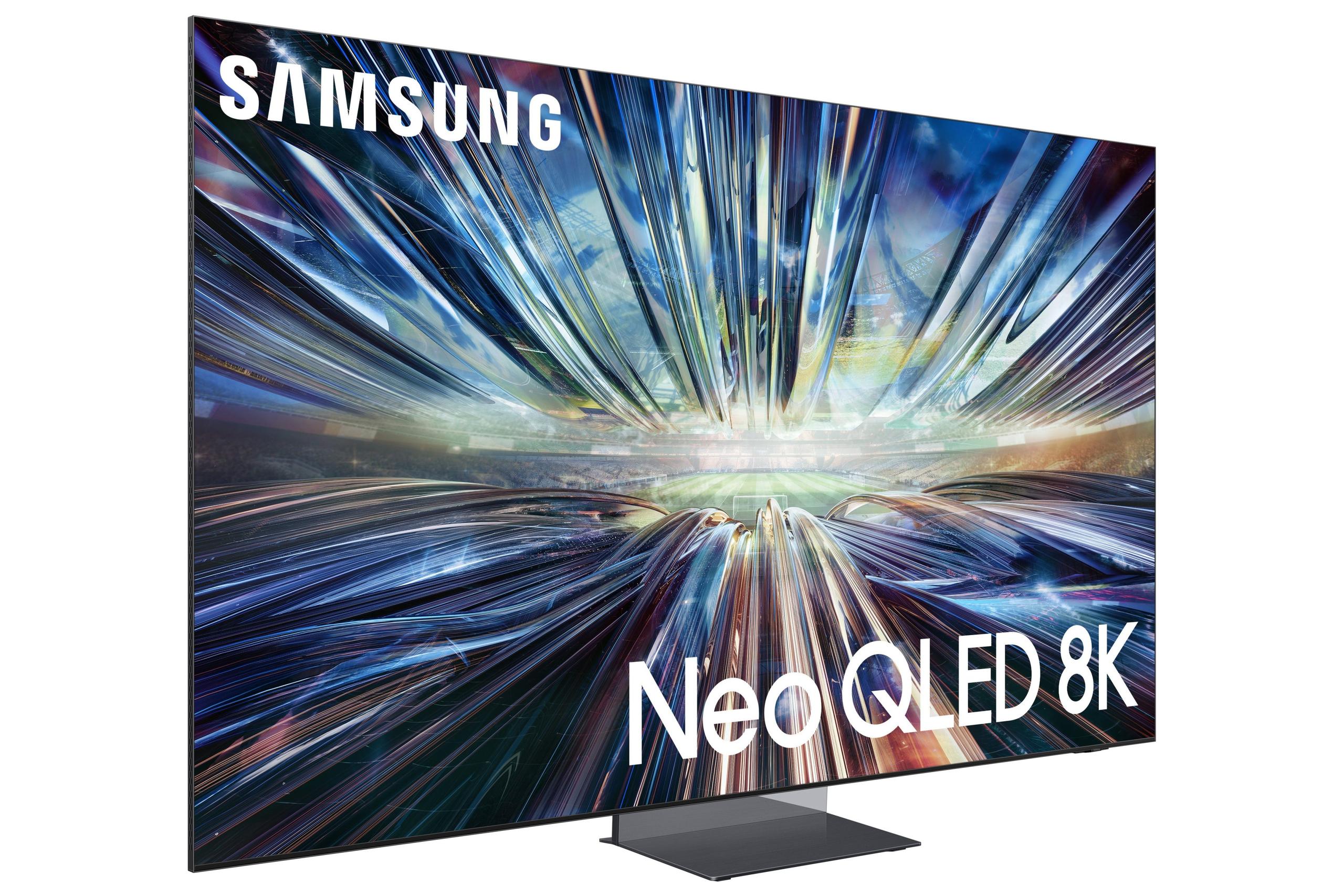
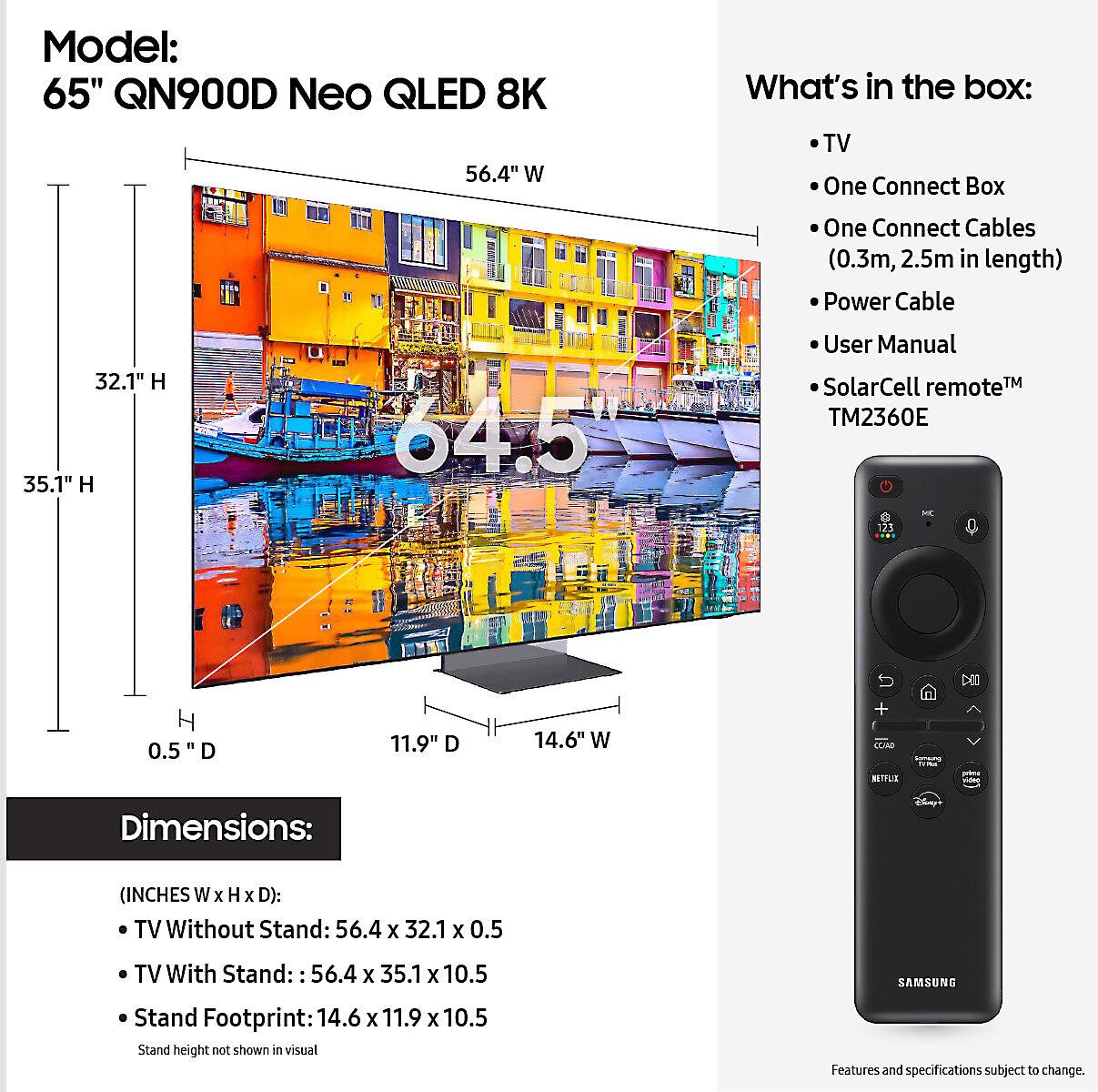
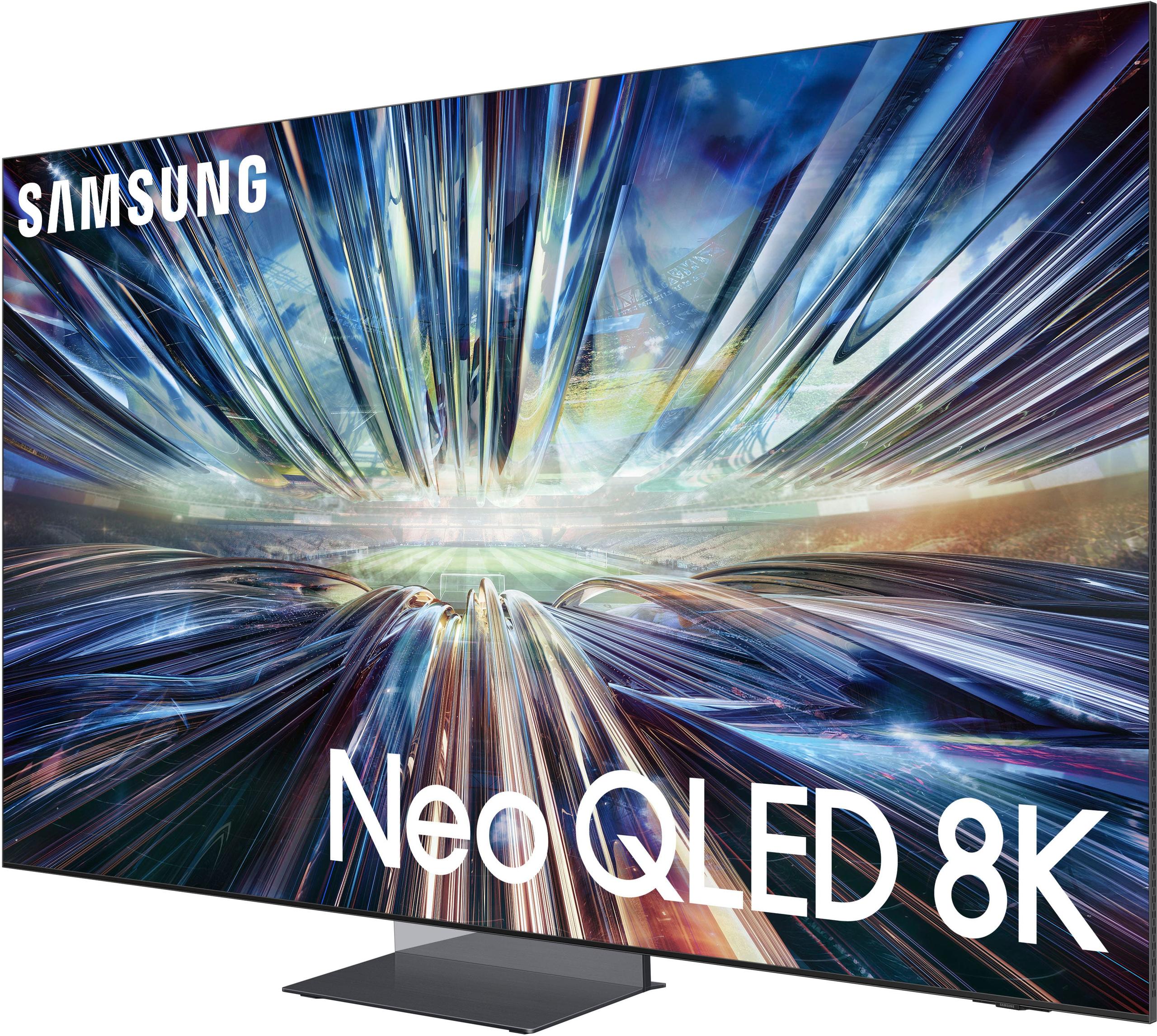
Today we're comparing two TVs that represent opposite ends of this spectrum: the Toshiba 65" M550 Series QLED Fire TV and the Samsung QN900D Series 65" Neo QLED 8K Smart TV. Released in 2025 and 2024 respectively, these TVs show just how different your experience can be depending on how much you're willing to spend.
Before diving into specifics, let's talk about what actually makes a difference in your daily viewing experience. Picture quality obviously tops the list – you want colors that pop, deep blacks that don't look gray, and enough brightness to handle both dark movie nights and bright Sunday afternoon sports viewing.
Smart features matter more than ever since most of us have ditched cable boxes. Your TV needs to handle Netflix, Disney+, YouTube, and whatever new streaming service launches next month without driving you crazy with slow loading times or crashes.
For many buyers, gaming performance has become crucial. Modern consoles like the PlayStation 5 and Xbox Series X can push 4K at 120Hz, but only if your TV can keep up. Input lag – the delay between pressing a button and seeing the result on screen – can make the difference between victory and defeat in competitive games.
Audio quality often gets overlooked until you're actually living with a TV. Many budget models have speakers that sound like they're coming from inside a tin can, while premium TVs increasingly pack serious audio systems that might eliminate your need for a separate soundbar.
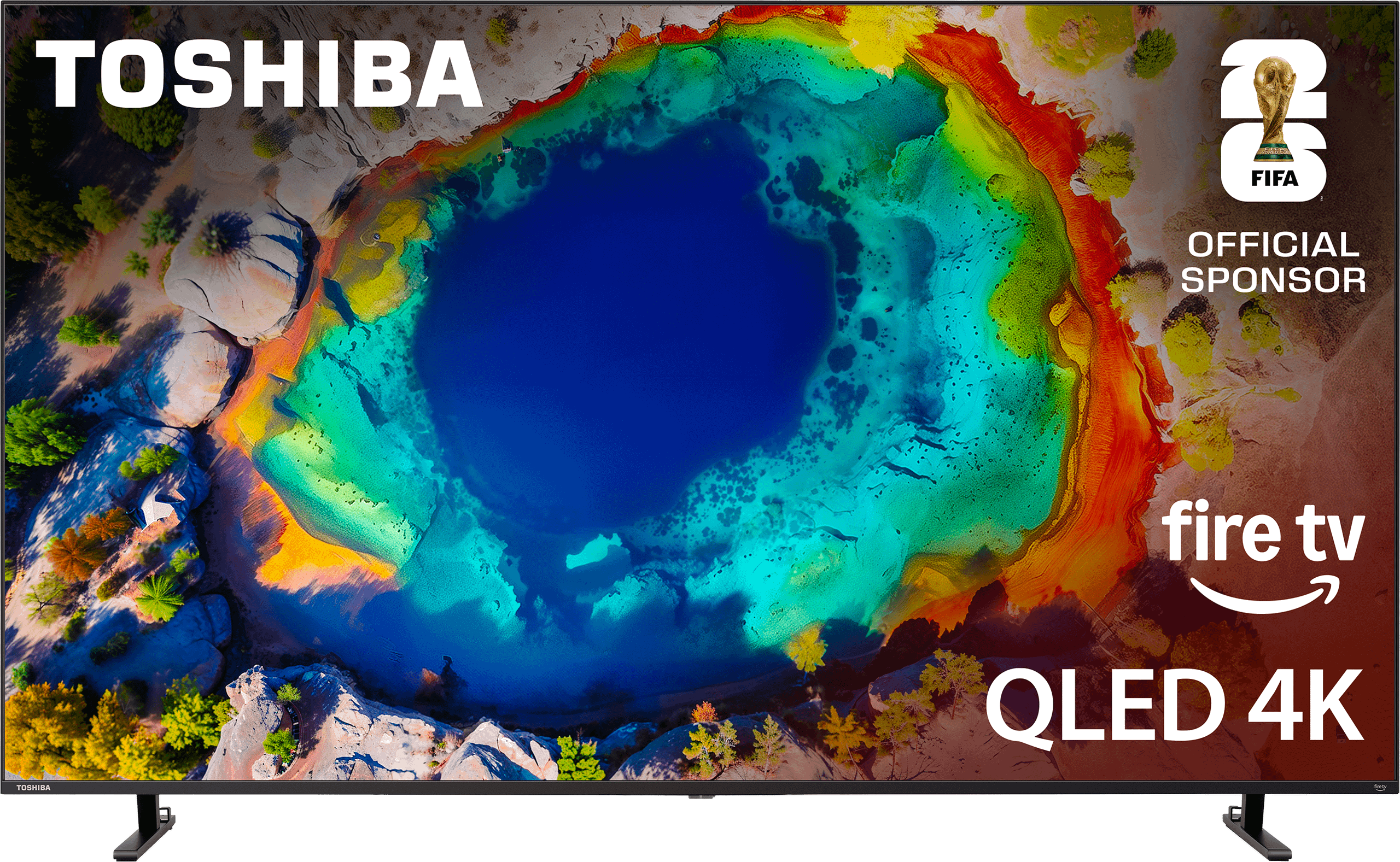
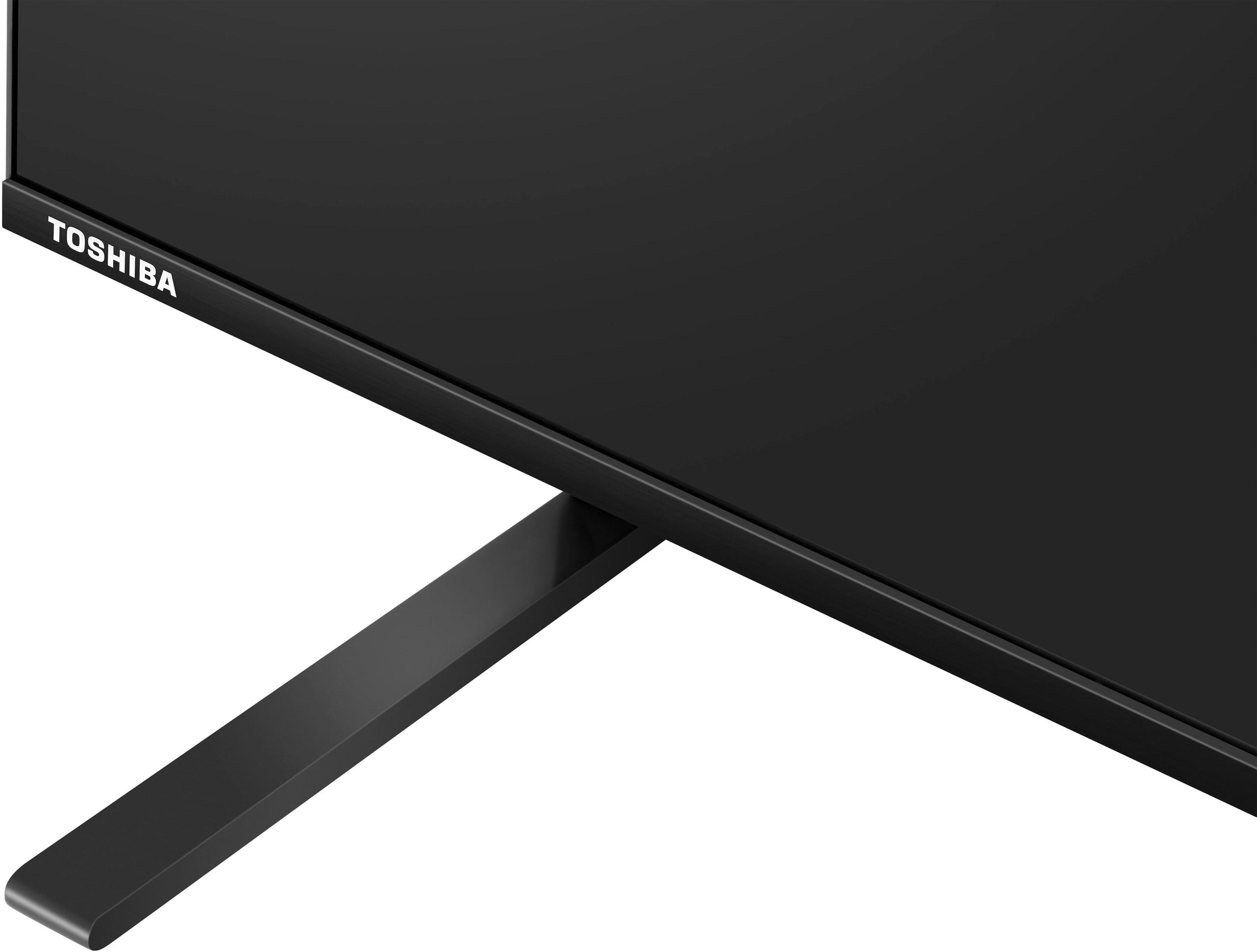
The Toshiba M550 embodies the "smart budget buy" philosophy. Released in 2025, it packs genuinely impressive display technology into an affordable package. Toshiba has been refining their QLED implementation and local dimming algorithms, and the M550 represents their latest effort to deliver premium-looking picture quality without premium pricing.
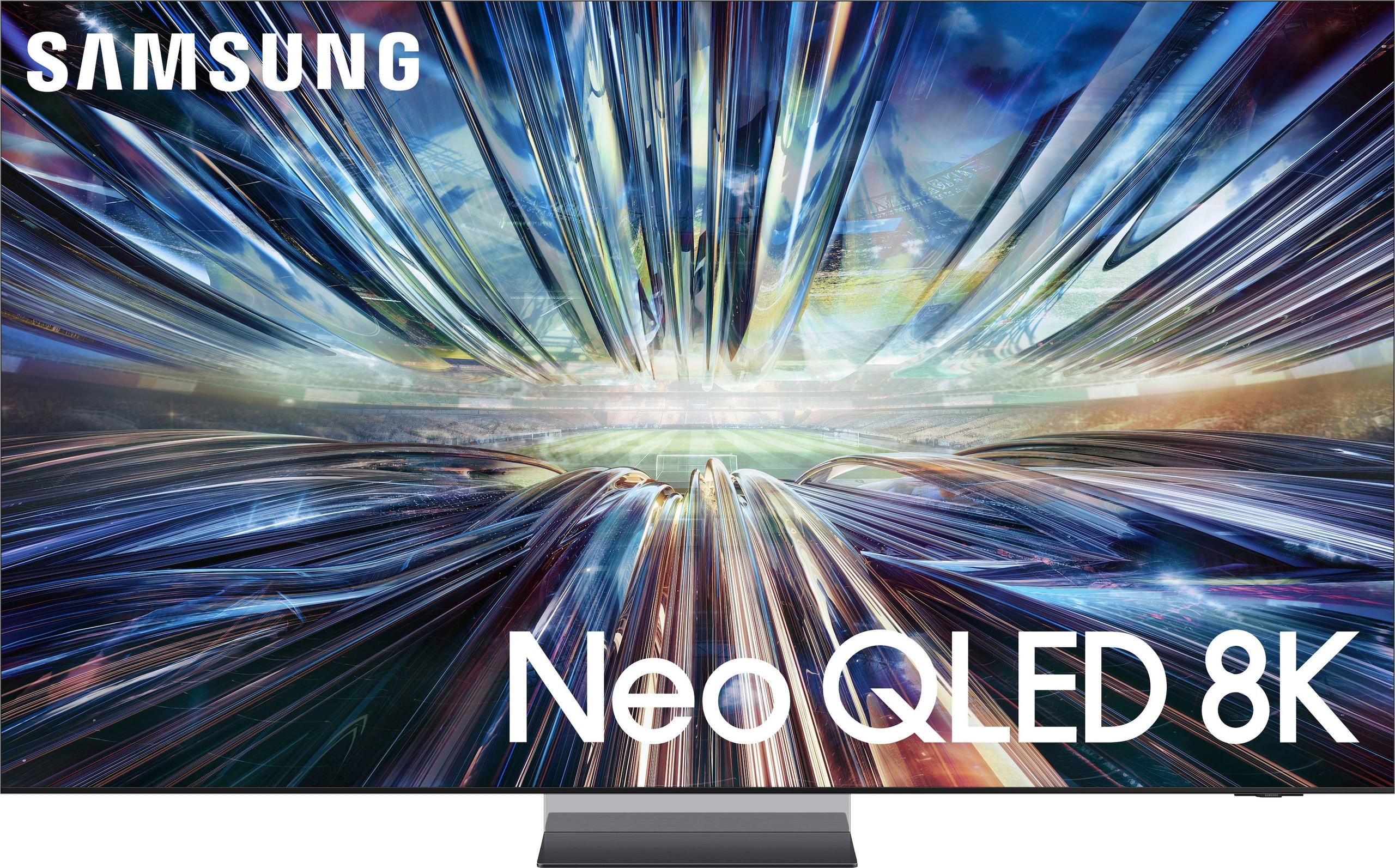
The Samsung QN900D, launched in 2024, takes the opposite approach. It's Samsung's flagship 8K model, showcasing their most advanced Mini LED backlighting, their fastest processor, and every premium feature they can pack into a single TV. This is Samsung showing off what's possible when cost isn't the primary constraint.
Let's start with the most fundamental difference: resolution. The Samsung QN900D delivers 8K resolution – that's 7,680 by 4,320 pixels, or about 33 million individual picture elements. Compare that to the Toshiba M550's 4K resolution of 3,840 by 2,160 pixels (about 8.3 million pixels), and you're looking at four times the pixel density.
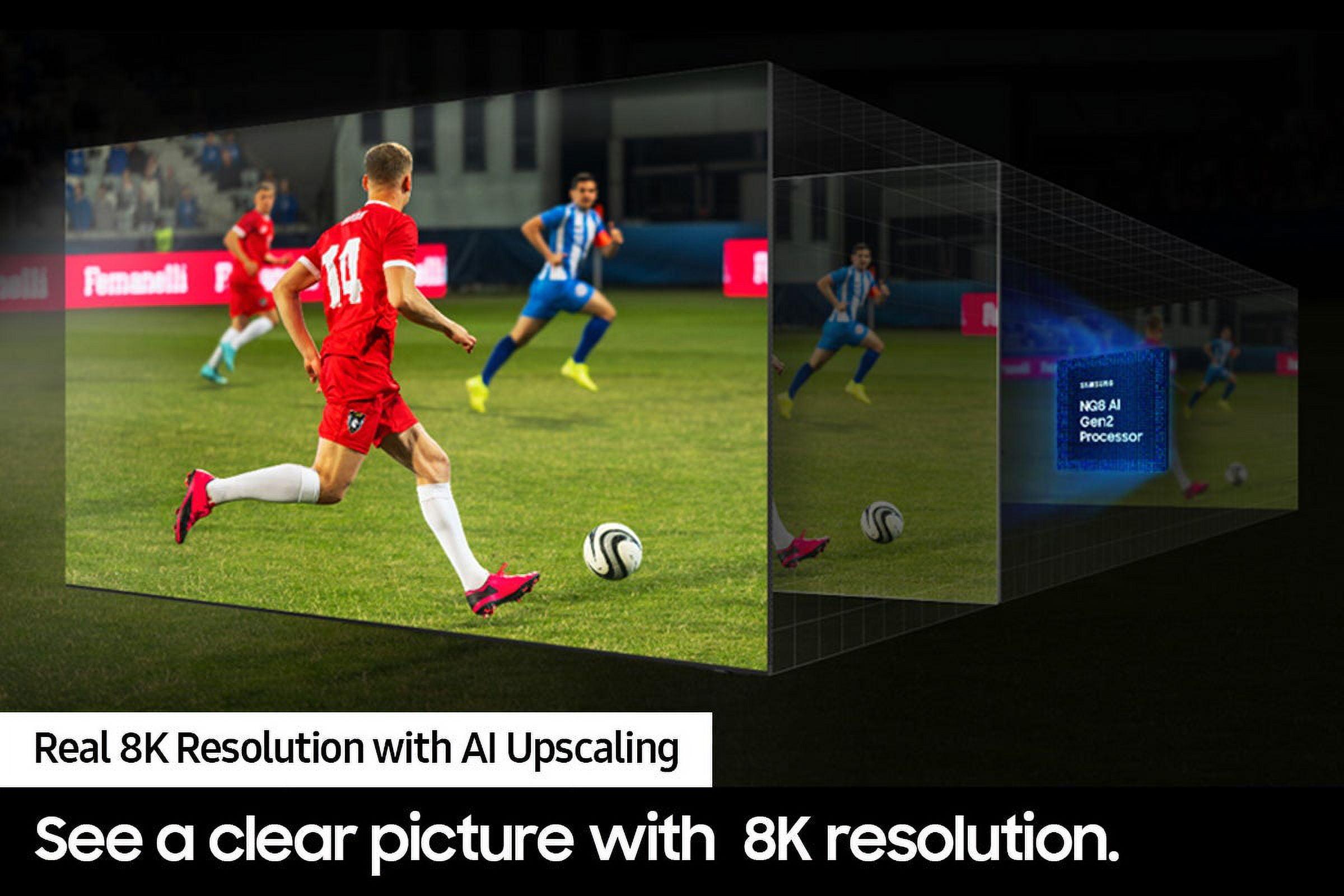
But here's where it gets interesting – there's virtually no native 8K content available today. Netflix doesn't stream in 8K, YouTube has minimal 8K content, and even 8K Blu-rays barely exist. So what's the point? The Samsung's NQ8 AI Gen3 processor uses machine learning to upscale everything you watch to 8K quality. This isn't simple pixel interpolation – the processor analyzes textures, edges, and details to reconstruct what those extra pixels should look like.
From our research into user experiences and expert reviews, this upscaling works remarkably well. Even standard 1080p content gets a noticeable clarity boost, though you'll see the biggest improvement with high-quality 4K sources. The question becomes whether this improvement justifies the premium pricing.
The Toshiba M550 takes a more practical approach. Its 4K QLED panel covers over 90% of the DCI-P3 color gamut, which means it can reproduce the wide color range that modern HDR content demands. QLED technology uses quantum dots – microscopic crystals that emit pure colors when hit by light – to achieve more accurate and vibrant colors than traditional LED TVs.
Where the Toshiba really impresses for its price class is local dimming. This technology divides the backlight into separate zones that can brighten or dim independently. The M550 features up to 48 local dimming zones, which sounds modest compared to premium TVs but represents a significant step up from edge-lit budget models that can't control brightness across different parts of the screen.
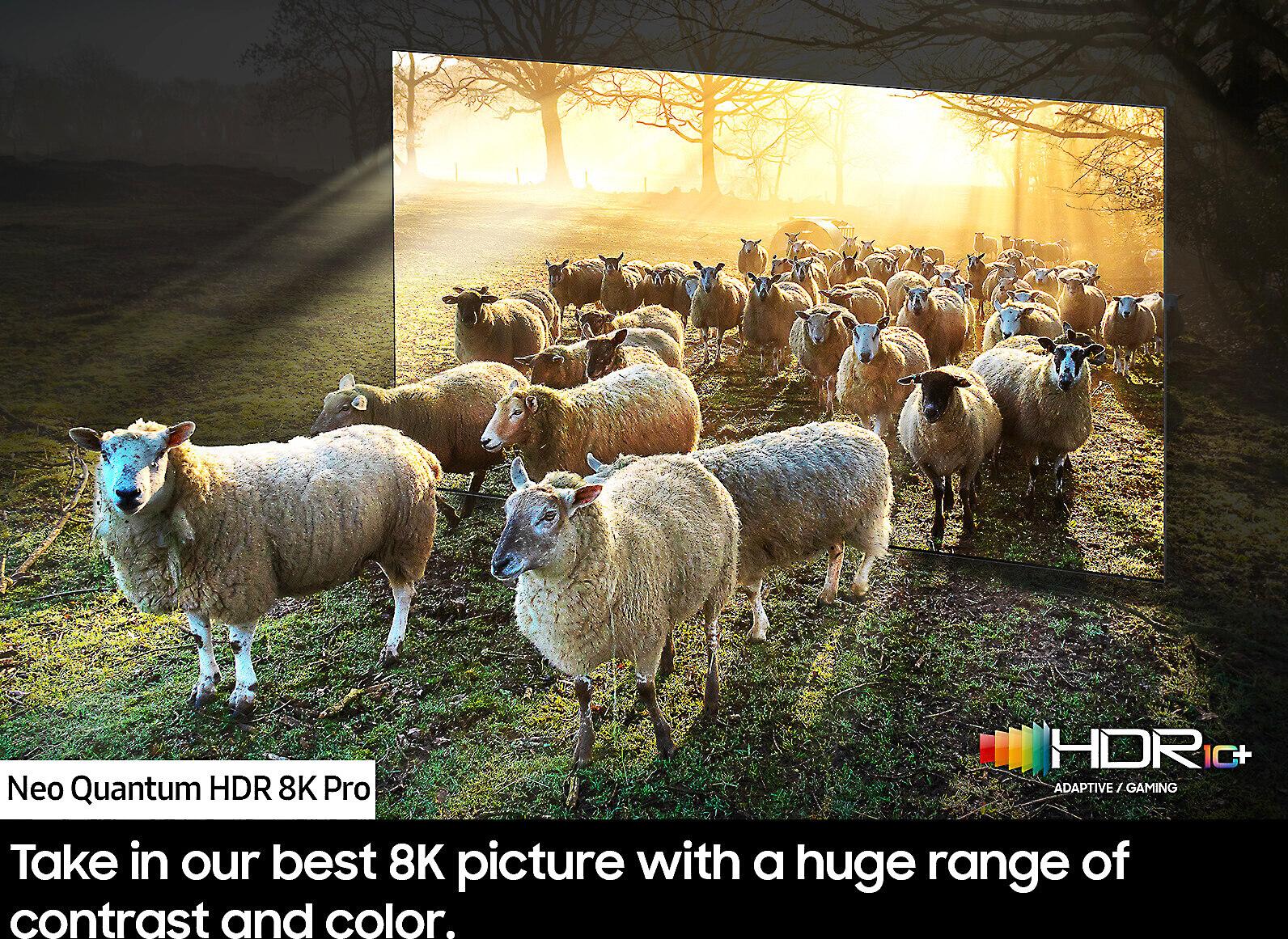
The Samsung QN900D employs Mini LED technology, which uses thousands of tiny LEDs as the backlight instead of traditional larger LEDs. This allows for far more precise local dimming zones – we're talking about hundreds of zones compared to the Toshiba's 48. The result is better contrast control, reduced blooming around bright objects on dark backgrounds, and overall more dynamic picture quality.
In practical terms, this difference becomes most apparent in challenging scenes – think a campfire scene at night, or credits rolling over a dark background. The Samsung maintains deep blacks right next to bright highlights, while the Toshiba might show some slight grayish glow around bright objects. For most content, though, both TVs deliver satisfying picture quality.
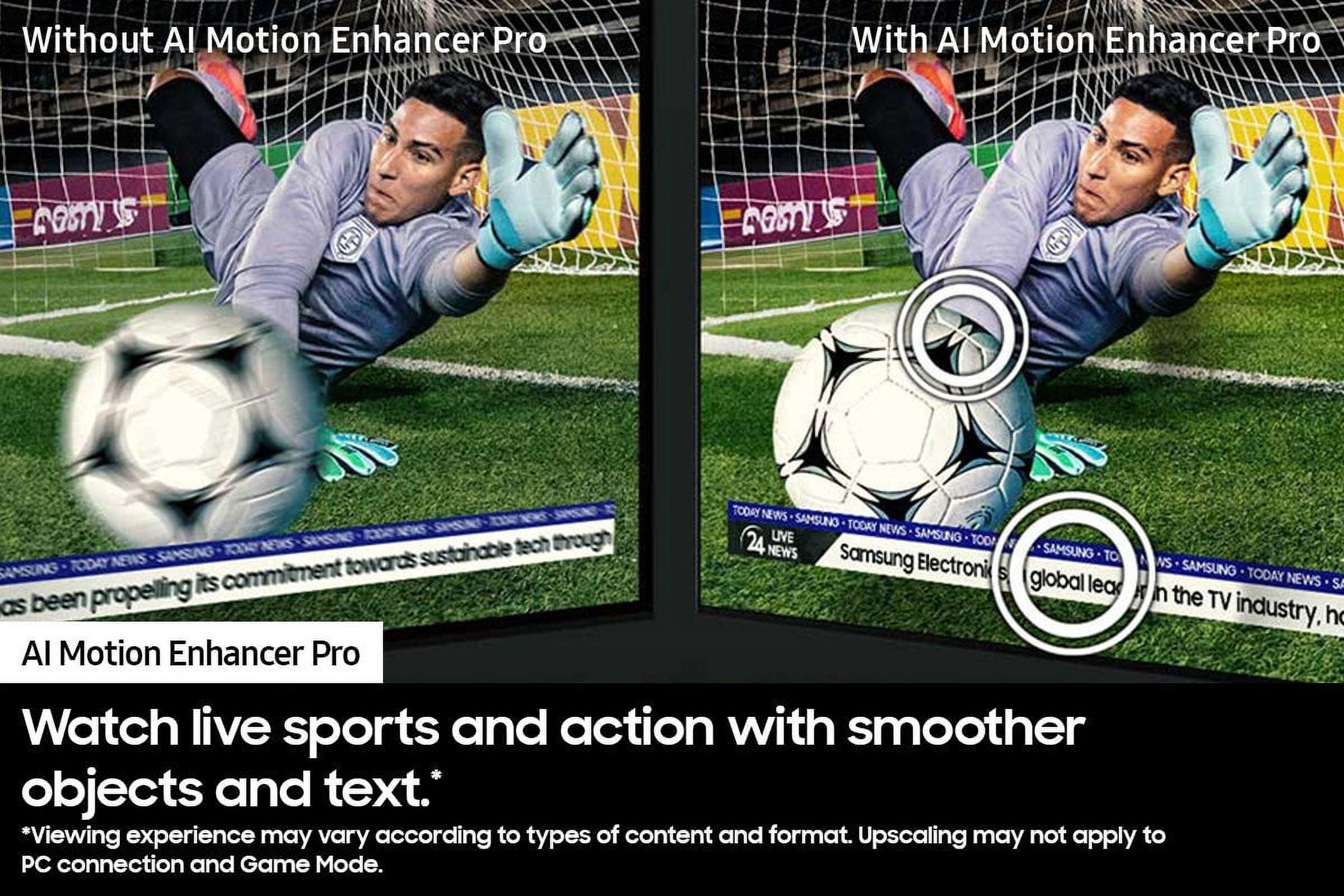
Gaming performance represents one of the starkest differences between these TVs. The Samsung QN900D is built for the current console generation and beyond. It supports 4K gaming at up to 240Hz or 8K gaming at 60Hz, though you'll need a seriously powerful gaming PC to push those frame rates.
More realistically, the Samsung handles 4K at 120Hz beautifully, which is what the PlayStation 5 and Xbox Series X target for their performance modes. Variable Refresh Rate (VRR) technology synchronizes the TV's refresh rate with your console's frame rate output, eliminating screen tearing and stuttering. The Samsung supports all major VRR standards and works across its entire refresh rate range.
Input lag on the Samsung drops to incredibly low levels in Game Mode – we're talking single-digit milliseconds that even competitive gamers will find acceptable. The TV also supports Auto Low Latency Mode (ALLM), which automatically switches to Game Mode when it detects a gaming console, so you don't need to manually adjust settings every time you switch from Netflix to gaming.
The Toshiba M550 offers more modest gaming capabilities. Its native 60Hz refresh rate limits you to 60 frames per second gaming at 4K, though it can handle 120Hz at 1440p resolution. VRR support is present but limited to 60Hz operation. Input lag in Game Mode is acceptable for casual gaming but noticeably higher than the Samsung – you might notice the difference in fast-paced competitive games.
Based on user reports we've analyzed, the Toshiba also suffers from processing delays in general operation. Some users report waiting 30-60 seconds for apps to load after turning on the TV, and menu navigation can feel sluggish. This isn't necessarily a gaming-specific issue, but it affects the overall user experience.
The smart TV experience often determines whether you love or hate living with your television. The Toshiba M550 runs Amazon's Fire TV platform, which integrates deeply with Amazon's ecosystem. If you're already an Amazon Prime subscriber and use Alexa smart home devices, this integration can be genuinely useful.
Fire TV offers access to all major streaming services and a decent selection of free content. The interface emphasizes Amazon's own content but doesn't force it down your throat. Voice control through Alexa works well for basic commands like changing volume or searching for content.
However, our research into user experiences reveals significant performance issues with Fire TV on the Toshiba. The TV's processor appears underpowered for the demands of the Fire TV platform. Users consistently report slow response times, apps that take forever to load, and occasional crashes that require restarting the TV. These aren't deal-breakers for everyone, but they do impact daily usability.
The Samsung QN900D runs Samsung's Tizen platform, which has matured significantly over the years. Tizen feels more responsive and stable, partly because Samsung designs both the hardware and software to work together optimally. The platform includes Samsung TV Plus, which offers free streaming channels, and integrates with Samsung's SmartThings ecosystem for smart home control.
Wi-Fi 6E support on the Samsung provides faster and more stable wireless connections, which becomes important when streaming high-bitrate 4K content or downloading large game updates. The Toshiba uses standard Wi-Fi, which works fine but might struggle with multiple high-bandwidth streams in busy households.
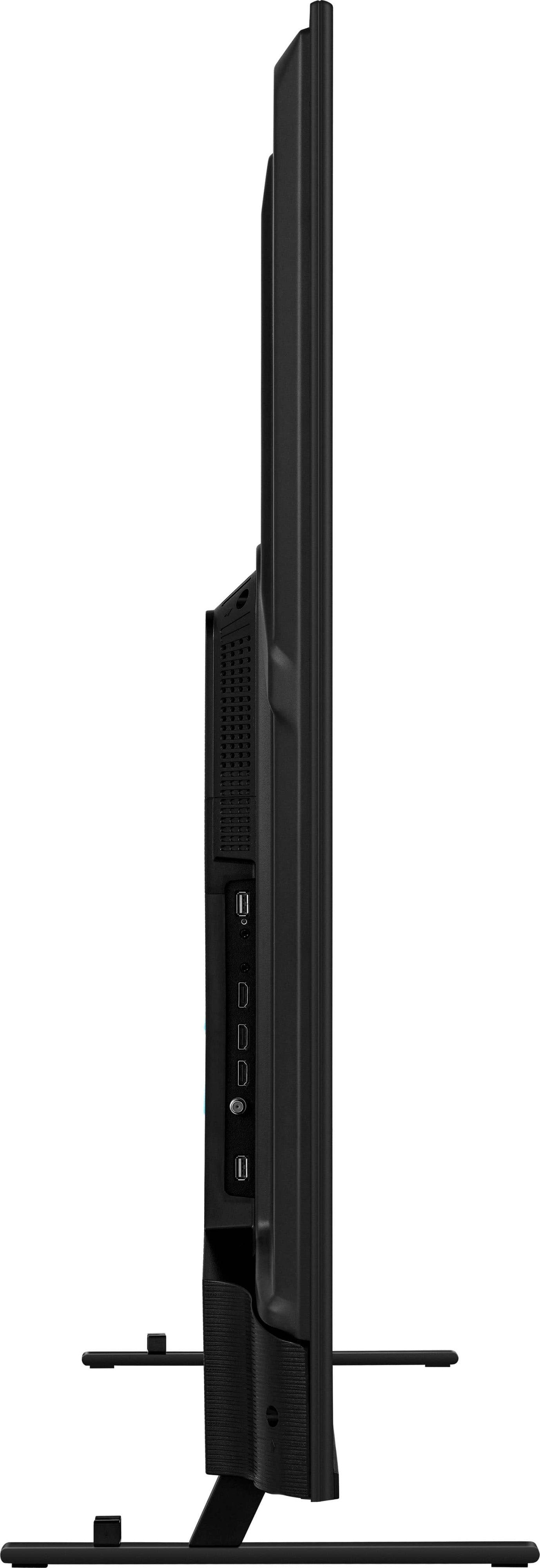
Audio quality often gets overlooked when shopping for TVs, but it significantly impacts your enjoyment of movies, sports, and games. The Samsung QN900D takes audio seriously with a 90-watt, 6.2.4-channel speaker system that includes up-firing, down-firing, and side-firing drivers for true Dolby Atmos surround sound.
This isn't just marketing speak – the Samsung's audio system creates genuinely immersive soundscapes. Object Tracking Sound technology moves audio effects across the screen following the action, while Adaptive Sound Pro automatically adjusts the audio mix based on what you're watching. For many users, this audio system might eliminate the need for a separate soundbar.
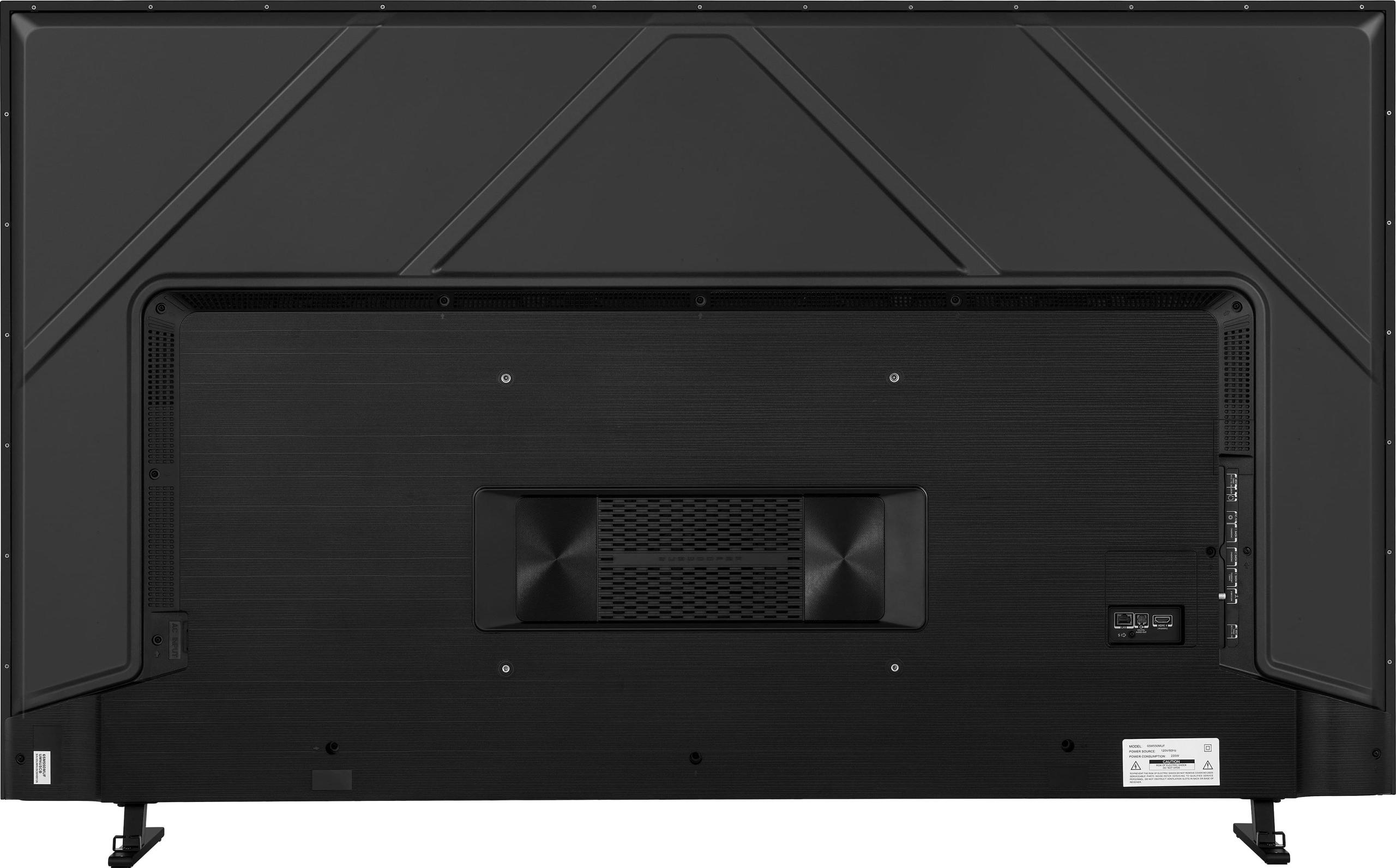
The Toshiba M550 provides more modest audio capabilities with its 40-watt, 2.1-channel system. It includes a built-in subwoofer, which helps with bass response, and supports Dolby Atmos processing (though without the physical speakers to create true height effects). The audio quality exceeds what you'd expect from a budget TV and might satisfy users in smaller rooms or those who primarily watch dialogue-heavy content.
The value proposition of these TVs depends entirely on your priorities and budget. At the time of writing, the Toshiba M550 represents exceptional value for users who want a large, capable 4K TV without premium pricing. If your primary use cases involve streaming Netflix, watching cable TV, and occasional casual gaming, the Toshiba delivers satisfying performance.
The processing and reliability issues we've mentioned are real concerns, but many users find them tolerable given the significant cost savings. The key is setting appropriate expectations – this isn't a premium TV trying to compete with high-end models. It's a budget TV that punches above its weight class.
For families looking to maximize screen size within a modest budget, the Toshiba makes sense. The money you save could go toward a quality soundbar to address the audio limitations, or simply stay in your bank account for other priorities.
The Samsung QN900D targets a completely different buyer – someone who wants the best available technology and is willing to pay for it. At the time of writing, expect to pay roughly five to six times more for the Samsung compared to the Toshiba. That premium buys you cutting-edge 8K processing, superior gaming capabilities, rock-solid reliability, and an audio system that might eliminate the need for additional equipment.
For dedicated home theater setups, the differences between these TVs become more pronounced. The Samsung QN900D delivers the wide color gamut, precise local dimming, and high peak brightness that make HDR movies truly spectacular. The superior audio system better fills larger rooms with immersive sound.
The Toshiba M550 can certainly anchor a home theater setup, especially in smaller to medium-sized rooms. Its Full Array Local Dimming provides better contrast than cheaper edge-lit TVs, and the QLED color technology handles HDR content competently. However, you'll likely want to budget for a quality soundbar and possibly a media streamer if the Fire TV performance issues prove frustrating.
After analyzing extensive user feedback and expert reviews, both TVs succeed in their intended roles. The Toshiba M550 delivers impressive picture quality for its price point, though with some compromises in processing power and reliability. The Samsung QN900D provides cutting-edge performance across every metric but demands premium pricing.
Choose the Toshiba M550 if you prioritize value and can work around some performance quirks. It's ideal for casual viewing, smaller budgets, and situations where screen size matters more than premium features. The money you save might be better spent elsewhere in your home entertainment setup.
Choose the Samsung QN900D if you want the best current technology and can justify the premium cost. It excels for serious gamers, home theater enthusiasts, and anyone who values reliability and responsiveness in their daily TV interaction.
Both represent solid choices within their respective market segments. The key is honest assessment of your needs, viewing habits, and budget constraints. In the rapidly evolving TV market, both budget and premium options continue improving each year, but the fundamental trade-offs between cost and performance remain consistent.
| Toshiba 65" M550 Series QLED Fire TV | Samsung QN900D Series 65" Neo QLED 8K Smart TV |
|---|---|
| Resolution - Determines maximum picture detail and future-proofing | |
| 4K (3840 x 2160) - Industry standard with abundant content | 8K (7680 x 4320) - 4x more pixels with AI upscaling for all content |
| Display Technology - Controls color accuracy and contrast performance | |
| QLED with Full Array Local Dimming (48 zones) | Neo QLED with Mini LED and Quantum Matrix Pro (hundreds of zones) |
| Refresh Rate - Critical for gaming and smooth motion | |
| 60Hz native (120Hz at 1440p) | 100Hz native (up to 240Hz at 4K for gaming) |
| Gaming Features - Determines console compatibility and performance | |
| HDMI 2.0, VRR up to 60Hz, Game Mode | HDMI 2.1 on all ports, VRR up to 240Hz, Auto Low Latency Mode |
| Processor - Affects smart TV responsiveness and upscaling quality | |
| REGZA Engine ZR (reports of slow performance) | NQ8 AI Gen3 (twice as fast as previous Samsung 4K processors) |
| Audio System - Impacts whether you need a separate soundbar | |
| 40W, 2.1 channels with built-in subwoofer | 90W, 6.2.4 channels with True Dolby Atmos and Object Tracking Sound |
| Smart Platform - Daily interface experience and app performance | |
| Fire TV with Alexa (integration issues reported) | Tizen OS with Samsung TV Plus (mature, responsive platform) |
| HDR Support - Enhanced contrast and color in supported content | |
| Dolby Vision, HDR10, HDR10+, HLG | Neo Quantum HDR 8K+, HDR10+ Adaptive, Dolby Vision Gaming |
| Connectivity - Future-proofing and wireless performance | |
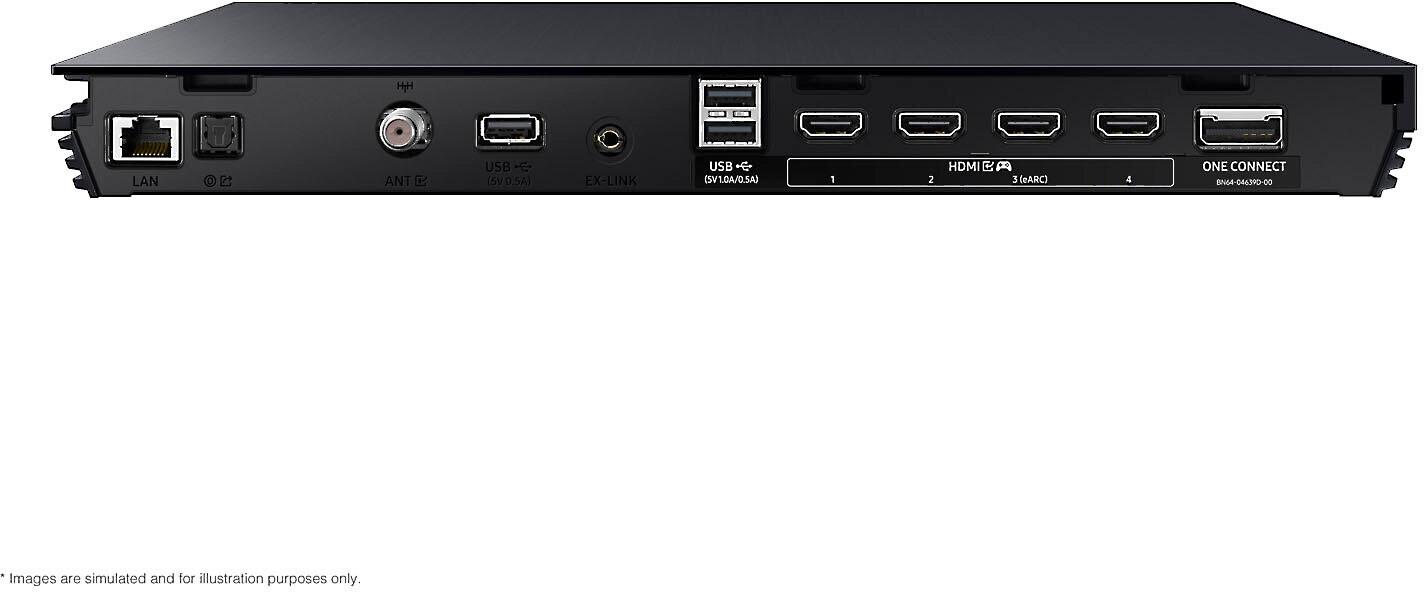
| Standard Wi-Fi, Bluetooth, 4 HDMI 2.0 ports | Wi-Fi 6E, Bluetooth 5.2, 4 HDMI 2.1 ports with eARC |
| Build Quality - Durability and design considerations | |
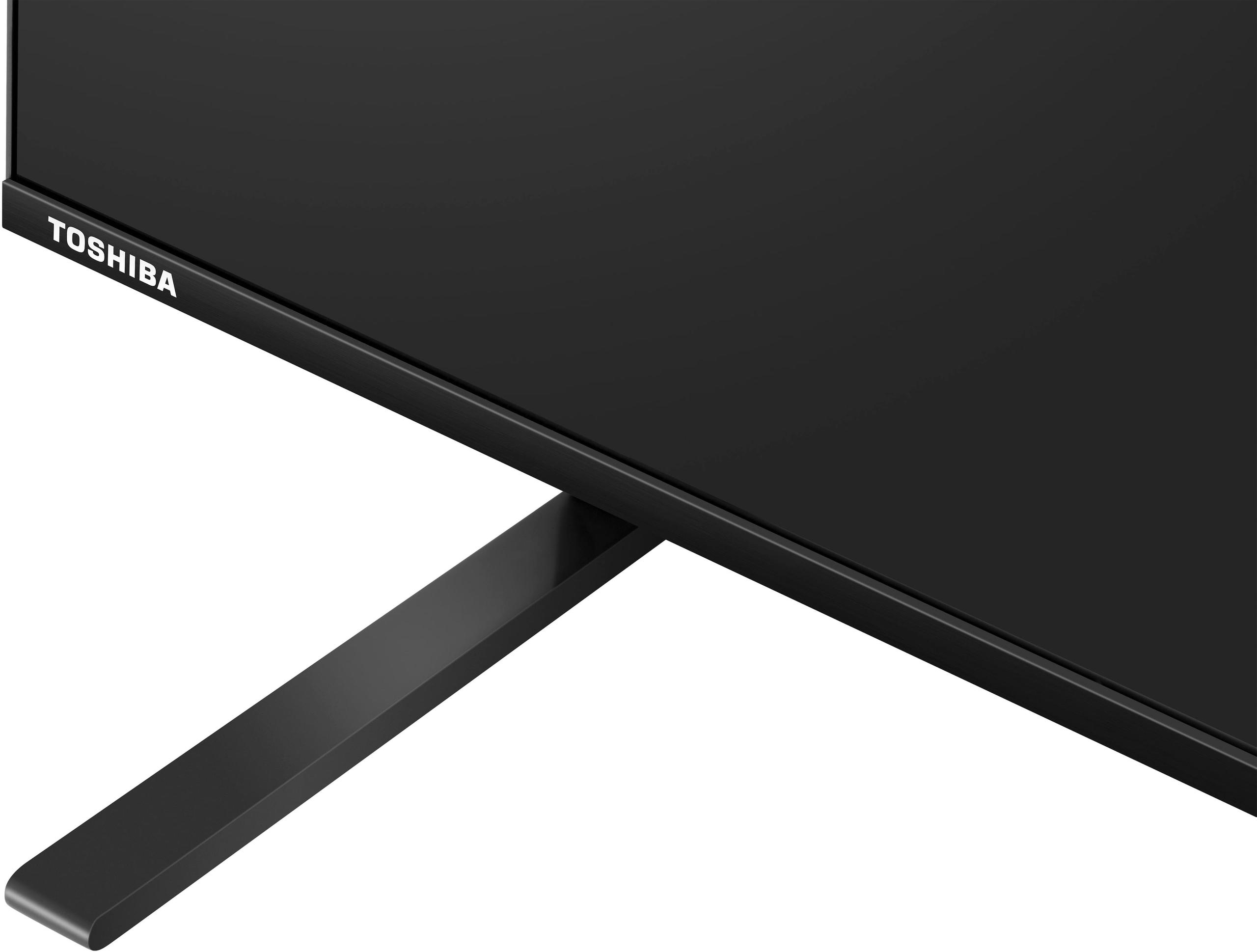
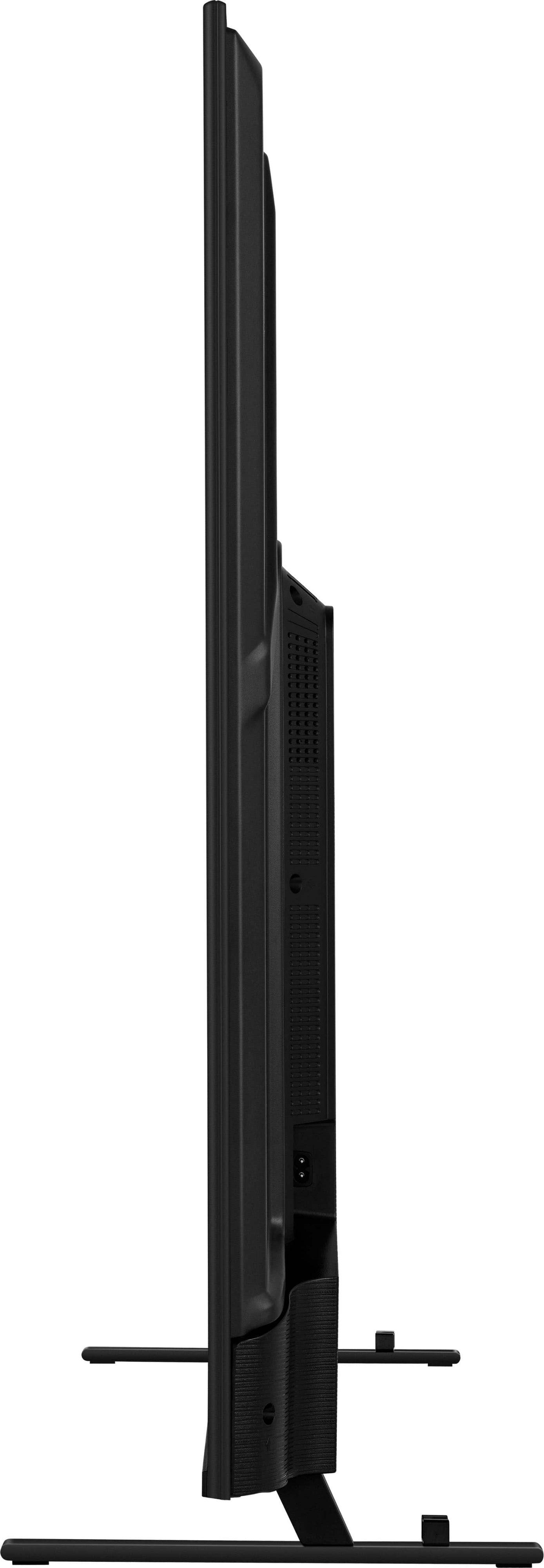
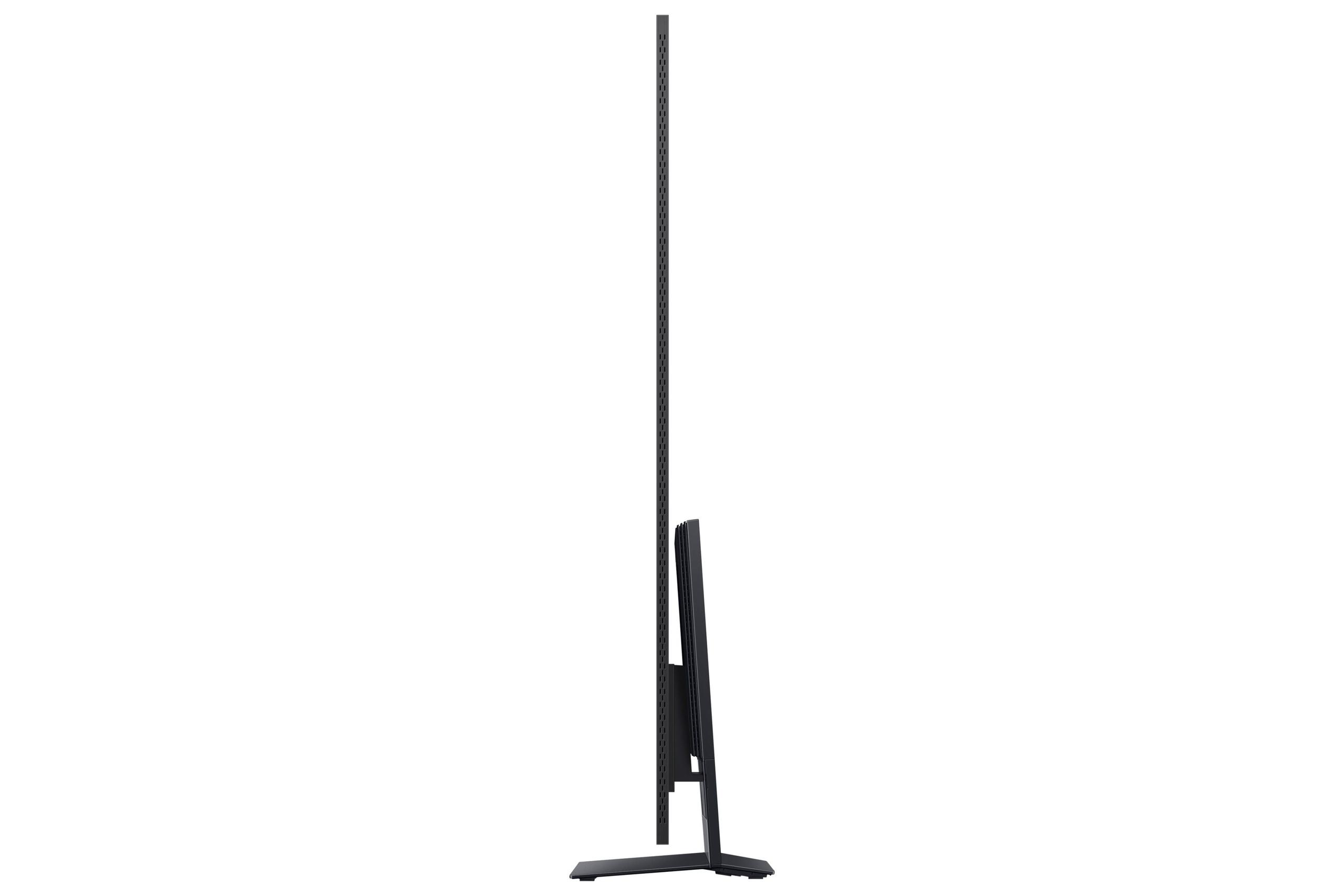
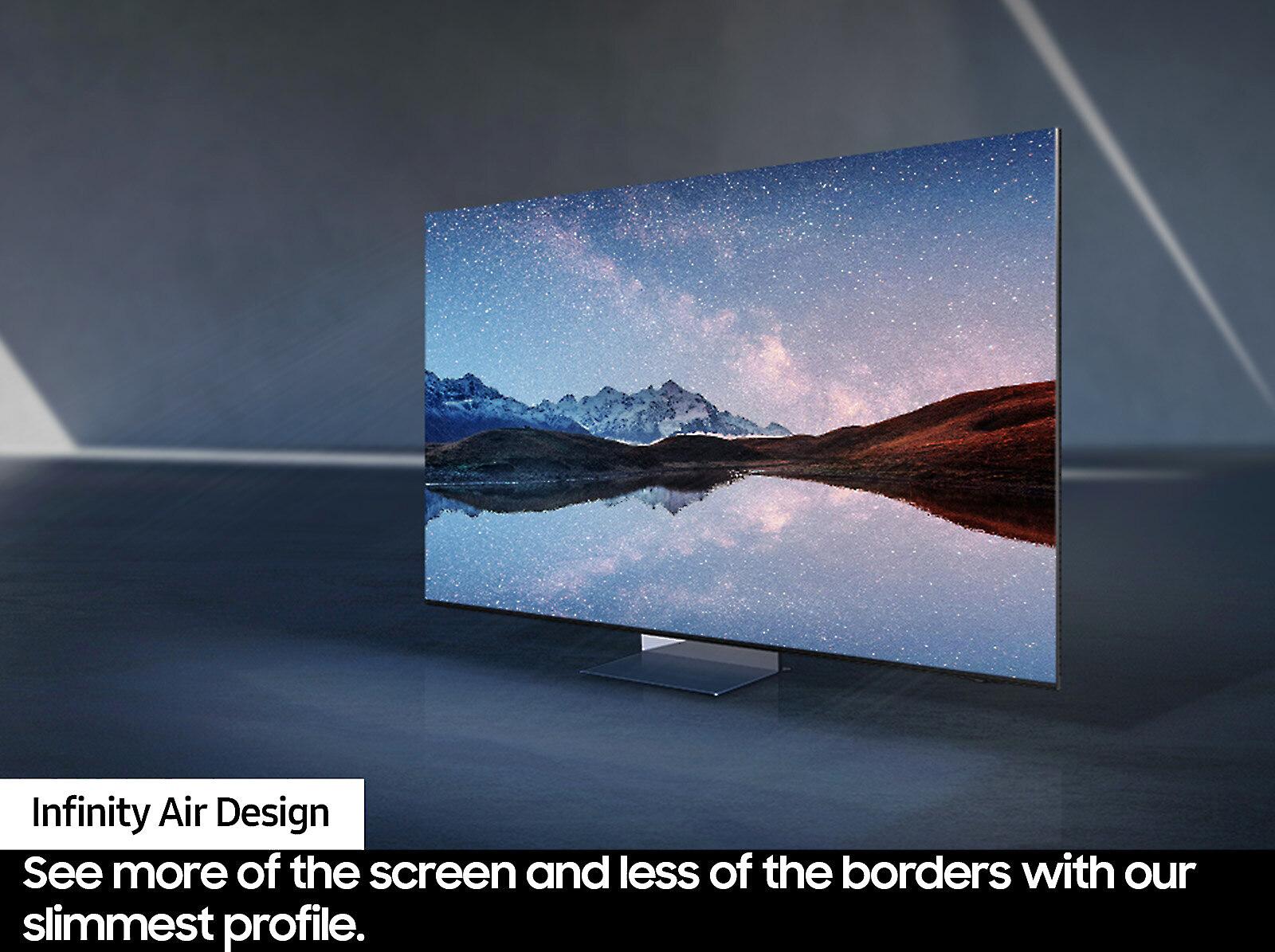
| Metal back panel, slim bezels, cable management | Infinity Air Design, One Connect Box, premium materials |
| Target Buyer - Who should consider each option | |
| Budget-conscious families wanting large 4K display | Enthusiasts wanting cutting-edge 8K technology and gaming performance |
The primary difference is resolution and price positioning. The Toshiba 65" M550 Series QLED Fire TV offers 4K resolution at a budget-friendly price point, while the Samsung QN900D Series 65" Neo QLED 8K Smart TV delivers 8K resolution with premium features at a significantly higher cost. The Samsung uses advanced Mini LED technology with hundreds of local dimming zones compared to the Toshiba's 48 zones.
The Samsung QN900D is significantly better for gaming. It supports 4K gaming at up to 240Hz and includes HDMI 2.1 ports on all inputs with full Variable Refresh Rate (VRR) support. The Toshiba M550 is limited to 60Hz at 4K and uses older HDMI 2.0 ports, making it suitable only for casual gaming rather than competitive or next-gen console gaming.
For most buyers, 4K is still sufficient since there's virtually no native 8K content available on streaming services or Blu-ray. The Samsung QN900D's 8K capability mainly benefits from AI upscaling that enhances 4K and lower-resolution content. The Toshiba M550's 4K resolution handles all current content perfectly and costs significantly less.
The Samsung QN900D offers superior smart TV performance with its Tizen platform, faster processor, and Wi-Fi 6E connectivity. The Toshiba M550 uses Fire TV with Alexa integration, but users report frequent performance issues including slow app loading and occasional crashes due to the underpowered processor.
The Samsung QN900D features an impressive 90-watt, 6.2.4-channel speaker system with True Dolby Atmos that may eliminate the need for a separate soundbar. The Toshiba M550 has decent 40-watt audio with a built-in subwoofer that's adequate for smaller rooms but most users will benefit from adding a soundbar for better sound quality.
For dedicated home theater use, the Samsung QN900D excels with its Mini LED backlighting, superior HDR performance, higher peak brightness, and immersive audio system. The Toshiba M550 can work in a home theater setting, especially in smaller rooms, but you'll likely want to add a soundbar and possibly an external streaming device for optimal performance.
The Samsung QN900D delivers superior picture quality with 8K resolution, Mini LED backlighting with hundreds of local dimming zones, and advanced AI processing. The Toshiba M550 offers impressive 4K QLED picture quality with 48 local dimming zones that's excellent for its price range, covering over 90% of the DCI-P3 color gamut.
Value depends on your needs and budget. The Toshiba M550 provides exceptional value for budget-conscious buyers wanting a large 4K TV with solid features. The Samsung QN900D justifies its premium pricing with cutting-edge technology, superior reliability, and comprehensive features that may eliminate the need for additional equipment.
The Samsung QN900D has a strong reputation for reliability and build quality. The Toshiba M550 has reported issues including slow Fire TV performance, occasional crashes, and processing delays that can be frustrating for some users, though many find these acceptable given the significant cost savings.
The Samsung QN900D performs better in bright rooms due to its higher peak brightness capabilities and advanced anti-reflection technology. The Toshiba M550 has adequate brightness for most viewing conditions but may struggle in very bright rooms without curtains or blinds.
The Samsung QN900D is optimized for PlayStation 5 and Xbox Series X with support for 4K at 120Hz gaming and advanced features like VRR and ALLM. The Toshiba M550 works with all gaming consoles but limits next-gen consoles to 60Hz performance, making it better suited for Nintendo Switch, older consoles, or casual gaming.
Choose the Toshiba M550 if you want a large 4K TV at a budget-friendly price and primarily watch streaming content with occasional casual gaming. Select the Samsung QN900D if you want the latest 8K technology, superior gaming performance, and premium build quality while being willing to pay significantly more for these advanced features.
We've done our best to create useful and informative comparisons to help you decide what product to buy. Our research uses advanced automated methods to create this comparison and perfection is not possible - please contact us for corrections or questions. These are the sites we've researched in the creation of this article: bestbuy.com - bestbuy.com - consumerreports.org - youtube.com - pcvarge.com - tomsguide.com - youtube.com - bestbuy.com - toshibatv-usa.com - marketplace-staging.paytomorrow.com - toshibatv-usa.com - productabout.com - leaseville.com - youtube.com - toshibatv-usa.com - rtings.com - videoandaudiocenter.com - bestbuy.com - avsforum.com - bestbuy.com - walts.com - images.samsung.com - samsung.com - merlinstv.com - samsung.com - avsforum.com - samsung.com

Privacy Policy
Terms and Conditions - Affiliate Policy
Home Security
© Copyright 2008-2026.
11816 Inwood Rd #1211, Dallas, TX 75244