

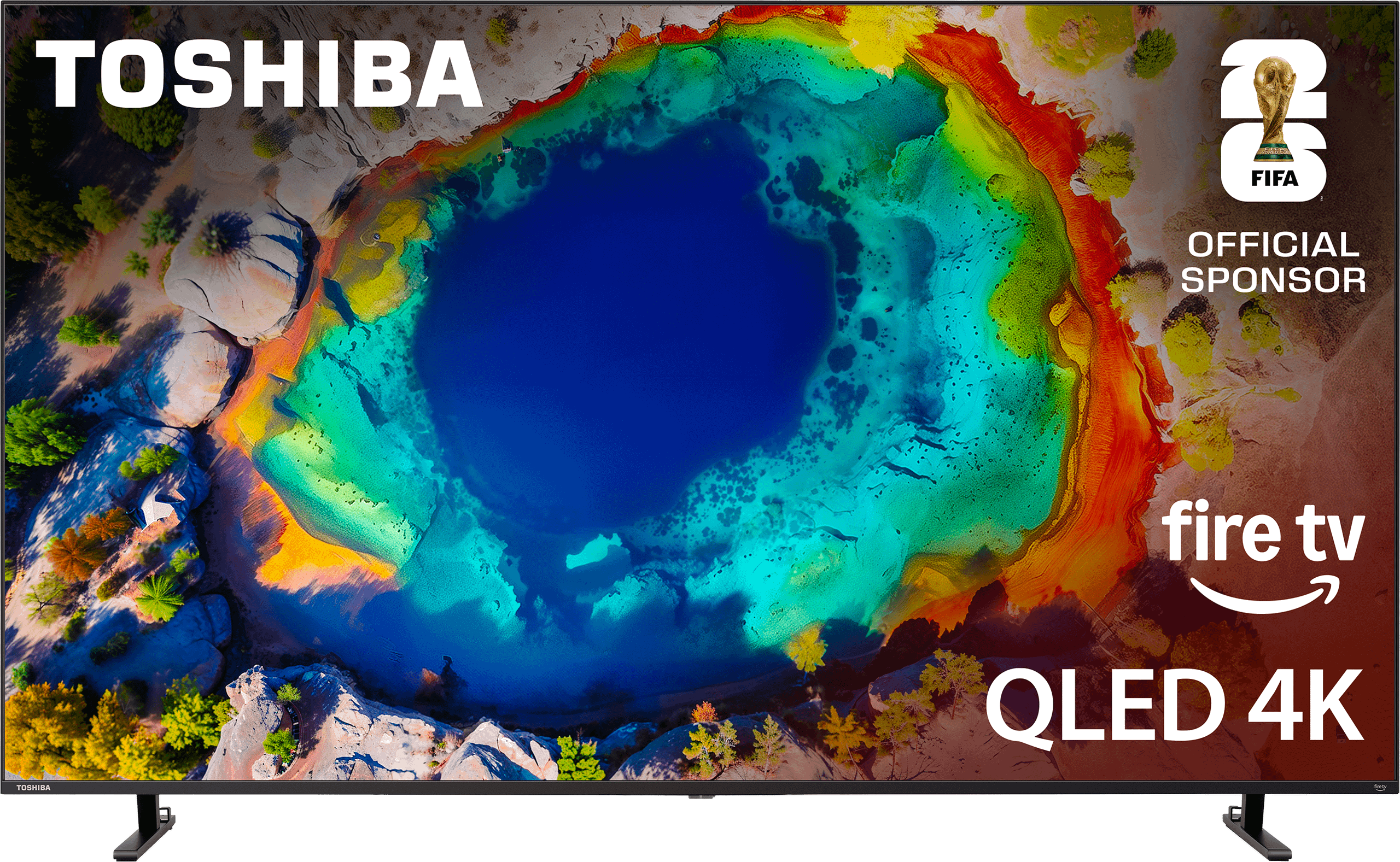
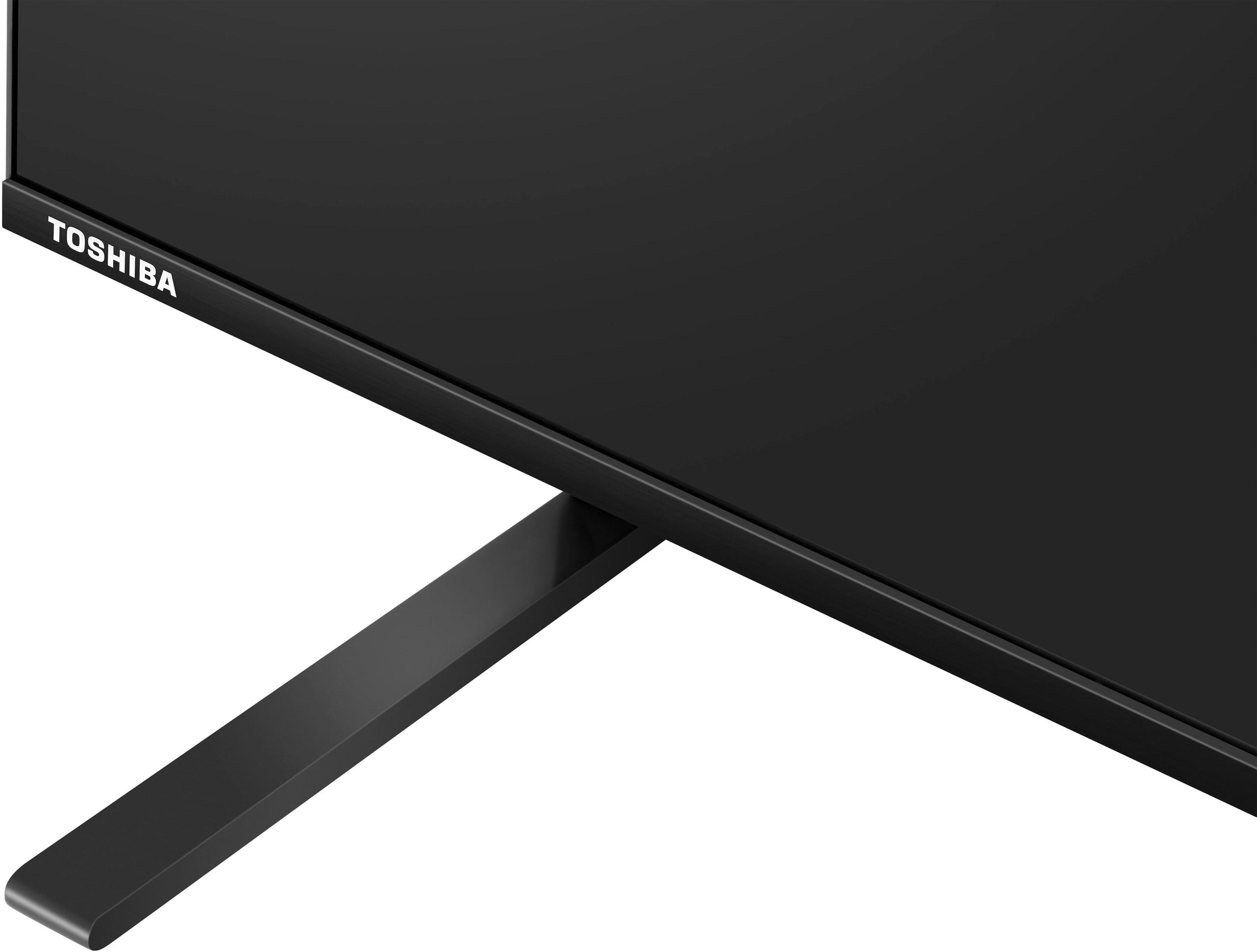
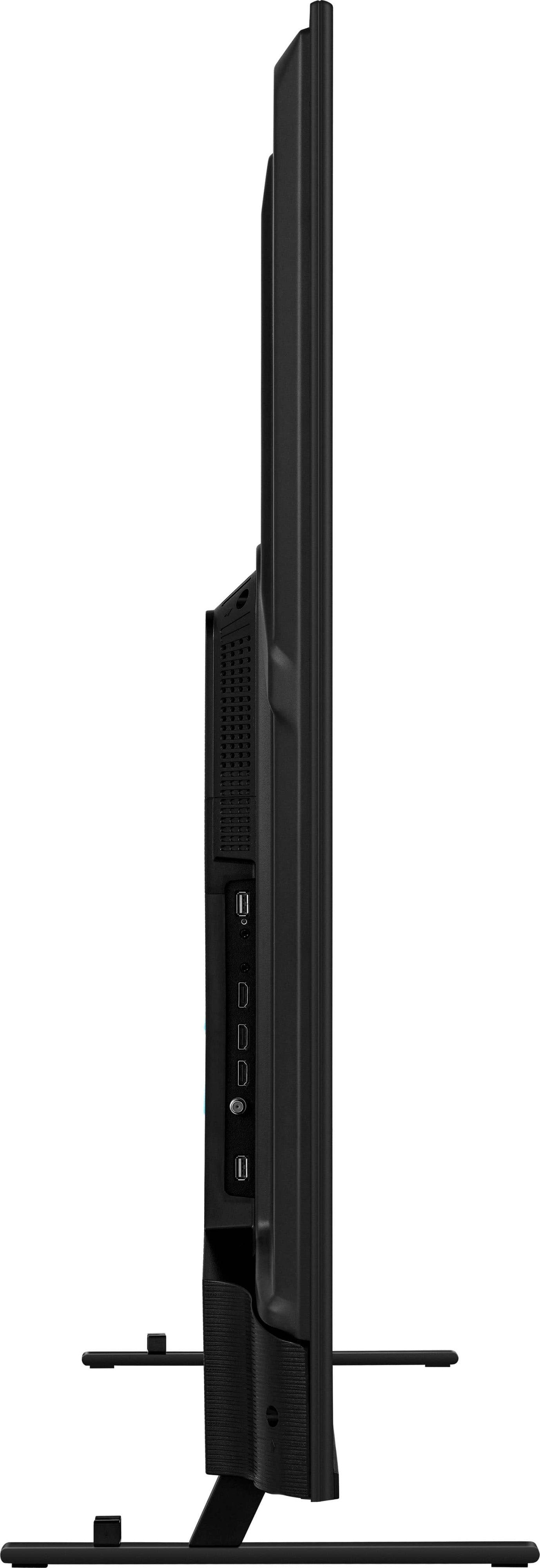
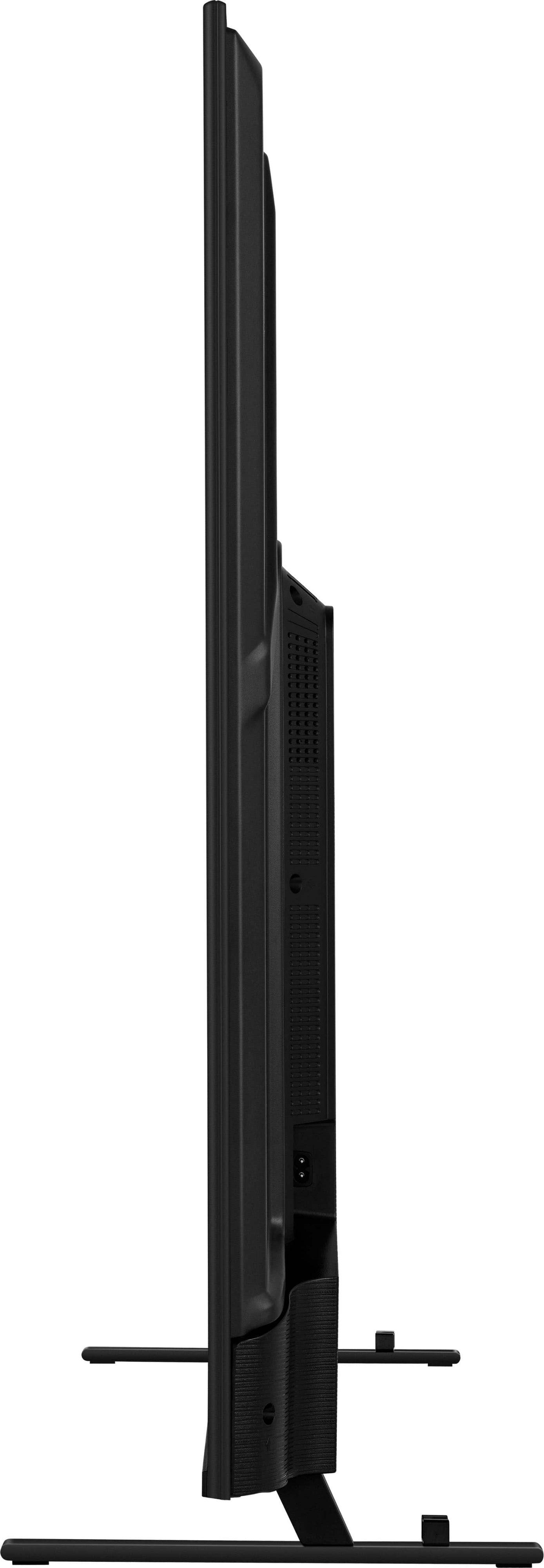
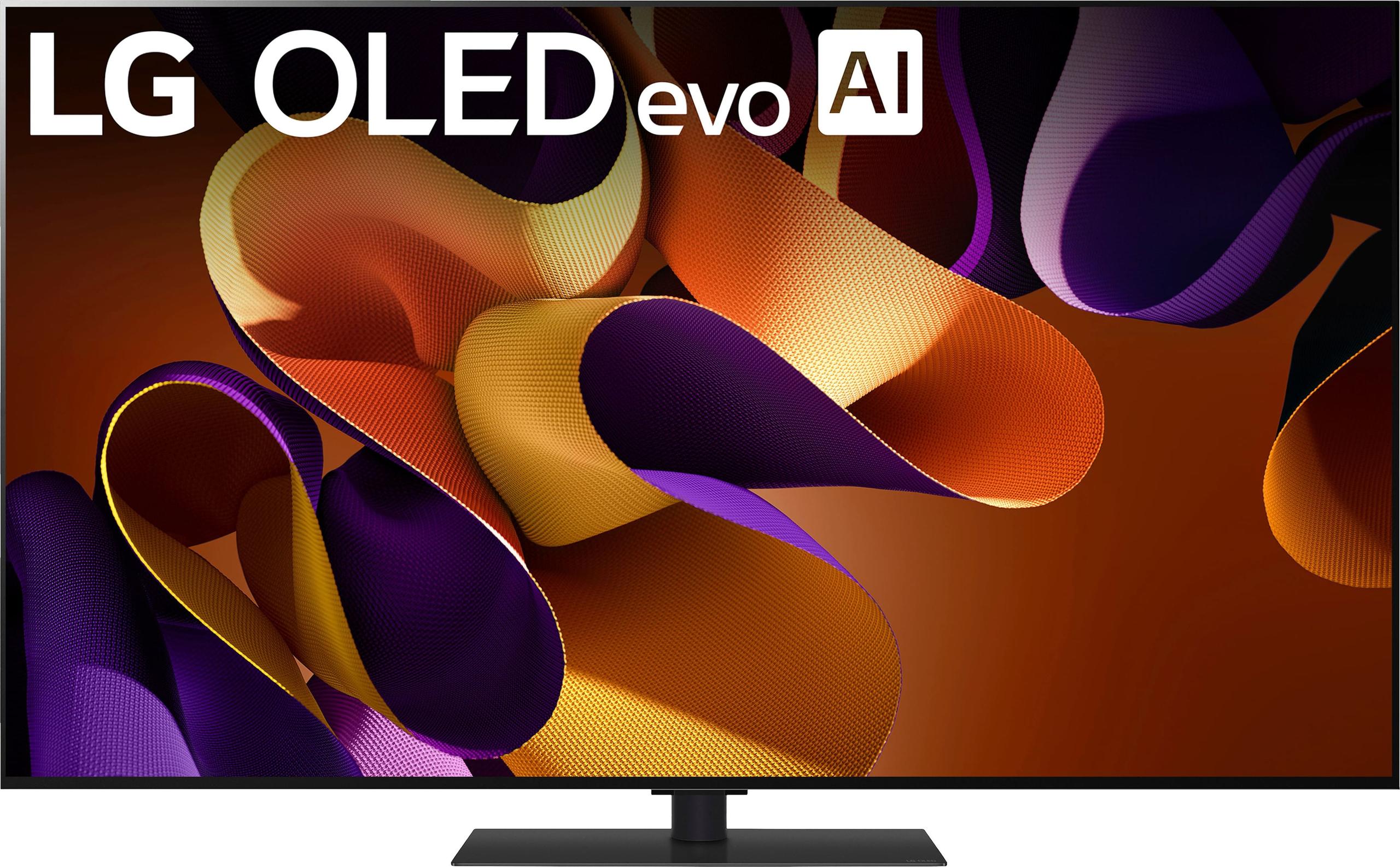
When you're shopping for a premium 65-inch TV, you're essentially choosing between two competing philosophies of display technology. The Toshiba M550 Series QLED Fire TV and LG G4 Series OLED evo represent these different approaches perfectly—one prioritizes incredible value through proven QLED technology, while the other pushes the boundaries of what's possible with cutting-edge OLED innovation.
The TV landscape has evolved dramatically since both models launched in 2024. While QLED technology has matured into a reliable, affordable option, OLED has finally overcome its brightness limitations to become a serious contender for bright-room viewing. Understanding these technologies and their trade-offs will help you make the right choice for your home theater setup.
The most fundamental difference between these TVs lies in how they create light and color. The Toshiba M550 uses QLED (Quantum Dot Light Emitting Diode) technology, which is essentially an enhanced LED-LCD display. Quantum dots are microscopic particles that emit specific colors when hit by blue LED light, creating more accurate and vibrant colors than traditional LCD panels. Think of quantum dots as tiny color filters that can produce over a billion different shades—a massive improvement over older LCD technology.
Behind the QLED panel, the Toshiba M550 features full array local dimming with 48 separate zones. This means the backlight is divided into 48 individually controllable sections, allowing darker areas of the screen to dim while brighter areas stay illuminated. It's like having 48 tiny flashlights behind your screen that can turn on and off independently.
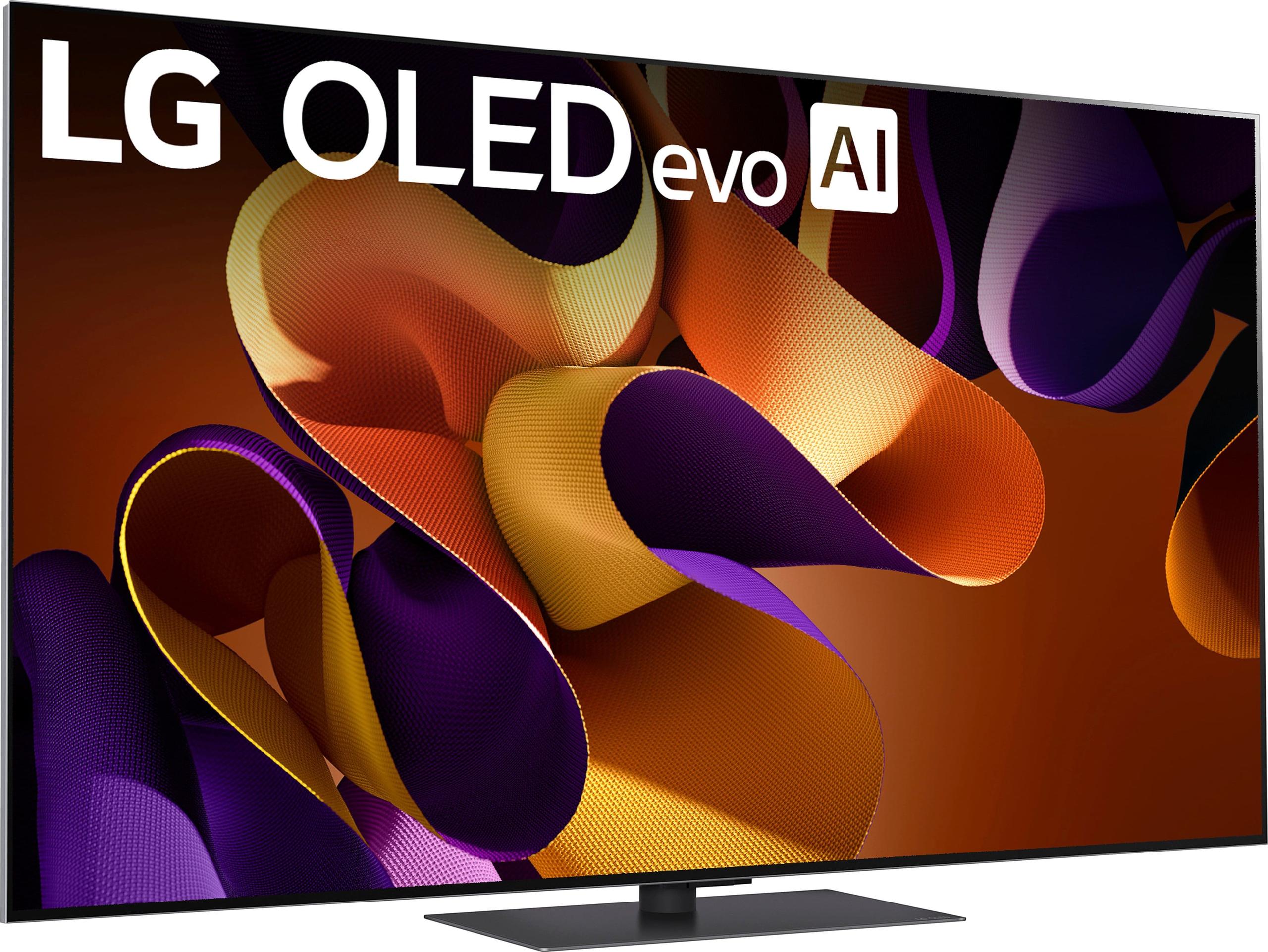
The LG G4, on the other hand, uses OLED (Organic Light Emitting Diode) technology with something called Micro Lens Array (MLA). Each pixel is essentially a tiny light bulb that can turn completely on or off independently. When a pixel needs to be black, it simply turns off—no backlight bleeding through. The MLA technology uses microscopic lenses to focus and amplify the light from each pixel, making the display significantly brighter than previous OLED generations.
This fundamental difference affects everything about how these TVs perform, from black levels to power consumption to viewing angles.
In our research across professional reviews and user feedback, one thing becomes crystal clear: the LG G4 delivers superior contrast performance that's immediately noticeable in real-world viewing. Perfect blacks aren't just a technical specification—they make colors appear more vivid and create that sense of depth you get in a movie theater.
When watching dark scenes in movies like "Dune" or "The Batman," the LG G4 can display true black space while keeping bright elements like explosions or lightsaber glow perfectly defined. The Toshiba M550, despite its 48-zone local dimming system, still suffers from the fundamental limitation of LCD technology: it can't turn off individual pixels completely. This results in what reviewers consistently describe as "merely OK" black levels with some inevitable light bleeding around bright objects in dark scenes.
This doesn't mean the Toshiba M550 looks bad—its local dimming system works effectively for a budget display, and most viewers coming from older TVs will be impressed. But side-by-side with the LG G4, the difference is undeniable.
Historically, OLED displays struggled in bright rooms because they couldn't get bright enough to compete with sunlight or overhead lighting. The LG G4 changes that equation dramatically. Its Brightness Booster Max technology pushes peak brightness to over 2,200 nits (a measurement of how bright the screen can get)—that's 150% brighter than previous OLED models and bright enough for any reasonable viewing environment.
The Toshiba M550 typically achieves around 400 nits, which sounds much lower but is actually adequate for most viewing situations. The key difference emerges with HDR (High Dynamic Range) content, where peak brightness directly translates to more impactful highlights. When watching HDR movies on Netflix or gaming with an Xbox Series X, the LG G4 can display the full range of brightness that content creators intended.
Both TVs support Dolby Vision, which is the premium HDR format that provides scene-by-scene optimization. However, the LG G4's higher peak brightness means those optimizations have more headroom to work with.
The Toshiba M550 leverages quantum dot technology to cover over 90% of the DCI-P3 color space—the standard used for digital cinema. This translates to vibrant, lifelike colors that reviewers consistently praise as excellent for the price point. The quantum dots ensure colors remain saturated even when the display gets bright, which is a significant advantage over standard LCD panels.
The LG G4 achieves 100% color volume and fidelity, meaning it can display any color at any brightness level with perfect accuracy. Professional reviews note that the Four Stack OLED technology maintains color accuracy even at peak brightness levels, something that traditionally challenged OLED displays.
In practical terms, both displays will look excellent for everyday viewing. The LG G4 provides reference-level accuracy for film enthusiasts, while the Toshiba M550 delivers pleasing, vibrant colors that make content pop.
The gaming landscape has evolved significantly since the PlayStation 5 and Xbox Series X launched, and the differences between these TVs become stark when gaming enters the picture.
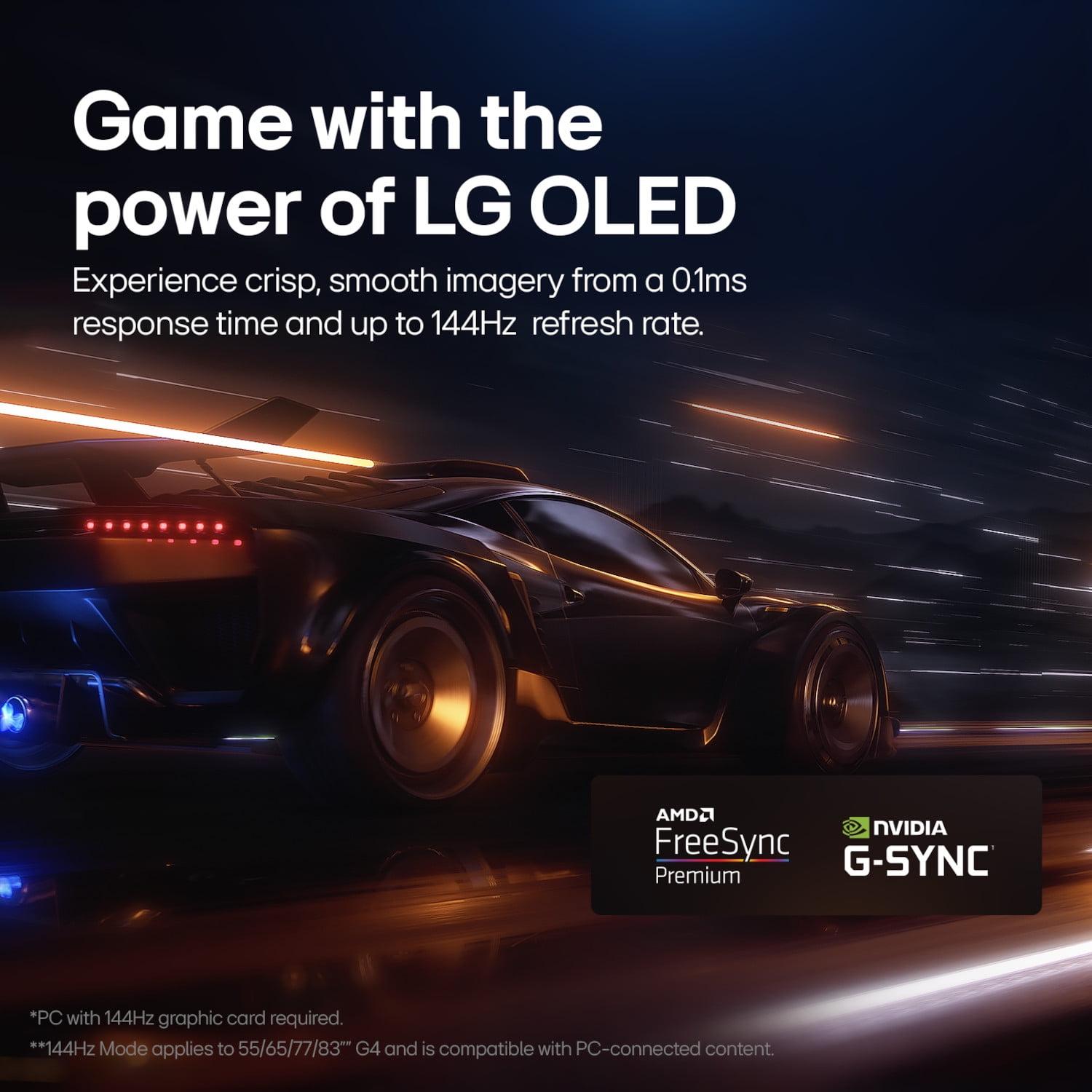
The LG G4 offers a native 144Hz refresh rate with the ability to accept 4K signals at up to 165Hz through its four HDMI 2.1 ports. Response time—how quickly pixels can change from one color to another—measures just 0.1 milliseconds. For context, most gaming monitors struggle to achieve response times below 1ms, making the LG G4 exceptionally fast.
The Toshiba M550 supports 60Hz at 4K resolution and can achieve 120Hz at 1440p resolution. While this covers the basics for current console gaming, it lacks the headroom for future developments or high-end PC gaming. More concerning are user reports of significant input lag—the delay between pressing a button and seeing the result on screen—which can make competitive gaming frustrating.
Both TVs support VRR (Variable Refresh Rate), which synchronizes the TV's refresh rate with your gaming device to eliminate screen tearing and stuttering. However, the LG G4 supports VRR across a much wider range and includes both NVIDIA G-Sync and AMD FreeSync Premium compatibility.
The LG G4 also maintains consistent color performance across all picture modes, including game mode. Many TVs sacrifice color accuracy for low latency in game mode, but our research indicates the LG G4 avoids this compromise.
User reviews consistently report motion artifacts and "phantom images" during busy action sequences on the Toshiba M550, making it less suitable for fast-paced gaming or sports content.
The software experience can make or break a TV's usability, and these two models showcase the importance of matching processing power to platform demands.
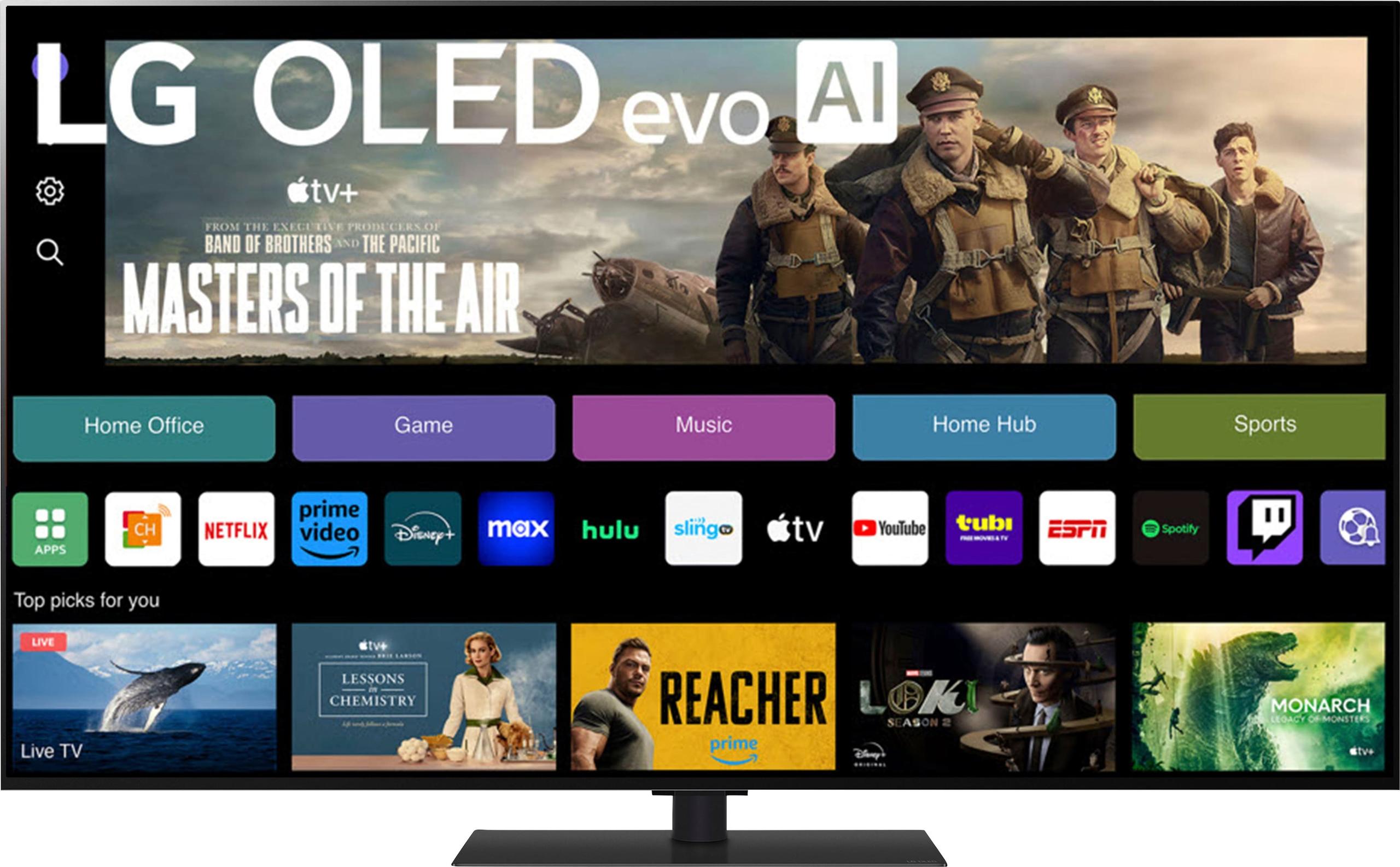
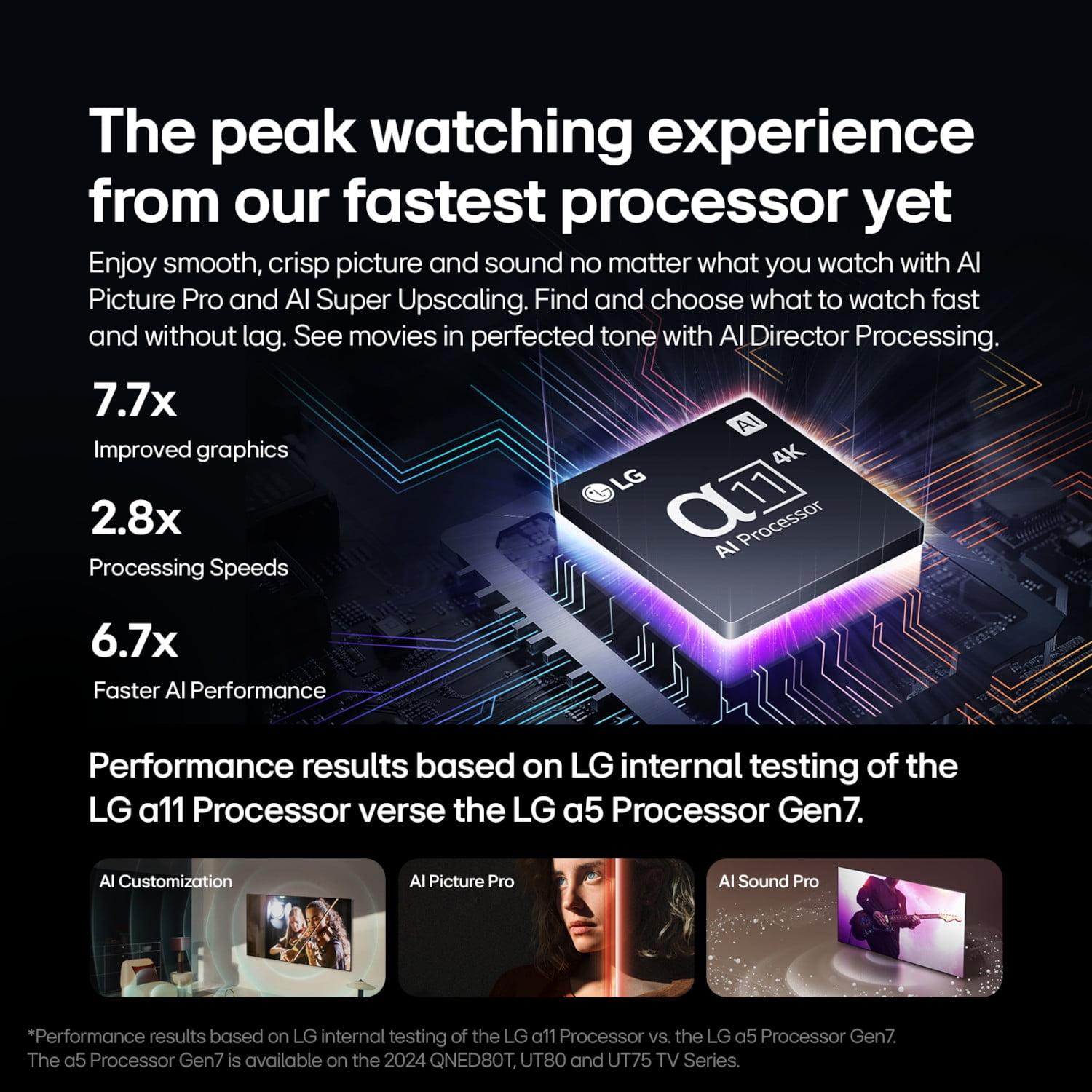
The LG G4 runs webOS 24, powered by LG's α11 AI Processor 4K. This combination delivers what reviewers describe as responsive, lag-free navigation with advanced AI features that actually enhance the viewing experience. The processor provides 6.7 times faster AI performance and 7.7 times improved graphics processing compared to previous generations, enabling features like AI Super Upscaling that intelligently enhances lower-resolution content.
The Toshiba M550 runs Amazon's Fire TV platform, which offers excellent content selection and Alexa integration. However, user reviews consistently highlight a critical flaw: the processor appears underpowered for the platform's demands. Apps can take 30-60 seconds to launch, the interface frequently freezes, and some users report the TV randomly returning to the home screen during use.
This performance gap affects daily usability significantly. While the Toshiba M550 offers great value for picture quality, the frustrating smart TV experience may drive users to external streaming devices like Apple TV or Roku.
The LG G4 includes sophisticated AI features like AI Picture Pro, which analyzes content in real-time to optimize picture quality, and AI Concierge for personalized content recommendations. These aren't just marketing gimmicks—they represent meaningful improvements to the viewing experience that become more valuable over time.
The Toshiba M550 includes AI upscaling and auto-adjustment features, though they're less sophisticated and sometimes struggle with the processing demands.
Both TVs include Dolby Atmos support, but their audio implementations differ significantly in execution and power.
The LG G4 features a 4.2 channel system with 60W total power output. Its α11 processor can virtually up-mix audio to 11.1.2 channels, creating a more immersive soundscape. However, professional reviews note that the speakers, while powerful, still exhibit thinness at higher frequencies—a common limitation of TV speakers trying to fit into slim profiles.
The Toshiba M550 includes a 40W system with a dedicated 20W subwoofer. User reviews frequently mention that the built-in sound quality is surprisingly good for the price, with the subwoofer providing decent bass response. However, the overall audio experience remains limited by the budget-focused design.
For serious home theater use, both TVs will benefit from external audio solutions, but the LG G4's more sophisticated processing provides better integration with high-end soundbars and AV receivers.
The construction and reliability differences between these TVs reflect their market positioning and expected lifespan.
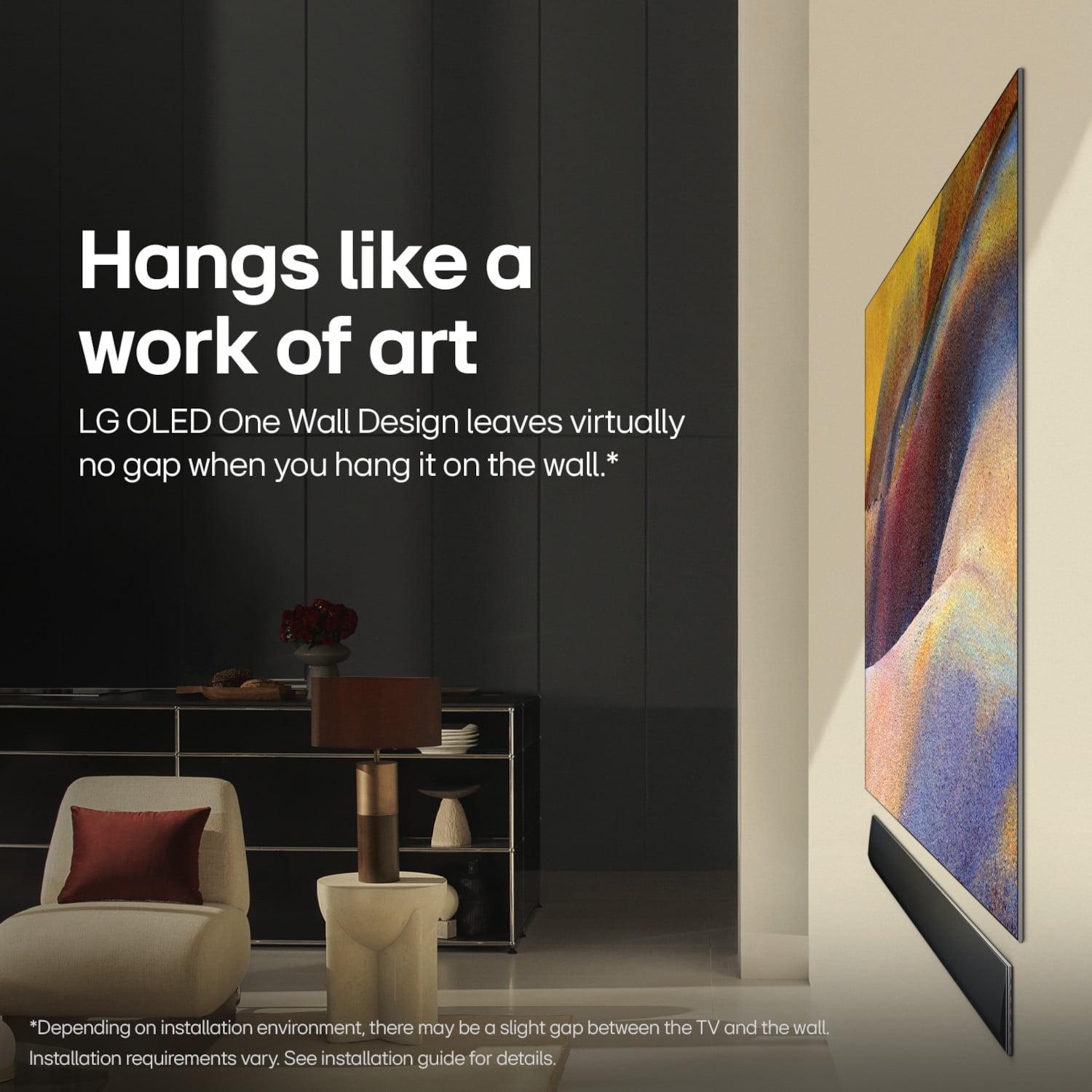
The LG G4 epitomizes premium design with its ultra-slim profile and gallery-style mounting system. When wall-mounted, it sits nearly flush against the wall, resembling a piece of art rather than a traditional TV. The build quality feels substantial, with premium materials throughout.
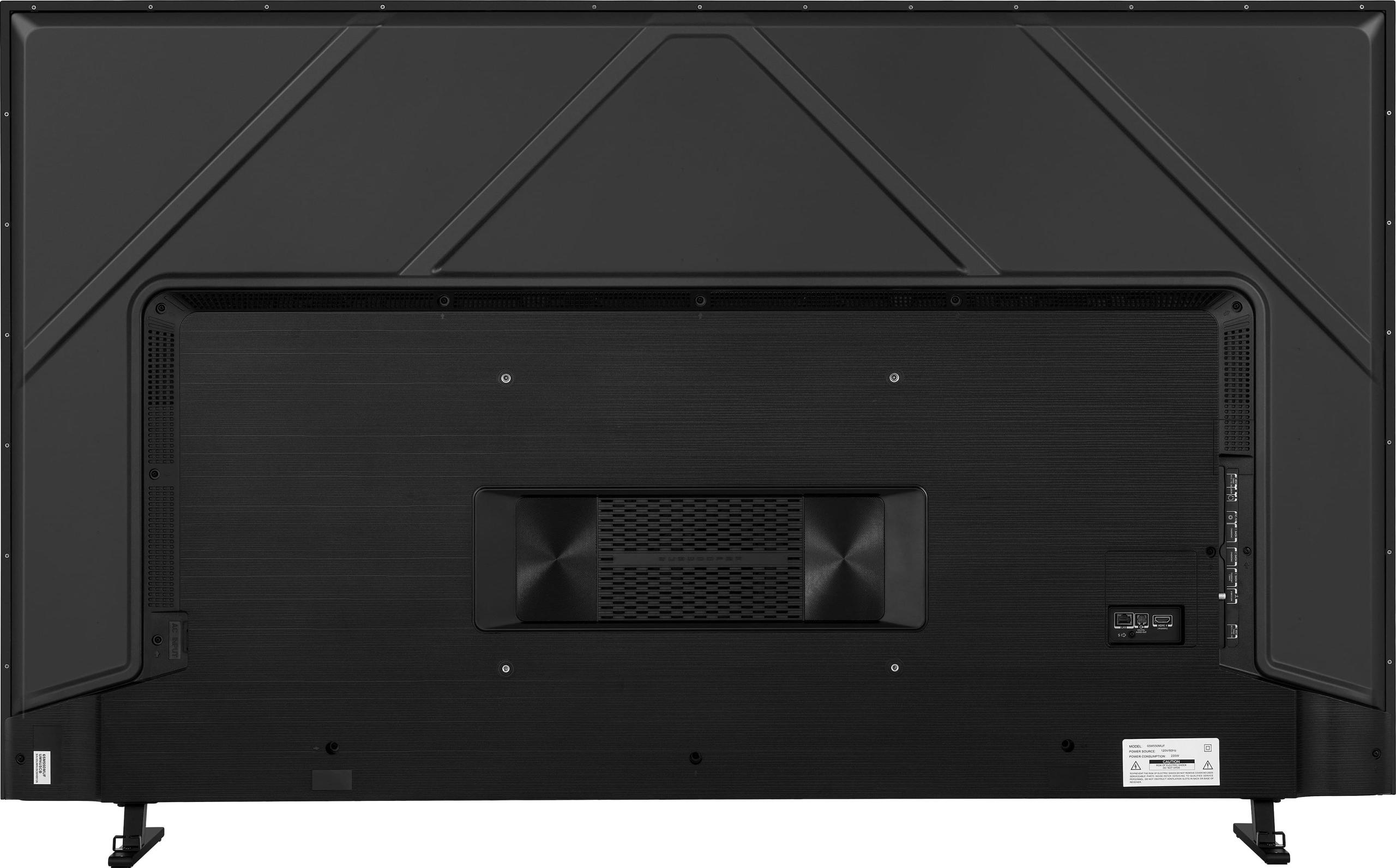
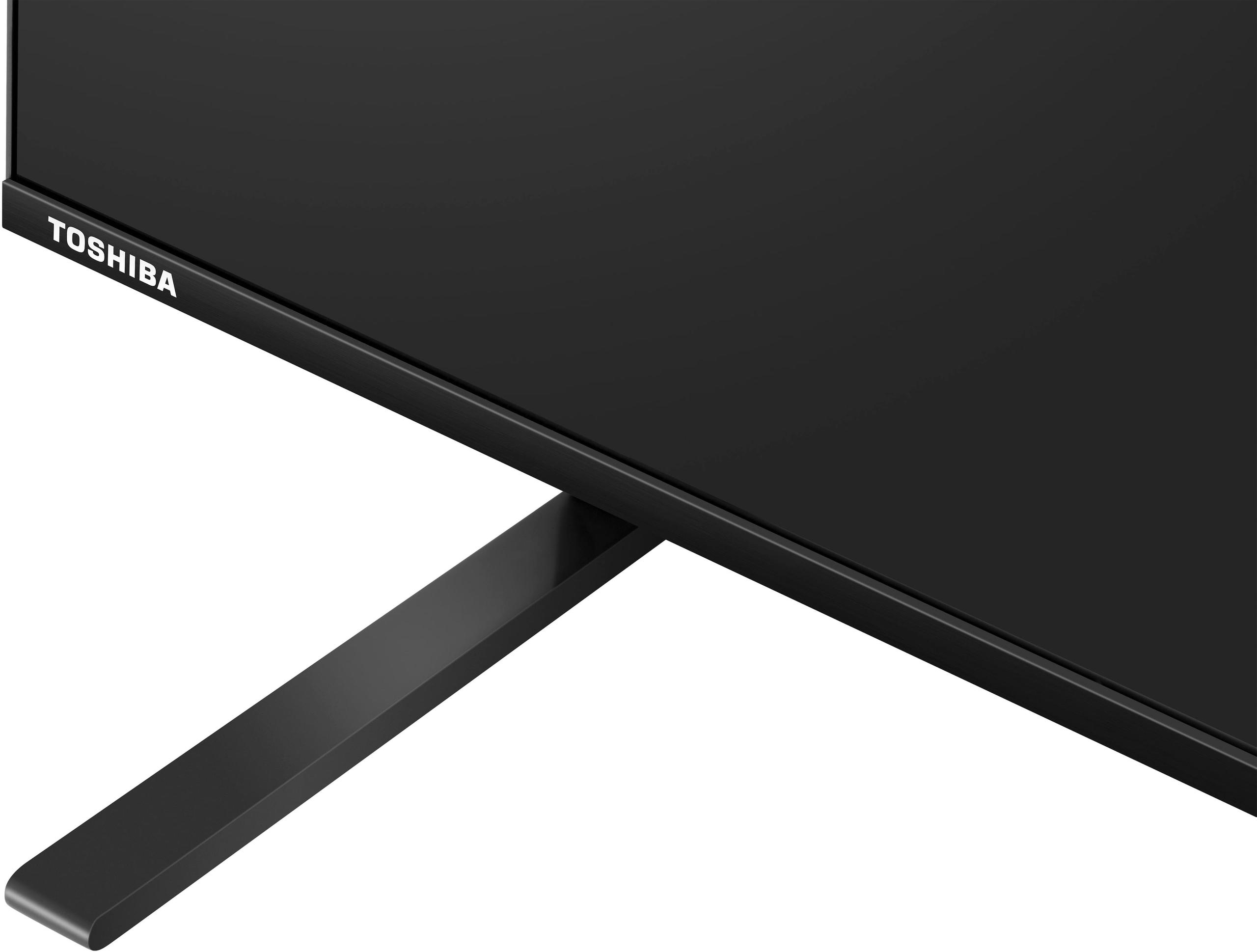
The Toshiba M550 offers solid construction for its price point, including a metal back panel and thoughtful cable management. While not as premium as the LG G4, it feels well-built and includes both wall-mounting options and a stable tabletop stand.
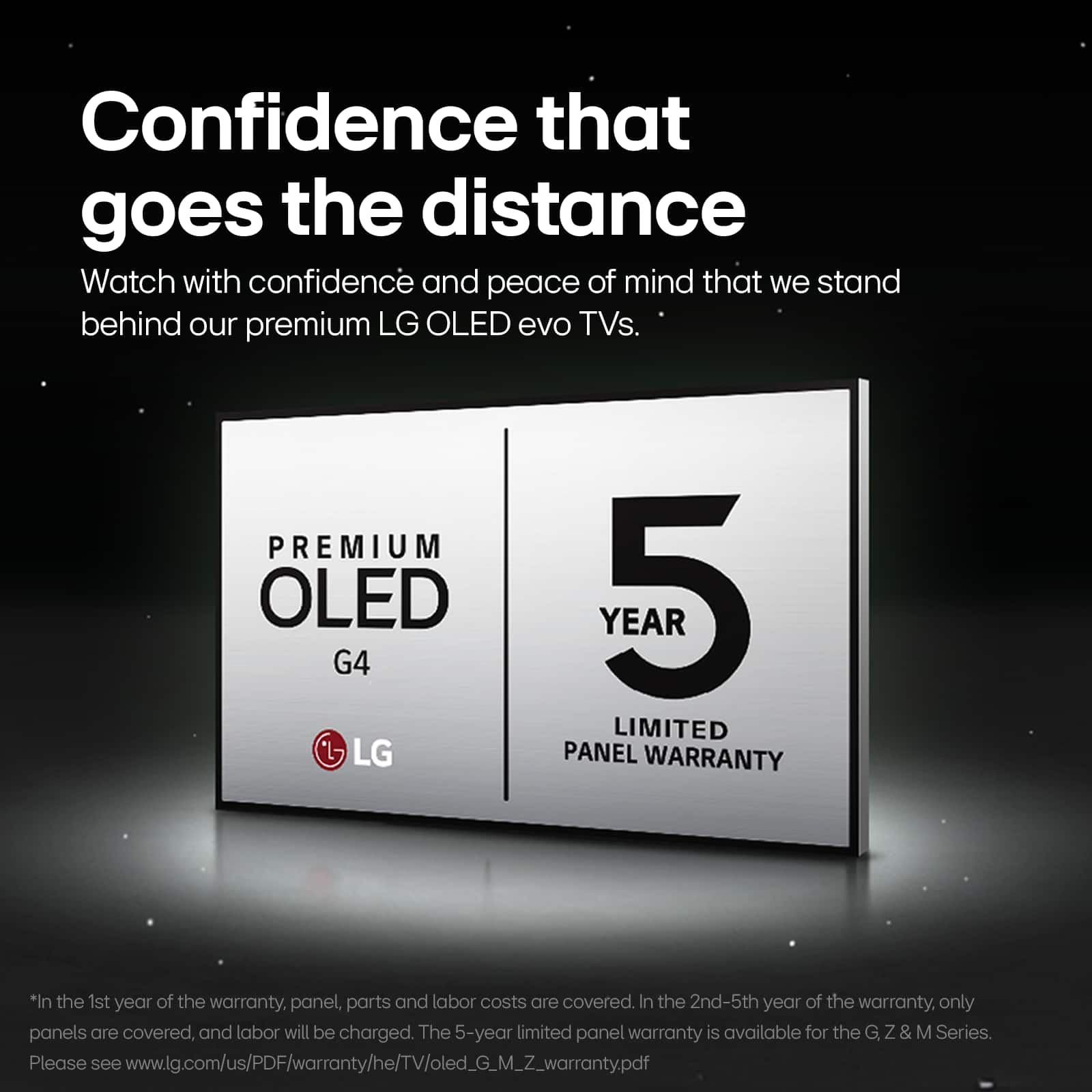
The LG G4 includes a comprehensive 5-year panel warranty that covers burn-in protection—a significant confidence statement from LG about their OLED technology's durability. This extended coverage reflects the premium positioning and expected longevity.
The Toshiba M550 comes with a standard 1-year warranty, typical for budget electronics. User reviews mention some reliability concerns, including occasional system crashes and hardware issues, though these don't appear widespread.
At the time of writing, these TVs occupy completely different price segments, making direct value comparisons complex but illuminating.
The Toshiba M550 represents exceptional value in the sub-$700 category, delivering 4K QLED performance that would have cost significantly more just a few years ago. For viewers primarily interested in streaming Netflix, YouTube, and basic gaming, it provides impressive picture quality at an accessible price point.
The LG G4, typically priced in the $2,500-$3,000 range, commands a significant premium but delivers flagship-level performance that justifies the cost for demanding users. The price difference reflects genuine technological advantages rather than just brand markup.
When evaluating long-term value, consider that the Toshiba M550's limitations in gaming performance and smart platform responsiveness might necessitate additional purchases—external streaming devices, gaming monitors, or earlier replacement cycles.
The LG G4's future-proof features, extended warranty, and superior performance provide better value for users planning to keep their TV for many years.
For dedicated home theater setups, picture quality becomes paramount, and the differences between these technologies become more pronounced.
If you're building a home theater around movie watching, the LG G4's perfect blacks and superior contrast create a more cinematic experience. The included Filmmaker Mode ensures content appears as directors intended, while the high peak brightness handles HDR content with authority.
The Toshiba M550 provides an enjoyable movie experience for casual viewing but may disappoint enthusiasts watching in darkened rooms where OLED's advantages become most apparent.
For console gaming, the LG G4 offers a generational leap in performance, supporting next-gen features that will remain relevant for years to come. The Toshiba M550 handles current gaming adequately but lacks headroom for future developments.
Choose the Toshiba M550 if you're working with a limited budget but want solid 4K performance. It excels for casual viewing, basic gaming, and situations where you need a capable TV without premium features. The value proposition remains compelling despite its limitations.
Opt for the LG G4 if picture quality is your priority and you can justify the premium price. It's the better choice for serious gamers, movie enthusiasts, and anyone building a long-term home theater setup. The superior performance across nearly every metric makes it worth the investment for demanding users.
The technology gap between these TVs is substantial and reflects their different target markets. While both deliver 4K content effectively, the LG G4 provides a fundamentally superior experience that becomes more apparent with extended use.
Understanding these differences helps ensure your investment aligns with your priorities and viewing habits, whether you're seeking incredible value or uncompromising performance.
| Toshiba 65" M550 Series QLED Fire TV | LG 65" G4 Series OLED evo 4K UHD Smart TV 2024 |
|---|---|
| Display Technology - Fundamental difference affecting contrast and black levels | |
| QLED with Full Array Local Dimming (48 zones) | OLED evo with Micro Lens Array (MLA) |
| Peak Brightness - Critical for HDR performance and bright room viewing | |
| ~400 nits (adequate for most rooms) | Up to 2,268 nits (excellent for any lighting condition) |
| Black Levels - Most noticeable difference in dark movie scenes | |
| Merely OK with some light bleeding | Perfect blacks (pixels turn completely off) |
| Gaming Performance - Essential for console and PC gaming | |
| 60Hz at 4K, 120Hz at 1440p, significant input lag issues | Native 144Hz, 0.1ms response time, 4x HDMI 2.1 ports |
| Smart Platform Responsiveness - Affects daily usability | |
| Fire TV with frequent freezing, 30-60 second app load times | webOS 24 with α11 processor, responsive performance |
| Audio System - Built-in sound quality | |
| 40W with 20W subwoofer, surprisingly good for price | 60W 4.2 channel with AI Sound Pro, still benefits from soundbar |
| HDR Support - Enhanced color and contrast in compatible content | |
| Dolby Vision, HDR10, HDR10+, HLG (limited by brightness) | Dolby Vision, HDR10, HDR10+, HLG (full dynamic range) |
| Refresh Rate Technology - Smooth motion for sports and action | |
| MEMC with motion artifacts in busy scenes | Native 144Hz with excellent motion handling |
| Gaming Features - Next-gen console compatibility | |
| Basic VRR up to 60Hz, outdated HDMI ports | VRR, G-Sync, FreeSync Premium, ALLM across all ports |
| Build Quality & Design - Premium feel and installation options | |
| Solid construction, metal back, standard mounting | Ultra-slim profile, gallery-style flush mounting |
| Warranty Coverage - Long-term protection and manufacturer confidence | |
| 1 year standard warranty | 5 year panel warranty including burn-in protection |
| Processing Power - AI features and upscaling quality | |
| Basic AI upscaling, underpowered for platform demands | α11 AI Processor with 6.7x faster AI performance |
| Color Performance - Accuracy and vibrancy | |
| Quantum dots, 90% DCI-P3, very good for price | 100% color volume and fidelity, reference-level accuracy |
The fundamental difference is display technology: the Toshiba M550 uses QLED (enhanced LED-LCD) while the LG G4 uses OLED. This means the LG G4 can turn individual pixels completely off for perfect blacks, while the Toshiba M550 uses a backlight that can dim but never fully turn off. The result is dramatically better contrast and black levels on the LG G4.
The LG G4 is significantly better for gaming with its 0.1ms response time, native 144Hz refresh rate, and four HDMI 2.1 ports supporting up to 4K at 165Hz. It also includes VRR, G-Sync, and FreeSync Premium support. The Toshiba M550 is limited to 60Hz at 4K and has reported input lag issues that affect gaming performance.
The LG G4 delivers superior picture quality with perfect blacks, higher peak brightness (over 2,200 nits vs 400 nits), and 100% color accuracy. The Toshiba M550 offers good picture quality for its price range with vibrant quantum dot colors, but cannot match the contrast and HDR performance of the LG G4.
The LG G4 runs webOS 24 with responsive performance powered by the α11 AI processor. The Toshiba M550 uses Fire TV, which offers good content selection but suffers from frequent freezing, slow app loading (30-60 seconds), and an underpowered processor that struggles with the platform's demands.
The Toshiba M550 offers exceptional value in the budget category, delivering solid 4K QLED performance at a fraction of premium TV prices. The LG G4 provides flagship-level performance that justifies its premium price for users who prioritize picture quality and gaming features.
The LG G4 excels in dark room viewing thanks to its perfect blacks and infinite contrast ratio, creating a cinematic experience similar to movie theaters. The Toshiba M550 is adequate for dark room viewing but suffers from light bleeding around bright objects due to its LCD backlight technology.
The LG G4 is much brighter with peak brightness over 2,200 nits thanks to Brightness Booster Max technology, making it excellent for bright rooms. The Toshiba M550 reaches around 400 nits, which is adequate for most viewing situations but may struggle in very bright rooms with lots of windows.
Both TVs include Dolby Atmos support, but the LG G4 has a more powerful 60W 4.2 channel system with AI Sound Pro processing. The Toshiba M550 features a 40W system with a dedicated subwoofer that reviewers note sounds surprisingly good for the price. Both benefit from external sound systems for optimal audio.
The LG G4 handles motion much better with its native 144Hz refresh rate and excellent motion processing. The Toshiba M550 struggles with fast action, showing motion artifacts and "phantom images" during busy sports scenes or action movies.
The LG G4 comes with a comprehensive 5-year panel warranty including burn-in protection, demonstrating manufacturer confidence in OLED reliability. The Toshiba M550 includes a standard 1-year warranty, and some users report occasional system crashes and reliability issues.
Both the Toshiba M550 and LG G4 support major HDR formats including Dolby Vision, HDR10, HDR10+, and HLG. However, the LG G4 can display the full dynamic range of HDR content thanks to its much higher peak brightness, while the Toshiba M550 is limited by its lower brightness capabilities.
Choose QLED (Toshiba M550) if you're budget-conscious and primarily watch casual content in moderately lit rooms. Choose OLED (LG G4) if you want the best possible picture quality with perfect blacks and superior gaming performance, and can justify the premium price for flagship features and long-term reliability.
We've done our best to create useful and informative comparisons to help you decide what product to buy. Our research uses advanced automated methods to create this comparison and perfection is not possible - please contact us for corrections or questions. These are the sites we've researched in the creation of this article: bestbuy.com - bestbuy.com - consumerreports.org - youtube.com - pcvarge.com - tomsguide.com - youtube.com - bestbuy.com - toshibatv-usa.com - marketplace-staging.paytomorrow.com - toshibatv-usa.com - productabout.com - leaseville.com - youtube.com - toshibatv-usa.com - hometechnologyreview.com - hometechnologyreview.com - whathifi.com - hometechnologyreview.com - youtube.com - tomsguide.com - tomsguide.com - smarthomesounds.co.uk - rtings.com - rtings.com - bhphotovideo.com - youtube.com - schaeferstv.com - bestbuy.com - costco.com - lg.com - lg.com - shopsilica.com - bestbuy.com - techradar.com - bestbuy.com - bestbuy.com - lg.com - lgnewsroom.com

Privacy Policy
Terms and Conditions - Affiliate Policy
Home Security
© Copyright 2008-2026.
11816 Inwood Rd #1211, Dallas, TX 75244