



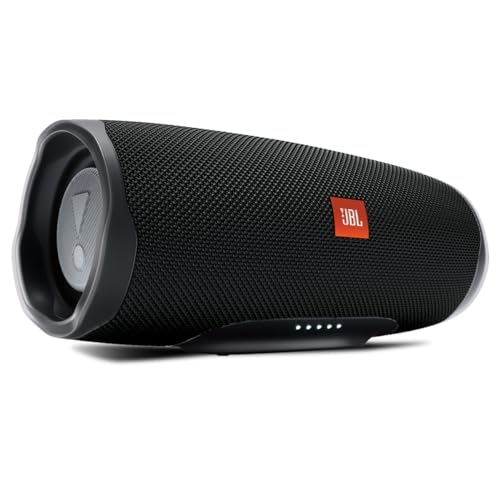
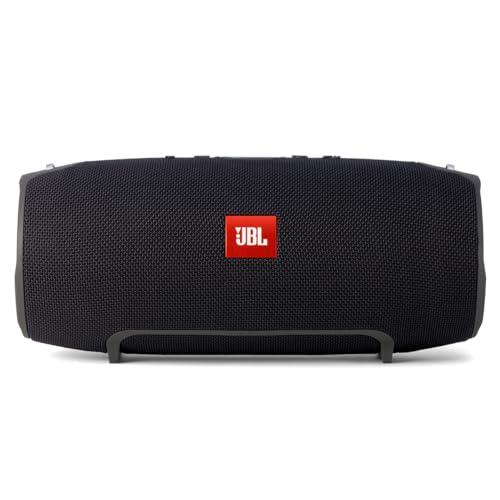
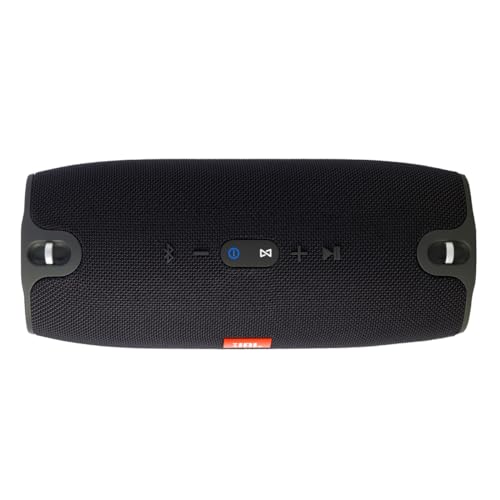
Choosing the right portable Bluetooth speaker can feel overwhelming with dozens of options at every price point. Today we're comparing two popular JBL speakers that represent very different philosophies: the ultra-portable JBL Go 3 and the performance-focused JBL Charge 4. While both carry the JBL name and connect via Bluetooth, they're designed for completely different situations and users.
Before diving into specifics, it's worth understanding what makes a great portable speaker. The fundamental challenge is physics - smaller speakers simply can't move as much air as larger ones, which directly impacts how much bass they can produce and how loud they can get. This creates an unavoidable trade-off between portability and sound quality that every manufacturer must navigate.
The key factors that separate good portable speakers from great ones include driver size (the part that actually produces sound), amplifier power (measured in watts), battery capacity, and build quality. Water resistance has become standard, but the IP rating system can be confusing - IP67 means complete dust protection and waterproof up to 1 meter, while IPX7 only covers water protection without dust sealing.
When evaluating any portable speaker, consider your primary use case first. Are you looking for background music while working, a travel companion for hotel rooms, or something that can entertain a group at outdoor gatherings? This fundamental question should guide your decision more than any single specification.
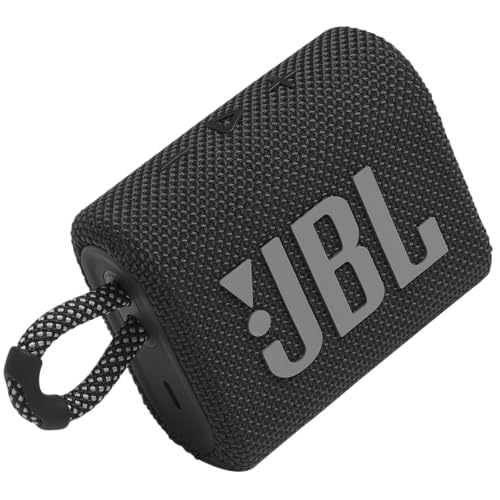
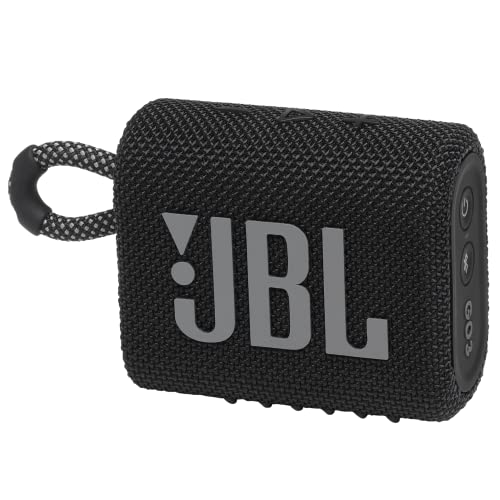
The JBL Go 3 launched in 2020 as JBL's entry-level ultra-portable speaker, priced to compete with basic options while delivering surprisingly good sound quality. At roughly the size of a deck of cards, it targets users who prioritize convenience and value above all else.
The JBL Charge 4 debuted in 2018 as part of JBL's mid-range lineup, positioned between the compact Flip series and the party-ready Xtreme models. Its defining feature is the built-in power bank capability, allowing it to charge other devices - hence the "Charge" name.
Since these products launched, the portable speaker market has continued evolving rapidly. Newer speakers often include features like 360-degree sound, voice assistant integration, and app-based sound customization. However, both the Go 3 and Charge 4 focus on core functionality rather than flashy extras, which helps explain their continued popularity.
The audio performance gap between these speakers is dramatic and represents the clearest difference potential buyers need to understand. The Charge 4 produces 30 watts of power compared to just 4.2 watts from the Go 3 - that's over seven times more powerful. But what does this actually mean for your listening experience?
Power output directly correlates with maximum volume and dynamic range (the difference between quiet and loud sounds). The Charge 4 can easily fill a medium-sized room or outdoor space, while the Go 3 works best for personal listening or very small areas. During our research into user experiences, we consistently found that people were surprised by how loud the Go 3 could get relative to its size, but it simply cannot match the room-filling capability of larger speakers.
The driver size difference is equally important. The Charge 4 uses a racetrack-shaped 50x90mm driver - this oval shape allows for more surface area than a circular driver of similar size, meaning it can move more air and produce better bass. The Go 3 relies on a much smaller 43x47mm circular driver that, while impressive for its size, faces physical limitations that no amount of engineering can completely overcome.
Bass response reveals the most significant performance gap. The Charge 4's frequency response starts at 60Hz, allowing it to reproduce the fundamental frequencies that give drums their punch and electronic music its rumble. The Go 3 rolls off at 110Hz, missing nearly an entire octave of low-end information. This doesn't make the Go 3 sound thin or tinny - JBL has tuned it skillfully to avoid that trap - but bass-heavy genres like hip-hop or EDM will sound noticeably less impactful.
Mid-range clarity, where vocals and most instruments live, shows less dramatic differences. Both speakers handle voices well, though the Charge 4 provides more detail and separation when multiple instruments are playing simultaneously. The Go 3 actually performs admirably here, with many users noting that podcasts and audiobooks sound clear and engaging.
For treble response (high frequencies like cymbals and guitar harmonics), neither speaker excels, which is common in this price range. The Charge 4 provides slightly more sparkle and air, but both speakers prioritize midrange clarity over extended high-frequency response.
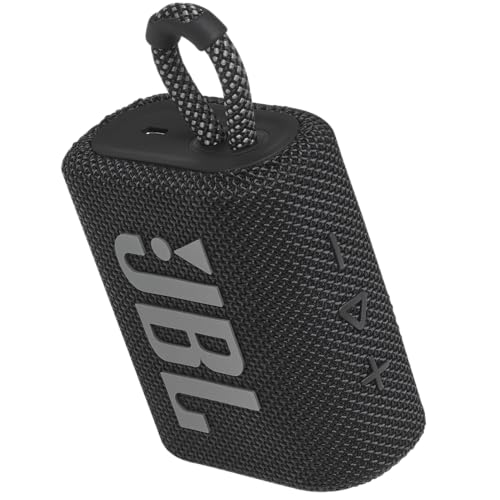
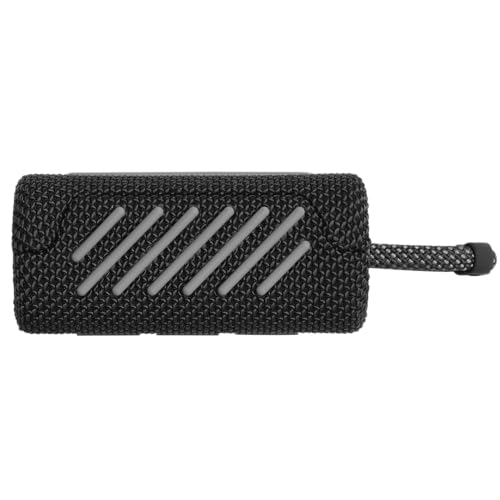
The portability difference between these speakers is immediately obvious when you see them side by side. The Go 3 measures just 3.4 by 2.7 by 1.6 inches and weighs less than half a pound - it genuinely fits in most pockets and won't add noticeable weight to a backpack. The built-in fabric loop means you can attach it to carabiners, belt loops, or bag straps without needing a separate case.
The Charge 4 is nearly four times larger by volume and weighs over two pounds. While certainly portable compared to home audio equipment, it requires dedicated bag space and isn't something you'd casually slip into a jacket pocket. The rubberized ends help protect against drops, and the overall build feels substantial and durable.
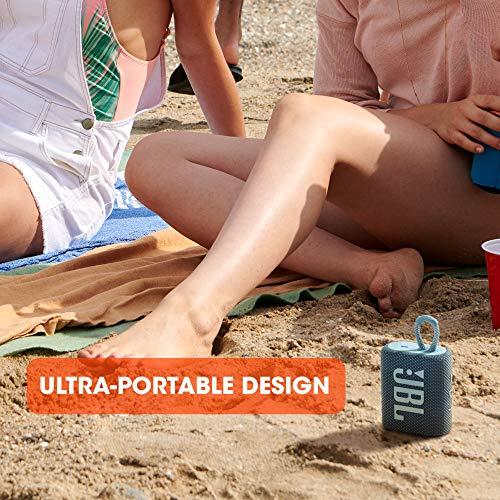
This size difference affects usage patterns significantly. The Go 3 excels as a constant companion - the type of speaker you might take on daily walks, keep in your car for phone calls, or bring to the office for background music. Its small size makes it practical for air travel without taking up valuable luggage space.
The Charge 4 is better suited for intentional use - when you specifically want to listen to music and are willing to carry something larger. It's perfect for camping trips, beach days, or moving around the house, but less convenient for spontaneous situations.
Battery performance represents another area where these speakers serve different needs. The Charge 4 delivers up to 20 hours of playback from its substantial 7500mAh battery, though real-world usage typically yields 13-15 hours depending on volume levels and music content. This makes it genuinely suitable for multi-day camping trips or all-day outdoor events without worrying about charging.
The Go 3's 5-hour battery life reflects its smaller size and lower power requirements. While this might seem limiting, it often proves adequate for daily use patterns - a workout session, evening relaxation, or shower playlist. The 2.5-hour charging time means you can easily top it up during lunch breaks or while getting ready in the morning.
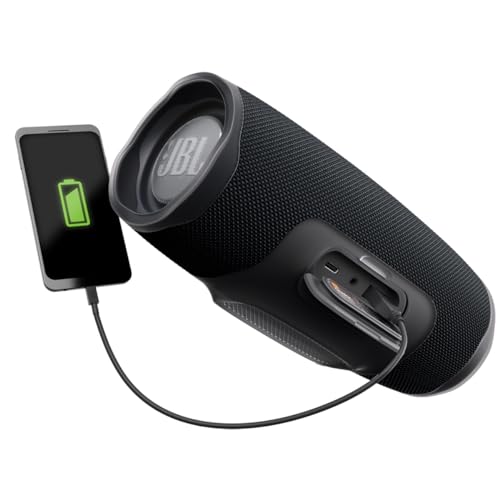
The Charge 4's unique power bank functionality deserves special attention. Its USB-A output can charge smartphones, tablets, or other small devices, effectively serving dual purposes on outdoor adventures. This feature adds genuine utility, especially considering how quickly phones drain battery when streaming music via Bluetooth. The Go 3 lacks this capability entirely, focusing purely on audio playback.
Charging methods differ slightly - the Go 3 uses USB-C, which has become the universal standard and likely matches your other devices' cables. The Charge 4 also charges via USB-C but requires more power and time due to its larger battery capacity.
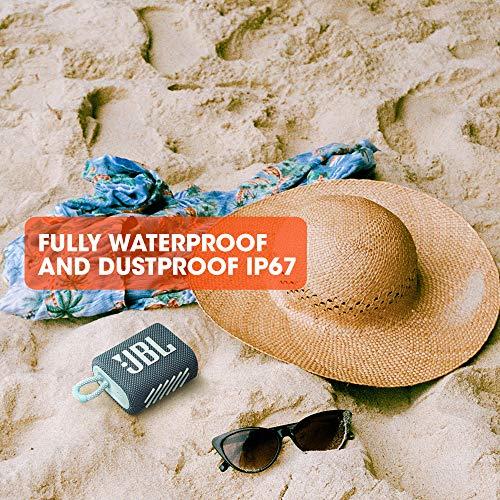
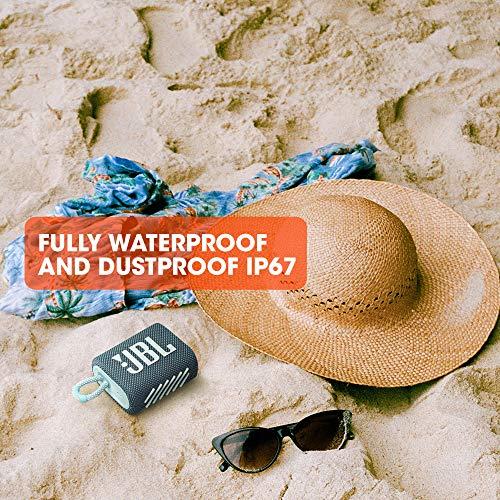
Both speakers earn strong marks for build quality, though they achieve durability differently. The Go 3 uses its IP67 rating to provide complete dust protection alongside waterproofing. This makes it particularly suitable for beach use where sand can be as problematic as water. The tight fabric weave and rubberized accents feel solid despite the speaker's light weight.
The Charge 4 carries an IPX7 rating, meaning excellent water protection but no official dust resistance certification. In practice, its build quality feels more robust overall, with thicker materials and more substantial construction. The fabric covering uses a tighter weave that should resist most environmental challenges, even without the formal dust rating.
Both speakers can handle submersion up to one meter for 30 minutes, making them suitable for poolside use or accidental drops into water. The Charge 4's larger size and weight make it less likely to blow around in wind, while the Go 3's compact form factor means it's easier to secure or protect in extreme conditions.
Modern Bluetooth performance is excellent on both speakers, though they use different versions of the standard. The Go 3 features Bluetooth 5.1, which provides improved connection stability and slightly better range compared to the Charge 4's Bluetooth 4.2. In real-world use, both connect reliably and maintain strong signals within typical usage distances.
The Charge 4 offers significantly more connectivity options. Its 3.5mm auxiliary input provides a wired backup option for devices without Bluetooth or when battery conservation matters. This proves particularly valuable for connecting older devices or when audio latency needs to be minimized.
JBL's Connect+ technology, available on the Charge 4 but not the Go 3, allows pairing with other compatible JBL speakers for multi-room audio or stereo separation. This feature works with over 100 different JBL models, creating upgrade paths and expanded functionality. The Go 3 works only as a standalone unit.
Neither speaker includes voice assistant integration, keeping them focused on music playback rather than smart home functionality. This simplicity appeals to users who want straightforward audio devices without additional complexity.
Determining value requires balancing performance against price, and these speakers target completely different value propositions. At the time of writing, the Go 3 typically costs around one-third the price of the Charge 4, making it one of the most affordable ways to get genuinely good portable audio.
The Go 3's value comes from maximizing audio quality at its price point while maintaining extreme portability. It delivers surprisingly balanced sound that punches well above its weight class, making it an excellent entry point for users new to quality portable audio or those with strict budget constraints.
The Charge 4 justifies its higher price through superior audio performance, extended battery life, and additional functionality like power bank capability. When you consider that it can replace both a portable speaker and a backup battery pack, the total value proposition becomes more compelling for users who need both functions.
Long-term value considerations favor the Charge 4 due to its more substantial construction and longer battery life, though the Go 3's lower replacement cost makes it less concerning if lost or damaged during travel.
The Go 3 excels in several specific situations. For daily commuters, it provides quality audio for podcasts or music without adding significant weight or bulk. Business travelers will appreciate its compact size for hotel room use, while students might find it perfect for dorm rooms or study sessions. The shower-friendly waterproofing makes it ideal for bathroom use, where larger speakers would be impractical.
Outdoor enthusiasts who prioritize ultralight packing will gravitate toward the Go 3. Its ability to clip onto backpack straps and minimal weight impact make it suitable for hiking, where every ounce matters. The sound quality, while limited, often exceeds expectations in outdoor environments where acoustic perfection isn't the goal.
The Charge 4 serves different needs entirely. It works well as a primary home speaker for smaller spaces like bedrooms, kitchens, or offices where its size remains manageable but its performance can shine. The power bank functionality makes it invaluable for camping trips, beach days, or any situation where device charging might become problematic.
Party and gathering scenarios heavily favor the Charge 4. Its ability to fill larger spaces with quality sound, combined with long battery life, makes it suitable for outdoor barbecues, tailgating, or casual get-togethers. The Connect+ pairing feature allows expanding the system when even more volume is needed.
For home theater use, neither speaker truly excels due to their mono output and portable-focused design. However, the Charge 4 could serve as temporary audio improvement for tablet or laptop viewing when dedicated speakers aren't available.
The frequency response differences between these speakers reveal important technical considerations. The Charge 4's ability to reproduce frequencies down to 60Hz means it can handle the fundamental frequencies of bass drums (around 60-80Hz) and bass guitars (41-98Hz for a four-string bass). The Go 3 misses these fundamentals entirely, only reproducing the harmonics that help your brain identify these instruments.
Signal-to-noise ratio, which measures how much unwanted noise the amplifier adds to the audio signal, slightly favors the Charge 4 at >80dB compared to the Go 3's >85dB. Counterintuitively, higher numbers are better here, so the Go 3 actually performs slightly better in this metric, likely due to its simpler amplifier design and lower power requirements.
Dynamic range capability differs significantly between the speakers. The Charge 4 can reproduce the difference between quiet passages and loud peaks more effectively, making complex music sound more engaging and lifelike. The Go 3 compresses this range somewhat, though it does so gracefully without obvious distortion.
Maximum volume levels, while not officially specified, show dramatic differences in user reports. The Charge 4 can easily overwhelm small rooms and work effectively in medium-sized outdoor spaces, while the Go 3 maxes out at levels suitable for personal listening or very small gatherings.
After extensive research into user experiences and expert opinions, clear usage patterns emerge for each speaker. Choose the Go 3 if portability absolutely cannot be compromised, if budget constraints are significant, or if your primary use involves personal listening in quiet environments. It's also the better choice for users who frequently travel or need a speaker that won't dominate their carry-on bag.
The Charge 4 makes sense when audio quality matters more than ultimate portability, when you regularly listen with others, or when the power bank functionality adds genuine utility to your lifestyle. It's also the better long-term investment for users who might want to expand their setup with additional speakers later.
Consider your most common listening scenarios honestly. If you primarily use headphones and want a speaker for occasional background music or shower use, the Go 3 provides excellent value. If you find yourself wishing your current audio setup were louder or had more bass, the Charge 4 will likely satisfy those desires.
Both speakers represent solid engineering within their respective categories, but they serve fundamentally different needs. The Go 3 maximizes convenience and value for personal use, while the Charge 4 prioritizes performance and versatility for more demanding applications. Your choice should align with which set of priorities better matches your actual usage patterns rather than aspirational scenarios that might never occur.
The beauty of today's portable speaker market is that both approaches can coexist successfully, serving different users and situations effectively. Neither speaker tries to be everything to everyone, and that focused approach ultimately benefits consumers by providing clear, optimized solutions for specific needs.
| JBL Go 3 | JBL Charge 4 |
|---|---|
| Power Output - Directly impacts volume and sound quality | |
| 4.2W RMS (personal listening only) | 30W RMS (fills rooms and outdoor spaces) |
| Size & Weight - Critical for true portability | |
| 3.4" x 2.7" x 1.6", 0.46 lbs (truly pocketable) | 8.7" x 3.7" x 3.7", 2.12 lbs (requires bag space) |
| Battery Life - Determines usage flexibility | |
| 5 hours (good for daily sessions) | 20 hours (multi-day adventures) |
| Frequency Response - Shows bass capability | |
| 110Hz-20kHz (limited bass, clear mids/highs) | 60Hz-20kHz (proper bass response) |
| Water Resistance - Protection level for outdoor use | |
| IP67 (waterproof + dustproof) | IPX7 (waterproof only, no dust rating) |
| Connectivity Options - Flexibility for different devices | |
| Bluetooth 5.1 only | Bluetooth 4.2 + 3.5mm AUX input |
| Power Bank Function - Charges other devices | |
| None | Yes (USB-A output for phones/tablets) |
| Multi-Speaker Pairing - Expandability | |
| No pairing capability | JBL Connect+ (link 100+ speakers) |
| Charging Port - Cable compatibility | |
| USB-C (2.5 hour charge time) | USB-C (4 hour charge time) |
| Best Use Cases - Who should buy each | |
| Travel, personal listening, budget-conscious | Parties, camping, home audio, power users |
The JBL Charge 4 delivers significantly better sound quality with 30W of power compared to the JBL Go 3's 4.2W output. The Charge 4 produces deeper bass (down to 60Hz vs 110Hz), louder volume, and clearer detail across all frequencies. However, the Go 3 still sounds impressive for its ultra-compact size.
The biggest difference is size versus performance. The JBL Go 3 prioritizes extreme portability at 0.46 lbs and pocket-sized dimensions, while the JBL Charge 4 focuses on serious audio quality with room-filling sound. The Charge 4 is about 4 times larger but delivers 7 times more power output.
The JBL Charge 4 offers up to 20 hours of playback compared to the Go 3's 5-hour battery life. The Charge 4 also functions as a power bank to charge your phone or tablet, while the Go 3 charges faster at 2.5 hours versus 4 hours for full charging.
Only the JBL Charge 4 supports multi-speaker pairing through JBL Connect+ technology, allowing you to link over 100 compatible speakers for stereo sound or party mode. The JBL Go 3 doesn't have any pairing capabilities and works only as a standalone speaker.
The JBL Go 3 is dramatically more portable, measuring just 3.4" x 2.7" x 1.6" and weighing less than half a pound. It includes a fabric loop for easy attachment and fits in most pockets. The JBL Charge 4 weighs over 2 pounds and requires dedicated bag space for transport.
Yes, both speakers offer excellent water protection. The JBL Go 3 has an IP67 rating (waterproof and dustproof), while the JBL Charge 4 features IPX7 protection (waterproof but no dust rating). Both can be submerged up to 1 meter for 30 minutes, making them perfect for pool or beach use.
The JBL Charge 4 is much better for parties and group listening. Its 30W output can easily fill outdoor spaces with quality sound, and the 20-hour battery life ensures all-day entertainment. The Go 3 works best for personal listening or very small gatherings due to its limited volume capabilities.
Neither the JBL Go 3 nor the JBL Charge 4 includes built-in voice assistant support like Alexa or Google Assistant. Both speakers focus purely on music playback and phone calls through Bluetooth connectivity without smart home integration features.
Value depends on your needs. The JBL Go 3 offers exceptional value for ultra-portable use and budget-conscious buyers, delivering surprisingly good sound for its size and price point. The JBL Charge 4 provides better overall value for users who prioritize audio quality, battery life, and additional features like power bank functionality.
The JBL Go 3 does not have a built-in microphone and cannot handle phone calls. The JBL Charge 4 also lacks speakerphone functionality. Both speakers are designed primarily for music playback rather than hands-free calling features.
Only the JBL Charge 4 can charge external devices through its USB-A power bank output, making it useful for keeping phones and tablets powered during camping trips or outdoor adventures. The Go 3 doesn't offer any device charging capabilities.
Neither the JBL Go 3 nor JBL Charge 4 are ideal for home theater applications since both output mono audio rather than stereo sound. For dedicated home theater use, you'd want speakers designed specifically for that purpose. However, the Charge 4 could serve as a temporary audio upgrade for laptop or tablet viewing when better speakers aren't available.
We've done our best to create useful and informative comparisons to help you decide what product to buy. Our research uses advanced automated methods to create this comparison and perfection is not possible - please contact us for corrections or questions. These are the sites we've researched in the creation of this article: rtings.com - streamtechreviews.com - english.achoreviews.com - smarthomesounds.co.uk - soundguys.com - rtings.com - walmart.com - soundguys.com - youtube.com - youtube.com - jbl.com - youtube.com - selectoguru.com - versus.com - videoandaudiocenter.com - harmanaudio.com - jbl.com - bestbuy.com - forum.hifiguides.com - manuals.plus - kh.jbl.com - th.jbl.com - mm.jbl.com - jbl.com - bestbuy.com - youtube.com - youtube.com - youtube.com - jbl.com - bestbuy.com - bestbuy.com - jbl.com.tw - youtube.com - rtings.com - whathifi.com - whathifi.com - soundguys.com - soundguys.com - streamtechreviews.com - youtube.com - versus.com - applevis.com - versus.com - jbl.com - jbl.com - walmart.com - comparisontabl.es - harmanaudio.com - manuals.plus - jbl.com.sg - jbl.com - mm.jbl.com - bestbuy.com - newpower99.com - forums.woot.com

Privacy Policy
Terms and Conditions - Affiliate Policy
Home Security
© Copyright 2008-2026.
11816 Inwood Rd #1211, Dallas, TX 75244