


Choosing the right Bluetooth speaker can feel overwhelming with hundreds of options flooding the market. Two speakers that consistently catch attention are the JBL Charge 4 and the Marshall Willen II, but they represent dramatically different approaches to portable audio. After researching extensive user reviews and technical analyses, it's clear these speakers serve distinct needs despite some functional overlap.
The portable Bluetooth speaker market has matured significantly over the past decade. What started as basic wireless audio devices have evolved into sophisticated lifestyle accessories that must balance competing priorities: sound quality, portability, battery life, durability, and price. Understanding these trade-offs is crucial because no single speaker excels at everything.
Modern portable speakers face a fundamental physics challenge - you can't defy the laws of acoustics. Smaller speakers inherently struggle with bass response because low frequencies require larger drivers and cabinet volumes to reproduce effectively. This is why your smartphone speaker sounds tinny compared to your car stereo.
The key considerations when shopping include frequency response (the range of sounds a speaker can reproduce, measured in Hertz), power output (measured in watts RMS, which indicates sustained power rather than peak), battery capacity (measured in milliamp hours or mAh), and water resistance ratings (IP codes that specify protection levels against dust and moisture).
Understanding your primary use case is essential. Will you mainly use it for personal listening while working or commuting? Do you need something for outdoor adventures where mounting flexibility matters? Are you planning beach parties that require room-filling sound? The JBL Charge 4 and Marshall Willen II excel in different scenarios, making this choice particularly interesting.
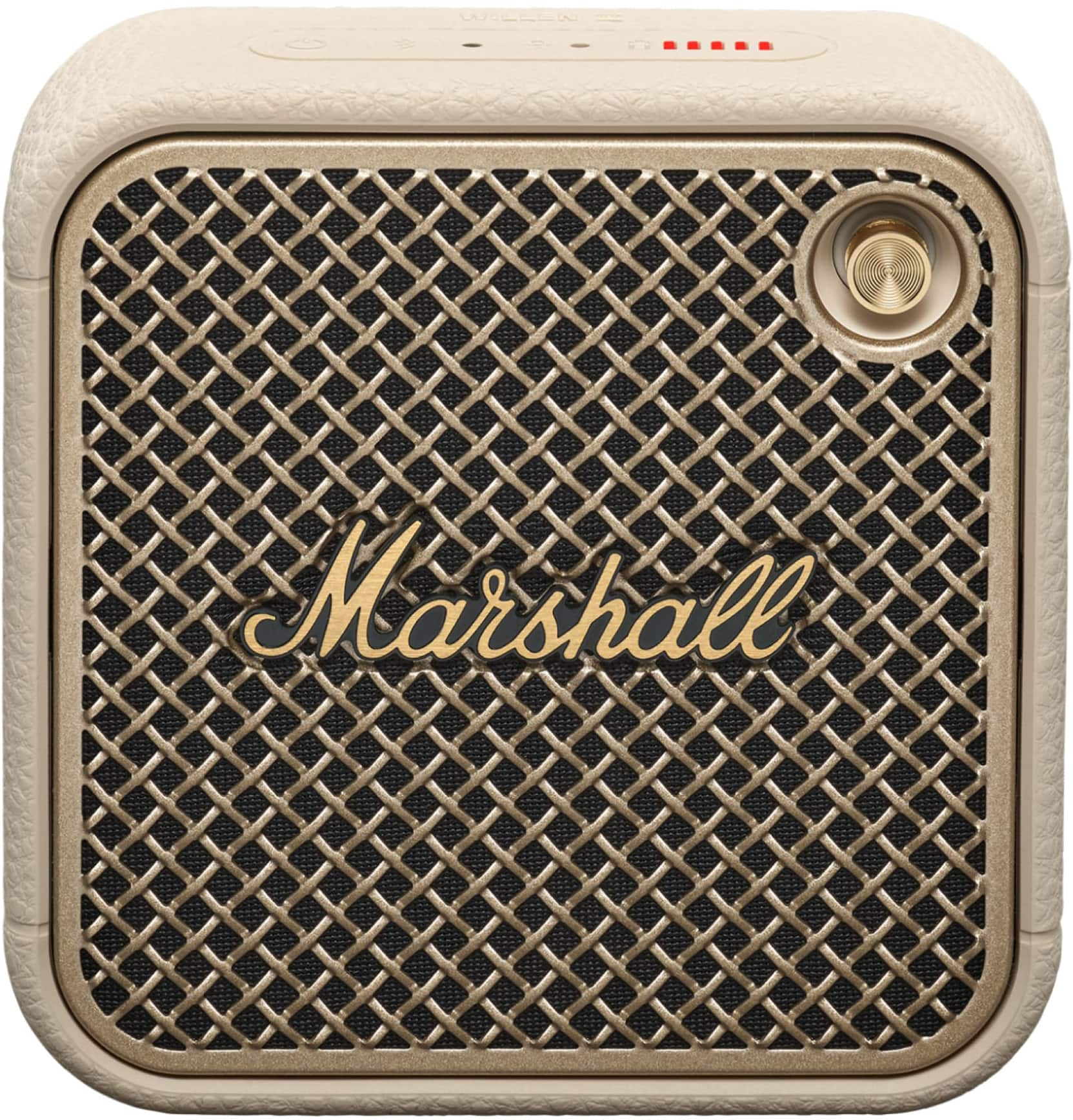
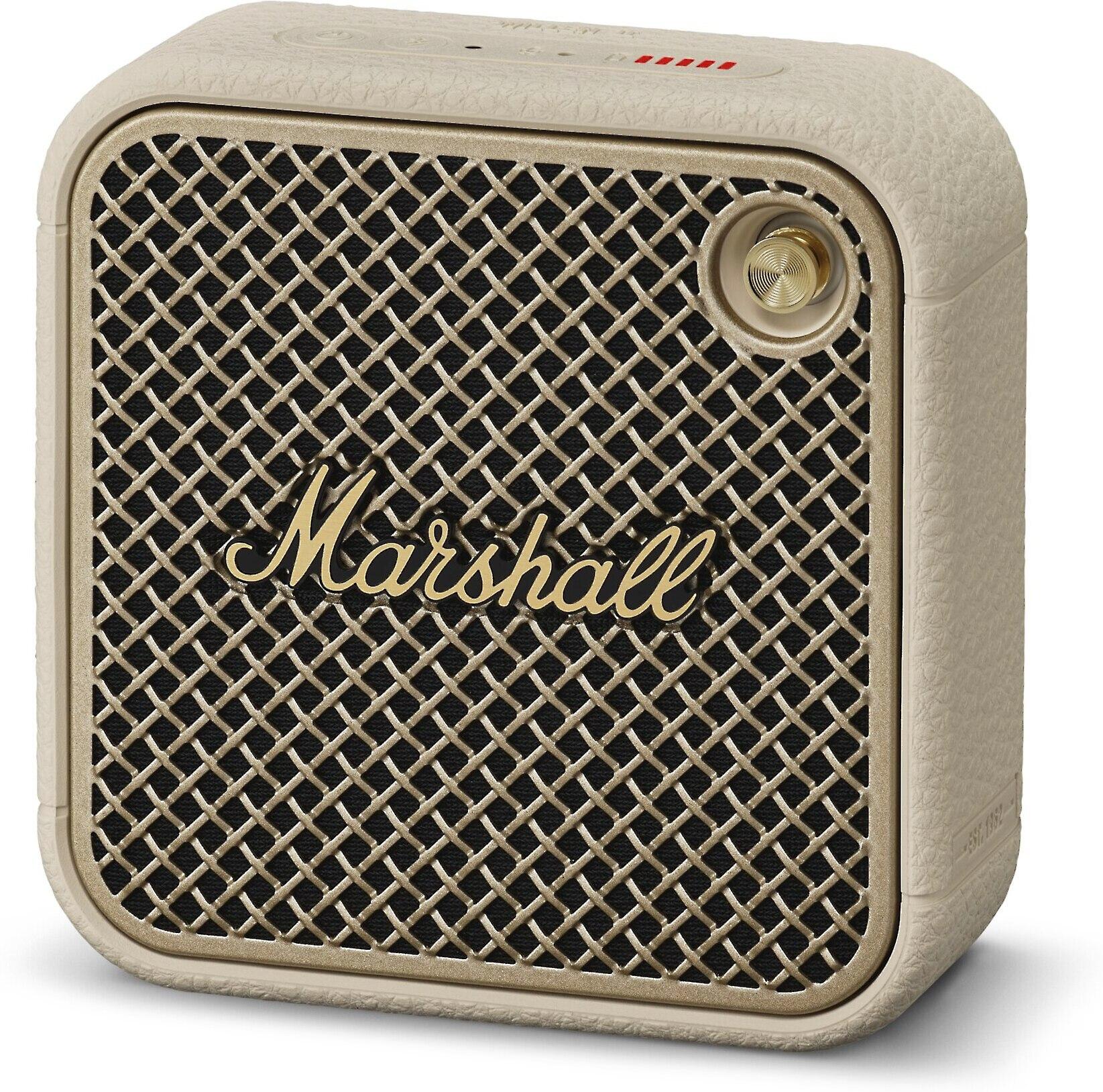
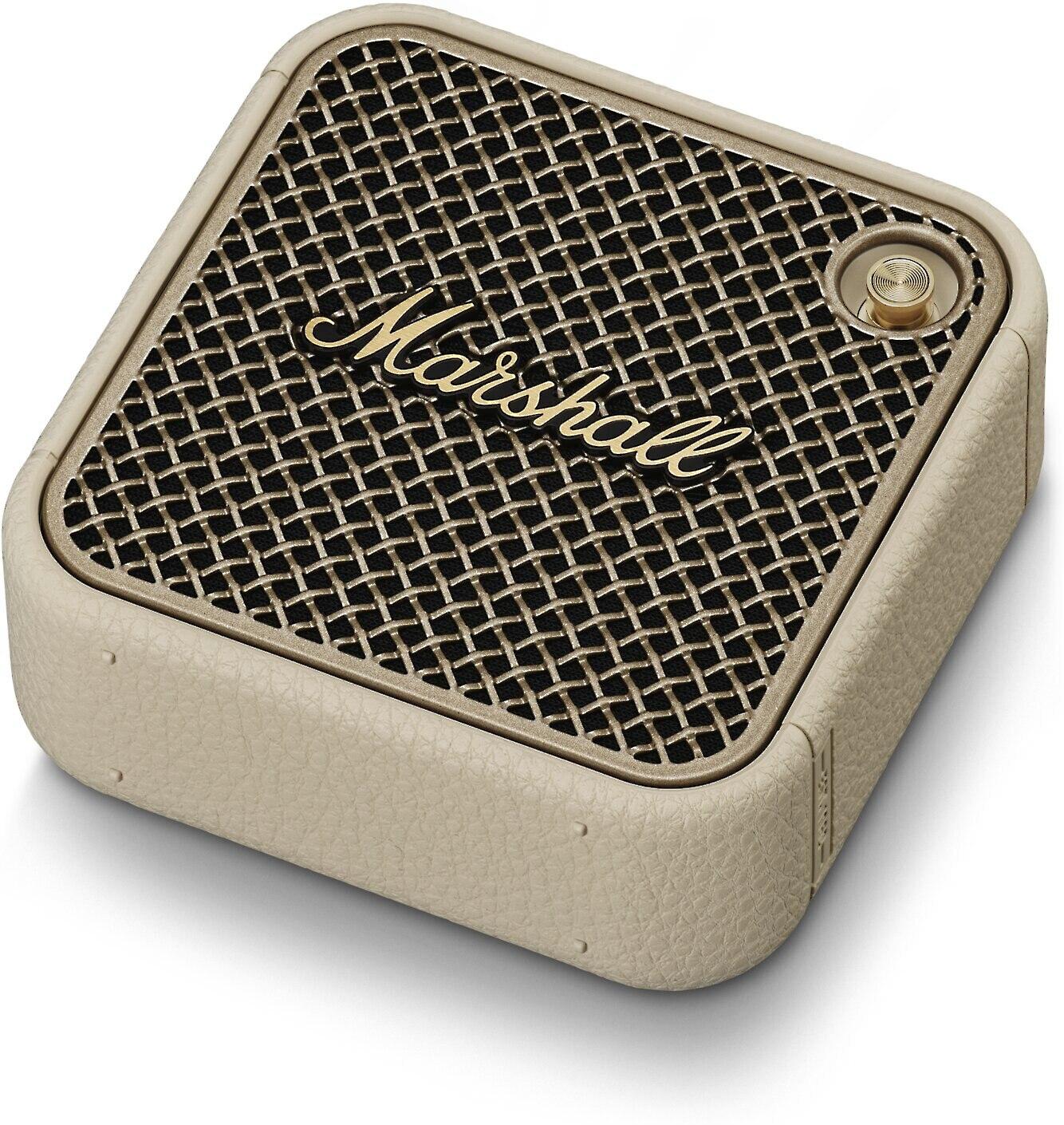
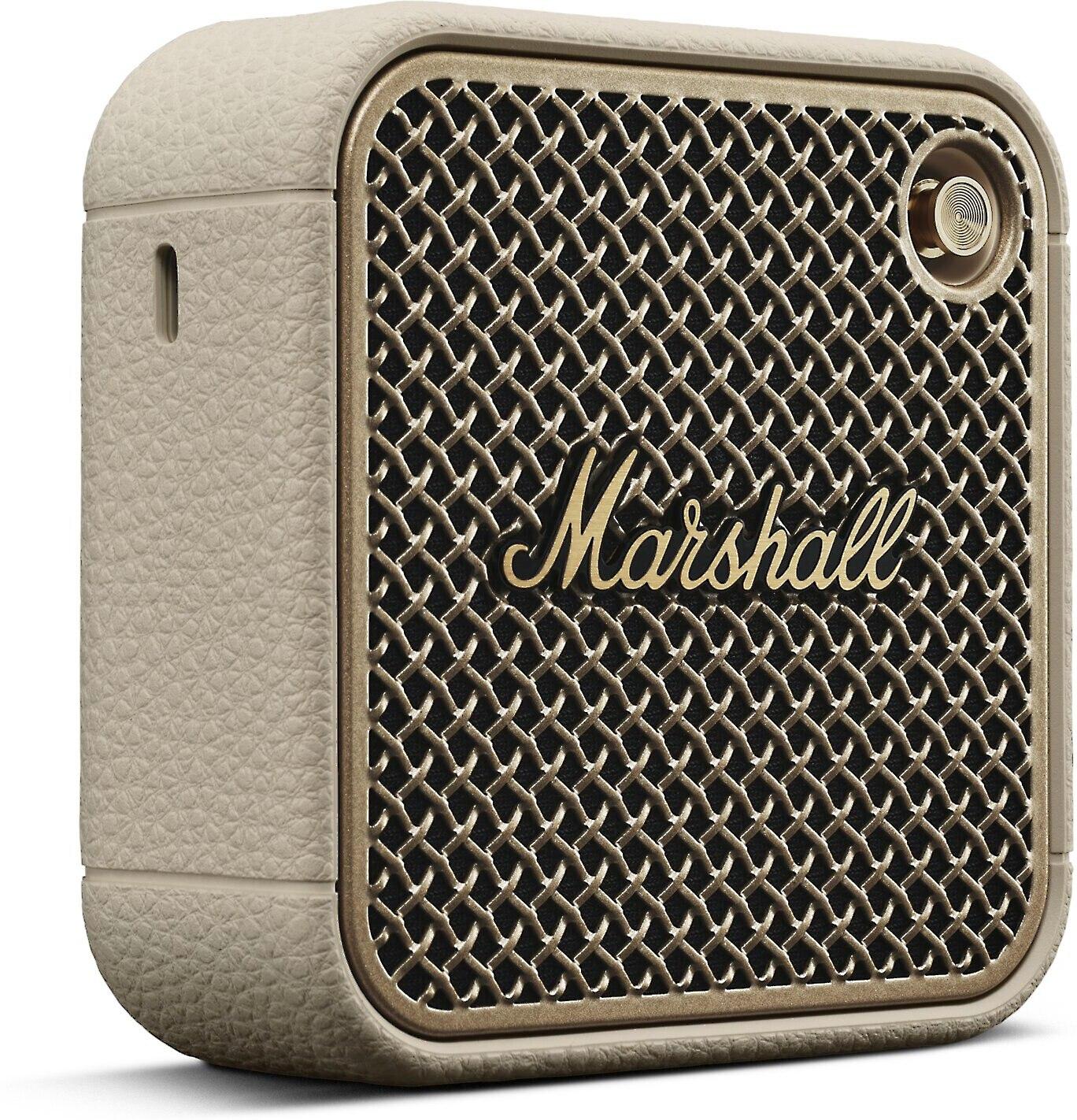
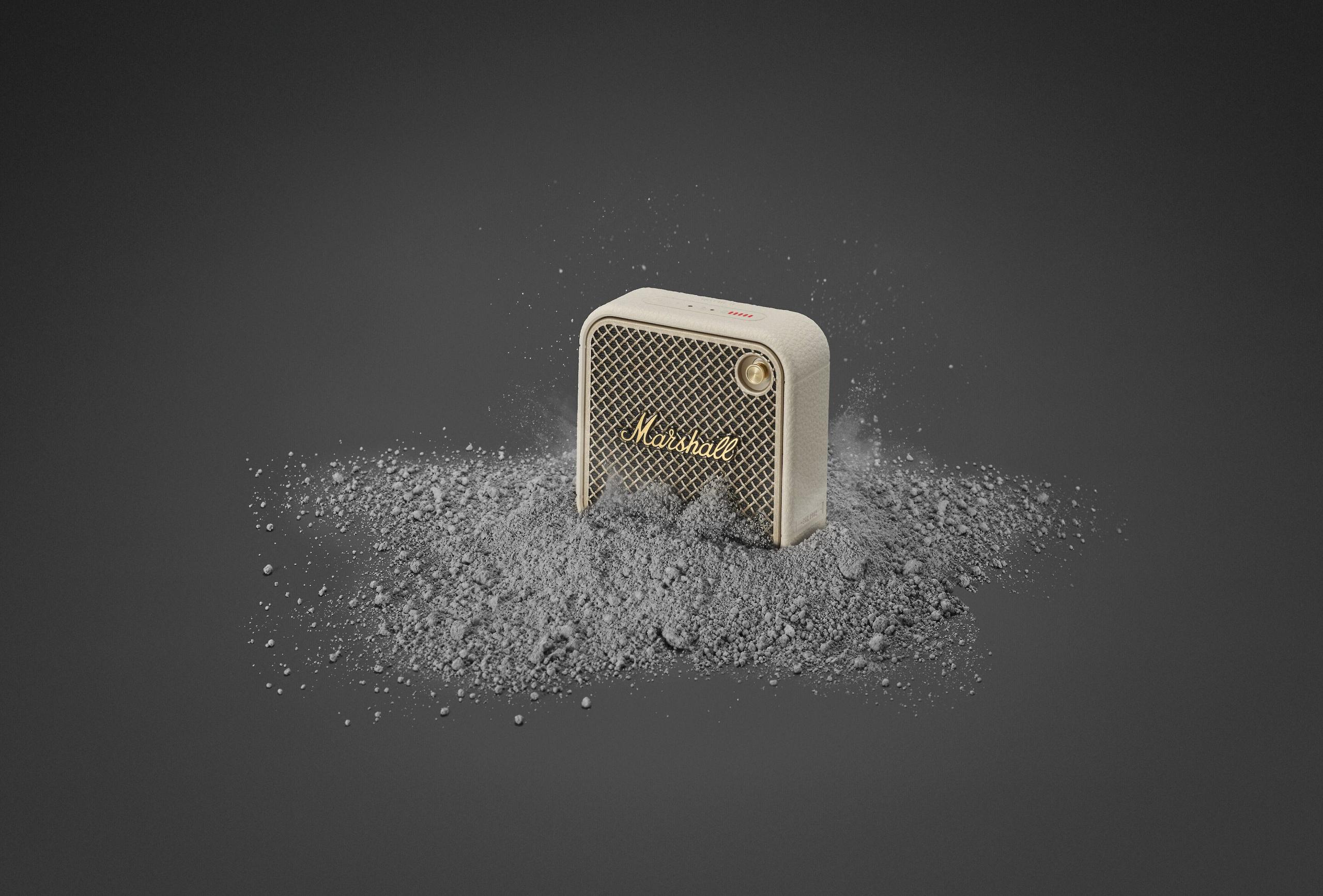
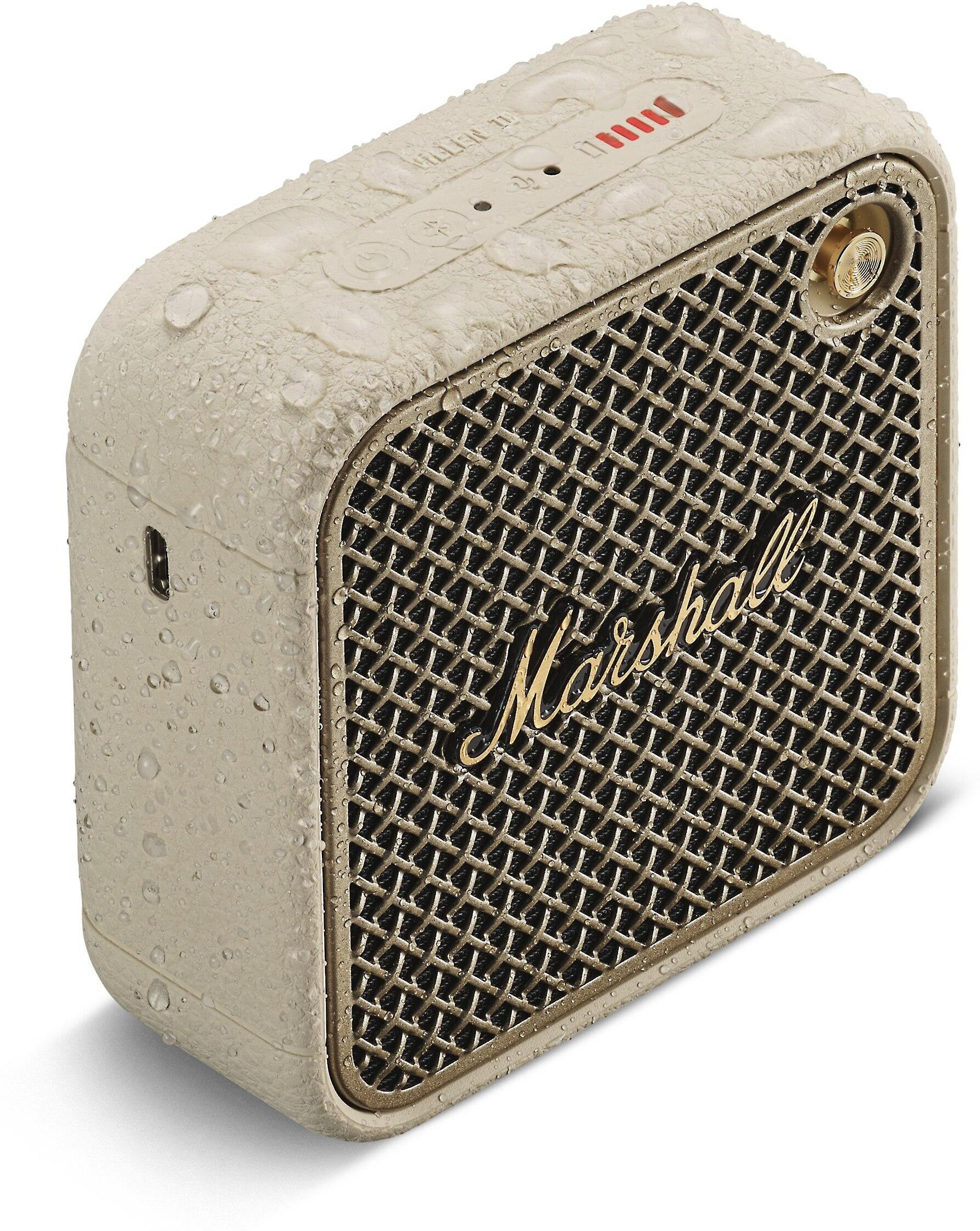
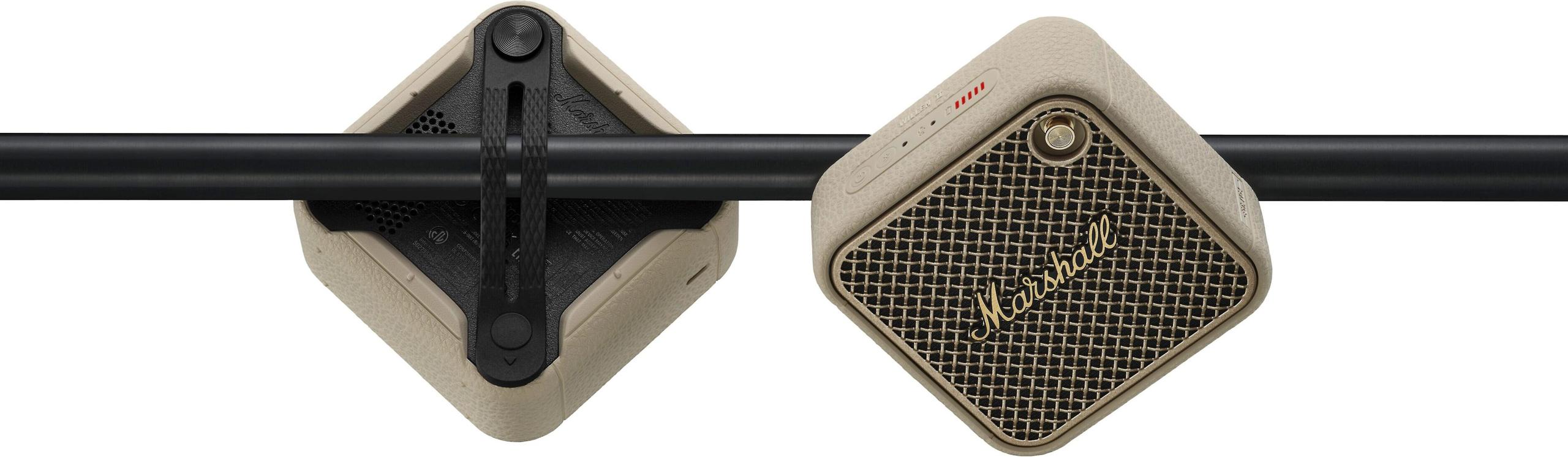
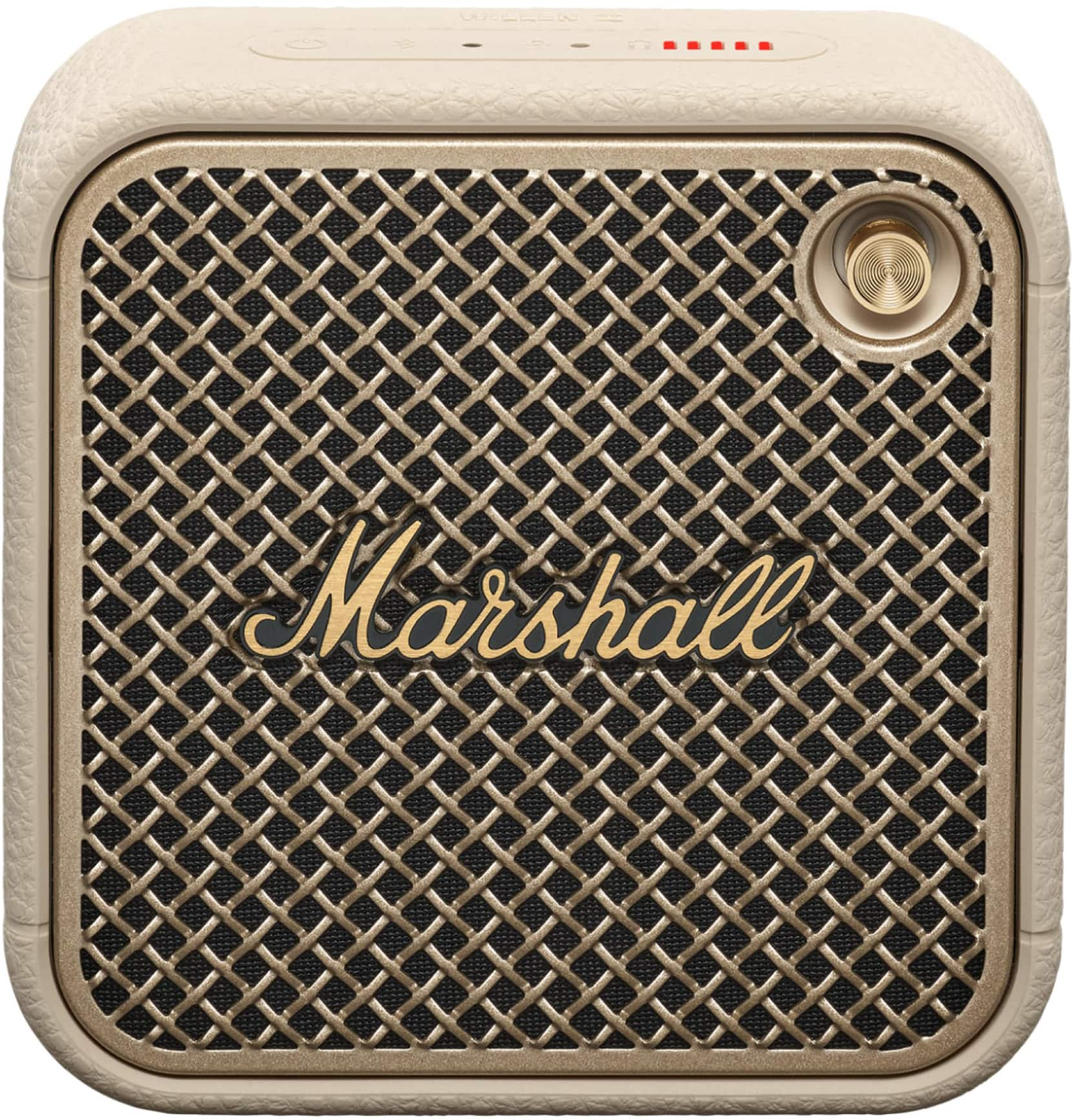
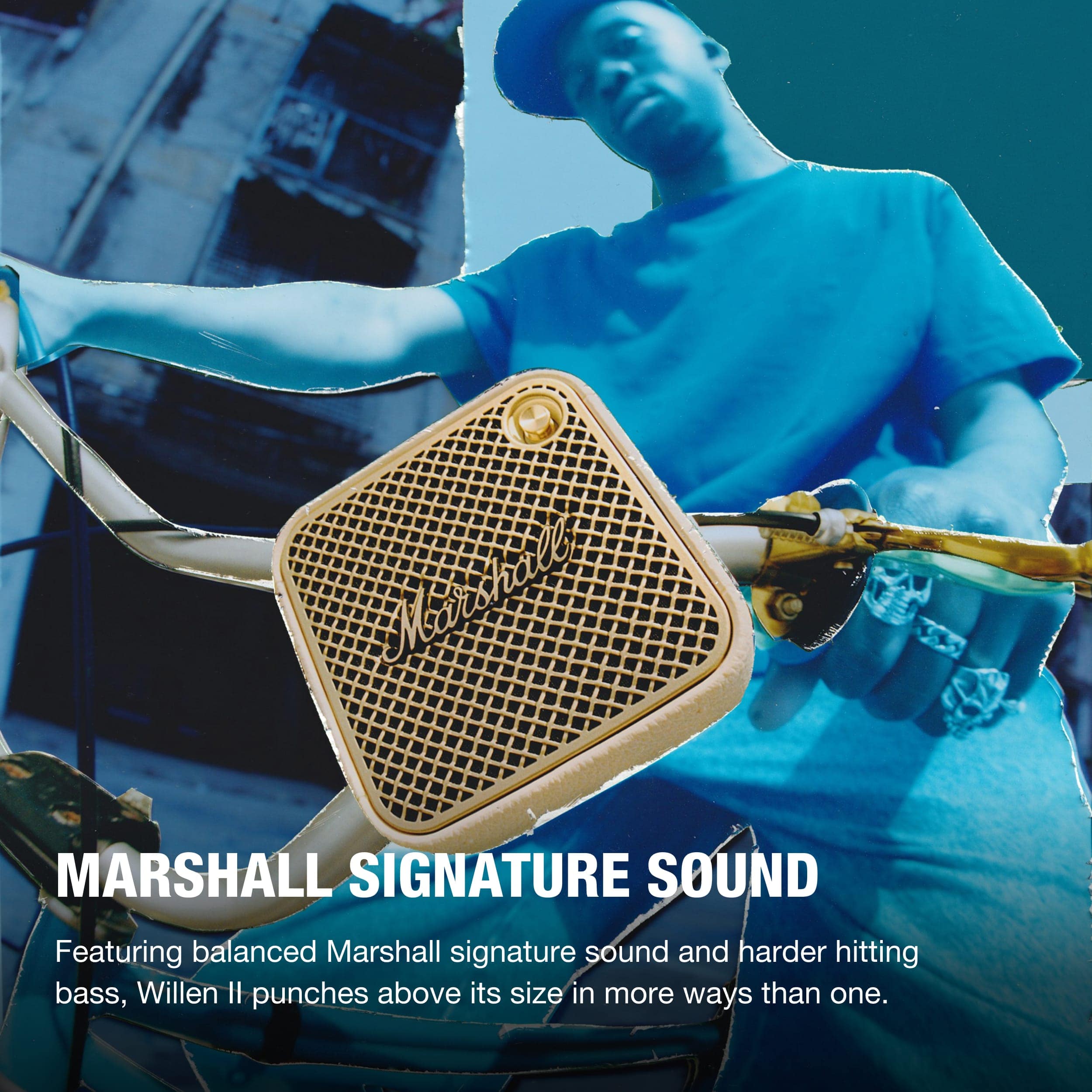
The most striking difference between these speakers lies in their fundamental design philosophy. The Marshall Willen II, released in late 2023, represents the ultra-compact approach. At just 4 inches square and under 2 inches deep, it's genuinely pocket-sized and weighs less than a pound. Marshall included a clever built-in rubber mounting strap that transforms how you use the speaker - imagine clipping it to your backpack during a hike or mounting it to bike handlebars for a soundtrack to your ride.
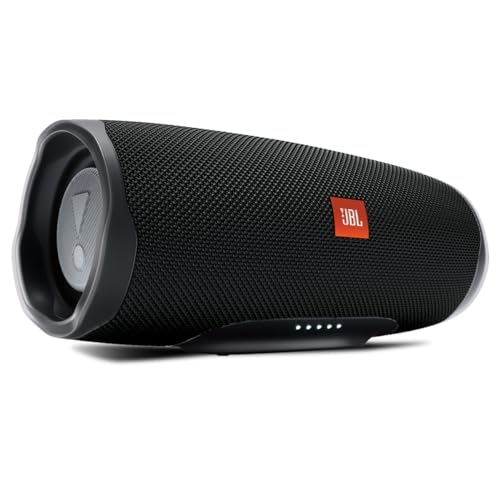
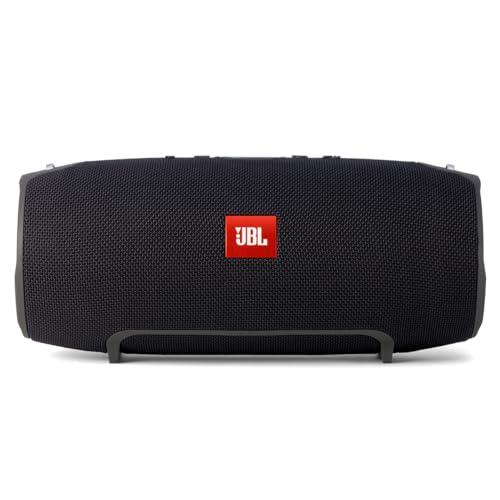
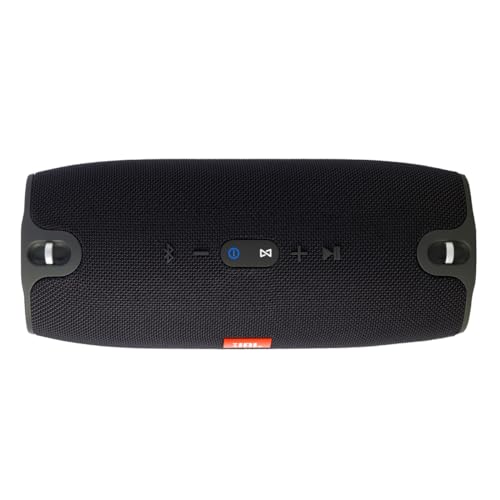
The JBL Charge 4, launched in 2018, embodies the traditional portable speaker philosophy. Its cylindrical design measures nearly 9 inches long and weighs over 2 pounds. This isn't pocket-friendly, but the larger size enables more ambitious audio engineering and additional features that smaller speakers simply cannot accommodate.
Since 2018, Bluetooth technology has improved significantly. The Marshall Willen II benefits from Bluetooth 5.3 LE (Low Energy), offering better range, more stable connections, and lower power consumption compared to the JBL Charge 4's Bluetooth 4.2. However, the older Bluetooth version rarely causes practical issues in typical use scenarios.
The mounting strap on the Willen II deserves special attention because it fundamentally changes how you interact with the speaker. Instead of carefully placing it on surfaces or worrying about it sliding around, you can securely attach it wherever convenient. This hands-free capability opens use cases that larger speakers simply cannot serve, like cycling with music or creating a personal audio bubble while camping.
Here's where physics meets engineering creativity. The JBL Charge 4 employs a single racetrack-shaped driver measuring 50×90mm, powered by 30 watts RMS. This unusual driver shape maximizes surface area within the cylindrical cabinet, while dual passive radiators (unpowered speakers that move air to enhance bass) help extend low-frequency response despite the size constraints.
The Marshall Willen II uses a more conventional 2-inch full-range driver with just 10 watts of amplification, supported by its own pair of passive radiators. The power difference is dramatic - the Charge 4 delivers three times the amplification - but power alone doesn't determine sound quality.
Based on extensive review analysis, the JBL Charge 4 clearly wins for overall audio performance and room-filling capability. Its larger cabinet volume and more powerful amplification create adequate bass response for most music genres, though deep sub-bass (the rumbling lows you feel in your chest) remains limited by physics. The frequency response extends down to 60Hz, which covers the fundamental frequencies of bass guitars and kick drums reasonably well.
The Marshall Willen II excels within its intended range. Its frequency response starts at 75Hz, meaning it rolls off bass earlier than the Charge 4, but the sound remains remarkably composed and clear at personal listening distances. Reviews consistently praise its ability to maintain clarity even at maximum volume, something many small speakers struggle with due to distortion.
For perspective, human hearing typically ranges from 20Hz to 20kHz, though most people lose high-frequency sensitivity with age. The missing bottom octave (20-75Hz) on the Willen II primarily affects the deepest bass notes in electronic music, hip-hop, and orchestral music. For podcasts, acoustic music, and most pop/rock, the difference is less noticeable.
The JBL Charge 4 produces mono sound from its single driver, meaning no stereo separation unless you pair it with another unit using JBL's Connect+ technology. This isn't necessarily problematic for portable use, but it does affect the immersive quality compared to stereo speakers.
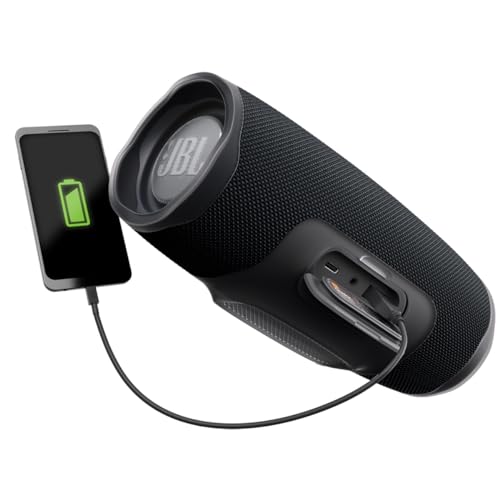
Battery technology reveals another philosophical divide. The JBL Charge 4 packs a substantial 7,500mAh lithium-ion battery rated for 20 hours of playback. More importantly, it doubles as a power bank, allowing you to charge smartphones or tablets through its USB-A port. This feature proved invaluable during camping trips or long beach days where device charging becomes critical.
The Marshall Willen II offers 17 hours of playback from a smaller battery, but compensates with significantly faster charging. While the Charge 4 requires 4 hours for a full charge, the Willen II reaches full capacity in just 2.5 hours. Even better, a quick 20-minute charge provides 5.5 hours of playback - perfect for those "forgot to charge it overnight" moments.
The power bank functionality on the Charge 4 shouldn't be underestimated. It can fully charge most smartphones 1-2 times, making it genuinely useful for extended outdoor activities. However, using this feature does drain the speaker's battery, so you're trading music time for device charging.
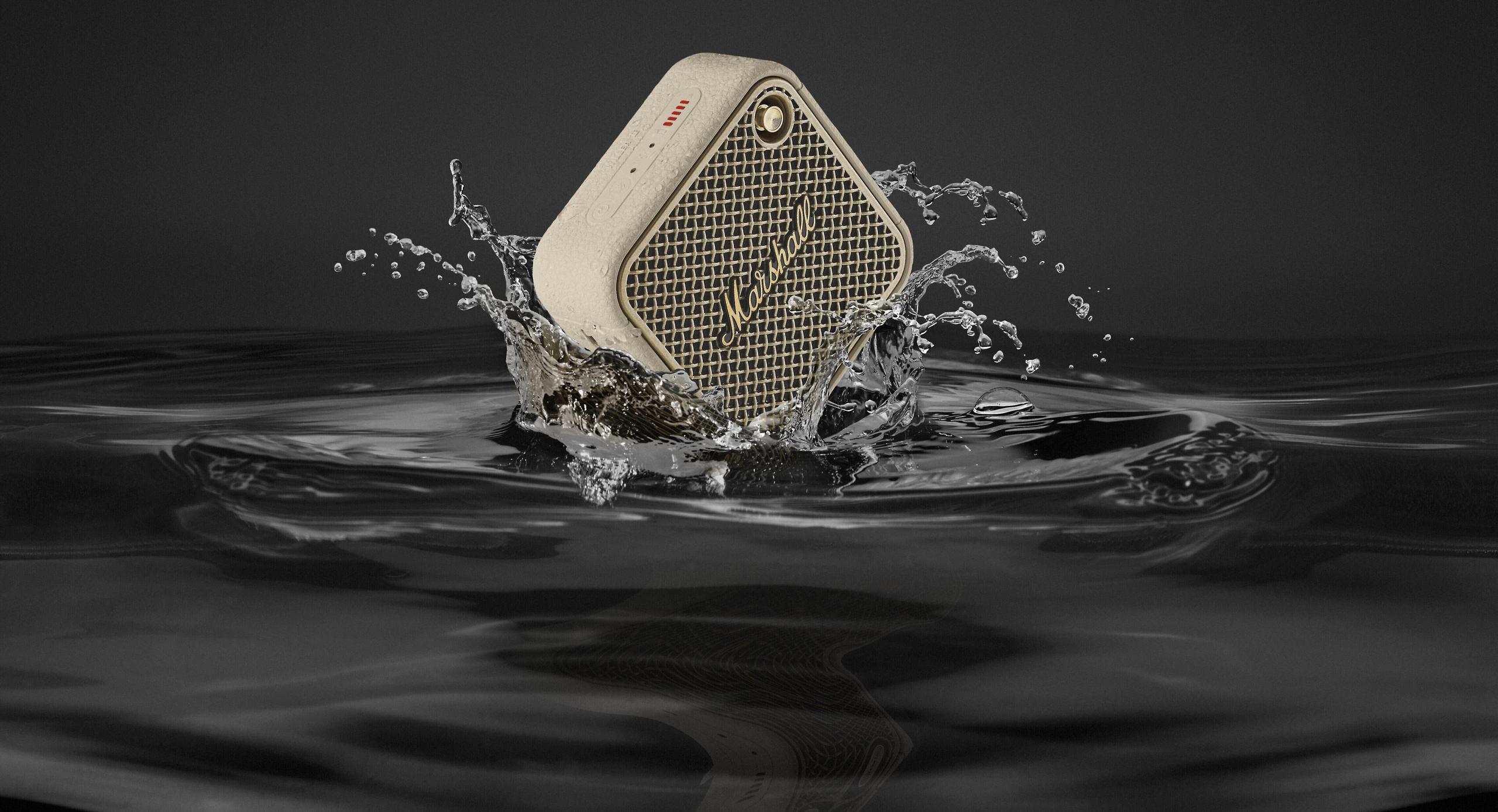
Both speakers target active lifestyles with impressive protection ratings. The JBL Charge 4 carries an IPX7 rating, meaning it's waterproof enough to survive submersion in up to 1 meter of water for 30 minutes. The Marshall Willen II goes slightly further with IP67 rating, adding complete dust protection to the same water resistance level.
In practical terms, both speakers handle pool parties, beach trips, and unexpected rain showers without concern. The dust protection on the Willen II provides extra peace of mind for sandy or dusty environments, but the difference is marginal for most users.
The build quality reflects their different priorities. The Charge 4 features JBL's signature fabric covering with rubber end caps and exposed passive radiators that create visual impact but require careful handling. The Marshall Willen II opts for a more rugged all-rubber construction that feels nearly indestructible despite its compact size.
Modern Bluetooth speakers must handle multiple devices seamlessly. Both speakers support dual device pairing, allowing two people to take turns playing music without constant re-pairing. This feature works reliably on both units based on user feedback.
The JBL Charge 4 includes JBL Connect+, which enables linking up to 100+ compatible JBL speakers for synchronized playback. This feature appeals to users who already own JBL speakers or plan to expand their setup. The system works well but only with JBL's ecosystem.
The Marshall Willen II takes a more forward-looking approach with Auracast support, though this requires a future firmware update to activate. Auracast is a newer Bluetooth LE standard that promises universal multi-speaker connectivity without brand restrictions. However, since it's not yet active, you're buying based on potential rather than current functionality.
The Charge 4 also includes a 3.5mm auxiliary input for wired connections, useful for older devices or situations where Bluetooth isn't ideal. The Willen II omits physical inputs to maintain its compact design.
At the time of writing, these speakers occupy different price tiers that reflect their distinct positioning. The Marshall Willen II commands a premium in the ultra-compact category, while the JBL Charge 4 - being an older model - often sells at significant discounts from its original price.
The value equation depends heavily on your priorities. If ultra-portability and mounting flexibility are crucial, the Willen II offers features you simply cannot get elsewhere at any price. The engineering required to produce clear, composed sound from such a small package justifies its cost.
The JBL Charge 4 provides more raw capability per dollar: significantly better audio performance, power bank functionality, longer battery life, and proven multi-speaker connectivity. For users who want one speaker to handle multiple scenarios, it delivers more versatility.
Consider the total cost of ownership too. The Charge 4's power bank feature could eliminate the need for separate charging devices, while its room-filling sound might prevent the need for multiple speakers in different rooms.
Personal Listening and Desktop Use: The Marshall Willen II excels here. Its compact footprint doesn't dominate desk space, and the sound quality remains impressive at typical desktop listening distances. The fast charging means forgetting to charge overnight isn't a disaster.
Outdoor Adventures: Both speakers succeed but with different strengths. The Willen II's mounting strap transforms hiking and cycling experiences, while the Charge 4's power bank function and longer battery life suit extended camping trips better.
Group Gatherings: The JBL Charge 4 clearly wins for parties of 4+ people. Its higher power output and larger drivers create the room-filling sound that group settings demand. The Willen II works for intimate gatherings but lacks the output for larger spaces.
Travel: The Marshall Willen II advantages are overwhelming here. It disappears into carry-on luggage, charges quickly in hotel rooms, and the mounting strap enables hands-free use during transportation.
Neither speaker is designed for home theater use, but the JBL Charge 4 performs better in this role due to its fuller sound profile and higher output. However, both lack the stereo separation and dialogue clarity that proper soundbars or bookshelf speakers provide. For occasional laptop movie watching, the Charge 4 offers a noticeable upgrade over built-in speakers, while the Willen II works better for personal viewing on tablets or phones.
The Marshall Willen II represents more current technology with Bluetooth 5.3 LE, USB-C charging, and upcoming Auracast support. These features suggest better longevity as wireless standards evolve.
The JBL Charge 4, despite being older, uses proven technology that continues working reliably. JBL has maintained strong compatibility with their Connect+ ecosystem, so existing users can confidently add more speakers.
Choose the Marshall Willen II if you:
Choose the JBL Charge 4 if you:
After extensive research into user experiences and technical capabilities, these speakers succeed in their intended roles but serve fundamentally different needs. The Marshall Willen II revolutionizes ultra-portable personal audio with genuinely innovative features like the mounting strap and remarkably clear sound from an impossibly small package. It's the speaker for people who want great audio to follow them everywhere without compromise.
The JBL Charge 4 offers the better overall value for users who want one speaker to handle multiple scenarios. Its combination of decent audio performance, useful features, and competitive pricing makes it the safer choice for most buyers.
Neither speaker is perfect - the Willen II sacrifices volume and bass for portability, while the Charge 4 trades ultimate convenience for broader capability. Your choice should align with whether you prioritize the freedom of true portability or the versatility of a more capable all-around performer.
Both speakers represent solid engineering solutions to different problems. The market is better for having both approaches available, giving consumers clear choices based on their actual needs rather than one-size-fits-all compromises.
| JBL Charge 4 | Marshall Willen II |
|---|---|
| Size & Weight - Critical for portability and where you can use it | |
| 8.7" × 3.7" × 3.7", 2.12 lbs (backpack portable) | 4.0" × 4.0" × 1.7", 0.79 lbs (truly pocket-sized) |
| Audio Power - Determines how loud and room-filling the sound gets | |
| 30W RMS with 50×90mm driver (fills small-medium rooms) | 10W with 2" driver (excellent for personal use, limited for groups) |
| Battery Life - How long you can listen without charging | |
| 20 hours playback, 4-hour charge time | 17 hours playback, 2.5-hour charge time |
| Water Resistance - Protection level for outdoor/wet conditions | |
| IPX7 (waterproof, survives submersion) | IP67 (waterproof + dustproof, slightly better protection) |
| Unique Features - Special capabilities that set each apart | |
| Power bank function (charges phones/tablets), JBL Connect+ multi-speaker | Built-in mounting strap, ultra-compact design, Auracast support |
| Connectivity - Wireless standards and connection options | |
| Bluetooth 4.2, 3.5mm AUX input, dual device pairing | Bluetooth 5.3 LE (newer standard), dual device pairing, no physical inputs |
| Sound Quality - What to expect for different music types | |
| Balanced mono sound, adequate bass, good for all genres | Clear personal listening, limited bass, excellent for vocals/acoustic |
| Best Use Cases - Who should choose which speaker | |
| Small parties, camping with power needs, versatile indoor/outdoor | Solo listening, active sports with mounting, ultra-portable travel |
| Multi-Speaker Setup - Options for connecting multiple units | |
| JBL Connect+ (works with 100+ existing JBL speakers) | Future Auracast support (universal standard, not yet active) |
| Charging Speed - How quickly you can get back to listening | |
| 4 hours for full charge (slow but long-lasting) | 2.5 hours full charge, 20 min = 5.5 hours (much more convenient) |
The JBL Charge 4 is significantly better for group listening and parties. With 30 watts of power compared to the Marshall Willen II's 10 watts, the JBL Charge 4 can fill small to medium rooms and handle gatherings of 4-8 people. The Marshall Willen II is designed for personal listening and works best for 1-3 people in close proximity.
The Marshall Willen II is far more portable, measuring just 4" × 4" × 1.7" and weighing only 0.79 pounds. It's genuinely pocket-sized and includes a built-in mounting strap for hands-free use. The JBL Charge 4 at 8.7" long and 2.12 pounds requires dedicated bag space but offers better sound quality in return.
The JBL Charge 4 offers 20 hours of playback compared to 17 hours for the Marshall Willen II. However, the Marshall Willen II charges much faster (2.5 hours vs 4 hours) and includes quick charging - 20 minutes provides 5.5 hours of playback. The JBL Charge 4 also functions as a power bank to charge your devices.
Both speakers offer excellent water protection, but the Marshall Willen II has a slight edge with IP67 rating (dust and waterproof) versus the JBL Charge 4's IPX7 rating (waterproof only). Both can handle submersion in 1 meter of water for 30 minutes, making them equally suitable for pool parties and beach trips.
The JBL Charge 4 supports JBL Connect+ technology, allowing you to link over 100 compatible JBL speakers for synchronized playback. The Marshall Willen II will support Auracast technology in a future firmware update, which promises universal multi-speaker connectivity, but this feature isn't active yet.
The JBL Charge 4 delivers better overall sound quality with fuller bass response and higher volume capabilities due to its larger driver and cabinet. The Marshall Willen II offers surprisingly clear sound for its tiny size and excels at personal listening distances, but lacks the bass depth and room-filling capability of the larger JBL Charge 4.
Neither speaker is designed for home theater use, but the JBL Charge 4 performs better in this role due to its fuller sound and higher output. Both lack stereo separation and dialogue clarity that dedicated soundbars provide. For occasional laptop or tablet movie watching, the Marshall Willen II works well for personal viewing.
The JBL Charge 4 typically offers better overall value with more features per dollar, including power bank functionality, better audio performance, and longer battery life. The Marshall Willen II commands a premium for its ultra-compact design and unique mounting capabilities, making it worthwhile if portability is your top priority.
The Marshall Willen II includes a built-in rubber mounting strap that allows secure attachment to backpacks, bike handlebars, or railings for hands-free use. The JBL Charge 4 requires placement on flat surfaces and two-handed operation, but its larger size provides stability once positioned.
The Marshall Willen II charges significantly faster with a 2.5-hour full charge time and impressive quick charging - just 20 minutes provides 5.5 hours of playback. The JBL Charge 4 requires 4 hours for a full charge, making the Marshall Willen II much more convenient for daily use.
Only the JBL Charge 4 can charge other devices, functioning as a power bank with its USB-A output port capable of charging smartphones and tablets. This feature uses the speaker's battery, so you trade music time for device charging. The Marshall Willen II cannot charge external devices.
The Marshall Willen II excels for active outdoor use thanks to its ultra-light weight, built-in mounting strap, and compact size that doesn't interfere with movement. The JBL Charge 4 works well for stationary outdoor activities like camping or beach trips where its power bank function and longer battery life provide additional utility.
We've done our best to create useful and informative comparisons to help you decide what product to buy. Our research uses advanced automated methods to create this comparison and perfection is not possible - please contact us for corrections or questions. These are the sites we've researched in the creation of this article: rtings.com - whathifi.com - whathifi.com - soundguys.com - soundguys.com - streamtechreviews.com - youtube.com - versus.com - applevis.com - versus.com - jbl.com - jbl.com - walmart.com - comparisontabl.es - harmanaudio.com - manuals.plus - jbl.com.sg - jbl.com - mm.jbl.com - bestbuy.com - newpower99.com - forums.woot.com - whatsthebest.co.uk - youtube.com - crutchfield.com - goodhousekeeping.com - abt.com - bestbuy.com - theaudio.co - store.moma.org - av-connection.com - rtings.com - electronicexpress.com

Privacy Policy
Terms and Conditions - Affiliate Policy
Home Security
© Copyright 2008-2026.
11816 Inwood Rd #1211, Dallas, TX 75244