

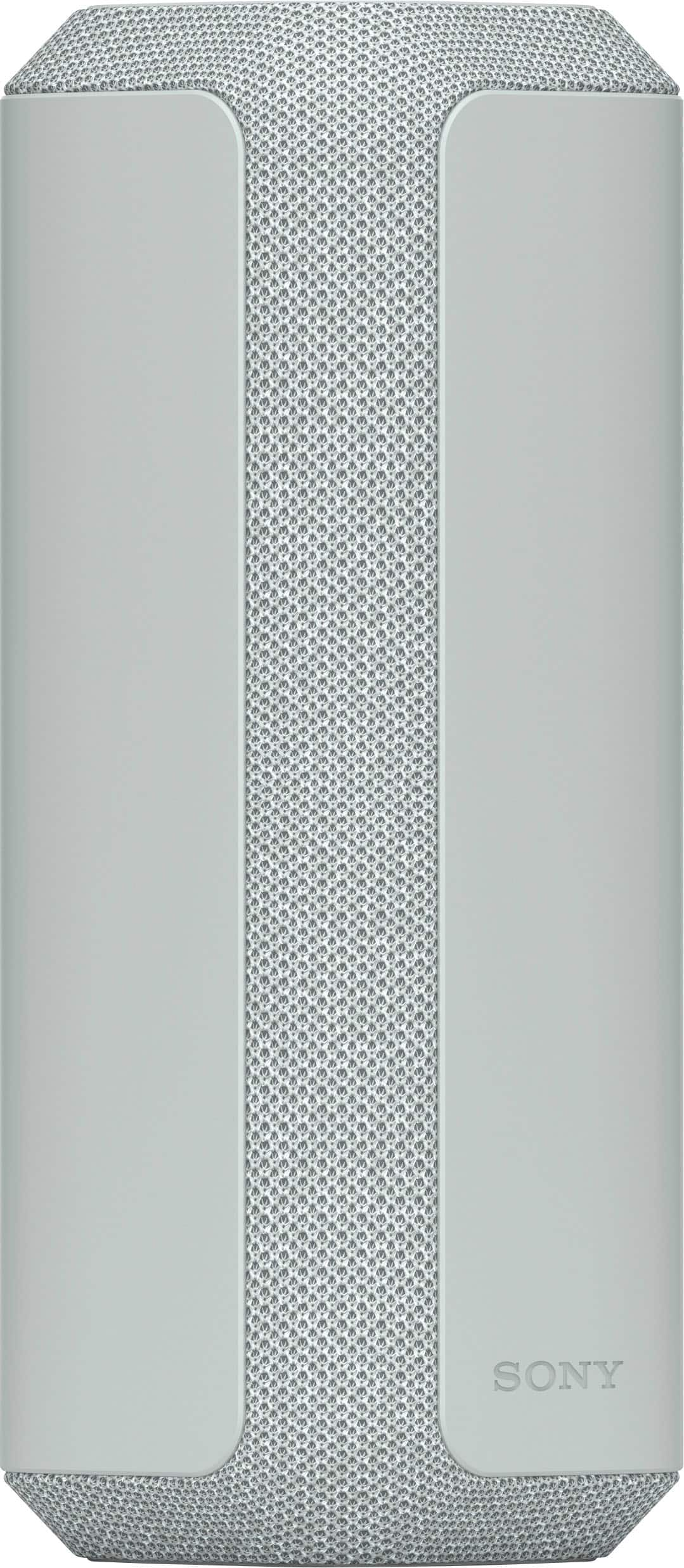
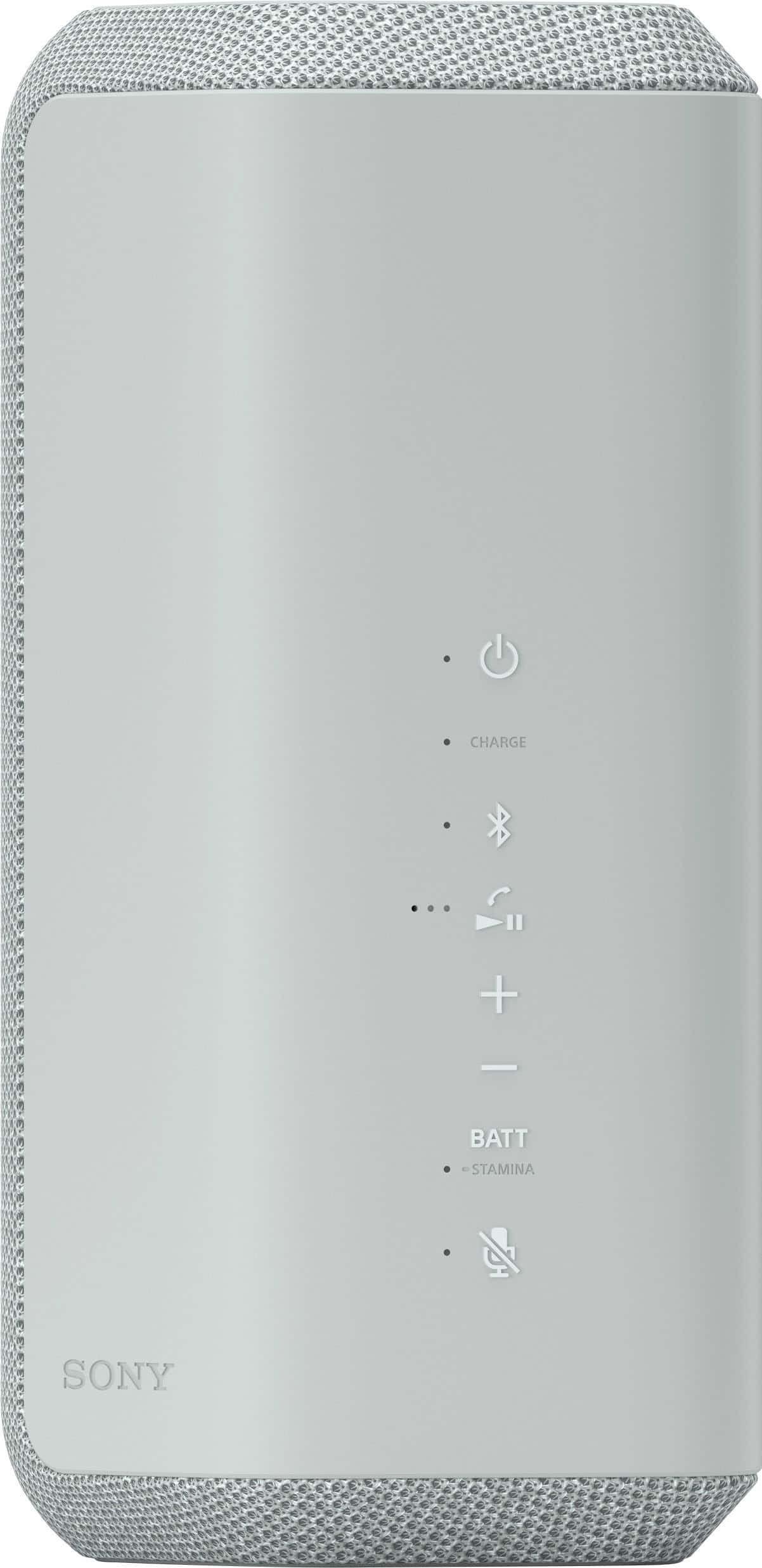
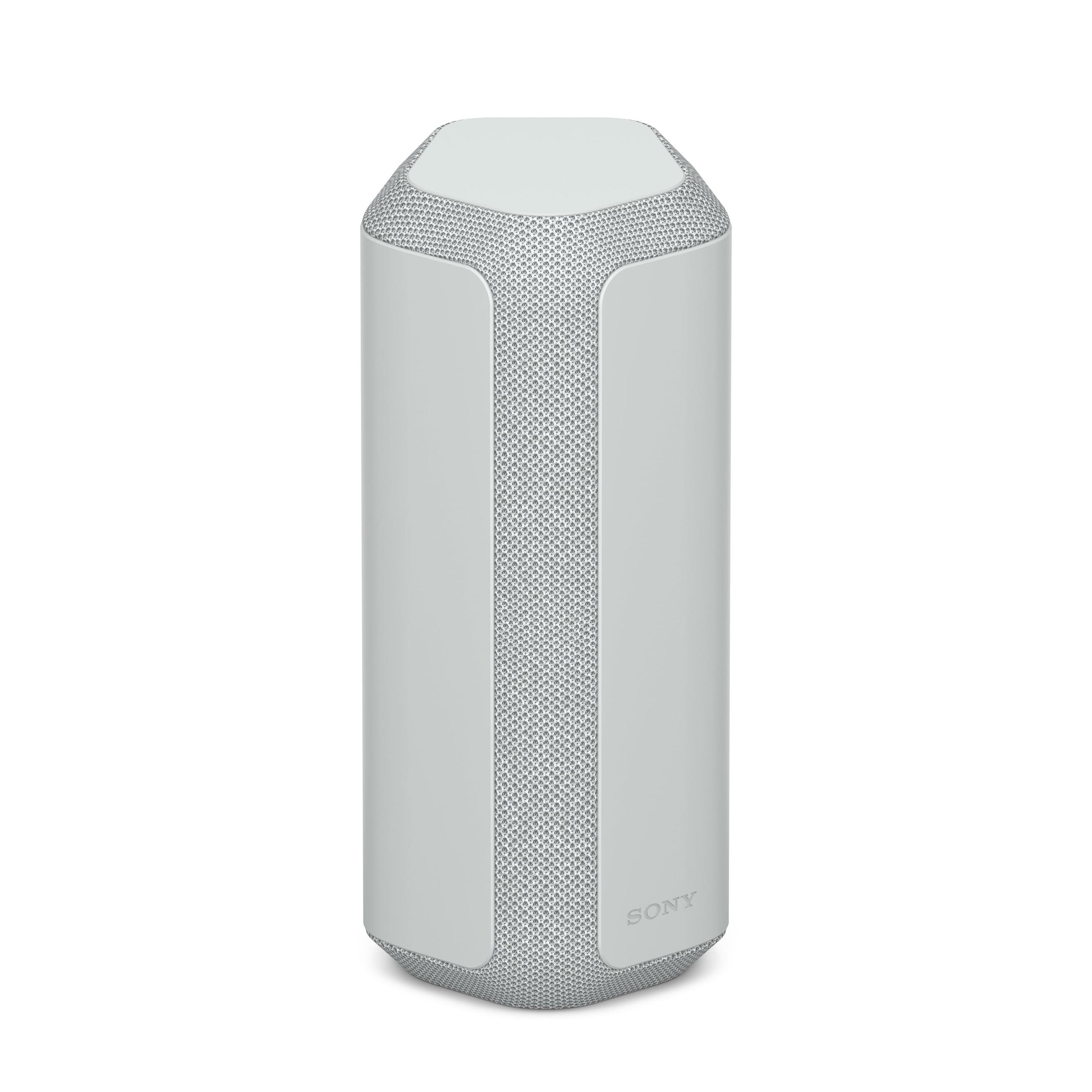




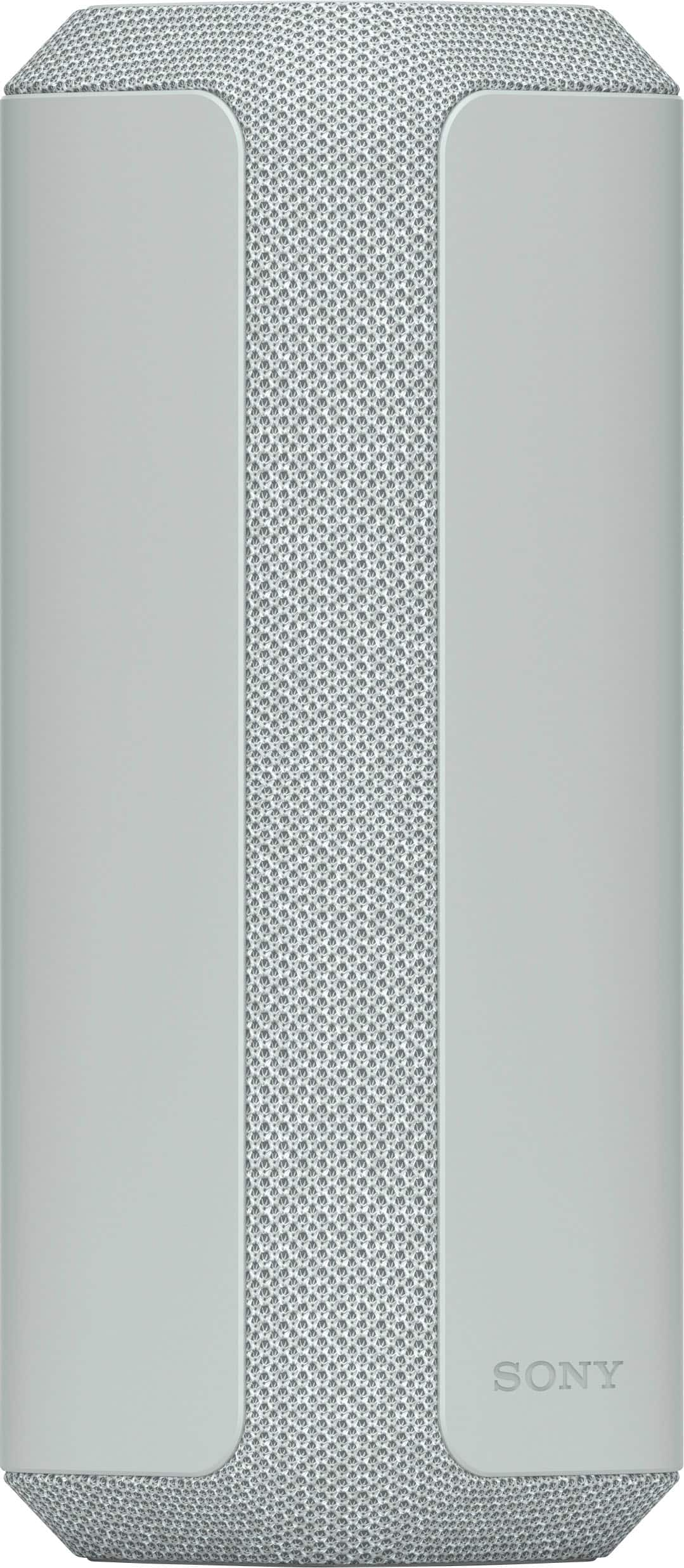
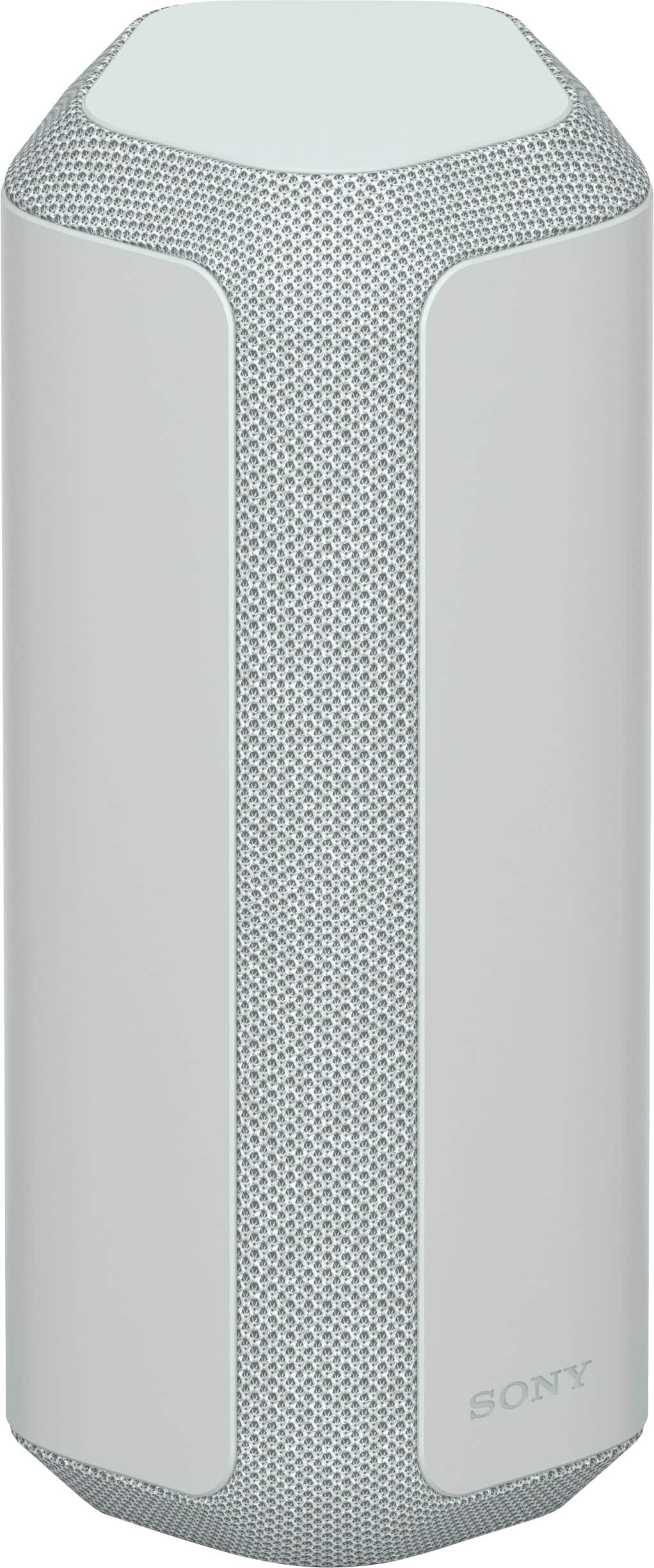
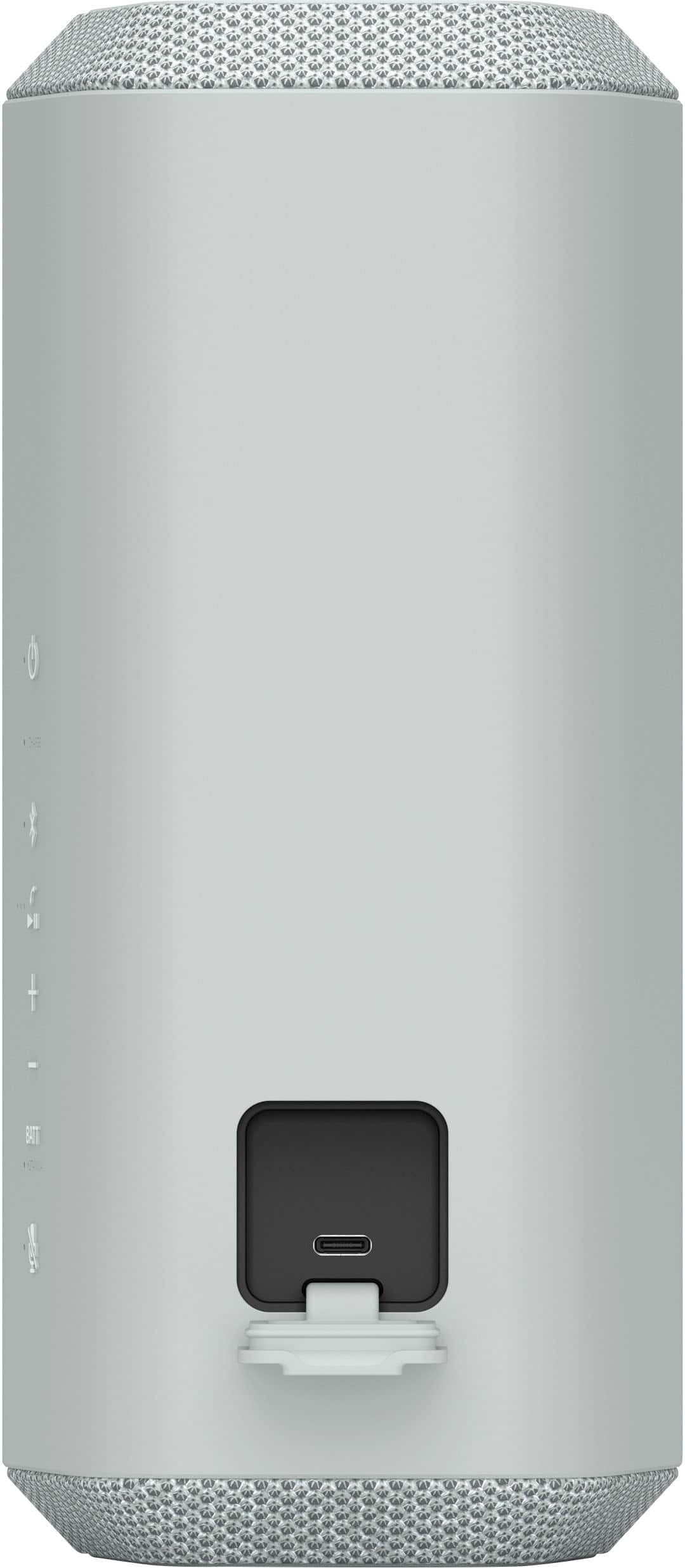
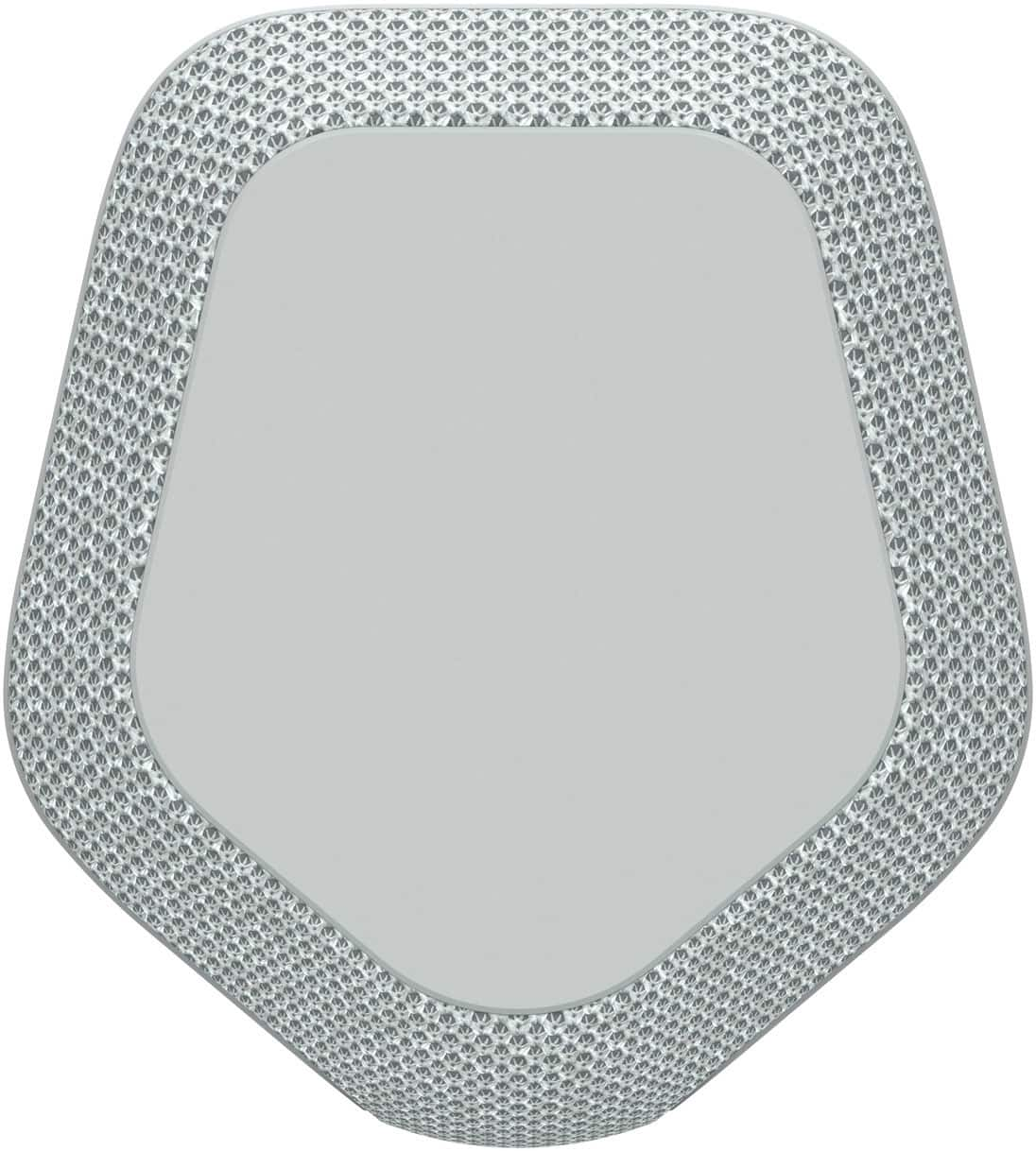
Choosing the right portable Bluetooth speaker can feel overwhelming with dozens of options flooding the market. Two speakers that consistently appear on recommendation lists are the JBL Charge 4 and the Sony XE300, but they represent fundamentally different approaches to portable audio. After researching extensive user feedback and expert reviews, it's clear these speakers excel in different scenarios despite competing in the same price range.
Before diving into specifics, let's establish what separates good portable speakers from great ones. Sound quality remains paramount—this includes how clear vocals sound, whether bass feels punchy without overwhelming other frequencies, and how well the speaker maintains audio quality at different volume levels. Battery life matters enormously for outdoor use, but charging speed has become equally important as our lives get busier.
Durability extends beyond just surviving a splash of water. Modern speakers need to handle dust, drops, and temperature changes. Connectivity features like multi-device pairing and app support have evolved from nice-to-have extras to essential functionality. Finally, additional features like powerbank capabilities or advanced audio processing can tip the scales between similar speakers.
The most crucial consideration is understanding your primary use case. Are you powering backyard barbecues or providing background music while working from home? Do you need maximum volume for pool parties or prioritize audio fidelity for solo listening? These questions will guide your decision more than any spec sheet.
The JBL Charge 4 delivers 30 watts of RMS power compared to the Sony XE300's 10 watts—a three-fold difference that translates to significantly louder maximum volume. This isn't just about numbers on paper. Based on user feedback, the Charge 4 can comfortably fill outdoor spaces and compete with background noise at gatherings, while the XE300 performs better in controlled environments.
RMS power (Root Mean Square) represents the continuous power a speaker can handle, providing a more accurate measure than peak power ratings. The Charge 4's higher output means it can maintain audio quality even when pushed to higher volumes, whereas the XE300 may compress or distort when maxed out.
However, power isn't everything. The Sony XE300 compensates with more sophisticated audio processing, delivering cleaner sound at moderate volumes where most daily listening occurs.
Sony introduced their Line-Shape Diffuser technology in the XE300 when it launched in 2022, borrowed from professional concert audio systems. This creates what engineers call a "line source" rather than a traditional point source, distributing sound more evenly across a room. In practical terms, this means the XE300 sounds more consistent whether you're sitting directly in front of it or off to the side.
The XE300 also features Sony's X-Balanced Speaker Unit with a non-circular diaphragm design. Traditional speakers use round drivers, but this rectangular shape maximizes the speaker surface area within the same footprint, theoretically reducing distortion while improving bass response.
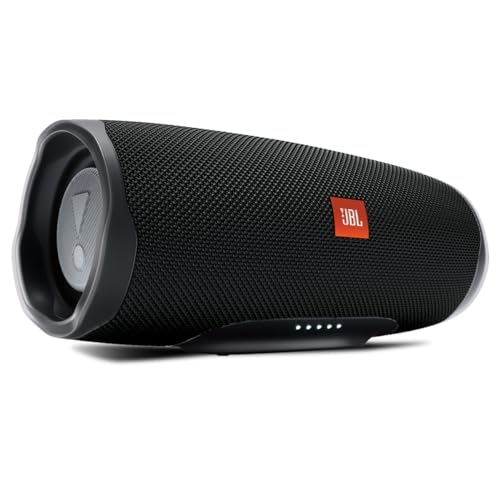
The JBL Charge 4, released earlier, relies on more conventional but proven technology. Its dual passive radiators work alongside the main driver to enhance bass response. These are essentially speakers without voice coils that vibrate sympathetically with the main driver, extending low-frequency response without requiring additional amplification.
From user reviews, the XE300's technological advantages become apparent in smaller rooms where its even sound distribution shines. The Charge 4's conventional approach proves more effective outdoors where raw power matters more than sophisticated processing.
Both speakers claim impressive battery life—20 hours for the Charge 4 and 24 hours for the XE300—but real-world performance tells a different story. User reports consistently show the Charge 4 delivering 12-15 hours of mixed-volume use, while the XE300 provides 10-14 hours depending on volume levels and audio processing features enabled.
The game-changer is charging speed. The Sony XE300 fully charges in two hours versus four hours for the JBL Charge 4. More importantly, Sony's quick charging provides 70 minutes of playback from just 10 minutes of charging—invaluable when you've forgotten to charge overnight.
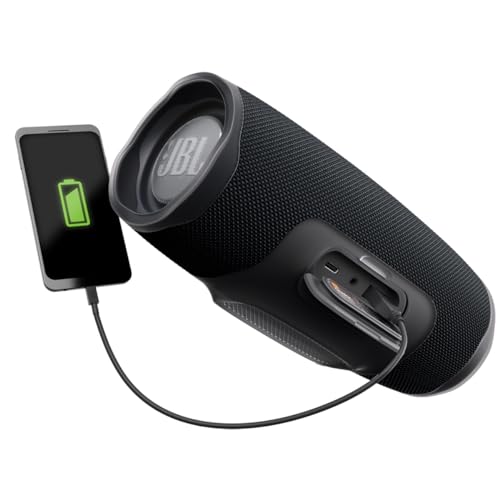
The Charge 4 counters with powerbank functionality, allowing you to charge phones or tablets through its USB-A port. This feature has proven genuinely useful for camping trips or beach days where device battery life becomes critical. The XE300 lacks this capability entirely.
Sony includes Battery Care technology that monitors charging patterns to prevent overcharging and extend long-term battery health. While less immediately noticeable than quick charging, this addresses the common issue of rechargeable speaker batteries degrading after 2-3 years of regular use.
The Sony XE300 extends down to 20Hz compared to the Charge 4's 60Hz lower limit. This 40Hz difference might seem technical, but it's audible with bass-heavy music genres. The XE300 can reproduce the deepest bass notes in electronic music or the fundamental frequencies of large drums that the Charge 4 simply cannot produce.
However, frequency response on paper doesn't tell the complete story. The Charge 4 emphasizes mid-bass (around 80-150Hz) more aggressively, creating a punchier, more immediate bass sensation that many users prefer for rock, pop, and hip-hop music. The XE300 provides more accurate, extended bass that audiophiles appreciate but casual listeners might find less exciting.
Both speakers maintain relatively flat midrange response, ensuring vocals and lead instruments remain clear and present. The XE300 reportedly handles complex musical passages with multiple instruments more gracefully, thanks to its advanced digital signal processing.
Maximum volume capability strongly favors the JBL Charge 4. User feedback consistently reports the Charge 4 maintaining audio quality at volumes that cause the XE300 to compress dynamics or introduce distortion. This makes the Charge 4 significantly more suitable for outdoor gatherings, pool parties, or any situation requiring background music in noisy environments.
Dynamic range—the difference between the quietest and loudest sounds a speaker can reproduce—affects how engaging music sounds. The Sony XE300 excels here at moderate volumes, preserving subtle musical details that get lost when speakers are pushed too hard. The Charge 4 maintains reasonable dynamics until near maximum volume, where compression becomes noticeable.
For home theater use, both speakers fall short of dedicated systems, but the XE300's superior midrange clarity and dialogue intelligibility make it more suitable as a temporary TV speaker upgrade.
Both speakers operate in mono, meaning they cannot create true stereo imaging like a proper left-right speaker pair. However, the Sony XE300's Line-Shape Diffuser technology creates a wider apparent soundstage, making music sound less like it's emanating from a single point source.
The Charge 4 sounds more directional, which can be advantageous when you want to aim sound toward a specific seating area but less ideal for room-filling ambient music.
Both speakers support pairing two units for stereo separation—the XE300 through Sony's Party Connect and the Charge 4 via JBL Connect+. This transforms the listening experience significantly, though it doubles your investment.
The Sony XE300 embraces modern connectivity with Bluetooth 5.2 and support for LDAC, Sony's high-resolution audio codec. LDAC can transmit nearly three times more data than standard Bluetooth audio, preserving more musical detail from high-quality source files. However, this requires compatible devices (primarily Android phones and some laptops) and high-quality source material to matter.
AAC codec support benefits iPhone users, providing better audio quality than the basic SBC codec both speakers support. The JBL Charge 4 relies on older Bluetooth 4.2 with SBC only, limiting audio quality potential.
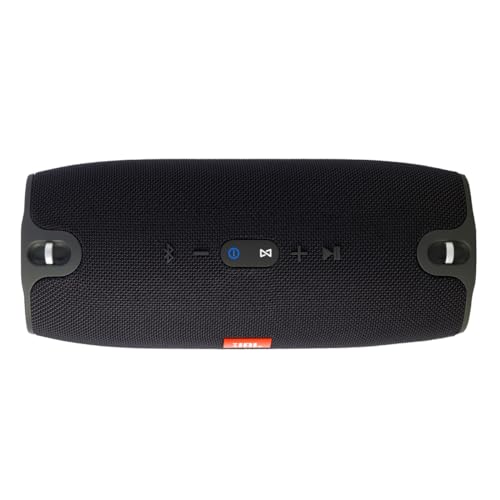
The Sony XE300 integrates fully with Sony's Music Center app, enabling custom EQ adjustments, firmware updates, and multi-speaker management. User reviews praise the app's functionality, though some report occasional connectivity issues.
The Charge 4 takes a more minimalist approach with basic app support focused on speaker pairing rather than audio customization. This simplicity appeals to users who prefer straightforward operation without smartphone dependency.
Both speakers support multi-device pairing, allowing seamless switching between phone and laptop audio without re-pairing devices—a convenience that becomes essential once you experience it.
Water resistance differs significantly between these speakers. The JBL Charge 4 carries an IPX7 rating, meaning it can withstand submersion in water up to 1 meter for 30 minutes. The Sony XE300 earns a full IP67 rating, adding dust protection to waterproofing.
This distinction matters for beach use, camping, or workshop environments where dust infiltration could damage internal components. The XE300's sealed design prevents dust accumulation that could affect speaker performance over time.
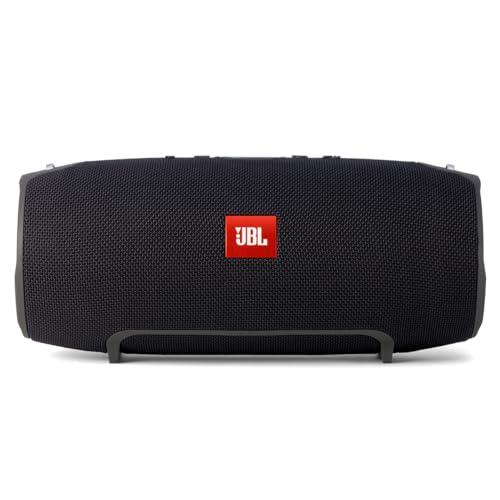
Both speakers feature robust construction, but user reports suggest different wear patterns. The Charge 4's fabric covering proves highly durable and resists staining, while the XE300's rubberized surface shows scratches and dirt more readily but cleans easily.
Temperature tolerance becomes important for outdoor use. Both speakers handle typical weather conditions, but extreme cold can reduce battery performance and extreme heat can damage internal components. Neither manufacturer specifies operating temperature ranges, but user experiences suggest both perform reliably in normal seasonal conditions.
At the time of writing, pricing varies significantly between retailers and promotional periods, but the Sony XE300 typically commands a premium over the JBL Charge 4. This price difference reflects their different market positioning rather than a simple better/worse comparison.
The Charge 4 represents practical value—maximum functionality per dollar with proven reliability and strong resale value. Its powerbank feature adds genuine utility worth considering in the total cost calculation, potentially eliminating the need for separate portable chargers.
The Sony XE300 justifies its premium through advanced audio technology, modern connectivity features, and superior environmental protection. These improvements matter most to users who prioritize audio quality and cutting-edge features over raw power and utility.
Choose the JBL Charge 4 if you frequently host outdoor gatherings, need maximum volume output, or value the powerbank functionality for extended adventures. Its proven reliability and straightforward operation appeal to users who want audio equipment that simply works without complexity.
The Sony XE300 suits users who prioritize audio fidelity over maximum volume, appreciate modern conveniences like fast charging and app customization, or need superior dust protection for harsh environments. Its technological sophistication rewards users who invest time in optimizing settings and exploring advanced features.
For home theater supplementation, the XE300's clearer dialogue reproduction and more natural soundstage make it the better choice, though dedicated soundbars would serve this purpose more effectively.
My recommendation leans toward the Sony XE300 for most users based on its technological advantages and more versatile performance profile. However, the JBL Charge 4 remains compelling for specific use cases where maximum volume and powerbank functionality provide genuine value that justifies any audio quality compromises.
Consider your primary listening environment, typical volume levels, and whether advanced features like custom EQ matter to you. Both speakers will serve reliably for years, but they excel in different scenarios that align with different lifestyles and priorities.
| JBL Charge 4 | Sony XE300 |
|---|---|
| Power Output - Determines maximum volume and outdoor performance | |
| 30W RMS (significantly louder for parties/outdoor use) | 10W (adequate for indoor/small group listening) |
| Battery Life - Real-world performance matters more than specs | |
| 20 hours rated, 12-15 hours typical use | 24 hours rated, 10-14 hours typical use |
| Charging Speed - Critical for busy lifestyles | |
| 4 hours full charge (plan ahead required) | 2 hours full charge + 70min from 10min quick charge |
| Water/Dust Protection - Durability for outdoor adventures | |
| IPX7 (waterproof but not dust-sealed) | IP67 (fully waterproof and dust-tight) |
| Frequency Response - Deep bass extension capability | |
| 60Hz-20kHz (limited deep bass) | 20Hz-20kHz (reproduces deeper bass frequencies) |
| Bluetooth Technology - Audio quality and connection stability | |
| Bluetooth 4.2 with SBC codec only | Bluetooth 5.2 with LDAC/AAC/SBC codecs |
| Powerbank Function - Charges your devices on the go | |
| Yes, USB-A output for phone/tablet charging | No powerbank capability |
| App Support - Customization and control features | |
| Basic pairing functions only | Full Sony Music Center app with custom EQ |
| Multi-Speaker Pairing - Scale up your sound system | |
| JBL Connect+ (pairs with 100+ compatible speakers) | Party Connect + stereo pairing with Sony speakers |
| Audio Technology - Sound distribution and quality | |
| Dual passive radiators for enhanced bass | Line-Shape Diffuser + X-Balanced Speaker Unit |
| Weight - Portability factor | |
| 965g / 2.12 lbs | 1.3kg / 2.87 lbs |
| Best Use Cases - Where each speaker excels | |
| Outdoor parties, camping, power outages | Indoor listening, quick charging needs, audiophile preferences |
The JBL Charge 4 is significantly louder with 30W of power output compared to the Sony XE300's 10W. This makes the JBL Charge 4 better for outdoor parties, large gatherings, and situations where you need to compete with background noise.
The Sony XE300 offers 24 hours of rated battery life versus 20 hours for the JBL Charge 4. However, real-world usage typically shows 10-14 hours for the XE300 and 12-15 hours for the Charge 4, depending on volume levels and features used.
Only the JBL Charge 4 can charge external devices through its USB-A powerbank port. The Sony XE300 lacks this feature entirely, focusing instead on faster self-charging with a 2-hour charge time versus 4 hours for the Charge 4.
The Sony XE300 has superior protection with an IP67 rating (waterproof and dust-tight), while the JBL Charge 4 has an IPX7 rating (waterproof but not dust-sealed). The XE300 is better for beach, desert, or workshop environments where dust protection matters.
Sound quality depends on your preferences. The Sony XE300 offers more advanced audio technology with deeper bass extension (20Hz vs 60Hz) and more even sound distribution. The JBL Charge 4 provides punchier mid-bass and significantly higher maximum volume for outdoor use.
Both speakers work with all Bluetooth devices, but the Sony XE300 offers advantages with high-quality AAC codec support for iPhones and LDAC for compatible Android devices. The JBL Charge 4 uses basic SBC codec only, limiting audio quality potential.
The JBL Charge 4 excels outdoors due to its much higher volume output and powerbank functionality for charging devices. However, the Sony XE300 offers better dust protection and more consistent sound distribution in outdoor spaces.
Yes, both speakers support multi-speaker pairing. The JBL Charge 4 uses Connect+ technology to link with over 100 compatible JBL speakers, while the Sony XE300 supports Party Connect and stereo pairing with other Sony speakers.
The Sony XE300 charges much faster, reaching full capacity in 2 hours versus 4 hours for the JBL Charge 4. The XE300 also offers quick charging with 70 minutes of playback from just 10 minutes of charging.
The Sony XE300 has full app support through Sony's Music Center app, offering custom EQ settings, firmware updates, and speaker management. The JBL Charge 4 has limited app functionality focused mainly on speaker pairing rather than audio customization.
Both speakers are built for portability, but they excel differently. The JBL Charge 4 has proven long-term reliability and durable fabric covering, while the Sony XE300 offers superior environmental protection with its IP67 dust and water sealing.
Value depends on your needs. The JBL Charge 4 typically costs less and includes powerbank functionality, making it practical for outdoor adventures. The Sony XE300 commands a premium for advanced audio technology, faster charging, and modern connectivity features like LDAC codec support.
We've done our best to create useful and informative comparisons to help you decide what product to buy. Our research uses advanced automated methods to create this comparison and perfection is not possible - please contact us for corrections or questions. These are the sites we've researched in the creation of this article: rtings.com - whathifi.com - whathifi.com - soundguys.com - soundguys.com - streamtechreviews.com - youtube.com - versus.com - applevis.com - versus.com - jbl.com - jbl.com - walmart.com - comparisontabl.es - harmanaudio.com - manuals.plus - jbl.com.sg - jbl.com - mm.jbl.com - bestbuy.com - newpower99.com - forums.woot.com - bestbuy.com - sony.co.uk - soundguys.com - bestbuy.com - cgmagonline.com - sony.com - sony.com - bestbuy.com - sony.com - electronics.sony.com - helpguide.sony.net

Privacy Policy
Terms and Conditions - Affiliate Policy
Home Security
© Copyright 2008-2026.
11816 Inwood Rd #1211, Dallas, TX 75244