

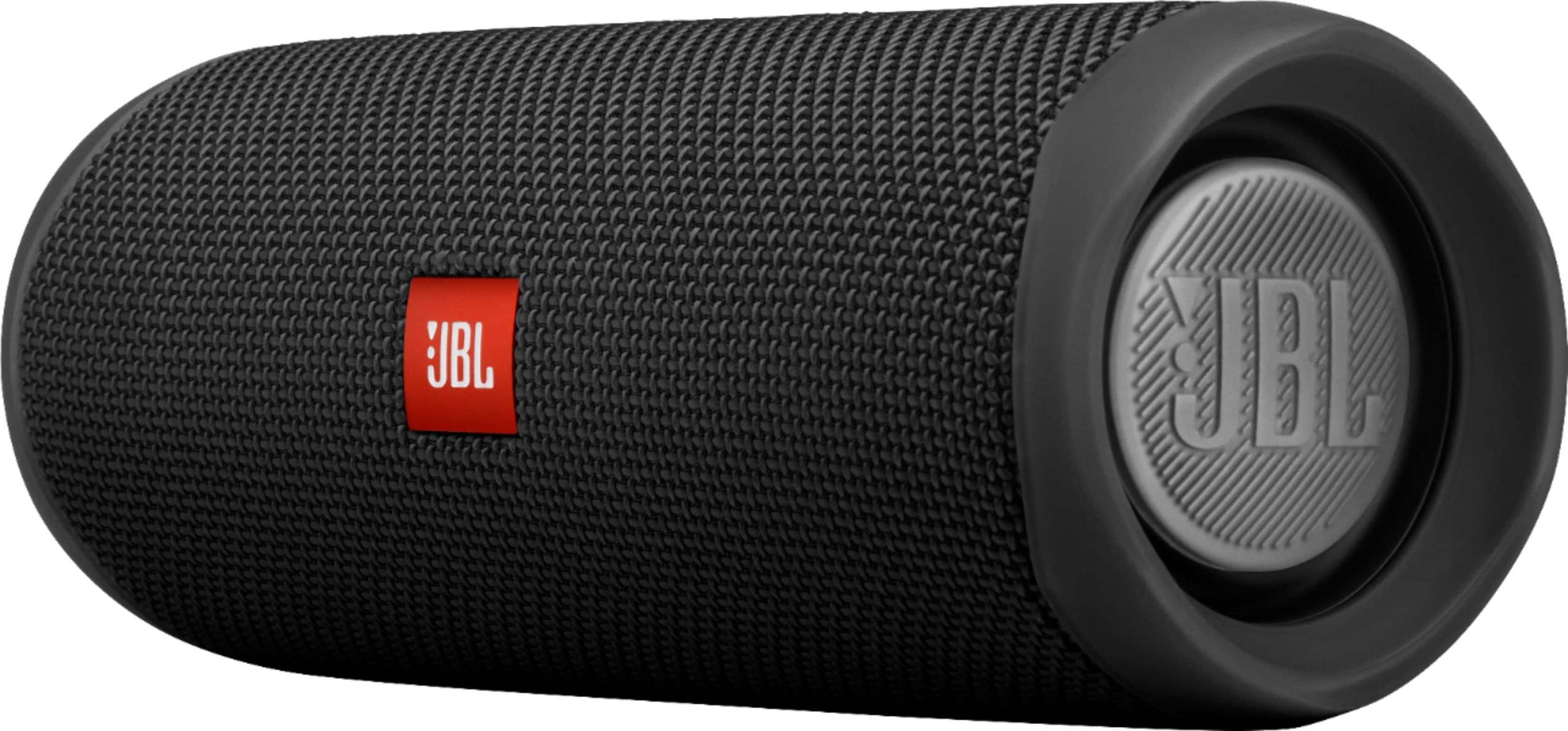
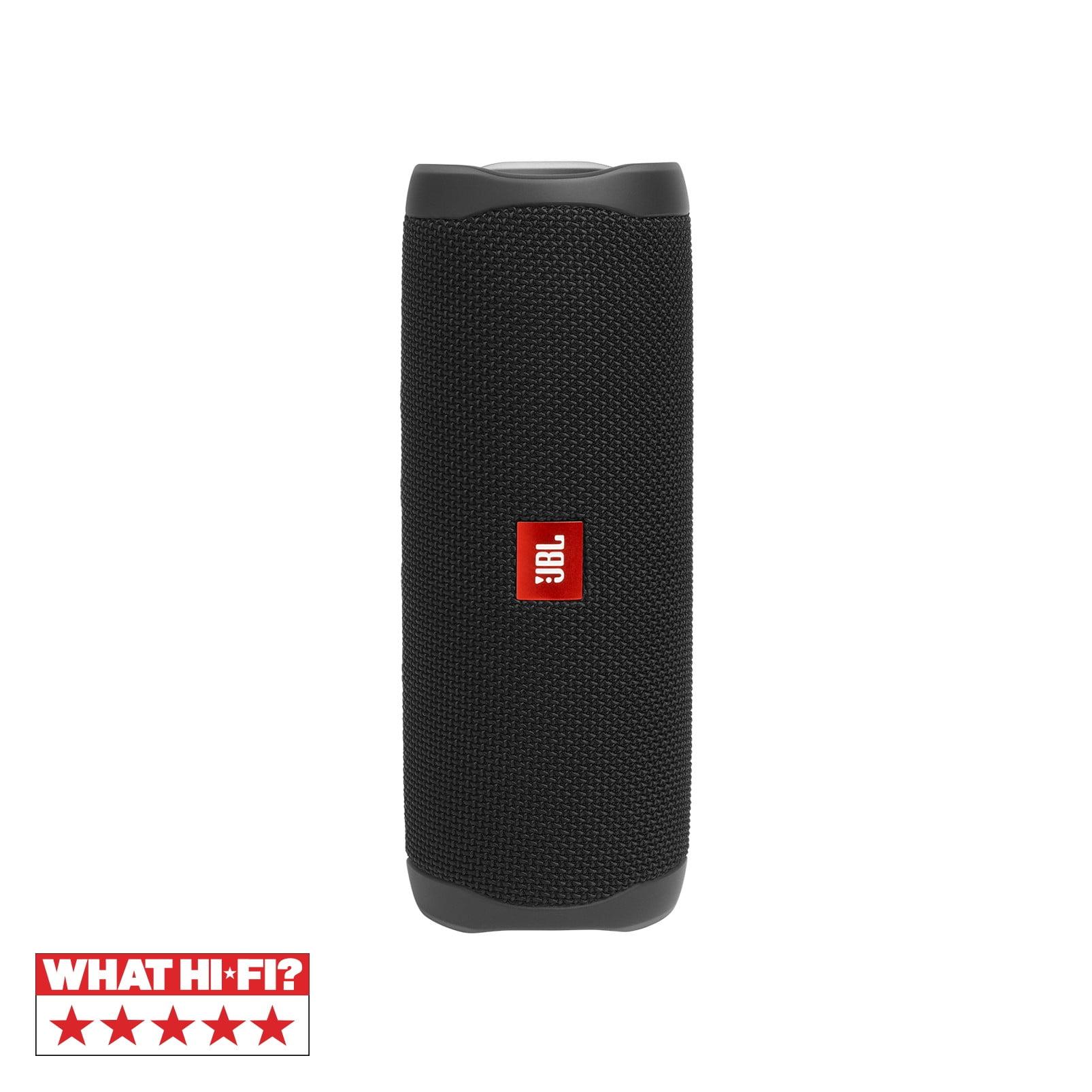
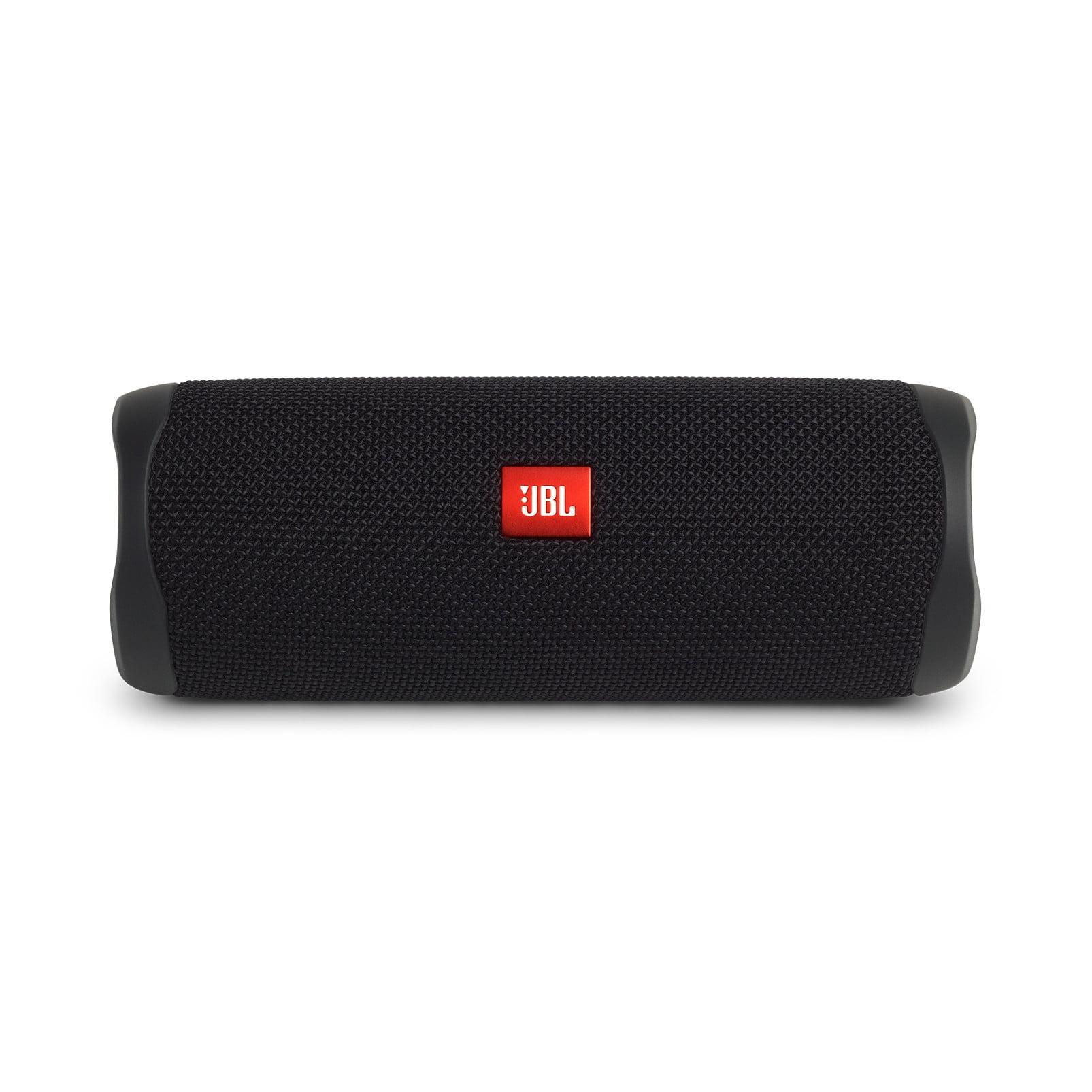
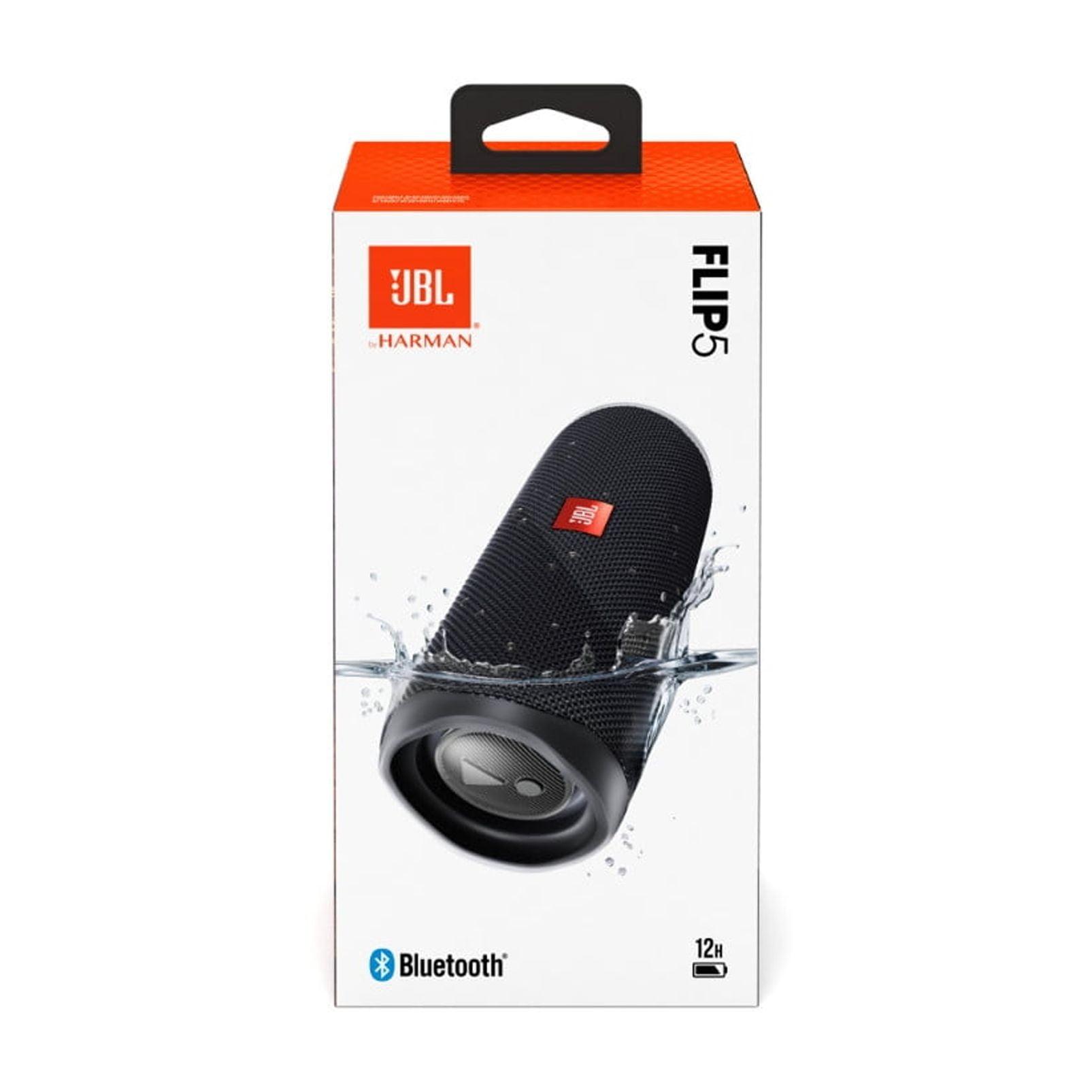
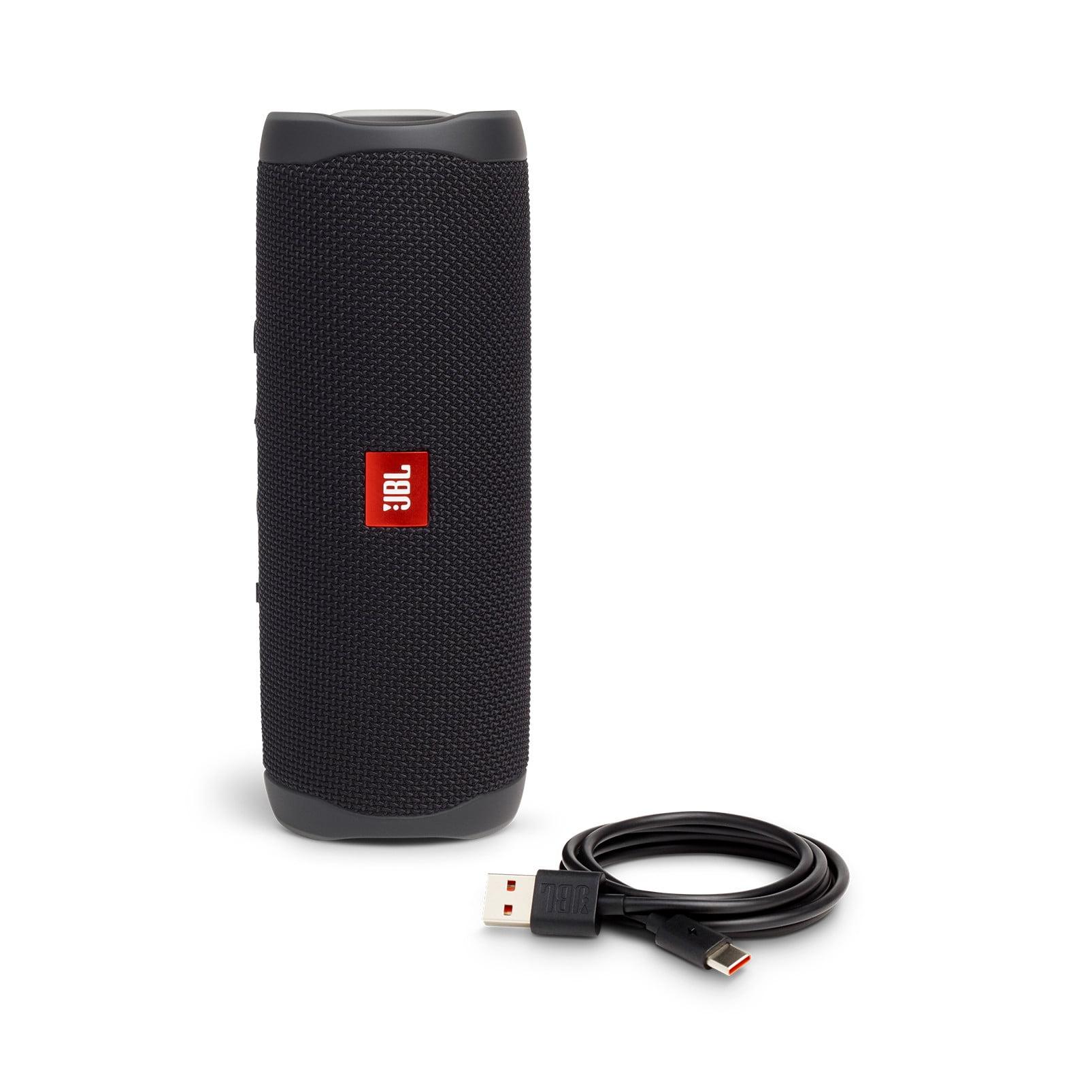
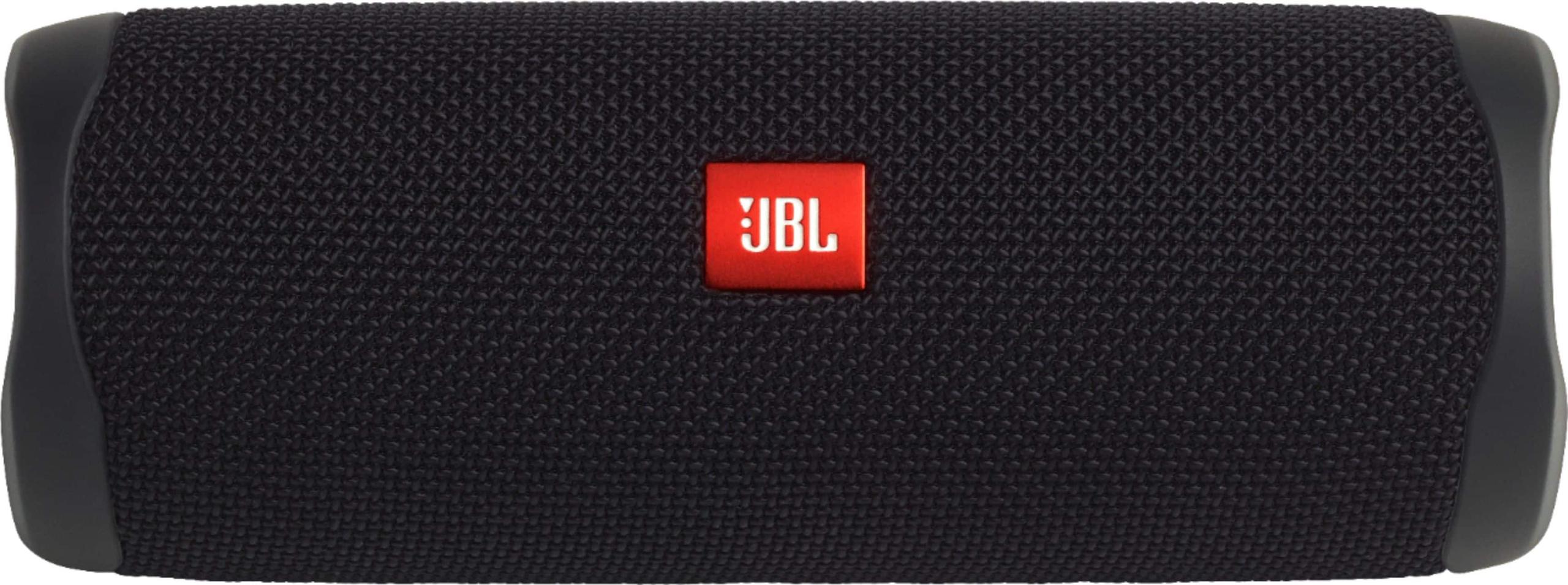
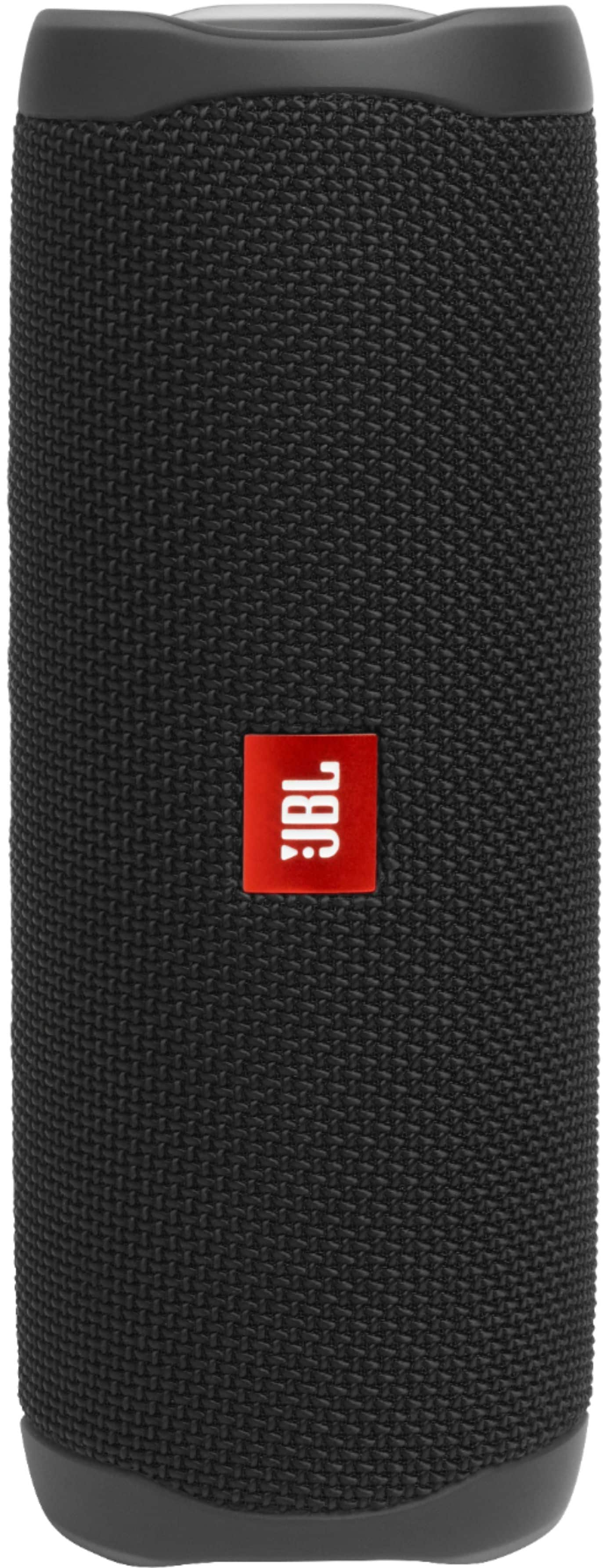
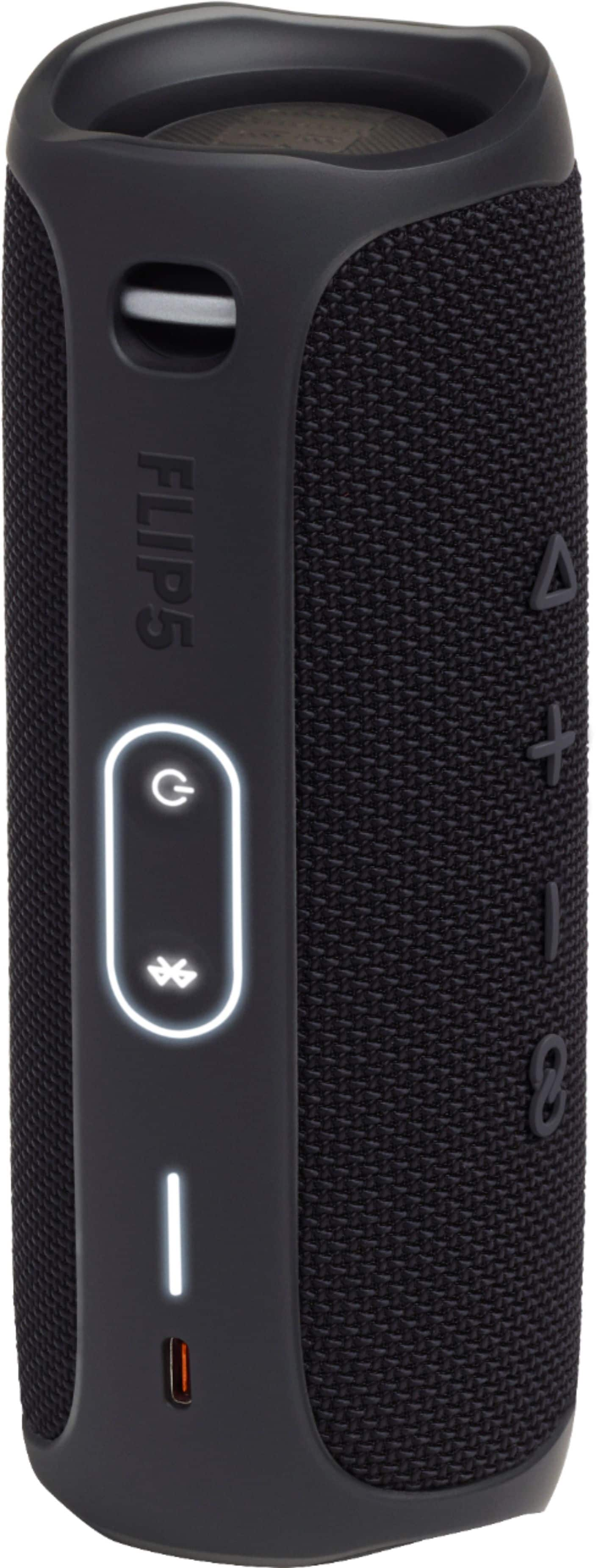
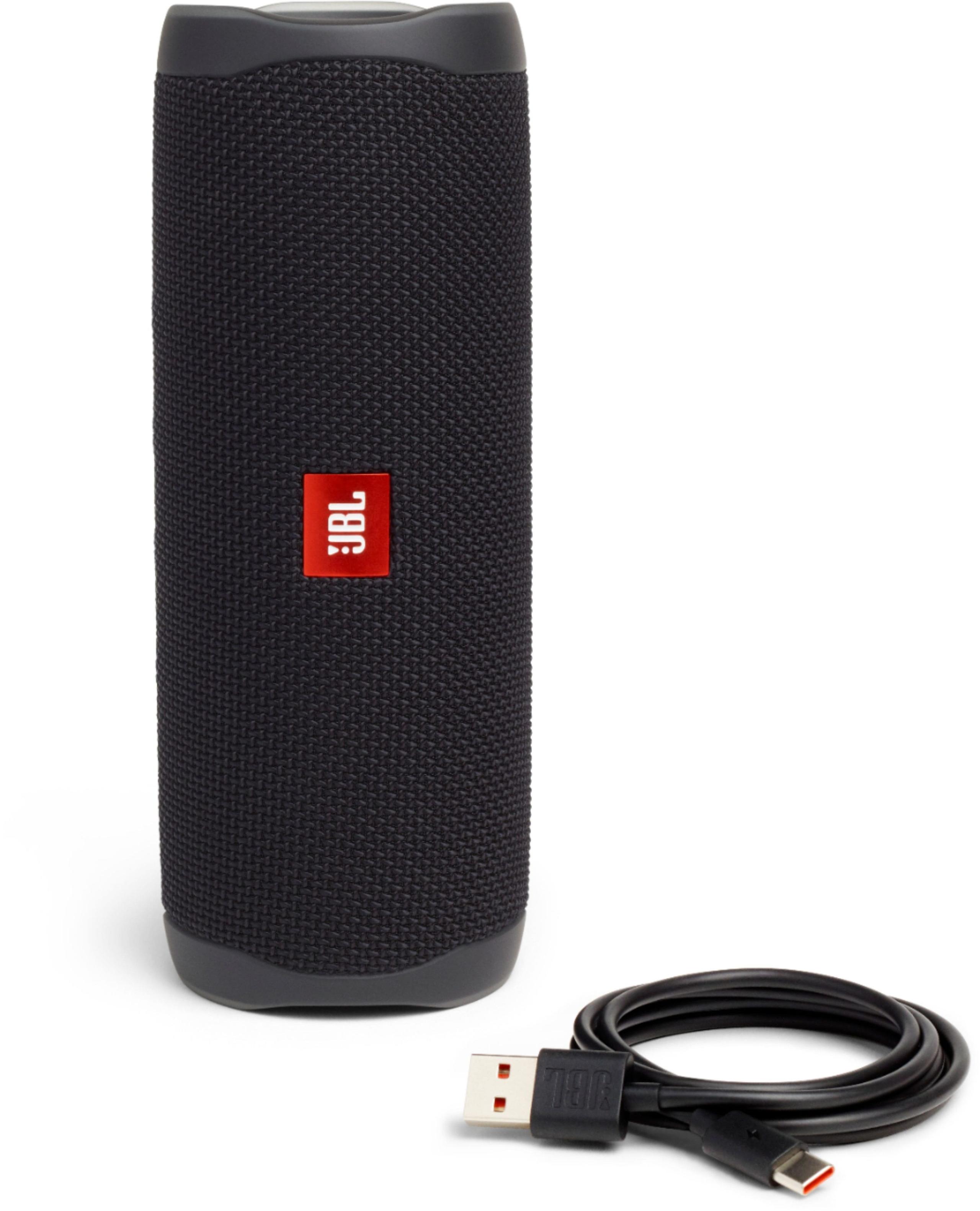
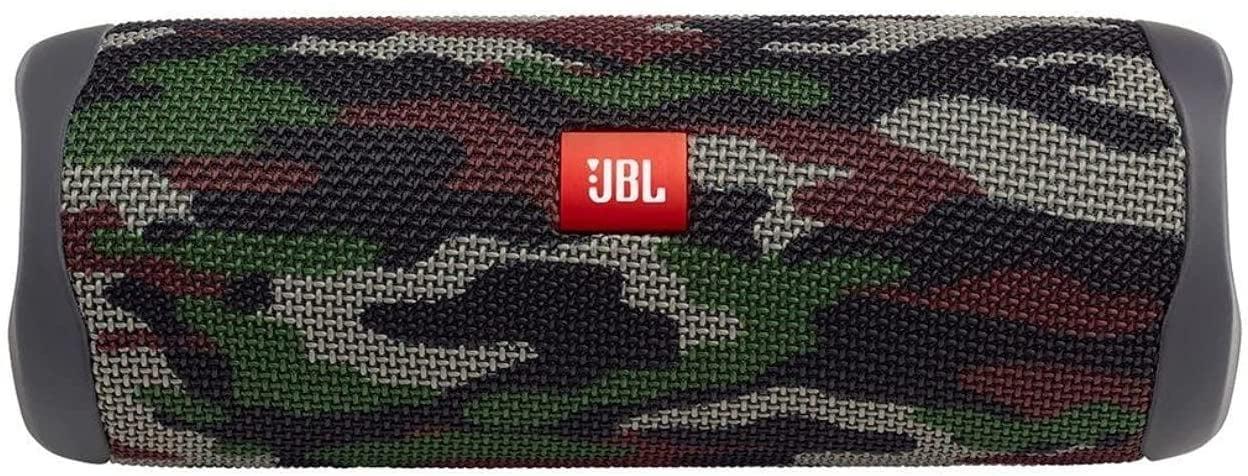
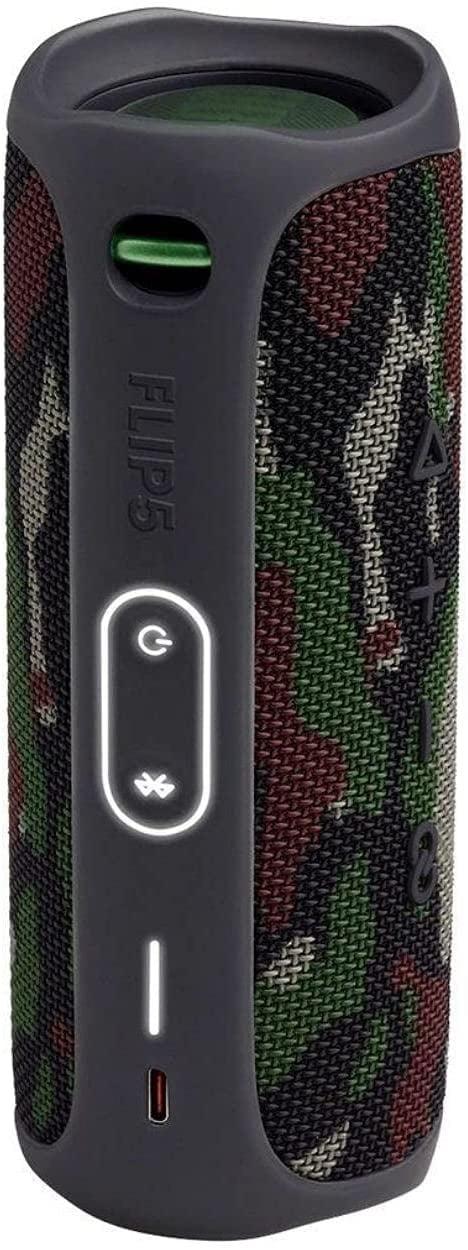
When JBL released the Charge 4 in 2018 and the Flip 5 in 2019, they weren't just updating their popular speaker lines—they were making a statement about two completely different approaches to portable audio. The question isn't really which one sounds better; it's which philosophy matches how you actually use a Bluetooth speaker.
After diving deep into user reviews, expert testing, and technical specifications, one thing becomes crystal clear: these speakers serve fundamentally different purposes despite sharing the same brand DNA. The Charge 4 positions itself as a power station that happens to play music incredibly well, while the Flip 5 strips away everything except pure, portable audio excellence.
Before we dive into the specifics, let's talk about what actually matters when choosing a portable Bluetooth speaker. Unlike home audio systems where size constraints don't exist, portable speakers live in a world of constant compromise. Every design decision involves trade-offs between competing priorities.
Power versus portability sits at the heart of every portable speaker design. Bigger drivers and larger battery cells deliver more volume and longer playtime, but they also add weight and bulk. The sweet spot depends entirely on how you plan to use the speaker.
Battery life becomes critical when you're away from power sources for extended periods. A speaker that dies halfway through a camping trip or beach day creates more frustration than joy. But longer battery life typically means heavier construction and higher costs.
Water resistance has evolved from a nice-to-have feature to an absolute necessity. Both the Charge 4 and Flip 5 carry IPX7 ratings, meaning they can survive being dunked in up to one meter of water for 30 minutes. This protection level handles everything from poolside splashes to unexpected rain showers.
Sound quality expectations need calibration for portable speakers. Physics limits how much bass a small enclosure can produce, and battery power constraints affect maximum volume. The best portable speakers work within these limitations rather than fighting against them.
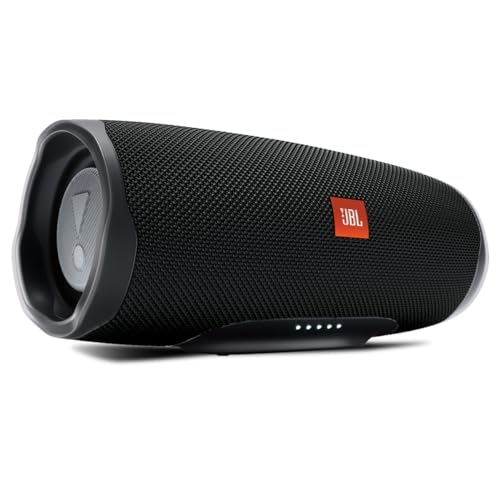
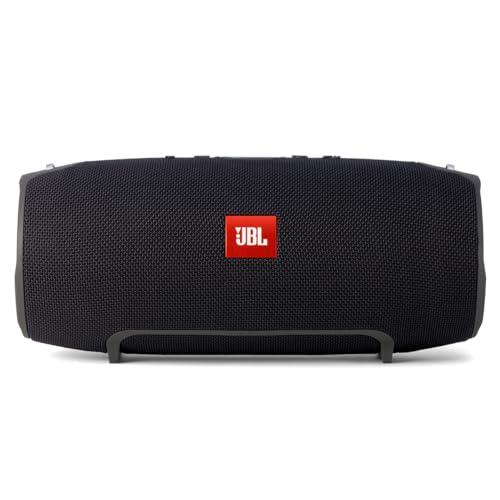
The most obvious difference between these speakers starts with their physical presence. The Flip 5 measures just 7.13 inches long and weighs 1.19 pounds, making it genuinely pocketable for larger bags and comfortable for extended carrying. You can toss it in a backpack without thinking twice about the weight penalty.
The Charge 4, at 8.66 inches long and 2.12 pounds, demands more intentional packing decisions. That extra pound might not sound significant, but it represents nearly double the weight when you're hiking to a remote campsite or stuffing everything into carry-on luggage.
This size difference reflects completely different design philosophies. JBL engineered the Flip 5 for people who want their music to follow them everywhere with minimal compromise to mobility. The Charge 4 targets users who prioritize capability over convenience—people setting up base camps rather than constantly on the move.
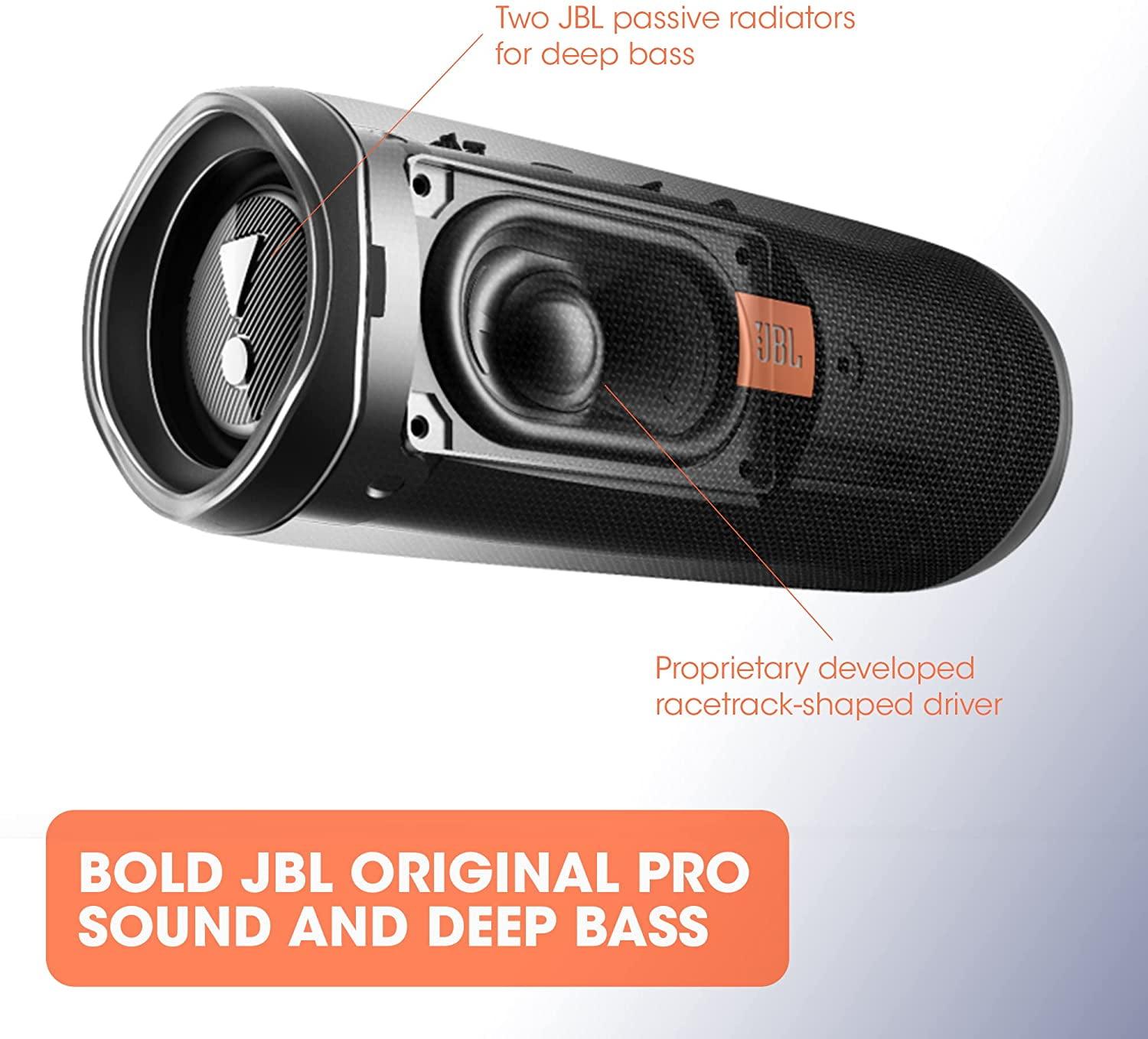
These design choices ripple through every aspect of performance. The Charge 4 has room for a larger 50x90mm racetrack driver and dual passive radiators (which boost bass response without requiring additional power). The Flip 5 works with a smaller driver assembly but uses advanced engineering to maximize efficiency within its compact constraints.
Battery performance separates these speakers more dramatically than any other single factor. The Charge 4 packs a substantial 7500mAh lithium-ion battery that delivers up to 20 hours of continuous playbook. Real-world testing by users and reviewers consistently shows 13-16 hours of actual playback depending on volume levels and content type.
The Flip 5 carries a smaller battery designed for its lighter weight profile, providing up to 12 hours of rated playback. User reports suggest actual performance lands around 8-10 hours under normal listening conditions.
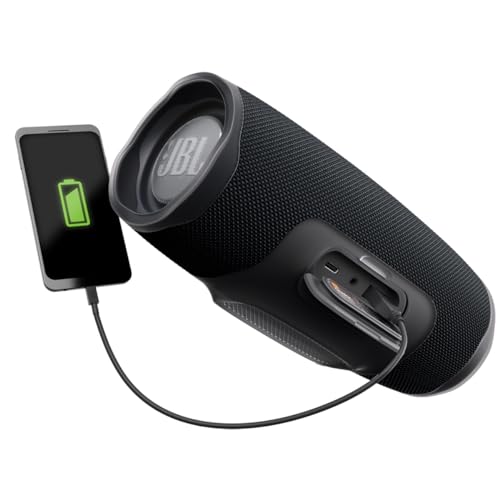
But here's where the Charge 4 reveals its true purpose: that massive battery doesn't just power the speaker longer—it can also charge your phone, tablet, or other USB devices. The built-in power bank functionality outputs 5V at 2A, enough to fully charge most smartphones. This feature transforms the speaker from an entertainment device into an essential piece of outdoor gear.
The Flip 5 deliberately omits power bank capability, keeping its design focused purely on audio reproduction. For some users, this represents welcome simplification. For others heading into the wilderness or spending full days at the beach, it's a deal-breaking limitation.
Charging speed provides another interesting contrast. The Flip 5 reaches full charge in just 2.5 hours thanks to its smaller battery and efficient USB-C charging system. The Charge 4 requires 4.5 hours to complete charging, but that's understandable given its substantially larger energy storage capacity.
When evaluating audio quality in portable speakers, traditional metrics like frequency response only tell part of the story. More important factors include how well the speaker maintains sound quality across different volume levels, how effectively it fills space with sound, and whether its tonal balance suits various music genres.
The Charge 4 produces 30 watts of maximum output power compared to the Flip 5's 20 watts. That 50% power advantage translates directly into higher maximum volume and better performance in noisy environments or large outdoor spaces. But maximum volume numbers can be misleading—what matters more is how the speaker sounds when pushed to those limits.
User reviews and expert testing reveal that the Charge 4 handles high volume levels with less distortion and compression than the Flip 5. This makes sense given its larger driver and more robust amplification system. When you're competing with wind, waves, or ambient noise at an outdoor gathering, this power advantage becomes crucial.
Bass response showcases the clearest difference between these speakers. The Charge 4's dual passive radiators work like additional speakers dedicated solely to low-frequency reproduction. They don't require separate amplification but instead use air movement from the main driver to enhance bass output. The result is noticeably deeper, more impactful bass than what the Flip 5 can achieve within its compact form factor.
However, bass quantity doesn't automatically mean bass quality. Reviews suggest both speakers maintain good control over their low-frequency output, avoiding the boomy, undefined bass that plagues some portable speakers. The Charge 4 simply extends deeper into the frequency spectrum.
Midrange clarity—where vocals and most instruments live—receives praise for both speakers, with some reviewers actually preferring the Flip 5's more focused presentation. Without the Charge 4's enhanced bass response, vocals and lead instruments can sound more prominent and detailed in the Flip 5.
Treble response (high frequencies like cymbals and guitar harmonics) shows less dramatic differences between the models. Both speakers use similar approaches to high-frequency reproduction, with neither being particularly bright or harsh in the upper registers.
Soundstage and stereo imaging present interesting challenges for both speakers since they're essentially mono devices. Each speaker contains a single main driver facing forward, so they can't create true left-right stereo separation like a pair of bookshelf speakers. The Charge 4's larger size allows for slightly better sound dispersion, but neither speaker excels at creating an immersive soundstage for critical listening.
One of the most frustrating aspects of comparing these speakers involves their incompatible multi-speaker technologies. Despite coming from the same manufacturer just one year apart, the Charge 4 and Flip 5 cannot connect to each other for synchronized playback.
The Charge 4 uses JBL Connect+, which allows linking with up to 100+ other JBL speakers from the Connect+ era. This technology was JBL's first-generation approach to multi-speaker connectivity, and it works well for creating larger sound systems from multiple units.
The Flip 5 introduced JBL's newer PartyBoost technology, which offers improved connectivity reliability and supports linking up to 100 PartyBoost-compatible speakers. PartyBoost represents technical advancement over Connect+, with better synchronization and more stable connections between multiple speakers.
This technological transition created an unfortunate compatibility gap. Users who own older JBL speakers with Connect+ cannot add a Flip 5 to their existing setup, while Charge 4 owners can't connect to newer JBL speakers with PartyBoost.
For most users buying their first JBL speaker, this compatibility issue matters less than the overall performance and features of individual units. But if you plan to expand your speaker collection over time or already own other JBL speakers, checking compatibility becomes essential.
Understanding how these speakers perform in actual use cases reveals their true strengths and limitations better than any specification sheet.
For outdoor adventures like camping, hiking, or beach trips, the Charge 4 typically emerges as the better choice. Its extended battery life handles multi-day trips without requiring charging opportunities, while the power bank functionality keeps essential devices operational. The extra weight becomes less important when you're setting up a base camp rather than carrying the speaker constantly.
For travel and commuting, the Flip 5 shines. It fits comfortably in carry-on bags without adding significant weight, charges quickly during short stops, and provides excellent sound quality for hotel rooms, Airbnb stays, or small gatherings. The lack of power bank functionality rarely matters when you have regular access to charging outlets.
For home use as a secondary speaker system, both speakers offer compelling but different advantages. The Charge 4 works better as a primary audio source for patios, workshops, or other spaces where you want substantial volume and bass response. The Flip 5 excels as a portable addition to bedrooms, bathrooms, or kitchen areas where space constraints and quick setup matter more than maximum output.
For parties and gatherings, speaker choice depends heavily on group size and venue. The Charge 4 handles larger groups and outdoor spaces more effectively, maintaining sound quality even when pushed to high volume levels. The Flip 5 works well for intimate gatherings but may struggle to fill larger spaces or compete with ambient noise.
At the time of writing, both speakers typically fall into similar price ranges, though promotional pricing can create significant value shifts. When prices align closely, the Charge 4 generally offers superior value due to its dual functionality as both speaker and power bank, longer battery life, and higher power output.
However, value calculations change based on individual priorities. Users who prioritize ultimate portability and don't need power bank functionality may find better value in the Flip 5, especially considering its faster charging and newer connectivity technology.
The Charge 4's power bank feature alone can justify its price premium over the Flip 5 for outdoor enthusiasts or frequent travelers. Portable power banks with similar capacity cost $30-50 separately, making the integrated functionality particularly valuable.
Build quality appears comparable between both speakers, with similar materials, construction methods, and expected longevity. Both carry the same IPX7 water resistance rating and should withstand similar amounts of rough handling over their lifespans.
Since their release, the portable speaker market has continued evolving rapidly. Newer speakers often include features like voice assistant integration, Wi-Fi connectivity, and advanced app-based sound customization that neither the Charge 4 nor Flip 5 offer.
However, both speakers represent mature, refined implementations of their respective design philosophies. They focus on core functionality—reliable Bluetooth connectivity, good sound quality, and robust construction—rather than chasing every new feature trend.
The Flip 5's PartyBoost technology has proven more future-proof than the Charge 4's Connect+, with JBL continuing to use PartyBoost in newer speaker releases. This gives Flip 5 owners better compatibility with future JBL purchases.
After analyzing performance data, user feedback, and real-world applications, the choice between these speakers comes down to honest self-assessment of your actual usage patterns.
Choose the Charge 4 if: You frequently use speakers in situations where charging opportunities are limited, regularly host gatherings that need substantial volume, prioritize bass response for music genres like hip-hop or electronic, or want the security of backup power for essential devices. The extra weight and size become worthwhile investments in capability and versatility.
Choose the Flip 5 if: You value ultimate portability above all other considerations, frequently travel with your speaker, prefer faster charging for convenience, or plan to build a multi-speaker system using newer JBL products. The focused approach to pure audio reproduction without extra features appeals to users who want simplicity and mobility.
Neither speaker represents a bad choice—they're both well-executed products that excel within their intended use cases. The key is matching the speaker's strengths to your actual needs rather than trying to force a single device to handle every possible scenario.
For many users, the decision ultimately comes down to whether they view their portable speaker as an essential piece of outdoor gear (Charge 4) or a pure audio device that happens to be portable (Flip 5). Both approaches have merit; the right choice depends on which philosophy better matches your lifestyle and listening habits.
| JBL Charge 4 Portable Bluetooth Speaker | JBL Flip 5 Portable Speaker |
|---|---|
| Dimensions & Weight - Critical for portability and travel | |
| 8.66" x 3.74" x 3.66", 2.12 lbs (bulkier but more stable) | 7.13" x 2.91" x 2.72", 1.19 lbs (ultra-portable design) |
| Battery Life - Essential for extended outdoor use | |
| Up to 20 hours (real-world ~13-16 hours at moderate volume) | Up to 12 hours (real-world ~8-10 hours at moderate volume) |
| Power Output - Determines maximum volume and sound quality | |
| 30W RMS (significantly louder, better for parties/outdoor spaces) | 20W RMS (adequate for personal/small group listening) |
| Power Bank Feature - Game-changer for outdoor adventures | |
| Yes, 7500mAh battery charges phones/tablets via USB-A port | No power bank capability (audio-only focus) |
| Charging Time - Convenience factor for daily use | |
| 4.5 hours to full charge (longer due to larger battery) | 2.5 hours to full charge (quick turnaround between uses) |
| Water Resistance - Peace of mind for outdoor/poolside use | |
| IPX7 (submersible to 1 meter for 30 minutes) | IPX7 (submersible to 1 meter for 30 minutes) |
| Bass Response - Important for music genres and outdoor listening | |
| 60Hz-20kHz with dual passive radiators (deeper, more impactful bass) | 65Hz-20kHz with single driver (balanced but less bass extension) |
| Multi-Speaker Connectivity - For creating larger sound systems | |
| JBL Connect+ (links with older JBL speakers only) | PartyBoost (links with newer JBL speakers, more future-proof) |
| Bluetooth Version - Affects connection stability and range | |
| Bluetooth 4.2 with A2DP, AVRCP profiles | Bluetooth 4.2 with A2DP, AVRCP profiles |
| Additional Ports - Connectivity options beyond Bluetooth | |
| 3.5mm AUX input, USB-C charging, USB-A output | USB-C charging only (streamlined design) |
| Sound Character - Overall audio personality | |
| Wider soundstage, powerful bass, better at high volumes | More balanced profile, clearer mids, focused presentation |
| Best Use Cases - Where each speaker truly excels | |
| Camping, beach trips, parties, extended outdoor adventures | Travel, commuting, personal listening, quick setup scenarios |
The JBL Charge 4 is significantly better for outdoor use thanks to its 20-hour battery life, power bank functionality to charge your devices, and 30W output that can compete with ambient noise. The JBL Flip 5 works for outdoor activities but its 12-hour battery and lack of device charging make it less suitable for extended adventures.
The primary difference is that the JBL Charge 4 functions as both a speaker and power bank with double the battery life, while the JBL Flip 5 focuses purely on portable audio with a much lighter, more compact design. The Charge 4 weighs twice as much but offers substantially more features.
The JBL Charge 4 delivers more powerful sound with deeper bass and higher maximum volume (30W vs 20W), making it better for parties and large spaces. The JBL Flip 5 offers more balanced, focused audio that some users prefer for personal listening, but it can't match the Charge 4's power and bass response.
No, the JBL Charge 4 and JBL Flip 5 cannot connect to each other due to incompatible technologies. The Charge 4 uses JBL Connect+ while the Flip 5 uses the newer PartyBoost system. Each can only connect to other speakers using the same technology.
The JBL Flip 5 is far more portable at just 1.19 pounds compared to the JBL Charge 4's 2.12 pounds. The Flip 5 easily fits in backpacks and carry-on luggage, while the larger Charge 4 requires more intentional packing decisions.
The JBL Charge 4 provides up to 20 hours of playback (typically 13-16 hours in real use), while the JBL Flip 5 offers up to 12 hours (typically 8-10 hours in practice). The Charge 4's longer battery life makes it ideal for camping trips and all-day events.
Only the JBL Charge 4 can charge external devices through its built-in power bank feature using a USB-A port. The JBL Flip 5 cannot charge other devices and focuses solely on audio playback, which keeps its design lighter and more streamlined.
The JBL Charge 4 gets significantly louder with its 30W output compared to the JBL Flip 5's 20W. The Charge 4 also maintains better sound quality at high volumes, making it superior for parties, outdoor gatherings, and noisy environments.
Yes, both the JBL Charge 4 and JBL Flip 5 feature IPX7 water resistance, meaning they can be submerged in up to 1 meter of water for 30 minutes. Both handle poolside use, rain, and beach conditions equally well.
The JBL Flip 5 charges much faster at 2.5 hours compared to the JBL Charge 4's 4.5-hour charging time. However, this is because the Flip 5 has a smaller battery. Both use USB-C charging for convenience.
The JBL Charge 4 typically offers better overall value when similarly priced, providing dual functionality as a speaker and power bank, longer battery life, and more powerful audio. The JBL Flip 5 offers better value for users who prioritize extreme portability and don't need the extra features.
The JBL Charge 4 is the clear choice for camping with its 20-hour battery life and ability to charge your phone or other devices when you're away from power sources. The JBL Flip 5 works for short camping trips but lacks the extended battery life and device charging capabilities essential for multi-day outdoor adventures.
We've done our best to create useful and informative comparisons to help you decide what product to buy. Our research uses advanced automated methods to create this comparison and perfection is not possible - please contact us for corrections or questions. These are the sites we've researched in the creation of this article: rtings.com - whathifi.com - whathifi.com - soundguys.com - soundguys.com - streamtechreviews.com - youtube.com - versus.com - applevis.com - versus.com - jbl.com - jbl.com - walmart.com - comparisontabl.es - harmanaudio.com - manuals.plus - jbl.com.sg - jbl.com - mm.jbl.com - bestbuy.com - newpower99.com - forums.woot.com - whathifi.com - seriousinsights.net - youtube.com - youtube.com - harmanaudio.com - cdwg.com - gzhls.at - kh.jbl.com - support.jbl.com - mm.jbl.com - bestbuy.com - soundguys.com

Privacy Policy
Terms and Conditions - Affiliate Policy
Home Security
© Copyright 2008-2026.
11816 Inwood Rd #1211, Dallas, TX 75244