


When shopping for a Bluetooth speaker, you're essentially choosing between two completely different philosophies. The JBL Charge 4, released in 2018, represents the "take it anywhere" approach—prioritizing durability, battery life, and versatility. The Marshall Stanmore III, which hit the market in 2022, takes the opposite route, focusing on premium sound quality and home aesthetics while requiring a wall outlet.
Understanding these fundamental differences is crucial because while both speakers stream music wirelessly, they're designed for entirely different lifestyles. One thrives at the beach and on hiking trails, while the other belongs in your living room delivering audiophile-quality sound. Let's dive deep into what makes each approach work and which might be right for you.
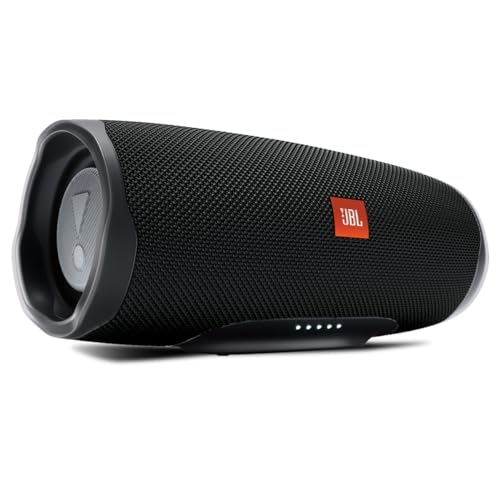
The JBL Charge 4 embodies everything we've come to expect from portable audio. At just over 2 pounds and shaped like a robust cylinder, it's built to travel. The IPX7 waterproof rating means it can handle being dunked in up to three feet of water for 30 minutes—a feature that's genuinely useful if you've ever had a poolside accident or got caught in unexpected rain during a camping trip.
The fabric and rubber construction isn't just about looks; it's engineered to survive drops, bumps, and the general abuse that comes with an active lifestyle. Those dual passive radiators (essentially speakers without magnets that vibrate to enhance bass) are protected behind the fabric grille, while the control buttons are sealed and tactile enough to use with wet hands.
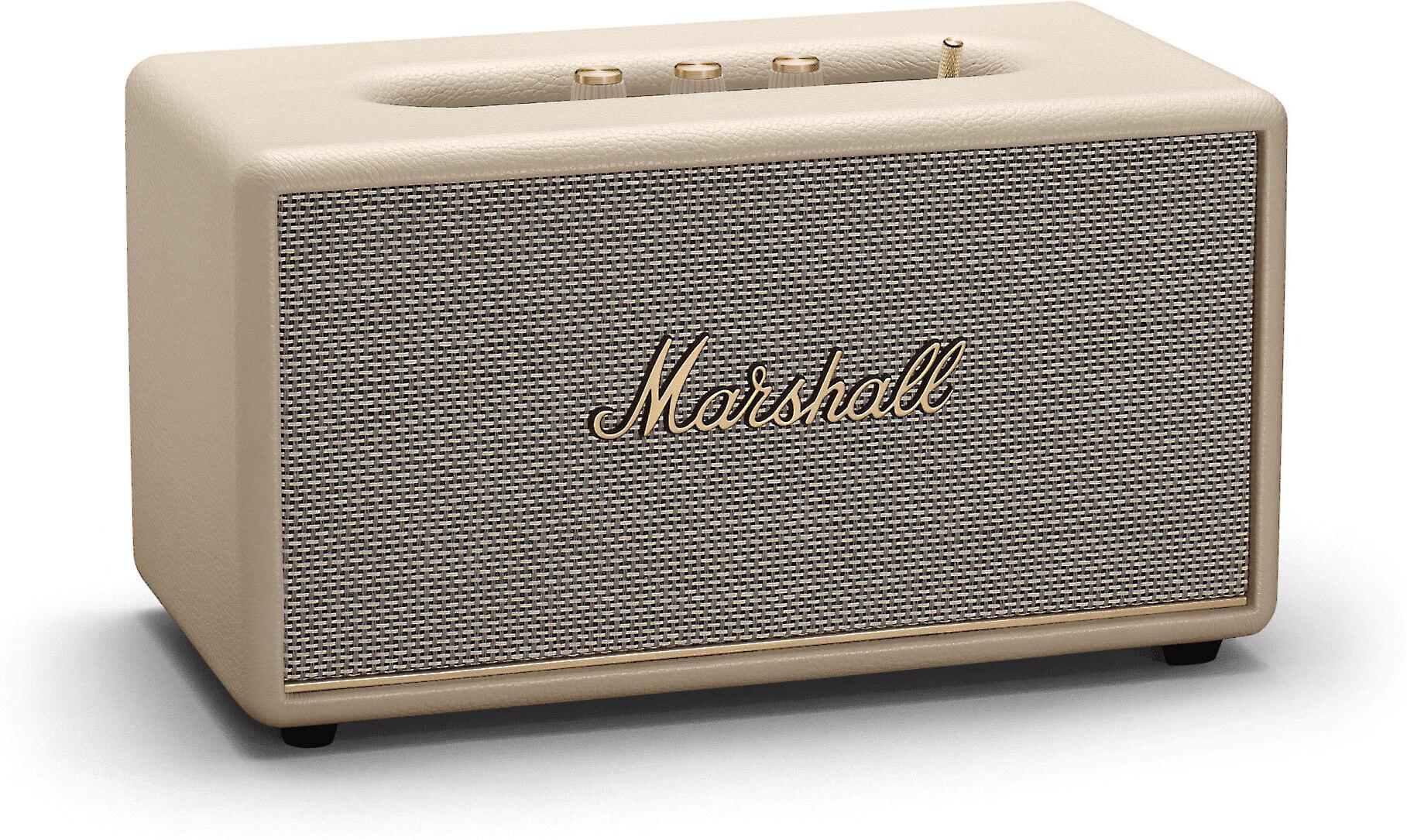
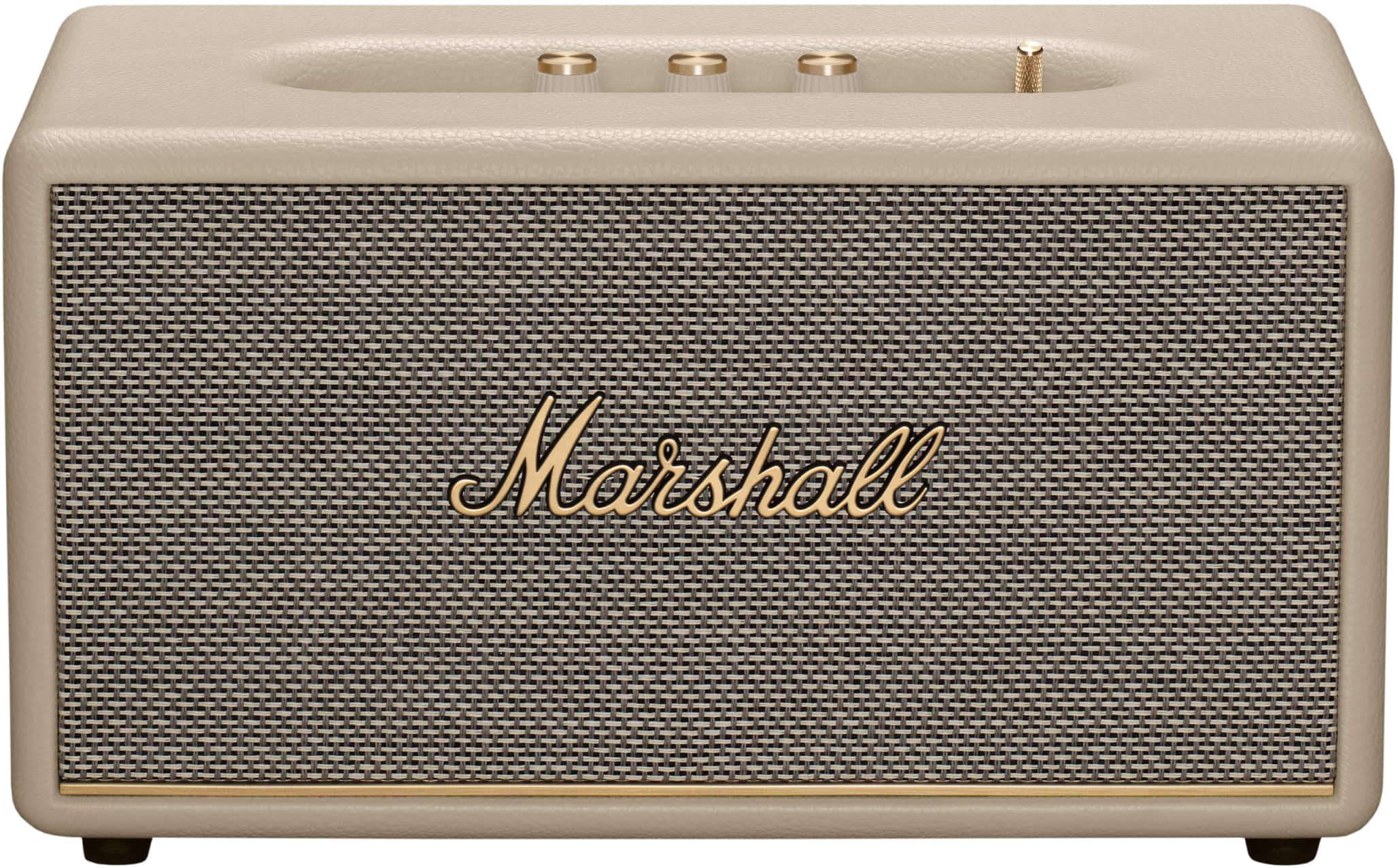
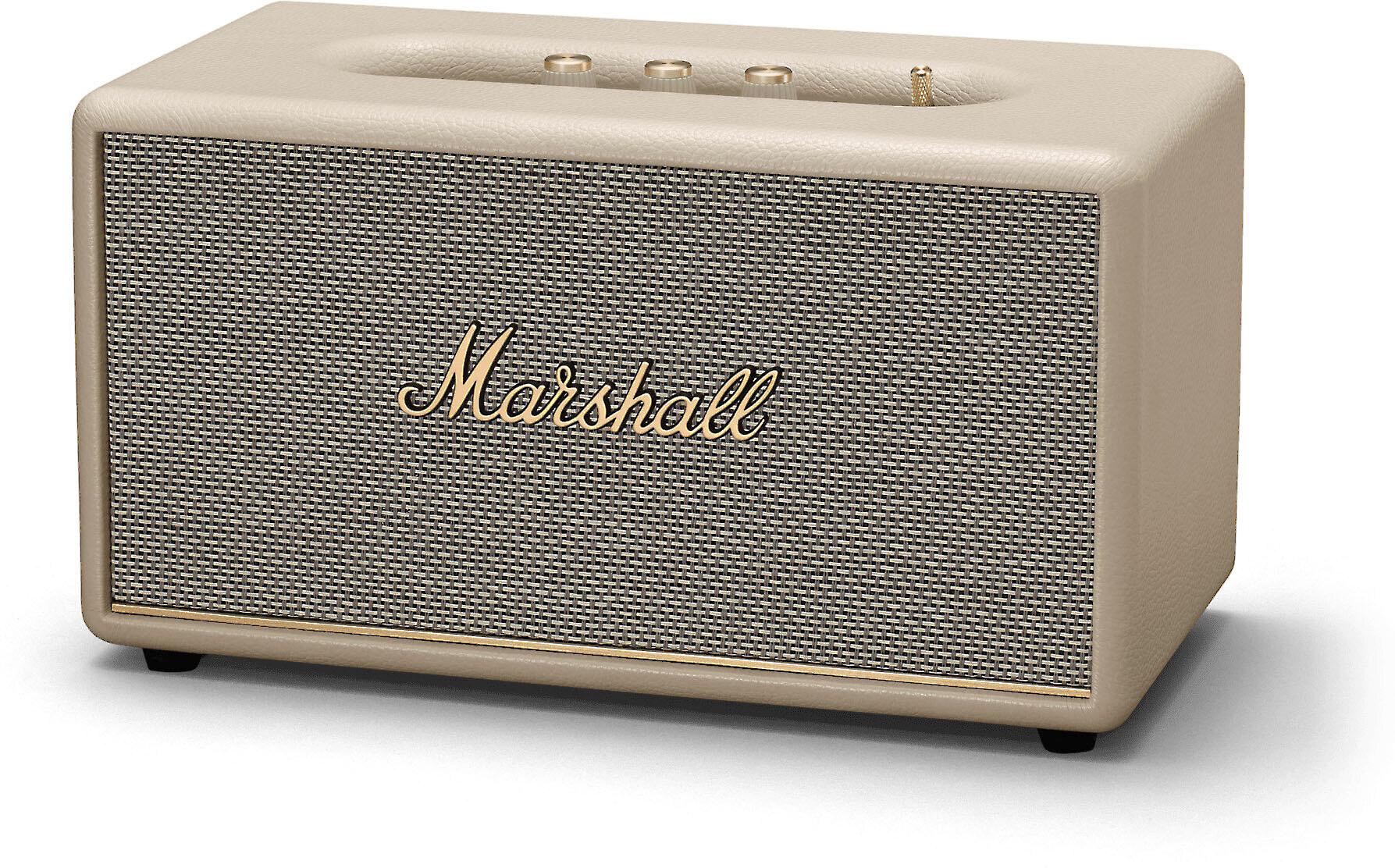
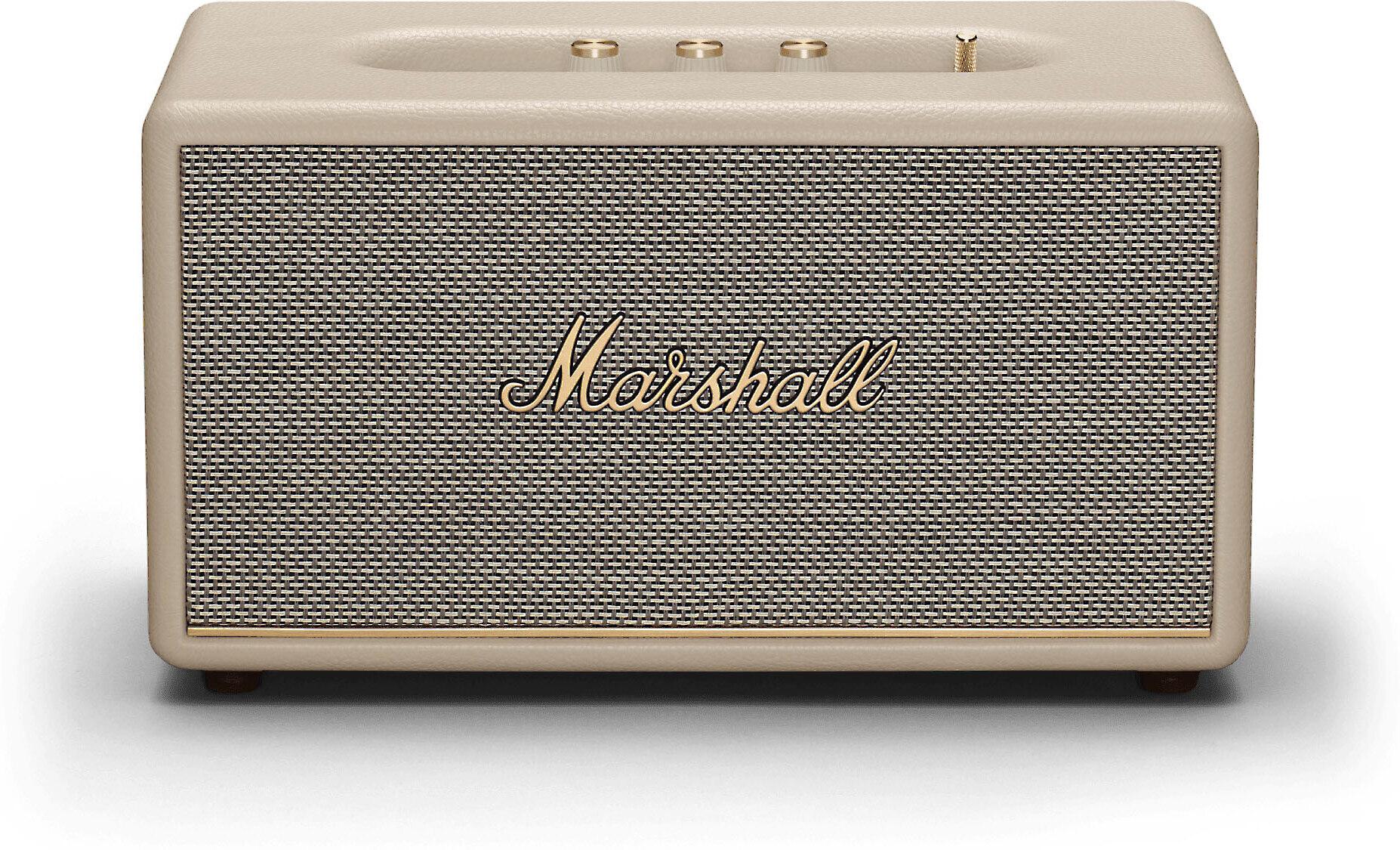
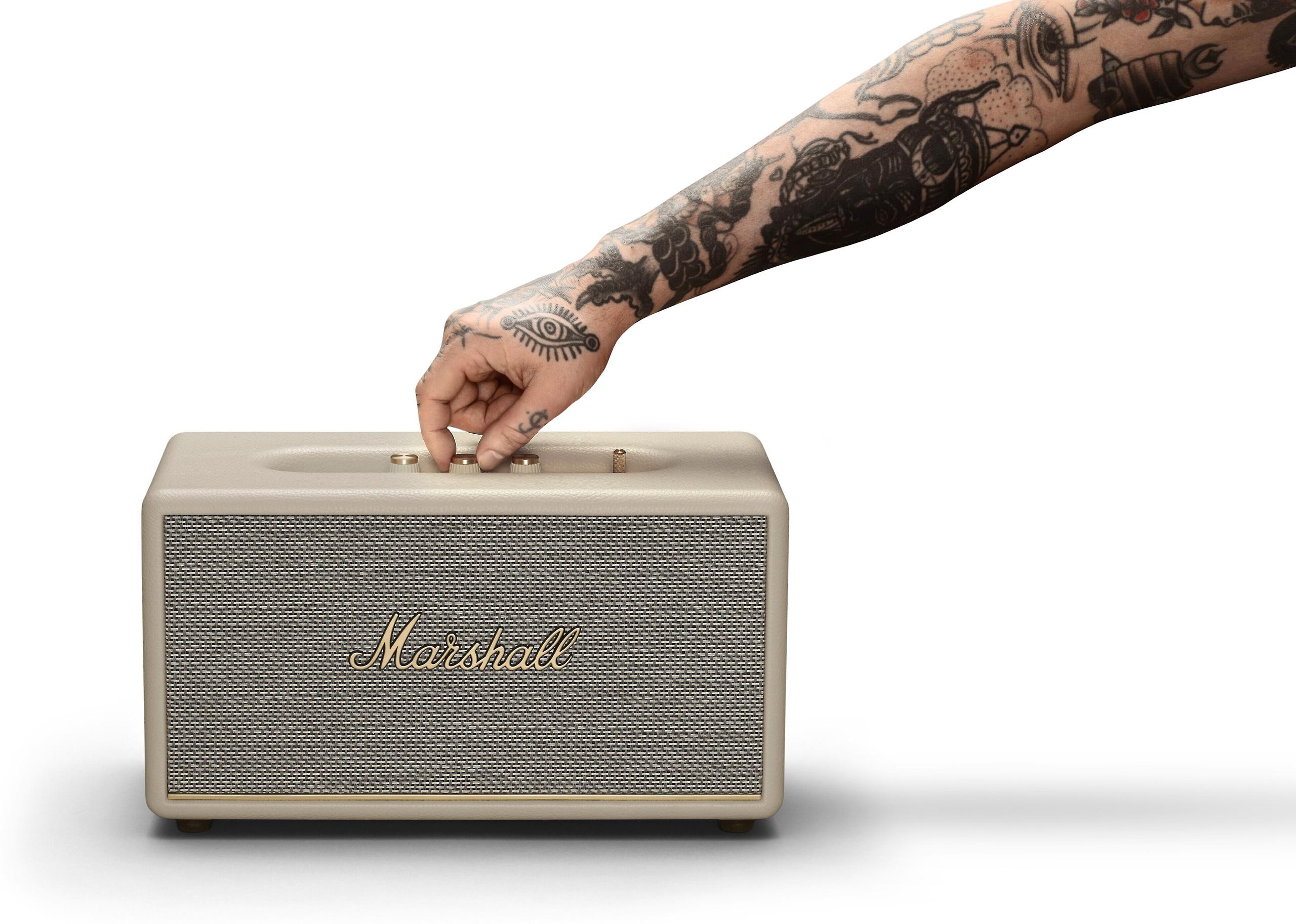
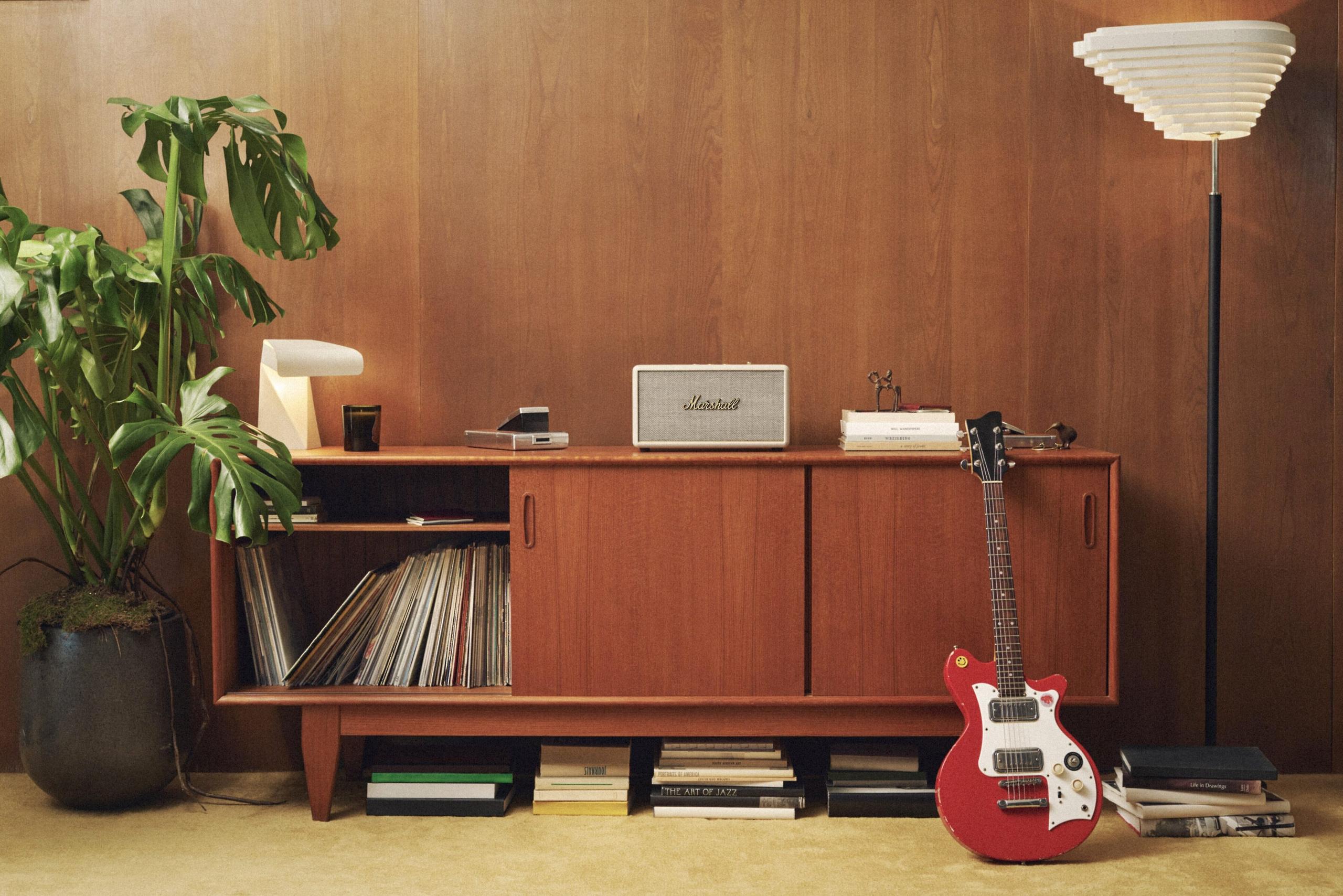
In stark contrast, the Marshall Stanmore III weighs nearly 10 pounds and makes no apologies for being a stationary speaker. The wood cabinet, brass control knobs, and woven grille are direct nods to Marshall's legendary guitar amplifiers. This isn't a speaker you stuff in a backpack—it's designed to be a focal point in your room, combining vintage aesthetics with modern technology.
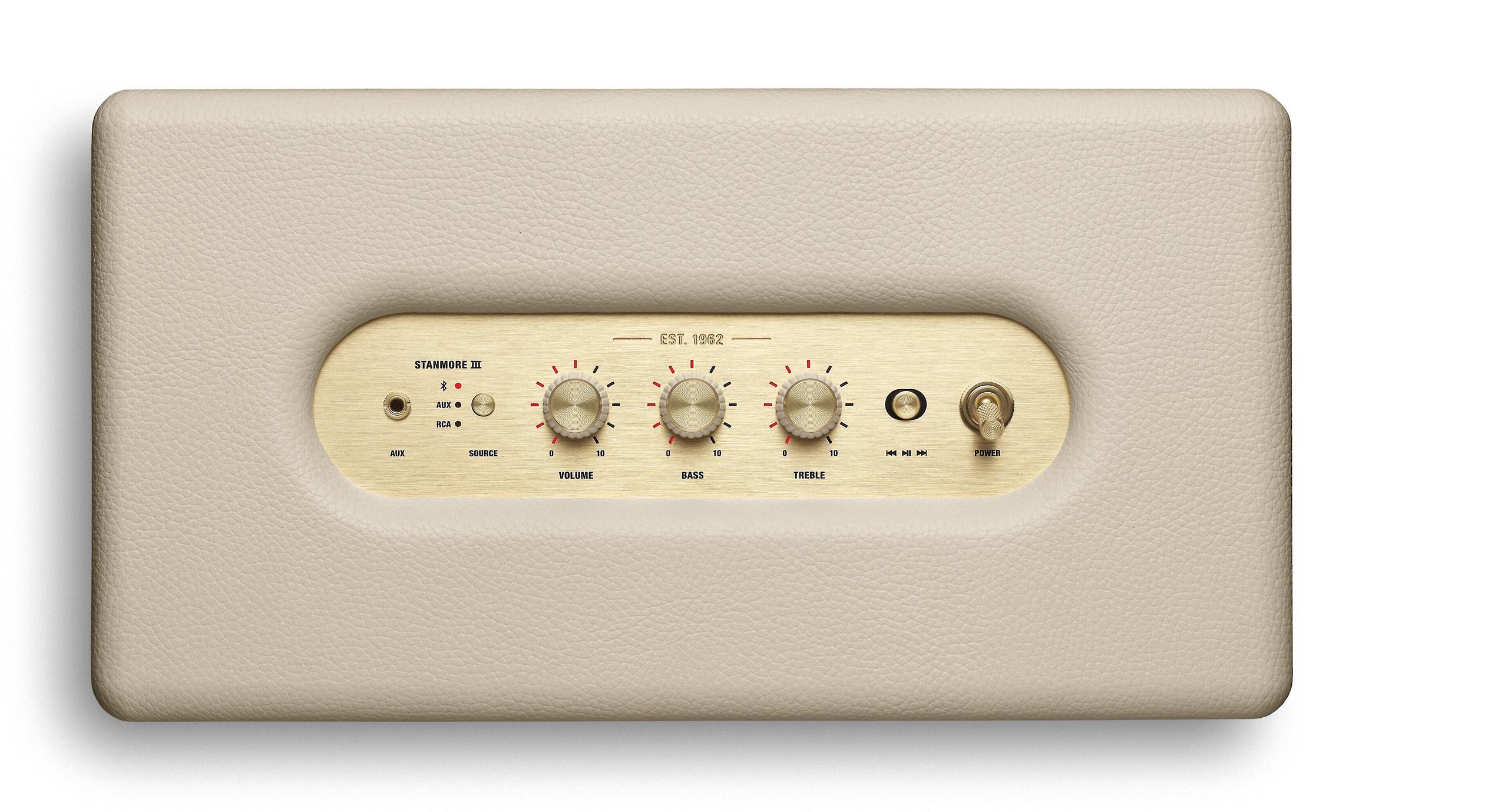
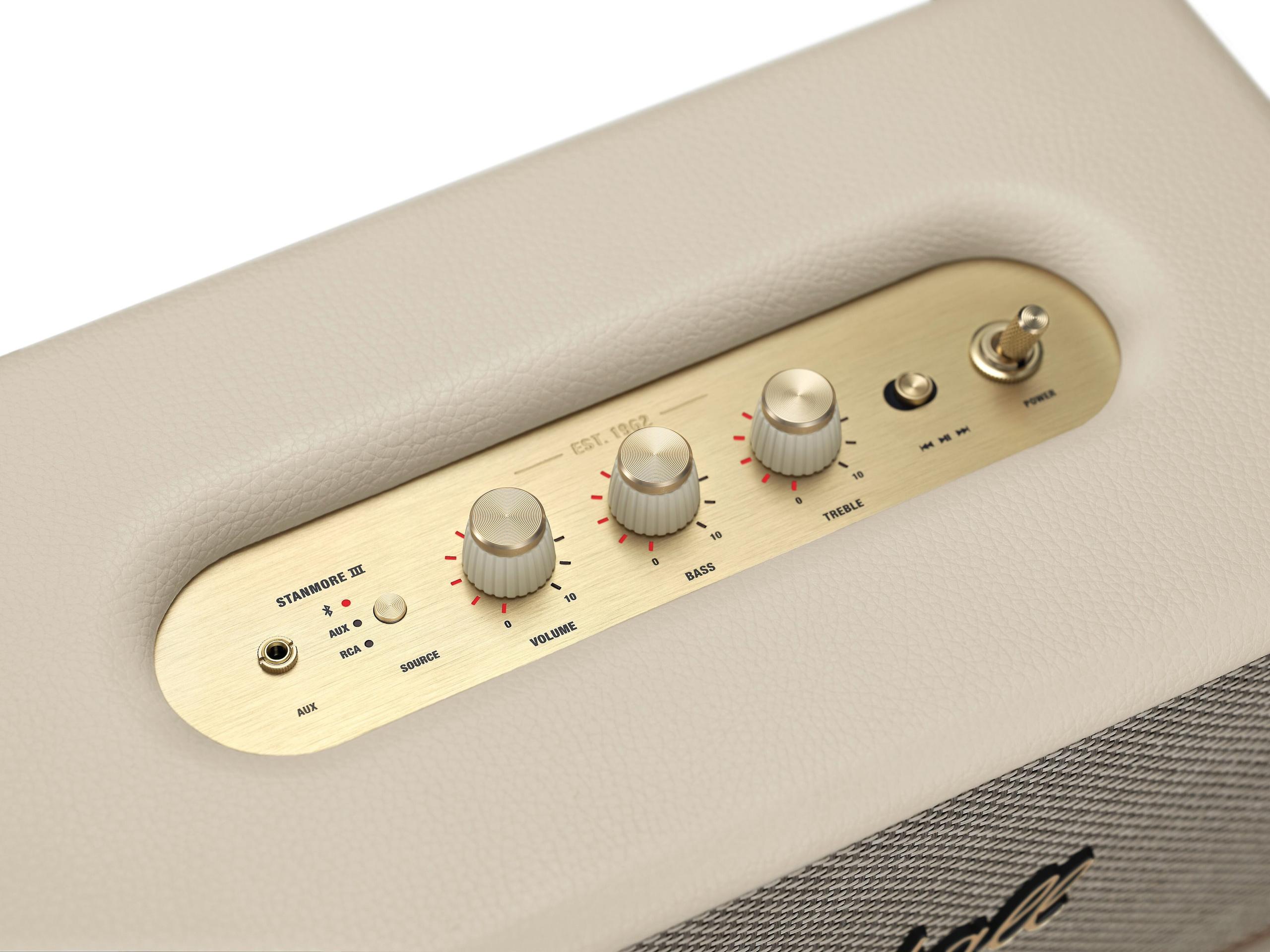
The Marshall's analog control knobs for volume, bass, and treble provide a tactile experience that smartphone apps can't match. There's something satisfying about physically adjusting the sound rather than swiping on a screen, and these controls remain functional even when your phone isn't nearby.
Here's where the fundamental trade-offs become apparent. The Marshall Stanmore III delivers 80 watts of total power through a sophisticated two-way system: a 50-watt woofer handles the low frequencies while two 15-watt tweeters manage the highs. This separation of frequency duties (called a "two-way design") allows each driver to specialize, resulting in clearer sound reproduction across the entire audio spectrum.
The frequency response—the range of sounds a speaker can reproduce—extends from 45Hz to 20kHz on the Marshall. That 45Hz lower limit is significant because it means you'll actually hear the fundamental frequencies of bass drums and synthesizers, not just their overtones. The maximum sound pressure level of 97dB at one meter means this speaker can genuinely fill a medium-sized room without strain.
The JBL Charge 4, meanwhile, works with just 30 watts driving a single full-range driver. The racetrack-shaped driver (50mm x 90mm) is larger than typical smartphone speakers but still handles everything from deep bass to high treble. Those dual passive radiators help extend the bass response, but physics is physics—without dedicated amplification for low frequencies, the bass won't hit as deep or as hard.
The JBL's 60Hz-20kHz frequency response reveals the compromise. That higher 60Hz lower limit means some of the deepest bass frequencies are simply absent. In practical terms, this means kick drums sound punchy rather than truly deep, and synthesizer bass lines might lack that satisfying rumble.
Perhaps most importantly, the JBL Charge 4 is essentially a mono speaker. While it can simulate stereo through digital processing, true stereo separation—where instruments appear to come from different positions in space—requires physically separated left and right channels. You can achieve this by pairing two Charge 4 speakers using JBL's Connect+ technology, but that doubles your cost and complexity.
The technology generation gap between these speakers becomes obvious when examining connectivity. The Marshall Stanmore III, being a 2022 release, features Bluetooth 5.2 with aptX Adaptive codec support. This newer Bluetooth standard provides more stable connections, better range (around 30 feet), and adaptive bitrate streaming that adjusts quality based on signal strength.
The multi-host functionality allows two devices to remain connected simultaneously, making it seamless to switch between your phone and laptop without re-pairing. The aptX Adaptive codec (a compression algorithm) maintains higher audio quality over Bluetooth by adapting the compression level to available bandwidth—essentially giving you the best possible sound quality your connection can handle.
The JBL Charge 4, being a 2018 design, uses Bluetooth 4.2—still functional but noticeably older. Connection stability is generally good, but the range and signal quality don't match newer standards. However, JBL's Connect+ feature remains unique, allowing you to wirelessly link over 100 compatible speakers for truly massive sound coverage at events.
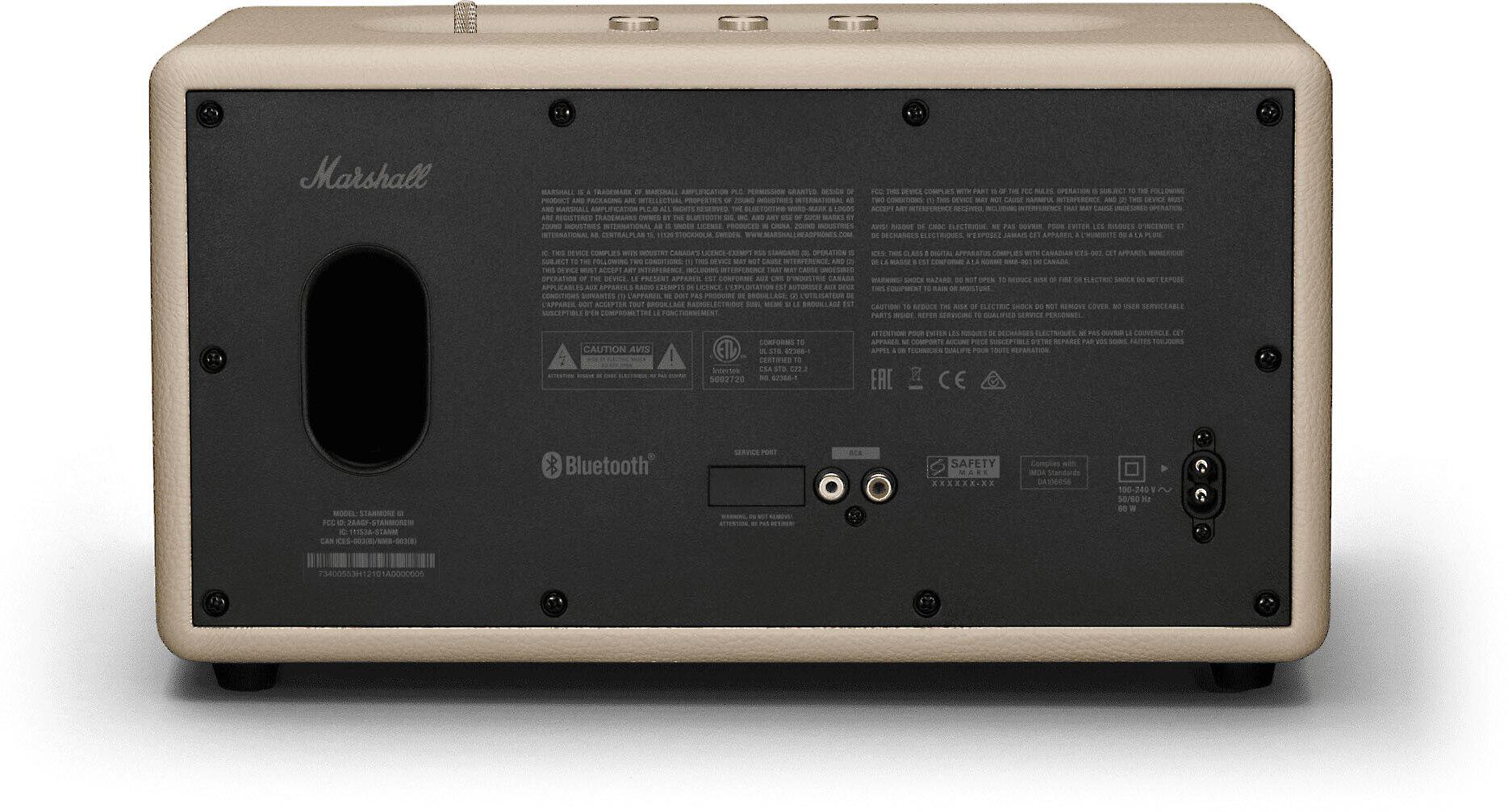
Both speakers offer auxiliary inputs for wired connections, but the Marshall provides both 3.5mm and RCA inputs, making it more versatile for home audio setups. The RCA inputs are particularly useful for connecting to TV audio outputs or traditional stereo systems.
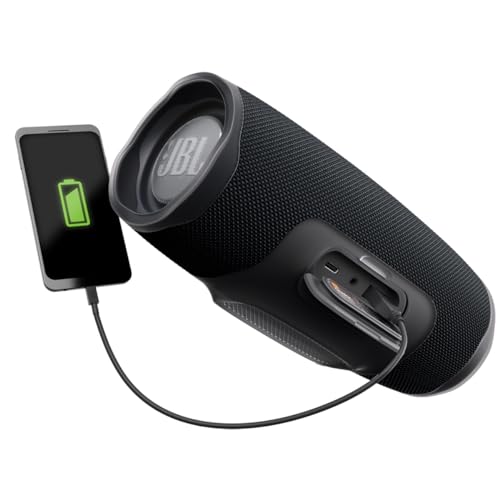
The JBL Charge 4's 7,500mAh battery provides up to 20 hours of playback, though real-world usage typically yields 12-15 hours depending on volume levels and content. More uniquely, the speaker doubles as a power bank, allowing you to charge phones or tablets through its USB-A port. This dual functionality proves genuinely useful during extended outdoor activities where both music and device charging are priorities.
The charging time of four hours via USB-C is reasonable, and the power management system intelligently balances speaker operation with device charging. This means you can still play music while charging your phone, though both functions will drain the battery faster.
The Marshall Stanmore III requires constant AC power, which fundamentally limits its placement options. However, this also means unlimited playbook time and consistent performance regardless of battery levels. AC power enables the higher wattage output that simply isn't feasible with portable battery technology at reasonable size and weight.
At the time of writing, these speakers occupy different price tiers, with the JBL Charge 4 positioned as a mid-range portable option and the Marshall Stanmore III commanding premium home audio pricing. However, comparing their value requires examining what you're actually getting.
The JBL essentially replaces multiple devices: a Bluetooth speaker, power bank, and waterproof outdoor audio solution. For someone with an active lifestyle, this consolidation represents genuine value beyond just the audio quality. The durability factor also matters—replacing a speaker damaged by water or drops costs more than buying a slightly more expensive waterproof model initially.
The Marshall's value lies in its audio performance per dollar within the home audio category. While it costs more upfront, it delivers sound quality that would typically require separate amplifiers and speakers in traditional audio setups. The build quality suggests longevity, and the classic design won't look dated in five years like many tech-forward speakers might.
Our research into user experiences and expert reviews reveals clear performance patterns. The JBL Charge 4 consistently impresses with its versatility and reliability. Users regularly report the speaker surviving beach trips, pool parties, and camping adventures that would destroy conventional electronics. The sound quality, while not audiophile-level, proves sufficient for most casual listening scenarios.
However, the limitations become apparent in quiet environments where critical listening matters. The compressed sound at higher volumes, limited bass extension, and lack of stereo separation make the JBL less engaging for focused music appreciation. It's a speaker that excels at providing background music and maintaining energy at social gatherings.
The Marshall Stanmore III receives praise for its ability to reveal details in familiar songs that smaller speakers simply can't reproduce. The stereo imaging allows instruments to occupy distinct spatial positions, creating a more immersive listening experience. Jazz recordings, classical music, and well-produced rock albums showcase the speaker's capabilities particularly well.
The Marshall's dynamic loudness feature automatically adjusts the tonal balance at different volumes, maintaining clarity whether you're listening at whisper-quiet levels late at night or filling the room during a party. This intelligent processing, combined with the placement compensation feature that adjusts for nearby walls or surfaces, demonstrates sophisticated audio engineering.
For TV audio improvement, the Marshall Stanmore III presents a compelling upgrade path. Most built-in TV speakers struggle with dialogue clarity and completely lack bass response. The Marshall's dedicated tweeters and substantial amplification dramatically improve both issues.
The RCA inputs allow direct connection to TV audio outputs, while the Bluetooth connectivity enables wireless streaming from phones and tablets. The analog volume control remains accessible during movie watching, and the substantial bass response adds impact to action scenes and music that flat-panel TVs simply cannot provide.
The JBL Charge 4, being mono and designed for portability, doesn't offer the same home theater benefits. While it can connect to TVs via Bluetooth or auxiliary input, the single-channel audio and modest power output don't provide the dramatic improvement that makes upgrading worthwhile.
The four-year technology gap between these speakers highlights rapid Bluetooth evolution. Since the JBL Charge 4's 2018 release, Bluetooth has gained better codecs, improved stability, and enhanced features like multi-device connectivity. While the Charge 4 remains functional, it lacks the refined wireless experience of newer designs.
The Marshall Stanmore III's 2022 vintage includes over-the-air firmware updates through the companion app, suggesting ongoing improvements and feature additions. This future-proofing approach helps justify the higher initial investment by extending the speaker's relevant lifespan.
The JBL Charge 4 makes sense for people whose lives don't center around a single location. College students, frequent travelers, outdoor enthusiasts, and anyone who values flexibility over ultimate audio quality will appreciate its versatility. The waterproofing alone makes it worthwhile for anyone who spends time near pools, beaches, or boats.
The device charging capability proves surprisingly useful in real-world scenarios. During power outages, camping trips, or long days at outdoor events, having a reliable power source for phones can be genuinely important beyond just musical entertainment.
The Marshall Stanmore III appeals to listeners who prioritize sound quality and aesthetic appeal in their primary living spaces. If you find yourself sitting down specifically to listen to music, notice differences between audio equipment, or want to significantly upgrade your TV's sound, the Marshall justifies its higher cost and power requirements.
The speaker also suits people who appreciate physical controls and premium build quality. The satisfaction of turning actual knobs rather than using smartphone sliders might seem minor, but it contributes to a more engaging, less digital-dependent audio experience.
Ultimately, choosing between these speakers requires honest assessment of your primary use cases. If you need one speaker for multiple environments—home, office, outdoors, travel—the JBL Charge 4 provides unmatched flexibility despite its audio compromises.
If your listening happens primarily in one location and you value sound quality above portability, the Marshall Stanmore III delivers substantially better audio performance that justifies the higher cost and power requirements.
Consider also your future needs. The JBL's battery will eventually degrade, requiring replacement or speaker retirement. The Marshall's AC power eliminates this concern while enabling consistent high-performance audio for years to come.
Both speakers represent thoughtful approaches to different audio challenges. The key is matching the approach to your lifestyle, priorities, and listening habits. Neither choice is wrong—they're simply optimized for different types of audio experiences.
| JBL Charge 4 Portable Bluetooth Speaker | Marshall Stanmore III Bluetooth Speaker |
|---|---|
| Power Output - Determines maximum volume and sound clarity | |
| 30W RMS (adequate for personal/small group listening) | 80W total (50W woofer + dual 15W tweeters, room-filling sound) |
| Audio Design - Affects stereo separation and sound quality | |
| Mono speaker with single driver + dual passive radiators | True stereo with dedicated left/right channels and two-way driver system |
| Frequency Response - Shows how deep bass and crisp highs can go | |
| 60Hz-20kHz (limited sub-bass, some deep frequencies missing) | 45Hz-20kHz (full bass extension, reproduces fundamental bass frequencies) |
| Portability - Battery life and weight for mobile use | |
| 20-hour battery, 2.12 lbs, cylindrical design optimized for transport | AC-powered only, 9.37 lbs, stationary home speaker |
| Durability - Weather and impact resistance | |
| IPX7 waterproof rating, rugged fabric/rubber construction | Indoor-only design, premium wood cabinet with brass accents |
| Bluetooth Technology - Connection quality and features | |
| Bluetooth 4.2 with dual device pairing and JBL Connect+ speaker linking | Bluetooth 5.2 with aptX Adaptive, multi-host connectivity, superior range |
| Sound Customization - Ability to adjust audio to preferences | |
| Fixed sound signature, no EQ controls available | Physical bass/treble knobs plus app-based EQ presets and dynamic loudness |
| Additional Features - Extra functionality beyond basic audio | |
| USB-A powerbank output for charging devices, speaker ecosystem expandability | RCA/3.5mm inputs for TV connection, placement compensation, OTA firmware updates |
| Best Use Cases - Where each speaker excels | |
| Outdoor activities, travel, beach/pool use, multi-environment flexibility | Home listening, TV audio upgrade, dedicated music sessions, aesthetic statement piece |
The JBL Charge 4 is specifically designed for outdoor use with its IPX7 waterproof rating, meaning it can survive being submerged in up to 3 feet of water for 30 minutes. It also features rugged construction and a 20-hour battery that doesn't require wall power. The Marshall Stanmore III is an indoor-only speaker that requires constant AC power and has no weather protection.
The Marshall Stanmore III excels for home theater use with its 80-watt power output, true stereo separation, and dedicated RCA inputs for direct TV connection. Its room-filling sound and bass response significantly improve dialogue clarity and movie audio. The JBL Charge 4 can connect to TVs but offers mono sound and limited power, making it less suitable for serious home theater improvement.
The Marshall Stanmore III delivers superior sound quality with its two-way driver system, 80 watts of power, and true stereo separation. It reproduces frequencies from 45Hz-20kHz with dedicated tweeters and woofer. The JBL Charge 4 uses a single driver with 30 watts, resulting in mono sound and limited bass extension (60Hz-20kHz), though it's still adequate for casual listening.
The JBL Charge 4 provides up to 20 hours of battery life and can also charge your phone or tablet through its USB port. The Marshall Stanmore III doesn't have a battery at all—it requires constant connection to a wall outlet, which means unlimited playtime but no portability.
The JBL Charge 4 is highly portable at just 2.12 pounds with a cylindrical design optimized for transport. It runs on battery power and includes a carrying-friendly shape. The Marshall Stanmore III weighs 9.37 pounds, requires wall power, and is designed as a stationary home speaker rather than a portable device.
The Marshall Stanmore III offers extensive sound customization with physical bass and treble knobs on top, plus app-based EQ presets and dynamic loudness adjustment. The JBL Charge 4 has a fixed sound signature with no EQ controls available, so you get the sound profile JBL designed without adjustment options.
The Marshall Stanmore III produces significantly louder sound with 80 watts of power and can reach 97dB at one meter, easily filling medium to large rooms. The JBL Charge 4 maxes out at 30 watts and is better suited for personal listening or small groups, with noticeable compression at high volumes.
The Marshall Stanmore III provides true stereo sound with separate left and right channels, creating proper instrument separation and soundstage. The JBL Charge 4 is essentially a mono speaker, though you can achieve stereo by pairing two units together using JBL's Connect+ technology.
Value depends on your needs. The JBL Charge 4 offers excellent value for portable use, combining speaker, powerbank, and waterproof durability in one device. The Marshall Stanmore III provides better value for home audio, delivering sound quality that would typically require separate amplifiers and speakers at a higher price point.
Both speakers support multiple device connections. The JBL Charge 4 can pair with two devices simultaneously using Bluetooth 4.2. The Marshall Stanmore III also connects to two devices at once but uses newer Bluetooth 5.2 technology for more stable connections and better range.
The Marshall Stanmore III handles bass-heavy music much better with its dedicated 50-watt woofer and frequency response down to 45Hz, reproducing the fundamental bass frequencies. The JBL Charge 4 has limited bass extension starting at 60Hz and relies on passive radiators, making it adequate but not exceptional for bass-heavy genres.
Choose the JBL Charge 4 if you need portability, waterproofing, battery power, and device charging for outdoor activities, travel, or multi-environment use. Pick the Marshall Stanmore III if you prioritize sound quality, stereo separation, room-filling power, and premium aesthetics for dedicated home listening or TV audio improvement.
We've done our best to create useful and informative comparisons to help you decide what product to buy. Our research uses advanced automated methods to create this comparison and perfection is not possible - please contact us for corrections or questions. These are the sites we've researched in the creation of this article: rtings.com - whathifi.com - whathifi.com - soundguys.com - soundguys.com - streamtechreviews.com - youtube.com - versus.com - applevis.com - versus.com - jbl.com - jbl.com - walmart.com - comparisontabl.es - harmanaudio.com - manuals.plus - jbl.com.sg - jbl.com - mm.jbl.com - bestbuy.com - newpower99.com - forums.woot.com - techgadgetscanada.com - camelcamelcamel.com - crutchfield.com - bestbuy.com - dxomark.com - crutchfield.com - crutchfield.com - marshall.com - marshall-production-1.mobify-storefront.com - exhibit.tech - ooberpad.com - av-connection.com

Privacy Policy
Terms and Conditions - Affiliate Policy
Home Security
© Copyright 2008-2026.
11816 Inwood Rd #1211, Dallas, TX 75244