




When you're looking for a portable Bluetooth speaker, you're essentially choosing between two different philosophies: ultra-compact convenience or superior sound quality. The JBL Go 3 and JBL Flip 6 perfectly represent this divide, offering distinct approaches to portable audio that serve completely different needs.
Both speakers come from JBL's trusted lineup, but they target different users and situations. At the time of writing, the Go 3 sits in the budget-friendly range while the Flip 6 commands a premium that's roughly three times higher. That price difference isn't arbitrary—it reflects fundamental differences in engineering, features, and performance that we'll explore in detail.
Before diving into specifics, it's worth understanding what separates good portable speakers from mediocre ones. The most critical factors include frequency response (how well the speaker reproduces different pitches from deep bass to high treble), power output (measured in watts, determining how loud and clear the sound remains), and driver configuration (the number and type of individual speakers inside the unit).
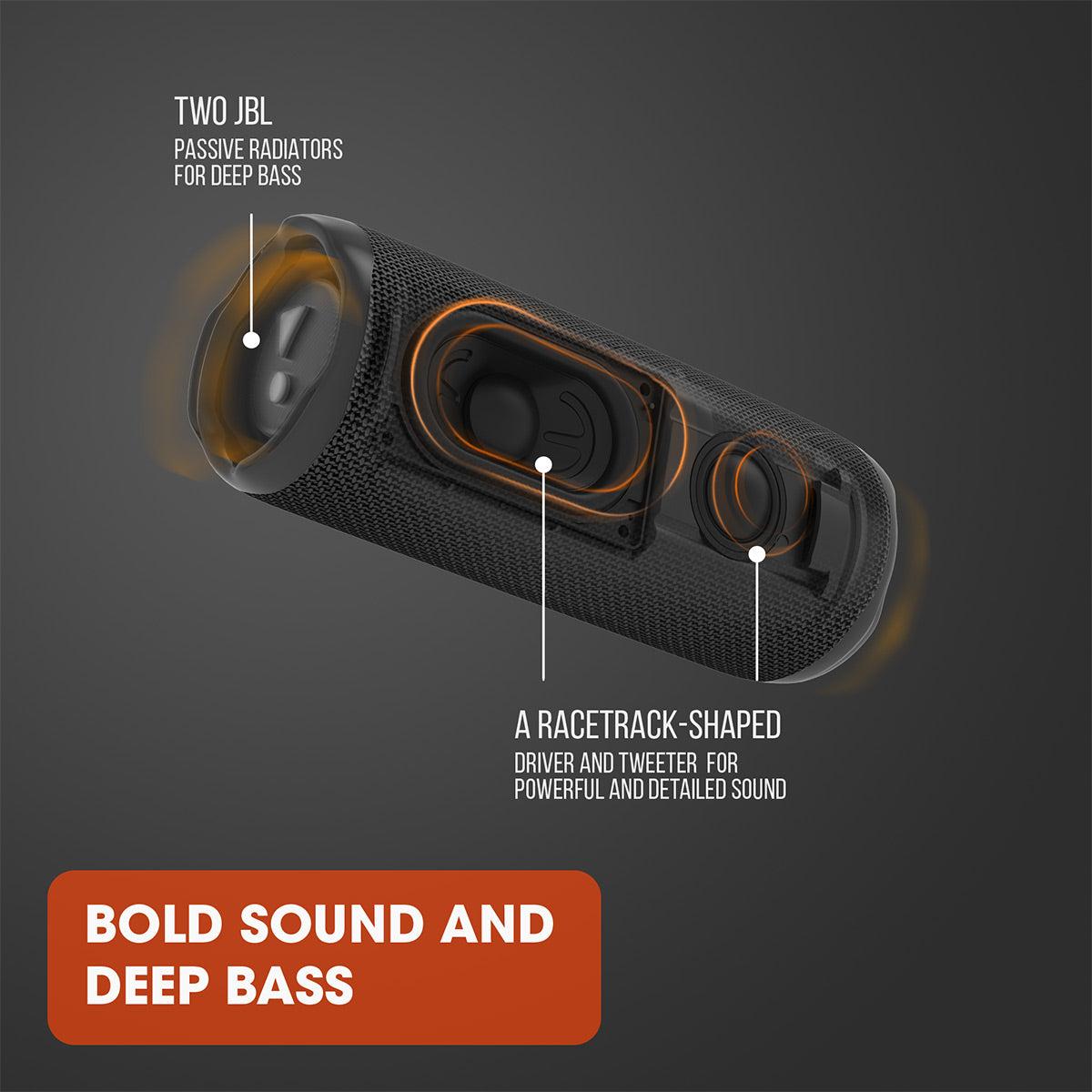
Passive radiators deserve special mention—these are unpowered speaker cones that vibrate sympathetically with the main drivers to enhance bass response without requiring additional amplification. Think of them as acoustic helpers that make small speakers sound bigger than they are.
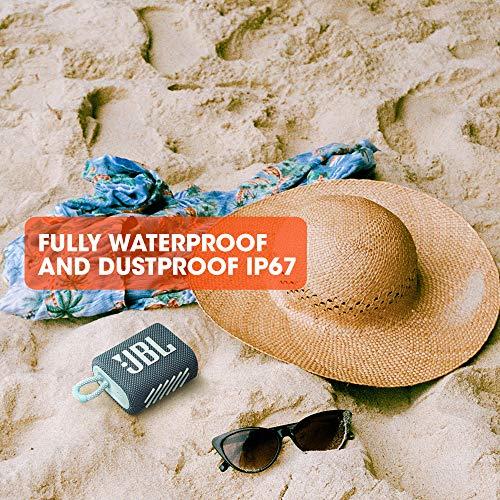
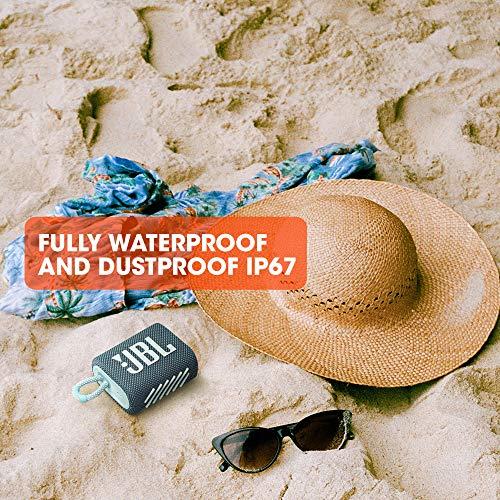
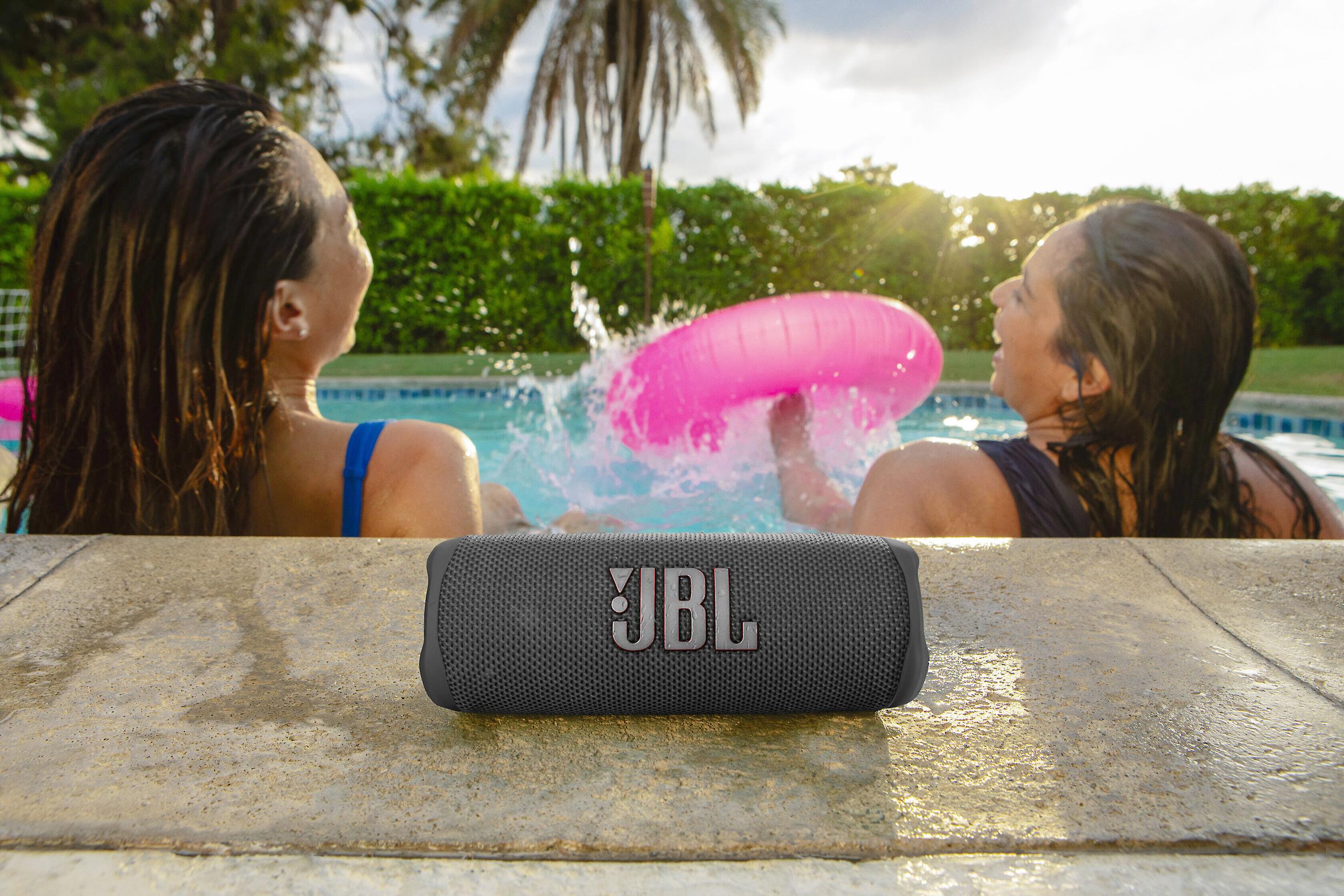
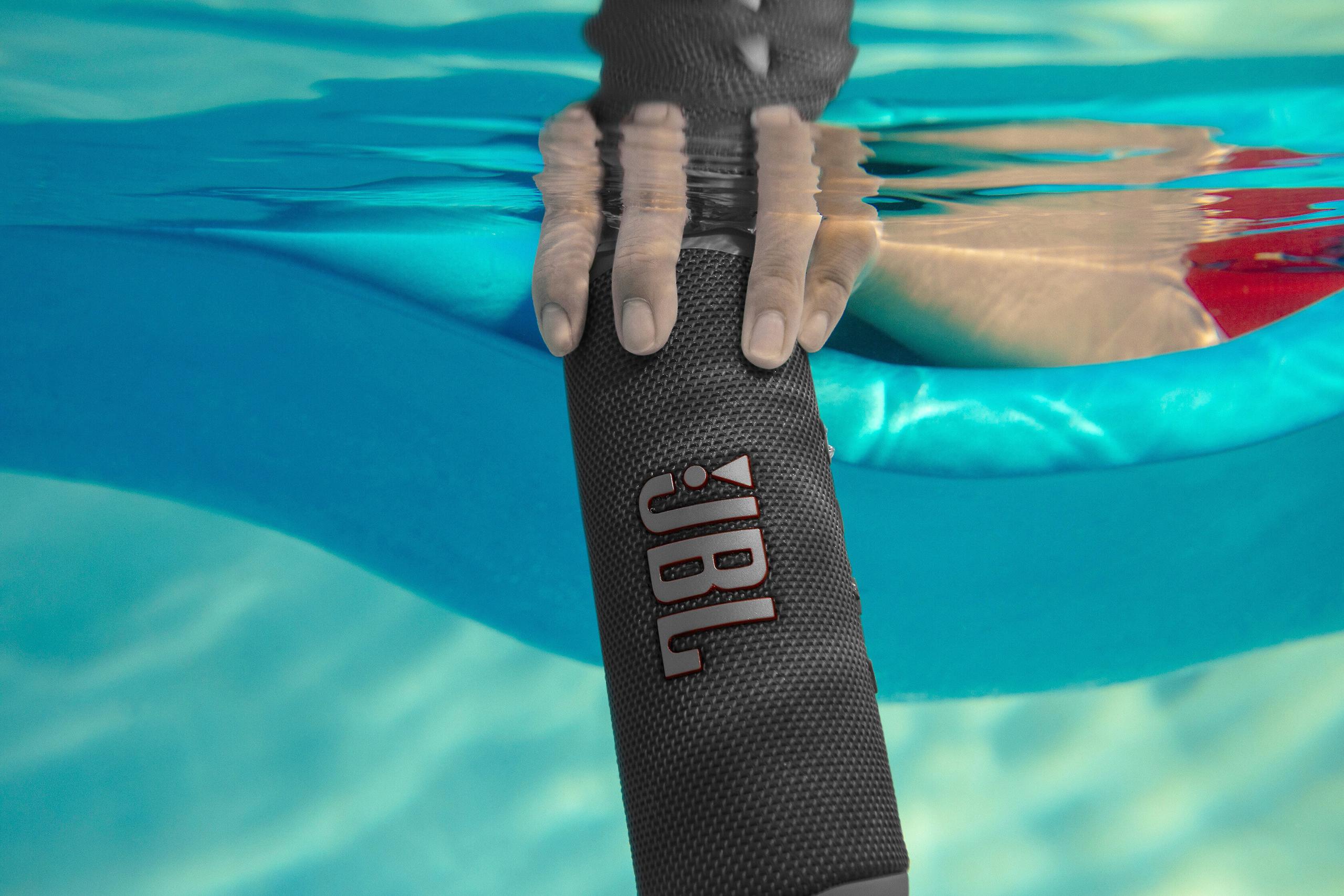
The IP rating system measures environmental protection, where IP67 means complete protection against dust (the "6") and protection against water immersion up to one meter for 30 minutes (the "7"). This rating has become standard for quality portable speakers, allowing worry-free use around pools, beaches, and during outdoor adventures.
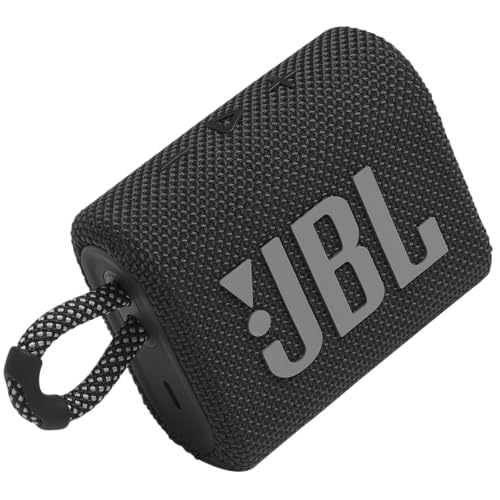
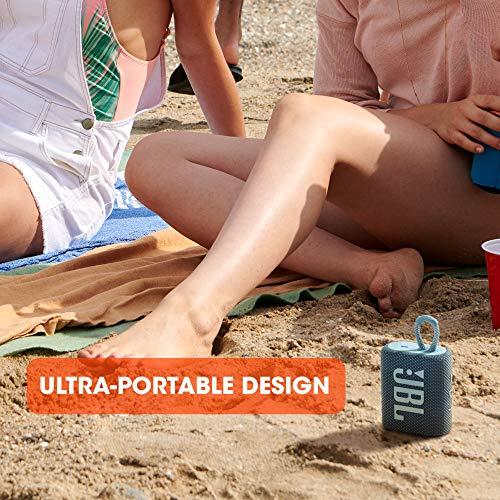
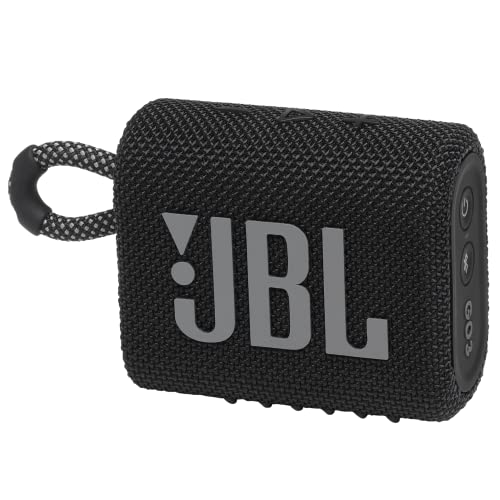
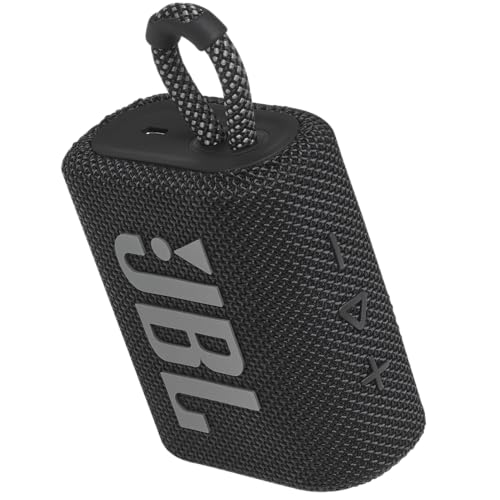
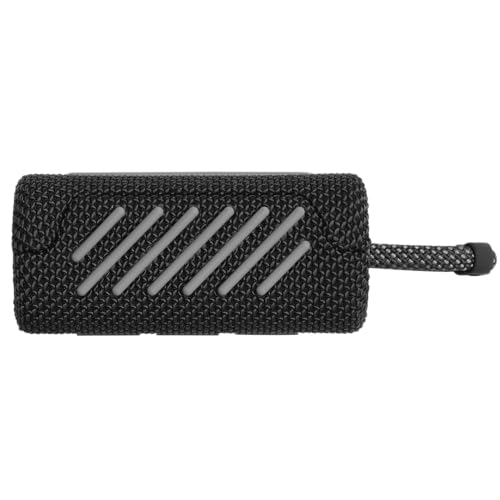
Released in 2020, the JBL Go 3 represents JBL's commitment to making quality audio truly portable. At just 209 grams and measuring roughly the size of a large smartphone, it's designed to disappear into your daily carry while delivering surprisingly capable sound.
The Go 3 uses a single 43mm x 47mm driver powered by 4.2 watts of amplification. While these numbers might seem modest, JBL's tuning makes the most of this compact setup. The frequency response spans 110Hz to 20kHz, which means it handles midrange and treble well but naturally struggles with deep bass due to physical limitations—you simply can't move much air with a small driver in a tiny enclosure.
What makes the Go 3 special isn't raw power but rather its practicality. The integrated fabric loop lets you clip it to bags, belts, or carabiners without adding bulk. The IP67 rating means you can rinse it off after beach trips or use it confidently in the shower. The USB-C charging port (a welcome upgrade from older micro-USB models) provides about 5 hours of playback, which aligns well with its intended use for personal listening sessions.
The Go 3 includes a built-in microphone for hands-free calling—a feature that's surprisingly rare in this size category. The automatic power-off function conserves battery by shutting down after 10 minutes of inactivity, showing attention to real-world usage patterns.
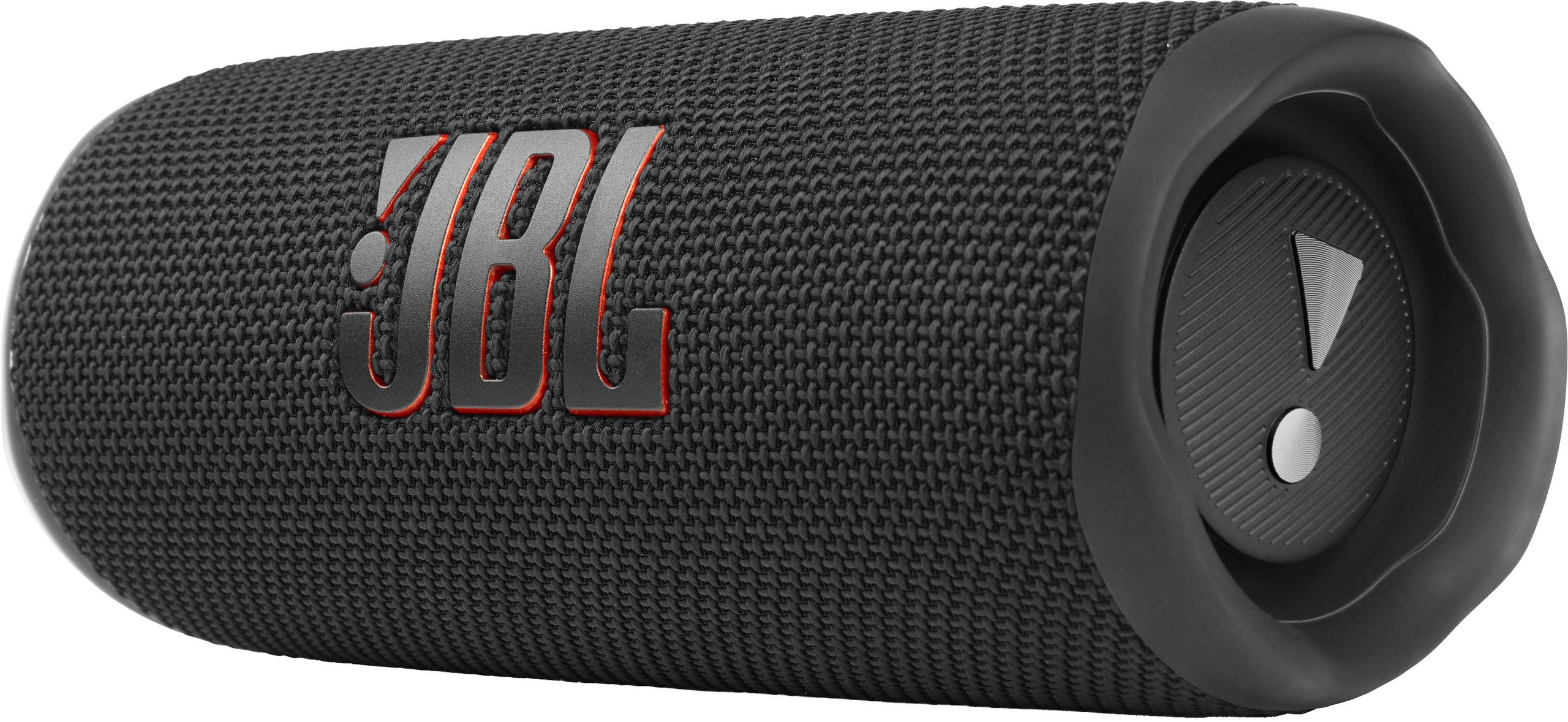
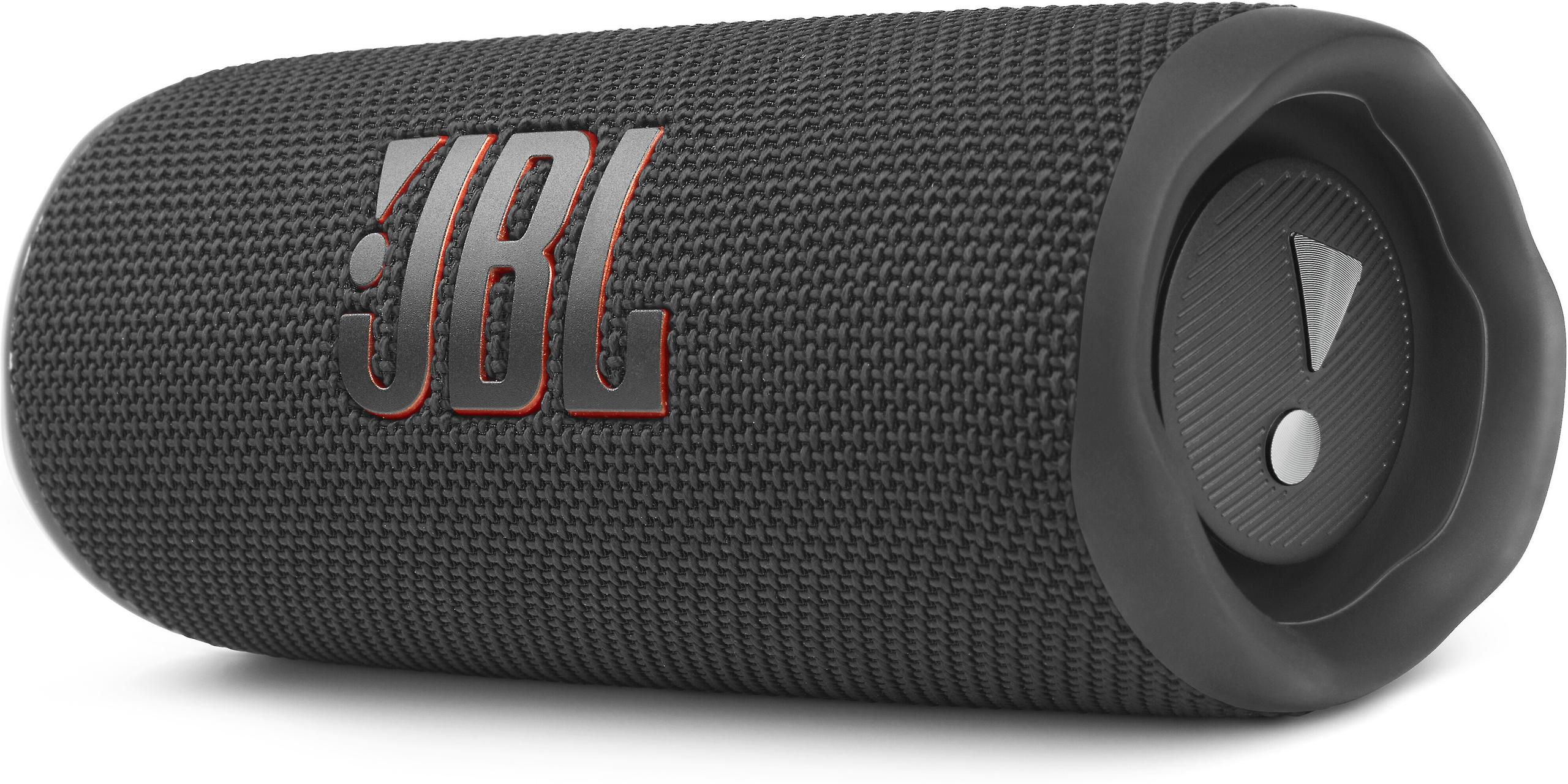
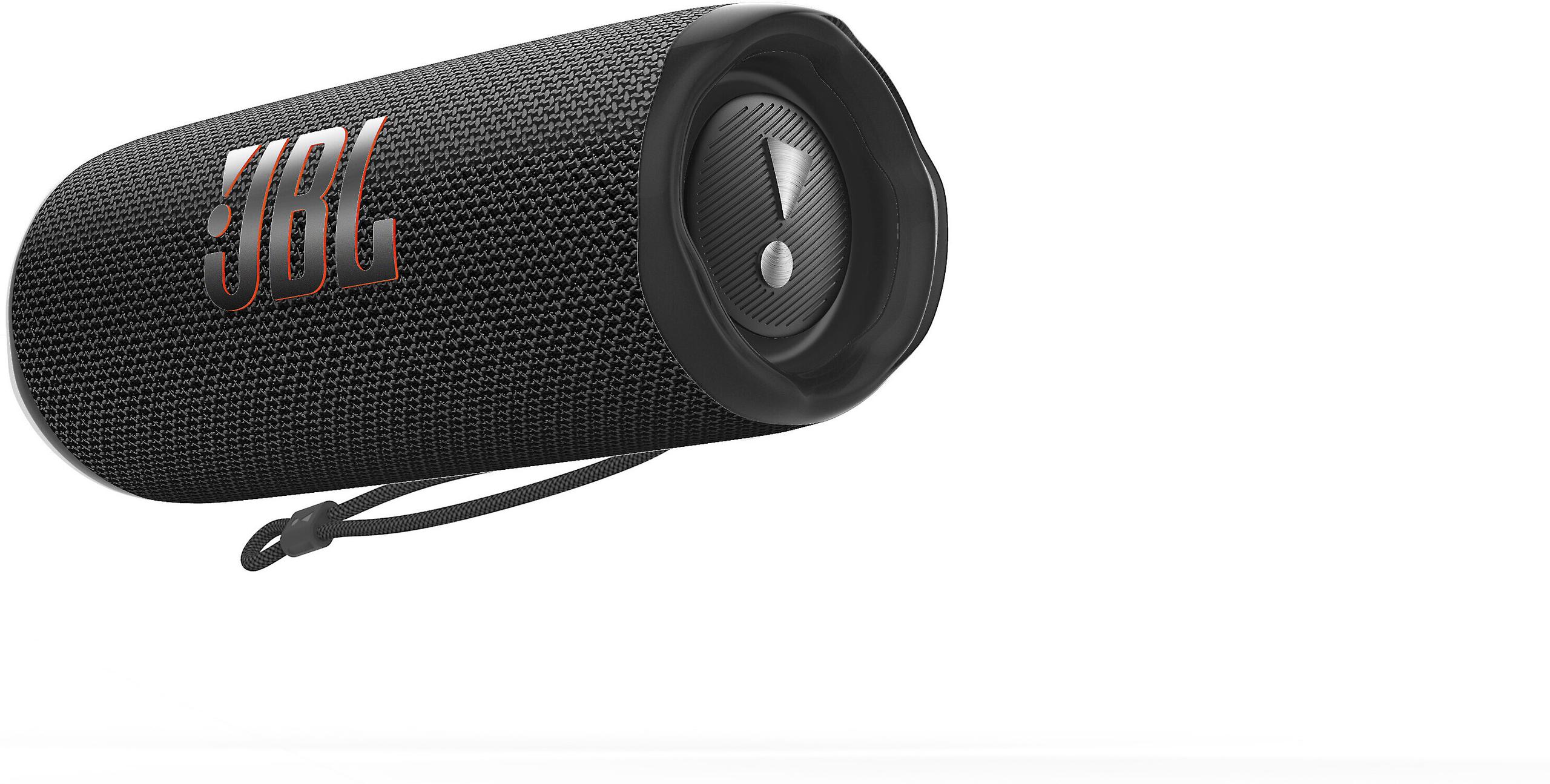
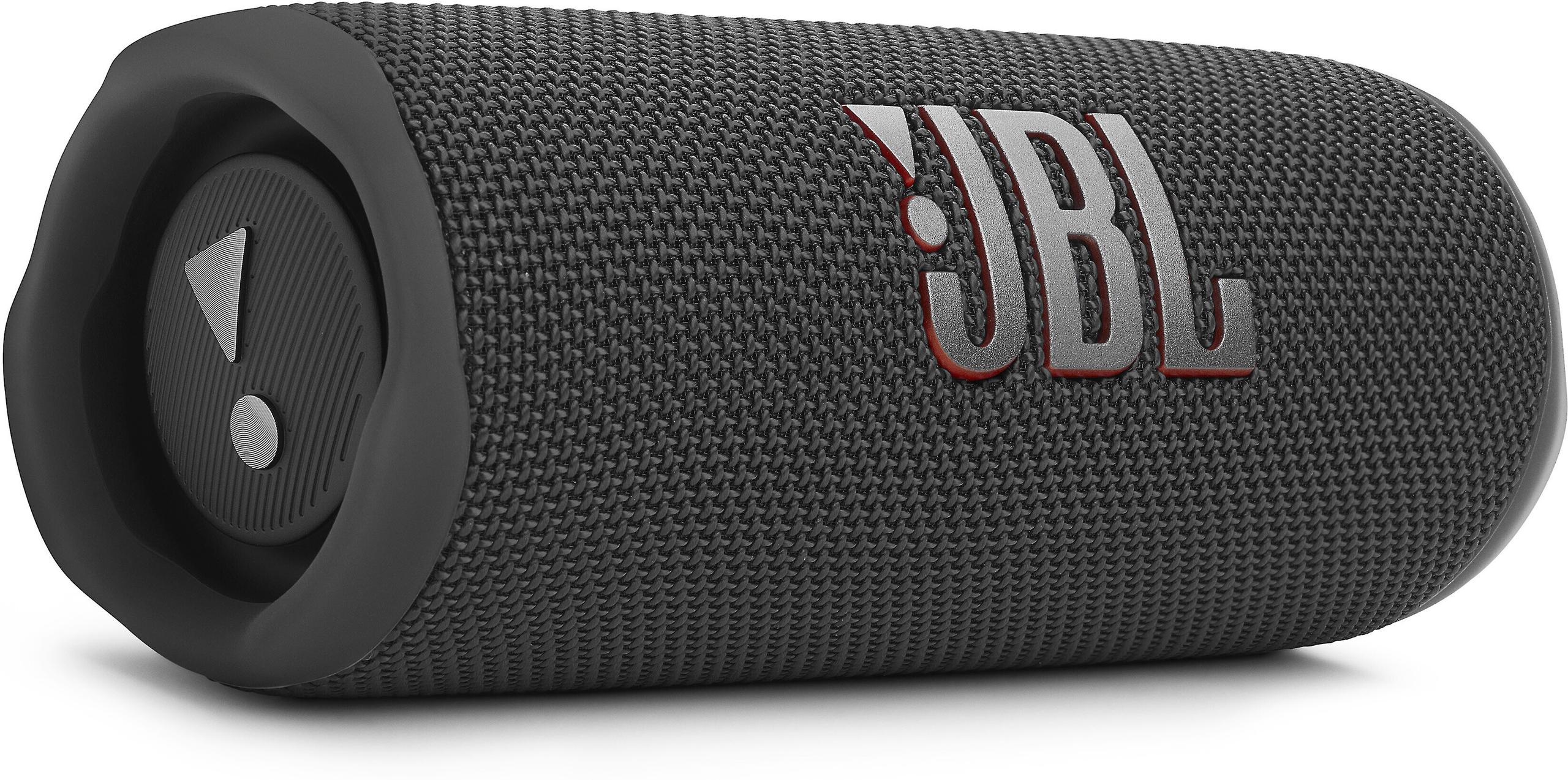
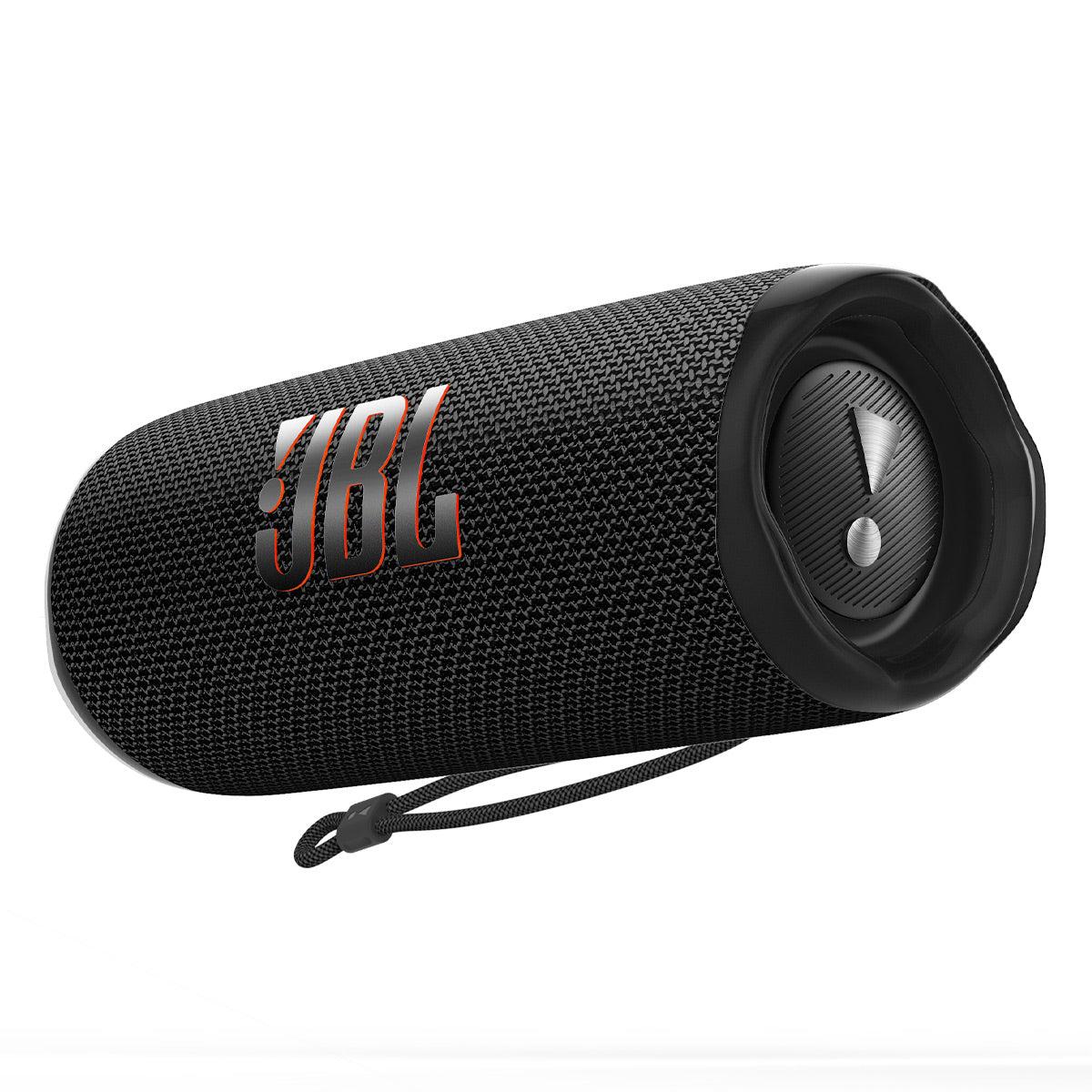
Launched in late 2021, the JBL Flip 6 showcases significant technological advancement over its predecessors. The most notable upgrade is its 2-way speaker system—essentially two specialized drivers working together rather than a single driver trying to handle all frequencies.
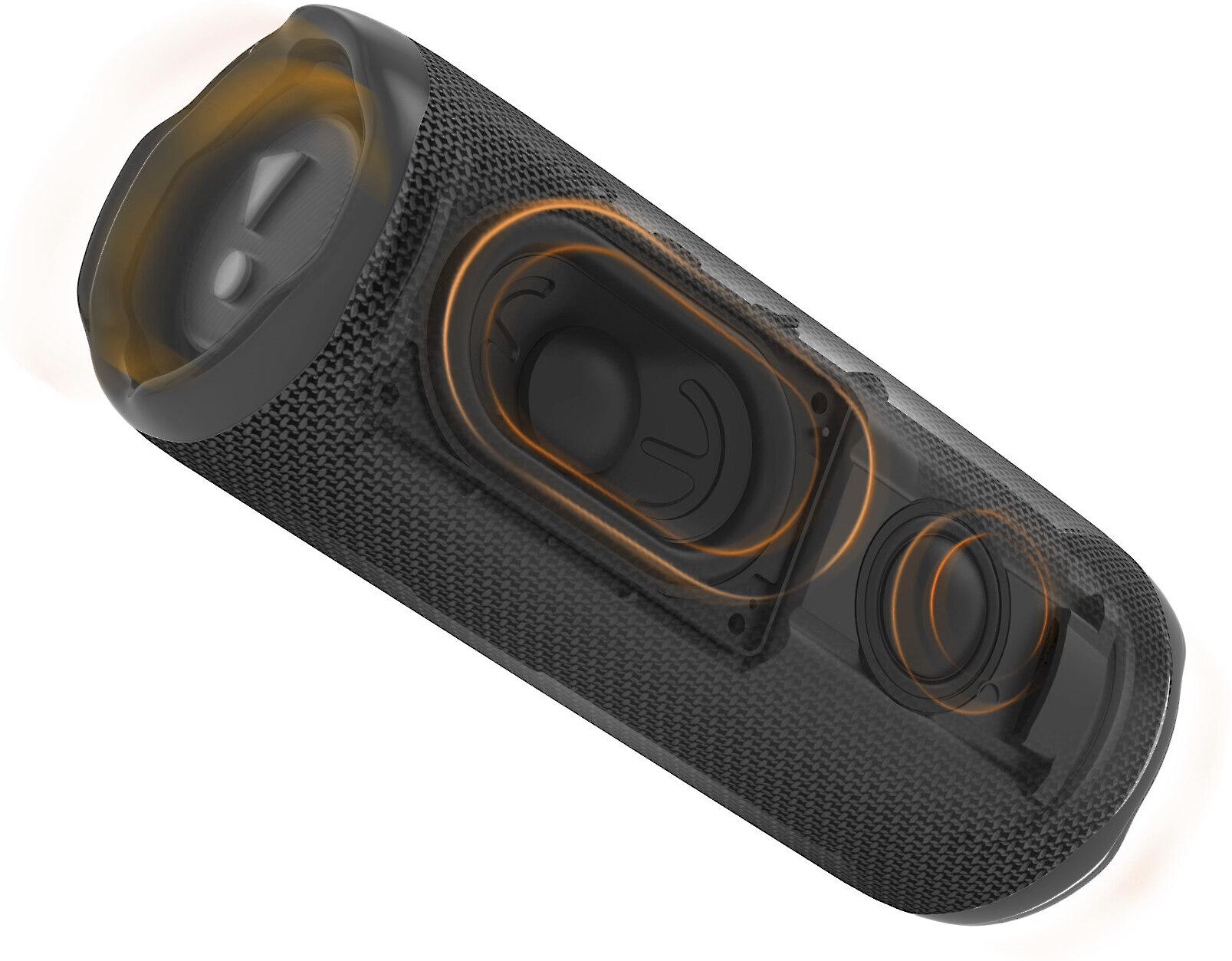
The Flip 6 pairs a 45mm x 80mm racetrack-shaped woofer (optimized for bass and midrange) with a dedicated 16mm tweeter (focused on high frequencies). This separation allows each driver to excel in its intended range rather than compromising across the full spectrum. The woofer receives 20 watts of power while the tweeter gets 10 watts, totaling 30 watts of amplification—more than seven times the Go 3's output.
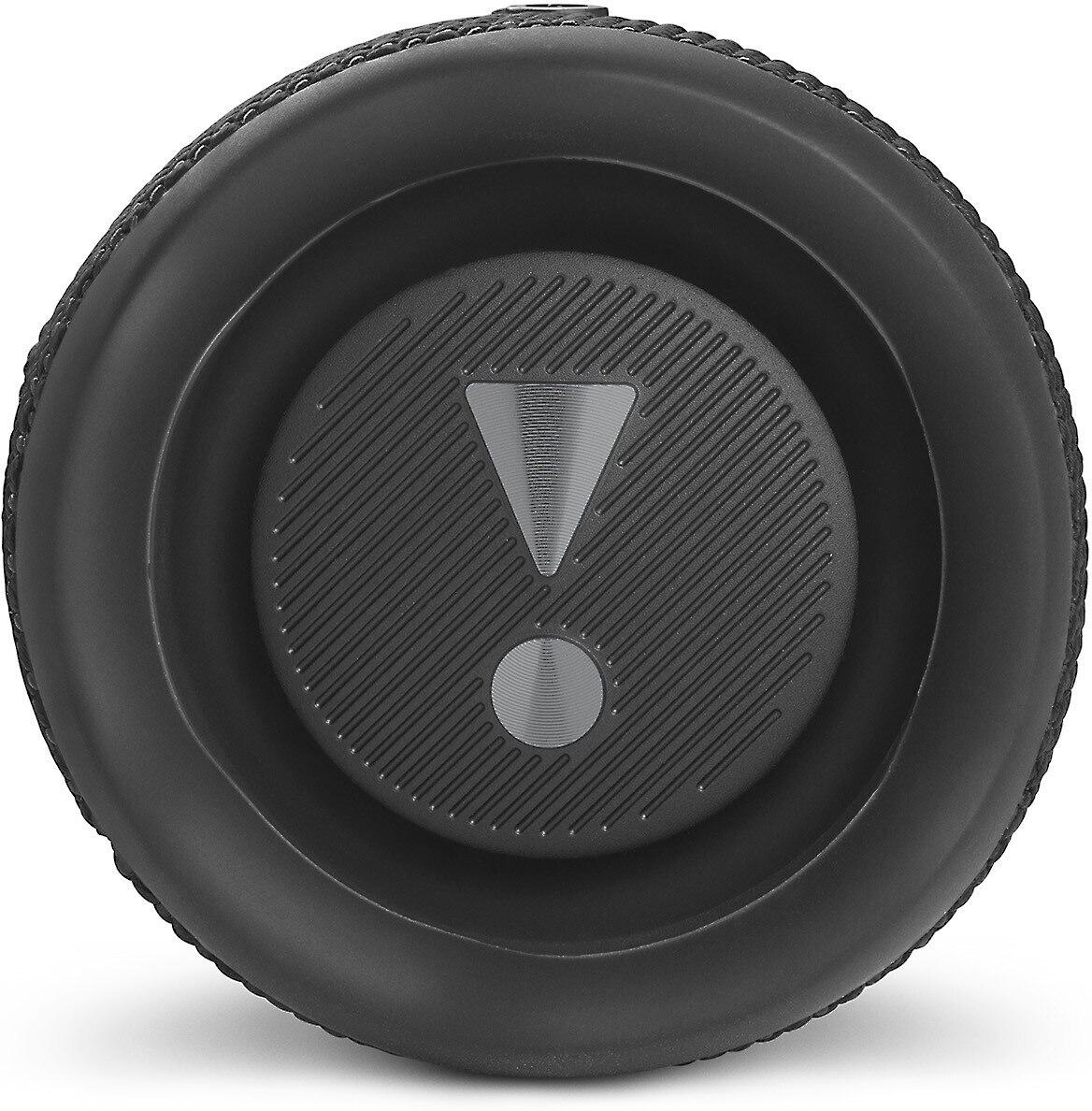
Dual passive radiators flanking the main drivers work to enhance bass response significantly. These unpowered elements vibrate in response to the main woofer, effectively creating a larger bass-producing surface area without requiring additional power or space for more active drivers. The result is bass extension down to 63Hz—nearly an octave lower than the Go 3.
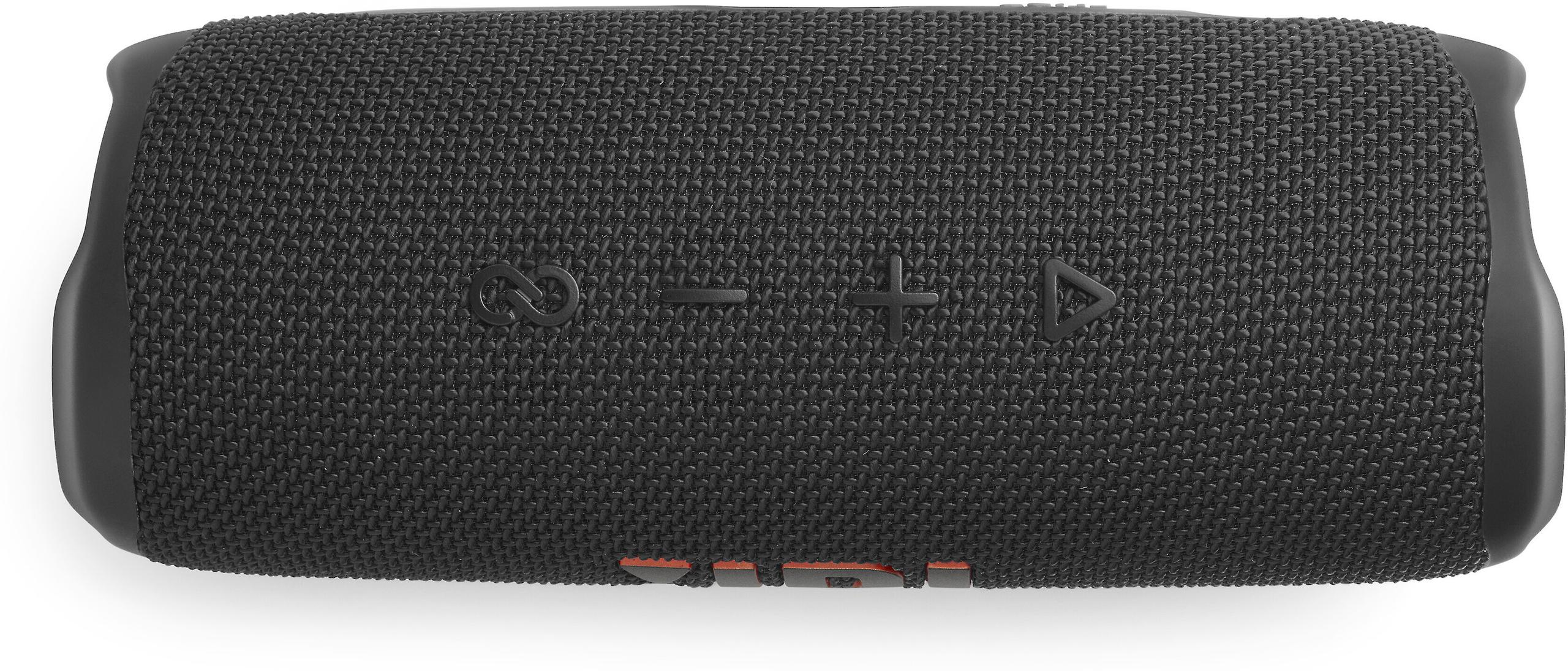
The cylindrical design isn't just aesthetic; it's acoustically purposeful. Sound radiates 360 degrees around the speaker, providing more even coverage in group settings. The 4,800mAh battery delivers an impressive 12 hours of playback, more than doubling the Go 3's endurance.
The performance gap between these speakers is substantial and predictable based on their physical constraints. Our research into professional reviews and user feedback reveals consistent patterns that align with acoustic principles.
The Go 3 excels at vocal reproduction and midrange clarity. Podcasts, audiobooks, and vocal-heavy music sound crisp and intelligible. However, bass response is limited by the laws of physics—small drivers in small enclosures simply cannot move enough air to produce deep bass. Bass-heavy genres like hip-hop or EDM expose these limitations, particularly at higher volumes where the tiny driver can become overwhelmed.
The Flip 6 operates in a different league entirely. The dedicated tweeter provides sparkling highs with detail that the Go 3 cannot match, while the larger woofer and passive radiators deliver bass that's genuinely satisfying rather than merely adequate. Professional measurements show the Flip 6 maintaining composure at high volumes where the Go 3 begins to struggle with distortion and compression.
Dynamic range—the difference between the quietest and loudest sounds a speaker can reproduce—heavily favors the Flip 6. This translates to more engaging listening experiences with complex music where instruments need to stand out from each other rather than blending into a compressed soundscape.
Both speakers charge via USB-C in about 2.5 hours, but their battery capacities tell different stories. The Go 3's 750mAh battery provides 5 hours of playback under typical conditions, while the Flip 6's 4,800mAh battery extends this to 12 hours.
These numbers reflect intended usage patterns. The Go 3 serves shorter listening sessions—commutes, workouts, or casual outdoor activities. The Flip 6 targets longer events like day-long beach trips, camping excursions, or extended gatherings where charging opportunities may be limited.
Battery life varies significantly with volume levels and content. Bass-heavy music at high volumes drains batteries faster than speech content at moderate levels. Both speakers include battery conservation features, but the Flip 6's larger capacity provides more margin for power-hungry listening habits.
Both speakers utilize Bluetooth 5.1, offering improved connection stability and energy efficiency compared to older Bluetooth versions. Connection range typically extends 30-50 feet in open areas, with walls and interference reducing this distance.
The Go 3 keeps connectivity simple—pair, play, and enjoy. Its built-in microphone enables hands-free calling, making it genuinely useful for conference calls or voice commands when connected to smartphones.
The Flip 6 introduces PartyBoost technology, allowing multiple compatible JBL speakers to connect for enhanced sound. You can pair two Flip 6 units for stereo separation or link several for increased volume coverage. This feature transforms the Flip 6 from a standalone speaker into part of a scalable audio system.
The Flip 6 also includes USB-C charging protection that alerts users if the charging port detects moisture, salt, or chemicals. This feature prevents charging-related damage in harsh environments—a thoughtful addition for a speaker designed for outdoor adventures.
Neither speaker targets serious home theater applications, but they serve different indoor roles effectively. The Go 3 works well for personal listening in bedrooms, offices, or kitchens where space is limited and volume requirements are modest. Its compact size means it won't dominate surfaces or clash with decor.
The Flip 6 can legitimately serve as a primary speaker for small to medium rooms. While it won't replace dedicated home theater systems, it provides sufficient volume and quality for casual TV audio, background music during gatherings, or even small presentations. The 360-degree sound dispersion works well in open living spaces.
For home theater specifically, both speakers lack the stereo separation and dialogue optimization that dedicated soundbars provide. However, the Flip 6 offers enough clarity and volume to improve TV audio significantly over built-in speakers, particularly for casual viewing.
Both speakers share IP67 water resistance, but their construction approaches differ. The Go 3 uses a fabric exterior with rubberized accents, prioritizing grip and portability over absolute ruggedness. It's built to survive typical accidents—drops onto soft surfaces, splashes, and daily handling—but isn't designed for extreme abuse.
The Flip 6 feels more substantial with its denser construction and robust materials. The cylindrical shape inherently resists impact damage better than the Go 3's more angular design. Both speakers easily survive pool parties, beach trips, and outdoor adventures, but the Flip 6 inspires more confidence for rough handling.
Testing by professional reviewers confirms both speakers meet their IP67 ratings reliably. The Go 3 has survived countless shower sessions and beach rinses in user reports, while the Flip 6 handles pool submersion and sandy environments without issues.
At the time of writing, the price gap between these speakers reflects their different market positions. The Go 3 prioritizes accessibility—delivering decent sound quality and essential features at an entry-level price point. For many users, it represents the sweet spot between cost and capability.
The Flip 6 commands a premium but delivers proportionally more value in key areas. The audio quality improvement alone justifies much of the price difference, while extended battery life and advanced features add further value. Per watt of audio output, the Flip 6 actually offers competitive pricing compared to similar speakers.
Consider total cost of ownership as well. The Go 3's shorter battery life means more frequent charging cycles, potentially reducing long-term battery health. The Flip 6's more robust construction suggests better longevity under regular use.
Choose the JBL Go 3 when ultra-portability trumps everything else. If you need a speaker that literally fits in your pocket, travels effortlessly, and provides adequate sound quality for personal listening, the Go 3 excels. It's perfect for solo travelers, students, commuters, and anyone who values convenience over acoustic performance.
The Go 3 also makes sense as a secondary or backup speaker. Its low cost and tiny size make it easy to justify keeping one in a gym bag, car, or office drawer for unexpected listening opportunities.
Choose the JBL Flip 6 when sound quality and versatility matter more than maximum portability. If you regularly host gatherings, enjoy outdoor adventures, or want a speaker that can serve multiple roles from personal listening to group entertainment, the Flip 6 justifies its premium.
The Flip 6 particularly suits users who appreciate audio quality and plan to use their speaker frequently. The superior sound, extended battery life, and PartyBoost capabilities provide room for growth as your needs evolve.
Both speakers succeed in their intended roles, but they serve fundamentally different needs. The JBL Go 3 maximizes portability and value for personal use, while the JBL Flip 6 delivers superior performance and versatility for users willing to invest in better sound quality.
Your choice ultimately depends on whether you prioritize ultimate convenience or enhanced audio experience. Neither speaker disappoints within its intended scope, but understanding these limitations helps set appropriate expectations and guides you toward the better match for your specific needs and usage patterns.
| JBL Go 3 Portable Bluetooth Speaker | JBL Flip 6 Portable Waterproof Speaker |
|---|---|
| Size & Weight - Critical for portability and daily carry | |
| 88×75×41mm, 209g (truly pocket-sized) | 178×72×68mm, 550g (water bottle sized) |
| Audio Power Output - Determines maximum volume and clarity | |
| 4.2W single driver (personal listening volumes) | 30W dual-driver system (room-filling sound) |
| Driver Configuration - Affects sound quality and frequency response | |
| Single 43×47mm driver (good mids/highs, limited bass) | 2-way system: 45×80mm woofer + 16mm tweeter + dual passive radiators |
| Frequency Response - Range of sounds the speaker can reproduce | |
| 110Hz–20kHz (weaker bass, clear vocals) | 63Hz–20kHz (full bass extension, detailed highs) |
| Battery Life - Playback time between charges | |
| 5 hours (750mAh - good for short sessions) | 12 hours (4,800mAh - all-day use) |
| Water Resistance - Protection level for outdoor use | |
| IP67 waterproof and dustproof | IP67 waterproof and dustproof |
| Connectivity Features - Advanced pairing and linking options | |
| Bluetooth 5.1, built-in microphone for calls | Bluetooth 5.1, PartyBoost multi-speaker pairing |
| Charging - Port type and charging time | |
| USB-C, 2.5 hours to full charge | USB-C with water detection, 2.5 hours to full charge |
| Best Use Cases - Where each speaker excels | |
| Personal listening, travel, ultra-portability priority | Group gatherings, outdoor events, home use, sound quality priority |
| Value Position - Performance relative to typical pricing | |
| Maximum portability per dollar, entry-level pricing | Superior audio quality justifies premium, mid-range pricing |
The JBL Flip 6 delivers significantly better sound quality with its 30W dual-driver system, dedicated tweeter, and passive radiators that produce deeper bass and clearer highs. The JBL Go 3 offers decent sound for its compact size but is limited by its 4.2W single driver and smaller enclosure, making it better suited for personal listening rather than room-filling audio.
The JBL Go 3 is ultra-compact at 88×75×41mm and weighs just 209g, making it truly pocket-sized. The JBL Flip 6 is larger at 178×72×68mm and weighs 550g, roughly the size of a water bottle. This size difference directly impacts portability and sound quality capabilities.
The JBL Flip 6 provides up to 12 hours of battery life with its 4,800mAh battery, while the JBL Go 3 offers about 5 hours with its 750mAh battery. Both charge via USB-C in approximately 2.5 hours, but the JBL Flip 6 is better for extended listening sessions.
Yes, both the JBL Go 3 and JBL Flip 6 feature IP67 waterproof and dustproof ratings. This means they can be submerged in up to 1 meter of water for 30 minutes and are completely protected against dust, making both suitable for pool parties, beach trips, and outdoor adventures.
While both speakers are waterproof, the JBL Flip 6 is superior for outdoor use due to its louder volume, better bass response, and 12-hour battery life that can handle all-day events. The JBL Go 3 works well for personal outdoor listening but lacks the power for group settings or noisy environments.
Only the JBL Flip 6 supports PartyBoost technology, allowing you to pair multiple compatible JBL speakers for stereo sound or increased volume. The JBL Go 3 doesn't offer speaker pairing capabilities and is designed as a standalone personal speaker.
This depends on your priorities. The JBL Go 3 offers excellent value for ultra-portable personal listening at a budget-friendly price point. The JBL Flip 6 costs significantly more but delivers substantially better sound quality, longer battery life, and additional features that justify the premium for users prioritizing audio performance.
The JBL Flip 6 produces much better bass with its larger woofer, dual passive radiators, and extended frequency response down to 63Hz. The JBL Go 3 has limited bass response starting at 110Hz due to its small driver and compact size, making it less suitable for bass-heavy music genres.
The JBL Go 3 includes a built-in microphone for hands-free calling, making it better for conference calls and voice commands. The JBL Flip 6 doesn't have a built-in microphone, so it's focused purely on music playback rather than communication features.
The JBL Flip 6 gets significantly louder with its 30W power output and can fill medium-sized rooms or handle outdoor gatherings. The JBL Go 3 with its 4.2W output is designed for personal listening and small spaces, becoming strained at high volumes in noisy environments.
The JBL Go 3 is superior for travel due to its pocket-sized dimensions and lightweight design that won't impact luggage space or weight. While the JBL Flip 6 is still portable, its larger size requires more intentional packing and isn't as convenient for constant mobility.
Choose the JBL Go 3 if you prioritize maximum portability, have budget constraints, or mainly listen alone. Choose the JBL Flip 6 if you want superior sound quality, longer battery life, group listening capabilities, and don't mind the larger size and higher cost. The JBL Flip 6 offers better long-term value for frequent use.
We've done our best to create useful and informative comparisons to help you decide what product to buy. Our research uses advanced automated methods to create this comparison and perfection is not possible - please contact us for corrections or questions. These are the sites we've researched in the creation of this article: rtings.com - streamtechreviews.com - english.achoreviews.com - smarthomesounds.co.uk - soundguys.com - rtings.com - walmart.com - soundguys.com - youtube.com - youtube.com - jbl.com - youtube.com - selectoguru.com - versus.com - videoandaudiocenter.com - harmanaudio.com - jbl.com - bestbuy.com - forum.hifiguides.com - manuals.plus - kh.jbl.com - th.jbl.com - mm.jbl.com - jbl.com - bestbuy.com - youtube.com - youtube.com - youtube.com - jbl.com - bestbuy.com - bestbuy.com - jbl.com.tw - youtube.com - techradar.com - phonearena.com - youtube.com - tomsguide.com - outeraudio.com - wcucampusstore.com - jbl.com.sg - pcrichard.com - kh.jbl.com - musicarts.com - jbl.com - cnet.com - youtube.com

Privacy Policy
Terms and Conditions - Affiliate Policy
Home Security
© Copyright 2008-2026.
11816 Inwood Rd #1211, Dallas, TX 75244