

Portable Bluetooth speakers have evolved from tinny afterthoughts to genuine audio companions that can fill rooms, survive adventures, and keep your devices charged. But with hundreds of options flooding the market, choosing the right one means understanding what actually matters for your listening habits and lifestyle.
At the time of writing, two speakers stand out in different ways: the Monster S320 Superstar represents the scrappy newcomer offering premium features at aggressive pricing, while the JBL Charge 4 embodies the established champion with proven reliability and smart design choices. Both target the same portable speaker market, but they take fundamentally different approaches to winning your attention.
Before diving into specifics, let's establish what separates excellent portable speakers from the forgettable ones cluttering store shelves. The most critical factor is sound quality – specifically, how well a speaker reproduces music across the entire frequency spectrum (the range of sounds from deep bass rumbles to crisp high notes). This involves three key elements: bass response (low frequencies that provide punch and warmth), midrange clarity (where vocals and most instruments live), and treble detail (high frequencies that add sparkle and definition).
Power output, measured in watts, determines how loud a speaker can play before distorting. However, raw wattage numbers can be misleading since different manufacturers measure differently. What matters more is how that power translates into real-world volume and whether the speaker maintains sound quality at higher levels.
Battery life directly impacts usability, especially for outdoor activities or extended listening sessions. Modern lithium-ion batteries typically provide 10-20 hours of playback, but actual performance varies dramatically based on volume levels and audio content.
Durability features like water resistance have become standard, with IPX7 ratings (meaning the device can survive being submerged in up to one meter of water for 30 minutes) now common in quality portable speakers. Build quality affects both longevity and sound – speakers with flimsy construction often suffer from vibration-induced distortion at higher volumes.
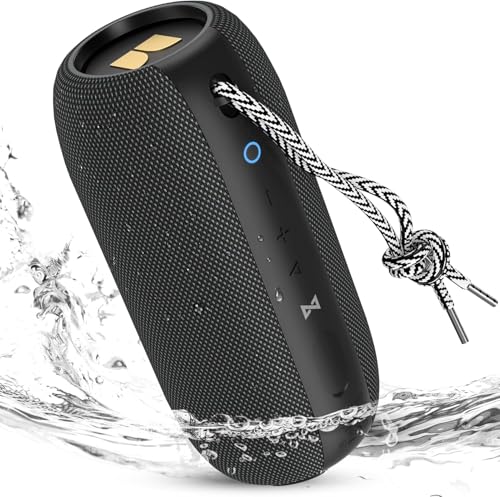
The Monster S320 Superstar emerged in the mid-2020s as Monster Audio's return to the portable speaker market after focusing on headphones and cables for years. Monster, founded by legendary audio engineer Noel Lee, built its reputation on bass-heavy sound signatures and bold designs throughout the 1980s and 1990s. The S320 represents their modern interpretation of what a portable speaker should be: powerful, omnidirectional, and feature-rich at a competitive price point.
The JBL Charge 4, released in 2018, continues JBL's successful Charge series that began in 2013. JBL, with nearly 80 years of audio expertise ranging from concert halls to movie theaters, approaches portable speakers with professional audio principles. The Charge line's defining characteristic has always been combining excellent sound with practical utility features.
These different backgrounds shape each company's design philosophy and help explain why these speakers sound and function so differently despite targeting similar users.
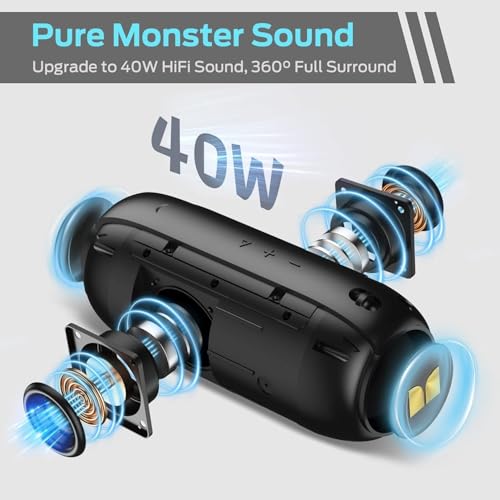
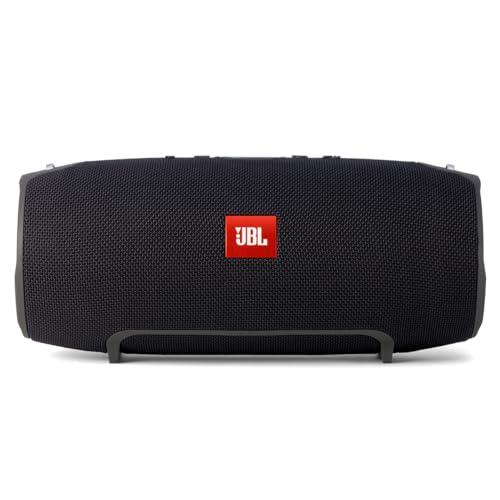
The most striking difference between these speakers lies in their power delivery and acoustic design. The Monster S320 generates 40 watts through dual 10-watt drivers arranged in a 360-degree configuration. This omnidirectional approach means sound radiates equally in all directions, creating what audio engineers call a "point source" – imagine a campfire where everyone sitting around it hears the same volume and quality.
In practice, this 360-degree design excels when the speaker sits in the center of a room or outdoor space. Place the Monster S320 on a patio table during a barbecue, and everyone enjoys consistent sound regardless of where they're standing. The dual-driver setup also enables genuine stereo separation when you pair two units using True Wireless Stereo (TWS) technology – a feature that creates distinct left and right channels for a more immersive listening experience.
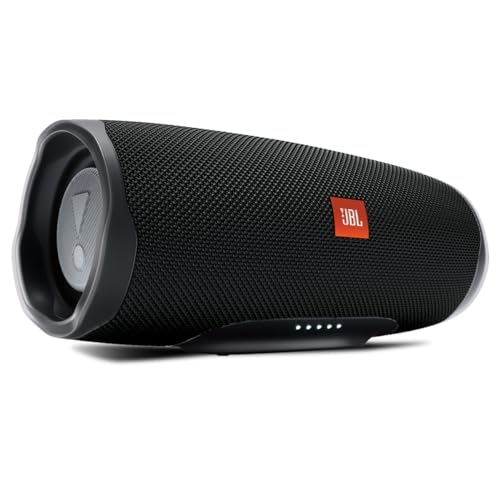
The JBL Charge 4 takes the opposite approach with 30 watts RMS (Root Mean Square – a more accurate power measurement than peak wattage) delivered through a single racetrack-shaped driver complemented by dual passive bass radiators. These radiators are essentially speakers without magnets that move sympathetically with the main driver to reinforce low frequencies. Think of them as acoustic amplifiers that boost bass without requiring additional power.
This directional design focuses sound forward like a flashlight beam, which can actually sound louder and clearer when you're positioned directly in front of the speaker. For personal listening or small group settings where everyone faces the same direction, the JBL Charge 4 often delivers more impactful sound despite its lower power rating.
Based on extensive user feedback and professional reviews, the Monster S320 generally produces higher peak volumes and better room-filling capabilities, while the JBL Charge 4 offers more precise sound imaging and better bass definition for focused listening.
Sound signature – the overall tonal balance of a speaker – often matters more than raw specifications. The Monster S320 maintains Monster's tradition of engaging, slightly warm sound with enhanced bass presence. Its frequency response spans 20Hz to 20kHz (covering the full range of human hearing), and the 360-degree design creates an expansive soundstage that makes music feel larger and more enveloping.
User reports consistently describe the Monster S320's sound as "concert-like" with strong bass punch, clear midrange vocals, and crisp highs. The omnidirectional design prevents the harsh directionality issues that plague many portable speakers – you know that jarring volume drop when you move to the side of a speaker? The Monster largely eliminates this problem.
The JBL Charge 4 delivers what many consider a more "professional" sound signature with excellent midrange clarity that makes vocals shine. Its frequency response runs from 60Hz to 20kHz, meaning it doesn't reproduce the deepest bass frequencies as effectively as the Monster. However, the passive bass radiators provide satisfying low-end punch for most music genres, and the overall tonal balance favors accuracy over excitement.
Professional reviewers and audio enthusiasts often praise the JBL Charge 4 for its natural sound reproduction and lack of harshness at higher volumes. The single-driver design eliminates potential phase issues (timing problems that can occur when multiple drivers reproduce overlapping frequencies), resulting in coherent, well-integrated sound.
For bass-heavy music genres like hip-hop, EDM, or rock, the Monster S320 typically provides more satisfying low-end impact. For acoustic music, jazz, classical, or vocal-focused content, the JBL Charge 4 often sounds more refined and detailed.
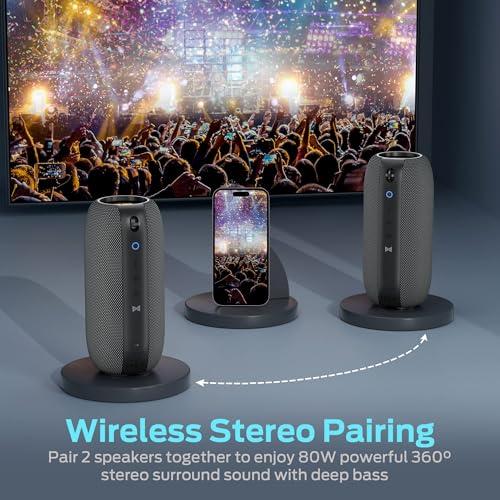
Both speakers offer multi-unit connectivity, but their approaches differ significantly. The Monster S320's True Wireless Stereo (TWS) pairing creates genuine left-right stereo separation when you connect two units. This transforms the listening experience from mono (single-channel) to true stereo, dramatically improving soundstage width and instrument placement. Paired S320 units deliver a combined 80 watts with proper stereo imaging – a substantial upgrade that rivals much more expensive speaker systems.
The JBL Charge 4 uses JBL's Connect+ technology, which can link over 100 compatible JBL speakers for synchronized playback. While impressive in scale, this system doesn't create true stereo separation – instead, all connected speakers play the same mono signal simultaneously. This works brilliantly for large outdoor events where you need even sound coverage across a wide area, but it doesn't improve the listening experience for smaller gatherings the way stereo pairing does.
For home use or smaller spaces, the Monster S320's stereo pairing provides more meaningful benefits. For large events or commercial applications, the JBL Charge 4's massive scalability offers unique advantages.
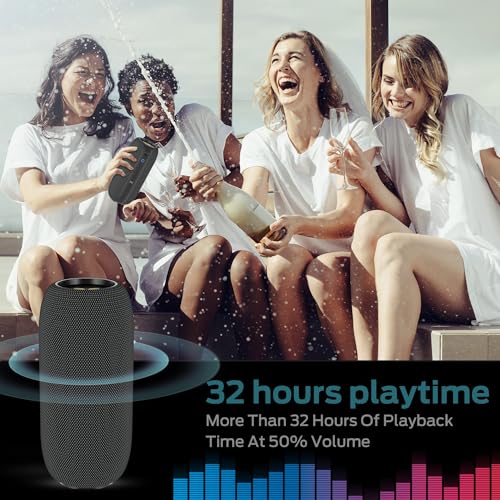
Battery performance directly impacts usability, and here the specifications tell an interesting story. The Monster S320 claims up to 32 hours of playback from its 2500mAh lithium-ion battery, though real-world usage reports suggest 12-18 hours at moderate volumes – still impressive for its size and power output.
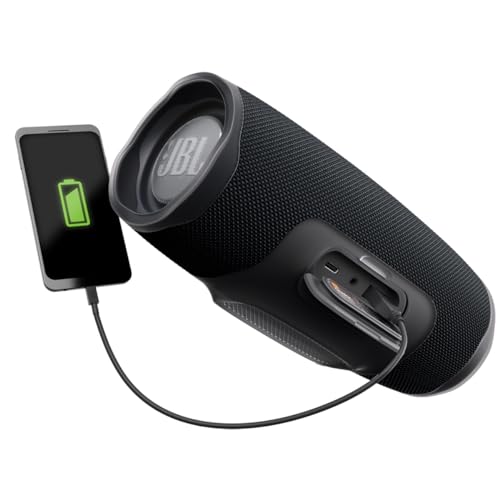
The JBL Charge 4 provides a more conservative but reliable 20 hours of playback from its substantial 7500mAh battery. The larger capacity serves double duty as a powerbank capable of charging smartphones, tablets, and other USB devices at 5V/2A – roughly equivalent to a standard phone charger.
This powerbank functionality transforms the JBL Charge 4 from a simple speaker into an essential outdoor companion. During camping trips, beach days, or extended outdoor events, the ability to recharge your phone while playing music eliminates the anxiety of choosing between entertainment and communication.
Both speakers charge via USB-C, the modern standard that's faster and more convenient than older micro-USB connections. Charging times run approximately 3-4 hours for full battery restoration.
For users who prioritize maximum music playback time, the Monster S320 edges ahead (assuming the higher battery life claims prove accurate). For those needing versatile power management during outdoor adventures, the JBL Charge 4 provides irreplaceable utility.
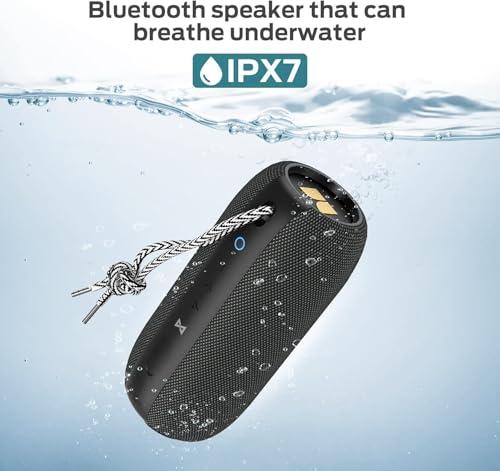
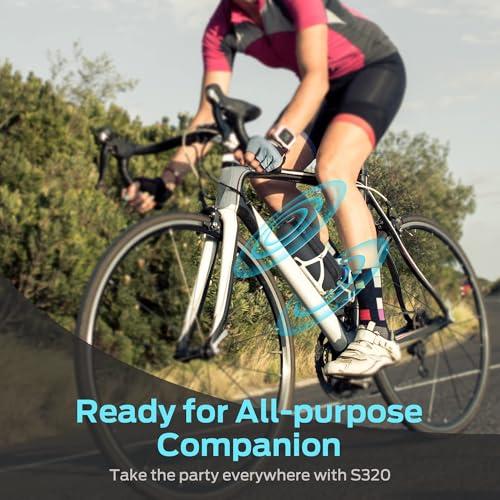
Both speakers carry IPX7 water resistance ratings, meaning they can survive complete submersion in up to one meter of water for 30 minutes. This makes them suitable for poolside use, beach trips, and even shower listening. However, their construction approaches differ meaningfully.
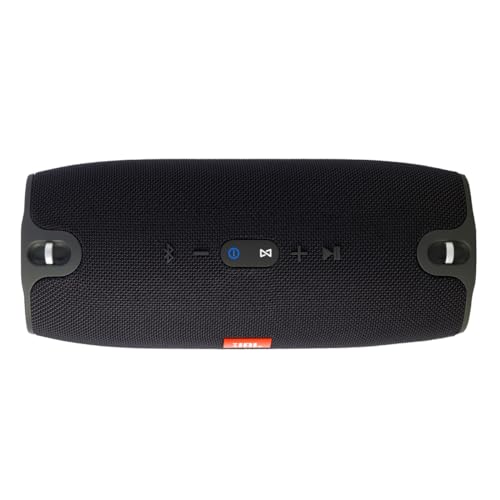
The Monster S320 weighs 720 grams and measures just 87×87×190mm, making it notably more compact and portable. Its cylindrical design includes a carrying strap and claims additional shockproof and dustproof protection beyond the standard IPX7 rating. The smaller size makes it easier to pack for travel and more convenient for casual transport.
The JBL Charge 4 weighs 965 grams with dimensions of 220×95×93mm – significantly larger and heavier. However, this size houses the massive 7500mAh battery and contributes to what many users describe as exceptionally robust build quality. The fabric wrapping and rubber housing feel premium and substantial, inspiring confidence in long-term durability.
JBL's established reputation for reliability gives the Charge 4 an edge in predicted longevity. Monster's return to the speaker market means the S320 lacks the same proven track record, though early user reports suggest solid construction quality.
For maximum portability, the Monster S320 wins decisively. For maximum durability and build confidence, the JBL Charge 4 maintains its advantage.
Bluetooth performance affects daily usability more than many realize. The Monster S320 specifications vary between sources, with some units featuring Bluetooth 4.2 and others sporting the newer 5.0 standard. Bluetooth 5.0 provides better range, faster pairing, improved connection stability, and enhanced battery efficiency – meaningful upgrades for portable devices.
The JBL Charge 4 uses Bluetooth 4.2 but implements it exceptionally well, with stable connections and the ability to connect two source devices simultaneously. This dual-device connectivity proves surprisingly useful – imagine seamlessly switching between your phone's playlist and your laptop's podcast without manual repairing.
Both speakers include 3.5mm auxiliary inputs for wired connections, essential for devices without Bluetooth or when you want to preserve battery life. The wired connection often provides slightly better audio quality by eliminating Bluetooth compression, though the difference is subtle with modern codecs.
Neither speaker includes advanced features like voice assistant integration, Wi-Fi connectivity, or smartphone app control – they focus on core functionality rather than smart features that can complicate usage and increase failure points.
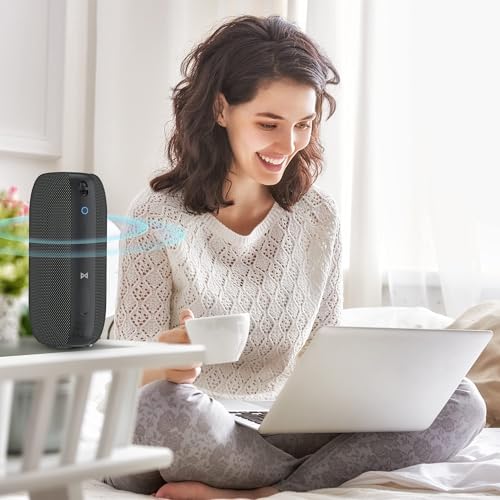
While primarily designed for portable use, both speakers can enhance home entertainment setups in specific scenarios. The Monster S320's 360-degree sound design makes it excellent for casual background music throughout a room, and its stereo pairing capability can create a simple but effective TV sound upgrade when positioned appropriately.
However, neither speaker is designed for serious home theater use. Their compact size and portable-focused tuning can't match dedicated home audio systems for movie watching or critical listening. They work well for casual TV enhancement or as secondary systems in bedrooms, offices, or kitchens.
The JBL Charge 4's directional design actually suits TV enhancement better than the Monster's omnidirectional approach, since you typically want sound focused toward your seating position rather than dispersed throughout the room.
At the time of writing, these speakers occupy different price tiers, with the Monster S320 typically commanding significantly lower pricing than the JBL Charge 4. This price difference makes direct value comparison complex – they're not quite competing for the same buyers.
The Monster S320 represents exceptional value for users prioritizing audio performance. Its 40-watt output, 360-degree sound design, stereo pairing capability, and competitive battery life deliver premium features at mainstream pricing. However, you sacrifice the proven reliability and powerbank utility of more established options.
The JBL Charge 4 commands its higher price through comprehensive utility features, established brand reliability, and refined audio tuning. The powerbank functionality alone justifies significant price premium for many users, and JBL's reputation provides confidence in long-term satisfaction.
Consider the Monster S320 as the high-performance value choice – maximum audio features per dollar spent. View the JBL Charge 4 as the premium utility choice – paying more for comprehensive functionality and brand confidence.
Choose the Monster S320 Superstar if you prioritize pure audio performance and innovative features. Its 40-watt power output, 360-degree sound dispersion, and stereo pairing capability provide experiences typically found in much more expensive speakers. The compact size and lower price point make it ideal for budget-conscious music enthusiasts who refuse to compromise on sound quality. It's perfect for users who primarily want exceptional music playback without needing additional utility features.
The Monster S320 particularly suits younger users, apartment dwellers, or anyone frequently hosting casual gatherings where room-filling sound matters more than device charging capabilities. Its innovative 360-degree design and stereo pairing make it excellent for parties, outdoor activities, or any scenario where multiple people need to enjoy consistent audio quality.
Choose the JBL Charge 4 if you need a comprehensive portable companion that excels beyond just audio playback. Its powerbank functionality makes it essential for extended outdoor adventures, camping trips, or any situation where device charging becomes critical. The proven reliability and superior build quality provide confidence for intensive use over multiple years.
The JBL Charge 4 particularly suits outdoor enthusiasts, travelers, professionals who work remotely, or anyone who needs their speaker to serve multiple functions reliably. Its directional sound design and excellent midrange clarity make it ideal for focused listening, conference calls, or situations where audio accuracy matters more than room-filling volume.
Both speakers deliver excellent water resistance and durability for outdoor use, but they serve different lifestyles and priorities. The Monster S320 maximizes audio excitement and innovation, while the JBL Charge 4 maximizes practical utility and long-term reliability.
Your choice ultimately depends on whether you prioritize cutting-edge audio features at competitive pricing, or comprehensive functionality with proven reliability at premium pricing. Both represent excellent values within their respective approaches to portable audio.
| Monster S320 Superstar | JBL Charge 4 |
|---|---|
| Power Output - Determines maximum volume and room-filling capability | |
| 40W total (dual 10W drivers) | 30W RMS (single driver + passive radiators) |
| Sound Design - Affects how audio disperses in your space | |
| 360° omnidirectional (equal sound in all directions) | Directional forward-firing (focused sound beam) |
| Multi-Speaker Pairing - Expands your audio setup | |
| True Wireless Stereo (TWS) for genuine left/right stereo | JBL Connect+ links 100+ speakers in mono sync |
| Battery Life - How long you can listen without charging | |
| Up to 32 hours claimed (real-world ~12-18 hours) | Up to 20 hours (consistently reliable) |
| Powerbank Function - Charges your devices on the go | |
| None | Yes, 5V/2A USB output for phones/tablets |
| Size & Weight - Portability and convenience | |
| 720g, 87×87×190mm (compact cylinder) | 965g, 220×95×93mm (larger oblong design) |
| Water Resistance - Protection for outdoor use | |
| IPX7 waterproof + shockproof/dustproof claims | IPX7 waterproof with proven durability |
| Bluetooth Version - Connection stability and range | |
| 4.2 or 5.0 (varies by model) | 4.2 with dual-device connectivity |
| Frequency Response - Range of sounds reproduced | |
| 20Hz-20kHz (full human hearing range) | 60Hz-20kHz (limited deep bass) |
| Brand Reputation - Long-term reliability expectations | |
| Monster Audio (returning to speakers after cable focus) | JBL (75+ years, established portable speaker leader) |
| Best For - Ideal use cases | |
| Maximum audio performance per dollar, party sound | Comprehensive utility, outdoor adventures, reliable daily use |
The Monster S320 Superstar produces 40 watts of power compared to the JBL Charge 4's 30 watts, making the Monster technically more powerful. However, the JBL Charge 4 focuses its sound directionally, which can sound louder when you're positioned in front of it. For room-filling volume, the Monster S320 typically wins due to its 360-degree sound design.
Yes, but they work differently. The Monster S320 Superstar supports True Wireless Stereo (TWS) pairing, creating genuine left-right stereo separation with two units for 80 watts combined. The JBL Charge 4 uses JBL Connect+ to link multiple speakers, but they all play the same mono signal rather than true stereo separation.
The Monster S320 Superstar claims up to 32 hours of playback, though real-world usage typically delivers 12-18 hours. The JBL Charge 4 provides a more reliable 20 hours of playback. However, the JBL Charge 4 doubles as a powerbank to charge your devices, while the Monster S320 focuses solely on audio playback.
Both speakers feature IPX7 waterproof ratings, meaning they can survive submersion in up to 1 meter of water for 30 minutes. The Monster S320 Superstar also claims additional shockproof and dustproof protection. Both are excellent choices for beach, pool, or camping use.
This depends on your preferences. The Monster S320 Superstar delivers fuller bass response with its 20Hz-20kHz frequency range and 360-degree sound design, making it excellent for bass-heavy music and parties. The JBL Charge 4 offers more accurate midrange reproduction with clearer vocals, making it better for acoustic music and focused listening.
Only the JBL Charge 4 can charge external devices through its USB-A output port, delivering 5V/2A power equivalent to a standard phone charger. The Monster S320 Superstar lacks powerbank functionality and focuses exclusively on audio performance.
The Monster S320 Superstar is significantly more portable, weighing 720 grams compared to the JBL Charge 4's 965 grams. The Monster's compact cylindrical design with carrying strap makes it easier to transport, while the JBL Charge 4 is bulkier but houses a larger battery for powerbank functionality.
Neither speaker is designed for serious home theater use, but both can enhance casual TV watching. The JBL Charge 4's directional sound design actually works better for TV enhancement since it focuses audio toward your seating position. The Monster S320's 360-degree design is better suited for background music throughout a room.
Both offer reliable Bluetooth connectivity, though the Monster S320 Superstar may feature Bluetooth 5.0 (varies by model) for better range and stability. The JBL Charge 4 uses Bluetooth 4.2 but can connect to two devices simultaneously, making it easy to switch between phone and laptop audio without re-pairing.
The Monster S320 Superstar excels at parties due to its 360-degree sound design that provides consistent audio quality regardless of where people are positioned. Two paired Monster S320 units create impressive stereo sound for larger gatherings. The JBL Charge 4 works well for smaller groups but requires more strategic positioning.
The JBL Charge 4 benefits from JBL's 75+ year audio heritage and established reputation in portable speakers. The Monster S320 Superstar represents Monster's return to the speaker market after focusing on cables, so it lacks the same proven track record. However, early user reports suggest solid build quality from the Monster S320.
The Monster S320 Superstar typically offers better value for pure audio performance, delivering 40 watts of power, 360-degree sound, and stereo pairing capability at a lower price point. The JBL Charge 4 justifies its higher cost through powerbank functionality, proven reliability, and comprehensive utility features that make it more than just a speaker.
We've done our best to create useful and informative comparisons to help you decide what product to buy. Our research uses advanced automated methods to create this comparison and perfection is not possible - please contact us for corrections or questions. These are the sites we've researched in the creation of this article: youtube.com - runbazaar.com - youtube.com - exceldisc.com - youtube.com - 961souq.com - walmart.com - eshtir.com - mct-audio.com - hk.monsterstore.com - alibaba.com - cdn.tgdd.vn - device.report - manualslib.com - alibaba.com - rtings.com - whathifi.com - whathifi.com - soundguys.com - soundguys.com - streamtechreviews.com - youtube.com - versus.com - applevis.com - versus.com - jbl.com - jbl.com - walmart.com - comparisontabl.es - harmanaudio.com - manuals.plus - jbl.com.sg - jbl.com - mm.jbl.com - bestbuy.com - newpower99.com - forums.woot.com

Privacy Policy
Terms and Conditions - Affiliate Policy
Home Security
© Copyright 2008-2026.
11816 Inwood Rd #1211, Dallas, TX 75244