

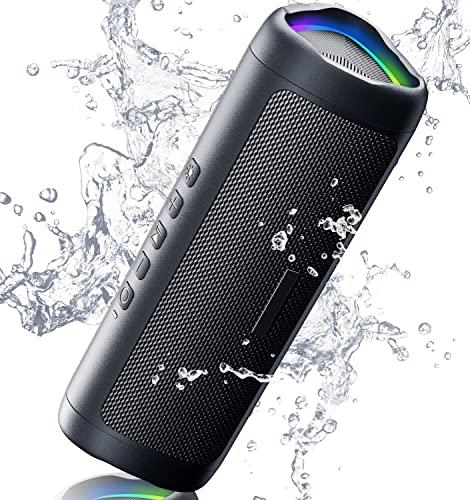

When you're shopping for a portable Bluetooth speaker, the sheer number of options can feel overwhelming. From ultra-cheap speakers that barely function to premium models costing hundreds, the market spans an enormous range of quality and features. Today, we're comparing two speakers that represent very different approaches to portable audio: the ultra-budget BolaButty X-Go C27C and the established mid-range JBL Charge 4.
These speakers sit at opposite ends of the value spectrum, and understanding their differences will help you figure out exactly what you need from a portable speaker—and how much you should spend to get it.
Before diving into specifics, it's worth understanding what separates good portable speakers from mediocre ones. The most important factors are audio quality (how good it sounds), battery life (how long it plays), build quality (how well it's constructed), and portability (how easy it is to carry around).
Audio quality in portable speakers comes down to several technical aspects. Frequency response measures how well a speaker reproduces different sound frequencies—from deep bass around 60Hz to crisp highs at 20,000Hz (20kHz). Power output, measured in watts, determines how loud a speaker can get without distorting. Driver configuration refers to how many individual speakers are inside and how they're arranged, which affects sound quality and stereo imaging.
Water resistance ratings use the IPX scale, where higher numbers mean better protection. IPX5 handles water splashes, while IPX7 can survive being dunked underwater. Bluetooth versions matter too—newer versions like Bluetooth 5.3 offer better range, lower power consumption, and more stable connections than older standards like Bluetooth 4.2.
The BolaButty X-Go C27C, released in 2023, represents the modern ultra-budget approach. It packs surprisingly advanced features like Bluetooth 5.3 and 24-hour battery life into an extremely affordable package. The JBL Charge 4, launched in 2018, takes the established mid-range approach with robust construction, powerful audio, and practical features that have made it a longtime favorite.
At the time of writing, the X-Go C27C costs roughly one-third the price of the Charge 4, making this comparison particularly interesting. You're not just choosing between two speakers—you're choosing between two philosophies about what matters most in portable audio.
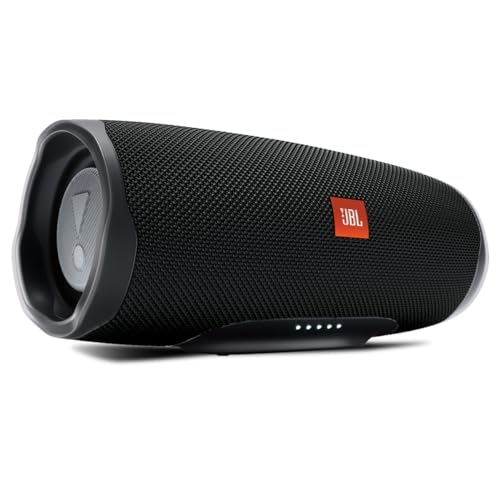
The most significant difference between these speakers becomes apparent the moment you start playing music. The JBL Charge 4 produces noticeably fuller, more balanced sound that works well across all music genres. Its single racetrack-shaped driver (50×90mm) delivers 30 watts of power, creating substantial volume that can fill medium-sized outdoor spaces without breaking a sweat.
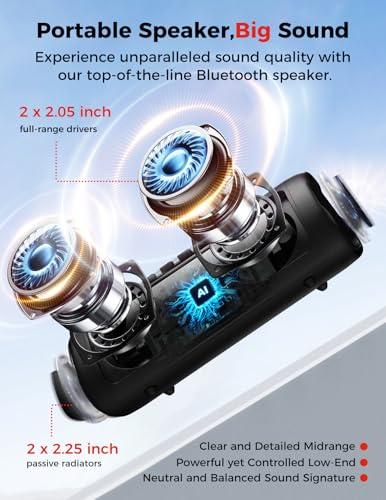
The BolaButty X-Go C27C, with its dual 2-inch drivers and 10-watt output, takes a different approach. It emphasizes clarity in the midrange frequencies where vocals live, making it particularly good for podcasts, audiobooks, and acoustic music. However, when you throw on bass-heavy electronic music or hip-hop, the difference becomes stark—the X-Go C27C simply can't reproduce the low-end frequencies that give these genres their impact.
Bass response often separates budget speakers from their pricier counterparts, and that's certainly true here. The JBL Charge 4 features dual passive bass radiators—these are essentially speakers without voice coils that vibrate in response to the main driver, amplifying low frequencies. Combined with its frequency response extending down to 60Hz, it can reproduce the fundamental bass notes that make music feel full and engaging.
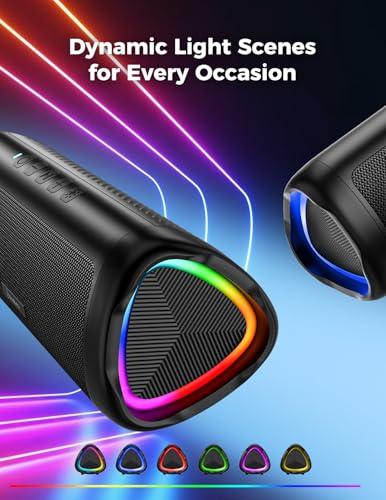
The BolaButty X-Go C27C includes passive radiators too, and they even light up with colorful LEDs, but they can't overcome the physics of its smaller enclosure and lower power. Bass feels present but lacks the depth and impact you'd want for electronic, rock, or modern pop music. It's adequate for background listening but won't satisfy anyone who loves feeling the rhythm in their chest.
Maximum volume capabilities reveal another crucial difference. The Charge 4 can genuinely fill a backyard barbecue or beach gathering, maintaining clarity even when competing with ambient noise and conversation. Its 30-watt output provides enough headroom that you rarely need to push it to uncomfortable levels.
The X-Go C27C, while surprisingly loud for its size, reaches its limits in larger outdoor spaces or noisy environments. It's perfect for a small apartment, hotel room, or quiet outdoor setting, but it won't cut through the noise at a pool party or beach volleyball game.
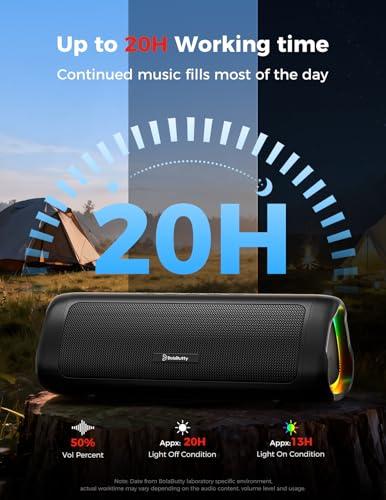
Both speakers offer impressive battery endurance, but they achieve it differently. The BolaButty X-Go C27C claims up to 24 hours of playtime from its 2,500mAh battery—genuinely marathon-level performance that's rare even among premium speakers. This makes it ideal for camping trips, long flights, or anywhere you might not have access to charging for extended periods.
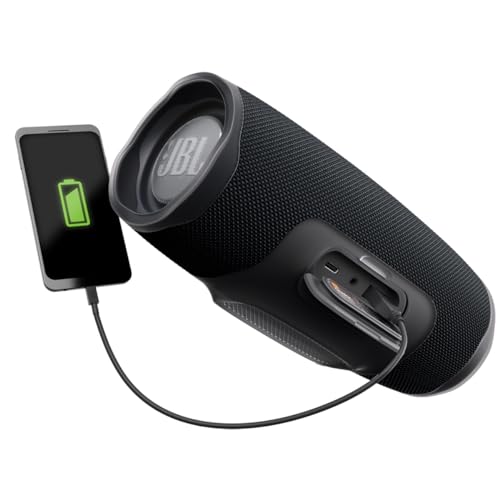
The JBL Charge 4 provides up to 20 hours from its much larger 7,500mAh battery, though real-world testing typically yields 13-15 hours depending on volume levels and content. However, this larger battery serves a dual purpose: it can charge your phone, tablet, or other USB devices through its USB-A output port. This power bank functionality transforms the Charge 4 from just a speaker into a portable power station—incredibly valuable during outdoor adventures where your phone's battery drains quickly from Bluetooth streaming.
The charging experience differs too. Both use modern USB-C charging ports, but the Charge 4 takes about four hours to fully charge compared to roughly three hours for the X-Go C27C.
Handling these speakers reveals their different construction philosophies immediately. The JBL Charge 4 feels substantial and robust, with a tight fabric wrap over a solid frame and rubberized base. At 2.12 pounds, it's clearly built to withstand rough handling and outdoor adventures.
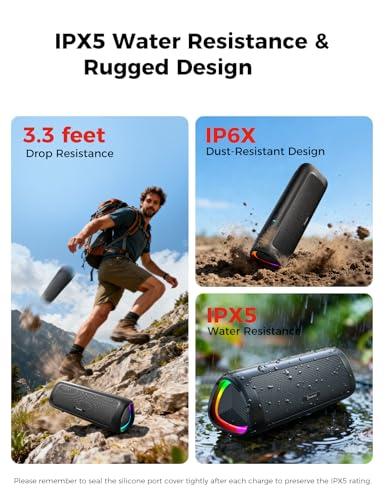
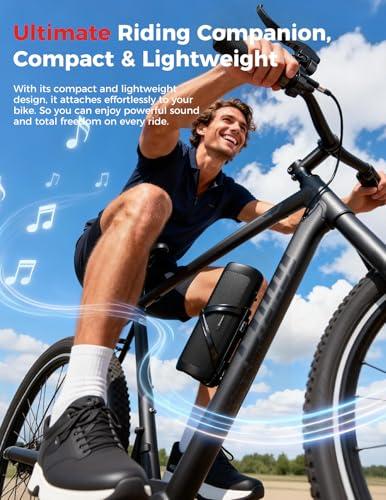
The BolaButty X-Go C27C prioritizes portability over ruggedness. Its lightweight plastic construction makes it easy to toss in a backpack without adding significant weight, but it doesn't inspire the same confidence for rough outdoor use.
Water resistance ratings tell an important story about intended use. The JBL Charge 4's IPX7 rating means it can survive being completely submerged in up to one meter of water for 30 minutes. You can literally drop it in a pool, fish it out, and keep playing music—a real game-changer for water sports, beach trips, or poolside entertainment.
The X-Go C27C's IPX5 rating handles splashes, rain, and accidental spills but won't survive submersion. It's perfectly adequate for most outdoor use, but you'll want to keep it away from pools, lakes, and other submersion risks.
This comparison highlights how Bluetooth technology has evolved. The BolaButty X-Go C27C uses Bluetooth 5.3, the latest standard offering improved range (up to 100 feet in ideal conditions), lower power consumption, and reduced audio latency—the delay between when audio is sent and when you hear it. This makes it better for watching videos where audio-visual sync matters.
The JBL Charge 4, being a 2018 design, uses Bluetooth 4.2, which still provides reliable connectivity but with shorter range and higher power consumption. For most listening scenarios, you won't notice a difference, but the newer standard in the X-Go C27C does offer tangible advantages.
Both speakers can connect with additional units, but they use different approaches. The JBL Charge 4 uses JBL Connect+, which can link with over 100 compatible JBL speakers to create massive multi-room audio systems. This feature works with many other JBL models, making it easy to expand your setup over time.
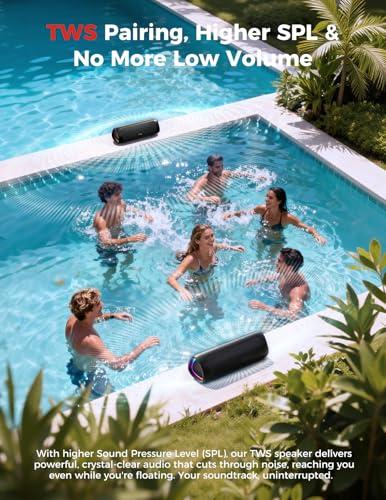
The X-Go C27C offers TWS (True Wireless Stereo) pairing between two identical units, creating a proper left-right stereo setup. While more limited than JBL's ecosystem, it does provide genuine stereo separation that neither speaker offers alone.
The JBL Charge 4's ability to charge other devices cannot be overstated as a practical advantage. During camping trips, beach days, or travel, your phone's battery drains faster than usual from constant Bluetooth streaming, GPS use, and photos. Having a speaker that can top up your devices eliminates range anxiety and keeps you connected when it matters most.
The BolaButty X-Go C27C includes multicolor LED light rings around its passive radiators that pulse and change color in sync with your music. While not essential for audio quality, these lights create an engaging party atmosphere and help the speaker stand out in crowded markets. You can cycle through different lighting modes or turn them off entirely to conserve battery.
While both are designed as portable speakers, they perform differently in home environments. The JBL Charge 4 works well as a temporary home theater speaker, providing enough volume and bass response to enhance TV audio in medium-sized rooms. Its balanced sound signature handles dialogue and sound effects reasonably well, though it can't match dedicated soundbars or home theater systems.
The X-Go C27C works better for casual TV watching in smaller spaces like bedrooms or dorm rooms, where its clear midrange helps dialogue intelligibility. However, action movies and content with significant low-frequency effects will sound thin and lacking impact.
Neither speaker offers true stereo sound alone—they're both mono speakers despite having multiple drivers. For genuine stereo separation, you'd need two units of either model.
You're working with a tight budget but still want modern features and surprisingly good performance. This speaker excels for students, casual listeners, and anyone who prioritizes maximum portability and battery life over ultimate audio quality. It's perfect for solo adventures, background music at home, or situations where you need something small and unobtrusive.
The X-Go C27C particularly shines for podcast listeners, audiobook fans, and people who primarily consume vocal-heavy content. Its clear midrange reproduction makes voices sound natural and engaging, while its marathon battery life means you won't need to worry about charging during long listening sessions.
You're willing to invest more for significantly better audio performance, robust construction, and practical features like device charging. This speaker targets serious music lovers, outdoor enthusiasts, and anyone who regularly entertains groups of people.
The Charge 4 excels in scenarios where audio quality matters: pool parties, camping trips with friends, beach gatherings, or as a substantial home speaker that can move between rooms. Its power bank functionality makes it invaluable for multi-day adventures where device charging becomes critical.
It's worth noting that both speakers reflect their release timeframes. The JBL Charge 4, being from 2018, represents mature Bluetooth speaker design with proven performance and reliability. JBL has since released newer models like the Charge 5, but the Charge 4 remains popular due to its established track record and often lower pricing.
The X-Go C27C, released in 2023, benefits from more recent manufacturing techniques and component costs that allow impressive features at ultra-budget prices. However, it comes from a less established brand, which brings both cost advantages and some uncertainty about long-term support and reliability.
The choice between these speakers ultimately comes down to your priorities and budget constraints. If you need the absolute best value and can live with moderate audio quality, the BolaButty X-Go C27C delivers remarkable capability for its price point. Its modern connectivity, exceptional battery life, and compact size make it an excellent choice for casual users.
However, if you care about audio quality, frequently use your speaker in group settings, or need the practical advantages of device charging, the JBL Charge 4 justifies its higher cost through superior performance and versatility. The difference in audio quality alone—particularly bass response and maximum volume—makes it worthwhile for anyone who regularly listens to music rather than just spoken content.
Consider your typical use cases honestly. Do you mostly listen to podcasts during commutes? The X-Go C27C handles that perfectly. Do you host backyard gatherings where music needs to compete with conversation and ambient noise? The Charge 4 becomes essential.
Both speakers succeed at what they're designed to do, but they're designed for different users with different needs and budgets. Understanding where you fit in that spectrum will lead you to the right choice for your portable audio needs.
| BolaButty X-Go C27C | JBL Charge 4 |
|---|---|
| Audio Power Output - Determines maximum volume and room-filling capability | |
| 10W total (adequate for small rooms and personal listening) | 30W RMS (powerful enough for outdoor gatherings and large spaces) |
| Driver Configuration - Affects sound quality and stereo imaging | |
| Dual 2-inch drivers with passive radiators | Single racetrack 50×90mm driver with dual JBL Bass Radiators |
| Frequency Response - Shows how well it reproduces bass and treble | |
| Not specified (moderate bass, clear mids/highs) | 60Hz–20kHz (proper bass extension for full-spectrum sound) |
| Battery Life - Critical for portable use and all-day listening | |
| Up to 24 hours (exceptional endurance for extended adventures) | Up to 20 hours (excellent life plus charges your devices) |
| Battery Capacity - Determines actual runtime and charging capability | |
| 2,500 mAh (lightweight but no device charging) | 7,500 mAh (powers speaker and acts as phone/tablet charger) |
| Water Resistance - Protection level for outdoor and water activities | |
| IPX5 (splash-resistant, handles rain and spills) | IPX7 (submersible up to 1 meter for 30 minutes) |
| Bluetooth Version - Affects connection quality, range, and battery efficiency | |
| Bluetooth 5.3 (latest standard with extended range and lower latency) | Bluetooth 4.2 (older but reliable, shorter range) |
| Wireless Range - How far you can be from your phone while streaming | |
| Up to 100 feet (excellent for large properties and outdoor use) | Standard range (typically 30-50 feet in real conditions) |
| Multi-Speaker Pairing - Ability to connect multiple speakers together | |
| TWS pairing (connects two X-Go C27C units for stereo) | JBL Connect+ (links 100+ compatible JBL speakers for massive setups) |
| Size and Portability - How easy it is to carry and pack | |
| Compact triangular design, lightweight (true pocket speaker) | 8.7" × 3.7" × 3.7", 2.12 lbs (substantial but manageable) |
| Charging Port and Connectivity - Modern standards and wired options | |
| USB-C charging, 3.5mm AUX input | USB-C charging, 3.5mm AUX input, USB-A output for device charging |
| Special Features - Unique capabilities that set each speaker apart | |
| Multicolor LED light show syncs with music, built-in microphone | Power bank function charges phones/tablets, no microphone |
| Build Quality and Durability - Construction materials and long-term reliability | |
| Lightweight plastic with rubberized controls (prioritizes portability) | Durable fabric and rubber housing (built for rough outdoor use) |
| Price Category - Value proposition and target market | |
| Ultra-budget (exceptional features for the price point) | Mid-range (proven performance justifies higher investment) |
The JBL Charge 4 delivers significantly better sound quality with its 30W output, deeper bass response (60Hz-20kHz), and balanced audio profile. The BolaButty X-Go C27C offers clear mids and highs through dual 2-inch drivers but lacks the bass depth and overall power for music enthusiasts. If sound quality is your priority, the JBL Charge 4 is the clear winner.
The BolaButty X-Go C27C offers exceptional 24-hour battery life, making it ideal for extended adventures without charging access. The JBL Charge 4 provides up to 20 hours but includes a crucial advantage: it can charge your phone and tablets through its USB-A port, acting as a power bank during outdoor activities.
The BolaButty X-Go C27C wins on portability with its compact triangular design and lightweight construction that easily fits in backpacks. The JBL Charge 4 is larger (8.7" × 3.7" × 3.7") and heavier at 2.12 pounds, making it less convenient for frequent travel but more substantial for stationary use.
The JBL Charge 4 offers superior outdoor protection with IPX7 waterproofing, allowing complete submersion up to 1 meter for 30 minutes—perfect for poolside and beach use. The BolaButty X-Go C27C has IPX5 rating that handles splashes and rain but won't survive being dropped in water.
The JBL Charge 4 produces significantly more volume with its 30W output, easily filling large outdoor spaces and competing with ambient noise at parties. The BolaButty X-Go C27C with 10W output works well for small gatherings but lacks the power for larger events or noisy environments.
The JBL Charge 4 serves as a capable temporary home theater speaker for medium-sized rooms, providing enough bass and volume to enhance TV audio significantly. The BolaButty X-Go C27C works better for smaller spaces like bedrooms, offering clear dialogue but lacking the bass impact for action movies and dynamic content.
The BolaButty X-Go C27C uses modern Bluetooth 5.3 with up to 100-foot range, lower latency, and better power efficiency—excellent for video watching and extended coverage. The JBL Charge 4 uses older Bluetooth 4.2 with standard range but proven reliability for music streaming and device connections.
The BolaButty X-Go C27C provides exceptional value at its budget price point, delivering modern features like Bluetooth 5.3 and 24-hour battery life. The JBL Charge 4 costs significantly more but justifies the investment with superior audio quality, robust construction, and power bank functionality for serious users.
Both speakers offer multi-speaker options but differently. The JBL Charge 4 uses JBL Connect+ to link with over 100 compatible JBL speakers for massive audio systems. The BolaButty X-Go C27C offers TWS pairing between two identical units to create true stereo sound separation.
The JBL Charge 4 excels with bass-heavy genres thanks to its dual passive bass radiators and frequency response extending to 60Hz, providing the low-end impact these music styles demand. The BolaButty X-Go C27C struggles with deep bass reproduction, making electronic and hip-hop music sound thin and lacking punch.
Both speakers feature modern USB-C charging ports for convenience. However, the JBL Charge 4 adds a USB-A output port that transforms it into a power bank for charging phones and tablets—invaluable during camping or beach trips. The BolaButty X-Go C27C focuses solely on audio playback without device charging capability.
Choose the JBL Charge 4 if you need robust audio quality, device charging capability, and full waterproof protection for serious outdoor adventures. Select the BolaButty X-Go C27C if you prioritize ultralight portability, marathon battery life, and budget-friendly performance for solo adventures and casual outdoor use.
We've done our best to create useful and informative comparisons to help you decide what product to buy. Our research uses advanced automated methods to create this comparison and perfection is not possible - please contact us for corrections or questions. These are the sites we've researched in the creation of this article: youtube.com - ifixit.com - qtooth.com - bolabutty.com - youtube.com - youtube.com - youtube.com - youtube.com - youtube.com - youtube.com - review-rating.com - youtube.com - youtube.com - poshmark.com - youtube.com - device.report - rtings.com - whathifi.com - whathifi.com - soundguys.com - soundguys.com - streamtechreviews.com - youtube.com - versus.com - applevis.com - versus.com - jbl.com - jbl.com - walmart.com - comparisontabl.es - harmanaudio.com - manuals.plus - jbl.com.sg - jbl.com - mm.jbl.com - bestbuy.com - newpower99.com - forums.woot.com

Privacy Policy
Terms and Conditions - Affiliate Policy
Home Security
© Copyright 2008-2026.
11816 Inwood Rd #1211, Dallas, TX 75244