




When shopping for a portable Bluetooth speaker, you'll quickly discover that "portable" means very different things to different manufacturers. The JBL Go 3 and Sony XE200 perfectly illustrate this divide—both claim portability, but they represent fundamentally different approaches to mobile audio.
Released in 2021, the JBL Go 3 arrived as part of JBL's refresh of their ultra-compact speaker line, while the Sony XE200 launched in 2022 as Sony's attempt to bridge the gap between true portability and enhanced performance. Since their releases, both have remained largely unchanged, though firmware updates have refined their Bluetooth connectivity and app integration where applicable.
Before diving into specifics, it's worth understanding what makes a good portable speaker. Unlike home speakers that can rely on wall power and don't need to move, portable speakers face constant trade-offs between size, sound quality, battery life, and durability.
The most critical considerations are portability versus performance—smaller speakers travel easier but typically sacrifice audio quality and volume. Battery life becomes crucial since you can't always find an outlet outdoors. Water resistance matters for pool parties and beach trips. And increasingly, connectivity features like the ability to pair multiple speakers or connect to multiple devices simultaneously have become important differentiators.
The JBL Go 3 and Sony XE200 represent opposite ends of the portable speaker philosophy. JBL prioritized ultimate mobility, creating a speaker that weighs less than half a pound and easily clips to your bag. Sony chose a middle ground, accepting larger size and weight in exchange for longer battery life and more advanced features.
This fundamental difference shapes everything about these speakers, from their physical design to their intended use cases. Understanding which philosophy matches your needs will largely determine which speaker serves you better.
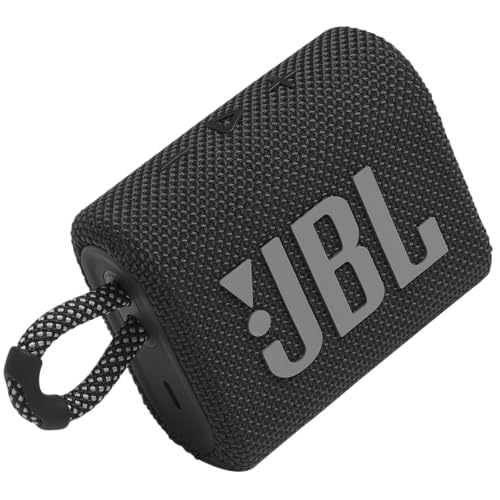
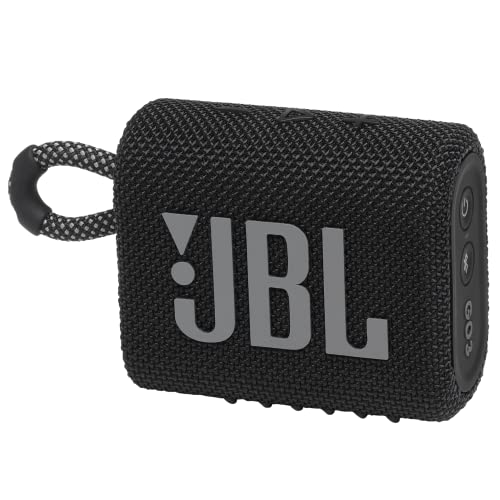
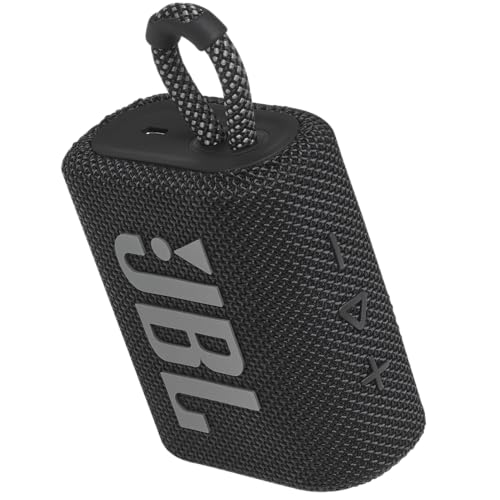
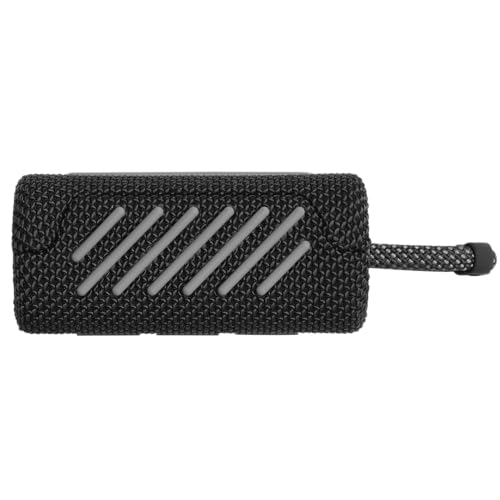
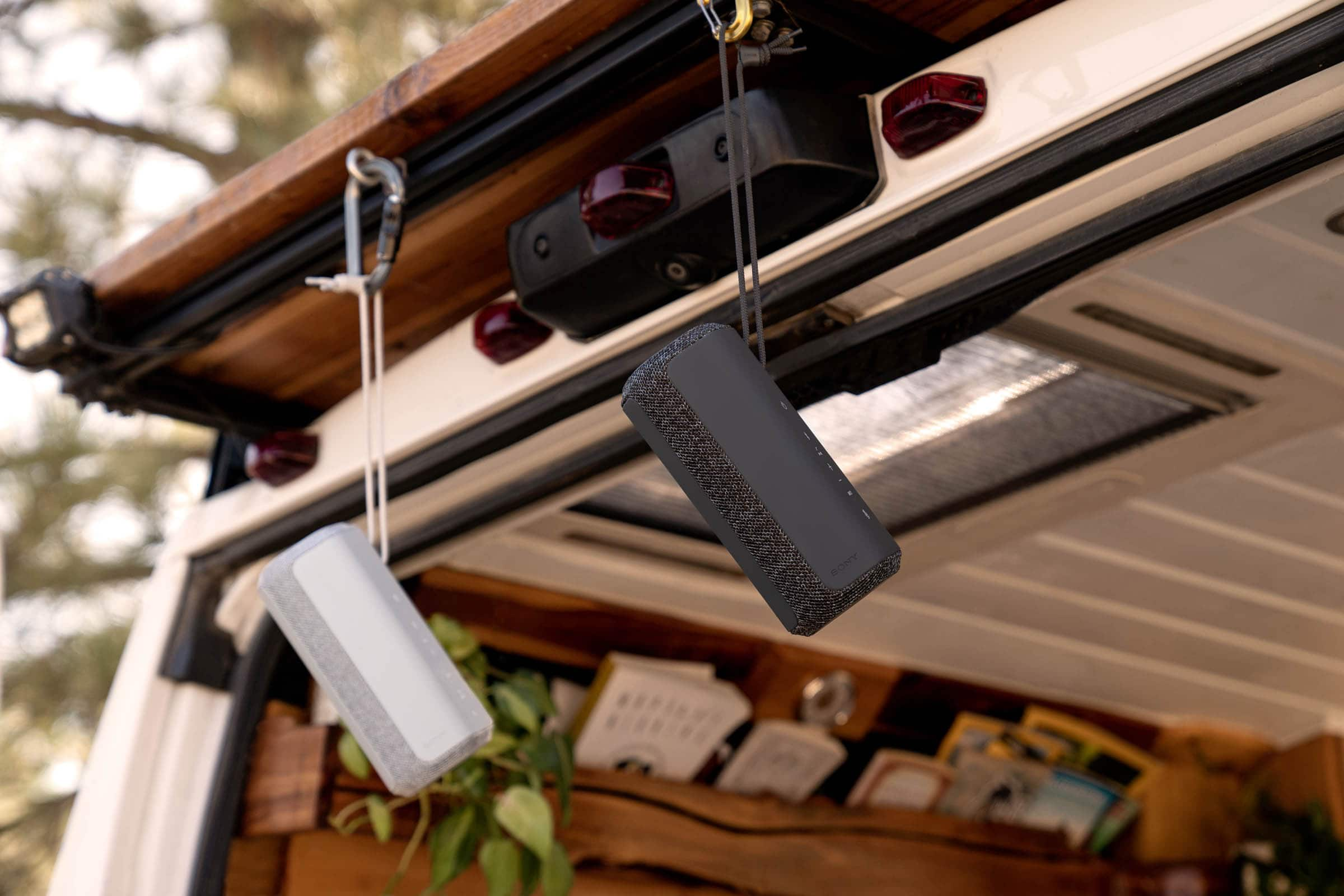
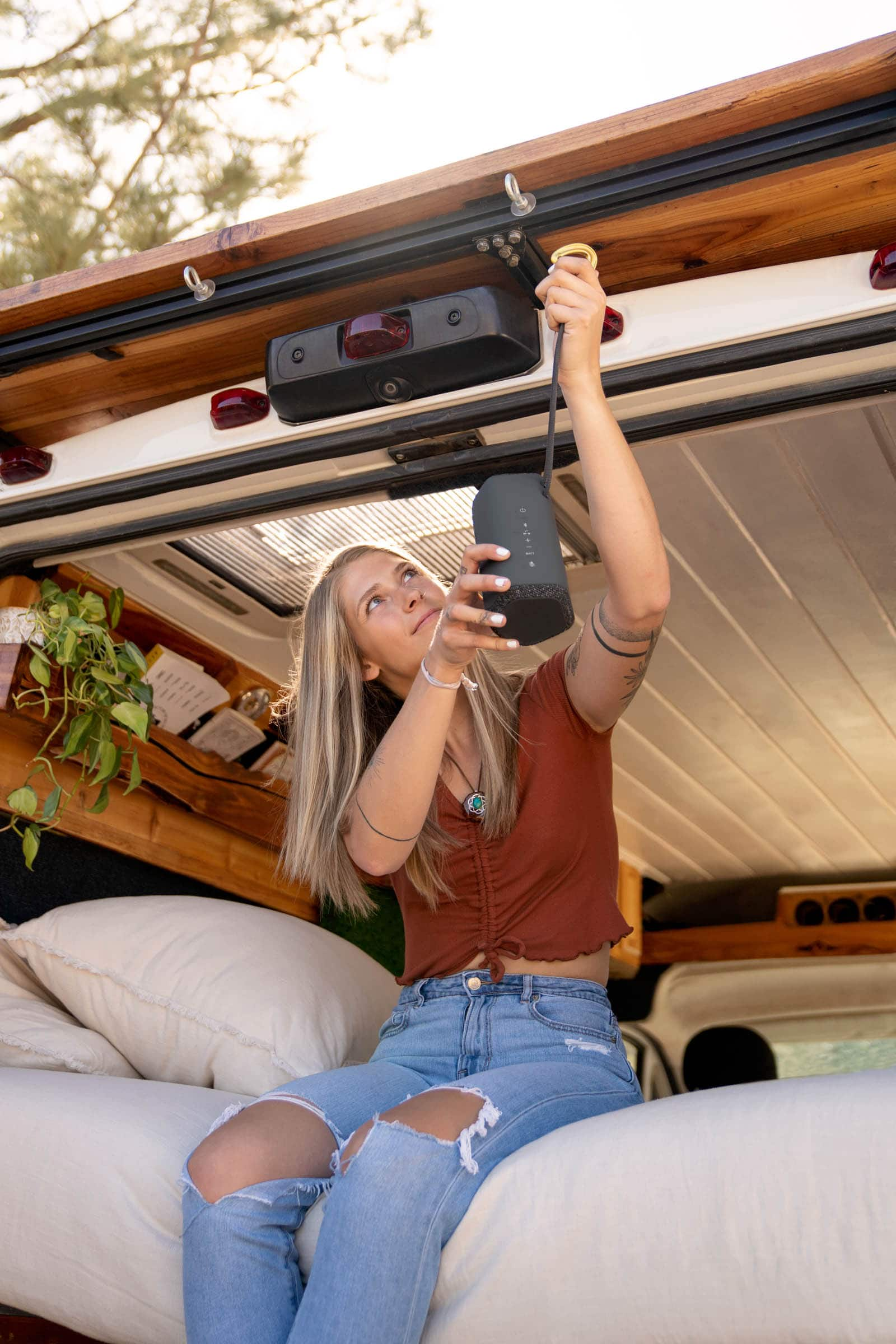
The size difference between these speakers is immediately obvious. The JBL Go 3 measures just 3.4 x 2.7 x 1.6 inches and weighs 0.46 pounds—small enough to slip into a jacket pocket. Its rounded, fabric-covered design includes an integrated loop that lets you clip it to backpacks, bike handlebars, or shower hooks. This loop isn't just convenient; it's essential for the Go 3's ultra-mobile philosophy.
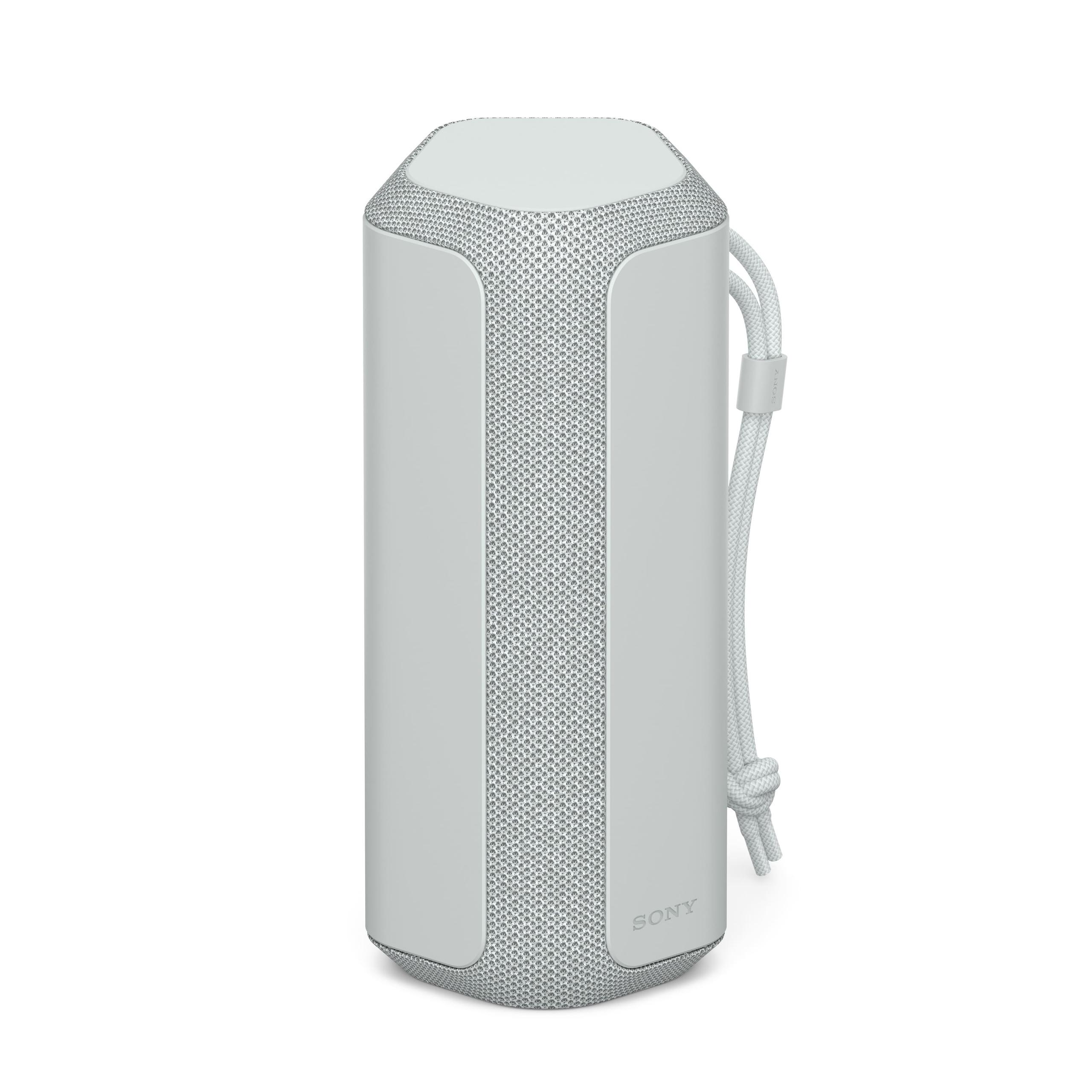
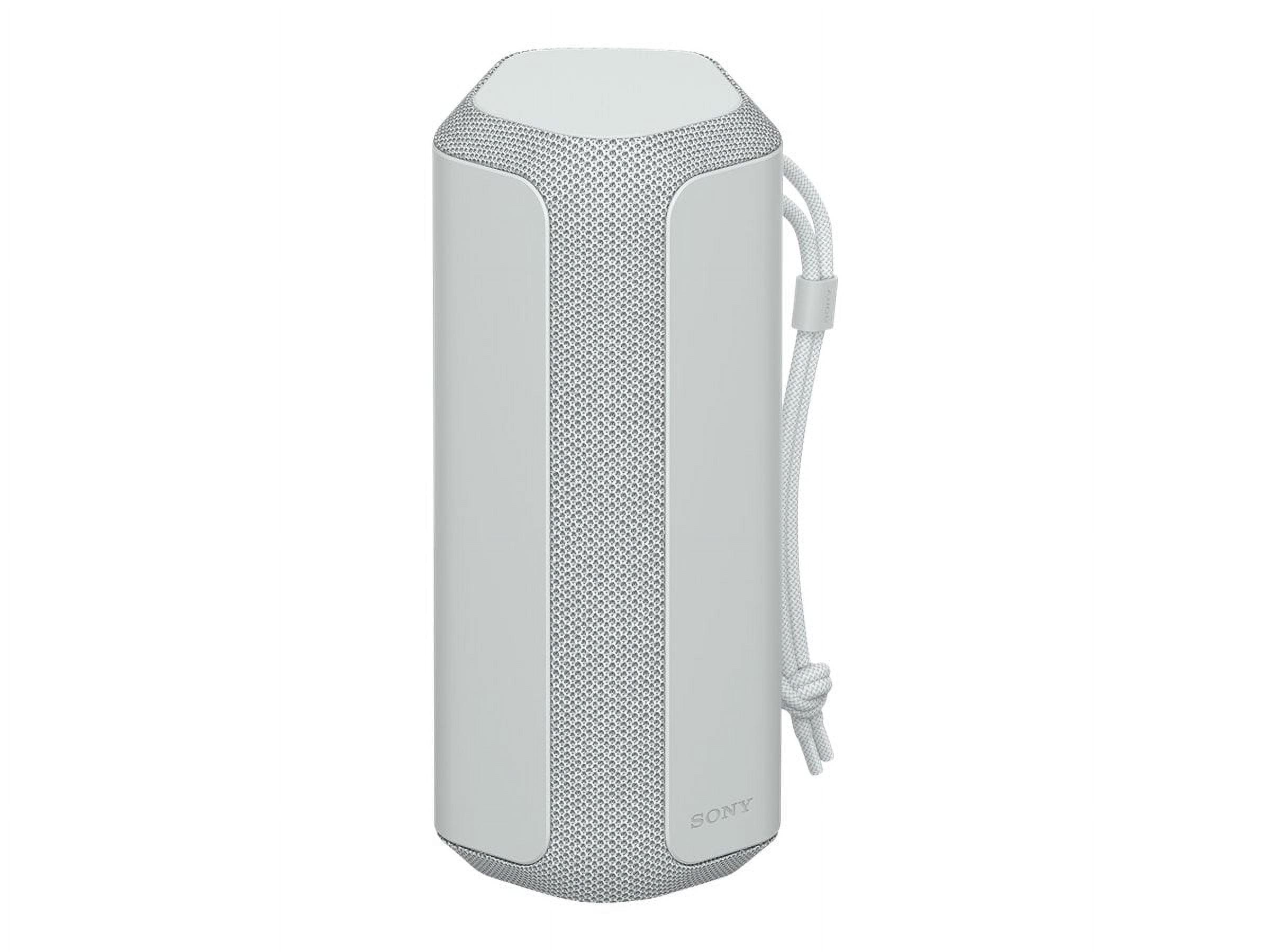
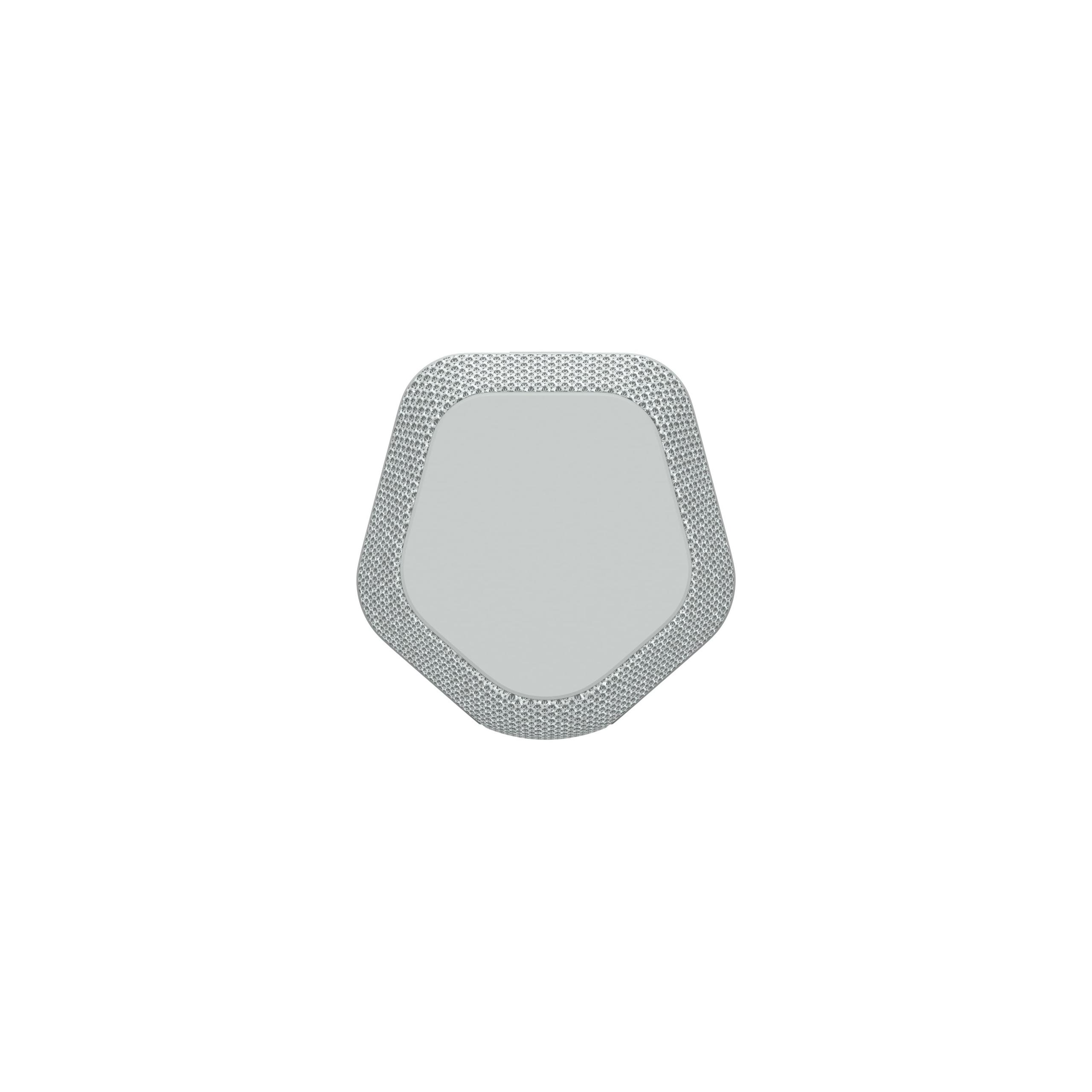
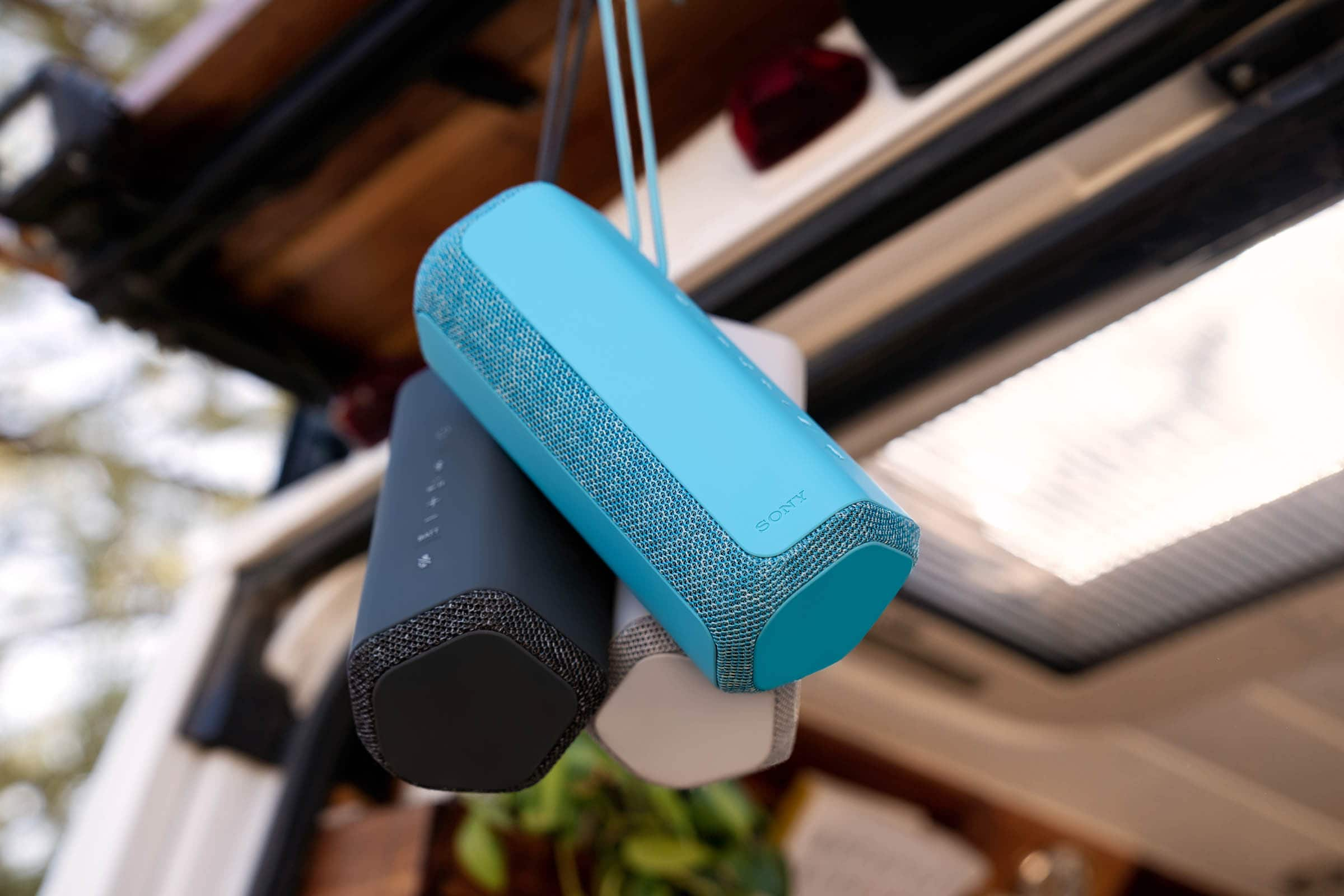
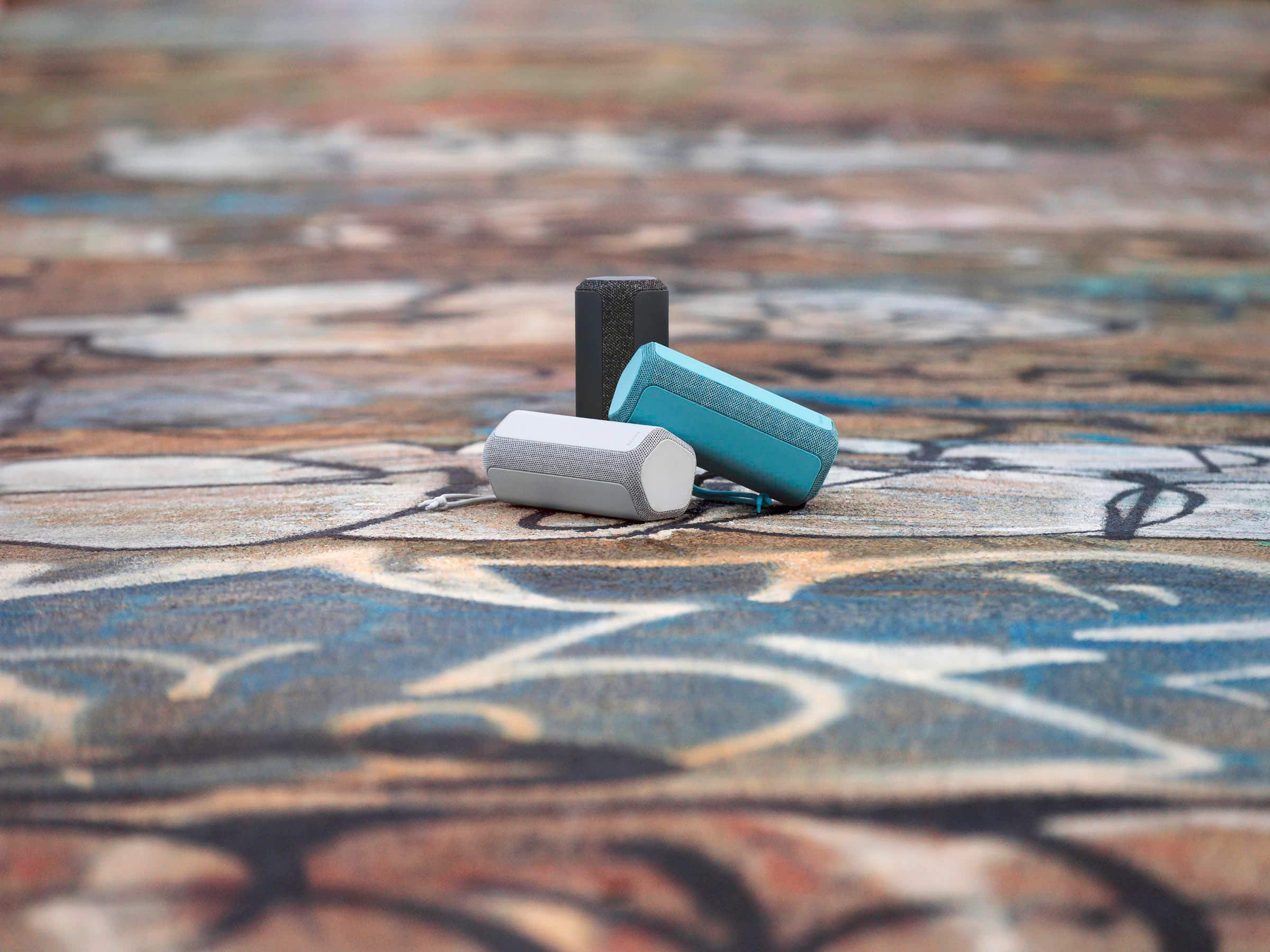
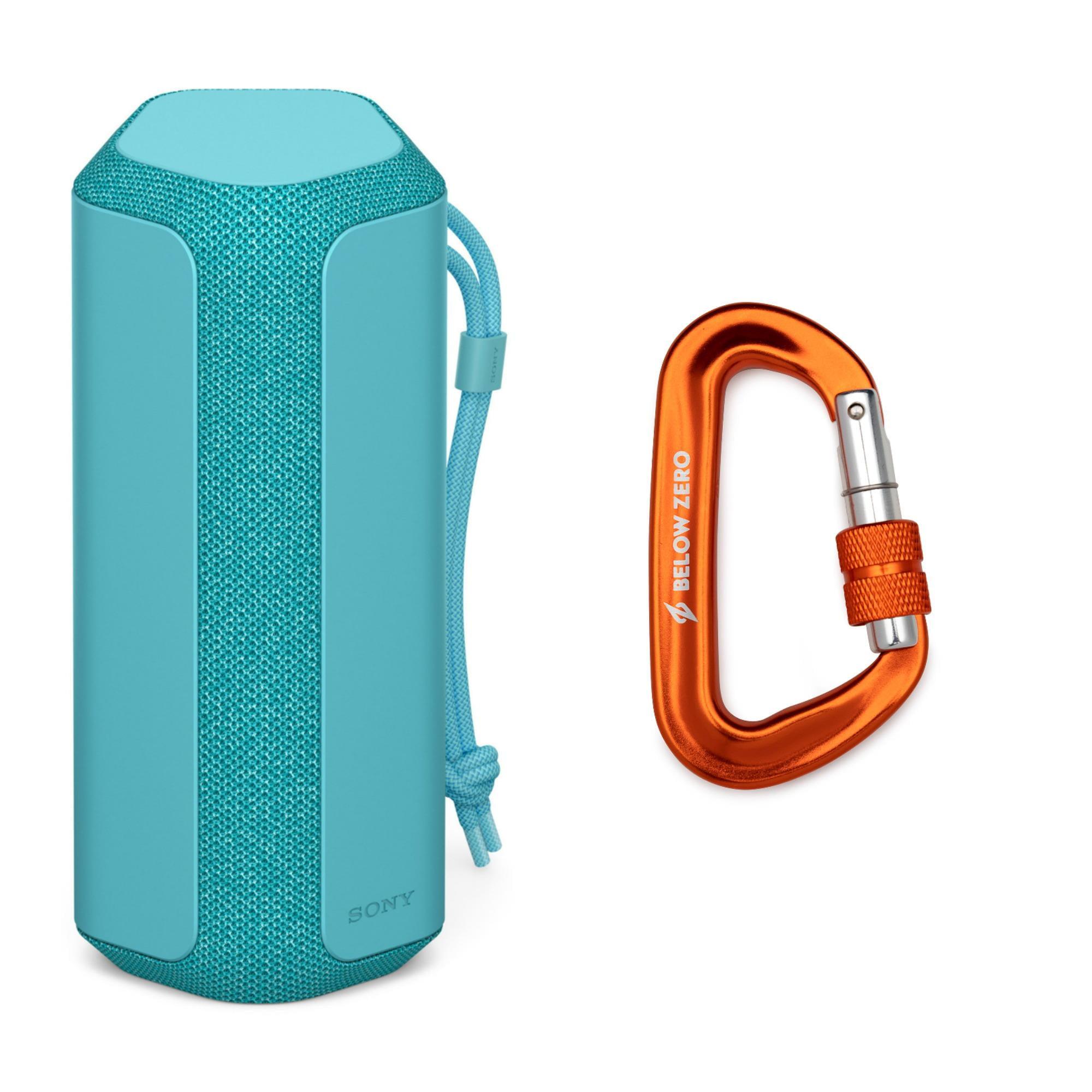
The Sony XE200, at roughly 3.5 x 8.2 x 3.7 inches and 1.76 pounds, occupies nearly seven times more volume. While still technically portable, it's designed more for "carry to location and set down" use rather than "attach and forget" mobility. Sony shaped it like a pentagon meant to stand vertically, optimizing sound dispersion rather than pocketability.
The fabric coverings on both speakers serve practical purposes beyond aesthetics. The tight weave provides grip and weather resistance while the materials help with acoustic properties—fabric doesn't resonate like plastic, reducing unwanted vibrations that can muddy sound quality.
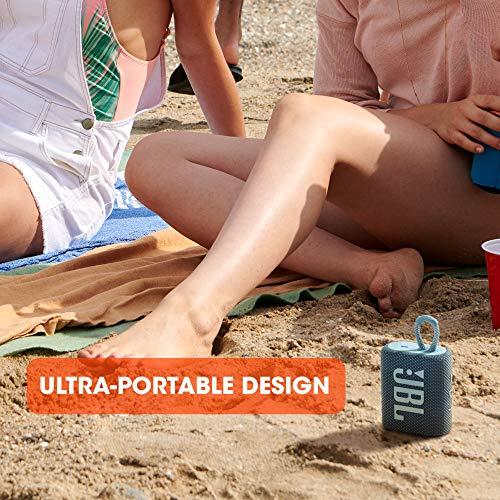
For true mobility—hiking, cycling, daily commutes—the JBL Go 3 wins decisively. For situations where you'll carry the speaker to a location and leave it there—beach days, backyard gatherings—the Sony XE200's larger size becomes less problematic.
Audio quality in portable speakers involves constant battles against physics. Smaller drivers (the components that create sound) and smaller enclosures naturally limit how much bass you can produce and how loud you can play without distortion. Both manufacturers employ clever engineering to work within these constraints, but their solutions differ significantly.
The JBL Go 3 uses what JBL calls "Pro Sound" technology, which is essentially careful tuning to maximize perceived audio quality within extreme size constraints. Its single 43 x 47mm driver operates across a frequency range of 110Hz to 20kHz—respectable for such a tiny speaker. The key insight here is that JBL prioritized vocal clarity and midrange performance over deep bass, recognizing that tiny speakers can't produce meaningful low-end anyway.
This tuning shows in real-world performance. Podcasts and vocal-heavy music sound remarkably clear and present on the Go 3. The speaker delivers what reviewers consistently describe as "surprisingly punchy bass" for its size, though this "bass" is really well-tuned midbass around 140-200Hz rather than the deep sub-bass (below 80Hz) that creates the rumble in hip-hop and electronic music.
The Sony XE200 takes a more complex approach with its "Line-Shape Diffuser" and "X-balanced speakers." The Line-Shape Diffuser is Sony's term for acoustic design that spreads sound wider than traditional circular drivers—imagine the difference between a flashlight beam and a lantern's glow. The X-balanced speakers use non-circular driver shapes that Sony claims reduce distortion and improve clarity.
On paper, this sounds impressive. In practice, user reviews consistently describe the XE200's sound as disappointingly flat and lacking in bass despite its larger size. The wider sound dispersion works, but the overall audio character lacks the engaging quality that makes the smaller JBL Go 3 more satisfying to listen to.
The JBL Go 3 delivers 4.2 watts RMS (Root Mean Square—a measure of continuous power output), while specific power ratings for the Sony XE200 aren't widely published, though its larger size suggests higher output capability.
More important than raw wattage is how cleanly each speaker handles volume increases. The Go 3 starts showing compression and distortion at high volumes, particularly with bass-heavy content. However, its small size means you're unlikely to push it to painful volumes anyway. The XE200, being larger, can play louder before distorting, but its flat sound signature means increased volume doesn't necessarily translate to more engaging audio.
This is where the Sony XE200 shows a clear technical advantage. It supports multiple Bluetooth codecs including LDAC, Sony's high-resolution wireless audio format that can transmit three times more data than standard SBC (Sub-Band Codec). For Android users with compatible devices, this means noticeably better audio quality, particularly in the high frequencies where compressed audio usually suffers.
The JBL Go 3 only supports SBC, the most basic Bluetooth audio codec. While this ensures universal compatibility, it can cause slight audio-video sync issues when watching movies and doesn't provide the audio fidelity that LDAC offers. For most music listening, particularly given the Go 3's small drivers, this limitation isn't practically significant.
Battery life represents the most dramatic difference between these speakers. The Sony XE200's 16-hour rated battery life dramatically outperforms the JBL Go 3's 5-hour rating, though real-world testing suggests the Go 3 often exceeds its rating at moderate volumes.
More importantly, the XE200 includes quick-charging technology—10 minutes of charging provides 70 minutes of playback. This feature proves invaluable for spontaneous gatherings or when you forget to charge overnight. The Go 3 lacks quick charging and takes 2.5 hours for a complete charge cycle.
For day-long events, camping trips, or situations where charging opportunities are limited, the XE200's battery advantage is decisive. For shorter sessions or situations where you can charge regularly, the Go 3's battery life proves adequate.
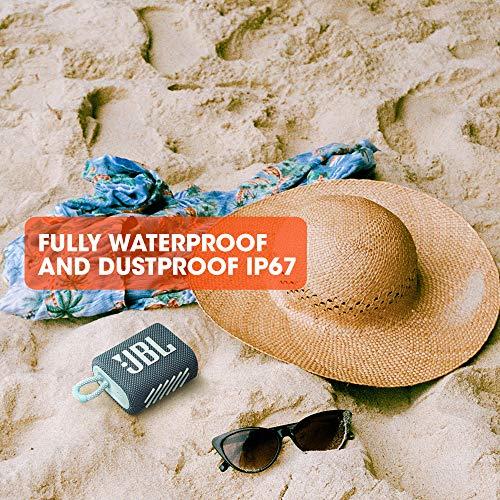
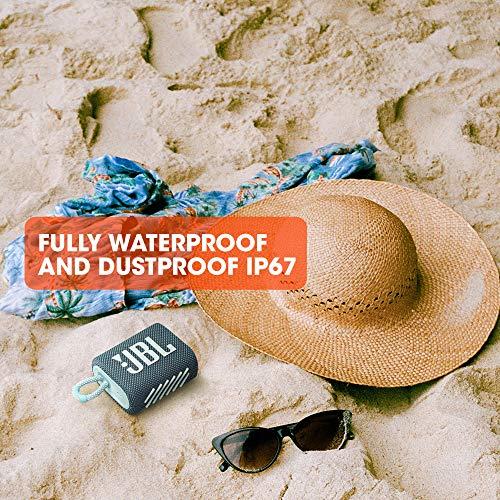
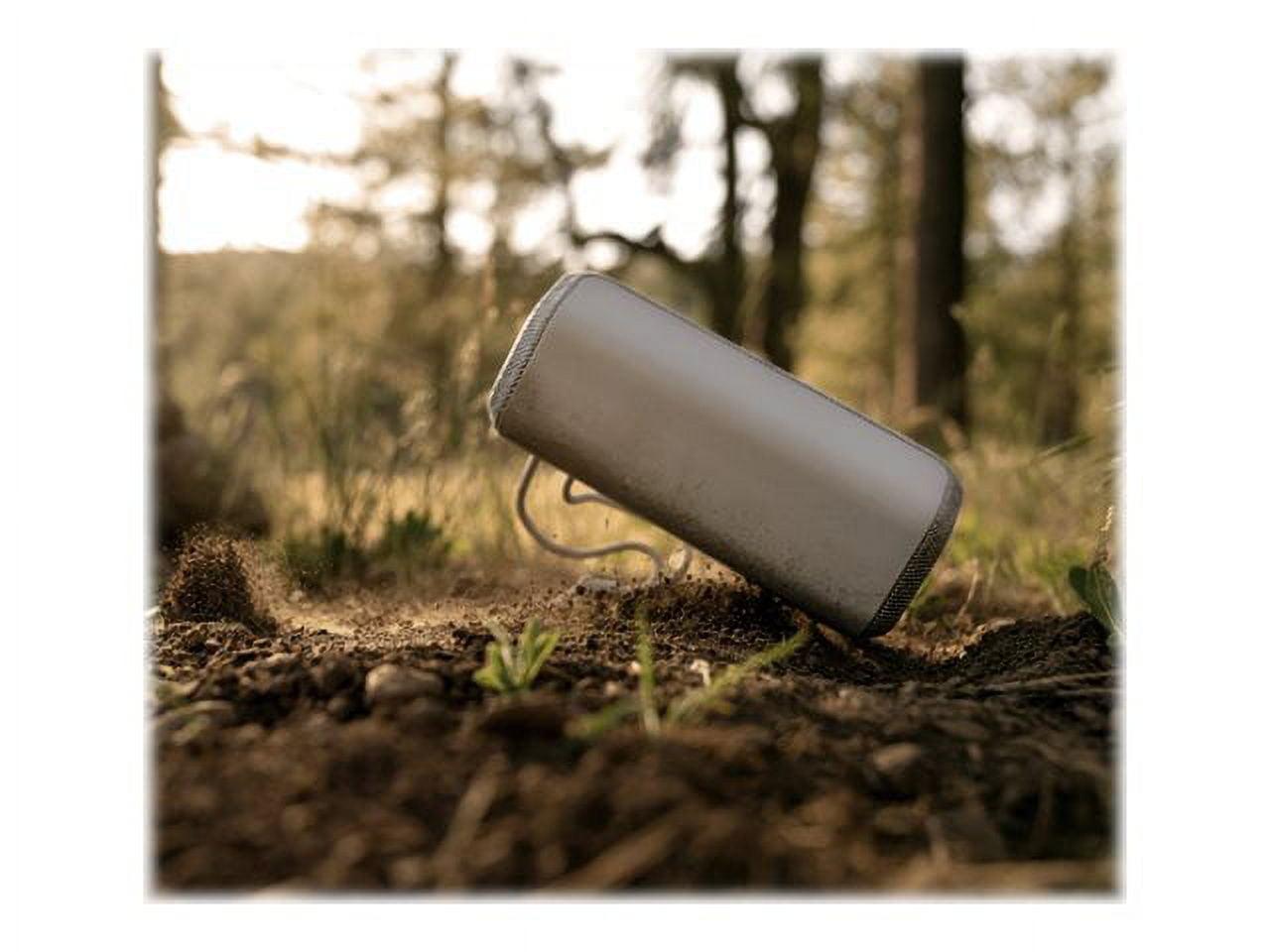
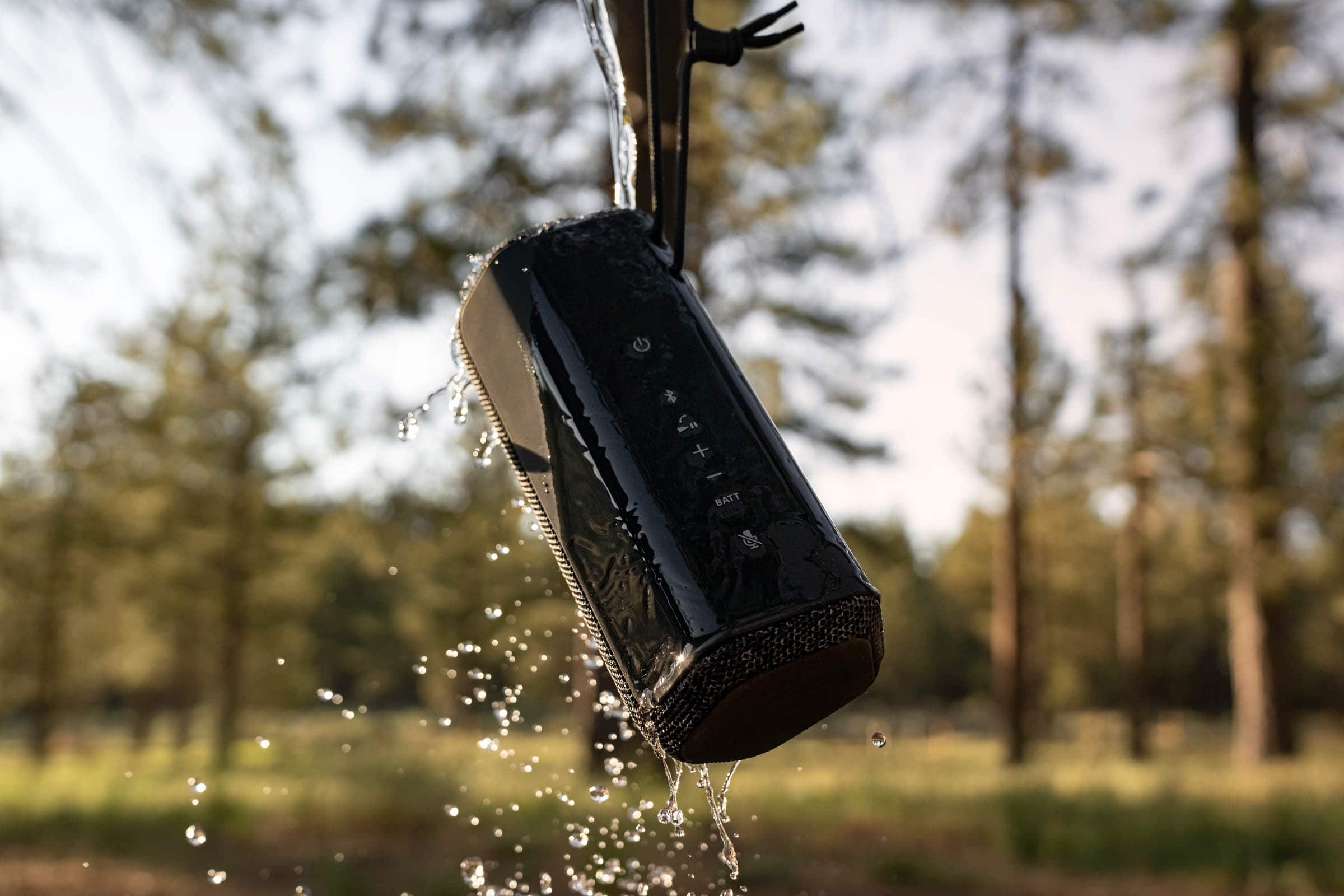
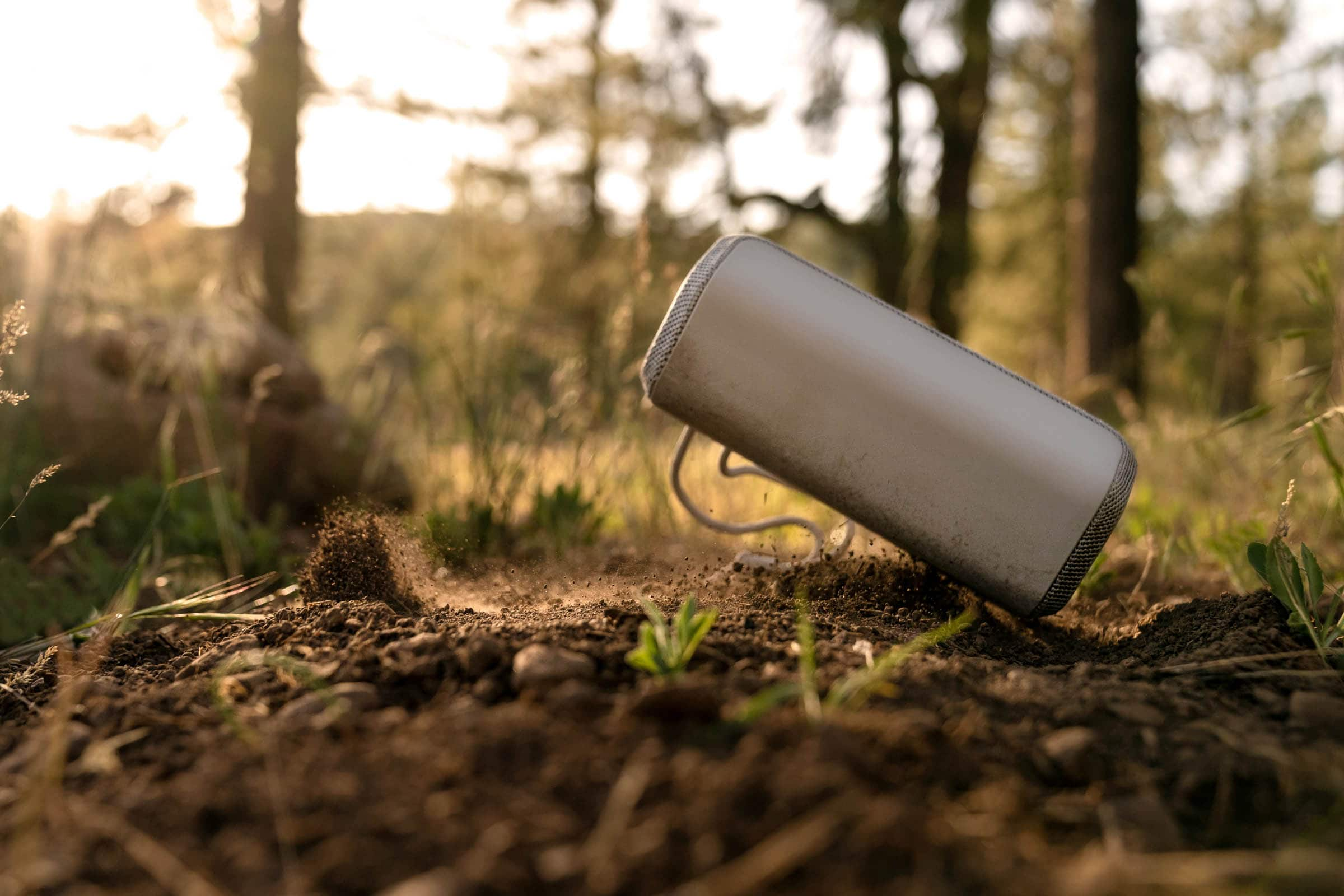
Both speakers earn IP67 ratings, meaning they're completely dust-tight and can survive submersion in up to one meter of water for 30 minutes. This rating covers most real-world scenarios—rain, splashes, accidental drops in shallow water—though neither is designed for swimming pool retrieval or extended underwater use.
The JBL Go 3's fabric construction and rubber accents provide good drop protection, while its small size reduces impact force in falls. The Sony XE200's larger size makes it more stable on surfaces but potentially more damaging to itself (and other things) if dropped.
Both speakers handle outdoor conditions well, though the Go 3's attachment loop makes it less likely to fall in the first place.
Modern Bluetooth speakers increasingly compete on smart features rather than just audio quality. The Sony XE200 dominates this category with multipoint connectivity (connecting to two devices simultaneously), Party Connect technology (linking up to 100 compatible Sony speakers), and comprehensive app support through Sony's Music Center application.
The Party Connect feature deserves special attention. While connecting 100 speakers sounds excessive, the ability to link even two or three speakers transforms sound coverage for larger gatherings. The XE200 also supports stereo pairing, where two speakers create true left-right stereo separation rather than each playing mono.
The JBL Go 3 offers none of these features. It connects to one device at a time, has no app support, and can't pair with other speakers. Its feature set is intentionally minimal—power button, Bluetooth pairing, volume controls, and play/pause. This simplicity matches its ultra-portable philosophy but limits versatility.
For hands-free calling, the XE200 includes echo cancellation technology for clearer phone conversations. The Go 3 lacks microphone functionality entirely.
Neither speaker is designed for home theater use, but understanding their limitations helps set expectations. Both are mono speakers, meaning they can't provide the stereo separation that makes movies engaging. Their small drivers can't reproduce the dynamic range that movie soundtracks demand.
However, the Sony XE200's stereo pairing capability makes it more viable for casual movie watching if you purchase two units. The JBL Go 3 remains strictly a personal audio device.
For actual home theater use, both speakers work better as dialogue enhancement for small TVs or tablets rather than primary audio sources.
At the time of writing, these speakers typically occupy different price tiers, with the JBL Go 3 usually positioned as a premium ultra-compact option while the Sony XE200 competes in the mid-range portable category.
The value proposition depends entirely on your priorities. The Go 3 charges a premium for exceptional portability and reliable audio quality in an impossibly small package. You're paying for engineering expertise in miniaturization and JBL's reputation for audio tuning.
The XE200 offers more features and longer battery life, often at comparable or lower pricing. However, the consistent user complaints about audio quality suggest you're trading listening satisfaction for technical specifications.
Choose the JBL Go 3 if you:
Choose the Sony XE200 if you:
The JBL Go 3 succeeds brilliantly at its intended purpose: delivering surprisingly good audio in an impossibly small package. It's the speaker equivalent of a Swiss Army knife—compact, reliable, and focused on doing essential tasks well. The integrated loop and fabric construction show thoughtful design for real-world ultra-mobile use.
The Sony XE200 attempts to serve multiple masters and succeeds partially at each. Its extended battery life and advanced connectivity features are genuinely useful, but the disappointing audio quality undermines its core purpose as a speaker.
For most people considering these specific options, the JBL Go 3 provides greater daily satisfaction despite its limitations. Its audio quality exceeds expectations while its portability enables use cases impossible with larger speakers. The Sony XE200 makes more sense for users who specifically need its longer battery life or multi-speaker connectivity features.
Ultimately, both speakers remind us that in portable audio, compromise is inevitable. The question isn't which speaker is objectively better, but which compromises align with your specific needs and usage patterns. The JBL Go 3 compromises features and battery life for unmatched portability and satisfying audio. The Sony XE200 compromises audio quality and portability for features and endurance. Choose the compromise you can live with.
| JBL Go 3 | Sony XE200 |
|---|---|
| Size & Weight - Critical for true portability | |
| 3.4" x 2.7" x 1.6", 0.46 lbs (ultra-compact, pocket-friendly) | 3.5" x 8.2" x 3.7", 1.76 lbs (much larger, requires bag space) |
| Battery Life - Determines usage duration | |
| 5 hours rated, up to 10+ hours real-world at moderate volume | 16 hours rated with quick charge (10 min = 70 min playback) |
| Audio Output Power - Affects maximum volume | |
| 4.2W RMS (surprisingly loud for size) | Higher output (exact specs not published, noticeably louder) |
| Sound Quality - Most important for listening satisfaction | |
| Clear vocals, punchy midbass, limited deep bass but satisfying | Wider soundstage but consistently described as flat and bass-weak |
| Water Resistance - Protection for outdoor use | |
| IP67 (waterproof/dustproof, survives submersion) | IP67 (identical protection level) |
| Bluetooth Codec Support - Affects audio quality | |
| SBC only (universal compatibility, potential video lag) | SBC, AAC, LDAC (higher quality audio on compatible devices) |
| Multi-Device Features - Connectivity convenience | |
| Single device connection, no app support | Multipoint (2 devices), Party Connect (100 speakers), app control |
| Physical Design - Attachment and placement options | |
| Integrated fabric loop for easy attachment anywhere | Vertical pentagonal design, optimized for surface placement |
| Hands-Free Calling - Communication capability | |
| No microphone functionality | Built-in mic with echo cancellation technology |
| Value Proposition - What you get for the money | |
| Premium for exceptional portability and reliable audio quality | More features and battery life, often at competitive pricing |
The JBL Go 3 is significantly more portable, weighing just 0.46 pounds and measuring only 3.4" x 2.7" x 1.6". It includes an integrated fabric loop for easy attachment to bags or gear. The Sony XE200 is much larger at 1.76 pounds and requires dedicated bag space, making the JBL Go 3 the clear winner for true mobility.
The Sony XE200 dominates with 16 hours of battery life compared to the JBL Go 3's 5-hour rating. The Sony XE200 also includes quick charging—just 10 minutes provides 70 minutes of playback. For all-day events or extended use, the Sony XE200 is the obvious choice.
Despite its smaller size, the JBL Go 3 consistently receives better reviews for audio satisfaction. It delivers clear vocals and surprisingly punchy bass for its size. The Sony XE200, while technically more advanced, is frequently described as having flat, disappointing sound quality despite being larger.
Only the Sony XE200 supports hands-free calling with built-in microphone and echo cancellation technology. The JBL Go 3 has no microphone functionality, so it cannot be used for phone calls or voice assistant interactions.
Both speakers offer identical IP67 water and dust resistance, but serve different outdoor scenarios. The JBL Go 3 excels for active outdoor use like hiking or cycling due to its attachment loop and ultra-compact size. The Sony XE200 is better for stationary outdoor gatherings where its longer battery life and louder volume are advantageous.
The Sony XE200 supports multipoint connectivity, allowing connection to two Bluetooth devices simultaneously. It also features Party Connect for linking up to 100 compatible speakers. The JBL Go 3 only connects to one device at a time with no multi-speaker capabilities.
Value depends on your priorities. The JBL Go 3 offers premium portability and satisfying audio quality in an ultra-compact design. The Sony XE200 typically provides more features, longer battery life, and advanced connectivity at competitive pricing, making it better value for feature-focused users.
The Sony XE200 works with Sony's Music Center app for sound customization, stereo pairing, and Party Connect setup. The JBL Go 3 has no app support and relies entirely on basic onboard controls for power, volume, and playback functions.
The Sony XE200 can play louder due to its larger size and higher power output. However, the JBL Go 3 delivers impressive volume for its tiny size with 4.2W RMS output. For personal listening, the JBL Go 3 provides adequate volume, while the Sony XE200 better serves group settings.
Both speakers charge via USB-C, but the Sony XE200 includes quick charging technology for convenience. The JBL Go 3 takes 2.5 hours for a full charge, while the Sony XE200 takes 3 hours but offers that valuable quick-charge feature for emergency power boosts.
The Sony XE200 supports LDAC codec for high-resolution wireless audio on compatible Android devices, along with AAC and SBC codecs. The JBL Go 3 only supports basic SBC codec, which may cause slight audio-video sync issues but ensures universal device compatibility.
Neither the JBL Go 3 nor Sony XE200 are designed for home theater applications. Both are mono speakers lacking the stereo separation and dynamic range needed for movie soundtracks. The Sony XE200 can be paired with a second unit for stereo sound, making it slightly more viable for casual TV watching, but dedicated home theater speakers would be more appropriate for serious movie viewing.
We've done our best to create useful and informative comparisons to help you decide what product to buy. Our research uses advanced automated methods to create this comparison and perfection is not possible - please contact us for corrections or questions. These are the sites we've researched in the creation of this article: rtings.com - streamtechreviews.com - english.achoreviews.com - smarthomesounds.co.uk - soundguys.com - rtings.com - walmart.com - soundguys.com - youtube.com - youtube.com - jbl.com - youtube.com - selectoguru.com - versus.com - videoandaudiocenter.com - harmanaudio.com - jbl.com - bestbuy.com - forum.hifiguides.com - manuals.plus - kh.jbl.com - th.jbl.com - mm.jbl.com - jbl.com - bestbuy.com - youtube.com - youtube.com - youtube.com - jbl.com - bestbuy.com - bestbuy.com - jbl.com.tw - youtube.com - sony.com - gymcaddy.net - sony.co.uk - bestbuy.com - sony.com - bhphotovideo.com - youtube.com - sony.com - helpguide.sony.net - soundguys.com - sony.com - sonylatvija.com

Privacy Policy
Terms and Conditions - Affiliate Policy
Home Security
© Copyright 2008-2026.
11816 Inwood Rd #1211, Dallas, TX 75244