



Choosing the right Bluetooth speaker can feel overwhelming with so many options on the market. Today we're comparing two fundamentally different approaches to portable audio: the JBL Charge 4, a truly portable speaker from 2018, and the Ultimate Ears HYPERBOOM, a party-focused powerhouse released in 2020. While both connect wirelessly to your devices, they serve completely different needs and lifestyles.
Understanding these differences is crucial because the wrong choice could leave you either lugging around an unnecessarily heavy speaker on hiking trips or struggling to fill your backyard with adequate sound during gatherings. Let's dive deep into what makes each speaker unique and help you decide which one deserves your hard-earned money.
The portable Bluetooth speaker market has evolved significantly since the early 2010s. What started as simple wireless alternatives to phone speakers has branched into distinct categories, each optimized for different use cases. At the most basic level, you need to consider whether you want a speaker that prioritizes true portability or maximum audio performance.
True portable speakers like the JBL Charge 4 are designed to go anywhere you do. They're lightweight enough for backpacks, rugged enough for outdoor adventures, and efficient enough to last through long camping trips. These speakers typically sacrifice some audio quality and volume to achieve their compact size and extended battery life.
Party speakers like the Ultimate Ears HYPERBOOM take the opposite approach. They're built to deliver room-filling sound that can compete with background noise at gatherings. While still technically "portable," they're more accurately described as "relocatable" – easy to move from room to room or out to the patio, but not something you'd want to carry on a hiking trail.
The key performance metrics that separate good speakers from great ones include frequency response (how well they reproduce different pitches), dynamic range (the difference between quiet and loud sounds), and total harmonic distortion (how much the speaker adds unwanted noise to your music). Sound pressure level, measured in decibels, determines how loud a speaker can get, while driver configuration affects how that sound is distributed.
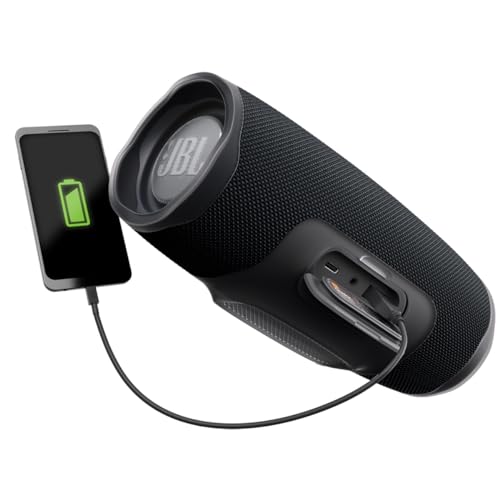
The JBL Charge 4 represents JBL's refined approach to portable audio, building on years of experience in the compact speaker market. Released in 2018, it includes modern features like USB-C charging and improved battery efficiency, reflecting the technological advances of its era. JBL positioned this speaker as the intersection of portability, durability, and utility – the last point being crucial since it doubles as a power bank for charging your devices.
Meanwhile, the Ultimate Ears HYPERBOOM arrived in 2020 as UE's answer to the growing demand for high-powered portable speakers. This timing allowed it to incorporate newer Bluetooth technology and more sophisticated digital signal processing. UE designed the HYPERBOOM specifically for users who wanted festival-quality sound without the permanent installation requirements of traditional home audio systems.
Both speakers reflect their manufacturers' core strengths. JBL has long been known for rugged, outdoor-friendly designs that prioritize practicality, while Ultimate Ears has built its reputation on bold styling and impressive audio engineering, particularly in bass reproduction.
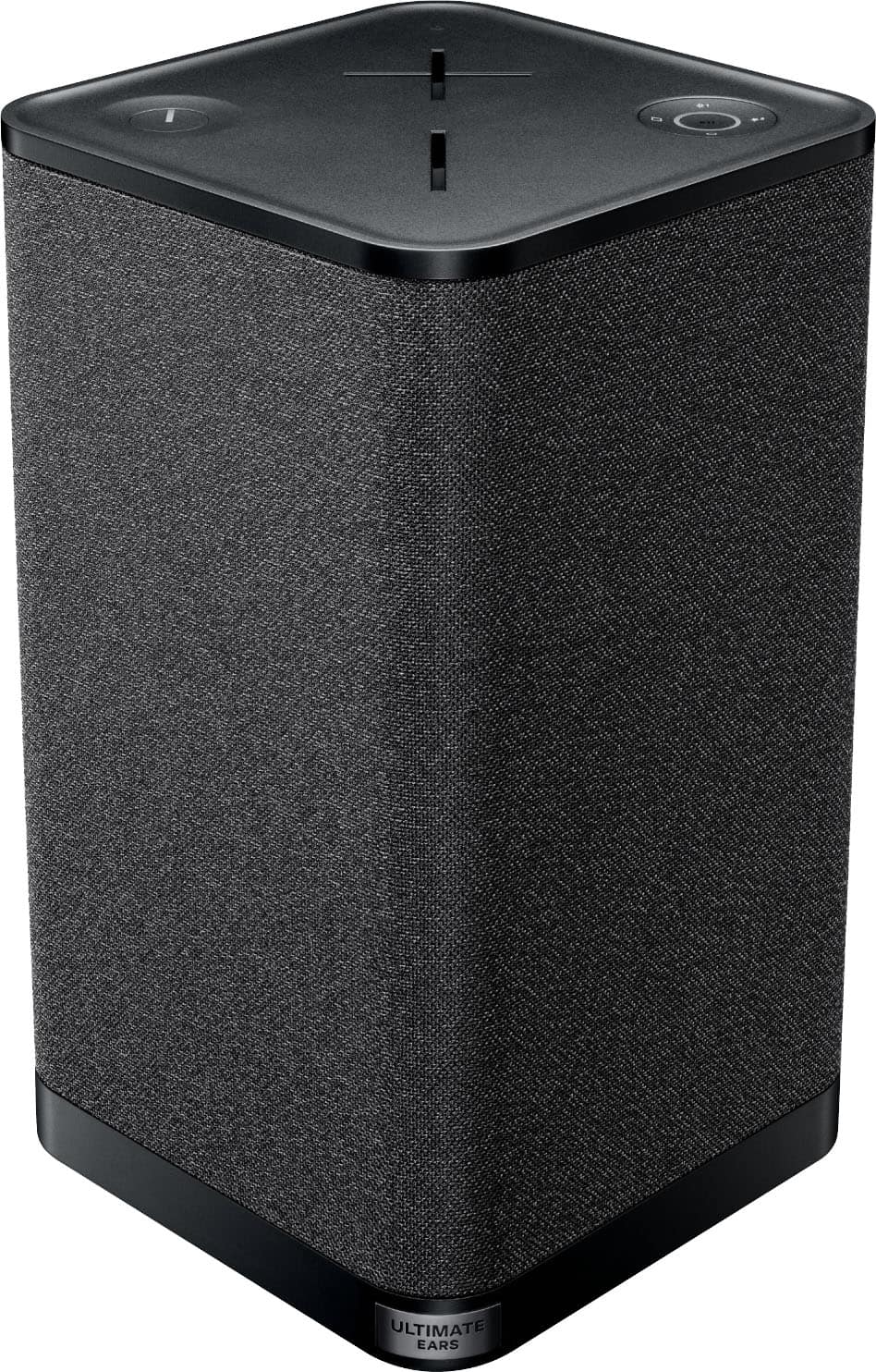
Here's where the fundamental differences between these speakers become crystal clear. The Ultimate Ears HYPERBOOM delivers an impressive 229 watts of total power output through a sophisticated driver array that includes two 114mm woofers, two 25mm tweeters, and two large passive radiators. In simple terms, woofers handle bass frequencies (the low, thumping sounds), tweeters reproduce treble (high-pitched sounds like cymbals), and passive radiators are speaker cones without magnets that move in response to air pressure changes, effectively amplifying bass without requiring additional power.
This configuration allows the HYPERBOOM to reproduce frequencies down to 45Hz – low enough that you'll actually feel the bass in electronic music, not just hear it. When we examine expert reviews and user feedback, the consensus is that this speaker can genuinely fill large rooms and outdoor spaces with rich, detailed sound that maintains its character even at high volumes.
The JBL Charge 4, working with just 30 watts and a single racetrack-shaped driver (an oval design that fits more speaker area into a compact cylinder), takes a completely different approach. Its frequency response starts at 60Hz, meaning it can't reproduce the deepest bass frequencies that make dance music and movie soundtracks truly immersive. However, what it lacks in raw power, it makes up for in efficiency and clarity in the midrange frequencies where vocals and most instruments live.
Based on our research into user experiences and professional reviews, the Charge 4's sound signature is best described as balanced but conservative. It won't deliver the chest-thumping bass of larger speakers, but it provides clear dialogue for podcasts and maintains good separation between different instruments in complex musical arrangements. The trade-off is that bass-heavy genres like hip-hop and EDM can sound somewhat thin compared to larger speakers.
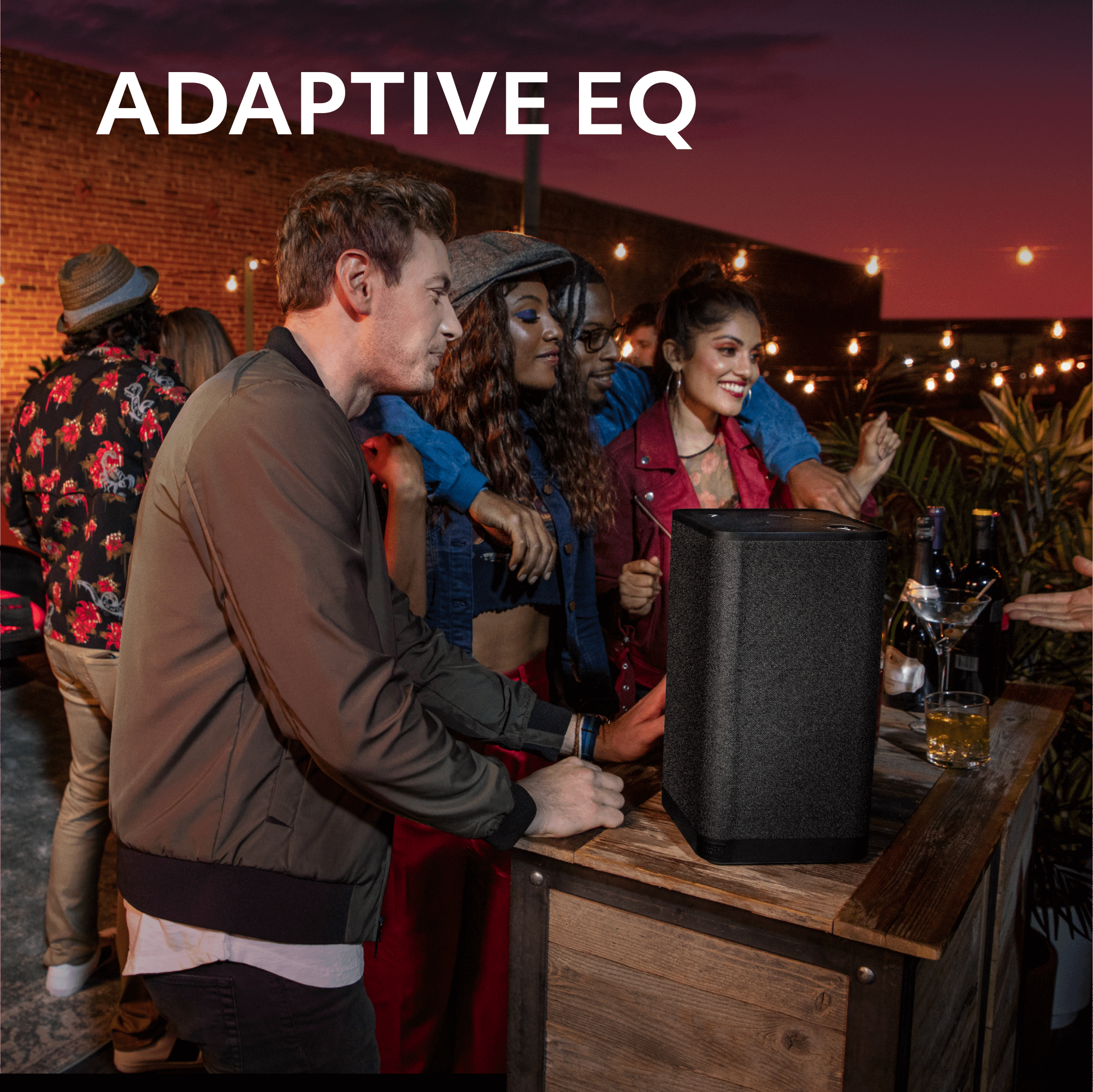
For home theater use, the HYPERBOOM has a significant advantage with its optical audio input, which allows direct connection to TVs for higher-quality audio than Bluetooth can provide. Optical connections can carry uncompressed audio signals, eliminating the slight delay and quality reduction inherent in Bluetooth transmission. The speaker's adaptive EQ technology also analyzes your room's acoustics using built-in microphones and automatically adjusts the sound output to compensate for factors like wall reflections and furniture absorption.
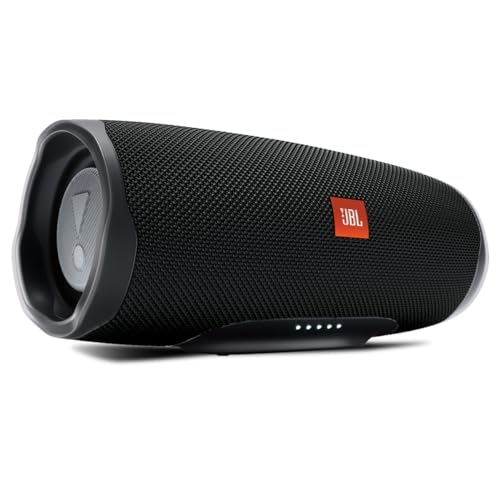
The term "portable" means drastically different things to different people, and nowhere is this more evident than in comparing these two speakers. The JBL Charge 4, at just 2.12 pounds and measuring roughly the size of a large water bottle, represents traditional portability. You can easily toss it in a backpack, carry it one-handed while juggling other gear, and forget it's there until you need it.
This size advantage becomes crucial during actual transportation. Whether you're boarding a plane, hiking to a remote campsite, or simply walking to a friend's house, the Charge 4's form factor makes it genuinely convenient to bring along. Its cylindrical design also makes it easy to secure in backpack side pockets or car cup holders.
The Ultimate Ears HYPERBOOM, weighing in at 13 pounds with dimensions similar to a large toolbox, requires a different mindset. While it includes a built-in handle and can be carried by one person, it's more analogous to moving a small appliance than grabbing a portable device. This weight comes from the larger drivers, bigger battery, and more robust internal construction needed to produce its impressive audio output.
However, "relocatable" doesn't mean impractical. The HYPERBOOM excels at scenarios where you need to move a speaker occasionally but don't need to carry it constantly – think moving from living room to kitchen to backyard as a party progresses, or taking it from your apartment to a friend's rooftop gathering.
Water resistance represents one of the most significant practical differences between these speakers. The JBL Charge 4 carries an IPX7 rating, which means it can be completely submerged in up to one meter of water for 30 minutes without damage. This isn't just marketing speak – it translates to real-world peace of mind around pools, at beaches, during rain showers, or even if someone accidentally drops it in a cooler full of ice.
The IPX rating system uses numbers to indicate levels of water protection, with higher numbers meaning better protection. IPX7 is quite robust, suitable for everything short of deep-water activities. This makes the Charge 4 an excellent choice for boat trips, beach days, or any outdoor activity where water exposure is likely.
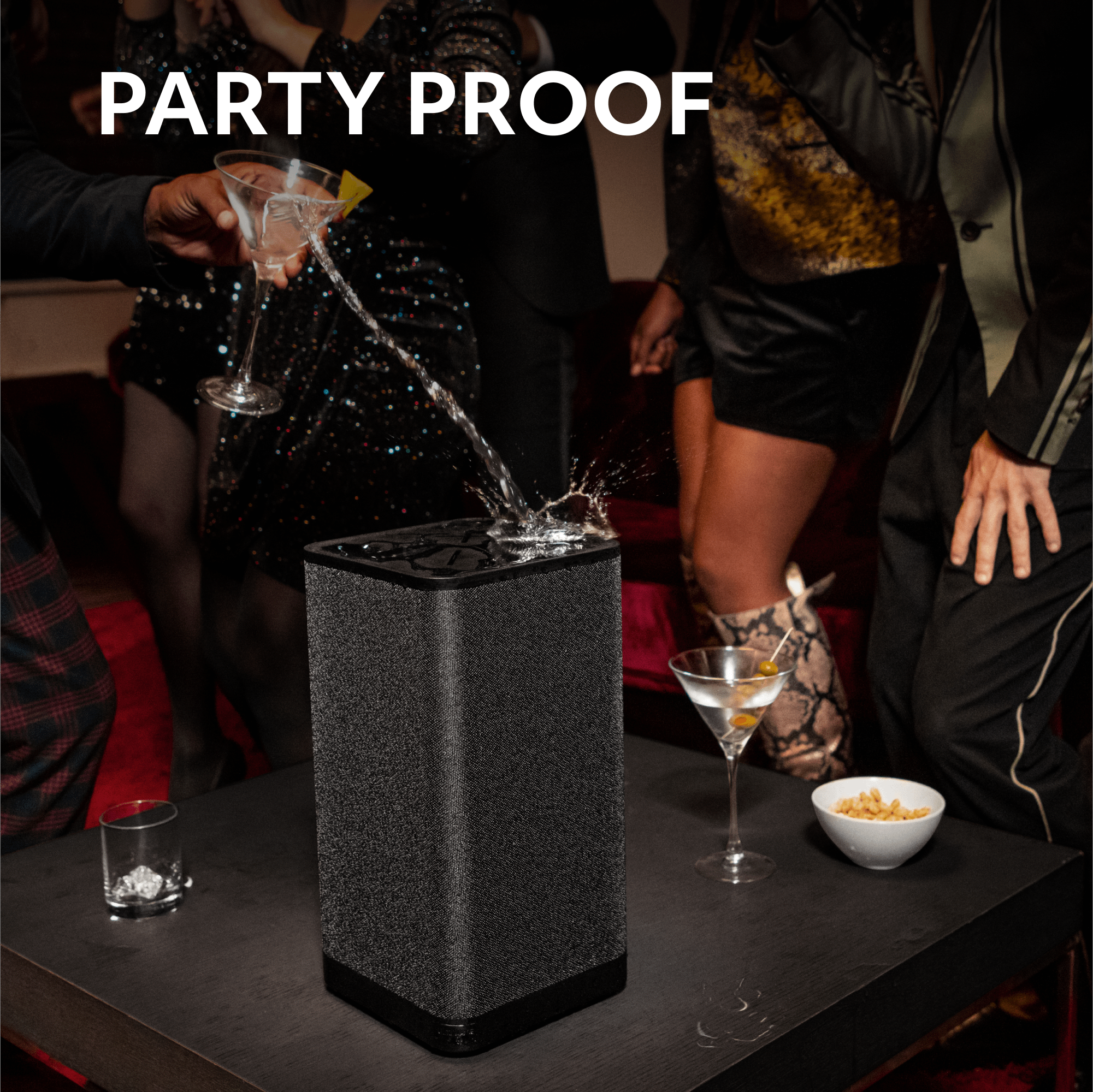
In contrast, the Ultimate Ears HYPERBOOM only offers IPX4 protection, which covers splash resistance from any direction but can't handle submersion or heavy water exposure. This rating is adequate for light rain or the occasional spilled drink, but you wouldn't want to use it near a pool where splash zones are common, and you certainly couldn't rinse it off if it gets sandy or dirty.
This difference reflects each speaker's intended environment. JBL designed the Charge 4 for unpredictable outdoor conditions, while UE focused the HYPERBOOM on more controlled environments where maximum water protection was less critical than audio performance.
Both speakers offer impressive battery performance, but with different priorities. The Ultimate Ears HYPERBOOM provides up to 24 hours of playback time, which sounds fantastic until you consider that its powerful amplification system will reduce this significantly at high volumes. Real-world usage typically sees 12-16 hours depending on volume levels and music type, with bass-heavy tracks consuming more power.
The HYPERBOOM's 2.6-hour charging time is notably fast for such a large battery, thanks to its high-wattage power adapter. This quick charging capability makes it practical for situations where you need to top up the battery between events.
The JBL Charge 4 offers up to 20 hours of rated battery life, though independent testing suggests real-world performance closer to 13-15 hours depending on volume and content. However, its unique selling proposition is the built-in power bank feature, which allows you to charge smartphones, tablets, or other USB devices from the speaker's battery.
This power bank functionality shouldn't be underestimated. During extended outdoor activities, camping trips, or power outages, having a speaker that can also charge your phone adds significant practical value. The USB-A output provides 5V/2A, which is sufficient for most smartphones and many tablets, though it will reduce the speaker's playback time accordingly.
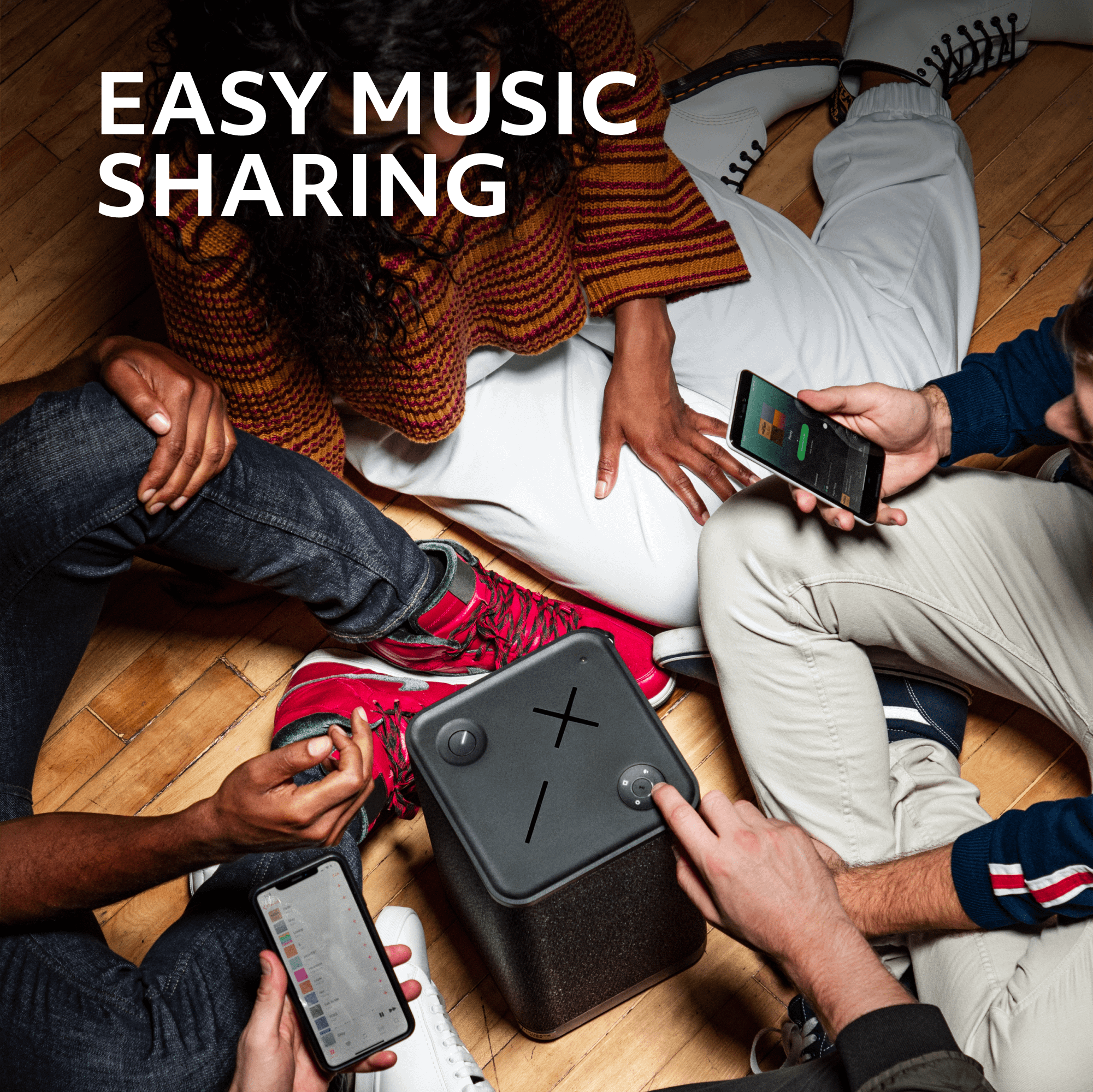
Modern Bluetooth speakers need to handle multiple devices seamlessly, and both speakers approach this differently. The Ultimate Ears HYPERBOOM remembers up to eight paired devices and can maintain connections to multiple devices simultaneously through its PartyUp feature. This allows different people to queue songs from their phones without the awkward process of disconnecting and reconnecting Bluetooth.
The HYPERBOOM's adaptive EQ represents sophisticated audio engineering that most users don't fully understand but definitely benefit from. Using built-in microphones, it analyzes your listening environment and automatically adjusts frequency response to compensate for room acoustics. If you're outdoors, it might boost certain frequencies that dissipate quickly in open air. In a reflective room with hard surfaces, it might reduce frequencies that tend to echo.
The speaker also includes optical and auxiliary inputs, making it versatile enough to connect to TVs, computers, or other audio sources that don't support Bluetooth. The optical input is particularly valuable for home theater applications since it can carry high-quality digital audio without the compression and latency issues inherent in Bluetooth.
The JBL Charge 4 takes a simpler but arguably more practical approach. Its JBL Connect+ technology allows you to wirelessly link over 100 compatible JBL speakers for massive sound systems – though realistically, most users will connect two or three speakers maximum. This feature can create true stereo separation when pairing two identical speakers, something neither speaker achieves alone since both are essentially mono sources.
The Charge 4's simplicity extends to its controls, with large, tactile buttons that work well even with wet hands or while wearing gloves. This might seem minor, but it becomes important during actual outdoor use when touchscreen controls would be problematic.
At the time of writing, these speakers occupy completely different price tiers, which significantly affects their value propositions. The JBL Charge 4 typically retails for under $150, positioning it in the competitive mid-range portable speaker market. At this price point, it competes with dozens of other options, but its combination of true portability, waterproofing, and power bank functionality creates a unique value proposition.
For budget-conscious buyers or those new to quality Bluetooth speakers, the Charge 4 offers genuine utility that extends beyond just audio playback. The power bank feature alone can justify the purchase for frequent travelers or outdoor enthusiasts who need backup power for their devices.
The Ultimate Ears HYPERBOOM commands a premium price, typically around $400, placing it in direct competition with high-end portable speakers and entry-level powered bookshelf speakers. At this price point, buyers rightfully expect exceptional audio quality, build quality, and features – expectations the HYPERBOOM generally meets.
However, the pricing also means the HYPERBOOM needs to serve as more than just a party speaker to justify its cost. For users who want it as their primary music system for apartments or as a high-quality home theater speaker that can also move outdoors for entertaining, the investment makes more sense than for occasional use.
Understanding when each speaker excels helps clarify which one fits your lifestyle. The JBL Charge 4 shines in active, unpredictable environments. Beach days where sand and salt water are constant threats, camping trips where weight matters and power sources are limited, or daily commutes where you want background music without carrying significant extra weight.
I've found that speakers like the Charge 4 work best when you think of them as enhanced personal audio rather than trying to fill large spaces. They're perfect for small gatherings of 3-6 people, personal listening while working outdoors, or providing ambient sound during activities where the music isn't the primary focus.
The Ultimate Ears HYPERBOOM excels when audio quality is the priority and some convenience trade-offs are acceptable. Backyard barbecues, apartment parties, outdoor movie nights, or as a primary music system in smaller living spaces all play to its strengths. The speaker has enough power and fidelity to serve as the main audio source for events where music is central to the experience.
For home theater use, the HYPERBOOM's optical input and room-correcting EQ make it a legitimate alternative to traditional soundbars, especially in smaller rooms or apartments where space is limited. Its ability to move outdoors for parties provides flexibility that fixed home theater systems can't match.
Both speakers reflect the technological capabilities of their release years, but the rapid pace of audio technology development means newer alternatives continue to emerge. The JBL Charge 4, being from 2018, uses Bluetooth 4.2 instead of the newer 5.0+ standards found in more recent speakers. While this doesn't significantly impact daily use, newer Bluetooth versions offer better range, lower power consumption, and more stable connections.
Similarly, the lack of app-based EQ control on the Charge 4 reflects older design philosophies where physical simplicity was prioritized over customization. Newer speakers in its class increasingly offer smartphone apps for sound customization, though this comes with trade-offs in terms of complexity and potential connectivity issues.
The Ultimate Ears HYPERBOOM, being newer, incorporates more contemporary features like adaptive EQ and sophisticated multi-device management. However, even it lacks some features found in the newest generation of speakers, such as voice assistant integration or advanced room correction algorithms.
Choose the JBL Charge 4 if you need a speaker that truly goes anywhere you do. It's ideal for people who prioritize outdoor activities, travel frequently, or want a reliable backup power source for their devices. The waterproof design makes it suitable for environments where most electronics would be risky, and its compact size means you're more likely to actually bring it along on adventures.
The Charge 4 also makes sense for budget-conscious buyers who want good audio quality without premium pricing, or for people buying their first quality Bluetooth speaker who aren't sure how much they'll use advanced features.
Choose the Ultimate Ears HYPERBOOM if audio quality and volume are your primary concerns, and you're willing to sacrifice some portability for significantly better sound. It's perfect for people who regularly host gatherings, want a speaker that can serve as their main music system, or need something powerful enough to work well in large or outdoor spaces.
The HYPERBOOM also makes sense for users who want advanced features like room correction, multiple connectivity options, and sophisticated device management, or for anyone who plans to use their speaker for home theater applications.
The bottom line: These speakers serve fundamentally different needs despite both being labeled as "portable Bluetooth speakers." Your choice should align with whether you prioritize mobility and versatility (JBL Charge 4) or audio performance and entertaining capability (Ultimate Ears HYPERBOOM). Consider where and how you'll actually use your speaker most often, and let those real-world scenarios guide your decision rather than getting caught up in specifications that might not matter for your specific needs.
| JBL Charge 4 | Ultimate Ears HYPERBOOM |
|---|---|
| Audio Power Output - Determines maximum volume and room-filling capability | |
| 30W RMS (suitable for personal/small group listening) | 229W total (fills large rooms and outdoor spaces) |
| Size and Weight - Critical for actual portability and travel | |
| 8.7" × 3.7" × 3.7", 2.12 lbs (truly portable, fits in backpacks) | 14.3" × 7.5" × 7.5", 13 lbs (relocatable but requires two-handed carrying) |
| Water Resistance - Essential for outdoor and poolside use | |
| IPX7 (fully submersible up to 1 meter for 30 minutes) | IPX4 (splash resistant only, not suitable for pool/beach use) |
| Battery Life - Real-world usage time between charges | |
| Up to 20 hours rated (13-15 hours typical use) | Up to 24 hours rated (12-16 hours at higher volumes) |
| Frequency Response - How deep the bass goes and overall sound range | |
| 60Hz-20kHz (limited low bass, balanced midrange) | 45Hz-20kHz (genuine deep bass you can feel) |
| Driver Configuration - Affects sound quality and stereo separation | |
| Single 50×90mm racetrack driver + dual passive radiators (mono sound) | Dual 114mm woofers + dual 25mm tweeters + dual passive radiators (fuller sound) |
| Connectivity Options - Flexibility for different audio sources | |
| Bluetooth 4.2, 3.5mm aux, USB-A out (power bank) | Bluetooth 4.2-5.0, 3.5mm aux, optical input, 150ft range |
| Multi-Device Support - Party and sharing capabilities | |
| Connects 2 devices, JBL Connect+ links 100+ speakers | Remembers 8 devices, connects 4 simultaneously via PartyUp |
| Unique Features - What sets each speaker apart from competitors | |
| Power bank function charges phones/tablets via USB | Adaptive EQ automatically tunes sound to room acoustics |
| Best Use Cases - Where each speaker excels most | |
| Travel, outdoor adventures, beach/pool, emergency power | Home parties, patio gatherings, TV audio, apartment living |
The JBL Charge 4 is significantly better for outdoor activities and travel. At just 2.12 pounds and compact dimensions, it fits easily in backpacks and can be carried one-handed. Its IPX7 waterproof rating means it can be fully submerged in water, making it perfect for beach trips, pool parties, and camping. The Ultimate Ears HYPERBOOM weighs 13 pounds and only has splash resistance, making it impractical for true outdoor adventures.
The Ultimate Ears HYPERBOOM dominates in volume and room-filling capability with 229 watts of power output compared to the JBL Charge 4's 30 watts. The HYPERBOOM can easily fill large rooms, backyards, and party spaces with rich sound, while the Charge 4 is better suited for personal listening and small gatherings of 3-6 people.
The Ultimate Ears HYPERBOOM delivers superior sound quality with deeper bass extension down to 45Hz that you can actually feel. Its sophisticated driver array includes dedicated woofers and tweeters for fuller sound reproduction. The JBL Charge 4 offers balanced midrange audio but limited bass response starting at 60Hz, making it less impressive for bass-heavy music genres.
The JBL Charge 4 offers better value for budget-conscious buyers, typically costing significantly less while providing excellent portability, waterproofing, and the unique power bank feature. The Ultimate Ears HYPERBOOM costs considerably more but justifies the premium with superior audio performance and features for users who prioritize sound quality over portability.
The Ultimate Ears HYPERBOOM is much better for home theater use, featuring an optical audio input for direct TV connection and adaptive EQ that automatically adjusts sound for your room. The JBL Charge 4 can connect via Bluetooth or aux cable but lacks the power and features needed for quality home theater audio in most living rooms.
The Ultimate Ears HYPERBOOM offers slightly longer battery life at up to 24 hours, though real-world usage at higher volumes typically yields 12-16 hours. The JBL Charge 4 provides up to 20 hours rated (13-15 hours typical), but includes the unique ability to charge your phone or tablet, making it more versatile for extended outdoor use.
The JBL Charge 4 is significantly more durable for outdoor use with its IPX7 waterproof rating, allowing complete submersion in water. It's built for rough handling and unpredictable weather conditions. The Ultimate Ears HYPERBOOM only offers IPX4 splash resistance and is designed more for indoor and covered outdoor use.
Both speakers support multiple device connections, but differently. The JBL Charge 4 connects to 2 devices simultaneously and can link with over 100 other JBL speakers via Connect+. The Ultimate Ears HYPERBOOM remembers 8 devices and allows 4 to connect simultaneously through PartyUp, making it better for group listening and DJ switching.
The JBL Charge 4 is truly portable at 2.12 pounds with a compact cylindrical design that fits in backpacks and car cup holders. The Ultimate Ears HYPERBOOM at 13 pounds is "relocatable" rather than portable - easy to move from room to room but not something you'd want to carry regularly or take on hikes.
The JBL Charge 4 is the clear winner for pool and beach use thanks to its IPX7 waterproof rating that handles submersion and splashing. It's also lightweight enough to move around easily and won't be damaged by sand or salt water. The Ultimate Ears HYPERBOOM is not suitable for poolside use due to its limited IPX4 rating.
The Ultimate Ears HYPERBOOM offers more connectivity options with Bluetooth, optical input for TVs, auxiliary input, and longer 150-foot wireless range. It also features adaptive EQ and sophisticated device management. The JBL Charge 4 provides Bluetooth, auxiliary input, and uniquely includes a USB port for charging external devices.
For apartment living and indoor parties, the Ultimate Ears HYPERBOOM is the better choice with its powerful audio output, room-correcting EQ, and ability to serve as both a party speaker and home theater system. The JBL Charge 4 works well for smaller gatherings but may not provide enough volume for larger apartment parties or spacious living areas.
We've done our best to create useful and informative comparisons to help you decide what product to buy. Our research uses advanced automated methods to create this comparison and perfection is not possible - please contact us for corrections or questions. These are the sites we've researched in the creation of this article: rtings.com - whathifi.com - whathifi.com - soundguys.com - soundguys.com - streamtechreviews.com - youtube.com - versus.com - applevis.com - versus.com - jbl.com - jbl.com - walmart.com - comparisontabl.es - harmanaudio.com - manuals.plus - jbl.com.sg - jbl.com - mm.jbl.com - bestbuy.com - newpower99.com - forums.woot.com - techradar.com - ultimateears.com - youtube.com - youtube.com - rtings.com - provantage.com - target.com - forum.mygolfspy.com - order.staplestechnologysolutions.com - youtube.com - publicsector.shidirect.com - ultimateears.com

Privacy Policy
Terms and Conditions - Affiliate Policy
Home Security
© Copyright 2008-2026.
11816 Inwood Rd #1211, Dallas, TX 75244