

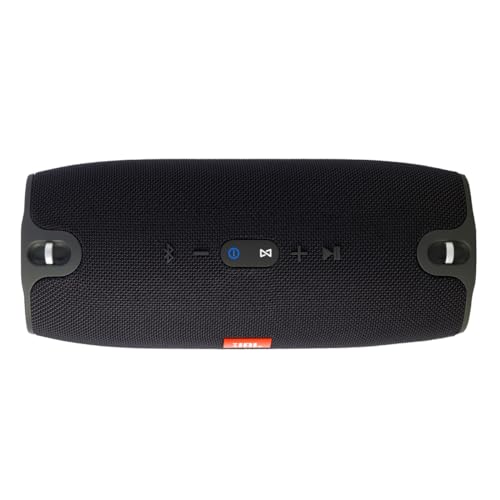
When you're shopping for a portable Bluetooth speaker, the choice often comes down to a fundamental question: do you want impressive features at a budget price, or are you willing to pay more for superior sound quality and proven performance? The Skullcandy Terrain XL and JBL Charge 4 represent these two different philosophies perfectly, and understanding their strengths and weaknesses will help you make the right choice for your needs.
Before diving into the specifics, it's worth understanding what separates good portable speakers from mediocre ones. The most important factors are audio quality (how clear and balanced the sound is), battery life (how long it plays before needing a recharge), durability (can it survive drops, water, and outdoor adventures?), and connectivity features (how well it connects to your devices and other speakers).
Modern Bluetooth speakers also need to balance portability with power output. A speaker that sounds amazing but weighs five pounds isn't truly portable, while an ultra-light speaker that sounds terrible defeats the purpose. The sweet spot is finding a speaker that delivers good sound, decent volume, and useful features without being a burden to carry around.
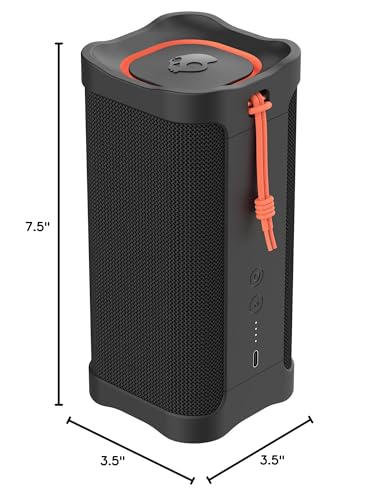
Released in 2022, the Skullcandy Terrain XL represents the modern approach to budget speakers—pack in as many features as possible while keeping the price low. At roughly half the cost of premium competitors (at the time of writing), it uses the latest Bluetooth 5.3 technology and includes advanced multi-speaker connectivity that was previously only found in more expensive models.
The JBL Charge 4, launched in 2018, takes the traditional premium approach—focus on proven audio performance and practical utility features. While it uses older Bluetooth 4.2 technology, it compensates with a powerful 30-watt amplifier and the ability to charge your phone or tablet, making it genuinely useful for extended outdoor activities.
The four-year gap between their releases highlights how quickly Bluetooth technology advances. Bluetooth 5.3 offers better connection stability, lower power consumption, and improved audio quality compared to 4.2. However, newer isn't always better when it comes to overall speaker performance—the JBL Charge 4 proves that solid engineering and quality components can outweigh spec sheet advantages.
This is where the differences between these speakers become most apparent, and frankly, it's not even close. The JBL Charge 4 delivers 30 watts of power through a carefully designed single-driver system, while the Skullcandy Terrain XL puts out 20 watts through dual front-firing woofers with dual passive radiators.
You might think more drivers would mean better sound, but that's not the case here. The Terrain XL suffers from what audio engineers call a "harsh V-shaped sound signature." This means it heavily emphasizes the bass (low frequencies) and highs (treble) while severely neglecting the midrange frequencies where most vocals and instruments live. The result is sound that might seem impressive at first—punchy bass and crisp highs—but quickly becomes fatiguing and lacks detail.
Passive radiators are essentially speakers without magnets that vibrate in response to the main drivers, helping to boost bass response without requiring additional power. While the Terrain XL uses this technology, the implementation doesn't overcome the fundamental tuning issues.
The real problem with the Terrain XL's sound becomes apparent when you turn up the volume. Our research into user reviews consistently reveals distortion in the highs and a compressed, harsh quality that makes longer listening sessions unpleasant. The lack of an adjustable EQ (equalizer) means you're stuck with Skullcandy's tuning choices—there's no way to dial back the harshness or boost the neglected midrange.
In contrast, the JBL Charge 4 uses its 50% power advantage wisely. The single-driver approach allows for better frequency response coherence—essentially, all the different frequencies work together more naturally instead of fighting each other. While it's still a mono speaker (not stereo), the overall balance is far superior, with vocals that sit properly in the mix and instruments that maintain their detail even at higher volumes.
For reference, frequency response measures how evenly a speaker reproduces different pitches. The Charge 4 handles 60Hz to 20kHz, which covers most audible sound, while the Terrain XL claims down to 30Hz but struggles to deliver meaningful bass at those lowest frequencies due to its smaller drivers and limited power.
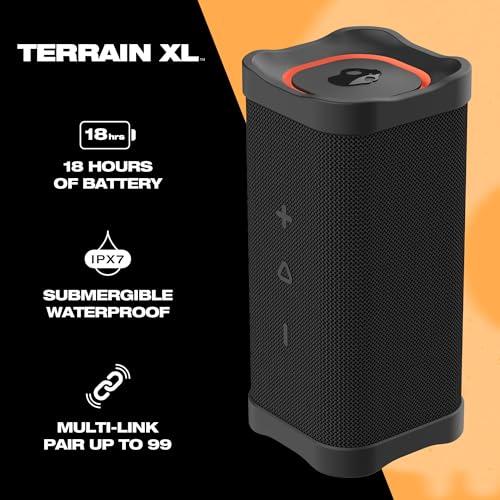
Battery performance tells an interesting story about design priorities. The Skullcandy Terrain XL claims up to 18 hours of playback, which sounds impressive until you dig deeper. That figure is based on 50% volume listening, and real-world usage at higher volumes drops it to around 8 hours—still respectable, but not the all-day performance the marketing suggests.
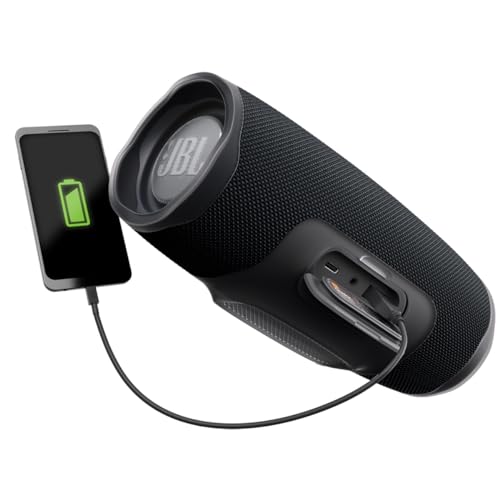
The JBL Charge 4 takes a different approach with its massive 7,500mAh lithium-ion battery. This provides a more consistent 20 hours of playback regardless of volume level, though it does take longer to charge (5.5 hours versus the Terrain XL's 4.5 hours). More importantly, that large battery serves double duty as a power bank, meaning you can charge your smartphone or tablet directly from the speaker.
This power bank functionality isn't just a nice-to-have feature—it's genuinely useful for camping trips, beach days, or any situation where you're away from wall power for extended periods. The Charge 4 can output 5V at 2A through its USB-A port, which is sufficient to charge most phones at a reasonable speed. The Terrain XL completely lacks this capability, which feels like a missed opportunity given its large battery.
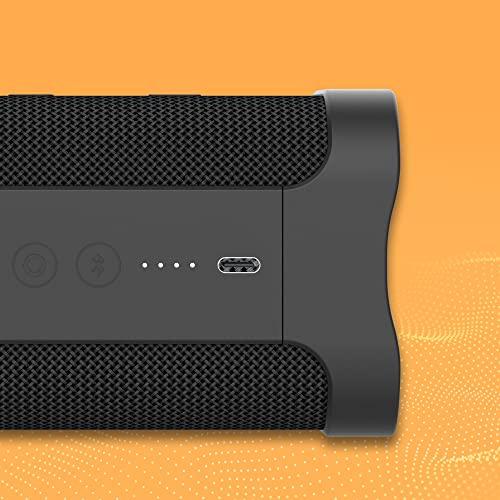
Both speakers use USB-C for charging, which is convenient since it's the same port used by most modern Android phones and tablets. However, neither speaker supports USB-C audio input—the port is strictly for charging.
Here's where things get interesting from a technology perspective. The Skullcandy Terrain XL uses Bluetooth 5.3, which represents a significant advancement over the JBL Charge 4's Bluetooth 4.2. This three-generation gap translates to meaningful improvements in connection stability, audio latency (the delay between pressing play and hearing sound), and power efficiency.
Bluetooth 5.3 also supports LC3 codec, which provides better audio quality at lower bitrates, though you need compatible source devices to take advantage of this. Most phones and tablets from 2022 onward support these improvements, while the Charge 4 is limited to older, less efficient codecs.
However, both speakers share a significant limitation—they can only connect to one device at a time. This means you can't seamlessly switch between your phone and tablet without manually disconnecting and reconnecting. More expensive speakers often support multipoint Bluetooth, which allows connection to two devices simultaneously.
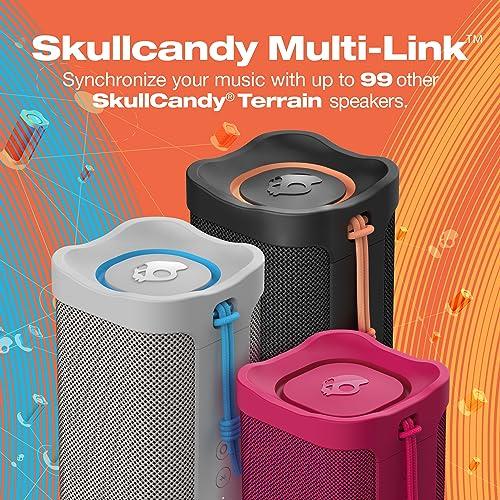
The multi-speaker features are where each product's philosophy becomes clear. The Terrain XL supports Skullcandy's Multi-Link technology, allowing you to connect up to 99 Terrain speakers together. More impressively, you can create true left/right stereo sound by pairing any two Terrain speakers, regardless of size. This means you can pair a Terrain XL with a smaller Terrain Mini for stereo separation, which is unusually flexible.
The JBL Charge 4 counters with JBL Connect+, which can link over 100 compatible JBL speakers. However, for stereo pairing, you typically need two identical models. The advantage is that Connect+ works with a much larger ecosystem of JBL speakers, including some that have been available for years.
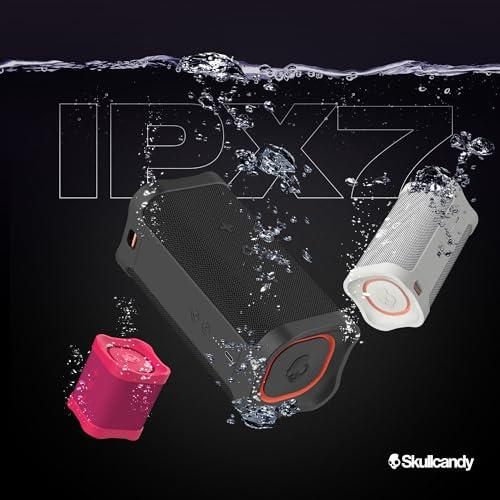
Both speakers earn their IPX7 waterproof rating, meaning they can survive full submersion in up to one meter of water for 30 minutes. This makes them suitable for poolside use, beach trips, or even accidentally dropping in a lake (though we don't recommend testing this deliberately).
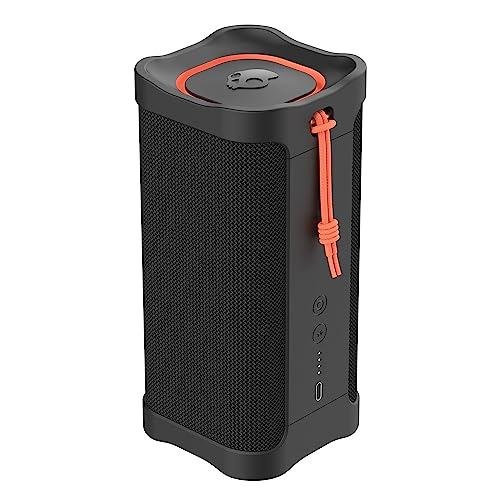
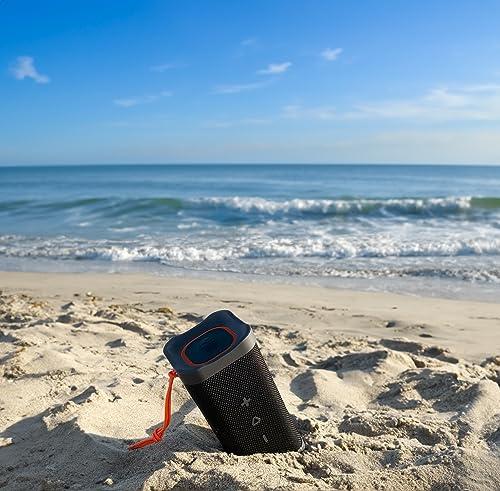
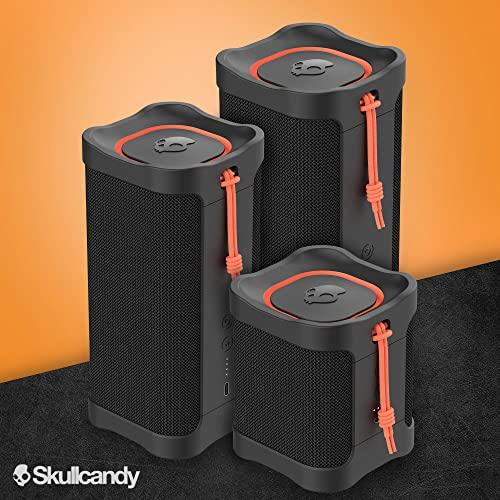
The construction approaches differ slightly. The Terrain XL weighs just 635 grams, making it notably lighter and more packable for hiking or travel. It features a woven fabric mesh exterior with silicone end caps and includes a built-in wrist strap for easy carrying. The rectangular shape provides stability when placed on surfaces, and the overall build feels solid despite the light weight.
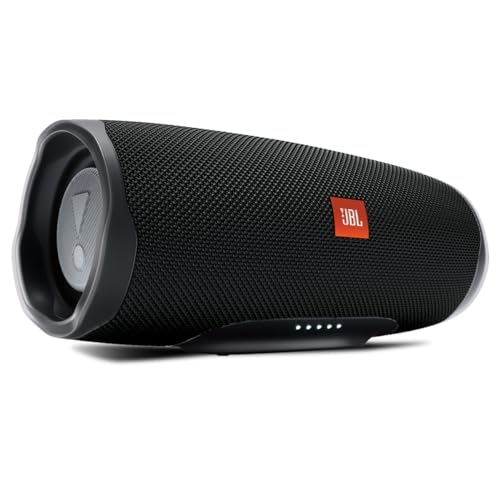
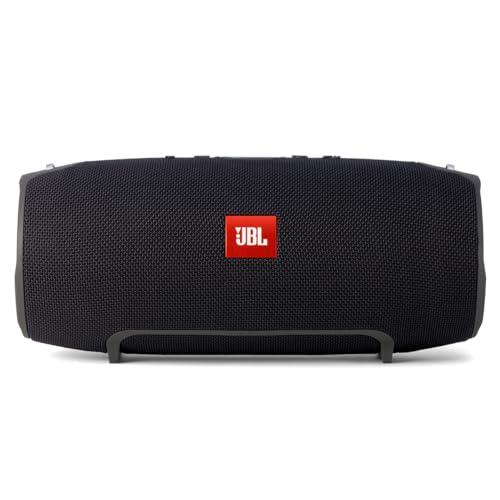
The JBL Charge 4 uses a more traditional cylindrical design with durable fabric wrapping and rubber end caps. While heavier than the Terrain XL, it feels more substantial and includes better-sealed port covers for the charging and AUX inputs. The fabric wrap on both speakers helps protect against scrapes and provides better grip than smooth plastic alternatives.
At the time of writing, there's roughly a 50% price difference between these speakers, with the Terrain XL positioning itself as the budget-friendly option with premium features, while the JBL Charge 4 commands a premium for superior audio performance and practical utility.
The Terrain XL makes sense if your priorities are modern connectivity, portability, and multi-speaker flexibility. The Bluetooth 5.3 advantage is real and will provide better performance with newer devices. The ability to create stereo sound with any other Terrain speaker is genuinely useful if you plan to build a multi-room or outdoor speaker system over time.
However, the audio quality compromises are significant. If you primarily listen to podcasts or casual background music, the sound signature might be acceptable. But for anyone who appreciates music detail or plans to use the speaker as their primary audio source, the harsh tuning and distortion issues become deal-breakers.
The JBL Charge 4 represents better long-term value despite the higher upfront cost. The superior audio performance means you're more likely to enjoy using it for years rather than getting frustrated and upgrading. The power bank functionality adds genuine utility that could eliminate the need to carry a separate battery pack on outdoor adventures.
Neither speaker is designed for home theater use, but it's worth addressing since some people consider portable speakers for temporary TV audio. Both are mono speakers (single-channel audio), which means they can't provide the left/right stereo separation that makes movie soundtracks immersive.
If you absolutely must use a portable speaker for TV audio occasionally, the JBL Charge 4's better midrange reproduction would make dialogue clearer and more intelligible. Both speakers include 3.5mm AUX inputs for wired connections to avoid Bluetooth audio delay, though the Terrain XL lacks this feature entirely—its USB-C port is charging-only.
For actual home theater use, you'd be much better served by a dedicated soundbar or stereo speaker pair. These portable speakers excel at outdoor and casual listening but aren't optimized for the wide frequency range and dynamic audio demands of movie soundtracks.
After extensive research into user experiences and expert reviews, the choice between these speakers comes down to your specific needs and budget constraints.
Choose the Skullcandy Terrain XL if you're budget-conscious, prioritize portability, and plan to use multiple speakers together. The modern Bluetooth connectivity is future-proof, and the multi-speaker ecosystem offers genuine flexibility. However, be prepared for mediocre audio quality that works fine for background listening but won't satisfy anyone who cares about music reproduction.
Choose the JBL Charge 4 if audio quality matters and you can justify the higher cost. The 50% power advantage translates to noticeably better sound, and the power bank functionality adds practical value for outdoor activities. Yes, the Bluetooth technology is older, but the overall performance and utility make it worthwhile for most users.
From a long-term ownership perspective, the JBL Charge 4 is likely to provide more satisfaction. The superior audio quality means you'll actually enjoy listening to it, rather than tolerating it, and the proven durability suggests it'll last through years of adventures. The Terrain XL might save money upfront, but if you find yourself wanting to upgrade due to sound quality issues, the initial savings become meaningless.
Ultimately, both speakers serve their intended markets well. The Terrain XL proves that budget speakers can offer impressive features, while the Charge 4 demonstrates why sometimes it's worth paying more for proven performance. Your choice should align with whether you prioritize the latest features and affordability, or prefer time-tested audio quality and practical functionality.
| Skullcandy Terrain XL | JBL Charge 4 |
|---|---|
| Audio Power Output - Determines maximum volume and sound quality | |
| 20W (adequate for small gatherings) | 30W (50% more power for larger spaces and clearer sound) |
| Sound Signature - Affects how music sounds and listening fatigue | |
| Harsh V-shaped (emphasized bass/highs, poor mids, distortion at high volume) | Balanced mono (clear vocals, better instrument separation) |
| Battery Life - How long you can listen before recharging | |
| 18 hours at 50% volume, ~8 hours at max volume | 20 hours consistently across volume levels |
| Power Bank Function - Charge your devices on the go | |
| None (missed opportunity given large battery) | Yes, 5V/2A USB-A output for phones/tablets |
| Bluetooth Version - Connection stability and audio quality | |
| 5.3 (newest standard, better stability and efficiency) | 4.2 (older but proven, 3 generations behind) |
| Multi-Speaker Connectivity - Link multiple speakers together | |
| Up to 99 Terrain XL speakers, stereo with any Terrain model | 100+ JBL Connect+ speakers, stereo requires identical models |
| Weight and Portability - Important for travel and hiking | |
| 635g (very lightweight for the size) | Heavier (more substantial build but less packable) |
| Water Resistance - Protection level for outdoor use | |
| IPX7 (submersible to 1m for 30 minutes) | IPX7 (submersible to 1m for 30 minutes) |
| Wired Audio Input - Connect non-Bluetooth devices | |
| None (USB-C charging only) | 3.5mm AUX input available |
| EQ Customization - Adjust sound to your preferences | |
| None (stuck with harsh factory tuning) | None (but better default tuning) |
| Value Proposition - What you get for your money | |
| Modern features at budget price, compromised audio | Premium audio performance with practical utility features |
The JBL Charge 4 delivers significantly better sound quality with its 30W power output compared to the Skullcandy Terrain XL's 20W. The Charge 4 offers more balanced audio with clearer vocals and better instrument separation, while the Terrain XL suffers from a harsh V-shaped sound signature that emphasizes bass and highs but neglects midrange frequencies, leading to distortion at higher volumes.
The JBL Charge 4 provides up to 20 hours of consistent battery life across all volume levels, while the Skullcandy Terrain XL offers 18 hours at 50% volume but drops to approximately 8 hours at maximum volume. The Charge 4 has a larger 7,500mAh battery that maintains performance better throughout its charge cycle.
Only the JBL Charge 4 can charge external devices through its USB-A port, outputting 5V/2A which is sufficient for smartphones and tablets. The Skullcandy Terrain XL lacks this power bank functionality entirely, despite having a sizable battery that could theoretically support this feature.
Both the Skullcandy Terrain XL and JBL Charge 4 are excellent for outdoor use with IPX7 waterproof ratings. However, the Terrain XL is significantly lighter at 635g, making it more portable for hiking and travel. The Charge 4 offers the advantage of device charging capability, which is valuable for extended outdoor adventures.
Yes, both speakers support multi-speaker connectivity. The Skullcandy Terrain XL can connect up to 99 speakers using Multi-Link technology and uniquely allows stereo pairing with any other Terrain model. The JBL Charge 4 supports JBL Connect+ with over 100 compatible speakers, but typically requires identical models for stereo pairing.
The Skullcandy Terrain XL uses the newer Bluetooth 5.3 technology, offering better connection stability, lower power consumption, and improved audio quality compared to the JBL Charge 4's Bluetooth 4.2. This three-generation difference provides meaningful improvements in performance with modern devices.
Neither the Skullcandy Terrain XL nor JBL Charge 4 is designed for home theater use, as both are mono speakers that can't provide stereo separation. If you must use one temporarily for TV audio, the Charge 4 would be better due to clearer dialogue reproduction, and it includes a 3.5mm AUX input to avoid Bluetooth audio delay.
The JBL Charge 4 gets louder and maintains better sound quality at high volumes due to its 30W power output versus the Skullcandy Terrain XL's 20W. The Terrain XL experiences distortion and compression at higher volumes, making the Charge 4 better for larger gatherings or parties.
Neither the Skullcandy Terrain XL nor JBL Charge 4 offers adjustable EQ settings. You're limited to each manufacturer's default sound tuning. This is particularly problematic for the Terrain XL since its harsh V-shaped signature can't be corrected, while the Charge 4 has more acceptable default tuning.
Both the Skullcandy Terrain XL and JBL Charge 4 feature IPX7 waterproof ratings and durable fabric construction. The Charge 4 feels more substantial with better-sealed port covers, while the Terrain XL trades some build mass for portability. Both should withstand typical outdoor use and water exposure.
The Skullcandy Terrain XL offers good value if you prioritize modern Bluetooth connectivity and portability at a lower price point. However, the JBL Charge 4 provides better long-term value despite costing more, thanks to superior sound quality, device charging capability, and proven durability that makes it more likely to satisfy users over time.
Choose the Skullcandy Terrain XL if you're budget-conscious, need maximum portability, and plan to use multiple speakers together. Choose the JBL Charge 4 if audio quality matters most to you, you need device charging capability, and you can justify the higher cost for significantly better sound performance and practical utility features.
We've done our best to create useful and informative comparisons to help you decide what product to buy. Our research uses advanced automated methods to create this comparison and perfection is not possible - please contact us for corrections or questions. These are the sites we've researched in the creation of this article: youtube.com - skullcandy.eu - youtube.com - blog.bestbuy.ca - support.skullcandy.com - youtube.com - youtube.com - walmart.com - versus.com - youtube.com - skullcandy.ae - versus.com - skullcandy.com - youtube.com - consumerreports.org - gearjunkie.com - newegg.com - manuals.plus - bestbuy.com - electronicexpress.com - skullcandy.com - rtings.com - whathifi.com - whathifi.com - soundguys.com - soundguys.com - streamtechreviews.com - youtube.com - versus.com - applevis.com - versus.com - jbl.com - jbl.com - walmart.com - comparisontabl.es - harmanaudio.com - manuals.plus - jbl.com.sg - jbl.com - mm.jbl.com - bestbuy.com - newpower99.com - forums.woot.com

Privacy Policy
Terms and Conditions - Affiliate Policy
Home Security
© Copyright 2008-2026.
11816 Inwood Rd #1211, Dallas, TX 75244