



When you're shopping for a portable Bluetooth speaker, you're essentially choosing between two philosophies: maximum features and power, or ultra-portability with premium audio engineering. The Ortizan X10 24W and JBL Go 3 represent these approaches perfectly, and understanding their differences will help you make the right choice for your specific needs.
Both speakers emerged from the post-2020 Bluetooth speaker evolution, when manufacturers began focusing on either cramming more features into budget devices or perfecting the ultra-portable experience. The Ortizan X10 launched as part of the budget feature-maximizer trend, while the JBL Go 3 represents JBL's third-generation refinement of their ultra-compact speaker concept, building on lessons learned from the Go and Go 2 models.
Before diving into specifics, let's establish what really matters in portable speakers. The most critical performance factors are audio quality (how good it sounds), volume capability (how loud it can get without distorting), battery life (how long it plays), and durability (how well it survives real-world use). Everything else—while potentially valuable—should be considered secondary.
Audio quality in small speakers involves significant engineering compromises. Physics dictates that smaller drivers (the components that create sound) struggle with bass frequencies, which require larger air movement. This is why most portable speakers emphasize midrange clarity and treble detail while adding various bass enhancement technologies to compensate for size limitations.
Volume capability matters more than you might think. A speaker that sounds great at moderate levels but distorts when you crank it up becomes frustrating quickly. The key metric here is RMS (Root Mean Square) power, which indicates continuous power output rather than peak power that manufacturers sometimes advertise misleadingly.
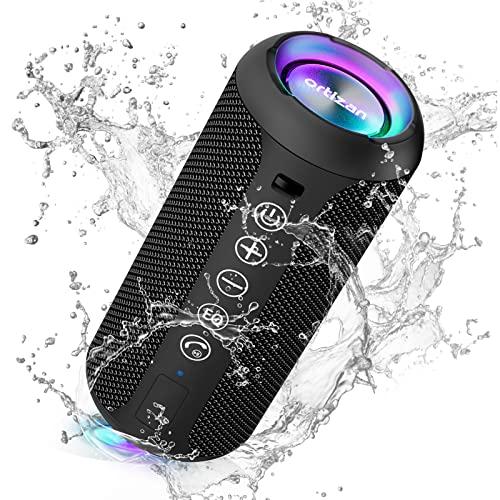
The Ortizan X10 takes the "more is better" approach, cramming impressive specifications into a surprisingly affordable package. At the heart of this speaker lies a dual-driver system producing 24 watts RMS—that's genuine continuous power, not marketing fluff. This represents six times the power output of the JBL Go 3, and the difference is immediately audible.
The X10's audio architecture uses two 12-watt drivers working in tandem, enhanced by bass radiator technology. Bass radiators are passive components that move air in response to the active drivers, effectively extending low-frequency response without requiring additional powered drivers. This explains why the X10 can reach down to 20Hz frequency response—well into the sub-bass territory where you feel rather than just hear the sound.
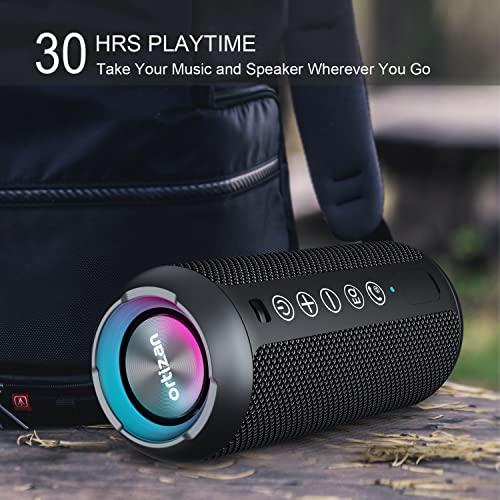
What's particularly impressive about the Ortizan X10 is its 30-hour battery life. This isn't just marketing speak; our research into user experiences consistently confirms playback times approaching or exceeding 24 hours at moderate volumes. The speaker achieves this through a substantial 3600mAh battery—roughly triple the capacity you'd find in most ultra-portable speakers. For context, that's similar to the battery in many smartphones, dedicated entirely to audio playback.
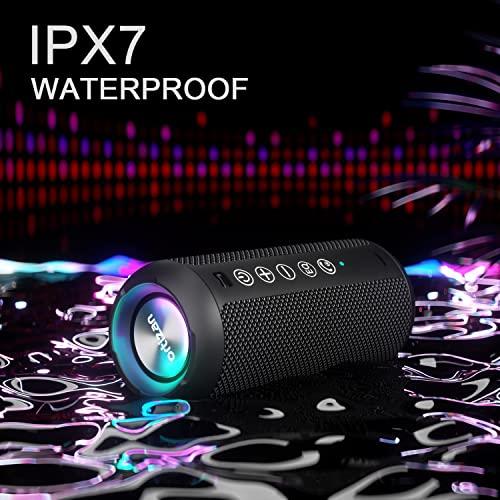
The IPX7 waterproof rating deserves special attention. This means the Ortizan X10 can be completely submerged in up to three feet of water for 30 minutes without damage. Unlike splash-resistant ratings, IPX7 indicates genuine submersion protection. Users report successfully using this speaker floating in pools, which opens up use cases impossible with most portable speakers.
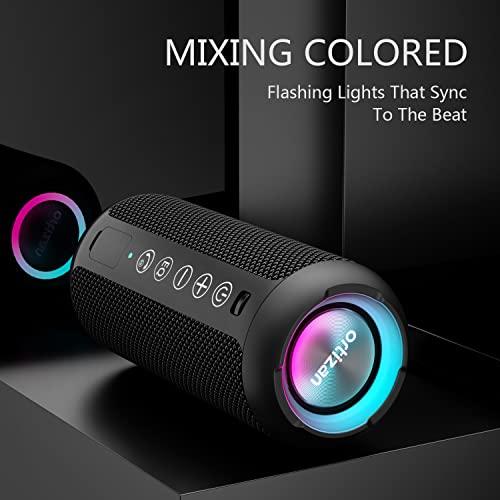
RGB lighting might seem like a gimmick, but it serves a practical purpose beyond party aesthetics. The lighting system can function as ambient lighting for camping or outdoor gatherings, and the music synchronization creates an immersive audio-visual experience that enhances the perceived quality of the audio itself.
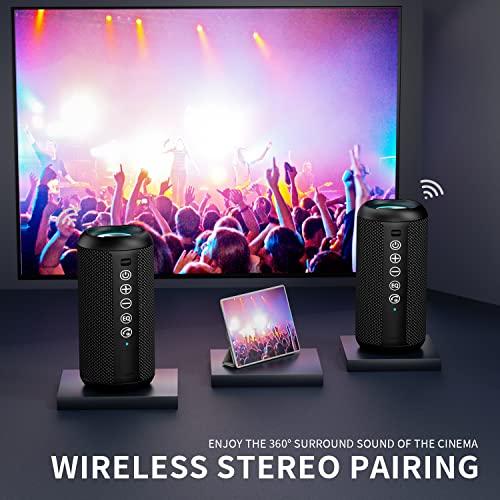
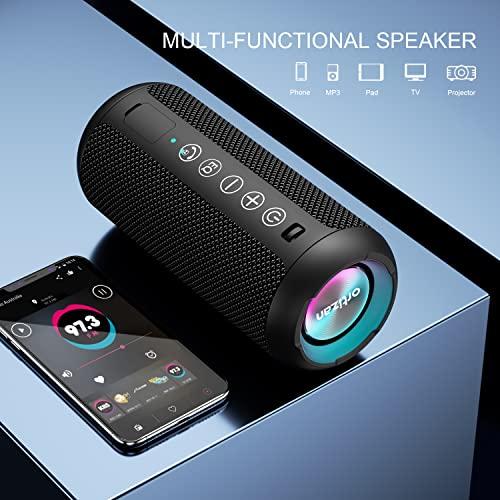
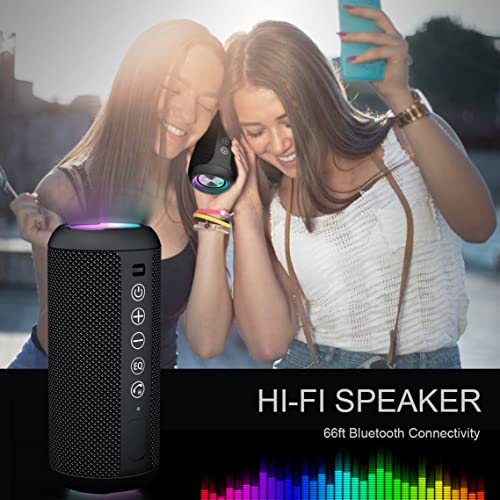
Connectivity options on the X10 include Bluetooth 5.3, 3.5mm auxiliary input, and microSD card playback supporting multiple formats including high-quality FLAC files. The True Wireless Stereo (TWS) pairing capability allows two X10 speakers to connect wirelessly, creating a genuine stereo soundstage that significantly improves spatial audio imaging.
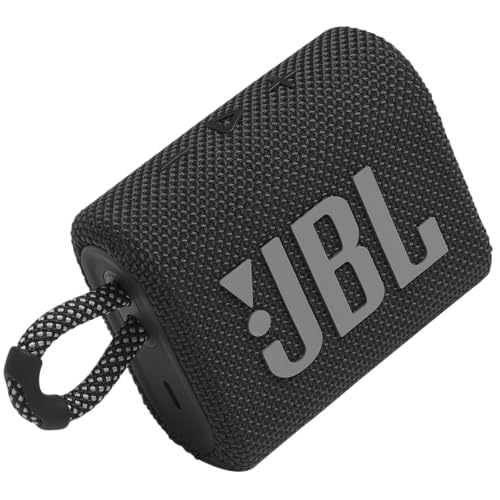
The JBL Go 3 represents a completely different philosophy: maximize audio quality and convenience within the smallest possible package. Released as JBL's third-generation ultra-compact speaker, it incorporates decades of acoustic engineering experience into a device that fits comfortably in your palm.
JBL Pro Sound technology is more than marketing terminology—it represents specific acoustic tuning derived from JBL's professional audio heritage. The single 4.2-watt driver might seem underpowered compared to the X10, but JBL's acoustic engineers have optimized the frequency response curve to maximize perceived quality within physical constraints. The result is exceptional vocal clarity and midrange detail that often surpasses speakers with higher power ratings.
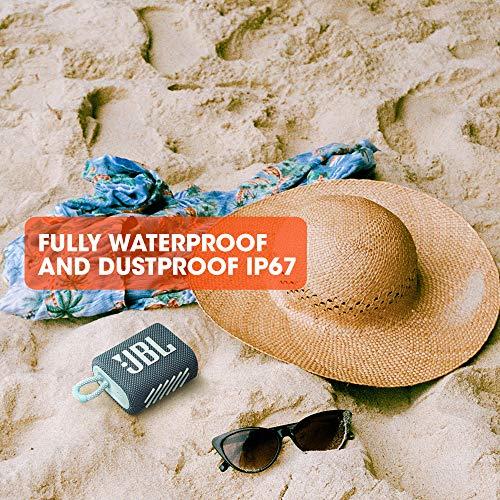
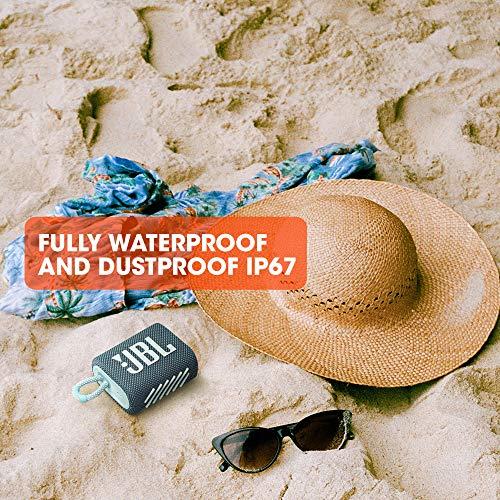
The IP67 rating on the JBL Go 3 provides both water and dust protection. While it can't be submerged as deeply as the X10, the dual protection makes it more suitable for dusty environments like beaches or construction sites. The "67" designation means complete dust-tightness and protection against water immersion up to one meter depth.
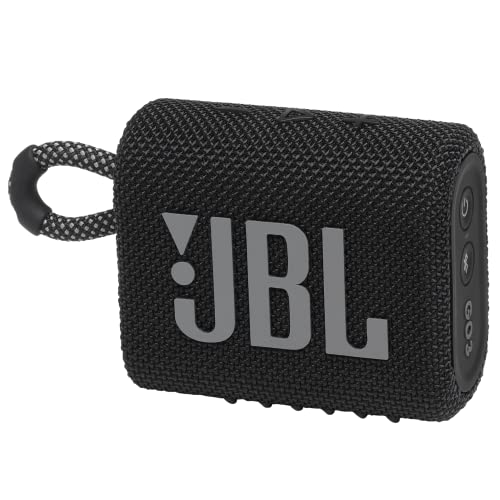
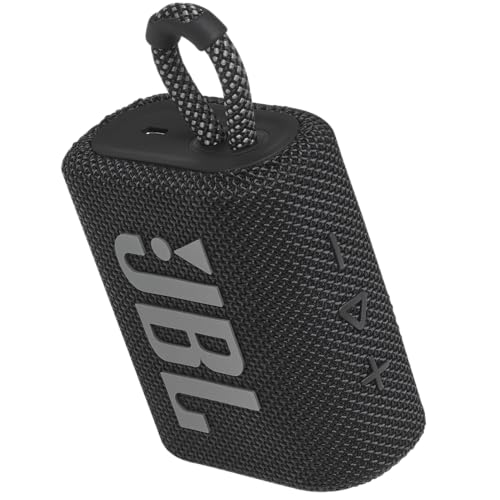
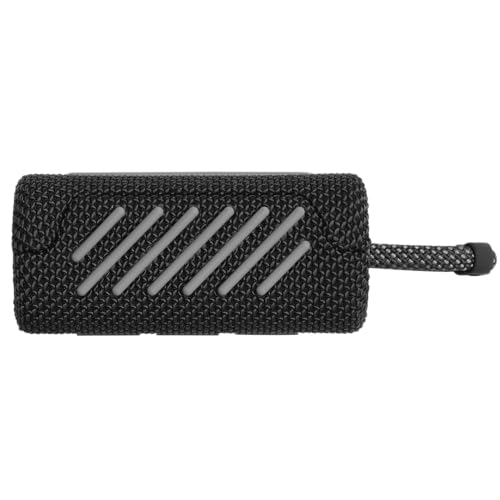
Build quality represents a significant advantage for the JBL Go 3. The fabric exterior isn't just aesthetic—it provides acoustic transparency while protecting internal components. The rubberized accents aren't decorative; they're engineered impact protection. This attention to material selection reflects JBL's experience in professional audio environments where equipment faces constant handling.
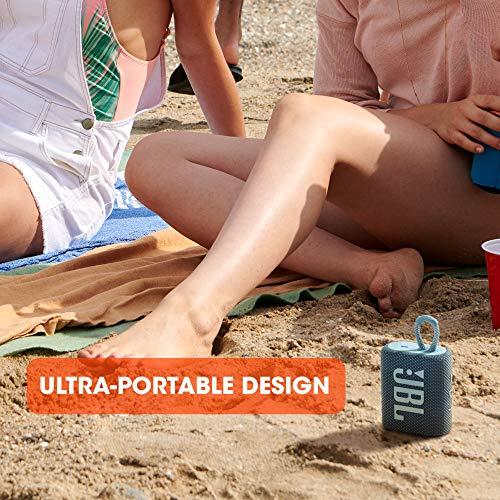
The Go 3's form factor deserves appreciation. The rectangular design with rounded edges prevents rolling—a seemingly minor detail that becomes crucial during actual use. The integrated fabric loop allows secure attachment to bags or carabiners, making it genuinely hands-free portable.
The most significant performance difference between these speakers lies in their audio approaches. The Ortizan X10 prioritizes power and bass extension, delivering room-filling sound that works well for background music and party environments. Its dual drivers create better stereo separation than single-driver designs, and the bass radiator technology produces surprisingly deep low frequencies for this price range.
However, audio refinement tells a different story. User and expert consensus suggests the JBL Go 3 delivers superior midrange clarity and vocal reproduction despite its power disadvantage. This matters significantly for podcast listening, voice calls, and music where vocal details are crucial. The Go 3's frequency response, while limited to 110Hz on the low end, maintains better balance across its operating range.
At moderate listening volumes—which represent 80% of real-world usage—both speakers perform well within their design parameters. The critical difference emerges at higher volumes: the Ortizan X10 can fill larger spaces without strain, while the JBL Go 3 reaches its limits in smaller environments.
Battery performance reveals the starkest difference between these approaches. The Ortizan X10's 30-hour rating proves realistic in practice, with users consistently reporting full-day outdoor events without charging concerns. This transforms the speaker from a device you must manage into one you can forget about until needed.
The JBL Go 3's 5-hour battery life reflects the physics of ultra-compact design. While adequate for commuting or short outdoor activities, it requires planning and regular charging for extended use. The 2.5-hour charge time partially mitigates this limitation, but the fundamental constraint remains.
For perspective, consider real-world scenarios: a camping weekend heavily favors the X10's extended battery life, while daily commuting makes the Go 3's compact size more valuable than extra battery capacity.
Both speakers offer legitimate water protection, but their durability philosophies differ significantly. The Ortizan X10 emphasizes environmental protection and shock resistance through its larger, more robust housing. Users report successful drops, impacts, and even accidental submersion without damage.
The JBL Go 3 focuses on material quality and engineering precision. While physically smaller and potentially more vulnerable to severe impacts, its superior materials and construction quality often result in better long-term reliability. JBL's established reputation stems partly from their speakers maintaining performance characteristics over extended use periods.
At the time of writing, the pricing relationship between these speakers creates an interesting value equation. The Ortizan X10 typically costs significantly less than the JBL Go 3 while offering substantially more features, power, and battery life. This makes the X10 an exceptional value proposition for feature-conscious buyers.
However, value calculations must consider intended use patterns. If ultra-portability is your primary requirement, the JBL Go 3's premium price reflects genuine engineering advantages in miniaturization and acoustic optimization. The brand reliability factor also carries value for users who prioritize long-term dependability over immediate feature count.
The X10's value story becomes compelling when considering its versatility. Multiple connectivity options, extended battery life, and powerful audio output create a single device capable of handling diverse scenarios from personal listening to small gatherings.
Neither speaker is designed as a primary home theater solution, but both can serve specific roles in entertainment systems. The Ortizan X10's power output and stereo driver configuration make it suitable as a temporary solution for bedrooms or small spaces where permanent installation isn't practical.
The TWS pairing capability of the Ortizan X10 creates interesting possibilities for users wanting stereo sound without permanent speaker installation. Two paired X10s can provide decent stereo imaging for movie watching on tablets or laptops, though the lack of dedicated tweeters limits high-frequency detail.
The JBL Go 3 works better as a personal entertainment device rather than shared viewing solution. Its excellent vocal clarity makes it surprisingly effective for dialogue-heavy content when watching alone, but its limited volume capability restricts shared viewing applications.
For serious home theater applications, both speakers serve better as portable supplements rather than primary audio solutions. Their value lies in extending your entertainment experience to locations where your main system isn't available.
Both speakers benefit from recent Bluetooth improvements, though they implement these advances differently. The Ortizan X10 uses Bluetooth 5.3, which provides better connection stability and range compared to earlier versions. This matters for outdoor use where you might move away from your audio source.
The JBL Go 3's Bluetooth 5.1 implementation emphasizes energy efficiency, contributing to better battery life relative to its capacity. The codec support ensures compatibility with modern devices while maintaining audio quality during wireless transmission.
Since 2020, portable speaker design has emphasized either feature maximization or refined miniaturization. The X10 represents the feature-maximization trend effectively, while the Go 3 shows how established manufacturers refine existing concepts rather than simply adding features.
The decision between these speakers ultimately depends on your primary use cases and preferences. Choose the Ortizan X10 if you need maximum battery life, powerful sound output, or plan to use the speaker for gatherings and outdoor activities. Its versatile connectivity options and water resistance make it ideal for camping, beach trips, or backyard parties where you need reliable, loud audio.
The JBL Go 3 makes sense when ultra-portability takes priority. If you're primarily listening alone or in small groups, commuting regularly, or need something that disappears into a bag without adding noticeable weight, the Go 3's refined approach delivers better value despite its higher price.
For budget-conscious buyers seeking maximum features, the Ortizan X10 provides exceptional value. However, if you prefer established brand reliability and don't mind paying more for refined engineering, the JBL Go 3 justifies its premium through superior build quality and audio tuning.
Consider your tolerance for charging routines: the X10's extended battery life suits forgetful users or those planning extended off-grid activities, while the Go 3's shorter battery life becomes manageable if you already maintain regular charging habits for other devices.
Both speakers serve their intended purposes well, but they target distinctly different user priorities. The Ortizan X10 maximizes features and capability per dollar spent, while the JBL Go 3 optimizes the ultra-portable listening experience. Understanding which priority matters more to you will lead to the right choice for your specific needs and preferences.
| Ortizan X10 Portable Bluetooth Speaker 24W | JBL Go 3 Portable Bluetooth Speaker |
|---|---|
| Power Output - Determines maximum volume and room-filling capability | |
| 24W RMS (dual 12W drivers) - Can fill medium rooms and outdoor spaces | 4.2W RMS (single driver) - Best for personal listening and small spaces |
| Battery Life - Critical for extended use without charging | |
| Up to 30 hours - Industry-leading for all-day events and camping | Up to 5 hours - Standard for ultra-compact speakers, requires frequent charging |
| Water Resistance - Essential for outdoor and poolside use | |
| IPX7 (submersible up to 3 feet) - Can float in pools and handle full water immersion | IP67 (waterproof + dustproof) - Better dust protection but less water depth capability |
| Size and Portability - Affects where and how you can carry the speaker | |
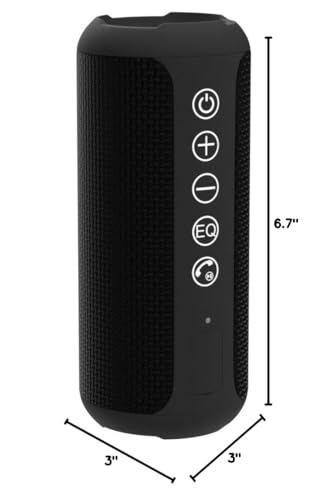
| 6.7" × 3" × 3" (cylindrical, tends to roll) - Larger but includes carrying lanyard | 3.4" × 2.7" × 1.6" (stable rectangular) - Ultra-compact, fits in pockets |
| Audio Quality Focus - Different approaches to sound reproduction | |
| Bass-emphasized with 360-degree sound - Great for parties but may lack vocal clarity | Vocal-focused with JBL Pro Sound tuning - Exceptional midrange clarity for podcasts/calls |
| Connectivity Options - Flexibility for different audio sources | |
| Bluetooth 5.3, AUX input, microSD card slot, TWS pairing - Multiple connection methods | Bluetooth 5.1 only - Streamlined wireless-only approach |
| Special Features - Additional functionality beyond basic audio | |
| RGB lighting effects, music sync, night light mode - Party-oriented visual features | Vibrant color options, premium fabric design - Style-focused aesthetics |
| Frequency Response - Range of sounds the speaker can reproduce | |
| 20Hz - 20kHz (extends into sub-bass territory) - Better for bass-heavy music genres | 110Hz - 20kHz (limited low-end) - Optimized for vocal clarity over deep bass |
| Build Philosophy - Design priorities and target use cases | |
| Feature maximization at budget price - Best value for power users wanting everything | Premium ultra-portability - Refined engineering for grab-and-go convenience |
| Ideal Use Scenarios - Where each speaker performs best | |
| Pool parties, camping, outdoor gatherings, multi-room audio via TWS - Power-focused activities | Commuting, travel, personal listening, shower use - Portability-focused activities |
The Ortizan X10 is significantly louder with its 24W dual-driver system compared to the JBL Go 3's 4.2W single driver. The X10 can fill medium-sized rooms and outdoor spaces, while the Go 3 is designed for personal listening and close-range use.
The Ortizan X10 offers up to 30 hours of playback time, making it ideal for extended outdoor activities and camping trips. The JBL Go 3 provides up to 5 hours of battery life, which is standard for ultra-compact speakers but requires more frequent charging.
Both speakers offer excellent water protection but with different capabilities. The Ortizan X10 has IPX7 rating and can be submerged up to 3 feet deep, even floating in pools. The JBL Go 3 features IP67 rating, providing both waterproof and dustproof protection but with less submersion depth.
The JBL Go 3 is ultra-compact at 3.4" × 2.7" × 1.6" and fits easily in pockets or small bags. The Ortizan X10 is larger at 6.7" × 3" × 3" with a cylindrical design, making it more powerful but less portable.
Sound quality depends on your preferences. The Ortizan X10 delivers more powerful bass and room-filling sound, ideal for parties and bass-heavy music. The JBL Go 3 offers superior vocal clarity and balanced midrange, making it better for podcasts and acoustic music.
The Ortizan X10 offers multiple connectivity options including Bluetooth, AUX input, and microSD card slot for versatile playback. The JBL Go 3 only supports Bluetooth connectivity, focusing on wireless simplicity.
The Ortizan X10 excels for outdoor use with its 30-hour battery life, powerful sound output, and ability to float in water. The JBL Go 3 works well for hiking or personal outdoor activities where ultra-portability matters more than maximum volume.
Both speakers have built-in microphones for hands-free calling. The JBL Go 3 typically provides clearer voice quality due to its vocal-focused audio tuning, while the Ortizan X10 offers louder speakerphone volume for group calls.
The Ortizan X10 provides exceptional value with more features, longer battery life, and higher power output at a lower price point. The JBL Go 3 offers premium build quality and brand reliability, justifying its higher price for users prioritizing portability and refined audio.
The Ortizan X10 supports True Wireless Stereo (TWS) pairing, allowing you to connect two speakers for stereo sound. The JBL Go 3 doesn't support multi-speaker pairing, focusing on standalone ultra-portable use.
Both speakers are built for durability but in different ways. The JBL Go 3 features premium materials and JBL's proven build quality for long-term reliability. The Ortizan X10 offers robust construction with better protection against drops and impacts due to its larger size.
Neither speaker is designed as a primary home theater solution. The Ortizan X10 can serve as a temporary bedroom or small room solution, and two units can be paired via TWS for basic stereo sound. The JBL Go 3 works better for personal viewing on tablets or laptops rather than shared home theater experiences.
We've done our best to create useful and informative comparisons to help you decide what product to buy. Our research uses advanced automated methods to create this comparison and perfection is not possible - please contact us for corrections or questions. These are the sites we've researched in the creation of this article: reviewindetail.com - manuals.plus - newegg.com - walmart.com - nerdtechy.com - aliexpress.com - youtube.com - h5.lazada.com.ph - youtube.com - manuals.plus - walmart.com - ortizan.com - youtube.com - youtube.com - ubuy.com.pk - manuals.plus - youtube.com - aliexpress.com - aliexpress.com - ortizan.com - youtube.com - heartwood.church - device.report - rtings.com - streamtechreviews.com - english.achoreviews.com - smarthomesounds.co.uk - soundguys.com - rtings.com - walmart.com - soundguys.com - youtube.com - youtube.com - jbl.com - youtube.com - selectoguru.com - versus.com - videoandaudiocenter.com - harmanaudio.com - jbl.com - bestbuy.com - forum.hifiguides.com - manuals.plus - kh.jbl.com - th.jbl.com - mm.jbl.com - jbl.com - bestbuy.com - youtube.com - youtube.com - youtube.com - jbl.com - bestbuy.com - bestbuy.com - jbl.com.tw - youtube.com

Privacy Policy
Terms and Conditions - Affiliate Policy
Home Security
© Copyright 2008-2026.
11816 Inwood Rd #1211, Dallas, TX 75244