



When it comes to portable Bluetooth speakers, you'll find yourself facing a surprisingly wide range of choices. On one end, you have ultra-compact speakers that slip into your pocket without a second thought. On the other, there are speakers so powerful they could easily replace your home stereo system. The JBL Go 3 and Marshall Tufton perfectly represent these two extremes, and understanding their differences will help you figure out exactly what kind of portable audio experience you're after.
Before diving into these specific models, it's worth understanding what separates good portable speakers from great ones. The most important factor is sound quality, which comes down to how well a speaker reproduces different frequencies (the technical term for how high or low sounds are). Bass frequencies give you that chest-thumping thump in music, midrange frequencies handle vocals and most instruments, while treble frequencies provide the sparkle and detail that make music sound crisp.
Then there's the question of power output, measured in watts. More watts generally mean louder sound and better ability to fill larger spaces, though the relationship isn't perfectly linear. A speaker's frequency response range tells you the lowest and highest frequencies it can reproduce – a wider range usually means more complete sound.
Battery life becomes crucial when you're away from power outlets, while durability features like water resistance can mean the difference between a speaker that lasts years and one that dies after the first beach trip. Finally, there's the eternal balance between portability and performance – physics dictates that smaller speakers simply can't move as much air as larger ones, which limits their ability to produce deep bass and high volume.
Released in 2021, the JBL Go 3 represents the "maximum portability" approach to speaker design. At the time of writing, it sits in the ultra-budget category, making it accessible to nearly anyone wanting to upgrade from tinny phone speakers. JBL designed this as a speaker you'd literally forget you're carrying until you need it.
The Marshall Tufton, launched in 2019, takes the opposite approach. It falls into the premium portable speaker category, costing roughly sixteen times more than the Go 3 at the time of writing. Marshall's philosophy here was simple: create a speaker that doesn't compromise on sound quality just because it happens to be battery-powered.
These different approaches reflect the maturation of Bluetooth technology. By 2019, when the Tufton debuted, Bluetooth 5.0 had become stable enough to handle high-quality audio transmission without the dropouts that plagued earlier wireless speakers. The Go 3 benefits from even newer Bluetooth 5.1 technology, which offers improved connection stability and lower power consumption – crucial for a speaker with limited battery capacity.
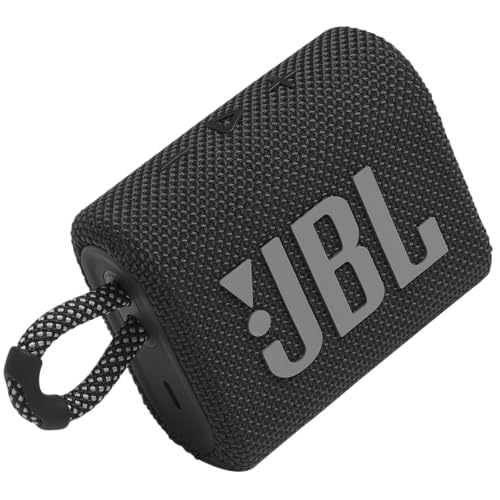
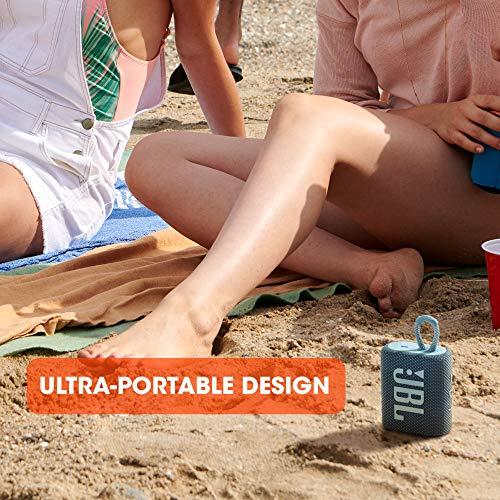
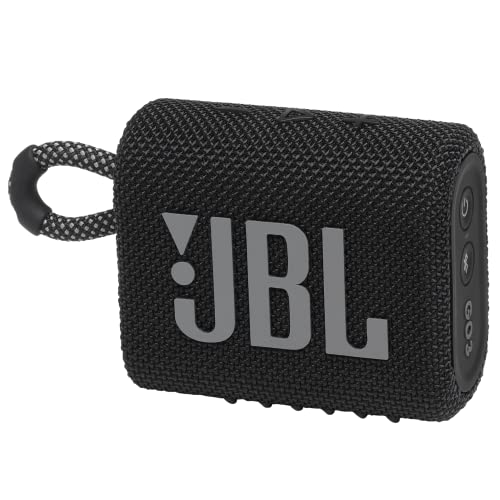
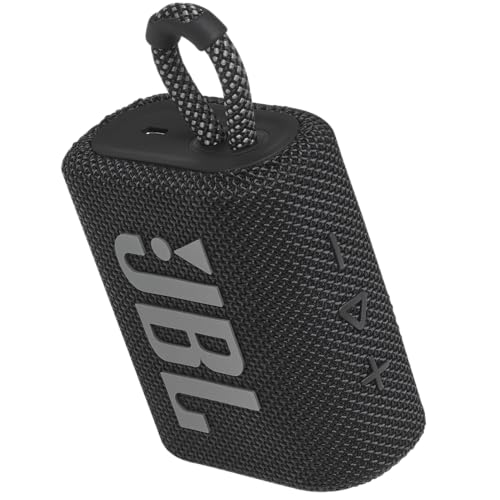
The physical differences between these speakers tell most of their story. The JBL Go 3 measures just 3.4 by 2.7 by 1.6 inches and weighs less than half a pound. You could genuinely lose this thing in a large jacket pocket. It includes a fabric loop that lets you clip it to bags, belt loops, or carabiners, making it perfect for hikers, cyclists, or anyone who wants music without the burden.
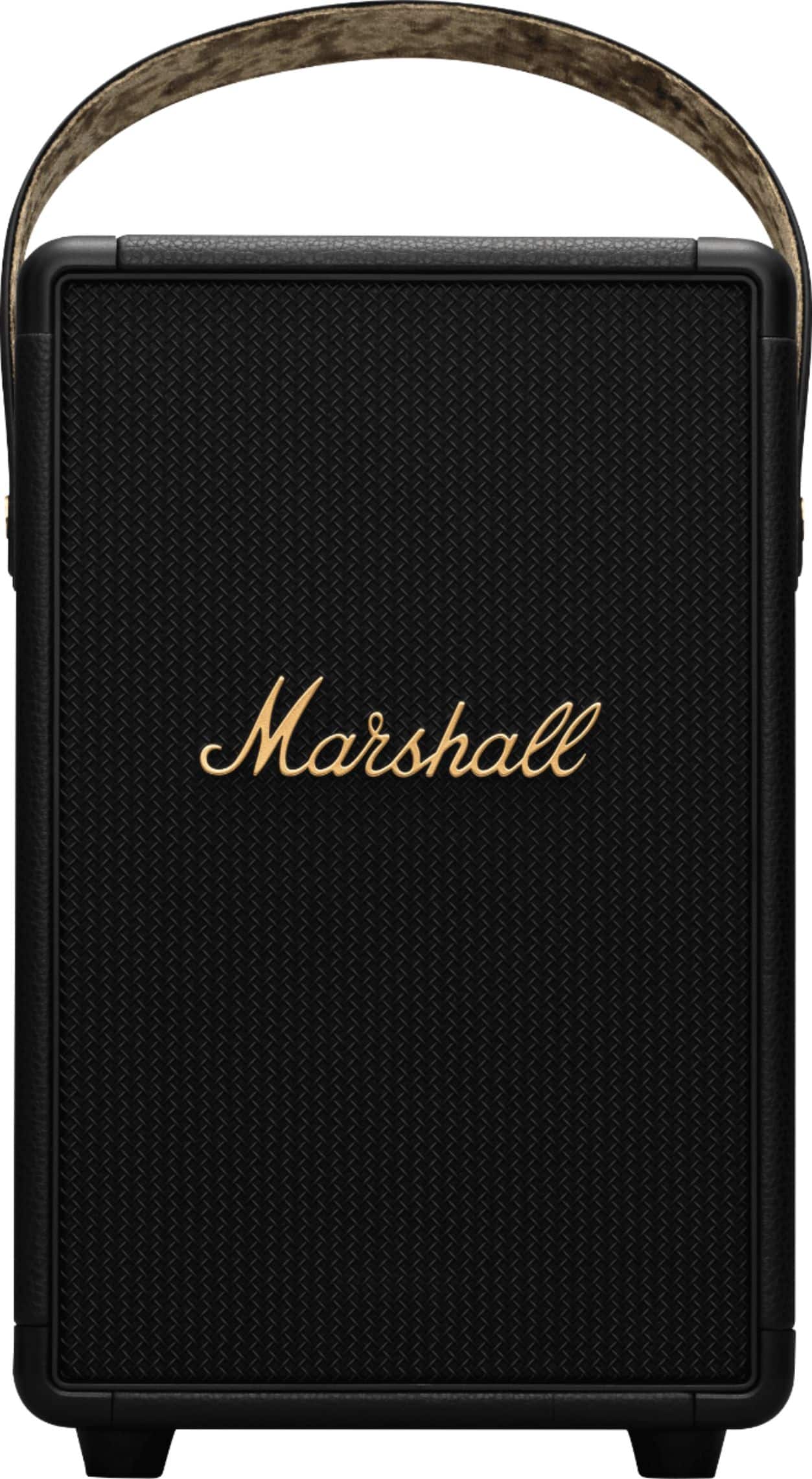
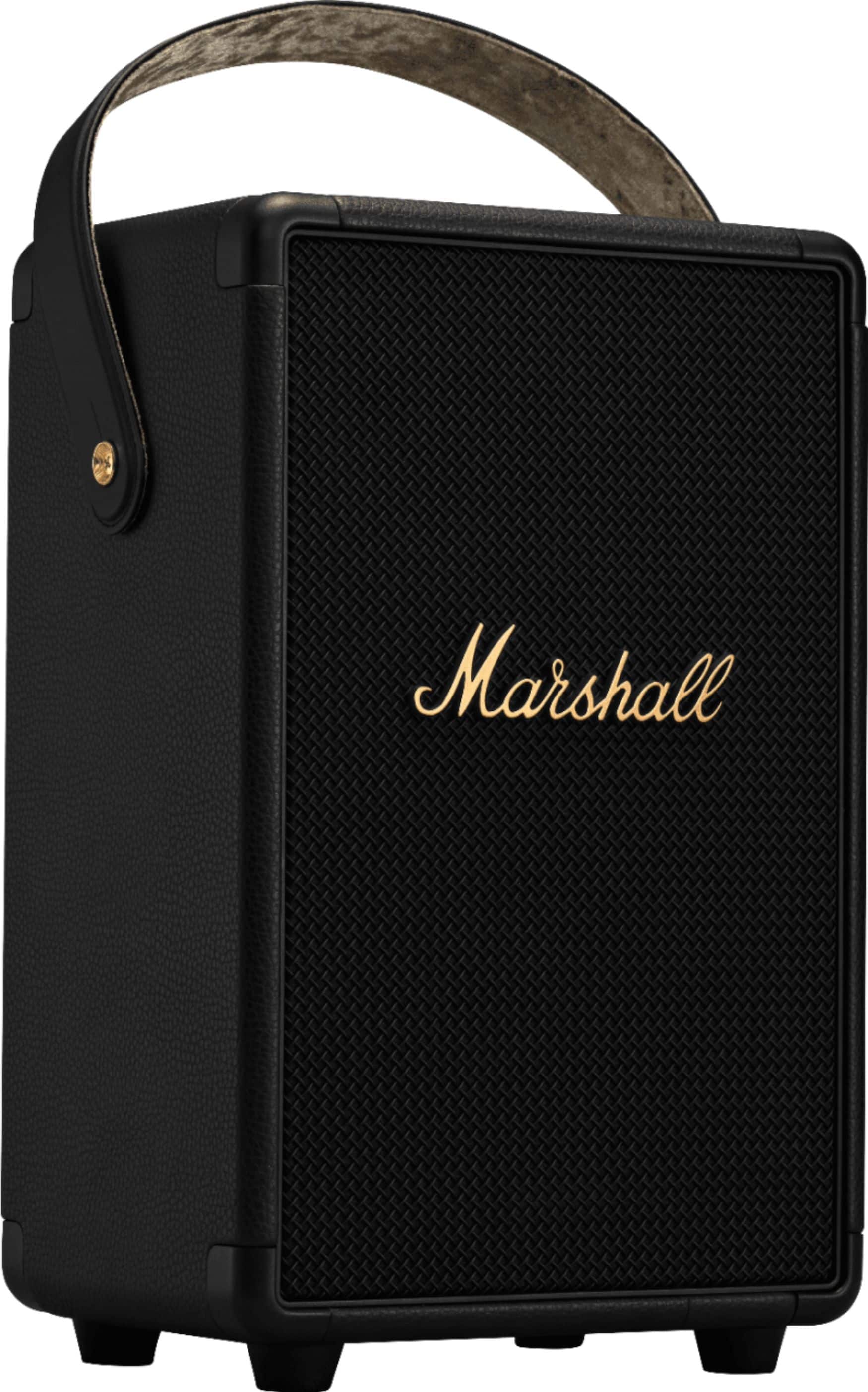
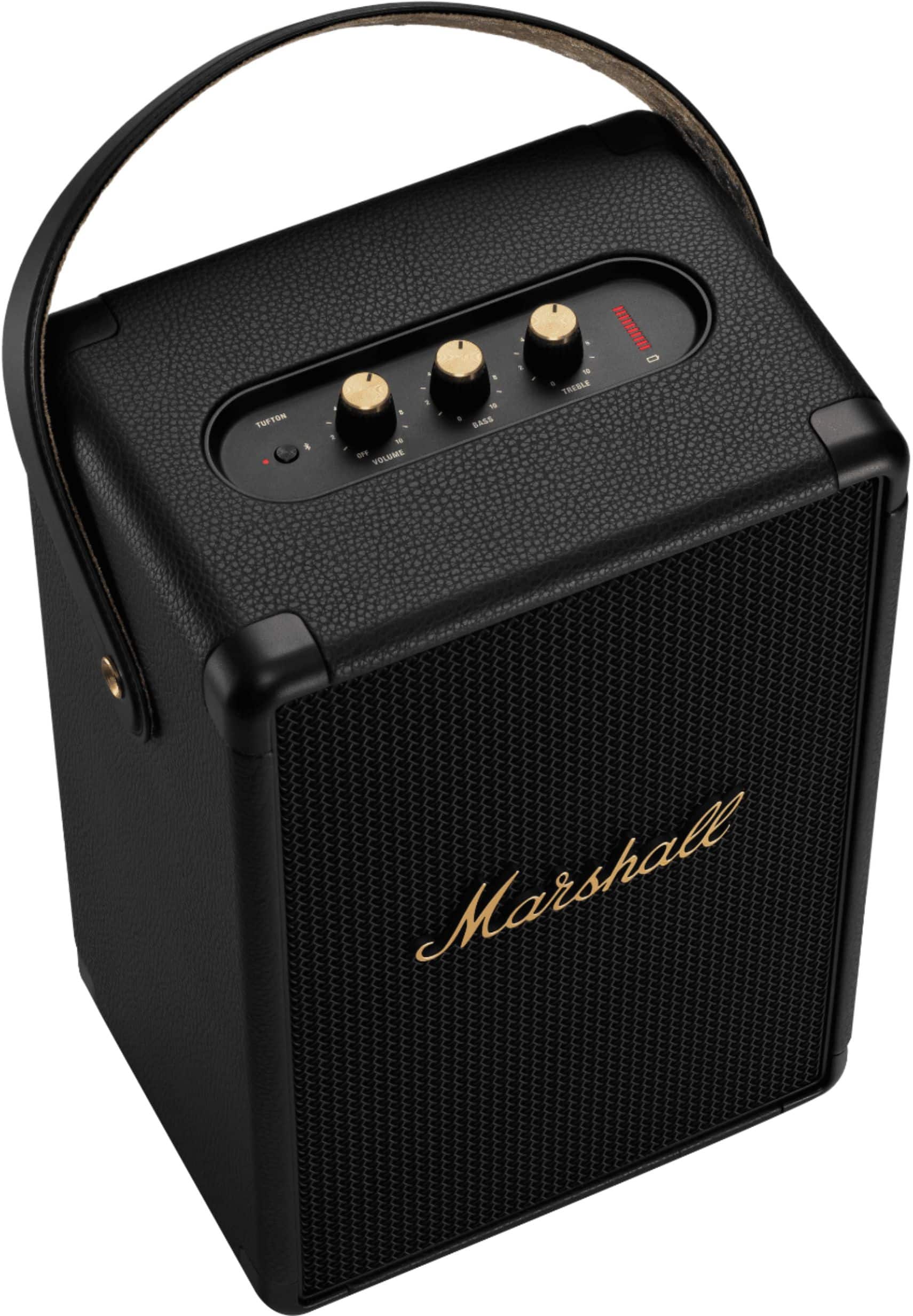
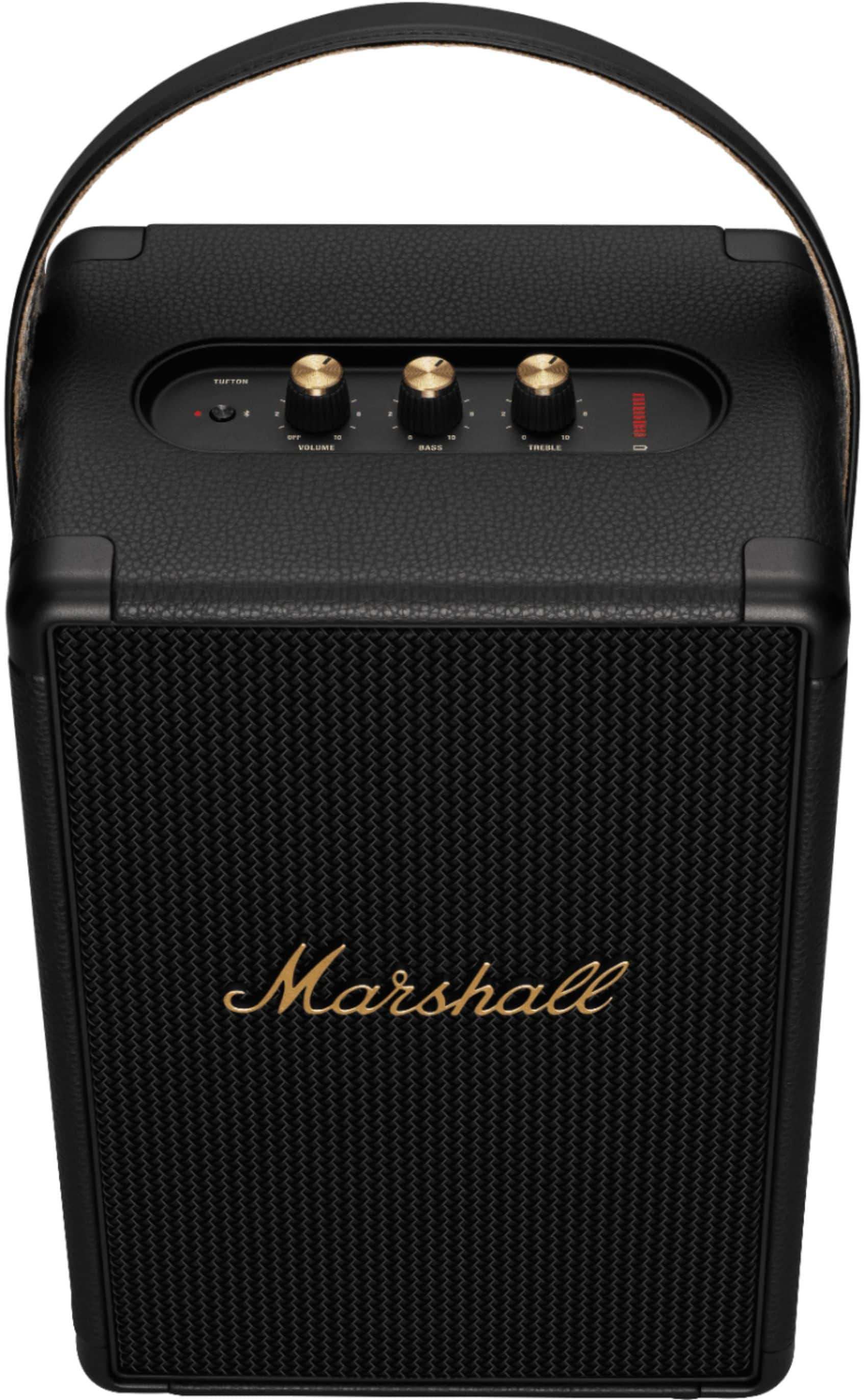
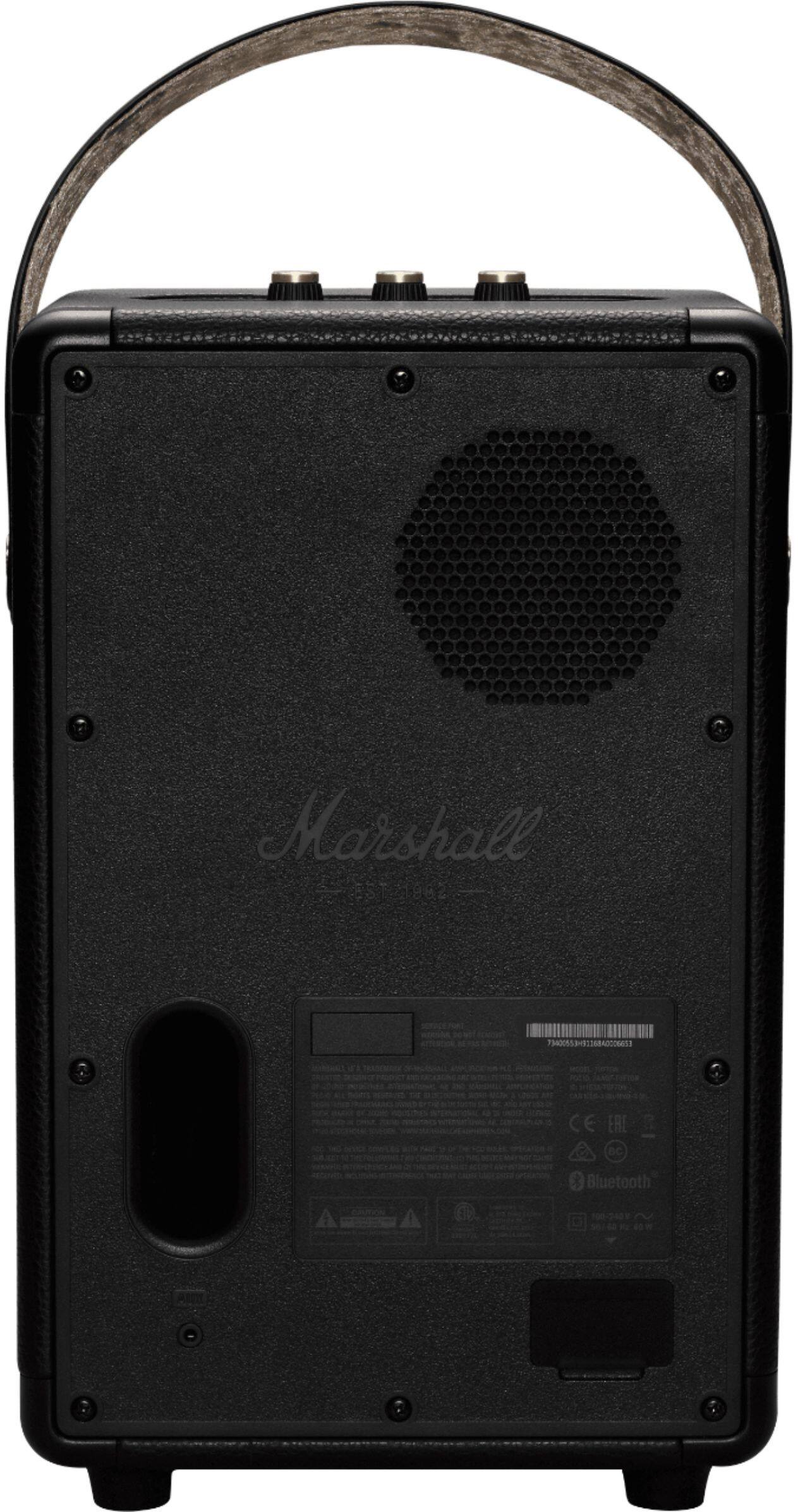
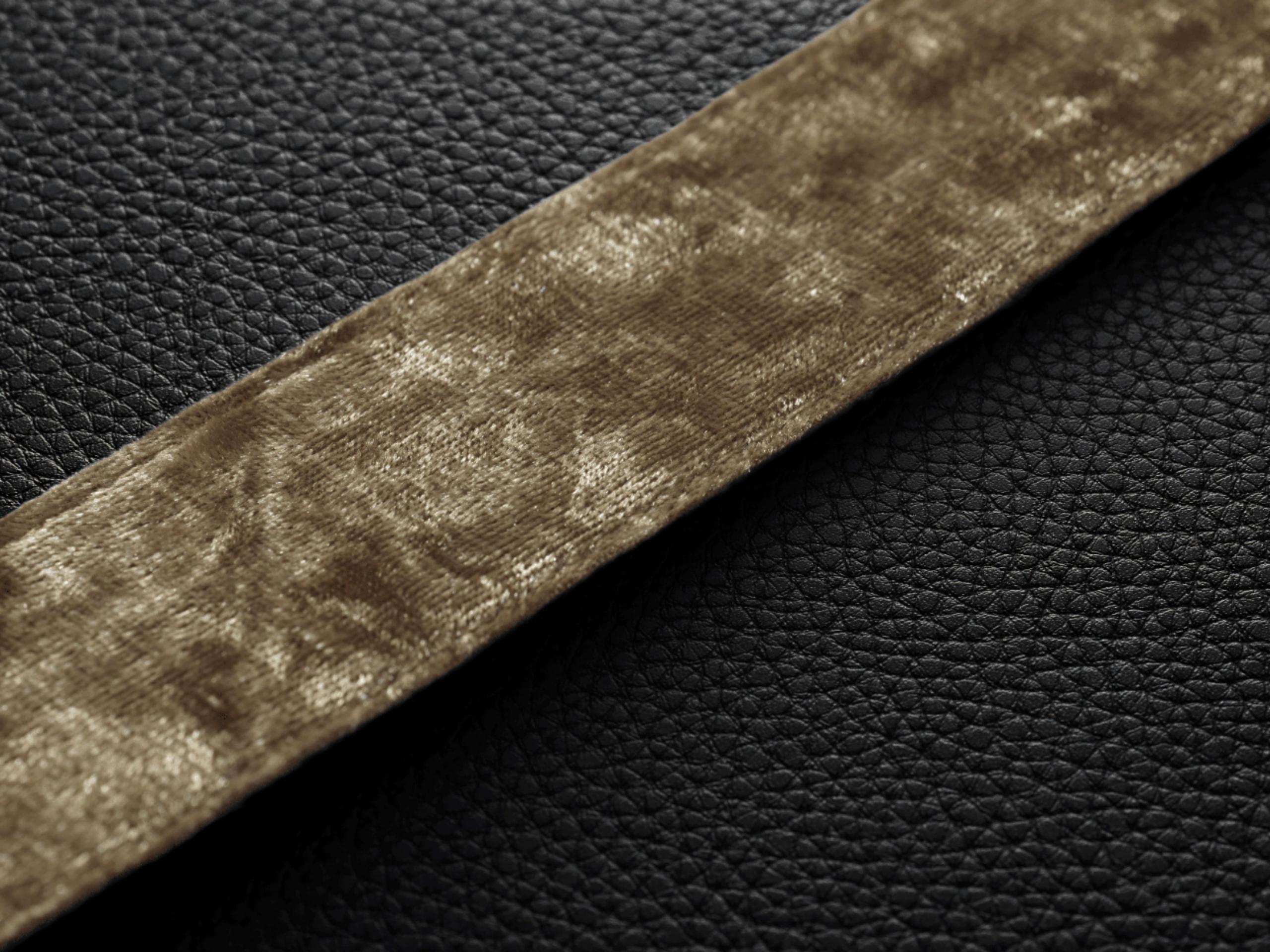
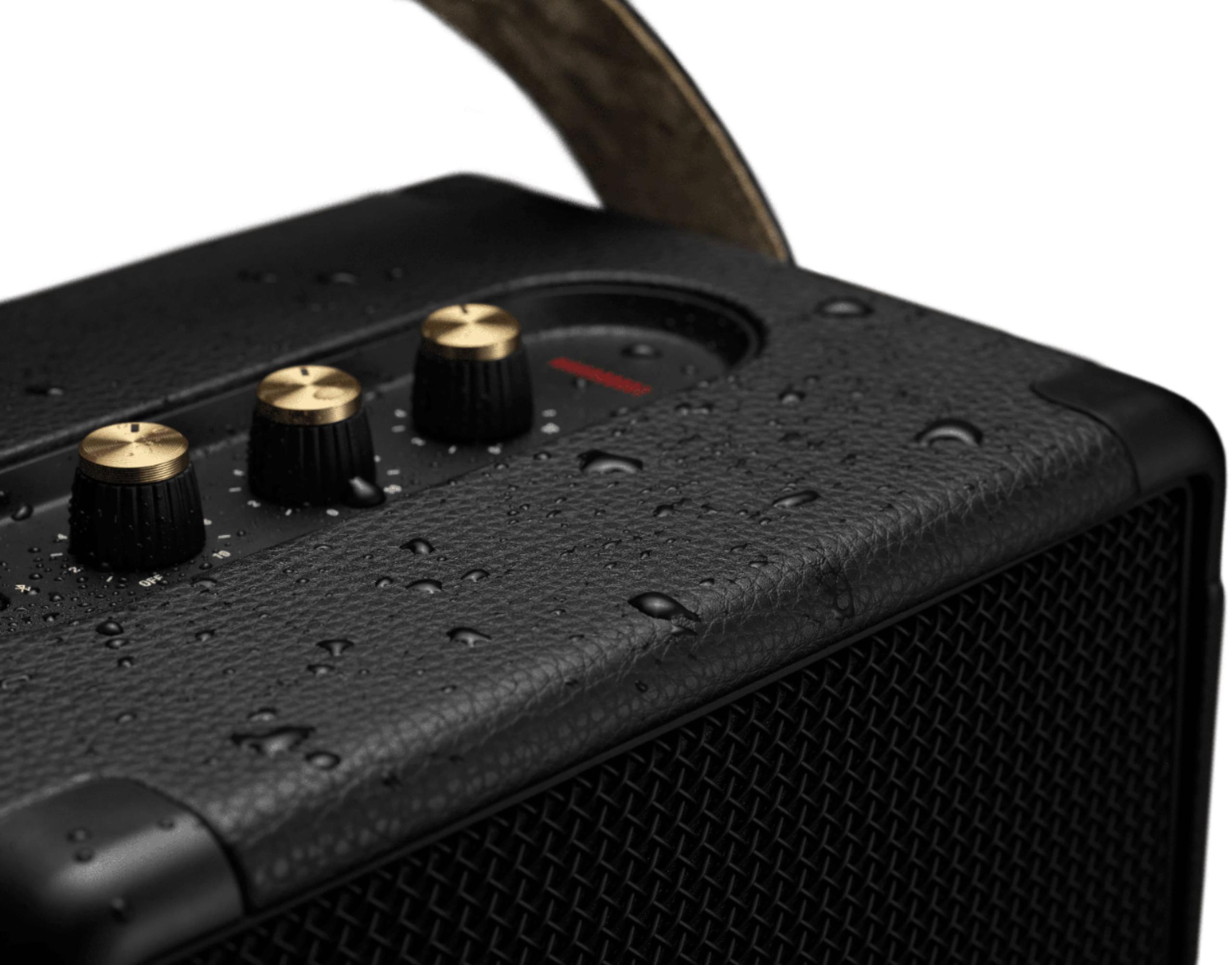
The Marshall Tufton, conversely, spans nearly 14 inches tall and weighs almost 11 pounds. That's approaching the weight of a bowling ball, though Marshall does include a guitar strap-style carrying handle that makes transport more manageable. This size allows for much larger drivers (the cone-shaped components that actually produce sound) and a bigger battery, but it definitely changes how and when you'll use the speaker.
This size difference creates fundamentally different use cases. The Go 3 excels as a personal speaker – something you'd use while cooking, working in a small office, or providing background music for a picnic. The Tufton is designed for situations where you want to fill a space with sound: backyard parties, large camping groups, or even as a primary speaker in a small apartment.
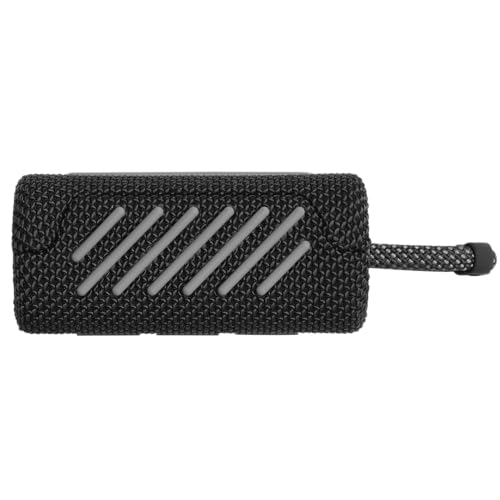
Here's where the differences become really apparent. The JBL Go 3 uses a single 43 by 47mm driver powered by 4.2 watts. This creates what's called a mono setup – all sound comes from one point rather than creating the stereo separation you'd get from two speakers. The frequency response spans from 110Hz to 20kHz, which means it can reproduce most of the human hearing range but struggles with deep bass frequencies.
In practical terms, this means the Go 3 handles vocals, acoustic instruments, and podcasts beautifully. The sound is surprisingly clear and detailed for such a tiny speaker. However, bass-heavy music genres like electronic dance music, hip-hop, or rock will sound thin and lacking in punch. The speaker starts to show strain when you push the volume high, particularly with bass-heavy content.
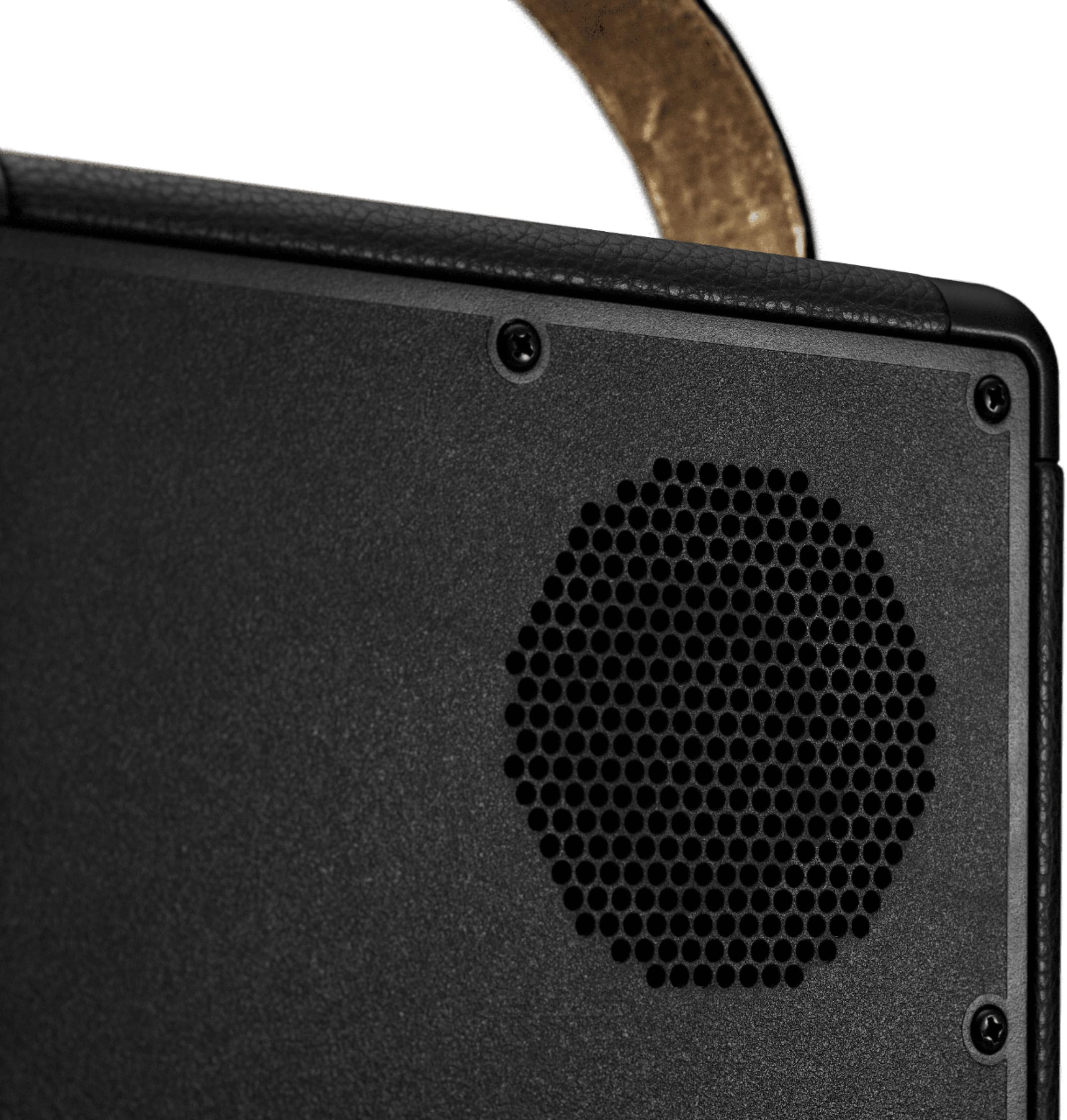
The Marshall Tufton takes a completely different approach with its three-way speaker system. This means it has dedicated drivers for different frequency ranges: tweeters handle high frequencies, midrange drivers cover vocals and instruments, and a substantial woofer handles bass. The total power output reaches 80 watts across these multiple drivers, and the frequency response extends down to 40Hz – low enough to reproduce the fundamental frequencies in most bass instruments.
This technical setup translates to sound that can genuinely compete with home stereo systems. The Tufton creates what audiophiles call "soundstage" – the illusion that musicians are positioned across a virtual stage in front of you. Bass has real weight and impact, drums sound punchy and dynamic, and vocals maintain clarity even at high volumes.
The Tufton also features what Marshall calls "True Stereophonic" sound, which uses rear-firing drivers to create 360-degree audio dispersion. This means people can gather around the speaker from any angle and still get good sound, making it ideal for social situations.
Battery technology represents one of the biggest improvements in portable speakers over the past few years. The JBL Go 3 manages about 5 hours of playback from its compact lithium polymer battery, which charges via USB-C in about 2.5 hours. While 5 hours might not sound like much, it's actually impressive given the speaker's tiny size and budget-friendly price point.
The Marshall Tufton delivers an outstanding 20 hours of playback despite its much higher power output. This achievement comes from a larger battery capacity and efficient Class D amplification (a type of amplifier that converts more electrical energy into sound rather than heat). The Tufton also includes quick-charge functionality, providing 4 hours of playback from just 20 minutes of charging.
These different battery approaches reflect each speaker's intended use. The Go 3's 5-hour runtime perfectly matches activities like beach days, short hikes, or background music during work sessions. The Tufton's 20-hour capacity makes it suitable for weekend camping trips, all-day outdoor events, or as an emergency backup during power outages.
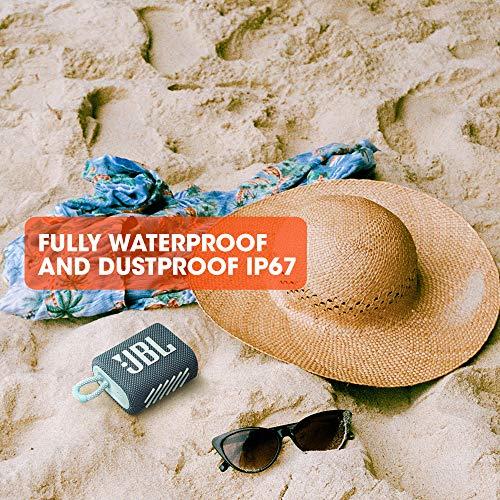
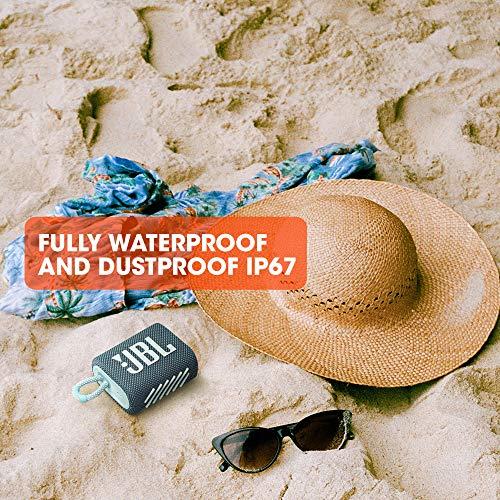
Water resistance has become increasingly important as people use speakers in more varied environments. The JBL Go 3 carries an IP67 rating, which represents serious protection. The "6" means complete dust protection – no particles can enter the speaker. The "7" indicates it can survive submersion in up to one meter of water for 30 minutes. This makes it genuinely suitable for poolside use, beach trips, or even shower listening.
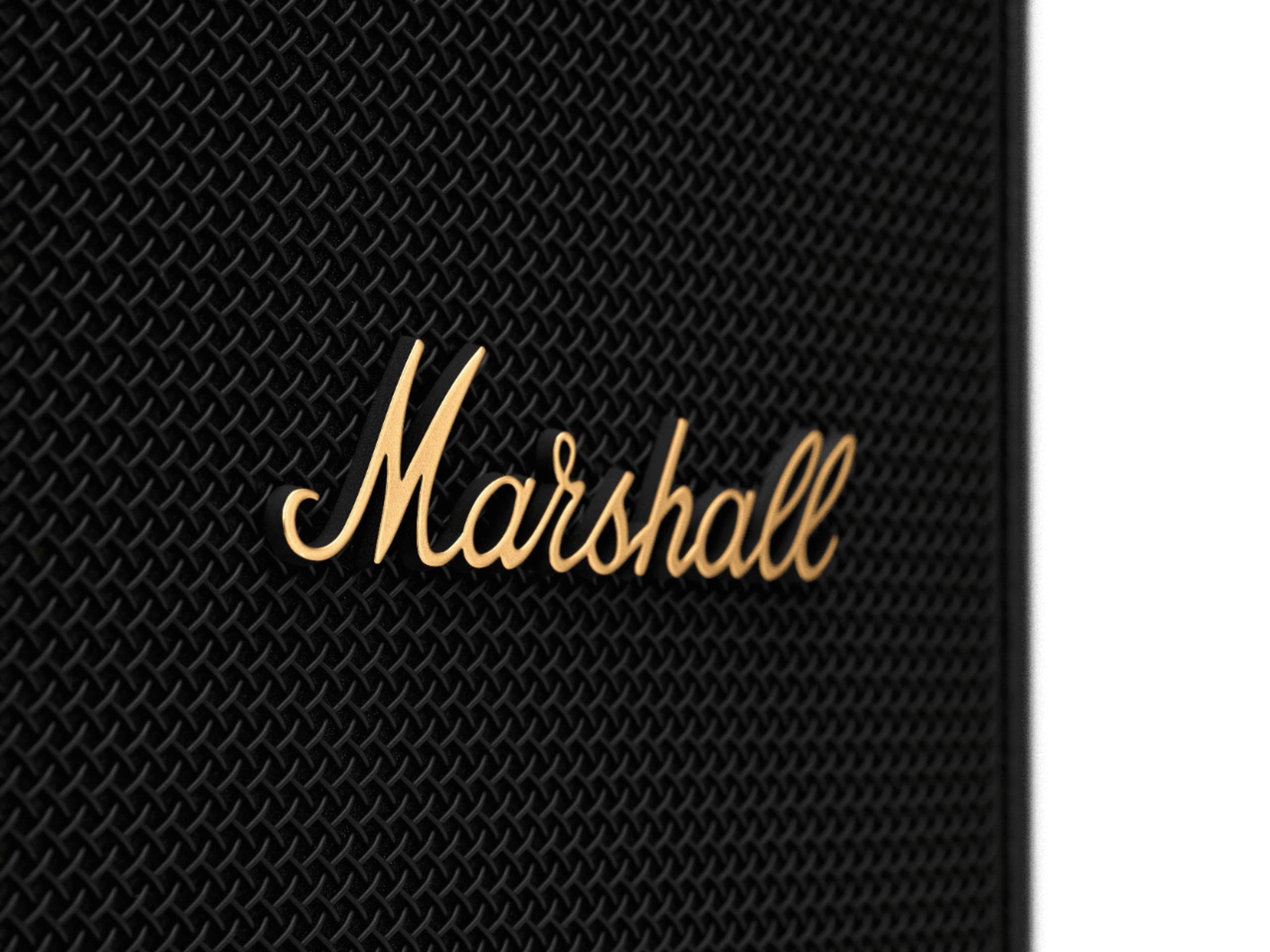
The Marshall Tufton offers IPX2 protection, which only guards against light water exposure like drizzle or condensation. While the solid metal grille and robust construction suggest durability, this speaker isn't designed for wet environments.
This difference highlights each product's target environment. The Go 3 is built for outdoor adventures where weather might be unpredictable. The Tufton is designed more for patios, indoor use, or covered outdoor spaces where serious water exposure is unlikely.
Both speakers use Bluetooth connectivity, but with different capabilities. The Go 3 uses Bluetooth 5.1 with basic pairing functionality – you connect one device at a time and control everything through your phone or music app. The controls are minimal: power, Bluetooth pairing, volume up/down, and play/pause.
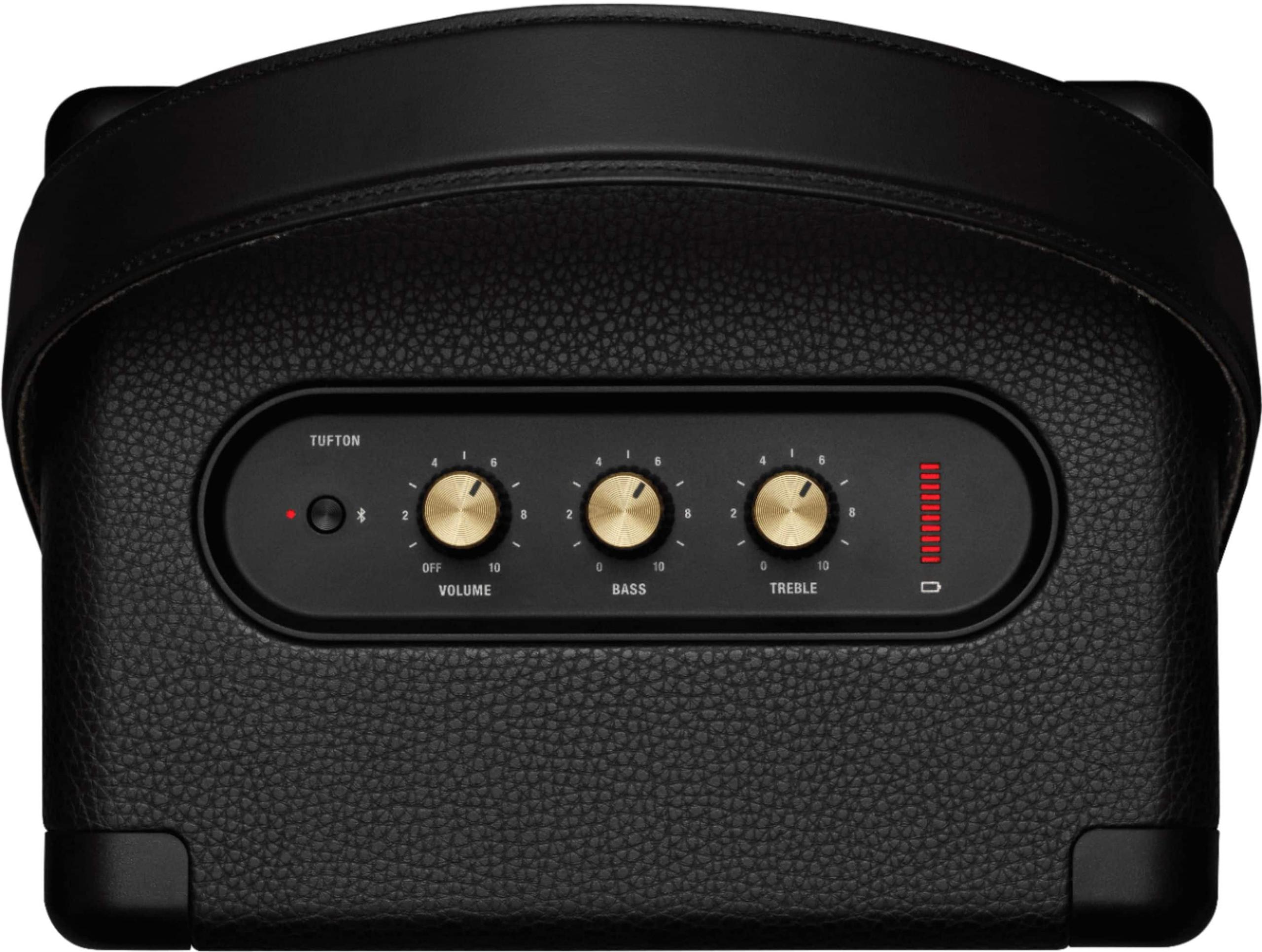
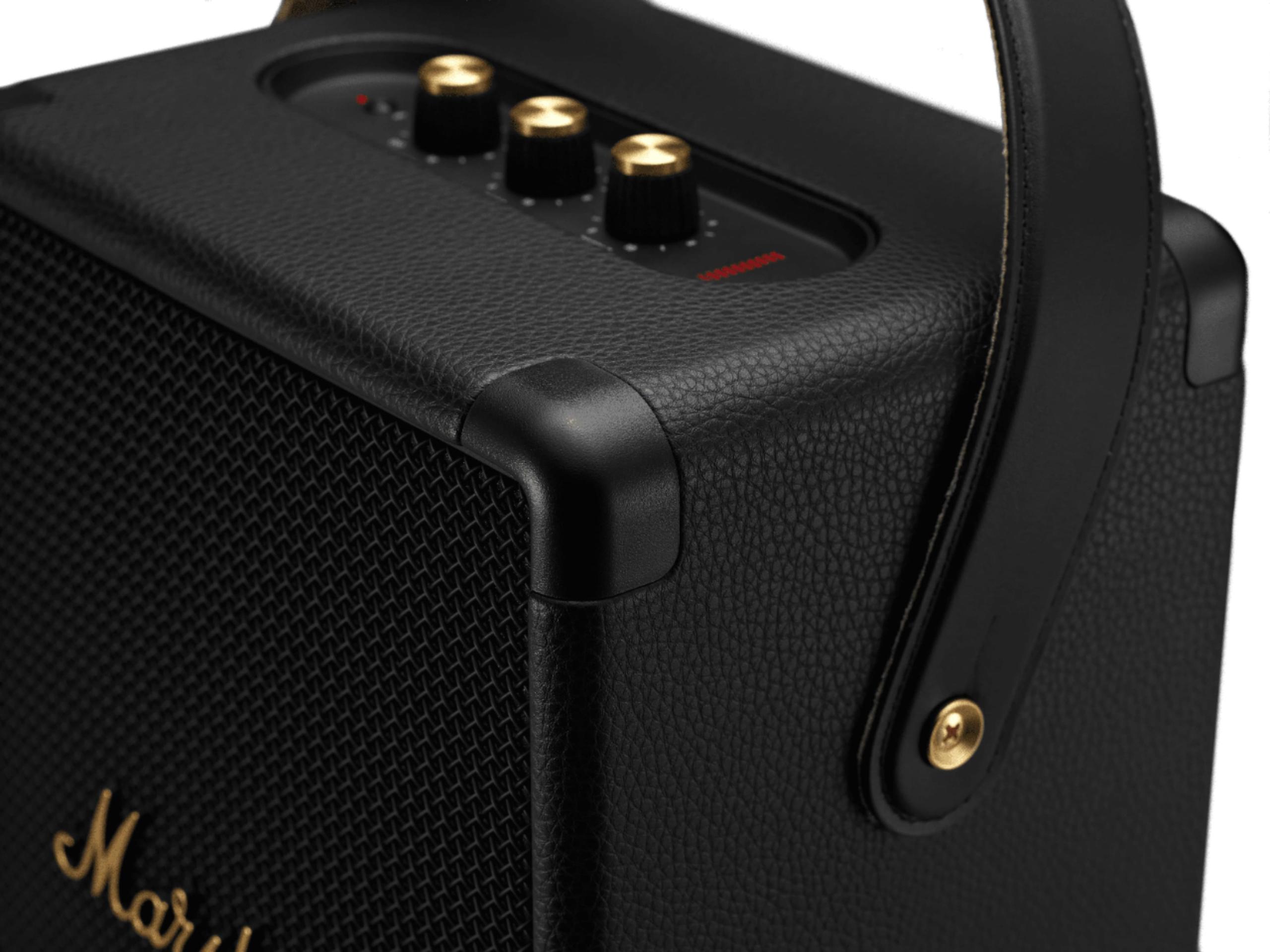
The Tufton features Bluetooth 5.0 with multi-host capability, meaning you can pair two devices simultaneously and switch between them seamlessly. This is incredibly useful for parties where multiple people want to queue up songs. It also includes a 3.5mm auxiliary input for wired connections and dedicated analog controls for bass, treble, and volume.
These physical controls on the Tufton deserve special mention. Rather than digital buttons, Marshall uses actual rotating knobs that give you precise, real-time control over the sound. There's something satisfying about physically adjusting bass levels rather than fumbling through phone menus, and it allows for quick adjustments without interrupting the music or conversation.
Based on extensive research into user experiences and professional reviews, clear usage patterns emerge for each speaker. The JBL Go 3 excels in personal and intimate settings. It's perfect for podcast listening while doing dishes, providing background music during desk work, or adding atmosphere to small gatherings. The waterproofing makes it ideal for outdoor activities where you want music but don't want to worry about equipment.
The Tufton shines in situations where audio quality matters and you have the space to accommodate its size. It can serve as the primary audio system for small apartments, provide impressive sound for outdoor gatherings, or even function in small home theater setups for enhanced TV audio, though you'd need to connect it via auxiliary cable since it lacks the low-latency codecs preferred for video.
One particularly interesting use case for the Tufton is as a portable home stereo replacement. Many users report setting it up in different rooms throughout the week – kitchen while cooking, bedroom while getting ready, living room for entertaining – taking advantage of the long battery life to avoid constantly plugging and unplugging.
Value in speakers isn't just about the lowest price – it's about getting the performance you need at a price that makes sense for your usage. The JBL Go 3 offers exceptional value for ultra-portable use cases. At the time of writing, few speakers in its price range can match its combination of sound clarity, waterproofing, and genuine portability.
The Tufton represents a different kind of value proposition. Yes, it costs significantly more, but it delivers performance that would typically require a much larger investment in separate home audio equipment. The 20-hour battery life, premium build quality, and room-filling sound justify the premium for users who will take advantage of these features.
The decision between these speakers ultimately comes down to understanding your primary use cases and priorities. Choose the JBL Go 3 if you prioritize maximum portability, want genuine waterproofing for outdoor activities, or need a budget-friendly option that still delivers respectable sound quality. It's perfect for students, casual listeners, or anyone who wants music without compromise on convenience.
The Marshall Tufton makes sense if sound quality is your primary concern and you have the budget to support it. It's ideal for audiophiles who want portable flexibility without sacrificing too much fidelity, people who frequently entertain guests, or anyone looking to replace multiple pieces of audio equipment with one versatile solution.
Consider your typical listening environment, too. If you primarily listen alone or in small spaces, the Go 3's clear midrange and compact size make perfect sense. If you regularly need to fill larger spaces or want music that can compete with conversation, the Tufton's power and full-range sound become essential.
Both speakers excel at what they're designed to do, making either a smart purchase when matched to the right user and situation. The key is being honest about your needs, budget, and how portable you actually need your audio to be.
| JBL Go 3 | Marshall Tufton |
|---|---|
| Size & Weight - Critical for true portability | |
| 3.4" x 2.7" x 1.6", 0.46 lbs (truly pocket-sized) | 13.8" x 9.1" x 6.4", 10.8 lbs (requires two-handed carrying) |
| Audio Power - Determines volume and room coverage | |
| 4.2W RMS mono (personal listening only) | 80W total with 3-way drivers (fills large spaces) |
| Frequency Response - Shows bass depth and treble extension | |
| 110Hz - 20kHz (limited bass, clear mids/highs) | 40Hz - 20kHz (full-range sound with deep bass) |
| Speaker Configuration - Affects sound quality and stereo imaging | |
| Single driver mono setup | 3-way system: tweeters, midrange, woofer with 360° sound |
| Battery Life - Essential for extended use away from power | |
| 5 hours (perfect for short outings) | 20 hours (weekend trips without charging) |
| Water Resistance - Protection for outdoor activities | |
| IP67 (fully waterproof, submersible to 1 meter) | IPX2 (light splash protection only) |
| Bluetooth Technology - Connection stability and features | |
| Bluetooth 5.1, single device pairing | Bluetooth 5.0, multi-host pairing (two devices) |
| Additional Inputs - Wired connection options | |
| Bluetooth only | 3.5mm aux input included |
| Physical Controls - Sound customization capabilities | |
| Basic buttons (power, volume, play/pause) | Analog knobs for bass, treble, and volume adjustment |
| Charging Method - Convenience and universality | |
| USB-C, 2.5 hour charge time | USB-C with quick charge (4 hours from 20 minutes) |
| Best Use Cases - Where each speaker truly excels | |
| Beach trips, hiking, personal listening, shower use | Home audio replacement, parties, audiophile listening |
| Value Proposition - Performance per dollar spent | |
| Exceptional value for ultra-portable needs | Premium pricing justified by audiophile-quality sound |
The JBL Go 3 is significantly more portable, weighing only 0.46 lbs and measuring 3.4" x 2.7" x 1.6". It includes a fabric loop for easy attachment to bags. The Marshall Tufton weighs 10.8 lbs and requires two-handed carrying, making it much less convenient for travel despite having a leather carrying strap.
The Marshall Tufton delivers superior sound quality with its 80W 3-way driver system, producing deep bass down to 40Hz and room-filling stereo sound. The JBL Go 3 offers clear vocals and midrange but lacks bass depth, with its 4.2W mono output being better suited for personal listening rather than filling large spaces.
The Marshall Tufton provides up to 20 hours of playback time, making it excellent for extended use. The JBL Go 3 offers 5 hours of battery life, which is adequate for short outings but requires more frequent charging for all-day use.
The JBL Go 3 has superior water protection with IP67 rating, making it fully waterproof and submersible up to 1 meter. The Marshall Tufton only has IPX2 rating, protecting against light splashes but not suitable for poolside use or wet conditions.
Value depends on your needs. The JBL Go 3 offers exceptional value for ultra-portable use cases with its waterproofing and compact size. The Marshall Tufton provides premium audio quality that justifies its higher price for users who prioritize sound quality over portability.
The Marshall Tufton can enhance TV audio when connected via its 3.5mm aux input, though it's not specifically designed for home theater use. The JBL Go 3 lacks the power and bass response needed for meaningful home theater enhancement and only supports Bluetooth connectivity.
The Marshall Tufton produces significantly higher volume levels with its 80W power output, capable of filling large rooms and outdoor spaces. The JBL Go 3 is designed for personal listening volumes and will struggle to provide adequate sound in large areas or noisy environments.
The Marshall Tufton offers more connectivity with Bluetooth 5.0 multi-host pairing (two devices simultaneously) plus a 3.5mm aux input. The JBL Go 3 uses Bluetooth 5.1 but only supports single device pairing and has no wired input options.
The JBL Go 3 is more suitable for rugged outdoor use with its IP67 waterproof rating and compact, drop-resistant design. While the Marshall Tufton has solid build quality with metal grille construction, its limited IPX2 water resistance makes it less suitable for harsh outdoor conditions.
The JBL Go 3 takes 2.5 hours for a full charge via USB-C. The Marshall Tufton also uses USB-C but includes quick charging, providing 4 hours of playback from just 20 minutes of charging, though full charging takes longer due to its larger battery capacity.
The Marshall Tufton is far superior for parties with its powerful 80W output, 360-degree sound dispersion, and ability to maintain audio quality at high volumes. The JBL Go 3 lacks the power and bass response needed for party environments where music needs to compete with conversation.
The Marshall Tufton features analog bass, treble, and volume knobs for precise sound customization. The JBL Go 3 only has basic digital controls for power, volume, and play/pause, with no sound adjustment options beyond what's available through your connected device.
We've done our best to create useful and informative comparisons to help you decide what product to buy. Our research uses advanced automated methods to create this comparison and perfection is not possible - please contact us for corrections or questions. These are the sites we've researched in the creation of this article: rtings.com - streamtechreviews.com - english.achoreviews.com - smarthomesounds.co.uk - soundguys.com - rtings.com - walmart.com - soundguys.com - youtube.com - youtube.com - jbl.com - youtube.com - selectoguru.com - versus.com - videoandaudiocenter.com - harmanaudio.com - jbl.com - bestbuy.com - forum.hifiguides.com - manuals.plus - kh.jbl.com - th.jbl.com - mm.jbl.com - jbl.com - bestbuy.com - youtube.com - youtube.com - youtube.com - jbl.com - bestbuy.com - bestbuy.com - jbl.com.tw - youtube.com - techradar.com - youtube.com - youtube.com - bestbuy.com - trustedreviews.com - crutchfield.com - eriksonconsumer.com - youtube.com - runbazaar.com - marshall.com

Privacy Policy
Terms and Conditions - Affiliate Policy
Home Security
© Copyright 2008-2026.
11816 Inwood Rd #1211, Dallas, TX 75244