



When you walk into any electronics store, the Bluetooth speaker section can feel overwhelming. Dozens of options line the shelves, each promising amazing sound and convenience. But here's the thing: not all Bluetooth speakers are created equal, and understanding the fundamental differences between portable and home-focused designs can save you from buyer's remorse.
Today, we're comparing two speakers that represent completely different approaches to wireless audio: the rugged, adventure-ready JBL Charge 4 and the premium home-focused Marshall Acton III. These aren't competitors in the traditional sense—they're solving different problems for different people. Think of it like comparing a Swiss Army knife to a chef's knife. Both cut, but you'd choose differently depending on whether you're camping or cooking dinner.
The Bluetooth speaker market has matured significantly over the past decade. What started as a simple "wireless sound box" category has evolved into distinct segments serving specific needs. On one side, you have portable speakers designed for mobility—they prioritize battery life, durability, and convenience features. On the other, home-focused speakers emphasize sound quality, room-filling audio, and aesthetic integration with your living space.
The key considerations when shopping for any Bluetooth speaker include where you'll use it most, whether you need battery power, how important sound quality is versus convenience, and what additional features matter to you. Some people want a speaker that can survive a beach trip and charge their phone; others want something that makes their living room sound amazing while looking like premium furniture.
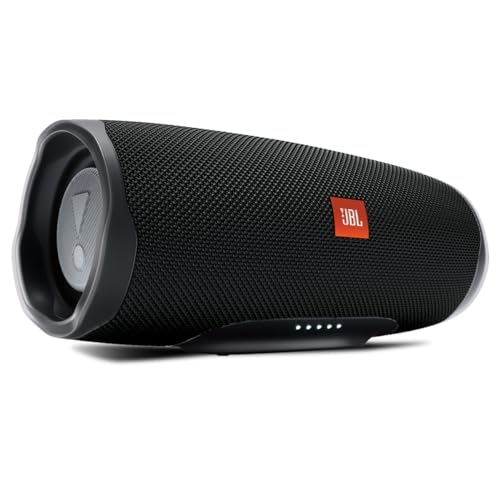
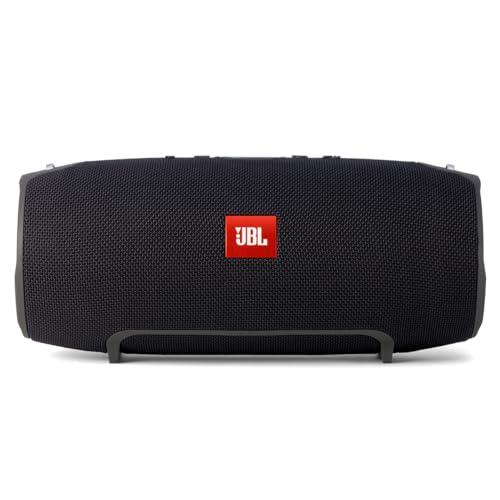
The JBL Charge 4, released in 2018, represents JBL's philosophy of "take your music anywhere." This speaker emerged during a time when portable audio was becoming increasingly sophisticated, with manufacturers learning how to pack impressive sound into ruggedized, weather-resistant packages. JBL positioned the Charge series as the go-to choice for active lifestyles, and the Charge 4 refined this concept with improved battery life and better build quality than its predecessors.
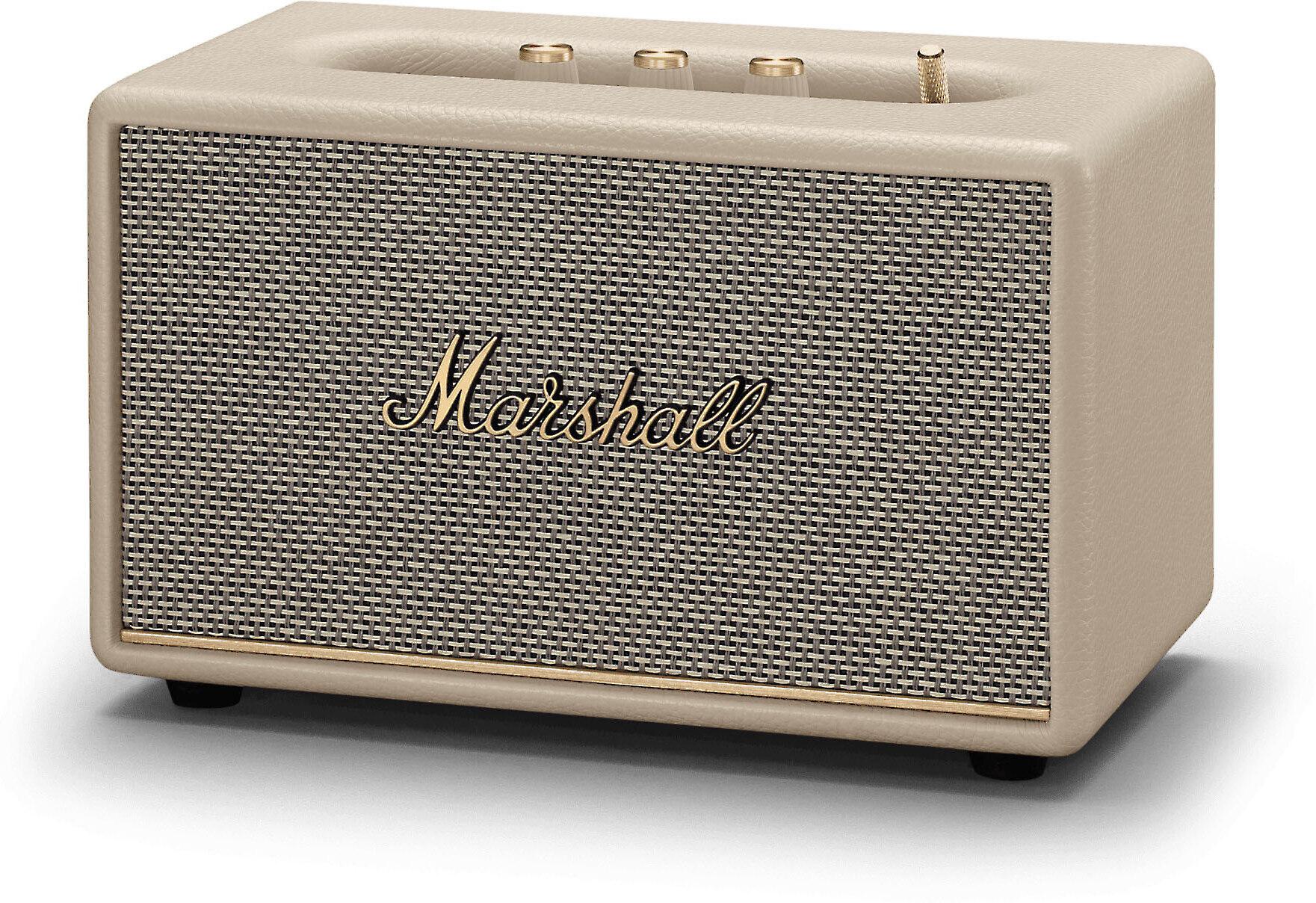
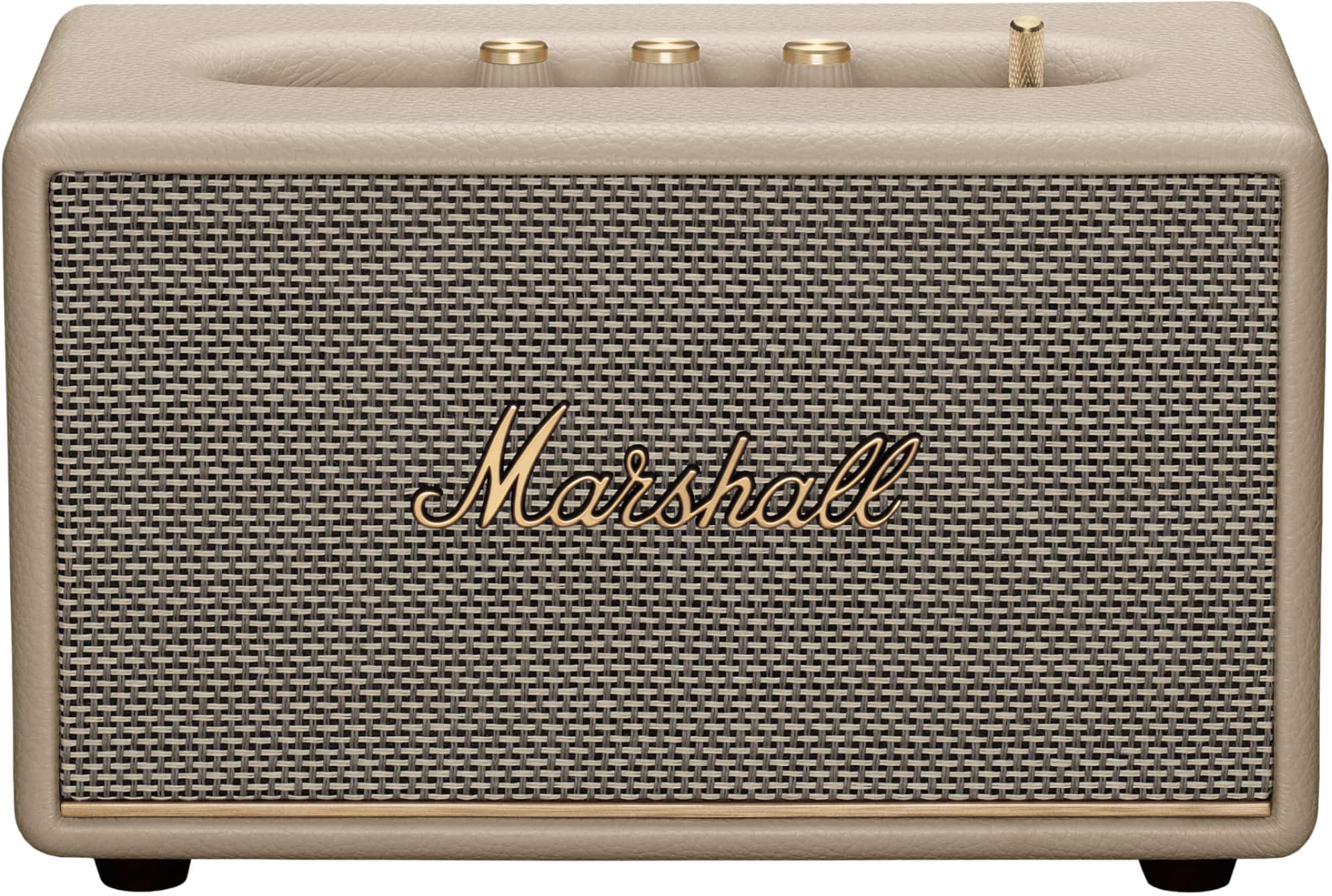
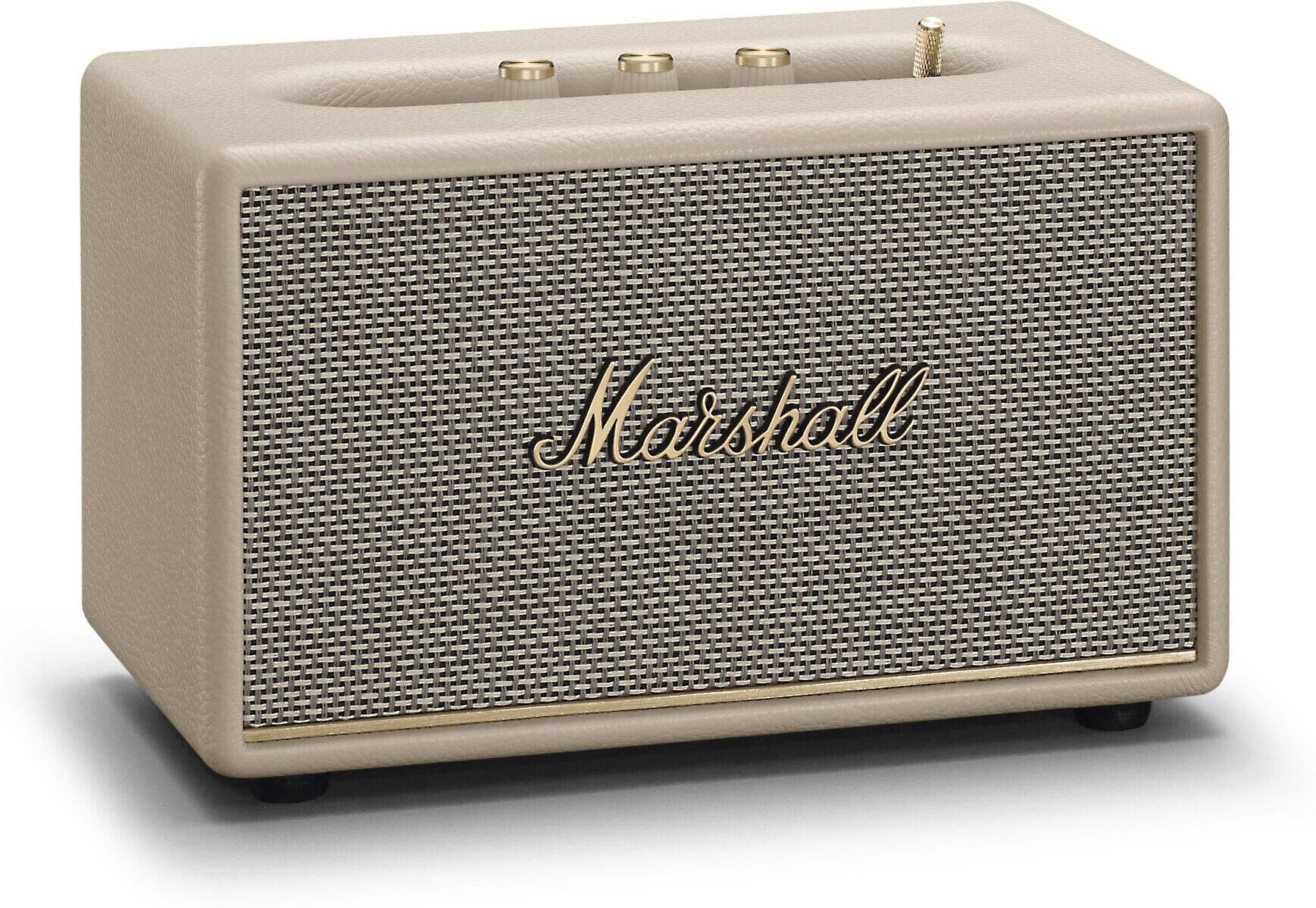
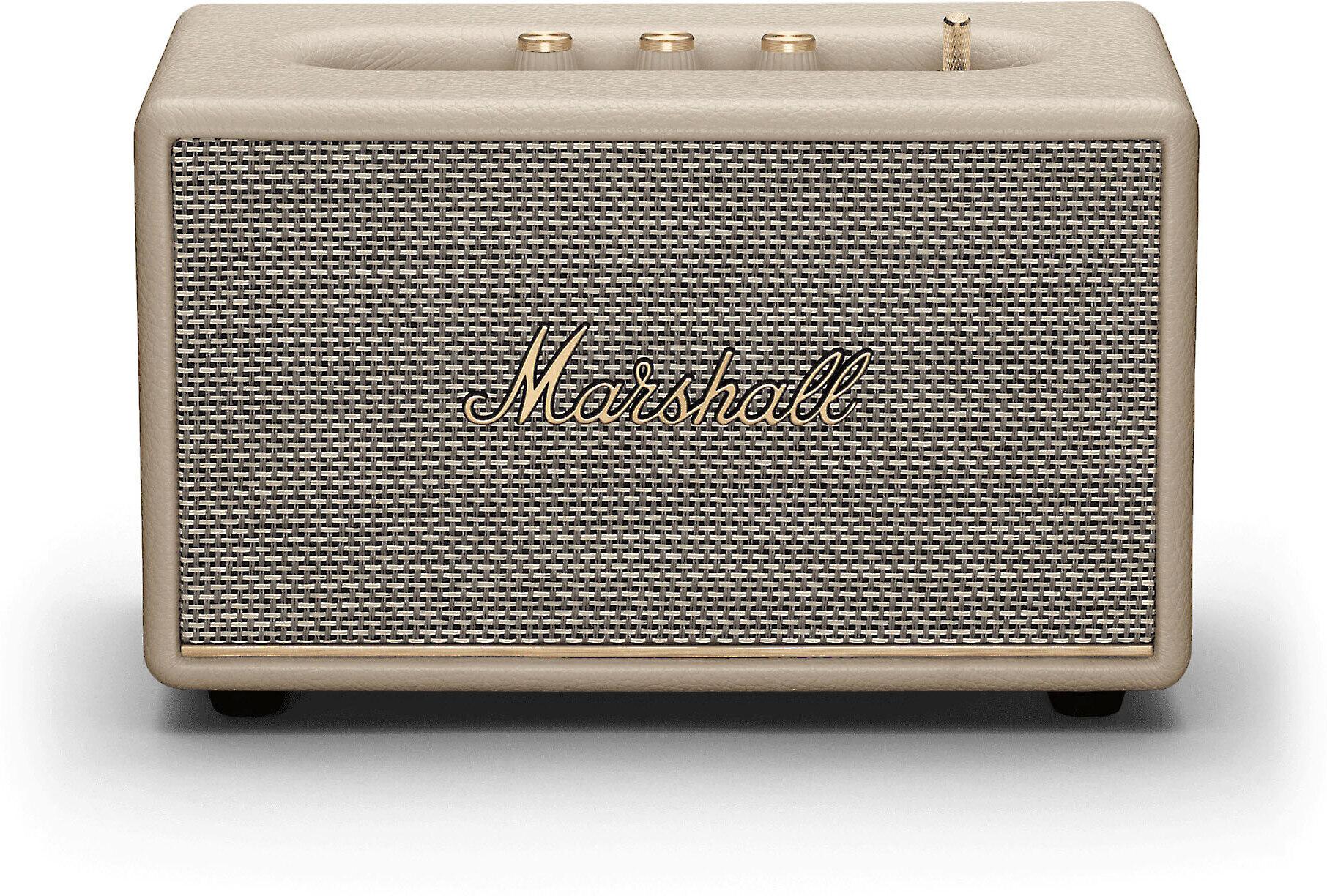
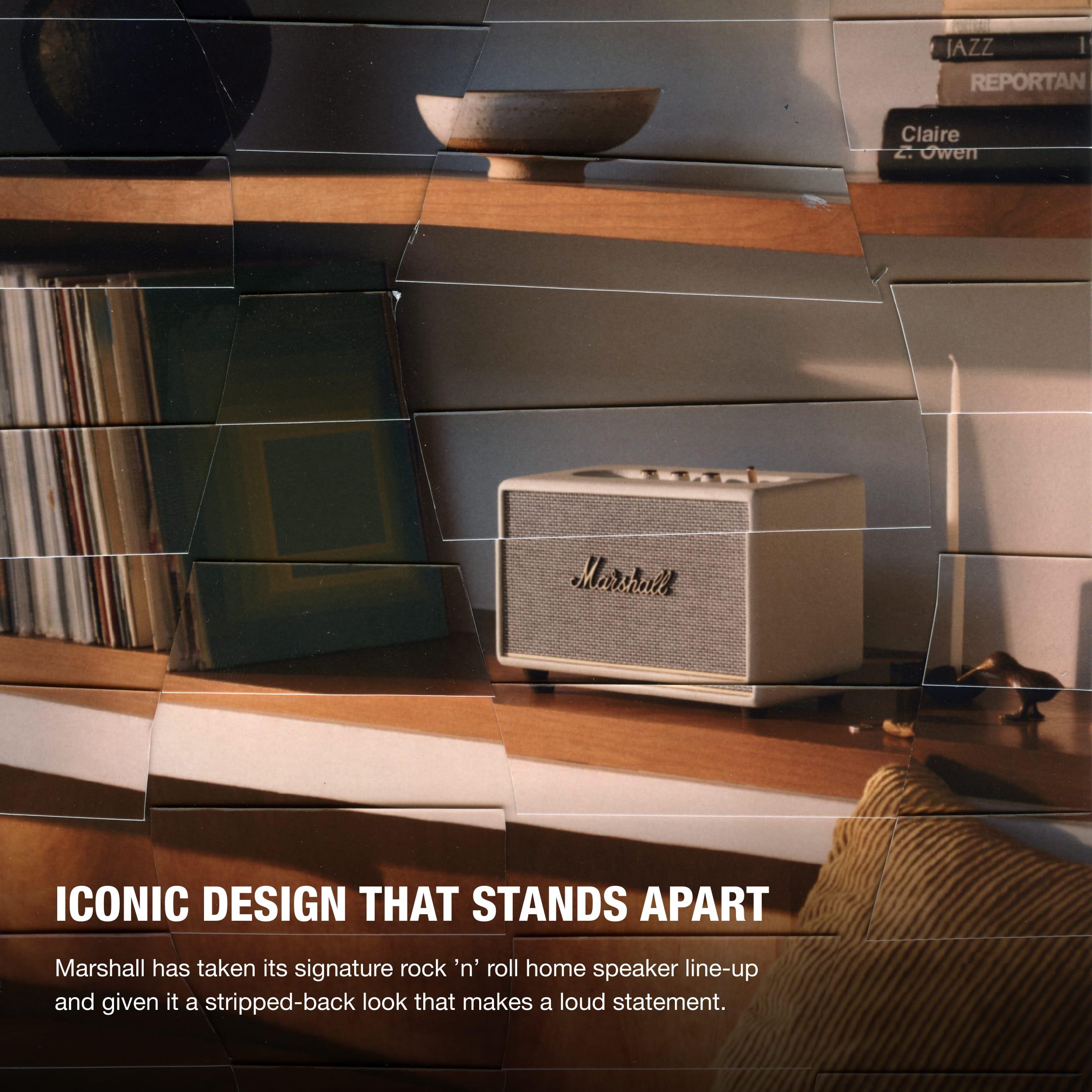
Four years later, in 2022, Marshall released the Acton III, the latest evolution in their home speaker lineup. Marshall's approach has always been different—they're leveraging their legendary amplifier heritage to create speakers that look and sound like premium audio equipment. The Acton III builds on decades of Marshall's guitar amp expertise, bringing that rock-and-roll aesthetic and sound philosophy into the Bluetooth speaker world.
The timing difference between these releases matters. The Marshall Acton III benefits from newer Bluetooth 5.2 technology, which offers better range, lower power consumption, and support for future audio codecs. Meanwhile, the JBL Charge 4 uses the older but still reliable Bluetooth 4.2 standard. However, for typical use cases like streaming music from your phone, both work seamlessly.
This is where things get really interesting, and frankly, where the biggest differences emerge between these two speakers.
The Marshall Acton III approaches audio reproduction like a miniature hi-fi system. It uses a three-driver setup with dedicated amplification—a 30-watt Class D amplifier powers the 4-inch woofer (the main bass driver), while two separate 15-watt amplifiers drive the 0.75-inch tweeters (the high-frequency drivers). This totals 60 watts of power, but more importantly, it creates true stereo separation.
Here's why this matters: when you listen to music in stereo, different instruments and vocals are intentionally placed in the left and right channels to create a sense of space and dimension. The Marshall Acton III can reproduce this exactly as the artist intended, with the two tweeters angled outward to create a wide soundstage—that's the audio term for how spread out and dimensional the music sounds.
The JBL Charge 4 takes a different approach with its 30-watt RMS output powering a single racetrack-shaped driver (50mm x 90mm). This proprietary driver design helps it produce more bass than a traditional round driver of similar size, and JBL adds dual passive radiators—these are essentially speakers without magnets that vibrate in response to the main driver to enhance bass response. However, this creates mono audio, meaning you lose stereo separation unless you buy two units and pair them together.
When we talk about frequency response, we're discussing how well a speaker reproduces different pitches of sound, measured in Hertz (Hz). Human hearing typically ranges from about 20Hz to 20,000Hz (20kHz), with lower numbers representing bass notes and higher numbers representing treble.
The Marshall Acton III covers 45Hz to 20kHz, meaning it can reproduce deeper bass notes than the JBL Charge 4's 60Hz to 20kHz range. In practical terms, this translates to more satisfying low-end punch when listening to hip-hop, electronic music, or rock tracks with prominent bass lines.
Both speakers handle the crucial midrange frequencies well—this is where vocals and most instruments live, typically between 250Hz and 4kHz. However, they have distinctly different sound signatures. The Marshall Acton III leans into that classic Marshall sound with slightly emphasized bass and treble, creating what audio enthusiasts call a "V-shaped" frequency response that sounds exciting and engaging.
The JBL Charge 4 presents a more neutral, balanced sound profile. User feedback and expert reviews consistently praise its clear midrange reproduction, though some note that the treble can sound somewhat muted compared to more aggressive competitors.
Here's where size and power requirements really show their impact. The Marshall Acton III can reach 95 dB at one meter—that's genuinely loud, approaching the level where you might want ear protection for extended listening. More importantly, it maintains audio clarity and balance at high volumes thanks to its Dynamic Loudness feature.
Dynamic Loudness is a sophisticated technology that automatically adjusts the frequency balance as you change the volume. This compensates for how human ears perceive different frequencies at various volume levels—we tend to lose bass and treble perception at lower volumes, so the speaker subtly boosts these frequencies to maintain the intended sound balance.
The JBL Charge 4 performs admirably for its size and power constraints, but reviews consistently note that it experiences compression at higher volumes. This means the sound becomes somewhat flattened and less dynamic when you really crank it up. For small to medium gatherings, it's perfectly adequate, but it won't fill a large room with the same authority as its AC-powered competitor.
Portability isn't just about how much a speaker weighs—it's about the entire user experience of taking your music on the go.
The JBL Charge 4 weighs in at 965 grams (about 2.1 pounds), making it easy to toss in a backpack or carry to the beach. But the real magic happens with its battery system. The built-in 7,500mAh lithium-ion battery provides up to 20 hours of playback time, though real-world testing typically shows around 13-15 hours depending on volume levels and content.
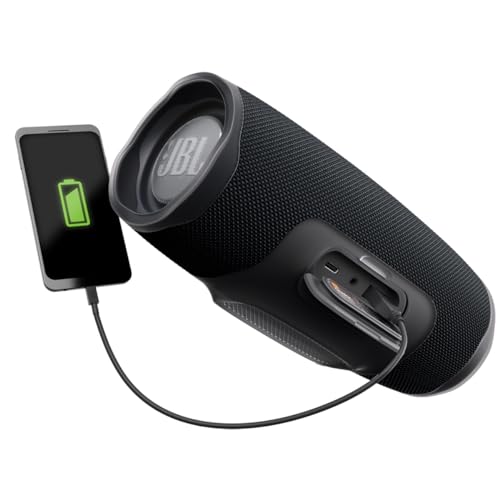
What makes this speaker particularly clever is its dual-purpose battery design. When you're not playing music, the JBL Charge 4 can function as a power bank, charging your smartphone or tablet through its USB-A output port at 5V/2A. This is genuinely useful during camping trips, beach days, or outdoor events where power outlets are scarce.
The IPX7 waterproof rating deserves special mention. This isn't just "splash-resistant"—it means the speaker can be submerged in up to one meter of water for 30 minutes without damage. You can literally drop it in a pool, retrieve it, and keep playing music. The rugged fabric and rubber housing complete the package, designed to withstand the bumps and drops that come with active use.
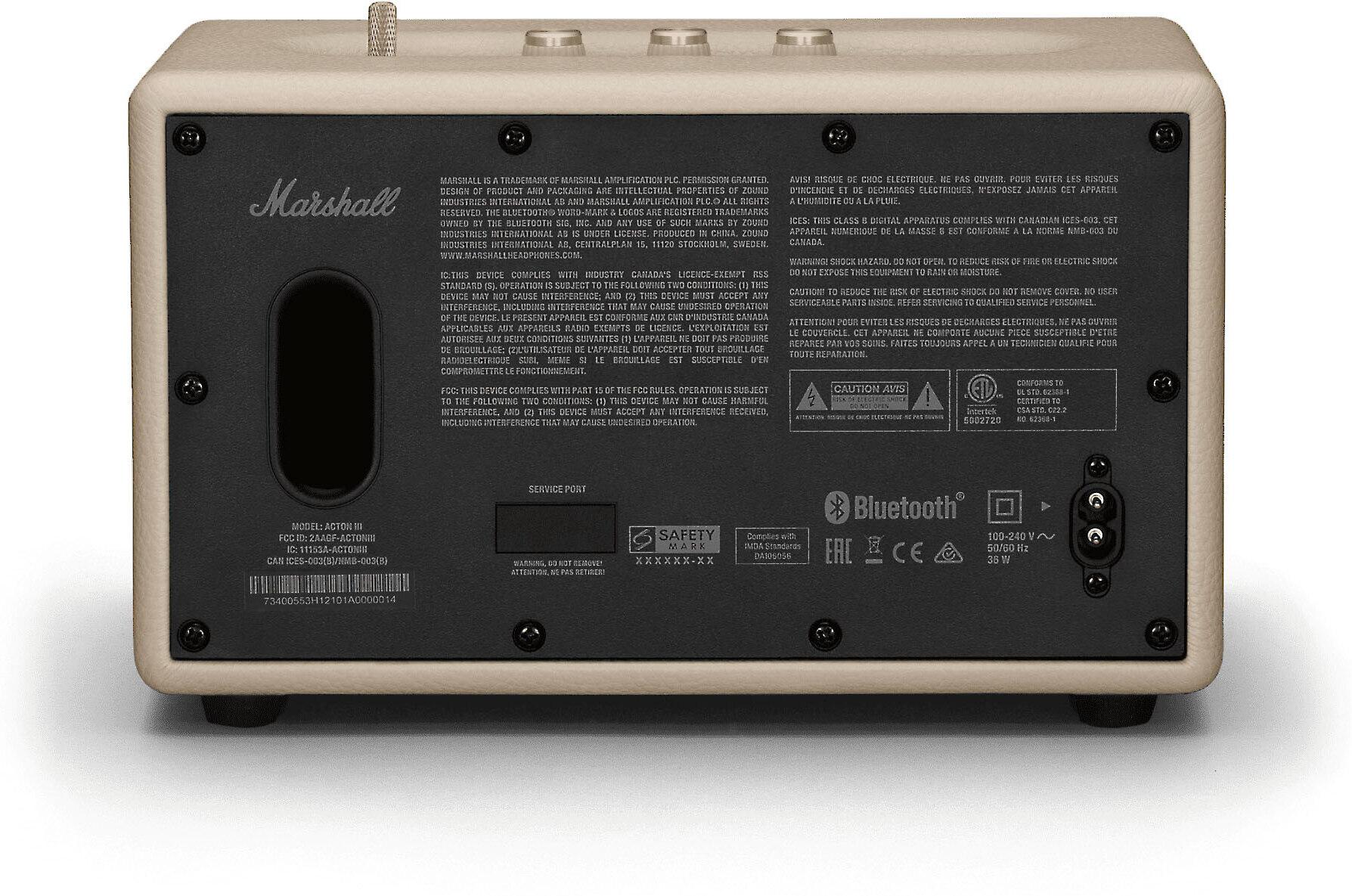
In contrast, the Marshall Acton III at 2.85 kilograms (6.28 pounds) is clearly designed to stay put. It requires constant AC power, has no weather protection, and frankly looks too nice to risk taking outside. But that's not a weakness—it's a design choice that allows Marshall to focus entirely on sound quality and aesthetic appeal.
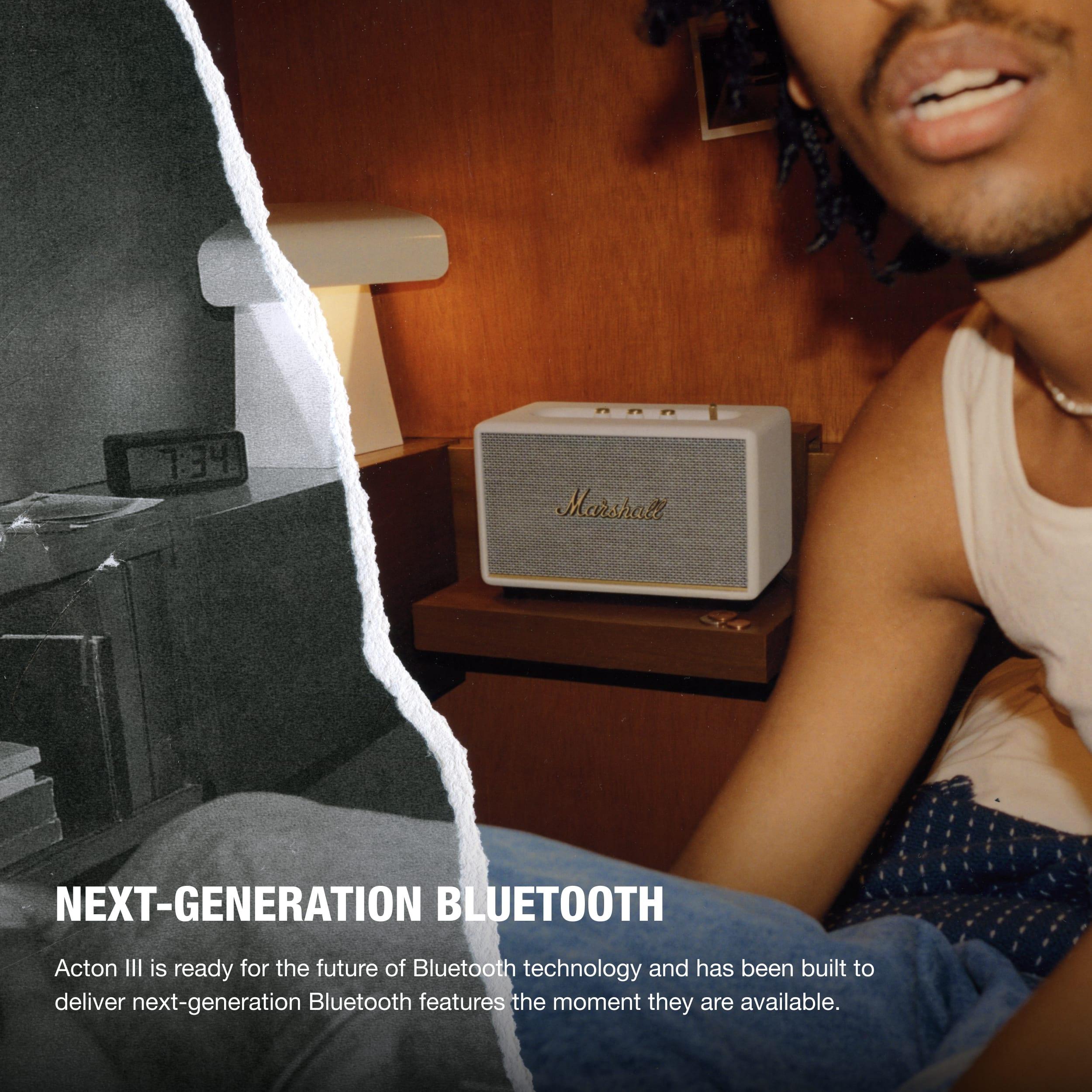
The connectivity story reveals each speaker's priorities quite clearly. The Marshall Acton III uses newer Bluetooth 5.2 technology, which offers improved range (up to 30 feet reliably), better power efficiency, and support for future audio features like LE Audio broadcasting. It also includes a 3.5mm auxiliary input, making it useful as a TV speaker or for connecting devices that lack Bluetooth.
The JBL Charge 4 sticks with Bluetooth 4.2, which is older but still perfectly functional for music streaming. Where it gets interesting is the multi-device and multi-speaker capabilities. You can connect two devices simultaneously and switch between them seamlessly—perfect for parties where people want to take turns as DJ. Even more impressive is the JBL Connect+ feature, which lets you wirelessly link over 100 compatible JBL speakers for truly massive sound systems.
This raises an important point about ecosystem thinking. If you already own other JBL Connect+ speakers, the Charge 4 integrates beautifully. If you're starting fresh and planning to stay with one speaker, this matters less.
Modern speakers aren't just about playing music—they're about adapting to your preferences and environment.
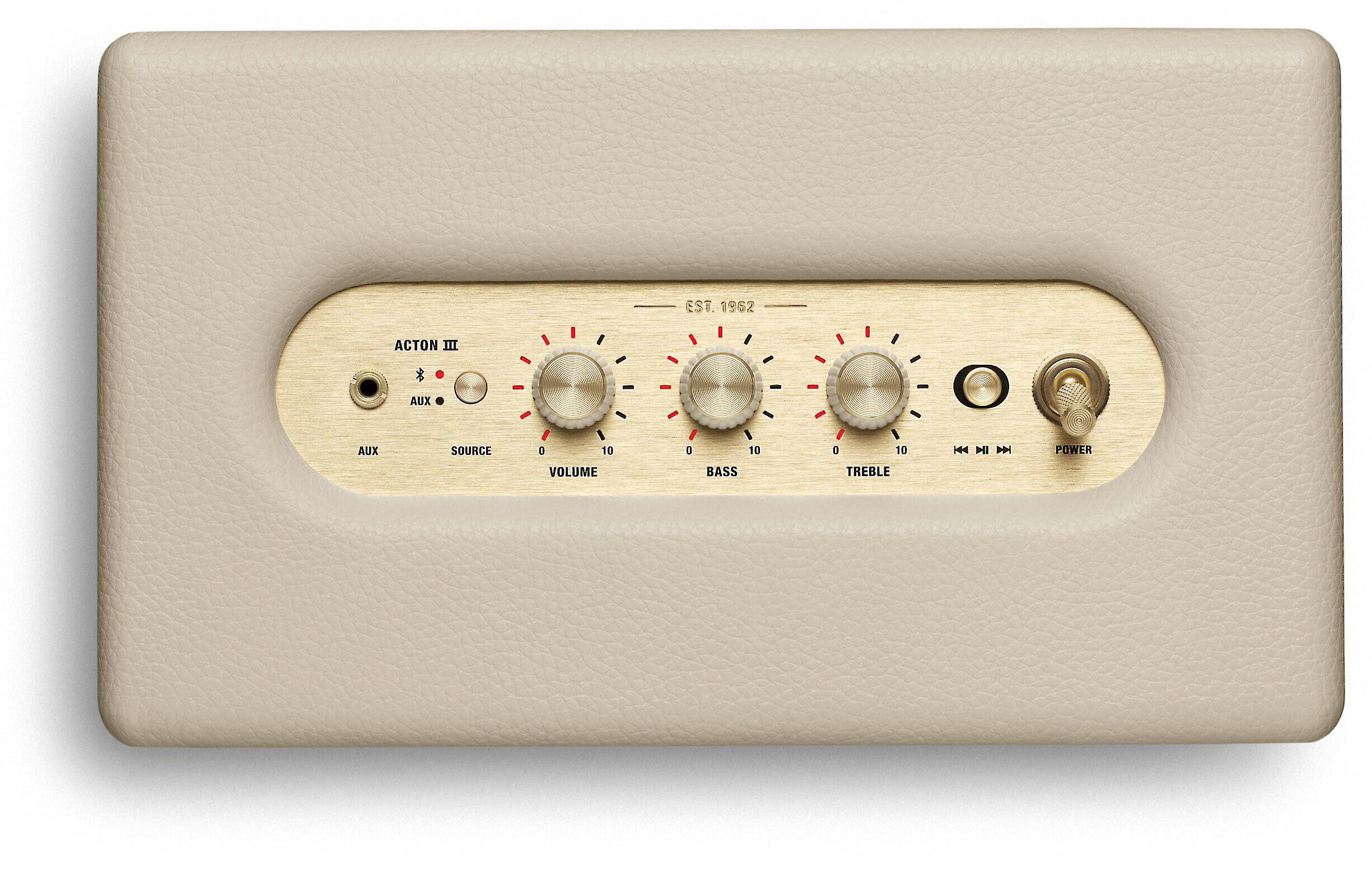
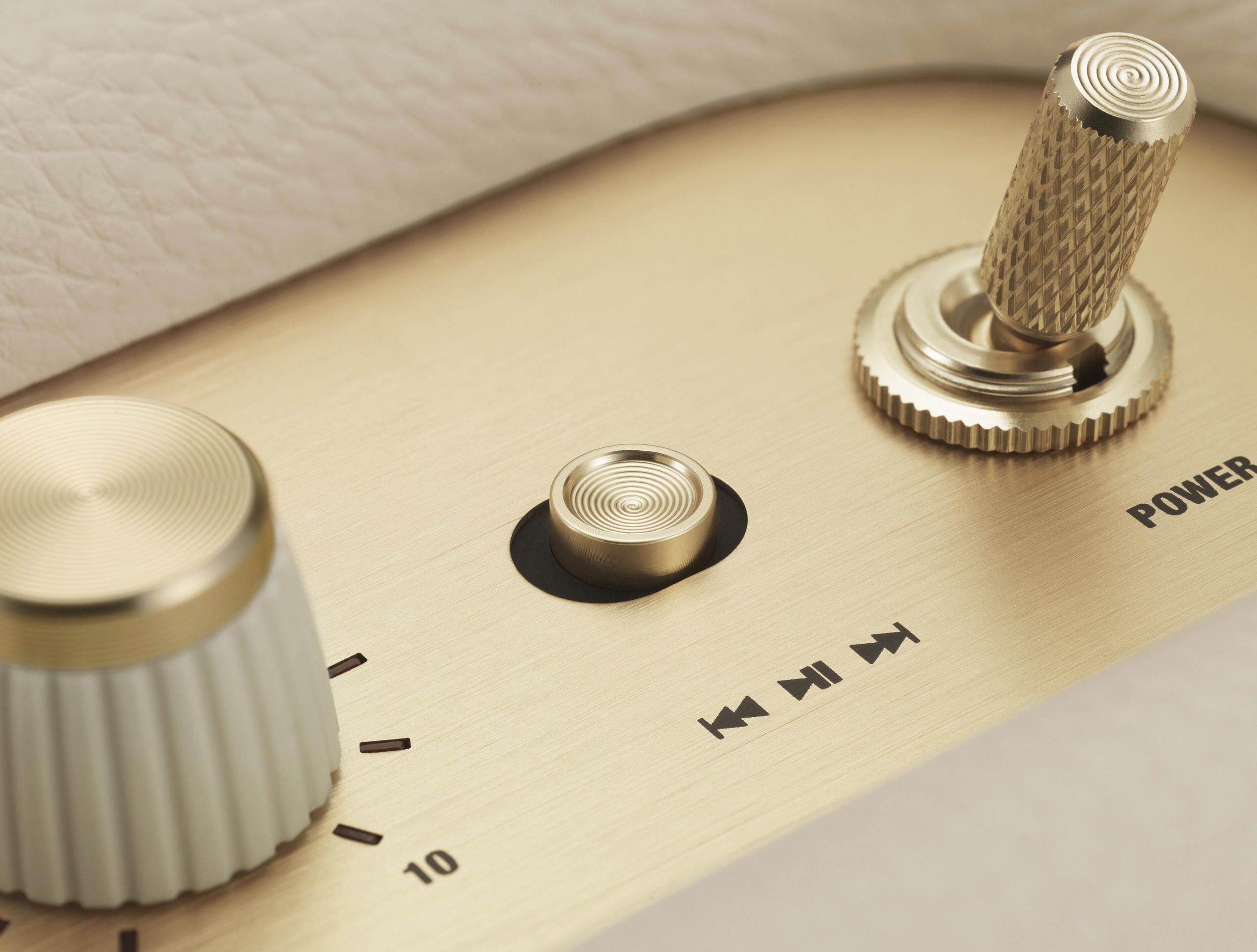
The Marshall Acton III excels here with both physical and digital controls. The top panel features actual knobs for bass and treble adjustment, which feels satisfying and immediate compared to app-based controls. The Marshall smartphone app adds Placement Compensation—a feature that analyzes your speaker's position in the room and automatically adjusts the sound to optimize performance.
This is more sophisticated than it might sound. Speaker placement dramatically affects sound quality, particularly bass response. A speaker placed against a wall will sound different from one in the center of a room, and Placement Compensation helps minimize these differences.
The JBL Charge 4 takes a more minimalist approach with no EQ customization available. You get JBL's tuned sound signature, and that's it. For some users, this simplicity is actually preferable—no analysis paralysis, just consistent, reliable sound.
Let's talk about how these speakers actually perform in the situations you'll use them.
The Marshall Acton III truly shines as a home entertainment hub. Connected to your TV via the 3.5mm input, it transforms dialogue clarity and adds proper bass response that most TV speakers simply can't match. The stereo separation creates a more immersive experience for movies and shows, while the 60 watts of power provides enough volume to fill even larger living rooms.
For music listening at home, the difference in sound quality becomes immediately apparent. Albums with rich stereo mixing—think Pink Floyd, The Beatles, or modern productions with wide soundstages—reveal details and spatial information that the JBL Charge 4 simply can't reproduce due to its mono output.
This is where the JBL Charge 4 completely dominates. Beach trips, camping, poolside parties, workout sessions—any scenario where you need reliable, weather-resistant audio that doesn't depend on wall power. The 13-20 hour battery life means it can survive weekend trips without recharging, and the waterproofing provides genuine peace of mind around water.
The sound quality, while not matching the Marshall Acton III, is more than adequate for outdoor use where ambient noise and acoustics are less controlled anyway. The ability to charge your devices is genuinely useful when you're away from power sources for extended periods.
Both speakers work well as desktop audio upgrades, but they serve different use cases. The Marshall Acton III provides superior sound quality for focused music listening and video calls, while the JBL Charge 4 offers the flexibility to move between desk use and portable applications.
At the time of writing, these speakers occupy different price segments, which makes the value comparison more nuanced than a simple feature-per-dollar calculation.
The Marshall Acton III positions itself in the premium home speaker category. You're paying for superior sound quality, brand prestige, aesthetic design, and the convenience of always-ready audio. When compared to other AC-powered Bluetooth speakers with similar audio performance, the pricing feels competitive rather than premium.
The JBL Charge 4 offers exceptional value in the portable speaker segment. The combination of good sound quality, excellent battery life, waterproofing, and power bank functionality creates a package that's hard to beat for outdoor-focused users. Even several years after its release, it remains competitive with newer portable options.
After extensive research into user experiences and expert opinions, the choice between these speakers comes down to understanding your primary use case.
Choose the JBL Charge 4 if:
Choose the Marshall Acton III if:
The reality is that these speakers excel in their intended domains. The JBL Charge 4 is an adventure companion that happens to sound good, while the Marshall Acton III is a home audio system that happens to be wireless. Your lifestyle and priorities should drive the decision more than any technical specification comparison.
For many users, the ideal solution might actually be both—using the Marshall Acton III as a home base station for serious listening and the JBL Charge 4 for everything else. But if you can only choose one, think honestly about where and how you listen to music most often. That environment will determine which speaker philosophy serves you better.
| JBL Charge 4 | Marshall Acton III |
|---|---|
| Speaker Type - Fundamentally different approaches to wireless audio | |
| Portable battery-powered speaker for outdoor/mobile use | AC-powered home speaker for stationary use |
| Audio Configuration - Determines sound quality and stereo imaging | |
| Single 30W driver with dual passive radiators (mono) | 60W tri-amp system: 30W woofer + dual 15W tweeters (stereo) |
| Frequency Response - How deep the bass and crisp the highs sound | |
| 60Hz-20kHz (good but limited deep bass) | 45Hz-20kHz (extends deeper into bass territory) |
| Maximum Volume - Room-filling capability and party readiness | |
| Moderate volume with compression at high levels | 95 dB maximum - genuinely loud with clarity maintained |
| Battery Life - Critical for portable use, irrelevant for home use | |
| Up to 20 hours playback + device charging via USB | N/A - requires AC power connection |
| Water Resistance - Essential for outdoor activities | |
| IPX7 waterproof (submersible to 1 meter) | None - indoor use only |
| Bluetooth Technology - Affects connection quality and future compatibility | |
| Bluetooth 4.2 with dual device pairing | Bluetooth 5.2 with enhanced range and future codec support |
| Sound Customization - Ability to tune audio to your preferences | |
| No EQ controls (fixed JBL sound signature) | Physical bass/treble knobs + app EQ + placement compensation |
| Multi-Speaker Capability - For larger sound systems | |
| JBL Connect+ links 100+ compatible speakers | No multi-speaker pairing available |
| Additional Connectivity - Versatility for different audio sources | |
| 3.5mm aux input + USB-C charging | 3.5mm aux input (ideal for TV connection) |
| Weight and Portability - Ease of moving between locations | |
| 965g (2.1 lbs) - highly portable | 2.85kg (6.3 lbs) - designed to stay stationary |
| Unique Features - Standout capabilities that differentiate each product | |
| Powerbank function charges devices + rugged outdoor construction | Dynamic Loudness technology + premium Marshall amp heritage + home decor aesthetic |
The Marshall Acton III is significantly better for home use. It delivers true stereo sound with 60 watts of power, making it ideal for living rooms and home entertainment. The JBL Charge 4 is designed for portability and produces mono audio, which works fine for casual listening but can't match the room-filling stereo experience of the Marshall Acton III.
Both speakers can connect to TVs, but the Marshall Acton III is the better choice. It has a 3.5mm auxiliary input specifically designed for TV connections and provides stereo sound that dramatically improves dialogue clarity and bass response compared to built-in TV speakers. The JBL Charge 4 can also connect via aux input but only outputs mono audio.
The JBL Charge 4 is purpose-built for outdoor use with IPX7 waterproof rating, 20-hour battery life, and rugged construction that can handle beach trips, camping, and poolside parties. The Marshall Acton III requires AC power and has no weather protection, making it unsuitable for outdoor activities.
The Marshall Acton III offers superior sound quality with true stereo separation, deeper bass extension (45Hz vs 60Hz), and 60 watts of dedicated amplification. The JBL Charge 4 provides good sound quality for its size but delivers mono audio and experiences compression at higher volumes.
Only the JBL Charge 4 can charge external devices through its built-in powerbank feature, providing 5V/2A output via USB-A port. This makes it valuable for camping or extended outdoor use. The Marshall Acton III has no device charging capability since it's AC-powered.
The Marshall Acton III reaches significantly higher volumes with a maximum of 95 dB while maintaining audio clarity. The JBL Charge 4 gets reasonably loud for its size but experiences audio compression and quality degradation at maximum volume levels.
The JBL Charge 4 can pair with two Bluetooth devices simultaneously and switch between them seamlessly. The Marshall Acton III connects to one Bluetooth device at a time but also includes a 3.5mm aux input for wired connections to additional devices like TVs or computers.
The JBL Charge 4 supports JBL Connect+ technology, allowing you to wirelessly link over 100 compatible JBL speakers for massive sound systems. The Marshall Acton III doesn't support multi-speaker pairing and functions as a standalone unit only.
The value depends on your needs. The JBL Charge 4 offers excellent value for portable use with waterproofing, long battery life, and device charging features. The Marshall Acton III provides better value for home audio with superior sound quality, stereo separation, and premium build quality.
The Marshall Acton III offers extensive customization with physical bass and treble controls on the speaker, plus app-based EQ and placement compensation. The JBL Charge 4 has no sound customization options - you get JBL's fixed sound signature without any EQ controls.
For outdoor durability, the JBL Charge 4 wins with its IPX7 waterproof rating, rugged fabric construction, and rubber housing designed to withstand drops and impacts. The Marshall Acton III is well-built with premium materials but isn't designed for rough handling or weather exposure.
Choose the JBL Charge 4 if you need portability, outdoor durability, battery power, or device charging capability. Choose the Marshall Acton III if you prioritize sound quality, want a home audio solution, need TV enhancement, or prefer stereo sound with extensive customization options.
We've done our best to create useful and informative comparisons to help you decide what product to buy. Our research uses advanced automated methods to create this comparison and perfection is not possible - please contact us for corrections or questions. These are the sites we've researched in the creation of this article: rtings.com - whathifi.com - whathifi.com - soundguys.com - soundguys.com - streamtechreviews.com - youtube.com - versus.com - applevis.com - versus.com - jbl.com - jbl.com - walmart.com - comparisontabl.es - harmanaudio.com - manuals.plus - jbl.com.sg - jbl.com - mm.jbl.com - bestbuy.com - newpower99.com - forums.woot.com - bestbuy.com - youtube.com - bestbuy.com - pocket-lint.com - bestbuy.com - crutchfield.com - premiumsound.com.au - marshall.com - 2001audiovideo.com - youtube.com - t3.com - bestbuy.com - youtube.com

Privacy Policy
Terms and Conditions - Affiliate Policy
Home Security
© Copyright 2008-2026.
11816 Inwood Rd #1211, Dallas, TX 75244