




When you're shopping for a portable Bluetooth speaker, it's easy to get overwhelmed by the sheer number of options. JBL has built a reputation for making solid, dependable speakers that don't break the bank, and two of their most popular models – the JBL Charge 4 and JBL Clip 4 – represent completely different approaches to portable audio. While they share the JBL name and basic Bluetooth functionality, these speakers are designed for entirely different users and situations.
The portable Bluetooth speaker market has exploded over the past decade, transforming from a niche gadget category into an essential part of how we consume audio. Whether you're planning a beach day, working out at the gym, or just want to improve your laptop's terrible built-in speakers, a good portable speaker can make all the difference. But here's the thing: not all portable speakers are created equal, and the "best" choice depends heavily on how you actually plan to use it.
Before diving into the specifics of these two JBL models, it's worth understanding what separates a great portable speaker from a mediocre one. The most important factors are audio performance (how good it sounds and how loud it gets), portability (size, weight, and ease of transport), battery life, durability, and value for money.
Audio performance isn't just about volume – though that's certainly important. It's about frequency response (how well the speaker reproduces different pitches from deep bass to crisp highs), soundstage (how spacious and immersive the audio feels), and dynamic range (the difference between the quietest and loudest sounds it can reproduce). These technical terms might sound intimidating, but they translate to real differences in how music, podcasts, and videos sound.
The JBL Charge 4, released in 2018, and the JBL Clip 4, which arrived in 2021, showcase two completely different philosophies. The Charge 4 prioritizes audio quality and versatility, while the Clip 4 focuses on ultimate portability and convenience. Understanding these differences is crucial to making the right choice.
Let's address the elephant in the room first: the JBL Charge 4 absolutely destroys the JBL Clip 4 in terms of raw audio performance, and it's not even close. The Charge 4 pumps out 30 watts of power compared to the Clip 4's modest 5 watts. That's a sixfold difference, and in the world of audio, that translates to significantly louder volume and better overall sound quality.
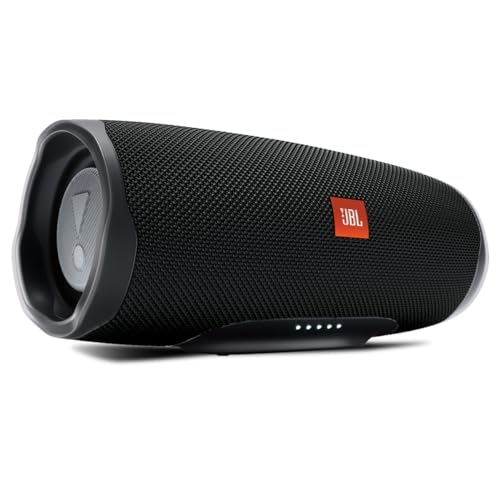
But power isn't everything – driver size and speaker design matter enormously. The JBL Charge 4 houses a racetrack-shaped 50x90mm driver (essentially an oval-shaped speaker cone) along with dual passive radiators. These passive radiators are like additional speaker cones that don't have their own power source but move in response to the air pressure created by the main driver. This design allows the Charge 4 to produce much deeper bass than its size would normally allow.
The frequency response tells the technical story: the JBL Charge 4 can reproduce sounds from 60Hz to 20kHz, while the JBL Clip 4 is limited to 100Hz-20kHz. That 40Hz difference at the low end is huge – it's the difference between feeling the thump of a kick drum and just hearing it. For reference, human hearing typically ranges from about 20Hz to 20kHz, so the Charge 4 gets much closer to reproducing the full spectrum of audible sound.
In practical terms, this means the JBL Charge 4 handles bass-heavy music genres like electronic, hip-hop, and rock far better than the JBL Clip 4. Our research into user reviews consistently shows that Charge 4 owners praise its "punchy" bass and ability to fill a room with sound, while Clip 4 users often describe the sound as "tinny" or lacking in low-end presence.
However, the JBL Clip 4 isn't without its audio merits. Its limited bass response actually works in its favor for vocal-heavy content. Without the bass frequencies competing for attention, voices come through with remarkable clarity. Multiple reviews highlight this strength, noting that the Clip 4 excels at podcasts, audiobooks, and acoustic music where vocal intelligibility is paramount.
The volume difference between these speakers is substantial and worth understanding in context. The JBL Charge 4 can genuinely fill a medium-sized room or provide background music for a small outdoor gathering. It's the kind of speaker that can compete with ambient noise at a beach or pool party, though it will show some audio compression (a reduction in sound quality) when pushed to maximum volume.
The JBL Clip 4, on the other hand, is designed for personal listening or very small groups. It's perfectly adequate for listening while you work at your desk, during a workout, or while camping in your tent. But if you're hoping to provide music for a group of friends, you'll likely be disappointed by its limited output.
One interesting technical point: both speakers are essentially mono, meaning they don't provide true stereo separation. The JBL Charge 4 can be paired with a second unit to create stereo sound using JBL's Connect+ technology, but out of the box, you're getting single-channel audio. This isn't necessarily a dealbreaker for portable speakers, but it's worth knowing if you're used to stereo sound from your home audio system.
Here's where things get interesting, and where the JBL Clip 4 truly shines. Portability isn't just about being small and light – it's about how easy a device is to actually take with you and use in real-world situations.
The JBL Charge 4 measures 8.7 x 3.7 x 3.7 inches and weighs just over 2 pounds. That's certainly portable by traditional speaker standards, but it's still something you need to actively carry. It fits in a backpack easily enough, but you'll need to dedicate space to it and remember to bring it along.
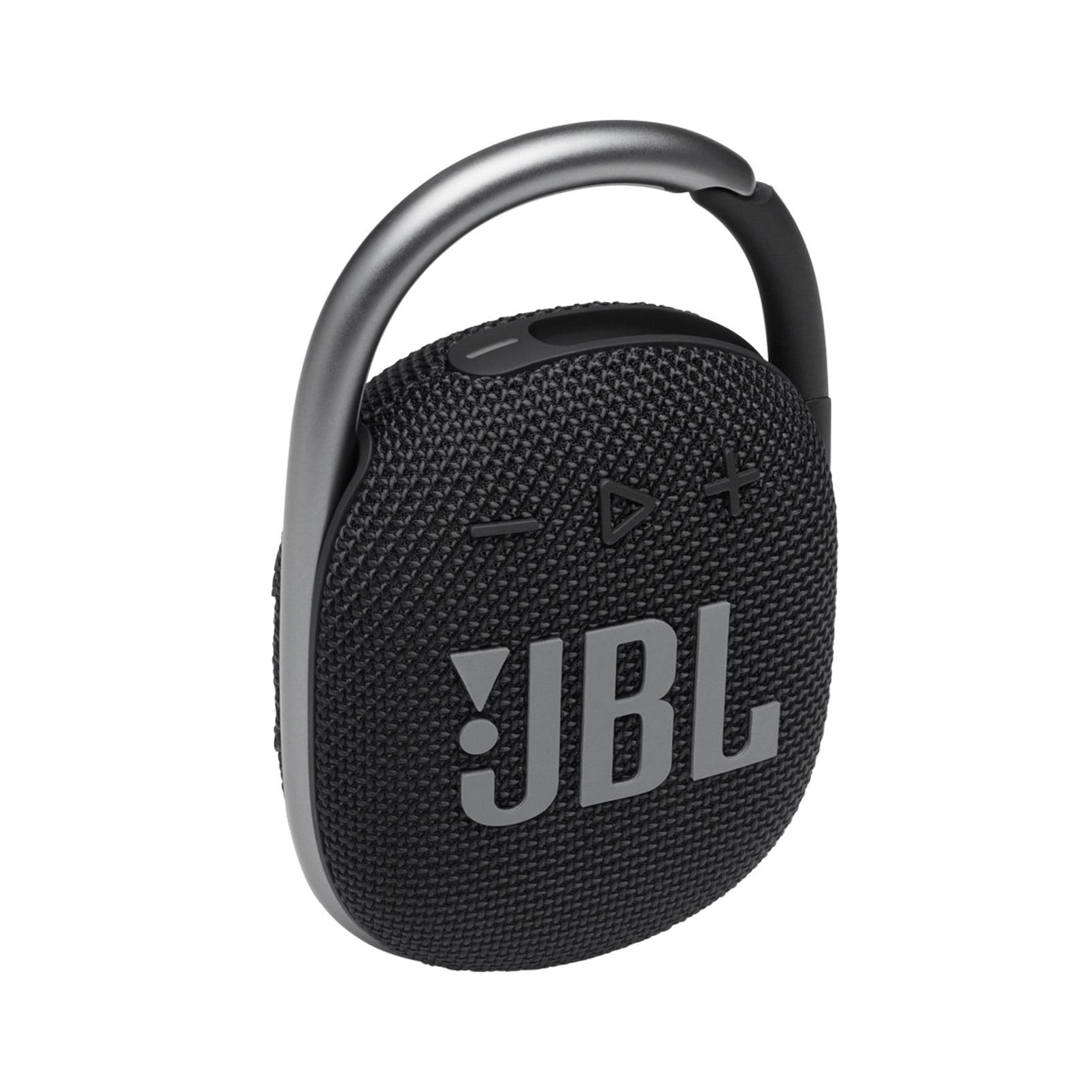
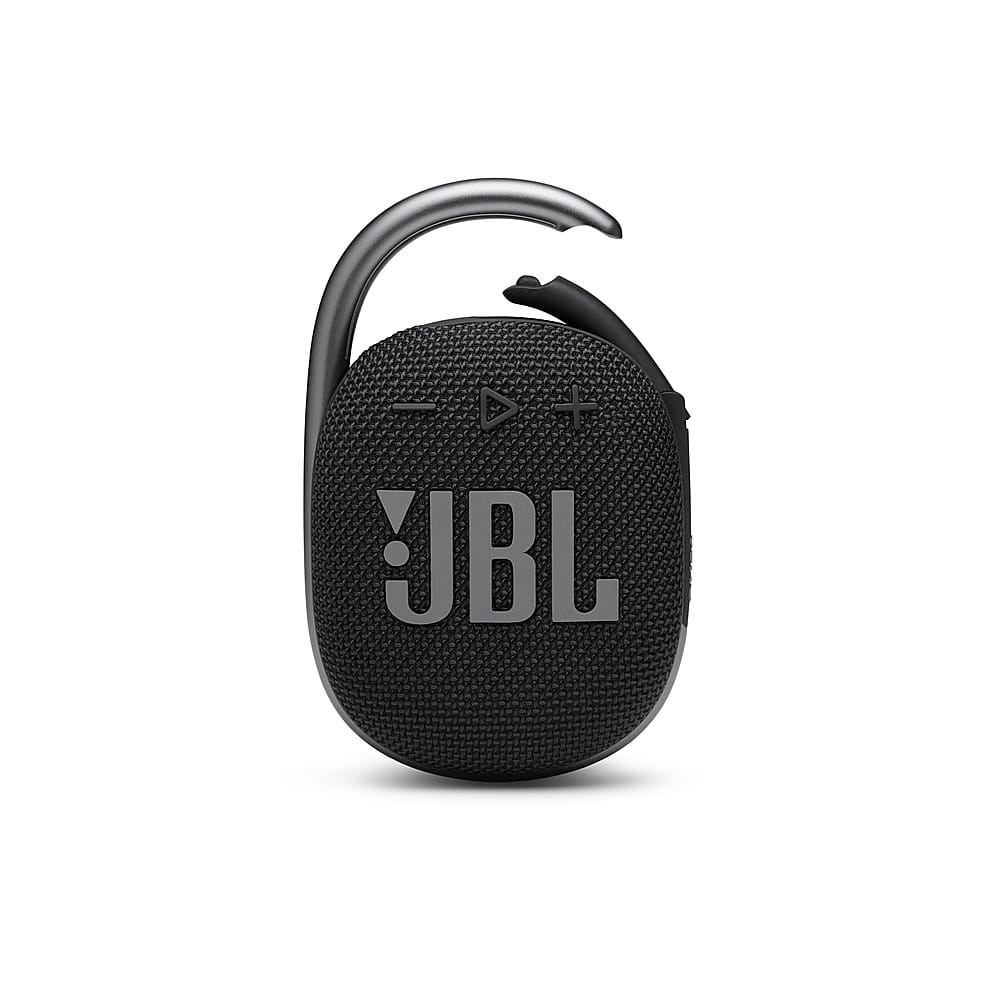
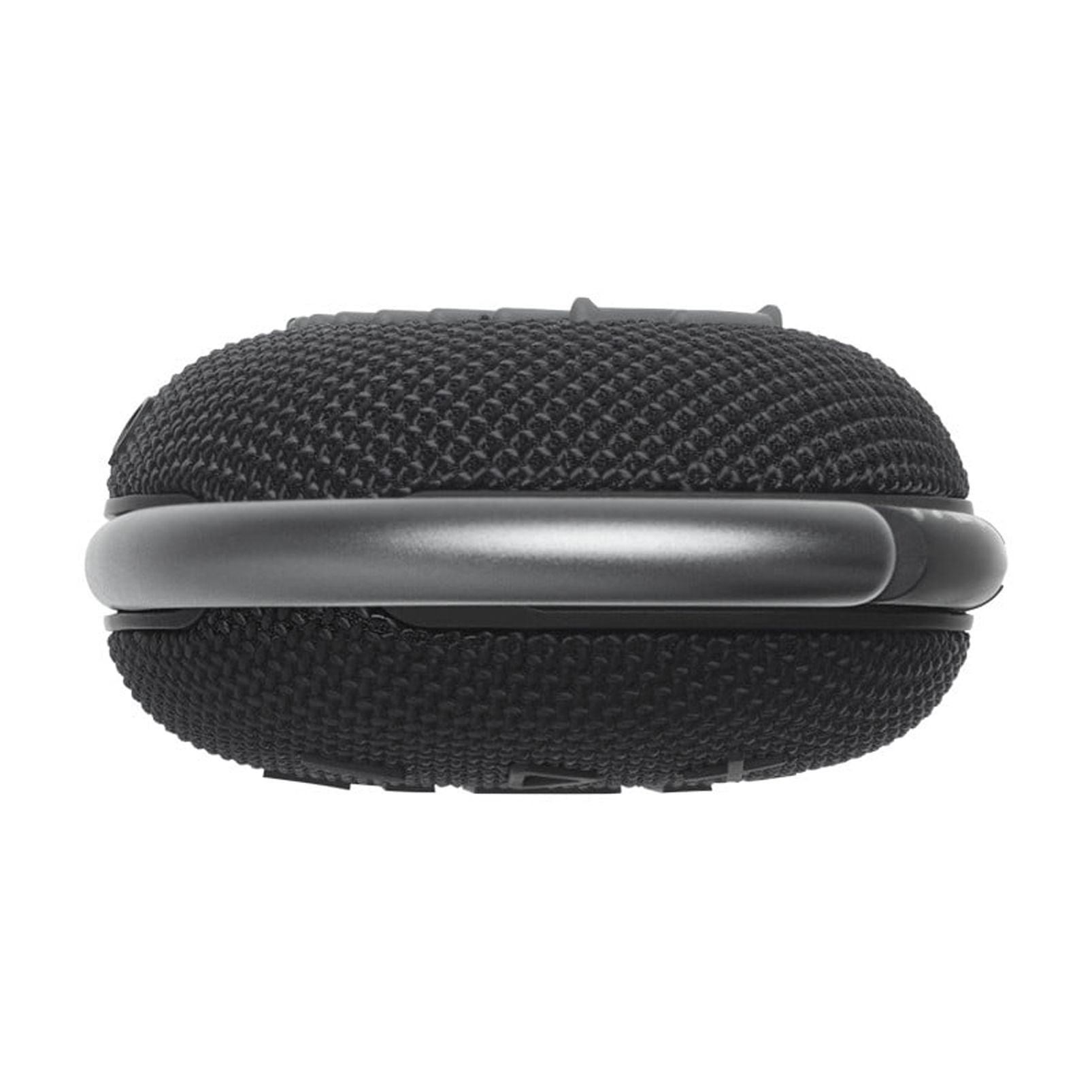
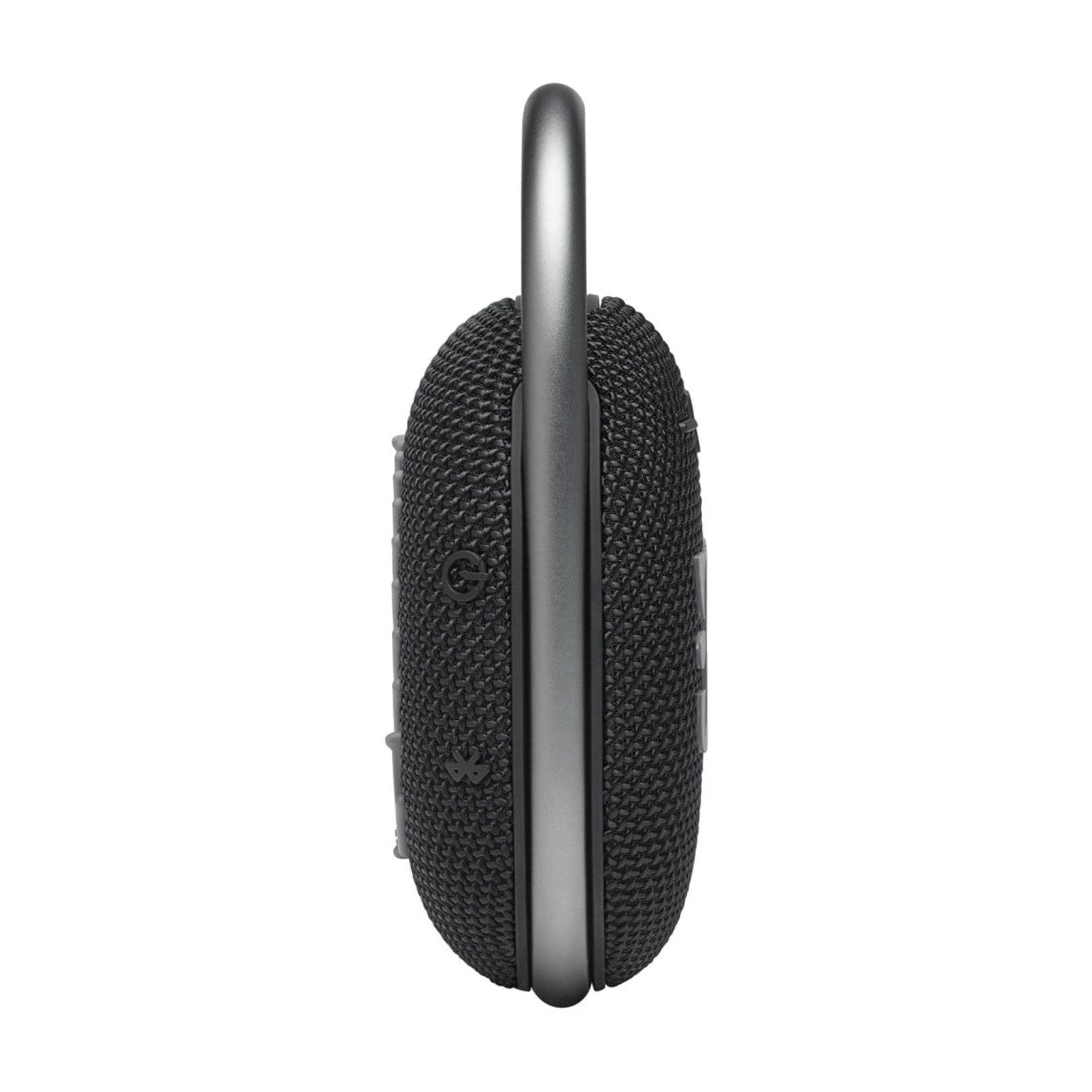
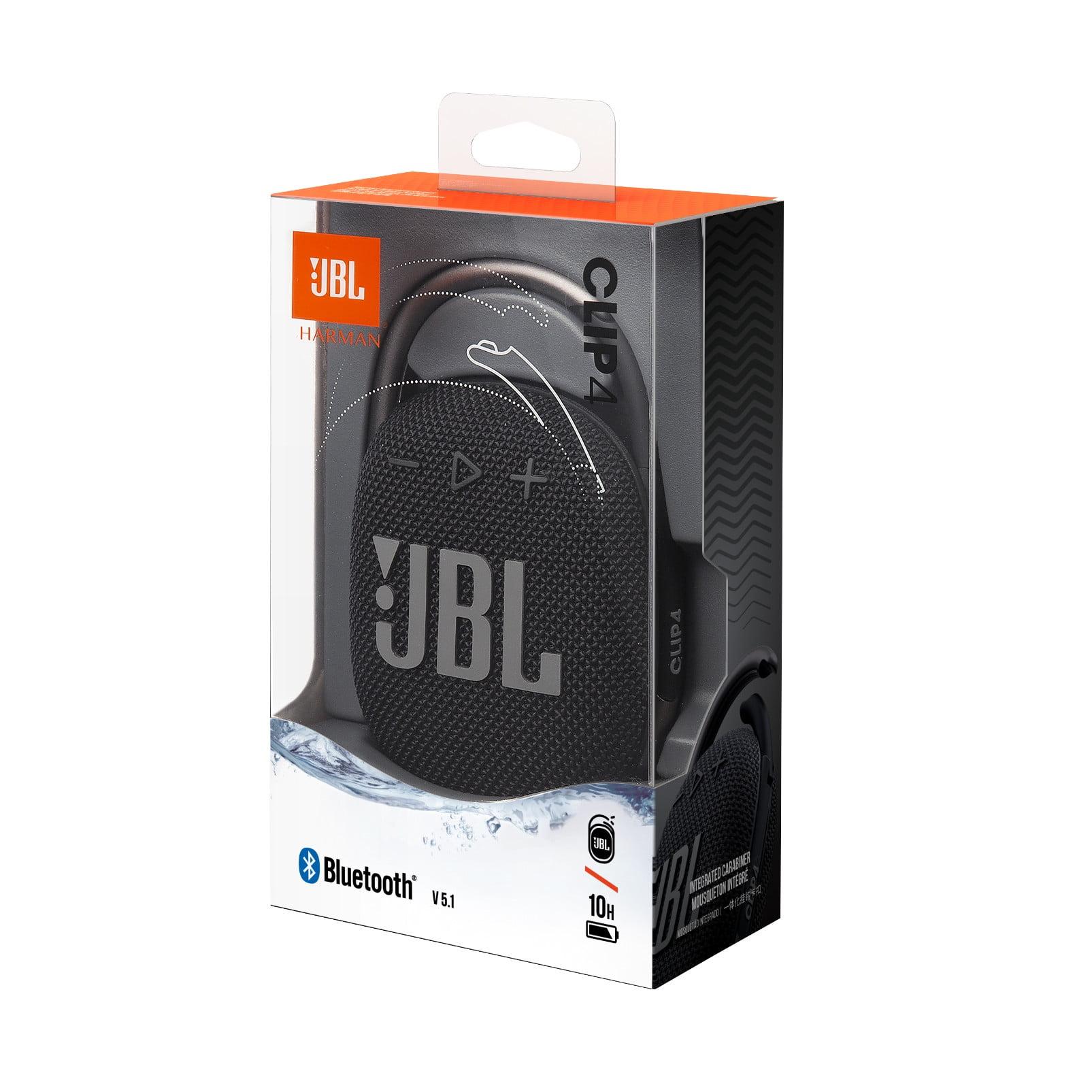
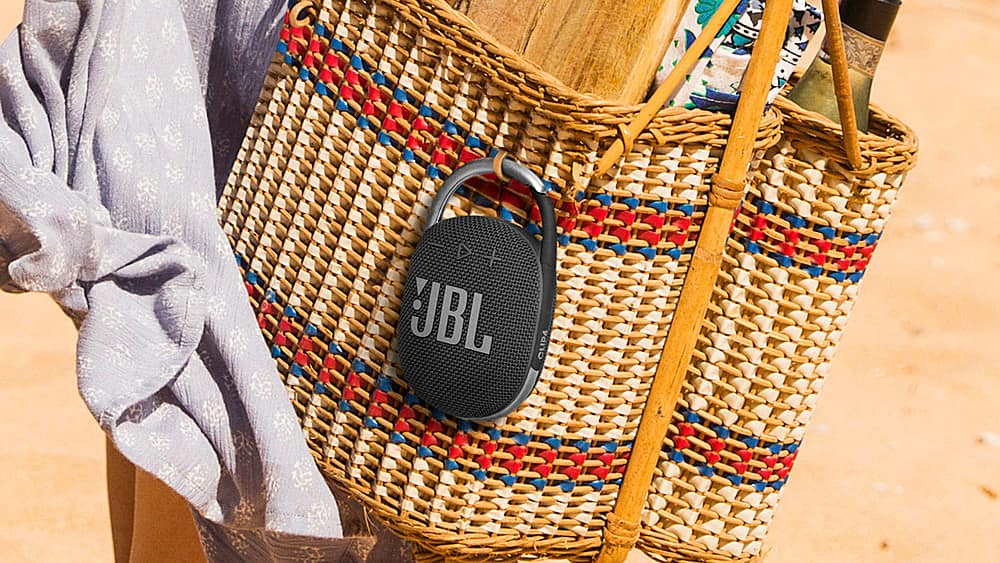
The JBL Clip 4 takes a completely different approach. At roughly half the size in every dimension and weighing less than 9 ounces, it's truly pocket-sized. But the real innovation is the integrated carabiner – a metal clip that's built right into the speaker housing. This isn't an afterthought or a fragile add-on; it's a robust, spring-loaded clip that can attach to virtually anything.
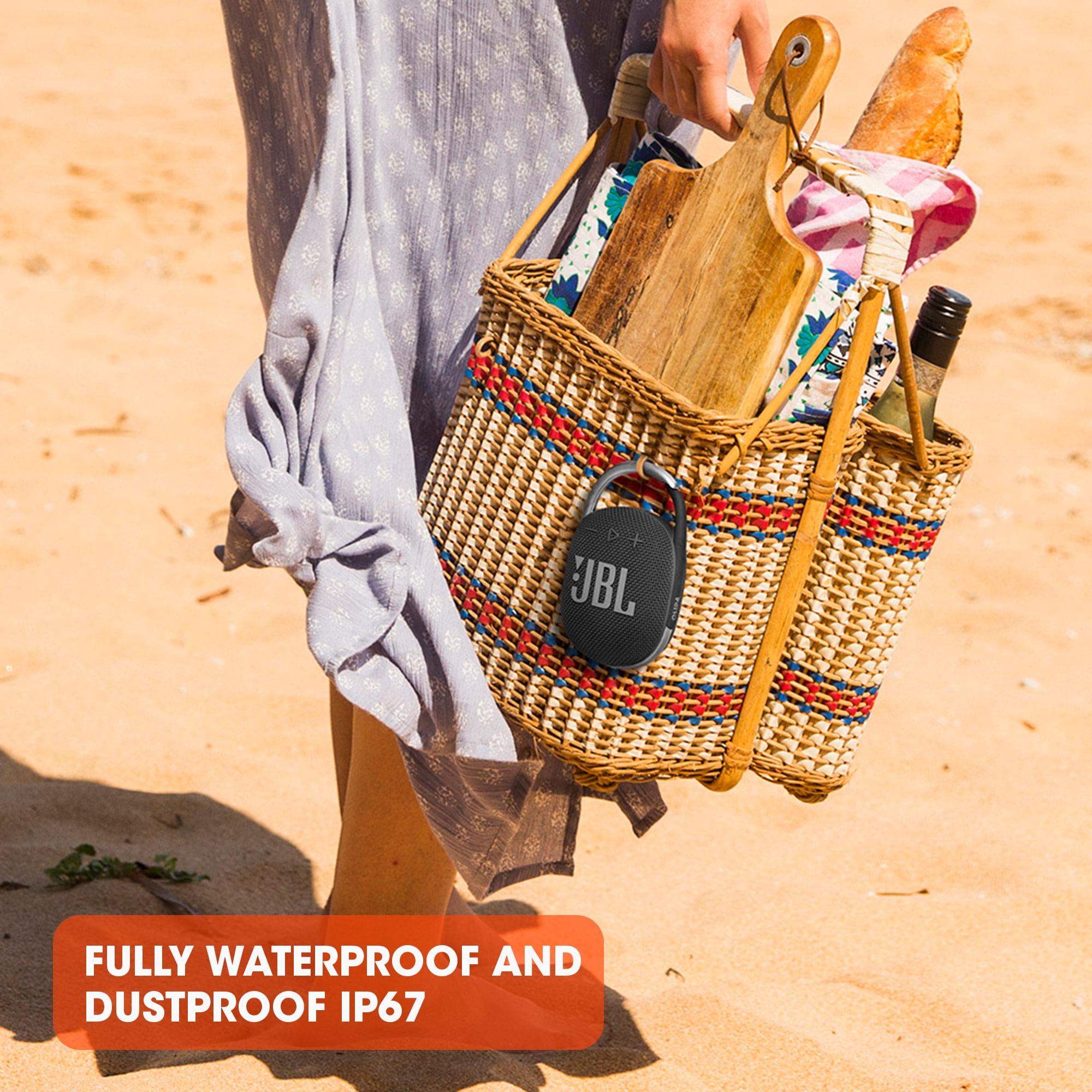
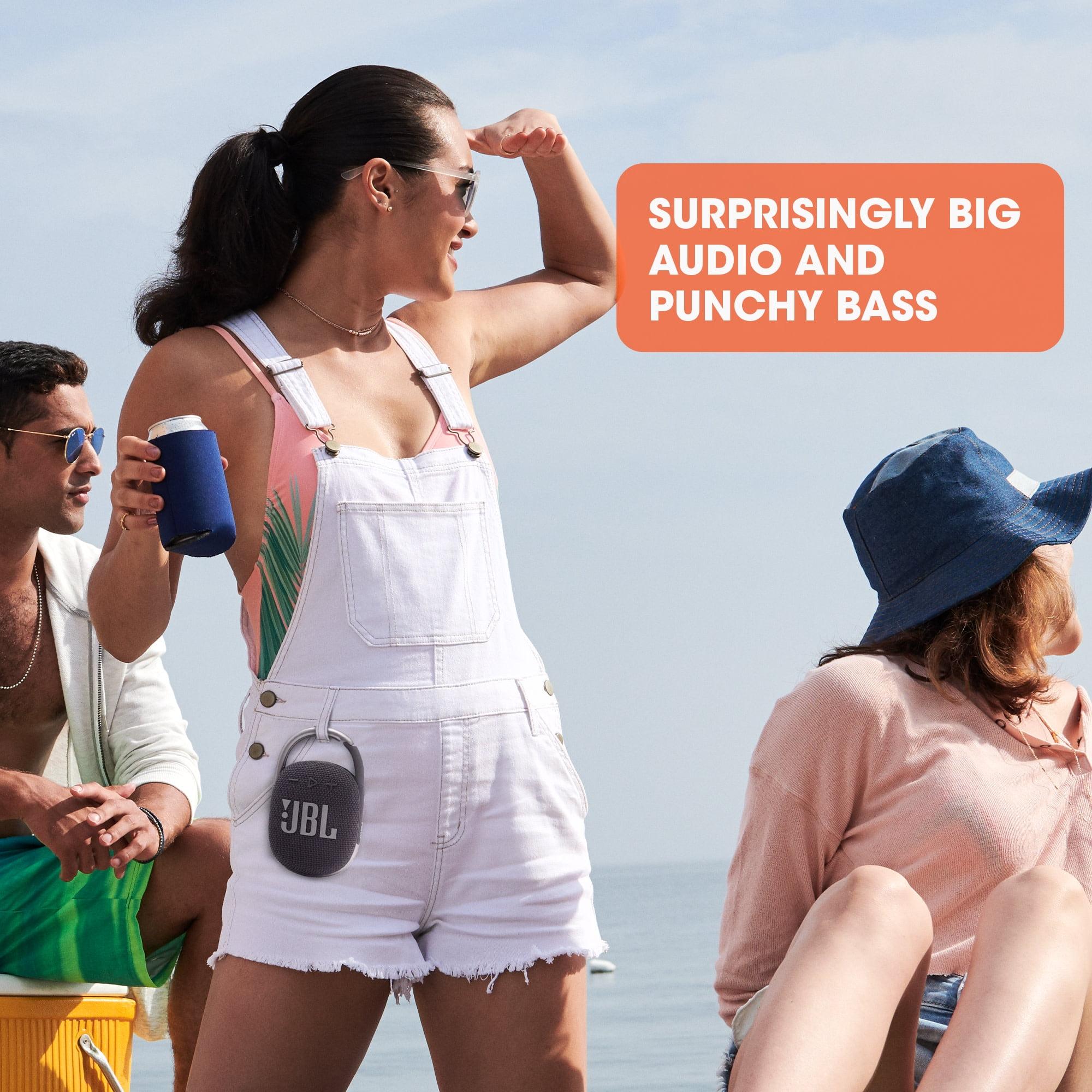
This design difference creates entirely different use cases. With the JBL Clip 4, you can clip it to your backpack while hiking and have hands-free music without the speaker bouncing around. You can attach it to your bike for cycling tunes, hook it to your gym bag, or even clip it to your shower caddy (thanks to that IP67 rating). The convenience factor is transformative – once you experience true hands-free portable audio, it's hard to go back to remembering to grab and carry a traditional speaker.
The carabiner design was significantly improved from the Clip 3 to the Clip 4, addressing previous durability concerns. User reviews from 2021 onward consistently praise the robustness of the new clip mechanism, noting that it feels substantial and secure rather than flimsy.
Battery performance reveals another fundamental difference between these speakers. The JBL Charge 4 houses a massive 7500mAh lithium-ion battery that provides up to 20 hours of playback at moderate volumes. Real-world testing suggests you'll get closer to 13-15 hours depending on volume levels and music type, but that's still impressive for a speaker of this size.
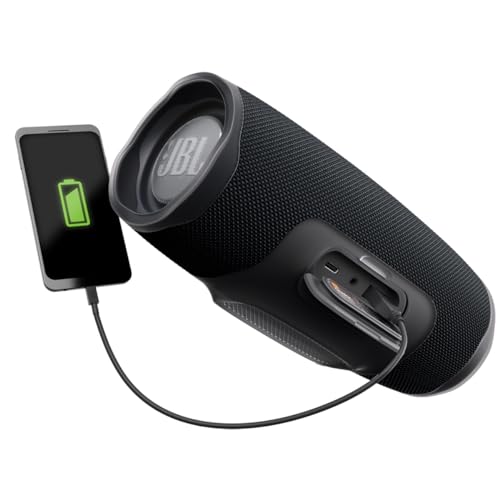
More importantly, the JBL Charge 4 doubles as a power bank. That USB-A port isn't just for show – it can charge your smartphone, tablet, or other devices at up to 5V/2A. This feature transforms the speaker from just an audio device into a crucial piece of camping or travel gear. When you're away from power outlets for extended periods, having a backup battery that also happens to play great music is incredibly valuable.
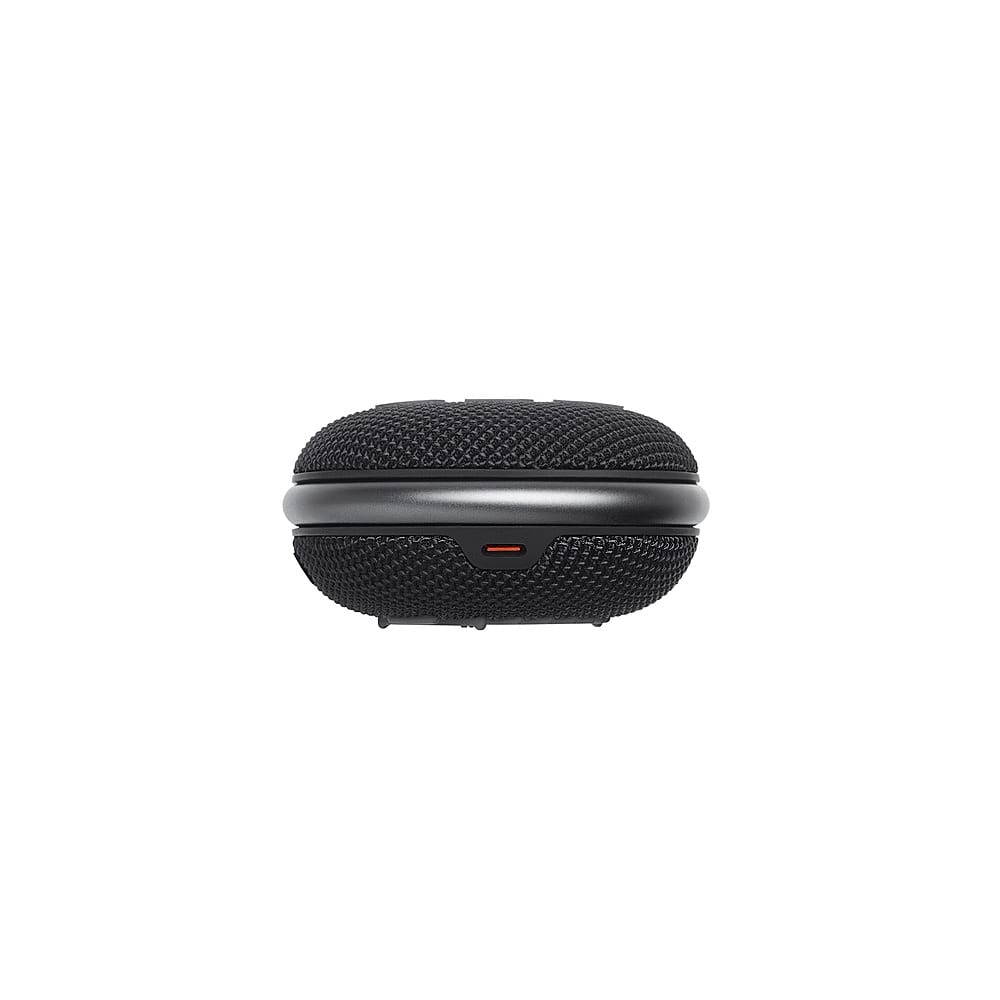
The JBL Clip 4 offers 10 hours of playback from its much smaller battery, which is actually quite impressive given its size. The trade-off comes in charging speed – the Clip 4 can fully charge in just 3 hours compared to the Charge 4's 4+ hour charging time. For users who frequently forget to charge their devices, this faster turnaround time can be more valuable than longer battery life.
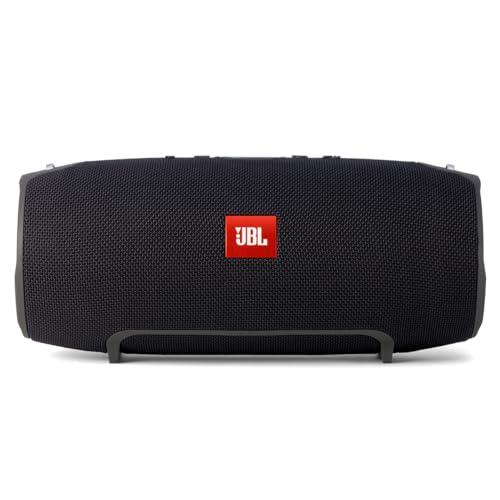
Both speakers are designed to handle abuse, but in different ways. The JBL Charge 4 carries an IPX7 rating, meaning it can survive complete submersion in up to 3 feet of water for 30 minutes. That's pool-party proof, beach-safe, and shower-friendly. The build quality is solid, with a tight fabric wrap over a sturdy plastic chassis that can handle the occasional drop or bump.
The JBL Clip 4 actually goes one better with an IP67 rating. The "6" designation means it's completely dustproof – sealed against dust ingress – while maintaining the same water resistance as the Charge 4. For hiking, camping, or working in dusty environments, this extra protection is genuinely useful.
The fabric wrapping on both speakers serves multiple purposes beyond aesthetics. It provides grip so the speakers don't slide around on smooth surfaces, offers some impact protection, and contributes to the overall acoustic performance by reducing unwanted vibrations.
Here's where we see the three-year gap between these products. The JBL Charge 4, released in 2018, uses Bluetooth 4.2 – perfectly functional but showing its age. The JBL Clip 4, arriving in 2021, features Bluetooth 5.1, which offers better connection stability, improved range, and more efficient power usage.
In practical terms, both speakers connect reliably to phones, tablets, and laptops, but the Clip 4's newer Bluetooth standard means fewer connection drops and better performance in environments with lots of wireless interference.
The JBL Charge 4 includes JBL Connect+ technology, allowing you to wirelessly link multiple compatible speakers for synchronized playback. This feature can create impressive multi-room audio or boost volume for larger gatherings. The JBL Clip 4 lacks this functionality entirely, though given its intended use cases, that's not necessarily a major loss.
Both speakers support the standard A2DP and AVRCP Bluetooth profiles, ensuring compatibility with virtually any modern device. The JBL Charge 4 also includes a 3.5mm auxiliary input for wired connections – useful for devices without Bluetooth or when you want to preserve battery life.
At the time of writing, these speakers occupy different price tiers, and the value equation is complex. The JBL Charge 4 typically costs significantly less than its newer siblings in the Charge lineup, making it an exceptional value for the audio performance and feature set you receive. When you factor in the power bank functionality and superior sound quality, it's hard to argue with the value proposition.
The JBL Clip 4 commands a premium for its unique form factor and convenience features. You're paying more per watt of audio output, but you're also getting a completely different product category. The question isn't whether the Clip 4 offers better audio value – it clearly doesn't – but whether its unique benefits justify the price premium for your specific needs.
While both speakers are designed for portability, they can serve indoor purposes too. The JBL Charge 4 makes a decent desktop speaker for a home office or small bedroom, providing much better sound than laptop speakers or small desktop monitors. It's not going to replace a proper bookshelf speaker setup, but for casual listening or improving video call audio, it's perfectly adequate.
For home theater use, neither speaker is really appropriate as a primary audio source. The JBL Charge 4's mono output and limited soundstage don't provide the immersive experience you'd want for movies. However, it could work as a temporary solution for a bedroom TV or as supplementary audio in a kitchen or bathroom where you want background music while cooking or getting ready.
The JBL Clip 4 is even less suitable for home theater use due to its limited volume and bass response. It works fine for improving laptop audio for video calls or casual YouTube watching, but that's about the extent of its indoor utility.
The decision between these speakers ultimately comes down to understanding your primary use cases and priorities.
Choose the JBL Charge 4 if you prioritize audio quality above all else. This is the speaker for pool parties, beach trips, camping expeditions where you want good music, or any situation where you need to fill a space with sound. The power bank functionality makes it especially valuable for extended outdoor adventures or travel to places with unreliable power. It's also the better choice if you primarily listen to bass-heavy music genres or want a speaker that can double as a decent desktop audio solution.
The JBL Charge 4 is ideal for people who can plan ahead and don't mind carrying a slightly larger device in exchange for significantly better performance. If you're someone who throws speakers in a bag for planned activities, this is probably your best bet.
Choose the JBL Clip 4 if convenience and true portability are your top priorities. This is the speaker for active lifestyles where hands-free operation is crucial – biking, hiking, working out, or any situation where you want music but can't or don't want to dedicate hand or bag space to carrying a speaker.
The JBL Clip 4 excels for people who listen primarily to podcasts, audiobooks, or vocal-heavy music where its clarity advantages shine through. It's also perfect for travelers who prioritize packing light or anyone who frequently forgets to bring speakers along because it's just so easy to clip on and go.
After researching extensively and analyzing user feedback, it's clear that these aren't really competing products despite sharing a brand and basic functionality. They're different tools designed for different situations, and both excel in their intended roles.
The JBL Charge 4 offers exceptional value for anyone prioritizing audio performance and versatility. It's the speaker equivalent of a reliable mid-size SUV – not the most compact or efficient option, but incredibly capable and practical for a wide range of situations.
The JBL Clip 4 is more like a specialized tool – think of it as the Swiss Army knife of portable speakers. It doesn't do everything better than dedicated alternatives, but its unique combination of features and form factor makes it irreplaceable in specific scenarios.
For most people buying their first or only portable speaker, the JBL Charge 4 provides better overall value and more versatile performance. But if you've identified specific use cases where the JBL Clip 4's unique advantages matter – and you're willing to accept its audio limitations – it can be genuinely transformative for your particular lifestyle.
The key is being honest about how you'll actually use the speaker rather than how you think you might use it someday. Both are excellent products that deliver on their promises, just very different promises to very different users.
| JBL Charge 4 | JBL Clip 4 |
|---|---|
| Power Output - Determines maximum volume and sound quality | |
| 30W RMS (fills medium rooms, outdoor gatherings) | 5W (personal listening, small spaces only) |
| Battery Life - How long you can listen without charging | |
| 20 hours (all-day events, weekend camping trips) | 10 hours (half-day activities, faster 3-hour recharge) |
| Size & Weight - Affects true portability and carrying comfort | |
| 8.7" x 3.7" x 3.7", 2.12 lbs (backpack/bag required) | 3.4" x 5.3" x 1.8", 0.53 lbs (pocket-sized with carabiner) |
| Frequency Response - Range of sounds the speaker can reproduce | |
| 60Hz-20kHz (deep bass extension for full music experience) | 100Hz-20kHz (limited bass, excellent vocal clarity) |
| Water/Dust Resistance - Protection level for outdoor use | |
| IPX7 (waterproof, submersible to 3 feet) | IP67 (waterproof AND dustproof - better for hiking/dusty environments) |
| Bluetooth Technology - Connection stability and range | |
| Bluetooth 4.2 (reliable but older standard) | Bluetooth 5.1 (newer, more stable connections) |
| Unique Features - Special capabilities that set each apart | |
| Power bank function (charges phones), JBL Connect+ (links multiple speakers), 3.5mm AUX input | Integrated carabiner clip (hands-free attachment), ultra-portable design |
| Driver Configuration - Internal speaker setup affecting sound quality | |
| 50x90mm racetrack driver + dual passive radiators (fuller, richer sound) | Single compact driver (optimized for size, not audio performance) |
| Charging Method - How you power up the device | |
| USB-C input, 4+ hour charge time, doubles as power bank | USB-C input, 3 hour charge time (faster turnaround) |
| Best Use Cases - Where each speaker truly excels | |
| Pool parties, camping, desktop audio, backup power source | Biking, hiking, gym workouts, travel, podcast listening |
The JBL Charge 4 delivers significantly better sound quality with 30W of power compared to the JBL Clip 4's 5W output. The Charge 4 features a larger driver and dual passive radiators that produce deeper bass (60Hz-20kHz frequency range) and louder volume suitable for parties and gatherings. The JBL Clip 4 focuses on portability over audio performance, though it excels at vocal clarity for podcasts and audiobooks.
The JBL Charge 4 offers up to 20 hours of playback time and can charge other devices like phones through its USB port, making it ideal for camping trips and extended use. The JBL Clip 4 provides 10 hours of battery life but charges faster in just 3 hours compared to the Charge 4's 4+ hour charging time.
The JBL Clip 4 is designed for ultimate portability with its integrated carabiner clip that attaches to bags, belts, or gear for hands-free carrying. Weighing only 0.53 lbs, it's truly pocket-sized. The JBL Charge 4 is larger at 2.12 lbs and requires carrying in a bag, though it's still considered portable by traditional speaker standards.
Both speakers are excellent for outdoor use but serve different purposes. The JBL Charge 4 is perfect for beach parties, camping, and poolside gatherings where you need louder volume and longer battery life. The JBL Clip 4 excels for active adventures like hiking, biking, and workouts where hands-free attachment is crucial. Both offer water resistance - the Charge 4 has IPX7 rating while the JBL Clip 4 has superior IP67 protection against dust and water.
The JBL Charge 4 is significantly better for bass-heavy music genres like hip-hop, electronic, and rock. Its dual passive radiators and larger driver produce deep bass down to 60Hz, while the JBL Clip 4 only reaches 100Hz, missing much of the low-end frequency range that makes bass-heavy music impactful.
Only the JBL Charge 4 supports JBL Connect+ technology, allowing you to wirelessly link over 100 compatible JBL speakers for synchronized playback and increased volume. The JBL Clip 4 lacks this multi-speaker connectivity feature and is designed as a standalone personal audio device.
The JBL Clip 4 actually excels at reproducing voices and spoken content due to its frequency response characteristics that emphasize vocal clarity. While the JBL Charge 4 has better overall audio quality, the Clip 4's focused midrange makes it ideal for podcasts, audiobooks, and conference calls where speech intelligibility is most important.
Neither speaker is ideal for home theater use since both are mono speakers designed for portability rather than immersive audio. The JBL Charge 4 could serve as a temporary desktop speaker or improve laptop audio for casual viewing, but serious home theater applications require dedicated stereo or surround sound systems. The JBL Clip 4 is too small for meaningful TV audio enhancement.
The JBL Charge 4 generally offers better value for most users, providing significantly more audio performance, longer battery life, power bank functionality, and additional connectivity options. The JBL Clip 4 commands a premium for its unique carabiner design and ultra-portability, making it worthwhile only if those specific features are essential to your lifestyle.
Only the JBL Charge 4 can charge external devices through its USB-A port, functioning as a power bank with its large 7500mAh battery. This makes it valuable for camping, travel, and emergency situations. The JBL Clip 4 lacks power bank functionality and can only charge itself via USB-C.
Both speakers are built for durability but in different ways. The JBL Clip 4 has superior IP67 rating, making it completely dustproof and waterproof, ideal for hiking and dusty environments. The JBL Charge 4 offers IPX7 water resistance and more robust overall construction due to its larger size, better suited for handling bumps and drops during transport.
The fundamental difference is design philosophy: the JBL Charge 4 prioritizes audio performance and versatility with powerful sound, long battery life, and power bank functionality, while the JBL Clip 4 focuses on ultimate portability and convenience with its unique carabiner clip design for hands-free attachment. Choose the Charge 4 for better sound quality and the JBL Clip 4 for unmatched portability.
We've done our best to create useful and informative comparisons to help you decide what product to buy. Our research uses advanced automated methods to create this comparison and perfection is not possible - please contact us for corrections or questions. These are the sites we've researched in the creation of this article: rtings.com - whathifi.com - whathifi.com - soundguys.com - soundguys.com - streamtechreviews.com - youtube.com - versus.com - applevis.com - versus.com - jbl.com - jbl.com - walmart.com - comparisontabl.es - harmanaudio.com - manuals.plus - jbl.com.sg - jbl.com - mm.jbl.com - bestbuy.com - newpower99.com - forums.woot.com - youtube.com - outeraudio.com - jbl.com - rtings.com - youtube.com - jbl.com - harmanaudio.com - youtube.com - ggelectronics.com - greentoe.com - soundstagexperience.com

Privacy Policy
Terms and Conditions - Affiliate Policy
Home Security
© Copyright 2008-2026.
11816 Inwood Rd #1211, Dallas, TX 75244