

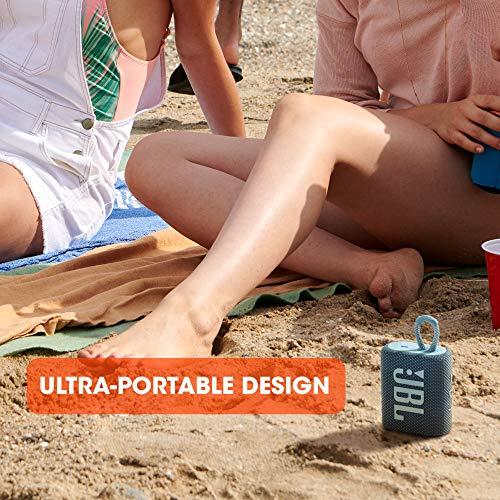



Ultra-portable Bluetooth speakers have become essential companions for our increasingly mobile lives. Whether you're heading to the beach, studying in a coffee shop, or just want better audio than your phone's tiny speakers, these pocket-sized devices promise big sound in small packages. But with so many options flooding the market, choosing the right one can feel overwhelming.
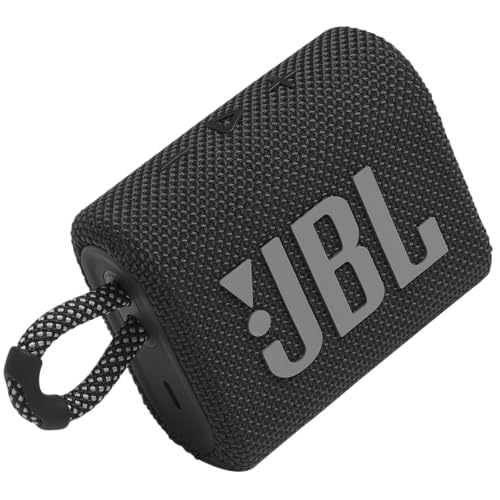
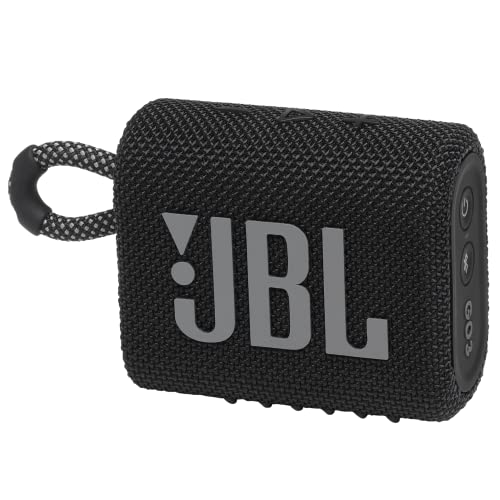
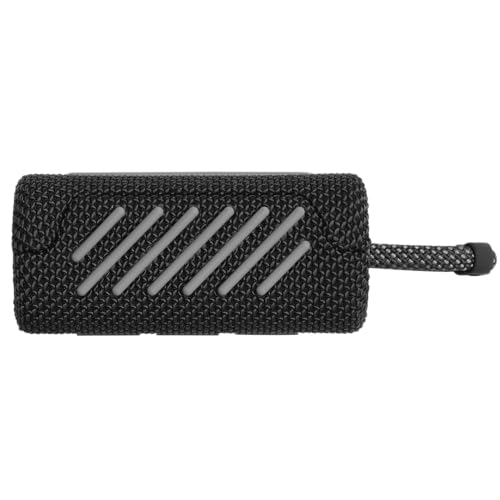
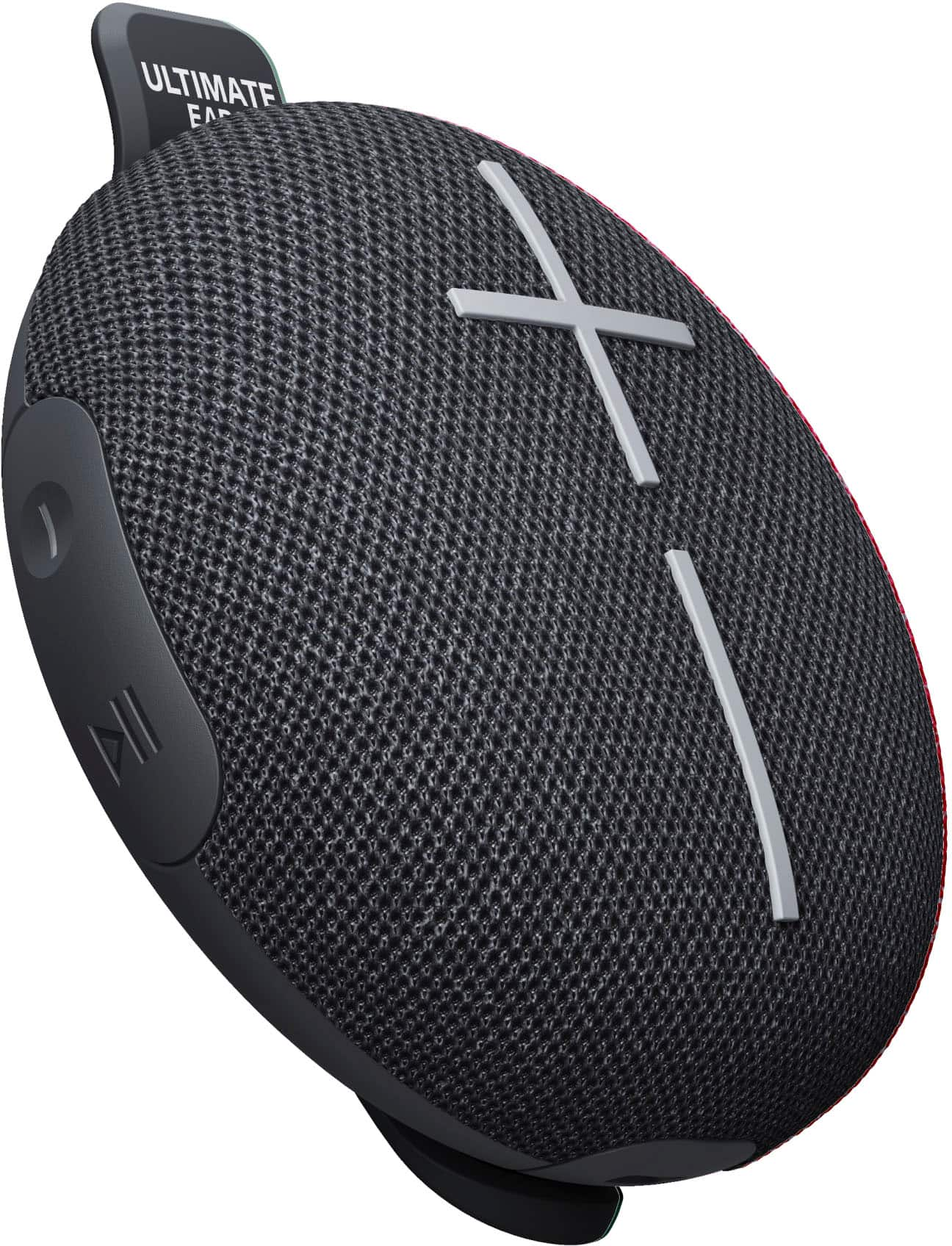
Today we're comparing two speakers that represent different approaches to ultra-portable audio: the JBL Go 3, released in 2020, and the newer Ultimate Ears MINIROLL, which hit the market in 2024. While both target the same ultra-portable category, they showcase how much the technology has evolved in just four years.
Before diving into the comparison, it's worth understanding what sets ultra-portable speakers apart from their larger cousins. These devices typically weigh less than 300 grams (about 10.5 ounces) and are designed to sacrifice some audio quality for the convenience of fitting in your pocket or bag. The main challenge engineers face is cramming decent sound, a battery, Bluetooth components, and protective housing into something barely larger than a tennis ball.
The physics are working against them. Smaller speakers struggle with bass response because low-frequency sounds require larger drivers and more air movement. That's why these tiny speakers often emphasize midrange clarity – where voices and most instruments live – rather than trying to compete with larger speakers on deep bass.
Both the JBL Go 3 and Ultimate Ears MINIROLL tackle these challenges differently, and understanding their approaches helps explain why one might work better for your specific needs.
The most significant difference between these speakers lies in their power delivery. The JBL Go 3 outputs 4.2 watts RMS (Root Mean Square, which represents the continuous power the speaker can handle) through a single 43×47mm driver. That's about the size of a large coin, which explains why the Go 3 sounds best at close range.
The Ultimate Ears MINIROLL, meanwhile, pumps out 7.5 watts RMS – nearly double the power. This extra juice comes from a larger 45.6mm driver paired with a passive radiator measuring 37.75×65mm. A passive radiator is essentially a speaker cone without a magnet that moves in response to the air pressure created by the main driver, helping to extend bass response without requiring additional amplification.
In practical terms, this power difference is immediately noticeable. The MINIROLL can comfortably fill a small room with sound, while the Go 3 works best as a personal speaker within a few feet of the listener. If you're planning to use your speaker for background music during dinner or small gatherings, the MINIROLL's extra volume headroom makes a real difference.
Frequency response tells you which parts of the audio spectrum a speaker can reproduce. The JBL Go 3 covers 110Hz to 20kHz, while the MINIROLL handles 86Hz to 16kHz. Those numbers reveal interesting trade-offs in their design philosophy.
The Go 3's higher frequency ceiling (20kHz) means it can reproduce more of the subtle details in cymbals, acoustic guitar strings, and other high-frequency content. Most adults can't hear much above 16kHz anyway, but that extra extension can add a sense of airiness to music.
However, the MINIROLL's advantage in the low end (86Hz vs 110Hz) is more significant for most listeners. Those extra 24Hz at the bottom translate to noticeably fuller bass response. While neither speaker will shake your room like a subwoofer, the MINIROLL provides enough low-end presence to make kick drums and bass lines feel substantial rather than thin.
Based on user reviews and expert evaluations, the frequency response differences play out predictably in real-world use. The Go 3 excels with vocal-heavy content like podcasts, acoustic music, and anything where midrange clarity matters most. The MINIROLL handles a broader range of music genres effectively, from pop and rock to hip-hop and electronic music that relies on bass presence.
The speakers also differ in how they project sound. The JBL Go 3 is essentially a directional speaker – it sounds best when you're facing it directly. This makes it ideal for desktop use or personal listening but less effective for group settings.
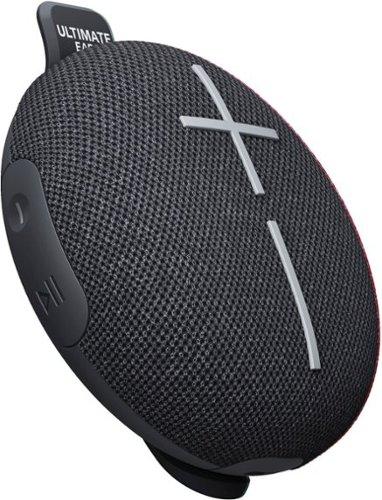
The Ultimate Ears MINIROLL features what UE calls 360-degree sound projection. Its cylindrical design allows sound to radiate in all directions more evenly, making it better suited for placing in the center of a group or outdoor gathering where people might be sitting around the speaker rather than directly in front of it.
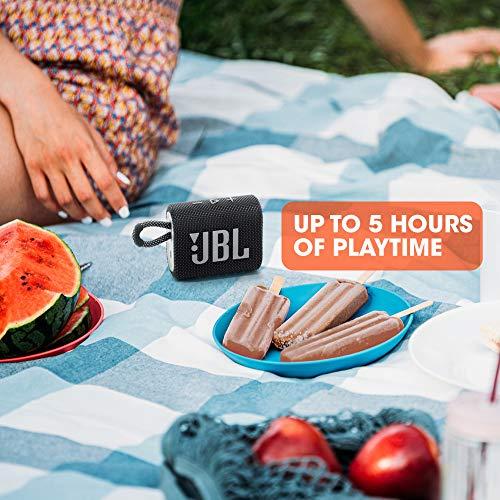
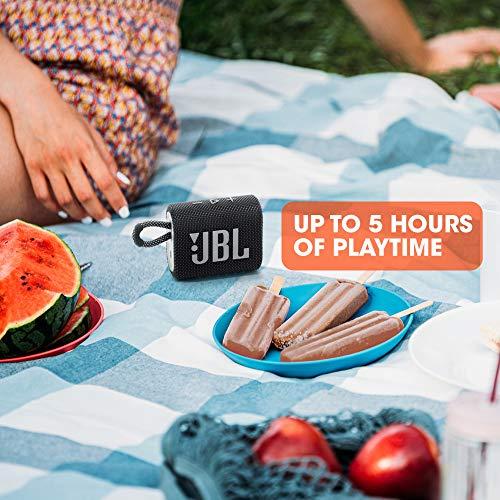
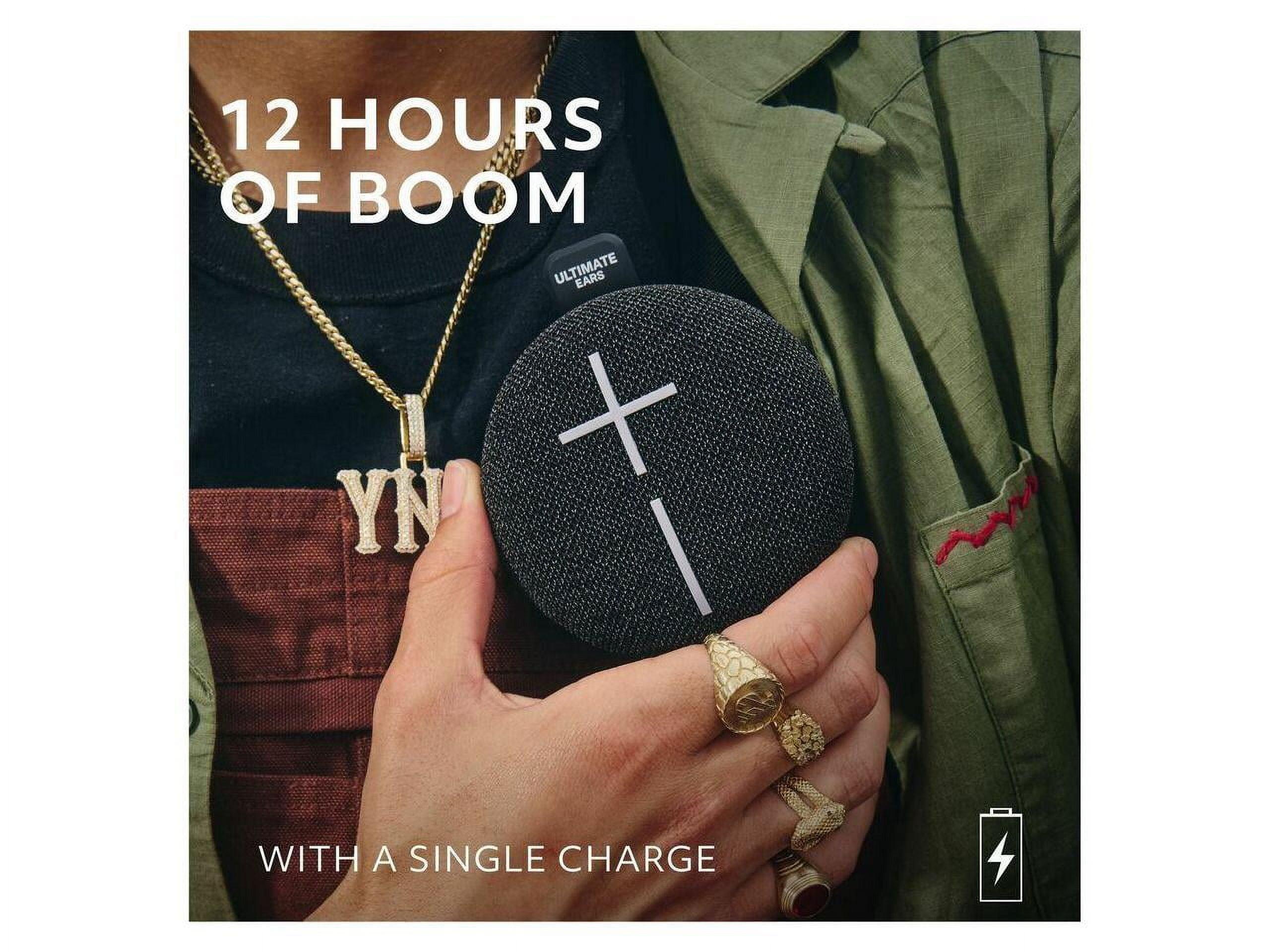
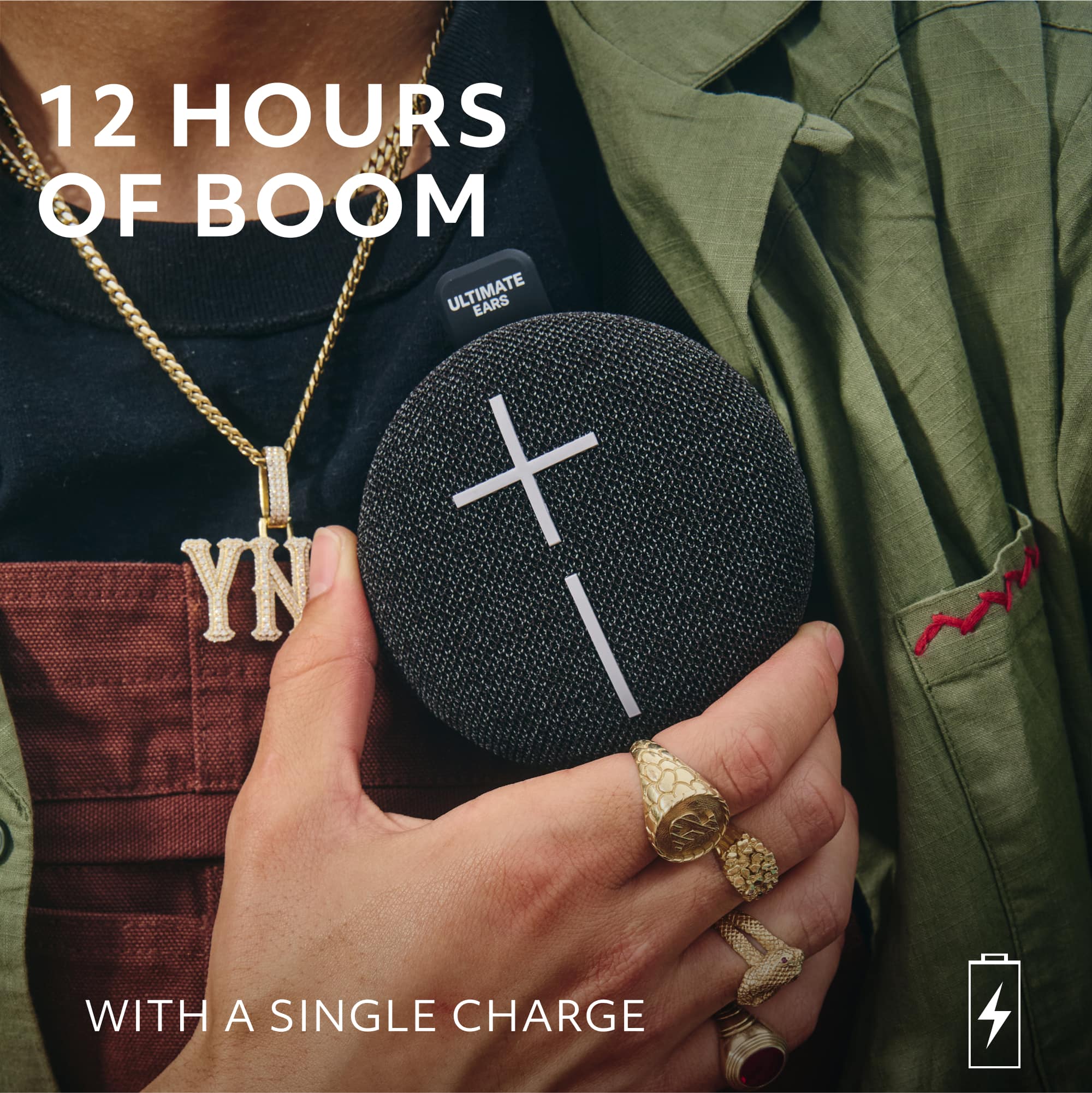
Perhaps no specification matters more for portable speakers than battery life, and here the generational gap between these devices becomes crystal clear. The JBL Go 3 manages about 5 hours of playback from its 2.775Wh lithium polymer battery, while the MINIROLL delivers up to 12 hours from its larger 4.56Wh power pack.
That difference isn't just numbers on a spec sheet – it fundamentally changes how you can use these speakers. Five hours might get you through a work session or short outdoor activity, but it's limiting for day trips, camping, or extended listening sessions. The MINIROLL's 12-hour endurance means you can reasonably expect all-day performance without worrying about finding an outlet.
Both speakers charge via USB-C (thankfully moving past the older micro-USB standard), with the Go 3 taking about 2.5 hours to fully charge and the MINIROLL requiring 2.65 hours. The charging times are similar, but you'll need to plug in the Go 3 more than twice as often as the MINIROLL.
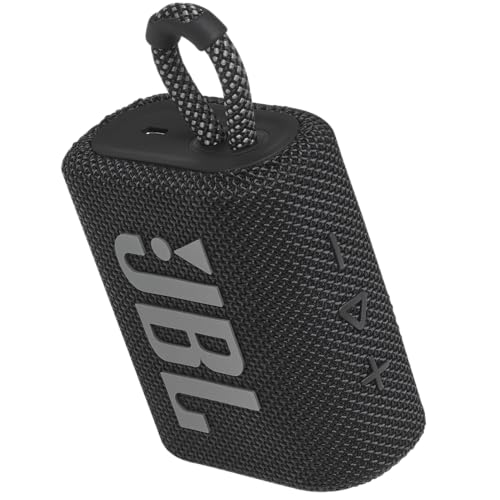
Here's where the JBL Go 3 fights back. At just 209 grams (0.46 pounds) and measuring 87.5×75×41.3mm, it achieves true pocket portability. You can genuinely slip this speaker into most pants pockets without creating an awkward bulge or adding noticeable weight.
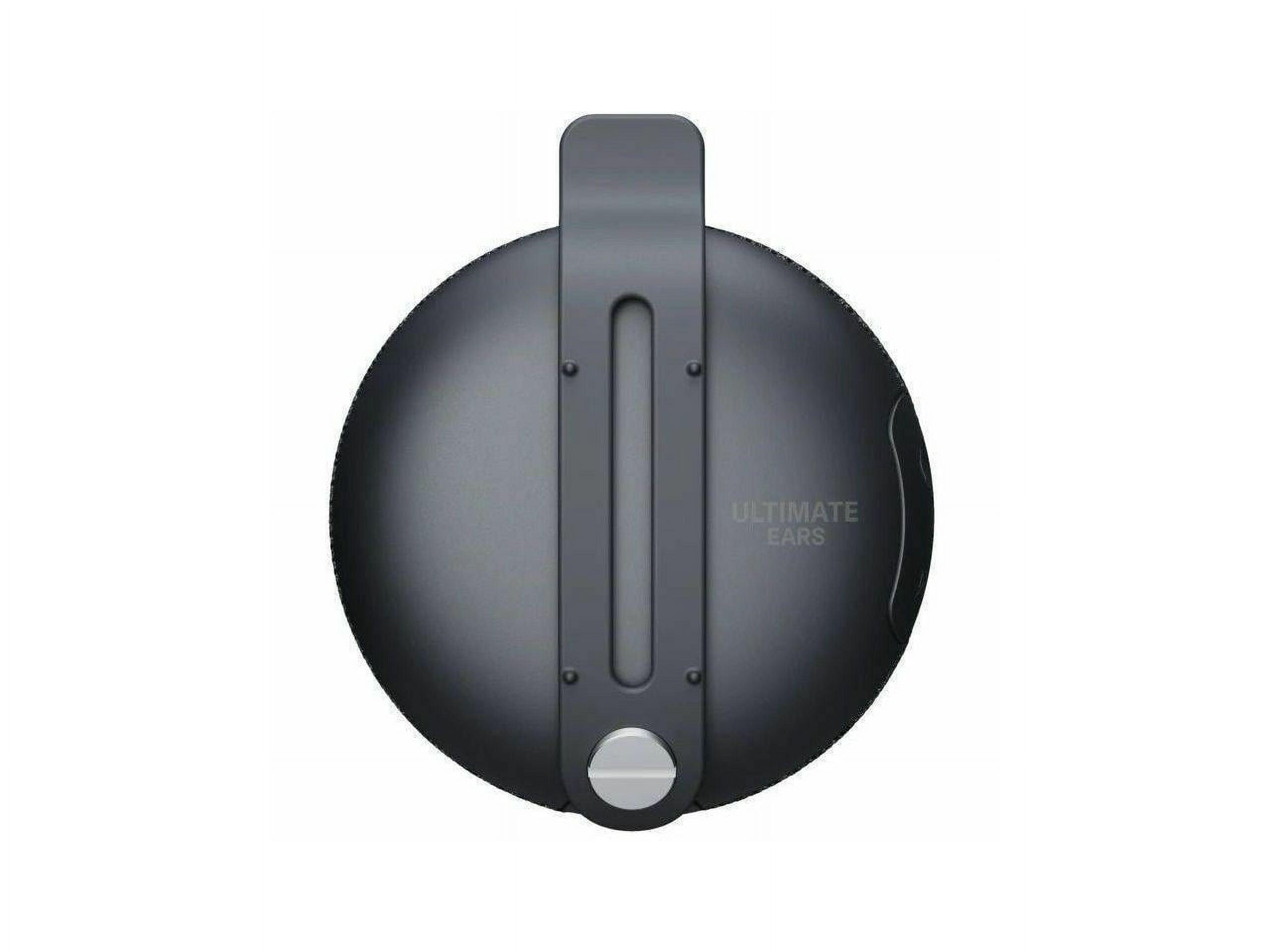
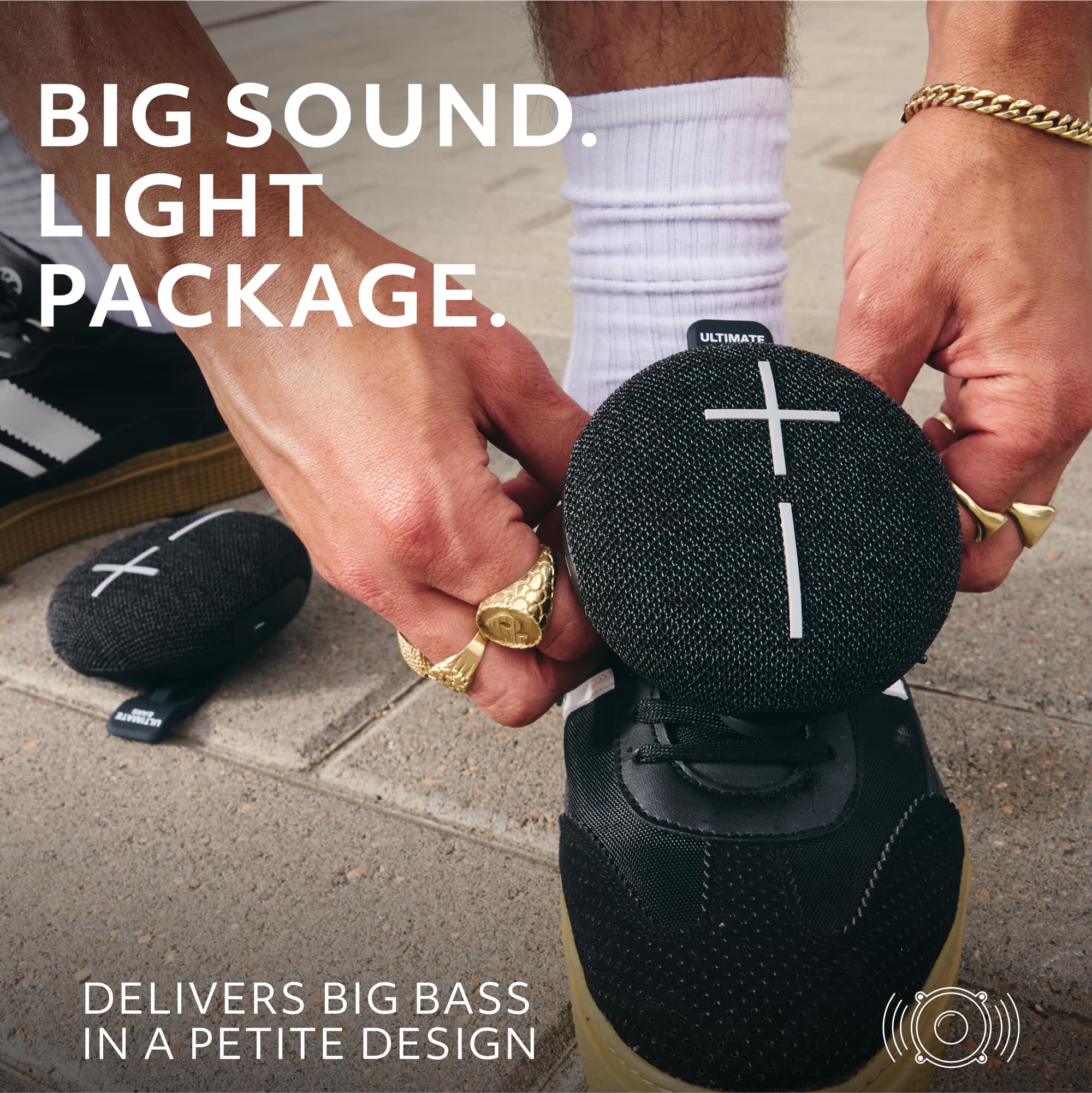
The Ultimate Ears MINIROLL weighs 279 grams and measures 122.67×105×48.15mm – about 33% heavier and noticeably larger. It's still very portable by speaker standards, but it's more of a "throw it in your bag" device than a true pocket speaker.
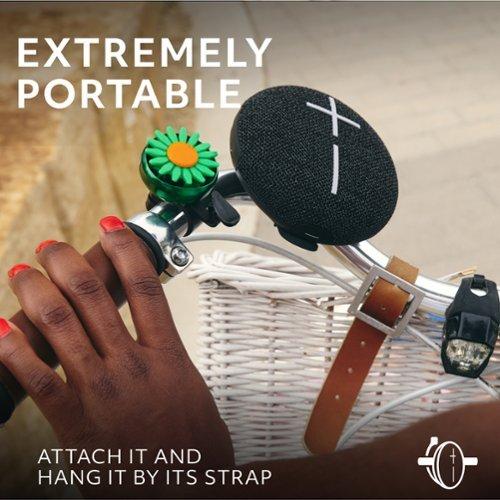
However, the MINIROLL's size brings practical advantages. Its integrated silicone strap isn't just a carrying handle – it's designed for hooking onto backpack straps, bike handlebars, belt loops, or boat railings. This makes it incredibly versatile for active use scenarios where you want your music to follow you hands-free.
The Go 3 includes a basic fabric loop, but it's more suited for light attachment to bags rather than the robust mounting options the MINIROLL provides. If your ideal use case involves hiking, biking, or water activities, the MINIROLL's strap system is genuinely useful.
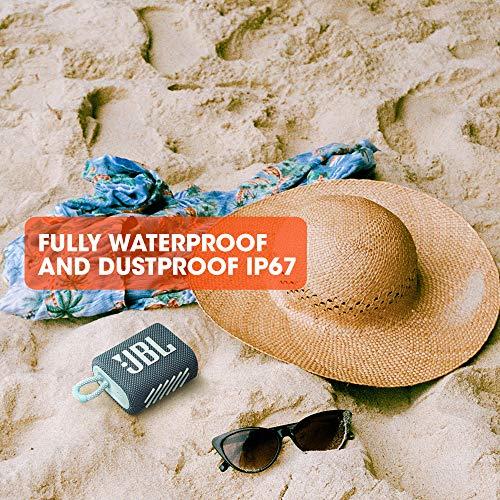
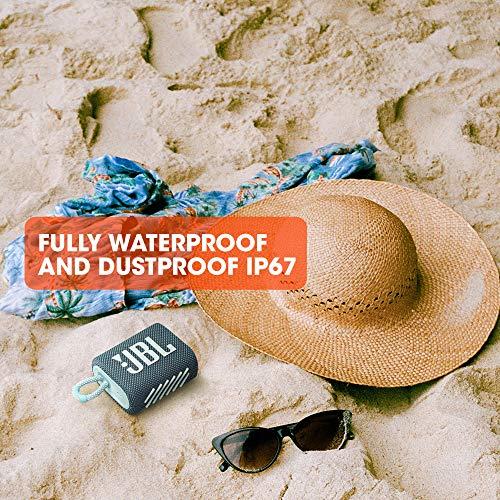
Both speakers earn IP67 ratings, which means they're completely dust-tight and can survive submersion in up to one meter of water for 30 minutes. In practical terms, you can use either speaker at the beach, by the pool, or even in the shower without worry.
The Ultimate Ears MINIROLL takes water resistance a step further by actually floating. If you accidentally drop it in a pool or lake, it won't sink to the bottom. Combined with its ability to survive drops from up to 1.2 meters (about 4 feet), the MINIROLL feels more robust and adventure-ready.
The JBL Go 3 is plenty durable for normal use and can handle splashes, rain, and occasional drops, but it doesn't float and has a slightly lower drop rating. For casual outdoor use, both speakers provide adequate protection, but the MINIROLL better serves genuinely rugged use cases.
The four-year gap between these speakers shows most clearly in their connectivity features. The JBL Go 3 uses Bluetooth 5.1, which was current when it launched but has since been superseded. It provides reliable connection within typical Bluetooth range (about 10 meters or 30 feet) and supports standard audio profiles.
The Ultimate Ears MINIROLL includes Bluetooth 5.3, offering improved connection stability, better power efficiency, and extended range up to 40 meters (131 feet). More importantly, it can maintain connections to two source devices simultaneously, allowing you to switch between your phone and laptop without re-pairing.
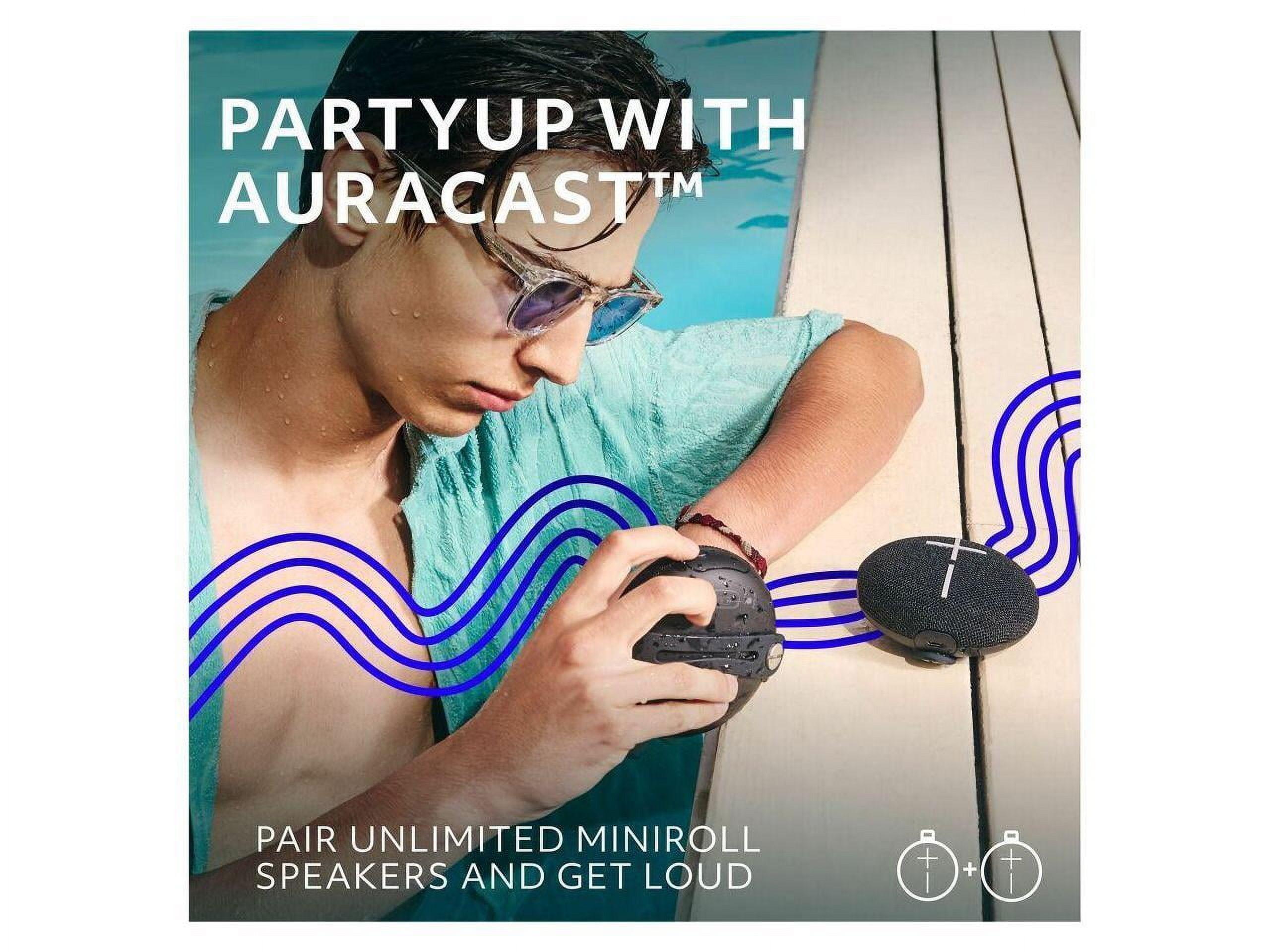
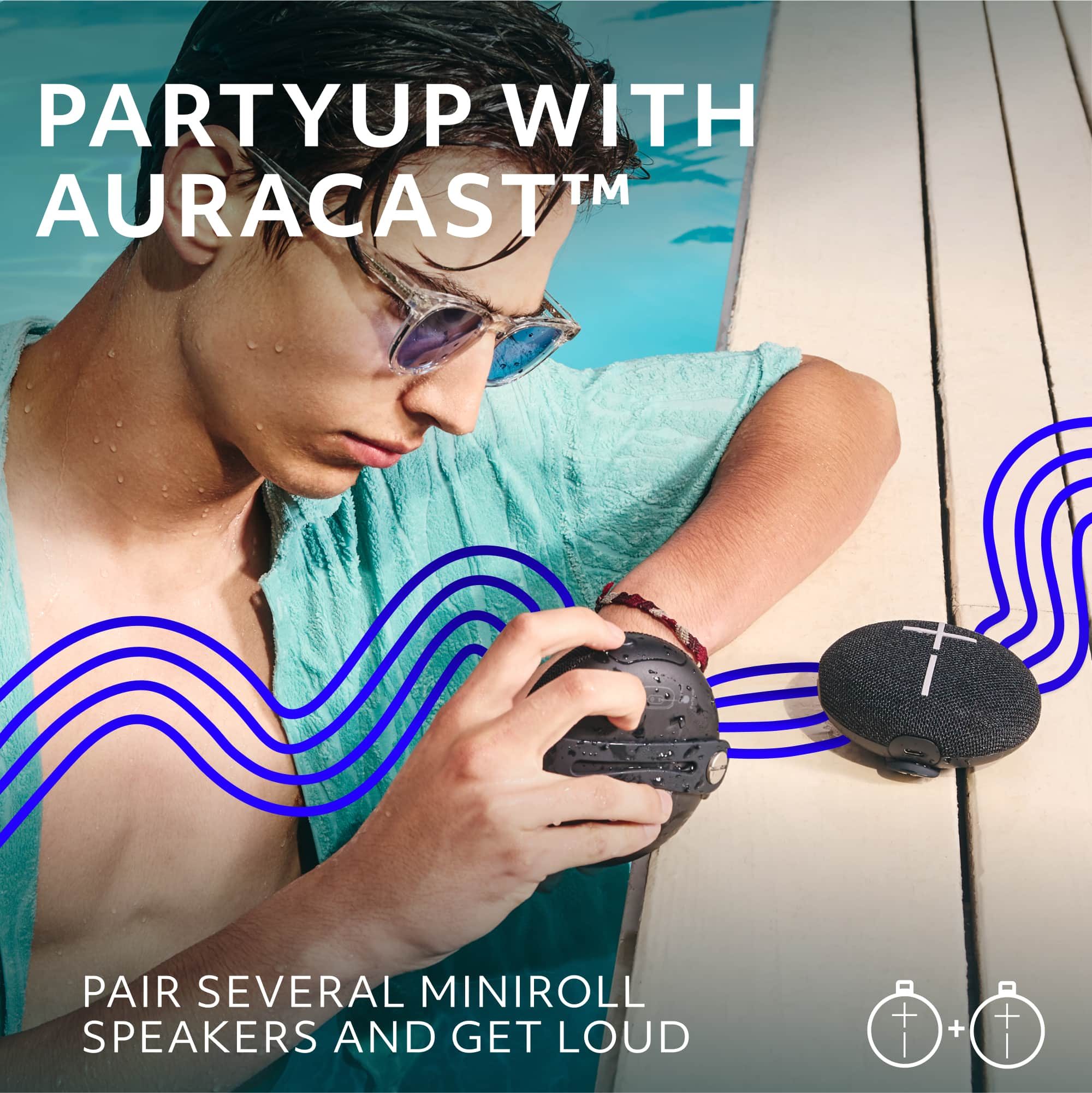
The MINIROLL also features PartyUp mode, which uses Auracast technology to connect unlimited numbers of MINIROLL speakers together. This isn't just a gimmick – for parties, large outdoor gatherings, or multi-room audio, being able to synchronize multiple speakers provides genuine utility that the Go 3 simply can't match.
Neither speaker offers smartphone apps or EQ customization, keeping things simple but limiting advanced features. This approach makes sense for ultra-portable speakers where simplicity and reliability matter more than extensive customization options.
At the time of writing, the JBL Go 3 typically retails for significantly less than the MINIROLL, often selling for 30-40% less than UE's newer offering. This price difference reflects both the age gap and performance differences between the devices.
The Go 3 represents excellent value if your priorities align with its strengths: maximum portability, adequate sound quality, and budget-conscious pricing. It delivers reliable performance that punches above its price point, especially when found on sale.
The MINIROLL commands a premium but justifies it through substantially better battery life, superior audio performance, and modern connectivity features. The question becomes whether those improvements are worth the additional cost for your specific use case.
Consider the battery life alone: if you value 12 hours of playback over 5 hours, you're essentially paying extra to avoid the inconvenience of frequent charging. For many users, especially those who use their speakers for extended periods, this convenience factor alone justifies the price difference.
Neither speaker is designed for home theater use, but it's worth addressing since some people consider small speakers for TV audio enhancement. Both the Go 3 and MINIROLL lack the power, bass extension, and stereo imaging necessary for meaningful home theater improvement.
If you're looking to enhance TV audio on a budget, you'd be better served by a dedicated soundbar or even larger portable speakers designed for home use. These ultra-portable speakers excel in their intended mobile roles but aren't suitable substitutes for proper home audio equipment.
Based on extensive user reviews and professional evaluations, several patterns emerge in how these speakers perform in daily use:
The JBL Go 3 consistently receives praise for its vocal clarity and reliability. Users appreciate its truly portable size and find it perfect for personal listening scenarios – podcasts during commutes, music while working at a desk, or enhancing audio when watching videos on tablets. The common criticism centers on battery life limiting its usefulness for longer activities.
The Ultimate Ears MINIROLL earns recognition for its surprising bass output and overall fuller sound. Users frequently mention being impressed by how much low-end the speaker produces relative to its size. The extended battery life receives consistent praise, with many users noting they can go several days between charges even with regular use. The main complaint involves the lack of smartphone app support for EQ adjustment, though this affects the Go 3 equally.
Both speakers handle outdoor use well, but the MINIROLL's floating capability and stronger output make it more popular for beach and poolside activities. The Go 3 finds its niche in ultra-portable scenarios where every gram matters.
You prioritize ultimate portability above all else. If you want a speaker that truly disappears in your pocket and adds minimal weight to your daily carry, the Go 3 excels in this role. It's perfect for commuters, students, or anyone who wants better audio than their phone provides without carrying anything substantial.
Budget constraints are a primary consideration. The Go 3 offers solid performance at a lower price point, making it accessible for casual users or as a secondary speaker for specific situations.
Your listening sessions typically last under five hours. If you mainly use speakers for short bursts – during lunch breaks, brief outdoor activities, or desktop background music – the limited battery life becomes less of an issue.
Extended battery life is crucial for your use case. If you frequently find yourself away from charging opportunities for 8+ hours – camping, long beach days, all-day outdoor activities – the MINIROLL's endurance becomes invaluable.
You want noticeably better sound quality. The MINIROLL's superior bass response and higher volume output make it more versatile for different music genres and group listening scenarios.
Active lifestyle integration matters. The floating capability, robust strap system, and higher drop resistance make the MINIROLL better suited for adventure use where your speaker might face rough treatment.
You plan to use multiple speakers together. The PartyUp feature provides genuine utility for parties or large outdoor gatherings where single-speaker coverage isn't sufficient.
The Ultimate Ears MINIROLL represents what four years of technological advancement can accomplish in the ultra-portable speaker category. It delivers substantially better performance across nearly every metric that matters – battery life, audio quality, volume output, and feature set. For most users, these improvements justify the premium pricing.
However, the JBL Go 3 remains relevant for specific use cases where its ultra-compact size and lower price create genuine advantages. It's not just a worse version of the MINIROLL – it's a different tool optimized for different priorities.
The choice ultimately depends on your specific needs and budget. If you can accommodate the MINIROLL's slightly larger size and higher price, you'll get a more capable speaker that handles a broader range of situations effectively. If maximum portability and budget-conscious performance are your priorities, the Go 3 continues to serve that niche well.
At the time of writing, both speakers offer good value in their respective market positions. The key is honestly assessing your priorities: do you want the smallest possible speaker that sounds decent, or a slightly larger speaker that sounds significantly better and lasts much longer between charges? Your answer to that question should guide your decision.
| JBL Go 3 | Ultimate Ears MINIROLL |
|---|---|
| Power Output - Determines maximum volume and sound fullness | |
| 4.2W RMS (adequate for personal listening) | 7.5W RMS (nearly double the power for room-filling sound) |
| Battery Life - Critical for extended use without charging | |
| 5 hours (limits day-long activities) | 12 hours (true all-day performance) |
| Frequency Response - Shows bass depth and treble extension | |
| 110Hz - 20kHz (limited bass, excellent treble detail) | 86Hz - 16kHz (stronger bass presence, good overall range) |
| Size and Weight - Affects true portability | |
| 87.5×75×41.3mm, 209g (truly pocket-sized) | 122.67×105×48.15mm, 279g (larger but still very portable) |
| Bluetooth Version - Impacts connection stability and features | |
| Bluetooth 5.1 (reliable but older standard) | Bluetooth 5.3 (improved stability, 40m range, dual device pairing) |
| Water Resistance - Protection level for outdoor use | |
| IP67 rated (survives submersion but doesn't float) | IP67 rated plus floating capability (safer for water activities) |
| Multi-Speaker Pairing - Ability to connect multiple units | |
| Not supported (single speaker only) | PartyUp mode via Auracast (unlimited speaker connections) |
| Charging and Accessories - What's included and convenience | |
| USB-C charging with cable included | USB-C charging, no cable included (sustainability focus) |
| Release Year - Technology generation and current relevance | |
| 2020 (4-year-old design, frequently discounted) | 2024 (latest generation with modern features) |
| Sound Projection - How audio spreads in space | |
| Directional (best when facing the speaker) | 360-degree (even sound distribution around the speaker) |
| Special Features - Unique capabilities beyond basic audio | |
| Fabric loop for basic attachment, 8+ color options | Hookable silicone strap, floating design, drop-proof to 1.2m |
| Best Use Cases - Ideal scenarios for each speaker | |
| Personal desktop audio, ultra-portable needs, budget-conscious | Outdoor activities, group listening, extended battery life needs |
The Ultimate Ears MINIROLL delivers significantly better sound quality with 7.5W RMS power output compared to the JBL Go 3's 4.2W. The MINIROLL also provides stronger bass response (down to 86Hz vs 110Hz) and can fill larger spaces with sound. However, the Go 3 offers slightly better treble extension up to 20kHz, making it excellent for vocal clarity and acoustic music.
The Ultimate Ears MINIROLL offers 12 hours of battery life, more than double the JBL Go 3's 5-hour runtime. This makes the MINIROLL much better for all-day activities like camping, beach trips, or long outdoor events, while the Go 3 is suitable for shorter listening sessions.
The JBL Go 3 is more portable, weighing just 209g and measuring 87.5×75×41.3mm - truly pocket-sized. The Ultimate Ears MINIROLL is larger at 279g and 122.67×105×48.15mm, though it features a more versatile silicone strap for hooking onto backpacks, bikes, or belt loops.
Neither the JBL Go 3 nor Ultimate Ears MINIROLL are suitable for home theater use. Both lack the power, bass extension, and stereo imaging needed for meaningful TV audio enhancement. You'd be better served with a dedicated soundbar or larger home speakers for theater applications.
The Ultimate Ears MINIROLL is superior for outdoor use, featuring IP67 water resistance plus the ability to float in water. It's also drop-proof up to 1.2 meters and has a secure strap system for active use. While the JBL Go 3 also has IP67 rating, it doesn't float and is better suited for casual outdoor use.
The Ultimate Ears MINIROLL uses newer Bluetooth 5.3 with extended 40-meter range and can connect to two devices simultaneously. It also supports PartyUp mode for pairing multiple MINIROLL speakers. The JBL Go 3 uses Bluetooth 5.1 with standard range and single-device pairing only.
The JBL Go 3 typically costs significantly less and offers excellent value for basic portable audio needs and maximum portability. The Ultimate Ears MINIROLL costs more but justifies the premium with double the battery life, superior sound quality, and modern features like multi-speaker pairing.
Only the Ultimate Ears MINIROLL supports multi-speaker pairing through its PartyUp feature using Auracast technology, allowing unlimited MINIROLL speakers to connect together. The JBL Go 3 doesn't offer any multi-speaker connectivity options.
The Ultimate Ears MINIROLL handles bass-heavy music much better with its stronger low-frequency response down to 86Hz and higher power output. The JBL Go 3 struggles with genres that rely on deep bass, making it better suited for vocal-heavy content, podcasts, and acoustic music.
Both speakers charge via USB-C in similar timeframes - the JBL Go 3 takes 2.5 hours while the Ultimate Ears MINIROLL requires 2.65 hours. However, the Go 3 includes a charging cable while the MINIROLL doesn't include one for sustainability reasons.
The Ultimate Ears MINIROLL is much better for group settings with its 360-degree sound projection, higher volume output, floating capability for pool parties, and PartyUp mode for connecting multiple units. The JBL Go 3 is more directional and works best for personal listening scenarios.
Choose the JBL Go 3 if you prioritize ultimate portability, pocket-sized convenience, and budget-friendly pricing for personal listening. Choose the Ultimate Ears MINIROLL if you need longer battery life, better sound quality, outdoor durability, group listening capability, and don't mind paying more for significantly improved performance.
We've done our best to create useful and informative comparisons to help you decide what product to buy. Our research uses advanced automated methods to create this comparison and perfection is not possible - please contact us for corrections or questions. These are the sites we've researched in the creation of this article: rtings.com - streamtechreviews.com - english.achoreviews.com - smarthomesounds.co.uk - soundguys.com - rtings.com - walmart.com - soundguys.com - youtube.com - youtube.com - jbl.com - youtube.com - selectoguru.com - versus.com - videoandaudiocenter.com - harmanaudio.com - jbl.com - bestbuy.com - forum.hifiguides.com - manuals.plus - kh.jbl.com - th.jbl.com - mm.jbl.com - jbl.com - bestbuy.com - youtube.com - youtube.com - youtube.com - jbl.com - bestbuy.com - bestbuy.com - jbl.com.tw - youtube.com - techradar.com - businesswire.com - bestbuy.com - stuff.tv - ultimateears.com - target.com - youtube.com - ultimateears.com - ultimateears.com

Privacy Policy
Terms and Conditions - Affiliate Policy
Home Security
© Copyright 2008-2026.
11816 Inwood Rd #1211, Dallas, TX 75244