

Choosing a portable speaker today isn't as simple as it once was. What started as basic boom boxes have evolved into sophisticated audio systems with vastly different specializations. The JBL Charge 4 and JBL PartyBox On-The-Go Essential perfectly illustrate this evolution—both carry the JBL name and promise portable audio, but they're designed for completely different lifestyles.
Understanding which speaker suits your needs requires looking beyond marketing claims to examine real-world performance, battery life, and the scenarios where each excels. After researching extensive user feedback and expert reviews, it's clear these speakers represent two distinct philosophies: everyday versatility versus party-focused entertainment.
The portable speaker market has fractured into several distinct categories, each serving specific user needs. Traditional portable speakers like the Charge 4 prioritize balanced audio quality, extended battery life, and weather resistance for daily use. Party speakers like the PartyBox On-The-Go Essential sacrifice some portability and battery life to deliver maximum volume, entertainment features, and visual effects.
When evaluating any portable speaker, the most critical performance metrics are sound pressure level (how loud it gets), frequency response (the range of bass, mids, and treble it reproduces), battery endurance, connectivity reliability, and build durability. These factors directly impact your listening experience across different environments and use cases.
The key insight many buyers miss is that "portable" means different things to different users. True portability might mean fitting in a backpack for hiking, or it might mean wheeling a larger system to outdoor parties. Understanding your definition of portable helps narrow the field significantly.
The JBL Charge 4 launched in 2018 as part of JBL's established Charge series, building on years of refinement in compact portable speaker design. Its predecessor, the Charge 3, introduced the powerbank functionality that became a signature feature. By 2018, JBL had perfected the balance between audio quality, battery life, and rugged construction that made the Charge series popular among outdoor enthusiasts.
The PartyBox On-The-Go Essential represents a much newer approach, arriving in 2022-2023 as JBL expanded into the party speaker category. This timing is significant—by 2022, LED lighting technology had become affordable enough to integrate into consumer speakers, and wireless microphone technology had matured sufficiently for reliable party use. The PartyBox line reflects JBL's recognition that many users wanted their speakers to do more than just play music.
Since these release dates, the portable speaker market has seen improvements in Bluetooth connectivity (with newer versions offering better range and lower latency), more efficient amplifier designs, and enhanced battery chemistry. However, both speakers remain current and competitive within their respective categories.
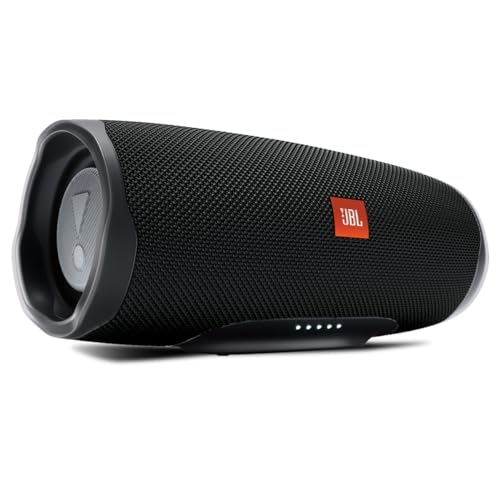
The fundamental difference between these speakers becomes apparent the moment you see them. The Charge 4 maintains the classic cylindrical form factor that's defined portable speakers for over a decade. At 8.7 inches long and weighing just 2.12 pounds, it's genuinely portable—you can throw it in a backpack or carry it one-handed without fatigue.
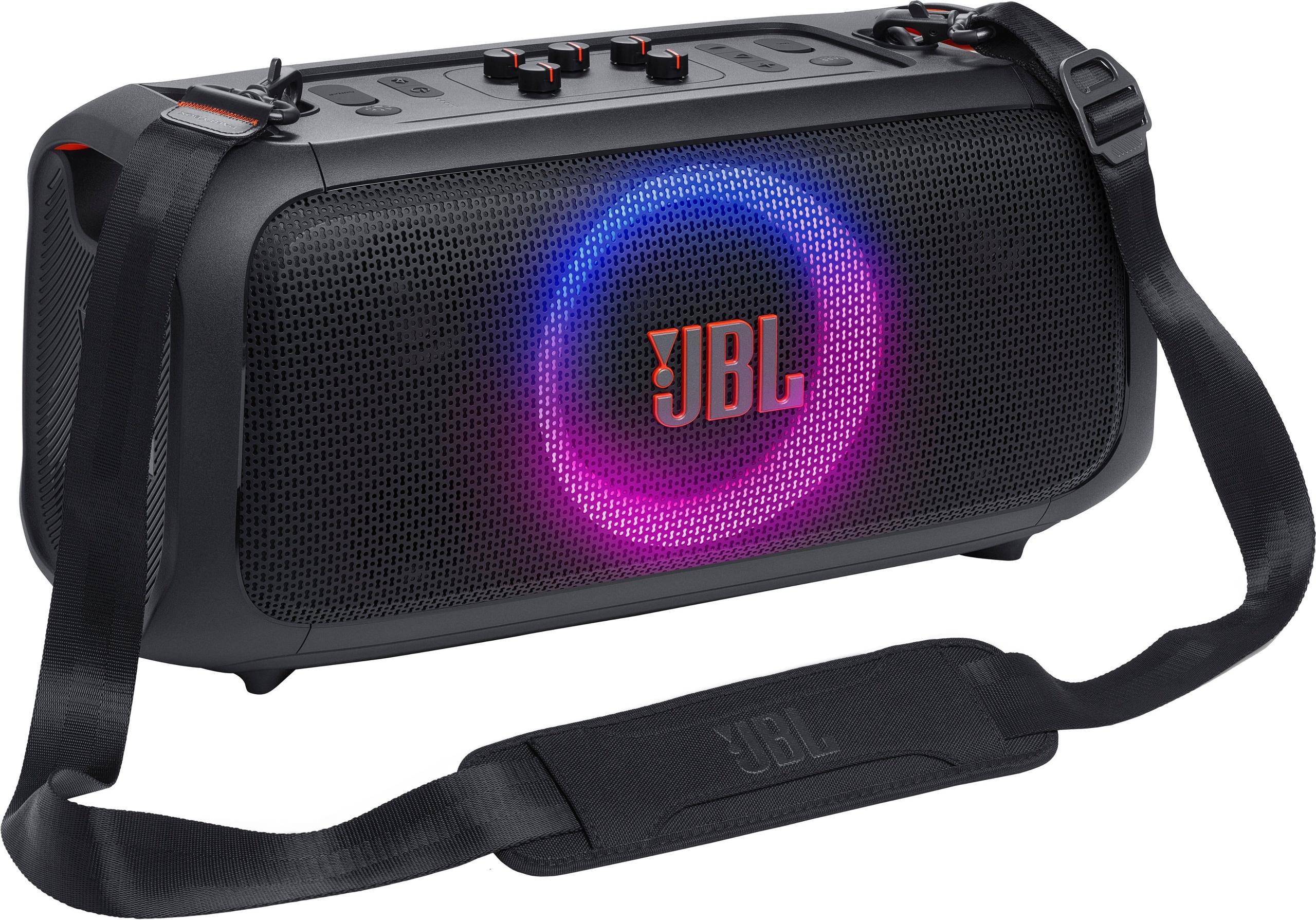
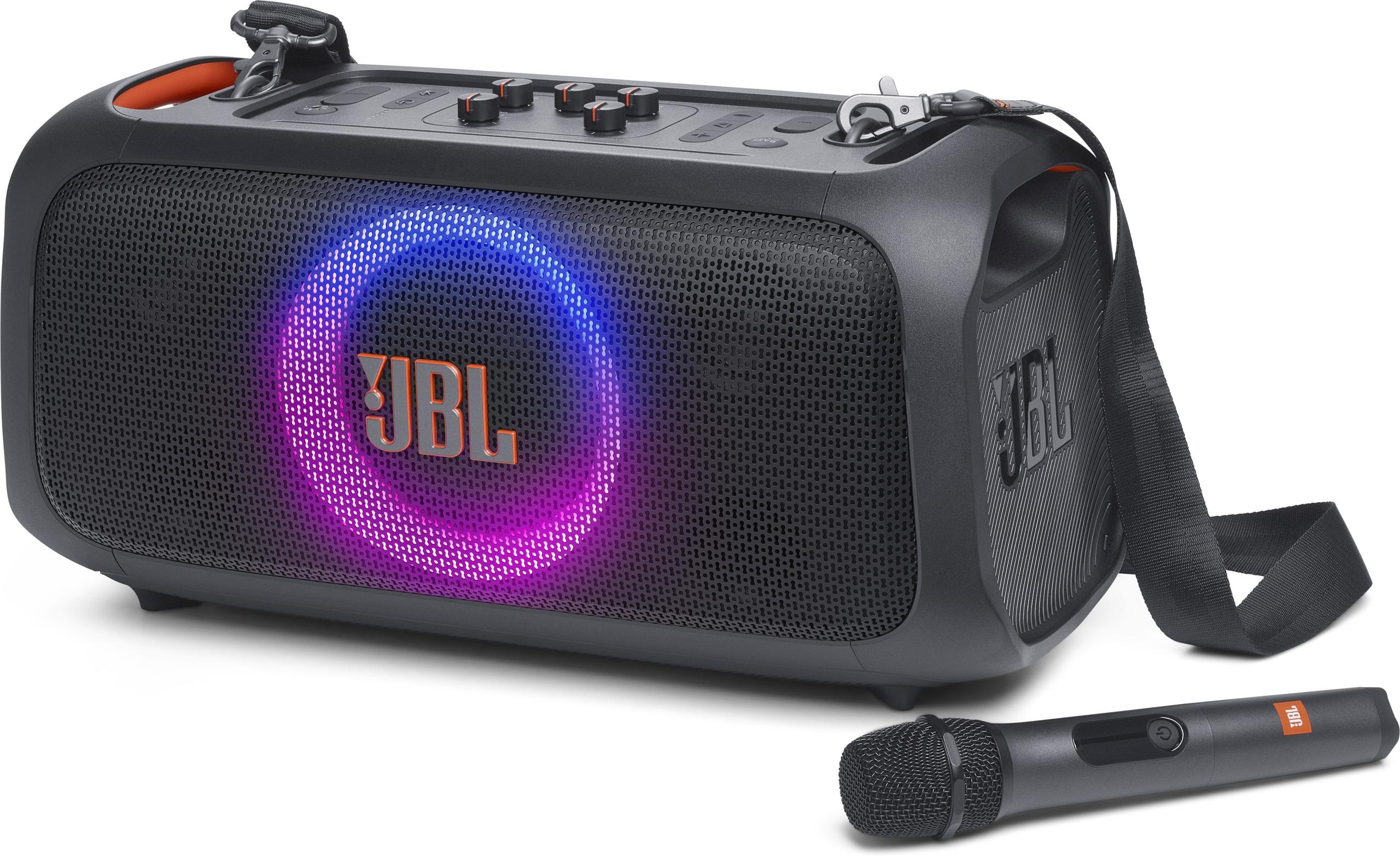
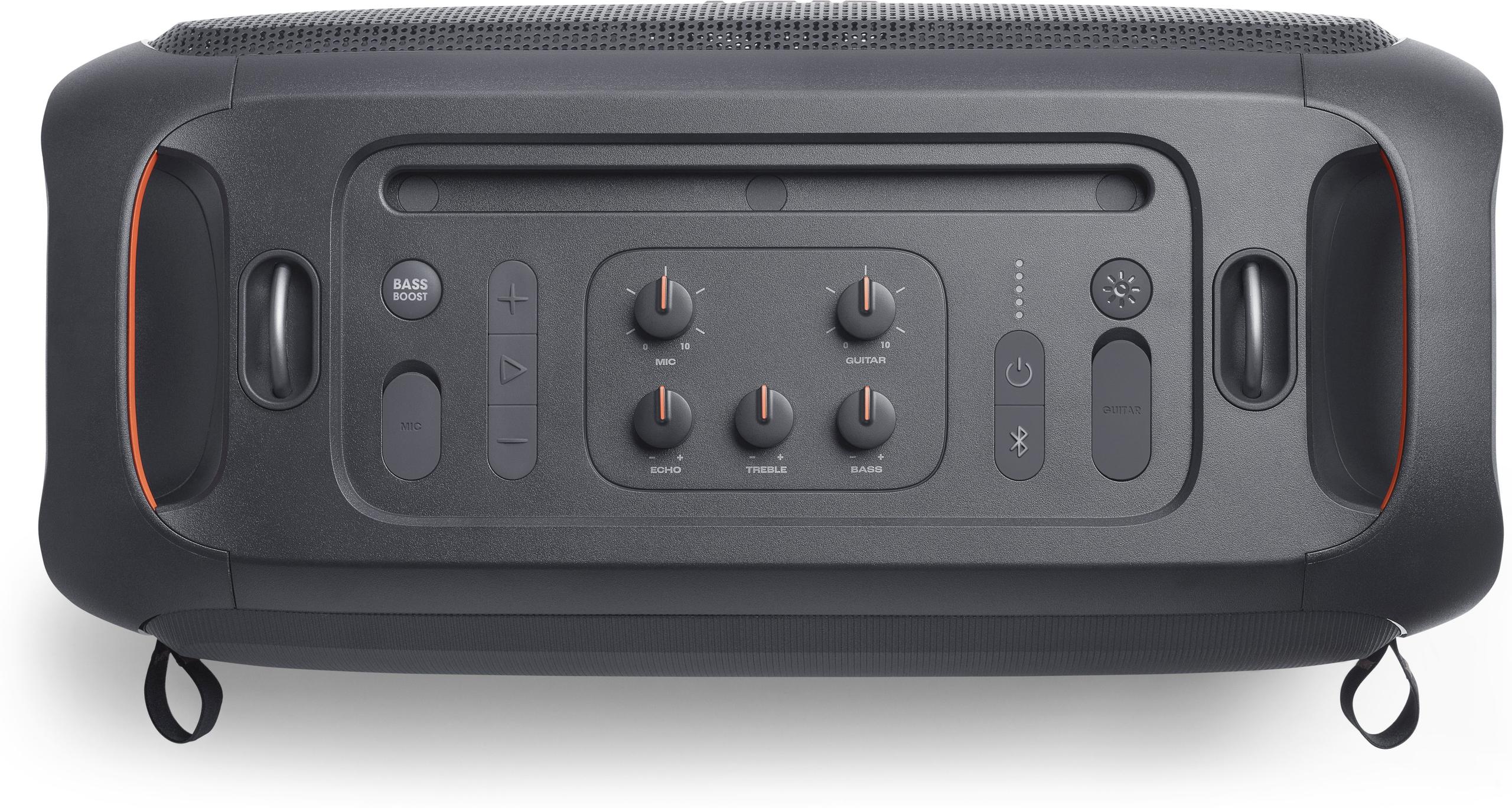
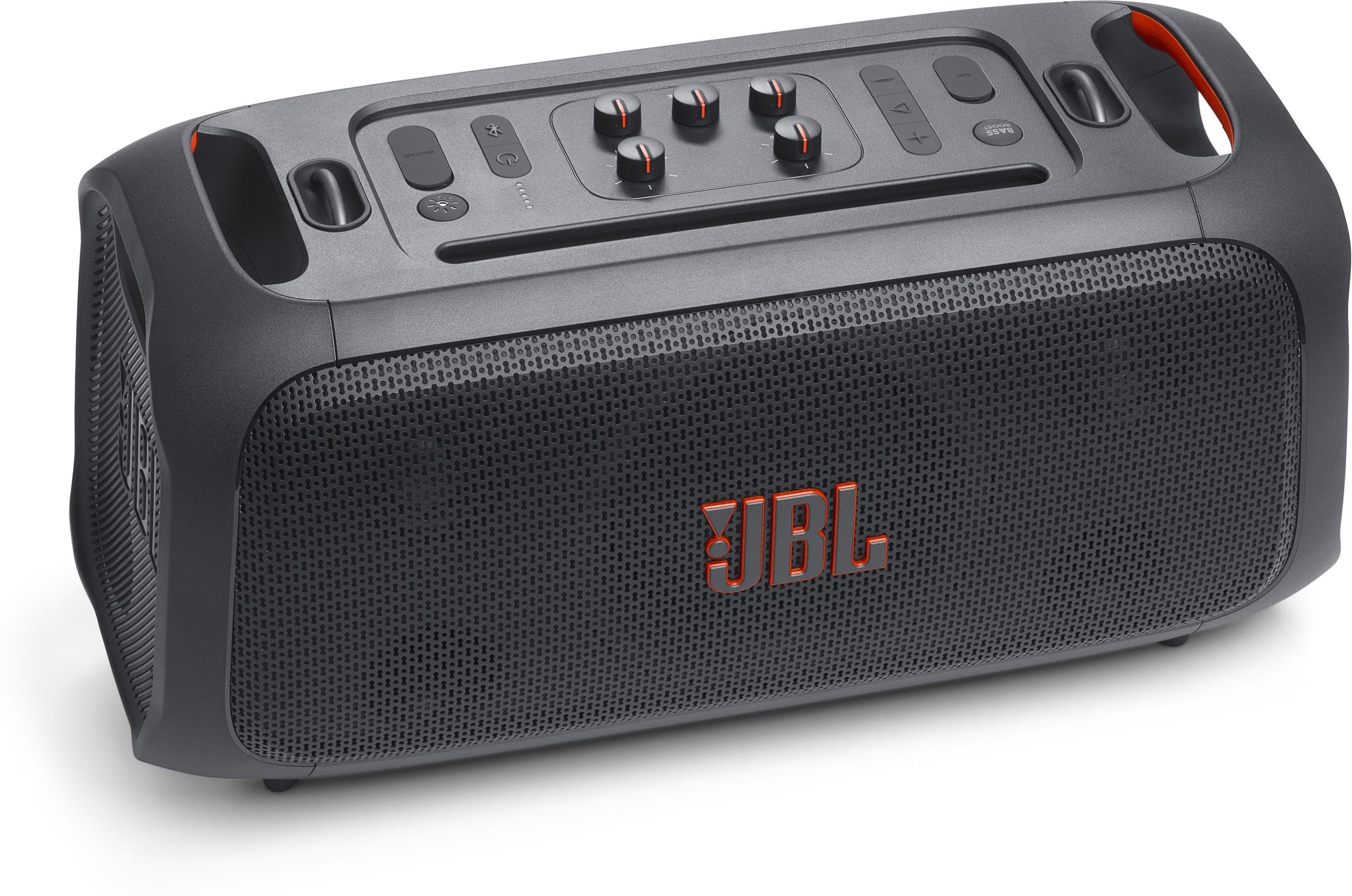
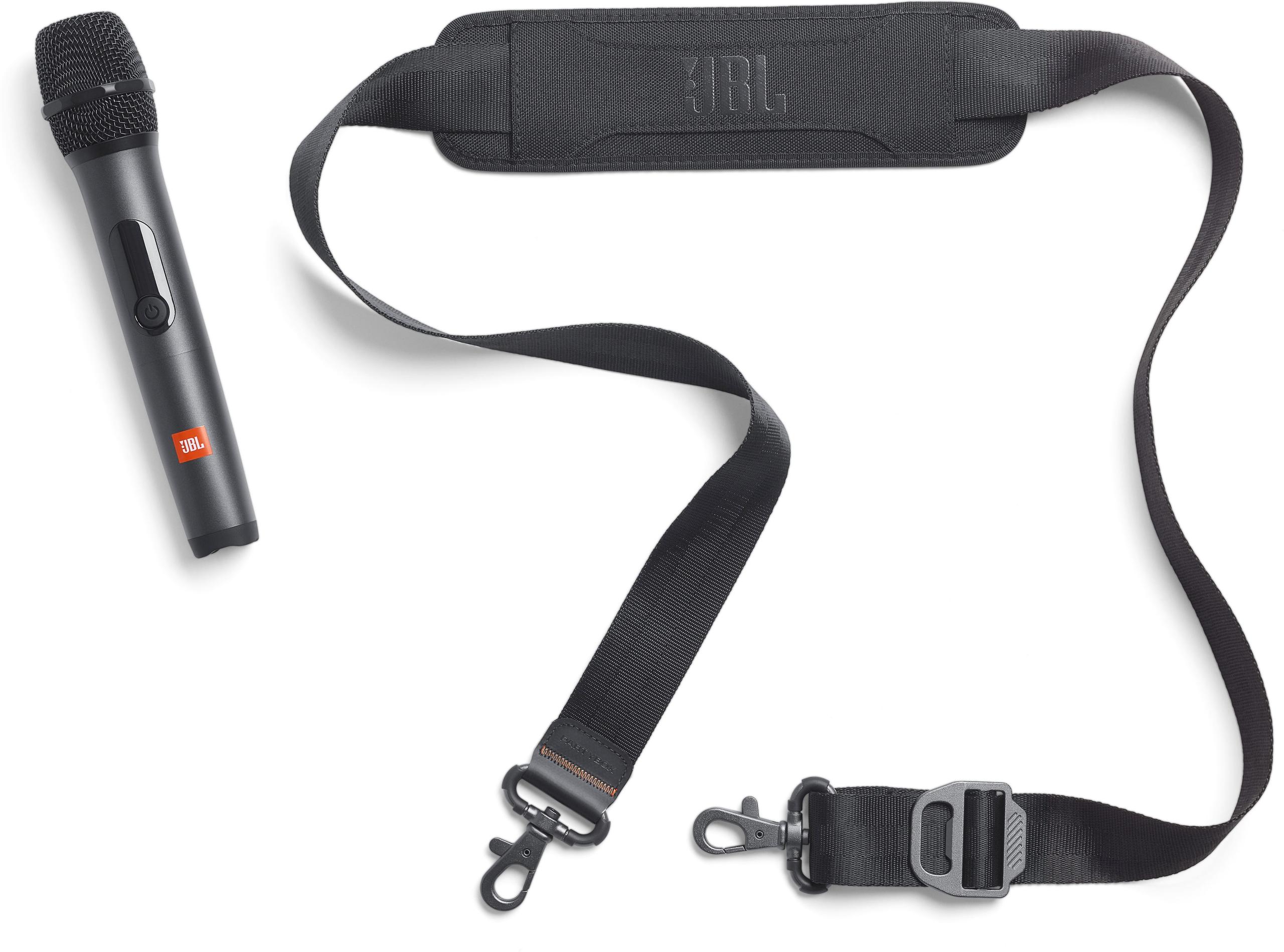
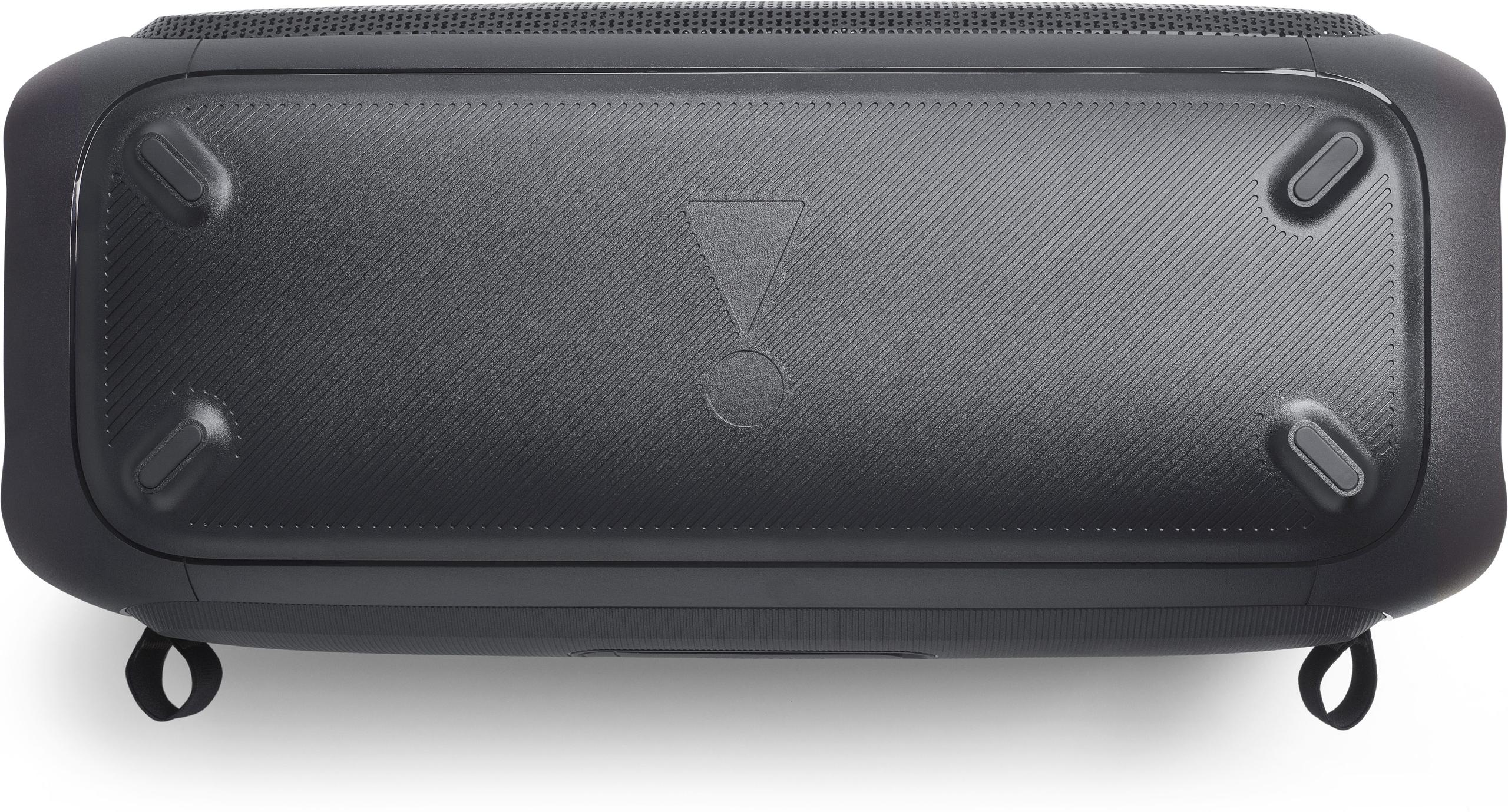
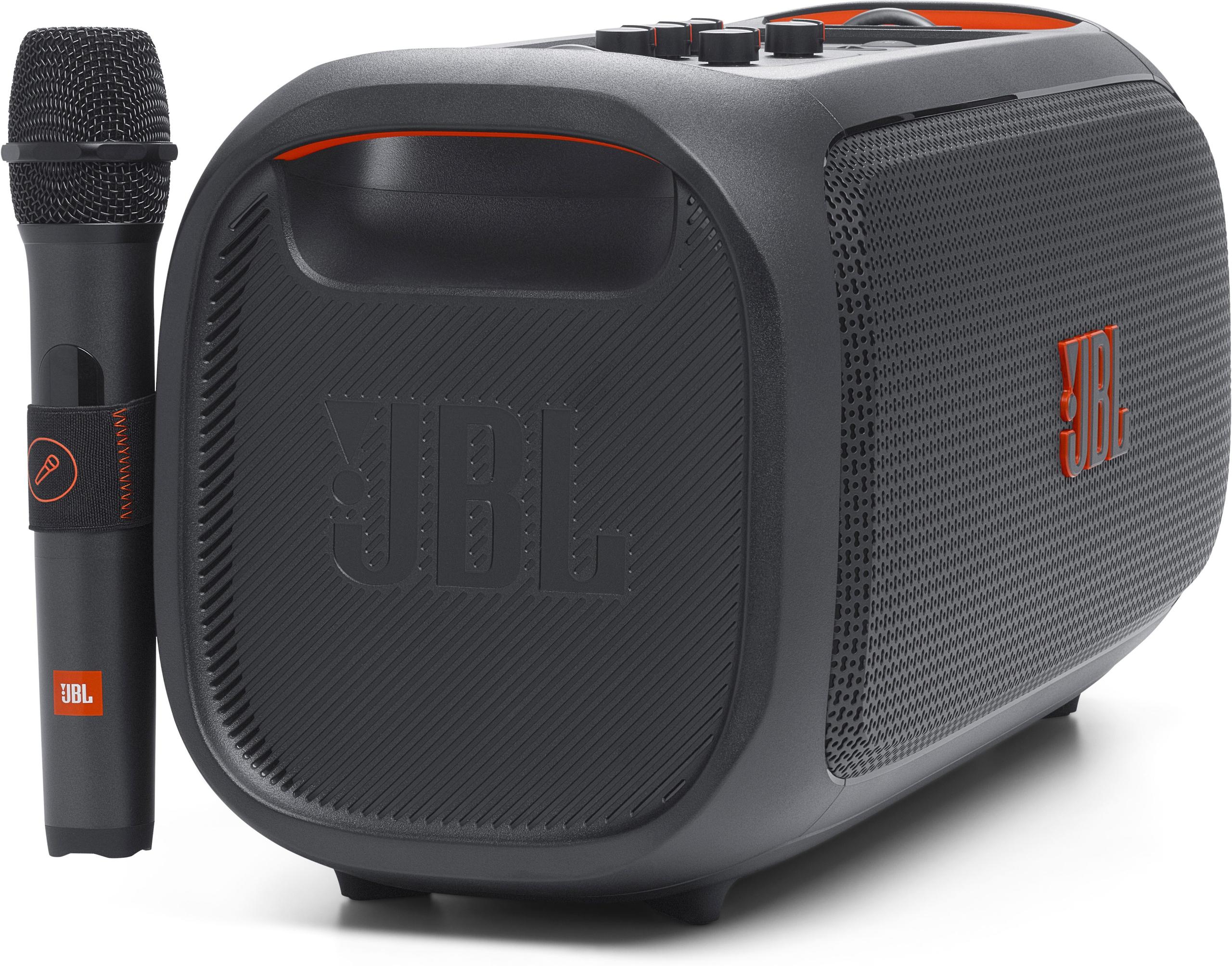
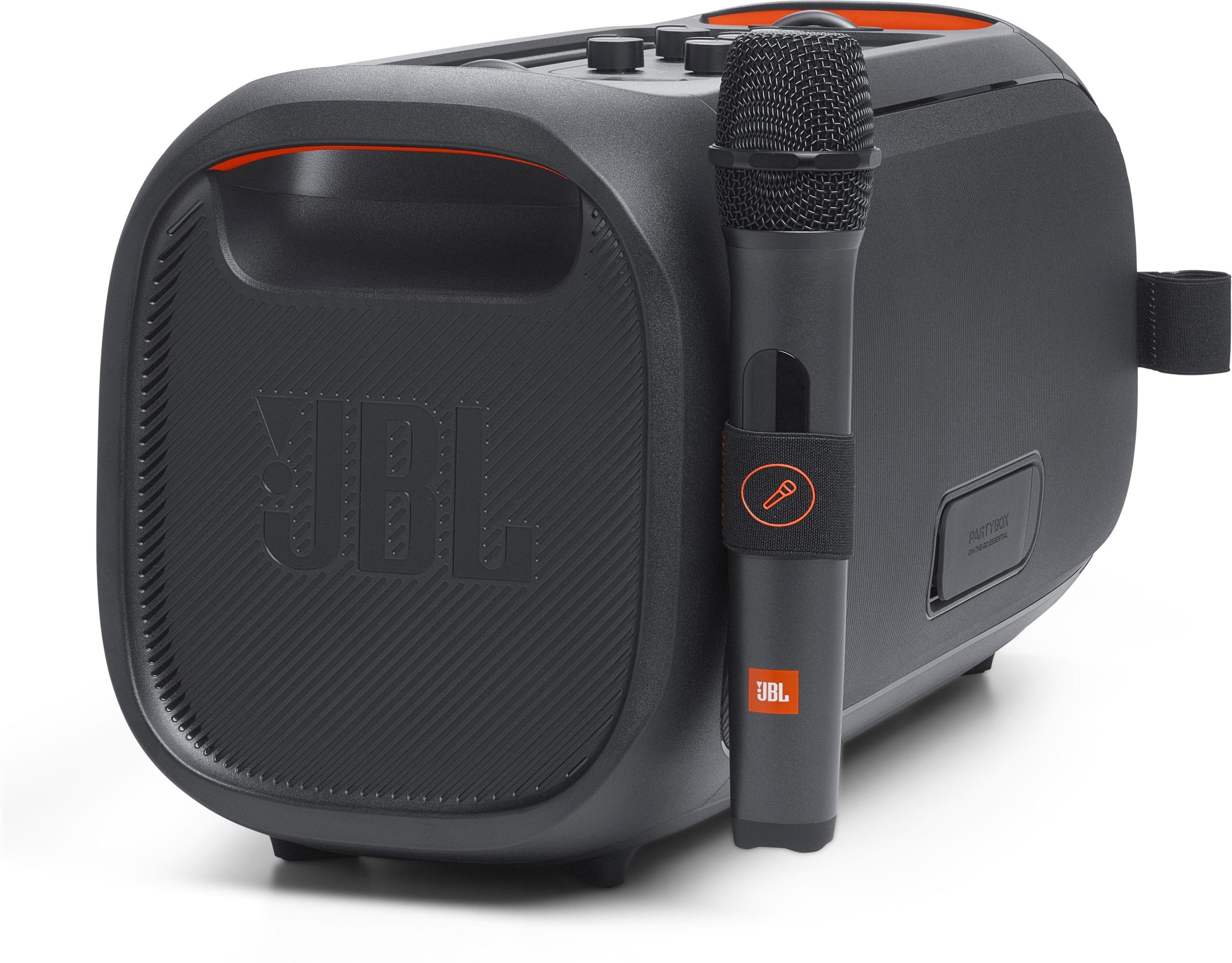
The PartyBox On-The-Go Essential, despite its "portable" designation, weighs 13.4 pounds and measures 19.3 inches wide. That's boom box territory, designed to be transported rather than carried casually. The included padded shoulder strap and built-in bottle opener (a clever touch) acknowledge this reality—it's built for party transportation, not hiking trails.
This size difference isn't arbitrary; it reflects each speaker's core mission. Compact speakers must make acoustic compromises to achieve portability, while larger enclosures can house more powerful drivers and larger batteries for different performance priorities.
The power difference between these speakers tells the story immediately. The Charge 4 delivers 30 watts RMS (Root Mean Square—the actual continuous power output, not peak marketing numbers), while the PartyBox pushes 100 watts through its larger driver array.
This isn't just about getting louder, though the PartyBox definitely wins that contest. The additional power enables the PartyBox to maintain audio quality at higher volumes where the Charge 4 begins to compress and distort. When you're trying to fill a large outdoor space or compete with ambient party noise, this difference becomes crucial.
However, power alone doesn't determine audio quality. The Charge 4 uses its 30 watts more efficiently, delivering cleaner sound at moderate volumes that suit most personal and small group listening scenarios.
The Charge 4 employs a sophisticated acoustic design within its compact form factor. Its racetrack-shaped woofer (50mm x 90mm) maximizes cone area within the cylindrical housing, while dual passive radiators (essentially speakers without magnets that vibrate sympathetically) enhance bass response without requiring additional power or space.
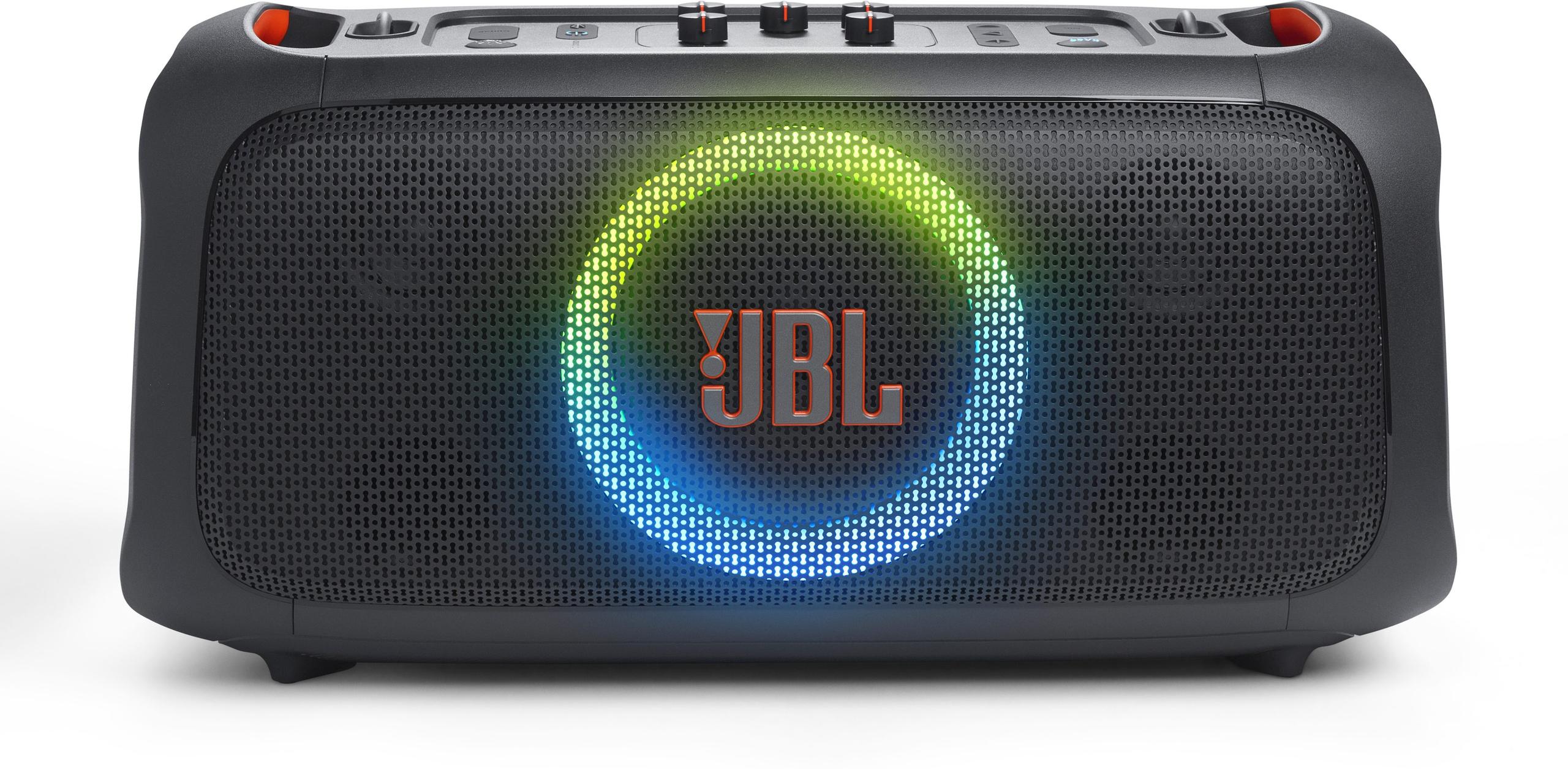
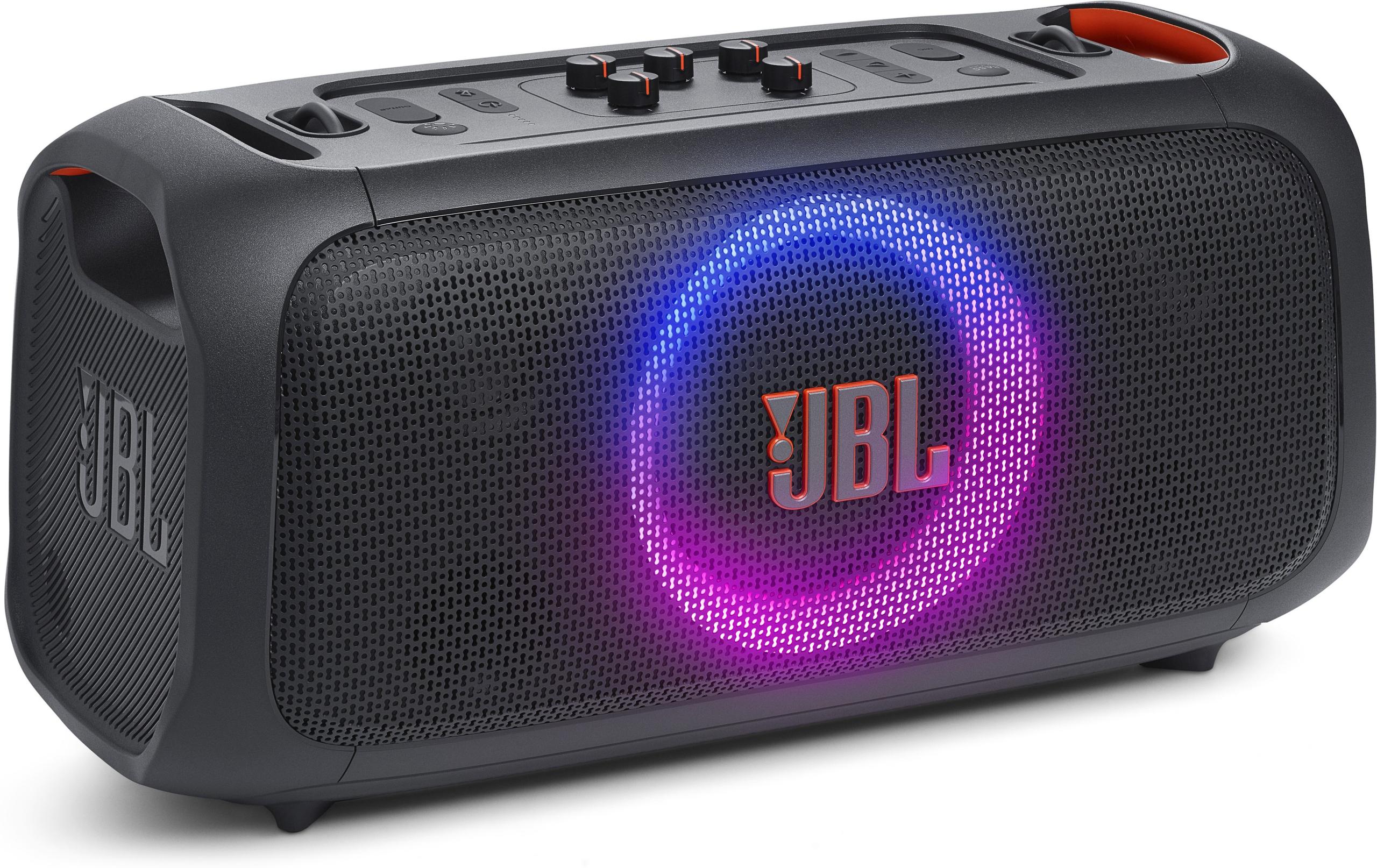
The PartyBox takes a more conventional approach with a dedicated 5.25-inch woofer for bass and midrange, plus dual 1.75-inch tweeters for higher frequencies. This separation allows each driver to specialize in its optimal frequency range, potentially delivering cleaner sound across the spectrum.
Based on extensive user feedback and expert reviews, the Charge 4 delivers a well-balanced sound signature that works well across genres. Its frequency response of 60Hz to 20kHz covers most audible music, though it lacks the deep sub-bass that makes electronic music and hip-hop truly thump. Vocals and instruments sit prominently in the mix, making it excellent for podcasts, acoustic music, and general listening.
The PartyBox leans heavily into bass-forward tuning optimized for party music. With a frequency response extending down to 50Hz and multiple Bass Boost modes, it's engineered to make dance music, hip-hop, and electronic genres sound exciting and energetic. However, user reviews suggest this bass emphasis can sometimes overwhelm vocals and midrange detail at higher volumes.
Here's where the differences become most apparent. The Charge 4 is essentially a mono speaker—it uses a single driver firing forward, so there's no stereo separation. Music sounds like it's coming from a point source rather than spreading across a soundstage. You can achieve true stereo by pairing two Charge 4 units, but that requires buying two speakers.
The PartyBox provides genuine stereo separation with its dual tweeter arrangement, creating a wider soundstage that's more engaging for stationary listening. This makes it notably better for scenarios where you're sitting and actively listening to music, rather than using it as background audio.
Perhaps no specification difference is more dramatic than battery life. The Charge 4 claims up to 20 hours of playback, and real-world testing by users consistently achieves 13-15 hours depending on volume levels and music content. This exceptional endurance comes from efficient amplifier design and a substantial 7,500mAh battery pack.
The PartyBox manages just 6 hours of playback from its smaller 2,500mAh battery. This dramatic difference reflects the power demands of driving 100-watt amplification plus the integrated light show. For context, that's less than a quarter of the Charge 4's endurance.
This battery difference fundamentally shapes how you can use each speaker. The Charge 4 works for multi-day camping trips, all-day beach sessions, or week-long business travel without charging anxiety. The PartyBox requires planning around its limited endurance—you'll need access to power outlets for longer events or the discipline to manage party durations.
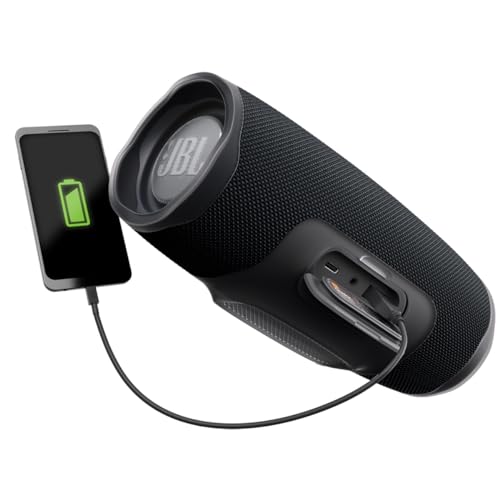
The Charge 4 includes a feature that's become invaluable for outdoor users: powerbank capability. Its USB-A output can charge smartphones, tablets, or other devices at 5V/2A—roughly the same speed as most wall chargers. This transforms the speaker from just an audio device into a crucial piece of outdoor gear that can keep your phone alive during extended adventures.
The PartyBox offers no device charging capability, focusing its battery entirely on audio and visual performance. For party scenarios where AC power is typically available, this isn't problematic, but it limits the speaker's utility for extended outdoor use.
Weather resistance represents another crucial difference that impacts where and how you can use each speaker. The Charge 4 carries an IPX7 rating, meaning it can survive full submersion in up to one meter of water for 30 minutes. This isn't just marketing—users regularly report their Charge 4 speakers surviving pool falls, beach waves, and heavy rain without damage.
The PartyBox offers only IPX4 protection, which guards against splashing water from any direction but can't handle submersion or sustained water exposure. This limits its outdoor utility significantly—you wouldn't want to risk it near pools or in unpredictable weather.
The build quality approaches also differ meaningfully. The Charge 4 uses a combination of durable fabric mesh and rubberized end caps designed to absorb impacts and resist wear. Its compact form factor makes it less vulnerable to damage from drops or rough handling.
The PartyBox relies primarily on plastic construction with protective corner guards. While adequate for its intended party use, it's not designed for the kind of adventure abuse that outdoor speakers often endure.
Both speakers use Bluetooth 4.2, which is somewhat dated by current standards but proves reliable in practice. The Charge 4 can pair with two devices simultaneously, allowing seamless switching between users' music libraries—a practical feature for social listening.
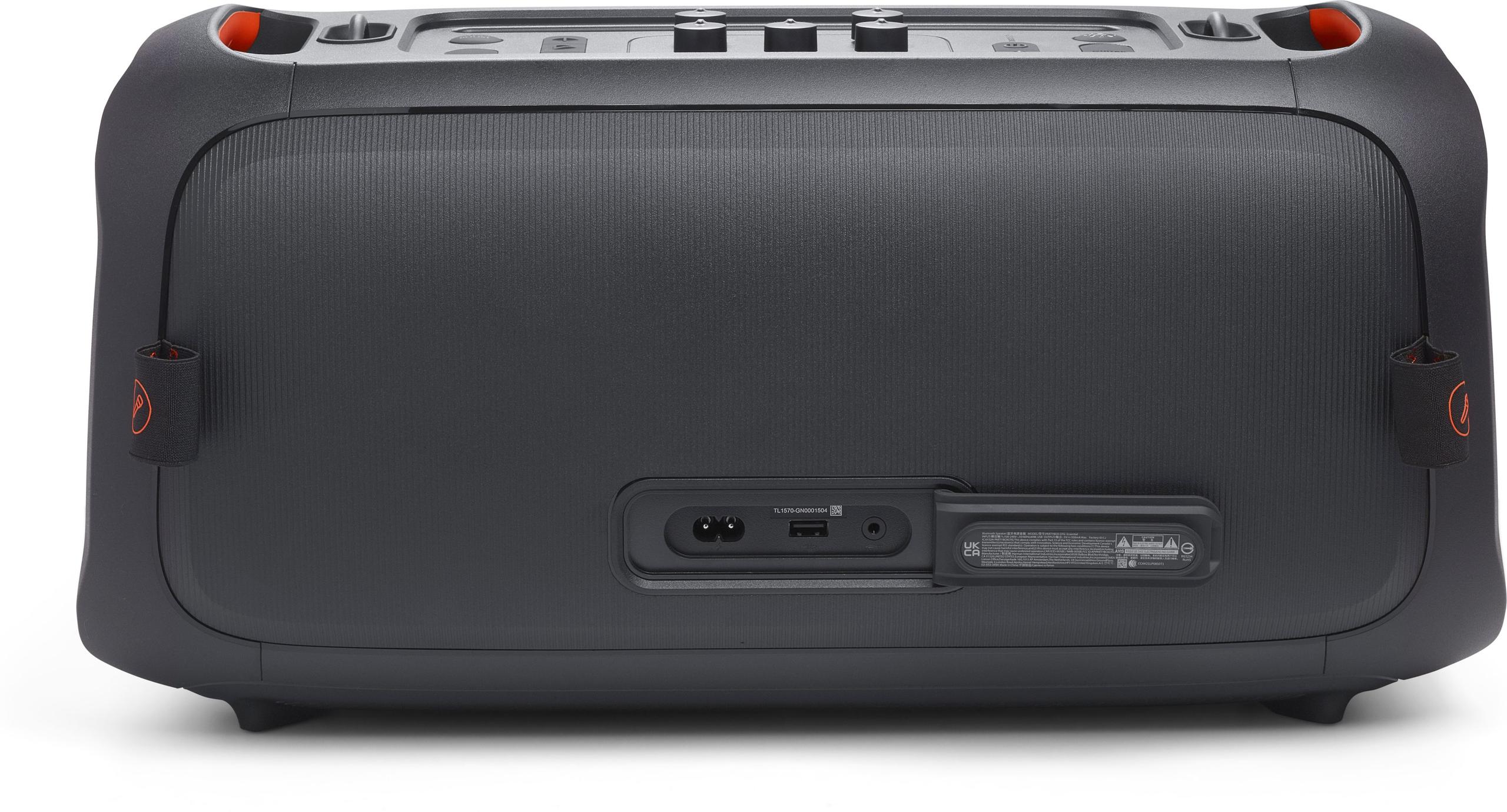
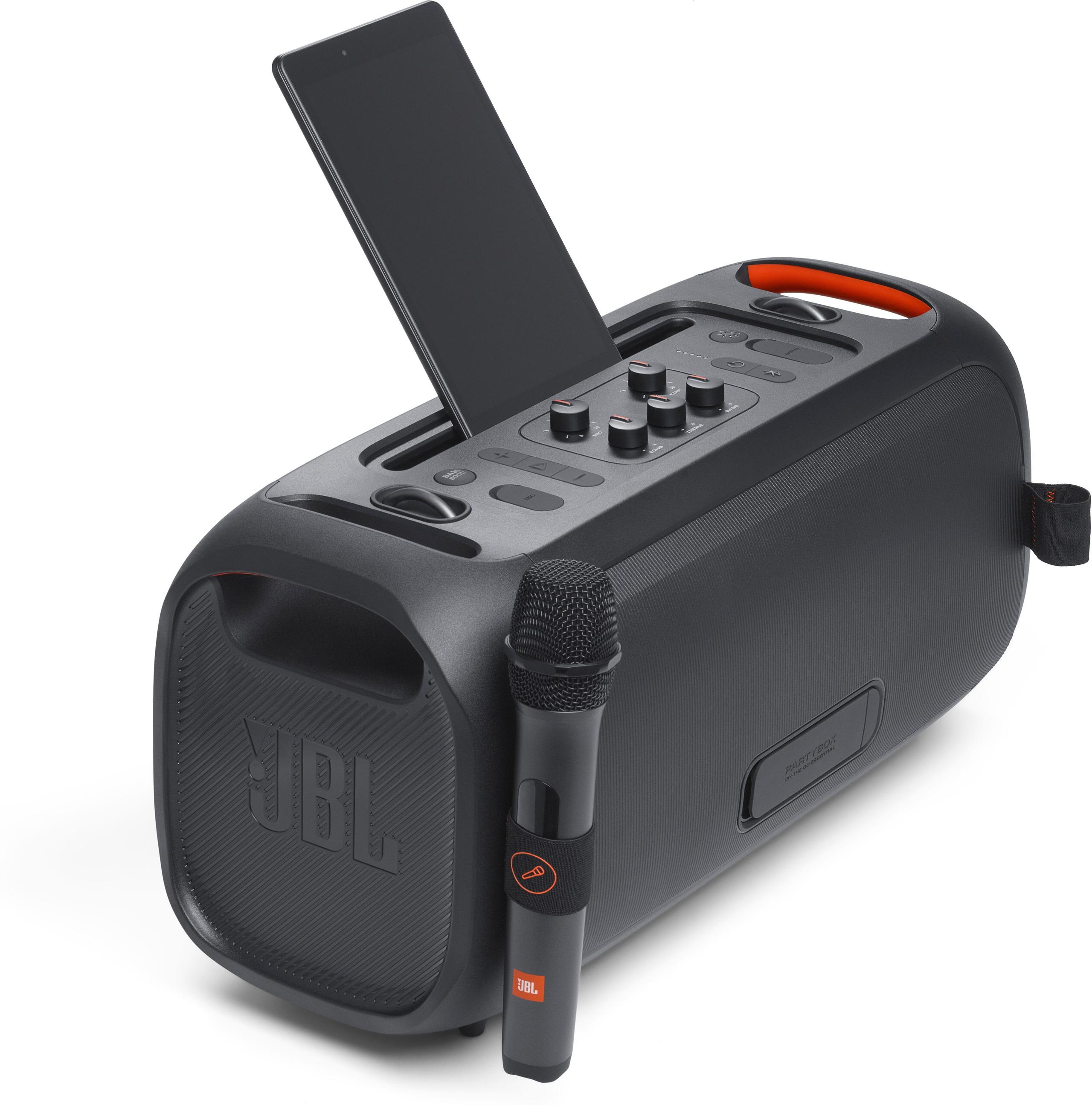
The PartyBox offers more diverse input options, including 3.5mm AUX, USB drive support, guitar input (1/4-inch), and microphone input. This versatility makes it genuinely useful for live performance scenarios where musicians want to play along with backing tracks or add vocal accompaniment.
The Charge 4 supports JBL Connect+, enabling wireless linking with over 100 compatible JBL speakers for massive sound systems. While most users won't approach anywhere near 100 speakers, the ability to pair several Charge 4 units for larger gatherings adds significant versatility.
The PartyBox uses True Wireless Stereo (TWS) pairing, allowing connection with another compatible PartyBox for enhanced volume and true stereo separation across a wider area.
The PartyBox On-The-Go Essential includes features that the Charge 4 simply can't match. The integrated LED light show synchronizes with music, creating visual excitement that transforms any space into a party environment. Multiple preset patterns keep the visual interest high, and the lights respond dynamically to bass hits and musical changes.
The included wireless microphone turns the speaker into a complete karaoke system. While the microphone quality won't rival professional equipment, it's perfectly adequate for party singing and enables features like vocal echo and volume adjustment independent of the music track.
The guitar input opens possibilities for live performance that most portable speakers can't accommodate. Musicians can plug directly into the speaker, blend their instrument with backing tracks, and perform in venues without dedicated sound systems.
These entertainment features justify the PartyBox's larger size and shorter battery life for users who regularly host gatherings or want their speaker to serve as the center of social activities.
The Charge 4 excels in scenarios where reliability and endurance matter most. Camping trips, beach days, poolside lounging, and hiking adventures all favor its combination of weather resistance, extended battery life, and compact portability. The powerbank feature becomes invaluable when you're away from civilization—your speaker keeps playing while keeping your navigation and communication devices charged.
Its balanced sound signature works well for diverse music tastes and spoken content like podcasts or audiobooks. While it won't provide the chest-thumping bass that some users crave, its clarity and detail make it engaging for extended listening sessions.
The PartyBox transforms social gatherings in ways that traditional speakers simply can't. The combination of high volume capability, bass boost modes, synchronized lighting, and karaoke functionality creates an immersive party atmosphere that encourages participation and excitement.
For backyard parties, indoor gatherings, or events where AC power is available, the PartyBox's limited battery life becomes manageable. Its ability to fill large spaces with energetic sound makes it genuinely useful for occasions where the Charge 4 would struggle to compete with ambient noise and conversation.
Neither speaker is optimized for home theater use, but the PartyBox comes closer due to its stereo separation and higher volume capability. Its bass-forward tuning can add excitement to action movies, though serious home theater enthusiasts should consider dedicated soundbars or speaker systems.
The Charge 4 works adequately for casual TV watching or laptop audio enhancement, but its mono output and modest volume limit its effectiveness for cinematic experiences.
At the time of writing, both speakers occupy different value propositions within JBL's lineup. The Charge 4 represents traditional portable speaker value—you're paying for audio quality, battery efficiency, and rugged construction that will serve you well across diverse scenarios for years.
The PartyBox packages entertainment features that would cost significantly more if purchased separately. A decent wireless microphone alone costs $50-75, and adding lighting effects to any sound system typically requires additional equipment and complexity.
Consider the total cost of ownership beyond initial purchase price. The Charge 4's efficient power consumption and durable construction suggest longer lifespan and lower operating costs. The PartyBox may require more frequent charging cycles and careful handling to maintain its entertainment features over time.
After evaluating extensive user feedback, expert reviews, and real-world performance data, the decision framework becomes clear:
Choose the JBL Charge 4 if:
Choose the PartyBox On-The-Go Essential if:
The fundamental question isn't which speaker is objectively better—they're optimized for entirely different use cases. The Charge 4 excels as a versatile daily companion that handles diverse scenarios reliably. The PartyBox specializes in social entertainment, trading versatility for party-specific capabilities.
Most buyers will find their decision comes down to their primary use case. If you want one speaker that handles everything from solo listening to outdoor adventures, the Charge 4 offers broader utility. If you're looking for a speaker that turns gatherings into events, the PartyBox delivers features you can't get elsewhere at this price point.
Both speakers represent solid engineering within their categories, but they serve fundamentally different lifestyles. Choose based on how you actually plan to use your speaker most often, rather than trying to find one device that does everything perfectly.
| JBL Charge 4 | JBL PartyBox On-The-Go Essential |
|---|---|
| Power Output - Determines maximum volume and room-filling capability | |
| 30W RMS (suitable for personal/small group listening) | 100W (designed for parties and large outdoor spaces) |
| Battery Life - Critical for extended use without charging | |
| Up to 20 hours (real-world: 13-15 hours at moderate volume) | 6 hours maximum (limited by high power draw and light show) |
| Water Resistance - Protection level for outdoor and poolside use | |
| IPX7 (fully submersible up to 1 meter for 30 minutes) | IPX4 (splash-resistant only, not suitable for pool/beach use) |
| Size and Weight - Impacts true portability and transport ease | |
| 8.7" x 3.7" x 3.7", 2.12 lbs (genuinely portable) | 19.3" x 9.6" x 9.0", 13.4 lbs (transportable with shoulder strap) |
| Audio Configuration - Affects sound quality and stereo imaging | |
| Mono output with racetrack woofer + dual passive radiators | Stereo with 5.25" woofer + dual 1.75" tweeters |
| Frequency Response - Range of bass, mids, and treble reproduction | |
| 60Hz - 20kHz (balanced but limited deep bass) | 50Hz - 20kHz (extended bass with Bass Boost modes) |
| Connectivity Options - Available input methods for different audio sources | |
| Bluetooth 4.2, 3.5mm AUX, USB-C charging | Bluetooth 4.2, AUX, USB drive, guitar input, mic input |
| Special Features - Unique capabilities that add value beyond basic audio | |
| Powerbank function (charges devices), JBL Connect+ pairing | LED light show, wireless microphone included, karaoke ready |
| Charging Time - How long to reach full battery from empty | |
| 4 hours (USB-C) | 3.5 hours (AC power cord included) |
| Multi-Speaker Pairing - Ability to connect with additional speakers | |
| JBL Connect+ (links with 100+ compatible JBL speakers) | True Wireless Stereo (pairs with another PartyBox unit) |
| Best Use Cases - Scenarios where each speaker excels | |
| Outdoor adventures, daily listening, travel, pool/beach use | House parties, karaoke nights, outdoor gatherings, live performance |
The JBL PartyBox On-The-Go Essential is significantly better for outdoor parties due to its 100W power output compared to the JBL Charge 4's 30W. The PartyBox can fill large outdoor spaces with sound, includes a synchronized light show for ambiance, and comes with a wireless microphone for karaoke. However, it only offers IPX4 splash resistance, so avoid use near pools or in heavy rain.
The JBL Charge 4 provides up to 20 hours of battery life (13-15 hours in real-world use), while the JBL PartyBox On-The-Go Essential only lasts 6 hours maximum. The dramatic difference is due to the PartyBox's higher power consumption from its 100W amplification and LED light show features.
The JBL Charge 4 is much more waterproof with an IPX7 rating, meaning it can be fully submerged in water up to 1 meter deep for 30 minutes. The JBL PartyBox On-The-Go Essential only has IPX4 splash resistance, making it unsuitable for poolside use or beach environments where water submersion might occur.
Only the JBL PartyBox On-The-Go Essential is designed for karaoke, including a wireless microphone in the box and dedicated microphone inputs with vocal controls. The JBL Charge 4 has no microphone capabilities and is not suitable for karaoke use.
The JBL Charge 4 is far more portable, weighing just 2.12 pounds and measuring 8.7 inches long, easily fitting in backpacks or luggage. The JBL PartyBox On-The-Go Essential weighs 13.4 pounds and measures 19.3 inches wide, requiring the included shoulder strap for transport and is better suited for car transport than walking.
Neither speaker is ideal for home theater, but the JBL PartyBox On-The-Go Essential is better suited due to its stereo separation, higher volume capability, and bass-forward sound signature that can enhance action movies. The JBL Charge 4 provides mono sound and limited volume for cinematic experiences.
The JBL PartyBox On-The-Go Essential gets significantly louder with its 100W power output compared to the JBL Charge 4's 30W. The PartyBox can fill large rooms and outdoor spaces, while the Charge 4 is better suited for personal and small group listening environments.
Only the JBL Charge 4 can charge your phone, featuring a USB-A output that works as a powerbank to charge smartphones and tablets. The JBL PartyBox On-The-Go Essential has no device charging capability and focuses its battery entirely on audio performance.
Sound quality depends on your needs. The JBL Charge 4 offers more balanced, detailed sound suitable for various music genres and maintains clarity at moderate volumes. The JBL PartyBox On-The-Go Essential emphasizes bass and volume for party music but may experience compression at maximum levels.
Only the JBL PartyBox On-The-Go Essential features an integrated LED light show that synchronizes with your music, offering multiple preset patterns to create party ambiance. The JBL Charge 4 has no lighting features and focuses purely on audio performance.
The JBL Charge 4 is much better for camping due to its 20-hour battery life, IPX7 waterproof rating, compact portability, and powerbank function to charge essential devices. The JBL PartyBox On-The-Go Essential's 6-hour battery life and limited water resistance make it impractical for extended outdoor adventures.
Both speakers offer multi-speaker connectivity but through different systems. The JBL Charge 4 uses JBL Connect+ to link with over 100 compatible JBL speakers, while the JBL PartyBox On-The-Go Essential uses True Wireless Stereo to pair with another PartyBox unit for enhanced stereo sound and volume.
We've done our best to create useful and informative comparisons to help you decide what product to buy. Our research uses advanced automated methods to create this comparison and perfection is not possible - please contact us for corrections or questions. These are the sites we've researched in the creation of this article: rtings.com - whathifi.com - whathifi.com - soundguys.com - soundguys.com - streamtechreviews.com - youtube.com - versus.com - applevis.com - versus.com - jbl.com - jbl.com - walmart.com - comparisontabl.es - harmanaudio.com - manuals.plus - jbl.com.sg - jbl.com - mm.jbl.com - bestbuy.com - newpower99.com - forums.woot.com - jbl.com - pcrichard.com - jbl.com - bestbuy.com - verizon.com - greentoe.com - youtube.com - listenup.com - hypermicro.com - jbl.com - mm.jbl.com

Privacy Policy
Terms and Conditions - Affiliate Policy
Home Security
© Copyright 2008-2026.
11816 Inwood Rd #1211, Dallas, TX 75244