

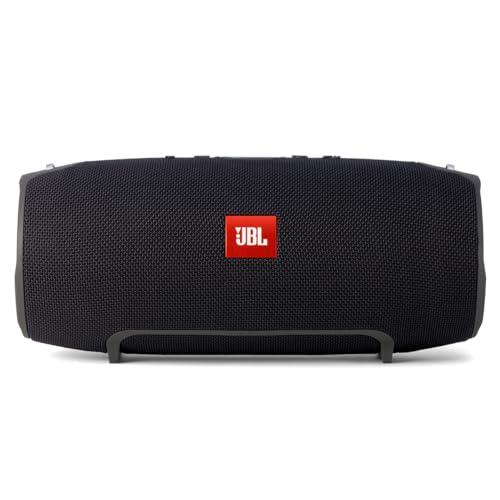
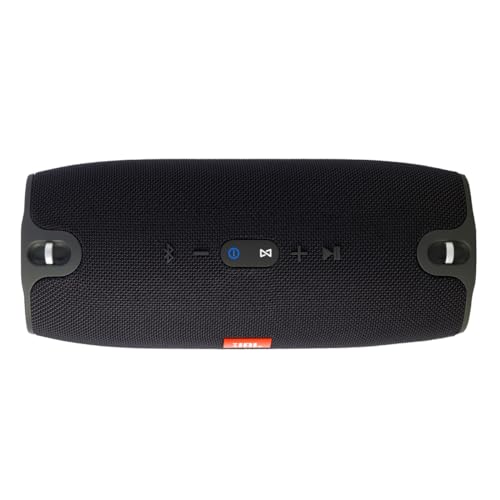
Choosing between the JBL Charge 4 and Marshall Woburn III is like comparing a Swiss Army knife to a high-end kitchen appliance – both are excellent tools, but they're designed for completely different purposes. This comparison might seem unusual at first since these speakers target entirely different markets, but many people find themselves torn between portable convenience and home audio quality when shopping for Bluetooth speakers.
The Bluetooth speaker market splits into two main camps: portable speakers designed for on-the-go use and stationary speakers built for home audio excellence. This division reflects fundamental trade-offs in audio engineering – you simply can't pack the power and acoustic performance of a large home speaker into a portable, battery-powered device without major compromises.
Portable speakers like the JBL Charge 4 prioritize battery life, durability, and convenience. They're engineered to withstand drops, splashes, and temperature extremes while delivering respectable sound quality from compact drivers. Home speakers like the Marshall Woburn III focus purely on audio performance, using larger drivers, more powerful amplifiers, and sophisticated acoustic tuning to create room-filling sound.
The key considerations when choosing between these categories include how and where you'll use the speaker most often, whether portability matters more than maximum sound quality, and your budget constraints. Understanding these trade-offs helps explain why these two speakers exist in completely different price ranges and serve distinct user needs.
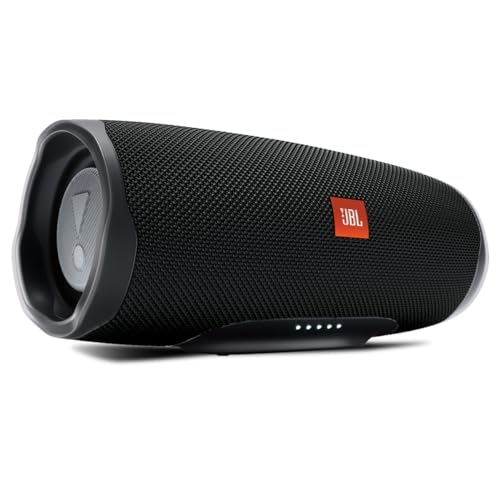
The JBL Charge 4 launched in 2018 as part of JBL's popular Charge series, which has become synonymous with rugged portable audio. JBL built this speaker during the height of the "adventure audio" trend, when outdoor activities and social gatherings drove demand for durable, long-lasting portable speakers. Since its 2018 release, the Charge series has evolved to include the Charge 5 (2021) and Charge 6 (2024), but the Charge 4 remains popular due to its proven reliability and value proposition.
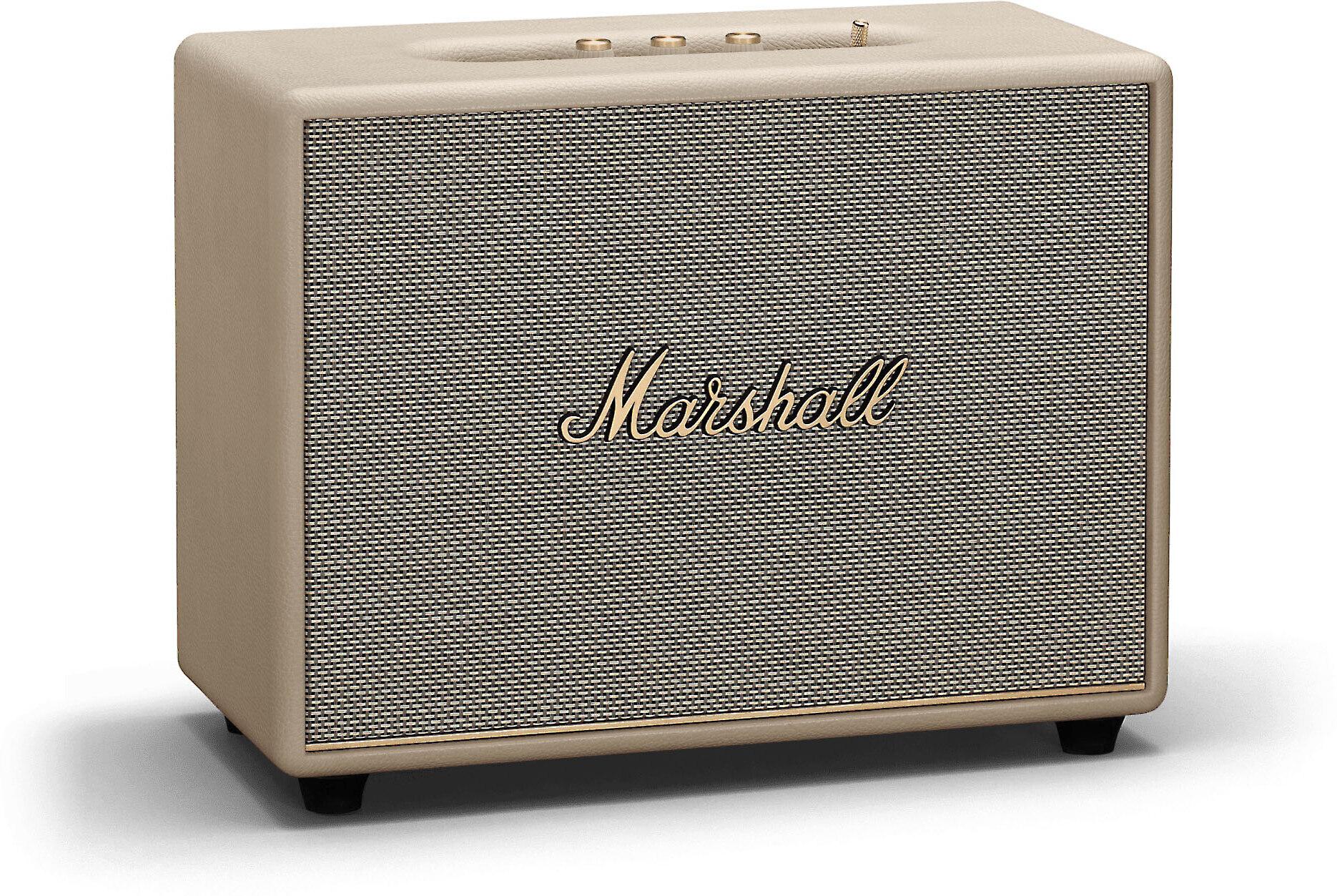
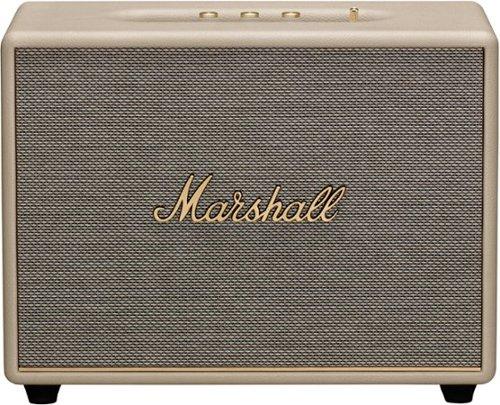
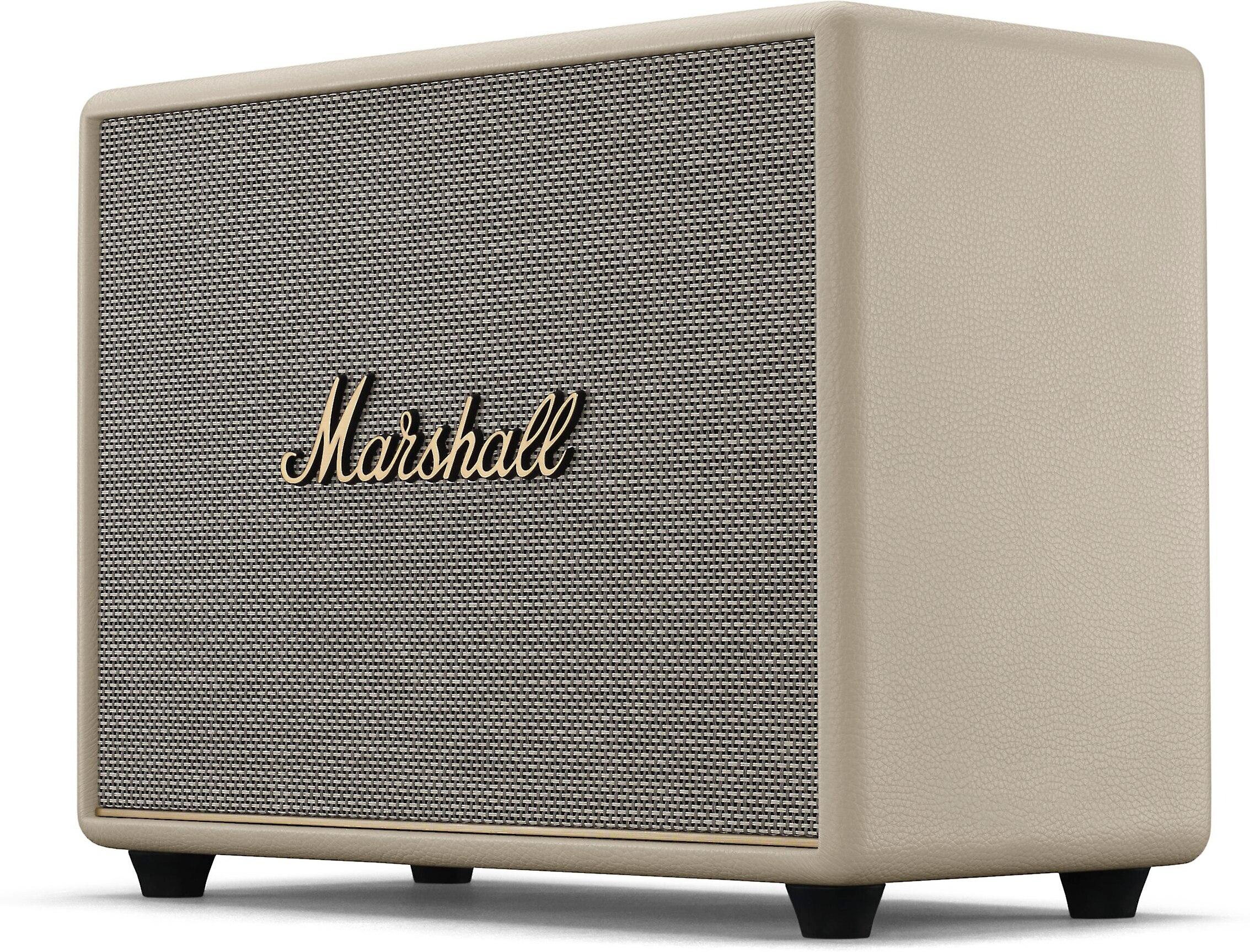
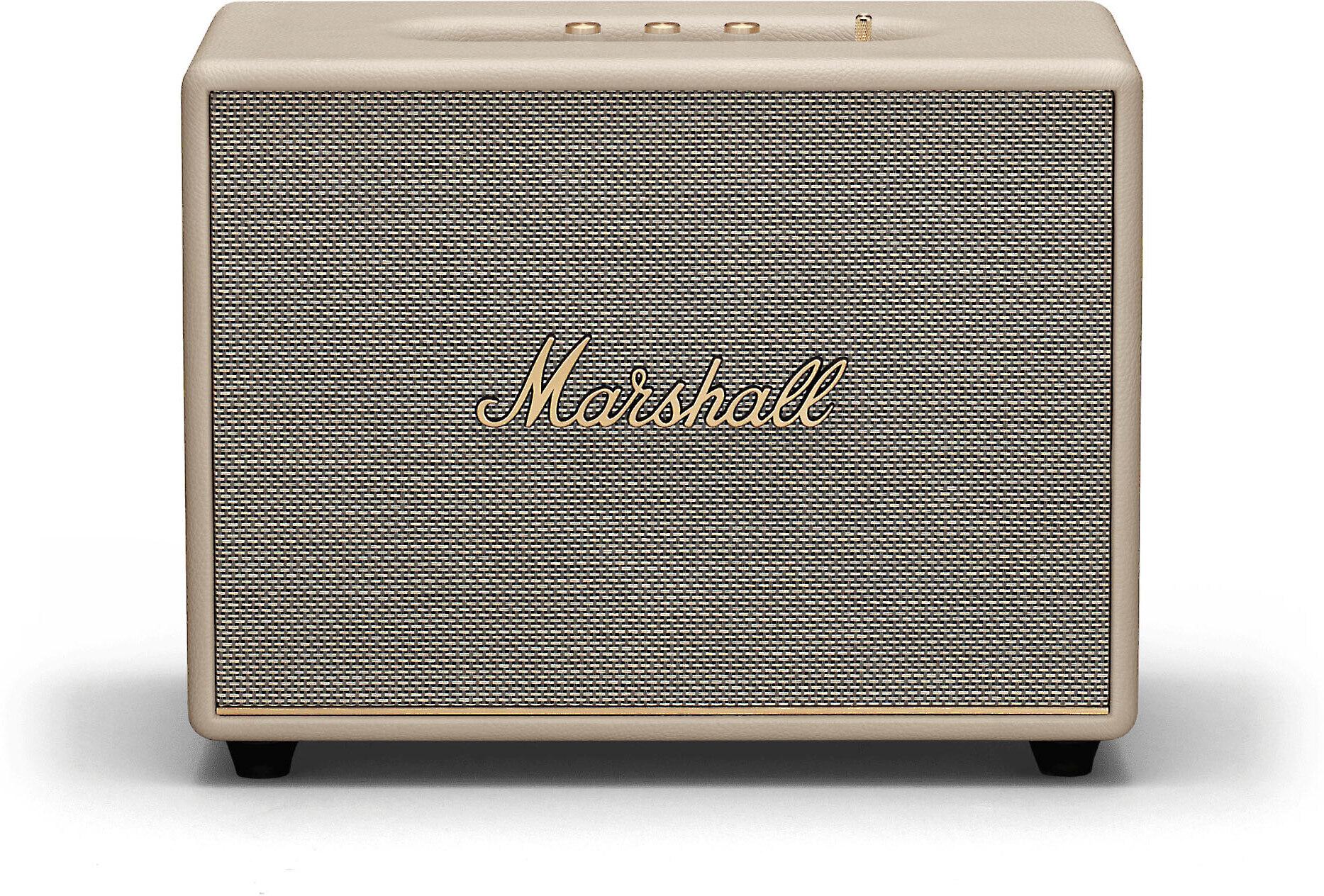
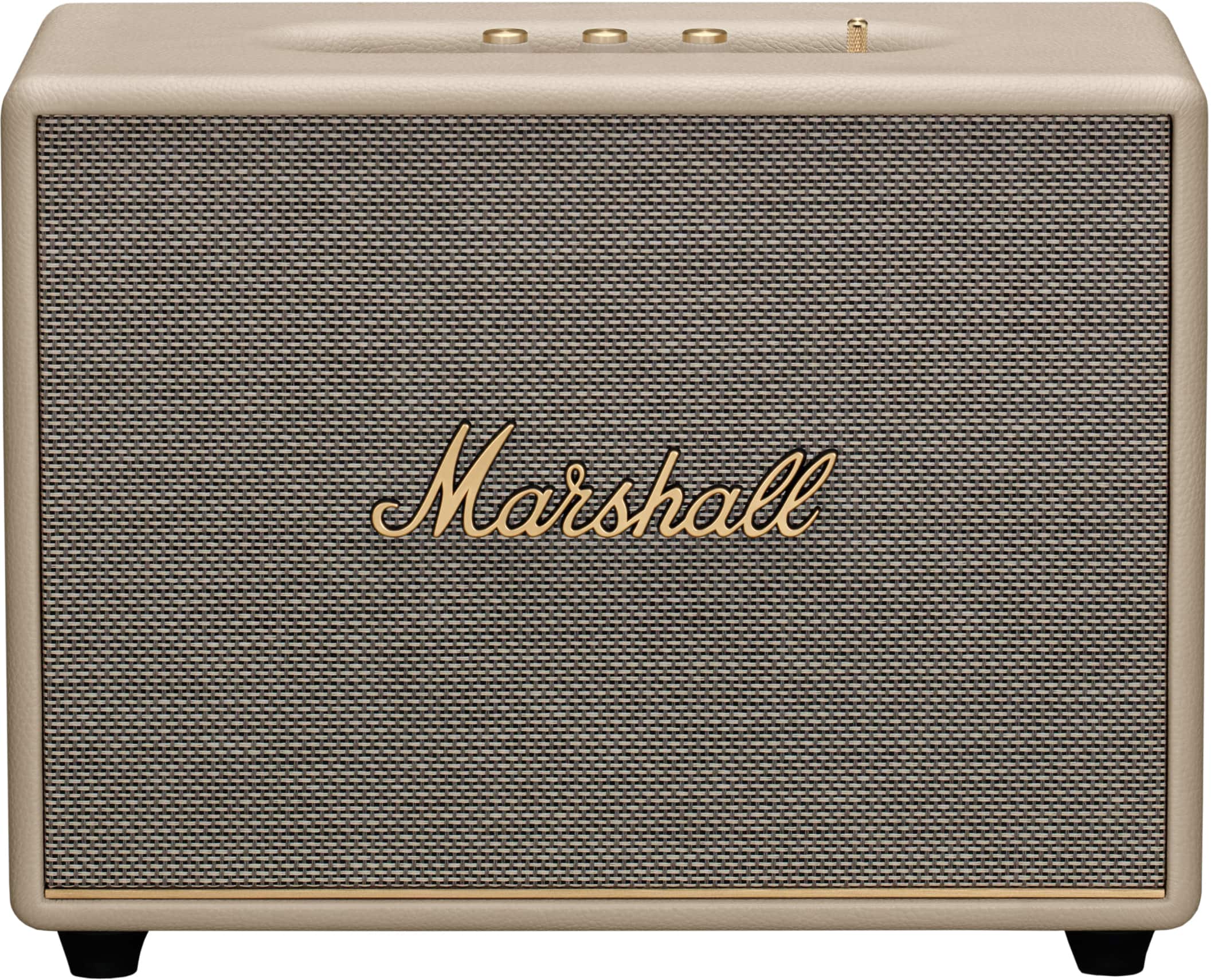
The Marshall Woburn III arrived in 2022 as Marshall's flagship home Bluetooth speaker, representing the company's push into premium stationary audio after years of focusing on guitar amplifiers and smaller portable speakers. Marshall designed this speaker to capture their iconic amplifier aesthetic while incorporating modern connectivity features like HDMI ARC and Bluetooth 5.2. The "III" designation indicates this is the third generation of Marshall's Woburn line, with each iteration adding more sophisticated features and better integration with modern home entertainment systems.
These release timelines matter because they reflect different technological priorities. The Charge 4's 2018 vintage means it uses Bluetooth 4.2, which was standard then but feels dated now compared to the Woburn III's modern Bluetooth 5.2 implementation.
The most significant performance difference lies in raw power and driver sophistication. The Marshall Woburn III delivers 150 watts of total power through a three-way speaker system – meaning it uses separate drivers optimized for different frequency ranges. This includes a 6-inch woofer handling bass frequencies, two 2-inch midrange drivers for vocals and instruments, and two 0.75-inch dome tweeters for high frequencies. Each driver type excels at reproducing its designated frequency range, resulting in cleaner, more detailed sound.
The JBL Charge 4 produces 30 watts RMS (RMS stands for "root mean square" – essentially the continuous power the speaker can handle) through a single racetrack-shaped driver measuring 50 x 90mm, supplemented by dual passive radiators. Passive radiators are essentially speakers without magnets that vibrate sympathetically with the main driver to enhance bass response. While clever engineering for a portable speaker, this system can't match the frequency separation and power of a true three-way design.
Frequency response tells you which sounds a speaker can reproduce and how well. The Marshall Woburn III covers 35Hz to 20,000Hz, while the JBL Charge 4 manages 60Hz to 20,000Hz. That 25Hz difference at the low end is significant – it represents the difference between feeling deep bass drums and kick drums versus just hearing them.
To put this in perspective, a bass guitar's low E string vibrates at about 41Hz, meaning the Marshall Woburn III can reproduce it accurately while the Charge 4 will struggle with the lowest notes. The upper range (20,000Hz) is less critical since most adults can't hear frequencies above 16,000Hz anyway.
Maximum volume capabilities differ dramatically between these speakers. The Marshall Woburn III achieves 100.5 dB at one meter distance, while the Charge 4 typically reaches around 90 dB. Decibel (dB) measurements use a logarithmic scale, so this 10+ dB difference represents roughly double the perceived loudness – a substantial gap.
More importantly, the Woburn III maintains audio quality at high volumes thanks to its powerful amplifiers and large drivers, while the Charge 4 experiences compression and distortion when pushed hard. This compression occurs when the speaker's amplifier can't provide enough power to maintain clean sound reproduction, resulting in a "squashed" dynamic range where quiet sounds become less distinct from loud sounds.
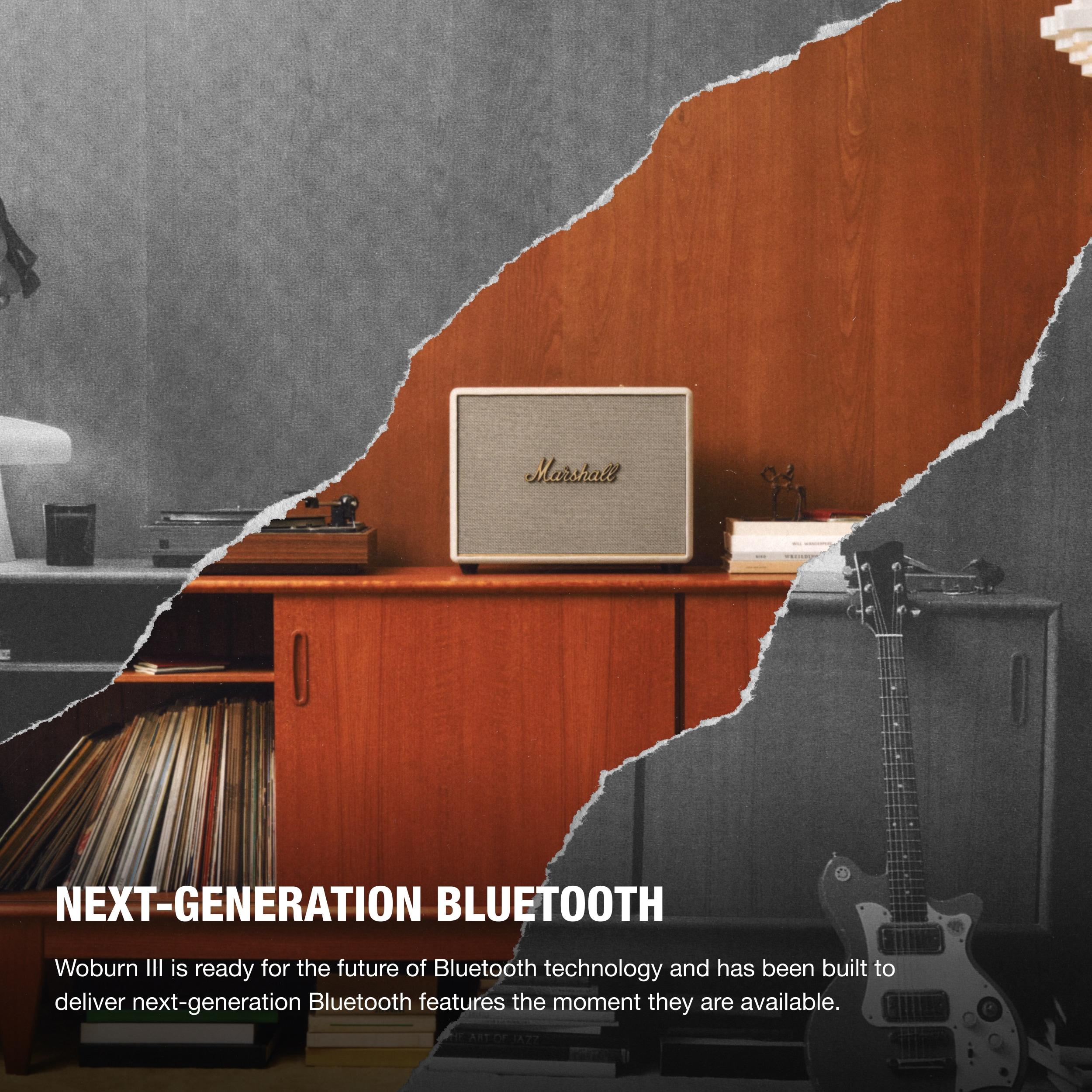
The Marshall Woburn III's Bluetooth 5.2 implementation offers several advantages over the Charge 4's Bluetooth 4.2. Newer Bluetooth versions provide better range (often 100+ feet versus 30-50 feet), more stable connections, lower power consumption, and reduced audio latency. Latency – the delay between when audio is transmitted and when you hear it – matters especially when watching videos, where even small delays create annoying lip-sync issues.
Bluetooth 5.2 also supports more advanced audio codecs (compression algorithms that determine sound quality over wireless connections) and can handle multiple high-quality audio streams simultaneously. While both speakers support basic connection to two devices, the Woburn III switches between them more seamlessly.
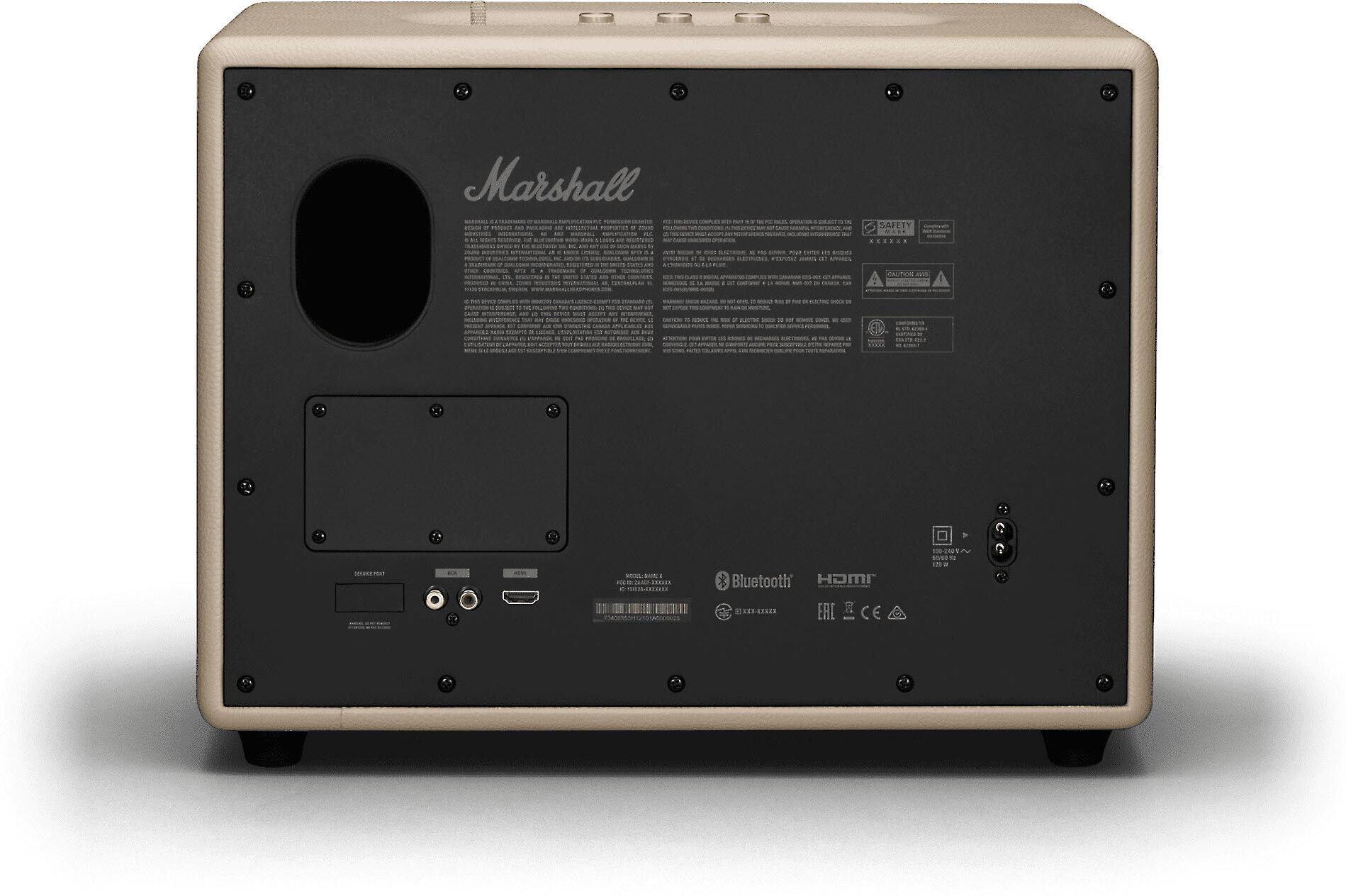
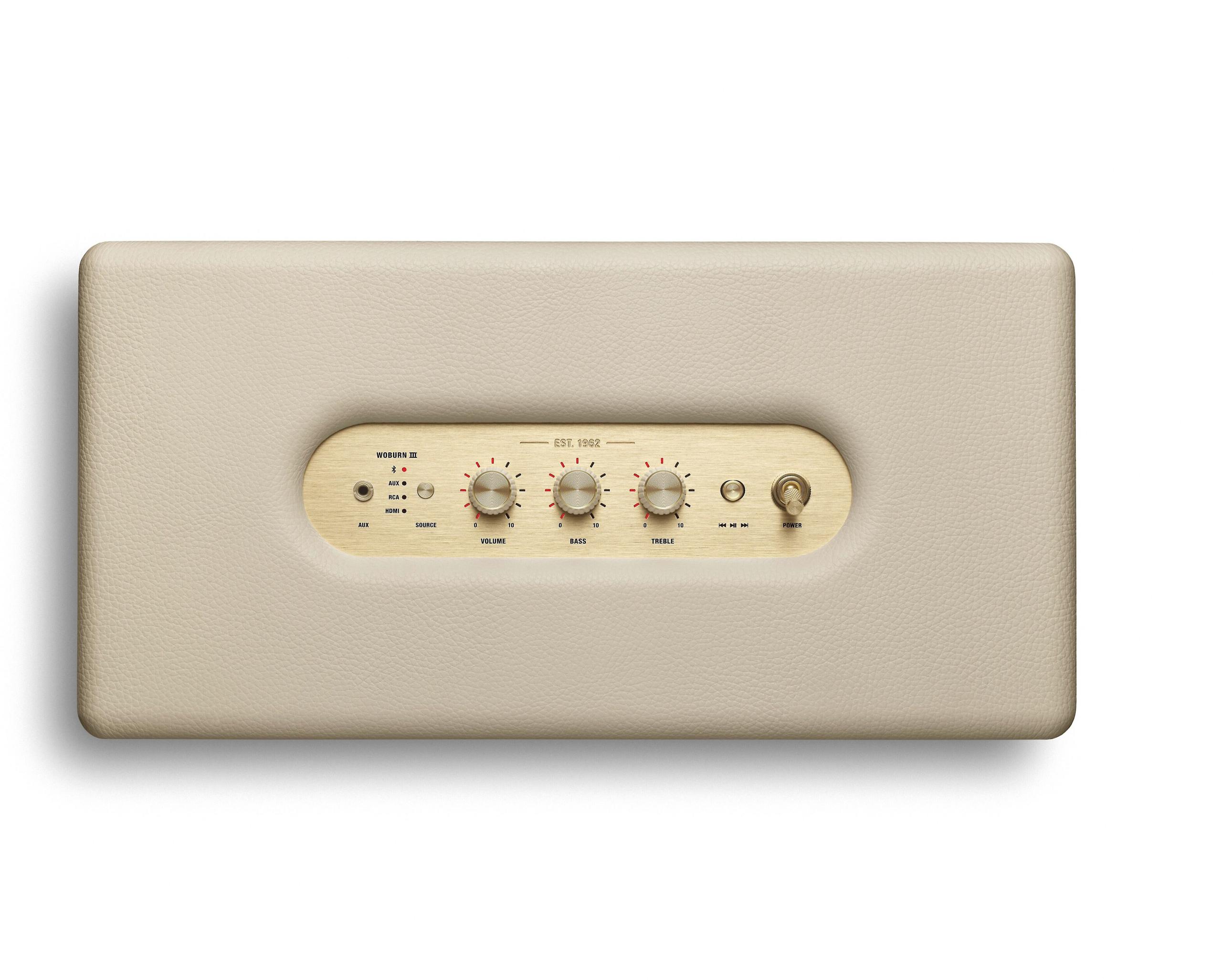
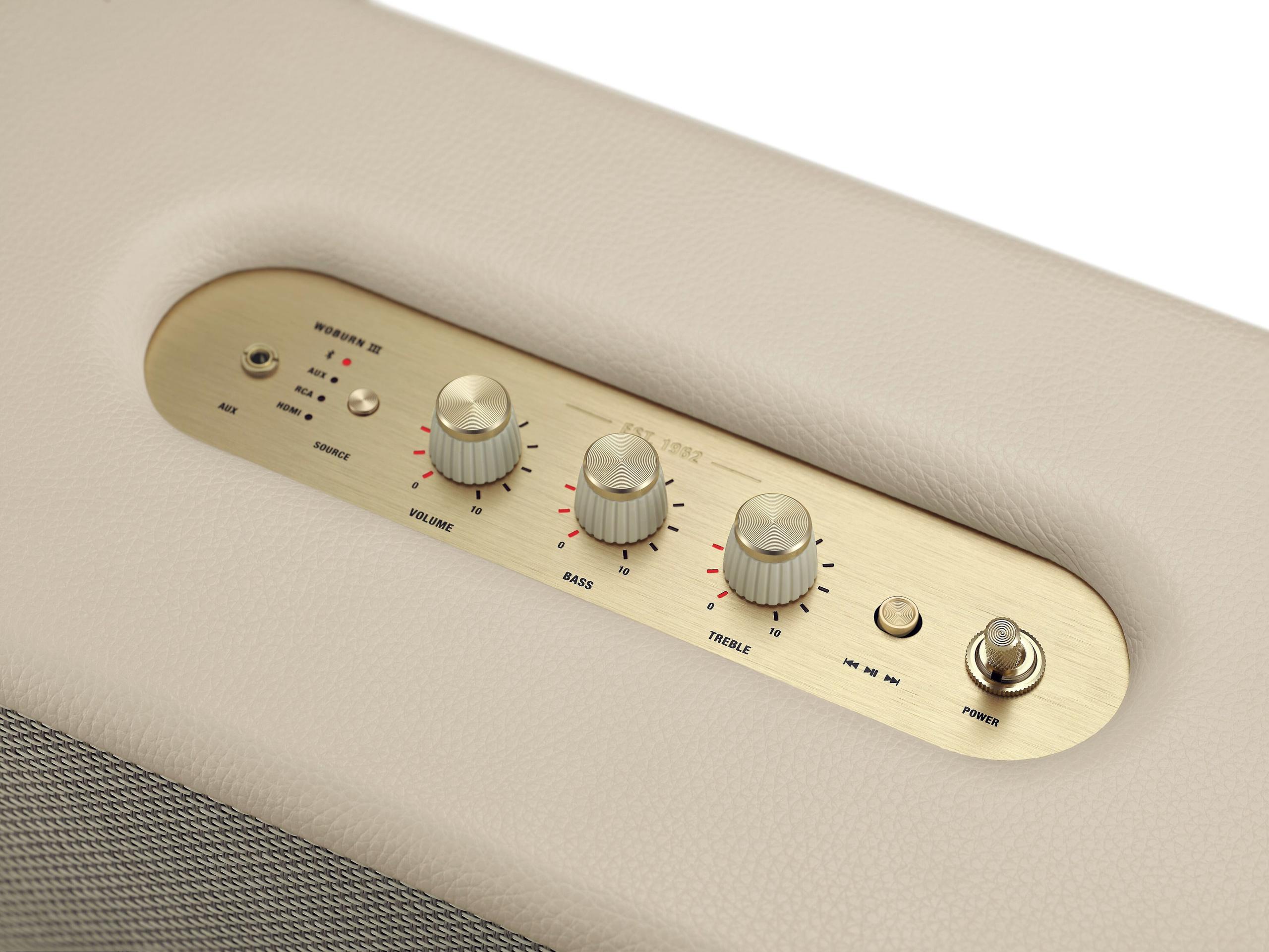
The Marshall Woburn III excels in connectivity versatility with its HDMI ARC, RCA, and 3.5mm inputs alongside Bluetooth. HDMI ARC (Audio Return Channel) is particularly valuable for home theater setups – it allows your TV to send audio directly to the speaker while using just one cable. This means the speaker can handle audio from your TV, streaming devices, gaming consoles, and Blu-ray players without constantly switching connections.
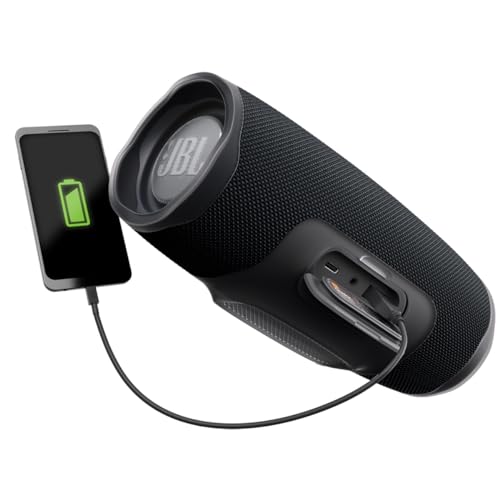
The JBL Charge 4 offers more basic connectivity with USB-C charging, USB-A output for device charging, and a 3.5mm auxiliary input. While simpler, the USB-A output provides a unique powerbank function that the Marshall speaker completely lacks.
The JBL Charge 4 includes several features specifically designed for portable use. Its IPX7 waterproof rating means it can survive submersion in up to one meter of water for 30 minutes – perfect for poolside use or accidental drops in water. The fabric and rubber construction is designed to withstand impacts and environmental exposure that would damage home speakers.
JBL Connect+ technology allows linking over 100 compatible JBL speakers wirelessly, creating a synchronized audio network for large gatherings. This party feature transforms multiple small speakers into a powerful distributed sound system, though it requires other JBL Connect+ compatible speakers to work.
The powerbank functionality deserves special mention – the 7,500mAh battery can charge smartphones, tablets, and other USB devices via the built-in USB-A port. This dual-purpose design proves invaluable during camping trips, power outages, or long outdoor events where device charging becomes critical.
The Marshall Woburn III incorporates several advanced acoustic technologies rarely found in Bluetooth speakers. Dynamic Loudness automatically adjusts the frequency balance based on volume level – at low volumes, it boosts bass and treble to compensate for how human hearing perceives different frequencies at different volumes. This psychoacoustic processing ensures music sounds balanced whether you're listening quietly late at night or filling a room during a party.
Placement Compensation uses the Marshall app to optimize sound based on where you position the speaker in your room. Speakers sound different when placed against walls, in corners, or on shelves due to acoustic reflections. This feature adjusts the speaker's output to compensate for these environmental factors, similar to room correction found in high-end home theater systems.
Night Mode reduces dynamic range – the difference between loud and quiet sounds – making it easier to enjoy movies and music at low volumes without losing dialogue or quiet musical details. This feature proves especially useful for apartment living or late-night listening sessions.
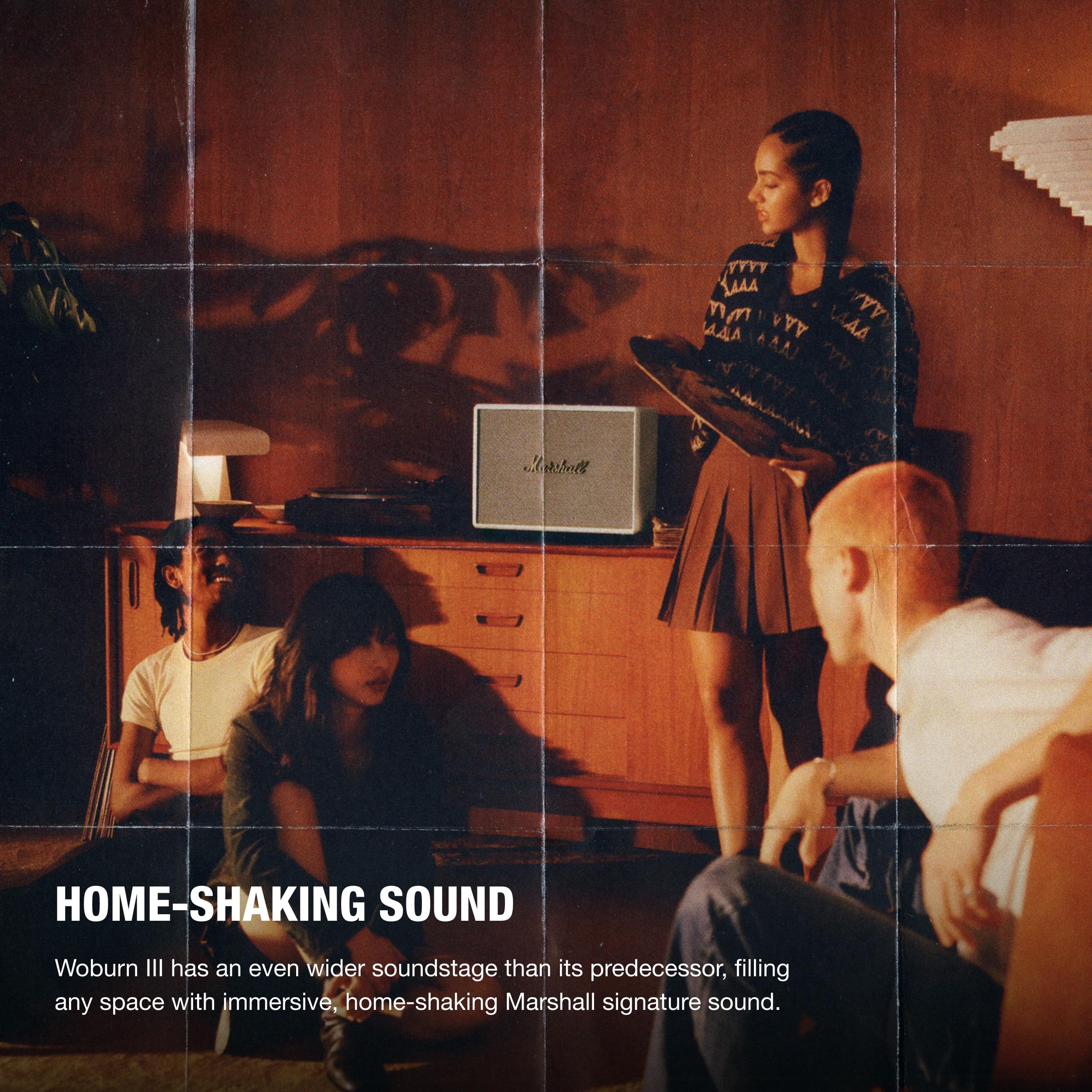
For home theater use, the Marshall Woburn III significantly outperforms the JBL Charge 4 in every meaningful way. The HDMI ARC connection provides seamless integration with modern TVs, automatically switching on when you turn on your TV and handling audio from all connected devices. The speaker's wider frequency response and higher power output create a more immersive experience for movies, with dialogue clarity and bass impact that portable speakers simply cannot match.
The Charge 4 can connect to TVs via auxiliary cable or Bluetooth, but it lacks the power and frequency response to serve as a primary TV speaker. Its mono output (single-channel audio) also eliminates any stereo separation effects that enhance movie soundtracks.
Based on extensive user feedback and professional reviews, the Marshall Woburn III delivers superior music reproduction across all genres. Its three-way driver system provides better instrument separation – you can distinctly hear individual instruments and vocals rather than having them blend together. The extended bass response makes electronic music, hip-hop, and rock significantly more impactful.
The JBL Charge 4 performs admirably for its size and price point, with a balanced sound signature that works well for most music genres. However, its smaller drivers and limited power mean it can't reproduce the full dynamic range and frequency spectrum that larger speakers achieve. At moderate volumes in smaller spaces, the difference is less noticeable, but the gap widens considerably when you want to fill a room with sound.
For outdoor use, the JBL Charge 4 dominates completely. Its rugged construction, waterproof rating, and 20-hour battery life make it ideal for beach trips, camping, hiking, and outdoor parties. The speaker maintains reasonable sound quality even in open outdoor environments where acoustic reflections are minimal.
The Marshall Woburn III simply isn't designed for outdoor use. It requires AC power, offers no weather protection, and its large size makes it impractical for transport. While it would sound better than the Charge 4 if you could somehow power it outdoors, that scenario rarely occurs in real-world use.
At the time of writing, these speakers occupy very different price segments, with the Marshall Woburn III costing significantly more than the JBL Charge 4 – often three to four times the price. This price difference reflects their different target markets and manufacturing costs.
The JBL Charge 4 offers excellent value for users prioritizing portability and versatility. You're essentially buying a speaker, powerbank, and rugged outdoor audio solution in one device. For students, travelers, and outdoor enthusiasts, this multi-functionality often justifies the purchase even if the pure audio performance doesn't match larger speakers.
The Marshall Woburn III targets users willing to invest in premium home audio quality. While expensive, it potentially replaces both a soundbar and a high-quality Bluetooth speaker, offering better integration and aesthetics than buying separate devices. For home audio enthusiasts who rarely need portable music, the superior sound quality and features can justify the higher cost.
Choose the JBL Charge 4 if you:
The Charge 4 makes most sense for active lifestyles where convenience and reliability matter more than audiophile-level sound quality. College students, frequent travelers, outdoor enthusiasts, and anyone who values versatility over specialization will find it more useful than a stationary speaker.
Choose the Marshall Woburn III if you:
The Woburn III suits users who treat music listening as a primary activity rather than background accompaniment. Home audio enthusiasts, movie lovers, and anyone seeking to create a dedicated listening space will appreciate its superior sound quality and integration features.
These speakers represent opposite ends of the Bluetooth audio spectrum, making direct comparison challenging but educational. The JBL Charge 4 excels as a versatile tool that adapts to various situations, while the Marshall Woburn III specializes in delivering premium home audio experiences.
For most people, the decision comes down to lifestyle priorities. If you need one speaker to handle multiple scenarios – home listening, outdoor activities, travel, and emergency power – the Charge 4 provides unmatched versatility. If you want the best possible sound quality for home use and rarely need portability, the Woburn III delivers significantly superior audio performance.
Neither speaker is objectively better than the other; they're simply optimized for different use cases. Understanding your primary listening habits, budget constraints, and lifestyle needs will guide you toward the right choice. The Charge 4 adapts to your life, while the Woburn III creates a destination for serious listening – both approaches have merit depending on your audio priorities.
| JBL Charge 4 | Marshall Woburn III |
|---|---|
| Power Output - Determines maximum volume and sound clarity | |
| 30W RMS (good for small to medium spaces) | 150W total (room-filling volume with clear dynamics) |
| Frequency Response - Shows how deep the bass goes and overall sound range | |
| 60Hz - 20kHz (limited deep bass) | 35Hz - 20kHz (extended low-end for impactful bass) |
| Driver Configuration - Affects sound quality and instrument separation | |
| Single driver + dual passive radiators (mono output) | 3-way system: 6" woofer, dual 2" midrange, dual tweeters (true stereo) |
| Battery Life - Critical for portable use | |
| Up to 20 hours continuous playback | AC power only (no battery) |
| Water Resistance - Essential for outdoor/poolside use | |
| IPX7 waterproof (submersible up to 1 meter) | None (indoor use only) |
| Bluetooth Version - Affects connection stability and range | |
| 4.2 (adequate but dated technology) | 5.2 (modern standard with better range and stability) |
| Additional Connectivity - Expands usage beyond phone/tablet | |
| USB-C charging, 3.5mm aux, USB-A output | HDMI ARC, RCA, 3.5mm aux (TV integration ready) |
| Dimensions & Weight - Impacts portability | |
| 8.7" x 3.7" x 3.7", 2.12 lbs (highly portable) | 15.7" x 12.5" x 9", 16.4 lbs (stationary home speaker) |
| Multi-Speaker Connectivity - For larger gatherings | |
| JBL Connect+ (links 100+ compatible JBL speakers) | Not supported |
| Powerbank Function - Charges other devices | |
| Yes, 5V/2A USB output (charges phones/tablets) | No charging capability |
| Advanced Audio Features - Optimizes sound quality | |
| Basic audio processing | Dynamic Loudness, Placement Compensation, Night Mode |
| App Control - Customization and settings | |
| Basic pairing and Connect+ management | Full EQ control, room optimization, OTA updates |
| Maximum Volume - Important for parties and large spaces | |
| ~90 dB at 1 meter (moderate loudness) | 100.5 dB at 1 meter (significantly louder) |
The Marshall Woburn III is significantly better for home theater applications. It features HDMI ARC connectivity that seamlessly integrates with your TV, delivering 150W of power through a three-way speaker system for clear dialogue and impactful movie soundtracks. The JBL Charge 4 lacks the power, connectivity options, and frequency response needed for effective TV audio enhancement.
Only the JBL Charge 4 is designed for outdoor use. It features IPX7 waterproof rating, rugged construction, and 20-hour battery life, making it perfect for beach trips, camping, and poolside parties. The Marshall Woburn III requires AC power and has no weather protection, limiting it to indoor use only.
The Marshall Woburn III delivers superior sound quality with its 150W three-way driver system, extended bass response (35Hz-20kHz), and advanced audio processing features like Dynamic Loudness. The JBL Charge 4 offers good sound for its portable size but cannot match the power, frequency range, and audio clarity of the larger home speaker.
The JBL Charge 4 runs on battery power for up to 20 hours of continuous playback, while the Marshall Woburn III requires constant AC power connection. If portability and battery operation are important, the JBL Charge 4 is your only option between these two.
The Marshall Woburn III reaches significantly higher volumes at 100.5 dB compared to the JBL Charge 4's approximately 90 dB maximum output. The difference represents roughly double the perceived loudness, making the Marshall speaker much better for large rooms and parties.
The Marshall Woburn III offers multiple TV connection options including HDMI ARC, RCA, and 3.5mm inputs for seamless integration with your entertainment system. The JBL Charge 4 can connect via Bluetooth or 3.5mm auxiliary cable but lacks the power and features needed for effective TV audio.
The JBL Charge 4 is highly portable at just 2.12 pounds with compact dimensions and built-in battery power. The Marshall Woburn III weighs 16.4 pounds, requires wall power, and is designed as a stationary home speaker. For any portable use, the JBL Charge 4 is the clear choice.
The Marshall Woburn III produces deeper, more powerful bass with its 6-inch woofer and 35Hz frequency response. The JBL Charge 4 has respectable bass for its size using dual passive radiators, but its 60Hz low-end limit means it cannot reproduce the deepest bass frequencies that the Marshall speaker handles easily.
Only the JBL Charge 4 includes powerbank functionality, allowing you to charge smartphones and tablets via its USB-A output port. This feature makes it valuable for camping, travel, and emergency situations. The Marshall Woburn III has no device charging capability.
The Marshall Woburn III offers more connection options with HDMI ARC, RCA inputs, 3.5mm auxiliary, and Bluetooth 5.2. The JBL Charge 4 provides Bluetooth 4.2, 3.5mm auxiliary, and USB connections. However, the JBL speaker can link with other JBL Connect+ speakers for multi-room audio.
For indoor parties, the Marshall Woburn III excels with its powerful 150W output and room-filling sound quality. For outdoor parties or events where you need portability, the JBL Charge 4 is better with its battery power, waterproof design, and ability to link multiple units together.
The JBL Charge 4 provides excellent value for users needing portability, durability, and multi-functionality including powerbank features. The Marshall Woburn III offers premium value for home audio enthusiasts who prioritize sound quality and TV integration over portability. Your choice depends on whether you need portable versatility or stationary audio performance.
We've done our best to create useful and informative comparisons to help you decide what product to buy. Our research uses advanced automated methods to create this comparison and perfection is not possible - please contact us for corrections or questions. These are the sites we've researched in the creation of this article: rtings.com - whathifi.com - whathifi.com - soundguys.com - soundguys.com - streamtechreviews.com - youtube.com - versus.com - applevis.com - versus.com - jbl.com - jbl.com - walmart.com - comparisontabl.es - harmanaudio.com - manuals.plus - jbl.com.sg - jbl.com - mm.jbl.com - bestbuy.com - newpower99.com - forums.woot.com - bestbuy.com - crutchfield.com - rtings.com - idownloadblog.com - digit.in - crutchfield.com - epicrewards.com.ph - ione.com.kh - youtube.com - onward.ph - economictimes.indiatimes.com

Privacy Policy
Terms and Conditions - Affiliate Policy
Home Security
© Copyright 2008-2026.
11816 Inwood Rd #1211, Dallas, TX 75244