

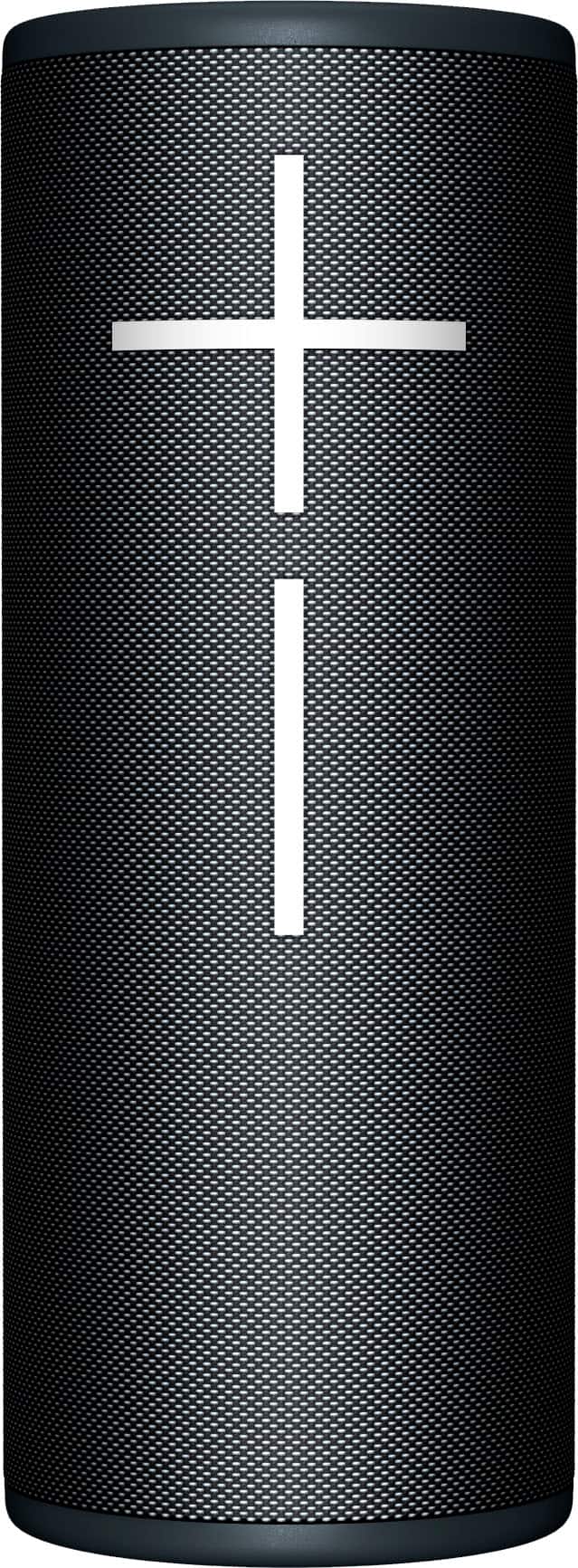
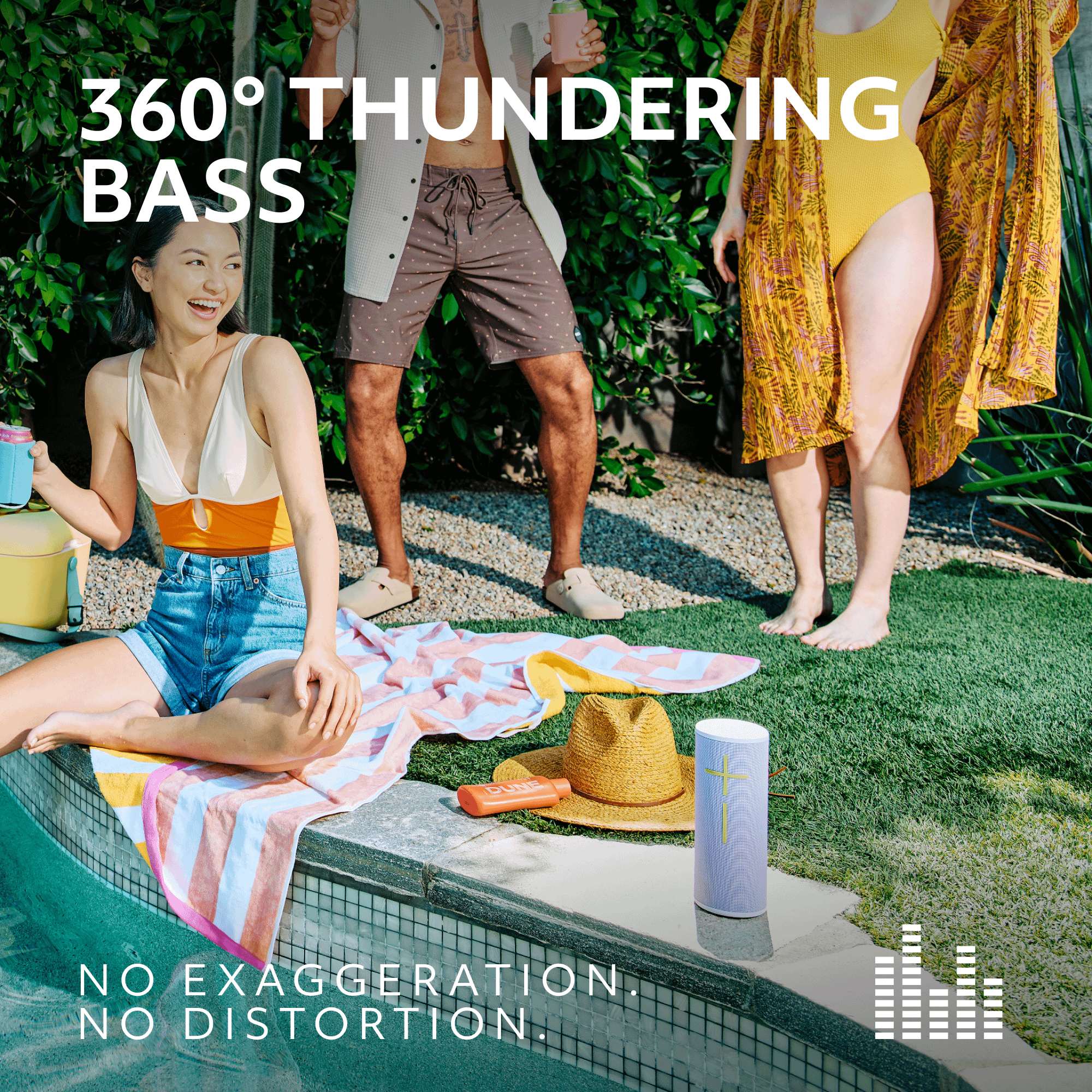
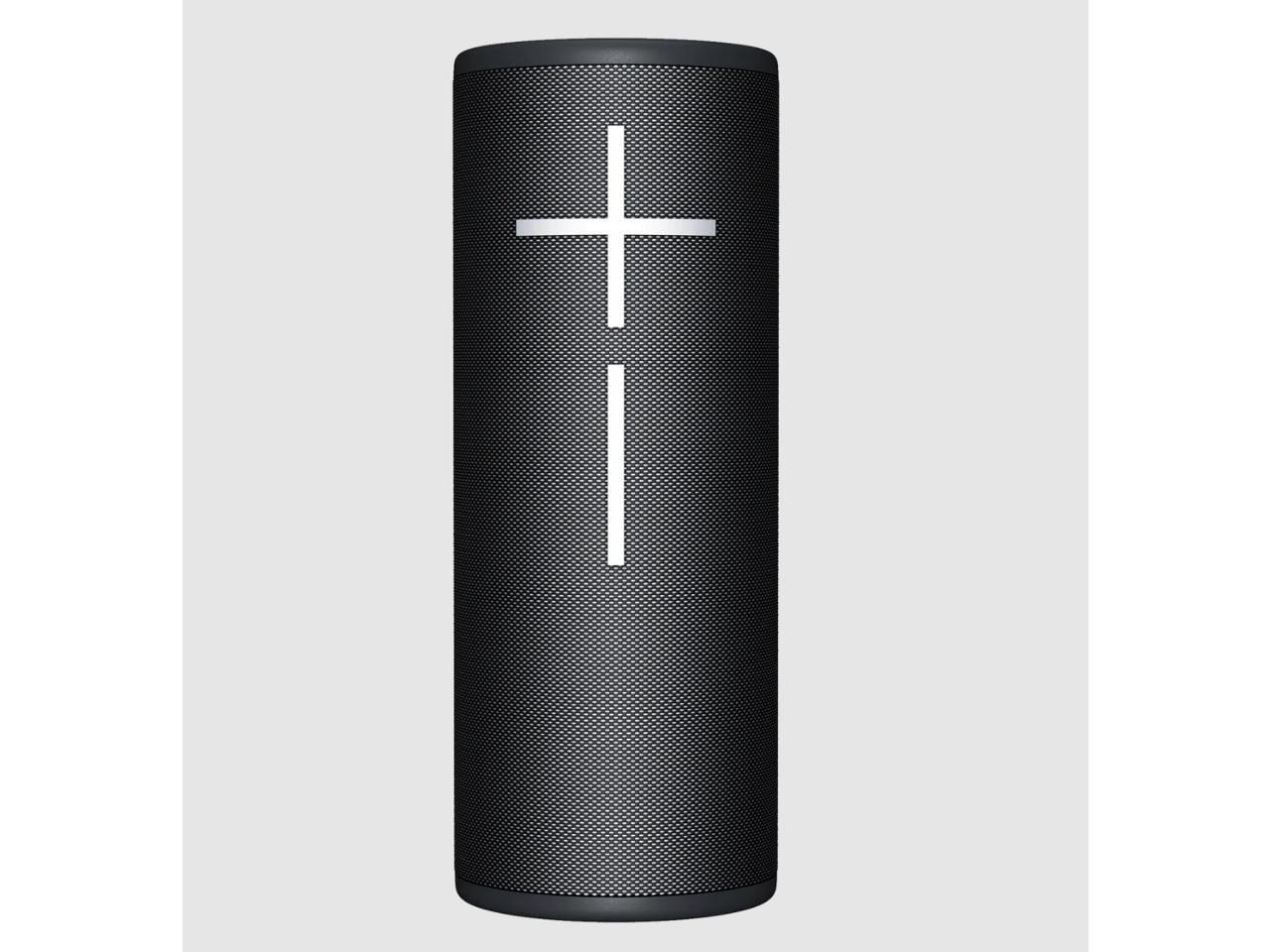






When you're shopping for a portable Bluetooth speaker, the options can feel overwhelming. Two speakers that consistently show up in conversations are the JBL Charge 4 and the Ultimate Ears MEGABOOM 4. At the time of writing, they sit in similar price ranges but take completely different approaches to what a portable speaker should be. After diving deep into user reviews, expert opinions, and technical specifications, it's clear these speakers serve different masters despite competing for the same spot in your backpack.
Before jumping into the comparison, let's talk about what actually matters when you're choosing a portable Bluetooth speaker. The most important factors are audio quality and volume output, battery life and power management, durability and weather resistance, connectivity features, and overall value for your specific needs.
Audio quality isn't just about "sounding good" - it involves frequency response (how well the speaker reproduces different pitches), dynamic range (the difference between the quietest and loudest sounds), and soundstage (how spacious and immersive the audio feels). Volume output, measured in decibels (dB), determines whether your speaker can fill a backyard party or just handle personal listening.
Battery life seems straightforward, but real-world performance often differs dramatically from advertised claims. Power management includes not just how long the speaker lasts, but how quickly it charges and whether it offers additional functionality like charging your phone.
Durability matters because these speakers are designed for adventures. Water resistance ratings like IPX7 and IP67 tell you exactly what conditions your speaker can survive - something crucial when you're deciding between poolside and beach use.
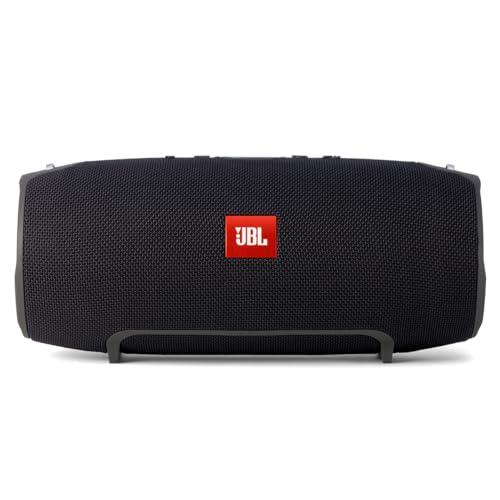
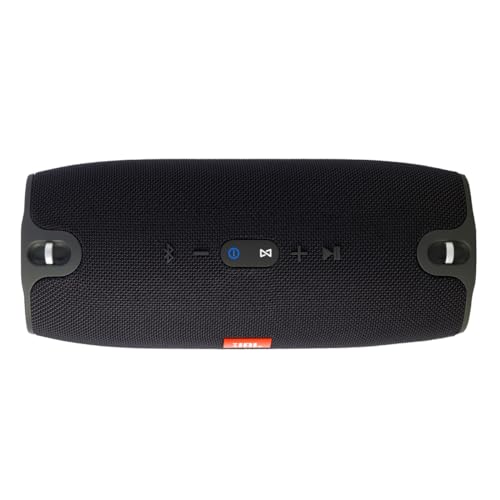
The fundamental difference between the JBL Charge 4 and Ultimate Ears MEGABOOM 4 comes down to their core design philosophy. The MEGABOOM 4 is built around 360-degree sound dispersion - imagine a traditional speaker turned inside out, with drivers facing outward in all directions. This creates what engineers call omnidirectional audio, where sound radiates equally in every direction rather than being focused forward like a traditional speaker.
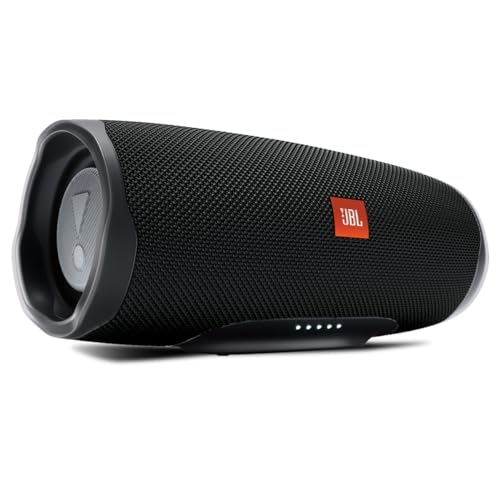
The Charge 4, on the other hand, uses a more conventional directional approach. It has a single racetrack-shaped driver (50mm x 90mm) that fires forward, supplemented by dual passive radiators for bass enhancement. Passive radiators are essentially speakers without magnets - they move in response to air pressure changes inside the speaker cabinet, helping to extend low-frequency response without requiring additional power.
This design difference isn't just technical - it fundamentally changes how you use each speaker. The MEGABOOM 4 can sit in the center of a room or gathering and provide consistent sound quality to everyone around it. The Charge 4 works best when positioned to face your listening area, more like a traditional stereo speaker.
When it comes to pure volume, the MEGABOOM 4 takes a commanding lead. It delivers 91 dBC of output, while the Charge 4 manages 84.8 dBC. This might seem like a small difference, but decibels use a logarithmic scale - the MEGABOOM 4 is actually significantly louder and can easily fill larger spaces.
From our research into user experiences, the MEGABOOM 4 consistently performs better at outdoor gatherings and pool parties where you need to overcome ambient noise. The Charge 4, while adequate for personal listening and small groups, starts to show compression artifacts (distortion that occurs when a speaker is pushed beyond its clean output limits) at higher volumes.
The frequency response specifications tell an interesting story. The Charge 4 covers 60Hz to 20kHz, which is typical for portable speakers but means you're missing the very deepest bass frequencies (those below 60Hz that you feel in your chest at concerts). The MEGABOOM 4 doesn't publish exact frequency response numbers, but user reviews consistently praise its enhanced bass response compared to previous generations.
Based on extensive user feedback and professional reviews, the MEGABOOM 4 delivers a more bass-forward sound signature that works well for electronic music, hip-hop, and pop. However, this comes at the cost of some midrange clarity. The Charge 4 offers better vocal reproduction and midrange definition, making it superior for podcasts, acoustic music, and situations where speech clarity matters most.
The MEGABOOM 4's 360-degree design creates what audiophiles call a "diffuse" soundstage - music seems to come from everywhere rather than a specific point. This can be magical for ambient listening but less precise for critical listening where you want to pinpoint instrument locations.
In practical terms, the MEGABOOM 4 excels when you want room-filling sound that doesn't have a "sweet spot." Place it on a picnic table, and everyone gets relatively consistent audio quality regardless of where they're sitting. The Charge 4 requires more thoughtful positioning but can deliver more focused, detailed sound when properly placed.
For home theater use, neither speaker is ideal, but the Charge 4's directional nature makes it slightly more suitable for TV audio enhancement. However, both speakers are fundamentally mono devices, so you won't get true stereo separation unless you pair two units together.
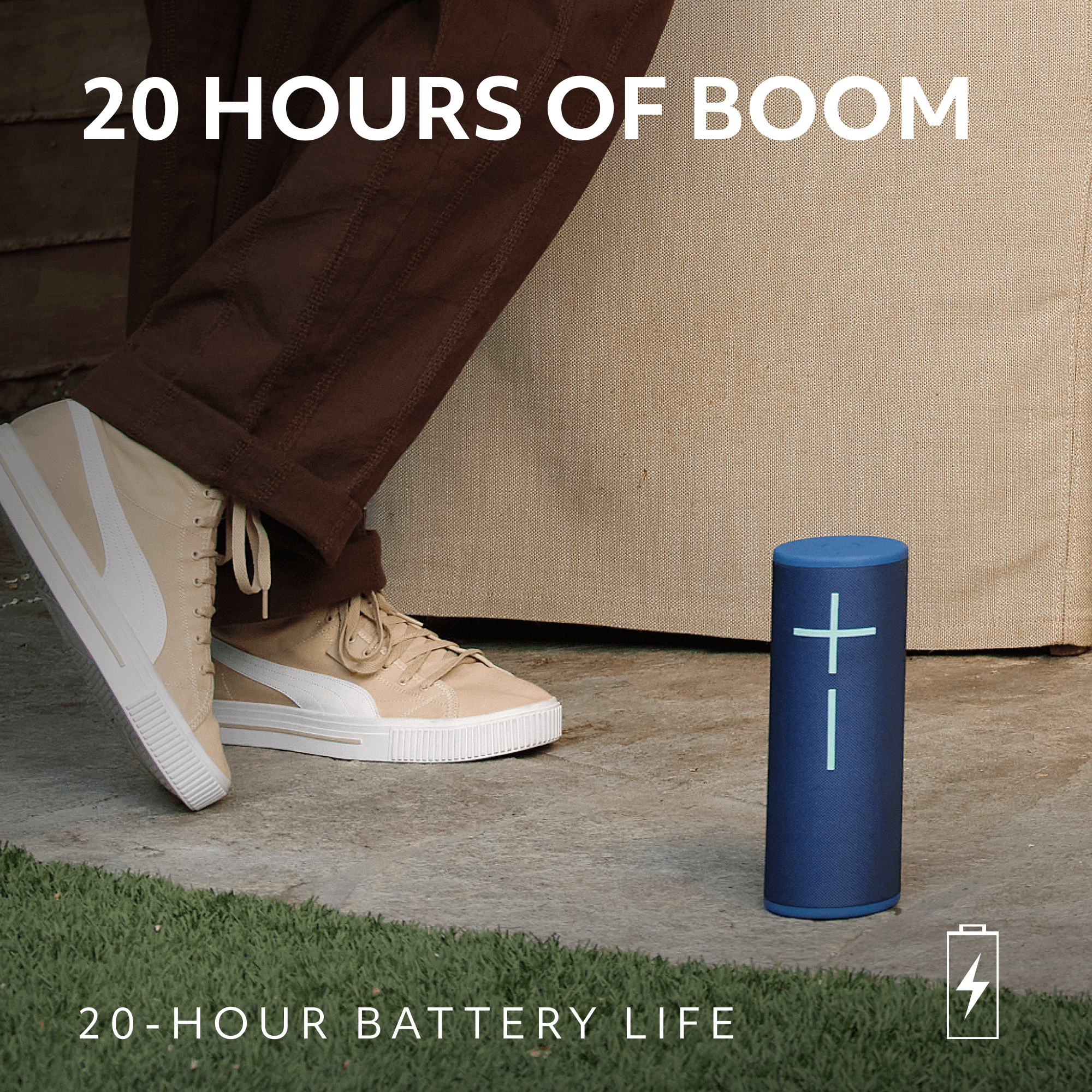
Battery specifications can be misleading, and both speakers illustrate this perfectly. The MEGABOOM 4 and Charge 4 both claim 20 hours of playback time, but real-world performance tells a different story.
Based on user testing data, the MEGABOOM 4 comes much closer to its advertised battery life, often delivering 16-18 hours of actual use at moderate volume levels. The Charge 4, however, falls significantly short in real-world testing, with users reporting around 8.5 hours at 60% volume and just 6.5 hours at 85% volume.
This discrepancy likely comes down to how each company measures battery life. Many manufacturers test at low volumes with specific audio content that doesn't stress the amplifier. The MEGABOOM 4 appears to use more realistic testing parameters, while the Charge 4's claims seem optimized for laboratory conditions rather than actual use.
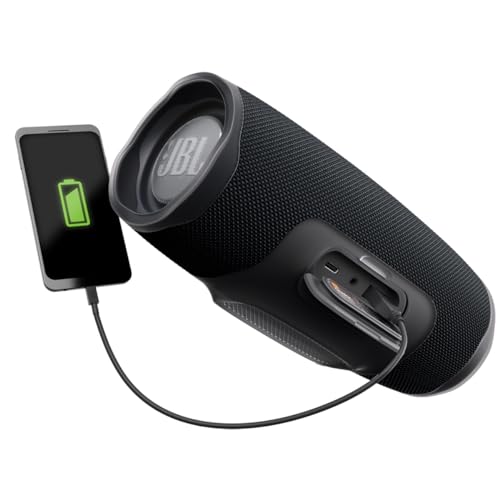
Here's where the Charge 4 offers something unique: it doubles as a power bank with its 7500mAh battery capacity. The USB-A output can deliver 5V/2A, enough to charge most smartphones or tablets. This functionality transforms the speaker from just an audio device into a practical tool for extended outdoor adventures.
The MEGABOOM 4 focuses purely on audio reproduction and doesn't offer device charging. For some users, this represents a significant missed opportunity, especially during camping trips or beach days where keeping devices charged is crucial.
Both speakers use USB-C for charging, which is convenient for modern device owners. The MEGABOOM 4 charges faster, reaching full capacity in about 2.5-3 hours compared to the Charge 4's 4-hour charging time. However, the Charge 4's longer charging time makes more sense when you consider it's charging a battery that also needs to power other devices.
Both speakers are built for outdoor adventures, but they approach durability differently. The MEGABOOM 4 carries an IP67 rating, which means it's completely dust-proof and can survive immersion in up to 1 meter of water for 30 minutes. More impressively, it floats, making it ideal for pool parties where accidental submersion is likely.
The Charge 4 offers IPX7 water resistance, which covers immersion protection but doesn't guarantee dust resistance (the "X" means dust protection wasn't tested to IP standards). In practice, both speakers handle splashes, rain, and brief submersion without issues.
Construction-wise, the MEGABOOM 4 uses a fabric wrap with a more refined aesthetic, while the Charge 4 combines fabric with rugged rubber housing that feels more industrial and adventure-ready. Both approaches work well, but the Charge 4's design language suggests it's built for rougher handling.
This is where the speakers diverge dramatically. The MEGABOOM 4 offers a comprehensive app experience through Ultimate Ears' software, providing full equalizer (EQ) control across multiple frequency bands. EQ adjustment lets you boost or cut specific frequency ranges - for example, adding more bass for electronic music or enhancing midrange clarity for vocals.
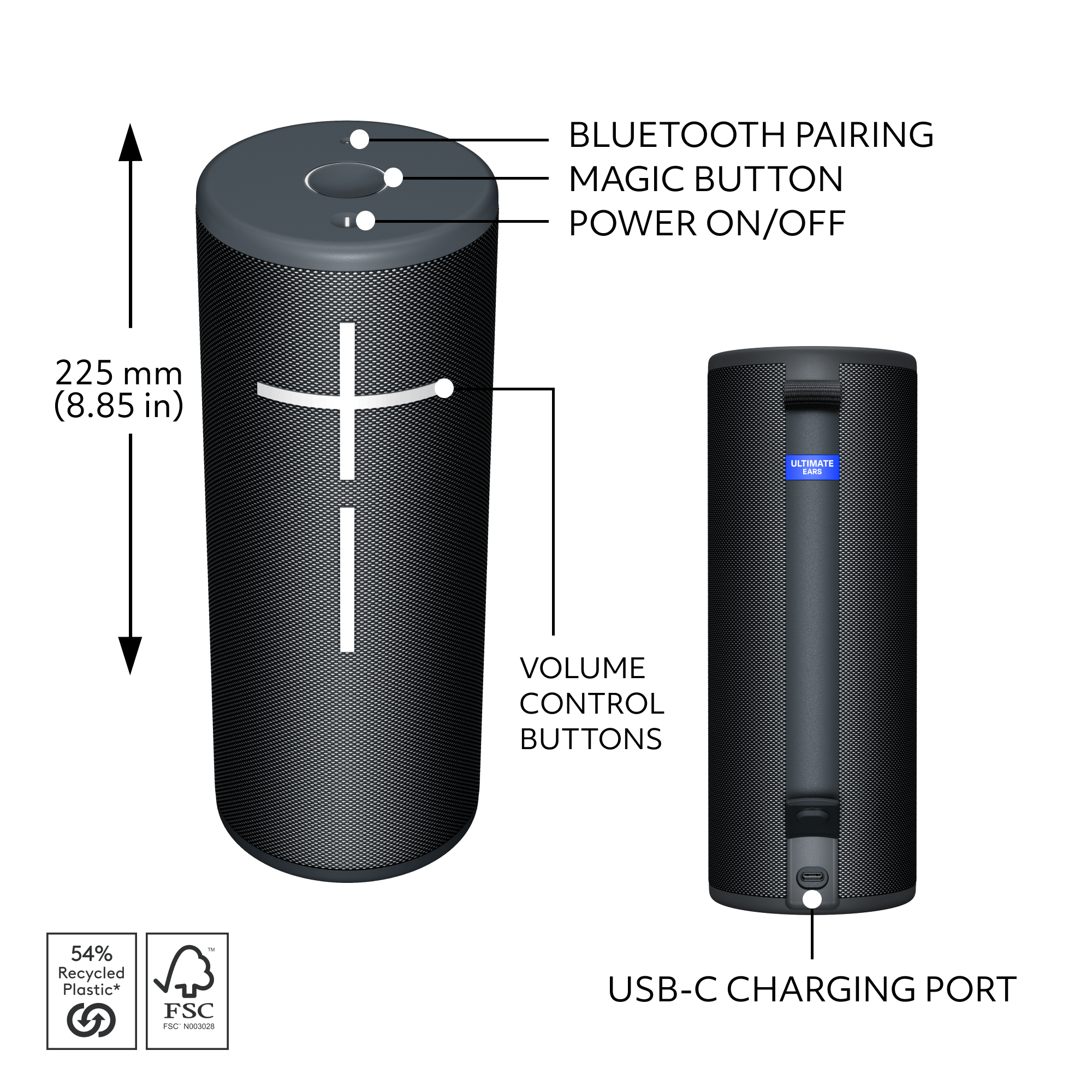
The UE app includes preset EQ modes like Bass Boost, Deep Relaxation, and Podcast/Vocal, each optimized for different content types. The Magic Button feature lets you control playlists directly from streaming services like Spotify and Apple Music without touching your phone.
The Charge 4's app experience is notably limited. User reviews consistently describe the JBL app as sluggish and lacking meaningful customization options. You can't adjust EQ settings, which is frustrating if you want to fine-tune the sound signature to your preferences.
Both speakers support connecting multiple units for enhanced sound, but they use different systems. The MEGABOOM 4's PartyUp feature can theoretically connect up to 150 compatible Ultimate Ears speakers, creating massive sound systems for large events. The Charge 4 uses JBL Connect+, which links up to 100 compatible speakers.
In reality, most users connect 2-4 speakers maximum, so both systems provide more capacity than you'll likely need. The key difference is ecosystem compatibility - you'll want to stick with one brand if you plan to build a multi-speaker system over time.
The JBL Charge 4 launched in 2018 and represented JBL's mature approach to portable speakers. Since then, JBL released the Charge 5 in 2021 with improvements like dedicated tweeters and better app integration, positioning the Charge 4 as a value-oriented previous-generation option.
The MEGABOOM 4 is much newer, launching in 2024 with specific improvements over the MEGABOOM 3. Ultimate Ears refined the passive radiators to deliver "richer, less distorted low frequencies" and enhanced the overall acoustic tuning. This represents current-generation technology with modern expectations for app integration and user experience.
The age difference matters because it affects long-term software support, compatibility with new devices, and access to feature updates. The MEGABOOM 4 will likely receive software updates longer than the Charge 4.
At the time of writing, these speakers occupy different price tiers, with the MEGABOOM 4 commanding a premium over the Charge 4. The price difference reflects their different target markets and capabilities.
The Charge 4 offers exceptional value for users who need power bank functionality and don't require maximum volume output. Its lower price point makes it attractive for budget-conscious buyers who still want reliable JBL quality and adequate sound performance.
The MEGABOOM 4 justifies its higher price through superior volume output, better app integration, more advanced features, and current-generation technology. For users prioritizing audio quality and modern connectivity features, the price premium delivers meaningful benefits.
After extensive research into user experiences and professional reviews, clear usage patterns emerge for each speaker.
Choose the JBL Charge 4 if:
Choose the Ultimate Ears MEGABOOM 4 if:
For most users, the decision comes down to priorities. The Charge 4 is the practical choice that handles dual duties as speaker and power bank, making it ideal for adventure-oriented users who value utility. The MEGABOOM 4 is the audiophile choice that prioritizes sound quality and modern features, making it better for users who view their speaker primarily as an audio device.
Both speakers succeed in their intended roles, but they serve different masters. Understanding which master you want to serve will make your decision straightforward.
| JBL Charge 4 | Ultimate Ears MEGABOOM 4 |
|---|---|
| Maximum Volume Output - Critical for outdoor use and parties | |
| 84.8 dBC (adequate for small groups) | 91 dBC (significantly louder, fills larger spaces) |
| Sound Design - Determines listening experience and placement flexibility | |
| Directional mono with forward-firing driver | 360-degree omnidirectional sound |
| Battery Life (Real-World) - Actual performance vs advertised claims | |
| 8.5 hours at 60% volume (falls short of 20hr claim) | 16-18 hours typical use (close to 20hr advertised) |
| Power Bank Function - Unique utility for outdoor adventures | |
| Yes, 7500mAh charges phones/tablets via USB-A | No charging capability |
| Water/Dust Resistance - Protection level for outdoor use | |
| IPX7 (waterproof, dust resistance not rated) | IP67 (waterproof and dustproof, floats on water) |
| App Features & EQ - Sound customization and control options | |
| Basic app, no EQ adjustment available | Full EQ control with presets, Magic Button playlist control |
| Multi-Speaker Connectivity - Building larger sound systems | |
| JBL Connect+ (up to 100 speakers) | PartyUp (up to 150 speakers) |
| Bluetooth Range - Connection stability at distance | |
| 60 meters typical range | 45 meters range |
| Weight & Portability - Important for travel and hiking | |
| 965g, compact directional design | 935g, taller cylindrical form (225mm height) |
| Release Generation - Affects long-term support and features | |
| 2018 model (succeeded by Charge 5 in 2021) | 2024 current-generation model |
| Primary Value Proposition - What each does best | |
| Dual-purpose speaker + power bank at lower price | Superior audio performance with modern features |
The Ultimate Ears MEGABOOM 4 is significantly louder, delivering 91 dBC compared to the JBL Charge 4's 84.8 dBC output. This makes the MEGABOOM 4 better for outdoor parties and larger gatherings, while the Charge 4 is adequate for personal listening and small groups.
Only the JBL Charge 4 can charge your devices - it functions as a power bank with its 7500mAh battery and USB-A output port. The Ultimate Ears MEGABOOM 4 focuses purely on audio and doesn't offer device charging capability, making the Charge 4 more practical for camping and extended outdoor use.
The Ultimate Ears MEGABOOM 4 generally offers superior sound quality with its 360-degree audio design and enhanced bass response. However, the JBL Charge 4 provides better vocal clarity and midrange definition. Your preference depends on whether you prioritize room-filling sound (MEGABOOM 4) or balanced audio reproduction (Charge 4).
Yes, both are water-resistant but with different ratings. The JBL Charge 4 has IPX7 waterproofing, while the Ultimate Ears MEGABOOM 4 offers superior IP67 protection that includes dust resistance. Additionally, the MEGABOOM 4 floats on water, making it ideal for pool use.
The Ultimate Ears MEGABOOM 4 delivers better real-world battery performance, lasting 16-18 hours in typical use and closely matching its 20-hour claim. The JBL Charge 4 falls short of its advertised 20 hours, typically providing 8-9 hours at moderate volumes, though it can charge other devices.
The Ultimate Ears MEGABOOM 4 offers extensive sound customization through its app, including full EQ control and presets like Bass Boost and Podcast mode. The JBL Charge 4 has very limited app functionality with no EQ adjustment options, making the MEGABOOM 4 much better for sound personalization.
The Ultimate Ears MEGABOOM 4 is superior for outdoor parties due to its significantly higher volume output, 360-degree sound dispersion, and ability to float in pools. The JBL Charge 4 works for smaller gatherings but lacks the volume and omnidirectional audio needed for larger outdoor events.
Neither speaker is optimized for phone calls as they lack built-in microphones. Both are designed primarily for music playback rather than hands-free calling functionality. If phone call capability is important, you'd need to consider other speaker models with dedicated microphones.
Yes, both support multi-speaker pairing but use different systems. The Ultimate Ears MEGABOOM 4 uses PartyUp to connect up to 150 compatible speakers, while the JBL Charge 4 uses Connect+ for up to 100 speakers. Both provide more capacity than most users need.
Both are built for outdoor use, but the Ultimate Ears MEGABOOM 4 has superior protection with its IP67 rating covering both water and dust. The JBL Charge 4 offers solid IPX7 water resistance and rugged construction. Both can handle drops and rough handling well.
Neither speaker is ideal for home theater since both are mono devices designed for portable use. The JBL Charge 4's directional design makes it slightly more suitable for TV audio, but you'd need to pair two units for true stereo sound. Dedicated soundbars are better for home theater applications.
The JBL Charge 4 typically offers better value for budget-conscious buyers, especially with its power bank functionality. The Ultimate Ears MEGABOOM 4 justifies its higher price through superior audio performance, modern features, and better app integration. Your choice depends on whether you prioritize utility (Charge 4) or audio quality (MEGABOOM 4).
We've done our best to create useful and informative comparisons to help you decide what product to buy. Our research uses advanced automated methods to create this comparison and perfection is not possible - please contact us for corrections or questions. These are the sites we've researched in the creation of this article: rtings.com - whathifi.com - whathifi.com - soundguys.com - soundguys.com - streamtechreviews.com - youtube.com - versus.com - applevis.com - versus.com - jbl.com - jbl.com - walmart.com - comparisontabl.es - harmanaudio.com - manuals.plus - jbl.com.sg - jbl.com - mm.jbl.com - bestbuy.com - newpower99.com - forums.woot.com - bestbuy.com - ultimateears.com - ultimateears.com - trustedreviews.com - ultimateears.com - ultimateears.com - staples.com - rtings.com - ultimateears.com - colamco.com - whatsthebest.co.uk - colamco.com

Privacy Policy
Terms and Conditions - Affiliate Policy
Home Security
© Copyright 2008-2026.
11816 Inwood Rd #1211, Dallas, TX 75244