





Bluetooth speakers have completely transformed how we listen to music, but the category has split into two very different worlds. On one side, you have tiny speakers that fit in your pocket and survive any adventure. On the other, premium speakers that look like furniture and sound like a concert hall. The JBL Go 3 and Marshall Stanmore III represent these opposing philosophies perfectly—and at the time of writing, they're separated by about $350 in price.
Understanding which approach fits your lifestyle isn't just about budget. It's about recognizing what compromises you're willing to make and where you'll actually use your speaker. Let me break down everything you need to know about these fundamentally different takes on wireless audio.
The Bluetooth speaker market wasn't always this fragmented. Early wireless speakers tried to be everything to everyone, resulting in mediocre compromises. Today's market has smartly divided into distinct categories that excel at specific things rather than being average at everything.
Ultra-portable speakers like the JBL Go 3 prioritize convenience above all else. They're designed for people whose music follows them everywhere—hiking trails, beach volleyball games, dorm room study sessions. These speakers make significant sacrifices in sound quality and power, but they deliver something larger speakers simply cannot: true mobility.
Premium home speakers like the Marshall Stanmore III take the opposite approach. They're designed to be the primary music source in your living space, emphasizing sound quality and features over portability. Think of them as traditional stereo systems that happen to have Bluetooth, rather than portable speakers that happen to sound good.
The key insight is that neither approach is inherently better—they solve completely different problems. Your lifestyle and listening priorities determine which makes more sense.
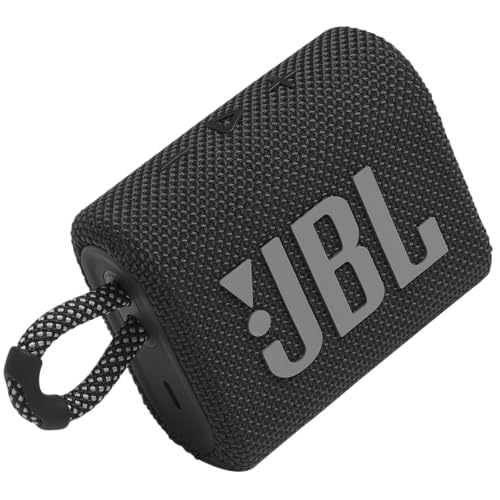
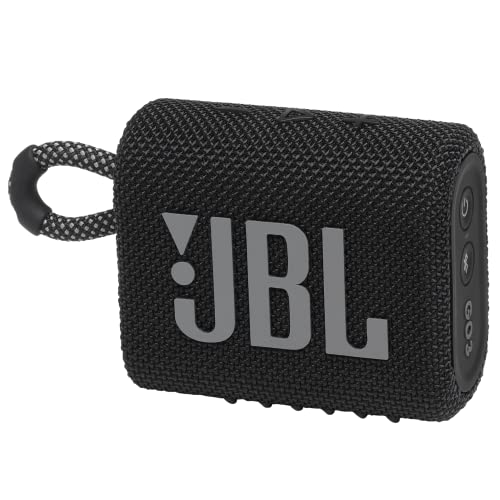
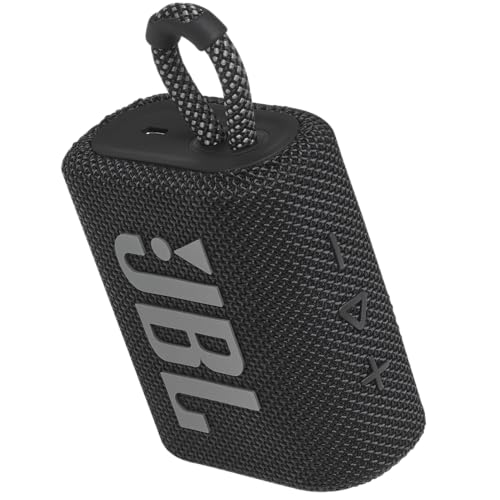
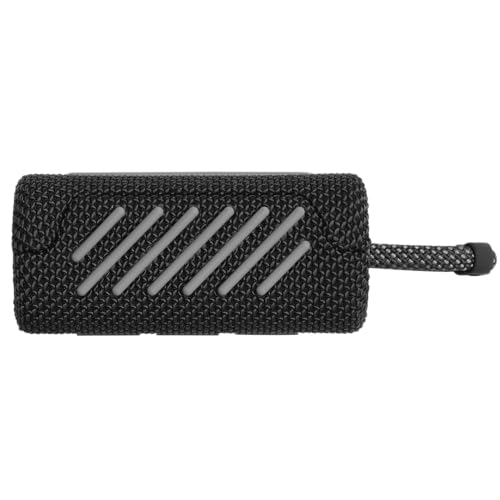
The JBL Go 3, released in 2021, represents the pinnacle of "disappear into your lifestyle" design. At roughly the size of a smartphone but half as thick, it's genuinely pocket-friendly. The fabric exterior isn't just for looks—it's designed to survive being tossed into backpacks, dropped on concrete, and splashed with everything from pool water to coffee.
The IP67 rating deserves explanation because it's genuinely impressive. The "6" means completely dust-tight—no particles can enter the speaker at all. The "7" means it can be submerged in up to one meter of water for 30 minutes and keep working. This isn't just splash-resistant; this is submarine-grade waterproofing in a $30 speaker.
JBL integrated a fabric loop directly into the design, acknowledging that ultra-portable speakers need to attach to things. You can clip it to a backpack, hang it from a shower head, or loop it around your bike handlebars. This kind of thoughtful design detail separates good portable speakers from great ones.
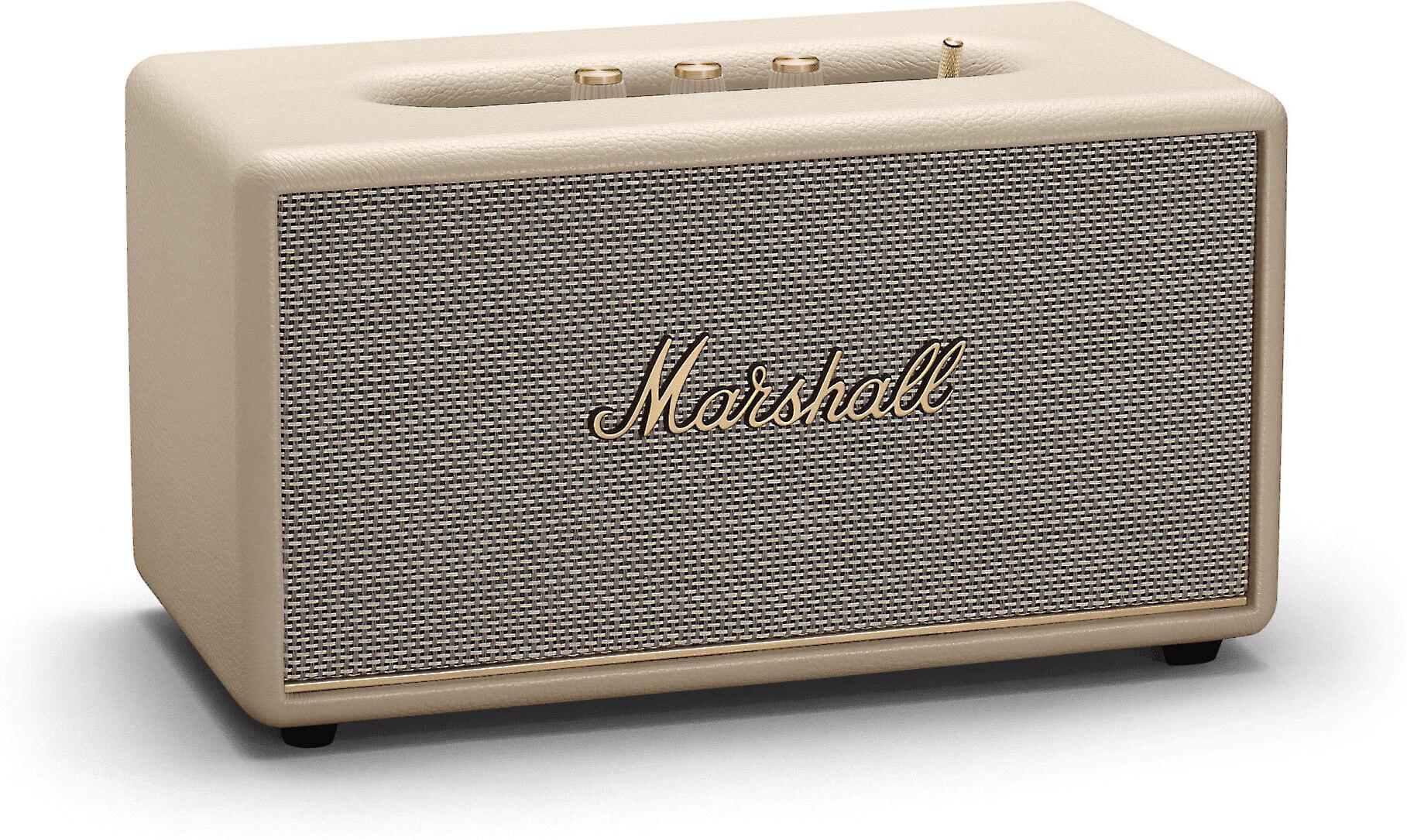
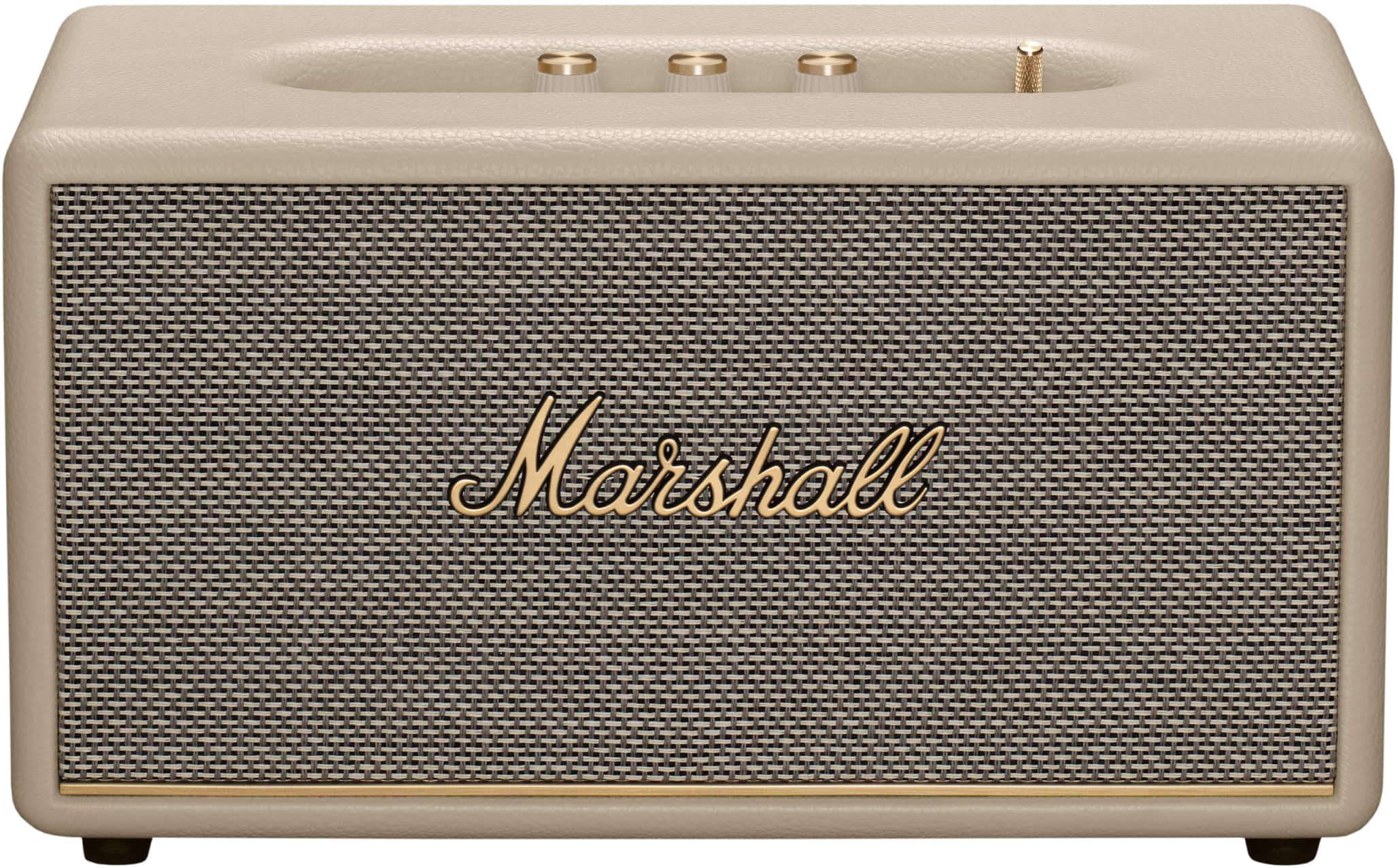
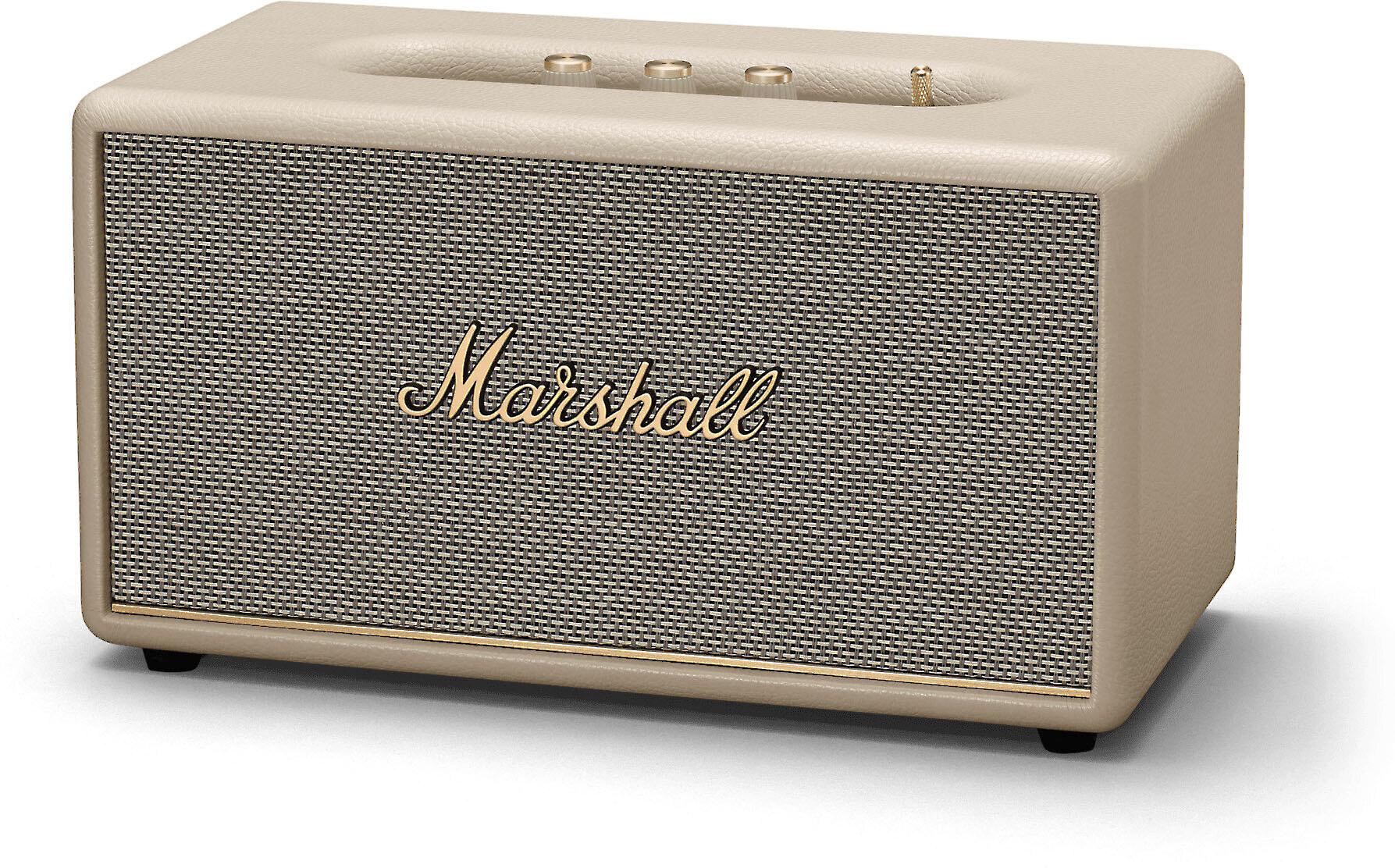
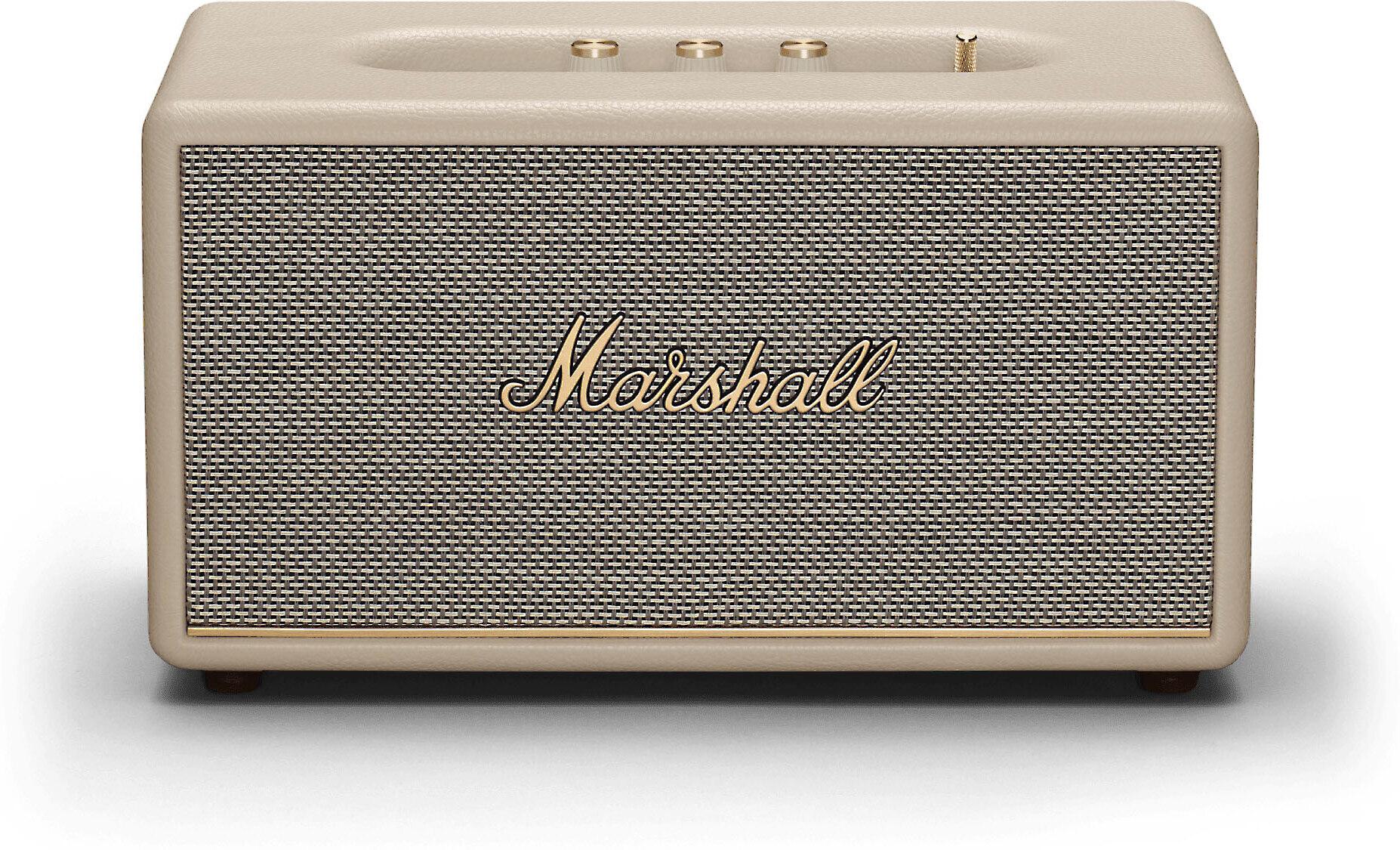
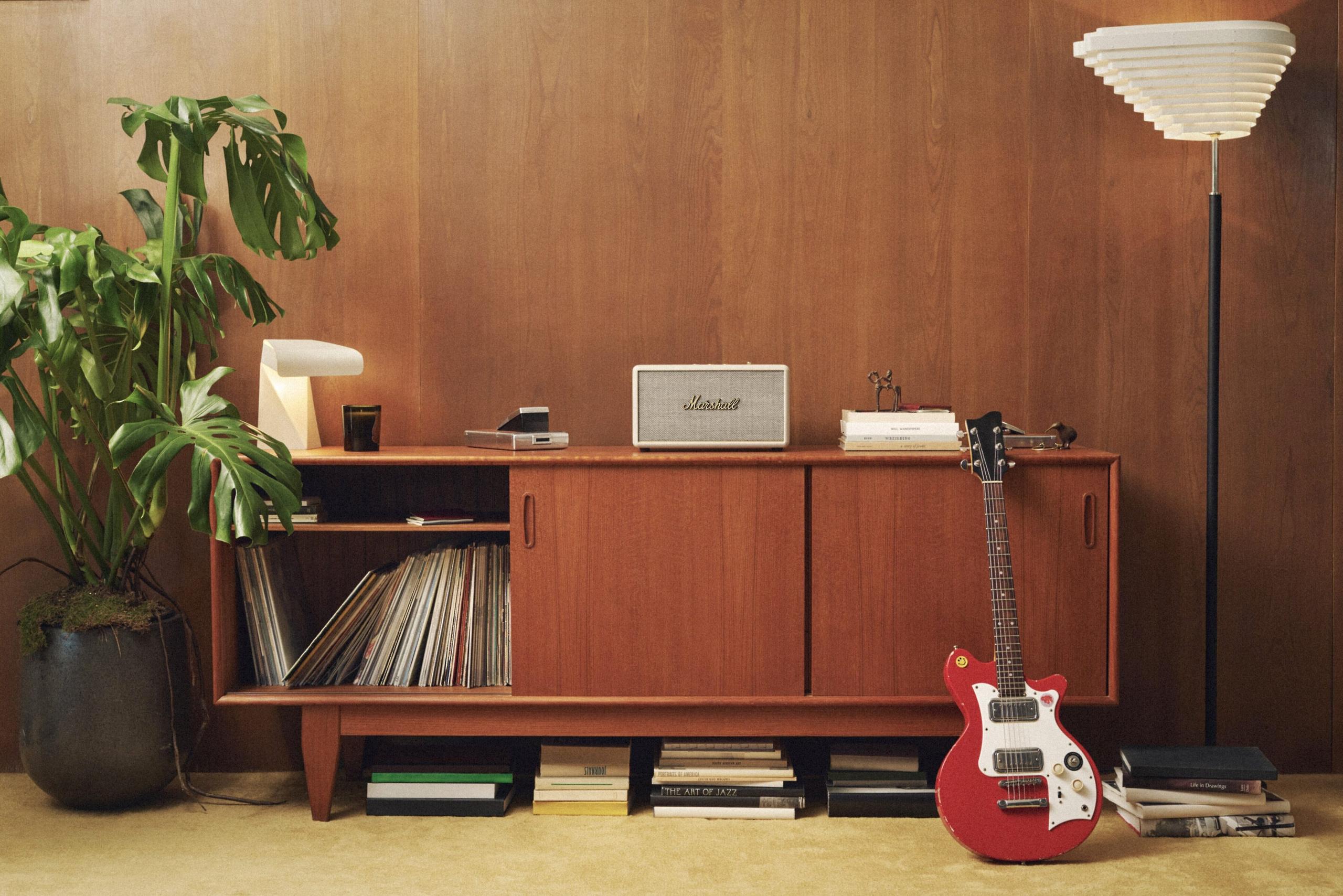
The Marshall Stanmore III, launched in 2022, follows an entirely different philosophy. Marshall built their reputation making guitar amplifiers that defined rock music, and the Stanmore III deliberately channels that heritage. The wooden cabinet construction, brass control knobs, and woven grille aren't trying to disappear—they're making a statement about valuing music enough to give it proper treatment.
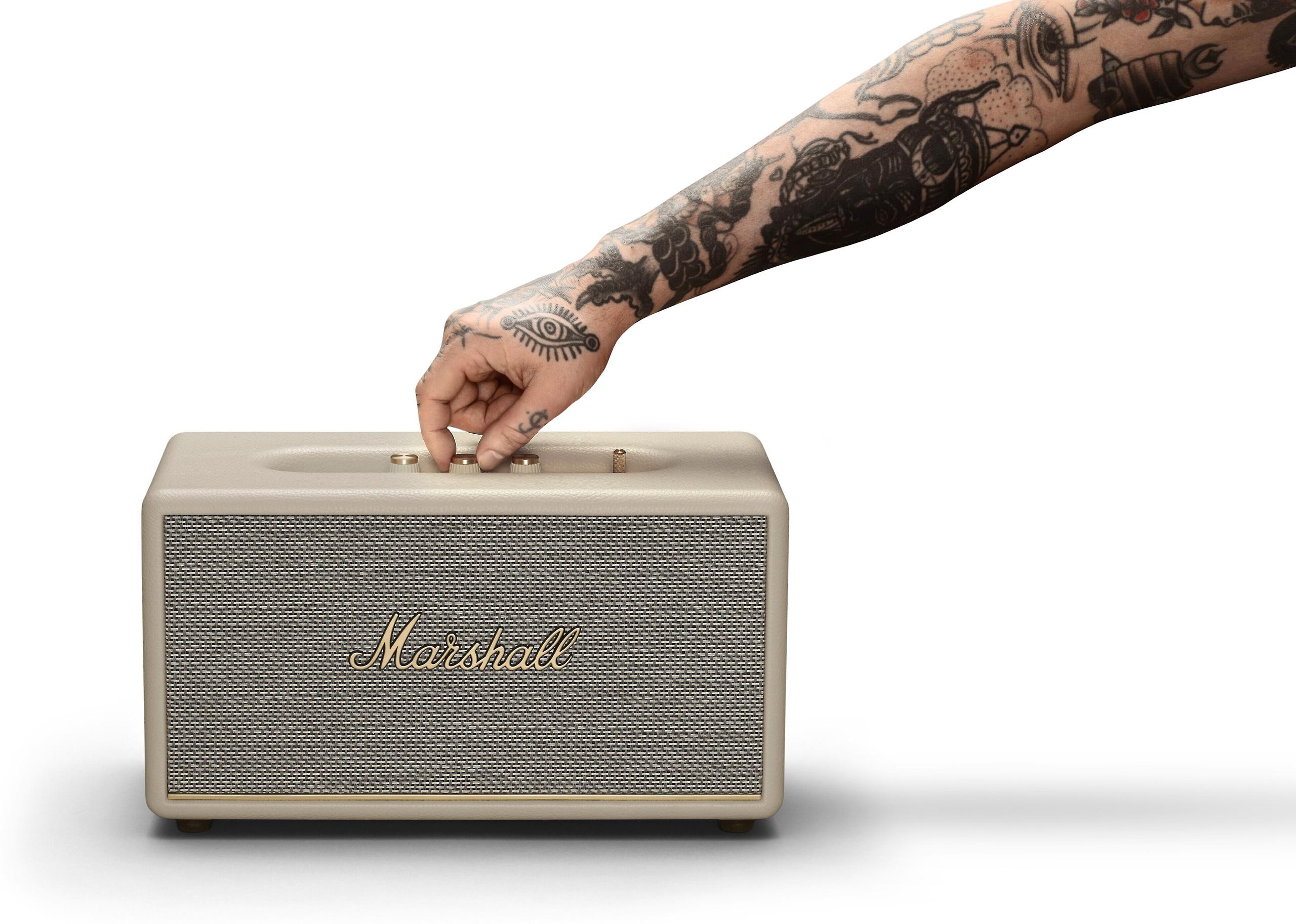
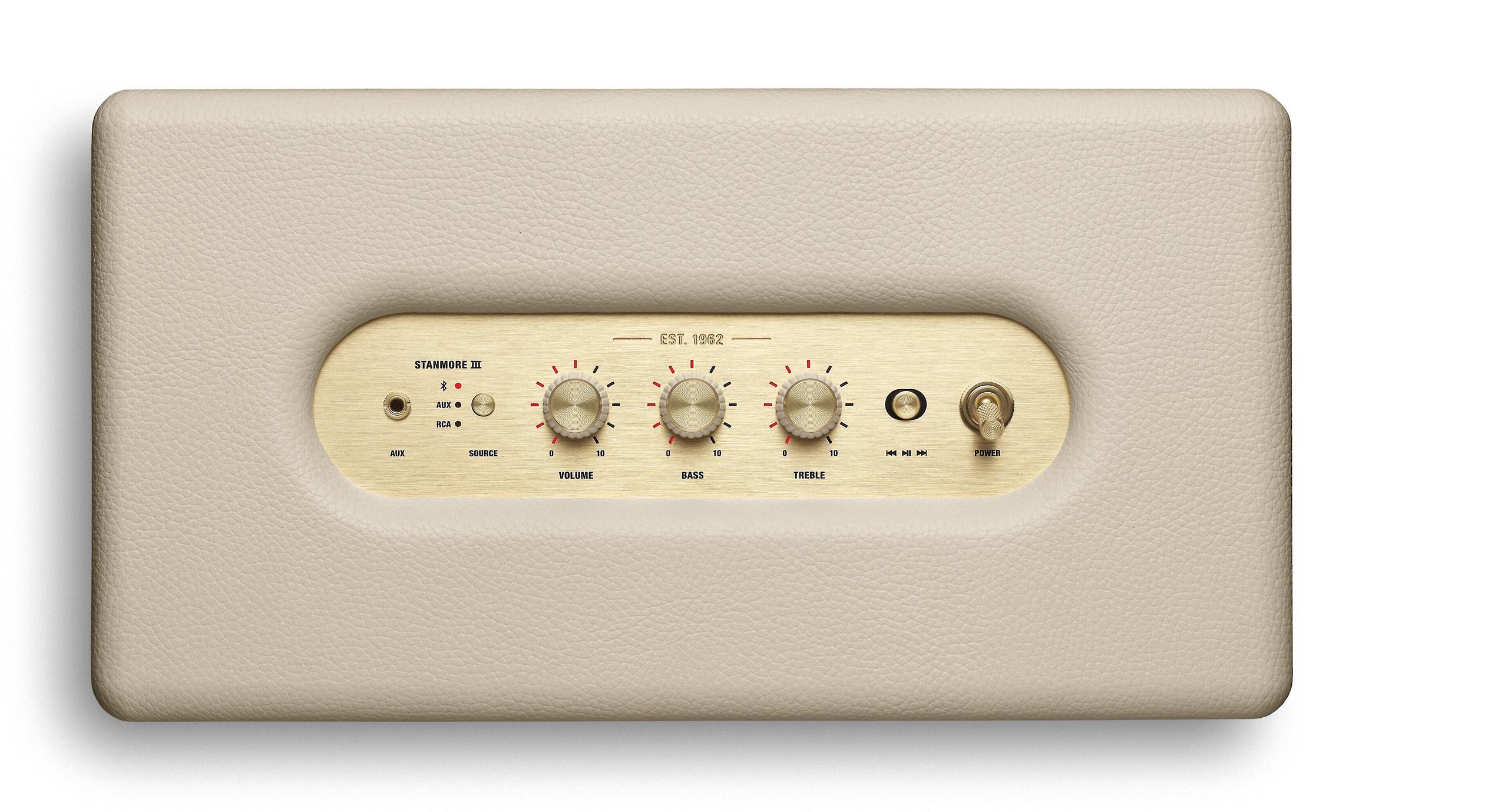
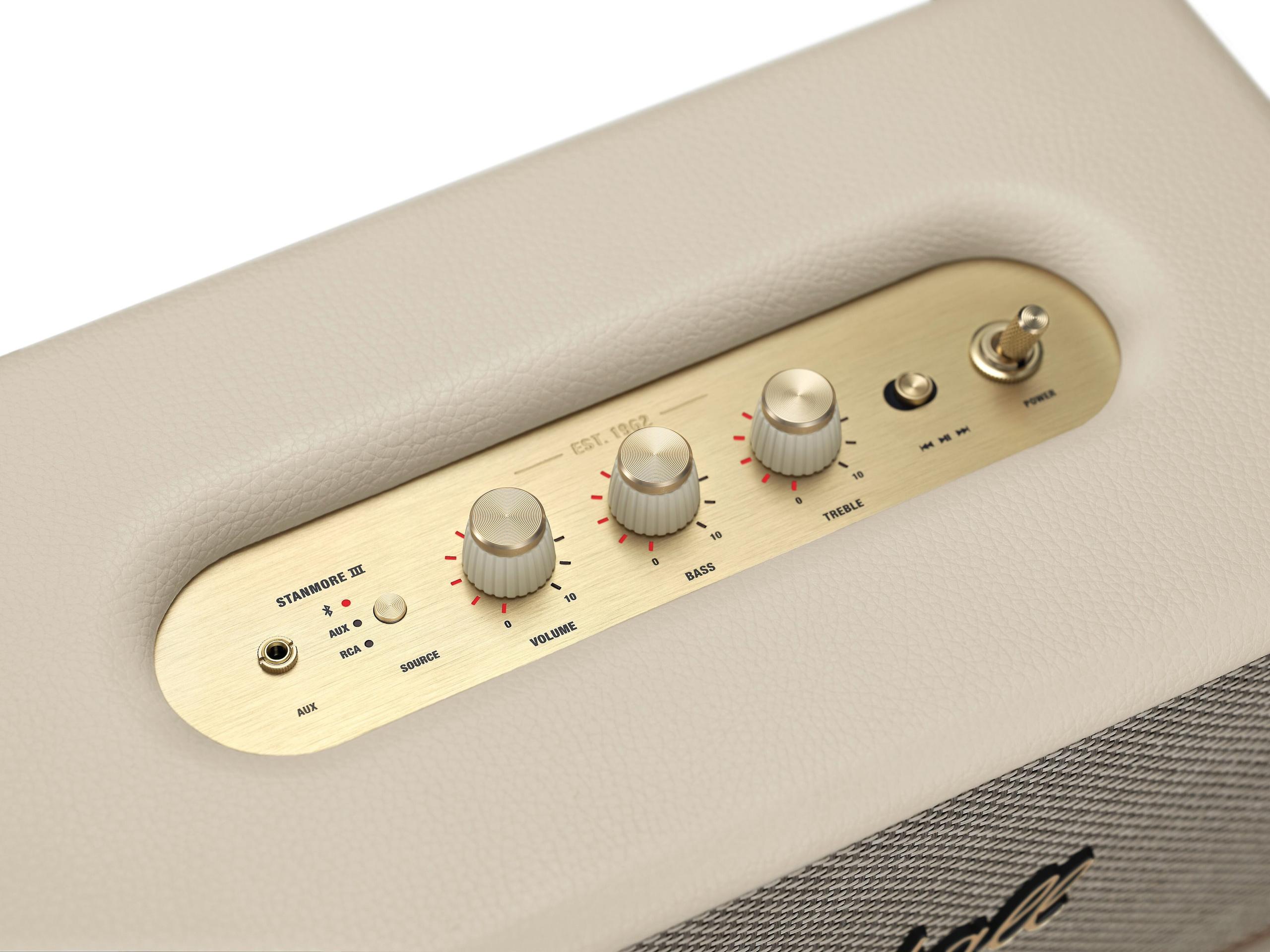
But this isn't just nostalgic styling. The analog control knobs serve a practical purpose that digital interfaces can't match. When you're listening to music and want more bass, you can reach over and turn the bass knob without looking, without opening an app, without interrupting the music. It's immediate and intuitive in a way that touch screens simply aren't.
The substantial weight—over nine pounds—reflects the internal components needed for serious audio performance. Large speakers, powerful amplifiers, and robust construction add mass, but they also add sound quality. Marshall chose to embrace this rather than compromise for portability.
Understanding speaker performance requires grasping some basic physics. Sound waves are literally moving air, and moving more air requires larger drivers and more power. This fundamental limitation explains why tiny speakers struggle with bass and why large speakers sound fuller.
The JBL Go 3 works within severe physical constraints. Its single 43mm driver (about 1.7 inches) produces all the sound, powered by just 4.2 watts. For comparison, a typical home stereo might have 6-inch woofers powered by 50+ watts each.
These limitations show up immediately in the frequency response—the range of sounds a speaker can reproduce. The Go 3 handles frequencies from 110Hz to 20kHz, which sounds impressive until you realize that deep bass starts around 60Hz and extends down to 20Hz. Male vocals typically contain energy around 85-180Hz, so the Go 3 captures the upper part of that range well but misses the chest-thumping fundamentals.
In practical terms, this means podcasts and acoustic music sound clear and pleasant, while hip-hop and electronic music lose their impact. The speaker compensates by slightly boosting the mid-bass around 140Hz, which prevents it from sounding tinny, but it can't create frequencies that simply aren't there.
Our research into user experiences consistently shows that the JBL Go 3 exceeds expectations for its size while reminding you of those size limitations. At moderate volumes in quiet environments, it's surprisingly enjoyable. Push it hard or try to fill a noisy space, and the constraints become obvious.
The Marshall Stanmore III operates in a completely different performance category. Its 80-watt system uses a dedicated 5-inch woofer for bass and two separate tweeters for high frequencies. This "two-way" design allows each driver to specialize in what it does best, rather than asking one driver to handle everything.
The frequency response extends down to 45Hz, which captures the fundamental frequencies of bass guitars and kick drums. This isn't just about volume—it's about reproducing the complete musical picture. When you hear a song on the Stanmore III, you're hearing parts of the music that the Go 3 simply cannot reproduce.
The stereo separation also makes a huge difference. The JBL Go 3 produces mono sound—everything comes from one point. The Marshall creates a proper stereo image where instruments appear to come from different locations in space. This spatial aspect of sound reproduction is why two-channel stereo became the standard decades ago.
Expert reviews consistently praise the Stanmore III's dynamic range—its ability to handle both quiet passages and explosive crescendos without distortion. The Dynamic Loudness feature automatically adjusts the tonal balance as you change volume, ensuring that music sounds natural whether you're listening quietly in the evening or cranking it for a party.
Both speakers use Bluetooth, but the differences matter more than you might expect. The JBL Go 3 uses Bluetooth 5.1, which improved connection stability and power efficiency compared to earlier versions. However, it only supports basic audio profiles (A2DP for music streaming and AVRCP for playback control).
The Marshall Stanmore III steps up to Bluetooth 5.2, which added multi-host functionality. This means you can have two devices connected simultaneously and switch between them seamlessly. In practice, this might mean your laptop and phone both stay connected, and you can play music from either without re-pairing.
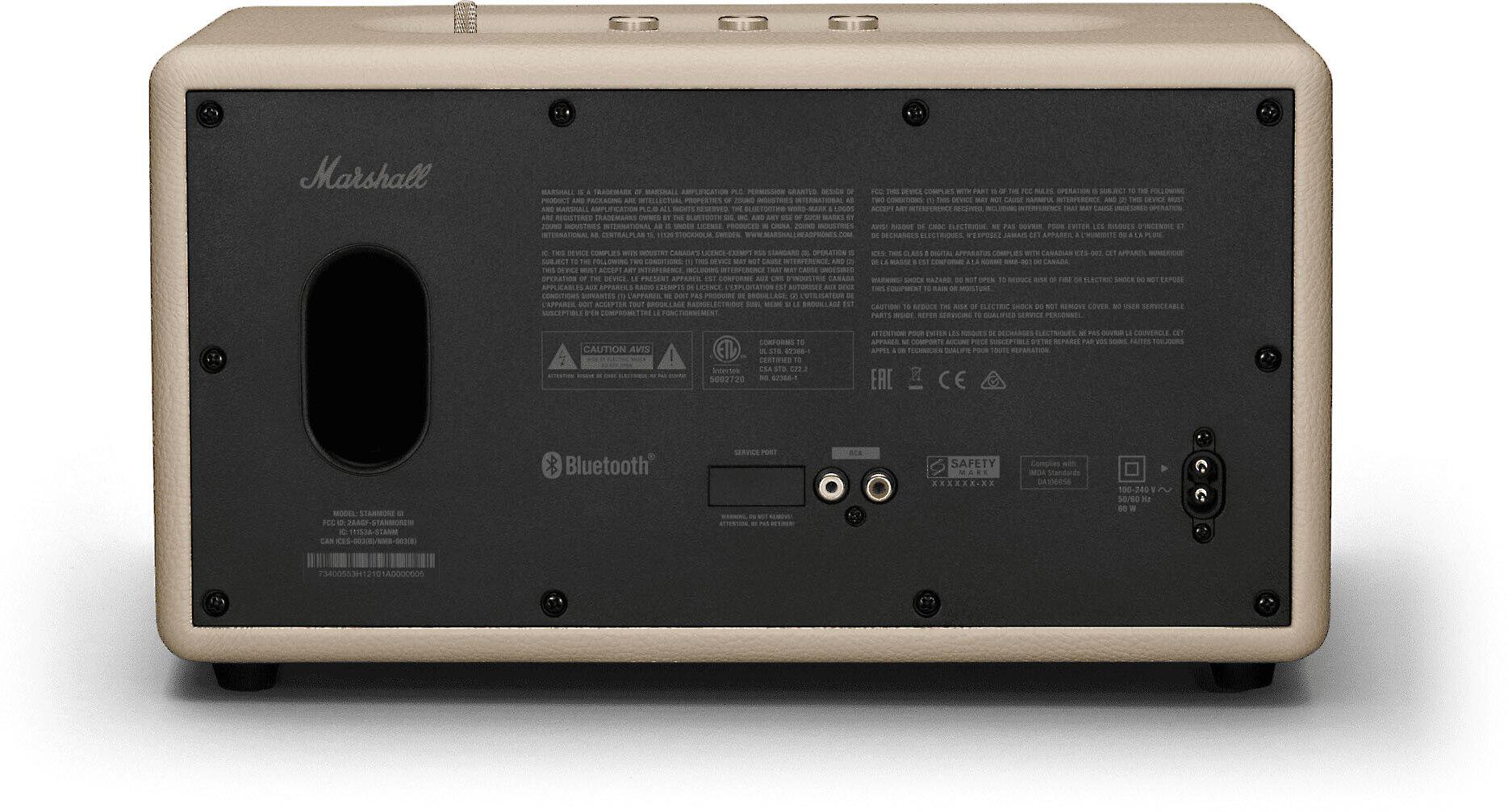
More importantly, the Marshall includes multiple wired inputs: 3.5mm auxiliary and RCA stereo inputs. These matter for several reasons. First, wired connections avoid the slight audio delay inherent in Bluetooth, which becomes noticeable when watching movies. Second, they enable connections to devices without Bluetooth, like older turntables or CD players. Third, they typically provide better audio quality than Bluetooth compression allows.
The power source difference between these speakers fundamentally shapes their capabilities. The JBL Go 3's 2.775Wh battery provides roughly 5 hours of playback, depending on volume levels. This constraint forces design compromises—the amplifier must be extremely efficient, which limits power output.
Lithium-ion batteries also degrade over time. After 300-500 charge cycles (roughly 1-2 years of regular use), the battery will hold noticeably less charge. Eventually, this becomes the limiting factor in the speaker's useful life.
The Marshall Stanmore III sidesteps these issues entirely by requiring wall power. This enables consistent high-power output and eliminates battery degradation concerns. However, it also eliminates true portability—you're limited to locations with electrical outlets.
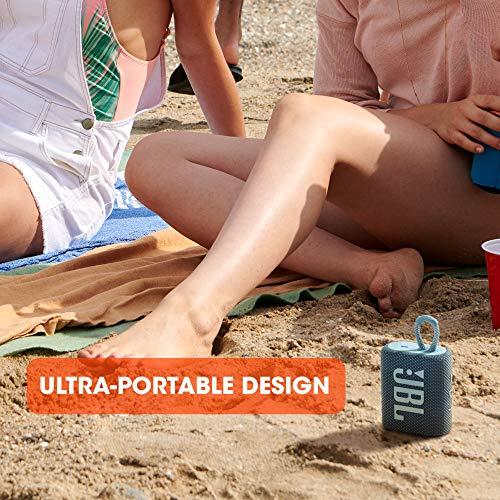
The JBL Go 3 shines in scenarios where traditional speakers simply won't work. Beach trips are the obvious example—sand, salt water, and dropped speakers don't mix well, but the Go 3 handles all three without concern. Pool parties, camping trips, and outdoor picnics similarly benefit from true weather resistance.
The size advantage matters in unexpected ways. It fits in airline carry-on restrictions without using precious luggage space. Hotel rooms often have terrible TV speakers, and the Go 3 provides a massive upgrade while fitting in your toiletry bag. College dorm rooms with limited space and noise restrictions appreciate both the compact size and moderate volume output.
For home theater use, the JBL Go 3 isn't really appropriate. The mono output and limited frequency response make it unsuitable for movie soundtracks, which rely heavily on stereo effects and deep bass for impact.
The Marshall Stanmore III truly comes alive in home listening environments. Placed on a bookshelf or entertainment center, it provides room-filling sound that makes background music actually engaging rather than just present. The stereo separation creates an immersive experience that mono speakers simply cannot match.
For home theater enhancement, the Marshall offers compelling advantages over typical TV speakers. The RCA inputs connect directly to most TVs, and the improved dialogue clarity and dynamic range make a noticeable difference in movie enjoyment. While it's not a replacement for a full surround sound system, it's a massive upgrade from built-in TV audio.
The multiple input options enable some creative setups. You might connect a turntable to the RCA inputs for vinyl playback while keeping your phone connected via Bluetooth for streaming services. The source switching happens instantly via the top-panel button.
Your music lifestyle is genuinely mobile. If you find yourself wanting music during outdoor activities, travel, or in spaces without convenient power outlets, the JBL Go 3 provides capabilities that larger speakers simply cannot. The weather resistance alone makes it worth considering for anyone who spends significant time outdoors.
Budget constraints also favor the Go 3. At the time of writing, it costs roughly one-eighth the price of the Marshall Stanmore III, making it accessible to students and casual listeners who want decent wireless audio without significant investment.
For secondary or supplementary speakers, the Go 3 excels. Maybe you have a good home system but want something for the garage, bathroom, or guest room. The Go 3 fills these roles without requiring significant space or investment.
You're seeking to upgrade your primary music listening experience at home. If you currently rely on laptop speakers, TV audio, or basic Bluetooth speakers for daily listening, the Marshall Stanmore III represents a transformational upgrade in sound quality.
The aesthetic appeal matters more than many people admit. If you value objects that reflect attention to design and craftsmanship, the Marshall's vintage-inspired styling and premium materials provide satisfaction beyond pure functionality.
Multiple connectivity needs favor the Marshall. If you want to connect various sources—streaming from phones, playing vinyl records, enhancing TV audio—the multiple inputs provide flexibility that pure Bluetooth speakers cannot match.
Both speakers represent mature takes on their respective categories, but they've evolved from different starting points. The JBL Go 3 benefits from years of miniaturization improvements—better battery chemistry, more efficient amplifiers, and advanced digital signal processing that maximizes performance from minimal hardware.
The Marshall Stanmore III represents the current state of premium home Bluetooth speakers, incorporating lessons learned from earlier generations. The 2022 release added features like placement compensation (which adjusts sound based on nearby walls) and over-the-air firmware updates that keep the speaker current as Bluetooth standards evolve.
Since their respective releases, both categories have continued evolving. Portable speakers are getting slightly larger to improve sound quality, while premium speakers are adding smart features and multi-room connectivity. However, the fundamental trade-offs between portability and performance remain unchanged.
The choice between the JBL Go 3 and Marshall Stanmore III ultimately comes down to honest self-assessment about your listening priorities and lifestyle.
If you genuinely need music everywhere you go, value weather resistance, and want wireless audio on a budget, the Go 3 delivers remarkable capability for its size and price. Accept its limitations in bass response and volume output, and you'll appreciate what it does well.
If you're seeking to improve your home listening experience and can justify the significantly higher investment, the Marshall provides sound quality that approaches traditional stereo systems while maintaining the convenience of wireless connectivity.
The mistake would be trying to make either speaker do what it wasn't designed for. Don't expect the Go 3 to fill large spaces with high-quality sound, and don't expect the Marshall to accompany you on hiking trails. Choose based on your primary use case, and you'll be satisfied with either decision.
At the time of writing, both speakers represent excellent value within their respective categories. The JBL Go 3 maximizes capability per dollar spent, while the Marshall Stanmore III justifies its premium through superior performance and features. Your budget and priorities will determine which type of value matters more to you.
| JBL Go 3 | Marshall Stanmore III |
|---|---|
| Size & Portability - Critical for determining where you can actually use it | |
| Ultra-compact: 3.4" x 2.7" x 1.6", 0.46 lbs with fabric loop | Large home speaker: 13.8" x 7.7" x 7.3", 9.37 lbs |
| Audio Power & Configuration - Directly impacts sound quality and room-filling ability | |
| Single 4.2W driver, mono output | 80W total: 50W woofer + dual 15W tweeters, true stereo |
| Frequency Response - Determines what parts of music you'll actually hear | |
| 110Hz-20kHz (missing deep bass below 110Hz) | 45Hz-20kHz (captures full bass range including kick drums) |
| Water Resistance - Essential for outdoor and travel use | |
| IP67 rated: submersible to 1 meter for 30 minutes | No water resistance (indoor use only) |
| Power Source - Defines where and how long you can use it | |
| Built-in battery: 5 hours playback, USB-C charging | AC power required (no battery operation) |
| Bluetooth Technology - Affects connection quality and device compatibility | |
| Bluetooth 5.1 with basic profiles | Bluetooth 5.2 with multi-host (two devices simultaneously) |
| Input Options - Determines what sources you can connect beyond phone/laptop | |
| Bluetooth only | Bluetooth + 3.5mm aux + RCA stereo inputs |
| Sound Customization - Control over your listening experience | |
| Fixed sound profile, basic volume controls | Physical bass/treble knobs + app EQ + Dynamic Loudness |
| Build Materials - Affects durability and aesthetics | |
| Ruggedized fabric with rubber accents for drops/outdoor use | Premium wood cabinet with brass accents and leather vinyl |
| Price Category - Value proposition at time of writing | |
| Ultra-budget portable (~$30 range) | Premium home speaker (~$380 range) |
The JBL Go 3 is significantly better for outdoor use thanks to its IP67 waterproof and dustproof rating, allowing it to be submerged in water up to 1 meter deep for 30 minutes. It's designed for beach trips, pool parties, and camping with rugged fabric construction. The Marshall Stanmore III has no water resistance and is designed exclusively for indoor home use.
The Marshall Stanmore III delivers dramatically superior sound quality with its 80-watt system, deep bass extension down to 45Hz, and true stereo separation. The JBL Go 3 has a single 4.2-watt driver with limited bass response starting at 110Hz and mono output, making it suitable for casual listening but not audiophile experiences.
The JBL Go 3 is extremely portable at just 3.4" x 2.7" x 1.6" and weighing 0.46 lbs, easily fitting in pockets or bags with its integrated fabric loop. The Marshall Stanmore III weighs 9.37 pounds and requires AC power, making it a stationary home speaker rather than a portable option.
The Marshall Stanmore III works well for home theater enhancement with its RCA inputs for direct TV connection, stereo sound, and powerful bass response that improves movie dialogue and effects. The JBL Go 3 is not suitable for home theater due to its mono output, limited bass, and small size that can't fill rooms effectively.
The Marshall Stanmore III provides superior connectivity with Bluetooth 5.2, 3.5mm auxiliary input, RCA stereo inputs, and multi-host functionality allowing two devices to stay connected simultaneously. The JBL Go 3 only offers basic Bluetooth 5.1 connectivity without additional input options.
The JBL Go 3 has a built-in battery providing up to 5 hours of playback time with 2.5-hour USB-C charging. The Marshall Stanmore III doesn't have a battery and requires constant AC power connection, eliminating battery life concerns but requiring wall outlets.
Value depends on your needs: the JBL Go 3 offers exceptional value for ultra-portable, weather-resistant wireless audio at a budget price point. The Marshall Stanmore III justifies its significantly higher cost through premium sound quality, multiple inputs, and home audio performance that rivals traditional stereo systems.
The Marshall Stanmore III easily fills medium to large rooms with its 80-watt output and can reach 97dB at 1 meter without distortion. The JBL Go 3 is designed for personal listening and small spaces, lacking the power to effectively fill large rooms with quality sound.
The Marshall Stanmore III has significantly better bass with its dedicated 5-inch woofer extending down to 45Hz, capturing kick drums and bass guitars fully. The JBL Go 3 has limited bass response starting at 110Hz, missing the deep low-end frequencies that give music its impact and warmth.
The Marshall Stanmore III includes a companion app with EQ presets, placement compensation technology, and over-the-air firmware updates, plus physical analog controls for bass and treble. The JBL Go 3 has basic onboard controls for power, volume, and playback without app support or advanced features.
The JBL Go 3 is built for rough handling with ruggedized fabric exterior, rubber accents for drop protection, and complete waterproofing. The Marshall Stanmore III uses premium materials like wood and brass but is designed for careful home use rather than outdoor adventures or rough treatment.
The JBL Go 3 performs best with podcasts, acoustic music, and vocal-heavy content where its clear midrange shines, while struggling with bass-heavy genres like hip-hop or EDM. The Marshall Stanmore III excels with all music genres, particularly rock, electronic, and bass-heavy music that benefit from its full frequency range and dynamic power handling.
We've done our best to create useful and informative comparisons to help you decide what product to buy. Our research uses advanced automated methods to create this comparison and perfection is not possible - please contact us for corrections or questions. These are the sites we've researched in the creation of this article: rtings.com - streamtechreviews.com - english.achoreviews.com - smarthomesounds.co.uk - soundguys.com - rtings.com - walmart.com - soundguys.com - youtube.com - youtube.com - jbl.com - youtube.com - selectoguru.com - versus.com - videoandaudiocenter.com - harmanaudio.com - jbl.com - bestbuy.com - forum.hifiguides.com - manuals.plus - kh.jbl.com - th.jbl.com - mm.jbl.com - jbl.com - bestbuy.com - youtube.com - youtube.com - youtube.com - jbl.com - bestbuy.com - bestbuy.com - jbl.com.tw - youtube.com - techgadgetscanada.com - camelcamelcamel.com - crutchfield.com - bestbuy.com - dxomark.com - crutchfield.com - crutchfield.com - marshall.com - marshall-production-1.mobify-storefront.com - exhibit.tech - ooberpad.com - av-connection.com

Privacy Policy
Terms and Conditions - Affiliate Policy
Home Security
© Copyright 2008-2026.
11816 Inwood Rd #1211, Dallas, TX 75244