






When you're shopping for a portable Bluetooth speaker, the sheer number of options can feel overwhelming. Two speakers that consistently rise to the top of recommendation lists are the JBL Charge 4 and the Marshall Middleton – but they represent completely different approaches to portable audio. After diving deep into user reviews, expert analyses, and technical specifications, it's clear these speakers serve different types of listeners, despite both delivering impressive sound quality.
Before jumping into the comparison, let's establish what makes a great portable speaker. The "portable" part seems obvious, but it involves more than just size. Weight distribution, battery life, and durability all factor into real-world portability. Then there's the Bluetooth connectivity – this wireless standard determines how well your speaker connects to your phone, how far you can walk away before it cuts out, and whether you'll experience audio delay when watching videos.
The most critical factors when evaluating any portable speaker include audio quality (how good it sounds), build quality (how well it's constructed), battery performance (how long it lasts), and value proposition (what you get for your money). Both the JBL Charge 4 and Marshall Middleton excel in different areas, making the choice highly dependent on your specific needs and preferences.
The fundamental difference between these speakers lies in their design philosophy. The JBL Charge 4, released in 2018, was designed as a rugged outdoor companion that happens to sound great. The Marshall Middleton, introduced in 2023, approaches things differently – it's essentially a high-quality home speaker that happens to be portable.
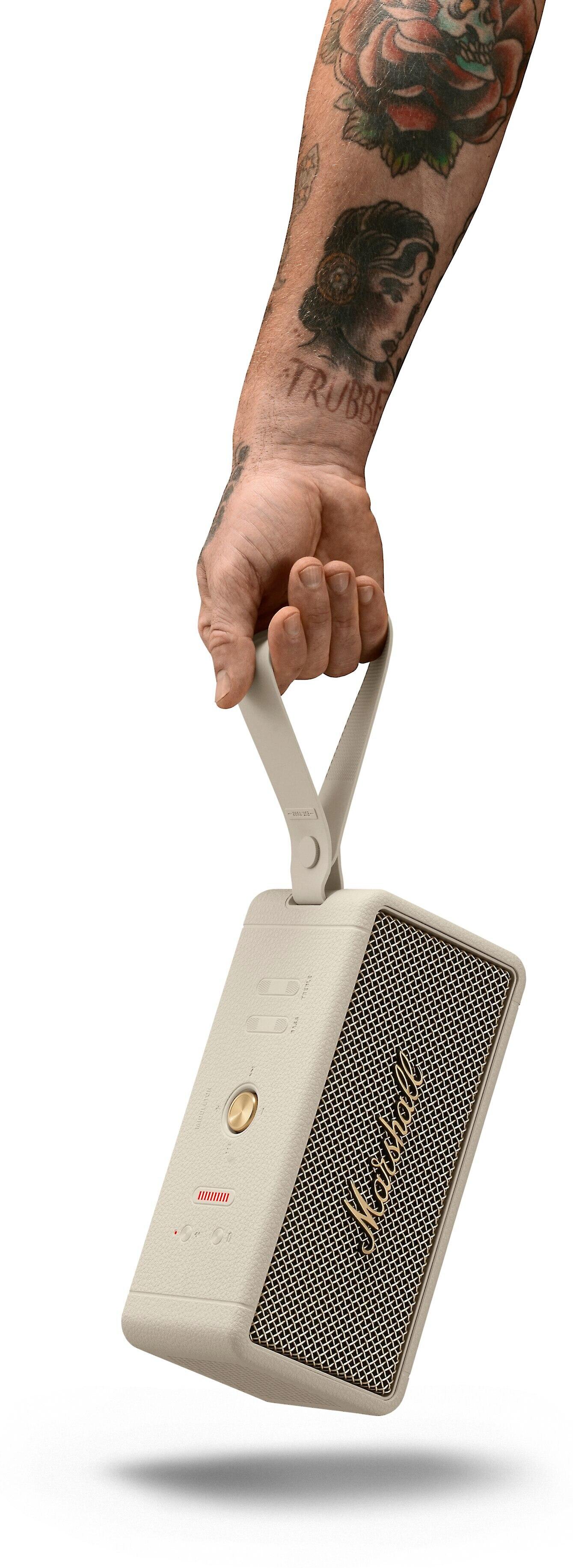
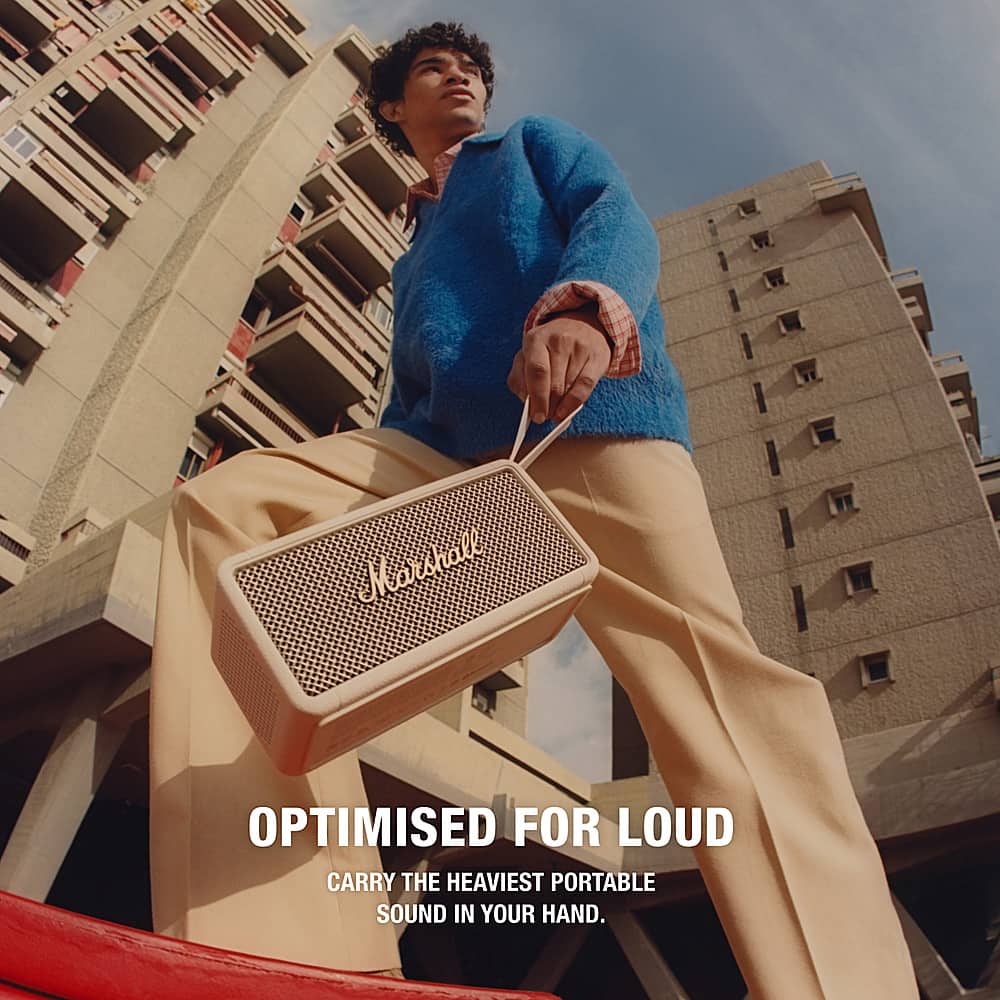
This philosophy shows up immediately in the weight. The Marshall Middleton weighs 4 pounds compared to the JBL Charge 4's 2.12 pounds. That might not sound like much, but when you're carrying a speaker for an hour-long hike or packing for a weekend trip, those extra 2 pounds become very noticeable. However, that extra weight serves a purpose – the Marshall houses significantly more powerful audio hardware.
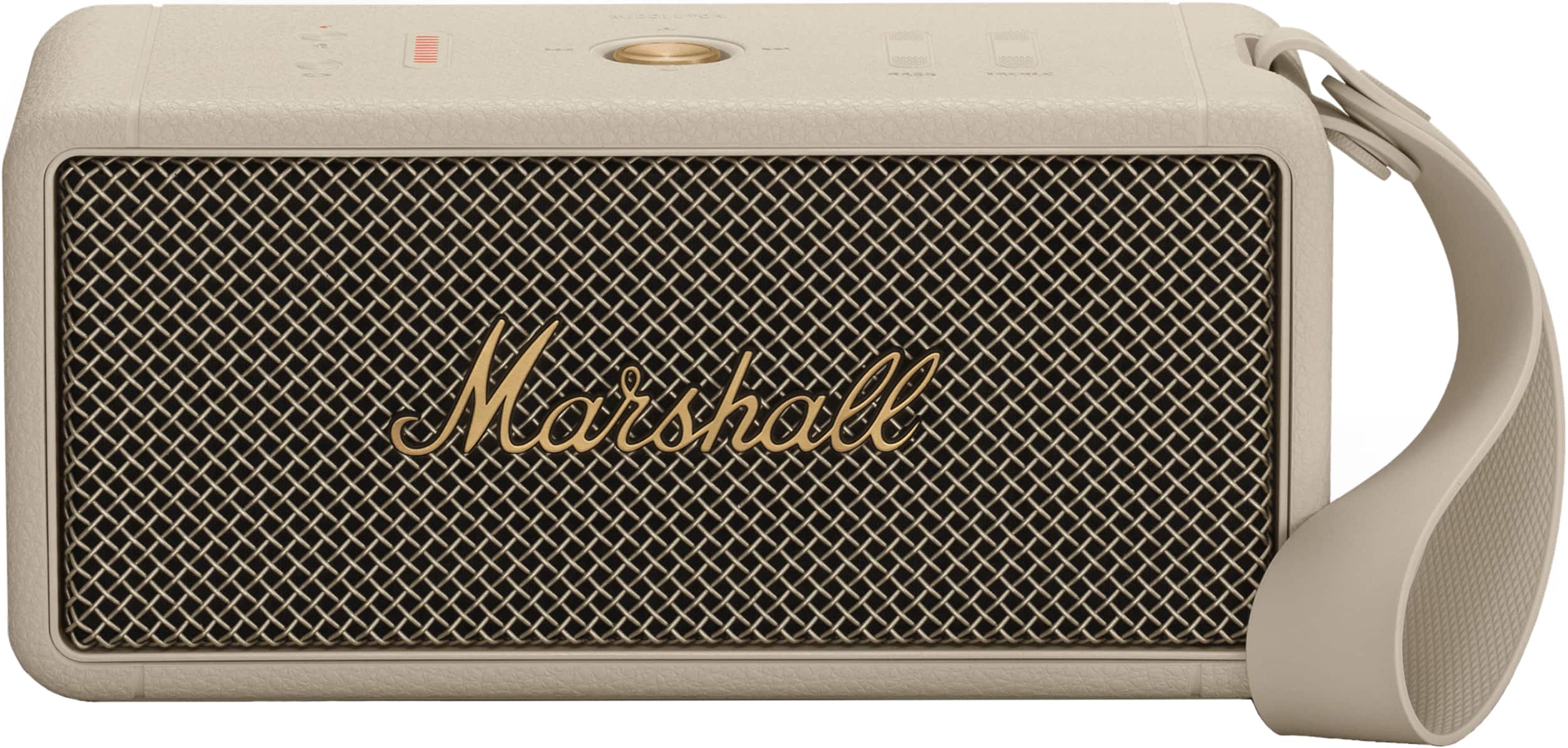
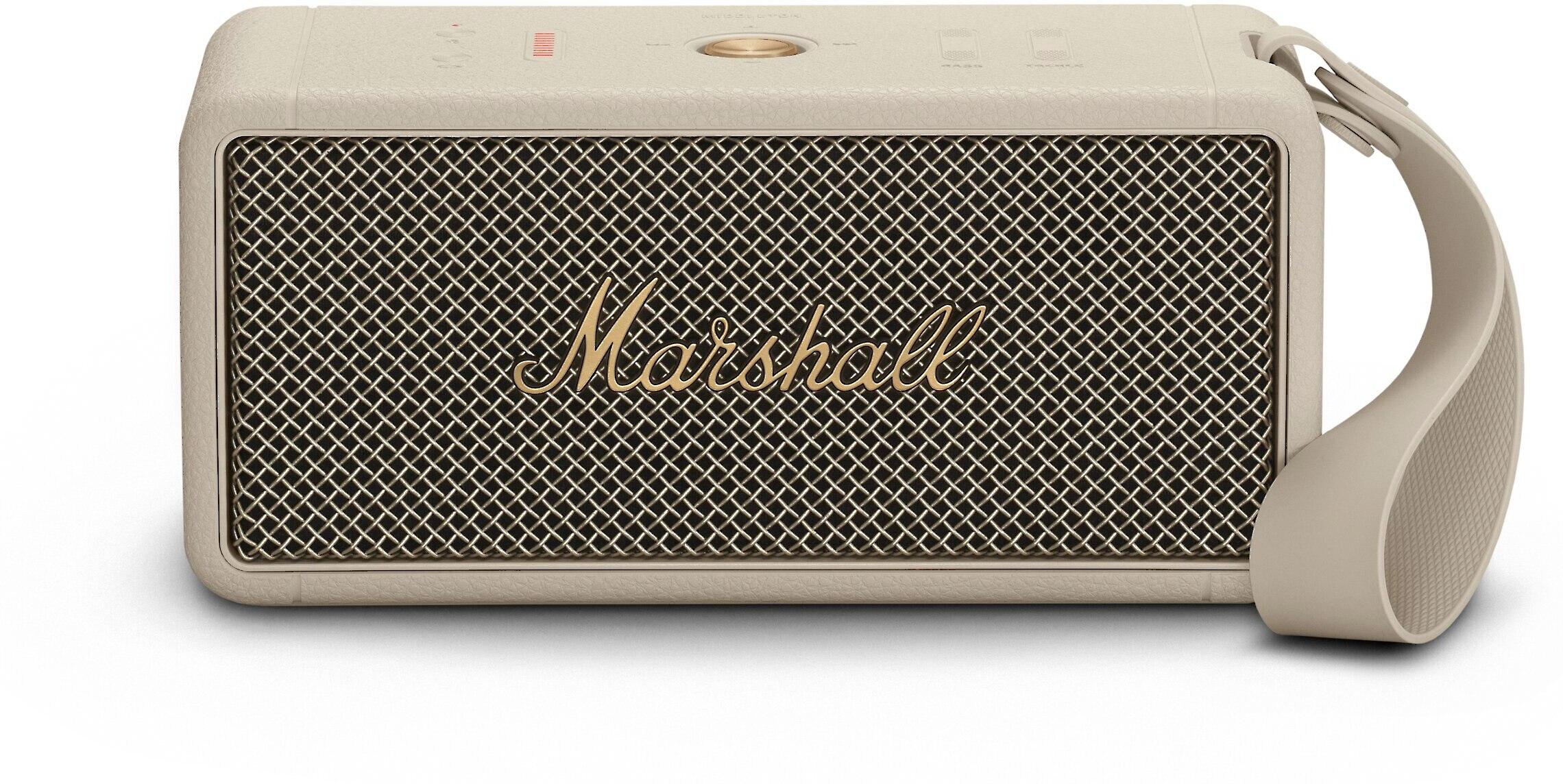
The power difference is substantial: 60 watts total for the Marshall Middleton versus 30 watts for the JBL Charge 4. But raw wattage only tells part of the story. The Marshall achieves its power through a true stereo setup with six individual drivers – that's two 3-inch woofers (the speakers that handle bass and midrange frequencies), two smaller tweeters (for high frequencies), and passive radiators (which enhance bass response without requiring additional amplification). The JBL Charge 4 uses a simpler approach with one main driver and two passive radiators.
When evaluating speaker performance, several metrics matter most: frequency response (the range of sounds the speaker can reproduce), soundstage (how wide and immersive the audio feels), volume capabilities, and tonal balance (how well bass, midrange, and treble work together).
The Marshall Middleton delivers what many would consider superior audio quality, particularly for complex music with multiple instruments. Its stereo driver configuration creates a genuine soundstage – when listening to a song with guitar panned to the left and vocals centered, you can actually hear that spatial separation. This stereo imaging makes music feel more lifelike and engaging.
User reviews consistently praise the Marshall's ability to handle both delicate acoustic tracks and heavy rock music with equal competence. The dual-woofer setup provides more controlled bass response, while the dedicated tweeters ensure crisp high frequencies. The frequency response extends down to 50Hz, meaning it can reproduce deeper bass notes than many portable speakers in its class.
The JBL Charge 4, while using a mono configuration, has earned praise for its well-balanced sound signature. Rather than trying to impress with exaggerated bass or harsh treble, it focuses on clarity and consistency across different music genres. The single-driver approach means no stereo separation, but it also eliminates potential phase issues (timing problems between multiple drivers) that can muddy the sound.
Expert reviews note that the JBL's midrange reproduction – the frequency range where most vocals and lead instruments live – is particularly well-tuned. This makes it excellent for podcasts, audiobooks, and vocal-heavy music genres.
The Marshall Middleton's 60-watt amplification provides significantly higher maximum volume levels. In practical terms, this means it can fill larger spaces and overcome more ambient noise. If you're hosting a backyard party or want music that can be heard clearly at a beach gathering, the Marshall's extra power becomes crucial.
However, both speakers handle volume increases differently. The JBL Charge 4 maintains its tonal balance reasonably well at higher volumes, though some compression occurs at maximum levels. The Marshall's additional headroom (extra power capacity) means it can play louder before distortion becomes noticeable.
Bass performance represents one of the clearest differences between these speakers. The Marshall Middleton's dual-woofer design and lower frequency extension (50Hz versus the JBL's 60Hz) provide more impactful low-end reproduction. This translates to more satisfying kick drums, bass guitar lines, and the foundation that makes music feel full and rich.
The JBL Charge 4 takes a more conservative approach to bass. It won't rattle windows or provide the deep sub-bass that bass-heavy electronic music demands, but it avoids the bloated, overwhelming bass that plagues many consumer speakers. This balanced approach works well for most music genres and prevents bass from masking other important frequencies.
Both speakers are built to withstand outdoor use, but they approach durability differently. The Marshall Middleton carries an IP67 rating, which means it's completely dust-tight and can be submerged in up to 1 meter of water for 30 minutes. The JBL Charge 4 has an IPX7 rating – the same water protection but without the dust-proof guarantee.
In practical terms, both ratings mean you don't need to worry about pool splashes, rain, or accidental drops in water. The Marshall's additional dust protection becomes relevant if you're frequently using the speaker at beaches, construction sites, or other dusty environments.
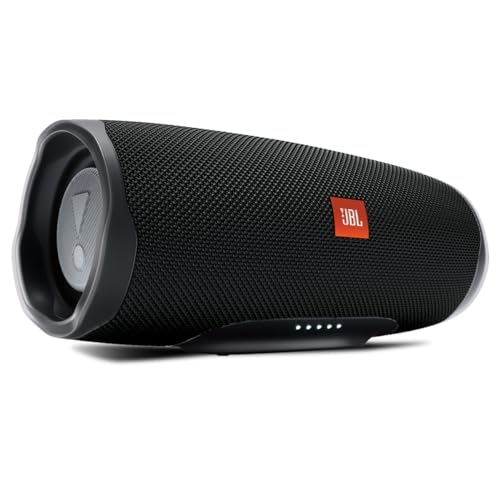
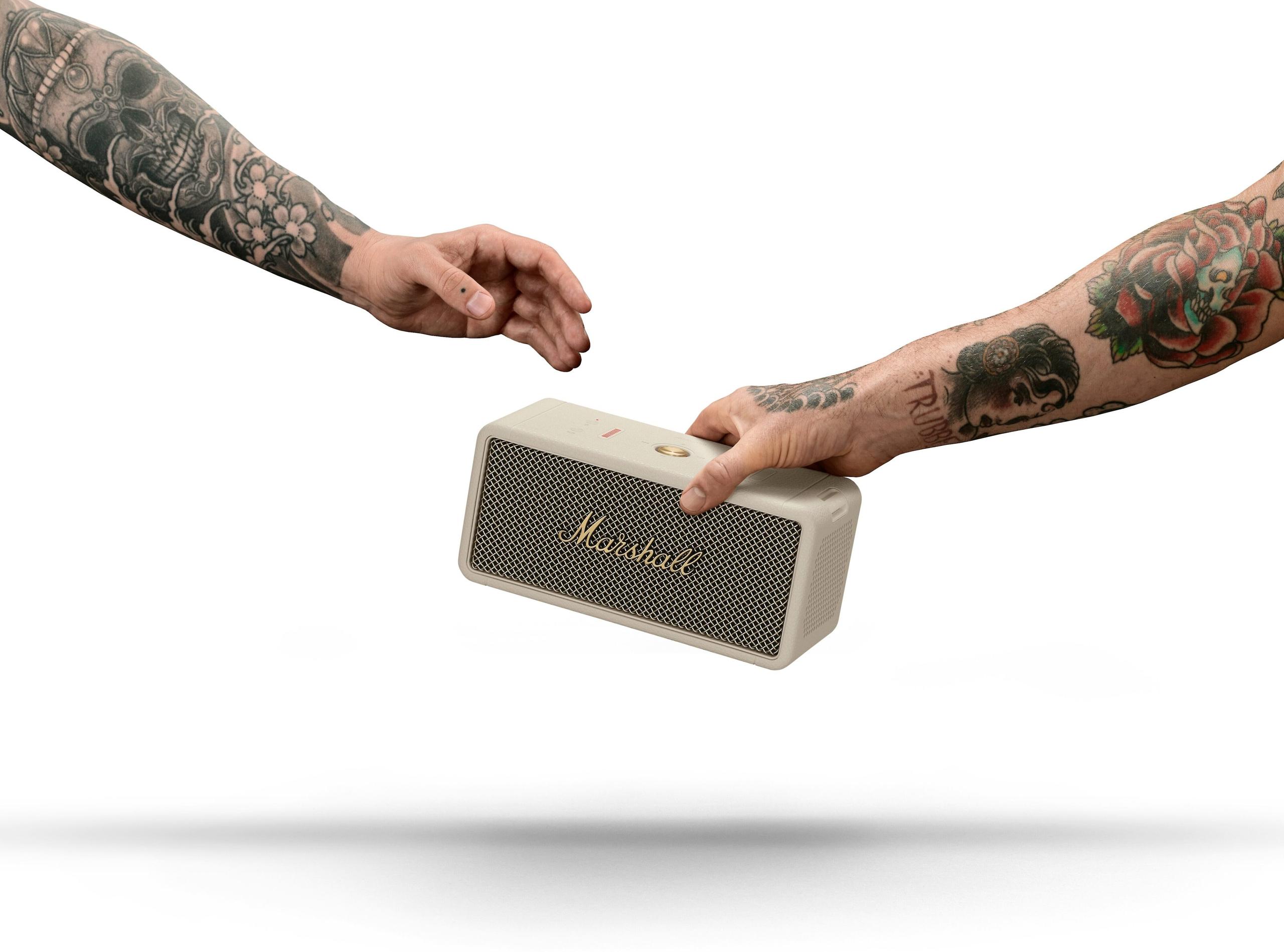
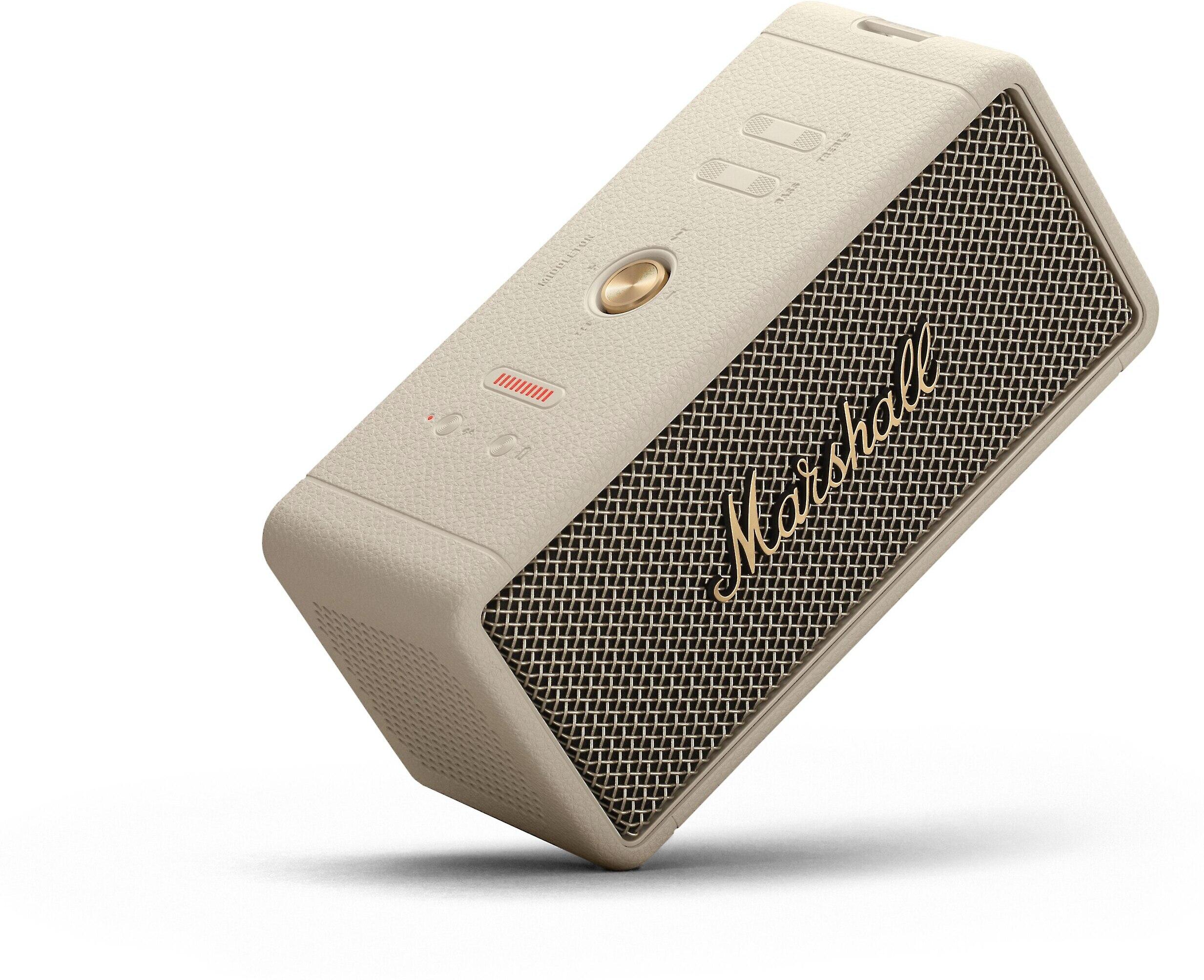
The materials and construction quality reflect each speaker's intended use. The JBL Charge 4 uses a tight fabric wrap and rugged rubber base designed to bounce back from drops and impacts. The Marshall Middleton features premium materials with brass-colored accents and the classic Marshall amplifier aesthetic – it's built to last but also designed to look good sitting on a shelf when not in use.
Both speakers advertise 20 hours of battery life, though real-world performance varies based on volume levels and music content. In practice, you can expect closer to 13-15 hours at moderate listening levels for both devices.
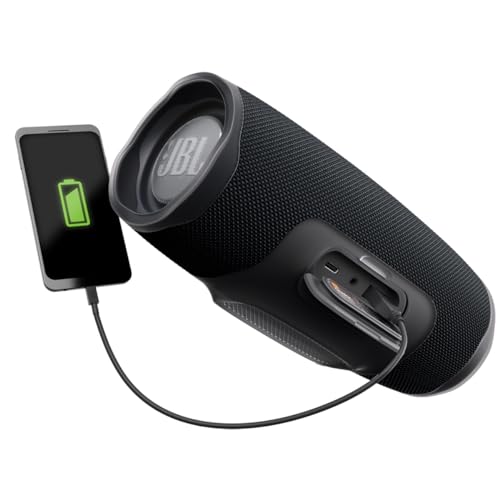
The charging story reveals another philosophical difference. The JBL Charge 4 includes a substantial 7500mAh battery that doubles as a power bank – you can charge your phone or tablet directly from the speaker using its USB-A port. This feature has proven incredibly popular with outdoor enthusiasts and travelers who want to minimize the number of charging devices they carry.
The Marshall Middleton focuses solely on audio playback and doesn't include power bank functionality. However, it does offer slightly faster charging, reaching full capacity in 4.5 hours compared to the JBL's 5.5 hours.
The technology gap between these speakers becomes apparent in their Bluetooth implementations. The Marshall Middleton uses Bluetooth 5.1, while the JBL Charge 4 relies on the older Bluetooth 4.2 standard. In practical terms, the newer Bluetooth version provides more stable connections, better range, and improved power efficiency.
Both speakers support connecting multiple devices, but the JBL Charge 4 has a more established ecosystem. Its Connect+ technology allows pairing with over 100 compatible JBL speakers – useful if you want to create a multi-room audio setup or amplify sound for large gatherings. The Marshall Middleton's Stack Mode provides similar functionality but with a smaller ecosystem of compatible devices.
One standout feature of the Marshall is its physical EQ controls. Bass and treble adjustment knobs on the top panel let you tune the sound without pulling out your phone or opening an app. This might seem minor, but when you're actively listening and want to adjust the sound, physical controls are much more convenient than digital interfaces.
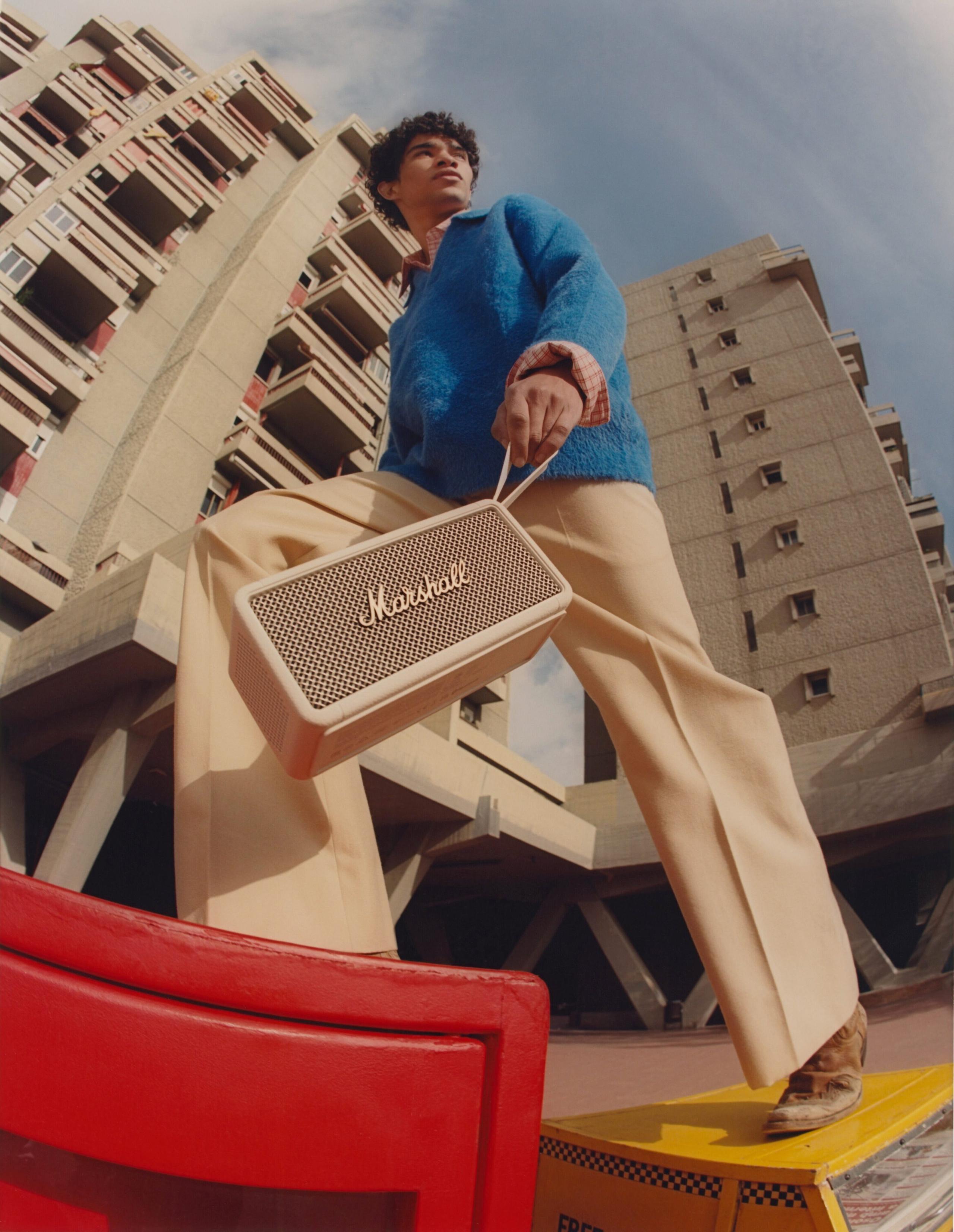
The Marshall Middleton excels as a hybrid device – equally at home in your living room and at outdoor gatherings. Its premium build quality and distinctive amplifier styling make it an attractive addition to any room, while its robust construction and IP67 rating ensure it can handle pool parties and beach trips.
If audio quality is your primary concern and you don't mind the extra weight, the Marshall delivers superior performance. Its stereo soundstage and more powerful amplification make it particularly appealing for music lovers who want the best possible sound from a portable speaker.
The Marshall also makes sense for home theater applications. While neither speaker is designed specifically for TV audio, the Marshall's stereo imaging and dialogue clarity make it a reasonable option for enhancing small TV setups or laptop audio when watching movies.
The JBL Charge 4 remains the better choice for true portability. Its lighter weight, power bank functionality, and rugged design philosophy make it ideal for active users. Hikers, campers, and beach-goers consistently prefer the JBL for its practical features and reliability.
The power bank capability shouldn't be underestimated – having a single device that provides both entertainment and emergency phone charging simplifies packing for trips and outdoor adventures. Combined with its lower weight and proven durability, these practical advantages often outweigh pure audio performance for many users.
For budget-conscious buyers, the JBL Charge 4 typically offers better value at the time of writing. While it can't match the Marshall's audio sophistication, it delivers satisfying sound quality alongside useful utility features at a generally lower price point.
Neither speaker is specifically designed for home theater use, but both can serve as significant upgrades over built-in TV speakers. The Marshall Middleton's stereo configuration provides better dialogue clarity and soundstage width, making it more suitable for movie watching.
The Marshall's physical EQ controls become particularly useful in home theater scenarios – you can quickly boost dialogue clarity by adjusting the midrange response without navigating through TV menus or phone apps. Its attractive design also means it won't look out of place in most living rooms when not in use.
However, both speakers lack the specific features that dedicated soundbars provide, such as dialogue enhancement modes, surround sound processing, or multiple HDMI inputs. They work best as simple audio upgrades rather than comprehensive home theater solutions.
After analyzing user feedback, expert reviews, and technical specifications, the choice between these speakers comes down to your priorities and intended use.
Choose the Marshall Middleton if you prioritize audio quality above all else and don't mind the extra weight and cost. It's the better choice for music lovers who want impressive sound whether they're at home or outdoors. The physical EQ controls, stereo soundstage, and premium build quality justify the higher price for users who value these features.
The JBL Charge 4 remains the smarter choice for truly portable use cases. Its power bank functionality, lighter weight, and proven durability make it more practical for active lifestyles. While it can't match the Marshall's audio sophistication, it delivers good sound quality alongside features that enhance its real-world utility.
Consider your typical use scenarios honestly. If you primarily listen at home with occasional outdoor use, the Marshall makes more sense. If you frequently travel, exercise outdoors, or need reliable backup power for your devices, the JBL's practical advantages outweigh its audio limitations.
Both speakers represent solid values in their respective categories at the time of writing, but they serve different audiences. The Marshall Middleton appeals to audio enthusiasts who want premium sound in a portable package, while the JBL Charge 4 satisfies practical users who need reliable, versatile performance without sacrificing too much sound quality.
The technology improvements since the JBL's 2018 release – better Bluetooth standards, more efficient amplification, and improved battery chemistry – are evident in the Marshall's 2023 design. However, the JBL's proven track record and mature ecosystem still hold value, particularly for users who prioritize practical features over cutting-edge audio performance.
Ultimately, both speakers deliver on their respective promises. Your choice should align with whether you value maximum audio performance or maximum practical utility in your portable speaker investment.
| JBL Charge 4 | Marshall Middleton |
|---|---|
| Total Power Output - Determines maximum volume and room-filling capability | |
| 30W RMS (good for small to medium spaces) | 60W RMS (excellent for large gatherings and outdoor parties) |
| Speaker Configuration - Affects sound quality and stereo imaging | |
| Mono (single driver + dual passive radiators) | True stereo (6 drivers: 2 woofers, 2 tweeters, 2 passive radiators) |
| Weight - Critical for true portability during travel and outdoor activities | |
| 2.12 lbs / 965g (highly portable) | 4.0 lbs / 1.8kg (less portable but more powerful) |
| Water/Dust Protection - Essential for outdoor and poolside use | |
| IPX7 (waterproof only, submersible to 1m for 30 min) | IP67 (waterproof AND dustproof, better overall protection) |
| Frequency Response - Shows how deep the bass goes and treble extension | |
| 60Hz - 20kHz (limited sub-bass) | 50Hz - 20kHz (deeper, more impactful bass response) |
| Battery Life & Charging - Playback duration and charging convenience | |
| Up to 20 hours, 4-hour charge time | Up to 20 hours, 4.5-hour charge time |
| Power Bank Feature - Can charge your phone/tablet from the speaker | |
| Yes (7500mAh battery, USB-A output 5V/2A) | No power bank functionality |
| Physical EQ Controls - Adjust sound without using your phone | |
| No physical EQ (app-based only) | Yes (dedicated bass and treble knobs on top panel) |
| Bluetooth Version - Affects connection stability and range | |
| Bluetooth 4.2 (older standard, adequate performance) | Bluetooth 5.1 (newer, more stable connections and better range) |
| Multi-Speaker Connectivity - Link multiple speakers together | |
| JBL Connect+ (works with 100+ compatible JBL speakers) | Stack Mode (works with compatible Marshall speakers only) |
| Auxiliary Input - Wired connection option when Bluetooth isn't available | |
| Yes (3.5mm AUX input) | Yes (3.5mm AUX input) |
| Release Year - Indicates how current the technology is | |
| 2018 (mature but older Bluetooth and processing) | 2023 (latest Bluetooth 5.1 and modern amplification) |
The Marshall Middleton is significantly louder with 60W of total power output compared to the JBL Charge 4's 30W. This means the Marshall can fill larger rooms and outdoor spaces more effectively, making it better for parties or gatherings where you need higher volume levels.
The Marshall Middleton generally delivers superior sound quality due to its true stereo configuration with six individual drivers (two woofers and two tweeters). This provides better instrument separation and a wider soundstage compared to the JBL Charge 4's single-driver mono setup, though the JBL offers well-balanced sound for its design.
The JBL Charge 4 is much more portable, weighing only 2.12 pounds compared to the Marshall Middleton's 4 pounds. The JBL's lighter weight and more compact design make it significantly easier to carry during travel, hiking, or other outdoor activities where portability matters most.
Only the JBL Charge 4 can charge external devices through its built-in power bank feature, using a 7500mAh battery and USB-A output port. The Marshall Middleton does not include power bank functionality, focusing solely on audio playback.
The Marshall Middleton has superior protection with an IP67 rating, making it both waterproof and dustproof. The JBL Charge 4 has an IPX7 rating, which provides the same water resistance (submersible to 1 meter for 30 minutes) but lacks dust protection.
Both the JBL Charge 4 and Marshall Middleton offer up to 20 hours of battery life on a single charge. However, real-world performance typically ranges from 13-15 hours depending on volume levels and music content for both speakers.
The Marshall Middleton provides better bass response with deeper frequency extension down to 50Hz and dual 3-inch woofers. The JBL Charge 4 has more limited bass extension (60Hz) but offers well-controlled, balanced low-end that doesn't overwhelm other frequencies.
The Marshall Middleton features physical bass and treble control knobs on the top panel for immediate sound adjustment without using your phone. The JBL Charge 4 lacks physical EQ controls and relies on basic app-based adjustments for sound customization.
The Marshall Middleton uses newer Bluetooth 5.1 technology, providing more stable connections and better range compared to the JBL Charge 4's Bluetooth 4.2. Both speakers can connect to two devices simultaneously, but the Marshall offers superior connection reliability.
Yes, both speakers support multi-speaker connectivity. The JBL Charge 4 uses Connect+ technology to link with over 100 compatible JBL speakers, while the Marshall Middleton offers Stack Mode for connecting multiple Marshall speakers, though with a smaller compatible ecosystem.
The Marshall Middleton works better as a home speaker due to its premium aesthetic design, stereo sound configuration, and physical EQ controls. While the JBL Charge 4 can work at home, its design and features are more optimized for portable outdoor use.
The JBL Charge 4 typically offers better overall value, combining good sound quality with practical features like power bank functionality and superior portability at a generally lower price point. The Marshall Middleton provides premium audio quality and build, but at a higher cost that may not justify the difference for casual listeners.
We've done our best to create useful and informative comparisons to help you decide what product to buy. Our research uses advanced automated methods to create this comparison and perfection is not possible - please contact us for corrections or questions. These are the sites we've researched in the creation of this article: rtings.com - whathifi.com - whathifi.com - soundguys.com - soundguys.com - streamtechreviews.com - youtube.com - versus.com - applevis.com - versus.com - jbl.com - jbl.com - walmart.com - comparisontabl.es - harmanaudio.com - manuals.plus - jbl.com.sg - jbl.com - mm.jbl.com - bestbuy.com - newpower99.com - forums.woot.com - t3.com - whatsthebest.co.uk - youtube.com - techradar.com - timesofindia.indiatimes.com - crutchfield.com - bestbuy.com - camelcamelcamel.com - marshall.com - marshall.com - crutchfield.com - corporatespecialties.com - rtings.com - itworld.com.my

Privacy Policy
Terms and Conditions - Affiliate Policy
Home Security
© Copyright 2008-2026.
11816 Inwood Rd #1211, Dallas, TX 75244