


Choosing the right portable Bluetooth speaker feels overwhelming when you're staring at hundreds of options online. Two speakers that consistently pop up in discussions are the JBL Charge 4 and the Sony XE200. Both landed on store shelves around 2018-2022 respectively, representing different philosophies about what makes a great portable speaker. After diving deep into user reviews, expert tests, and technical specifications, here's everything you need to know to make the right choice.
The portable Bluetooth speaker market exploded over the past decade, but not all speakers are created equal. When you're spending your money, five key factors separate the great from the mediocre: sound quality, battery performance, build durability, connectivity features, and overall value.
Sound quality encompasses more than just "loud equals good." You want clear vocals, balanced instrument separation, and bass that adds impact without overwhelming everything else. Battery performance isn't just about hours of playback—charging speed and the ability to use your speaker as a power bank can be game-changers during camping trips or beach days.
Build durability matters because portable speakers live rough lives. They get tossed in backpacks, survive poolside splashes, and endure sandy beaches. A speaker that dies after six months isn't portable—it's expensive trash.
Connectivity has evolved rapidly since 2018. Basic Bluetooth pairing was once enough, but now we expect seamless multi-device connections, high-quality audio codecs (digital compression methods that preserve sound quality), and the ability to link multiple speakers together.
The JBL Charge 4 and Sony XE200 take dramatically different approaches to these challenges, making them perfect case studies in speaker design philosophy.
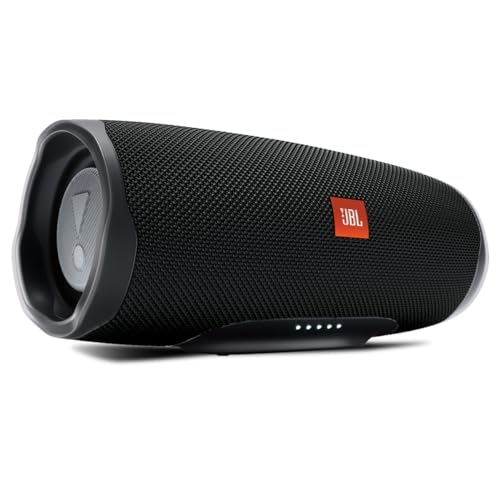
Released in 2018, the JBL Charge 4 represents JBL's "go anywhere, play all day" mentality. This speaker prioritizes endurance over elegance, packing a massive 7500mAh battery into a rugged, waterproof chassis that weighs just over two pounds.
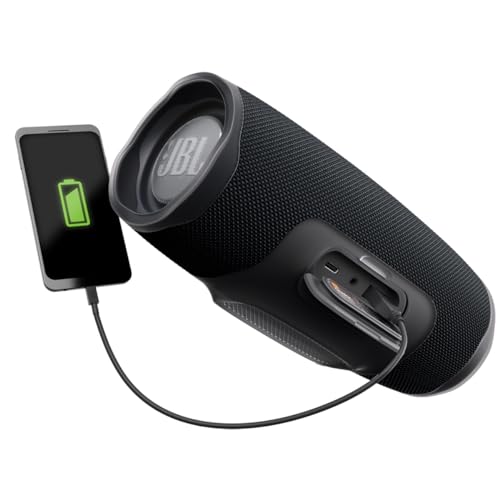
The standout feature is that enormous battery. While most portable speakers quit after 8-12 hours, the Charge 4 keeps pumping out music for up to 20 hours in real-world testing. That's enough juice for an entire weekend camping trip without hunting for power outlets. But JBL went further—the Charge 4 doubles as a power bank, meaning you can charge your dying phone directly from the speaker via its USB-A output port.
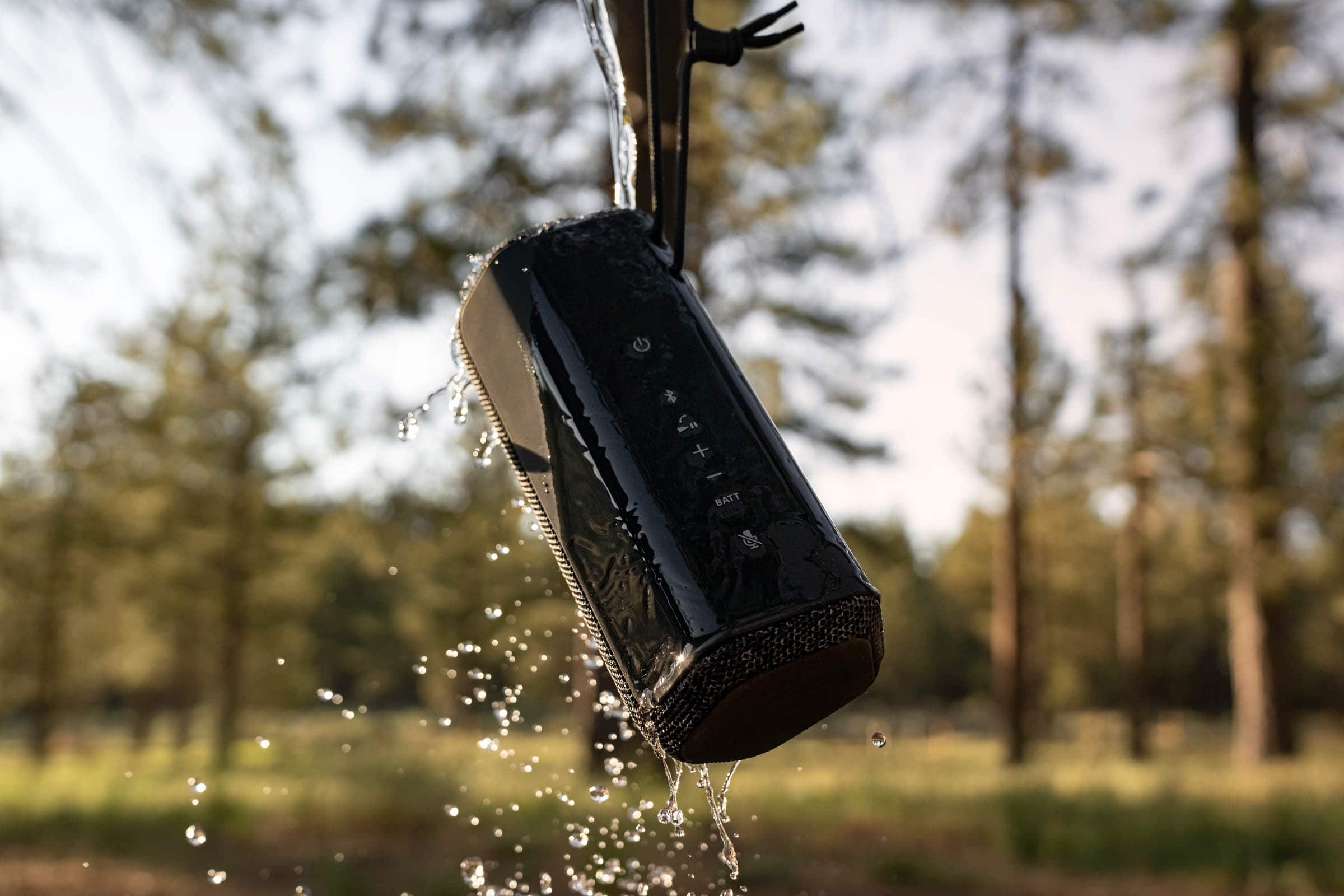
JBL built the Charge 4 with IPX7 waterproof rating, which means you can literally drop it in a swimming pool and it'll keep working. IPX7 certification requires surviving submersion in one meter of water for 30 minutes. This isn't just "splash resistant"—it's genuinely waterproof. The fabric and rubber construction feels substantial in your hands, designed to survive being tossed around beach bags and hiking backpacks.
The sound signature focuses on clarity and volume over audiophile refinement. JBL uses a single racetrack-shaped driver (50mm x 90mm) paired with dual passive radiators. Passive radiators are like speakers without the motor—they move in response to air pressure from the main driver, boosting bass response without requiring additional power or amplification. This setup delivers 30 watts of output power, making the Charge 4 legitimately loud enough for outdoor gatherings.
However, the JBL Charge 4 shows its age in connectivity. Bluetooth 4.2 was adequate in 2018, but newer speakers offer improved range and stability with Bluetooth 5.0 or higher. The frequency response starts at 60Hz, which means the deepest bass notes get cut off. While the dual passive radiators help, you won't feel earth-shaking sub-bass like you would from larger speakers or dedicated subwoofers.
JBL's Connect+ technology lets you wirelessly link over 100 compatible speakers together, creating a synchronized sound system for large gatherings. In practice, most people use this to pair two speakers for stereo separation, since the Charge 4 is inherently mono (single-channel audio).
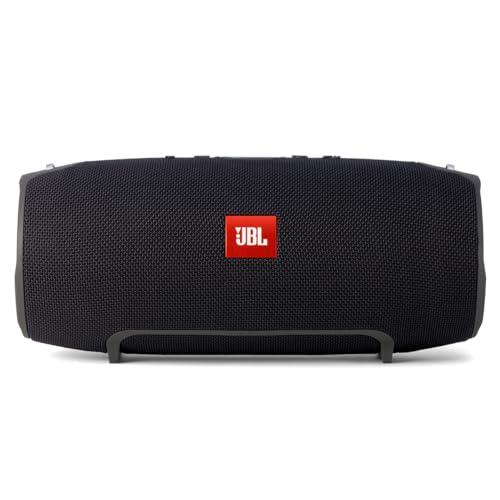
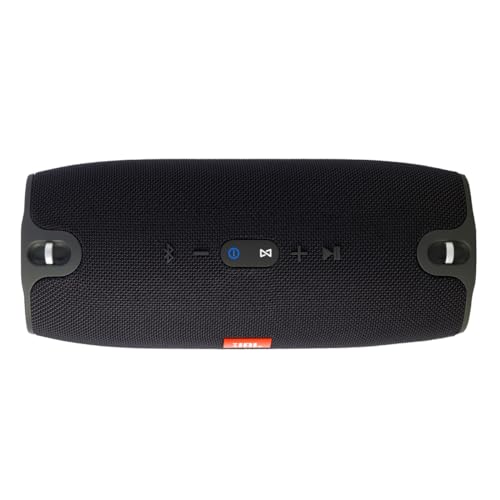
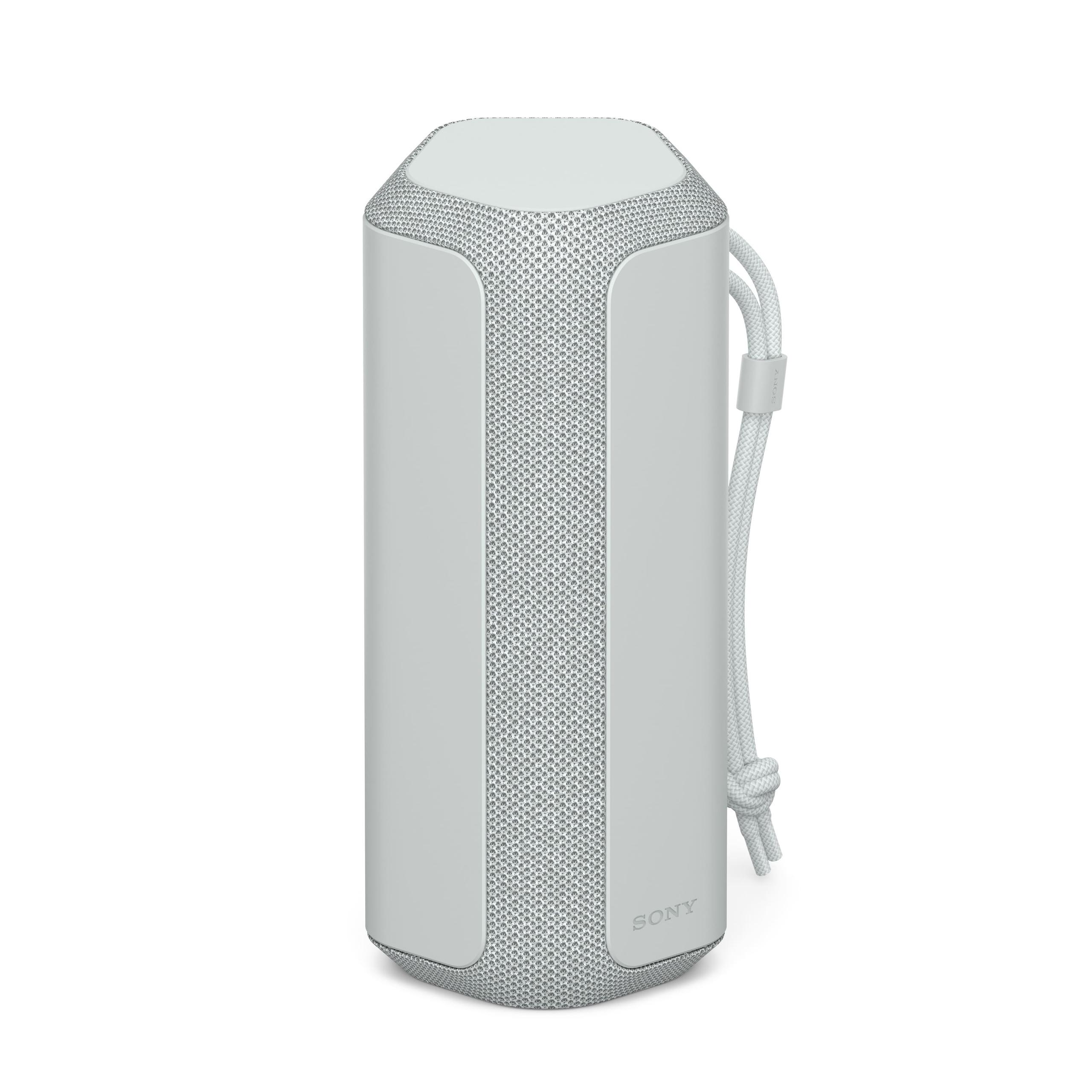
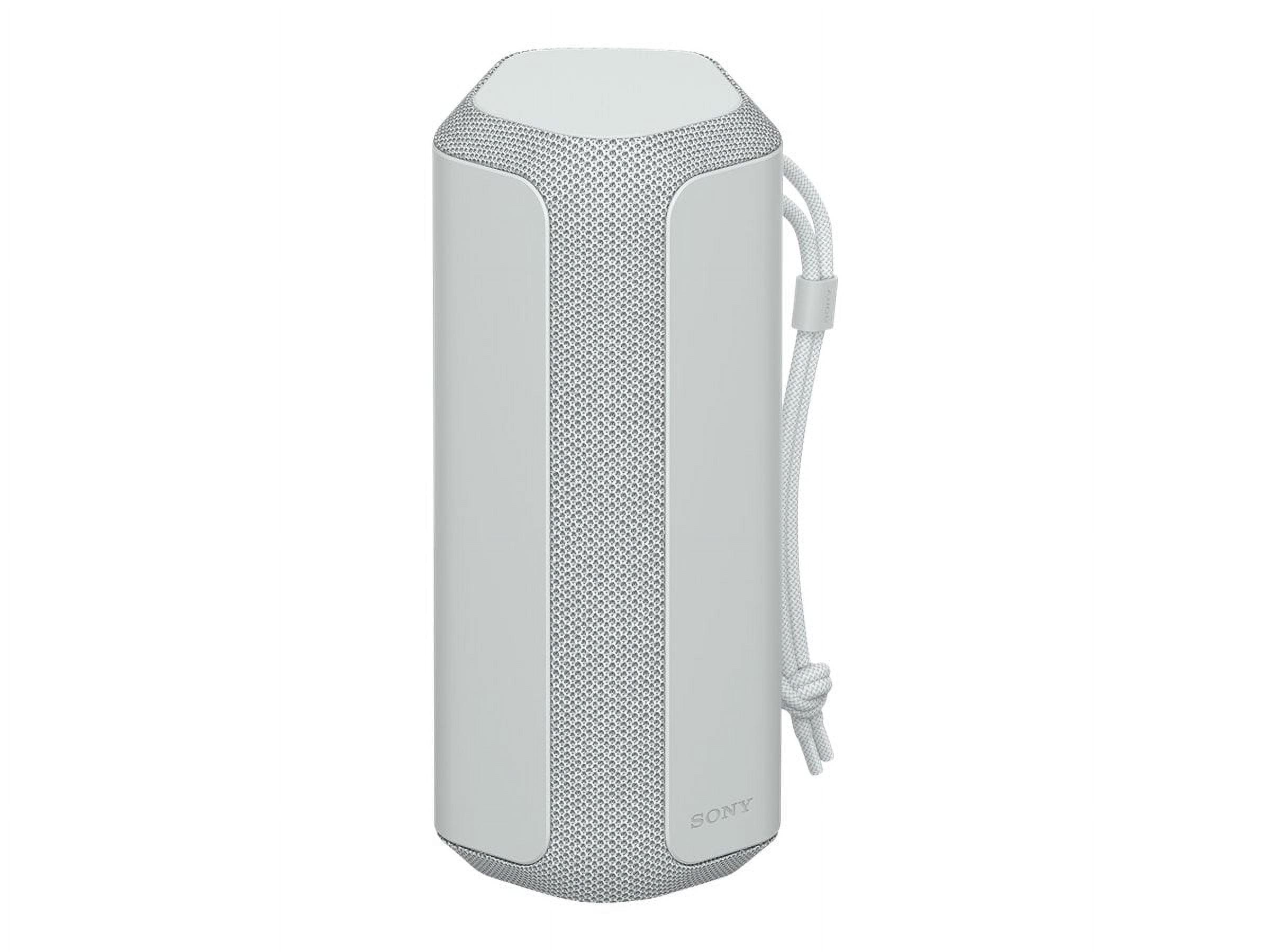
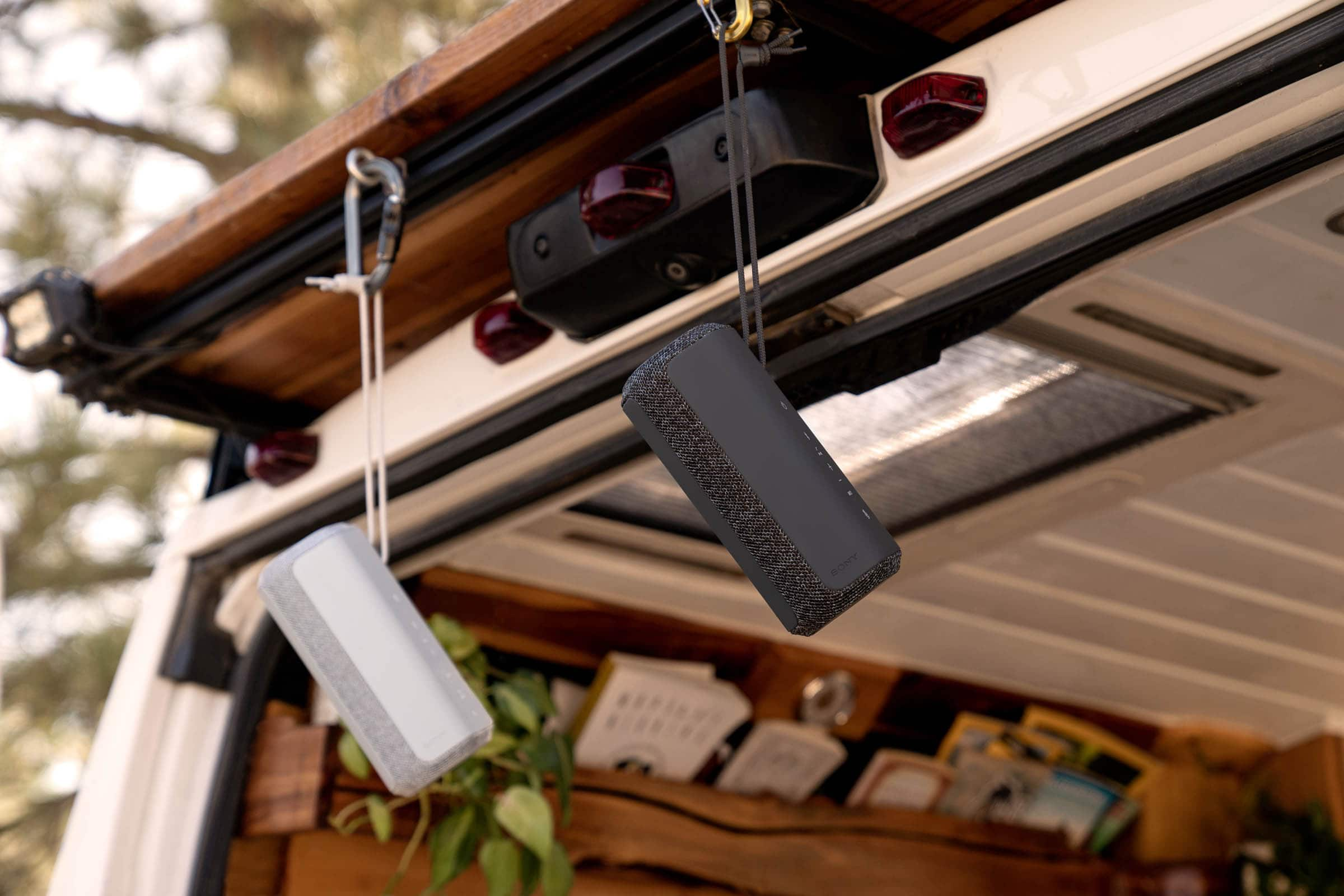
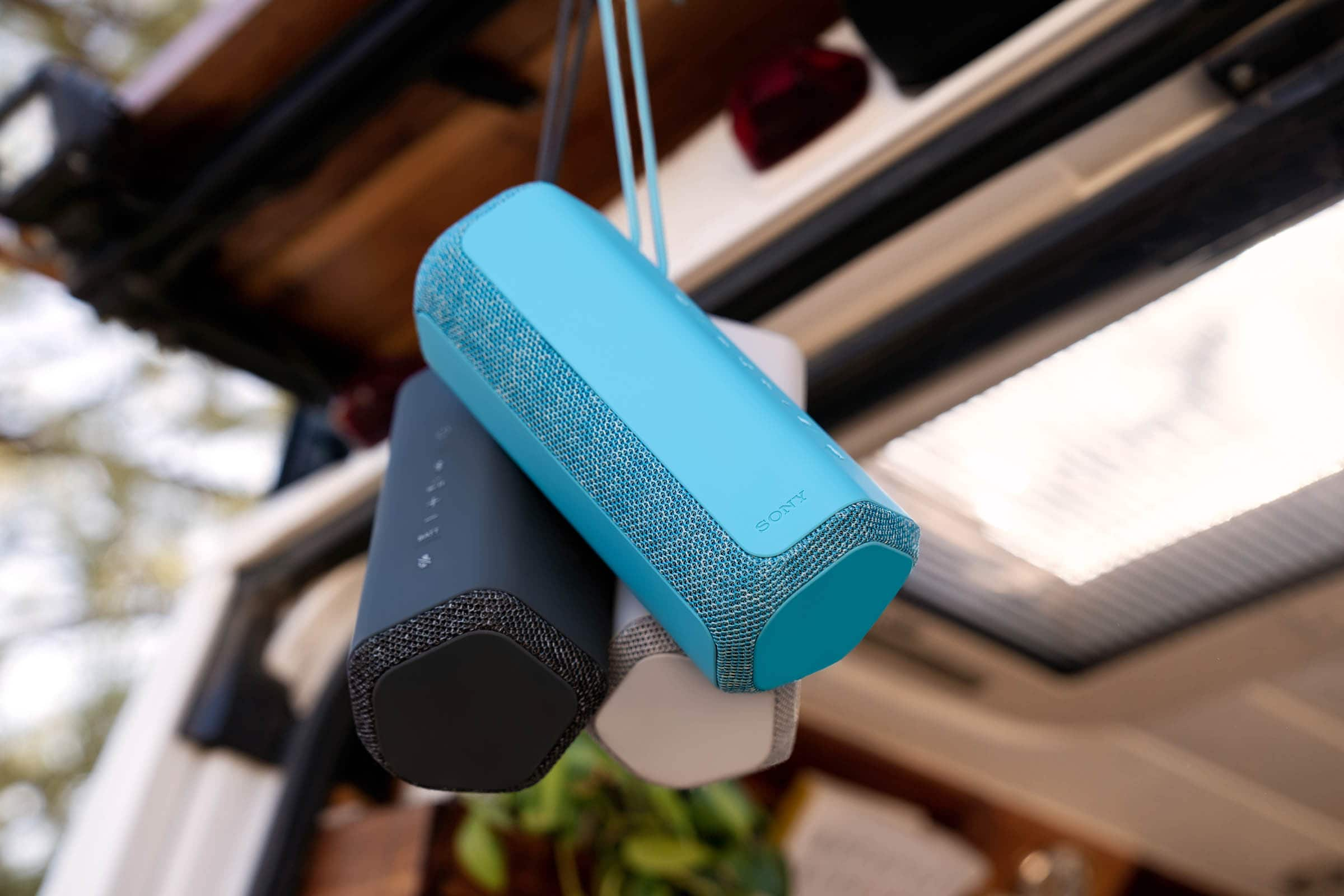
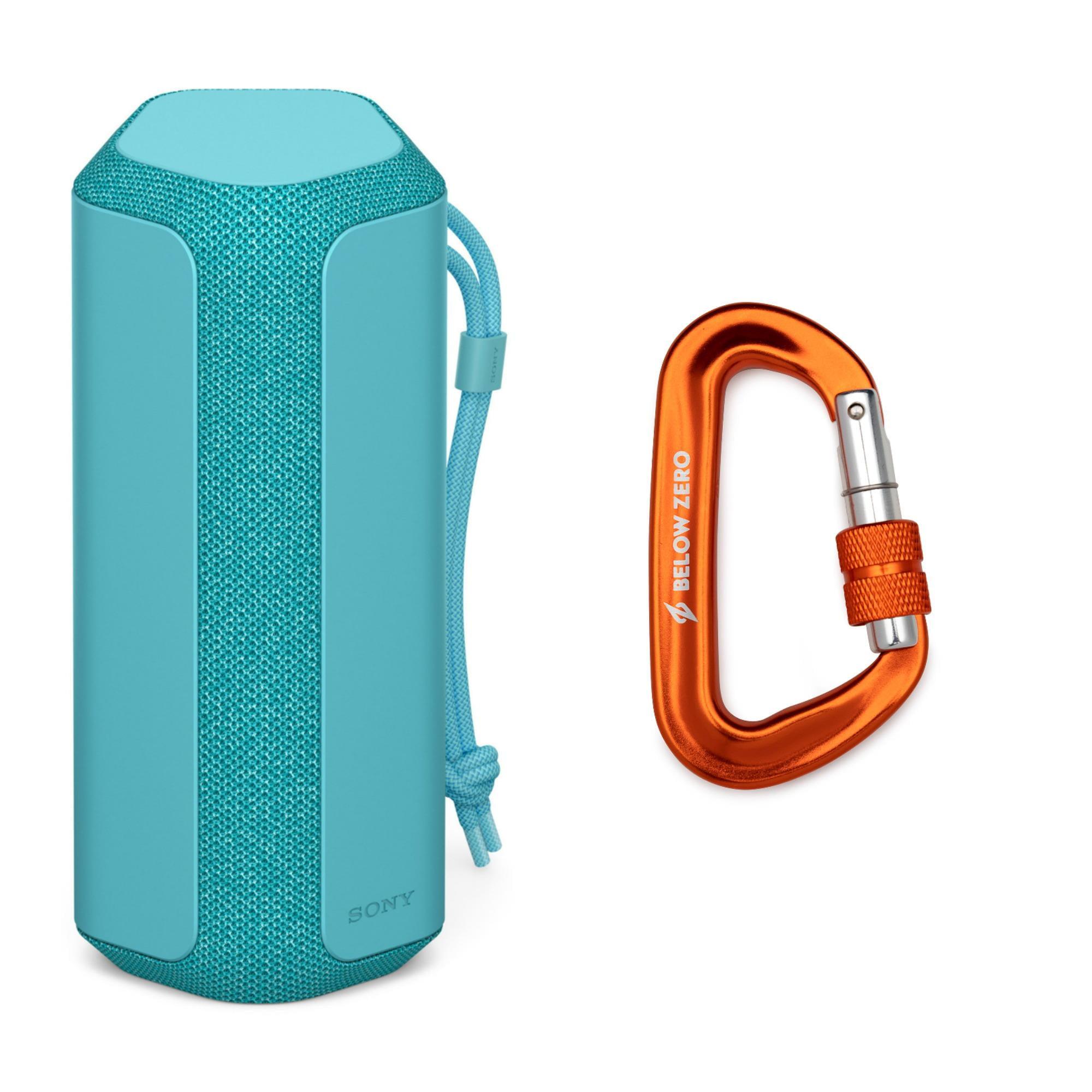
Sony released the XE200 in 2022, incorporating four years of technological advancement since the Charge 4's debut. Where JBL prioritized ruggedness and battery life, Sony focused on sound quality and modern connectivity features.
The most impressive technical achievement in the XE200 is its frequency response extending down to 20Hz—the theoretical limit of human hearing. Most portable speakers, including the Charge 4, roll off around 60Hz, missing those deep bass notes that add impact to electronic music and movie soundtracks. Sony achieves this through dual front-firing woofers combined with side-mounted passive radiators, creating a warmer, more bass-heavy sound signature.
Sony's Line-Shaped Diffuser technology spreads sound more evenly across a wider area. Instead of projecting audio in a narrow beam, the diffuser creates a broader soundstage that theoretically sounds better from more listening positions. This matters when you're not sitting directly in front of the speaker.
The Sony XE200 embraces modern Bluetooth technology with version 5.2, offering improved connection stability and range compared to the Charge 4's older 4.2 standard. More importantly, Sony includes LDAC codec support—a high-resolution audio format that transmits roughly three times more data than standard Bluetooth codecs. If you stream high-quality music from Android devices or supported apps, LDAC preserves more musical detail during wireless transmission.
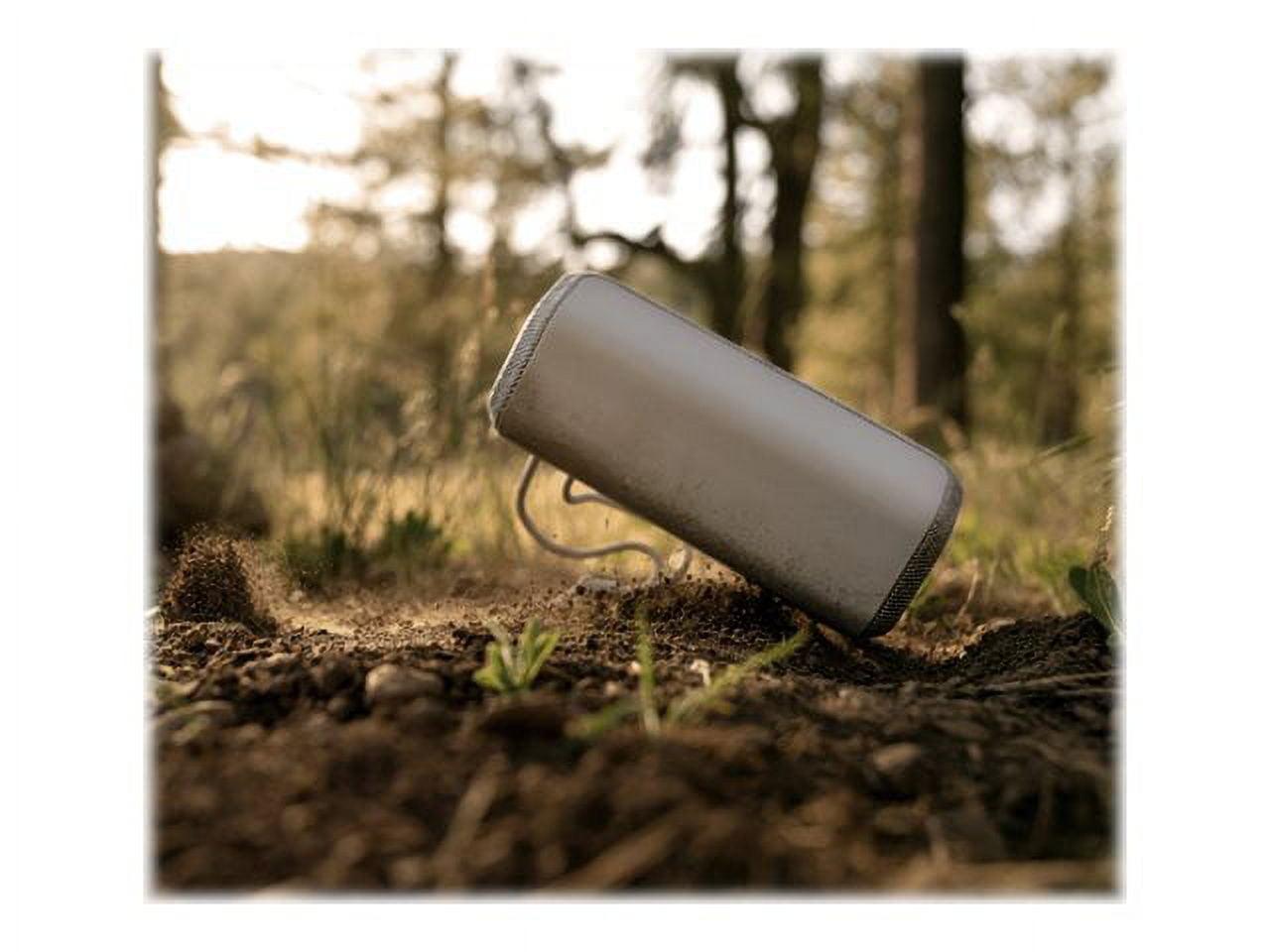
Sony's design philosophy emphasizes sustainability, incorporating recycled plastic in internal components and minimal packaging. The IP67 rating provides dust-tight sealing plus water resistance, though it's technically less waterproof than the Charge 4's IPX7 rating. In practical terms, both speakers handle rain, splashes, and brief submersion just fine.
The battery delivers 16 hours of playback—shorter than the Charge 4 but still excellent for most use cases. Sony's quick charging technology provides 70 minutes of playback from just 10 minutes of charging, perfect for those "I forgot to charge it" moments before heading out.
Sound quality represents the biggest differentiator between these speakers, with each excelling in different scenarios based on our analysis of expert reviews and user feedback.
The JBL Charge 4 delivers what audio reviewers call a "crowd-pleasing" sound signature. The midrange—where vocals and lead instruments live—comes through clearly without harsh peaks or muddy compression. This makes it excellent for podcasts, acoustic music, and situations where you need clear vocal reproduction. The bass response is present but controlled, avoiding the boomy, overwhelming low-end that cheap speakers often use to mask poor midrange quality.
However, the Charge 4's frequency response limitations become apparent with bass-heavy music. Electronic genres, hip-hop, and modern pop recordings that extend below 60Hz lose some impact. The treble response is somewhat rolled off, meaning cymbals, high-hat details, and the upper harmonics of instruments can sound slightly dull compared to more expensive speakers.
The mono design creates another limitation. Unless you pair two Charge 4s together, you lose stereo separation—the ability to hear instruments positioned left and right in the original recording. For casual listening, this isn't dealbreaking, but it does impact the immersive quality of music with complex arrangements.
The Sony XE200 takes a warmer approach that emphasizes bass impact and spatial presentation. The 20Hz frequency extension means you actually feel the deepest bass notes in electronic music, movie soundtracks, and bass-heavy recordings. This creates a more visceral listening experience, especially at moderate volumes.
Sony's Line-Shaped Diffuser creates a wider, more enveloping soundstage compared to the Charge 4's more directional output. Music sounds less like it's coming from a specific point and more like it's filling the space around you. This effect works best in smaller rooms and near-field listening situations.
The trade-off comes in maximum volume. Where the Charge 4 can genuinely fill outdoor spaces with sound, the XE200 runs out of steam at higher volumes. User reviews consistently mention that even at maximum volume, the Sony doesn't achieve the same room-filling presence as the JBL.
Battery life often determines which speaker actually gets used regularly versus gathering dust on a shelf. Based on user reports and technical specifications, these speakers approach power management very differently.
The JBL Charge 4 treats battery life as a primary feature, not an afterthought. The 7500mAh capacity translates to genuine all-day performance in real-world conditions. User reviews consistently report 15-18 hours of actual playback at moderate volumes, with some achieving the full 20-hour rating at lower listening levels.
The power bank functionality proves incredibly useful during outdoor activities. You can charge smartphones, tablets, or other USB devices directly from the speaker without needing separate battery packs. This feature alone justifies the Charge 4 for camping, beach trips, or any situation where power outlets are scarce.
Charging does require patience—the large battery takes 4-5 hours to reach full capacity. JBL doesn't include fast charging technology, so you need to plan ahead for longer trips.
The Sony XE200 offers more balanced power management. The 16-hour battery life covers most use cases without the extra bulk of the Charge 4's massive power pack. The three-hour charging time feels much more convenient for daily use, and the quick charge feature provides enough juice for short listening sessions from just a few minutes plugged in.
Sony's approach reflects modern smartphone design philosophy—provide enough battery for typical use while prioritizing fast charging for convenience. You lose the power bank functionality, but you gain a more portable package that's easier to keep topped off.
Portable speakers endure abuse that would destroy most electronics. Both manufacturers understand this, but their approaches to durability reflect different target environments.
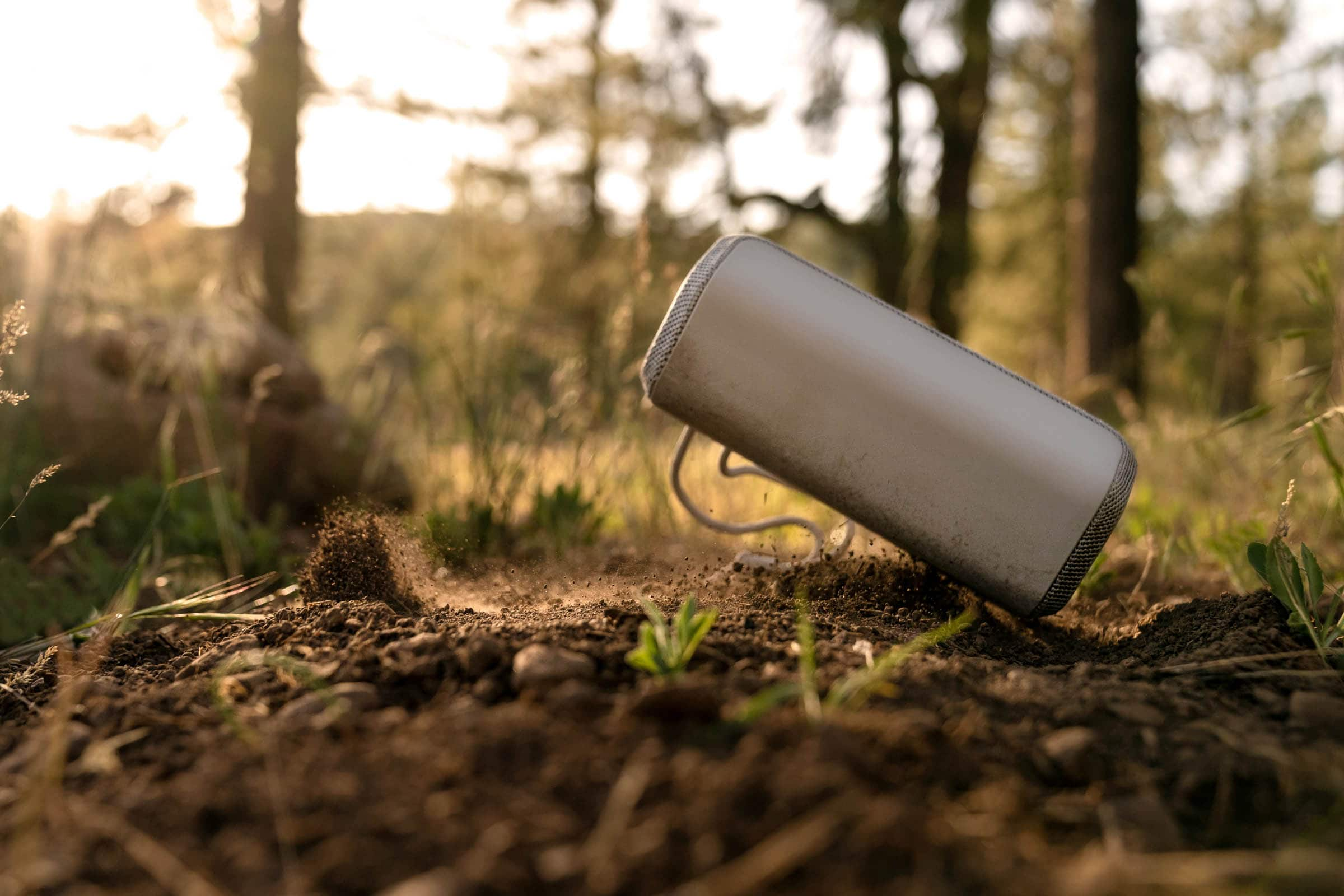
The JBL Charge 4 feels purpose-built for outdoor adventures. The fabric covering isn't just aesthetic—it provides grip and protection while resisting tears and abrasions. The rubber end caps absorb impact from drops, and the overall construction prioritizes function over form.
The IPX7 waterproof rating represents serious engineering. Achieving this certification requires extensive testing and sealing that goes well beyond basic splash resistance. You can genuinely use this speaker in rain, around pools, or even in shallow water without worry.
User reviews confirm the Charge 4's legendary durability. Stories abound of speakers surviving drops, sand exposure, extended sun exposure, and even brief submersion in salt water. After five years on the market, long-term reliability appears excellent.
The Sony XE200 offers comparable protection with a more refined aesthetic. The IP67 rating provides dust-tight sealing plus water resistance that handles most real-world scenarios. While not technically as waterproof as the Charge 4, the practical difference is minimal for typical use.
Sony's eco-friendly construction using recycled materials doesn't compromise durability based on user feedback. The speaker feels solid and well-assembled, though perhaps not quite as ruggedized as the battle-tested JBL design.
The four-year gap between these speakers' release dates shows most clearly in connectivity features and app integration.
The JBL Charge 4 relies on Bluetooth 4.2, which was standard in 2018 but shows limitations today. Connection range and stability are adequate, but not exceptional compared to newer Bluetooth 5.0+ implementations. The speaker supports standard audio codecs (SBC and AAC) but lacks high-resolution options.
JBL Connect+ technology remains one of the Charge 4's strongest features. The ability to wirelessly link multiple speakers creates genuine surround sound experiences for parties or large gatherings. In practice, most users pair two speakers for stereo separation, transforming the mono Charge 4 into a legitimate stereo system.
The Sony XE200 showcases four years of connectivity evolution. Bluetooth 5.2 provides improved range, faster pairing, and better stability in environments with multiple wireless devices. The LDAC codec support delivers near-CD quality audio over Bluetooth connections, particularly beneficial for Android users with high-resolution music libraries.
Sony's Party Connect and Stereo Pair functions offer similar multi-speaker capabilities to JBL's system, though with a smaller ecosystem of compatible devices. The Sony Music Center app provides more sophisticated EQ controls and sound customization compared to JBL's more basic companion app.
While both speakers are designed for portability, their indoor performance characteristics matter for users who want one speaker for both home and travel use.
The JBL Charge 4 works adequately for casual TV audio enhancement, though its mono output and limited bass extension prevent it from replacing dedicated home theater equipment. The clear midrange helps with dialogue clarity, but you lose the stereo imaging that makes movies and TV shows more immersive.
For music listening at home, the Charge 4 performs better at moderate volumes where its balanced sound signature shines. It lacks the refinement for critical listening sessions, but it's perfectly adequate for background music or casual listening.
The Sony XE200 makes a stronger case for indoor use thanks to its extended bass response and wider soundstage. The 20Hz frequency extension means you actually hear the low-frequency effects in movie soundtracks that the Charge 4 misses entirely. The Line-Shaped Diffuser creates a more immersive listening experience in smaller rooms.
For home music listening, the XE200 offers more engaging sound quality, especially with bass-heavy genres. The LDAC support matters more in quiet indoor environments where you can appreciate the additional audio detail.
Neither speaker replaces dedicated home theater systems, but the Sony XE200 performs better as a single-speaker solution for smaller rooms or casual use.
At the time of writing, both speakers compete in the mid-tier portable speaker market, with pricing that reflects their different feature priorities.
The JBL Charge 4 delivers exceptional value for users who prioritize battery life, durability, and outdoor performance. The power bank functionality adds significant utility beyond just audio playback. Five years after release, the speaker remains relevant thanks to its focus on fundamental performance rather than cutting-edge features that quickly become outdated.
Long-term value appears strong based on user reports of speakers still performing well after years of heavy use. The simple, robust design means fewer things can break, and JBL's widespread availability ensures easy replacement if needed.
The Sony XE200 represents better value for users prioritizing sound quality and modern connectivity features. The newer Bluetooth implementation and LDAC support provide some future-proofing, while the superior bass response creates a more engaging listening experience for most music genres.
However, the XE200 lacks the power bank functionality and extreme durability that justify the Charge 4's higher price in many use cases.
After extensive analysis of reviews, specifications, and real-world performance, clear use case scenarios emerge for each speaker.
Choose the JBL Charge 4 if you prioritize outdoor use, extended battery life, and practical utility. This speaker excels for camping, beach trips, pool parties, and any scenario where durability and long runtime matter more than audiophile sound quality. The power bank functionality provides genuine utility that goes beyond just audio playback.
The Charge 4 also makes sense for users who frequently host larger gatherings where maximum volume output is important. Its ability to pair with other JBL speakers creates genuine party sound systems.
Choose the Sony XE200 if you prioritize sound quality, modern connectivity, and primarily use your speaker indoors or in controlled environments. The superior bass response and wider soundstage create more engaging listening experiences for most music genres.
The XE200 suits users who stream high-quality music files and have devices that support LDAC. The faster charging and more compact design appeal to users who want convenience over maximum battery capacity.
For most buyers, the decision comes down to use case priorities. The JBL Charge 4 remains the better choice for genuinely portable, outdoor-focused use, while the Sony XE200 offers superior performance for users who primarily listen indoors but want the option of portability.
Both speakers deliver solid performance in their intended roles. Your choice should align with how and where you actually plan to use your investment in portable audio.
| JBL Charge 4 | Sony XE200 |
|---|---|
| Battery Life - Critical for outdoor use and extended listening sessions | |
| Up to 20 hours (exceptional for all-day events) | Up to 16 hours (solid for most use cases) |
| Charging Time - How quickly you can get back to listening | |
| 4-5 hours (requires planning ahead) | 3 hours (more convenient for daily use) |
| Quick Charge Feature - Essential for last-minute use | |
| None | 10 minutes = 70 minutes playback |
| Power Bank Function - Charges your devices on the go | |
| Yes, via USB-A port (major advantage for outdoor use) | No |
| Water Resistance - Protection level for pool/beach use | |
| IPX7 waterproof (fully submersible) | IP67 water resistant (excellent splash protection) |
| Maximum Volume Output - How loud it gets for parties | |
| 30W RMS (genuinely loud for outdoor gatherings) | 7.5W (better for intimate settings) |
| Frequency Response - Range of sound reproduction | |
| 60Hz-20kHz (misses deepest bass) | 20Hz-20kHz (full bass extension) |
| Bass Performance - Low-end impact and depth | |
| Controlled bass, limited sub-bass | Deep, impactful bass down to 20Hz |
| Bluetooth Version - Connection quality and range | |
| 4.2 (adequate but dated) | 5.2 (superior stability and range) |
| High-Quality Audio Codecs - Better sound over Bluetooth | |
| Standard SBC/AAC only | SBC, AAC, and LDAC (near-CD quality) |
| Multi-Speaker Pairing - Link multiple speakers together | |
| JBL Connect+ (100+ speakers) | Party Connect (fewer compatible models) |
| Weight and Portability - How easy it is to carry | |
| 2.12 lbs (substantial but manageable) | 1.76 lbs (more portable) |
| Sound Configuration - Stereo vs mono output | |
| Mono (needs pairing for stereo) | Enhanced soundstage with diffuser technology |
| App Features - Customization and control options | |
| Basic JBL Connect app | Sony Music Center with EQ controls |
| Build Quality Focus - Design philosophy | |
| Rugged outdoor durability | Refined with eco-friendly materials |
The JBL Charge 4 offers superior battery life with up to 20 hours of playback, compared to the Sony XE200's 16 hours. The JBL Charge 4 also functions as a power bank to charge your devices, while the Sony XE200 offers faster 3-hour charging and quick charge capabilities.
The JBL Charge 4 is significantly better for outdoor use, featuring IPX7 waterproof rating (fully submersible), higher 30W power output for louder volume, and rugged construction designed for harsh conditions. The Sony XE200 has IP67 water resistance but lower volume output, making it less suitable for large outdoor gatherings.
The Sony XE200 delivers superior bass performance with frequency response extending down to 20Hz, providing deep, impactful low-end. The JBL Charge 4 has more controlled bass starting at 60Hz, which means it misses the deepest bass notes but offers better balance for vocal clarity and outdoor use.
Yes, both speakers support multi-speaker pairing. The JBL Charge 4 uses Connect+ technology to link over 100 compatible speakers, while the Sony XE200 features Party Connect for linking multiple units. The JBL Charge 4 has a larger ecosystem of compatible speakers.
The Sony XE200 features superior connectivity with Bluetooth 5.2 and LDAC codec support for high-resolution audio streaming. The JBL Charge 4 uses older Bluetooth 4.2 with standard codecs, but still provides reliable connection for most users.
Neither speaker is designed for home theater use, but the Sony XE200 performs better indoors with its 20Hz bass extension and Line-Shaped Diffuser technology creating wider soundstage. The JBL Charge 4 offers clear dialogue but mono output limits immersive experience for movies.
The JBL Charge 4 is more durable with rugged fabric construction, rubber housing, and full IPX7 waterproofing designed for outdoor adventures. The Sony XE200 offers good build quality with IP67 rating but is designed more for refined use than extreme durability.
The Sony XE200 charges much faster at 3 hours full charge plus 10-minute quick charge for 70 minutes playback. The JBL Charge 4 takes 4-5 hours to fully charge but offers the unique ability to charge your phone or tablet via its USB port.
The JBL Charge 4 gets significantly louder with 30W power output, making it better for outdoor parties and larger spaces. The Sony XE200 has lower volume output at 7.5W, making it more suitable for intimate indoor listening rather than big gatherings.
The Sony XE200 includes hands-free calling with echo cancellation technology for clearer conversations. While the JBL Charge 4 supports basic speakerphone functions, it lacks the advanced calling features of the Sony XE200.
Value depends on your priorities: the JBL Charge 4 offers better value for outdoor enthusiasts who need maximum battery life, waterproofing, and power bank functionality. The Sony XE200 provides better value for users prioritizing sound quality, modern connectivity, and indoor listening.
The JBL Charge 4 is mono by default but can achieve stereo when paired with a second unit via Connect+. The Sony XE200 uses Line-Shaped Diffuser technology for wider sound distribution and can be paired with another Sony XE200 for true stereo separation.
We've done our best to create useful and informative comparisons to help you decide what product to buy. Our research uses advanced automated methods to create this comparison and perfection is not possible - please contact us for corrections or questions. These are the sites we've researched in the creation of this article: rtings.com - whathifi.com - whathifi.com - soundguys.com - soundguys.com - streamtechreviews.com - youtube.com - versus.com - applevis.com - versus.com - jbl.com - jbl.com - walmart.com - comparisontabl.es - harmanaudio.com - manuals.plus - jbl.com.sg - jbl.com - mm.jbl.com - bestbuy.com - newpower99.com - forums.woot.com - sony.com - gymcaddy.net - sony.co.uk - bestbuy.com - sony.com - bhphotovideo.com - youtube.com - sony.com - helpguide.sony.net - soundguys.com - sony.com - sonylatvija.com

Privacy Policy
Terms and Conditions - Affiliate Policy
Home Security
© Copyright 2008-2026.
11816 Inwood Rd #1211, Dallas, TX 75244