

Choosing the right portable Bluetooth speaker can feel overwhelming with dozens of options flooding the market. Two speakers that frequently come up in discussions are the Monster Shock Plus S21 and the JBL Charge 4. While both deliver 30 watts of power and target similar audiences, they take remarkably different approaches to portable audio. After diving deep into user reviews, expert opinions, and technical specifications, here's what you need to know to make the right choice.
Before comparing these specific models, it's worth understanding what separates good portable speakers from great ones. The best portable speakers balance four key elements: sound quality that doesn't fall apart at higher volumes, battery life that lasts through your activities, durability that handles real-world use, and connectivity that works reliably with your devices.
Sound quality in portable speakers involves trade-offs. Unlike home speakers that can be large and heavy, portable models must squeeze drivers (the parts that actually create sound) into compact, lightweight designs. This means compromises in bass response—the low-frequency sounds that give music its punch and fullness. The best portable speakers work around these limitations through clever engineering like passive radiators (special components that enhance bass without requiring power) and digital signal processing (computer algorithms that optimize the sound).
Battery life becomes crucial because these speakers are designed for use away from power outlets. A speaker that dies mid-party or mid-hike quickly becomes useless. Equally important is how the speaker performs as its battery drains—some maintain consistent volume and quality throughout their battery life, while others gradually lose power and sound progressively worse.
Durability and water resistance have become table stakes in this category. The IP (Ingress Protection) rating system tells you exactly what a speaker can handle: IPX6 means protection against powerful water jets but not submersion, while IPX7 can survive being dunked underwater temporarily.
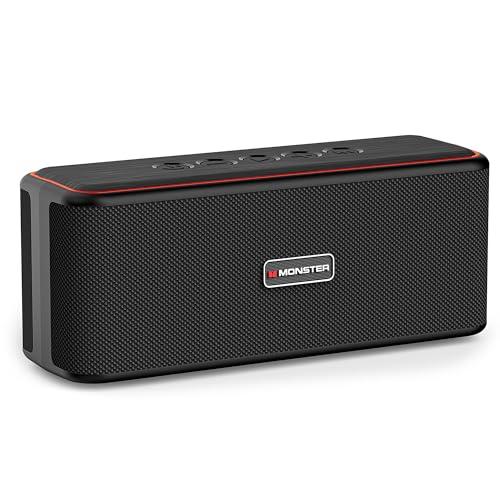
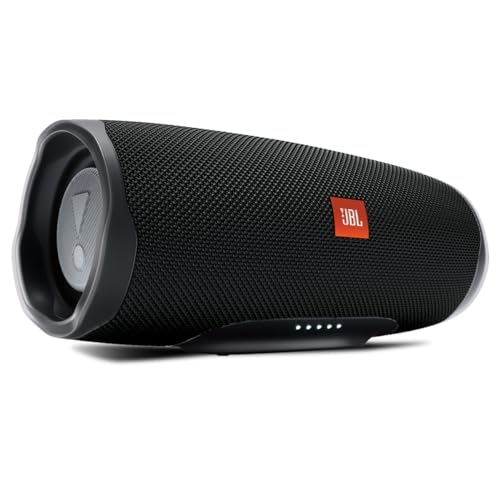
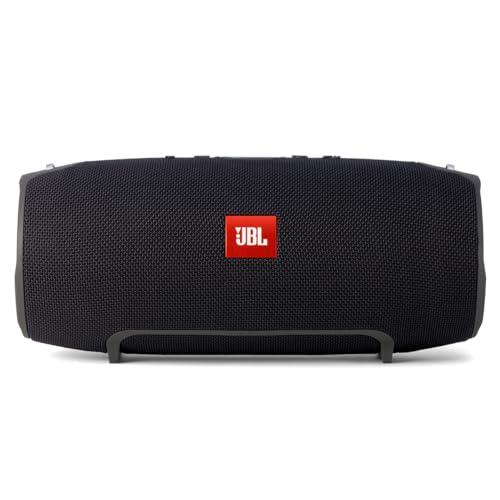
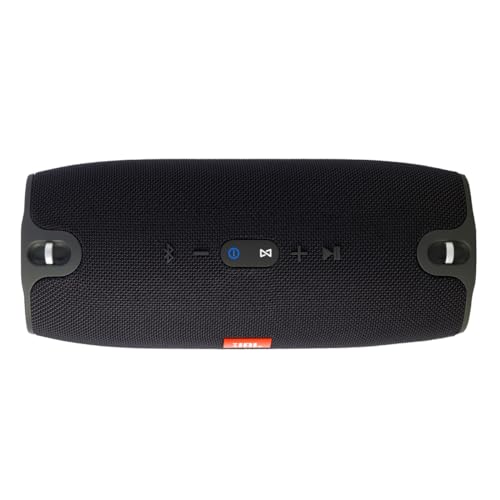
The JBL Charge 4 launched in 2018 and represents JBL's established approach to portable audio: rugged build quality, waterproof design, and practical features like device charging. The Monster Shock Plus S21 arrived more recently in 2024, incorporating newer technologies like Bluetooth 5.4 and taking a different approach with stereo sound from a single unit.
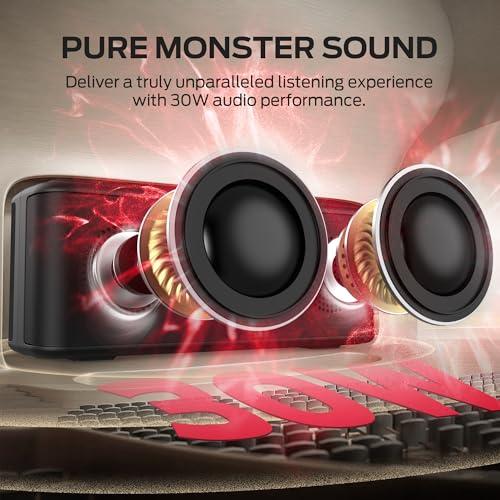
Both speakers output 30 watts of power, but this headline specification tells only part of the story. The Monster Shock Plus S21 delivers true stereo sound with separate left and right channels from one speaker, while the JBL Charge 4 uses a single driver in mono configuration. This fundamental difference shapes everything about how they sound and perform.
While both speakers claim 30 watts, they achieve this differently. The Monster Shock Plus S21 splits this power between left and right channels, creating spatial separation that makes music sound wider and more immersive. Instruments and vocals appear to come from different locations rather than a single point source. This stereo imaging (the perception of width and placement in the soundfield) gives the Monster a significant advantage for music listening.
The JBL Charge 4 concentrates all 30 watts through one forward-firing driver, which can create more focused impact but lacks the spaciousness of stereo sound. However, JBL compensates with dual passive radiators—essentially speaker cones without magnets that vibrate sympathetically to enhance bass response without requiring additional power.
For actual loudness, neither speaker will fill a large outdoor space or compete with dedicated party speakers. But for small to medium gatherings, both provide adequate volume. The key difference lies in how they handle high volume levels.
This is where our research into user reviews and expert opinions reveals crucial differences. The Monster Shock Plus S21 maintains its composure remarkably well as volume increases. Its balanced frequency response (how evenly it reproduces different pitches) stays consistent, with clear highs, present midrange, and controlled bass. Users consistently report that music remains enjoyable and distortion-free even at maximum volume.
The JBL Charge 4 tells a different story. At moderate volumes, it delivers well-balanced sound with particularly strong midrange reproduction, making vocals clear and present. However, as volume increases, compression kicks in—a digital limiting process that prevents damage but squashes dynamic range (the difference between loud and soft sounds). Bass response also diminishes at high volumes, while upper midrange frequencies become harsh and fatiguing.
This difference matters significantly for real-world use. If you often listen at higher volumes or in noisy environments where you need the speaker to cut through ambient sound, the Monster Shock Plus S21 maintains better audio quality when pushed hard.
The JBL Charge 4 operates within a frequency range of 60Hz to 20kHz, which is typical for portable speakers. However, that 60Hz low-end specification reveals limitations—truly deep bass starts around 40Hz and below, meaning the JBL won't reproduce the lowest frequencies that give electronic music, hip-hop, and movie soundtracks their foundation.
User reviews consistently note the JBL Charge 4 has underemphasized treble (high frequencies), making it sound somewhat dull or veiled, though this does avoid harshness. The midrange, where most vocal content sits, gets good treatment, ensuring spoken word content and vocal-heavy music comes through clearly.
The Monster Shock Plus S21 delivers what users describe as more balanced frequency response across the spectrum. Its bass extends deeper and stays more consistent across volume levels, while treble maintains clarity without becoming harsh. This translates to music that sounds more natural and engaging.
Here's where the fundamental design difference becomes most apparent. The Monster Shock Plus S21's stereo configuration creates a genuine soundstage—you can perceive width and some sense of instrument placement. For music listening, especially acoustic and jazz recordings where instrument separation matters, this makes a meaningful difference.
The JBL Charge 4 produces mono sound from a single driver, creating what's essentially a point source. While this isn't necessarily worse for all content, it means less engaging music reproduction. The JBL can create stereo sound, but only when paired with a second unit using their Connect+ technology.
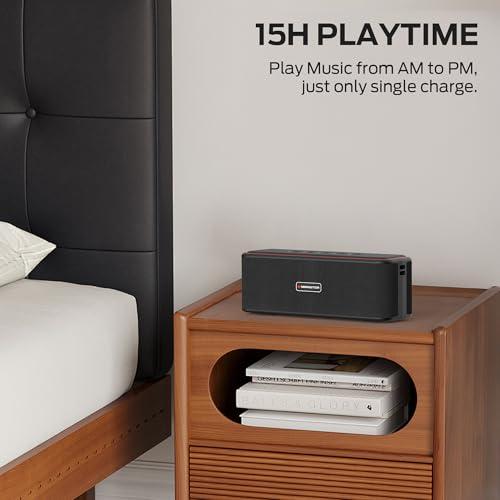
Battery performance varies significantly between these speakers, both in capacity and functionality. The Monster Shock Plus S21 provides 15 hours of playback with a relatively quick 2-hour charging time via USB-C. This charging speed advantage means less downtime between uses—crucial for people who frequently forget to charge their devices overnight.
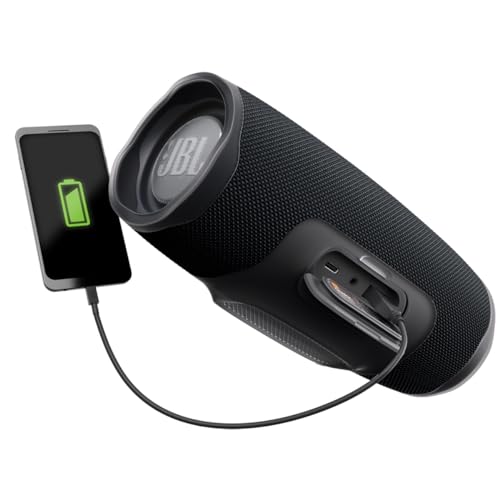
The JBL Charge 4 claims up to 20 hours of battery life, though real-world testing by users suggests around 13 hours is more realistic depending on volume levels and content. It charges via USB-C but takes approximately 4 hours for a complete charge. However, the JBL includes a massive 7500mAh battery that serves double duty as a powerbank, allowing you to charge phones, tablets, or other USB devices through its USB-A output port.
This powerbank functionality represents a significant practical advantage for outdoor use, camping, or extended periods away from power outlets. When your phone's battery is dying and there's no outlet in sight, the JBL Charge 4 becomes more than just a speaker—it becomes essential survival gear.
The trade-off is weight and size. That large battery makes the JBL Charge 4 heavier and bulkier than the Monster Shock Plus S21, which weighs around 2 pounds compared to the JBL's heftier build.
Water resistance ratings follow the IP (Ingress Protection) standard, where the number indicates the level of protection. The JBL Charge 4 achieves an IPX7 rating, meaning it can survive submersion in up to 1 meter of water for 30 minutes. This makes it genuinely waterproof for practical purposes—you can drop it in a pool, use it in the shower, or leave it out in a downpour without worry.
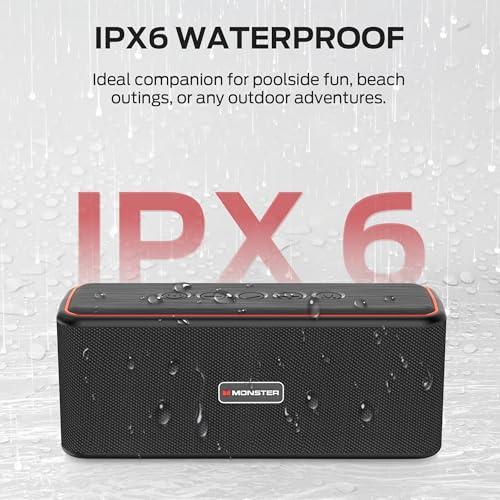
The Monster Shock Plus S21 carries an IPX6 rating, which provides excellent protection against powerful water jets and heavy splashing but cannot handle submersion. For most users, IPX6 proves entirely adequate for poolside use, beach trips, or sudden rain showers. The difference only matters if you specifically need submersion protection.
Build quality reflects different design philosophies. The JBL Charge 4 uses rugged fabric covering over a rubberized base, creating a speaker that feels built to survive drops, bumps, and rough handling. It's designed for users who throw gear in backpacks, toss speakers between friends, or generally aren't precious about their electronics.
The Monster Shock Plus S21 uses plastic construction that's durable but feels less ruggedized. It's built for normal use and handles typical portable speaker situations well, but might not survive the same level of abuse as the JBL.
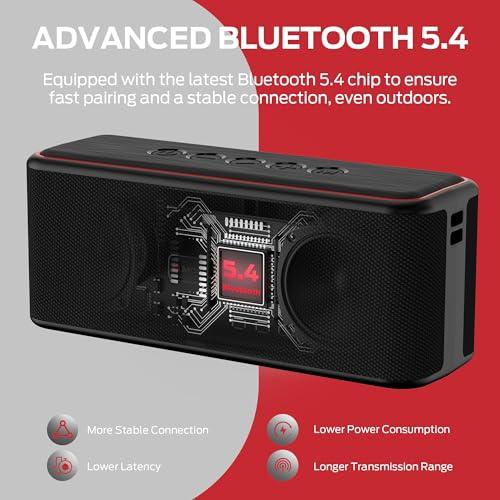
Connectivity differences reveal how technology has evolved between these speakers' release dates. The Monster Shock Plus S21 incorporates Bluetooth 5.4, the latest standard at the time of writing, which provides better range (up to 33 feet), more stable connections, faster pairing, and improved power efficiency compared to older Bluetooth versions.
The JBL Charge 4 uses Bluetooth 4.2, which was current technology in 2018 but shows its age compared to newer standards. However, in practice, both speakers pair quickly and maintain stable connections. The Bluetooth version difference matters more for future-proofing than current performance.
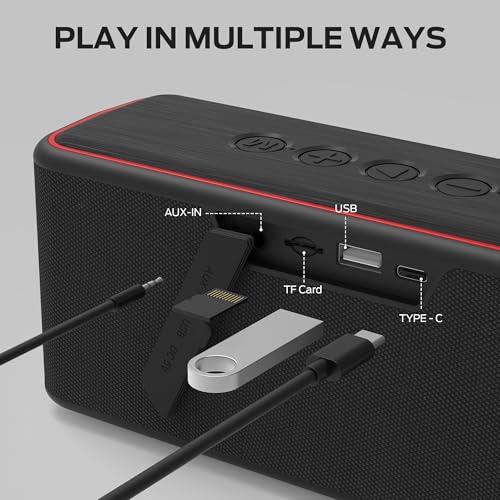
Where the Monster Shock Plus S21 truly shines is connectivity versatility. Beyond Bluetooth, it includes a 3.5mm AUX input for wired connections, a TF (microSD) card slot for direct music playback, and USB input support. This means you can play music directly from storage without connecting any device—particularly useful for situations where you want to preserve phone battery or don't want to maintain a Bluetooth connection.
The JBL Charge 4 offers AUX input and the USB-A port for device charging, with both connections sealed behind a protective flap to maintain water resistance.
Both speakers can connect to two devices simultaneously, allowing seamless switching between phones or tablets without re-pairing.
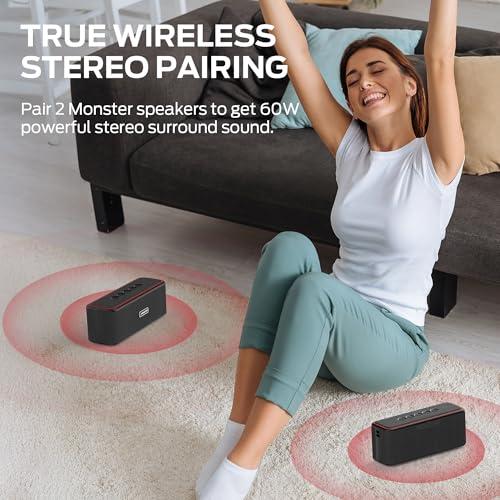
The Monster Shock Plus S21 supports True Wireless Stereo (TWS) pairing, allowing two units to connect and create a genuine stereo setup with 60 watts total output. This provides an upgrade path for users who want more sound or true stereo separation across a larger area.
The JBL Charge 4 offers JBL Connect+, which can link over 100 compatible JBL speakers for massive sound systems. However, this requires owning multiple JBL speakers and works with specific models only.
For most users, TWS pairing proves more practical than Connect+ since it requires just two speakers to achieve meaningfully better sound. The Connect+ system, while impressive in theory, becomes expensive and complex to implement.
Neither speaker targets serious home theater use, but both can serve as TV audio upgrades for smaller spaces. The Monster Shock Plus S21's stereo output and AUX input make it more suitable for this purpose. Connect it to your TV's headphone output or AUX output, and it provides significantly better dialog clarity and overall sound than typical TV speakers.
The JBL Charge 4 can also improve TV audio through AUX connection, but its mono output limits the home theater experience. For movie watching, stereo separation helps with immersion and sound effects placement.
However, both speakers lack the low-frequency extension needed for movie soundtracks. The bass in action movies and the rumble of explosions will be missing or reduced. For casual TV watching and improved dialog clarity, either works, but dedicated soundbars or bookshelf speakers serve this purpose much better.
At the time of writing, these speakers occupy different price tiers, which significantly affects their value proposition. The JBL Charge 4, being an older model, has seen price reductions that make it attractive for budget-conscious buyers seeking proven performance and build quality.
The Monster Shock Plus S21 launched at a higher price point but has appeared in significant sales that dramatically improve its value proposition. At full price, it's harder to recommend over established competition, but at discounted pricing, it offers exceptional performance per dollar.
Value depends heavily on which features matter most to you. If powerbank functionality and maximum water resistance are priorities, the JBL Charge 4 provides unique utility that justifies its cost. For pure audio performance and connectivity flexibility, the Monster Shock Plus S21 delivers more engaging sound and modern features.
Choose the JBL Charge 4 if you're an outdoor enthusiast who needs proven durability and device charging capability. Campers, hikers, beach-goers, and anyone who spends extended time away from power outlets will appreciate its powerbank function and waterproof rating. It's also ideal for users who prioritize brand reputation and want a speaker that's guaranteed to survive rough treatment.
The JBL Charge 4 makes sense for families with kids who might be rough with electronics, or for anyone whose primary use involves water activities where submersion protection matters.
Choose the Monster Shock Plus S21 if audio quality and connectivity flexibility take priority over extreme durability. It's better suited for users who primarily listen indoors or in controlled outdoor environments and want the best possible sound from a portable speaker. The multiple input options make it excellent for users who want device-independent music playback or who frequently switch between different audio sources.
The Monster Shock Plus S21 particularly appeals to users who appreciate stereo sound and plan to primarily use one speaker rather than building multi-speaker systems.
Both speakers succeed at their intended purposes, but they target different priorities within the portable speaker category. The JBL Charge 4 represents the practical, no-nonsense approach—built tough, works reliably, and adds useful utility through device charging. It's the choice for users who need a speaker that absolutely will not let them down, even if audio quality isn't the top priority.
The Monster Shock Plus S21 takes the audio-first approach, delivering better sound quality and modern features while maintaining adequate durability for normal use. It's the choice for users who want the best possible listening experience from a portable speaker.
Neither represents a bad choice, but understanding their different philosophies helps identify which better matches your needs and priorities. Consider how and where you'll primarily use the speaker, whether device charging matters to your use case, and how much audio quality improvement is worth to you compared to maximum durability and proven brand support.
| Monster Shock Plus S21 | JBL Charge 4 |
|---|---|
| Audio Output Configuration - Determines soundstage and stereo separation | |
| 30W stereo (true left/right channels from single unit) | 30W mono (single driver, requires pairing for stereo) |
| Bluetooth Version - Affects connection stability and future compatibility | |
| Bluetooth 5.4 (latest standard, better range and stability) | Bluetooth 4.2 (older but reliable, adequate performance) |
| Battery Life - Critical for extended use away from power | |
| 15 hours playback, 2-hour charge time | Up to 20 hours playback, 4-hour charge time |
| Water Resistance - Protection level for outdoor and wet conditions | |
| IPX6 (splash/spray resistant, not submersible) | IPX7 (waterproof, survives 1m submersion for 30min) |
| Powerbank Function - Ability to charge other devices | |
| None (speaker only) | Yes (7500mAh battery charges phones/tablets via USB-A) |
| Connectivity Options - Flexibility for different audio sources | |
| Bluetooth, AUX, TF card slot, USB input | Bluetooth, AUX input only |
| True Wireless Stereo Pairing - Expandability with second unit | |
| TWS support (60W combined when paired) | JBL Connect+ (links 100+ compatible speakers) |
| Build Quality - Durability and materials for longevity | |
| Plastic construction, good for normal use | Rugged fabric/rubber, built for rough handling |
| Sound Quality at High Volume - Performance when pushed hard | |
| Maintains clarity and balance at maximum volume | Experiences compression and harsh upper-mids when loud |
| Weight and Portability - Important for travel and carrying | |
| ~2 lbs, compact design with carrying rope | Heavier due to large battery, more substantial build |
The Monster Shock Plus S21 delivers superior sound quality with true stereo output from a single unit, creating better instrument separation and a wider soundstage. It maintains clarity and balance even at high volumes. The JBL Charge 4 produces mono sound that can become compressed and harsh when pushed loud, though it offers well-balanced midrange for vocal clarity at moderate volumes.
Yes, both speakers can enhance TV audio through their AUX inputs. The Monster Shock Plus S21 is better suited for this purpose due to its stereo output, which provides better dialog clarity and sound effects placement for movies. The JBL Charge 4 can also improve TV sound but lacks stereo separation, making it less ideal for home theater use.
The JBL Charge 4 is significantly more durable with its IPX7 waterproof rating, rugged fabric construction, and ability to survive submersion in water. It's built to handle rough outdoor use, camping, and beach trips. The Monster Shock Plus S21 has IPX6 water resistance that protects against splashes but cannot handle submersion or as much physical abuse.
The JBL Charge 4 offers longer battery life with up to 20 hours of playback, though real-world use typically yields around 13 hours. The Monster Shock Plus S21 provides 15 hours of consistent playback but charges much faster at 2 hours versus the JBL's 4-hour charging time.
Only the JBL Charge 4 functions as a powerbank, using its large 7500mAh battery to charge phones, tablets, and other USB devices through its USB-A port. This makes it invaluable for camping or extended outdoor use. The Monster Shock Plus S21 lacks powerbank functionality but offers faster charging for itself.
Both speakers output 30 watts, but the Monster Shock Plus S21 maintains better audio quality at maximum volume without the compression issues that affect the JBL Charge 4 when pushed hard. However, neither speaker is designed for large parties - they work best for small to medium gatherings.
The Monster Shock Plus S21 provides more connectivity flexibility with Bluetooth 5.4, AUX input, TF card slot, and USB input for direct music playback without a connected device. The JBL Charge 4 offers Bluetooth 4.2, AUX input, and USB-A output (for charging only), with connections sealed for water protection.
Yes, both support multi-speaker setups but differently. The Monster Shock Plus S21 uses True Wireless Stereo (TWS) pairing to connect two units for 60W combined stereo output. The JBL Charge 4 uses JBL Connect+ technology to link over 100 compatible speakers, though this requires multiple JBL purchases.
The JBL Charge 4 is superior for water activities with its IPX7 waterproof rating that survives full submersion. You can drop it in a pool without damage. The Monster Shock Plus S21 handles splashes and rain with its IPX6 rating but cannot be submerged safely.
The Monster Shock Plus S21 uses modern Bluetooth 5.4 for better range, faster pairing, and more stable connections with improved future compatibility. The JBL Charge 4 uses older Bluetooth 4.2 that still performs reliably but lacks the improvements of newer standards. Both can connect to two devices simultaneously.
Value depends on your priorities. The JBL Charge 4 provides excellent value for outdoor enthusiasts who need powerbank functionality and maximum water resistance. The Monster Shock Plus S21 offers superior audio performance and connectivity options, making it better value for users prioritizing sound quality and versatility over extreme durability.
Choose the JBL Charge 4 if you need device charging capability, maximum water protection, and proven durability for outdoor adventures. Choose the Monster Shock Plus S21 if you prioritize better sound quality, stereo output, modern Bluetooth technology, and multiple connectivity options for more versatile use scenarios.
We've done our best to create useful and informative comparisons to help you decide what product to buy. Our research uses advanced automated methods to create this comparison and perfection is not possible - please contact us for corrections or questions. These are the sites we've researched in the creation of this article: shopabunda.com - manuals.plus - popsci.com - armorsound.com - manuals.plus - youtube.com - shopstaff.net - thestreet.com - rtings.com - youtube.com - businessinsider.com - youtube.com - youtube.com - mensjournal.com - ratebud.ai - youtube.com - ebay.com - monsterstore.com - newegg.com - angelenaspensacola.com - rtings.com - whathifi.com - whathifi.com - soundguys.com - soundguys.com - streamtechreviews.com - youtube.com - versus.com - applevis.com - versus.com - jbl.com - jbl.com - walmart.com - comparisontabl.es - harmanaudio.com - manuals.plus - jbl.com.sg - jbl.com - mm.jbl.com - bestbuy.com - newpower99.com - forums.woot.com

Privacy Policy
Terms and Conditions - Affiliate Policy
Home Security
© Copyright 2008-2026.
11816 Inwood Rd #1211, Dallas, TX 75244