

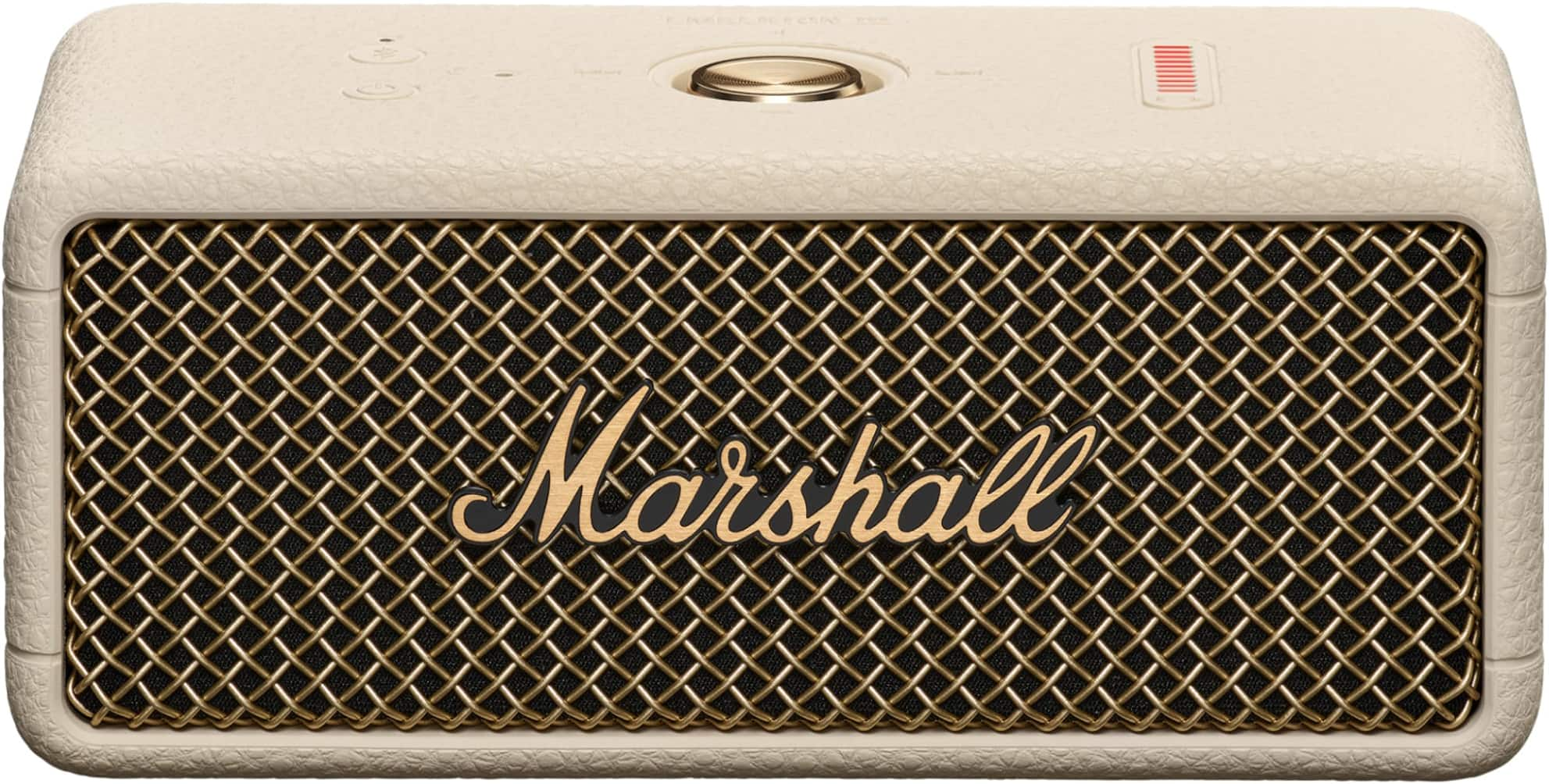
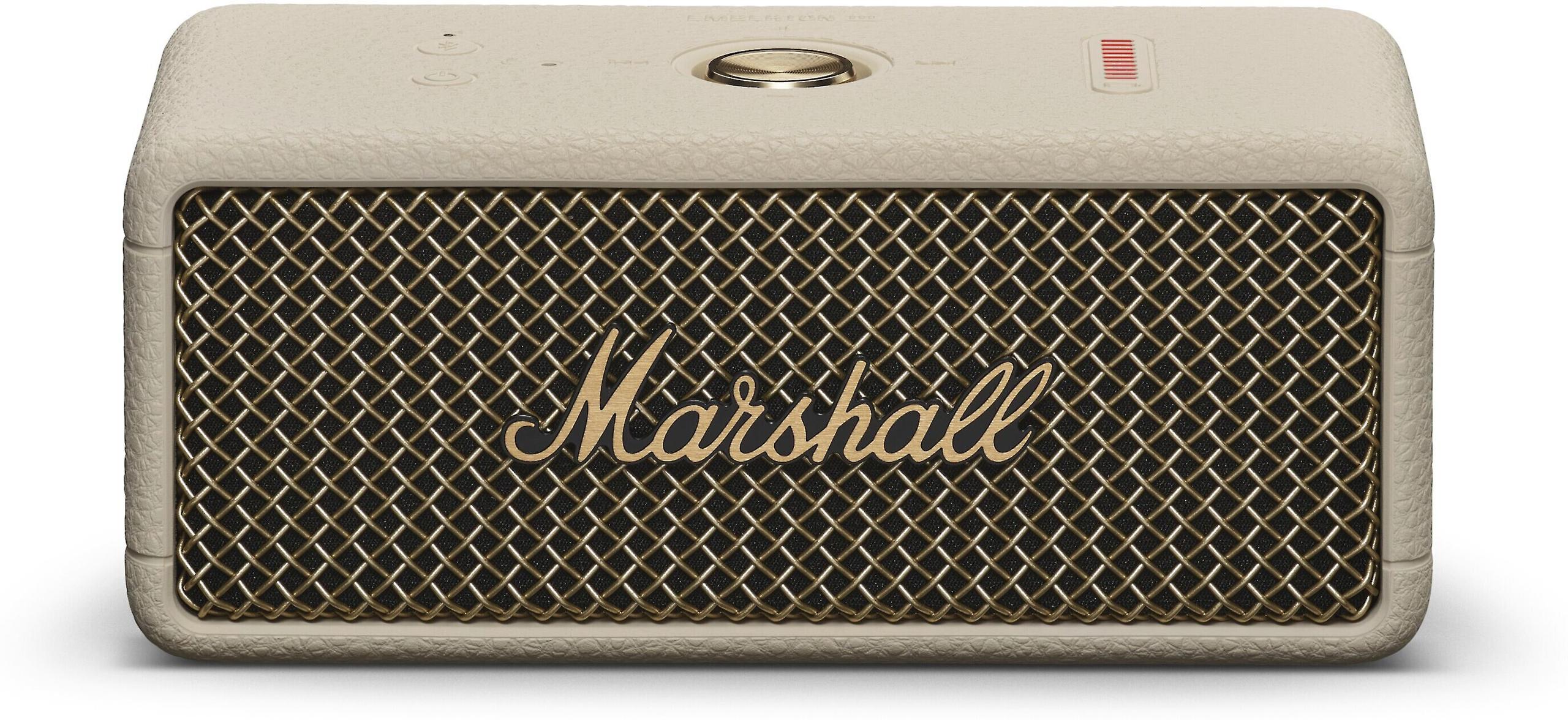
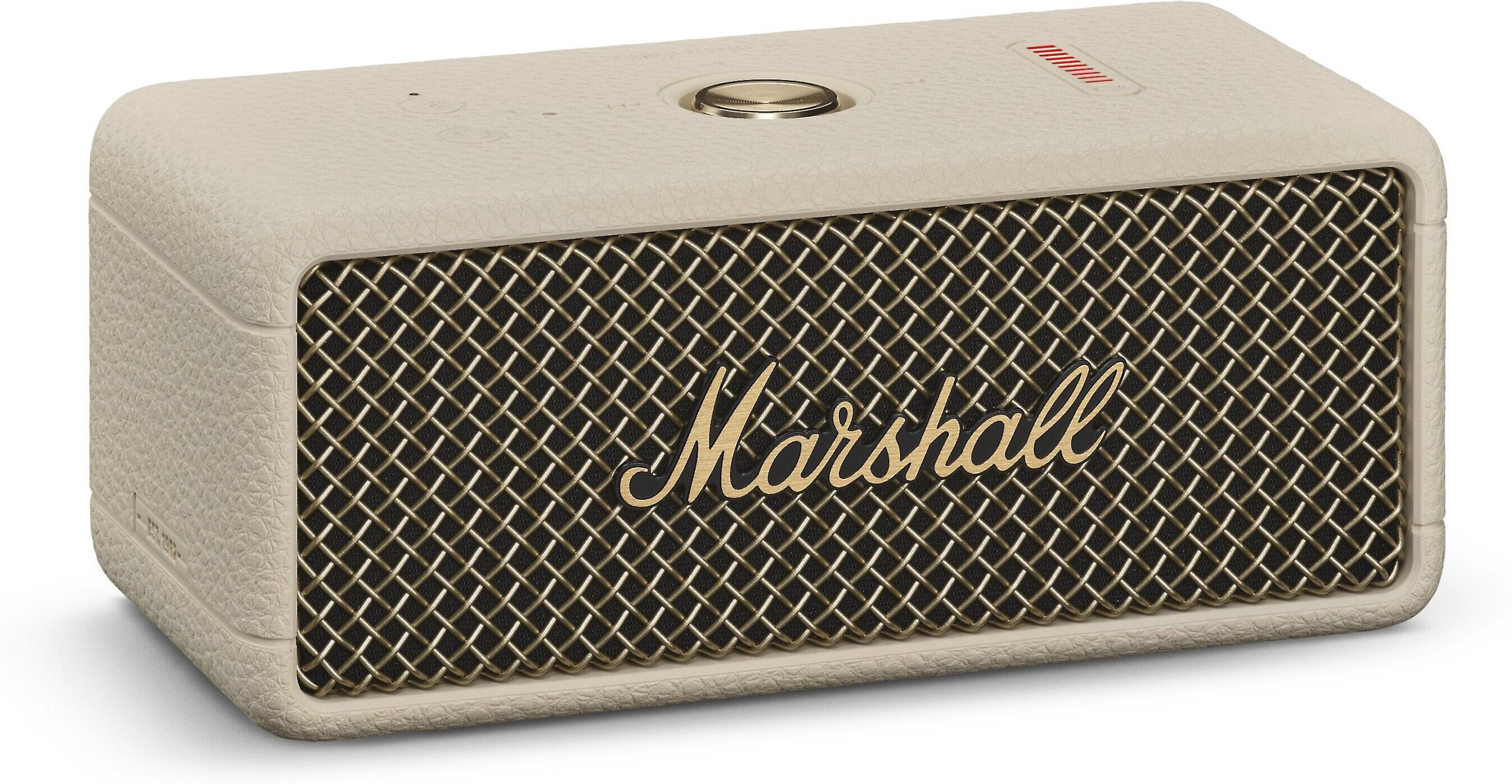



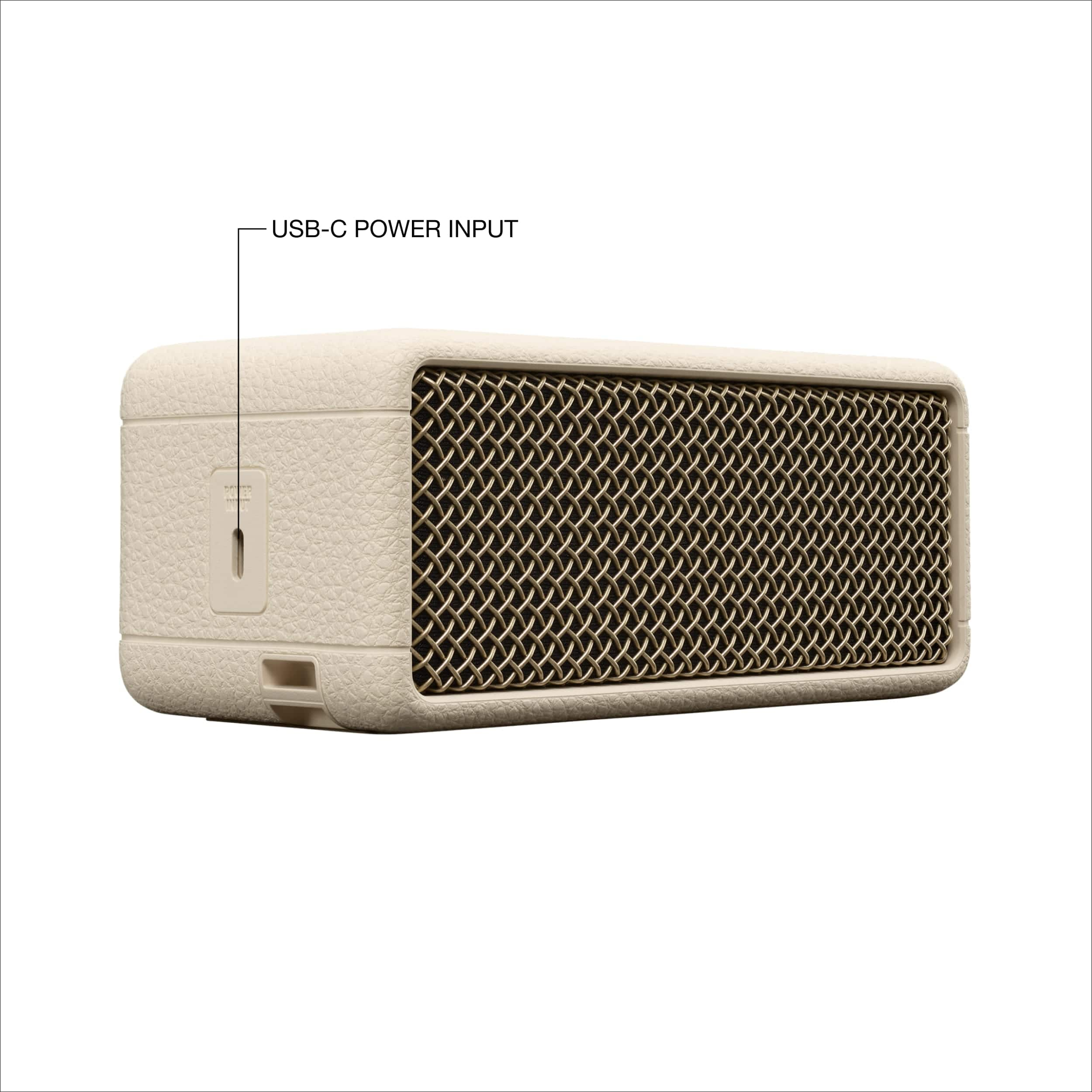
When you're hunting for the perfect portable Bluetooth speaker, you're essentially choosing between two completely different philosophies. The JBL Charge 4, released in 2018, represents the practical, utility-focused approach that made JBL a household name. Meanwhile, the Marshall Emberton III, which hit the market in 2023, embodies Marshall's premium design philosophy with cutting-edge technology packed into a surprisingly compact package.
At the time of writing, these speakers sit in different price brackets, with the Marshall Emberton III commanding a premium price that reflects its newer technology and brand positioning, while the JBL Charge 4 offers more budget-friendly access to quality portable audio. But price alone doesn't tell the whole story – these speakers target genuinely different needs and use cases.
Before diving into the specifics, it's worth understanding what makes a great portable speaker. The most critical factors include sound quality (how clear and balanced the audio sounds), battery life (how long you can listen before needing to recharge), durability (whether it can handle outdoor adventures), and portability (how easy it is to carry around).
Modern portable speakers also differ significantly in their approach to connectivity. Bluetooth technology has evolved rapidly since 2018, with newer versions offering better range, lower power consumption, and additional features. The JBL Charge 4 uses Bluetooth 4.2, which was standard when it launched, while the Marshall Emberton III leverages Bluetooth 5.3 LE (Low Energy), representing five years of technological advancement.
Water resistance ratings also matter tremendously for portable speakers. An IPX7 rating means the device can survive being submerged in one meter of water for 30 minutes – perfect for poolside use but offers no dust protection. An IP67 rating provides the same water protection plus complete dust immunity, making it superior for beach trips or dusty outdoor environments.
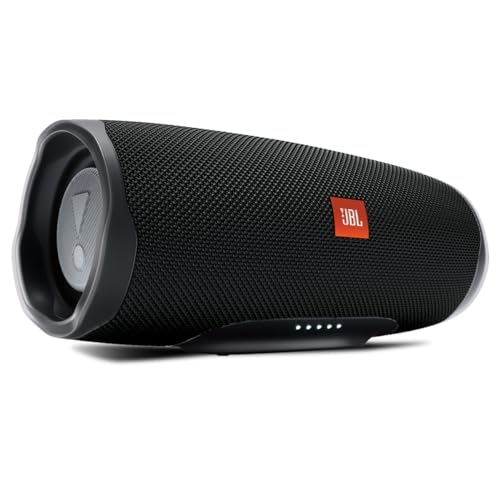
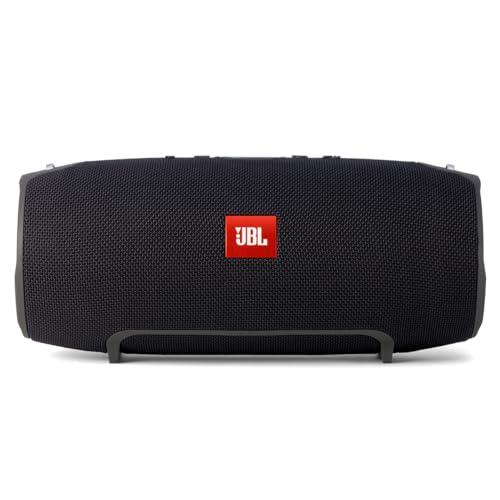
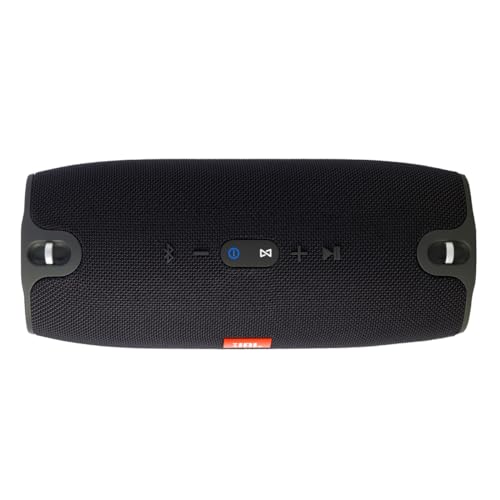
The physical differences between these speakers immediately reveal their intended audiences. The JBL Charge 4 follows a cylindrical design that prioritizes stability and durability. At 2.12 pounds, it feels substantial without being cumbersome, and its fabric-wrapped exterior with rubber caps creates a rugged aesthetic that screams "throw me in your backpack."
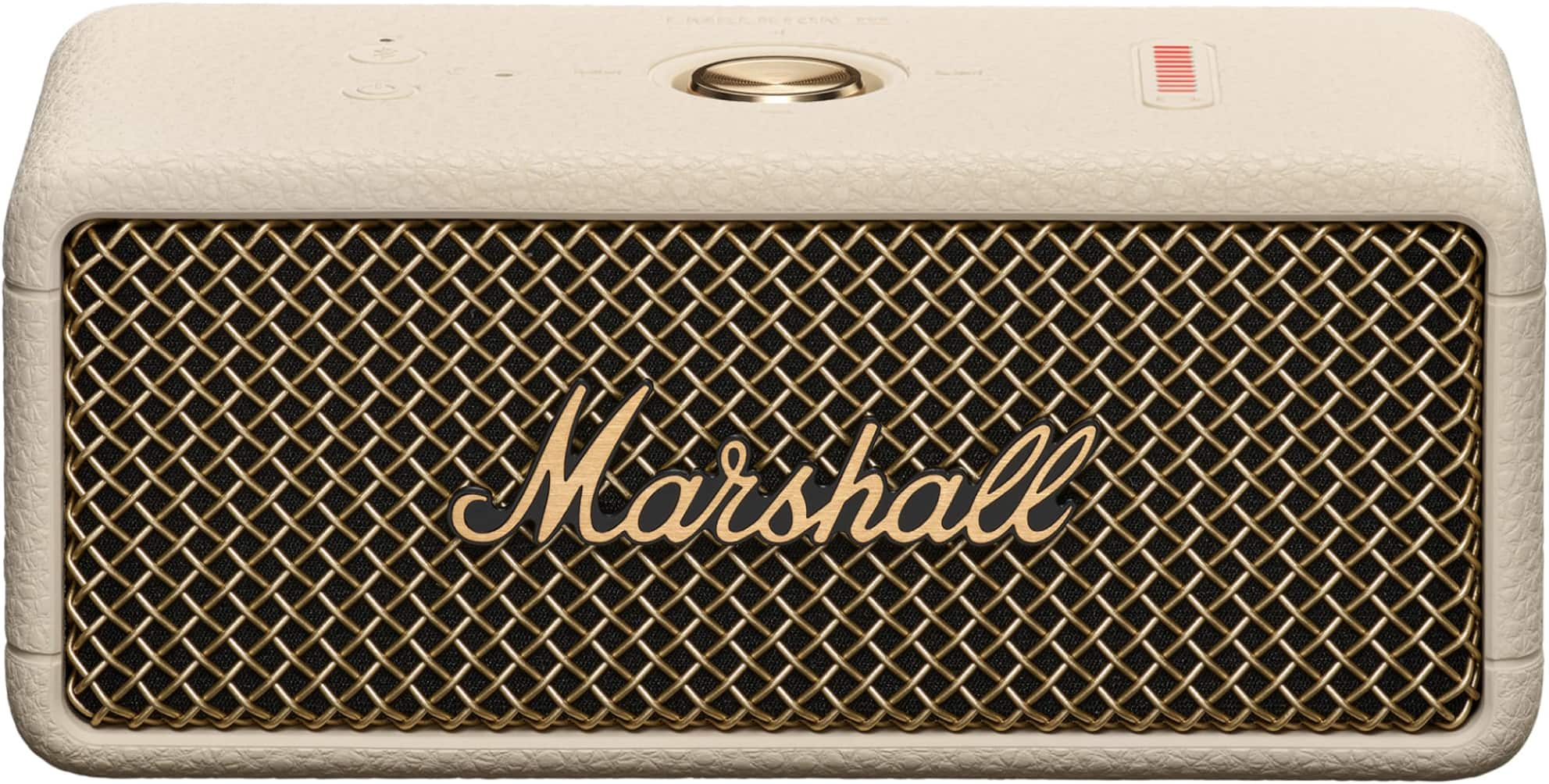
The Marshall Emberton III, conversely, channels Marshall's iconic guitar amplifier heritage into a remarkably compact 1.5-pound package. The metal grille and silicone body create a premium feel that wouldn't look out of place on a coffee table or bookshelf. At roughly 57% smaller by volume than the JBL Charge 4, it's genuinely pocketable for many users.
Both speakers excel in build quality, but they're built for different lifestyles. The JBL Charge 4 can handle rougher treatment and unstable surfaces better due to its lower center of gravity, while the Marshall Emberton III prioritizes refined aesthetics and ultimate portability.
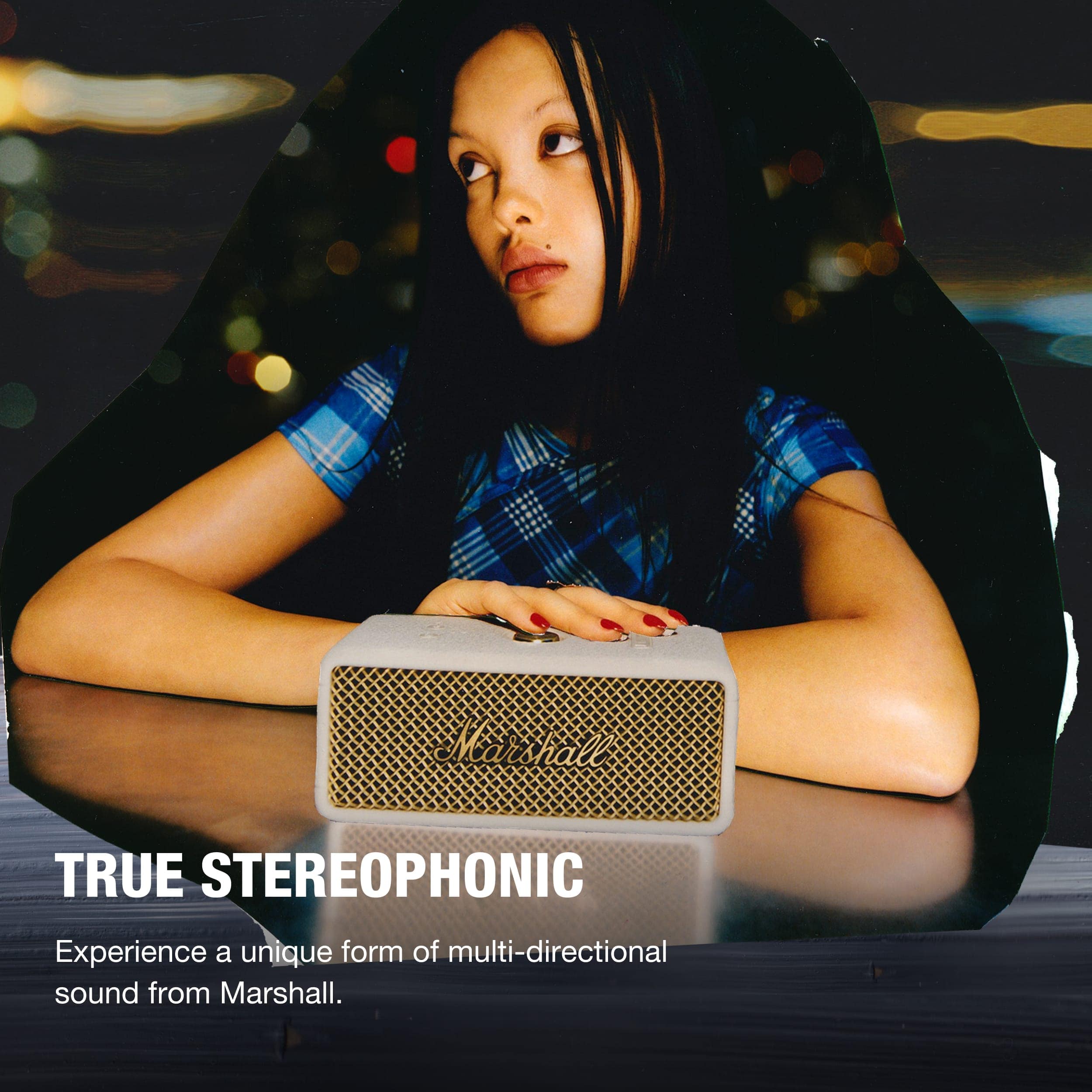
This is where the five-year technology gap becomes most apparent. The Marshall Emberton III employs what Marshall calls "True Stereophonic" technology – essentially, two separate 2-inch drivers working together to create genuine stereo separation. This means instruments and vocals can be positioned across a soundstage, creating a more immersive listening experience that fills a room naturally.
The JBL Charge 4 uses a single, larger driver configuration with dual passive radiators. Passive radiators are essentially speakers without magnets that vibrate sympathetically to enhance bass response – think of them as bass boosters that don't require additional power. While this creates impressive low-frequency performance for a speaker this size, it can't match the spatial audio experience of true stereo separation.
Frequency response tells us which sound frequencies each speaker can reproduce. The Marshall Emberton III covers 65-20,000 Hz, while the JBL Charge 4 handles 60-20,000 Hz. That 5 Hz difference in bass extension might seem minor, but it represents the JBL Charge 4's slight edge in reproducing the deepest bass notes – the kind you feel in your chest during hip-hop tracks or movie explosions.
However, the Marshall Emberton III counters with Dynamic Loudness, an intelligent feature that automatically adjusts the tonal balance based on your listening volume. At lower volumes, it boosts bass and treble to maintain fullness, while at higher volumes it prevents harshness – essentially acting like an automatic sound engineer.
For home theater use, the Marshall Emberton III's 360-degree sound dispersion makes it excellent for casual movie watching where multiple people need good audio from different positions. The JBL Charge 4's more directional sound works better when positioned directly facing viewers, but it can achieve higher overall volume levels for larger rooms.
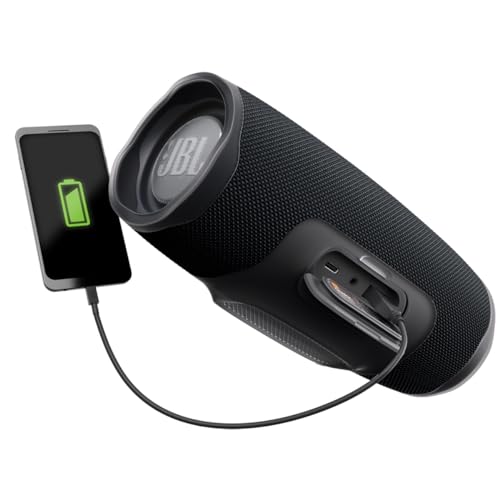
This comparison reveals how battery technology has evolved significantly since 2018. The JBL Charge 4 packs a substantial 7,500mAh battery that delivers up to 20 hours of playback – impressive by any standard. But the real party trick is its power bank functionality, allowing you to charge phones, tablets, or other devices via its USB-A output port.
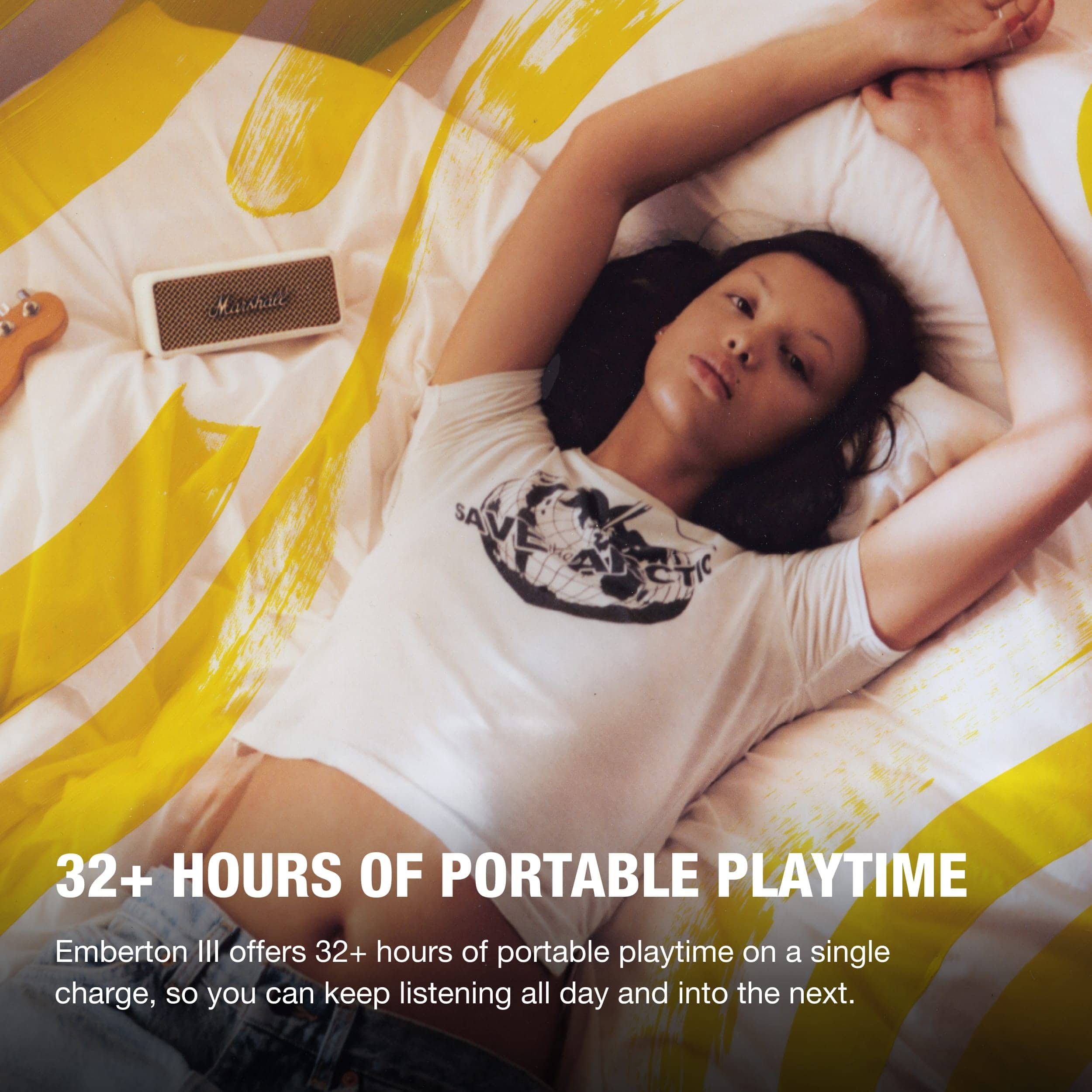
The Marshall Emberton III achieves an astounding 32 hours of playback despite having a smaller physical battery. This efficiency comes from the low-energy Bluetooth 5.3 LE technology and optimized power management. More impressively, it can gain six hours of playback from just 20 minutes of charging, compared to the JBL Charge 4's four-hour charging requirement.
The power bank feature in the JBL Charge 4 shouldn't be underestimated, especially for camping trips or beach days where device charging access is limited. It's genuinely useful when your phone dies during a long outdoor adventure. However, using this feature will reduce music playback time proportionally.
The five-year technology gap is most evident in connectivity options. The Marshall Emberton III supports Auracast, a newly emerging technology that will eventually allow broadcasting audio to unlimited compatible devices simultaneously – imagine being able to create a massive speaker array just by owning multiple Auracast-enabled devices.
The JBL Charge 4 counters with JBL Connect+, which can link over 100 compatible JBL speakers for synchronized playback. While this sounds similar, it only works with other JBL Connect+ devices, whereas Auracast promises universal compatibility across brands.
Multi-device pairing allows connecting two phones or tablets simultaneously, letting friends take turns controlling music without the hassle of disconnecting and reconnecting. Both speakers support this, but the Marshall Emberton III's Bluetooth 5.3 handles it more seamlessly with better range and stability.
The JBL Charge 4 includes a 3.5mm auxiliary input – a seemingly old-school feature that's actually quite valuable. It allows connection to any audio source without Bluetooth, provides better audio quality for high-resolution music, and works even when the battery is dead (as long as there's enough power to run the amplifier).
Both speakers handle water excellently, but with important differences. The JBL Charge 4's IPX7 rating means it's completely waterproof – you can submerge it, use it in the shower, or leave it out in heavy rain without worry. However, it's not dust-resistant, so beach sand or construction dust can potentially cause issues over time.
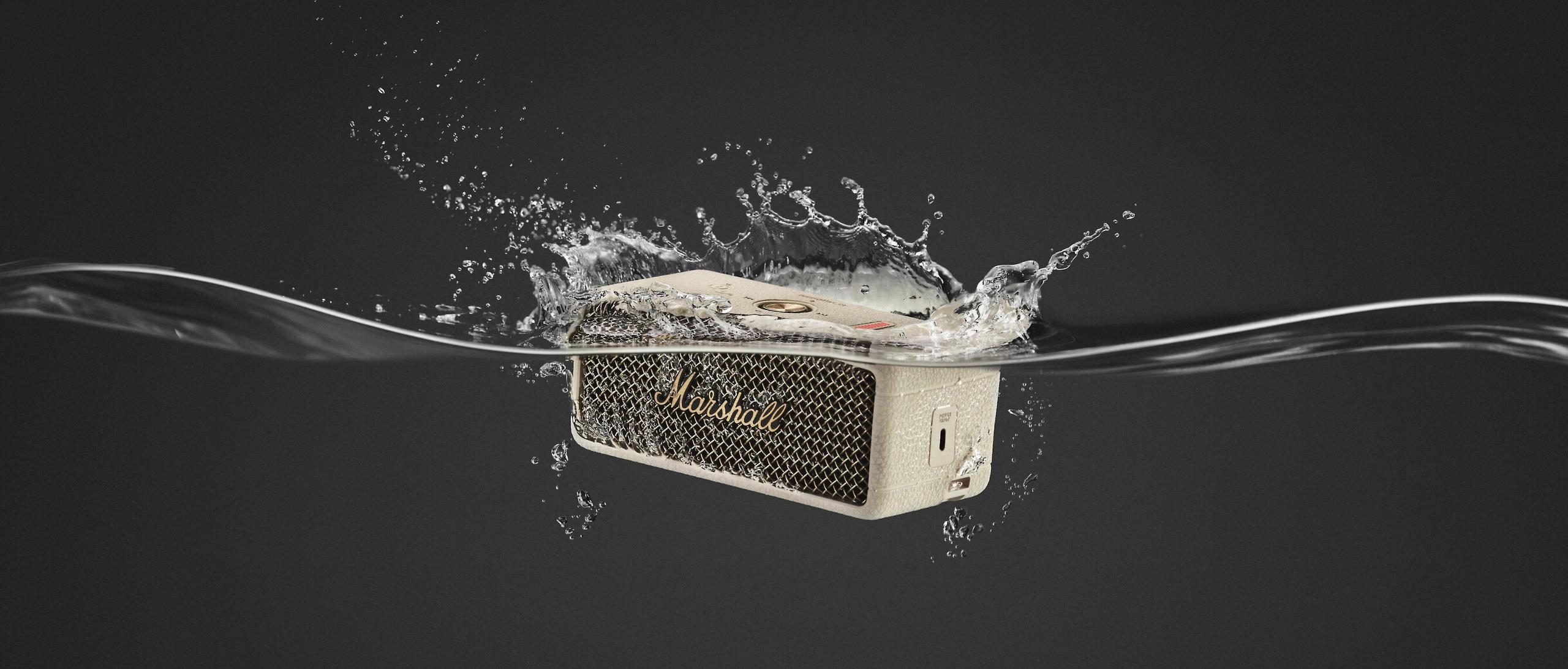
The Marshall Emberton III's IP67 rating provides the same water protection plus complete dust immunity. The "6" in IP67 represents the highest level of dust protection possible, meaning absolutely no dust can penetrate the enclosure. For outdoor adventures involving sand, dirt, or dusty environments, this makes it significantly more reliable long-term.
Both speakers feel solid and well-constructed, but they're built for different abuse patterns. The JBL Charge 4 can handle drops and impacts better due to its larger size and rubber construction, while the Marshall Emberton III excels in environmental protection but requires more careful handling due to its compact size.
Based on extensive user feedback and expert reviews, the Marshall Emberton III consistently delivers superior sound quality for most listening scenarios. The stereo separation creates a more engaging experience for music, podcasts, and casual video watching. The 360-degree sound means you don't need to position it perfectly to get good audio, making it ideal for background music during gatherings.
The JBL Charge 4 excels when maximum volume is needed. It can fill larger outdoor spaces more effectively and maintains better sound quality at high volumes where the Marshall Emberton III might start to show limitations due to its smaller drivers.
For bass response, both speakers perform admirably but differently. The JBL Charge 4 delivers more impactful, punchy bass that's immediately noticeable with hip-hop, electronic music, and movie soundtracks. The Marshall Emberton III provides more balanced, accurate bass that doesn't overpower other frequencies – better for rock, jazz, and acoustic music.
Voice clarity is exceptional on both, but the Marshall Emberton III's stereo configuration provides better instrument separation, making it easier to pick out individual elements in complex musical arrangements.
At the time of writing, the JBL Charge 4 represents exceptional value for budget-conscious buyers who need proven reliability and practical features. The power bank functionality alone justifies the purchase for many outdoor enthusiasts, and its established track record means you're buying known quantities rather than betting on new technology.
The Marshall Emberton III commands a premium that reflects its advanced technology, superior portability, and brand prestige. For users who prioritize sound quality, design aesthetics, and future-proof features, the higher price brings genuine benefits that will remain relevant for years.
The JBL Charge 4 makes most sense for camping enthusiasts, beach-goers, and anyone who frequently needs to charge devices away from power sources. Its larger size and higher volume capability also suit people who regularly host outdoor gatherings or need background music for work environments.
The Marshall Emberton III targets users who want the best possible audio quality in the most portable package. It's ideal for frequent travelers, urban commuters, and anyone who values design aesthetics alongside performance. The extended battery life makes it perfect for weekend getaways or long workdays.
Choose the JBL Charge 4 if you need device charging capability, prefer traditional connectivity options like auxiliary input, or frequently use speakers in large outdoor spaces requiring maximum volume. Its lower price point and proven reliability make it an excellent choice for practical users who prioritize utility over cutting-edge features.
Choose the Marshall Emberton III if sound quality and portability are your primary concerns, you want the longest possible battery life, or you're willing to pay more for premium design and future-proof technology. Its superior environmental protection and compact size make it ideal for users who prioritize quality and convenience.
Both speakers excel in their respective niches, but they serve fundamentally different needs. The JBL Charge 4 is the practical workhorse that'll handle whatever you throw at it, while the Marshall Emberton III is the sophisticated option that prioritizes audio excellence and modern convenience. Your choice should align with your specific use cases and budget priorities rather than trying to find a one-size-fits-all solution.
| JBL Charge 4 | Marshall Emberton III |
|---|---|
| Audio Configuration - Determines stereo imaging and sound quality | |
| Single 30W driver with dual passive radiators (mono) | Dual 2" drivers with 2x38W output (true stereo) |
| Battery Life - Critical for extended outdoor use | |
| Up to 20 hours playback | Up to 32 hours playback (60% longer) |
| Charging Speed - Important for quick turnaround between uses | |
| 4-5.5 hours to full charge | 2 hours to full charge, 20 min = 6 hours playback |
| Power Bank Feature - Unique utility for device charging | |
| Yes, 7500mAh can charge phones/tablets | No power bank functionality |
| Size & Weight - Affects daily portability | |
| 8.7" x 3.7" x 3.7", 2.12 lbs | 6.3" x 2.7" x 3", 1.5 lbs (57% smaller by volume) |
| Water & Dust Resistance - Protection level for outdoor adventures | |
| IPX7 (waterproof, not dustproof) | IP67 (waterproof and completely dustproof) |
| Bluetooth Technology - Affects connection quality and future compatibility | |
| Bluetooth 4.2 (2018 standard) | Bluetooth 5.3 LE with Auracast support (2023 cutting-edge) |
| Sound Dispersion - How audio fills a space | |
| Directional sound projection | 360-degree True Stereophonic technology |
| Wired Connectivity - Backup option when Bluetooth fails | |
| 3.5mm AUX input included | No wired audio input |
| Multi-Speaker Pairing - Create larger sound systems | |
| JBL Charge 4 Connect+ (100+ JBL speakers) | Auracast broadcasting (universal compatibility when available) |
| Frequency Response - Range of audio reproduction | |
| 60Hz-20kHz (slightly better bass extension) | 65Hz-20kHz with Dynamic Loudness adjustment |
| Target Price Range - Value positioning at time of writing | |
| Budget-friendly established model | Premium pricing for latest technology |
The Marshall Emberton III delivers superior sound quality with its dual 2-inch drivers creating true stereo separation and 360-degree sound dispersion. The JBL Charge 4 uses a single driver configuration that produces mono audio, though it can achieve higher maximum volume levels. The Marshall Emberton III's True Stereophonic technology provides better instrument separation and a more immersive listening experience.
The Marshall Emberton III offers exceptional battery life with up to 32 hours of playback, significantly outperforming the JBL Charge 4's 20-hour battery life. Additionally, the Marshall Emberton III charges much faster, reaching full capacity in 2 hours compared to the JBL Charge 4's 4-5.5 hour charging time.
Only the JBL Charge 4 can charge external devices thanks to its built-in power bank functionality with a 7500mAh battery and USB-A output port. The Marshall Emberton III does not offer device charging capabilities, focusing instead on extended audio playback and compact portability.
The Marshall Emberton III is significantly more portable, weighing just 1.5 pounds and measuring 57% smaller by volume than the JBL Charge 4. The JBL Charge 4 weighs 2.12 pounds and has a larger cylindrical design that's still portable but less compact for travel situations.
Both speakers offer excellent water protection, but the Marshall Emberton III has superior environmental resistance with its IP67 rating (waterproof and dustproof). The JBL Charge 4 features IPX7 rating, making it fully waterproof but not dust-resistant, which could be a concern for sandy beach environments.
The JBL Charge 4 typically achieves higher maximum volume levels due to its larger driver and directional sound design, making it better suited for large outdoor gatherings. The Marshall Emberton III prioritizes sound quality over maximum volume, though its 360-degree dispersion fills spaces more evenly at moderate volume levels.
The Marshall Emberton III works better for casual home theater use thanks to its true stereo separation and 360-degree sound that provides good audio from multiple seating positions. The JBL Charge 4 can work for TV audio when positioned directly facing viewers, but its mono configuration limits the cinematic audio experience.
The Marshall Emberton III uses modern Bluetooth 5.3 LE technology, offering better range, stability, and lower power consumption compared to the JBL Charge 4's Bluetooth 4.2. The newer Bluetooth version in the Marshall Emberton III also supports advanced features like Auracast for future multi-device broadcasting.
Both speakers support multi-speaker pairing but use different technologies. The JBL Charge 4 uses JBL Connect+ to link with over 100 compatible JBL speakers. The Marshall Emberton III will support universal Auracast broadcasting, allowing connection with any compatible brand when the feature becomes widely available.
The JBL Charge 4 typically offers better value for budget-conscious buyers, providing solid audio performance, power bank functionality, and proven durability at a lower price point. The Marshall Emberton III commands a premium for its advanced technology, superior audio quality, and extended battery life, making it better value for users prioritizing cutting-edge features.
Only the JBL Charge 4 includes a 3.5mm auxiliary input for wired audio connections, useful for devices without Bluetooth or when you want to preserve battery life. The Marshall Emberton III relies entirely on Bluetooth connectivity and doesn't offer any wired audio input options.
Both speakers are built for outdoor use, but they excel in different scenarios. The Marshall Emberton III offers superior environmental protection with complete dust and water resistance (IP67). The JBL Charge 4 provides excellent water resistance (IPX7) and arguably better drop protection due to its larger size and rugged construction, plus the practical advantage of device charging during extended outdoor trips.
We've done our best to create useful and informative comparisons to help you decide what product to buy. Our research uses advanced automated methods to create this comparison and perfection is not possible - please contact us for corrections or questions. These are the sites we've researched in the creation of this article: rtings.com - whathifi.com - whathifi.com - soundguys.com - soundguys.com - streamtechreviews.com - youtube.com - versus.com - applevis.com - versus.com - jbl.com - jbl.com - walmart.com - comparisontabl.es - harmanaudio.com - manuals.plus - jbl.com.sg - jbl.com - mm.jbl.com - bestbuy.com - newpower99.com - forums.woot.com - techradar.com - bgr.com - androidcentral.com - crutchfield.com - goodhousekeeping.com - bhphotovideo.com - youtube.com - youtube.com - timesofindia.indiatimes.com - bestbuy.com - group.marshall.com

Privacy Policy
Terms and Conditions - Affiliate Policy
Home Security
© Copyright 2008-2026.
11816 Inwood Rd #1211, Dallas, TX 75244