




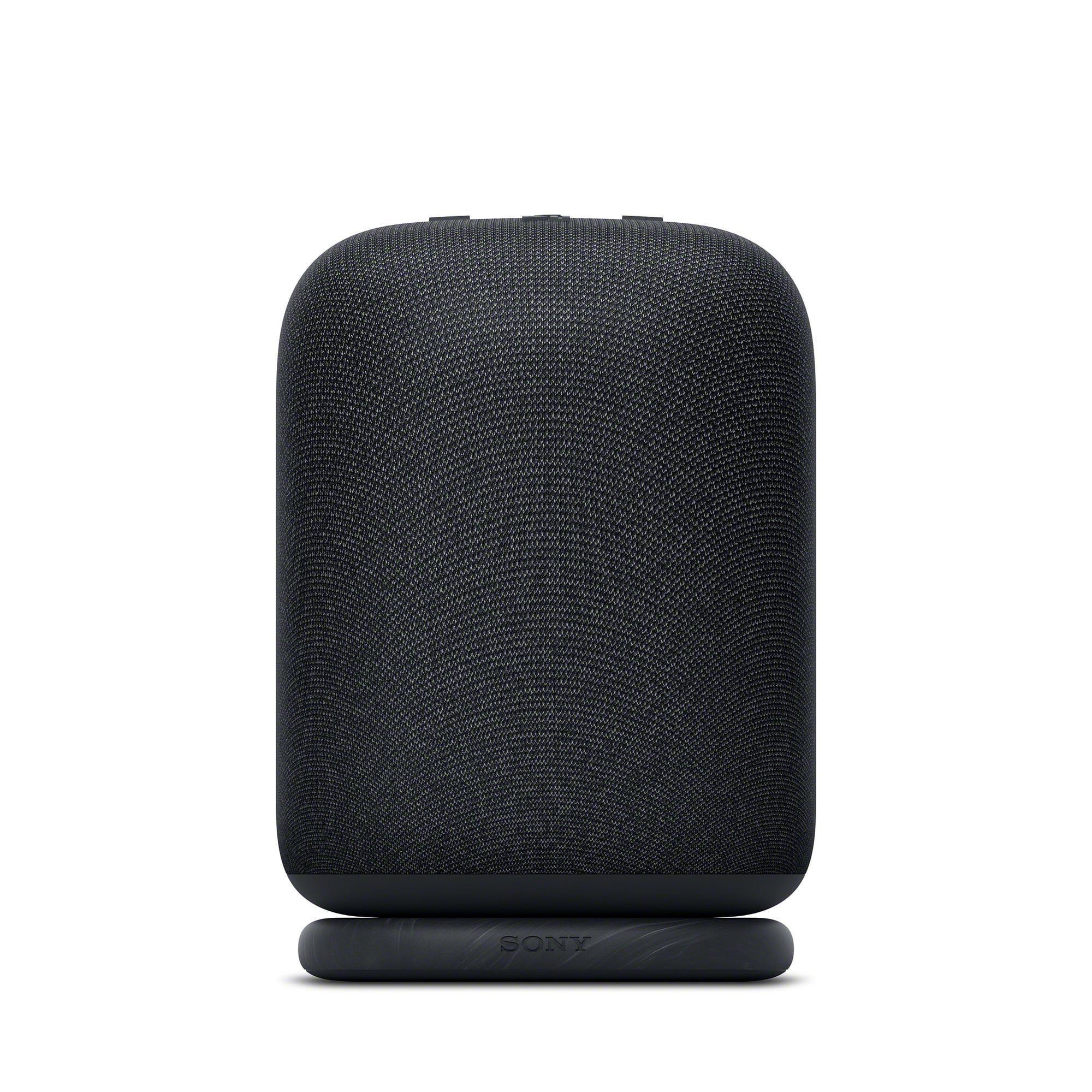


Choosing a portable Bluetooth speaker used to be simple—you picked the loudest one in your budget and called it done. Today's market is far more nuanced, with speakers designed for specific lifestyles and use cases. The JBL Go 3 and Sony LinkBuds Wireless Portable Speaker perfectly illustrate this evolution, representing two completely different philosophies in portable audio.
At the time of writing, these speakers sit at opposite ends of the portable speaker spectrum. The JBL Go 3 champions ultra-portability and ruggedness at a budget-friendly price, while the Sony LinkBuds Wireless prioritizes premium audio quality and smart features with a corresponding premium price tag—roughly six times more expensive than the JBL.
The portable speaker market has fractured into distinct categories over the past few years. You've got ultra-compact speakers like the JBL Go 3 that prioritize convenience above all else, lifestyle speakers like the Sony LinkBuds Wireless that blend home and portable use, and everything in between.
Key considerations when choosing include the eternal trade-off between portability and performance. Physics hasn't changed—smaller speakers simply can't move as much air or house large drivers (the components that actually produce sound). This means ultra-compact speakers will always sacrifice some audio quality for convenience.
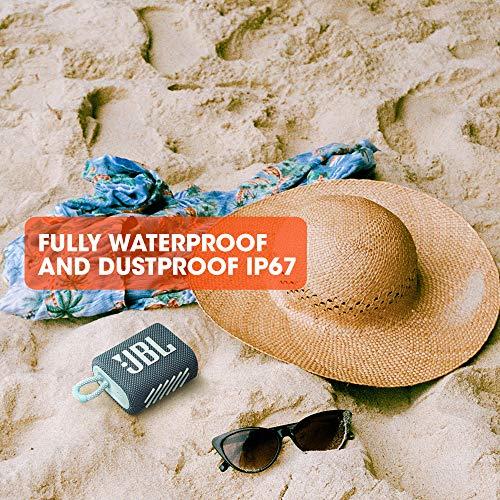
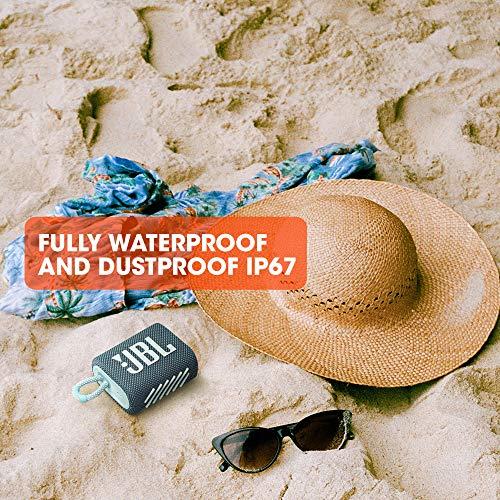
Environmental protection has become crucial too. An IP67 rating means complete protection against dust and water immersion up to one meter for 30 minutes—perfect for beach days. An IPX4 rating only protects against splashes from any direction, suitable for kitchen use but not pool parties.
Battery life varies dramatically, from 5 hours on budget models to 25+ hours on premium ones. The difference often comes down to battery size, power efficiency, and whether manufacturers prioritize longevity or compactness.
The JBL Go 3, released in 2021, represents JBL's refined approach to ultra-portable audio. It's the third generation of their smallest speaker, incorporating lessons learned from previous models while maintaining the core philosophy of maximum portability at minimum cost.
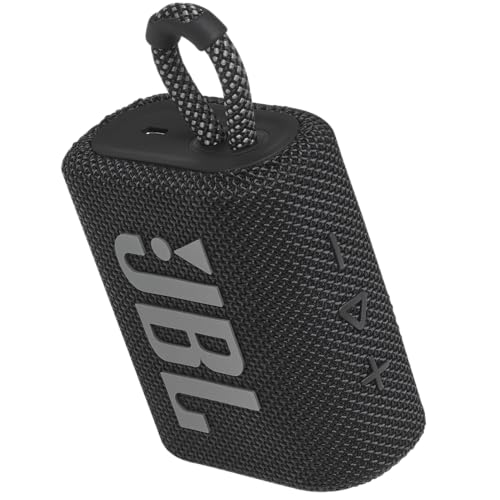
JBL redesigned the Go 3 with a more rugged aesthetic, adding rubberized accents and improving water resistance to IP67. The integrated fabric loop—a simple but clever addition—makes it genuinely hands-free portable. This isn't just marketing; when you can clip a speaker to your backpack and forget about it, that fundamentally changes how you use it.
The Sony LinkBuds Wireless, launched in 2024, represents Sony's entry into the premium lifestyle speaker market. It's designed to complement Sony's LinkBuds headphone ecosystem, creating a seamless audio experience that switches between personal and shared listening.
Sony's approach reflects their broader audio philosophy—they're betting that users want sophisticated features and superior sound quality, even in portable form. The LinkBuds speaker includes their Sound Diffusion Processor, a digital signal processing (DSP) technology that analyzes audio in real-time and adjusts it to create a wider, more immersive soundstage.
This is where the fundamental differences between these speakers become most apparent, and understanding the technical details helps explain the performance gap.
The Sony LinkBuds Wireless uses a two-way speaker system—essentially two separate speakers in one housing. The 16mm tweeter handles high frequencies (treble), while the larger 48x56mm balanced driver handles mid and bass frequencies. This separation allows each driver to specialize in its frequency range, reducing distortion and improving clarity.
Think of it like having a specialist for each job rather than one person trying to do everything. The tweeter can reproduce crisp cymbals and vocal details without struggling with bass notes, while the larger driver can move more air for better bass response without compromising high-frequency detail.
The JBL Go 3 uses a single 43x47mm driver in a mono configuration. While JBL's engineers have optimized this setup admirably with their Pro Sound processing, physics limits what's possible. One driver must handle all frequencies, leading to compromises and potential distortion when pushed hard.
Frequency response describes how well a speaker reproduces different pitches, from deep bass (around 20Hz) to the highest treble (20,000Hz). The Sony LinkBuds Wireless delivers a more balanced response across this spectrum, with particular strength in the midrange where vocals and most instruments live.
Our research into user and expert reviews consistently shows the Sony excelling at instrument separation—the ability to distinguish individual elements in complex music. When listening to a busy jazz track, you can follow the bass line, piano, and drums as distinct elements rather than a muddy mix.
The JBL Go 3, operating within its size constraints, delivers surprisingly good vocal clarity and punchy midrange. However, bass response is limited—you'll hear the attack of a kick drum but not the deep rumble that makes you feel it. Sub-bass, the frequencies that add weight and presence to music, is largely absent due to the small driver size.
Maximum volume tells only part of the story. The JBL Go 3 can actually get louder than the Sony LinkBuds Wireless, which seems counterintuitive given the price difference. However, the Sony maintains better sound quality at high volumes, with less compression and distortion.
Compression is what happens when a speaker can't cleanly reproduce loud sounds—everything gets squashed together and loses impact. The Sony's superior driver configuration and processing help it avoid this pitfall, though it won't fill a large outdoor space like more powerful speakers.
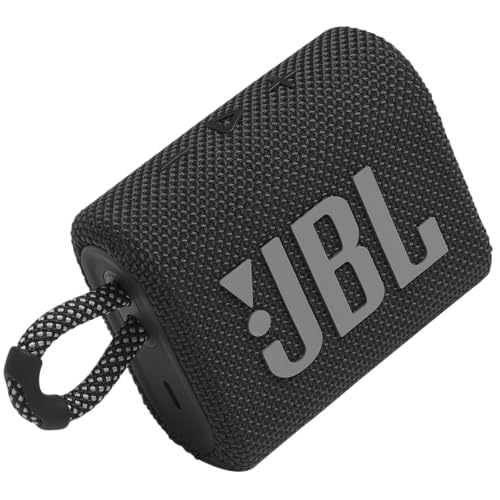
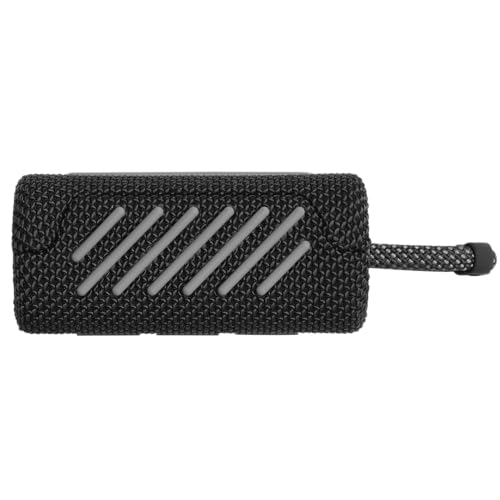
The JBL Go 3 measures just 3.4 x 2.7 x 1.6 inches and weighs 0.46 pounds. That's genuinely pocketable—you could carry it in a jacket pocket without thinking about it. The integrated loop isn't just a nice touch; it transforms how you transport the speaker. Clip it to your backpack, belt loop, or bike and you're hands-free.
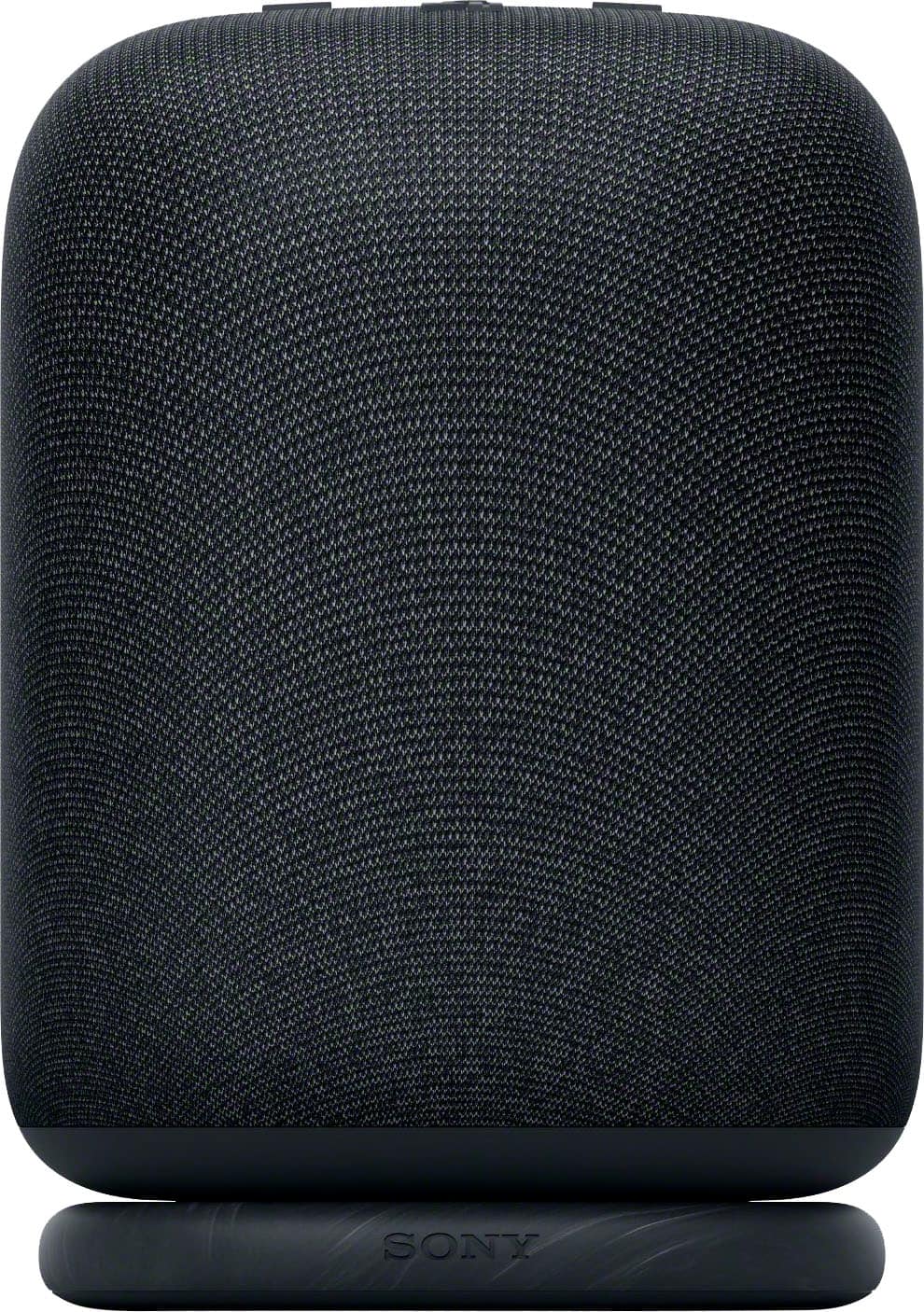
The Sony LinkBuds Wireless at 3.7 x 3.7 x 8.1 inches and 1.2 pounds requires dedicated bag space. It's portable in the sense that you can move it from room to room or pack it for travel, but it's not truly pocketable. The included charging dock adds convenience but also bulk when traveling.
Both speakers feel solid, but they're built for different purposes. The JBL Go 3 features a rubberized exterior designed to bounce rather than break. The tight fabric grille protects the driver while allowing sound through clearly.
The Sony LinkBuds Wireless opts for a softer fabric covering that feels premium but may be more susceptible to wear. The build quality is excellent, but it's clearly designed for gentler handling than the JBL.
This represents one of the starkest differences between these speakers and dramatically affects their suitable use cases.
The JBL Go 3's IP67 rating means you can literally drop it in a pool, fish it out, and keep playing music. The speaker is completely sealed against dust—essential for beach or camping use where sand and dirt are inevitable. I've seen users confidently take these speakers into environments where they wouldn't dare bring their phone.
The Sony LinkBuds Wireless's IPX4 rating protects against splashes from any direction. This is fine for kitchen use where you might splash while cooking, but it's not suitable for poolside use or outdoor adventures where weather might turn unexpectedly.
This difference fundamentally shapes each product's ideal use cases. The JBL encourages worry-free outdoor use, while the Sony requires more careful handling.
Battery life represents perhaps the most significant practical difference between these speakers. The Sony LinkBuds Wireless's 25-hour battery life transforms it from a device you need to remember to charge into one you charge weekly or less.
This isn't just about convenience—it changes the role the speaker can play in your life. With 25 hours of playback, the Sony becomes a reliable desk companion for all-day work sessions or a bedroom speaker you don't think about until the weekend.
The JBL Go 3's 5-hour battery life requires more active management. It's perfect for specific activities—a beach day, workout session, or afternoon in the park—but not for always-on background use.
The Sony's quick charging partially mitigates the JBL's advantage in charging speed. Ten minutes of charging provides 70 minutes of playback, meaning even if you forget to charge it, a quick top-up during lunch provides afternoon listening.
The feature gap between these speakers reflects their different target markets and price points.
The Sony LinkBuds Wireless includes Auto Switch functionality, which seamlessly transfers audio between the speaker and compatible Sony headphones. This isn't just a gimmick—it solves the real problem of wanting to switch from shared listening to private listening without interrupting your content.
The Quick Access button provides one-touch access to your preferred music service, eliminating the need to unlock your phone and navigate apps. Auto Play can start your morning playlist at a set time, creating an ambient alarm clock experience.
Multipoint connection allows the Sony to connect to two devices simultaneously—your laptop and phone, for example. When a call comes in on your phone, the speaker automatically switches from laptop audio to handle the call.
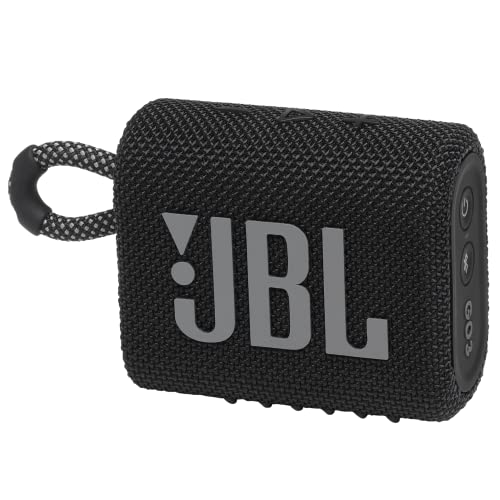
The JBL Go 3 focuses on essential functionality: power, volume, play/pause, and Bluetooth pairing. There's no app, no customization, no smart features. For users who want simplicity and don't need advanced functionality, this is actually a benefit—fewer things to learn, configure, or break.
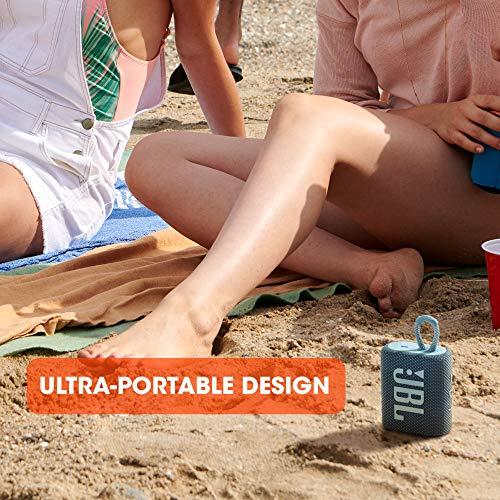
The JBL Go 3 shines in scenarios where portability and ruggedness trump audio quality. Beach days, camping trips, and outdoor adventures where you need music but can't baby your equipment. The IP67 rating means sand, water, and drops aren't dealbreakers.
Budget-conscious scenarios also favor the JBL. Students, secondary speakers for different rooms, or situations where you might lose or damage the speaker make the lower price point attractive. At its price point, you could buy multiple units to keep in different locations.
Travel situations where every ounce matters—backpacking, flying with carry-on restrictions, or daily commuting—benefit from the JBL's minimal size and weight.
The Sony LinkBuds Wireless excels in semi-stationary scenarios where audio quality matters. Home office setups benefit from the superior sound quality for video calls and background music, while the 25-hour battery life means it's always ready.
Bedroom or personal listening scenarios where you want good sound without disturbing others showcase the Sony's balanced frequency response and clear vocal reproduction. The charging dock makes it practical as a semi-permanent fixture.
Users already invested in Sony's audio ecosystem, particularly LinkBuds headphones, gain significant value from the seamless switching functionality. This integration creates a cohesive audio experience that's hard to replicate with other brands.
When evaluating portable speakers, certain performance characteristics matter more than others depending on your priorities.
Audio clarity at moderate volumes proves most important for daily use. Most portable speakers rarely get played at maximum volume, so performance in the 40-70% range matters most. Both speakers perform well here, with the Sony offering superior detail and the JBL delivering impressive clarity for its size.
Bass response limitations affect music genre suitability. Electronic music, hip-hop, and modern pop rely heavily on bass impact that neither speaker can fully deliver due to size constraints. Acoustic music, podcasts, and vocal-heavy content play to both speakers' strengths.
Battery consistency affects real-world usability more than maximum battery life specs. User reports suggest the Sony delivers close to its rated 25 hours, while the JBL typically provides 4-5 hours depending on volume levels.
Connection reliability in crowded Bluetooth environments matters for urban use. Both speakers use modern Bluetooth standards, but the Sony's newer Bluetooth 5.2 provides slight advantages in connection stability and energy efficiency.
Neither speaker is designed for home theater use, but they can serve different roles in entertainment setups.
The Sony LinkBuds Wireless's superior dialogue clarity makes it potentially useful for personal TV watching in bed or small rooms where you want audio enhancement without disturbing others. However, the mono output and lack of low-frequency response limit its effectiveness for movies.
The JBL Go 3 isn't suitable for home theater applications due to its size and mono configuration. It's better considered a personal audio device rather than an entertainment system component.
For serious home theater applications, both speakers' limitations become apparent quickly. They're designed for personal or small-group listening rather than cinematic experiences.
The decision between the JBL Go 3 and Sony LinkBuds Wireless comes down to matching your actual usage patterns with each speaker's strengths.
Choose the JBL Go 3 if you prioritize portability above all else. If you want a speaker you can throw in a bag and forget about, take to the beach without worry, or use as a backup device, the JBL's combination of size, ruggedness, and value is unmatched. The IP67 rating alone makes it suitable for situations where the Sony would be impractical.
The JBL also makes sense if you're price-sensitive or need multiple speakers. At its price point, you could place them in several locations or replace them without significant financial impact.
Choose the Sony LinkBuds Wireless if audio quality and smart features justify the premium price. If you primarily use speakers in controlled environments and value the convenience of 25-hour battery life and intelligent features, the Sony provides a noticeably superior experience.
The Sony particularly appeals to users already in Sony's ecosystem or those who want a speaker that can serve double duty as a home and portable device. The charging dock and premium materials make it suitable as a semi-permanent desktop or bedside speaker.
Consider your primary use case carefully. A speaker that sits on your desk 90% of the time doesn't need IP67 protection, while a speaker for outdoor adventures doesn't need 25-hour battery life or smart features.
The JBL Go 3 represents maximizing utility per dollar and prioritizing the fundamentals of portable audio. The Sony LinkBuds Wireless represents the premium approach, where superior performance and convenience features justify a significantly higher investment.
Both approaches have merit—the key is honest self-assessment of how you'll actually use the speaker. In a market full of compromise, both speakers succeed by clearly defining what they optimize for and executing that vision well.
| JBL Go 3 Portable Bluetooth Speaker | Sony LinkBuds Wireless Portable Speaker |
|---|---|
| Size & Weight - Critical for true portability | |
| 3.4 x 2.7 x 1.6 inches, 0.46 lbs (truly pocketable) | 3.7 x 3.7 x 8.1 inches, 1.2 lbs (requires bag space) |
| Audio System - Determines overall sound quality | |
| Single 43x47mm driver, mono output (clear vocals, limited bass) | Two-way system: 16mm tweeter + 48x56mm driver (balanced, detailed sound) |
| Water Resistance - Essential for outdoor use | |
| IP67 (fully waterproof, submersible to 1m for 30 minutes) | IPX4 (splash-resistant only, indoor/light outdoor use) |
| Battery Life - Affects daily usability | |
| Up to 5 hours (requires frequent charging) | Up to 25 hours (charge weekly, quick charging available) |
| Smart Features - Modern convenience vs simplicity | |
| Basic controls only (power, volume, play/pause) | Auto Switch, Quick Access button, Auto Play, multipoint connection |
| Portability Design - How you actually carry it | |
| Integrated fabric loop for hands-free carrying | Charging dock included, premium materials |
| Connectivity - Modern standards and compatibility | |
| Bluetooth 5.1, basic pairing | Bluetooth 5.2, multipoint connection, Sony ecosystem integration |
| Durability - Build quality for different environments | |
| Rubberized exterior, drop-resistant, beach/pool ready | Premium fabric covering, gentle handling required |
| Sound Customization - Audio tuning options | |
| No app or EQ options (what you hear is what you get) | 5-band EQ, Clear Bass slider, Sound Diffusion Processor |
| Target Use Case - Who each speaker serves best | |
| Ultra-portable, outdoor adventures, budget-conscious buyers | Home office, bedroom, Sony ecosystem users, audio quality priority |
The JBL Go 3 is significantly better for outdoor use thanks to its IP67 waterproof rating, which means it can be fully submerged in water and is completely dustproof. The Sony LinkBuds Wireless only has IPX4 splash resistance, making it unsuitable for beach days, poolside use, or hiking where weather conditions might change unexpectedly.
The Sony LinkBuds Wireless offers superior sound quality with its two-way speaker system featuring a dedicated tweeter and larger driver, providing better instrument separation and balanced audio. The JBL Go 3 uses a single driver system that delivers surprisingly good vocals and clarity for its size, but lacks the depth and detail of the Sony's more advanced audio architecture.
The Sony LinkBuds Wireless dramatically outperforms with up to 25 hours of battery life compared to the JBL Go 3's 5-hour runtime. This means the Sony can play music all day without charging, while the JBL requires more frequent recharging but compensates with its ultra-compact size.
Neither the JBL Go 3 nor Sony LinkBuds Wireless is designed for home theater applications. Both are mono speakers with limited bass response. However, the Sony's superior dialogue clarity might work for personal TV watching in small rooms, though dedicated soundbars or larger speakers would be much better choices for serious home theater setups.
The JBL Go 3 is far more portable, weighing just 0.46 pounds with an integrated loop for hands-free carrying. You can literally clip it to your backpack or belt. The Sony LinkBuds Wireless is portable but requires dedicated bag space and careful handling due to its larger size and premium materials.
The Sony LinkBuds Wireless includes smart features like Quick Access buttons and Auto Play but doesn't have built-in voice assistant support. The JBL Go 3 offers basic controls only with no smart features or voice assistant integration. Both rely on your connected device for voice commands.
This depends on your needs. The JBL Go 3 offers exceptional value for ultra-portable, rugged use at a budget-friendly price point. The Sony LinkBuds Wireless provides premium audio quality and smart features that justify its higher cost for users who prioritize sound quality and convenience over maximum portability.
The Sony LinkBuds Wireless supports multipoint connection, allowing you to connect two Bluetooth devices simultaneously and automatically switch between them. The JBL Go 3 only connects to one device at a time, requiring manual disconnection and reconnection to switch between devices.
Surprisingly, the JBL Go 3 can achieve higher maximum volume levels than the Sony LinkBuds Wireless. However, the Sony maintains better sound quality at high volumes with less distortion and compression, making it more pleasant for extended listening despite the lower peak volume.
The Sony LinkBuds Wireless features Auto Switch technology that seamlessly transfers audio between the speaker and compatible Sony headphones, plus scheduling features for automatic music playback. The JBL Go 3 focuses on simplicity and ruggedness rather than smart features, with its standout being the IP67 waterproof rating at its price point.
The JBL Go 3 is ideal for travel due to its pocketable size, integrated carrying loop, and worry-free durability. You can pack it anywhere without concern for damage. The Sony LinkBuds Wireless requires more careful packing and handling but offers the advantage of much longer battery life, reducing the need to find charging opportunities during extended trips.
The Sony LinkBuds Wireless includes a convenient charging dock that eliminates cable fumbling and doubles as a stylish desktop accessory. The JBL Go 3 charges via USB-C cable directly, which is more travel-friendly since there's no dock to pack. Both use USB-C, but the Sony's dock setup is better for stationary use while the JBL's direct charging suits mobile lifestyles.
We've done our best to create useful and informative comparisons to help you decide what product to buy. Our research uses advanced automated methods to create this comparison and perfection is not possible - please contact us for corrections or questions. These are the sites we've researched in the creation of this article: rtings.com - streamtechreviews.com - english.achoreviews.com - smarthomesounds.co.uk - soundguys.com - rtings.com - walmart.com - soundguys.com - youtube.com - youtube.com - jbl.com - youtube.com - selectoguru.com - versus.com - videoandaudiocenter.com - harmanaudio.com - jbl.com - bestbuy.com - forum.hifiguides.com - manuals.plus - kh.jbl.com - th.jbl.com - mm.jbl.com - jbl.com - bestbuy.com - youtube.com - youtube.com - youtube.com - jbl.com - bestbuy.com - bestbuy.com - jbl.com.tw - youtube.com - tomsguide.com - helpguide.sony.net - hometechnologyreview.com - rtings.com - electronics.sony.com - hometechnologyreview.com - whathifi.com - sony.com - whathifi.com - soundguys.com - youtube.com - youtube.com - techradar.com - bestbuy.com - youtube.com - youtube.com - versus.com - rtings.com - sony.com - center.lv - youtube.com - youtube.com - sony.com - walmart.com - youtube.com - sony.com

Privacy Policy
Terms and Conditions - Affiliate Policy
Home Security
© Copyright 2008-2026.
11816 Inwood Rd #1211, Dallas, TX 75244