



When shopping for Bluetooth speakers, it's easy to get caught up in brand names and miss the bigger picture. The JBL Go 3 and Marshall Acton III perfectly illustrate why understanding your actual needs matters more than any logo on the grille. These speakers represent completely different philosophies—one prioritizes going anywhere you go, while the other focuses on delivering serious sound quality at home.
The Bluetooth speaker market has evolved dramatically since the technology first appeared in consumer devices. Today's speakers fall into distinct categories that barely overlap in functionality. Ultra-portable speakers like the JBL Go 3 emerged around 2020-2021 as smartphone audio became increasingly inadequate for outdoor activities. Meanwhile, premium home speakers like the Marshall Acton III represent the latest iteration of a category that's been refining room-filling wireless audio since the mid-2010s.
The key insight here is that "Bluetooth speaker" has become as broad a category as "car"—a compact economy vehicle and a luxury sedan both get you places, but they're engineered for entirely different purposes and users.
When evaluating any speaker, the fundamental considerations boil down to power output (measured in watts), frequency response (the range of sounds it can reproduce), and driver configuration (the number and type of individual speakers inside). But the real decision factors are more practical: where you'll use it, how loud you need it, and whether portability or sound quality takes priority.
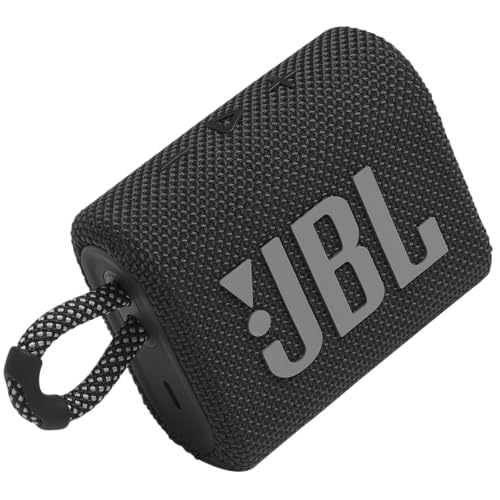
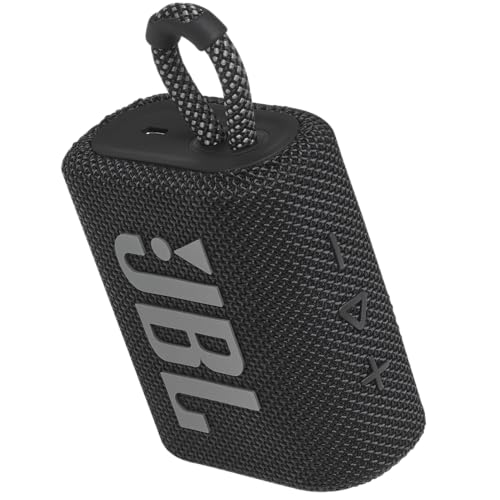
The JBL Go 3 launched in 2021 as JBL's answer to the growing demand for truly portable audio that could survive real-world abuse. At roughly the size of a small smartphone, it weighs less than half a pound and delivers what the company calls "JBL Pro Sound"—a carefully tuned audio profile that maximizes clarity from a single 1.5-inch driver.
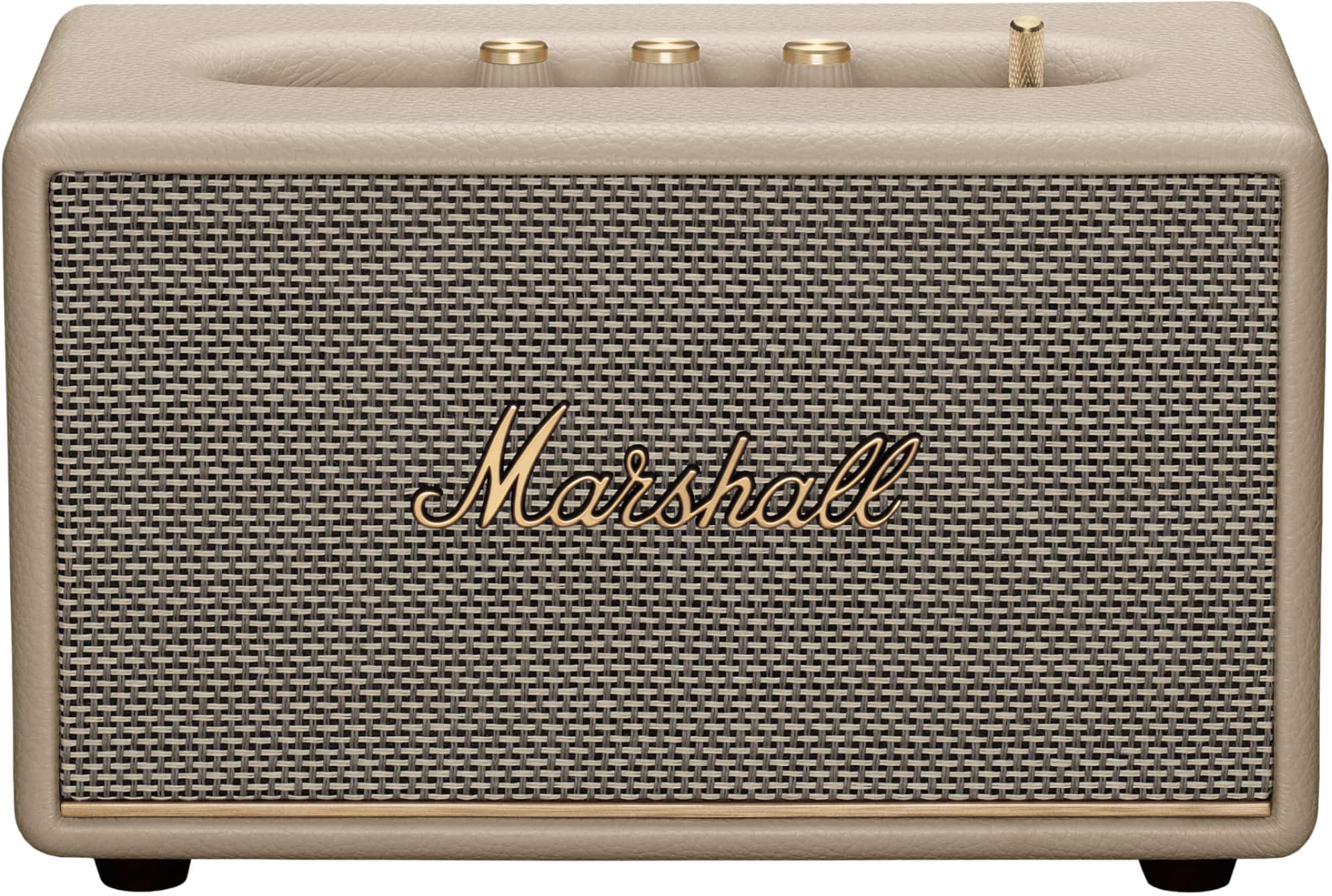
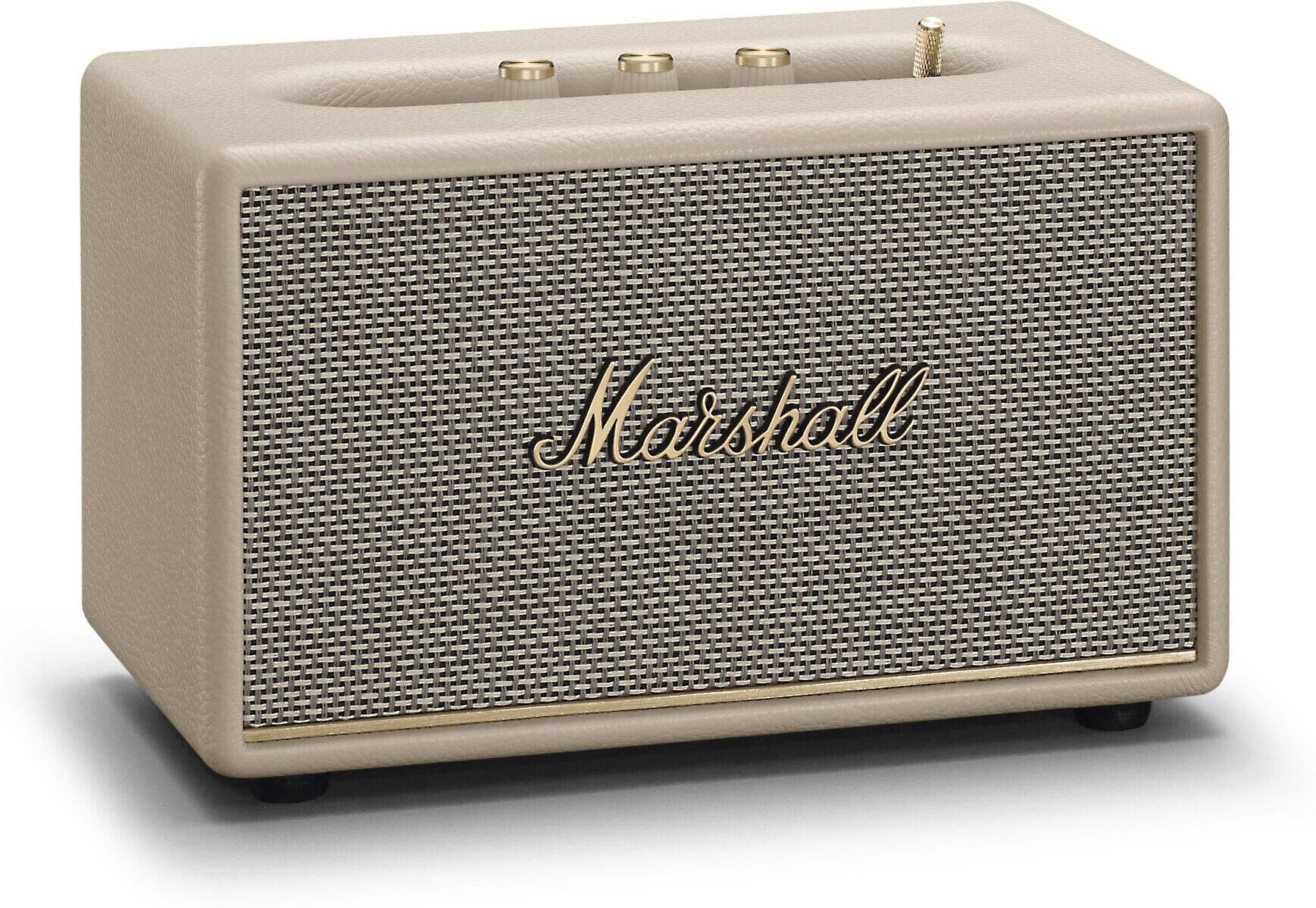
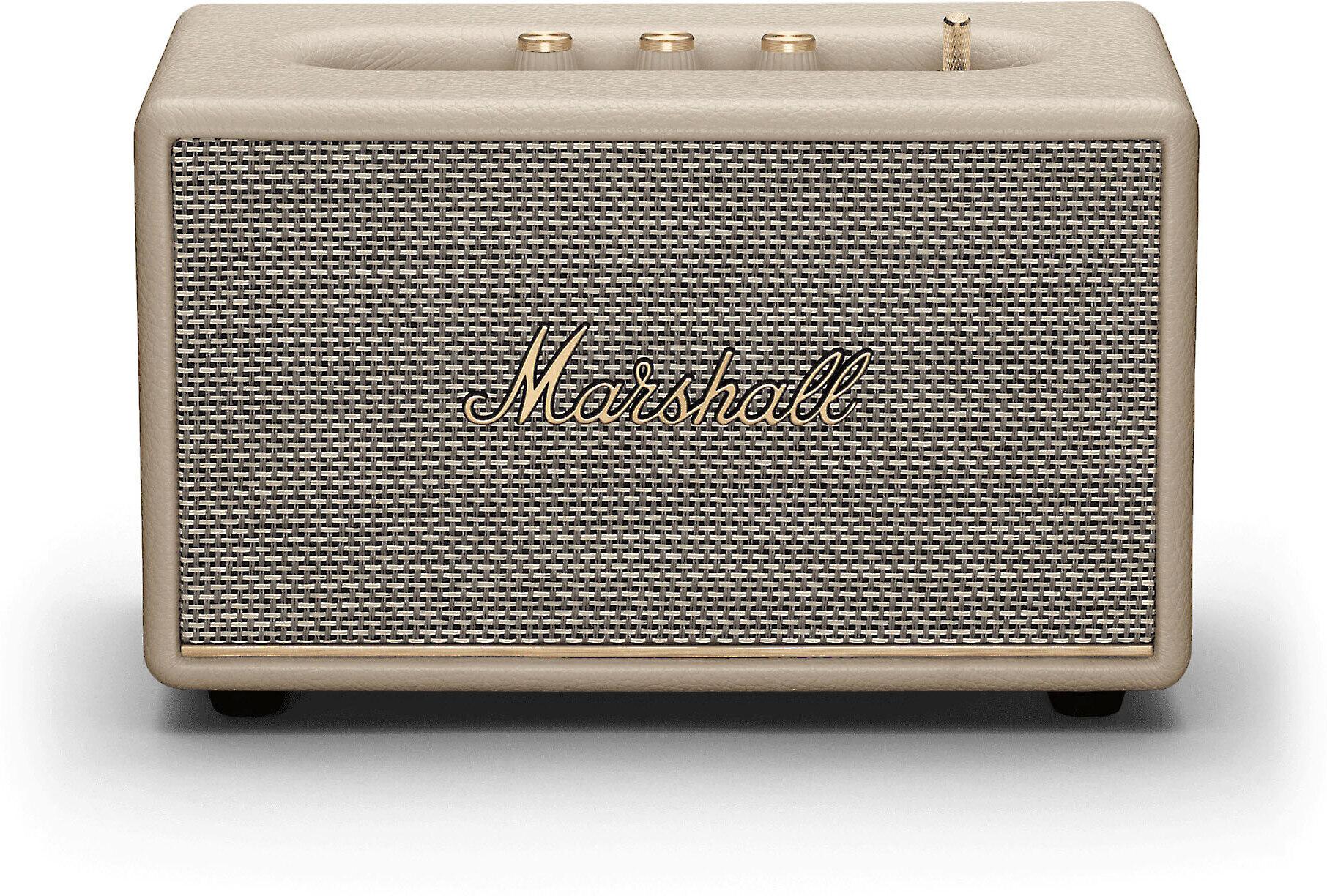
The Marshall Acton III, released more recently as part of Marshall's ongoing home audio lineup, takes the opposite approach. Weighing over six pounds and requiring a wall outlet, it's designed to be a permanent fixture in your living space. With 60 watts of total power split across three separate drivers (two tweeters and one woofer), it's engineered to fill entire rooms with stereo sound.
This fundamental difference in design philosophy affects everything else about these speakers. The JBL Go 3 uses a single driver in a mono configuration, meaning all audio comes from one point source. Mono audio might sound limiting, but for a speaker this small, it actually makes sense—you're typically listening within a few feet, where stereo separation wouldn't be meaningful anyway.
The Marshall Acton III employs a 2-way stereo design, with two 15-watt tweeters (small drivers optimized for high frequencies) handling treble and vocals, while a 30-watt woofer (larger driver for low frequencies) manages bass. This separation allows each driver to focus on what it does best, resulting in clearer, more detailed sound across the entire frequency spectrum.
Power Output and Volume Capabilities
The most obvious difference between these speakers is sheer power. The Marshall Acton III produces 60 watts total, while the JBL Go 3 manages just 4.2 watts. That might seem like a huge gap, but wattage alone doesn't tell the complete story.
Speaker efficiency—how effectively a driver converts electrical power into sound—varies significantly between designs. The JBL Go 3 is surprisingly loud for its power rating, easily filling a small room or providing clear audio for a few people gathered around. However, once you move beyond about 8-10 feet or try to compete with background noise, its limitations become apparent.
The Marshall Acton III, with its substantially higher power output, can comfortably fill rooms up to 400 square feet at moderate listening levels. More importantly, it maintains audio quality as volume increases, whereas smaller speakers like the JBL Go 3 begin to compress dynamics (the difference between quiet and loud sounds) and lose clarity when pushed to their limits.
Frequency Response: The Foundation of Sound Quality
Frequency response describes the range of sounds a speaker can reproduce, measured in Hertz (Hz). Human hearing typically spans from 20 Hz to 20,000 Hz, with lower numbers representing deeper bass sounds and higher numbers representing treble frequencies like cymbals and vocal consonants.
The JBL Go 3 officially covers 110 Hz to 20,000 Hz, but real-world testing suggests it struggles with anything below 140 Hz. This means you'll hear vocals, guitars, and most instruments clearly, but the deep rumble of bass lines, kick drums, and movie sound effects will be largely absent. For podcast listening or acoustic music, this limitation isn't problematic. For electronic music or action movies, it's a significant compromise.
The Marshall Acton III reaches down to 45 Hz, extending well into true bass territory. This deeper extension means you'll actually feel the low-end impact in hip-hop tracks, electronic music, and movie soundtracks. The dedicated 4-inch woofer can move enough air to create the physical sensation of bass, something impossible with the JBL Go 3's compact design.
Stereo Imaging and Soundstage
Stereo separation—the ability to distinguish left and right channels—creates the illusion that sound sources are positioned in space around you. The Marshall Acton III excels here, with its two tweeters angled outward to create a wide soundstage. When listening to music mixed in stereo, instruments appear to occupy specific positions rather than coming from a single point.
The JBL Go 3, being a mono speaker, can't recreate this spatial information. All sound comes from one location, which actually works fine for its intended use cases—personal listening, background music, or situations where you're moving around rather than sitting in a fixed position.
Physical Design and Durability
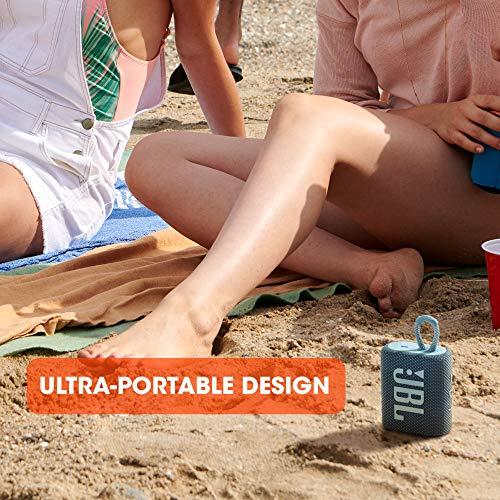
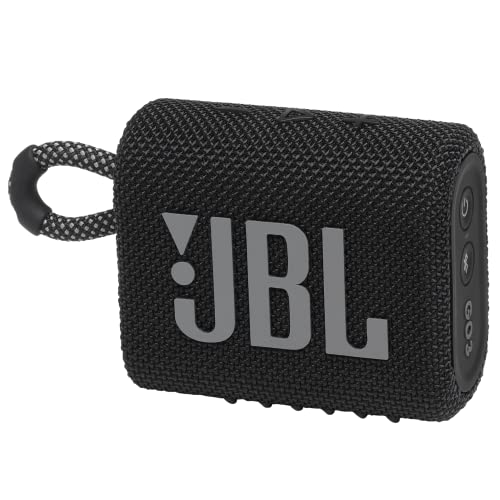
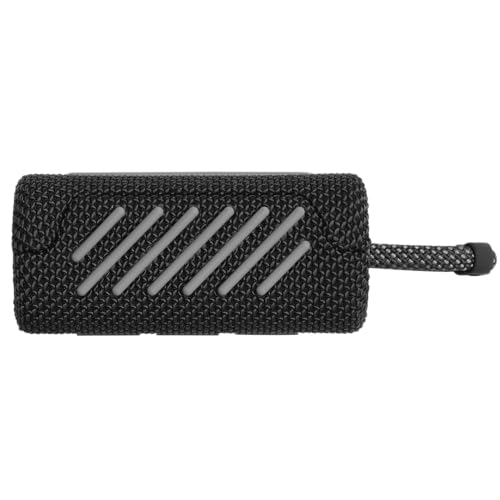
The JBL Go 3 is genuinely pocket-sized, with an integrated fabric loop that lets you clip it to a backpack or hang it from a hook. Its rubberized construction feels substantial despite the light weight, and the tight fabric grille protects the driver while allowing sound to pass through cleanly.
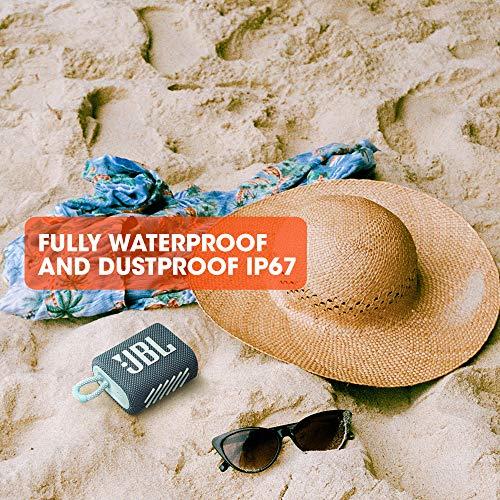
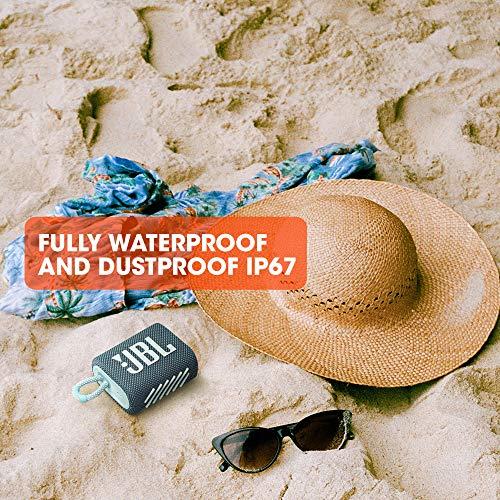
More importantly, the JBL Go 3 carries an IP67 rating, meaning it's completely dustproof and can be submerged in up to one meter of water for 30 minutes. This isn't just splash-resistance—you can literally take it in the shower, drop it in a pool, or leave it outside during a rainstorm without concern. For outdoor activities, this durability is invaluable.
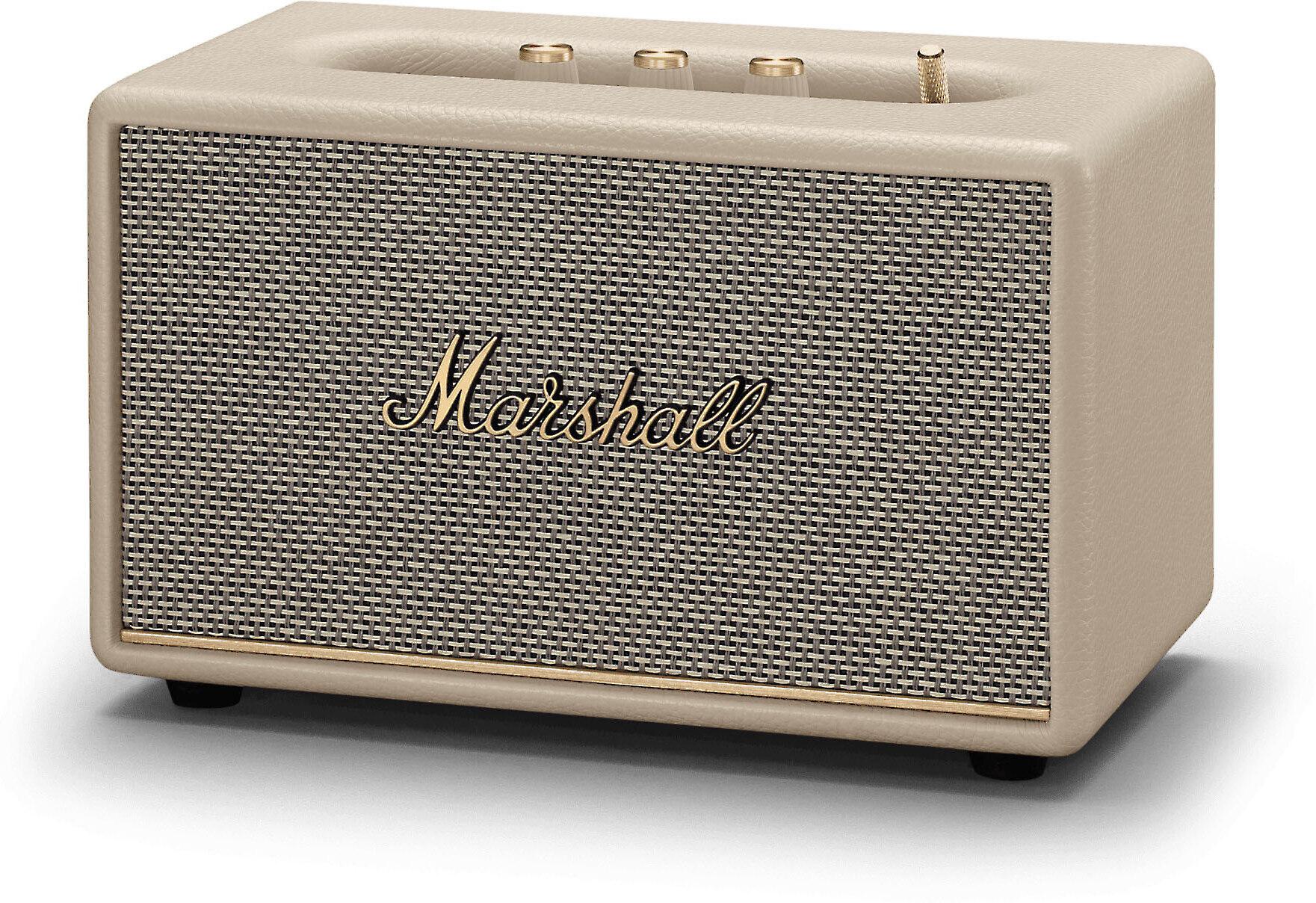
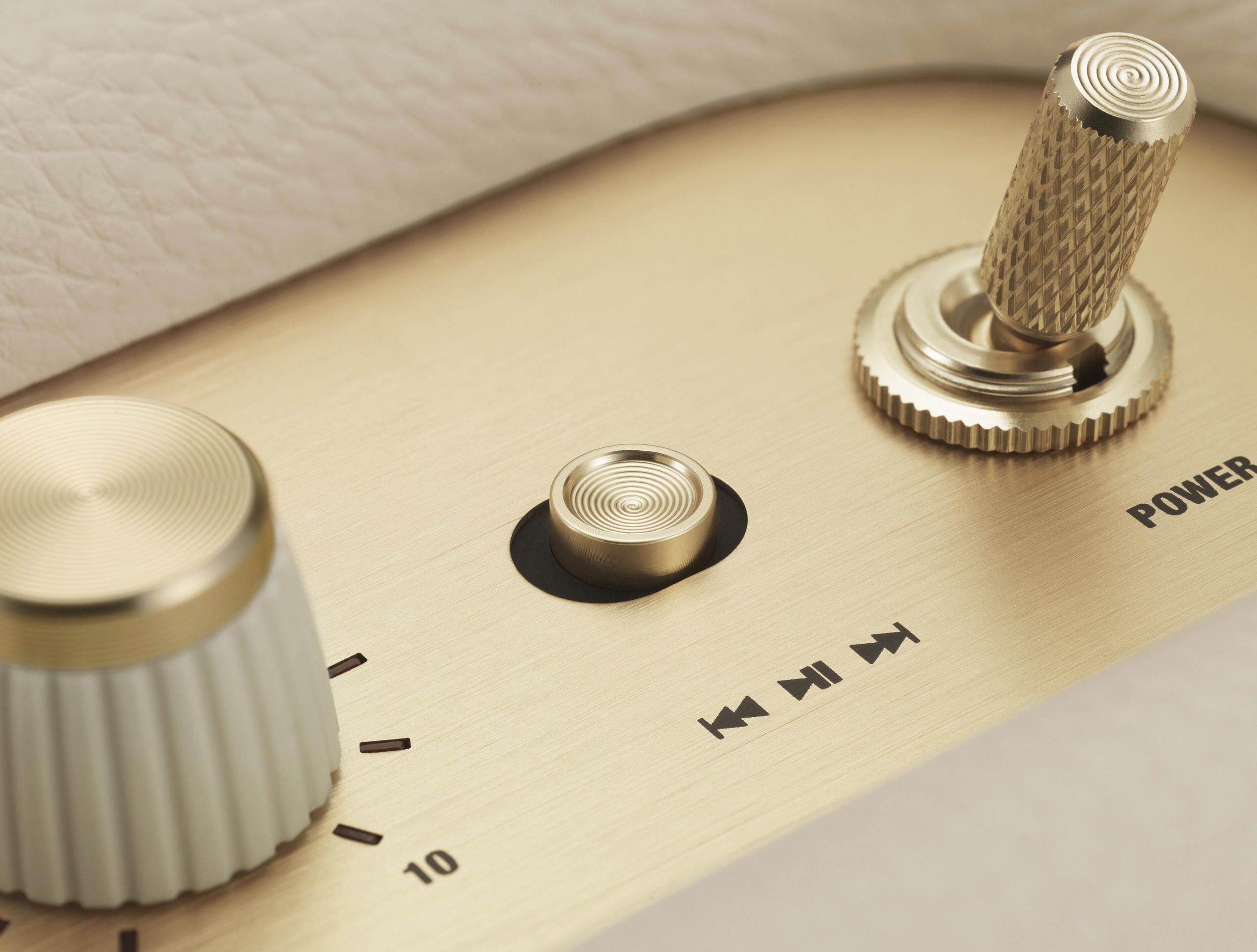
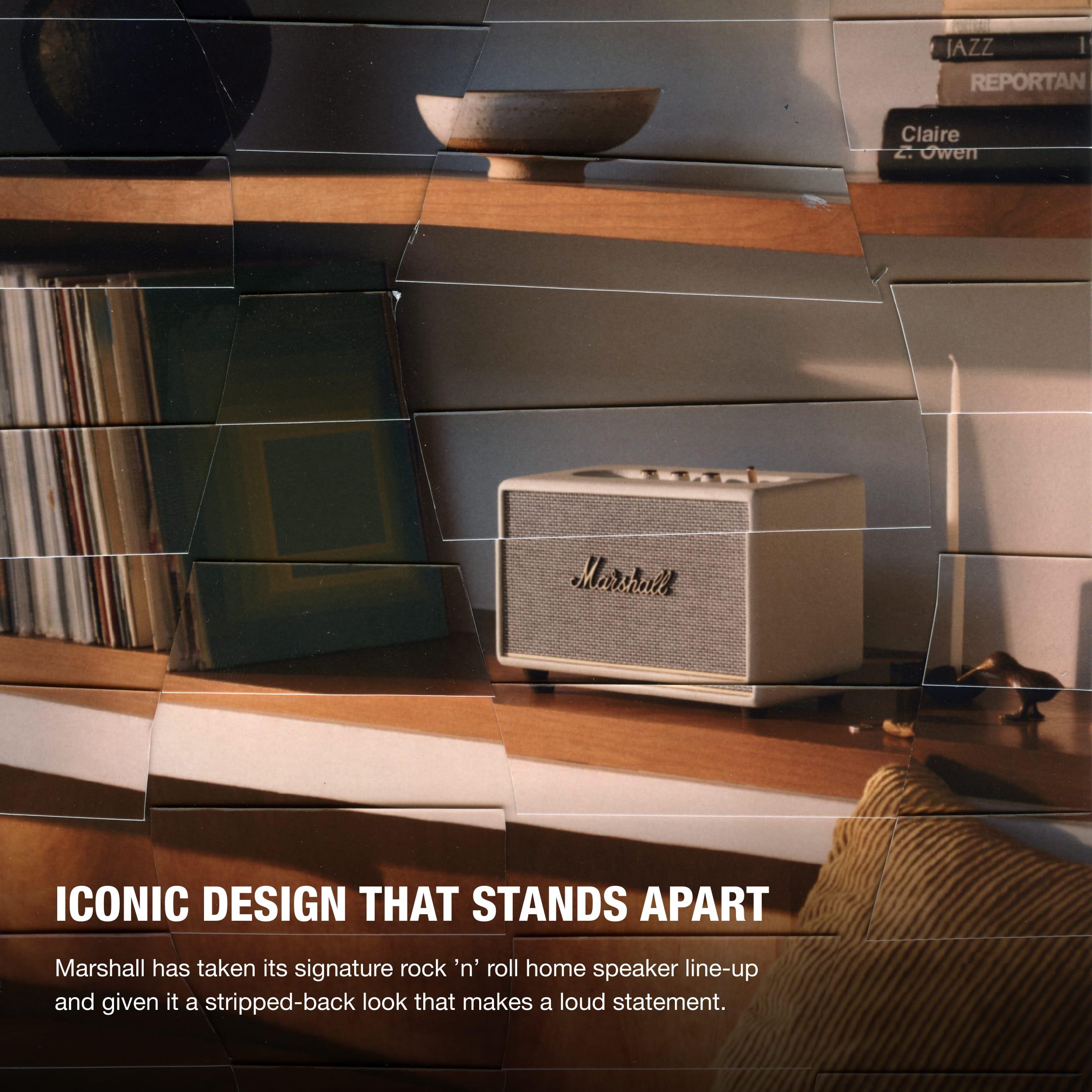
The Marshall Acton III prioritizes aesthetics and build quality over ruggedness. Its vintage-inspired design, complete with brass control knobs and iconic Marshall script, makes it as much a piece of furniture as an audio device. The construction feels premium, with substantial weight that suggests quality, but it has zero water resistance and clearly isn't designed for rough handling.
Power Source and Battery Life
Battery life often determines how practical a portable speaker actually is. The JBL Go 3 provides up to 5 hours of playback per charge, which aligns with similar ultra-portable speakers. While not exceptional, it's sufficient for most day trips, workout sessions, or evening outdoor activities. The USB-C charging port is convenient and charges the speaker fully in about 2.5 hours.
The Marshall Acton III requires constant AC power, eliminating any portable use. This limitation is actually by design—the 60-watt amplification system would drain any practical battery in under an hour. The AC power requirement positions it firmly as a home audio solution.
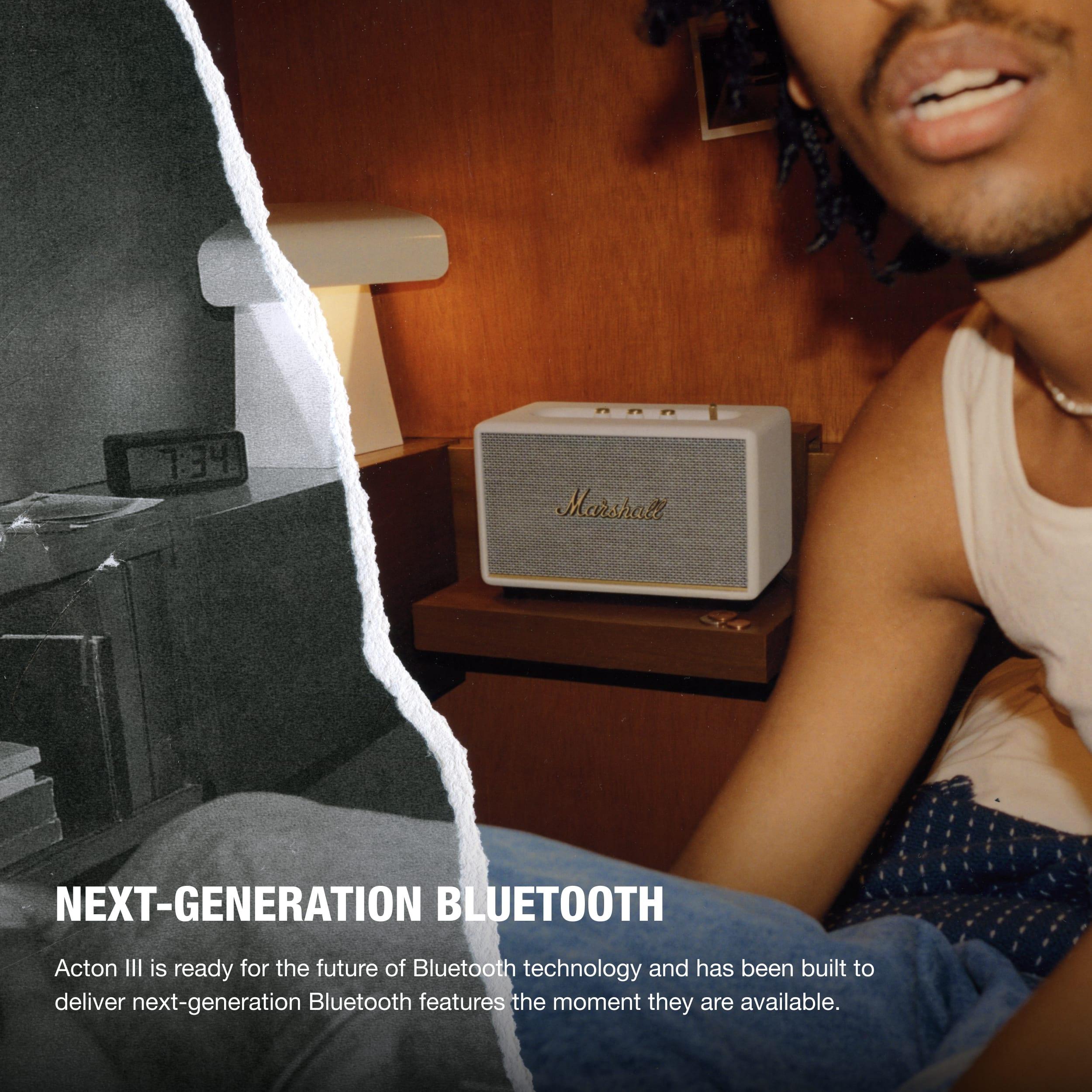
Both speakers use Bluetooth for wireless audio, but with different versions and capabilities. The JBL Go 3 uses Bluetooth 5.1, which provides stable connections up to about 30 feet and good power efficiency to maximize battery life. It supports standard audio profiles (A2DP for streaming and AVRCP for playback control) but lacks advanced features like multi-speaker pairing or voice assistant integration.
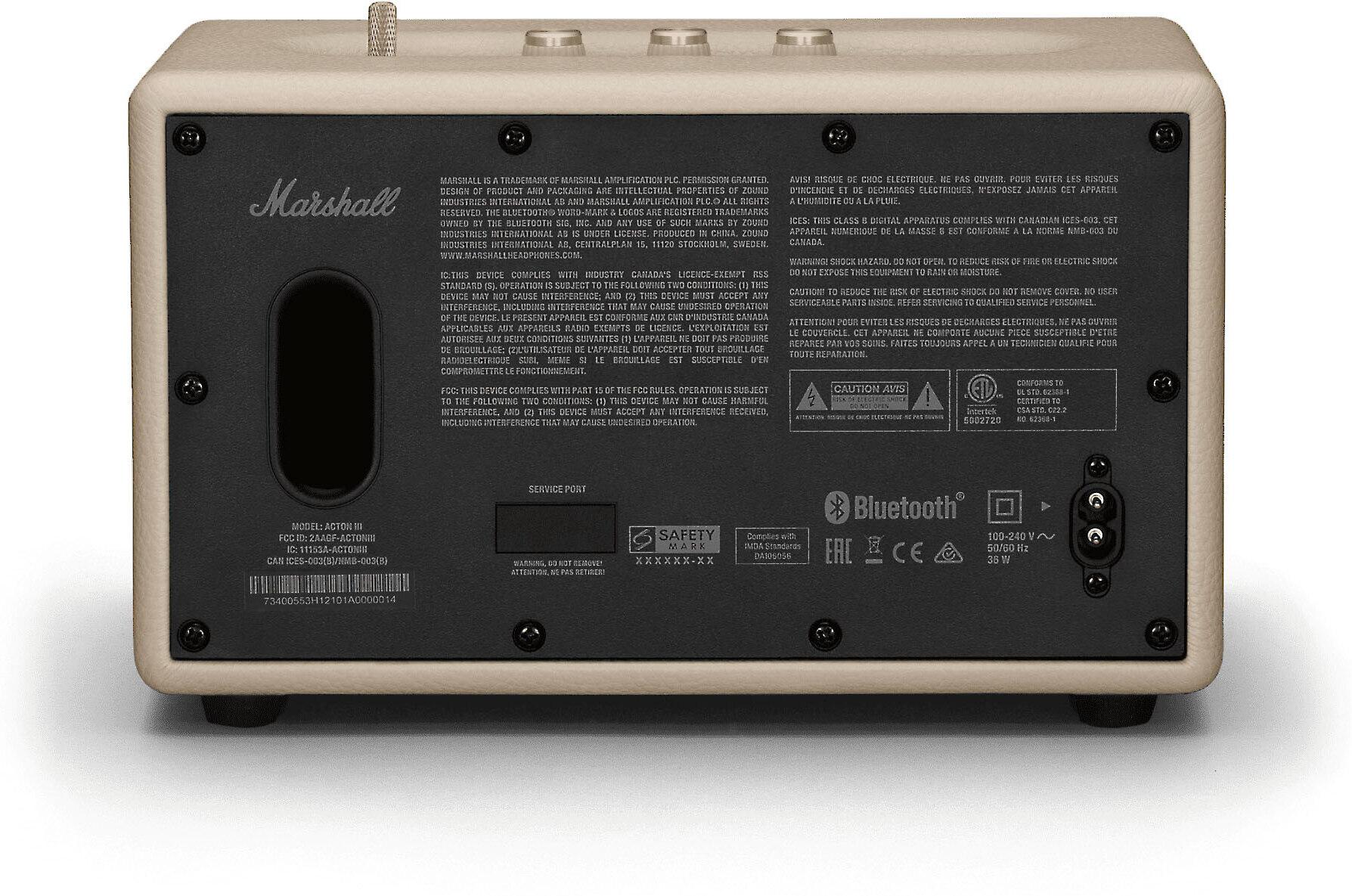
The Marshall Acton III steps up to Bluetooth 5.2, offering slightly better connection stability and audio sync. More significantly, it includes a 3.5mm auxiliary input for wired connections, which can be crucial for older devices or situations where you want to avoid potential Bluetooth latency.
The Marshall Acton III also supports the Marshall smartphone app, which provides sound customization options and placement compensation—a feature that adjusts audio based on where you position the speaker in a room. Near a wall, it might reduce bass slightly to prevent boomy reflections. In open space, it might boost certain frequencies to maintain tonal balance.
Control Interfaces
The JBL Go 3 keeps controls minimal: power, Bluetooth pairing, play/pause, and volume up/down. These buttons are large enough to operate easily, even with wet hands or while wearing gloves.
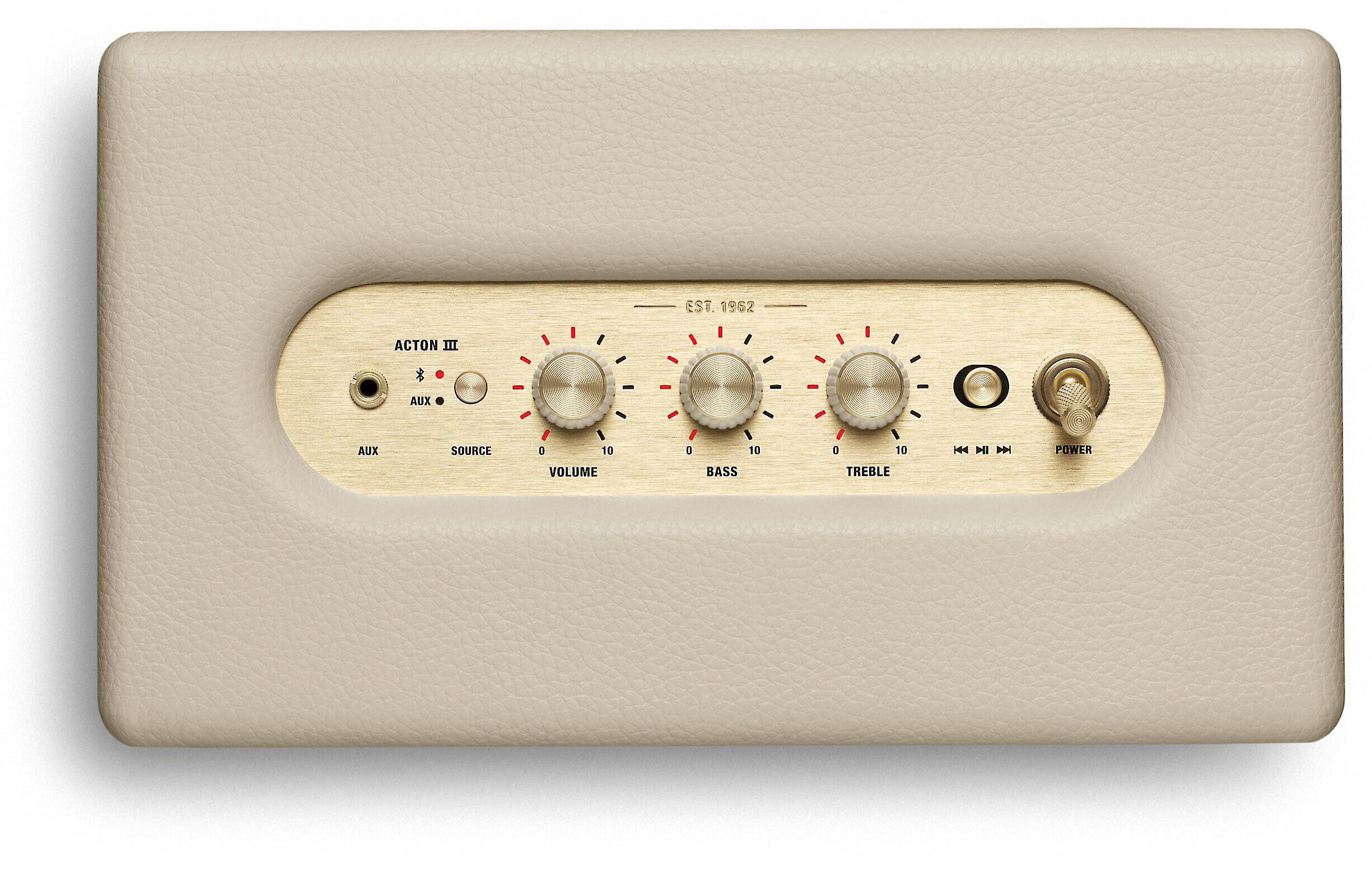
The Marshall Acton III features analog-style controls that feel substantial and precise. Separate knobs for volume, bass, and treble allow real-time sound adjustment without reaching for a phone app. The tactile feedback is satisfying, and the controls double as visual design elements that reinforce the speaker's vintage aesthetic.
Home Theater and TV Audio
While neither speaker was specifically designed for home theater use, the Marshall Acton III can serve as a significant upgrade over television speakers. Its stereo configuration and substantial bass response make dialogue clearer and action sequences more impactful. The auxiliary input allows direct connection to TV audio outputs, avoiding potential Bluetooth lag that could cause lip-sync issues.
The JBL Go 3 isn't suitable for TV audio—its limited power and mono configuration can't compete with even modest television speakers for room-filling sound.
Outdoor and Active Use
For outdoor activities, the JBL Go 3 excels where the Marshall Acton III simply can't participate. Beach trips, poolside parties, hiking, camping, or any activity where weather exposure is possible favor the ultra-portable option. The sound quality limitations that seem significant indoors become less important outdoors, where ambient noise and informal listening situations dominate.
The JBL Go 3 also shines in temporary use scenarios—travel, dorm rooms, or situations where you need decent audio without permanent installation.
Music Listening and Audio Quality
For serious music listening, the Marshall Acton III operates in a different league. Its stereo imaging reveals spatial details in recordings, the extended bass response provides emotional impact in music, and the higher power output maintains dynamic range even at moderate volumes.
That said, the JBL Go 3 punches above its weight for casual listening. Vocals come through clearly, acoustic instruments sound natural, and the overall tonal balance avoids the harsh treble or muddy midrange that plague some ultra-portable speakers.
At the time of writing, these speakers occupy completely different price segments. The JBL Go 3 represents exceptional value in the ultra-portable category, delivering reliable performance and impressive durability at an entry-level price point. For users who need genuine portability and weather resistance, few alternatives offer comparable capability at this price range.
The Marshall Acton III commands premium pricing that reflects its superior audio performance, build quality, and brand positioning. Whether this premium is justified depends entirely on your priorities and budget. For home audio enthusiasts willing to sacrifice portability for sound quality, it delivers performance that approaches traditional bookshelf speakers while maintaining the convenience of wireless connectivity.
Long-term Ownership Considerations
The JBL Go 3 is essentially disposable technology—if it breaks, gets lost, or the battery eventually fails, replacement costs are minimal. This makes it ideal for rough use scenarios or as backup audio for various situations.
The Marshall Acton III represents a longer-term investment. Its substantial construction suggests years of reliable service, and its timeless design won't look dated quickly. However, it's also a more significant financial commitment that requires careful consideration of your actual needs.
Choose the JBL Go 3 if:
The JBL Go 3 excels as a companion device—something that travels with you and provides adequate audio when needed. It's perfect for active lifestyles, student environments, or as supplementary audio for various situations.
Choose the Marshall Acton III if:
The Marshall Acton III functions best as a primary audio source for a room—something that enhances your daily listening experience and potentially serves multiple entertainment needs.
Consider alternatives if:
The fundamental insight is that these speakers solve different problems rather than competing directly. The JBL Go 3 prioritizes convenience and durability, while the Marshall Acton III focuses on audio performance and aesthetic integration. Your choice should align with which set of priorities better matches your lifestyle and listening habits.
Neither speaker is objectively better—they're optimized for different users and use cases. Understanding your actual needs, rather than aspirational wants, will lead you to the right choice.
| JBL Go 3 | Marshall Acton III |
|---|---|
| Power Output - Determines maximum volume and room coverage | |
| 4.2W mono (suitable for personal listening within 8-10 feet) | 60W stereo (30W woofer + 2×15W tweeters, fills large rooms easily) |
| Audio Configuration - Affects sound quality and spatial experience | |
| Single driver mono output (all sound from one point) | True stereo with separate tweeters and woofer (proper channel separation) |
| Frequency Response - Range of sounds the speaker can reproduce | |
| 110Hz-20kHz (limited bass, clear mids/highs) | 45Hz-20kHz (full bass extension, complete frequency range) |
| Portability - Key factor for lifestyle integration | |
| Ultra-portable at 0.42 lbs with carrying loop | Stationary home speaker at 6.28 lbs, designed for permanent placement |
| Water Resistance - Critical for outdoor and active use | |
| IP67 rated (fully submersible up to 1 meter for 30 minutes) | No water resistance (indoor use only) |
| Power Source - Determines where you can use the speaker | |
| 5-hour rechargeable battery with USB-C charging | AC power required (no battery operation) |
| Bluetooth Version - Affects connection quality and features | |
| Bluetooth 5.1 with basic audio profiles | Bluetooth 5.2 plus 3.5mm auxiliary input for wired connections |
| Controls and Customization - User experience and sound adjustment | |
| Basic playback controls (power, volume, play/pause) | Analog bass/treble knobs plus Marshall app with placement compensation |
| Build Quality and Design - Durability vs aesthetics trade-off | |
| Rugged fabric and rubber construction for active use | Premium vintage-inspired design with brass accents for home décor |
| Value Positioning - Different market segments entirely | |
| Entry-level pricing for maximum portability and durability | Premium pricing justified by superior audio performance and build quality |
The JBL Go 3 is specifically designed for outdoor use with its IP67 waterproof and dustproof rating, meaning it can be fully submerged in water and is completely protected from dust and sand. The Marshall Acton III has no water resistance and is designed exclusively for indoor use.
The Marshall Acton III delivers significantly better sound quality with 60 watts of stereo power, true bass response down to 45Hz, and separate drivers for different frequency ranges. The JBL Go 3 provides clear audio for its size but is limited to 4.2 watts of mono sound with minimal bass response below 140Hz.
The JBL Go 3 is ultra-portable at just 0.42 pounds with a built-in carrying loop and rechargeable battery. The Marshall Acton III weighs over 6 pounds and requires AC power, making it a stationary home speaker rather than a portable option.
The Marshall Acton III can serve as a TV speaker upgrade with its stereo sound, substantial bass, and 3.5mm auxiliary input for direct connection to avoid audio delay. The JBL Go 3 lacks the power and stereo separation needed for effective home theater use.
The JBL Go 3 provides up to 5 hours of playback time and charges via USB-C in about 2.5 hours. The Marshall Acton III doesn't have a battery and must remain plugged into AC power at all times.
The Marshall Acton III gets much louder with its 60-watt amplification system that can fill large rooms comfortably. The JBL Go 3 is suitable for personal listening or small groups but becomes inadequate beyond 8-10 feet from the listener.
These speakers target completely different market segments, with the JBL Go 3 positioned as an affordable ultra-portable option while the Marshall Acton III commands premium pricing for its superior audio performance and build quality.
The Marshall Acton III has significantly better bass with a dedicated 4-inch woofer that extends down to 45Hz, providing the deep, impactful bass needed for music and movies. The JBL Go 3 has very limited bass response due to its compact single-driver design.
Neither the JBL Go 3 nor the Marshall Acton III supports multi-speaker pairing or party mode features. Both are designed to operate as standalone units rather than part of a connected speaker system.
The Marshall Acton III is far superior for home music listening with its stereo separation, full frequency response, room-filling power, and ability to reveal details in recordings. The JBL Go 3 is better suited for casual background music rather than serious listening sessions.
The JBL Go 3 connects via Bluetooth 5.1 only, while the Marshall Acton III offers both Bluetooth 5.2 and a 3.5mm auxiliary input for wired connections. The Marshall Acton III also includes app-based customization features.
Choose the JBL Go 3 if you need portability, water resistance, and affordable reliable audio for active lifestyles or travel. Choose the Marshall Acton III if you want premium home audio quality, don't need portability, and can justify the higher investment for superior sound performance.
We've done our best to create useful and informative comparisons to help you decide what product to buy. Our research uses advanced automated methods to create this comparison and perfection is not possible - please contact us for corrections or questions. These are the sites we've researched in the creation of this article: rtings.com - streamtechreviews.com - english.achoreviews.com - smarthomesounds.co.uk - soundguys.com - rtings.com - walmart.com - soundguys.com - youtube.com - youtube.com - jbl.com - youtube.com - selectoguru.com - versus.com - videoandaudiocenter.com - harmanaudio.com - jbl.com - bestbuy.com - forum.hifiguides.com - manuals.plus - kh.jbl.com - th.jbl.com - mm.jbl.com - jbl.com - bestbuy.com - youtube.com - youtube.com - youtube.com - jbl.com - bestbuy.com - bestbuy.com - jbl.com.tw - youtube.com - bestbuy.com - youtube.com - bestbuy.com - pocket-lint.com - bestbuy.com - crutchfield.com - premiumsound.com.au - marshall.com - 2001audiovideo.com - youtube.com - t3.com - bestbuy.com - youtube.com

Privacy Policy
Terms and Conditions - Affiliate Policy
Home Security
© Copyright 2008-2026.
11816 Inwood Rd #1211, Dallas, TX 75244