

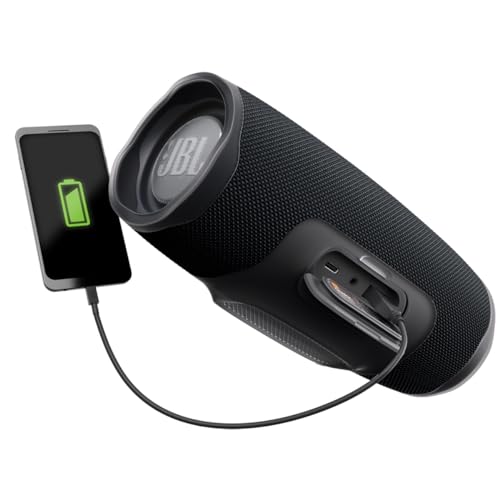
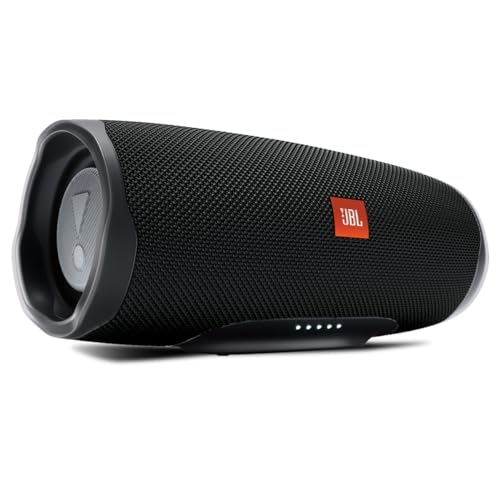
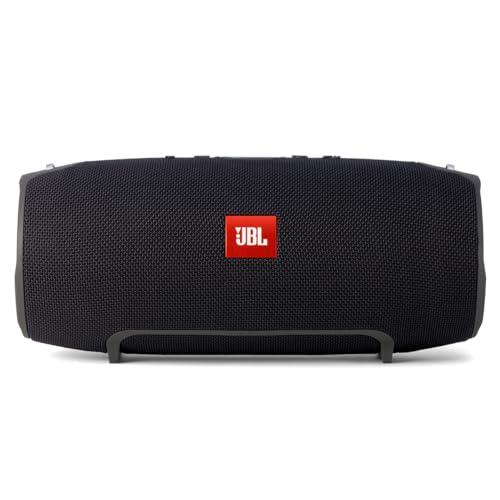
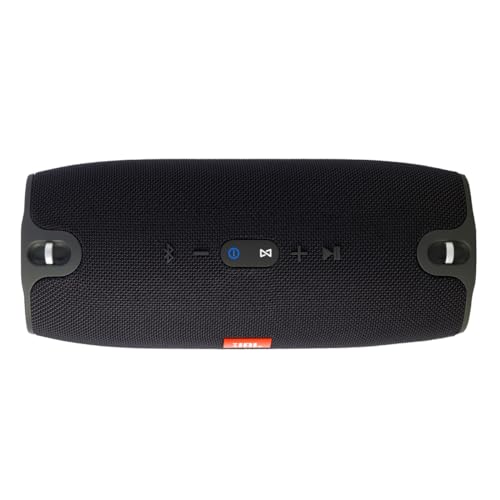
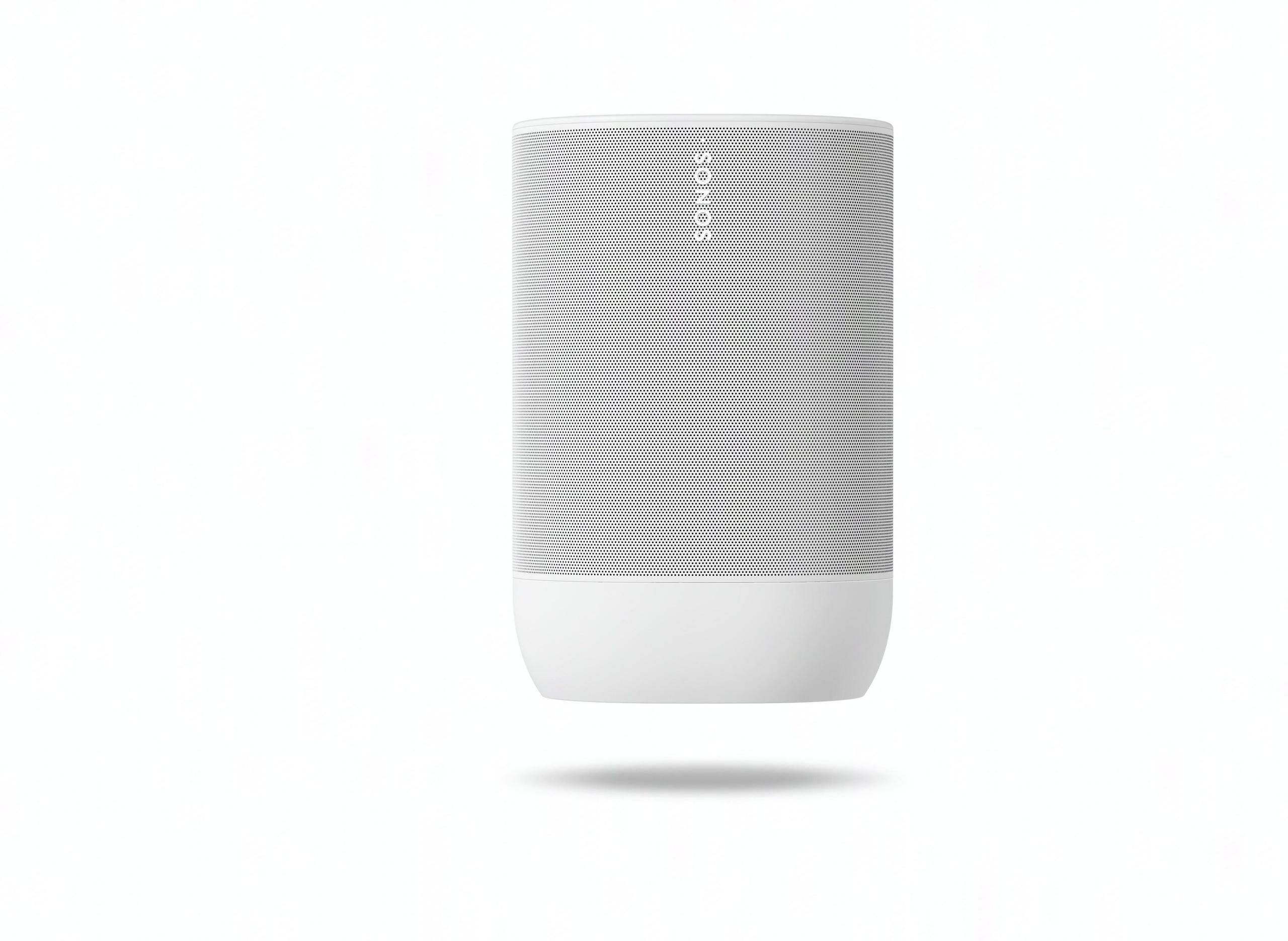
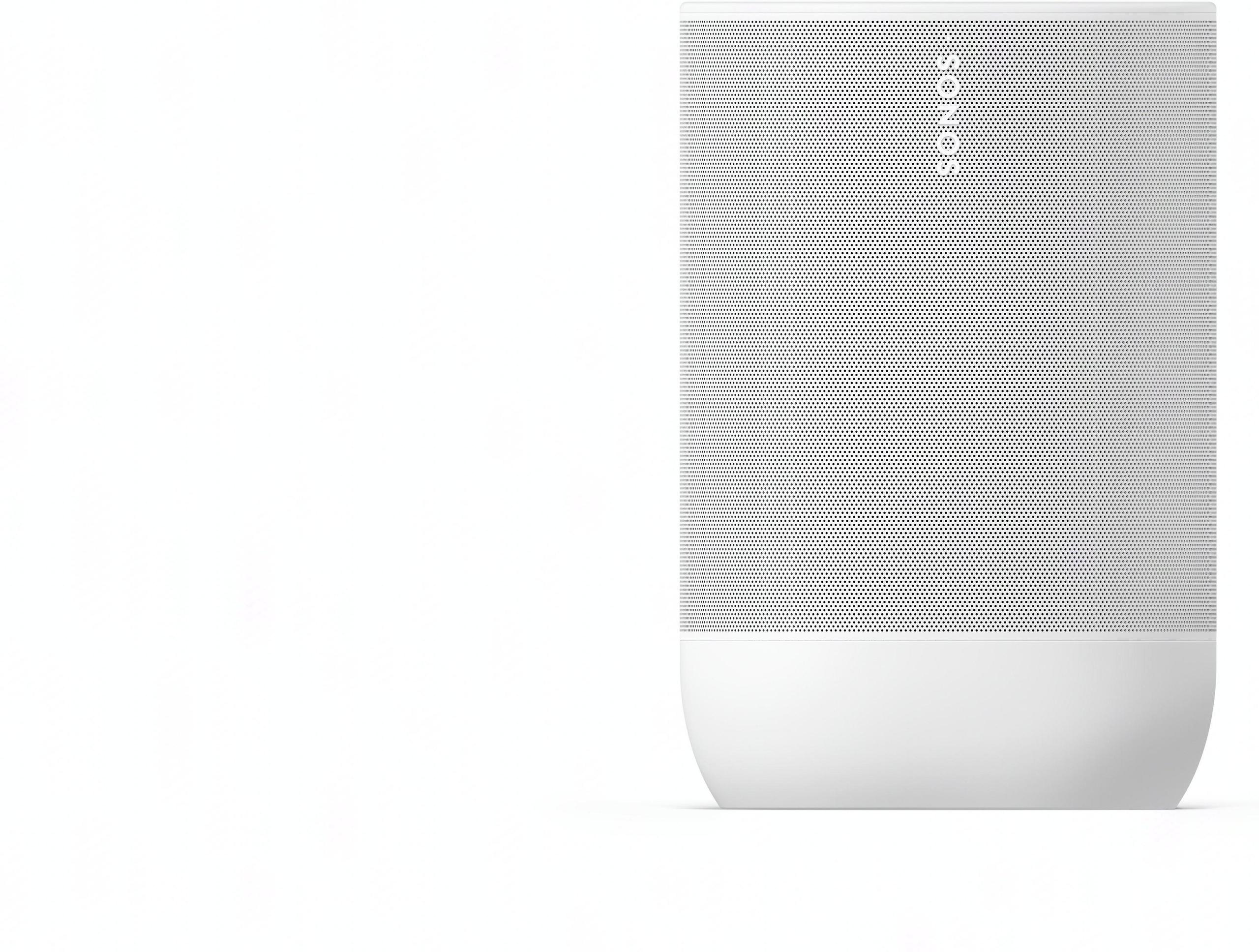
Finding the right portable speaker can feel overwhelming with dozens of options flooding the market. Two speakers that consistently come up in conversations are the JBL Charge 4 and the Sonos Move 2, but they represent completely different philosophies about what a "portable" speaker should be. After diving deep into user reviews, expert analyses, and technical specifications, it's clear these speakers serve distinct audiences despite both being marketed as portable audio solutions.
The portable speaker category has evolved dramatically over the past decade. What started as basic Bluetooth boxes has branched into specialized categories serving different needs. Some prioritize extreme durability for outdoor adventures, while others focus on bringing high-quality home audio anywhere within your house.
The most important factors when evaluating portable speakers include sound quality (how natural and balanced the audio sounds), battery life (how long you can listen continuously), durability (how well it handles drops, water, and dust), connectivity options (Bluetooth, Wi-Fi, smart features), and overall value for the price. The weight matters too – a truly portable speaker should be easy to carry, while a "portable" home speaker might prioritize sound quality over weight reduction.
Understanding these trade-offs helps explain why the JBL Charge 4 and Sonos Move 2 target such different use cases despite both being called portable speakers.
Released in 2018, the JBL Charge 4 represents JBL's no-nonsense approach to portable audio. At just over 2 pounds and roughly the size of a water bottle, it's designed for people who actually want to take their music places – camping trips, beach days, backyard parties, and anywhere else life takes you.
The Charge 4's cylindrical design isn't just about looks. That fabric mesh covering hides a carefully engineered speaker system built around a single 50mm by 90mm woofer (the main driver that produces most of the sound) paired with dual passive radiators. Passive radiators work like drums without the drumstick – they vibrate in response to the air movement from the main woofer, effectively boosting bass response without requiring additional power or space for another active driver.
What makes the JBL Charge 4 special isn't groundbreaking technology – it's the execution of proven concepts. The IPX7 waterproof rating means you can literally submerge it in up to 3 feet of water for 30 minutes without damage. The 20-hour battery life comes from a substantial 7,500mAh battery that doubles as a power bank for charging your phone. At the time of writing, it represents exceptional value in the mid-range portable speaker category.
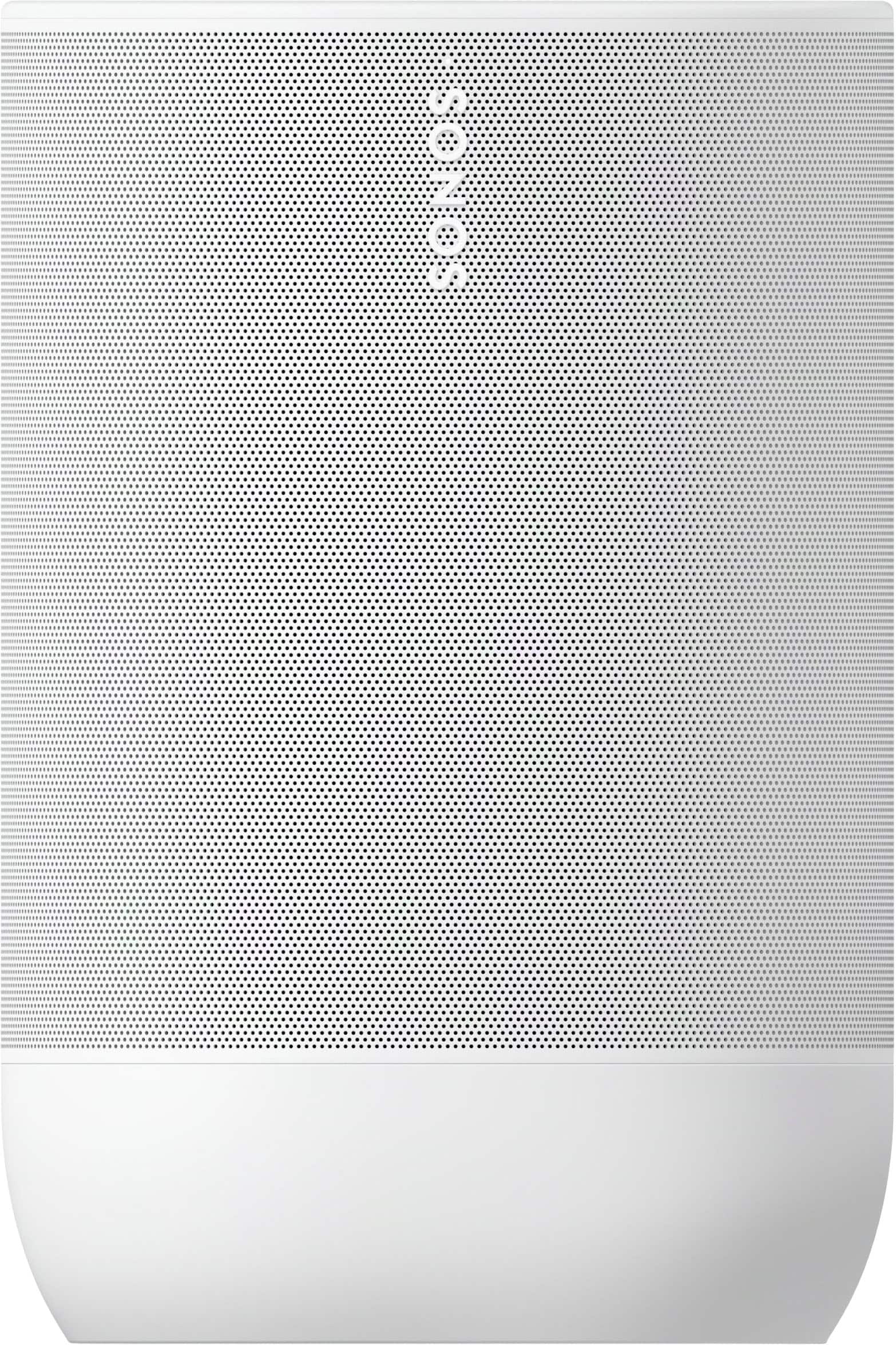
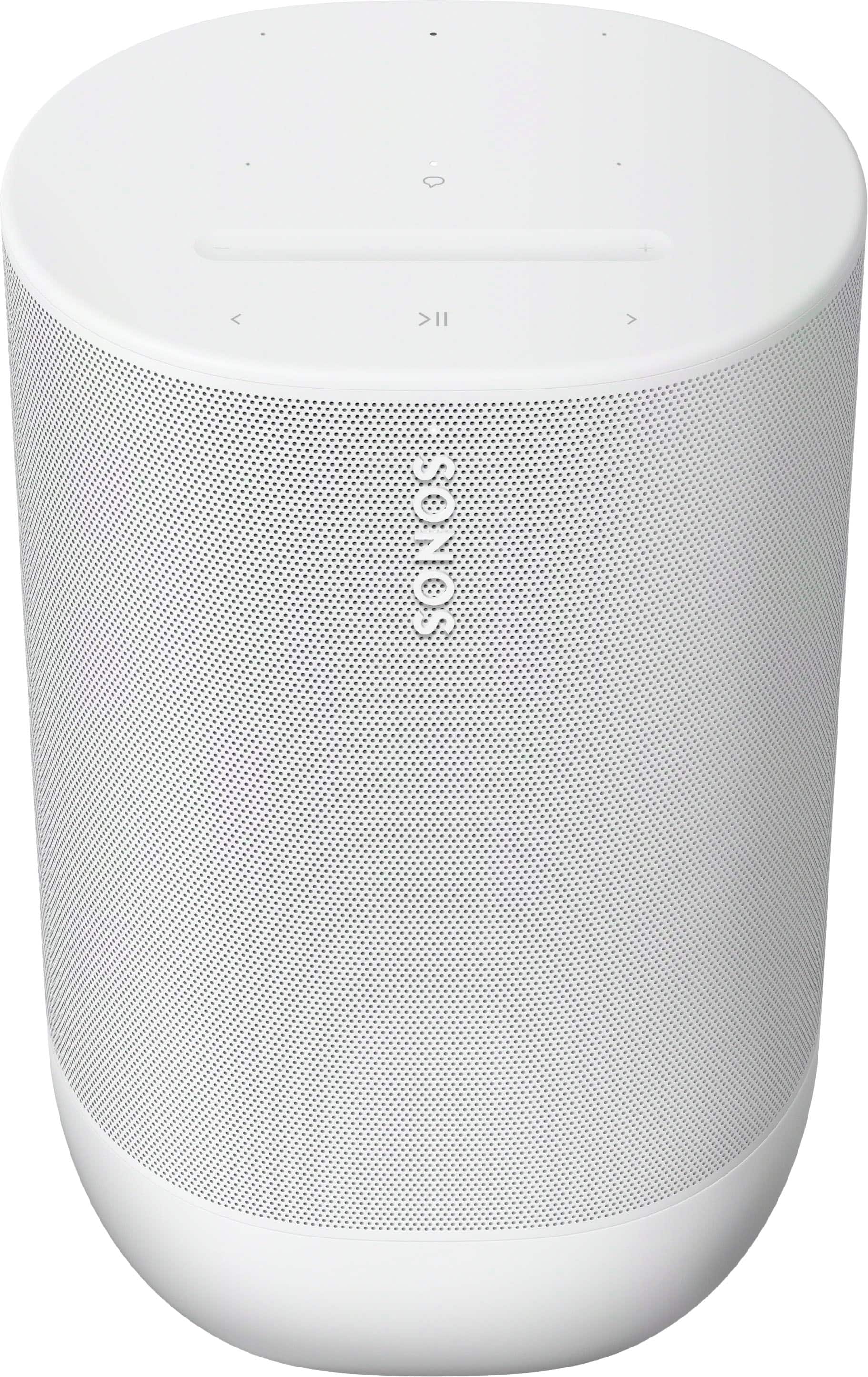
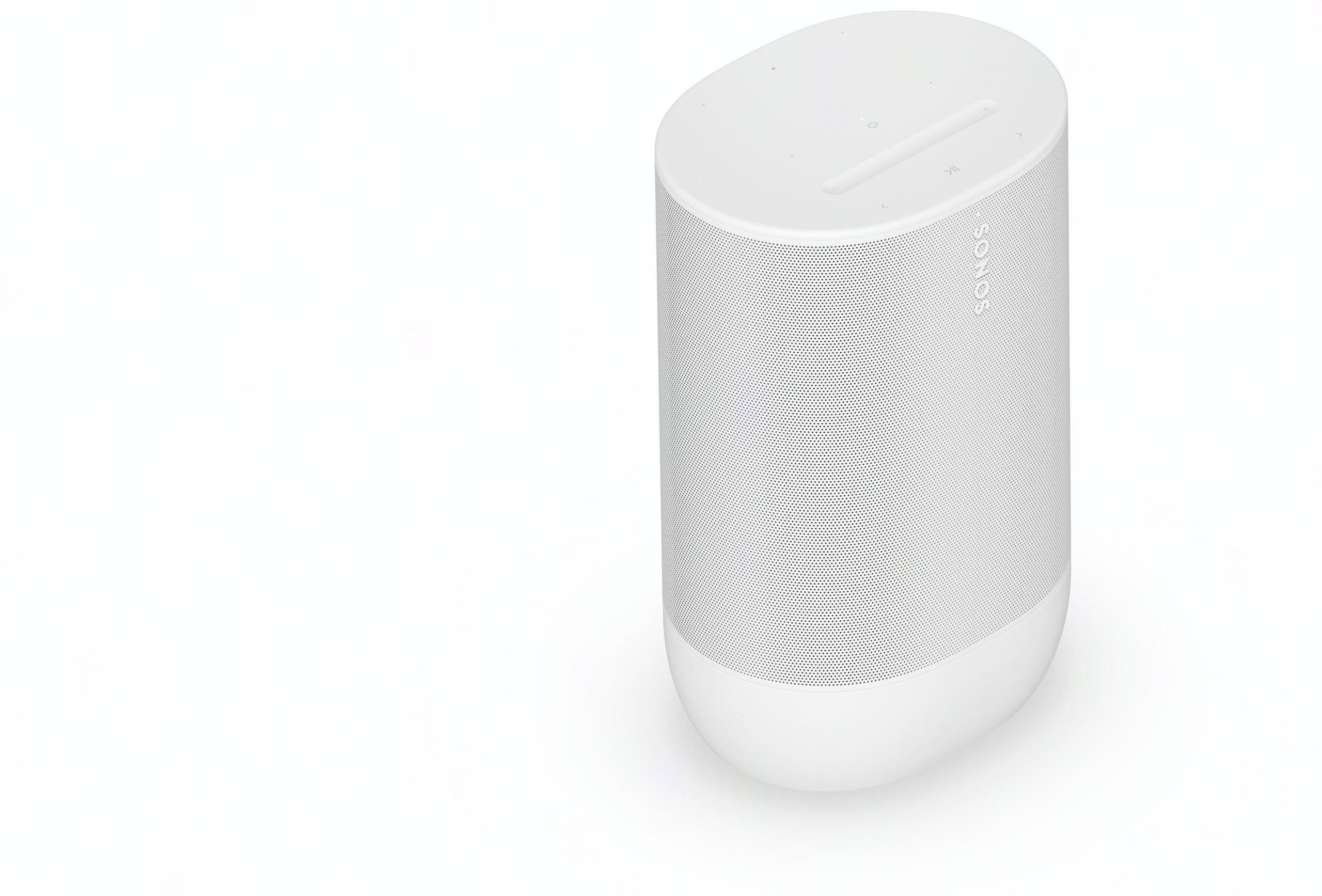
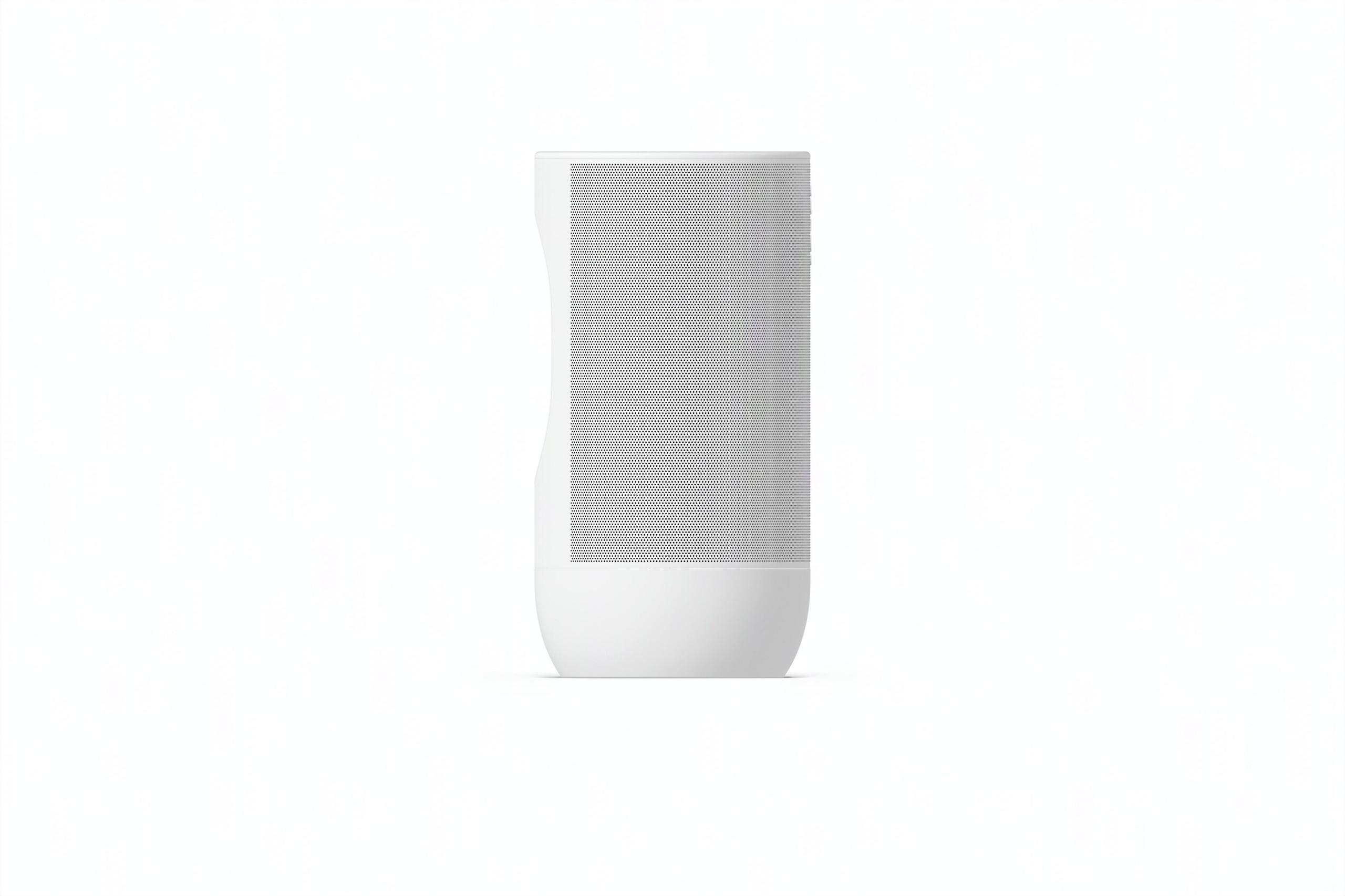
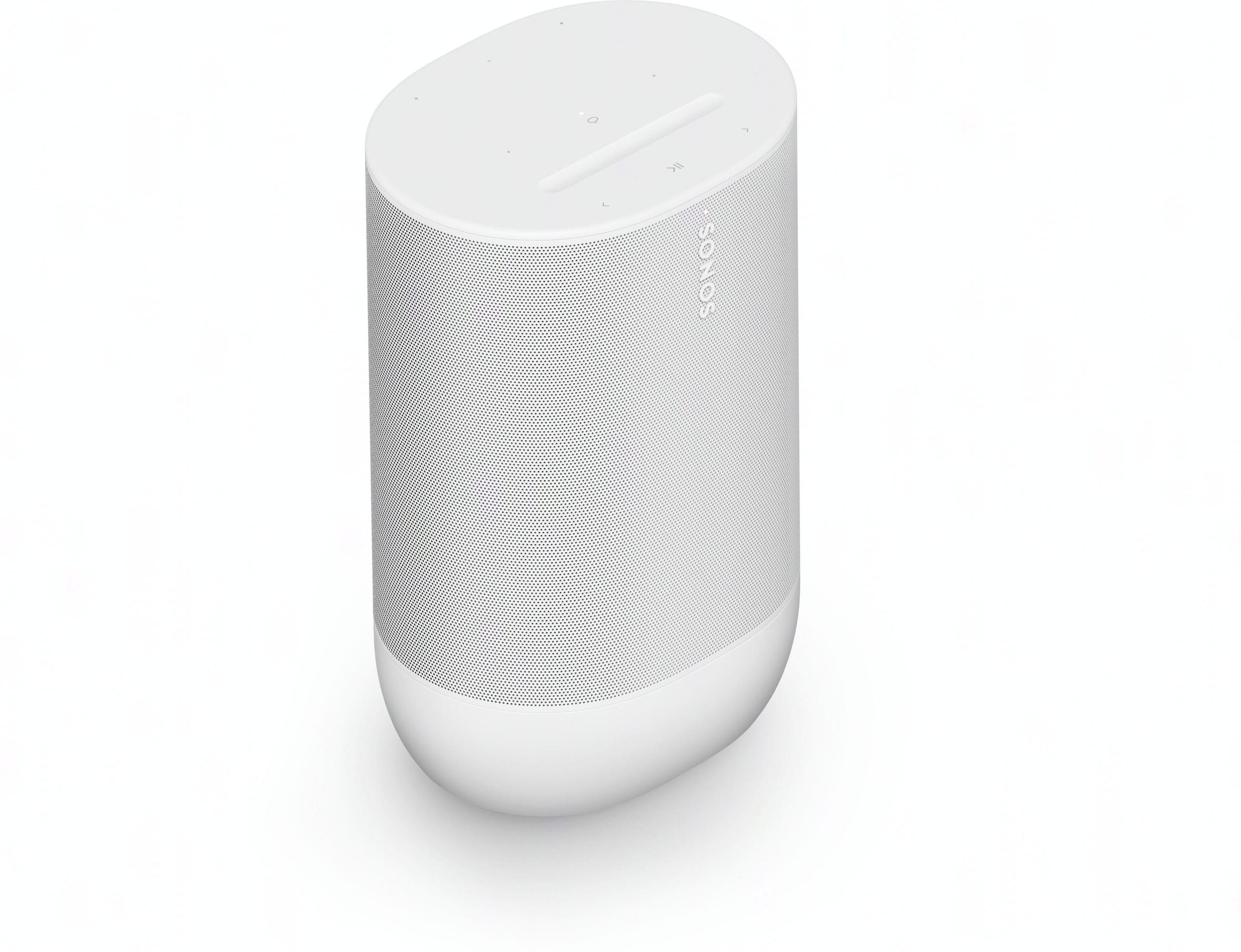
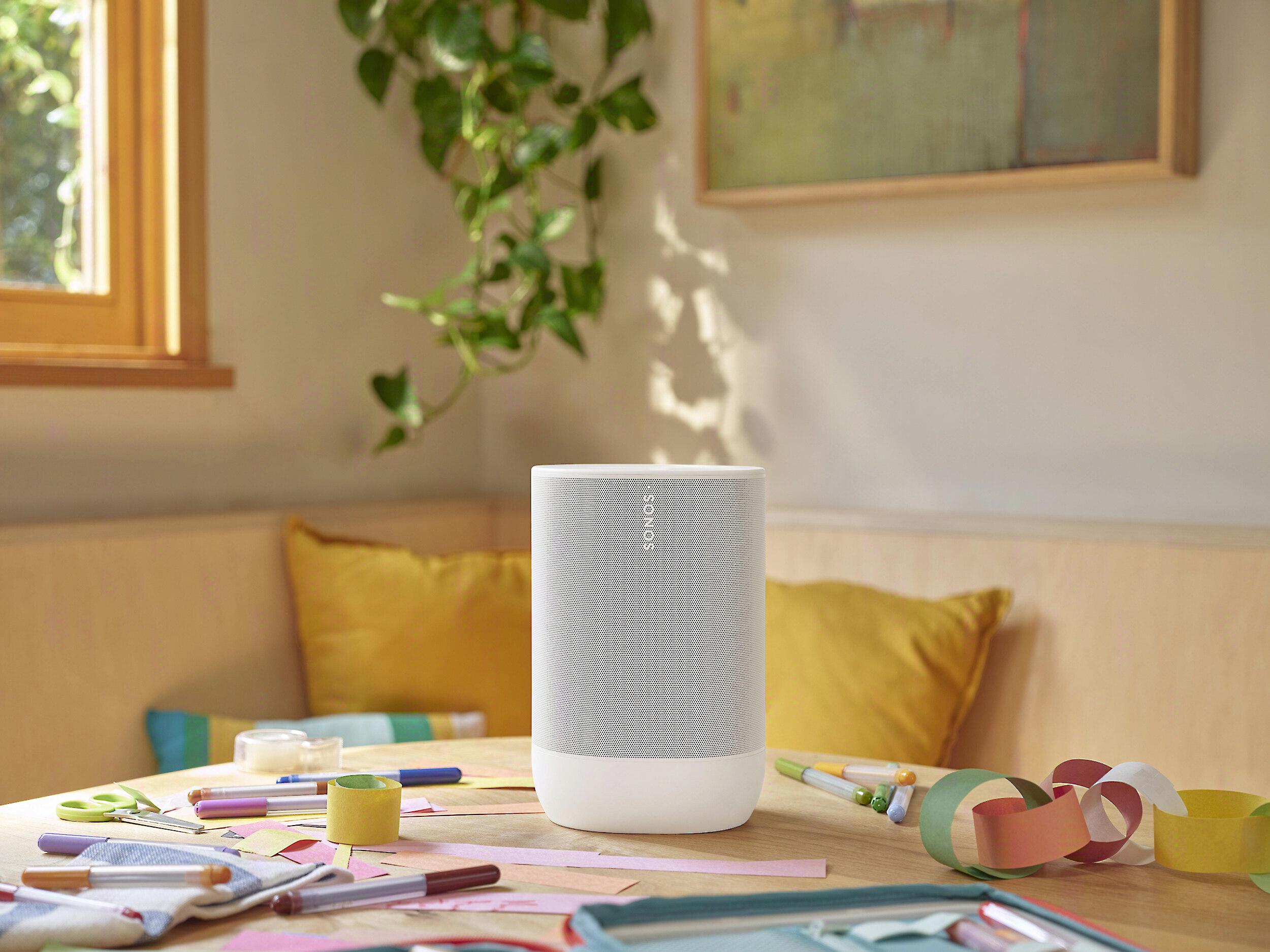
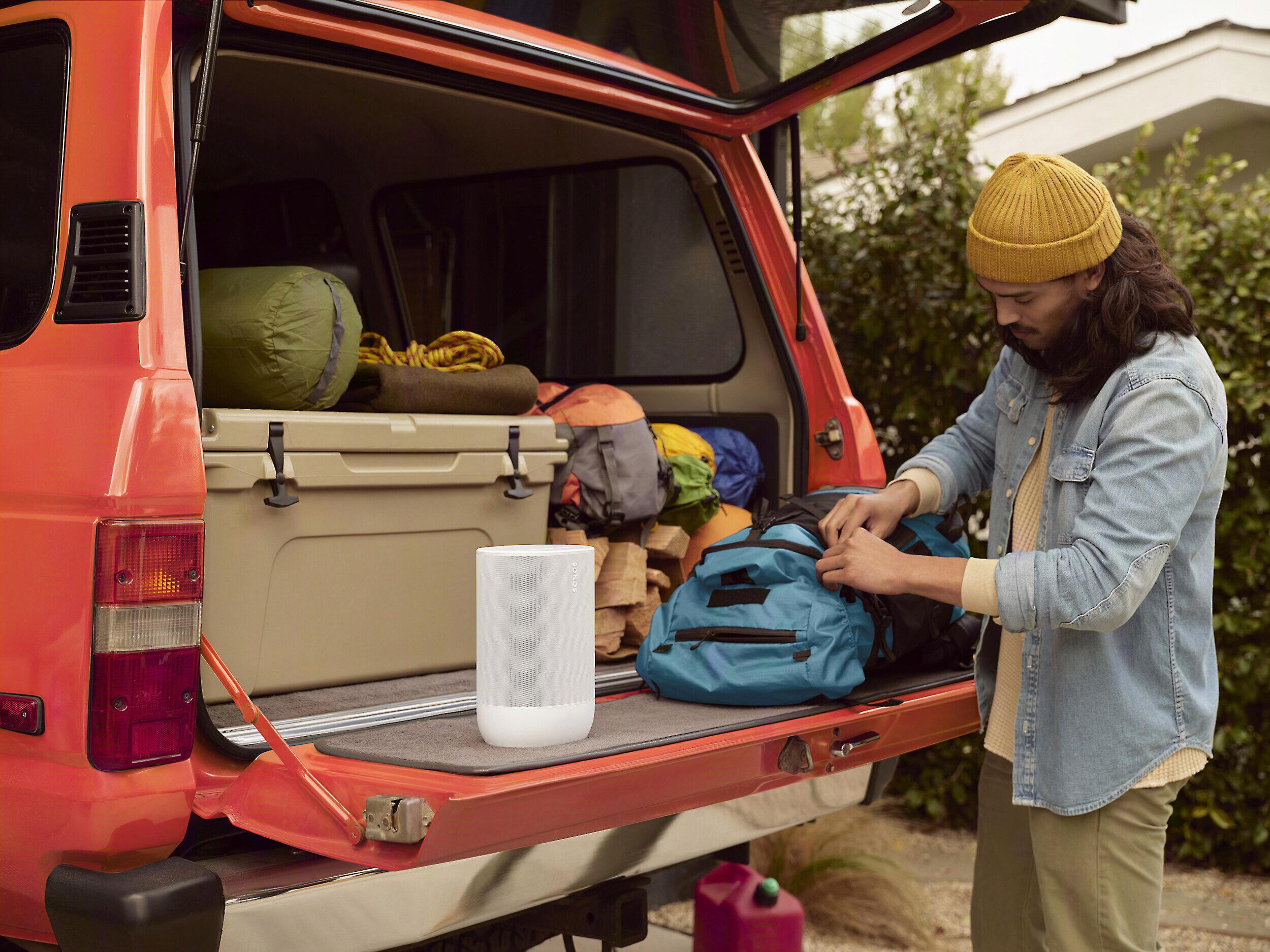
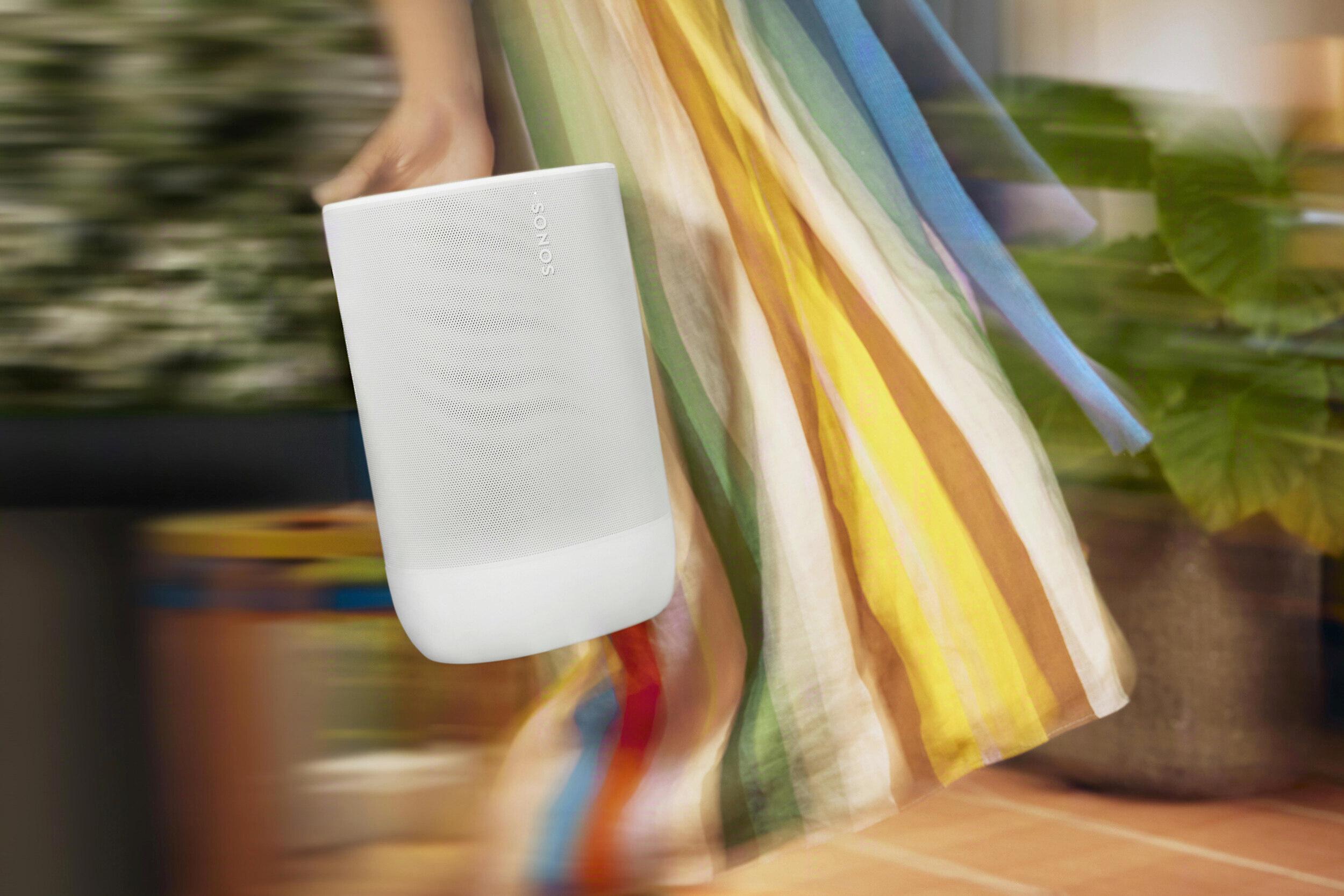
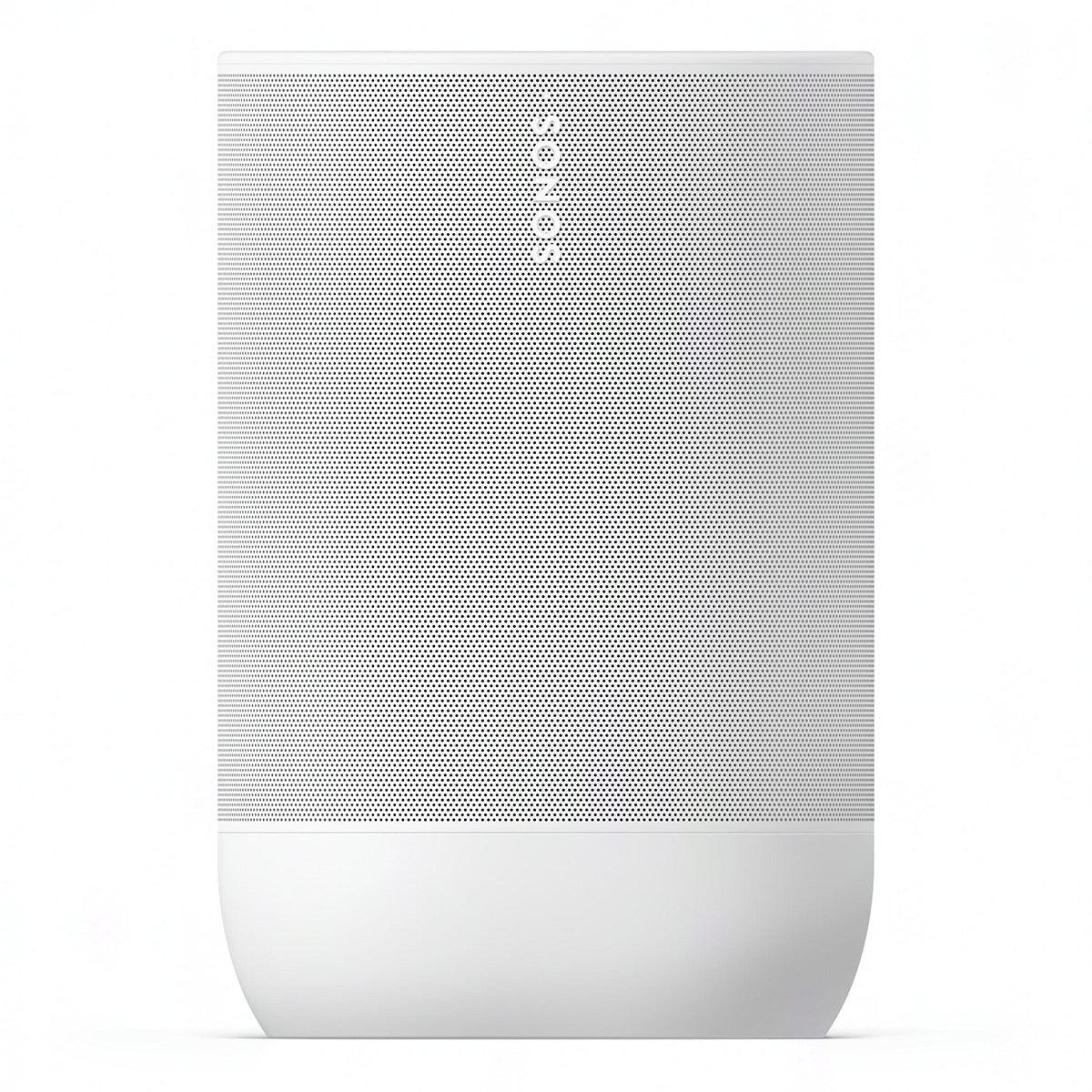
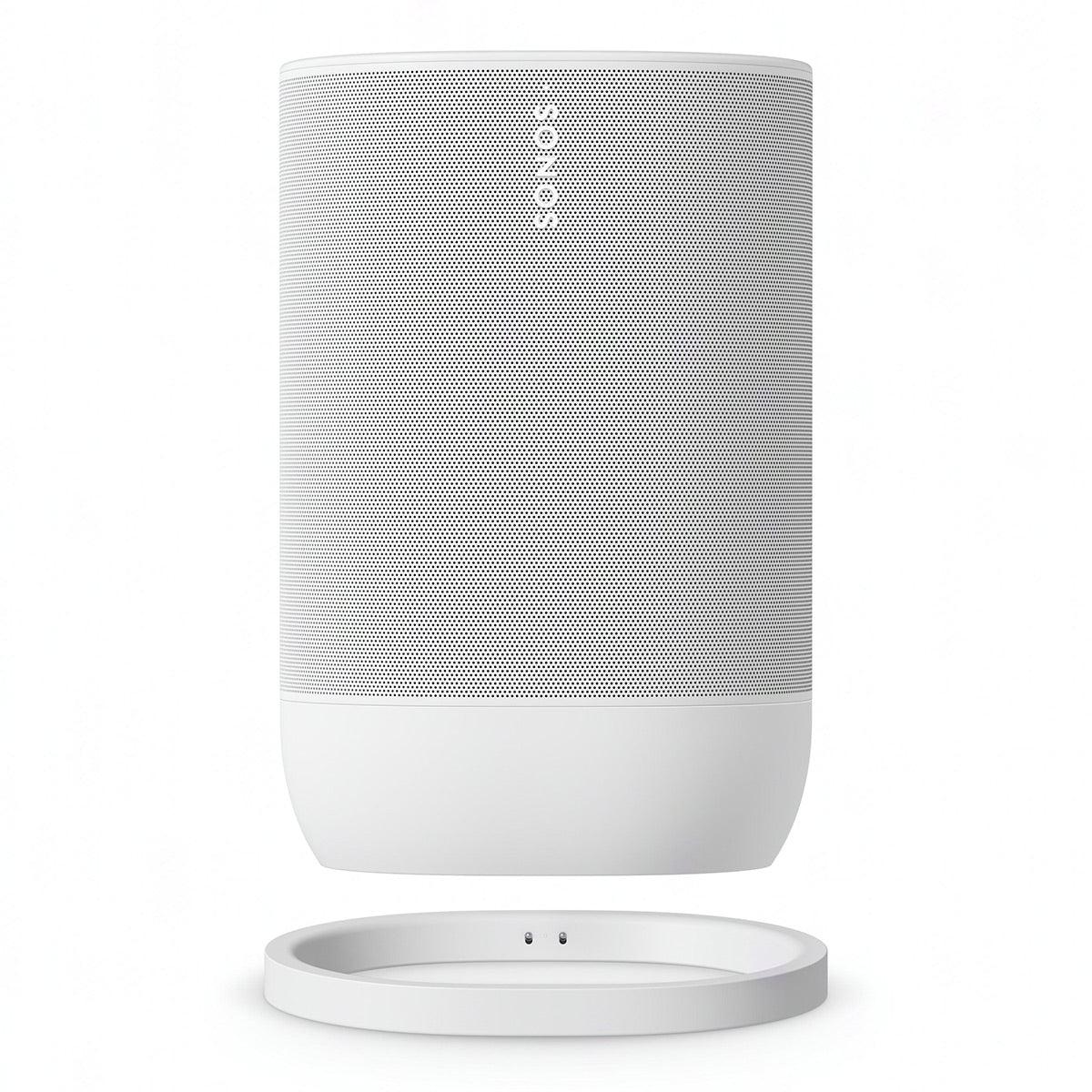
Fast-forward to 2023, and the Sonos Move 2 represents how much portable audio technology has advanced. Weighing nearly 7 pounds and measuring significantly larger than the Charge 4, it challenges the definition of "portable" by prioritizing sound quality and smart features over grab-and-go convenience.
The Move 2's most impressive innovation is its dual-tweeter acoustic architecture. While most portable speakers use a single tweeter (the small driver that handles high frequencies like cymbals and vocals), the Sonos Move 2 employs two angled tweeters that create genuine stereo separation. This means you can actually hear instruments positioned left and right in the soundstage, something extremely rare in portable speakers.
But the real magic happens with Sonos's automatic Trueplay tuning technology. Using built-in microphones, the speaker continuously analyzes its acoustic environment and adjusts its sound profile accordingly. Place it near a wall, and it compensates for bass buildup. Move it outside, and it optimizes for open-air acoustics. This kind of adaptive audio processing was unthinkable in portable speakers just a few years ago.
The fundamental difference between these speakers lies in their audio architecture. The JBL Charge 4 uses a mono configuration, meaning all audio gets mixed into a single channel before playback. While dual passive radiators help create the impression of wider sound, you're ultimately hearing a single point source.
This mono setup works well for background music, outdoor gatherings, and situations where the speaker is centrally located. The sound is punchy and energetic, with surprisingly strong bass for the speaker's size. However, the mono configuration means you lose the spatial information that makes music feel immersive – the subtle positioning of instruments that creates a sense of width and depth.
The Sonos Move 2 takes a completely different approach with true stereo audio. Those dual tweeters handle the left and right channels separately, while a larger woofer manages the low frequencies for both channels. The result is a soundstage that feels dramatically wider and more engaging than what you'd expect from a single box.
Based on extensive user feedback and expert reviews, the Move 2's sound quality approaches that of dedicated bookshelf speakers. The bass is controlled and natural rather than artificially boosted, the midrange handles vocals with exceptional clarity, and the highs remain smooth and detailed even at higher volumes. The JBL Charge 4, while impressive for its size and price category, can't match this level of audio refinement.
Maximum volume capabilities reveal another key difference. The JBL Charge 4 can get reasonably loud for its size, making it suitable for small to medium gatherings. However, pushing it to maximum volume introduces compression and distortion, particularly in bass-heavy music. The mono configuration also means that increasing volume doesn't necessarily improve the sense of space or engagement.
The Sonos Move 2 handles higher volumes with much more composure. The stereo separation remains intact, and the automatic Trueplay tuning helps maintain tonal balance as volume increases. This makes it genuinely suitable for larger rooms and outdoor spaces without the harsh, compressed sound that plagues many portable speakers at high volumes.
The JBL Charge 4 delivers what many describe as a "fun" sound signature. There's a noticeable emphasis on bass frequencies, which makes pop, hip-hop, and electronic music sound exciting and energetic. The midrange is clear enough for vocals to remain intelligible, though they can sometimes get overshadowed by the enhanced bass during complex musical passages.
In contrast, the Sonos Move 2 aims for accuracy over excitement. The frequency response is much more neutral, meaning it reproduces music closer to how artists and engineers intended it to sound. This might initially seem less impressive than the Charge 4's bass-heavy approach, but it reveals more detail and nuance across different musical genres. Jazz, classical, acoustic, and vocal-heavy music particularly benefit from this more balanced approach.
Both speakers excel in battery performance, though they achieve it through different strategies. The JBL Charge 4 packs a large 7,500mAh battery that enables its impressive 20-hour runtime. More importantly, this battery doubles as a power bank, letting you charge phones, tablets, or other devices through a USB-A port. This feature proves invaluable during camping trips, beach days, or anywhere else where power outlets are scarce.
The Sonos Move 2 achieves an even longer 24-hour battery life despite powering more complex audio processing and smart features. The key difference is efficiency – newer amplification technology and power management systems extract more playback time from a smaller 3,100mAh battery. The Move 2's battery is also user-replaceable, addressing one of the biggest long-term concerns with portable speakers.
Both speakers charge via USB-C, though the Sonos Move 2 includes a wireless charging base that makes daily use more convenient. Simply drop the speaker onto the base when you come inside, and it's ready for the next adventure.
This category highlights the biggest philosophical difference between these speakers. The JBL Charge 4 earns its IPX7 rating through robust engineering designed for real-world abuse. You can drop it in a pool, leave it in the sand, or get caught in a rainstorm without worry. The fabric mesh resists tearing, and the rubber end caps absorb impacts from drops.
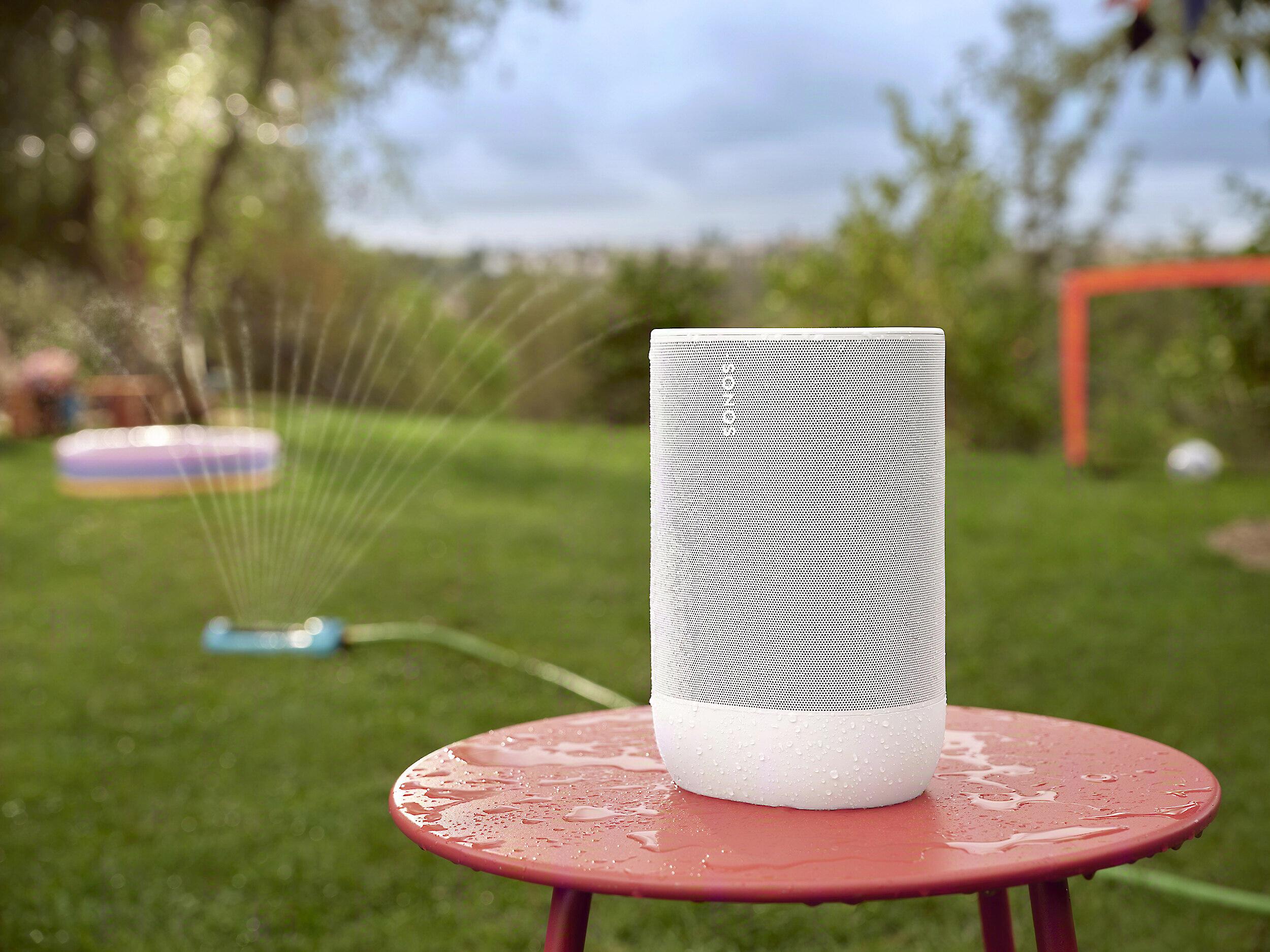
The Sonos Move 2 takes a more measured approach with its IP56 rating. It handles splashes, light rain, and dusty environments, but it's not designed for submersion or extreme outdoor conditions. The build quality is premium – solid, refined, and confidence-inspiring – but it clearly expects more careful handling than the rugged JBL.
This durability difference reflects their intended use cases. The JBL Charge 4 wants to be your adventure companion, ready for whatever outdoor activities you throw at it. The Sonos Move 2 is designed for people who want flexibility to move premium audio between indoor and covered outdoor spaces.
The connectivity story reveals how much portable speaker technology has evolved between 2018 and 2023. The JBL Charge 4 keeps things simple with Bluetooth 4.2 and a 3.5mm auxiliary input. It can connect to two devices simultaneously, which is handy for sharing DJ duties at parties. The JBL Connect+ feature lets you link multiple compatible JBL speakers for expanded coverage, though this creates a larger mono soundfield rather than true stereo.
The Sonos Move 2 brings the full smart speaker experience to portable audio. Wi-Fi 6 connectivity enables integration with your home network and the broader Sonos ecosystem. You can include it in multiroom audio setups, control it with voice commands through Amazon Alexa or Sonos Voice Control, and access high-quality streaming directly through the Sonos app.
The automatic Trueplay tuning deserves special mention because it represents a genuine technological advancement. Using built-in microphones, the speaker analyzes its acoustic environment every 60 seconds and subtly adjusts its frequency response. Move it from a coffee table to the floor, and it compensates for the changed acoustics automatically. This kind of adaptive processing was unimaginable in portable speakers just a few years ago.
The JBL Charge 4 dominates this category through sheer practicality. Its compact size fits easily in backpacks, beach bags, or car cup holders. The waterproof design means you never have to worry about splashes, rain, or accidental dunking. The power bank functionality can literally save your trip by keeping phones charged for navigation and emergency communication.
For camping, hiking, beach trips, or poolside parties, the Charge 4's combination of durability, battery life, and adequate sound quality makes it nearly unbeatable in its price range. The mono audio actually works well in outdoor settings where people gather around a central location.
The Sonos Move 2 can handle light outdoor use – patios, decks, covered porches – but it's clearly not designed for rugged adventures. The weight alone makes it impractical for hiking or backpacking, and the IP56 rating requires caution around water.
This reverses the dynamic completely. The JBL Charge 4 works adequately for casual indoor listening – background music while cooking, audio for watching videos on a tablet, or filling small rooms with sound. However, its mono configuration and outdoor-focused tuning don't deliver the engaging experience that makes you want to sit and really listen to music.
The Sonos Move 2 genuinely competes with dedicated home audio equipment. The stereo separation, balanced frequency response, and room correction technology create an involving listening experience that works for both background and focused listening. It easily fills medium to large rooms with quality sound, and the ability to move it between rooms adds flexibility that fixed speakers can't match.
Neither speaker is primarily designed for home theater use, but they approach it differently. The JBL Charge 4 can provide basic audio enhancement for tablets or laptops through its auxiliary input, but the mono output limits its effectiveness for dialogue clarity and spatial effects.
The Sonos Move 2 offers more potential through its stereo output and Bluetooth connectivity, though it can't match the dynamics and bass extension of dedicated soundbars or surround systems. However, for casual video watching on portable devices or as a temporary solution, its superior dialogue clarity and stereo imaging provide noticeable improvements over device speakers.
At the time of writing, the JBL Charge 4 represents exceptional value in the mid-range portable speaker category. Its combination of features, performance, and durability at its price point is difficult to match. The inclusion of power bank functionality adds practical value that extends beyond just audio playback.
The Sonos Move 2 commands a significant premium that reflects its audiophile-grade components, advanced features, and integration capabilities. Whether this premium is justified depends entirely on how much you value sound quality and smart features versus pure portability and rugged durability.
From a longevity perspective, both speakers show thoughtful engineering. The JBL Charge 4 has proven its reliability over five years in the market, with minimal reports of premature failures. The Sonos Move 2 benefits from user-replaceable batteries and ongoing software updates through the Sonos platform, suggesting better long-term sustainability despite the higher initial investment.
The decision between the JBL Charge 4 and Sonos Move 2 comes down to understanding what "portable" means to you and how you actually plan to use the speaker.
Choose the JBL Charge 4 if you prioritize true portability, outdoor durability, and practical value. It's perfect for people who want to take their music on adventures, need a reliable outdoor companion, or value the power bank functionality for extended trips away from power sources. The sound quality is entirely adequate for casual listening, and the rugged design means you'll never have to baby it.
Choose the Sonos Move 2 if sound quality is your primary concern and you want the flexibility to move premium audio throughout your home and occasionally outside. It's ideal for people already invested in smart home ecosystems, those who notice and care about stereo separation and audio fidelity, or anyone who wants a speaker that can serve double duty as both a home audio solution and occasional outdoor companion.
The fundamental question isn't which speaker is better – they're both excellent at what they're designed to do. Instead, ask yourself whether you need a rugged outdoor speaker that happens to work indoors, or a premium home speaker that can occasionally venture outside. Your honest answer to that question will point you toward the right choice.
| JBL Charge 4 | Sonos Move 2 |
|---|---|
| Audio Configuration - Determines stereo separation and soundstage quality | |
| Mono (single channel) with dual passive radiators | True stereo with dual tweeters + dedicated woofer |
| Weight and Portability - Critical for actual mobility and travel use | |
| 2.12 lbs - Highly portable, fits in backpacks easily | 6.77 lbs - Less portable, requires two hands to carry comfortably |
| Water Resistance - Protection level for outdoor and water activities | |
| IPX7 - Fully waterproof, can be submerged up to 3 feet | IP56 - Splash resistant only, not suitable for submersion |
| Battery Life - How long you can listen without recharging | |
| Up to 20 hours continuous playback | Up to 24 hours continuous playback |
| Power Output - Affects maximum volume and dynamic range | |
| 30W RMS from single driver system | Estimated 40W+ from multi-driver stereo system |
| Connectivity Options - Determines versatility and smart features | |
| Bluetooth 4.2, 3.5mm AUX input, basic controls | Wi-Fi 6, Bluetooth 5.0, AirPlay 2, voice control, app integration |
| Smart Features - Additional functionality beyond basic audio playback | |
| Power bank function (charges devices via USB-A) | Automatic room tuning, voice assistants, multiroom audio |
| Multi-Speaker Support - Ability to connect multiple units together | |
| JBL Connect+ links up to 100+ speakers (party mode) | Full Sonos ecosystem integration with synchronized playback |
| Charging Method - Convenience and flexibility of power management | |
| USB-C cable charging (4-hour charge time) | USB-C cable or wireless charging base included |
| Build Philosophy - Design priorities that affect real-world use | |
| Rugged outdoor durability with basic features | Premium home audio quality with selective portability |
The JBL Charge 4 is significantly better for outdoor use. It has full IPX7 waterproofing that allows submersion up to 3 feet, weighs only 2.12 pounds for easy transport, and includes a power bank function to charge your devices. The Sonos Move 2 only offers IP56 splash resistance and weighs nearly 7 pounds, making it less suitable for camping, beach trips, or rugged outdoor activities.
No, only the Sonos Move 2 provides true stereo sound with its dual-tweeter design that separates left and right audio channels. The JBL Charge 4 is a mono speaker that mixes all audio into a single channel, though you can pair two Charge 4 units together for wider sound coverage.
The Sonos Move 2 offers slightly longer battery life at up to 24 hours compared to the JBL Charge 4's 20 hours. However, the Charge 4's battery doubles as a power bank to charge your phone or tablet, which can be more valuable for extended outdoor use where power outlets aren't available.
Only the Sonos Move 2 supports voice assistants, including Amazon Alexa and Sonos Voice Control built-in. The JBL Charge 4 has no voice assistant support and relies on simple physical button controls for all functions.
The JBL Charge 4 is much more portable at 2.12 pounds versus the Sonos Move 2's 6.77 pounds. The Charge 4 fits easily in backpacks and has a compact cylindrical design, while the Move 2 requires two hands to carry and is better suited for moving between rooms at home rather than true travel portability.
Only the Sonos Move 2 connects to Wi-Fi networks and integrates with whole-home audio systems. It supports Wi-Fi 6, AirPlay 2, and the Sonos ecosystem for multiroom audio. The JBL Charge 4 only offers Bluetooth 4.2 connectivity and a 3.5mm auxiliary input for wired connections.
The Sonos Move 2 delivers superior sound quality with true stereo separation, balanced frequency response, and automatic room correction technology. The JBL Charge 4 provides good sound for its price range but uses mono audio and emphasizes bass over accuracy, making it better for casual listening than critical music enjoyment.
Yes, but differently. The JBL Charge 4 uses JBL Connect+ to link over 100 compatible speakers for party mode, though this creates expanded mono sound rather than stereo. The Sonos Move 2 integrates with the full Sonos ecosystem for synchronized multiroom audio with proper stereo separation throughout your home.
Both speakers charge in about 4 hours via USB-C, but the Sonos Move 2 includes a wireless charging base for drop-and-charge convenience. The JBL Charge 4 requires cable charging but can simultaneously charge your devices through its USB-A power bank port during use.
The JBL Charge 4 excels for pool and beach use with its IPX7 waterproof rating, lightweight design, and power bank functionality. The Sonos Move 2 should be kept away from pools and ocean spray due to its IP56 rating that only protects against light splashes, not submersion or heavy water exposure.
This depends on your priorities. The JBL Charge 4 offers exceptional value for outdoor use, durability, and basic portable audio needs. The Sonos Move 2 costs significantly more but delivers premium sound quality, smart features, and home audio integration that justify the higher price for users who prioritize audio fidelity over ruggedness.
Neither speaker is designed primarily for home theater use. The JBL Charge 4 can provide basic audio enhancement through its auxiliary input but offers only mono sound. The Sonos Move 2 provides better dialogue clarity and stereo imaging for casual TV watching via Bluetooth, but both speakers lack the dynamics and bass extension needed for proper home theater audio.
We've done our best to create useful and informative comparisons to help you decide what product to buy. Our research uses advanced automated methods to create this comparison and perfection is not possible - please contact us for corrections or questions. These are the sites we've researched in the creation of this article: rtings.com - whathifi.com - whathifi.com - soundguys.com - soundguys.com - streamtechreviews.com - youtube.com - versus.com - applevis.com - versus.com - jbl.com - jbl.com - walmart.com - comparisontabl.es - harmanaudio.com - manuals.plus - jbl.com.sg - jbl.com - mm.jbl.com - bestbuy.com - newpower99.com - forums.woot.com - cnet.com - shop.menshealth.com - youtube.com - whathifi.com - 9to5toys.com - abt.com - youtube.com - ceiling-speakers.co.uk - sonos.com - youtube.com - bhphotovideo.com

Privacy Policy
Terms and Conditions - Affiliate Policy
Home Security
© Copyright 2008-2026.
11816 Inwood Rd #1211, Dallas, TX 75244